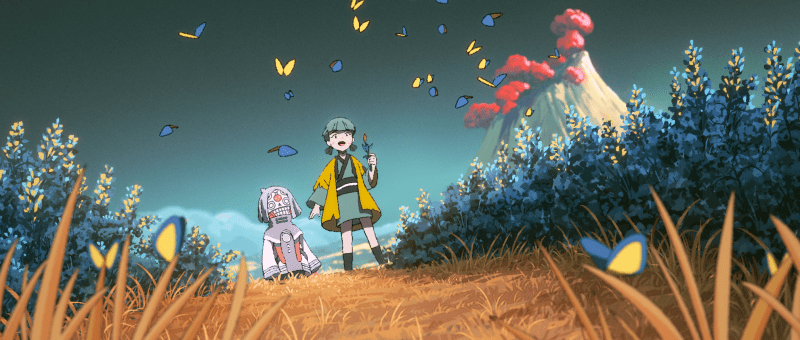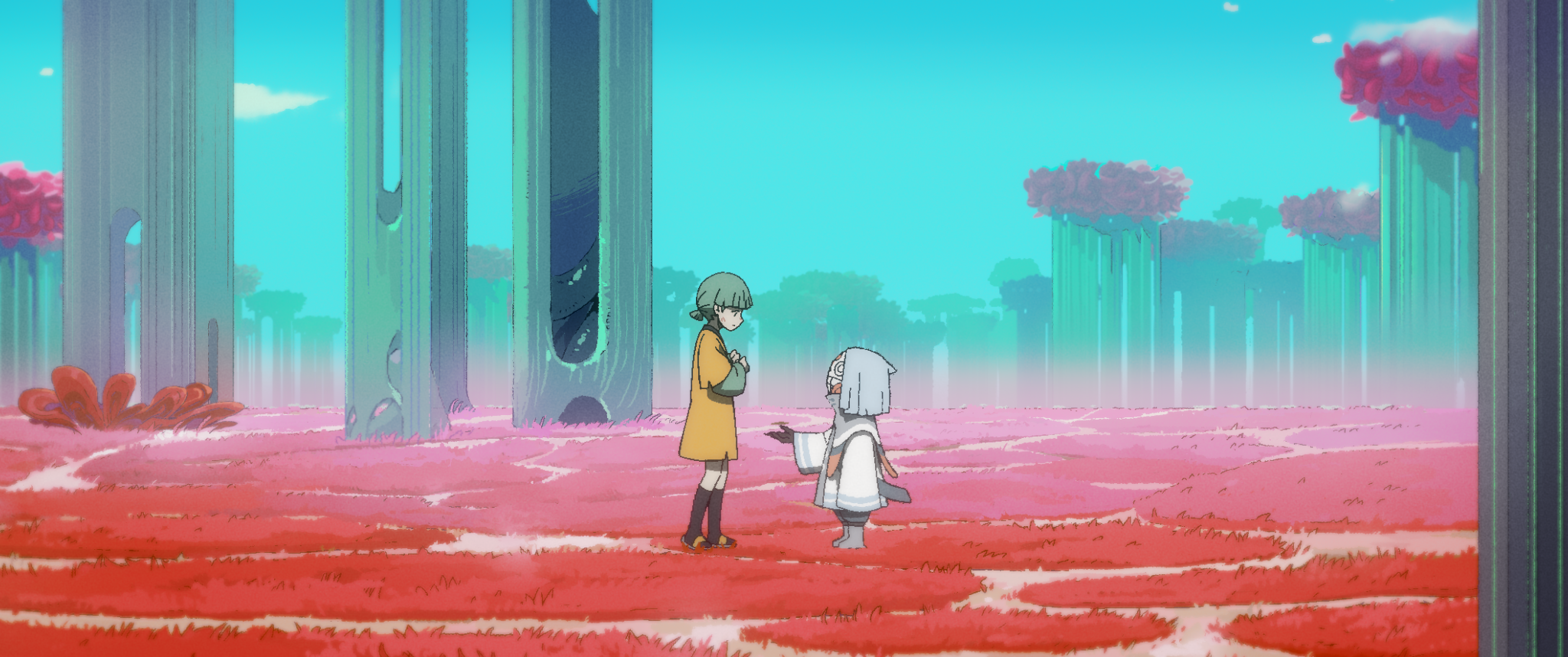
Jinsei (無名の人生, Ryuya Suzuki, 2025)

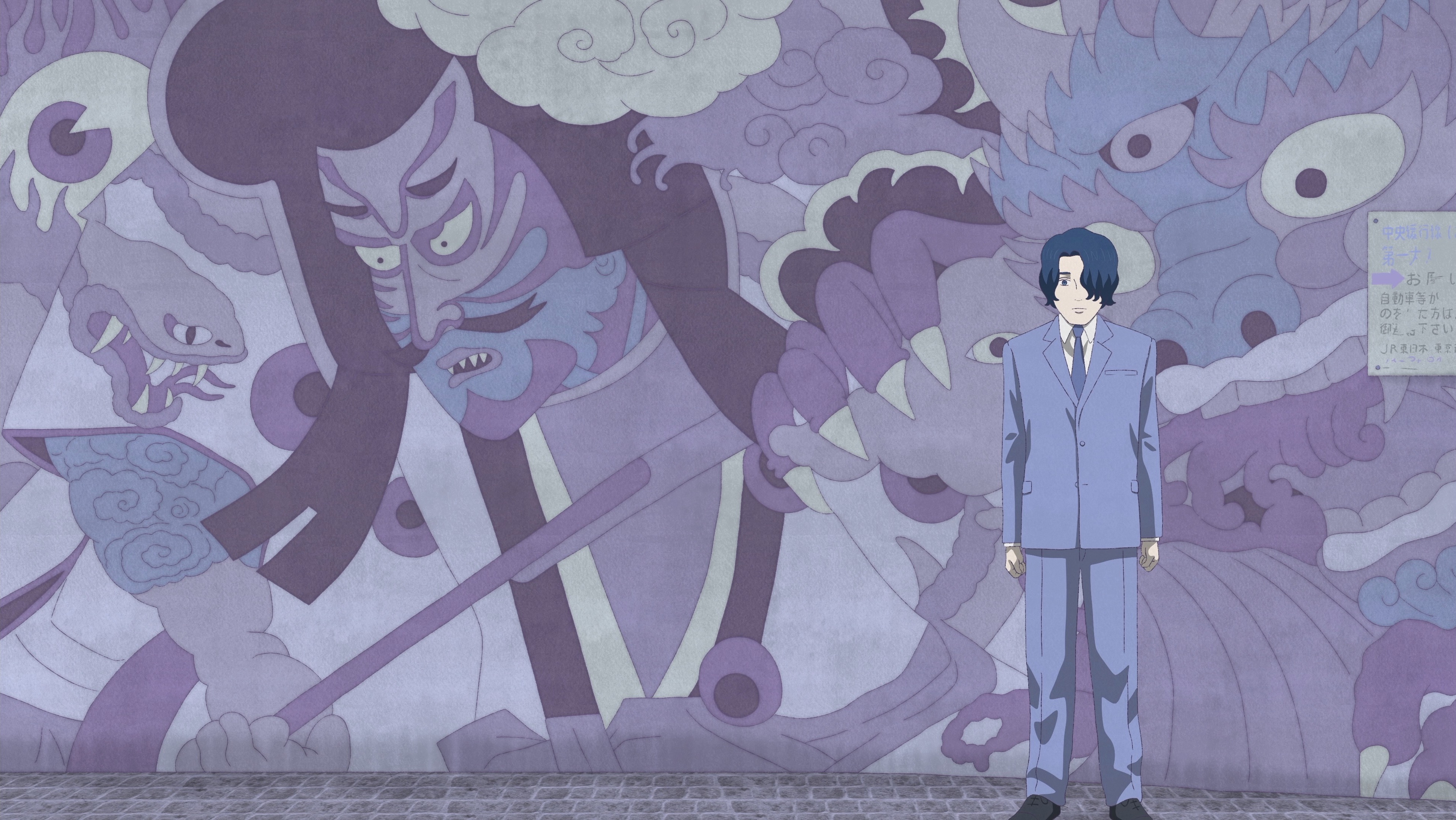
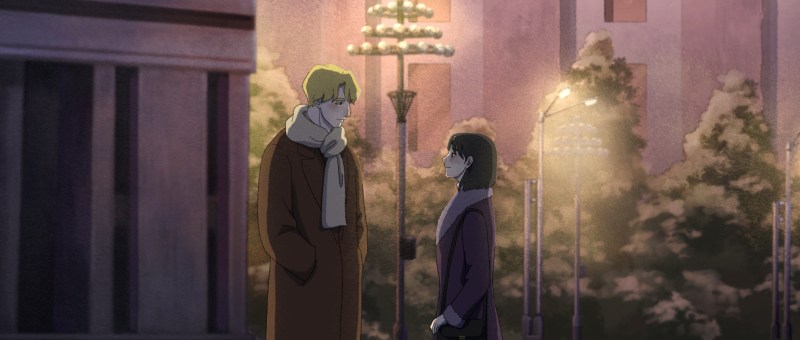
A man goes by many names before he dies. The hero of Ryuya Suzuki’s almost entirely self-produced anime Jinsei (無名の人生, Mumei no Jinsei) never tells us his name. He doesn’t say anything much at all, but passively allows himself to be called whatever others call him while struggling to come to terms with the death of his mother and continually looking for new forms of family along with a place he can really call their own.

Indeed, in the wordless opening sequence, Se-chan’s father and mother meet, get married, have a child, and split up, but are killed together in a freak accident in which the young Se-chan watches helplessly as a pickup truck being driven by an elderly man mows them down. After that, he ceases to speak and looks on at the world vacantly. He becomes a kind of mirror for the world around him, an empty vessel onto which others may project their own fears and anxieties. Thus at school they call him “grim reaper” because he doesn’t speak or move. When another boy in the neighbourhood tries to reach out to him, he punches him in the face. Nevertheless the two eventually become friends, bonding in their shared status as bullied outsiders rejected by mainstream society. 

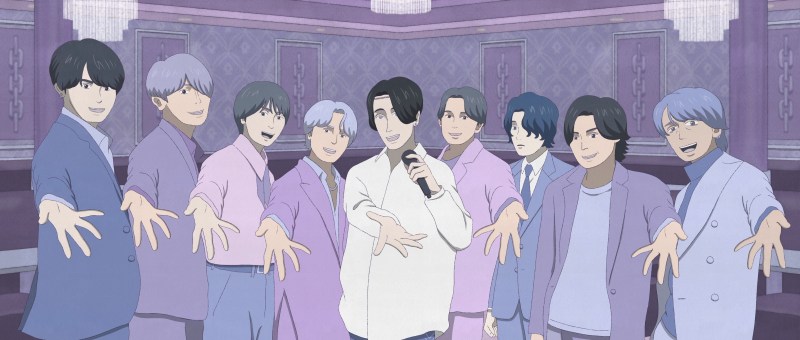
Kin, who in some kind of nominative determinism has dyed blond hair, is marginalised because of his interest in male pop idols and dreams of becoming one. A man named Shiratori comes from the city with a prophecy for Se-chan in the form of a VHS tape featuring his father dancing as part of a chart-topping boy band. Se-chan too has the desire to sing and dance, but the entertainment industry feeds on broken dreams. His father, Eito, had been the son of an aristocratic family who rejected him for following his dreams of becoming a singer. His father pulls a gun on him when he returns in disgrace having been caught using drugs and getting cancelled by the world at large. Eito too apparently could not cope with the pressures of showbiz and tired of the cage of stardom. Shiratori is clearly modelled on Johnny Kitagawa whose decades of sexual abuse were an open secret acknowledged only after his eventual death. He tells the boys that they’re in a cage to which he holds the key, but that it’s protection not imprisonment even as they become tools exploited by moneymaking execs intent on selling them body and soul.

Se-chan’s stepfather had told him that life was a swan and he should spread his wings, but cages are hard to avoid as he discovers on working as a Kabukicho club host once again exploited as a hook dangled to get money from women only to fall victim to another heartless man and the woman who couldn’t tame him. Se-chan found a kind of family in the boy band that he doesn’t really find anywhere else, certainly not in Kabukicho, until he decides to renounce the world entirely as a caveman recluse living in a disused building which is to say in a kind of past. Suzuki’s increasingly bleak descent into the near future echoes this desire for more genuine connections and familial warmth uncorrupted by the darkness of contemporary capitalism and the young Se-chan’s unresolved trauma. War and apocalypse give rise to shady cults, which are also like families, but exclusionary in calming themselves to be some kind of elite as a dangerous feudalism resurrects itself.

Travelling 100 years from 1995, the film moves from the biting cold of winter in Yamagata to the blazing heat of a post-apocalyptic society but seems to imply that in the end we find ourselves again and make the world anew as a great family of humanity. Suzuki apparently made the film up as he went  along, working without a script and stitching one scene on to the next, but his images move with a quiet power and purpose even they move towards an inevitable ending and the final goodbye. The man who was the lonely boy Se-chan, grim reaper, God, a pop star named “Zen”, someone’s Love, comes to embody the concept of life itself in being all things to all men while life in effect lived him in the depths of all his longing and loneliness only to find a sense of hope in confronting the eternal void.


Jinsei screened as part of this year’s New York Asian Film Festival.

Trailer (English subtitles)
The Square (광장, Kim Bo-sol, 2025)

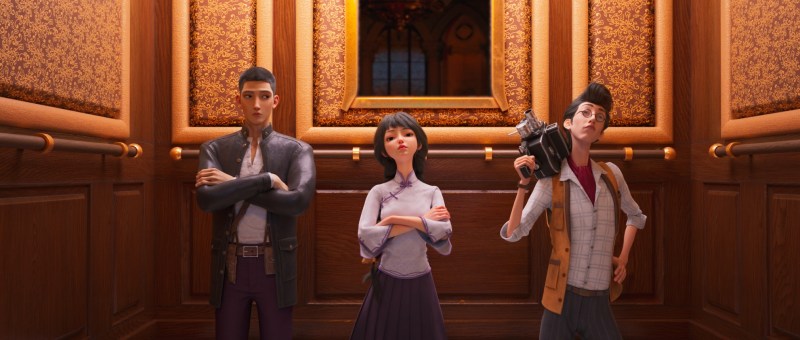
A young man with blond hair and blue eyes stands out in North Korea, though Isak speaks the language fluently, if with a Southern inflection, and tries to make friends with those around him but is generally kept at arms’ length by those who struggle to understand his motivations. As his boss tells him, foreigners are destined to be lonely, but that goes for the local community too. Constant observation has a curiously isolating quality, as if you were always under a spotlight with every word and gesture scrutinised for potential signs of dissidence, though ironically you are never really alone.

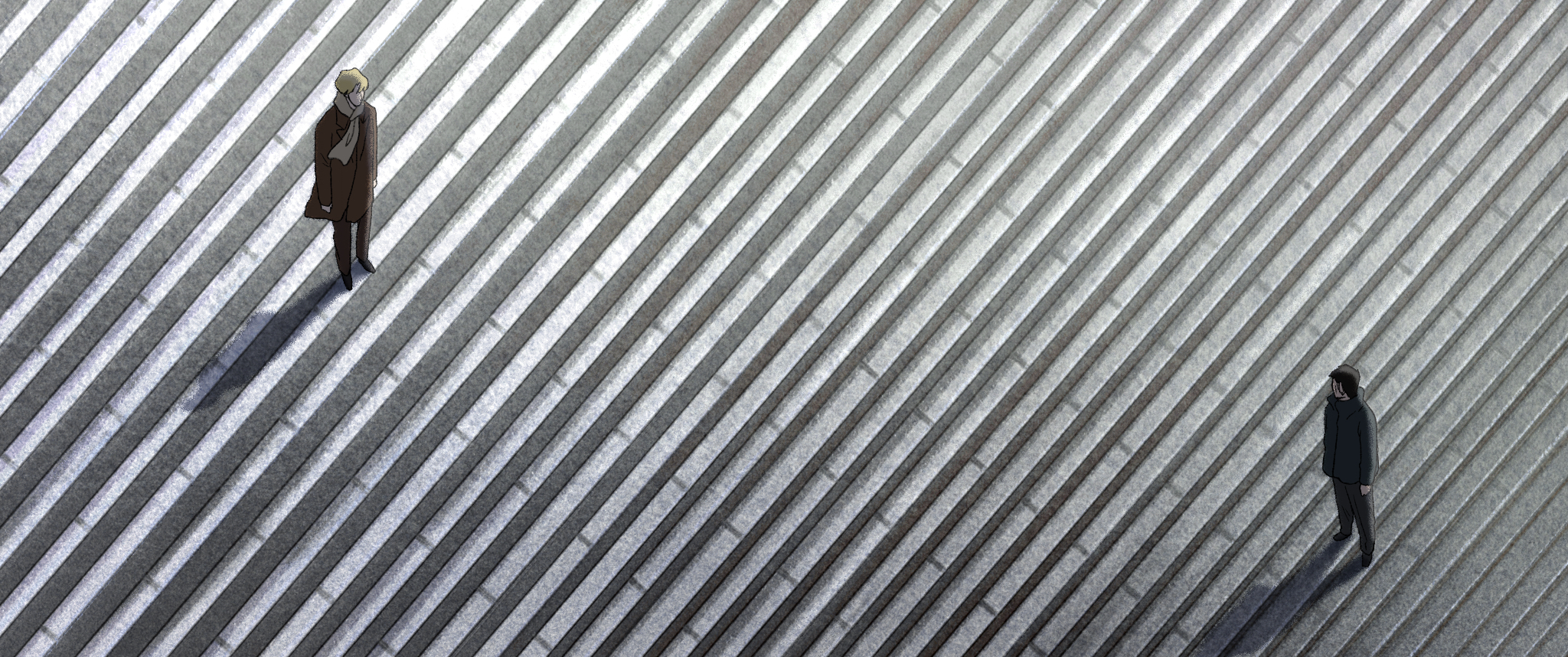
Set in the secretive Communist state, Kim Bo-sol’s melancholy animation The Square (광장, Gwangjang) is in many ways about the dehumanising effects of a surveillance state and the pressures of living in a society in which it becomes impossible to communicate with other people because every interaction has the potential to destroy your life. Everyone you meet is a potential enemy and betrayal lurks around every corner. To begin with, the perspective is Isak’s. He looks at North in the same way we do. Scenes familiar from North Korean travelogues such as the underground station and passages with social realist artwork featuring soldiers smashing capitalism dominate, but he also as an abstracted perspective in trying to reconcile this place with that of his Korean grandmother who followed his grandfather to Sweden before the Korean War. A Swede should eat Swedish food, she ironically tells him in a letter included with a care package full of tinned sausages, through he washes them down a few glasses of soju.

He tries to share them with Myeong-jung, ostensibly his interpreter though Isak is in the North to work as a translator himself and doesn’t really need one despite Myeong’s advanced skills in both English and Scandinavian languages. Myeong-jung always rudely rebuffs his attempts at friendship and appears displeased when Isak tells him he’s trying to get his stay extended. This is partly because of the tense situation, it would be difficult for Myeong-jung to be on friendly terms with a foreign diplomat without arousing suspicion, but also because Myeong-jung seems to have developed some genuine affection for Isak which makes his real job, monitoring him for signs of “harmful” behaviour, much more difficult. Myeong-jung lives in the apartment across the courtyard and has a camera trained on Isak’s window. Like the hero of the Conversation or the Lives of Others he’s become invested in Isak and has begun doctoring his reports to protect him after becoming aware that he has become romantically involved with a young woman who directs traffic for a living, Bok-joo. 

Asked why he tried to help him, Myeong-jung replies that perhaps he was just “lonely” though there is something of a homoerotic tension in his relationship with Isak. After Isak drinks too much on realising that the woman he loves has been disappeared, Myeong-jung steps out of the shadows to rescue him and Isak rests his head on Myeong-jung’s back as they ride home, just as Bok-joo had while riding behind Isak on his bicycle. If that really were the case, his love is as futile as Bok-joo’s or perhaps more so. In any case, he’s right when he calls Isak naive. If their affair were exposed, Bok-joo could be in a lot of danger. His pursuit of her is selfish, and perhaps if he really loved her, the most sensible thing would be to avoid seeing her again. Isak seems put out when Bok-joo tells him she won’t leave with him because she doesn’t want to leave her country or her family for the complete unknown, but were she to do so it would also be selfish. Her family would be made to pay in her absence.

Then again, the worst thing that happens to anyone in this film is being exiled from Pyongyang and other than their loneliness, they do not seem to be particularly unhappy in the North and have no real desire to leave though arguably that’s because they are already resigned its futility. Isak asks Myeong-jung why he doesn’t apply to travel with his advanced language skills but Myeong-jung brushes the question off and replies he’s barely been out of the city let alone another country though his interest in Isak maybe a reflection of his desire for the world outside of the North. Isak, by contrast, asks himself if he could stay in the North forever to live with Bok-joo and make the reverse decision his grandmother once made though in the end the decision is not really his to make. He has to accept that love is an impossibility under such a repressive regime let alone love between a citizen and a foreigner and that the division will forever keep them apart. Whatever choice his grandmother had, Isak does not have any. But despite the melancholy setting of Pyongyang in the snow, there is a kind of warmth to be found that these connections were made at all even as Myeong-jung spins his wheels, riding in circles like Isak and listening to the DiscMan Isak left behind like an echo of a far off freedom.


Trailer (English subtitles)
Ne Zha 2 (哪吒之魔童闹海, Jiaozi, 2025)

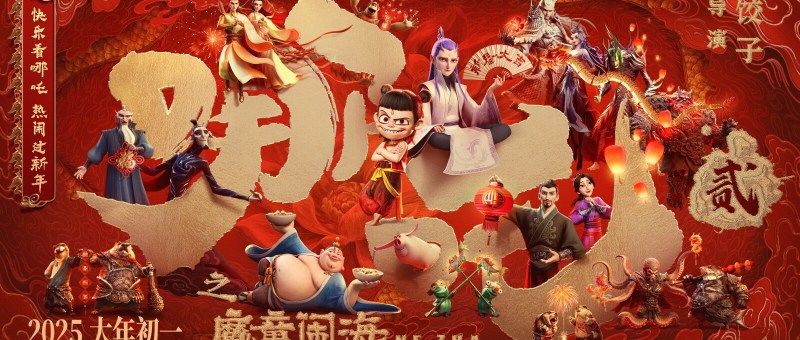
By the end of 2019’s smash hit animation Ne Zha, the titular hero (Lü Yanting) and his opposite number Ao Bing (Han Mo) had figured out that they were two halves of the same whole and were much better off fighting alongside instead of against each other, but even after getting their physical forms reconstituted with the help of a little lotus flour, they discover that the evil Shen Gongbao (Yang Wei) isn’t done yet. The first film may have been in its way subversive in the hero’s bold assertion that he will defy his fate and define his own identity, but Ne Zha 2 (哪吒之魔童闹海, Nézhā zhī Mó tóng nào hǎi) takes things a step further as Ne Zha comes to discover that not even the Heavens are free of corruption or prejudice.

Indeed, it’s this idea of prejudice which lies at the heart of the film for even if Ne Zha had won the hearts of the townspeople by saving Chentang Pass in the first film, he realises that there are some among the immortals who wish to erase all demon kind. The conclusion he eventually comes to is that demon and immortal are arbitrary terms used to control those who are different. He’s sick of hiding his demon nature and thinks it’s time he reveal himself to the world while fighting the injustice that’s taken over the Heavens in the Master’s absence. 

Meanwhile, his desire to break free of oppressive authoritarianism is symbolised in his breaking Wuliang’s (Wang Deshun) cauldron and freeing those inside who were otherwise to be turned into pills of immortality and fuel the heavenly economy. While he and Ao Bing resolve that the real enemies are those who bully the weak and bring evil to the world, the villains insist that siding with the strong is the only way. Ne Zha and Ao Bing’s response to this is to insist that if there is no place for them, they will create it for themselves and if they are not accepted they will change people’s minds. As they later say, they are young and have nothing to fear echoing a spirit of resistance among contemporary youth confronting an oppressive and authoritarian society.

Then again, a key feature of Ne Zha’s goodness is his love for his parents and desire to be a “good son” by traditional standards. It’s clear that even Ao Bing’s father the Dragon King of the East, Ao Guang (Li Nan / Yu Chen), acted only in the best interests of his son and has otherwise been framed by ambitious forces around him who decided they were better off entering a more active partnership with a corrupt authority rather than appease them by accepting their oppression. Even so, both sets of parents eventually tell their sons that they should now follow their own paths and do what they think is right. The world is no longer as was is when they were young, and they are not well equipped to understand these problems nor to solve them. If the Heavens are to be purified once again, it will be up to Ne Zha and Ao Bing to do it.

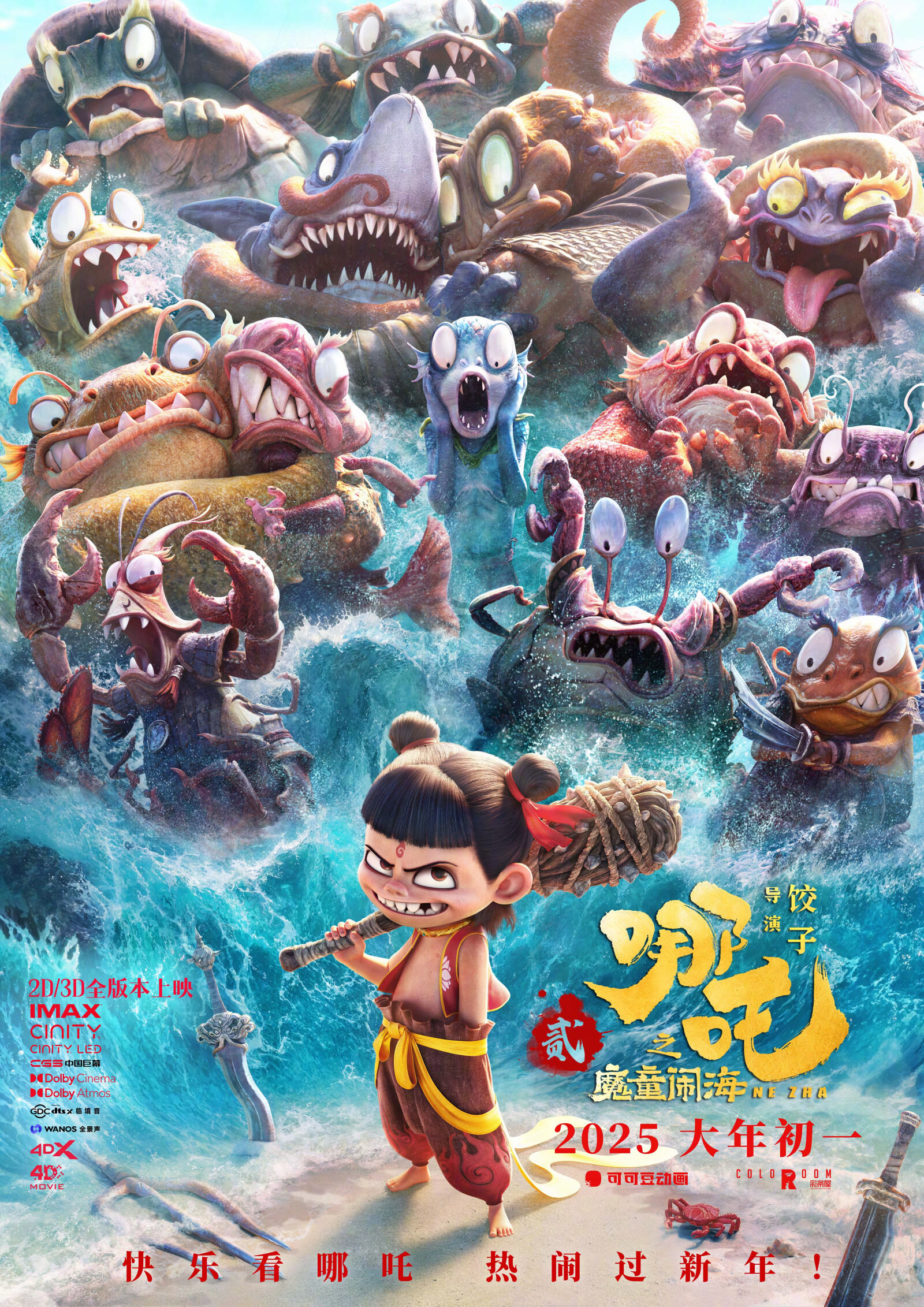
Aside from this more series and potentially subversive message about asserting one’s identity and challenging authoritarianism, the film has a lot of fun with its anachronistic worldview as drunken Taiyi Zhenren (Zhang Jiaming) struggles to remember the password to open the lotus before remembering he can use a fingerprint instead, while another villain later runs into a problem trying to open a door that works by face recognition because he’s sporting so many bruises and swellings after getting a beating from Ne Zha. He then realises he’ll have to wait another 10 years to try again because he cursed the technician for laughing at his ridiculously battered face. The film’s action sequences are also tremendously well animated and exciting as Ne Zha’s parents try to fight off the demon hordes which mainly consist of the “Monsters of the Abyss,” various sea creatures such as octopuses and sharks that were previously held in check by the Loongs but have now been set loose because of a dragon queen’s ambition. In any case, improving on the original the sequel maintains its quirky humour and charming worldview while doubling down on its surprising messages of acceptance and diversity as Ne Zha and Ao Bing prepare to forge their own paths and fight for justice to clear the Heavens of their corruption.


Ne Zha is in UK cinemas now courtesy of CineAsia.

UK trailer (English subtitles)

Chang’an (长安三万里, Xie Junwei & Zou Jing, 2023)

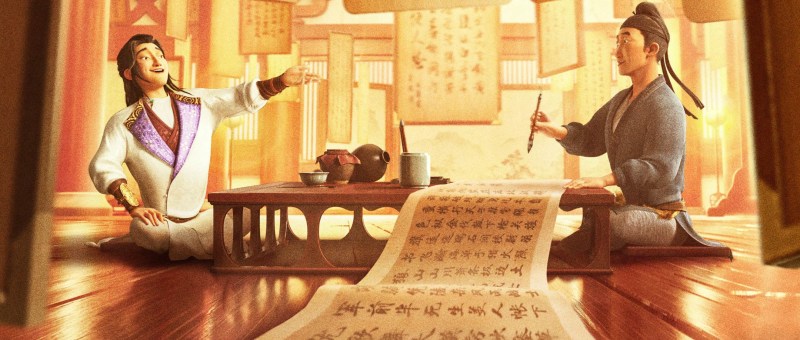
It’s a strange thought, in a way, that poetry could save a nation. In reality, it didn’t quite. The An Lushan rebellion significantly weakened the Tang dynasty and contributed to its rapid decline. Nevertheless, Tang was an era in which art, culture, and freedom of thought all flourished. Animated feature Chang’an (长安三万里, Cháng’ān Sānwànlǐ), named for the imperial capital of that time, attempts dramatise the era through the lives of its poets and the eyes of Gao Shi (Yang Tianxiang) reflecting on his youthful and often distant friendship with the legendary Li Bai (Ling Zhenhe) whose poems are still recited by the school children of today.

As the film opens, Gao Shi is an old man and embattled general staring down inevitable defeat at the hands of the invading Tubos emboldened by the weakening of borders following the failed An Lushan rebellion. But that’s not the reason he’s being visited by an imperial inspector who is far more interested in his relationship with Li Bai and the political importance it may have gained. Through this framing sequence, Geo Shi narrates the previous 40 years of history as he and Li Bai each age and take different paths in life while maintaining a distant if deeply felt friendship.

To that extent, Guo Shi is the earnest and practical son of a once noble house attempting to resurrect his family legacy, while Li Bai is a free spirited libertine attempting to overcome his lowly birth as the son of a wealthy merchant to gain government office through his skill as a poet. Then again, as future great poet Du Fu (Liu Jiaoyu / Sun Lulu) remarks, in this age poetry is something anyone can do and distinguishing oneself through it is no mean feat. It is however the only option for a man like Li Bai and the film in part seems to be an advocation for meritocracy in which those of ability would be free to prosper without needing to rely on social standing or personal connections. Despite the supposedly classless society of the modern day, this world may not yet have emerged. Another hopeful laments that she alone of her brothers inherited military skill yet as a woman there’s no door that is open to her to serve her country. 

Serving one’s country is the virtue that Gao Shi praises most highly and in effect his life’s purpose while Li Bai’s is more personal advancement and the perfection of his art. His poems are often melancholy and reflect on a sense of loneliness and longing for home, or else raucous celebrations of the art of drinking. Gao Shi does not approve of Li Bai’s party lifestyle and his debauchery later places a strain on their friendship. The film tacitly implies that this decadent behaviour is behind the decline of Tang, but also the reason that art and culture flourished amid a sense of destruction and despair. Having learned a few lessons in underhandedness from Li Bai, Geo Shi in effect restores order, albeit temporarily, through strategy and courage, while Li Bai first chooses isolation and then in its opposite after being pardoned for an apparently accidental and entirely thoughtless act of treason.

But what the film is keen to emphasise is the deep-seated friendship, or perhaps more, between the two men that makes the victory possible suggesting that a society needs both practicality and art to survive, not that Gao Shi was not a great poet himself if one well aware that Li Bai surpassed him in skill and keen support his success. Even so, as Gao Shi points out, a poet is not always an easy thing to be and in his old age those who once drank with Li Bai are either dead, one beaten to death at the age of 70, exiled or imprisoned. In a sense, both men achieve their aims if perhaps not in the way they intended. Gao restores his family name, and Li Bai finds a kind of immortality in his work that he otherwise failed to find spiritually in devoting himself to Taoism. The often beautifully rendered backgrounds capture a sense of a society on the brink of eclipse, such as the striking beauty of Gao Shi’s first entry to Yongzhou with its blossoming cherry trees lit by the warm light of lanterns under a full moon, only to turn to darkness on his return amid the twilight of the Tang dynasty. 


Dazzler Media presents Chang’an in UK and Irish cinemas from 28th February.

UK trailer (Mandarin with English subtitles)

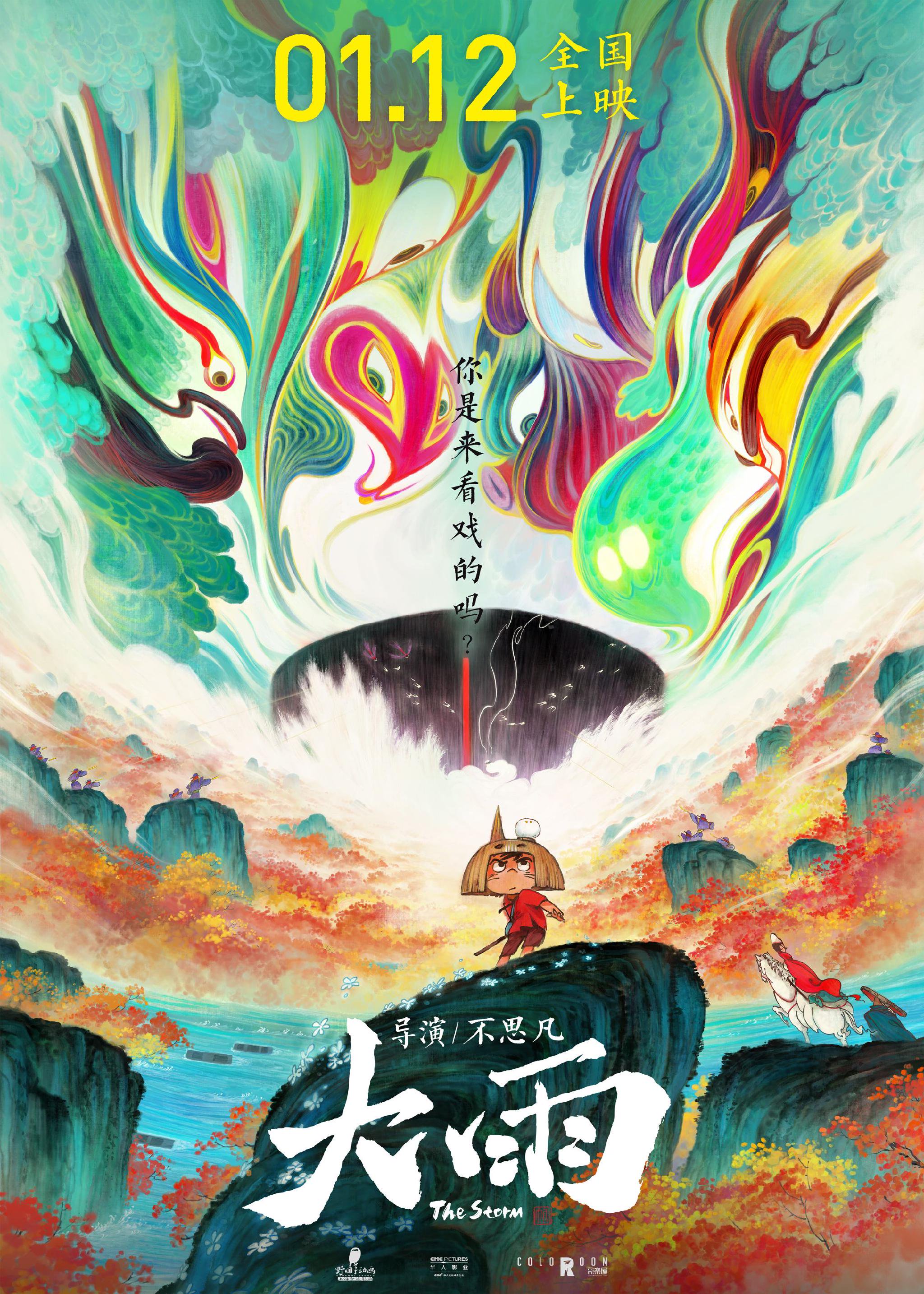
The Storm (大雨, Yang Zhigang, 2024)

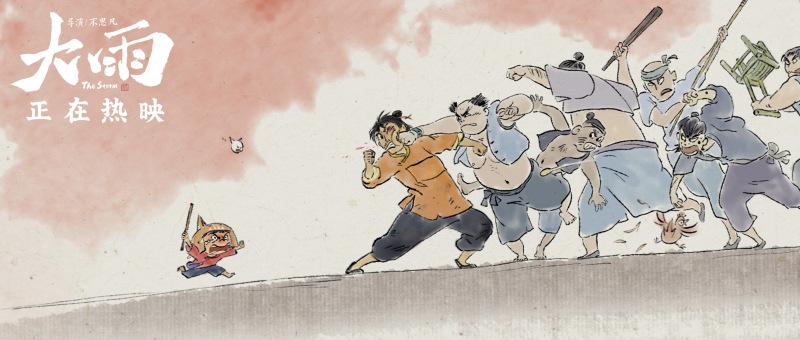
A cosmic storm is likened to the chaos of life in Busifan’s beautifully drawn but narratively obscure family animation, The Storm (大雨, dàyǔ). Set seemingly in a fantasy past which is also a kind of post-apocalyptic future in which mankind has ruined itself through greed, the film is at heart a kind of redemption story in which those left behind attempt to exorcise the negative emotions of the past and ease the destruction they have wrought by abandoning outdated ideas of wealth and status. 

The hero, Bun, is a young orphan adopted by the elusive Biggie who found him drifting down a river in a chest. Biggie decided to adopt the boy as his own but never allowed him to call him father while himself struggling the stigma of having been a criminal. Biggie sometimes leaves Bun on his own while he goes off to try and earn money to give him a better life and justifies his actions that everything he’s doing is only for Bun. Later in the film he expresses regret for “lying” to him, pretending the world was not so chaotic as is it is as the pair become embroiled in a supernatural curse while looking for the famed Nuralumin Satin said to be aboard a mysterious black ship filled with monsters. 

According to biggie, the Black Dragon Army hunting the Nuralumin birds into extinction led to an explosion in the jellyfish population while a prophesy states that the jellyfish will soon unite with another monstrous force during a cosmic storm becoming an awesome dragon that casts a shadow over the land. The ship itself seems to be a symbol of insatiable greed, a kind of floating marketplace in which people entered in search of riches but did not leave again. Inside, they became monsters devoid of all humanity and hungry only for material gain. 

The king’s own mother is said to have fallen victim to the curse, while his nephew also knew a troupe of opera singers who boarded the boat in search of an audience but have apparently lost their way. The spirits of the opera singers recount their plight, that as lowly entertainers they were only ever looked down on and abused no matter if they entertained the king himself and all his other royals. That they fell victim to the curse seems to be a condemnation of outdated ideas about social class and the stigmatisation of a profession, while Biggie’s fate seems to imply something similar. No matter how much he tried to turn himself around and be a good father to Bun, the world continued to reject him and he was left only with crime as a means to support himself. That’s one reason he wants the Satin, so that Bun will be looked after for the rest of his life and they won’t have to debase themselves anymore. 

We can see that the area they live in which is close to the famed Dragon Bay where the Black Ship eventually resurfaces is rundown and abandoned perhaps itself because of the lore that surrounds the area. Even so, the backgrounds are gorgeously animated with flowers in full bloom and Bun making his way through colourful and lively vistas of rural beauty. Yet it’s just this beauty that mankind’s greed has destroyed in the Dragon Army’s senseless killing of the Numalurin birds for which their guardian tribe has never forgiven them. Only the return of these birds and the giant deity that protects them can help end the curse, restoring the proper balance to the land in which the jellyfish are kept in check and the dragon cannot be formed. 

It has to be said that narratively the film is incredibly confusing and difficult to follow, at least for viewers who do not speak Mandarin. Nevertheless, what shines through is Bun’s redemptive power as he desperately tries to rescue Biggie from his own worst impulses, his greed and desperation in being drawn to the black ship like moth to a flame and in danger of being turned into one of the monsters. Constantly accompanied by round ball of fluff he encounters several other cute creatures while otherwise guided by a handsome young man who seems to be made of cloud while his wish that he really could stop Biggie from leaving by treading on his shadow might in an odd way come true. Boundlessly inventive, the film’s ideas sometimes get ahead of itself but are more than made up for in the unshowy beauty of its fantasy world. 


International trailer (Simplified Chinese / English subtitles)

Deep Sea (深海, Tian Xiaopeng, 2023) [Fantasia 2023]

“For you who passed through the darkness” runs a dedicatory title card at the conclusion of Tian Xiaopeng’s stunning animated drama, Deep Sea (深海, Shēn Hǎi). Aimed squarely at younger audiences, the film is an exploration of depression and despair as the young heroine is plunged into a dark sea feeling that her life has no value but there encounters a fantastical world of colour and light while chasing the ghost of the mother who abandoned her.

As if to signify her loneliness, the film opens in a blizzard in which Shenxiu (Wang Tingwen) desperately searches for her mother only for her shadow to turn into a strange, many eyed monster. Back in the “real” world, she’s off on a family holiday with her father, his new wife, and their baby son, the family of three sitting in front while she remains behind on her own wearing the red hoodie that once belonged to her mother. About to get on a boat for a six-day cruise, she drafts a message to her mother about how excited she is to see the ocean but then scrolls back up and remembers all the times her mother didn’t reply and the times she did to tell her she’s busy and wishes Shenxiu wouldn’t contact her if it isn’t urgent. She deletes the message and rejoins her family but they’re so busy fussing over the baby that they don’t have time for her either and in fact seem to have forgotten that today is her birthday.

Venturing out on the deck in a storm, Shenxiu is sucked into a tornado in which she sees the outline of her mother and meets a strange sea creature, Hijinx, from a story her mother had told her believing that it has come to guide her to where her mother is living. Before too long she arrives at a bizarre floating restaurant where aquatic creatures go to eat run by “avant-garde” chef Nanhe (Su Xin). In some ways, Nanhe comes to represent her mother in that he first rejects her, insisting that she’s bad luck and kicking her out but later takes her back and tries to make her happy in an effort to stave off the “Red Phantom” that threatens to consume her, taking on the form of her mother’s red hoodie in which she attempts to bury herself as a symbol of her loneliness and despair. 

Beautifully animated, the world of the restaurant is a silkpunk paradise of chaotic action, part pirate ship and part fantastical submarine powered by walruses on stationery bicycles. Tian Xiaopeng makes fantastic use of the projector screen to illuminate Shenxiu’s fantasies, neatly including a cartoon within the cartoon in a more traditional 2D style while otherwise reflecting Nanhe’s broken dreams for a homeland he says he can never return to. Shenxiu too shifts between alternate “realities”, experiencing brief flashbacks to happy memories of her mother and others of less happy times as she’s sent for counselling by a school concerned she seems withdrawn only to be told the solution is to smile more so she’ll fit in better encouraging her to bury herself and her feelings under an affected facade of cheerfulness for the comfort of others.  

Nanhe’s final acceptance of her comes when he tells he that he hopes all her future smiles will be from the heart unlike the clown face he sometimes wears with its eerie, false grin intended to ward off other people’s discomfort but largely masking pain in himself. He also tells her that though the “real” world may seem grey and miserable in comparison to the dazzling colour of her dreams, there will bright moments waiting for her that no matter how small are worth living for. It might seem a heavy message to deliver to small children, but also one that some may sadly need to hear. Tian opts for a more realistic conclusion than many might expect in which Shenxiu but nevertheless allows her to punch through her loneliness and despair into a happier existence bonding with her stepmother and seemingly better integrated into her family no longer feeling excluded or alone. Absolutely breathtaking in its execution, Tian’s incredibly rich fantasy world is a riot of whimsy but also tempered by a deep empathy and compassion for anyone who’s battled their way through a dark sea. 


Deep Sea screened as part of this year’s Fantasia International Film Festival.

Original trailer (English subtitles)

Art College 1994 (艺术学院, Liu Jian, 2023)

In the opening title sequence of Liu Jian’s animated dramedy Art College 1994 (艺术学院, yìshùxuéyuàn), a beetle tries to climb a decaying wall but repeatedly fails until it falls on its back and flails wildly trying to right itself. It might in a way stand in for Liu’s protagonists, each of whom are floundering in various ways amid the contradictions of the rapid social changes of mid-90s China. A potent sense of place lends weight to what is obviously an autobiographically inspired tale of youth’s end coloured by rueful nostalgia. 

The rebellious Xiaojun clashes with his tutors who think he’s overly influenced by Western art movements and lacks the maturity to understand that there is also truth in traditionalism, while his best friend Rabbit begins to worry about more practical matters and their future in a changing society. The boys eventually develop a friendship with music students Lili and Hong who find themselves similarly at odds. Brash and brimming with false confidence, Hong dreams of becoming a famous opera singer and resents the patriarchal social mores of a still conservative China. “Sooner or later we all have to marry someone.” Lili sighs as if feeling the walls closing in on her, only for Hong to ask why no one ever realises they’re “someone” too. 

They have grand conversations about the nature of art, beauty, tradition and modernity, conservatism and social change, belying their naivety but still filled with a sense of freedom and curiosity that is only beginning to be coloured by a concurrent anxiety. “I thought I knew everything. The truth is I know nothing.” Hong finally concedes after a failed romance, arguing with Lili with whom she may always have been on a different page. Shy and bespectacled, Lili is a realist amid a group of dreamers. She nurses a nascent crush on Xiaojun but is courted by a condescending bore who comes with her mother’s approval. Perhaps she’s merely afraid of the risks involved when real feeling is in play, but for all her talk of “freedom” makes her choices intellectually and leans towards the pragmatic. Xiaojun is a penniless painter, but her suitor is a wealthy man who can take her to Paris to study. Amid the contradictions of mid-90s China, who could really blame her for making a “sensible” choice even it means the sacrifice of her emotional fulfilment? 

Xiaojun lets his chance slip away from him, failing to say anything meaningful before revealing he’s going away on a study trip for an extended period of time. But like Lili he meditates on art and the soul while romanticising a poverty he may never really have experienced. The boys hang out with eccentric drifter Youcai who repeatedly failed the entrance exams but hangs around on campus anyway soaking up the atmosphere while prone to sudden attacks of performance art. After a stint living in the artist community in Beijing he returns in the company of crooks and conmen, working as a sign painter to get by while lamenting his own lack of talent. He says he makes money in order to make art, while Xiaojun disapproves of his moral duplicity insisting that it’s right for an artist to be starving because suffering fosters art.

Youcai asks him how you can make art if you can’t eat while insisting that art is one big business, just like everything else it too is suspect because it is dependent on money. Xiaojun disagrees, claiming that that art is the only escape from reality that can bring people spiritual satisfaction. Ironically enough, he says this while sitting directly underneath a billboard advertising Michael Jackson’s Bad, while we’ve already seen him ride his bicycle past a conspicuous piece of graffiti featuring the characters for CocaCola in Chinese. When Lili’s suitor says he’ll buy them dinner, Liu ironically cuts to the two girls sitting outside a McDonald’s eating ice cream. This does seem to be a very dubious sense of “modernity”, mediated through Western consumerism that in contrast to the values Xiaojun places in “art” is spiritually empty. 

Even so his disapproving teacher reminds him that great art is born of sincerity, hinting at a degree of affectation in his insistence that art should change with the times when not all truths need to be revolutionary. In any case, each of the students learns a few hard lessons about life and disappointment as they too succumb to unavoidable realities and accustom themselves to an uncertain society. Liu ends the film with a series of title cards that feel very much like those often added to placate the censors, usually detailing that wrongdoers were caught and punished for their crimes but this time conjuring more wholesome futures for the students that undercut the sense of the frosty melancholy in the closing scenes which leave Xiaojun all alone as he takes up brush and ink. Yet in Liu’s achingly potent sense of place, there is both a poignant nostalgia and an inescapable sense of loss and regret for the missed opportunities of youth. 


Art College 1994 screened as part of this year’s Red Lotus Asian Film Festival.

Trailer (English subtitles)
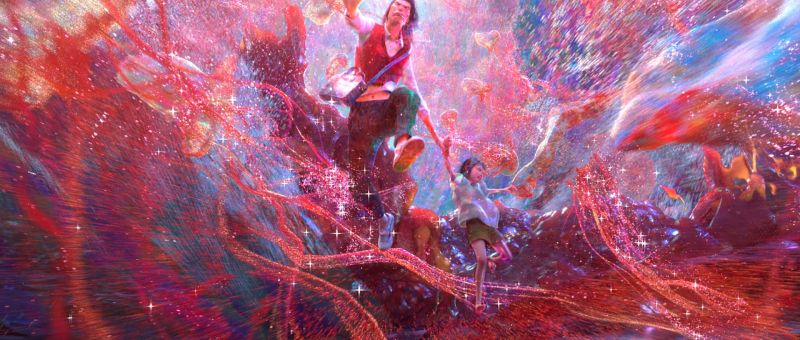
Ramayana: The Legend of Prince Rama (ラーマーヤナ ラーマ王子伝説, Ram Mohan, Yugo Sako, Koichi Sasaki, 1992)

Raised in a Buddhist temple after an early orphanhood, documentary filmmaker Yugo Sako became a great devotee of Indian culture and apparently fell in love with the story of the Ramayana while filming a documentary for NHK, later reading as many as 10 different translations of the classic legend in Japanese. Certain that only animation could do justice to this epic tale of gods and demons, he proposed adapting it in the style of Japanese anime which was then gaining in popularity all over the world. 

It was though a somewhat sensitive topic. Following a minor misunderstanding concerning Sako’s documentary, complaints were submitted to the Japanese Embassy on behalf of religious organisations who objected to the film on the grounds that it was inappropriate for a Japanese company to adapt their national epic, that their culture was being misappropriated and that they worried the animation format may damage the ethics of the tale. Working with veteran director Ram Mohan, Sako had wanted to make the film in India with Indian animators but given all the difficulties he faced eventually decided to produce it in Japan bringing Mohan and other consultants with him to advise the Japanese animation team how best to reflect the local culture. 

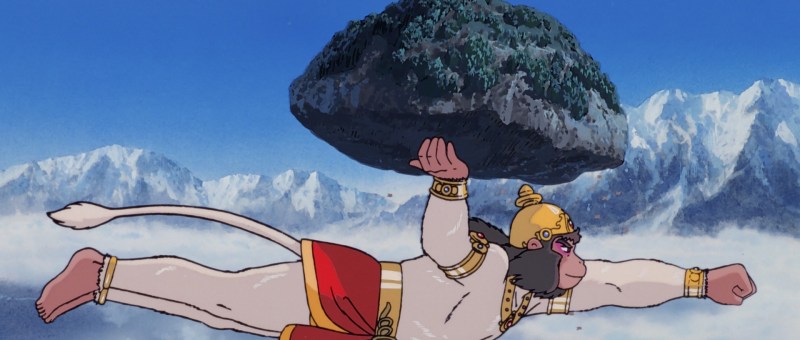
Starring a cast of Indian actors, the film was released first in an English-language audio version only later dubbed into Hindi. In essence it follows Prince Rama (Nikhil Kapoor), the seventh of Lord Vishnu’s 10 incarnations and the first son of a good king, Dasharatha (Bulbul Mukherjee), who rules the happy and prosperous kingdom of Ayodhya. Rama is first called on to deal with a cannibalistic mother and son demon tag team terrorising the local forest but must then tackle the evil demon king Ravana (Uday Mathan) who kidnaps his beautiful wife, Sita (Rael Padmasee), in an attempt to intimidate him during a particularly low point in which he has been exiled to forest for 14 years because of some otherwise fairly gentle palace intrigue. Perhaps surprisingly, each of Rama’s three brothers are also goodhearted and righteous, possessing no desire to unseat him or usurp the throne for themselves despite the machinations of some around them. Rama is also well loved by his people who can see that he is a righteous person prepared to risk his life killing demons to protect them. 

Yet the lesson he learns through his journey to defeat Ravan’s darkness once and for all while rescuing Sita, is that it’s more important to be a good person than it is to be a good warrior. He laments that so many have lost their lives in this “avoidable war” and dreams of the day such sacrifices will no longer be necessary while even Sita begins to feel guilty on realising that people from a series of different kingdoms have died to win her freedom. Rama earns the censure of his brother Lakshman (Mishal Varma) when he suggests burning the bodies of fallen soldiers on both sides together, reflecting that they are all the same now and were so even before they died as were the creatures of the mountains and the sea. 

Even so, the difference is stark between the gloomy and ominous castle where Ravan holds court and the bright and airy chambers of government in Dasharatha’s home. The animation style is strongly reminiscent of the contemporary work of Studio Ghibli particularly in its depictions of the natural world along with the various demons with whom Rama comes into conflict which may not be surprising given that several key members of the creative team were Ghibli alumni. Yet it also reflects its Indian influences, featuring a soundtrack of traditional music along with several songs performed in sanskrit, musical sequences otherwise not generally a feature of this kind of animation in Japan. Epic in nature, it also employs the voice of a storyteller to fill in the blanks as Rama progresses from one adventure to the next while chasing his quest to free the world from darkness and war as represented by venal Ravan who is not above using trickery to disadvantage his foes nor wilfully sacrificing the lives of his men. Sadly, given the controversy which surrounded it, the film struggled at the box office and was largely relegated to a handful of festival screenings before being rediscovered by its intended audience after India’s Cartoon Network began regularly screening it finally allowing the film to take its place in animation history.


Ramayana: The Legend of Prince Rama screens at Japan Society New York on Jan. 20 as part of the Monthly Anime series.

Restoration trailer (Japanese narration, English voice track)

Shiro – Hero of Heroes (諸葛四郎 – 英雄的英雄, Lin Yu-chun & Chuang Yung-hsin & Liu Yu-shu, 2022)

An earnest young man, grieving son, and feisty princess team up to stop the evil Demon Society from becoming all-powerful rulers of their land in an adaptation of classic Taiwanese comic book Shiro – Hero of Heroes (諸葛四郎 – 英雄的英雄, Zhūgě Sìláng – yīngxióng de yīngxióng). Created by Yeh Hong-Chia in the late 1950s, the series has become a nostalgic touchstone for generations of children and is about to reach new ones with a feature-length 3D CGI animation following Zhuge Shiro (Wang Chen-hua) on another exciting adventure to reunite the magical Dragon and Phoenix swords and stop their awesome power from falling into the wrong hands. 

Unfortunately the Dragon Sword has already been lost, much to the king’s regret. When Demon Society raid the palace during a festival and place a mask over the princess’ face, the king puts the land on lockdown and summons the nation’s locksmiths to try and free her only to realise there’s no way to unpick Demon Society’s diabolical locks without giving in to their demands to surrender the Phoenix Sword. Luckily hero of heroes Zhuge Shiro just happens to be in town on the invitation of his locksmith uncle and pledges to help the king salvage his fracturing relationship with his daughter who resents his hesitation to exchange the sword for her wellbeing and make sure Demon Society doesn’t get its hands on the swords’ unleashed power. 

Though this is in many ways a tale aimed at younger audiences, the incredibly witty script moving to the rhythms of traditional opera includes a series of meta jokes for grownups from a silly reference to a limited edition dart and workplace exploitation to subtle digs at societal authoritarianism along with a small cameo from a wandering cartoonist whose work is censored by the powers that be. Having faced Demon Society several times before, Zhuge Shiro is a pure hearted young man wise beyond his years with a strong sense of justice. His first act of goodness is standing up to an officious guard, General Shan, who won’t let a worried father with a sick child enter the town to find a doctor, while he soon earns the respect of the king through his compassion and emotional intelligence in trying to explain the king’s dilemma to the princess. He does however engage in a little sexism which the princess herself is quick to push back against, pointng out that she’s a skilled fighter herself and does not need protecting but will be joining him on this mission whether he likes it or not. 

Similarly, Zhuge Shiro gains another comrade in Zhen Ping (Chiang Tieh-Cheng) who is originally under the misapprehension that Zhuge Shiro is responsible for his father’s death only to later realise it was all the fault of Demon Society. To reunite the swords and save the kingdom, the trio find themselves battling through the villain’s booby trapped lair and discovering that the swords’ power lies in a different place than they first might have assumed, one Demon Society is largely unable to appreciate and therefore to benefit from even if they had managed to hold both swords in tandem. In other words, it’s brotherhood and justice which eventually enable the trio to prosper while the bumbling masked demons only make fools of themselves in their intense greed and villainy. 

Staying close to the aesthetic of the comic book, the film’s highly stylised designs closely match those of the original characters from back in the late 1950s if perhaps a little cuter and rounder in keeping with contemporary CGI animation while it moves to a comic beat inspired by traditional opera interspersed with a few song and dance numbers and exciting martial arts fight scenes as the trio face off against the minions of Demon Society while standing up for justice. Just as the king learns the real meaning of treasure, the trio discover a brotherly bond and a new mission to rid the land of the evils of Demon Society while accepting that even villains can change their ways and should be allowed a chance to redeem themselves, and those who may seem obviously villainous might be alright on the inside. In any case, Zhuge Shiro embarks on what could be the first of many adventures in charming style taking down the bad guys with good humour and righteousness fuelled by the power of friendship.


Shiro – Hero of Heroes screens in Chicago on Oct. 23 as part of the 15th season of Asian Pop-Up Cinema.

Original trailer (English subtitles)

Tekkonkinkreet (鉄コン筋クリート, Michael Arias, 2006)

A pair of orphaned street kids attempt to defend backstreet life from the ravages of progress in Michael Arias’ adaptation of the manga by Taiyo Matsumoto, Tekkonkinkreet (鉄コン筋クリート). Though the manga was first published in the early ‘90s which is to say at the beginning of the post-Bubble era, the film looks back to a scrappy post-war Japan embodied by the moribund Treasure Town, once a lively city filled with the promise its name implies but now according to some a lawless slum ruled over by the “Cats” and contested by yakuza determined to turn it into another “Kids Kastle” theme park. 

There is something particularly ironic in the desire to turn Treasure Town, a literal playground for orphans Black (Kazunari Ninomiya) and White (Yu Aoi) collectively known as the Cats, into a walled city taking something that should be free and charging for it while displacing the street kids who live there so that those whose parents can pay can be given a temporary illusion of freedom. To Black, this is his city and he will defend it along with protecting White who has an otherworldly simplicity and makes radio calls to the universe reporting that he has preserved peace on Earth for another day. In a way he has because it becomes clear that the two boys are a two halves of one whole maintaining balance and keeping each other in check. Innocent and naive beyond his years White cannot survive alone, but without White, Black would have nothing to live for. His inner darkness would become all consuming and present a threat to all those who cross his path. 

In a piece of poignant symbolism, White attempts to grow an apple tree by planting a seed in the junk yard where they live but is disappointed that it does not seem to sprout little realising that it cannot grow where it is planted because the conditions are adverse to its development. The same might be said of he and Black who have been abandoned by their society and are cared for only by a wise old man who gives them occasional advice. Their only desire to is protect their town in a bid to avoid yet another displacement this time at the hands of corporatised yakuza who see Treasure Town only as a relic of a previous era sitting on valuable land which must be seized and monetised. Only old school gangster Rat ironically enough agrees with the Cats, confused by the desire to erase community and history riding roughshod over the feelings of all those who have ever called Treasure Town home. 

Rat’s battleground is located in the soul of his protege, Kimura (Yusuke Iseya), who first says that he doesn’t believe in anything only for Rat to tell him that he should at least believe in love. Seduced by the consumerist promises of the duplicitous Snake (Masahiro Motoki) and his giant alien minions, Kimura nevertheless comes around to Rat’s way of thinking on learning that he will soon be a father. Like Black and White, he dreams of escaping Treasure Town for a house by the sea where he could live a peaceful life with his child but is trapped by contrary codes of gangsterdom if even if eventually realising that the two things he believes in are truth and love neither of which are very important to Mr. Snake. Black meanwhile is torn between his inner darkness and his belief in White, caught between nihilistic violence and the desire to plant a seed and watch it grow even on shaky ground. 

Designed by Shinji Kimura, the backstreets of Treasure Town are a Showa-era paradise perhaps stuck in the past in the view from early Heisei but embodying a scrappy sense of possibility. It has an uncanny reality as an organic space built and lived in by human hands that is at an odds with the slick uniformity of the gangster developers who want to turn it into a children’s theme park, the very embodiment of a constructed paradise that will halt the natural growth that Rat describes in reminding Black that Treasure Town will never be what it was but will continue on with or without them. Bringing this place fully to life, Arias’ surprising, inventive direction gives full vent to the anarchy of the source material but is in the end about the heart of a place along with the bond between its two protectors keeping the peace through complementary balance.


Tekkonkinkreet screens at Japan Society New York on Sept. 16 as part of the Monthly Anime series.

Original trailer (no subtitles)