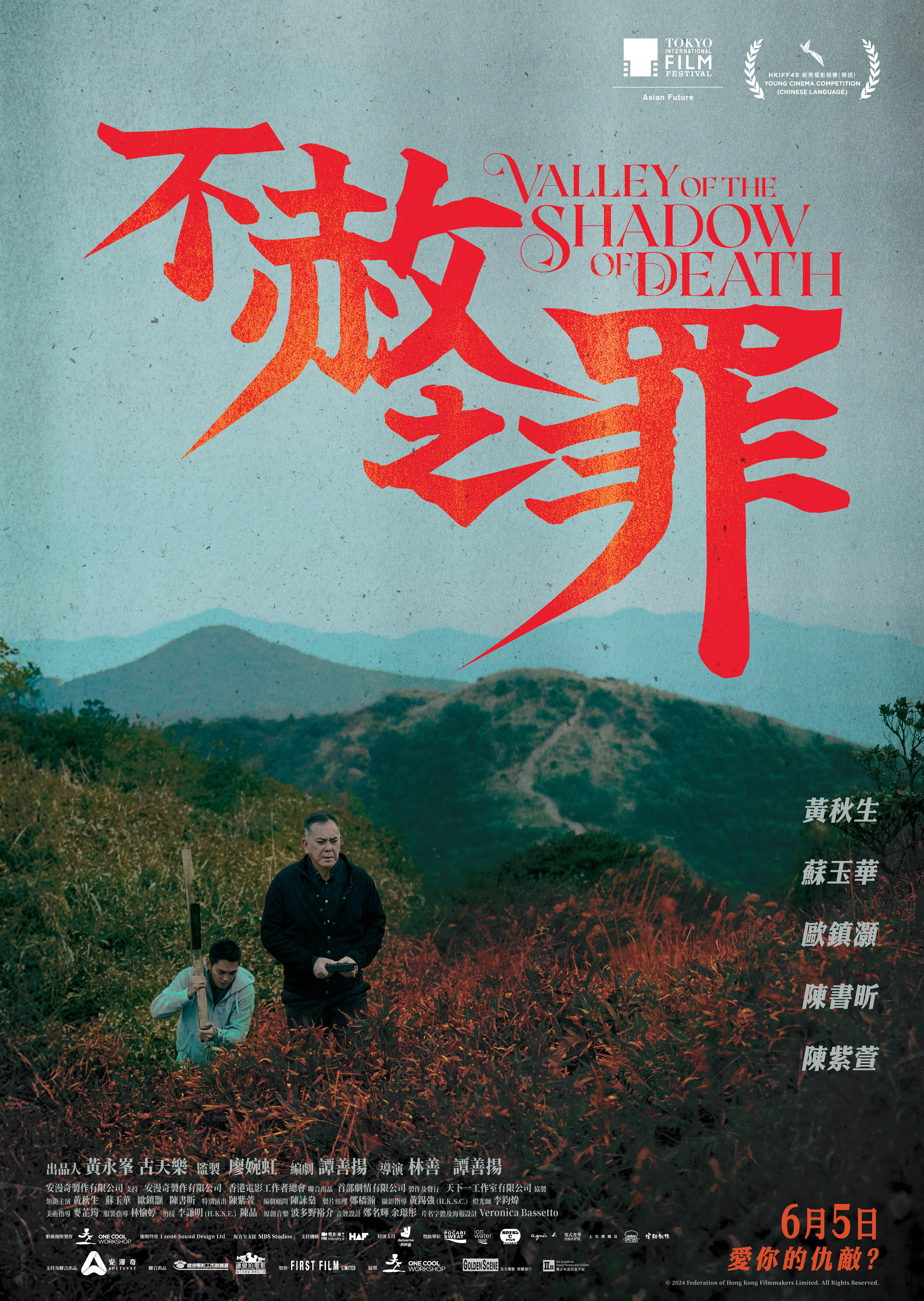
Valley of the Shadow of Death (不赦之罪, Lam Sen & Antonio Tam Sin-yeung, 2024)

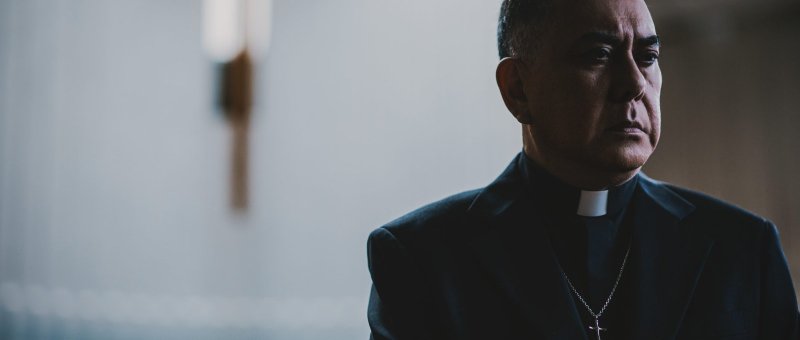
A pastor’s faith is tested when a young man who was involved with the death of his teenage daughter arrives at his church in search of salvation in Lam Sen & Antonio Tam Sin-yeung’s In Valley of the Shadow of Death (不赦之罪). Though his faith tells him that he must forgive and that it is his duty to help this lost young man who has no one else, it is obviously incredibly difficult for him to reconcile his Christian philosophy with the reality of his guilt and anger.

It’s this contradiction that’s at the heart of the film in examining whether Pastor Leung (Anthony Wong Chau-sang) is merely a hypocrite who expounds on “the beauty of suffering,” while wallowing in his grief and fundamentally unable to put what he preaches into practice. But the problem is it’s Leung’s religiously that’s a part of the problem in that its oppressive qualities and implacable rigidity also contributed to his daughter’s death. It’s convenient for him to shift all of the blame onto Lok (George Au) because it means he doesn’t have to think about the impact of his own choices or indeed question his faith in God as his wife (Louisa So Yuk-Wah) has done. 

Mrs Leung also seems to blame her husband on some level and the relationship between the pair has become frosty in the extreme. A reporter arrives to interview Leung about his work while Mrs Leung goes out of her way to make as much noise as possible as she leaves for work. She has since lost her faith, unable to understand why God would do this to them, while Leung regards Lok’s arrival, like many things, as a test yet already knowing he has been found wanting. He does his best to force himself to treat Lok with kindness, but in the end, if God really did intend to give him a son in place of a daughter, Leung cannot accept him.

But Lok looks to Leung as a more literal kind of father anyway. He is genuinely moved by Christianity and sees something in it that he equates with salvation, but at the same time perhaps only because he thinks it will confer “forgiveness”. His problem is also that he doesn’t seem to understand what was wrong about what he did despite completing his prison sentence and assumed that everything would be fine once he repaid his debt to society. Only on learning that Ching is dead does he begin to feel guilty and understand the full impact of his actions. On his release he’d tried to contact Ching on a messenger app though it’s not quite clear for what purpose. Even if he really did want to apologise or try to make a mends, it’s a selfish thing to do given that she almost certainly would not want to ever hear from him again and his resurfacing in her life would only cause her further pain. 

In any case, the film uncomfortably muddies the waters in implying that Ching herself is also responsible for what happened to her, while Leung never really reckons with the new information he’s learned about his daughter who may not have been as sweet and innocent as he’d assumed her to be. Likewise, the fact that Lok had such a difficult life encourages us to sympathise with him and minimise his crime, but he made a clear choice to what he did and is also responsible for it. As Leung is fond of saying, everyone is a sinner, though he doesn’t always seem to accept the same about himself. Lok too maybe entitled to redemption, and helping him may be a way for Leung to make sense of his daughter’s death while atoning for his part in it, but if it’s a test from God it’s one he’s struggling with and largely beyond the limits of his faith. In truth, some of the ideological questioning seems confused or contradictory, more like a thought experiment than a real situation and Lok a hypothetical rather than a lost young man who’s done something unspeakable but still doesn’t really understand why it was wrong. Obsessed with the concept of “forgiveness”, he childishly thinks that winning it would annul his crime as if it didn’t happen in same the way that baptism washes away sin. Leung, meanwhile, cannot practice what he preaches and uses his religion, the very thing that made him fail his daughter, as a shield to avoid thinking about his own culpability. Only God can forgive, Leung’s fond of saying, but the person he needs forgiveness from the most may be himself. 


Valley of the Shadow of Death screened as part of this year’s Focus Hong Kong.

Trailer
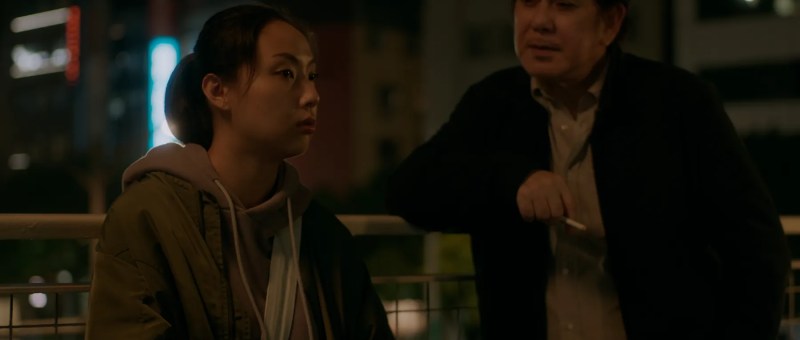
Next Stop, Somewhere (別來無恙, James Lee, 2025)

What does “freedom” actually mean? Will money buy it for you or just result in another kind of prison in which you cannot really say you’re free because you don’t feel like you have the choice to leave? Leaving is really at the centre of James Lee’s sensitive drama Next Stop, Somewhere (別來無恙, biéláiwúyàng) in which the protagonists of parallel stories have both left their homelands not altogether by choice in search of a greater freedom that they nevertheless struggle to find.

Hong Kong actor Huang (Anthony Wong Chau-sang) has left Hong Kong in search of political freedom in the wake of the Umbrella Movement, but is immediately constrained by coronavirus quarantine on his arrival in Taiwan. He is constantly trying to get in contact with a man called James who also seems to be in some political trouble and is not always able to answer, which is a problem because James is supposed to be handling the transfer of his money out of Hong Kong. Huang might be “free” of political oppression, but in reality one is never “free” without money and arguably not even then because of the necessity of acquiring it. That seems to be part of the problem for his maid at the hotel, Xiao Qian (Angel Lee), who feels trapped in a relationship that no longer seems to be working while unable to leave it because neither of them can afford the rent on their own.

Xiao Qian’s relationship is with another woman and perhaps it could be argued that in Taipei she at least has the freedom to live with the person she loved, though on the other hand she pointedly refuses to explain when her girlfriend Bae shows up at the hotel looking for her after she stops answering her calls or messages. Bae also seems to have mental health issues that also perhaps prevent Qian from leaving her, though she continues to treat her coldly and repeatedly refuses her requests for intimacy. It seems that Qian wanted to study abroad in America, but so far has been unable to go. A $100 bill to her represents another kind of freedom, though as she later says to Huang in the end freedom about having the choice to leave.

A $100 bill meant freedom for Kim (Kendra Sow) too, but like Huang she finds herself trapped by the realisation that the note did not represent what she was led to believe it would. Not entirely of her own choice, Kim leaves Vietnam to become the mail order bride of a Malaysian man who claimed to be a wealthy businessman in his 40s but in reality is a market trader quite a bit older than that. Mr Li (Mike Chuah) is totally besotted with his new brides, telling his friends that there were cheaper girls available but his is the prettiest. But in the end he’s trapped by this situation too. It’s clear he hadn’t thought through the reality and was acting out a kind of romantic fantasy. Young and naive, Kim recoils from his touch and building a relationship with her is impossible because she doesn’t speak Mandarin and he doesn’t know Vietnamese. They’re hassled by immigration officials and Mr Li’s irate mother who berates Kim insisting that they only brought her here to have a son and heir so she’s not fulfilling her obligations. For his part, Mr Li is partly sympathetic in that it’s clear he has no desire to force himself on Kim and hurt, if understanding, that she rejects him. When he eventually does try to force her, he can’t go through with it because of the sight of her tears. 

As her mother-in-law feared she might, Kim finds release though a growing relationship with the immigration officer who’s closer to her in age and also an outsider, rejected by Mr Li’s mother on the grounds of his ethnicity. Through love, she finds another kind of “freedom”, but with it constraint and it remains unclear how this situation will play out even as, like Huang, she surrenders the $100 bill to someone who needs it more. To pass time in quarantine, Huang orders a copy of Mishima’s Temple of the Golden Pavilion, a book about a young monk who sets fire to the temple because he can’t bear the existence of something so beautiful in this profane world. Having not yet finished the book after Huang lent it to her, Qian asks him why the boy did it and he replies that perhaps he felt trapped and that only by burning the temple down could he be free. To that extent, for each of them “freedom” means burning the world behind you and never looking back, if only in a purely symbolic sense in finding the courage to leave a dissatisfying situation, no matter how impossible that might seem, along with the willingness to look for happiness somewhere else. 


Next Stop, Somewhere screens as part of this year’s Cinema at Sea.

International trailer

Three Days of a Blind Girl (盲女72小時, Chan Wing-Chiu, 1993)

An oblivious housewife undergoes a kind of awakening while confronted with her husband’s transgressions by a vengeful intruder in Chan Wing-Chiu’s home invasion horror, Three Days of a Blind Girl (盲女72小時). Rendered temporarily sightless after an operation designed to save her sight, the implication is that the heroine, referred to only as Mrs Ng (Veronica Yip Yuk Hing), has been living in a fantasy of aspirational domestic success largely dependent on her heart surgeon husband Jack (Anthony Chan Yau) and devoid of her own identity while blind to the patriarchal forces which oppress her. 

Having returned from surgery in the US, Mrs Ng is assured her sight will gradually return in around 72 hours though until then she will be entirely blind. The doctors give her no special instructions, and she and her husband return to their country home where they are cared for by a maid, May (Chan Yuet-Yue). Somewhat insensitively, Jack has to leave for an important heart attack conference in Macao leaving Mrs Ng solely in the custody of May only May has other plans. Her policeman boyfriend has got them concert tickets while she also needs to go out to refill her asthma medication meaning that Ms Ng will be entirely alone at home while attempting to adjust to her sightless existence. 

Mrs Ng is rendered vulnerable in what should be a safe space. The sanctity of the domestic is disrupted firstly by Jack’s absence and then by an uncanny lack of familiarity introduced by her blindness. Though she has a stick, she soon finds herself bumping into things or encountering unexpected obstacles while the design of the home’s staircase appears dangerous even to the sighted and a definite health hazard to anyone else. In a moment of foreshadowing, Jack warns the maid that there’s a problem with the phone while the mobile he left is also low on battery meaning that Mrs Ng could not even call for help if she needed it. 

Unsolicited help is however something she’s offered by an unexpected visitor, Sam (Anthony Wong Chau-sang), who claims to be an old school friend of Jack’s who also treated his wife for her heart condition. Mrs Ng can’t see it, but Sam is dressed in a rather unique outfit of lederhosen and a check shirt appearing something like malicious garden gnome. In an odd moment of comedy, Sam, who soon begins stalking Mrs Ng around the house, pretends to chase off an intruder by running up and down the stairs swapping characters as he goes but otherwise skews increasingly sinister while discussing his relationship with his wife who he claims has rejected him on the grounds of the printer’s ink that stains his hands. 

Sam is Jack’s inversion, an overly solicitous husband now hellbent on avenging his masculinity by raping Mrs Ng to get back at Jack whom he blames for his wife’s death claiming he treated her heart condition with vitamins while abusing his position to take advantage of her sexually. At first, Mrs Ng doesn’t believe him and trusts her husband but her literal awakening occurs in line with the return of her sight. She begins to see the light and the reality of her life with Jack, ironically thanking him for this experience because it’s taught her how to fight back and protect herself in the face of his male failure. “Don’t think women are easily bullied” she claps back after finally taking charge of her life and knocking the forces of patriarchy firmly on the head.

Nevertheless, she begins to resist with regular household items such as using the serrated edge on a box of clingfilm to try and saw through the ropes binding her hands. Despite her blindness, she uses her knowledge of the domestic space against the intruder Sam and tries to frustrate his plans for her through strategy and forward thinking even while beginning to discern the danger which has always surrounded her as evidenced by the unexpected appearance of an entirely different assailant wandering in by chance in the temporary absence of Sam. “Never fight with women,” a much more confident, fully sighted, Mrs Ng later exclaims finally awakened to the realities of the world around her and unafraid to confront its ever present dangers now armed with the stylish briefcase of an independent woman. Surprisingly feminist in its overtones, Chan turns the home invasion thriller inside out as Mrs Ng mounts a successful jailbreak from the confines of a stereotypical housewife life.


Three Days of a Blind Girl screens at the Prince Charles Cinema, London on 19th October as part of Silk and Bullets: The Sisterhoods of Revenge where it will feature a video introduction by producer Alfred Cheung and pre-recorded Q&A with Director Chan Wing-Chiu.

Original trailer (no subtitles)

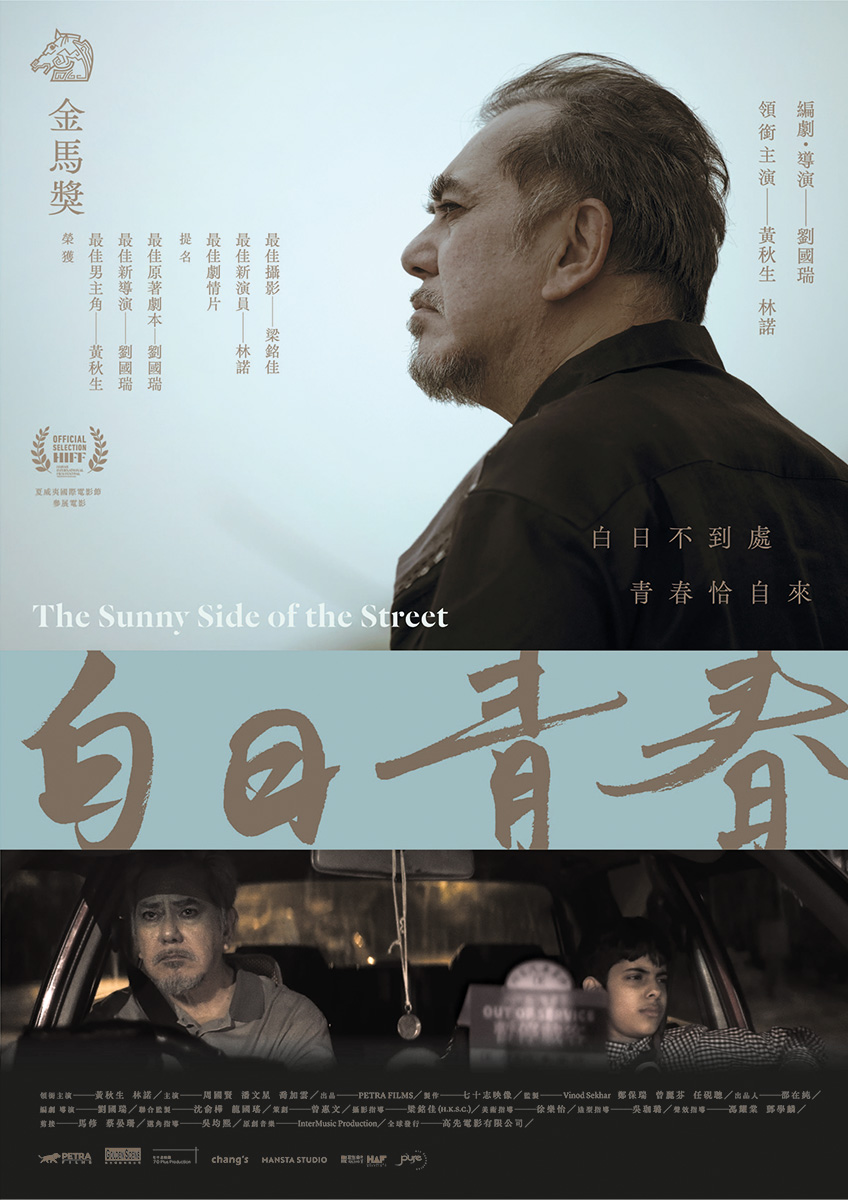
The Sunny Side of the Street (白日青春, Lau Kok-rui, 2022)

Dualities abound in the stories of two frustrated fathers and the sons who vow to be nothing like them in Malaysian director Lau Kok-rui’s paternal drama, The Sunny Side of the Street (白日青春). The fathers are in their way looking for a place in the sun but struggle to find it, while the sons want nothing but their affection and approval but remain resentful for their repeated failures. Each affected by the legacies of geographical displacement, they remain free floating if looking for safe harbour though perhaps in all the wrong places. 

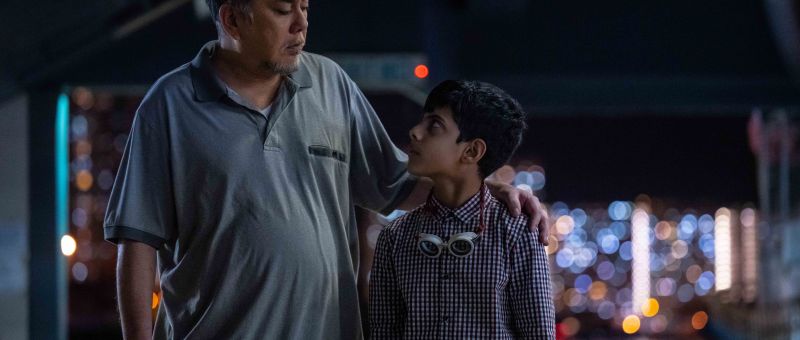
The parallels between embittered taxi driver Yat (Anthony Wong Chau-sang) and former lawyer turned refugee Ahmed (Inderjeet Singh) are amply demonstrated by the opening sequence in which each is late for a wedding after Yat rams into the van Ahmed had borrowed from store owner Ali to transport a secondhand fridge. Yat arrives just in time to see his son, Hong (Endy Chow Kwok-yin), make the toast at his wedding but thank his father-in-law, a senior policeman at his precinct, while looking daggers at Yat whom he only invited a few days before out of a sense of obligation. Ahmed meanwhile was supposed to be a witness at a wedding between a Pakistani man and an Indonesian woman at the refugee camp not far from where Yat lives which the officiant is keen to remind them is binding in the eyes of Allah but not so much the government of Hong Kong. 

As a somewhat prejudicial radio show playing in Yat’s car explains, Hong Kong is a point of transit. If their claims are upheld, the refugees will not settle there but be moved on to other countries such as Canada where a family at the wedding are about to travel taking the best friend of Ahmed’s son Hassan (Sahal Zaman) with them. The radio show talks about “fake refugees” describing them as a drain on resources depriving local people of services they should otherwise be entitled to while it’s clear that many don’t seem to see the refugees as equals and think of them as lazy shirkers with criminal proclivities. Yat repeatedly uses a racial slur to refer to Ahmed and immediately tries to pin the accident on him assuming the policeman will also jump to the conclusion that it must be Ahmed’s fault for being a bad driver only the policeman doesn’t quite play along even when pulling Ahmed aside for an ID check. 

The irony is that Yat is also a refugee who swam to Hong Kong from the Mainland and is still carrying trauma from his flight in the same way many like Ahmed are yet cannot find it within himself to empathise with him, only to act with entitlement and absolve himself of blame through manipulating his connections with the police. He has quite clearly lost his moral compass as the repeated motif of him looking the one which led him to Hong Kong but now appears to be broken makes plain. Hong pointedly refuses to help his father and is clear they should go by the book, but his less rigorous friend is only too keen to help. In any case the petty vendetta between the two men, Ahmed sticking to his principles and refusing to lie to make the situation go away and Yat insisting on enforcing his privilege by forcing him to back down, escalates with tragic results eventually forcing Yat to wrestle with the consequences of his actions and not least the causes of his estrangement with his son. 

Hong tells him that he doesn’t want to be a man like him who is unable to protect his family, while Hassan snaps at Ahmed that his acts of petty thievery are better than being poor like his father. Yet while Hong has swung in the opposite direction, raising himself to be a man who is compassionate and dedicated to justice, Hassan is in danger of going off the rails not least because he has bad eyesight and is falling behind at school because even as something as simple as glasses for their son is not in the family’s reach. Ahmed’s dodgy friend Numen is forever trying to get him into crime, knowing that refugees are not permitted to work or even accept monetary gifts, but he refuses while Hassan begins to see a way of taking control of his situation though thievery and rebels against his father as he does so. 

When Yat begins to take an interest in Hassan it’s mainly to assuage his guilt in knowing that he ruined Ahmed’s life and has left a boy without a father for whom he is now responsible. Yet it’s also in a way an attempt to repair the relationship he could not rebuild with his son while addressing the latent trauma from his own escape from Mainland China which he has otherwise buried through heavy drinking that finally resulted in a liver transplant from Hong that only seemed to deepen the sense of debt and obligation between them. Perhaps Hong Kong is a transitory place after all, each of them in some way displaced and not least from each other while continuing to hope for a better place in the future only to discover nothing more than loneliness and uncertainty if tempered by love and the shades of a frustrated hope.


The Sunny Side of the Street screens March 12/17 as part of this year’s Osaka Asian Film Festival.

Original trailer (Traditional Chinese / English subtitles)

Images: (C) Petra Films Pte Ltd

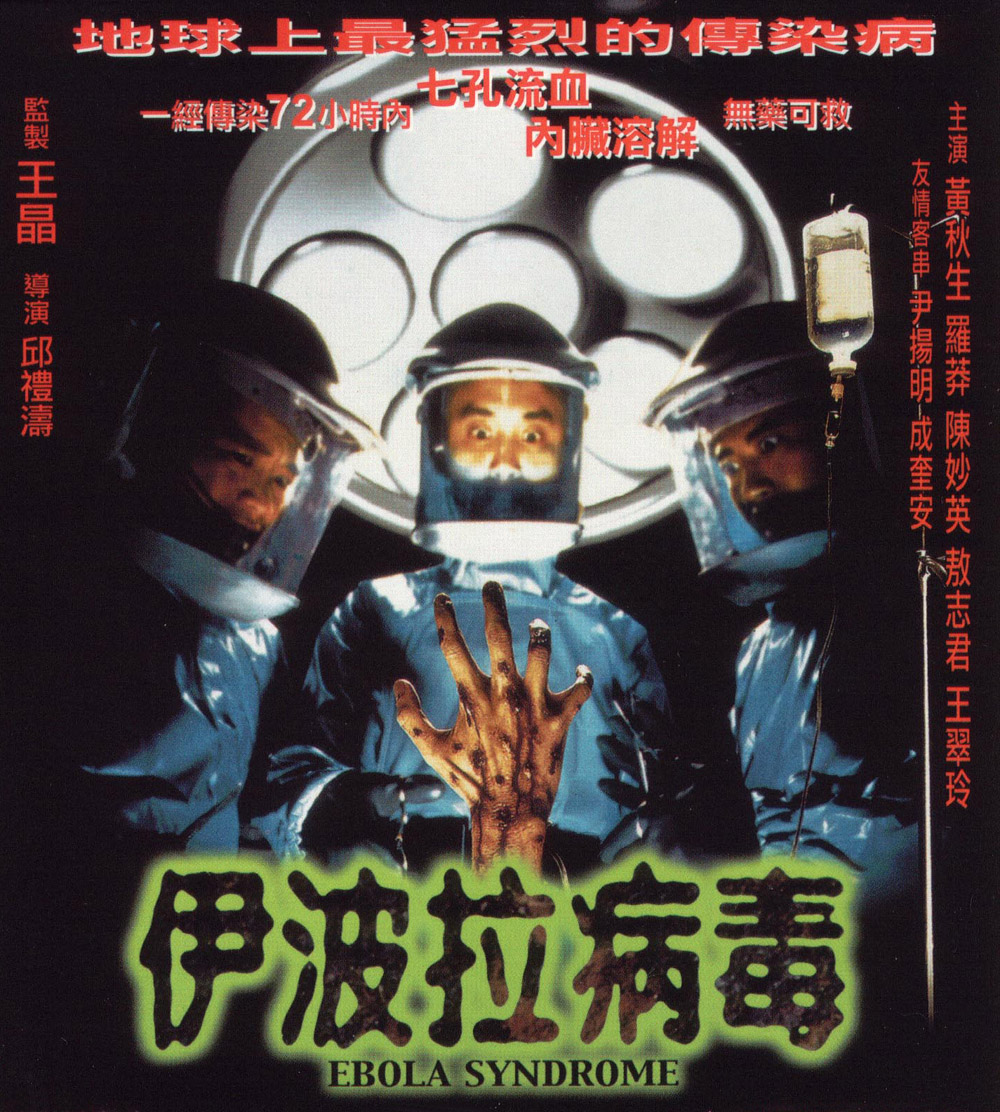
Ebola Syndrome (伊波拉病毒, Herman Yau, 1996)

“I’ll fuck up whoever busts my balls!” snarls the protagonist of Herman Yau’s notorious 1996 Cat III exploitation film Ebola Syndrome (伊波拉病毒), seemingly filled with internalised rage in a sense of oppression as a little guy continually at the mercy of bosses who exploit and belittle him. Then again, Kai (Anthony Wong Chau-Sang) is not a nice guy and his various crimes are less those of an emasculated man towards an unfair society than a sociopathic disregard for conventional human morality. 

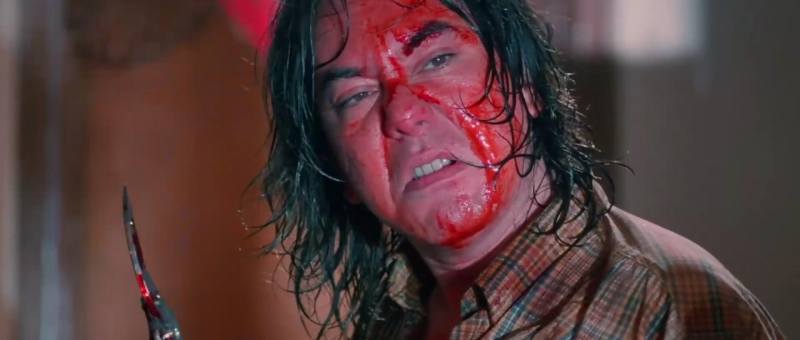
Even so, his first act of violence is a result of his attempt at petty class rebellion by sleeping with a mob boss’ wife only for the boss to come home and ritually humiliate him by ordering his wife to pee all over his treacherous underling before threatening to cut his bits off with a pair of secateurs. Kai, however, goes crazy and uses the shears to take out the boss, the associate, and the wife, pausing as he leaves to douse their terrified little girl in petrol in an ironic piece of foreshadowing only to be interrupted before he can light a flame. 10 years later in 1996, Kai is on the run working in a Chinese restaurant in Johannesburg where he is once again oppressed and belittled by the Taiwanese manager and his wife not to mention further displaced by the complicated racial politics of mid-90s South Africa. 

A minor comment on colonial corruptions in the anxiety surrounding Hong Kong’s imminent transition, Kai and his boss Kei (Lo Meng) find themselves in a difficult position in facing discrimination from all sides. Needing meat for their restaurant, they decide to strike a deal with the local indigenous community after being insulted by a white butcher but on their arrival walk into some kind of ritual conducted over the bodies of numerous locals who each have bloody welts all over their skin. On meeting with the leader, the pair immediately rip him off while he plays a grim joke on them as they discover two human bodies in place of the pig carcasses they’d intended to buy before he returns to set them straight.

This early moment of foreshadowing has its own dark irony as Kai will eventually end up once again murdering three people he accuses of busting his balls before mincing them up and turning them into “African Char-sui Bao” hamburgers. By this point Kai is already a “super spreader” having unknowingly contracted the ebola virus after raping a near comatose indigenous woman at the waterside who vomited white liquid in his face as he climaxed. In another instance of cruel cosmic irony, Kai turns out to be one of small amount of people effectively immune recovering quickly from what seems like flu but almost certainly having infected Kei and his wife and through them anyone who ate the African Char-sui Bao which is how ebola winds up in the city and eventually travels all the way to Hong Kong after Kai cuts his losses and goes home to live the high life on Kei’s savings. 

Yau does not hold back on the gore nor on the very real terror of the ravages of ebola as a doctor gruesomely dissects a human body remarking on the disintegration of its internal organs. At this point, Kai doesn’t know ebola’s what he has or that he’s passing it on but it’s unlikely he’d care. When the truth is finally revealed he runs anarchically through the streets with a meat cleaver shouting “ebola for everyone” and spitting at passersby as if taking his revenge against humanity itself. Yet he’s ultimately a wild animal trapped in civilised society caring for nothing other than the satisfaction of his immediate needs aside from his desperation to affirm his masculinity, not to be looked down on or bullied. We see him impassively chop up live frogs and witness the heads being torn off live chickens for others to drink their blood seeing him for what he is, an urban predator with no sense of conventional human value systems. 

Even so, the film seems to suggest this breed of malicious selfishness and amorality cannot be exorcised from the contemporary society while the infection continues to spread exponentially, the film’s bleak conclusion implying that the innocent will continue to suffer while the systemic causes of the disease go unexamined. Then again, Yau approaches his material with absurdly dark humour that implies that this really is some sort of cosmic joke in which all you can really do is laugh at life’s immense cruelties. 


Trailer (no subtitles)

Executioners (現代豪俠傳, Johnnie To & Tony Ching Siu-Tung, 1993)

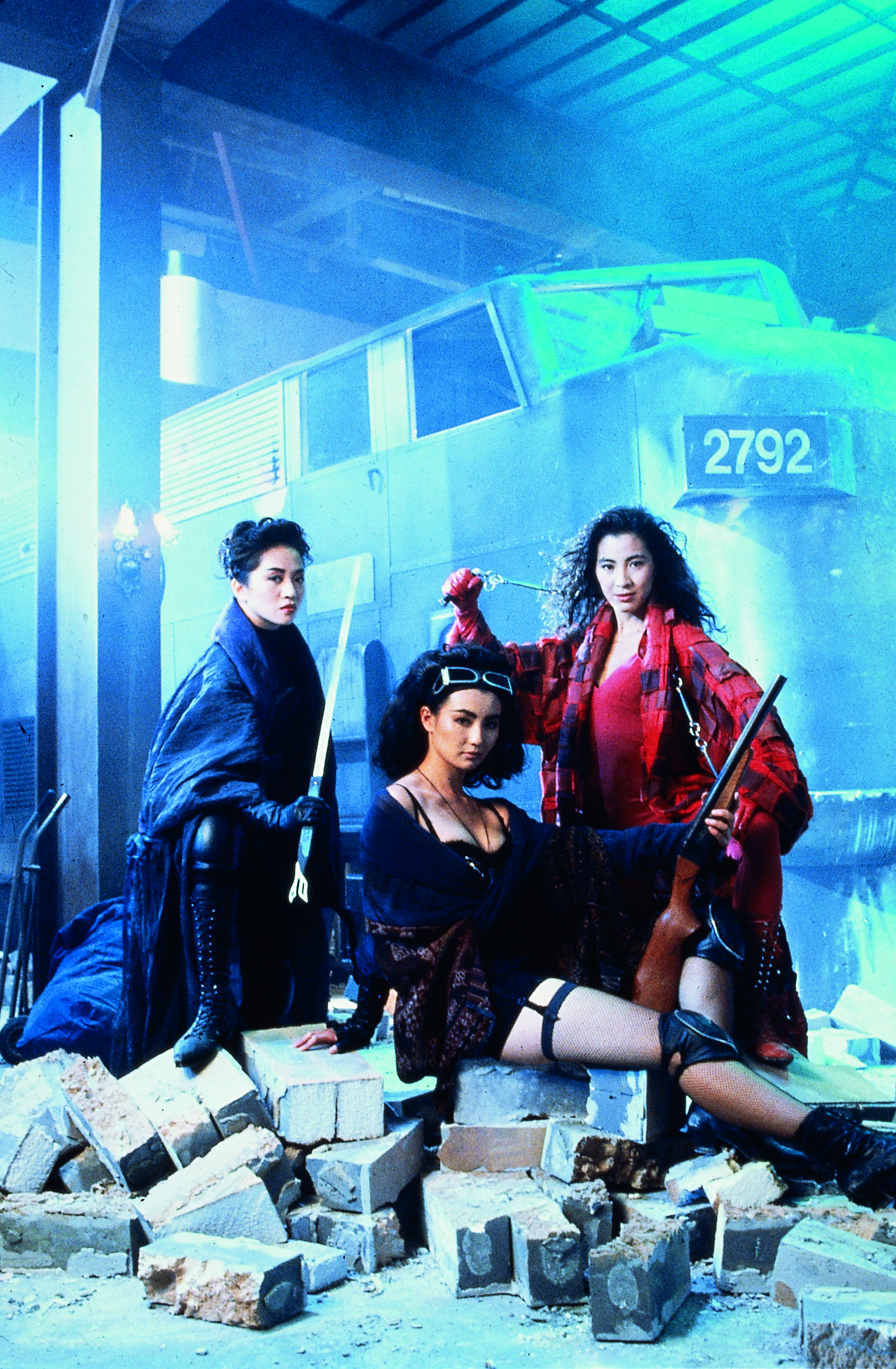
At the end of The Heroic Trio, the shadowy rise of authoritarianism seemed to have been beaten back. The three superwomen at the film’s centre had discovered joy and liberation in female solidarity and were committed to fighting injustice in a flawed but improving world. If Heroic Trio had been a defiant reaction to Handover anxiety, then sequel Executioners (現代豪俠傳) is its flip side shifting from the retro 40s Hong Kong as Gotham aesthetic to a post-apocalyptic nightmare world where nuclear disaster has normalised corporate fascist rule. 

As Ching (Michelle Yeoh) explains in her opening voiceover, a nuclear attack has ruined the city contaminating its water and leaving ordinary citizens dependent on the Clear Water Corporation for safe drinking supplies and basic sanitation. The trio have been scattered, pushed back into the roles from which they escaped at the first film’s conclusion save perhaps for Ching who continues to serve a duplicitous authority but does so with clearer eyes and a humanitarian spirit driving a medicine truck to ensure those in need have access to healthcare. Chat (Maggie Cheung Man-Yuk) meanwhile has reverted to her cynical bandit lifestyle, hijacking water trucks mostly for her own gain but also ensuring the water gets to the needy. Tung (Anita Mui Yim-Fong) has abandoned her Wonder Woman persona on the insistence of her husband who is now a high ranking policeman with the military authority devoting herself to the role of the traditional housewife and mother to her daughter Cindy. 

Though the women seem to have maintained their bond, Ching and Chat turning up for a Christmas celebration with Cindy, the political realities soon disrupt their friendship as they find themselves at odds with each other given their shifting allegiances. As in the first film, Chat has continued to accept work from dubious authority in the form of the Colonel including tracking down a man who embarrassed the police by firing a gun at a rally for a cult-like protest leader, Chung Hon (Takeshi Kaneshiro), only the gunman later turns out to be a patsy and Chat has unwittingly helped them bump off the voice of the people as an overture for a military coup. Ching is secretly working for responsible government trying to safeguard the President to prevent his assassination by the Colonel, but obviously cannot say very much about her mission arousing Tung’s suspicions that she may have been part of a plot to have her husband killed. 

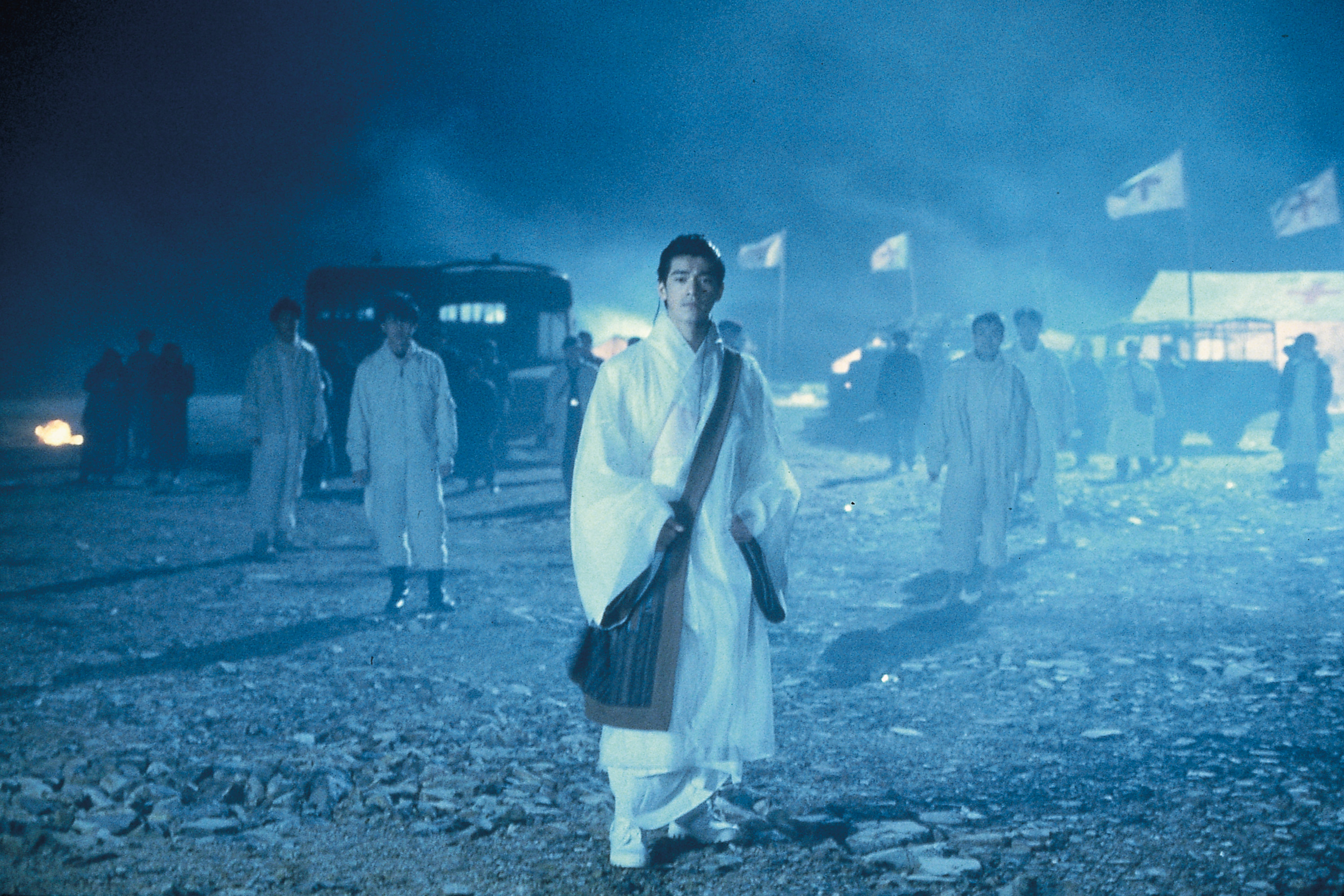
In any case, the true villain turns out to be a kind of Wonder Woman mirror image in that the mysterious Mr. Kim (Anthony Wong Chau-Sang), CEO of Clear Water Corporation, is a man who wears a mask to hide his scarred face and dresses like an 18th century aristocrat as if engaged in some kind of Man in the Iron Mask cosplay. Kim and the Colonel have been collaborating to engineer a military coup by deliberately restricting water supplies. The oblivious Chung Hon had unwittingly been Kim’s stooge, stoking up public resentment about the water situation to give the government an excuse for a crackdown and the Colonel to move. Chat’s path to redemption amounts to vindicating the faint hope that the water contamination was a hoax, which she eventually does by taking Cindy with her to smash the corporate dam and return the water to its rightful flow and the people of the city. But like the Evil Master, Kim does not die so easily turning up for a surprisingly hands on fight squaring off against the barely unified trio who are only just beginning to repair their friendships on coming to a fuller understanding of the reality of their circumstances. 

They are all in a sense liberated, though less joyfully than in the first film and largely through violent loss. The good guys don’t always win and a fair few die while all the women can do is keep moving, fighting off one threat after another with few guarantees of success and not even each other to rely on. Where the first film had embraced a hopeful sense of comic camp, Executioners skews towards the nihilistic in its dystopian world of corporate overreach and increasing militarism in which the trio no longer trust each other and are each re-imprisoned inside their original cages from patriarchal social norms to capitalistic inhumanity and questionable loyalties with the only hopeful resolution resting on “the sincerity of our friendship” in a world which may be healing but is far from happy. 


Executioners screened as part of this year’s San Diego Asian Film Festival.

The Heroic Trio (東方三俠, Johnnie To, 1993)

Female solidarity becomes an unexpected weapon against stealthy authoritarian take over in Johnnie To’s gloriously camp superhero action fest, The Heroic Trio (東方三俠). Uniting three of the top stars of the age in Anita Mui, Maggie Cheung, and Michelle Yeoh the film flirts with Handover anxiety in the “Evil Religion” that threatens to steal the children of Hong Kong, but eventually locates the source of salvation in the heroine’s shared humanity brokered by a tripartite solidarity of justice and equality that defies both the patriarchal world around them and the cruel authoritarianism in which they have been raised. 

In an almost biblical allegory, large numbers of male infants have been going missing over the last 18 months and the police are, predictably, mystified relying on the reappearance of the mysterious superhero Wonder Woman to solve the mystery herself. Truth be told, top Inspector Lau (Damian Lau Chung-Yan) hasn’t yet realised that Wonder Woman is his own wife, Tung (Anita Mui Yim-Fong), so perhaps his investigative skills aren’t all that despite the dynamism of the opening scenes which see him demonstrate his masculinity by leaping out of a window stop a thief from driving off in his classic car which is parked outside a creepy mansion in the middle of nowhere. Nothing really gets done until the chief of police gets a note that his own infant son is next on the list, though he briefly considers simply swapping his kid for another couple’s child while hiring “Thief Catcher” Chat (Maggie Cheung Man-Yuk) to get him back when he’s kidnapped by an “Invisible Woman”, Ching (Michelle Yeoh), whom Tung manages to wound while saving the decoy baby. 

As it turns out, Ching has been taking the babies on behalf of “Evil Master” (Yen Shi-Kwan) who lives in an underground lair in the sewers and is the head of a mysterious cult hellbent on finding a new king for China. There may be a degree of Handover anxiety in Evil Master’s mission, seeking to possess and control Hong Kong by brainwashing its children eventually possessing Ching by removing her bodily autonomy while her sisters must quite literally free her from his icy grasp. Each of the kidnapped boys is said to have a divine destiny, though Evil Master doesn’t know which one is the new king and has a habit of simply killing the ones who disappoint him while the others are raised as mindless automatons consuming those like them and destined to become thoughtless killing machines like the bloodthirsty Kau (Anthony Wong Chau-Sang). 

Chat, who was raised as one of Evil Master’s minions but managed to escape thanks to the largess of Ching and his since become an ultra-capitalist bounty hunter if one less cynical than she originally seems, thinks it’s better to simply end the cannibal kids’ misery before they end up like Kau while Tung prioritises saving the infants so they can be returned to their parents before being subject to one of Evil Master’s weird rituals. Ching, meanwhile, is only participating in Evil Master’s plan to protect the man she loves, a mad scientist slowly succumbing to poisoning caused by his invention in true genre fashion. It is then in a sense love that causes Ching to reject her programming, but it’s the solidarity of Tung and Chat, along with a desire for vengeance, that finally gives her the courage to rebel. 

In a brief flashback, Tung had failed to save Ching during a tough training session with their mentor who had cruelly told her that she’d have to fight for justice alone while Ching, cast out, sought support by turning to the dark side. The scene repeats itself twice in the film’s closing scenes in which Tung is this time able to save Ching but only because of the support from their friend and equal Chat making up the third point of the triangle and anchoring them both firmly to ensure they will not fall. “Life is meaningful if you can face yourself” Tung tells Ching, shedding her mask having presumably dealt with her own dark past and pulling her sister up with her as an equal leaving the past behind to fight for a future of justice and freedom. 

To and action director Ching Siu-tung recast Hong Kong as Gotham with a production design quite clearly inspired by Western comic books in which the three heroines end by getting fancy capes that flicker in the wind. Chat, a motorcycle-riding delinquent force of nature, even at one point launches herself into battle on an oil drum propelled by dynamite which she later uses to take out the cannibal kids not to mention Evil Master himself. But it turns out the spectre of creepy, ritualistic authoritarianism doesn’t die so easily, Evil Master’s charred skeleton gets back up for one last hurrah until his brain finally explodes when confronted by Ching’s rejection having returned to the fold and now ready to sacrifice herself for a freer future for all. Essentially a comic book wuxia, To’s ironic action drama allows its heroic trio to find salvation in female solidarity anchoring each other in a world beset by fear and villainy.


The Heroic Trio screened as part of this year’s San Diego Asian Film Festival.

Legally Declared Dead (死因無可疑, Steve Yuen Kim-Wai, 2019) [Fantasia 2020]

“The road to hell is paved with good intentions” a well-meaning insurance agent is advised in Steve Yuen Kim-Wai’s Legally Declared Dead (死因無可疑), though he struggles to fully understand its meaning and in the end you have to wonder how good his intentions really were. Yusuke Kishi’s novel The Black House has been adapted twice before, firstly in an idiosyncratically absurdist take by Yoshimitsu Morita, and then in Korea by Shin Terra who remained firmly within the realms of contemporary K-horror. Yuen lands somewhere between the two, adopting a stylish veneer of neo noir as the traumatised hero has his worldview upended by heinous immorality. 

Yet as Wing-shun (Carlos Chan Ka-Lok) tells Ching (Stephen Au Kam-tong), the office investigator, he’s just a broker and it doesn’t do to be suspicious of all his clients. A nice, well mannered young man, Wing-shun is all poised customer service charm, but he also firmly believes that the business of insurance is a noble good, that he’s helping people by being there for them when disaster strikes. As such, he doesn’t like to think that people are abusing the system, and is reluctant to reject a claim. On the other hand, he calms a pair of panicked gangsters who are most definitely on the fiddle by explaining that neither he nor his colleague can help them because being a broker is like being a dealer at the casino, they can only push the paperwork to the floor manager who alone has the authority to decide whether or not to pay out and wait for their instructions. 

Wing-shun’s casino metaphor is more true than he intends it, what else is insurance after all than a kind of gambling? Wing-shun can tell himself he’s there to provide relief and support in times of need, but really he’s betting against misery which might be better than betting in its favour but it’s still wagering people’s lives. That fact’s brought home to him when he takes a call late one evening from a man who asks him if they pay out on suicide. Cheerful as ever, Wing-shun asks for his policy number to check the paperwork before realising the darkness inherent in the question and telling the person on the other end of the phone not to do anything rash, “money doesn’t solve everything”. The man simply asks for his name and then abruptly hangs up. Wing-shun chalks it up to just another weird thing that sometimes happens and forgets about it but the next day he’s told that a client has personally requested him to talk over their policy and wants a home visit to a rural location outside the city. A little bemused, Wing-shun does as he’s told and encounters Chu Chun-tak (Anthony Wong Chau-Sang), not realising he’s the man from the phone only noticing he’s behaving quite strangely. Suddenly Chun-tak starts shouting for his son Kafu and gesturing to another room inside which Wing-shun discovers the boy hanging. 

The boy’s death triggers painful memories for Wing-shun who is burdened with a sense of guilt over the death of his older brother in childhood. Unable to escape the idea he’s been set up and Chun-tak only invited him out here to “find” the body, Wing-shun is convinced that he killed Kafu in order to claim his life insurance payout. Kafu was Chun-tak’s stepson and also had learning difficulties, while Chun-tak’s wife Shum Chi-ling (Karena Lam Ka-Yan) is partially sighted and walks with a pronounced limp. Wing-shun is particularly worried because Chun-tak also has a policy on her and it’s reasonable to assume she’ll be next in the firing line. He struggles, however, to convince others of his suspicions. The policeman investigating closes the case when the autopsy comes back with suicide as the cause of death, attributing the motive to exam stress, while the insurance company fails to find evidence to deny the claim.  

Unlike the other adaptations, Legally Declared Dead keeps the suicide option on the table while Wing-shun begins to go quietly out of his mind. Meanwhile, his psychology student girlfriend (Kathy Yuen Ka-Yee) hooks him up with her dubious professor (Liu Kai-chi) who is studying the “criminal personality” and claims that while some people commit crime because of trauma and desire a few so because they’re simply born bad and can never be saved. These people, he says, are manipulative narcissists who often exploit the vulnerable, making them a kind of “slave”. Professor Kam becomes overly invested in Wing-shun’s case, convinced on meeting him that Chun-tak is a clear case of “criminal personality”, murdered his son, and is almost certainly going to murder his wife. But is it really fair to decide someone’s killed their child just because they’re a bit odd and admittedly desperate for money, aren’t they just being judgemental and prejudiced? Come to that, is it sexist and ablest to assume that Chi-ling is naive and powerless, that she is a potential victim and could not have been involved in her son’s death or conversely maybe planning to off her husband?

Wing-shun lives with a collection of rare insects including a few praying mantises, which he states cannot be caged in pairs because the female will devour the male, but he continues to think of Chi-ling as sweet and harmless seeing her tenderly calm her husband down after starting to accompany him on their daily visits to the insurance office to ask about the money. On the other hand, with her limp and milky eye Chi-ling is also uncomfortably coded as villainous in an unpleasant alignment of physical deformity and “evil”, while Chun-tak is also assumed to be abusive largely because he struggles to communicate in the “normal” way. 

Nevertheless, the idea that some people are deliberately maiming themselves to claim on “workers’ insurance” either at their own behest or forced into it by loansharking gangsters pursuing gambling debts is presented as no real surprise just another element of a cynical and duplicitous society. Wing-shun knew this, but perhaps didn’t really believe it. The Chu case exposes to him the ugliness of the world in which he lives, raising with it old memories of his childhood trauma, the very kind of trauma which professor Kam insists causes some to commit crimes. Becoming fixated on the idea of Chun-tak as a murder, Wing-shun descends into nervous paranoia but is perhaps less interested in getting justice for Kafu and protecting Chi-ling than vindicating himself and defending the “nobility” of insurance as a concept for social good while avoiding dealing with his own childhood trauma in refusing his responsibility towards his brother. 

Shooting the pulpy material with a stylish, B-movie sheen, Yuen closes with a Silence of the Lambs-inspired climax which sees Wing-shun venture alone into the nest of a killer, repeatedly blinded by ultraviolet light and denied the ability to fully asses his reality. He thinks he finally understands Ching’s caution that the “road to hell is paved with good intentions” which he perhaps had in his desire to get justice for Kafu and protect Chi-ling, but in the end he might have to admit that the killer had a point when they said he  was “just like me”, a “criminal personality” consumed by latent violence caused by unresolved childhood trauma. “You do what you need to to survive, you scam people and they scam you” Wing-shun’s friend shrugs, but it’s a lesson Wing-shun learns all too well, once again refusing his responsibility as a secondary victim looks to him for help but discovers only cold and cynical resentment.


Legally Declared Dead streamed as part of this year’s online edition of Fantasia International Film Festival. It will also be available to stream in New York State on Sept. 5 only as part of this year’s New York Asian Film Festival.

Original trailer (English subtitles)

A Home with a View (家和萬事驚, Herman Yau, 2019)

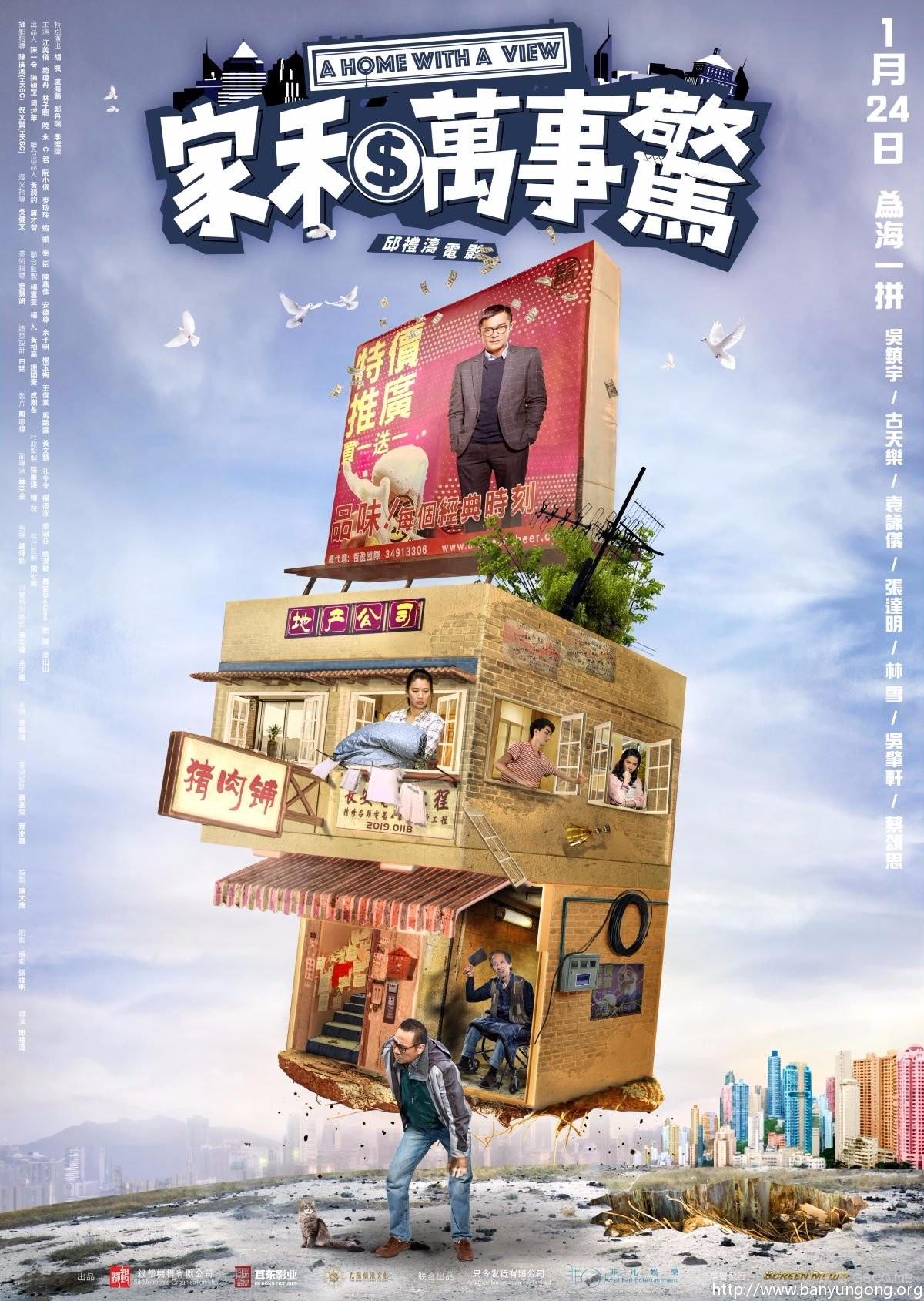
Home with a view poster 2Everyone needs an oasis. It might be a mirage, but still you need to believe in it anyway or with the world the way it is you might just go crazy. For the Lo family, that oasis was their tiny harbour view for which they paid handsomely even though their home could be described as modest at best. Relying on the calming vision of the sea to preserve their peace of mind, the family are constantly preoccupied by the rapid increase in high rise apartment buildings which threaten it, but did not bank on a cynical businessman setting up home on the rooftop opposite and putting up a giant advertising billboard to make a few extra pennies.

Adapting the stage play by Cheung Tat-ming, Herman Yau uses the woes of the Lo family to satirise the effects of Hong Kong’s ongoing housing crisis as they find themselves living in a cramped apartment block where everyone seems to have problems but no inclination to mind their own business. Mrs. Lo, Suk-yin (Anita Yuen Wing-yi), is fed up with the butcher (Lam Suet) who lives directly above them and his habit of loudly mincing pork while she’s trying to eat her dinner in peace, while the kids – son Bun-hong (Ng Siu-hin) and daughter Yu-sze (Jocelyn Choi), resent the intrusion of cigarette smoke wafting up from the flat below belonging to an elderly resident whose oasis is presumably tobacco. Meanwhile, Grandpa (Cheung Tat-ming) is in poor health and in the process of losing his marbles all of which makes for a very exciting home environment where chaos rules and there is always something new to bicker about.

Family patriarch, Wai-man (Francis Ng Chun-yu), sunk considerable expense into buying this apartment because of its sea view. In fact he’s still paying off a hefty mortgage which is why the family is engaged in a money saving competition where they challenge each other to come up with the best schemes and bargains, but he is at heart a kindhearted man which is perhaps why he finds himself handing over a huge wad of cash to pay off the overdue rent of the lady next-door who was threatening to commit suicide rather than risk eviction with her husband seemingly having disappeared off somewhere leaving her alone with her young son. He is not, however, above jamming with the system and is himself an estate agent peddling “low cost” subdivided flats with no widows or kitchens and only access to communal bathrooms in disused but not quite redeveloped former industrial buildings.

Desperate to reclaim their access to serenity, the family set about trying to get the cynical businessman opposite, Wong (Louis Koo Tin-lok), to take the billboard down but he proves smug and indifferent to their plight. In fact, his resentment towards those who can afford swanky sea view apartments is one of the reasons he put the billboard up in the first place so he’s not about to take it down just because he’s realised its presence is inconsiderate. Trying to get the authorities, including an old friend with a longstanding crush on Suk-yin, involved proves largely fruitless with the family locked into a bureaucratic nightmare which saps all their energy and only drives them all crazier even as they begin to unite in pooling their efforts to outsmart Wong who insists the billboard is “art” which he made himself and enriches the city.

The intersection between art and advertising, as well as mild motion towards both things as acts of protest, is only one of the film’s meta touches, but its main theme is indeed family and the various ways the modern society both frustrates and cements it. The Los who were always at each other’s throats, became calm sitting together gazing out at the peaceful harbour but later returned to their individual spheres before reuniting in conflict. Meanwhile, we discover that Wong has a sad story of his own which paints him as a lonely man without a family who likes the attention the billboard has brought him because it’s finally forced people to acknowledge his existence. Rather than managing to make friends with him, the Los descend further into their psychotic fury as they try to defeat Wong, ironically rediscovering their family solidarity in the process. “In this terrible world only family can protect us”, Grandpa says, and in this crazy cutthroat society he may be right. Perhaps the best course of action is to all go mad together rather than try to resist the craziness.


A Home with a View was screened as part of the 2019 Udine Far East Film Festival. It is also currently available to stream via Netflix in the UK (and possibly other territories).

Original trailer (English subtitles)

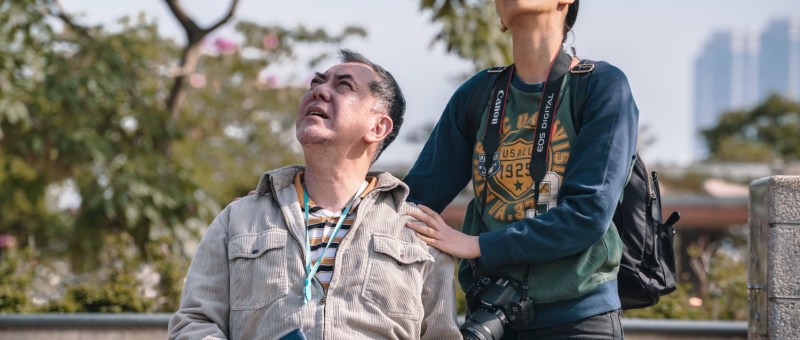
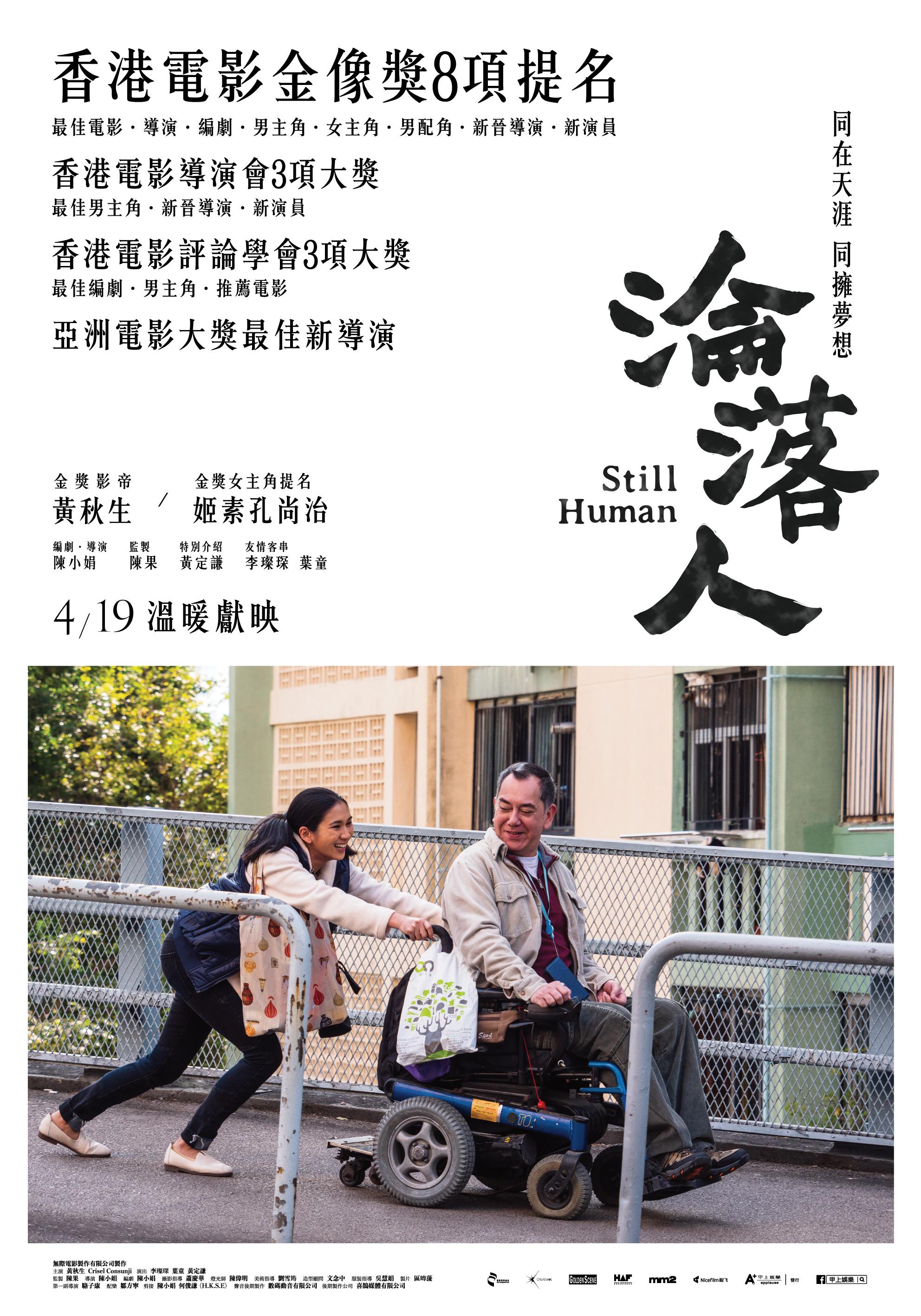
Still Human (淪落人, Oliver Chan Siu-kuen, 2018)

Still human posterA peculiarly Hong Kong phenomenon – crowds of Filipina domestic helpers filling the city streets on a Sunday, for many of them their one and only day off in an often 24/7 job. The presence of the Filipina workers has often been a taboo subject, as has the frequently inhumane treatment they receive from exploitative employers, but Hong Kong cinema has been in a self-reflective mood of late as Oliver Chan’s Still Human (淪落人) proves. A quiet ode to the power of breaking down barriers and embracing difference, Chan’s bold debut centres itself on the unlikely friendship between a disabled man and his Filpina carer.

Cheong-wing (Anthony Wong) has been paralysed from the chest down for the past few years following a construction site accident. Though he has enough movement in his hands to be able to get himself about with an electric wheelchair, he needs day to day help with essential tasks such as cleaning and washing not to mention getting himself from the chair to the bed. His last few carers have all abruptly left him in the lurch so he doesn’t have high hopes for the latest – Evelyn (Crisel Consunji), a former nurse from the Philippines recruited by Cheong-wing’s friend Fai (Sam Lee). Cheong-wing is irritated to discover that Evelyn speaks no Cantonese while he has almost no grasp of English but is encouraged to make it work because he needs help and, according to Fai, none of the Cantonese-speaking carers is prepared to help him.

From Cheong-wing’s earliest behaviour, it might seem obvious why he has such a high turn over of helpers and one wouldn’t blame Evelyn for walking out right away but then again, perhaps he is only grumpy because he’s lonely and sick of everyone suddenly abandoning him. A solitary pensioner, Cheong-wing lives alone in a high rise council flat. His wife left him years ago and remarried while his medical student son is away in the US. On the ground he only has Fai – a slightly younger man who acts as a surrogate child in gratitude for the various ways Cheong-wing once looked after him when he arrived as teenager from the Mainland with no Cantonese and no family to help him.

Meanwhile, Evelyn tries to adjust to her new life, having made peace with her decision but making the best of a suboptimal situation. Scrimping and saving, she tries to get the funds together to definitively escape a bad marriage against the wishes of her family who constantly beg her for money and guilt her into doing their bidding. Making friends with some other helpers via a Facebook group, she joins the regular Sunday gatherings but feels herself somewhat out of place even as she begins to bond with the already jaded veteran overseas workers. Play dumb, they tell her. Don’t learn Cantonese, or do but don’t let your employer know. All that matters is not getting fired and sent back to the Philippines so keep your head down and say yes sir while always looking for a better gig or, best of all, a wealthy husband. Evelyn ignores most of their advice. She isn’t interested in another loveless marriage, what she wants is her freedom.

Nevertheless she continues to endure xenophobic micro-aggressions and constant mistrust despite her warm and winning personality. Cheong-wing, teaching her Cantonese, eventually begins to bond with Evelyn, convinced that she is a “good person” though maybe, like him, going through some tough times. Interacting with Evelyn allows his sweet side come through, making plain that he is at heart a kind and sincere man but one who had long since given up on life and kept others at a distance believing himself to be a burden. Where the traditional family has failed, found family plugs the gap as Cheong-wing and Evelyn pick up an easy paternal rapport, supporting each other with genuine warmth and affection as Cheong-wing discovers Evelyn’s long buried dream of becoming a photographer and commits to helping her achieve it all while knowing it will eventually take her away from him.

Realising that where there’s life there’s hope, the pair come to the conclusion that it’s never too late to dream and each find themselves edging towards what it is they really want from life with the confidence of knowing someone has their back and their best interests at heart. A warm and empathetic yet uncompromising look at life on the margins of modern Hong Kong, Still Human is a beautifully humane tribute to the healing power of human connection and the joy of finding kindred spirit in unexpected places.


Still Human was screened as part of the 2019 Udine Far East Film Festival. The film will also receive a special one off screening in Chicago courtesy of Asian Pop-Up Cinema on Monday 13th May at the Gene Siskel Film Center, 8pm where director Oliver Chan and actress Crisel Consunji will be present for a Q&A.

Original trailer (English subtitles)