
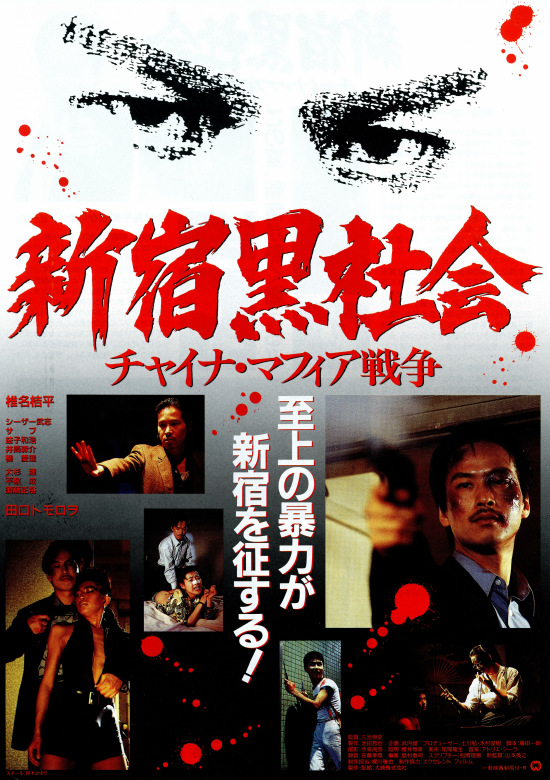
 These days Takashi Miike is known as something of an enfant terrible whose rate of production is almost impossible to keep up with and regularly defies classification. Pressed to offer some kind of explanation to the uninitiated, most will point to the unsettling horror of Audition or the audacity of the controversial Ichi the Killer whilst looking askance at the totally unexpected craziness of Yatterman or the child friendly Ninja Kids!!!. Before he was the gleefully unpredictable festival favourite, Miike, like many of his contemporaries, had made a name for himself in V-cinema, often with violent tales of modern day yakuza. Shinjuku Triad Society (新宿黒社会 チャイナ・マフィア戦争, Shinjuku Kuroshakai: China Mafia Senso) was Miike’s first venture into the mainstream theatrical world but retains his V-cinema focus with additional intent.
Set in the shady, sleazy, noir-tinted world of ‘90s Shinjuku, Shinjuku Triad Society opens with a voice-over from one of its central players telling us that this is a love story – sickening and sweet, as real love is. The action kicks off with this same character, a rent boy, Zhou, attempting to evade a police raid, slitting the throat of a regular street cop on his way out. Zhou is the lover of an unpredictable member of the Taiwanese mafia, Wang (Tomorowo Taguchi), who is creating several problems in the underground crime world both within Triad circles and with the local yakuza. Half Chinese policeman, Tatsuhito Kiriya (Kippei Shina), has been landed with the case but things begin to get personal when he discovers that his younger brother, Yoshihito, has been hired as a junior lawyer working directly for Wang’s gang.
Yakuza films often have a very strong homosocial atmosphere, emphasising the fraternal bonds between men but Shinjuku Triad Society is especially notable for its inclusion of explicit male homosexuality within the gangster underworld. If yakuza films are family dramas with funerals instead of weddings, Miike uses this intense male bonding as a comment on the wider nature of the family with an added focus on the place of the foreign in Japanese society. Wang and Tatsuhito are not so far removed in their desire to rebuild their own family unit, partly as a kind of protective measure against the world around them in which their Chinese heritage becomes a perpetual barrier. Wang has done this as the head of his own clan and with his lover Zhou at his side whereas Tatsuhito is intent on restoring his birth family by “rescuing” his brother from the clutches of the “Dragon’s Claw”.
Tatsuhito’s brother is, of course, a grown man who has the right to become a member of the underworld family, rejecting the blood ties to his policeman brother and doting parents if that is what he wants no matter what his brother might feel about it. Tatsuhito is disturbed to discover that Yoshihito has become Wang’s lover, even if he claims to be using him in order to progress his career. Both brothers threaten each other at gun point with Yoshihito exclaiming “if you don’t like the way I am, just kill me” which Tatsuhito refuses to do though it remains unclear if his brother’s sexuality is objectionable to him or merely a facet of his rejection of the values Tatsuhito holds dear.
Sexuality becomes a weapon as Zhou manoeuvres and manipulates through provoking and satisfying sexual desire. These are, however, consensual relationships even if a part of a wider, transactional game whereas anal rape is actively being employed as a police interrogation tactic (with a somewhat surprising spin). Even Tatsuhito, whose partner mocks him for a supposed dedication to being a “regular” cop, unwilling to take bribes or give in to corruption, himself engages in this behaviour anally raping a female prostitute from whom he wishes to extract information. Playing into the film’s darker themes of the interplay between sex, violence, and transaction, the prostitute instantly falls in love with him. Tatsuhito is clearly no saint even at the film’s beginning, but even so he continues to fall still further, seemingly outraged on discovering the true purpose of Wang’s “philanthropy” in his Taiwanese homeland, but doing relatively little about it other than adding it to the growing list of reasons why Wang must die. Eventually crossing the line from law enforcer to law breaker in the most taboo of ways, Tatsuhito finds himself rewarded even if his boss seems to be aware and in approval of what he’s done.
Tatsuhito may succeed in some of his aims, even if he has to exile himself from the family he was trying repair in the process though the closing voice over makes clear that he gains little in the long run and becomes nothing more than marginalia in the long, sad history of Shinjuku’s violent backstreets. Starting as he means to go on, Miike is entirely unafraid to step into some very uncomfortable areas, not least the way non-Japanese and those with partial Japanese heritage are regarded in the society of the time as well as the way these attitudes are filtered through recent Japanese history. Tatsuhito finds himself conflicted, choosing Japan in choosing the police but finding that it often fails to recognise him as its own son, whereas Yoshihito, in a sense, chooses China in associating himself with the Taiwanese gangsters. This central opposition of order and criminality is itself uncomfortable, but then undermined by the unorthodox nature of the local yakuza. Often strange and eerie, Shinjuku Triad Society takes place in a noirish world where there is no guiding morality – one to which Miike would often return though perhaps never with so much biting irony, where the absence of hope continues to imply its possibility.
Original trailer (English subtitles)
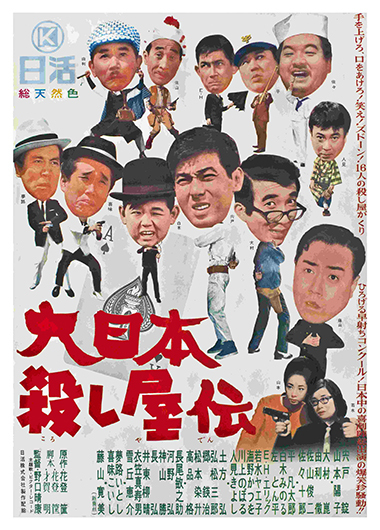 “If you don’t laugh when you see this movie, I’m going to execute you” abacus wielding hitman Komatsu warns us at the beginning of Haryasu Noguchi’s Murder Unincorporated (大日本殺し屋伝, Dai Nihon Koroshiya-den). Luckily for us, it’s unlikely he’ll be forced to perform any “calculations”, and the only risk we currently run is that of accidentally laughing ourselves to death as we witness the absurd slapstick adventures of Japan’s craziest hitman convention when the nation’s “best” (for best read “most unusual”) contract killers descend on a small town looking for “Joe of Spades” – a mysterious assassin known only by the mole on the sole of his foot.
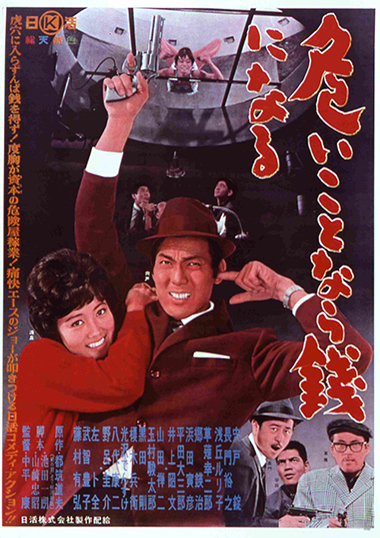 Where there’s danger, there’s money! Or, maybe just danger, who knows but whatever it is, it certainly doesn’t lack for excitement. Ko Nakahira is best known for his first feature, Crazed Fruit, the youthful romantic drama ending in speed boat murder which ushered in the Sun Tribe era. Though he later tried to make a return to more artistic efforts, it’s Nakahira’s freewheeling Nikkatsu crime movies that have continued to capture the hearts of audience members. Danger Pays (AKA Danger Paws, 危いことなら銭になる, Yabai Koto Nara Zeni ni Naru) is among the best of them with its cartoon-like, absurd crime caper world filled with bumbling crooks and ridiculous setups.
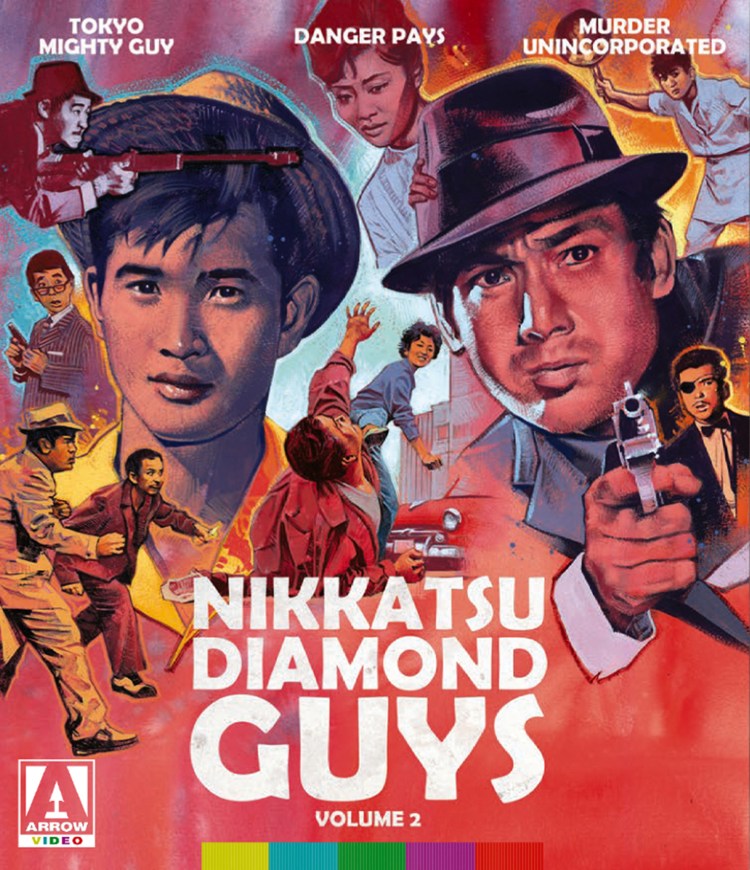
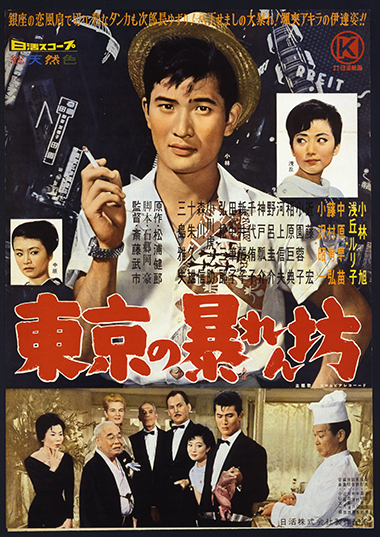 The bright and shining post-war world – it’s a grand place to be young and fancy free! Or so movies like Tokyo Mighty Guy (東京の暴れん坊, Tokyo no Abarembo) would have you believe. Casting one of Nikkatsu’s tentpole stars, Akira Kobayshi, in the lead, Buichi Saito’s Tokyo Mighty Guy is, like previous Kobayashi/Saito collaboration
 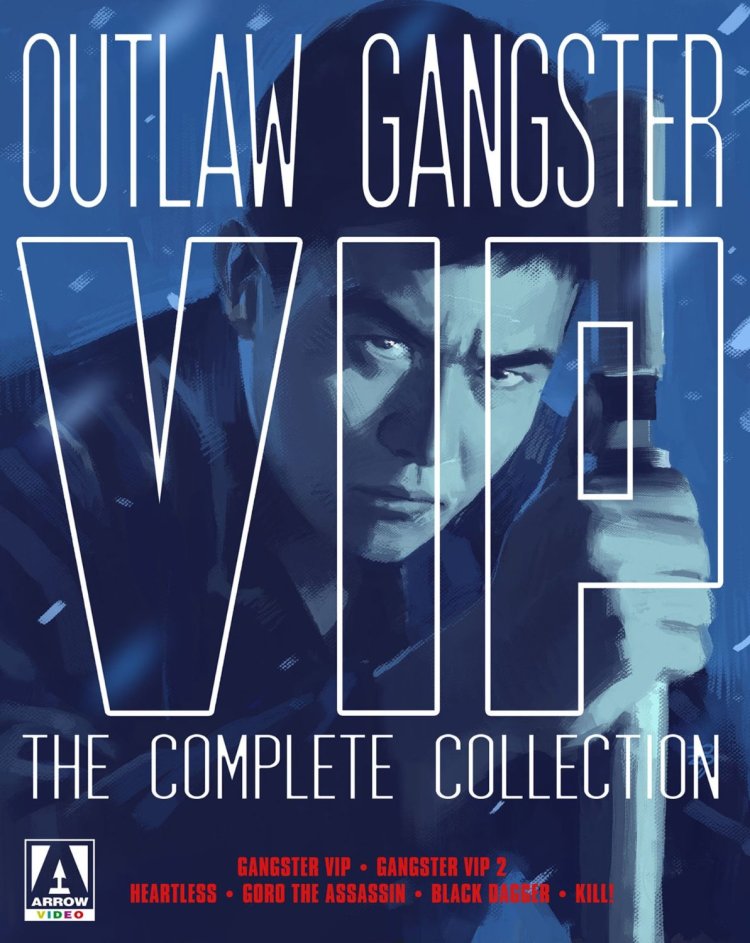 Review of the Outlaw: Gangster VIP the Complete Collection dual format box set from Arrow Films first published by
 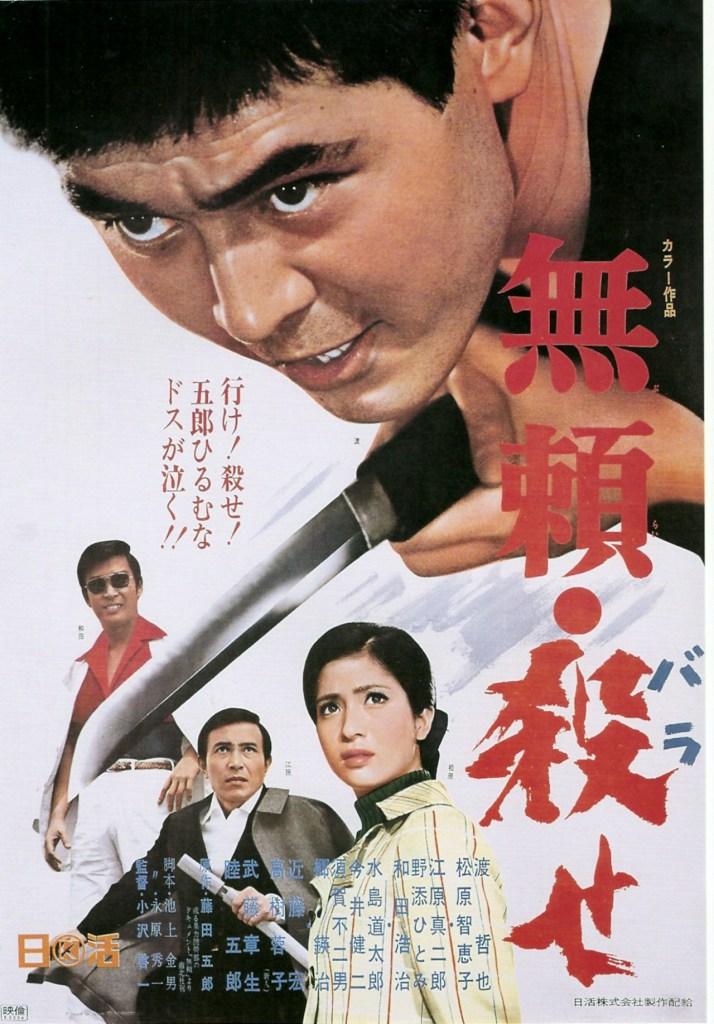 Goro, Goro, Goro – will you never learn? Maybe he will because this is the last film in the series! Appropriately titled Outlaw: Kill! (無頼 殺せ, Burai Barase), this sixth and final film in the Outlaw series sees Goro once again moving to a new town and trying to lead a more honest life but unfortunately he’s wandered in at just the wrong time because a local gang boss has just been sent to prison after defeating a group of assassins leaving a dangerous vacuum and leading, therefore, to the outbreak of a turf war.
 Goro (Tetsuya Watari) just can’t catch a break. He sends his one true love off on a train to safety only to see her dramatically return because she can’t bear to leave his side. Her devotion costs her her life as she places herself between Goro’s manly chest and an assassin’s knife. Heartbroken, Goro gets out of town only to run into another old flame who is now a mama-san and has apparently married another yakuza (despite the fact that Goro parted with her because of his chaotic yakuza lifestyle). As usual, the past won’t let him go – this time in a more literal sense as Goro encounters another woman who looks exactly like the girlfriend who died in his arms….
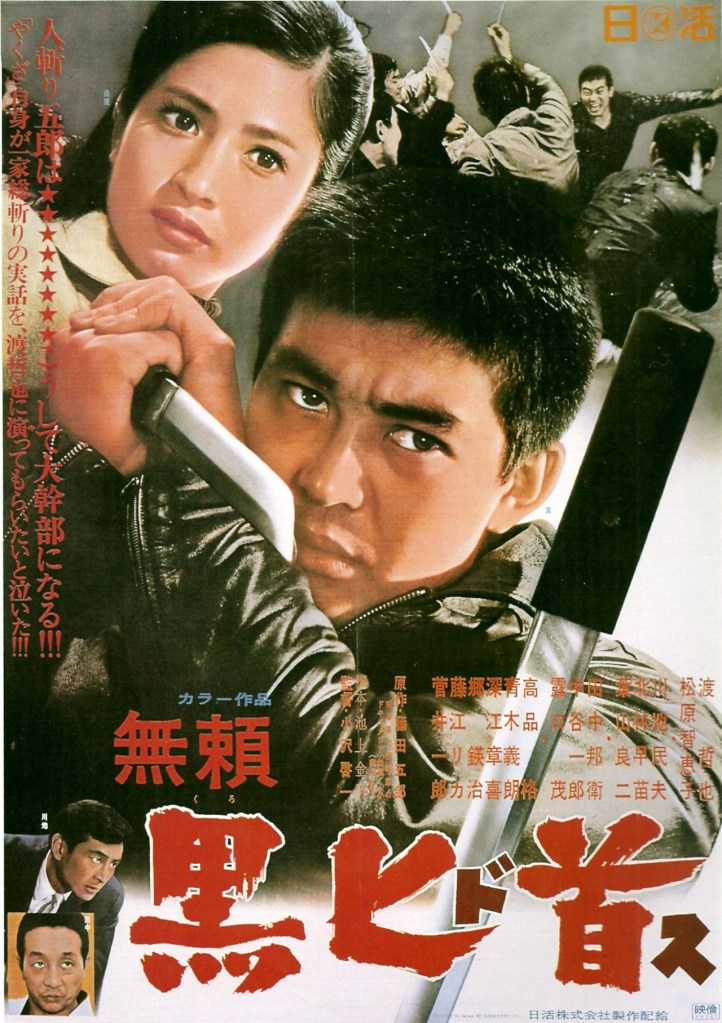
 So, once again Goro Goes Straight is sadly not the title of this fourth film in the tale of the noble hearted gangster “Goro the Assassin” (無頼 人斬り五郎, Burai Hitokiri Goro). After getting his friend out of a jam, the pair end up in prison. Goro is released three years later but his friend, Masa, is poor health and eventually dies a prisoner’s death with no one to collect his body meaning he’ll be buried in a lonely prison grave alongside the rest of society’s unwanted rubbish. On their final meeting, Masa asks Goro to find his sister for him and tell her that he’s doing alright. This message now well out of date, Goro decides to try finding Masa’s sister anyway if only to find out why she never came to see him even as he lay dying.
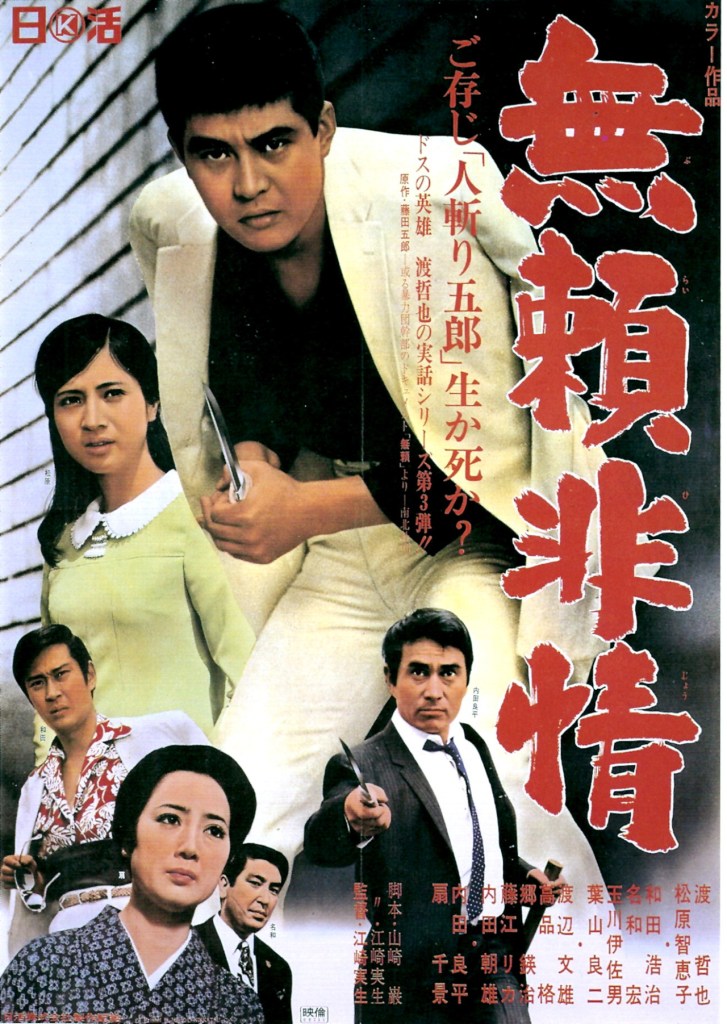 Things take a slight detour in the third of the Outlaw series this time titled “Heartless” (大幹部 無頼非情, Daikanbu Burai Hijo). Rather than picking up where we left Goro – collapsed on a high school volleyball court, it’s now 1956 and we’re with a guy called “Goro the Assassin” but it’s not exactly clear is this is a side story or perhaps an entirely different continuity for the story of the noble hearted gangster we’ve been following so far. The only constant is actor Tetsuya Watari who once again plays Goro Fujikawa but in an even more confusing touch the supporting characters are played by many of the actors who featured in the first two films but are actually playing entirely different people….
 Windows on Worlds