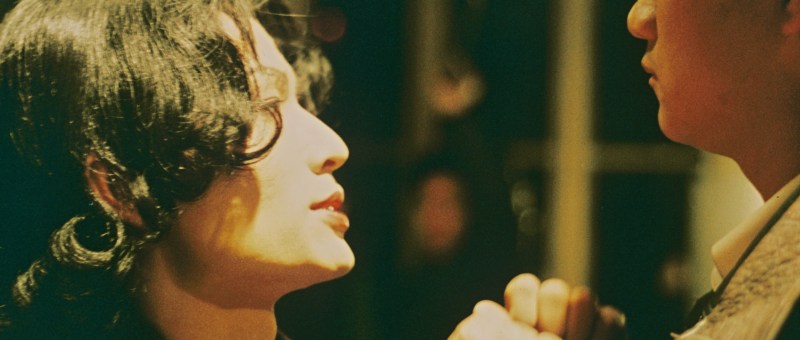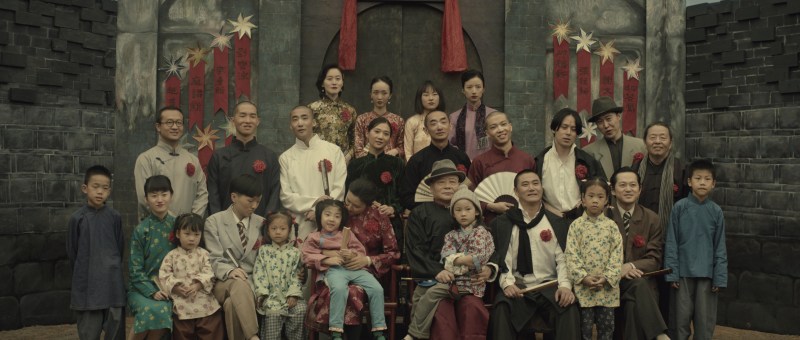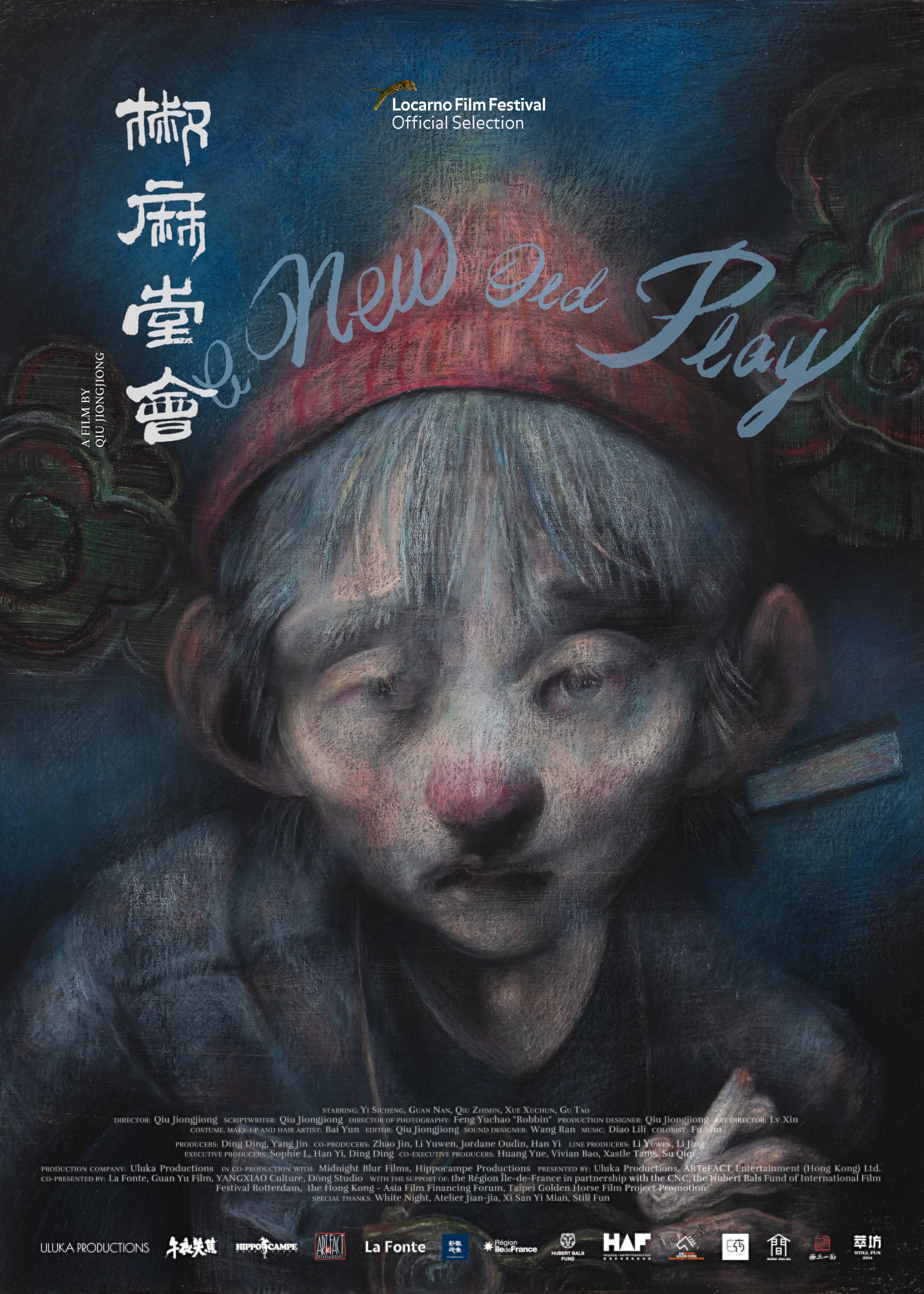

A New Old Play (椒麻堂会, Qiu Jiongjiong, 2021)

“A new play always tells an ancient tale” according to an intertitle a little more than half way into Qiu Jiongjiong’s three-hour Brechtian epic of mid-20th century Chinese history as witnessed by a Sichuan Opera performer, A New Old Play (椒麻堂会, Jiāo Má Táng Huì). Inspired by the life of his grandfather, Qiu’s absurdist drama is a cradle to grave journey through turbulent times but also a questioning of the nature of art at the intersection of politics and commerce, its uses and misuses in a constantly evolving society. 

As the film opens a pair of grim reapers kick start a pedal bike rickshaw and deliver a summons from the King of Hell to Qiu Fu (Yi Sicheng), now in his 70s one of the finest clowns of the Sichuan Opera. Qiu Fu does not want to accept that he is dead and tries to run away but running away from death will always be a futile endeavour. Oxey and Horsey will escort him to the Ghost City and the afterlife where he will be relieved of all his pain and suffering after drinking Mother Meng’s Soup of Oblivion. But if it all just disappears in the end, what was the point of it all? Two young lovers discuss between them their immediate fate and decide to stay on in limbo where they still remember their love. Qiu Fu wonders how he’s supposed to perform Sichuan Opera for the King of Hell if all his memories and long years of perfecting his craft have been taken away, but is told that each of us has a “secret code” that can never be erased his presumably being clowning. When everything else is gone, Sichuan Opera will survive. 

Then again Qiu Fu has found himself playing many different roles in the course of his life beginning with plucky orphan, convincing former nationalist soldier turned stage performer Pocky (Qiu Zhimin) to train him up as an apprentice. Pocky meanwhile will turn out to be on the wrong side of history, a Nationalist loyalist quickly outmanoeuvred by the times in which he lives. One moment, the troupe is performing pro-Nationalist patriotic fare with titles such as “The Patriot Beggar” and “Behead Ma Miao” crying “down with traitors” in front of signs which say “save the nation fight communism” only to find them replaced by those which read “save the nation down with Chiang Kai-shek”. A fearful Pocky sends the troupe to Taiwan but discovers Sichuan Opera doesn’t travel as well as he’d assumed, the actors quickly reduced to begging and finding even that somewhat competitive. 

Qiu Fu’s greatest performance may even have been when dragged onstage by the communists as an example during a lecture on opium addiction having been forced to endure going cold turkey, claiming that his Lenin suit is far superior to the fine robes he once wore as an opium addict. The “theatre of joy” is now “the people’s theatre” but the promised new era almost immediately disappoints. Red brick buildings sit incongruously amid the traditional houses with their ornate tiled roofs while Oxey and Horsey lurk forever in the shadows waiting to escort those succumbing to the famines provoked by the Great Leap Forward though even they are afraid to use their rickshaw in this age of austerity. No longer the representatives of a new world, the troupe finds itself on the wrong side of the Cultural Revolution, Pocky branded a reactionary warlord while others are forced to wear signs reading “theatre tyrant” or “gangster” only for Qiu Fu to turn his humiliation into a show clowning for the local children who giggle at them in their funny hats as they stand in the courtyard in front of the theatre displaying their sins for all to see. Before too long Qiu Fu is forced to brick himself up inside a pig sty while his wife (Guan Nan) is encouraged to divorce him testifying to his faults before a judgemental panel of ideological purists. Once rehabilitated he must once again play the beggar, cast as a villain forevermore. 

Qiu Fu’s memories seems to end soon after the Cultural Revolution though he must have lived on a little longer, the story of his life told to a series of ghosts caught up in a kind of bureaucratic hell apparently undocumented in the land between life and death. Now you see him, now you don’t, Qiu Fu’s life both eternal and gone an instant. Using a series of deliberately theatrical stage sets, Qiu’s beautifully ethereal production design is somewhere between Roy Andersson and Arthur Rackham’s Brothers Grimm in its oneiric mists and pale-faced ghosts, Qiu Fu always sporting a bright red nose and gnome-like little red beanie accompanied by a pair of oversize glasses to remind us of his age. Imbued with an ironic sense of humour, the tale is sometimes broken by a series of Brechtian intertitles written in the rhythms of Sichuan Opera the techniques of which Qiu repurposes to fantastic effect, boats travelling on seas of silk, or small boys floating away on clouds above model cities and armies at war. Is it life or death that’s a dream? Both or neither perhaps it’s all the same a cyclical opera to be performed in perpetuity telling an old story in a new way from here until eternity. 


A New Old Play screens in New York March 18 as part of Museum of the Moving Image’s First Look 2022

Original trailer (English subtitles)

Detective Chinatown 3 (唐人街探案3, Chen Sicheng, 2021)

Cerebral sleuth Qin Feng (Liu Haoran) and his larger than life uncle Tang Ren (Wang Baoqiang) are back on the case in the third instalment in the Detective Chinatown franchise (唐人街探案3, Tángrénjiē tàn àn 3) picking up as promised in Tokyo as the duo take on another locked room mystery on the invitation of dandyish local investigator Hiroshi Noda (Satoshi Tsumabuki). This time around, the mystery is only tangentially connected to a Chinatown though the solution in itself does indeed lead back towards the Mainland and the complicated relations between China and Japan, while Qin in particular finds himself confronting the idea that oligarchy is in fact the “perfect crime”. 

Hired by a yakuza boss, Watanabe (Tomokazu Miura), accused of offing a Thai rival, Su Chaiwit, following a dispute over development rights in the local Chinatown, Qin and Tang Ren quickly find themselves hamstrung by their own discovery of evidence which further implicates their client and brings them to the attention of top cop Tanaka (Tadanobu Asano) who wastes no time telling them to mind their own business. Meanwhile they are also being pursued by muscly Thai detective Jaa (Tony Jaa) working for the other side. In a new high tech motif, the guys are each handed a simultaneous translation earbud which allows the Japanese and Chinese guys to converse with each other in their own languages though Hiroshi often chooses to speak directly in Mandarin instead while the Thai contingent exclusively use English. Unlike previous instalments the duo do not venture into the local Chinese community and Chinatown itself is merely territory contested by Japanese yakuza and South East Asian gangsters. 

Even so Qin and Tang Ren find themselves at a nexus of cross-cultural conflict caught between the cops, yakuza, and Thai gangsters each looking not so much for the truth but some kind of advantage for their side all of which culminates in a hilarious series of mixups at a morgue. Once again, Tang Ren falls in love with a local woman, in this case Su Chaiwit’s secretary Anna Kobayashi (Masami Nagasawa) who is certain Watanabe is guilty and later apparently kidnapped by a crazed serial killer (Shota Sometani) just by coincidence. Of course, all this cycles back towards the franchise’s growing mythology, Qin pursued and manipulated by the mysterious entity known only as “Q” which, as we learn, is as obsessed with the idea of the perfect crime as Qin largely in that they think they’ve perfected it in the stranglehold placed over civilisation by a shady elite. 

In this, the film may be taking aim at hidden oligarchy and the immorality of growing social inequality, but in its Japanese setting Chen is also freer to take potshots at contemporary Chinese society such as in Tang Ren’s confusion that they can’t simply bribe the police to get Qin out of jail when he is wrongfully arrested. “Justice and equality require sacrifices” Qin explains after solving a grim riddle only to be asked some difficult questions about the nature of justice and his own role within it by a manipulative villain, but in a classically censor-friendly move ends the movie with a brief monologue declaring that “justice always prevails and light overcomes darkness”, he and his team recommitting themselves to fighting “vices”, and presumably the shady elitism fostered by Q, wherever they arise. 

Like Detective Chinatown 2’s New York setting, the vision of Japan on display is deliberately stereotypical from an Akihabara cosplay carnival to tasks involving masked kendo fighters and a sumo wrestler, not to mention bumbling comedy yakuza forever threatening to cut off their fingers, the Shibuya Scramble set piece, or a playful homage to Phoenix Wright: Ace Attorney. Meanwhile, Chen continues his taste for huge ensemble action such as the complex slapstick routine that opens the film and now traditional end credits sequence featuring the cast dancing to theme tune “Welcome to Tokyo” dressed in the classic green detective mac worn by Qin. Truth be told, the solution to the central mystery is heavily signposted and slightly unsatisfying though Chen’s visualisations of Qin’s deductions are expertly rendered even as the hero’s growing confidence as a crimefighter unbalances his relationship with the increasingly silly if goodhearted Tang Ren. Boasting a host of A-list Japanese acting talent, the film also makes space for an unexpected cameo from one of the most recognisable faces in Sinophone cinema before teasing a further instalment to take place in London, home to the greatest consulting detective of them all. 


Detective Chinatown 3 is available to stream in the UK via iTunes, Google Play, Amazon Prime, Microsoft, Sky, and Virgin Media courtesy of Cine Asia.

Original trailer (English / Simplified Chinese subtitles)

The Old Town Girls (兔子暴力, Shen Yu, 2020)

The left behind children of decaying industrial China find themselves at the mercy of a corrupted parental legacy in Shen Yu’s neo-noir tragedy The Old Town Girls (兔子暴力, Tùzi Bàolì). Each longing for escape but living in defeat, the three young women at the film’s centre search for signs of possibility in a world they fear has already rejected them but encounter only darkness and futility brokered by the broken adults apparently unable or unwilling to parent or protect them from the world their indifference has forged. 

Beginning at the narrative’s conclusion, Shen introduces us to a frantic woman, Qu Ting (Wan Qian), an anxious man Shui Hao (An Shi), and the confused Ma (Pan Binlong) as they desperately search for their missing daughters apparently kidnapped for a ransom none of them could ever hope to be able to pay. Fed up with the whole thing, Shui Hao determines to go to the police while Qu Ting is reluctant, fearful that the kidnappers will kill their daughter Shui Qing (Li Genxi), Ma simply going along with it. At the police station, however, they receive a call to say the girls are safe and Shui Qing is already at home but there’s more going on here than we first assumed other than Ma’s sudden heart attack on being told that his daughter Yueyue (Zhou Ziyue) has simply gone to visit a friend in another town. 

Flashing back some days before the climactic night, we realise that Shui Hao and Qu Ting are long separated and Shui Qing is living a miserable life rejected by her stepmother who coldly tells her to stay out a little longer because her parents are visiting and they don’t want any “outsiders” at dinner. At an open air noodle stand, she happens to catch sight of the radiant Qu Ting realising her mother has returned but unsure if she recognises her. The two women awkwardly reconnect, Qu Ting making it clear that she will be leaving in a few days and isn’t keen on having a teenage girl cramp her style, but gradually bond as they begin to spend more time together. 

What immediately becomes clear is that Qu Ting is somewhat arrested and emotionally immature, hanging out with Shui Qing’s high school friends Jin Xi (Chai Ye) and Yueyue as if she were a teenager but inappropriately allowing them to drink wine at dinner as if they were on a girls’ night out. Lonely and rejected by her stepmother Shui Qing longs for approval, but also to save her mother who is currently living in an abandoned theatre and seemingly desperate for money she claims is for a “project”, later implying that when it’s over she may start a business and be with her daughter full time but soon enough Shui Qing is pulled into an urban world of gangsters and loansharks governed by rules she is ill-equipped to understand. 

Her friends, meanwhile, have their own problems. Rich kid Jin Xi carries self harm scars on her arms and seems to be the only one at school not wearing a uniform. Her wealthy parents work away in the city and so Jin Xi is largely left alone as abandoned and fearful as Shui Qing but also filled with resentful anger. Yueyue perhaps has the opposite problem in that she feels trapped by her controlling, abusive father, Ma. Raised by wealthy relatives until her father returned, Yueyue longs to be free of him but he refuses to let her go even though the relatives are keen to adopt her and can obviously promise a more comfortable way of life and better opportunities for the future than the impoverished Ma. 

“Everyone’s looking for a carefree paradise” according a mournful pop song heard on the radio and it’s certainly true of the three girls and Qu Ting each looking for something more if unsure exactly of what it is or how to get it. Shui Qing yearns for maternal approval but ends up playing mother while Qu Ting finally accepts her corrupted maternity only in the most tragic of maternal sacrifices in attempting to protect her daughter from the radiating darkness her return has cast over her life. “It doesn’t matter if our dreams sink they’ll just be floating bottles” the girls cheerfully uttered, but each of them find themselves unanchored longing for the security of parental affection and dependability but left largely alone quasi-orphaned by the demands and contradictions of the modern China. Shen’s melancholy neo-noir is a stark coming-of-age tale which finds little place for innocence in the contemporary society relegating it only to the space of memory a casualty of parental disconnection and adolescent futility. 


The Old Town Girls streamed as part of this year’s New York Asian Film Festival.

Original trailer (English subtitles)
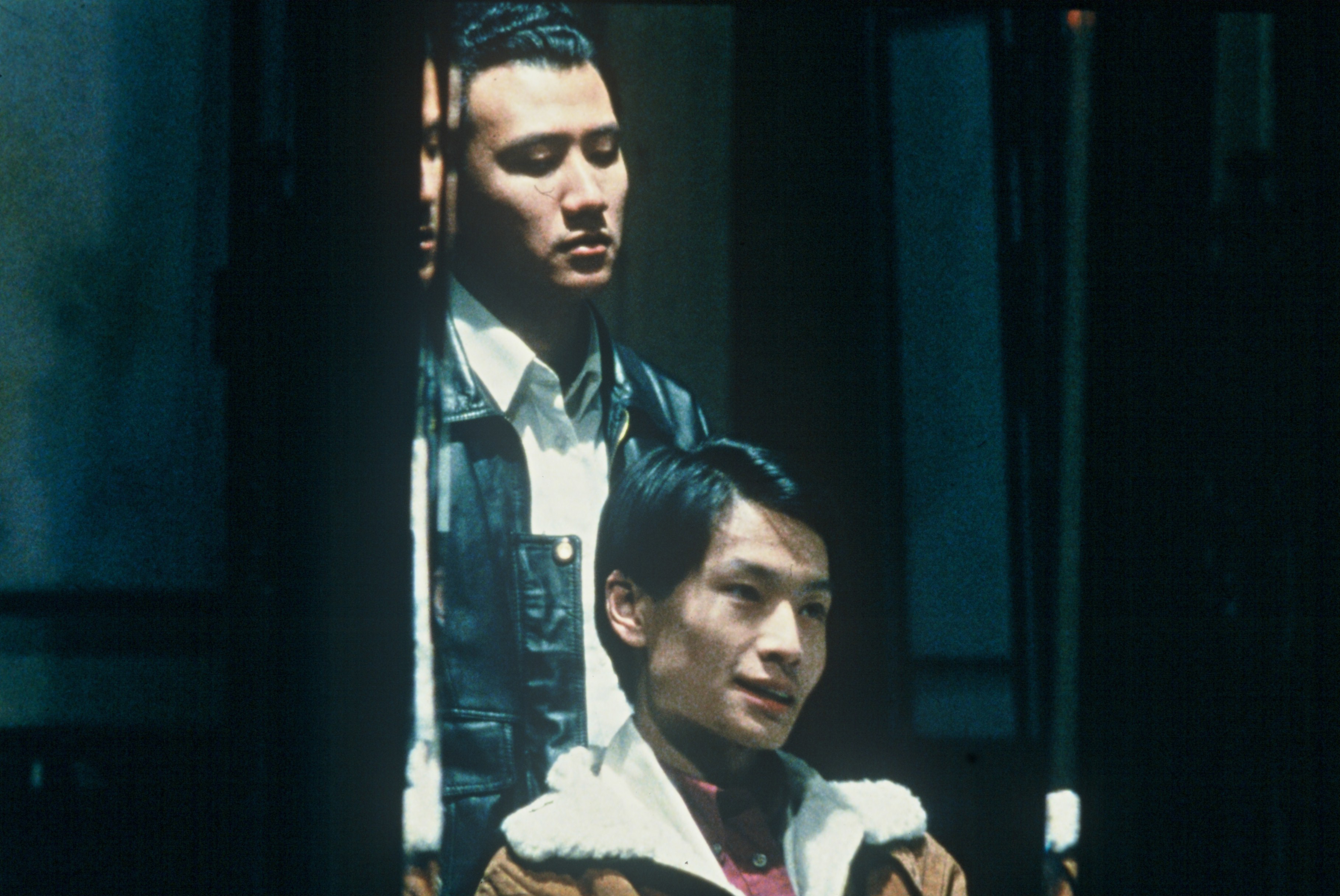
The Monkey King: Reborn (西游记之再世妖王, Wang Yun Fei, 2021)

Sun Wukong comes to believe in his own soul while standing up to a cruel and oppressive reincarnated demon king intent on destroying the world in Wang Yun Fei’s anarchic family animation The Monkey King: Reborn (西游记之再世妖王, Xīyóujì zhī zài shì yāo Wáng). Reborn is in a sense also what Sun Wukong becomes in Wang’s defiantly egalitarian adventure which sees the regular crew from Journey to the West becoming temporary guardians to an adorable ball of anthropomorphised qi while The Great Sage Equal to Heaven contemplates what it is to be a “demon” and if he’s necessarily as “bad” or “evil” as some seem to believe him to be. 

As usual, Wukong (Bian Jiang) is travelling with the monk Tang Sanzang (Su Shangqing) and fellow demons Bajie (Zhang He) and Wujing (Lin Qiang) heading to India to retrieve Buddhist scriptures to bring back to China. On the way, they stop off at a temple where Wukong and his friends end up causing a ruckus by eating some of the temple’s treasured manfruit from a tree which only produces 30 every 1000 years. 1000 years doesn’t seem so long to Wukong so he thinks little of it but is later caught out by two snooty monks, grows indignant, and gets into a fight with an immortal eventually destroying the tree in temper only to realise that he’s accidentally released Yuandi (Zhang Lei), the ancestor of all the demons sealed within the tree thousands of years previously by a Buddhist monk who sacrificed all of his qi to do so. Threatened with being re-imprisoned himself and determined to rescue Tang who has been kidnapped, Wukong has no choice but to stop Yuandi before he reassumes his full strength in around three days time. 

Meanwhile, the trio is joined by a tiny manfruit-like ball of qi Wukong nicknames “Fruity” (Cai Haiting), originally reluctant to take him with them but advised that his qi is the best weapon against Yuandi. As the film opened, Wujing had been contemplating what it means to have a soul, Tang reassuring him that when he feels he has one it will be there. Following through on the egalitarian message, he later says something similar to Yuandi, certain that all sentient creatures are equal, but the moody Wukong remains sullen and resentful constantly insulted as an “evil” demon while internally convinced he can’t be anything else. Yet despite himself he takes on a paternal role while looking after Fruity who later explains to him that there are good demons and bad and that he has a kind soul. 

Yuandi by contrast merely rolls his eyes when most of his demon minions are cut down, lamenting that they had become weak and the weak do not deserve to live. In the process of searching for his own soul, it’s this cruel and oppressive worldview that Wukong and the others must finally resist, protecting Fruity while battling the darkness with the confidence of self knowledge as their best weapon. Meanwhile, it’s clear that the Buddhist world is not exactly free of corruption either, the two snooty monks instantly looking down on Tang ironically because of his unostentatious attire uncertain why they’re expected to share their treasure with someone so seemingly undeserving. Then again, when they’re sent off to petition the Jade Emperor quite the reverse is true as they’re kept waiting outside while heaven’s border guard painstakingly fills out paperwork in only the best calligraphy while insisting each petition should be treated impartially no matter who it comes from even though the monks had quite clearly expected to jump the queue. 

Selling a positive message of self-acceptance and universal equality The Monkey King: Reborn also boasts a series of thrilling and elegantly drawn action sequences as the trio face off against the forces of darkness, along with some zany humour and Wukong’s characteristically anarchic energy not to mention the unbelievably cute yet somehow profound Fruity who can’t bear all the senseless carnage and depletes himself to cure the innocent townspeople of their demonic corruption. In the end it’s not only Wukong who is reborn as he realises that nothing’s ever really gone forever, just altered in form, while it is possible to repair damage done with humility leveraging the power of self-acceptance against a dark and selfish desire for destruction. 


The Monkey King: Reborn is released in the US on DVD & blu-ray Dec. 7 courtesy of Well Go USA in an edition which includes both the original Mandarin-language voice track with English subtitles and an English dub.

Cloudy Mountain (峰爆, Li Jun, 2021)

In recent years, Chinese big budget disaster extravaganzas have dedicated themselves to celebrating the selfless heroism of the undersung branches of the emergency services, firemen for example in Tony Chan’s The Bravest or the coast guard in Dante Lam’s The Rescue. Li Jun’s Cloudy Mountain (峰爆, Fēng Bào) features its fair share of fearless rescue teams, but is nevertheless dedicated to the rather unlikely source of pride, the Rail Soldiers whose lives, at least according to the closing credits, were sacrificed in large numbers to complete the infrastructure necessary for the expansion of the Chinese state yet in 1984 they were renamed “China Railway Construction Corporation” a development the film at least seems to regard with a surprising degree of ambivalence. 

This becomes most obvious in the conflict between the two heroes, an estranged father and son burdened by personal trauma, one a former Rail Soldier and the other a high tech engineer working for a commercial enterprise on the building of a high speed railway network through terrain known to be geologically volatile. Grandpa Hong (Huang Zhizhong) is set to visit his son Yizhou (Zhu Yilong) for New Year, though he doesn’t really want to see him knowing that his father will only criticise his work on the tunnel leading to another intergenerational argument. Meanwhile, Yizhou also finds himself unpopular at work for requesting additional safety checks many seem to regard as a pointless waste of time, and oddly they might have a point seeing as Yizhou’s monitoring fails to detect a shift in the rock formation which causes water to flood the almost complete tunnel during routine blasting. 

The fact is Hong was a Rail Soldier and is also one of those old men who think they know best about everything. He kicks off at a bored young lady at service station because she doesn’t want to accept payment in cash and has no change to offer confused as to why Hong can’t just pay with Alipay or WeChat like everyone else. Despite his years of hands-on experience, he no longer understands the modern high tech engineering industry and thinks his son is somehow unmanly with his scientific data and use of drones, believing that if you want to solve a problem you just get in there and do it. This causes a minor problem when a manmade earthquake strikes just after his arrival as he pushes rescue crews out of the way to set about rescuing everyone trapped underground on his own only to end up trapped himself. 

The film is almost on his side, definitely ambivalent about the state of modern Chinese infrastructure. Mrs. Ding (Chen Shu), the female manager of the tunnel project, is initially positioned as a villain, insisting that the tunnel must be completed on schedule and they can’t be wasting money on things like safety checks, hinting at the nation’s notoriously lax approach to public safety and widespread corruption in the construction industry. One might even ask if it was a good idea to build this tunnel at all given the geological volatility of the local area, yet Mrs. Ding later becomes something of a hero in finally agreeing to sacrifice 10 years of her own work when it becomes clear a nearby town cannot be evacuated before disaster strikes. Stepping into propaganda mode she advances that while Westerners may pin their hopes on Noah’s Ark, Chinese men move mountains convincing the workmen to blow up the tunnel they’ve been spent the last decade working on by reminding them that they can simply build it again. 

Meanwhile, Yizhou and Hong begin to sort out their father/son problems underground most of which go back to the death of Yizhou’s mother for which he blames himself but also his father for failing to return home when his wife was ill because he had important nation building work to do. This minor barb might hint at a conflict between selfless dedication to the State and familial responsibility, which would seem to run against the secondary message that unchecked capitalism is doing the same thing while also endangering public safety. One reason the crews didn’t want to fall behind through “needless” safety checks was because they’d already agreed to sacrifice New Year with their families to get the tunnel done on time. Nevertheless the only way to save both the tunnel and the town depends on father and son working together, a mix of Yizhou’s high tech data analysis and Hong’s hands-on experience as they perilously climb up the slide of a sheer rock face in torrential rain to blow up an entirely different mountain to create a protective shield. 

The major villain, if there is one, is personal greed born of irresponsible capitalism, and its only cure is, paradoxically, a recommittal to the State as Mrs Ding offers inspirational messages about the legacy of the Rail Soldiers while self-sacrifice for the public good is held up as the only moral responsibility. In any case, Li piles on the tension with a series of possible negative outcomes from the tunnel disaster not only swamping the town and killing off the local population but also endangering an adjacent chemical plant, never quite making the case for why the tunnel is so necessary in the first place even as it swaps its literality for the metaphorical in allowing the reconnection of father and son overcoming a generational divide to find an ambivalent accommodation with the demands of the modern China. 


Cloudy Mountain screens at ChiTown Movies Drive-in Chicago on Nov. 13 courtesy of Asian Pop-Up Cinema.

Original trailer (English subtitles)
The Emperor’s Sword (乱世之定秦剑, Chen Hao-nan & Zhang Ying-li, 2020)

Can you ever truly preserve peace peacefully or will human greed and envy always triumph over a simple desire for comfort and safety? Chen Hao-nan and Zhang Ying-li’s wuxia drama The Emperor’s Sword (乱世之定秦剑, Luànshì zhī Dìng Qín Jiàn) situates itself at a moment of historical chaos in which the Qin Emperor, having ended the Warring States period through universal unity ten years previously, has died. In order to ensure peace throughout the land, his sword was melted down and recast as two with one residing in a palace and the other with trusty general Meng. Ambitious courtier Zhao Gao, however, has his mind set on usurpation having wiped out most of the previous regime hellbent on retrieving both of the swords in order to secure his grip on power. 

Unfortunately for him, Meng managed to send his daughter Xue away from the falling castle with the sword in hand instructing her to take it to the Tomb Keepers of Qin. Luckily for her, she runs into Jilian, one of the famed “Seven Gentlemen” who were once students of her father’s most of whom retreated to the Red Valley once the wars ended hoping to live lives of peace. Xue’s father brought her up to be kind and considerate, always thinking of others first, but she wonders if there’ll ever be a day with no more war when everyone is free to live happily together. The remainders of the Seven Gentlemen find themselves conflicted, some wanting to help Xue while others are reluctant to involve themselves in worldly conflict having had enough of war, but their belief that they could isolate themselves from external chaos turns out to be an illusion even if it were not also a contravention of their moral code not to stand for justice when the kingdom is threatened. 

A secondary dilemma is that the man hunting them down is in fact one of their former brethren who entered the service of usurping lord Zhao. Conflicted himself, Tian meets with Jilian each essentially asking the other to back off, not get involved in this particular fight, but that’s not something either of them can do leading to a series of emotional showdowns filled with tragic romance, betrayed brotherhood, and divided loyalties. In an echo of Xue’s advocation for a kinder world if one informed by the values of jianghu, Jilian claims he serves the Meng because they really care about the people, unlike Zhao it’s implied with his authoritarian lust for power. Yet in essence the two men have the same mission, not wanting anyone else’s life to be ruined by the chaos of war, only Tian has chosen the iron fist as a means of preserving peace while Jilian has opted for a less oppressive vision of a settled future. 

Still our heroes find themselves in a precarious position as they attempt to stop Zhao Gao completing his evil mission by getting his hands on both the swords. Making the most of their meagre budget, Chen and Zhang choreograph some impressive action sequences as Jilian becomes a veritable one man army taking on hordes of Zhao’s minions while making his way towards the man himself. Xue meanwhile does perhaps become something of a damsel in distress, largely unable to defend herself and reliant on the assistance of Seven Gentlemen foster son Han Jue, appointed to protect in a compromise measure though the expected romance never quite materialises even as she begins to push him towards a more mature contemplation of a better world of peace and justice. She is however pursued by a dogged female assassin with brotherhood issues of her own who remains hot on her trail despite the fecklessness of her evil middle manager boss Lord Wei who is every inch the cowardly wuxia villain. In true jianghu fashion, the good guys don’t always win and are heavily punished for the contraventions of their codes but eventually permit good to triumph over evil in successfully conveying the sword to a more just custodian. 


The Emperor’s Sword is released in the US on Nov. 9 on digital, blu-ray, and DVD courtesy of Well Go USA.

US release Trailer (English subtitles)
All About My Sisters (家庭錄像, Wang Qiong, 2021)

Following a series of demographic fluctuations including decreased infant mortality and increased life expectancy, the Chinese state began to impose population controls in the early 1970s finally introducing the infamous One Child Policy in 1980. Though the name is perhaps a misnomer given that numerous exceptions existed permitting certain families such as those in rural areas to have two children, the effects of the policy’s often violent and inhuman enforcement continue to linger despite its vast relaxation with most now permitted to have up to three children in an effort to combat the ironic side effect of China’s rapidly ageing society. Wang Qiong’s All About My Sisters (家庭錄像, Jiātíng Lùxiàng) is, quite literally, about her sisters but also all of the women of China past and present whose lives continue to be defined by cruel and thoughtless authoritarian government along with outdated patriarchal social codes. 

The sadness in her own family, however, locates itself in the liminal figure of her younger sister Jin, the family’s third child born at the height of the One Child Policy and therefore in some senses illegal. As Qiong’s mother Xiaoqing later recounts, she became pregnant seven times and each time a girl. She had four abortions, but was still determined to conceive a son in order to perform what she saw as her filial duty. Despite undergoing partial sterilisation in 1992, a country doctor helped her to maintain one functioning ovary expressly because she had not yet had a male child, Xiaoqing eventually had a son, Sifan, in 2002, but prior to that had already made the difficult decision to opt for a late term abortion when pregnant with Jin in the conviction the baby would be another girl. Ambivalent in her decision she also took herbs which she believes were responsible for counteracting the effects of the injections she was given to induce abortion allowing Jin to survive, but because of their poverty and the stringency of the One Child Policy Xiaoqing and her husband Jianhua decided to abandon the baby hoping someone who had a son already would take her in. Having left her outside an orangery, the couple were distraught to learn that Jin had only been moved to a better location outside a school where she apparently lay for several days. Eventually the decision was taken to retrieve her, Jianhua’s mother persuading his sister Jinlian and her husband Zhenggen to raise the child alongside their son Jun. 

This awkward situation has continued to present a fault line in the organisation of both families, Jin a member of both and neither at the same time. Having been lovingly raised by Jinlian and Zhenggen as their own until her early teenage years, it was impossible for Jin to avoid the reality of her abandonment and the knowledge that it would not have happened if she had been male. Though she lived in a different village, most seemed to be aware of the circumstances of her birth with local children mocking her for having been “picked out of the trash can”, a cruelty even more chilling on hearing the accounts of Qiong’s parents who recall being told by a doctor that if they did not want the baby who had been born healthy they should throw her in the bin then and there. Qiong herself recalls seeing the corpses of other late term abortions in a gutter on her way to school almost all of them female. The One Child Policy may not be so draconian as it once was, but the patriarchal mindset is still very much in place. Qiong’s older sister Li is currently pregnant with her third child and shocks her sister by revealing that she plans to have an abortion should the baby be another girl in order to avoid displeasing her husband. 

Li already had a son from a previous marriage who is, perhaps tellingly, not seen here and does not seem to be living with her presumably having remained with the father’s family in order to carry on their name. Asking her mother why everyone continues to value male children over female, Xiaoqing reflects that daughters become a part of someone else’s family when they marry and thereafter are responsible for looking after their in-laws. Only by having sons and gaining daughter-in-laws can you expect someone to be around to care for you in your old age.

It’s this rigid definition of family units which has caused so many problems for Jin who continues to refer to the uncle aunt who raised her as her parents while careful to refer to Xiaoqing and Jinhua as “your mother and father” when talking to Qiong, yet also encouraged to participate in filial rituals presenting gifts to her birth parents. The same problem occurs at her wedding when deciding which set of uncles should sit at the top table given her peculiar situation of having two sets of parents, worrying if her young son Chengxi will later be confused and wonder why it is he has three grandmas and grandads. For her part, she often loses her temper with him telling him that he’s a “useless baby” and “anyone is better than you”, a particularly heartbreaking moment occurring some years later while she berates him for having apparently bitten another child at school as he sadly removes a little paper heart from his forehead as if agreeing with her that he doesn’t really deserve it. Having married young trying to forge her own family while unable to repair the rifts with her parents and siblings, she contemplates leaving her husband who struggles with employment and has a gambling problem but ultimately decides not to because she doesn’t want her son to “live in a broken family” as she has done while simultaneously making him a “left behind child” as they head to the city in search of work and a little space from Jin’s overly complicated family situation. 

Even as she describes her father as “abusive”, and depicts her mother as a difficult person, Qiong is also careful to frame their actions within the confines of their times, the ultimate villain the cruel inhumanity of the One Child Policy. Xiaoqing’s brother was a local official in charge of the policy’s enforcement and tearfully declares himself haunted by the memory of exposing two of his own children in a forest behind the hospital in which they were born, preferring to regard it as water under the bridge and simply a consequence of the political reality he would have been unable to resist even had he chosen to. Meanwhile, Qiong’s elder sister remains somewhat complicit equally unwilling to confront a reality she sees as unchangeable while irritated by Jin’s attitude describing her as “childish” seeing as she is already a mother herself and should therefore “understand” the circumstances of her birth. We see countless signs in doctors’ offices reminding patients that “sex selective testing and abortion are prohibited”, but they only serve to remind that this is obviously something many people still consider when faced with the nation’s ever increasing wealth inequality and persistent patriarchal social codes which value sons over daughters. A complex examination of the ramifications of the One Child Policy through the prism of one particular family, Wang’s raw, personal documentary is an unflinching condemnation of repressive authoritarianism but also of continuing female subjugation in an unequal society. 


All About My Sisters screens in San Diego on Nov. 3 as part of this year’s San Diego Asian Film Festival

Trailer (English subtitles)

Pistol (手枪, Lv Huizhou, 2020)

The contradictions of the modern China drive one young man clear out of his mind in Lv Huizhou’s elliptical street punk noir, Pistol (手枪, Shǒuqiāng). Shot in a washed out monochrome and seemingly set some time after the Beijing Olympics, Lv’s anarchic drama sees its hero develop unexpected superpowers as if to combat his sense of impotence and impossibility while constantly uncertain whether his newfound abilities are “real” or merely a figment of his declining mental state as he chases lost love through the rundown backstreets of a Beijing slum.  

Construction worker Mengzi (Zhang Yu) claims he likes Beijing, after all it’s an “international city” always busy with crowds. Many people long to come here, as perhaps he once did, though you can’t say the city has served him particularly well. He lives in a tiny room with a bunk bed and no functioning bathroom which is why he pees in a bottle into which he’s already discarded his cigarette and digs a hole in the woods every time he needs to do a number two. The only thing keeping him going is his doomed relationship with sex worker Yaoyao (Wang Zhener) who just wants to make as much money as she can while she’s young. Mengzi may have stolen the “international city” line from her, he often seems to repeat things said to him when he speaks at all, but Yaoyao also claims to like Beijing because of the opportunities it offers her, citing the story of a woman she knew who quit sex work after only three years with enough money to buy house in her home town, now walking around dripping with jewellery like the queen of all the land. When Yaoyao goes missing, Mengzi fetches up at the salon where she worked that’s really a front for a brothel run by a local gangster and raises hell, picking a fight with the gangster’s wife and in the first of many flashes of spontaneous violence smashing her mirror. 

The ill-advised rescue mission gets him nowhere, the gangster turning up at the restaurant where he’s once again adding to his tab to tell him she’s been sold on to a club before teaching him a lesson. This is where we came in, or it might as well be, with Mengzi chased through the narrow city alleyways until finally cornered and beaten. Mengzi is in many ways a man on the run from himself. His room is papered with posters for macho crime dramas such as Dirty Harry, The Man With No Name Trilogy, and A Better Tomorrow 2, Taxi Driver pinned incongruously between boy band Super Junior and a girl group in air hostess outfits. He is God’s lonely man, obsessing over misplacing his high school graduation certificate while failing to convince his boss to give him a better job. At his lowest point, he digs a hole and crouches down pointing his fingers at gaggle of chickens and pretending to shoot only to hear a gunshot and on closer inspection discover a very dead hen. 

In the days since losing Yaoyao, Mengzi hadn’t done much of anything save mope around, having a tourist day with streetwise kid Laizi (Hou Xiang) visiting Tiananmen Square and the Olympic stadium, both places Yaoyao lied to her mother about visiting trying to make her think her Beijing life was better than it was. His strange visions and violent meditations are often intercut with comforting memories of his time with Yaoyao alone in her bohemian flat, a poster of Chicken Run ironically hanging on her wall. Flashing into colour, the billboards around the stadium are filled with pretty pink flowers and play the Olympic song about being one big family, red solarised footage of the opening ceremony later filling Mengzi’s mind. Family seems to be something Mengzi doesn’t really have, a perpetual orphan wandering around unanchored and resentful of the society that won’t let him prosper. Losing Yaoyao he vows revenge with his new weapon, which for some reason only works with his rear end partially exposed, literally taking aim at social inequality in the midst of a trendy club from which he concludes he may never be able to retrieve his lost love. 

Shot in a washed out black and white reflecting Mengzi’s sense of despair, Lv’s frantic handheld photography mimics his paranoid psychology with its noirish canted angles and extreme sense of claustrophobia while introducing a note of psychedelic uncertainty as even Mengzi himself cannot be sure if his fingers really shoot bullets or he’s in the midst of a psychotic break possibility connected to the traumatic event that opened the film reflected in his own eventual solarisation. An elliptical, ethereal journey through the backstreets of Beijing as they exist in the mind of a crazed young man denied a future and the home he’s so desperate find, Pistol has few kind words for the modern China but perhaps sympathy for its frustrated hero. 


Pistol screened as part of this year’s London East Asia Film Festival.

Ripples of Life (永安镇故事集, Wei Shujun, 2021)

“I had to let it happen, I had to change” the rather incongruous voice of Madonna insists, finding a note of defiance on reaching the climactic “so I chose freedom” as the movie version of Don’t Cry for Me Argentina erupts over the closing minutes of Wei Shujun’s Ripples of Life (永安镇故事集, Yǒng’ān Zhèn Gùshi Jí). Like much of the film, the use of the song is ironic but still somehow poignant its repurposing perfectly expressing the interior lives of each our “characters” who are all in some way or another looking for escape or at least a way out of personal dissatisfaction while trying to film a movie about the inertia of life in a small town in rural China where nothing ever happens. 

Divided into three segments, Wei’s film is as much about the positioning of rural China as it is about “cinema”. A Beijing film crew descend on this provincial small town with their own preconceived notions of rural life, determined not to “romanticise” country living but nevertheless bending it to their will looking only for signifiers that align with their mental image of the hinterlands of their nation. Only latterly do they realise that for true authenticity the film should be in Hunanese, but none of them speak it which is a significant stumbling block in their efforts to overcome ongoing creative differences over the script. 

Wei is, in part, satirising the recent trend in Chinese indie cinema for gritty stories of rural poverty usually filmed with depressing naturalism determined to stress the harshness of life outside of the cities amid the nation’s ever increasing wealth divide. The first chapter in part does this too, later shifting away from early Jia Zhangke towards the neon yearning of Wong Kar-wai but always undercut with a sense of meta irony not least in its choice of heroine. The infinitely cornered Gu (Huang Miyi) longs for “a different life”, trapped in an unsatisfying marriage to a gruff man she accuses of working night shifts to get away from their toddler daughter whom she is forced to take to work with her while he constantly undermines all her parenting decisions based on articles sent by his mother. A woman at the market coos over the baby and asks when the next one’s due, Gu crestfallen realising she’s trapped in this small-town existence where nothing ever happens. But then the film crew begin to notice her, telling her she has a “real cinema face” and likening her to Kim Min-hee of whom she has never heard. Their admiration is again ironic, considering they were looking for the authentic face of rural China but taken with this cinematic vision, yet it’s also callous and cruel. They give her false hope, allowing her to dream as she puts on makeup and models costumes only to be forgotten once again when the “real” actress arrives, cast back into a life of quiet desperation. 

Perhaps this too is another unfair stereotype assuming that everyone from a small town longs for escape, but Gu’s story does indeed mimic the earlier parts of the screenplay for the film within the film which the director sees as a tale of a small-town woman’s awakening to independence and agency while the screenwriter Chunlei (Kang Chunlei) opts for an old-fashioned take on consumerist corruption. Shifting away from Gu towards formerly successful actress Chen Chen (Yang Zishan), the second arc pulls towards Chunlei as Chen Chen searches for escape from a rut in her career apparently having left her commercial agent to do more earnest work but doing not much of anything for the previous year. In another meta touch, she is from this rural backwater and like her character in the film chose to leave but now admits that sometimes she misses life in the country. As someone else puts it, city folk all want a return to simple rural life but can’t accept the reality of it which is why the plan to rejuvenate the area largely relies on tourism including the building of a waxwork museum of which Chen Chen is expected to be a notable inclusion as a local girl made good. 

Chen Chen’s image has once again been commodified, stripping her of power or agency over her name and face but on returning to Yong’an she is forced to realise that she is no longer of there, this place where nothing ever happens has already changed while she exists on a slightly different plane. Realising the maid covering her room is a childhood friend she cheerfully tries to reconnect but the woman is awkward and evasive, embarrassed perhaps to acknowledge that she is a mere hotel employee while Chen Chen has achieved her dreams of stardom. Attempts to reconnect with two other male friends similarly backfire, the first a typical provincial bureaucrat who uses her for official business without her consent while a meal with the other’s family proves even less joyful as she endures countless barbed comments from his snippy wife who eventually tries something similar in asking her to find a job for her son on the film. As she’s leaving he asks her the same question the screenwriter obsessed over, suggesting that she left for mercenary reasons only for her to answer that she didn’t want to live like his wife, or indeed like Gu, but wanted “a different life”. 

This battle between image and authenticity lies at the heart of the conflict between the director, a hipsterish festival darling with a sideline in hip hop, and the schlubby screenwriter himself perhaps trapped in the previous generation of Chinese filmmaking but also in his way more idealistic believing in cinema as an art form which can move the world rather than mere entertainment created for commercial gain. He accuses the director of hypocrisy, exploiting the arthouse aesthetic for critical credibility and with it a vision of rural China, while the director criticises him for his old-fashioned mentality in seeking melodrama over message. Shot in cooling blues their heated arguments are noticeably dispassionate, Wei even descending into some ironic iconography which sees the pair talking through their issues with a wise man film critic on a boat on a misty river. The ironic conclusion brings the whole affair full circle as the words of Madonna as Eva Peron come to speak for each of the protagonists, Gu now angrier, impatient as she shifts dishes while her husband idles nearby, and Chen Chen forced to pose next to a wax figure of herself during a launch ceremony for this film in which the script has yet to be “finalised”. “But nothing impressed me at all” the song continues, “I never expected it to” hinting at the contradictions of the modern China in the internalised defeatism of small-town dreams and the cynical filmmakers who exploit them. 


Ripples of Life screens on Oct 11 & 12 as part of this year’s BFI London Film Festival

Wuhan Wuhan (武汉武汉, Chang Yung, 2021)

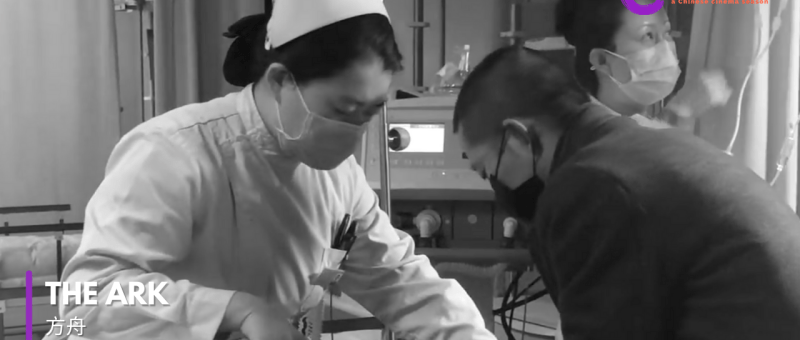
“Safety isn’t the issue right now. We have to keep moving forward” a harried doctor replies to a cabman’s question, like most it seems just getting on with it until it’s over. Like Wu Hao, Chen Weixi & Anonymous’ 76 Days, Chang Yung’s Wuhan Wuhan (武汉武汉, Wǔhàn Wǔhàn) documents the final stretches of the city’s intense lockdown beginning in February 2020 yet where 76 Days was largely a exploration of grief, panic, and confusion Chang’s documentary assembled remotely from 300 hours of footage shot on the ground by local camera crews perhaps reflects a new accommodation with the nature of the pandemic in its empathetic depiction of ordinary people going about their lives as normally possible. 

The first trail Chang picks up is that of factory worker Yin who has begun working as a volunteer driver ferrying medical staff between the hotel where they are being housed during the lockdown and the healthcare facilities where they are working. Yin explains he took the job more or less for something to do rather than be bored at home, but it also places a strain on his relationship with heavily pregnant wife Xu who is intensely anxious about catching the disease or that there may be other complications with the birth but no hospital space available to treat her. Through his various fares, Yin gets to see the other side of the pandemic as the medical staff honestly describe the situation on the ground which is often in contrast with the impression given by official channels. 

As for the medical staff themselves, ER Chief Zheng is quick to point out that much of the PPE they’ve received is not fit for purpose while his staff is already traumatised and close to burnout. Later a team of psychiatrists is sent in to provide support both to the frontline health workers and to the patients, most of whom are extremely grateful to the doctors and nurses if sometimes frightened and angry though one they’ve nicknamed grumpy grandpa continually refuses treatment and otherwise makes a point of pigheadedly insulting his nurse. Psychiatrist Zhang is also however under strain, learning via telephone that her father in her hometown has been diagnosed with a serious illness. Like many she is away from her family with no idea when she’ll be able to return to them. Nurse Susu, in the same position, receives a raw and difficult phone call from her small daughter who breaks down crying, unable to understand why her mother’s not coming home while all she can do is listen in heartbreak unable to explain or make a promise she knows she can keep as to when she’ll back. Zheng likewise makes calls to his wife and daughter, but also reveals that he’s asked an old friend to watch over them should the worst happen. 

Nevertheless, people try to find the small moments of joy where they can. At a temporary hospital for those whose cases are mild to moderate, a mass dance routine breaks out while patients otherwise try to keep active through group tai chi supporting each other while Zhang runs group therapy sessions on the other side of the wall. Worried part of the problem is that the patients can’t bond with them because the PPE erases their identity, some of the doctors print out photos to display on their chests while others are always quick to help, a collection of local hairdressers offering free haircuts to medical personnel to help prevent contamination and make PPE more comfortable. 

The overall impression is of a community managing, working together to get through the crisis while quietly getting on with the job. Chang apparently made his documentary partly with the rise in anti-Asian hate crime in mind, hoping to “humanise” the citizens of Wuhan by showing them as ordinary people living in extraordinary circumstances though others of course may read it slightly differently in its deliberate avoidance of the horrors of the virus save a few scenes of grieving relatives or terrified patients, the only indication of anxiety caused by the system seen in those at the temporary hospital hearing it’s about to close down and fearful of what might happen to them next. Nevertheless Chang’s empathetic documentary is at its best capturing the everyday reality, be it a husband running all over town trying to find somewhere selling a crib or a woman cooking yams in her room because she can cope with the virus but another one of those box meals might push her over the edge. 


Wuhan Wuhan streams in the US Oct. 6 – 12 as part of the 13th Season of Asian Pop-Up Cinema. It will also screen at Chicago’s Chinese American Museum on Oct. 9.

Original trailer (English subtitles)