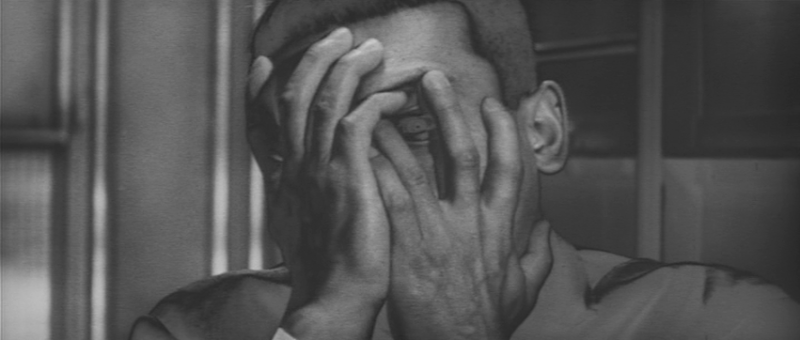

The building at the centre of Koji Shima’s dread-fuelled horror noir Pit of Death (怪談おとし穴, Kaidan Otoshi Ana) is said to be haunted by the spirits of the many people who died during its construction. In his opening voiceover, anti-hero Kuramoto (Mikio Narita) likens the city to a hornet’s nest, the salaryman drones mindlessly buzzing around the business district as if driven by some supernatural force. In that sense, the office building itself becomes an eerie place, the nexus of the salaryman dream which in the end drags all to hell.
Largely a retelling of Yotsuya Kaidan for the mid-20th century with a little A Place in the Sun thrown in, the film finds Kuramoto an ambitious man deluded by consumerism and resentful of the classism and snobbishness which limit his prospects as a man who has otherwise been able to pull himself out of poverty. His boss pointedly speaks of his talents which include the ability to speak several languages despite only having attended night school rather than university while it’s unusual for a man of his background to hold this kind of position even if he’s only a secretary and not yet an executive. Nevertheless, his boss clearly sees him as a potential successor and plans to marry him to his daughter (Mako Sanjo) who has in some ways inexplicably developed a crush on him.
But Kuramoto is already in a relationship with typist Etsuko (Mayumi Nagisa). In fact, the reason the boss is so pleased with him is largely down to her in that he asked Etsuko to sleep with their foreign client, Mr Hancock, to seal the deal which she duly did. Kuramoto plans to throw her over in order to pursue his dream of taking over the company so he can look down on those who once looked down on him. He tells Etsuko that the marriage will be in name only, that he isn’t attracted to the boss’ daughter Midori, and their relationship will continue as before only to be confused when Etsuko is not totally on board with the plan. She tells him she’s pregnant with his child though he callously points out it could be Hancock’s and insists on an abortion thereafter determining he must kill her so that he can fulfil his destiny by joining the executive class.
His desires are obvious when he steps into Midori’s home and gazes at a painting crassly asking how much it’s worth, admitting that he’s the kind of poor person who has a fascination with luxury. His forward propulsion is driven by a fear of poverty, the trauma of the hard life he’s had and the futility he felt in his inability to escape it. Yet it’s also a kind of class rebellion motivated by resentment for the prejudice held against him as a man without means in a highly stratified society. Paradoxically, he will do anything and everything to be accepted as a member of the elite class including murdering Etsuko, the symbol of the working class past he fears will drag him down.
Etsuko does indeed drag him down eventually in her own revenge against his callousness and the double standards of a patriarchal society. Her relationship with Kuramoto seems to be a secret in the office while he uses and discards her when no longer useful to him. She too is trapped within this building of a newly corporatised society but can rise no further alone and is in a fairly bleak position without Kuramoto for she has already thrown away her only bargaining chip by entering a sexual relationship with him. Should she attempt to raise his child alone as a never married single mother, her life would be very difficult indeed if not actually impossible. Nevertheless, she does have real power over Kuramoto in her ability to expose the affair and ruin his chances of career advancement through dynastic marriage destroying any possibility of his future success.
In Kuramoto’s mind, Etsuko cackles like a witch or evil spirit. Her hair billows out into the wind like a vengeful ghost, though the first few times Kuramoto only imagines her death. He sees himself push her off a roof, only to be surprised to see her still standing over him. Etsuko haunts Kuramoto while alive as an image of his destruction all while he silently plots hers. He plans to use the building against her, hiding her body inside it where he assumes no one will see. In the end, it’s as if this building, an edifice of soulless corporatising capitalism, consumes them both, drawing them in with their unfulfilled desires until they fall into the bottomless pit of post-war ambition. Shima makes frequent use of solarisation and film noir lighting to destabilise Kuramoto’s world as his mental state starts to fracture along with innovative use of split screens to lend the space a sense of eerie continuity but ultimately posits the salaryman society as a kind of death trap beckoning greedy souls towards their demise with an inexorable fatalism.

 The Peony Lantern (牡丹燈籠, Kaidan Botan Doro) has gone by many different names in its English version – The Bride from Hades, The Haunted Lantern, Ghost Beauty, and My Bride is a Ghost among various others, but whatever the title of the tale it remains one of the best known ghost stories of Japan. Originally inspired by a Chinese legend, the story was adapted and included in a popular Edo era collection of supernatural tales, Otogi Boko (Hand Puppets), removing much of the original Buddhist morality tale in the process. In the late 19th century, the Peony Lantern also became one of the earliest standard rakugo texts and was then collected and translated by Lafcadio Hearn though he drew his inspiration from a popular kabuki version. As is often the case, it is Hearn’s version which has become the most common.
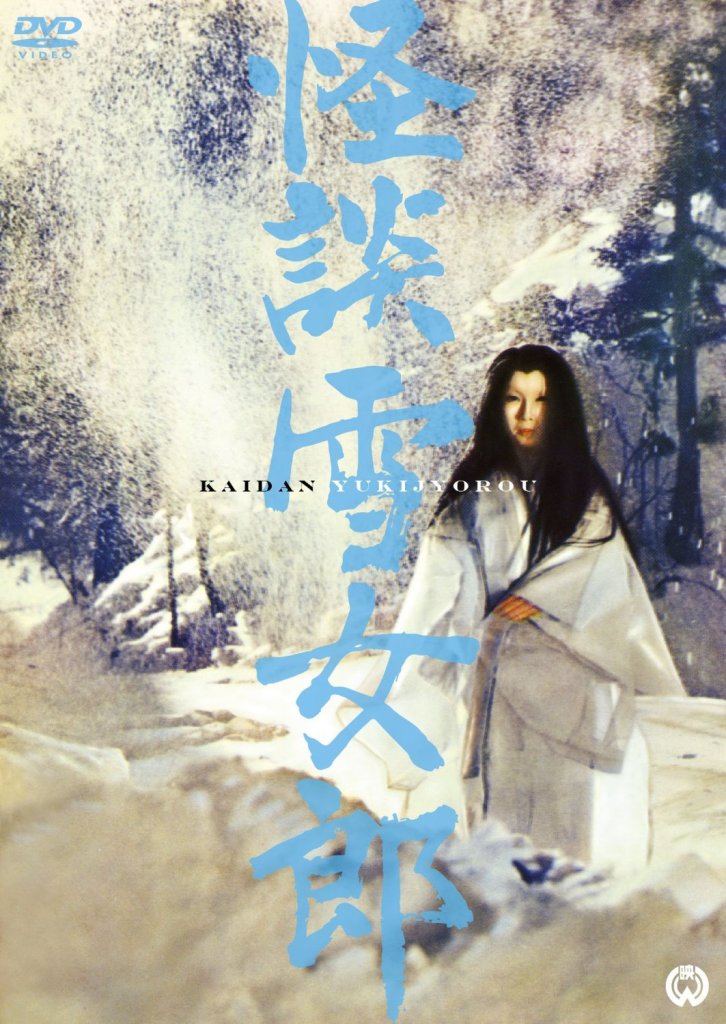 The Snow Woman is one of the most popular figures of Japanese folklore. Though the legend begins as a terrifying tale of an evil spirit casting dominion over the snow lands and freezing to death any men she happens to find intruding on her territory, the tale suddenly changes track and far from celebrating human victory over supernatural malevolence, ultimately forces us to reconsider everything we know and see the Snow Woman as the final victim in her own story. Previously brought the screen by Masaki Kobayashi as part of his
 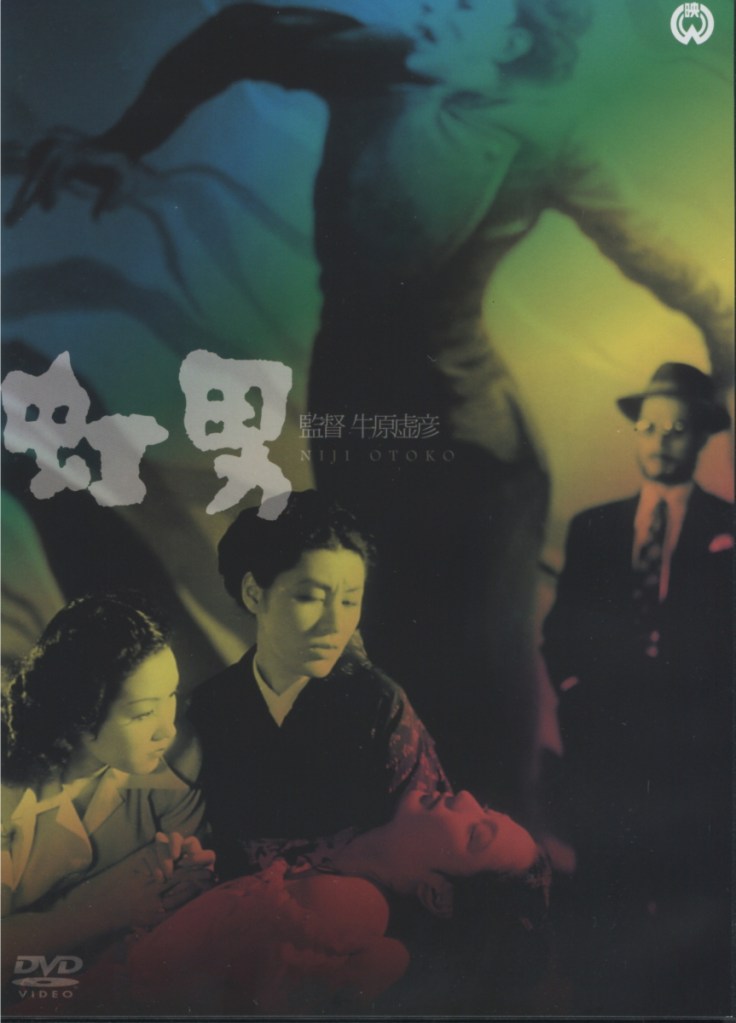 “The Rainbow Man” sounds like quite a cheerful fellow, doesn’t he? How could you not be excited about a visit from such a bright and colourful chap especially as he generally turns up after the rain has ended? Daiei have once again found something happy and made it sinister in this 1949 genre effort which is sometimes called Japan’s first science fiction film though there isn’t really any sci-fi content here so much as a strange murder mystery with a weird drug at its centre.
 These days, cats may have almost become a cute character cliche in Japanese pop culture, but back in the olden days they weren’t always so well regarded. An often overlooked subset of the classic Japanese horror movie is the ghost cat film in which a demonic, shapeshifting cat spirit takes a beautiful female form to wreak havoc on the weak and venal human race. The most well known example is Kaneto Shindo’s Kuroneko though the genre runs through everything from ridiculous schlock to high grade art film.
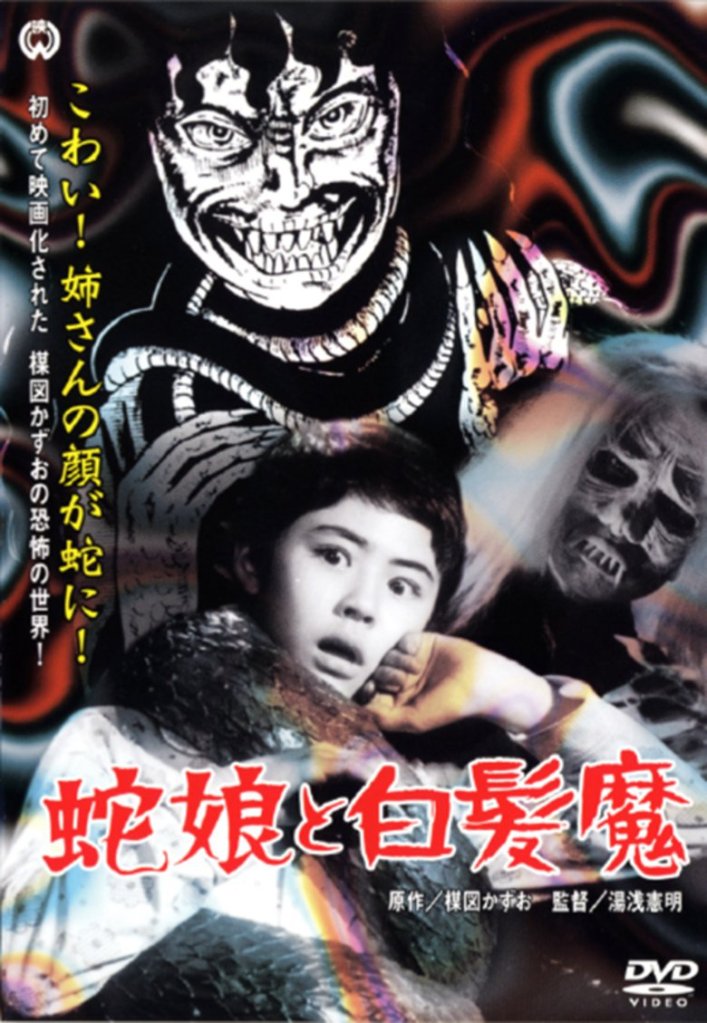 Little Sayuri has had it pretty tough up to now growing up in an orphanage run by Catholic nuns, but her long lost father has finally managed to track her down and she’s going to able to live with her birth family at last! However, on the car ride to her new home her father explains a few things to her to the effect that her mother was involved in some kind of accident and isn’t quite right in the head. Things get weirder when they arrive at the house only to be greated by the guys from the morgue who’ve just arrived to take charge of a maid who’s apparently dropped dead!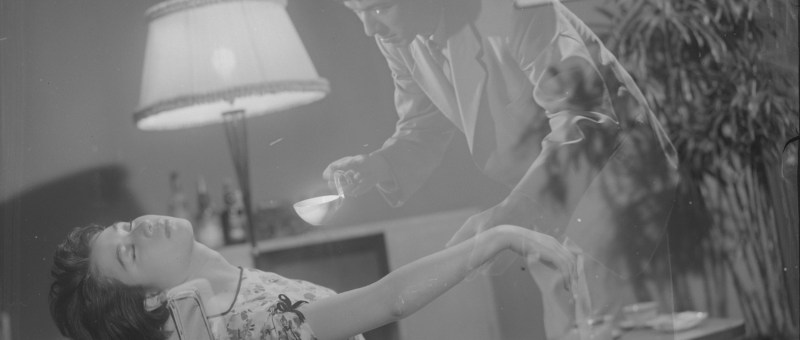
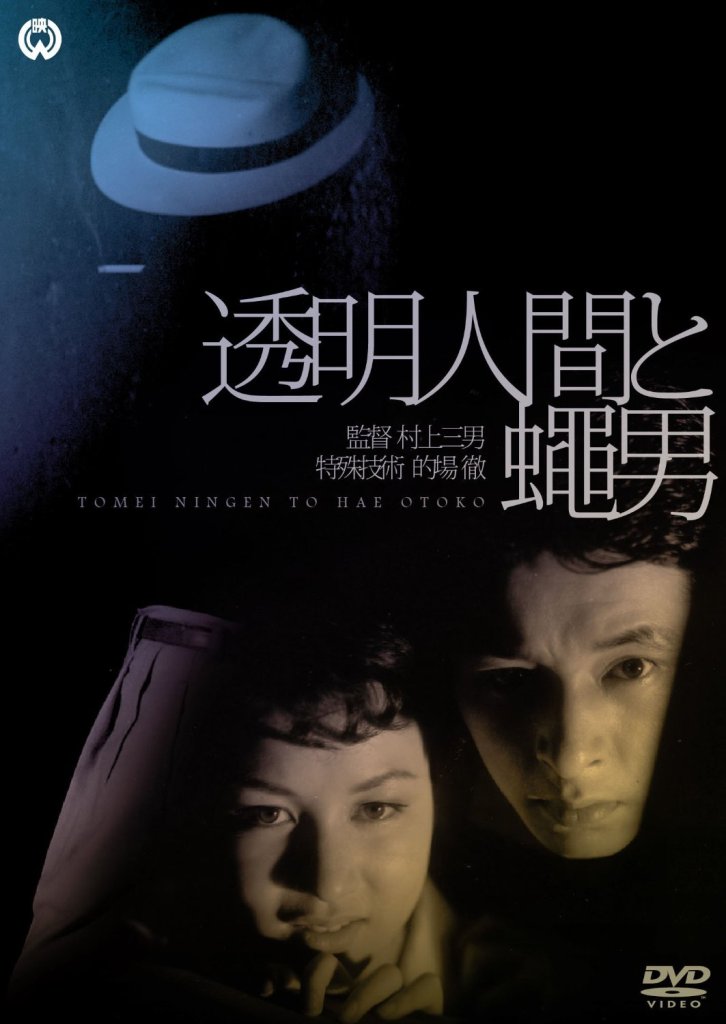 Who would win in a fight between The Invisible Man and The Human Fly? Well, when you think about it, the answer’s sort of obvious and how funny it would be to watch probably depends on your ability to detect the facial expressions of The Human Fly, but nevertheless Daiei managed to make an entire film out of this concept which is a sort of late follow-up to their original take on
 Released in 1949, The Invisible Man Appears (透明人間現る, Toumei Ningen Arawaru) is the oldest extant Japanese science fiction film. Loosely based on the classic HG Wells story The Invisible Man but taking its cues from the various Hollywood adaptations most prominently the Claude Rains version from 1933, The Invisible Man Appears also adds a hearty dose of moral guidance when it comes to scientific research.
 Windows on Worlds