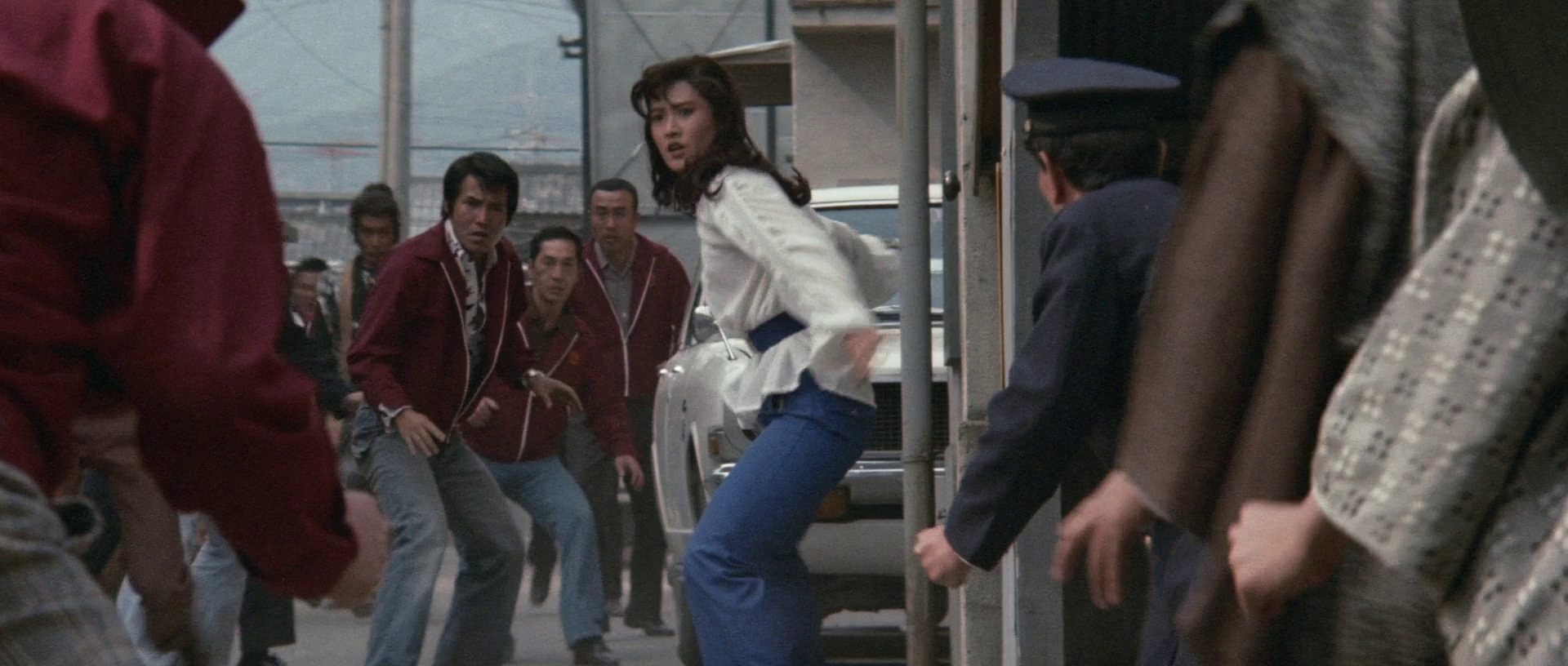
Sister Street Fighter: Fifth Level Fist (女必殺五段拳, Shigehiro Ozawa, 1976)

Though it’s tacked on to the Sister Street Fighter series, Level Five Fist (女必殺五段拳, Onna hissatsu godan ken) actually has nothing to do with it save borrowing a part of the title which is intended to signal the presence of its star. Thus, this is not really a martial arts movie but a much more conventional Toei action film in which the leading role is technically split between Etsuko Shihomi’s posh girl karate champ and Tsunehiko Watase’s sexist cop. It does however continue the smuggling theme with the drugs this time first being packed inside fish and then encased in Buddha statues to be exported to America.

Like many Toei films of the time, there is an underlying theme of anti-Americanism as the “Far East” big boss, posing as a Hollywood movie exec, is supposedly from there but has a strong accent suggesting otherwise. Meanwhile, the brother and sister at the film’s centre are a pair of children who were fathered by American servicemen at the bases in Okinawa who presumably took no responsibility for their upbringing. The brother’s father was black, while the sister’s was white, and though they have both suffered prejudice and discrimination because of their mixed ethnicity, it’s clear that Jim (Ken Wallace) has had it worse. Michi (Mitchi Love) makes good use of her native-level English abilities and martial arts skills to work as a bodyguard / interpreter for visiting dignitaries, but Jim seems to struggle to find employment and subsequently ends up working for a Korean gang run out of a local nightclub. 

The pair have a dream of saving up enough money to return to Okinawa, which was returned to Japan in 1971 after an extended period of US occupation, and opening a restaurant which the film positions as a desire to escape from the racism they experience on the mainland. When Jim says that Kiku (Etsuko Shihomi) is their only friend, he half implies that the discrimination they face is down to being Okinawan rather than their mixed ethnicity which would continue to be an issue even on the islands as it was in their childhood even if there may be more understanding given the continuing presence of the American military and larger numbers of mixed-ethnicity people. In any case, it’s true enough that even those from Okinawa do also experience discrimination on the mainland and are not always accepted as “Japanese” while their Okinawan identity is not respected either. 

Kiku is trying to protect her friends, but finds herself hamstrung by rigid cop Takagi (Tsunehiko Watase) who also happens to be the son of a friend of her father’s. Kiku’s father is apparently a self-made man and successful kimono merchant married to a more conservative woman with higher social ambitions. As the film opens, Kiku is dressed in a kimono and being subject to a formal omiai meeting for an arranged marriage with an admittedly promising candidate who graduated from an elite university and works for a prominent bank. But Kiku looks bored throughout and defiantly flouts social convention by suddenly claiming to have an appointment and walking out, much to her mother’s embarrassment. Her father lets her go and is apparently less bothered about this sort of propriety though later trying to put his foot down when she leaves the house dressed like a hippy rather than in a fine kimono which is not, after all, a very good advert for the family business. 

Her father also tries to set Kiku up with Takagi, but like her mother, Takagi also tells her to keep her nose out of the case and “try trusting a man for once”. He criticises her for saying that she doesn’t want to lose to a man and explains that men are attracted to women because of their “gentleness.” He adds that cooking and raising children are what make women happy, with the clear implication that Kiku is in the wrong for flouting conventional gender roles and should quickly conform by getting married and becoming a wife. Kiku appears to give him the benefit of the doubt and this confusion over gender roles is compounded when she poses as a boy and takes a job as a extra on the jidaigeki film set at the studio which turns out to be a front for drug runners. A queer-coded actor who is later told off for “stalking people again” tries to hit on her in a clear allusion to her masculinity. But unlike in the Sister Street Fighter films, she is ultimately defeated and tied to a log with a buzz saw coming at her only to be saved by the intervention of Takagi while the final scenes see her supporting him after he is (possibly fatally) injured defeating the bad guys.

All in all, it’s some rather confusing messaging but seems to come out on the side of male authority as represented by the police rather than Kiku’s father who is depicted as a weakened figure of masculinity owing to being henpecked by his wife and hoodwinked by his feisty daughter. Even the grinning sap from the gym who tried to put Chanel No. 5 on Kiku’s karate outfit, much to her annoyance, is later revealed to be an undercover cop. Which is all to say, that Kiku’s martial arts ability is almost a kind of joke and something that places her outside of conventional gender norms which should otherwise be “corrected” rather than praised, as it was in the Sister Streetfighter series which placed more emphasis on martial arts philosophy. Then again, the original trilogy ended on a similarly sour note in reaffirming Koyu’s maternity. It seems it’s less sisters doing it for themselves, than sisters doing as they’re told, which aside from anything else is a disappointing conclusion to one of the few female–led action franchises of the 1970s.


Original trailer (English subtitles)

Sword of Destiny (孤剣は折れず 月影一刀流, Yasushi Sasaki, 1960)

A wandering swordsman winds up in intrigue on returning to his fencing school to find his old master murdered in Yasushi Sasaki’s Sword of Destiny (孤剣は折れず 月影一刀流, Koken wa Arezu: Tsukage Ittoryu). A classic jidaigeki adventure, it nevertheless has to be said that this one is a little more sexist than most in actively pushing its series of female warriors into the background as the hero by turns sends them all back to typically feminine roles while declaring that he will be the one to claim vengeance and clear up corruption in the court itself caused by a woman’s apparent forgetting of her place. 

At least, this is what Mikogami Genshiro (Koji Tsuruta) is told by an old friend, Izu, after an altercation with the fiery princess Kazu (Hibari Misora). The Shogun’s nurse, Lady Kasuga, has apparently taken an interest in politics and has most of the inner palace in her grasp enriching herself in the process. Izu believes that she may also be behind the assassination of Geshiro’s former mentor Ono while working in league with the Yagyu who coveted the position of fencing master to the Shogun. He asks Genshiro to kill her which he’s only too happy to do while seeking vengeance for Ono, but later gains a second reason after meeting the two orphaned daughters of a former retainer forced to take his own life thanks to Lady Kasuga’s machinations. 

Itoya (Yoshiko Fujita) wanders round with a gun and disrupts Genshiro’s first assassination attempt. He later tells her to leave the killing business to him and live “the life of a woman” insisting that one girl has no power to kill Lady Kasuga anyway. Meanwhile, he also makes an enemy of the Shogun’s sister Princess Kazu after challenging her in the street on seeing her callous disregard for a peasant her horse had run over. Princess Kazu falls in love with him after he defeats her in a duel, temporarily rebelling in insisting she will resist a dynastic marriage and take no other husband though he eventually rejects her partly on the grounds of their class difference and partly because he is a wandering sword who lives in the moment and may know no tomorrow. 

Nevertheless, she is later seen capitulating to her proper role as a princess who exists largely to continue the family line, marrying a man chosen by the Shogun and his advisors with no real power to chose anything other than her obedience. In much the same way he does with Itoya, Genshiro pushes her back towards the typically feminine while falling for Itoya’s meek, sickly sister Mine (Hiroko Sakuramachi) who is otherwise an idealised image of femininity in her softness and naivety while like every other woman in the picture falling for Genshiro because of his robust manliness and ability to protect her by gaining the sisters’ vengeance on their behalf. 

Meanwhile, Genshiro also facing off against the rival Yagyu school whom he suspects of having killed Ono to usurp his place as the shogunate fencing master with the assistance of underling Takagaki who has now taken over leading to a mass exit of students fed up with his authoritarian teaching methods. Interestingly enough, Genshiro is temporarily imprisoned by the Yagyu alongside a dissident Christian whose death they’d faked while keeping him alive in order to torture the names of other Christians out of him. On fulfilling his request to take his cross to his daughter who has become a sex worker, Genshiro succeeds only in endangering her while she also falls in love with him. 

All in all, he’s not much of a responsible hero also reckless with the life of his former burglar sidekick Kurobei (Shin Tokudaiji) who uses his ninja tricks to get him out of prison. As expected, it all ends with in a battle against a treacherous swordsman and the spineless Takagaki with the final revelation that Lady Kasuga (who just dies of old age) had not much to do with anything anyway despite having been a “meddling” old woman who forgot her proper place. Even Mine is forced to admit that she can’t come between Genshiro and his sword so she plans to become a nun while Kazu sends him an elaborate katana to remember her by certain that he will not accept a place in the Shogun’s household but will return to the road to continuing his training. In any case, a kind of justice is done and order restored even if that order is in itself fairly unideal. 


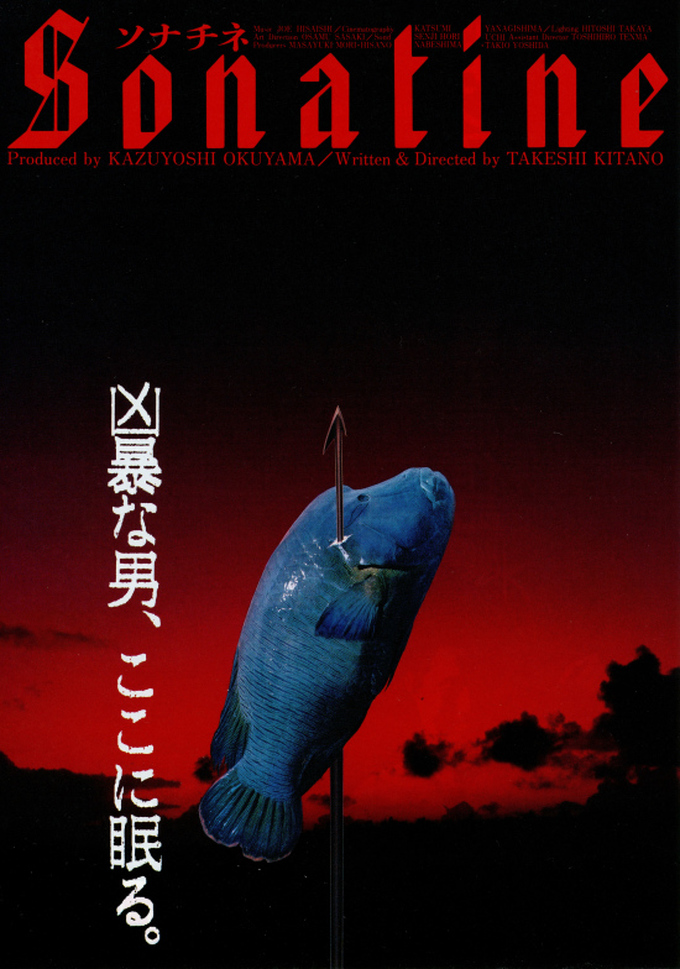
Sonatine (ソナチネ, Takeshi Kitano, 1993)

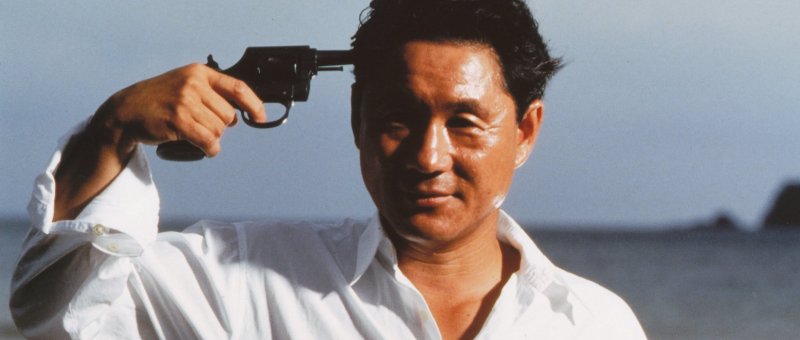
The problem with being a yakuza is that there is never any rest. Staying alive means constant vigilance, make a mistake and it could be the end of you or, conversely, get too good at your job and place a target on your own back. The hero of Takeshi Kitano’s Sonatine (ソナチネ) declares himself tired, not just of the life but life itself. By his fourth picture, Kitano was perhaps feeling something similar, later describing the near-fatal motorcycle accident he encountered some months after the film’s completion as an unconscious suicide attempt. For years he’d been one of Japan’s top TV personalities working a breakneck schedule that left him little time for other outlets such as painting, novels, and acting for others, but still he longed to be taken more seriously as an artist in his home nation where audiences largely stayed away from his “serious” films, as they did with Sonatine which flopped at the box office and put an end to his arrangement with Shochiku who had distributed his first two features in which he had also starred. 

For this third film, A Scene at the Sea, Kitano remained behind the camera and distanced himself from the themes of crime and violence which defined his early career, crafting instead an intensely melancholy tone poem about a deaf surfer falling in love with the ocean. In Sonatine he casts himself as the lead for the first time since Violent Cop, this time as a gangster experiencing extreme existential malaise when confronted with the futility and emptiness of his life in organised crime. Murakawa (Takeshi Kitano) is aware he has probably reached the zenith of his career as a mid-tier gang boss working as a, by all accounts, unexpectedly successful enforcer in a rundown area of the city. His first crisis concerns the owner of a mahjong parlour who thinks the yakuza are an outdated institution and refuses to take their threats seriously. He sees no need to pay them the customary protection money and assumes they’ll back off he simply tells them he’s not interested, but he is very wrong. Murakawa has him kidnapped to teach him a lesson, observing while his minions attach him to a crane and threaten him by dunking him in a large pool of water. Immediately apologetic, the man sees the error of his ways, but Murakawa doesn’t really care about the money anymore and so they dunk him again to see how long it takes a man to drown, barely shrugging as they realise he really died. 

Either because he’s an unusual man, or because he is simply tired of everything, Murakawa no longer bothers to abide by the rules of petty gangsterdom. He doesn’t do deference, smoking away long before his boss offers permission to do so and feeling unafraid to voice his reluctance when he’s ordered to take some of his guys to Okinawa to settle a nascent gang war involving one of their affiliates. Murakawa doesn’t want to go because he lost three men in a similar job in Hokkaido, but in reality has little choice. Later events prove he was right to be suspicious. The Okinawan gang boss tells him that he reported some minor friction with another gang out of courtesy and is confused he’s been sent reinforcements, not that he’s not glad to see them. As soon as they arrive, however, the tension rises and Murakawa and the guys are forced into hiding, holing up at the beach as they await orders from head office or word on a possible truce. 

Murakawa, his two right-hand men, and the Okinawan gangsters adjust to tranquil island life, playing on the beach and taking the time to master the art of Okinawan folk dance, but the grim spectres of death and violence present themselves even here in empty games of Russian roulette and Murakawa’s childish prank of digging sand traps for the guys to fall into as if into their graves. While he’s busy admiring the night sky, the silence is ruptured by a local tough chasing a young woman onto the beach where he proceeds to rape her. Murakawa doesn’t intervene but is challenged anyway and then forced to kill the puffed up youngster while the young woman, Miyuki (Aya Kokumai), becomes strangely attached to him, impressed by his cool dispatch of her attacker. 

Murakawa’s somehow innocent relationship with the young woman creates a minor rift with his men who resent the absence of his leadership at a time of crisis while he ponders alternate futures outside of the gangster brotherhood. But deep down he knows that his idyllic beach holiday cannot last forever and that he will have to leave this liminal space eventually for a destination of which he is all too aware. As he explains to Miyuki, when you fear death so intensely you begin to long for it if only for an end to its terrible anxiety. 

The title “Sonatine” is apparently inspired by the “sonatina”, a short, tripartite piece piano players attempt to mark an attainment of skills before choosing the future direction of their musical career. Murakawa undergoes three distinct arcs, from the city to the beach and back again, but perhaps knows there is no future direction in which for him to travel only the nihilistic fatalism of a life of violence. As for Kitano, it does perhaps draw a line in the sand marking the end of an apprenticeship and its associated compromises as he fully embraces an authentic personal style, like Murakawa no longer prepared to be deferent in an admittedly exhausting world. 


Sonatine is the third of three films included in the BFI’s Takeshi Kitano Collection blu-ray box set and is accompanied by an audio commentary by Chris D recorded in 2008. The first pressing includes a 44-page booklet featuring an essay on Sonatine and introduction to Kitano’s career by Jasper Sharp,  an essay on Violent Cop by Tom Mes, a piece on Boiling Point from Mark Schilling, an archival review by Geoff Andrew, and an appreciation of Beat Takeshi by James-Masaki Ryan.

The Takeshi Kitano Collection is released 29th June while Violent Cop, Boiling Point, and Sonatine will also be available to stream via BFI Player from 27th July as part of BFI Japan.

Original trailer (English subtitles)

Hibari Ohako: Ojo Kichisa (ひばり十八番お嬢吉三, Yasushi Sasaki, 1960)

Ojo Kichisa still 1Following Benten Kozo, Ojo Kichisa (ひばり十八番お嬢吉三, Hibari Obako Ojo Kichisa) is the second in a small series of movies starring Hibari Misora in a tale adapted from a well known kabuki play and featuring a cross dressing hero/heroine. This time around Misora plays a young woman dressing as a man for the purposes of revenge who eventually meets up with two men sharing the same “Kichisa” name – a lord (Obo), and a priest (Osho), to form a brotherhood of three including her “Ojo” as in “young lady”. Together they fight the injustices of the feudal world (which are myriad) whilst helping Ojo Kichisa get revenge on the men who murdered her parents forcing her into a precarious life of self preservation.

Beginning with Misora singing the title song of the three Kichisa, the action then switches to a small drinking house where a young woman gets herself into trouble with a bossy samurai who accuses her of spilling sake on him. Though the woman, Otose (Eiko Maruyama), apologises profusely, the samurai threatens to make her pay with her body. Fortunately Ojo Kichisa strides in and fights the samurai into submission, temporarily saving the day. Unfortunately, the samurai come back later brandishing a loan agreement Otose’s father had signed and demand immediate repayment or they will take Otose in its stead.

Once again the feudal world is one of intense unfairness and corruption in which the samurai class abuse their privilege to oppress the ordinary men and women of the Edo era. The samurai who takes such extreme offence at Otose’s possible slip-up has no real reason to do so other than expressing his superiority and once humiliated by Ojo Kichisa feels himself duty bound to double down. The samurai order looks after its own and so his underlings spring into motion to manipulate Otose’s family into giving her up. The two loan sharks gleefully celebrate their good luck, confessing that a major reason for lending money to the needy is for occasions such as this – not only for the interest but for the leverage in getting the desired outcome in ongoing schemes.

Meanwhile, there is a bigger game at play concerning the new finance minister and local governor. The governor accepts “gifts” from a shopkeeper hoping to be promoted onto the council whilst subtly hinting that more “gifts” might be an idea while he needs to be turning a blind eye to the smuggling that’s currently going on in town. Of course, the governor turns out to be involved in Ojo Kichisa’s mission too and is currently being blackmailed by an old acquaintance who once helped him steal a famous sword from its rightful owner.

Another of Misora’s frequent cross-dressing roles, Ojo Kichisa starts out as male but is later revealed to be female having adopted male dress to survive in male dominated Edo and pursue revenge on those who rendered her an orphan. After losing her parents, Ojo Kichisa and her young brother Sannosuke (Takehiko Kayama) were travelling in search of relatives when they were abducted by slave traders and separated. Presumably, both managed to escape at some point and have been living by their wits vowing revenge and reunification but apparently largely untouched by the darkness of feudal society.

The darkness is something which gets pushed into the background in this otherwise comedic tale of the little guy standing up to corrupt elites. The three Kichisas each represent various areas of society – the priest, the noble lord who hates the cruelty of his class, and the elegant lady, Ojo. Obo Kichisa (Tomisaburo Wakayama), the lord with a conscience, is committed to protecting the weak and fighting injustice everywhere he sees it, but it’s not long before pretty much everyone has decided the governor has to go thanks to his inherently corrupt approach to governing in which he’s all about take and never about give, neglecting the townspeople under his care and prioritising his personal gain.

Hibari Misora sings the title song twice – at the opening and closing, as well as another insert song but her brother Sannosuke also gets an opportunity to showcase his singing his voice in a mild departure from the star vehicle norm (actor Takehiko Kayama was also Misora’s real life brother). As in Benten Kozo, Wakayama takes on the bulk of the heroic fighting but Misora gives it her all in the many fight scenes in which she too gets to defeat injustice and rescue maidens to her heart’s content. A straightforward jidaigeki idol movie, Ojo Kichisa is unremarkable in many ways but nevertheless another entertaining example of Misora’s talent for playing ambiguous gender roles.


Hanzo the Razor: Sword of Justice (御用牙, Kenji Misumi, 1972)

Hanzo sword of Justice posterJapanese cinema was in a state of flux in the early ‘70s. Audiences were dwindling. Daiei, a once popular studio known for polished, lavish productions folded while Nikkatsu took the proactive measure to rebrand itself as a purveyor of soft core pornography. Toho did not go so far, but in its first foray into a new kind of jidaigeki, exploitation was the name of the game. Hanzo the Razor: Sword of Justice (御用牙, Goyokiba) was released in 1972 – the same year as the beginning of another seminal series, Lone Wolf and Cub, which was produced by Hanzo’s star, former Zatoichi actor Shintaro Katsu, who also happens to the be brother of the franchise’s lead Tomisaburo Wakayama. Like Lone Wolf and Cub, Hanzo the Razor is based on a manga by Kazuo Koike whose work later provided inspiration for the Lady Snowblood films, and is directed by Lone Wolf and Cub’s Kenji Misumi. It is then of a certain pedigree but its intentions are different. More obviously comedic in its exaggerated, unpleasant sexualised “humour”, Hanzo the Razor is also a tale of the systemic corruption of the feudal order but one which casts its “hero” as a noble rapist.

Honest and steadfast police officer Hanzo (Shintaro Katsu) usually skips the annual swearing in ceremony but this year he’s decided to make an appearance. He appears to have done so to make a personal stand by refusing to sign the policeman’s oath because he knows everyone else is breaking it. Officers may not be doing something so obvious as accepting cash for preferential treatment, but they gladly accept free drinks, gifts from lords, and entertainment in the local geisha houses. Hanzo’s actions, honest as they are, do not go down well with his fellow officers and if he can’t figure something out on time, Hanzo faces the possibility that his career in law enforcement may come to an abrupt end when contracts are up for renewal at the end of the year.

Whatever else Hanzo is, he doesn’t like bullies or those who abuse their authority and the trust placed in them by those they are supposed to be protecting. More than just saving his own skin, Hanzo is determined to unmask the hypocrisy and corruption of his boss, Onishi (Ko Nishimura), who he discovers shares a mistress with a notorious killer still on the run. Chasing this early thread, Hanzo walks straight into a chain of corruption which leads all the way to the top.

At his best, Hanzo is a steadfast champion of the people who remain oppressed by the corrupt and venal samurai order. Far from the a by the books operative, Hanzo is prepared to do what’s best over what’s right as in his decision to help a pair of siblings who are faced with a terrible dilemma trying to care for a terminally ill father. He’s also extremely well prepared, having installed a host of booby traps and hidden weapons caches throughout his home to deal with any conceivable threat. Dedicated in the extreme, Hanzo has also spent long hours testing his torture techniques on himself to find out the exact point of maximum efficiency for each of them.

Here’s where things get a little more unusual. As Hanzo climbs down from a bout of torture, a huge erection is visible inside his loincloth, prompting him to reveal that it’s pain which really turns him on. Later we see Hanzo doing some maintenance on his “tool” which involves placing it on a wooden board bearing a huge penis shaped indent, and hitting it repeatedly with a hammer before ramming it back and forth into a bag of uncooked rice. Each to their own, but Hanzo derives no pleasure from these acts – they are simply to make sure his “special interrogation method” runs at maximum efficiency. Which is to say, Hanzo’s preferred technique for getting women to talk amounts to rape but as each of them fall victim to his oversize member they cry out in pleasure, willing to spill the beans just to get Hanzo to finish what he started. Playing into the fallacy that all women long to be raped, Hanzo’s inappropriate misuse of his own authority is played for laughs – after all, the women eventually enjoy themselves so it’s no harm done, right? Troubling, but par for the course in the world of Hanzo.

This essential contradiction in Hanzo’s character – the last honourable man who nevertheless abuses his authority in the course his duty (though he apparently takes no personal pleasure in the act), is reduced to a roguish foible as he goes about the otherwise serious business of taking down corrupt authority and ensuring the law protects the people it’s supposed to protect. Odd as it is, Hanzo’s world is an strangely sexualised one in which sexually liberated women wield surprising amounts of power. Hanzo is assured one of his targets has “no lesbian tendencies” as other older court ladies are said to, while a gaggle of camp young men gossip about the size of Hanzo’s world beating penis. In an odd move, Misumi even includes a penis eye view of Hanzo’s techniques, superimposed over the face of a woman writhing in pleasure. Surreal and broadly humorous if offensive, Hanzo the Razor: Sword of Justice is very much of its time though strangely lighthearted in its obviously bizarre worldview.


Original trailer (English subtitles)