
Amiko (あみこ, Yoko Yamanaka, 2017) [Fantasia 2018]

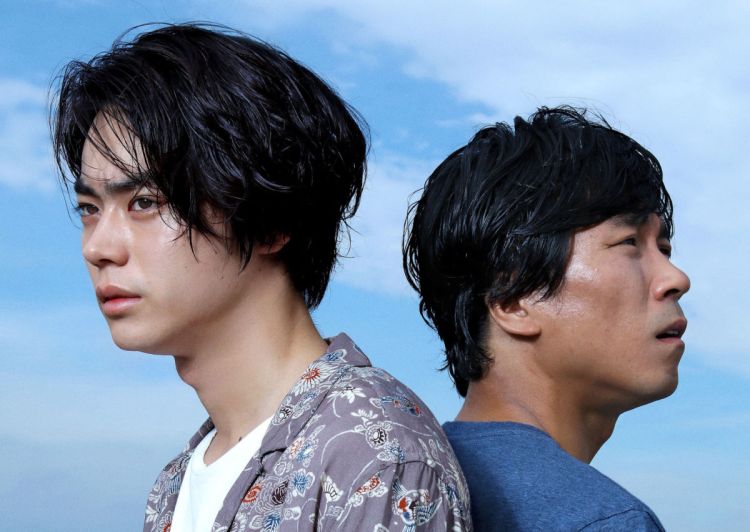
Amiko PosterSome meetings are pivotal, others merely seem so. To melancholy high school girl Amiko (Aira Sunohara), consumed by youthful ennui and a sense of the long dull years stretching out before her, Aomi (Hiroto Oshita) seemed like some kind of heaven sent emissary – a good looking guy who seems to share her existential despair, her taste in music, and her lack of motivation for the business of living. Yet the meeting comes to nothing. After a single night of walking and talking, baring their souls and confessing their anxieties, the pair never talk again. Amiko continues to pine for Aomi, turning him into some kind of absent god, though months have passed with no real contact save her semi-stalking of him online. Eventually, almost a year later, Amiko learns that her one true love has deserted her and run off to Tokyo with another girl. Stunned, she resolves to follow him in the hope of finding out why he chose to renounce all it was she thought they meant to each other to embrace the mediocrity he once claimed to hate.

Amiko is not completely alone, she has a best friend – Kanako (Maiko Mineo), though she confesses that deep down they don’t really understand each other. Aomi too seems to think that Kanako is closed off, not really trusting anyone and living a superficial life. Nevertheless, Kanako does at least provide Amiko with the opportunity to experience the regular high school girl world of gossiping about boys on the telephone and silently resenting other, more popular girls. Claiming that “ordinary poor souls” could never understand the innate connection between herself an Aomi, Amiko decides to keep her long night walk of the soul a secret from her best friend in order to secure its purity.

Amiko, based on their intimate conversation, is convinced that Aomi feels the same way she does, understands her intense sense of existential despair, and is just as bored and disconnected as she feels herself to be. Confessing that he doesn’t actually like sports, in fact he hates being outside, Aomi offers the excuse that it’s easier being told what to do than trying to figure things out on your own. Carried along by the fact he’s good at football and can’t quite find the energy to protest, Aomi drifts on a cloud of his own apathy – one of the cool set of handsome and aloof high school boys popular with those who like unattainable guys. Like Amiko he likes “deep” music, instantly recognising the Radiohead track on her phone, but eventually runs off with the kind of girl Amiko (not so) secretly despises – an airhead popular girl and the “embodiment of mass culture”.

Aomi’s betrayal isn’t just romantic heartbreak, but the severing of a spiritual connection which never really existed in the first place. Rather than deepen the engagement, Amiko opts to leave her night of connection as a mythic encounter, sanctified by its unique quality. Aomi therefore becomes a mythic figure, a composite of Amiko’s various projections of her ideal soulmate, mirroring her own sense of ideological purity. Her new god, however has feet of clay and after tracking him down in the city she’s forced to confront the distance between the image and the reality. Was their connection as real as she thought it was, or only superficial musing on a cool crisp night when there was nothing much else to do?

Deep into her teenage apathy, Amiko talks about those manic, one off days where you just might find yourself doing something crazy out of a sense of cosmic despair. Aomi puts this idea back on the table as a possible motive for his abrupt flight to the city, and Amiko’s random pursuit of him is perhaps its aftershock. Wandering around having mad adventures – joining in with a madman’s (Hisato Takahashi) condemnation of a world of lies and the non-existence of real love, testing the ability of Japanese people to dance spontaneously, and stalking Aomi’s girlfriend, Amiko begins to accept that she may have been mistaken in placing such cosmic importance on what may just have been an inconsequential night filled with accidental profundity. Preferring to maintain the “purity” of her ideal, Amiko remains trapped within her own sense of despair but with a new sense of clarity and a determination not to let the phoniness of the world destroy her essential self.


Amiko was screened as part of Fantasia International Film Festival 2018.

Original trailer (no subtitles)

The Vanished (사라진 밤, Lee Chang-hee, 2018) [Fantasia 2018]

The Vanished posterThe past refuses to die in The Vanished (사라진 밤, Sarajin Bam) – Lee Chang-hee’s remake of the 2012 Spanish thriller, The Body. Ghosts, of one sort or another, torment both of our male leads – a dogged policeman and increasingly unhinged husband, as they try to solve the mystery of a disappearing corpse whilst each battling a degree of latent resentment towards various forces of social oppression. A tale of conflicting bids for vengeance, The Vanished pits an emasculated trophy husband against a controlling career woman wife while the forces of order look on in disapproval but then all is not quite as it seems and perhaps this is not the story we first assumed it to be.

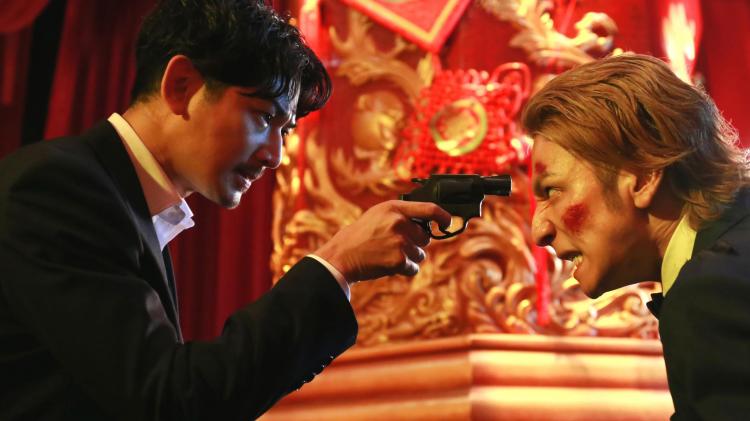
The horror-inflected tale begins in a morgue on a rainy night as a disinterested security guard becomes unexpectedly spooked by his surroundings. Discovering one of the trays open and a body missing, the guard panics and feels himself stalked by something undead before being clubbed on the back of the head and knocked out. Maverick cop with a traumatic past Woo Joong-sik (Kim Sang-Kyung) arrives on the scene and discovers the missing cadaver belonged to prominent businesswoman Yoon Seol-hee (Kim Hee-Ae). The cause of death is thought to have been a heart attack brought on by her workaholic lifestyle but Joong-sik isn’t so sure. He hauls in the “trophy husband” – improbably good-looking university professor and sometime employee of Seol-hee’s pharmaceuticals company, Jin-han (Kim Kang-Woo). Jin-han has come straight from the flat of his pregnant mistress and is understandably on edge as every move he makes only further incriminates him in the “death” of his wife.

Increasingly unhinged, Jin-han is certain that Seol-hee is not really dead and has embarked on an elaborate plan of revenge for his affair with a student, Hye-jin (Han Ji-An). Lee wastes no time in confirming that Jin-han had at least intended to do away with his wife. Jin-han was apparently no longer interested in her money and would have wanted a divorce but believed his wife to be a ruthless woman who would never willingly let him go. Using an experimental anaesthesia drug, he hoped to get rid of her undetected but now fears that she has somehow woken up and wants her revenge. What Jin-han wanted, he claims, was his freedom – Seol-hee, an older career woman, bought him with trinkets, belittles his work, and refuses him all agency. He was tired of playing the toy boy and wanted his life back and so he chose to reassert his manhood through murder.

Of course, all is not quite as it seems. Through Joon-sik’s investigations, Jin-han comes to believe that perhaps Seol-hee planned the whole thing – anticipating that he would try to use the drug against her and engineering a situation in which she would fake her own death just to get back at him. Whether a ghost or not, Seol-hee haunts him, threatens his happy future with the sweet and innocent Hye-jin who calls him professor and respects him as a learned man, and seems set to achieve her goal if only by driving Jin-han out of his mind with worry and confusion.

Meanwhile, Joon-sik is battling another series of oppressive presences in the form a grudge against “the wealthy” possibly relating to a mysterious traumatic incident from his past, and a boss who wants him to find the missing body as quickly as possible and then forget the whole thing given the fact that Seol-hee and Jin-han had been a “celebrity couple” which makes all of this quite embarrassing for everyone. The two men end up engaged in a cat and mouse game as Jin-han becomes convinced that he’s the real victim in all this and is at the centre of an elaborate conspiracy leaving his pregnant girlfriend alone and vulnerable, while Joon-sik continues to push him towards confessing that he took the body and hid it possibly in some kind of fugue state.

“The body” is perhaps a better title as the concept itself comes in for constant reappraisal and we gradually understand that not everyone is talking about the same thing, leaving aside the complete erasure of Seol-hee as a woman with a name who may have been murdered by a vengeful husband (as unpleasant as she is later shown to be) in favour of viewing her simply as a nameless corpse or grudge bearing ghost. Twists pile on twists and history rewrites itself, but the buried past will someday be unearthed and justice served, if with a side order of irony.


The Vanished was screened as part of Fantasia International Film Festival 2018.

Original trailer (Korean subtitles only)

Room Laundering (ルームロンダリング, Kenji Katagiri, 2018) [Fantasia 2018]

Room Laundering posterIn the olden days, when there had been a traumatic incident, holy people would be brought in to perform some kind of ritual to “purify” the air so life could go back to “normal”. These days people don’t believe in ghosts, or at least not in ghosts of that kind, but there is still a degree of discomfort involved in spending time in a place where something unpleasant has happened. Japanese rental laws state that a prospective renter/buyer should be informed if something untoward has occurred in the property, but the law only requires you to tell the next person in line. Therefore, if you can find a person willing to spend a few days in an apartment with a troubled past, they could be quite a useful asset to the unscrupulous estate agent.

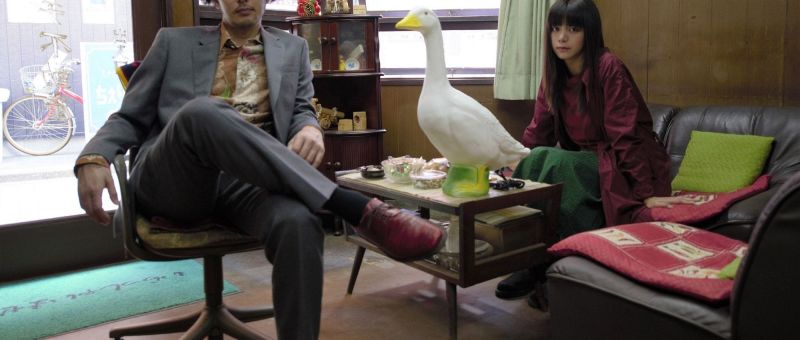
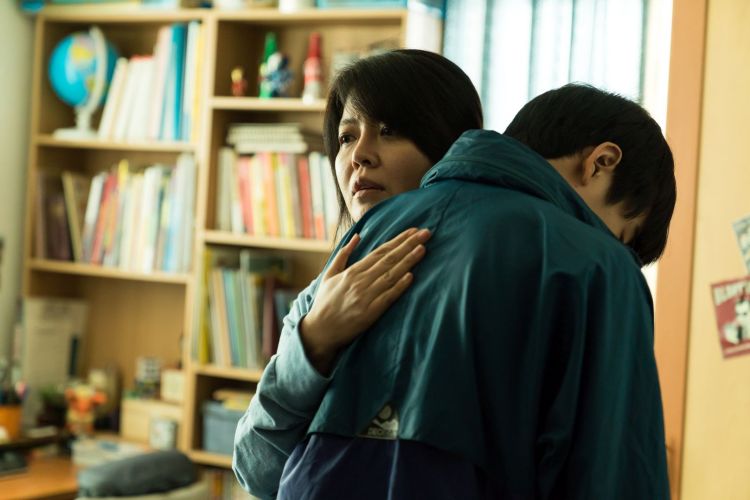
Miko Yakumo (Elaiza Ikeda) is just such a woman and has therefore found herself falling into a “room laundering” career thanks to her uncle Goro (Joe Odagiri), a roguish real-estate-broker-cum-underworld-fixer with a sideline in fake IDs for undocumented migrants. Miko’s father died when she was five, and her mother disappeared without warning a few years later leaving her with her grandmother who died when Miko was 18. She’s now 20 and is nominally in her uncle’s care but having dealt with so much loss and abandonment, she prefers to keep to herself, always closed off with a pair of headphones blocking her ears, speaking to no one. The apartment “job” therefore suits her well enough with its clear stipulation to avoid mixing with the neighbours, but there’s one big drawback. Miko has recently developed the ability to see ghosts which is sometimes a problem given the circumstances her new places of residence became vacant.

A tale of learning to deal with the past, Room Laundering (ルームロンダリング) takes its heroine on some long, strange journeys but despite its death laden themes and Miko’s emotional numbness it has its essential warmths even if they’re sometimes harder to see. Miko’s travels chart a course of modern loneliness as she encounters those who’ve found themselves passing away alone, in pain and in sadness – old ladies whose bodies weren’t found until they’d almost all rotted away, neglected children who starved to death after being abandoned, businessmen who killed themselves after getting into debt, a catalogue of human misery seemingly without end. Miko doesn’t find the ghosts scary because she thinks real people are scarier. They lie, and they leave, and they let you down. At least the ghosts will stick around even if you wish they wouldn’t.

Even so, interacting with the recently deceased begins to reawaken Miko’s sense of vitality. Drinking with (or more accurately on behalf of) an insecure punk rocker (Kiyohiko Shibukawa) who took his own life before sending off his demo tape proves an oddly fulfilling experience for the otherwise introverted young woman, while staying in the apartment of a murdered cosplayer (Kaoru Mitsumune) gives her a sense of purpose when she decides to help the unfortunate woman move on by unmasking the real killer. Meanwhile, she also breaks her non-fraternising rule to chat to the geeky boy next-door (Kentaro Ito) and starts to wonder if maybe not all the living are so bad after all.

In dealing with the legacy of abandonment while literally living a transient life, Miko is forced to confront the ghosts of her past and exorcise them in order to escape her self imposed limbo. Only by being on her own can she reach the realisation that she is not alone. Meanwhile, Uncle Goro’s originally shady looking services for migrants without the proper papers begin to look more altruistic than they first seemed. He, like Miko, is helping himself by helping others who are also trapped in a kind of limbo only a more prosaic earthbound one of rigid bureaucracies and xenophobic exploitation. Goro maybe a dodgy estate agent with a sideline in forcing grannies out of their homes to pave the way for “redevelopment” but at least he’s found a better system of room laundering than his colleague who generally just rents to foreigners and visa overstayers he can either evict or extort if things go wrong. It just goes to show a little bit of empathy goes a long way. After all, you’re a long time dead.


Room Laundering was screened as part of the Fantasia International Film Festival 2018.

Original trailer (no subtitles)

I Have a Date with Spring (나와 봄날의 약속, Baek Seung-bin, 2018) [Fantasia 2018]

I have a date with springIf the world was going to end tomorrow, which of your many anxieties would you most like to ease before you go? I Have a Date with Spring ( 나와 봄날의 약속, Nawa Bomnalui Yaksok) is, as its name suggests, a hopeful tale despite its apocalyptic pretence as its lonely film director hero learns to accept the looming presence of death in order to move beyond his creative block. He may need aliens and the promise of knowledge from beyond our world to do it, but in contemplating the many ways in which modern life is unsatisfactory, he can perhaps begin to envisage a world in which it might not be so bad to live.

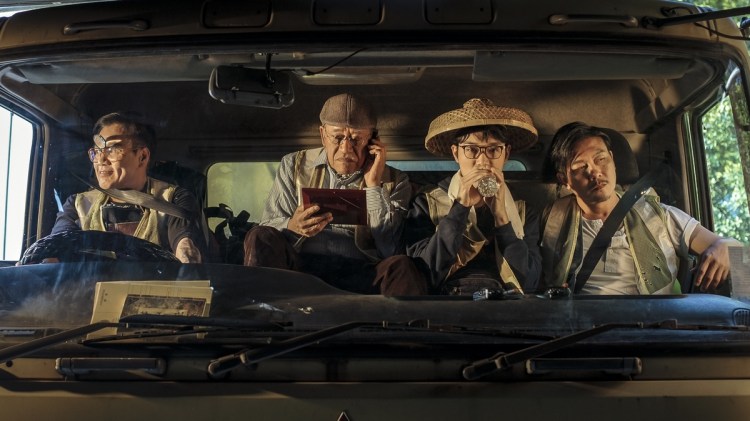
Depressed director Lee Gwi-dong (Kang Ha-Neul) hasn’t made a film in 10 years. The last decade has seen him struggling with the same script, an apocalyptic tale of the end of the world in which three unhappy individuals are visited by omniscient aliens to help them celebrate their birthdays which happen to fall on the day before the Earth will be destroyed. Sitting in a forest on his own birthday, reminding us that he came here to work and not to die, Gwi-dong is shocked to receive a visitation from four mysterious campers, one of whom claims to be a fan of his earlier work.

The picture Gwi-dong (and by extension Baek Seung-bin) paints of modern Korean society is one marked by extreme loneliness and existential isolation. The death obsessed director is currently sporting a large cast on his arm apparently a result of an act of self harm committed in frustration regarding his own sense of disconnection and personal failure. The three “heroes” of his tales within a tale are all also shy, lonely, and increasingly withdrawn, no longer interested in finding escape from their personal imprisonment. A dreamy high school girl longs for the destruction of the world while a middle-aged professor laments his missed opportunities for romance and a harried housewife feels both guilt and regret in remembering she was once the leader of a militant feminist movement back in college.

Each of them is, like Gwi-dong, “celebrating” a birthday but due to their specific personal circumstances they are each celebrating alone as those close to them are either absent or have entirely forgotten. The aliens, not revealing the imminent destruction of the planet, promise each of them something special in return for trust and time but the gifts they deliver are perhaps not altogether welcome despite their original appearance. The lonely high school girl bonds with the middle-aged alien over a shared sense of childish glee in monsters and adventure, relieved simply to hear the word “friend” but still unsure whether she should trust him and follow his instructions. Meanwhile the housewife, ignored at home by her noisy child and indifferent husband, is glad to be recognised once again and have the power of her youth literally returned to her in the form of a gun but remains unsure if she should use it. The professor, on the other hand, is corrupted by his original encounter but grateful for his “mother’s” gift and commits himself to living fully and finding love despite the potential risks.

As the mysterious older lady at the campsite tells Gwi-dong, we’re all doomed anyway so we might as well go nicely, beautifully – if we can. Through each of his various stories, Gwi-dong learns to see the presence of death, the end of all things, as not such a bad thing after all. It will come, bidden not, and so there seems little point in worrying about it now. Suddenly his creative world expands. No longer thinking only of death he conjures hundreds of other universes each filled with their own stories, certain that one day “spring will come”. Oddly optimistic for a film about the end of the world, I Have a Date with Spring makes the case for reaching out in a sometimes cold world even if it risks being devoured by strange space crabs or suddenly developing painful boils (tiny bubbles of love?) all over your body. You have to go sometime, so you might just as well sit back and see what happens. The Earth is a beautiful place, enjoy it while it lasts.


I Have a Date With Spring was screened as part of Fantasia International Film Festival 2018.

International trailer (English captions/subtitles)

People’s Republic of Desire (欲望共和国, Wu Hao, 2018) [Fantasia 2018]

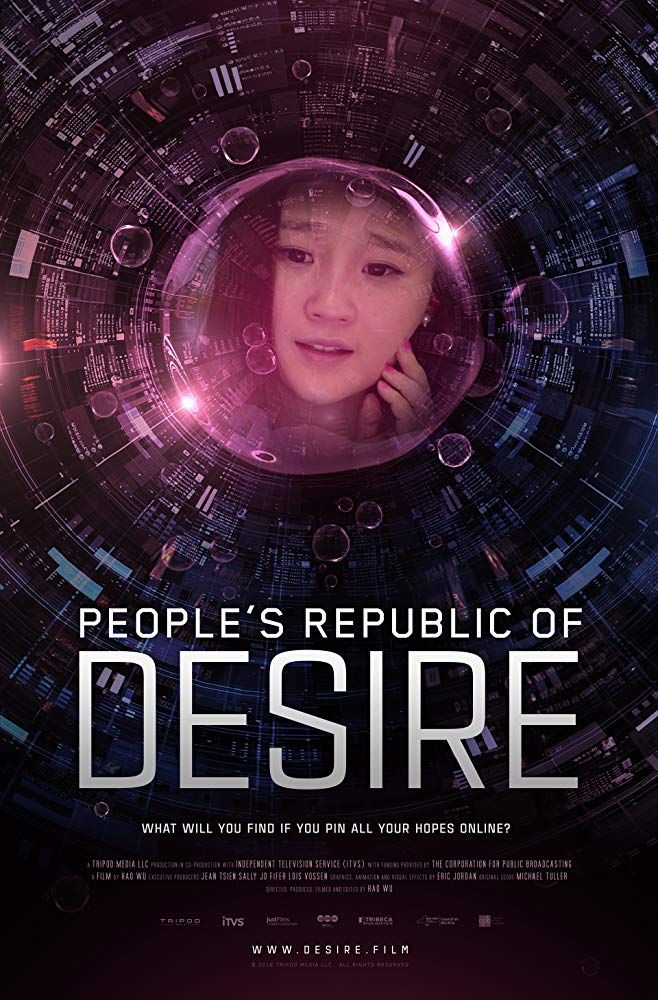
People's Republic of Desire PosterCan you outsource a dream? According to Wu Hao’s People’s Republic of Desire (欲望共和国, Yùwàng gònghéguó), many in modern China have resigned themselves to doing just that. Feeling lonely, disconnected, hopeless, they turn to people just like them who’ve been luckier and have not yet decided to give up the fight. Video streaming service YY acts like the future’s version of pirate radio, lining up a selection “personalities” male and female offering pretty much anything from stand up comedy and political diatribes to off key singing and a window into someone else’s every day life from breakfast to dinner. Of course, it all comes at a price – one which YY gleefully takes a 60% cut of, but there are hidden costs too – to a society, to the deluded fans, and even to the aspiring stars themselves forced into various debasing acts in the knowledge that their time in the spotlight will soon come to an end.

Wu follows two very different YY stars – 21-year-old former nurse Shen Man, and Big Li – a former migrant worker whose rough voice and man’s man attitudes have endeared him to a host of other “diaosi” fans. “Diaosi”, once an unpleasant slur meaning “loser” and most often applied to those stuck in the lower orders of China’s rapidly increasing social equality gap, has been reclaimed by those who self identify with its sense of ironic hopelessness. As Shen Man explains, YY works as a kind of pyramid system in which millions of dreaming diaosi throw money they don’t really have at online stars in the hope of connection while Tuhao – the nouveau riche looking for new ways to splash the cash, act as patrons deciding the direction of the service.

What many diaosi forget to factor in is that in reality the entire service is run by agents and promoters who push their various stars to steal “votes” from their online fans. YY is not a public service platform, but a vast money making machine which sucks in cash from every conceivable angle. As cynical patron Songge points out, those seeking fame on YY cannot expect to make any money. In order to win the site’s popularity contest, they need to get an agent and their agent will need to spend a vast amount of money to promote them which the star will then need to make back.

Shen Man, on one level naive, is perfectly aware of the way the system works. She knows she needs to keep her fans happy or they’ll leave. Like Big Li she’s a poor girl made good, a figure her female fans can look up to as someone just like them that’s been able to escape the world of diaosi drudgery. Her male fans, by contrast, are probably looking for something different. Some of them like the idea of her ordinariness, that she comes from the same place they do and is therefore attainable while also being unattainable thanks to her quickly acquired wealth which allows her to live the life of a modern princess. There is however a cost. In order to hook more fans the youthful 21-year-old has already spent a lot of money on extensive plastic surgery (perhaps veering dangerously close to destroying her “natural charm” selling point), and is expected to play nice with her sometimes insulting clientele. One patron, chatting idly on the phone, tries to throw money at her in return for sex whilst simultaneously insisting that she’s not like the other YY girls who will do anything for money. Shen Man points out that she has money already and is not that sort of girl while her patron continues along the same line of argument insisting that all you need to do get a girl is flash the cash.

Big Li, by contrast, is much less cynical. He recognises that he’s become a kind of leader for his diaosi brothers and is eager not to let his fans down. Married to YY talent manager Dabao and with a young son to take care of, Big Li is originally grateful for his rock star life, but the pressure begins to get to him and he longs for the simple days of the village filled with the warmth of family and friends rather than the lonely false connection of YY’s race to fame mentality. Big Li genuinely cares, but this is his downfall. He wants the freedom that YY promises and refuses to play the game, but the game continues to play him.

Adoration quickly to hate. Shen Man finds herself out in the cold when she is publicly slut shamed, accused of taking money from fans in return for sexual favours, earning the nickname of “300 Man” as a woman who can be brought so cheaply she has no value at all. The constant double standard – that she must be beautiful and desirable, yet pure and chaste, has something to say about the nature of China’s conservative social values even in a modernising age. Once your reputation has gone it cannot be rebuilt and even the loyalist fans will find themselves moving on. Big Li might not have to put up with the same kind of pressures as Shen Man, but is personally hurt when fans call him “scammer” because of his constant failures to take home the big prize.

So what of the fans themselves? There are those who’ve made vast amounts money thanks to China’s rapidly modernising economy and don’t know what to do with it other than show off by giving it away. They too are trying to buy connection through becoming patrons, “owning” someone less fortunate and taking pleasure in dictating their lives. Meanwhile, on the opposite end of the scale, the diaosi have all but given up on their own dreams and so “enjoy” investing money to “support” the dreams of those just like them out of a sense of frustrated solidarity.

The picture Wu paints of modern China is one of a world spiralling out of control in which intense loneliness and alienation have corrupted the nature of social connection. Money rules all. Wealth is all that matters and in the crowded online world, if you want to be noticed you’ll have to pay. Interactions are bought and paid for with petty, entirely virtual trinkets, while in the offline world all there is is work and sleep and cheap fast food. Only the platform is the winner, as one unlucky hopeful puts it. The sad truth is that everyone knows it’s a losing game and has resigned themselves to conceding defeat in a society already leaving them behind.


People’s Republic of Desire was screened as part of Fantasia International Film Festival 2018.

Original trailer (English subtitles)

Being Natural (天然☆生活, Tadashi Nagayama, 2018) [Fantasia 2018]

Being Natural posterModern life is stressful and perhaps does not offer the kinds of material rewards that previous generations took for granted. Moving back to the country to experience a simpler, more sincere kind of life has become a mini trope in contemporary Japanese cinema as the young men and women of Japan become disillusioned with a stagnating economy and, feeling trapped within a conformist society, decide to embark on a life of self sufficiency free of material burdens. What such stories have not yet asked is if the influx of outsiders from the city amounts to a colonisation of so far untouched land as the newcomers bring with them their newfangled desires and attitudes. Tadashi Nagayama’s gentle satire Being Natural (天然☆生活, Tennen Seikatsu) is partly an attack on rampart xenophobia and small scale colonialism but also a mild condemnation of corporatised hippiedom and its tendency to destroy the thing it claims to honour in remaking it to fit a city dweller’s ideal of idyllic country life.

Shy and awkward, Taka (Yota Kawase) is an unemployed middle-aged man who lives with his elderly uncle in the ancestral family home. Taka’s uncle suffers from dementia and, it seems, was always a “difficult” person even in his youth which is perhaps why the rest of the family have abandoned him with only the gentle Taka prepared to stay behind and look after the ageing patriarch. When his uncle dies, Taka’s world threatens to collapse but thankfully his embittered cousin Mitsuaki (Shoichiro Tanigawa) is talked round by his sister and decides to let Taka stay in the family home as a thank you for taking care of everything for so long. Not only that, Mitsuaki also gets Taka a job working at the local fishing pool alongside another old friend, Sho (Tadahiro Tsuru).

Reverting to childhood, the three men generate an easy camaraderie, looking after turtles, having barbecues, and making music together under the moonlight. The idyllic days are not to last, however. The harbingers of doom are a hippyish family from Tokyo who moved into the village with the intention of opening a coffee shop. The Kuriharas – Keigo (Kanji Tsuda), his wife Satomi (Natsuki Mieda), and daughter Itsumi (Kazua Akieda), are into the “natural” way of life and have moved from Tokyo for the benefit of their health. Rather than shop at the supermarket like everyone else, they’re keen to buy from Sho’s grocery store even when he explains to them that all his veg is old and shrivelled rather than freshly plucked from local fields. Still, the family are determined even if it means projecting their vision of “rural life” onto the evident reality.

The Kuriharas are literally intrusive – rudely opening the sliding doors of Taka’s house without permission and waking him up, offering the excuse that they were unable to find the “intercom” on this traditional Japanese house that they claim to admire so much. The original site having fallen through, they’ve set their sights on setting up shop in Taka’s home, exploiting the “traditional” architecture for their warm and welcoming cafe. This is all very well but it does of course mean displacing Taka from his natural habitat. As shy and mild mannered as he is, there’s only so much a man can take and Taka resents being evicted from his family home by a bunch of invading interlopers with commercial concerns.

While Satomi natters on about organic veg, Itsumi skips the English classes her controlling mother makes he go to and guzzles additive loaded instant ramen when she thinks no one’s looking. Wanting to preserve the “natural beauty of glorious Japan”, Keigo goes slightly nuts when he realises Taka’s pet turtles are a non-native breed, exploding with xenophobic fury over the dangerous presence of a disease laden predator whose presence threatens the safety of the true Japanese amphibian. Wondering exactly who or what is the “non native” threat, Taka launches a full scale resistance movement, papering the house in giant graffiti posters reminiscent of the student protest era reminding all that turtles, no matter where they’re from, have a right to life too and must be defended. Yet the corporately minded hippies will stop at nothing to get what they want – manipulating Mitsuaki with a new girlfriend and then turning the town against Taka by means of a heinous, life ruining rumour. 

Forced out and heading to the city, Taka is reminded that he is now the hostile foreign element – that the park is not his “home” but belongs to “everyone”. When his beloved bongos are ruptured, Taka’s rage turns radioactive and sends him off on a quest of vengeance only to recede as his better nature regains control and he commits himself to using his new found powers to improve the lives of those around him in small but important ways. A satirical take on the romanticisation of country life by self-interested city dwellers, Being Natural eventually takes a turn for the macabre that possibly undercuts rather than reinforces some of its central concerns but makes a case for according the proper respect to the natural world as well as the people who live within it rather than attempting to exploit it for oneself whilst wilfully ruining it for others.


Being Natural received its international premiere at Fantasia International Film Festival 2018.

Original trailer (English subtitles)

Fantasia International Film Festival Confirms Complete 2018 Programme

Fantasia 2018 banner imageMontreal’s Fantasia International Film Festival is back for its 22nd edition with an another unbelievably packed programme of recent hits. Once again Fantasia proves itself as a place to go for East Asian cinema with a wide ranging collection of indie and mainstream efforts from China, Hong Kong, Indonesia, Japan, Korea, the Philippines, and Vietnam.

China

Detective Dee The Four Heavenly Kings banner

Hong Kong

the brink still 1

  • Big Brother – Donnie Yen stars as an inspirational teacher ready to fight (literally) for his students’ future.
  • The Blonde Fury – 1989 kung fu classic starring Cynthia Rothrock as an American FBI agent investigating Hong Kong currency fraud
  • The Brink – mythical crime drama with intense visual flair. Review.
  • Five Fingers of Death (aka King Boxer) – rival schools face off in this HK kung fu classic from 1972.
  • The Oily Maniac – a mild-mannered man gets superpowers when he dips himself in oil in this HK classic.

Indonesia

buffalo boys 2

  • Buffalo Boys – Indonesian Western in which two brothers come back from California to avenge the death of their father.
  • Satan’s Slaves – an ordinary family is torn apart by earthly woes manifesting as supernatural anxieties. Review.

Japan

wilderness still 2

  • Ajin: Demi-Human – manga adaptation starring Takeru Satoh and Go Ayano in which a young man is reincarnated as an immortal demi-human.
  • Amiko – indie drama in which a young girl chases after her only friend when he abandons her to go to Tokyo with another girl.
  • Aragne: Sign of Vermillion – anime in which a shy young university student uncovers a dark conspiracy.
  • Being Natural – rural comedy in which a couple from Tokyo insist on opening a coffee shop in the middle of nowhere.
  • Bleach – hotly anticipated adaptation of the hugely popular manga directed by blockbuster master Shinsuke Sato.
  • Destiny: The Tale of Kamakura – a newlywed writer goes on a strange quest after his wife is tricked by a yokai and ends up in the afterworld. Review.
  • Fireworks – Shunji Iwai-inspired anime in which a troupe of youngsters battle adolescent romance.
  • Hanagatami – Nobuhiko Obayashi’s adaptation of the Kazuo Dan novel in which youth finds itself teetering on the pre-war abyss. Review.
  • I am a Hero – Shinsuke Sato’s adaptation of the zombie-themed manga. Review.
  • Inuyashiki – a pure hearted old man and an angry teen are mysteriously given super powers on the same day in Shinsuke Sato’s adaptation of the popular manga. Review.
  • Kasane – an aspiring actress with a facial disfigurement inherits a magic lipstick which allows her to steal the appearance of anyone she kisses.
  • Laplace’s Witch – Takashi Miike adapts the Keigo Higashino mystery.
  • Laughing under the Clouds – Meiji era fantasy starring Sota Fukushi.
  • LOUDER! Can’t Hear What You’re Singin’, Wimp! – surreal comedy from Satoshi Miki in which a veteran musician losing his voice teams up with a young girl struggling to find hers.
  • Maquia: When the Promised Flower Blooms – moving anime from scriptwriter Mariko Okada in which an immortal woman struggles with the idea of motherhood. Review.
  • One Cut of the Dead – hilarious zombie comedy! Review.
  • Penguin Highway – random penguins disrupt an ordinary high school boy’s life.
  • Punk Samurai Slash Down – anarchic samurai action from Gakuryu Ishii!
  • River’s Edge – adaptation of the classic ’90s manga from Isao Yukisada in which bored teens get their kicks gazing at dead bodies. Review.
  • Rokuroku: The Promise of the Witch – supernatural thrills from Yudai Yamaguchi.
  • Room Laundering – a young girl saves money by apartment hopping between homes where untimely deaths have occurred but finds her lifestyle threatened when she develops the ability to see ghosts.
  • Tokyo Vampire Hotel – cut down feature length version of Sion Sono’s anarchic vampire-themed TV series.
  • Tornado Girl – Romantic comedy from Moteki’s Hitoshi One starring Satoshi Tsumabuki and Kiko Mizuhara.
  • The Travelling Cat Chronicles – sentimental cat-themed comedy drama starring Sota Fukushi.
  • Tremble All You Want – heartbreakingly surreal comedy in which a shy woman learns to break free of her self imposed fantasy bubble. Review.
  • Violence Voyager – experimental animation in which an American boy and his Japanese best friend stumble on a mysterious abandoned theme park.
  • Wilderness – Yoshiyuki Kishi’s Double Life follow up is a five hour epic set in the near future but inspired by a classic Shuji Terayama novel in which two lost young men search for freedom and connection in the boxing ring. Review.

Korea

Last Child still 1

  • 1987: When the Day Comes – timely examination of the 1987 democracy movement retold as a tense political thriller. Review.
  • Believer – Korean remake of Johnnie To’s Drug War.
  • Champion – Ma Dong-seok stars as a Korean American returning to South Korea to pursue his sporting dreams.
  • The Fortress – historical drama starring Lee Byung-hun in which two trusted advisors try to guide the King towards an acceptable policy regarding the Qing invasion.
  • Gonjiam: Haunted Asylum – found footage horror in which a film crew seeking social media fame decide to film in a disused mental hospital.
  • I Have a Date with Spring – existential comedy in which a blocked screenwriter is interrogated by four mysterious “fans”.
  • Last Child – moving drama in which a bereaved family takes in the boy their son died saving only to discover all is not as it seems. Review.
  • Microhabitat – wistful drama in which a young woman decides to save money by staying with friends so she can afford life’s little pleasures. Review.
  • The Outlaws – crime drama starring Ma Dong-seok as a maverick cop trying to save his community from Chinese gang violence. Review.
  • True Fiction – political drama in which a shady politician gets himself into trouble after running over the wrong person’s dog.
  • V.I.P. – serial killer drama with political dimensions as the South Korean security forces consider helping a vicious killer from the North defect in return for sensitive information. Review.
  • The Vanished – thriller inspired by Spanish film The Body in which a successful career woman is murdered leaving her philandering husband the prime suspect while bumbling police do their “best” to investigate.
  • What a Man Wants – a womanising brother-in-law and faithful husband end up ensnared by the same beautiful woman.
  • The Witch: Part 1. The Subversion – A young woman who escaped from a top secret facility accidentally outs herself as a superhero and becomes a target for bad guys.

Philippines

neomanila still 1

  • BuyBust – a rookie female police woman is forced to fight her way out of a drug den after a bust goes wrong in Erik Matti’s high octane thriller.
  • Neomanila – neo noir in which a young man becomes an apprentice to an older woman taking out drug dealers for the government.

Vietnam

Lôi Báo banner

  • Lôi Báo – superhero inflected drama in which an aspiring comic book artist with a terminal illness is encouraged to swap bodies with a gangster!

The Fantasia International Film Festival takes place in Montreal, Canada from 12th July to 2nd August. You can find full details for all the films as well as screening times and ticketing information on the official website, and you can also keep up with all the latest news via the festival’s official Facebook page, Twitter account, Instagram, and Vimeo channels.

Jang Hoon’s A Taxi Driver to Close Fantasia 2017

Taxi Driver stillNow in its 21st year, Montreal’s Fantasia International Film Festival is back with some of the best genre movies from across the world. Like every other year, the festival has a large and varied selection of East Asian cinema on offer beginning with opening night movies The Villainess and JoJo’s Bizarre Adventure, and continuing right until the closing gala, Jang-hoon’s A Taxi Driver. The full complement of East Asian feature films runs as follows:

China

extraordinary mission.jpg

  • Extraordinary Mission – undercover cop action drama from Infernal Affairs’ Alan Mak and Anthony Pun
  • The Final Master – martial arts drama from Xu Haofeng
  • Free and Easy – winner of the Special Jury Award for Cinematic Vision at this year’s Sundance, Geng Jun’s Free and Easy is an absurd crime caper and exposé of small town life.
  • God of War – historical action from Gordon Chan
  • Have a Nice Day – animated crime drama from Liu Jian
  • Wu Kong – Eddie Peng stars as the titular Monkey King in Derek Kwok’s take on the classic tale.

Hong Kong

vampire cleanup department still

  • Bastard Swordsman – classic Shaw Brothers action from 1983 directed by Tony Liu Chun-Ku (screening on 35mm Shaw Scope)
  • Made in Hong Kong – Fruit Chan’s tragic tale of alienated youth in handover over Hong Kong screens in the brand new 4K restoration premiered at the Udine Far East Film Festival.
  • Shock Wave – Andy Lau plays a valiant bomb disposal officer in Herman Yau’s impressively staged action drama. Review.
  • Vampire Cleanup Department – a vampire hunter falls in love with a vampire in this retro comedy from Yan Pak-Wing and Chiu Sin-Hang.

Japan

mole song still

  • Almost Coming, Almost Dying – New Year’s Eve goes very wrong for the protagonist of Toshimasa Kobayashi’s surreal comedy.
  • Death Note: Light up the NEW World – the Death Note saga continues in Shinsuke Sato’s big budget sequel starring Masahiro Higashide, Sosuke Ikematsu, and Masaki Suda. Review.
  • Genocidal Organ – sci-fi techno thriller and third in the series of anime adaptations of novels by Project Itoh.
  • Gintama – Yuichi Fukuda adapts the much loved manga for the big screen with Shun Oguri in the lead role.
  • The H-Man – classic Toho special effects thriller directed by Ishiro Honda in which a radiation enhanced threat reemerges to stalk the rain drenched streets of Tokyo. Review.
  • Innocent Curse – Takashi Shimizu’s latest slice of J-horror complete with creepy ghost kids and a shady avenger.
  • Japanese Girls Never Die – the disappearance of a young woman sparks a mini revolution in Daigo Matsui’s exuberant drama.
  • JoJo’s Bizarre Adventure: Diamond is Unbreakable – Takashi Miike picks up Hirohiko Araki’s classic manga about a long running family feud in which heroes and villains duke it out by proxy with a power known as Stand.
  • Junk Head – witty steampunk themed stop motion from Takahide Hori.
  • Kodoku Meatball Machine – another slice of splatter horror from Yoshihiro Nishimura
  • Love and Other Cults – youth drifts in search of safe resting place in Eiji Uchida’s latest irreverent drama. Review.
  • The Mole Song: Hong Kong Capriccio – Reiji’s got himself into another mess in this sequel to the original Mole Song directed by Takashi Miike and scripted by Kankuro Kudo.
  • Mumon: Land of Stealth – an ace ninja has to attend to the encroaching threat of Oda Nobunaga as well as being recently married in Yoshihiro Nakamura’s jidaigeki.
  • Museum – Shun Oguri stars as a maverick cop in Keishi Otomo’s noirish adaptation of the Ryosuke Tomoe manga.
  • Napping Princess – Kenji Kamiyama returns with a strange story of a young girl dreaming her life (and perhaps that of many others) away.
  • Night is Short, Walk on Girl – Masaaki Yuasa adapts another of Tomihiko Morimi’s novels in this surreal, animated romantic comedy.
  • Rage – Lee Sang-il adapts another Shuichi Yoshida novel as a Tokyo murder provokes three stories of suspicion and mistrust.
  • Shin Godzilla – Godzilla is back and bigger than ever in Hideaki Anno and Shin Higuchi’s reboot.
  • Shinjuku Swan II – Sion Sono returns to the red light district for another round of turf wars in the Shinjuku Swan sequel.
  • Teiichi: Battle of Supreme High – politics rules at an elite Japanese high school where teenager Teiichi is plotting his path to the prime-ministership of Japan. Review.
  • Tokyo Ghoul – Kentaro Hagiwara adapts Sui Ishida’s hidden zombie manga in which a young boy suddenly finds himself half-ghoul after a near fatal accident leaving him with a craving for human flesh.
  • The Tokyo Night Sky is Always the Densest Shade of Blue – Yuya Ishii’s poetic love/hate letter to Tokyo inspired by the poems of Tahi Saihate. Review.
  • What a Wonderful Family 2 – the Hirata family is back for another round of hilarious family drama in Yoji Yamada’s comedy sequel.

Korea

fabricated city still

  • Confidential Assignment – a North Korean special forces officer chases a suspect into the south and teams up with a bumbling but good hearted policeman in this action packed buddy cop comedy. Review.
  • A Day  – a father desperately tries to save his daughter in this time loop drama.
  • Fabricated City – a disillusioned young man makes a hero of himself online but gets caught up in a real world conspiracy when he’s framed for murder, prompting his online squad to step out of the shadows in his defence. Review.
  • House of the Disappeared – A woman tries to find the truth behind the disappearances of her husband and son in this creepy haunted house horror movie.
  • The Senior Class – a group of art students approach graduation in Hong Deok-pyo’s gritty adult animation.
  • The Sheriff in Town – An ex-cop decides its time to clean up his seaside town in this comedy action movie.
  • Split – a washed up former bowler takes in an autistic boy for his savant bowling skills in this warmhearted sports drama.
  • A Taxi Driver – Song Kang-ho drives a German photo journalist into the Gwanju Massacre in this hard-hitting yet lighthearted historical venture.
  • The Villainess – a sleeper assassin’s life is threatened by the reappearance of two men from her past.

Others

bad genius still

  • Jailbreak – Cambodian prison break action.
  • Town in a Lake – atmospheric Philippine thriller
  • Mon Mon Mon Monsters – horrible kids torture monsters in this oddly funny nihilistic teen drama from Taiwan
  • Bad Genius – a group of brainy Thai teens attempt to fly to Australia, take an exam, and then fly back to give their friends the answers before the time difference catches up with them.
  • Broken Sword Hero – Thai martial arts drama.

Fantasia International Film Festival takes place in Montreal from July 13 – Aug. 2, 2017. You can find full details for all the films as well as ticketing information on the official website,  and you can keep up with all the latest festival news via the official Facebook page, Twitter account, Instagram and Vimeo channels.