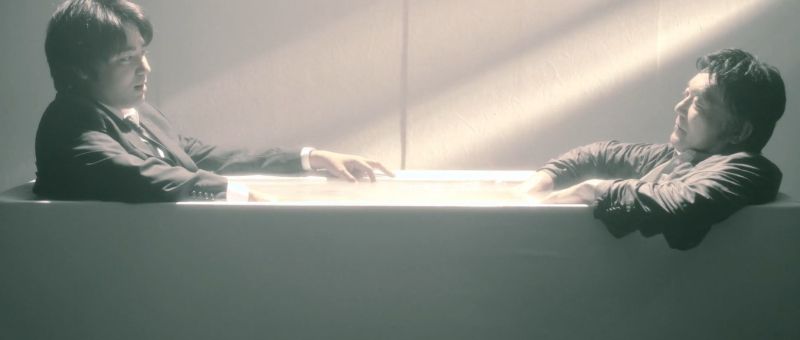
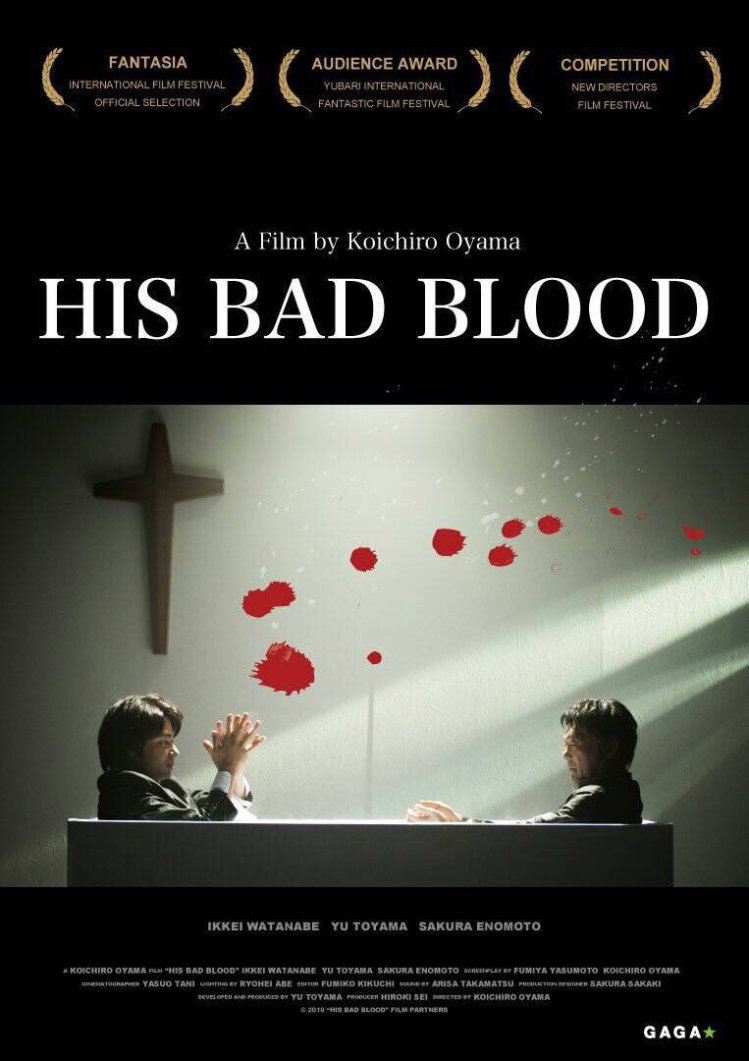
His Bad Blood (いつくしみふかき, Koichiro Oyama, 2019) [Fantasia 2019]

His Bad Blood PosterThe sins of the father are visited on the son. Rural superstitions run deep, but is it really fair to condemn a child for having “bad blood” or will the prejudice itself become a self-fulfilling prophecy? The young man at the centre of Koichiro Oyama’s debut feature His Bad Blood (いつくしみふかき, Itsukushimi Fukaki) struggles to assert himself in a small community where his father’s (minor) crimes are still painfully present, but then perhaps like any other young man he himself needs to lay his father’s ghost to rest in order to find his own path.

Decades ago, no good drifter Hiroshi (Ikkei Watanabe) drifted into a small-town in search of a place to die after his latest business venture collapsed, but there found the kindly Kayoko who gave him a home and a chance to start again. Unfortunately, however, Hiroshi reverted to type and after being sent home to get the baby clothes while his wife was in labour, decided to run off with the family’s savings instead only to be caught in the act by Kayoko’s brother Yoshitaka whom he wounded in a fight that eventually saw him beaten by a mob and hounded out of town.

In the present day, Shinichi (Yu Toyama), the son, is a strange, shy young man who has been unable to hold down a job and is widely disliked by the community and especially by his resentful uncle. When the area is plagued by a spate of burglaries, Yoshitaka jumps to the “obvious” conclusion and attempts to have Shinichi hounded out of town the same way he got rid of his father. Hurt that not even his mother believes he is innocent of the crimes of which he is accused, Shinichi takes refuge with the local preacher (Akio Kaneda) where, unbeknownst to him, his estranged father has also decamped to hide out after a life of petty crime finally catches up to him.

Though set firmly in the present day, Oyama’s debut has a distinctly depression-era dustbowl feel with its rural backwater suddenly stirred up by rumours of the railroad’s eventual arrival while the non-conformist Christian church hands down messages of love and compassion in trying times. Hiroshi, possibly unreformable, even puts on a show of getting religion only to go full snake oil salesman in staging a revival inside the Reverend’s church in which his personal prophet, Tanaka Xavier XVI, makes a “disabled” woman walk and successfully stimulates the record crowd to hand over their cash in hope of salvation while Shinichi and the Reverend look on in confused horror.

To engineer some kind of forward motion, the Reverend pushes the two men together but keeps their connection a secret until finally revealing it in the hope that the pair might finally be able to put some kind of lid on the past. Looking for his father, Shinichi avows he’d like to mess up his life just like his father has done to his, but discovers that Hiroshi’s life is pretty messed up already and likely always has been. His fate was pretty much sealed the day pushed the baby clothes out of the way and opened the family safe instead. Shinichi’s job isn’t to save his dad, no one can, but try and accept him so that he can, a sense, reject his “bad blood” and those who condemn him for it to claim his own identity and walk his own path.

Before he can do all of that, however, he’ll have to escape the secondary curse of the unfair prejudice he faces from his home community as a supposed carrier of “bad blood”, destined for criminality and inherently untrustworthy. Despite all he suffers, Shinichi valiantly refuses to become what everyone says he is while deeply resenting his absent father for saddling him with this unhappy destiny. It is, however, Hiroshi who accidentally gives him forward motion through the unlikely shared dream of making an honest killing in the shortly to boom real estate business when the railroad comes to town. An equally unlikely love affair with a similarly strange young woman (Keiko Koike) provides additional possibilities, but still leaves Shinichi feeling trapped by his past despite her urgings to “just be yourself and live in the future with me”. A melancholy tale of freeing oneself from the judgement of others and learning to step out of a father’s shadow, His Bad Blood is a promising debut from Oyama who addresses a difficult subject with compassionate humanism as his melancholy hero finds the courage to walk away from a toxic past towards a more promising future.


His Bad Blood was screened as part of the 2019 Fantasia International Film Festival.

International trailer (English subtitles)

Chiwawa (チワワちゃん, Ken Ninomiya, 2019) [Fantasia 2019]

Chiwawa posterFollowing indie drama The Limit of Sleeping Beauty, Ken Ninomiya takes a further step towards the mainstream with Chiwawa (チワワちゃん, Chiwawa-chan), inspired by Kyoko Okazaki’s 1996 manga. Updated for the Instagram generation, Ninomiya’s adaptation leans heavily on his trademark clubland style and sheds the sense of nihilism which defined mid-90s pop culture in favour of a world weary exploration of identity in the internet age in which connections are wilfully fleeting and personas easily interchangeable. The party is, however, about to come to an end for the latest generation of bright young things seeking hedonistic release but finding only emptiness in the superficial pleasures of meaningless excess.

The titular “Chiwawa” (Shiori Yoshida) is found dead, floating in pieces in Tokyo Bay. The notice of her demise is, in fact, the first time many of her friends discover her real name, Yoshiko Chiwaki, apparently 20 years old and according to the news a nursing student. She was for a time a big star on Instagram and a popular internet model whose face could be seen all over the city on mile high billboards, but before that she was just a girl looking for fun and friends in the Tokyo club scene which is how she met our heroine, Miki (Mugi Kadowaki). Like Miki herself, Chiwawa was added to the small group of clubland friends as the current squeeze of playboy student Yoshida (Ryo Narita), introducing herself with her enigmatic nickname supposedly a reference to her petite stature. Branding herself as an ultra cute airhead, she quickly worked her way into the disparate group of Bohemians but eventually outgrew them and moved on to more dubious pleasures including an ill-fated love affair with a famous photographer (Tadanobu Asano).

The only one of her friends seemingly preoccupied about what happened to Chiwawa, Miki begins an investigation but her research is less geared towards finding out who killed her – something the police don’t seem to be very invested in, but discovering who she “really” was. Mimicking the structure of Okazaki’s episodic manga, Miki begins interviewing her friends to build up a kaleidoscopic composite of the woman she thought she knew while perhaps discovering something about herself as she reconsiders her own life trajectory and the coming end of her youthful days in the clubland scene while pondering where it is she’s supposed to go next.

Like much of Okazaki’s work, the manga’s mid-90’s setting is soaked post-bubble malaise as her dejected youngsters escape from the sense of crushing disappointment in the wake of the abrupt end of the heady ‘80s heyday of Japan as leading global economy, but for Miki and her friends twenty years later perhaps things aren’t all that different as they fight the onset of adulthood and the relative lack of freedom and possibility they will encounter when their student lives end and the workaday world finally arrives. Aspiring filmmaker Nagai (Nijiro Murakami) captures everything with his video camera while working as a photographer’s assistant by day, allowing Miki and her friends to use the studio at night for their Instagram side gigs which is how Chiwawa winds up in the fashion biz.

Some starving artists, others merely nervous hedonists, the gang have no money but when Chiwawa runs off with the gigantic bribe a group of slimy businessmen were boasting about carrying, the gang manage to blow it in just three days of upscale partying. Miki alone, and perhaps more in hindsight, feels the emptiness of all this senseless excess but it’s Chiwawa herself who seems to fear the party’s end most of all. When you start to think it’ll go on like this forever, that’s when you know it’s about to end she laments, apparently missing her old gang like crazy but knowing you can’t put something back together after it falls apart.

Miki fails to solve the mystery of Chiwawa, perhaps sorry that she didn’t try harder to know her while she was alive but also knowing that’s partly because “Chiwawa” might not have wanted to be known for all that she was chasing love and acceptance in all the wrong places. In the end, she retreats into a past that no one quite remembers, another melancholy ghost of Tokyo’s neon-tinged nightlife. Youth moves on, clubs close down, the world keeps turning. That may be the saddest thing of all, Chiwawa remains unknown, unloved, and finally unremembered. A melancholy exploration of fractured identities, the ethereality of youth, and the impossibility of true connection, Chiwawa is another zeitgeisty piece from Ninomiya which takes the manga’s post-bubble anxiety and reboots for an age of alienation in which the end of the party is always lingering painfully on the horizon.


Chiwawa was screened as part of the 2019 Fantasia International Film Festival

Original trailer (English subtitles)

Images: (C)2019 CHIWAWA Chang PRODUCTION COMMIIEE(TOEI VIDEO, VAP, KADOKAWA, GEEK PIKTURES, TOEI ADVERTISING)

Almost a Miracle (町田くんの世界, Yuya Ishii, 2019) [Fantasia 2019]

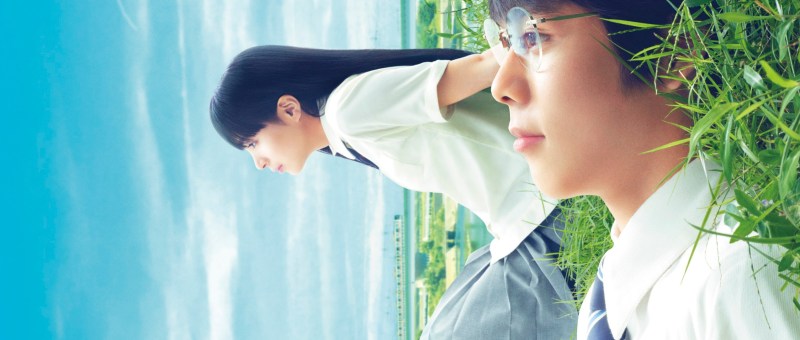
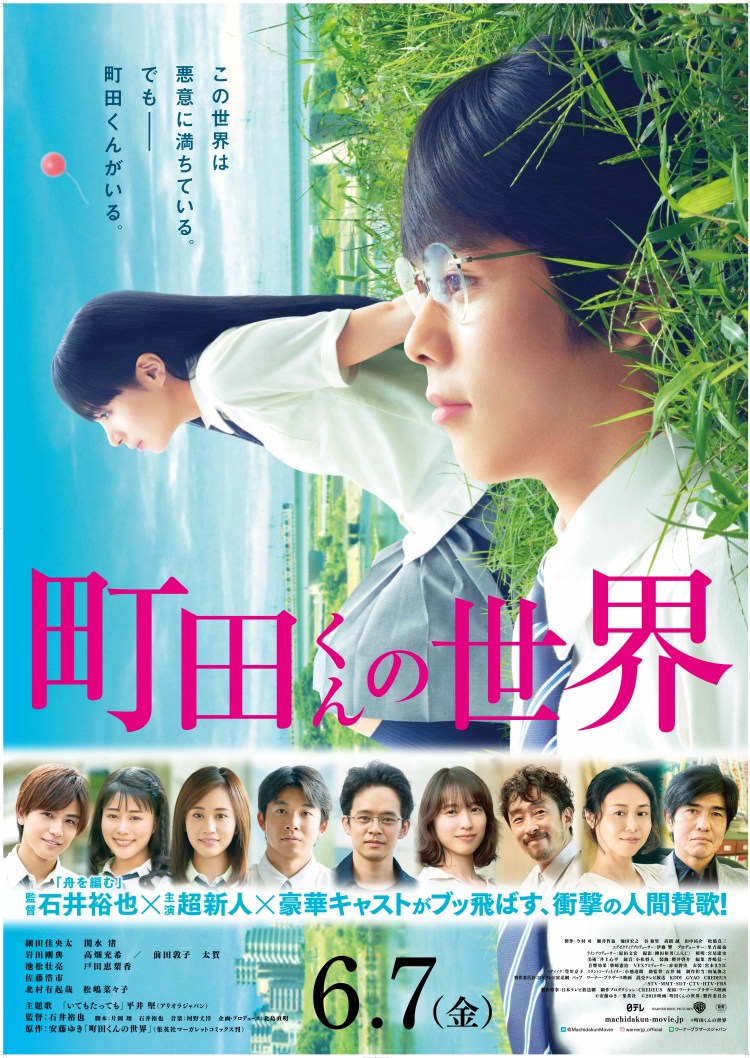
MNS_MAIN_B1_0311_ol“Being nice to everyone means hurting someone” the wounded heroine tries to explain to the perpetually confused hero of Yuya Ishii’s Almost a Miracle (町田くんの世界, Machida-kun no Sekai). After adapting a book of poetry and topping the Kinema Junpo list with the melancholy romance of urban ennui The Tokyo Night Sky is Always the Densest Shade of Blue, Ishii returns to the lighter fare which inspired his earliest work with a whimsical adaptation of the manga by Yuki Ando in which a goodly young man begins to realise that sometimes being nice to everyone can create additional complications.

The titular Machida (Kanata Hosoda) is one of those people who seem to be exclusively composed of goodness. He truly believes that each and every person in the world is precious and loves them equally, so when he sees someone, anyone, who seems unhappy or in need of help he comes running (literally). Everything begins to change for him, however, when he injures himself during an art lesson and is sent to the infirmary where he meets sullen delinquent Inohara (Nagisa Sekimizu) who bandages his hand in the absence of the nurse. Entirely unused to people doing nice things for him, Machida is struck by this unexpected act of kindness and resolves to make a friend of Inohara who seems lonely and claims to hate people – something Machida is incapable of understanding.

Indeed, nicknamed “Christ” by some of his more cynical classmates, Machida sees only the world’s beauty and just wants people to be happy. He assumes that’s the way everyone else feels too and so it doesn’t really occur to him that some people are just mean. Even when he meets someone acting badly he has a knack for spotting the unhappiness that lies behind it and the desire to help them heal. Thus he alone sees the accidental self-loathing and pathological need for acceptance that have led pretty boy model and popular kid Himuro (Takanori Iwata) to become a self-centred jerk who thinks sincerity is for babies and that “taking things seriously only makes everything harder”. He may have a sort of point in that it’s much easier to keep pretending nothing, especially other people’s feelings, is very important but it’s Machida alone who is perspicacious enough to remark on how sad it is that all of his “friends” have forgotten something he told them just a few minutes ago and instructs him that he needs to be kinder to himself rather than hanging out with vacuous people who don’t care about him at all just for the kudos of superficial acceptance. 

In fact, much of Machida’s laidback superpower is geared towards getting people to be more comfortable in themselves so that they can in turn accept others. Ironically, that’s mostly because he hasn’t yet quite accepted himself and thinks he’s the worst human of them all which is part of the reason he’s so nice to everyone as a means of repaying the kindnesses he’s been shown in the past.

Where Machida sees only the world’s beauty, cynical failed writer Yoshitaka (Sosuke Ikematsu) sees only its ugliness. His lofty literary ambitions having fallen by the wayside, Yoshitaka has become a tabloid hack and occasional paparazzo whose wife is beginning to lose faith in him as he sinks deeper into the morass of scandal rag “journalism”. Yoshitaka justifies his actions with the rationale that the world is rotten, filled with “evil” and home to only self-interested people who revel in the suffering of others. Several random encounters with Machida, however, force him to revise his opinion – if someone that good and that pure really exists then what does it say about the rest of us?

Then again, Machida’s guileless goodness can often make him accidentally insensitive as he tries to balance one person’s expectation of happiness against another’s. Thus he gets himself mixed up in an odd kind of love triangle with Himuro’s old girlfriend Sakura (Mitsuki Takahata) and the lovelorn Inohara who is becoming increasingly exasperated by Machida’s mixed signals, unable to figure out if he’s just being “kind” or actually might like her. Unfortunately, Machida doesn’t quite know himself as, ironically seeing as he’s so keen on emotional honesty in others, he is remarkably out of touch with his own feelings. In any case, his desire for “sincerity” in all things sees him steer clear of saying something which isn’t true to make someone happy even if he finds himself unable to express the truth plainly when it really counts.

Machida’s superpower, however, blows through the world like a gentle breeze spreading goodness wherever it goes. Proving it really does come back around, all the people that he’s helped eventually come running to help him so he can achieve his romantic destiny on the most romantic of days. A whimsical celebration of the infectious power of unguarded goodness, Almost a Miracle is a beautifully pitched counter to nihilistic cynicism in which kindness becomes a kind of superpower, saving the world one lost balloon at a time.


Almost a Miracle was screened as part of the 2019 Fantasia International Film Festival.

Original trailer (English subtitles)

Sadako (貞子, Hideo Nakata, 2019) [Fantasia 2019]

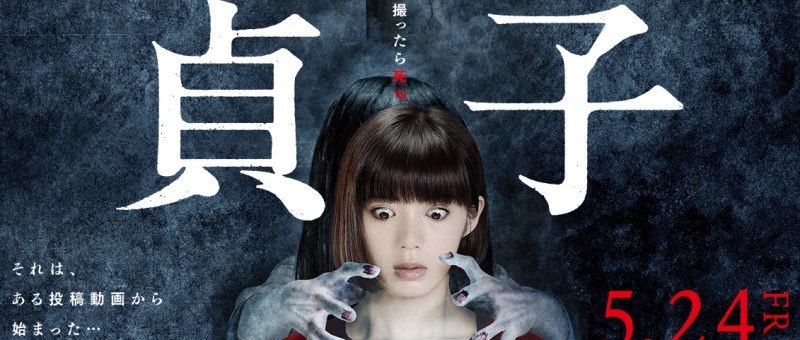
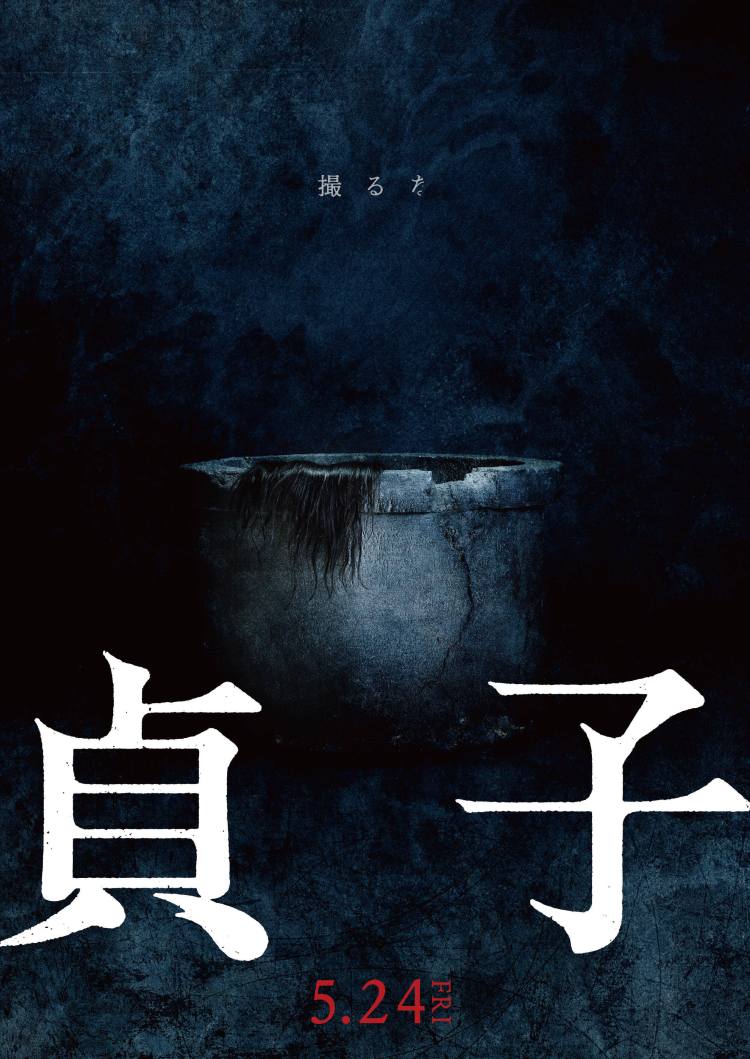
(C)2019 "Sadako" Film PartnersJust over 20 years ago, Hideo Nakata’s Ring became an international phenomenon and kick started a J-horror boom that continued to define the nation’s cinematic output for the following decade. The J-horror boom, however, eventually imploded after a series of diminishing returns turned the figure of the long-haired ghost into something of a self parody. Even so, Sadako has continued to haunt Japanese cinema like the malevolent spirit we all know her to be and now she’s back with a brand new curse.

Adapted from the 2013 novel Tide by Ring author Koji Suzuki (though in actuality an almost entirely original story), “Sadako” (貞子) is set firmly in the present day and twenty years after the mysterious chain video curse took so many lives. Our heroine, Mayu (Elaiza Ikeda), is a clinical psychologist working in a regular hospital where she tries to help those with physical ailments maintain their mental health. New to the job, she is currently struggling with a doctor’s major dilemma in figuring out how to keep a personal distance from her patients who have a natural tendency to latch on to a caregiver even while knowing that the relationship must necessarily remain a professional one.

The trouble starts when a mysterious, mute young girl is brought into the hospital. Mayu is unable to get through to her and she doesn’t even seem to know her name but the mystery is partially solved when the police turn up with evidence that suggests the girl is the daughter of a woman who set fire to her apartment, killing herself and five others in a danchi blaze. Prompted by the detectives, the girl reveals that the woman was indeed her mother who referred to her as “Sadako” though the girl states that it is not her name. In any case, the police are none the wiser. Meanwhile, Mayu is also dealing with a personal problem as her feckless younger brother Kazuma (Hiroya Shimizu), who had given up his studies to become a YouTube star, has gone missing after filming himself exploring the “creepy” abandoned apartment building where Sadako was kept in confinement by her apparently “freaky” mother, a failed psychic.

The original Sadako curse might have been well and truly played out, but Sadako once again decides to get out of her well and shame mankind with a very particular mission of highlighting persistent child abuse and neglect which, sadly, continues to be a pressing social issue in contemporary Japan where several child abuse scandals have made headline news in recent months. This time she doesn’t really appreciate being caught on video which is where Kazuma gets himself into trouble, but is busying herself calling the souls of all abandoned children to a creepy cave which used to be a shrine for the souls of ascetic monks who died while undergoing spiritual training on the island.

Meanwhile, Mayu bonds with the little girl who seems to sense her own innate sense of loneliness as a woman who was herself “abandoned” as child. Raised in secret by her mother who was convinced she is the reincarnation of the legendary “Sadako” and feared her strange powers, the little Sadako remains somehow trapped between the human world and the supernatural, in need of rescue by a sympathetic, maternal figure.

Perhaps in keeping with the 20th anniversary celebratory nature of the project, Nakata sticks largely to late ‘90s aesthetics complete with a familiar J-horror score, muted colour scheme, dimmed lighting, and generally eerie atmosphere. He is not attempting to reinvent the wheel but only to turn it a few more times, even having one of his victims baldly recite the “original” Sadako legend for Mayu’s benefit before adding a few new details as she goes about her investigation of the creepy cave. Nevertheless, the archetypal long-haired ghost maintains her appeal as she evolves once again, revamped for a new generation’s anxieties and re-emerging from the well of despair with rage and vengeance on her mind. Filled with creepy dolls, scattered sutras, and a healthy amount of plot holes, Nakata’s return to the Ring franchise cannot recapture the magic of the original but does its best to ape its charms with yet another exploration of flawed motherhood retooled for more a more anxious age.


Sadako screened as part of the 2019 Fantasia International Film Festival.

Singapore release trailer (English / Simplified Chinese subtitles)

Images: (C)2019 “Sadako” Film Partners

Fantasia International Film Festival Confirms Complete 2019 Programme

Fantasia Poster Eng

Montreal’s Fantasia International Film Festival is back for its 23rd edition with an another unbelievably packed programme of recent genre hits. Once again Fantasia proves itself as a place to go for East Asian cinema with a wide ranging collection of indie and mainstream efforts from across the region.

Cambodia

the prey poster low res

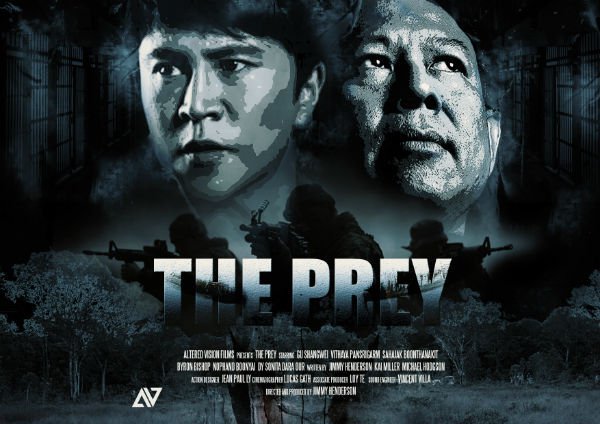
  • The Prey –  Jimmy Henderson’s Jailbreak followup follows an undercover cop arrested during an operation who subsequently gets drawn into a corrupt prison warden’s sideline of sending prisoners out as targets for hunters.

China

Shadow banner

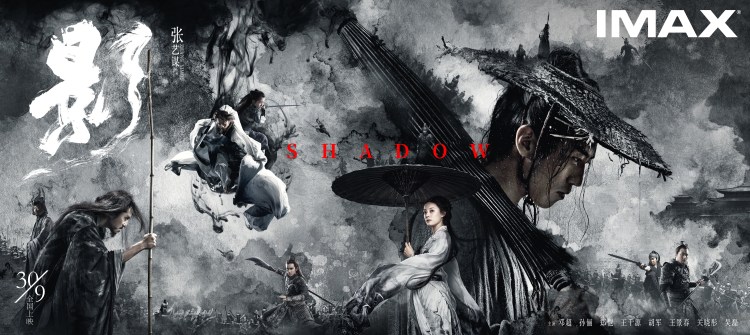
  • Shadow – Zhang Yimou returns to the world of period epics with a tale of proxy war as a great general (Deng Chao) makes use of a double to combat palace intrigue. Review.
  • SHe – experimental stop motion animation in which an oppressed shoe disguises herself as a male in an attempt to escape the hellish factory world.
  • White Snake – beautifully animated prequel to the classic legend in which a snake spirit loses her memory during an attempt to assassinate a tyrant and falls in love with the kindly snake catcher who rescues her.

Hong Kong

Missbehaviour banner

  • Boxer’s Omen – classic Kuei Chih-Hung kung fu in which a bewitched gangster must reinvent himself as a monk to defeat supernatural evil.
  • Full Contact – Ringo Lam classic starring Chow Yun Fat as a bouncer trying to help out a friend in trouble with gangsters.
  • G Affairs – gritty social drama in which a severed head exposes the unexpected connections between a disparate group of people.
  • Master Z: Ip Man Legacy – sequel to the Ip Man series in which Cheung Tin Chi (Max Zhang) tries to make a martial arts free life for himself and his son in ’60s HK.
  • Missbehavior – warmhhearted New Year comedy from Pang Ho-Cheung in which bickering friends unite in a quest for emergency breast milk. Review.

Indonesia

dreadout still 1

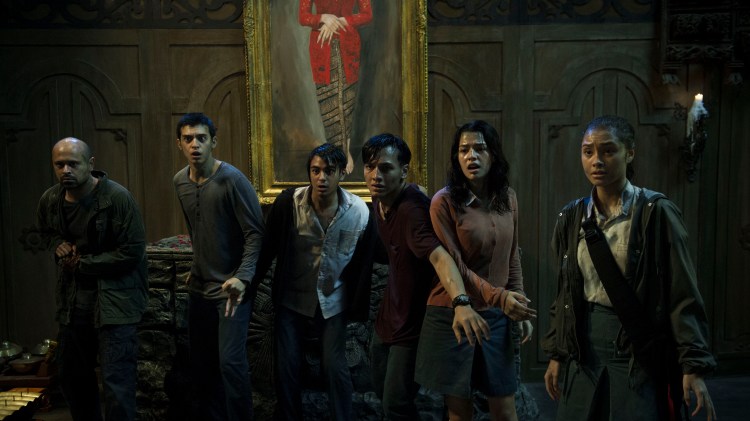
  • Dreadout – video game adaptation in which a gang of YouTubers investigate an abandoned building last used by a cult.

Japan

dance with me syill 1

  • 21st Century Girl – omnibus film featuring shorts from some of Japan’s most interesting young female directors including A Crimson Star’s Aya Igashi and Amiko’s Yoko Yamanaka.
  • Almost a Miracle – manga adaptation from Yuya Ishii in which an infinitely good young man’s world is turned upside-down by an unexpected act of kindness.
  • And Your Bird Can Sing – three melancholy slackers struggle to accept love in Sho Miyake’s adaptation of the Yasushi Sato novel. Review.
  • Brave Father Online – Our story of Final Fantasy XIV – big screen reboot of the hit TV drama in which a young man bonds with his emotionally distant retiree father through the medium of Final Fantasy XIV.
  • Cencoroll Connect – anime in which high school students telepathically control shapeshifting monsters.
  • Chiwawa – latest from Ken Ninomiya in which a young woman (Mugi Kadowaki) tries to solve the murder of her friend.
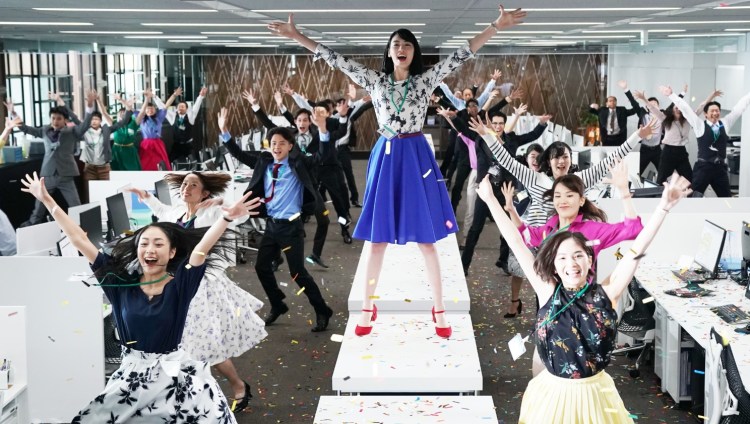
  • Dance With Me – Shinobu Yaguchi returns with another feel good comedy in which an ambitious office worker is hypnotised to sing and dance like an old Hollywood musical whenever she hears music.
  • Dare to Stop Us – drama set in the heyday of Wakamatsu Production. Review.
  • Day and Night – a young man returns to the hometown where his whistleblower father was hounded into suicide.
  • The Fable – an eccentric hitman’s mission to lay low for a year is undermined by yakuza politics in this surreal yet heartwarming manga adaptation starring Junichi Okada. Review.
  • Fly Me to the Saitama – absurdist comedy in which the residents of Saitama have become an oppressed minority. Review.
  • Garo – Under the Moonbow – latest in the long running Garo saga.
  • Gintama 2: Rules are Made to Be Broken – sequel to Yuichi Fukuda’s enormously successful adaptation of the popular gag manga in which Edo has been taken over by aliens.
  • Hard Core – slacker sci-fi drama in which a frustrated idealist befriends a rusty robot. Review.
  • His Bad Blood – winner of the audience award at Yubari International Film Festival in which a father and son unwittingly seek refuge with the same priest.
  • Human Lost – extremely loose, animated sci-fi take on Dazai’s classic novel scripted by Mardock Scramble’s Tow Ubukata and directed Fuminori Kizaki.
  • The Island of Cats – The peaceful days of an old man and his cat are disrupted by the arrival of a pretty young woman from Tokyo (Kou Shibasaki) and her newly opened cafe in an adaptation of the manga by Nekomaki.
  • It Comes – familial horror from Tetsuya Nakashima in which a father reaches out to an occult expert in fear that he is being threatened by a malevolent entity.
  • Kingdom – Wuxia-esque manga adaptation from the big budget master Shinsuke Sato set in feudal China.
  • The Legend of the Stardust Brothers – Long forgotten, Macoto Tezka’s anarchic cult comedy debut has been lovingly rediscovered and restored by Third Window Films. A tale of fame, corruption, and destiny, Stardust Brothers is a whimsical piece of absurdist Showa-era nostalgia. Review.
  • Promare – first feature from anime studio Trigger (Kill la Kill) in which futuristic firefighters try to keep the peace.
  • The Relative Worlds – parallel world anime romance.
  • Ride Your Wave – latest from Masaaki Yuasa in which a firefighter and florist enjoy a fairytale romance until…
  • Sadako – Hideo Nakata returns to the world of Ring with a brand new incarnation of the legendary vengeful spirit.
  • Stare – J-horror thrills as a pair of students team up with a journalist to unravel the mystery of a terrible curse.
  • Tokyo Ghoul ‘S’ – sequel to the popular live action adaptation of Sui Ishida’s manga in which a young man gets an organ transplant from a “ghoul” and finds himself craving human flesh.
  • Twilight – Fukushima-set indie anime in which a young girl bonds with an artistic boy on a bus.
  • We Are Little Zombies – madcap post-modern comedy in which four recently bereaved teens bond in their shared sense of alienation and eventually start a punk band! Review.
  • The Wonderland – latest from Keiichi Hara (Colorful, Miss Hokusai) inspired by Sachiko Kashiwaba’s Strange Journey From the Basement in which a young girl discovers another world under her aunt’s shop.

Philippines

ode to nothing still 1

  • Mystery of the Night – festival favourite Adolfo Alix Jr presents an adaptation of Rody Vera’s play “Ang Unang Aswang” featuring the legendary vampiric monsters.
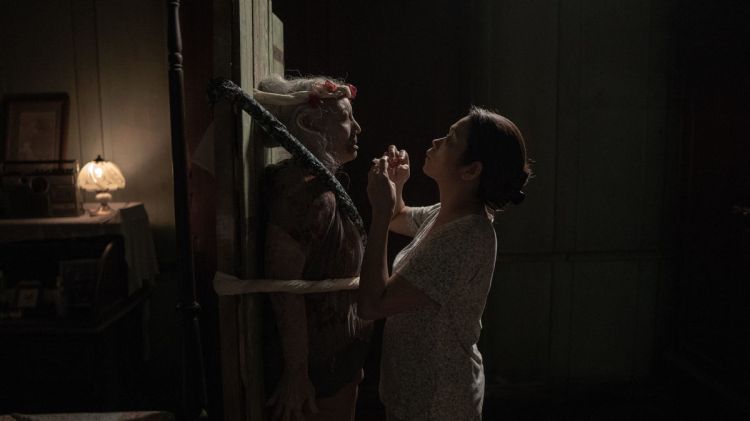
  • Ode to Nothing – a lonely spinster struggles to keep her funeral business afloat until she ends up making friends with a corpse.

South Korea

Extreme Job banner 2

  • Another Child – two very different teenage girls form an unlikely friendship when they discover their parents are having an affair.
  • Door Lock – remake of Spanish film Sleep Tight in which a woman living alone suspects a stranger has been breaking in to her home. Review.
  • The Dude in Me – A mean spirited businessman swaps bodies with a bullied overweight teenager.
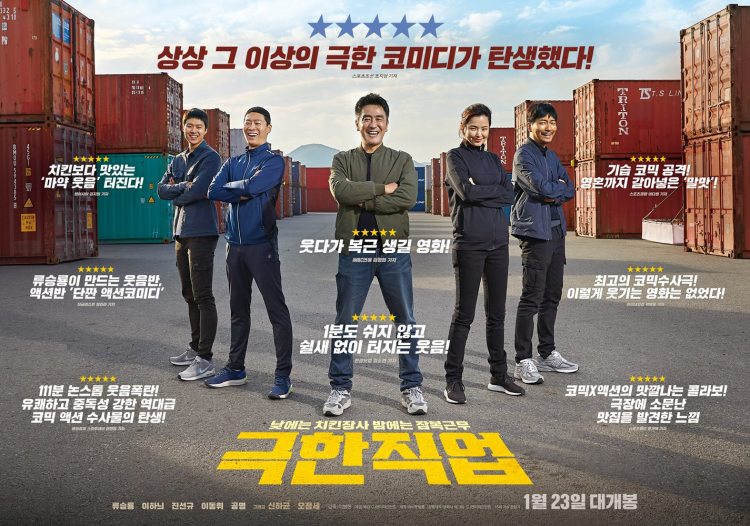
  • Extreme Job – bumbling police officers go undercover running a chicken restaurant to catch drug dealers but the restaurant ends up taking off. Review.
  • The Gangster, the Cop, the Devil – Ma Dong-seok stars as a gangster who teams up with a violent cop to catch a serial killer.
  • Hit-and-Run Squad – dogged cops defy demotion to take down an elitist chaebol who thinks he doesn’t have to pay for his crimes because he’s rich.
  • House of Hummingbird – a young girl struggles to assert herself in the confusing world of the newly democratised South Korea but begins to find her voice thanks to an inspirational teacher in Kim Bora’s festival favourite.
  • Idol – Han Gong-ju’s Lee Su-jin returns with a conspiracy thriller in which a politician’s son commits a hit and run.
  • Maggie – a nurse intends to resign after coming to the conclusion she and her boyfriend have been captured in a compromising position in an x-ray but discovers everyone has called in sick. Meanwhile, her boyfriend is busy trying to fill in the mysterious sink holes appearing all over the country.
  • Miss and Mrs Cops – a former top cop turned desk jockey, her bumbling rookie sister-in-law, and a female colleague team up to stop a gang of porn blackmailers!
  • Money – Ryu Jun-yeol stars as a rookie stockbroker frustrated by Yoo Ji-tae’s sociopathic rival.
  • The Moon in the Hidden Woods – animation in which Princess Navillera flees the castle into the wasteland with the musician Janggu and his band of outlaws.
  • No Mercy – a woman recently released from prison tries desperately to save her little sister who has learning difficulties and has been dreadfully misused by those around her.
  • The Odd Family: Zombie on Sale – hilariously zany comedy in which a weird family adopts a zombie and then tries to exploit it when it turns out that its bite has unexpectedly positive qualities (for a time at least). Review.
  • The Wrath – joseon horror remake of the 1986 classic Woman’s Wail in which a wealthy family’s sons are killed on their wedding day.

The Fantasia International Film Festival takes place in Montreal, Canada from 11th July to 1st August. You can find full details for all the films as well as screening times and ticketing information on the official website, and you can also keep up with all the latest news via the festival’s official Facebook page, Twitter account, Instagram, and Vimeo channels.

Tokyo Vampire Hotel (東京ヴァンパイアホテル, Sion Sono, 2017) [Fantasia 2018]

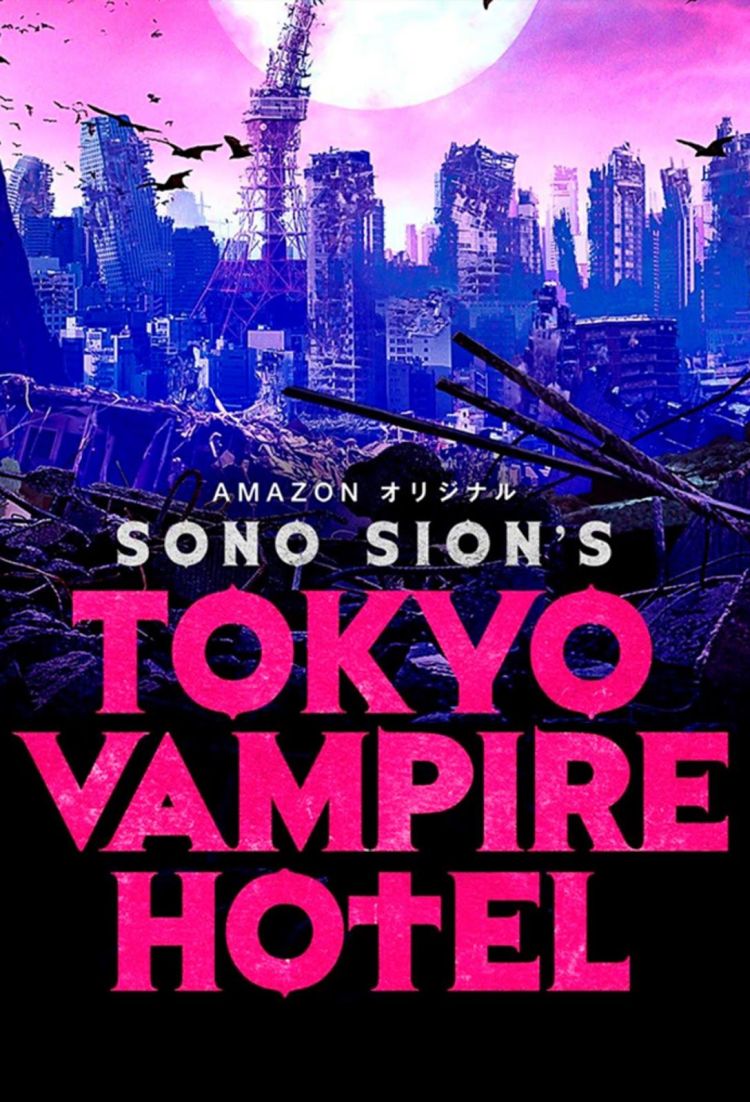
Tokyo Vampire Hotel PosterAbridging a work of fiction can be a taxing task. The job of a judicious abridger is the use their own judgement to reduce a larger work to its most essential elements either for those who, for one reason or another, need a more immediate digest or for those looking for greater accessibility. When it comes to a work of art, abridgement can be a dubious task and, unfortunately, the temptation is simply to excise the “best bits” shorn of all the “heavy stuff” and supporting material. Sion Sono who had been in a particularly prolific phase was given something of an unusual opportunity in creating Tokyo Vampire Hotel (東京ヴァンパイアホテル) – a chance to do as he pleased with a sizeable budget to create a television series for Amazon Prime, which is to say marrying mainstream commercial concerns with idiosyncratic artistry. The 6.5hr, eight episode, series was released via the streaming platform in June 2017 (initially in Japan only with international streaming available a few months later) but Sono also took the step of creating a 2hr22min feature length cut for film festival distribution.

The titular Tokyo hotel is the lair of a sect of modern day vampires. As a long prophesied war between rival clans – the Corvins in Japan and the ancient Draculas of Romania, brews, the Corvins have engineered a plan to lure lonely unsuspecting Tokyoites to an exclusive singles mixer where they will not only be given a sizeable fee for attending but also tempted with the possibility of meeting the love of their life, never suspecting that all this is too good to be true and they are really being recruited for a kind of blood farm to feed the various appetites of their bonkers captors.

Meanwhile, “the chosen one”, Manami (Ami Tomite), is about to come of age. Born during an “auspicious” alignment of the stars, Manami is one of three children given special vampire blood and thought to be all powerful, species saving hybrids. As such she is wanted by every side and is eventually “rescued” from a massacre at a restaurant by ice cool vampire K. (Kaho) – a Japanese vamp currently working for Dracula.

It has to be said that Sono’s original TV cut is extremely convoluted and initially confusing. The hotel, a Japanese vampire hub, is connected to the vampire capital in Romania by a magical tunnel with the narrative flowing freely between both spaces. What we lose in condensing to feature length is the entirety of the extensive back story with the consequence of shifting the focus from the protagonist of the TV series, Manami, to the more exciting figure of second lead K. whose gradual disillusionment with becoming a puppet in someone else’s revolution coupled with romantic heartbreak eventually reawakens her sense of “humanity” as she becomes committed to “saving” Manami from becoming yet another slave to the Dracula cause.

Meanwhile, Sono satirises modern Japan’s ambivalence towards romance as a collection of youngsters are forced into an extreme situation in order to successfully couple off and form a “traditional” family solely to satisfy the demands of a bunch of vampire overlords standing in for a bloodsucking state. Yamada (Shinnosuke Mitsushima), the conflicted hero of the Corvins who longs for escape from his unwanted immortality and an egotistical, individualist world harbours intense resentment towards his own “hypocritical” father who “sold” him to the vampires as a baby in return for various favours by which he has now become the “Romantic Party” Prime Minster of Japan preaching traditional family values and a “wholesome” future for the little children who otherwise face a difficult existence in a country which has “lost its way”.

Sono doubles down on his usual sense of romanticism as his flamboyant vampires adopt an oddly foppish, Regency era aesthetic whilst speaking in a deliberately theatrical manner filled with bold philosophical statements and a florid sense of repressed melodrama. Harking back to Bad Film – another attempt to reorder extensive footage into a narratively cohesive whole, the conflicts are often about love more than death with suffering and sorrow marking the lives of our gloomy immortals, oppressed by their own inability to transcend their natures and find the escape they so desperately crave.

Sono seems to reemphasise their unhappy fates by engineering an altogether different, infinitely abrupt ending which, in contrast to the TV drama, hands the victory back to the people but does so in historically uncomfortable fashion as the victorious hotel guests revel in acts of atrocity against their captors which are framed as a kind of genocide and accompanied by stills from violent classical paintings featuring scenes of unbridled carnage. A contrarian to the last, Sono mutilates his own endeavour and then frankensteins it into something else, twisting his own words and tying himself in knots in the process. Viewers seeking clarification would be well advised to invest their time in the 6.5hr experience rather than opting for the convenient shortcut of an edited version, but there is certainly plenty to ponder in Sono’s truncated tale of love and death in post-Olympic Tokyo.


This review refers to the theatrical cut of Tokyo Vampire Hotel which was screened as part of the Fantasia International Film Festival 2018. You can also stream the original TV drama in most territories via Amazon Prime.

Trailer for the TV drama (no subtitles)

Penguin Highway (ペンギン・ハイウェイ, Hiroyasu Ishida, 2018) [Fantasia 2018]

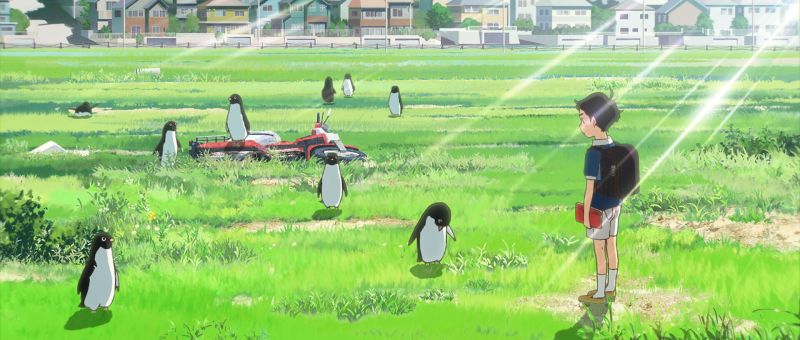
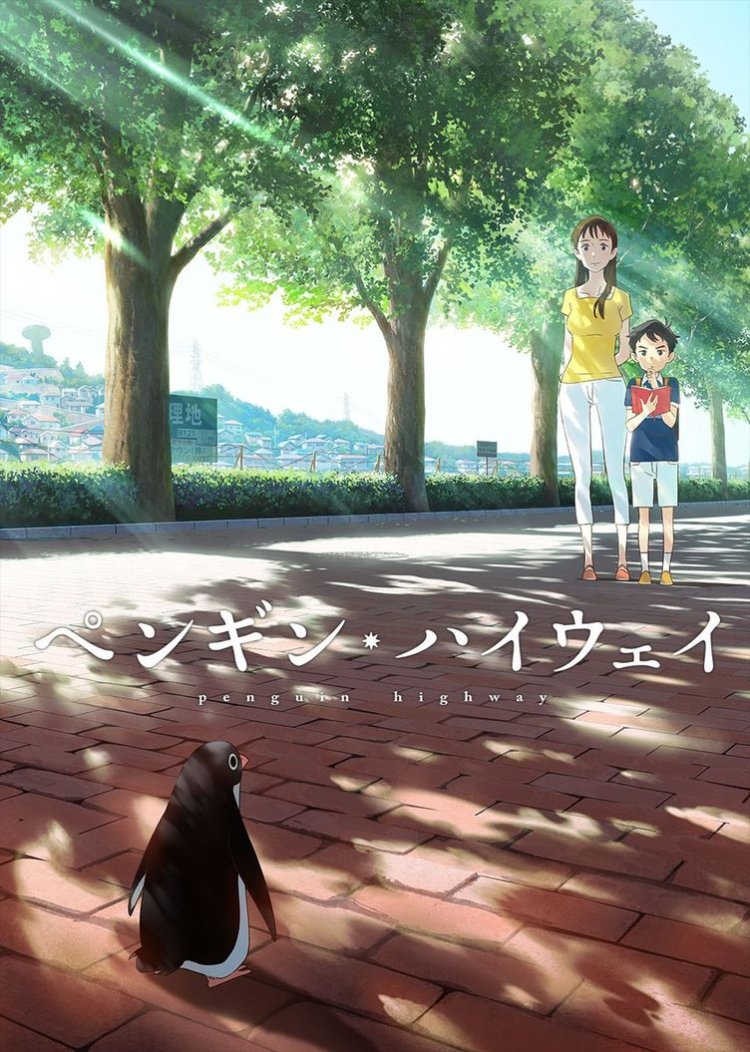
Penguin Highway posterRandom penguins might be the very opposite of a problem, but what exactly does it all mean? Tomihiko Morimi has provided the source material for some of the most interesting Japanese animation of recent times from Masaaki Yuasa’s wonderfully surreal Tatami Galaxy and Night is Short, Walk on Girl, to the comparatively calmer Eccentric Family. Hiroyasu Ishida’s adaptation of Morimi’s Penguin Highway (ペンギン・ハイウェイ) may be a far less abstract attempt to capture the author’s unique world view than Yuasa’s anarchic psychedelia, but preserves the author’s sense of every day strangeness as an ordinary primary school boy’s peaceful life is suddenly derailed by the appearance of random penguins in a small town way in land in the middle of a hot and humid Japanese summer.

Aoyama (Kana Kita) is, as he tells us, “very smart”. He thinks its OK to tell us this because unlike some of his classmates he isn’t conceited, which is what makes him so great. He’s absolutely positive that he’s going to become an important person in the future and can’t wait to find out just how amazing he’s going to be once he’s grown up. Aoyama is also sure that crowds of girls will be lining up to marry him, but they’re all out of luck because he already has a special someone in mind – the friendly young receptionist from the dentist’s (Yu Aoi) who has been coaching him at chess and just generally hanging out with him chatting about life.

Everything begins to change one day when random penguins start appearing all over town. Penguins are, after all, cold climate creatures and this is a glorious summer in Southern Japan so even if these are rogue penguins who’ve managed to escape from a zoo, it’s anyone’s guess how they’ve managed to survive. Being the scientifically minded young man he is, Aoyama becomes determined to solve the penguin mystery, especially as it seems to have something to do with the young lady from the dentist’s who he can’t seem to get out of his mind.

Aoyama is, despite his opening gambit, a fairly conceited young man who thinks himself much cleverer than those around him – not only his schoolmates but the adults too (possibly with the exception of the lady from the dentist’s who is after all teaching him how to be better at chess). With an intense superiority complex, Aoyama has few friends (not that that bothers him, particularly) and is often bullied by the class bruiser, Suzuki (Miki Fukui), and his minions, all of which he takes in his stride. He is, however, slightly thrown by the presence of an extremely bright girl in his class, Hamamoto (Megumi Han), who regularly beats him at chess and is interested in black holes among other areas of scientific endeavour Aoyama had earmarked as his own.

Despite suspecting that Hamamoto might be “even more amazing” than he is, Aoyama is not resentful or jealous but remains seemingly oblivious to her attempts to make friends with him. Aoyama, as an intensely “rational” person, is also sometimes insensitive and remains entirely unable to pick up on social cues unlike his more perceptive friend/assitant, Uchida (Rie Kugimiya), who is well aware of the reason Suzuki keeps picking on Hamamoto, but is unable to convey his instinctual understanding of human nature to the logical Aoyama. Armed with this new fragment of information from Uchida, Aoyama uses it in a predictably “rational” fashion by suddenly bringing it up in front of both Hamamoto and Suzuki in “advising” him that liking someone isn’t “embarrassing” and Suzuki should just say what he means rather than making passive aggressive attempts to get attention by being unpleasant. All of which is, ironically enough, quite awkward.

Through carrying out his investigation into the penguin phenomenon, Aoyama is forced to confront his less rational side, eventually affirming that he’ll live his life based on a “personal belief” rather than a scientific principle. Getting a glimpse of the edge of the world and coming to accept that not matter how much fun you’re having there will always come an end, Aoyama decides to live his life in haste anyway running fast towards an inevitable conclusion in the hope of a longed for reconciliation. Sadly, his discoveries don’t seem to have made him any less conceited but he is at least good hearted and eager to help even if he remains determined to walk his “Penguin Highway” all alone while concentrating on becoming a better person. Beautifully animated and tempering its inherent surrealism with gentle whimsy, Penguin Highway is a promising start for Studio Colorido, mixing Ghibli-esque charm with Morimi’s trademark surrealism for a moving coming of age tale in which a rigid young man learns to find the sweet spot between faith and rationality and pledges to live his life in earnest in expectation of its end.


Penguin Highway was screened as part of Fantasia International Film Festival 2018.

Original trailer (no subtitles)

Violence Voyager (バイオレンス・ボイジャー, Ujicha, 2018) [Fantasia 2018]

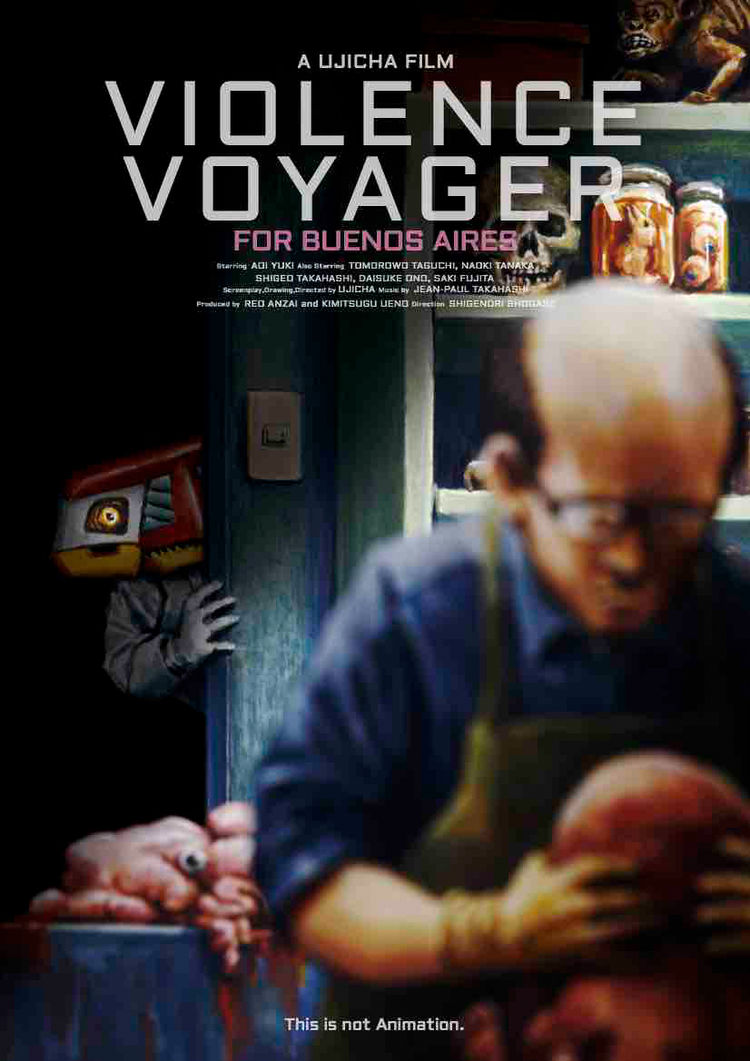
violence voyager posterWeird stuff happens out in the mountains, stuff you wouldn’t even believe. Ujicha’s Burning Buddha Man followup Violence Voyager (バイオレンス・ボイジャー) is a pleasantly retro treat, set sometime in the more innocent past when the landscape still held hidden mysteries for small boys to find and anything goes so long as you’re home in time for tea. There are some mysteries, however, that it’s better not to solve and if something seems too good to be true, that’s usually because it is. Little Bobby (Aoi Yuki) is about to become a hero, but his journey will be a one way trip of unwelcome transformations, losses, and betrayals.

Bobby, an American boy with a blond bowl cut living in a little rural town with his distant dad and bedridden mum for otherwise unexplained reasons, has impressed his best friend Akkun (Shigeo Takahashi) with his high-tech pinball baseball computer console he made for the science fair, even if it has put the strange monster toys Akkun and his brother Yakkun entered with the intention of masking a lack of skill with pure strangeness to shame. Ostracised by the other kids, Bobby and Akkun long to cross the mountain and find their other friend, Takaaki (Daisuke Ono), who moved away to the next village. Akkun has heard tell of a secret mountain path which would take them there for free and it’s only *slightly* dangerous even if it does take time. Luckily it’s the summer holidays so time is something the boys have plenty of.

Setting off despite the warnings of Old Man Lucky Monkey (who actually lives with a chimpanzee as a “friend”), the boys are sidetracked when Bobby spots a fallen sign for something called “Violence Voyager” which sounds like too good an opportunity to miss. Ending up at an abandoned theme park, the boys are surprised to find the proprietor (Tomorowo Taguchi) still hanging around and overjoyed when he offers to let them in for free seeing as he rarely gets any business owing to the rapidly declining number of children in the area (alarm bells should be ringing right about now). Handed a “voyager suit” (an anorak and pair of wellies), the boys are shown an informational video explaining that the world has been invaded by aliens in the form of robot soldiers who shoot alkaline from their plant-like hands. Choosing a “weapon” (water pistol) each (Bobby a rifle, Akkun a tiny little dolphin), the boys set off but it’s not long before they start to suspect something isn’t quite right. Discovering another little girl lying injured, Bobby and Akkun plan an escape only to find their bullying classmates also facing the same dilemma.

It will come as no surprise that there really is something not quite right going at Violence Voyager. Like a combination of Westworld and Soylent Green, the park exists to strip the young of their innocence by exploiting it. A mad scientist desperately trying to save his only family is literally eating his young – sacrificing the souls of innocent children and “remaking” them in his own image to feed his ruined son. Meanwhile, Bobby’s dad fights equally hard to track down and rescue his own errant boy from an obviously bad situation.

Bobby emerges scarred and fundamentally “changed” mentally and physically but with his humanity fully intact, carrying a pretty bunch of flowers to take to his mum to cheer up her sickbed (and presumably lessen the shock of seeing him as he now is). An extreme coming of age tale, Violence Voyager runs from exposing the cynicism of businesses aimed at children to the desperation faced by a parent prepared to protect their offspring at all costs (including their remaining family).

Ujicha’s trademark “geki-animation” is a perfect fit for the bizarre tale at hand, filled with beautiful hand painted backgrounds and accompanied by the sonorous narration of comedian Hitoshi Matsumoto (Symbol, Big Man Japan). The retro design from Bobby’s bowl cut to the ‘70s musical score and noticeably old-fashioned composition (one shot even seems to reference the poster for Fukasaku’s Virus) allows the warmth of nostalgia to mix with its less positive elements all while indulging in a surreal B-movie adventure which starts with “aliens” and ends with the horror that men do. Whether a metaphor for the conformist meat grinder which strips children of their individuality to trap them in the straight jacket of the salaryman world, the ravages of grief, or just a B-movie body horror adventure, Violence Voyager is a surreal fever dream of bodily corruption but undercut with its own sense of fantastical whimsy and an oddly innocent heart for so dark a tale.


Violence Voyager was screened as part of Fantasia International Film Festival 2018.

Original trailer (English subtitles)

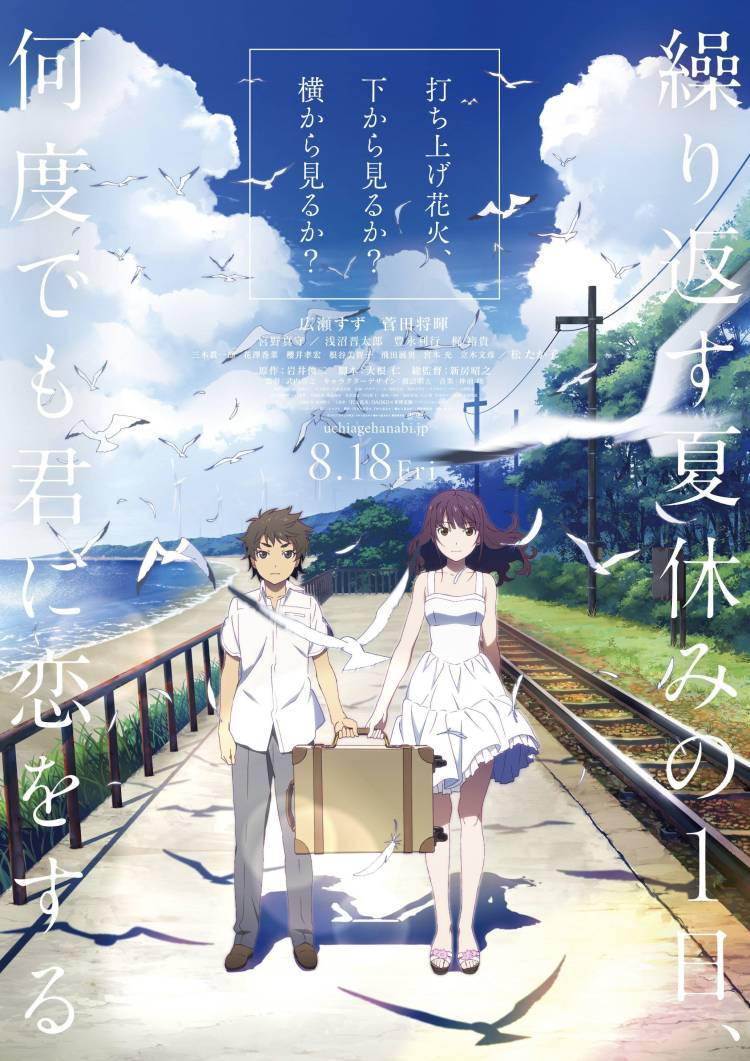
Fireworks (打ち上げ花火、下から見るか? 横から見るか?, Akiyuki Shinbo & Nobuyuki Takeuchi, 2017) [Fantasia 2018]

Fireworks posterBack in 1993, Fireworks, Should We See it From the Side or From the Bottom? (打ち上げ花火、下から見るか? 横から見るか?, Uchiage Hanabi, Shita kara Miru ka? Yoko kara Miru ka?), became something of a sliding doors moment for the young Shunji Iwai who received an award from the Directors Guild of Japan for what was in essence a single episode in an anthology TV series dedicated to the idea of “what if”. “What if” is, it has to be said, a constant theme in nostalgic Japanese cinema as slightly older protagonists look back on the hazy days of youth and wonder what might have been if they’d only known then what they know now. Scripted by Hitoshi One (Scoop!) and produced by Shaft, the anime adaption attempts to do something similar, floating in with a gentle summer breeze that could easily be from 30 years ago or yesterday while its conflicted hero ponders where it is he ought to stand to get the most beautiful view of life passing him by.

The central dilemma that seems to obsess the boys this particular summer is whether fireworks are flat or three dimensional and whether your perception of them changes depending on where you stand. Norimichi (Masaki Suda) risks falling out with his best friend Yusuke (Mamoru Miyano) and so has avoided revealing the fact that they both have a crush on the same girl – Nazuna (Suzu Hirose), who (neither of them have noticed) has a dilemma of her own. A chance meeting at the swimming pool seems primed to dictate the romantic fate of all concerned. Norimichi and Yusuke race for the affections of Nazuna who, in the original timeline, ends up asking Yusuke to see the summer fireworks with her even though it’s Norimichi she went there to meet.

Unfortunately Yusuke is a flake and nothing goes to plan. He stands Nazuna up to hang with his buddies and figure out the answer to their inane riddle leaving her to run into Norimichi who gets an unexpected glimpse at her inner turmoil. A mysterious orb salvaged by Nazuna from the nearby sea gives Norimichi a chance to start over, be braver, do things differently thanks to the benefit of hindsight, and so he begins a path to idealised romance by manipulating the events around him to finally “save” Nazuna from making a rash decision (or at least from making it alone).

In 1993, Nazuna’s dilemma was perhaps a little more unusual than it might seem now. Her twice married single-mother (Takako Matsu) is planning to marry again which requires the teenage Nazuna to leave her home behind to live with a strange man in a strange town. Though her new step-dad seems nice and is obviously trying his best, Nazuna is not of a mind to give in. She consents to accepting one of the ice-creams he’s bought to curry favour (after all, there’s no need to be “rude”), but is not about to go so far as to say thank you or to enjoy eating it together with the rest of the family when she could guzzle it sulkily in the comfort of her bedroom. Nazuna wants to escape, but her ideas of doing so are childishly naive even if she puts on a sophisticated front by joking about going to Tokyo to work on the fringes of the sex trade by lying about her age. Hence, she asks a boy she likes but barely knows to take her away from this place, but the boy is just a boy and not quite equipped for rescuing damsels in distress from suffering he doesn’t understand.

Like many Japanese teen dramas, Norimichi’s interior monologue takes on a rueful quality, as if he’s eulogising his youth while still inside it. He doesn’t know whether there’s a difference if you look at things from one angle or another because he’s not particularly used to thinking about things and his first few experiments with the orb are pure reactions to events rather than thought through decisions about effects and consequences. Nevertheless, use of the orb shifts him into a philosophical contemplation of what it is to live a life. Finally realising he should probably ask Nazuna what it is she really wants, the process the pair undergo is one of learning to live in the now rather than obsessing about the end of something that might never begin if you never find the courage to start.

In the end their beautiful dream world is ruptured by a drunken old man, shattering into a thousand shards of memory of things that never were. Fireworks wants to ask if you can have a more fulfilling life by simply changing your perspective, but its central messages never quite coalesce. There is something about Iwai’s original concept which inescapably of its time, sliding neatly into the melancholy world of early ‘90s teen drama drenched in nostalgia for an era not yet past. Reaching for poignant philosophising, Fireworks falls short through, ironically enough, focussing too heavily on a single point of view. An oddly “flat” exercise, Shinbo’s adaptation misses the mark in its climactic moments but perhaps manages to offer something to the lovelorn teens of today if only by yanking them back to a more innocent time.


Fireworks was screened as part of Fantasia International Film Festival 2018.

International trailer (English subtitles)

The original 1986 Seiko Matsuda song reprised by Nazuna at a climactic moment.

Lôi Báo (Victor Vu, 2017) [Fantasia 2018]

Lôi Báo posterThe world can be a strange place. Tam (Cuòng Seven) felt safe in his small town surrounded by his wife and son who were determined to support his artistic dream despite its long genesis, but a dark shadow is about to be cast over his otherwise pleasant existence that will threaten to destroy everything he has built. Victor Vu’s Lôi Báo is perhaps Vietnam’s first superhero movie but it’s also a familiar tale of a conflicted man entering middle-age learning to reaccept his responsibilities, both to his wife and son and to his society as he attempts to balance his desire to help others with that of protecting his family. With great power comes great responsibility as the saying goes and Tam is a responsible guy but the past is calling him and he’ll need to face it head on if he’s to put his fracturing family back together.

Six years after his critically acclaimed graphic novel Descendents of the Crossbow, comic book artist Tam has just come out of a period of writer’s block and is working on a new project – an American-style Superhero book about a pure hearted warrior for justice with intense fighting skills and extreme athletic ability. Not many people are convinced by Tam’s desire to create a Vietnamese superhero, but his family support him and that’s all that matters. In fact, they literally support him because his wife Linh’s (Tran Thi Nha Phuong) coffeeshop is the family’s sole source of income. Tam has a tendency to get lost in his work, which is one reason he’s been putting off seeing the doctor about a serious cough that just won’t go away. When he finally decides to get it checked out it’s already too late – he has terminal lung cancer and only a few months left to live. It’s at this point that his life starts to take a strange, unexpected turn. Uncle Ma (Huàng Son), an older man Tam thought was a farmer, is actually a secret mad scientist who has a hidden laboratory in his garden where he continues to research human head transplants. The obvious conclusion presents itself – Tam decides to undergo experimental surgery to abandon his cancer ridden body and move into a nice new model.

Lôi Báo is the latest in the long line of movies indulging in the thoroughly B-movie science of “Cellular Memory”. Illegal head transplantation is already somewhat unethical, but Tam and Ma acquired their donor body through less than ethical means by grabbing a guy who was mysteriously gunned down in a forest where Tam had just tried to commit suicide out of total despair. Of course, the dead “gangster” came with his own share of baggage which leaves Tam feeling much more impulsive had than he had done before and though he seems to have lost the ability to draw, Tam is thrilled that his new body seems to be a much stronger, faster model than his old one. Not quite able to leap tall buildings in a single bound, Tam can now scale them with little difficulty and lift heavy vehicles all alone. Now he no longer needs to draw superhero stories, he can be a hero for real fulfilling his lifelong dream of being able to save lives and protect the vulnerable from evil.

Only, his new body is not quite so altruistic as he once was, and Tam begins to get off on the fame his newfound heroism is bringing him even while it puts his family danger should anyone find out about all the illegal head transplantation action that’s been going down at uncle Ma’s. He also finds himself strangely drawn to a pretty young doctor who might have been something to the dead gangster, further distancing him from Linh and his son Bu. As expected, there was a little more to the gunfight in the woods than a gangster squabble and Tam will have to learn to put body and soul back together while also dealing with the ghosts of his past and a latent discomfort with the idea of being a husband and father which betrays a lack of faith in the idea of “family” itself.

With plenty of high octane action scenes, Lôi Báo more than does its home genre justice, creating a notably mature origin story for a new kind of superhero who accepts that perhaps he’s not the hero in this story after all. Justice is served, the family repaired, the past laid to rest and there might even be a new book in it too. It has been a busy a few months for Tam, but at least he’s learnt the true meaning of heroism – something which will place him in good stead during his eagerly awaited further adventures!


Lôi Báo was screened as part of Fantasia International Film Festival 2018.

Original trailer (English subtitles)