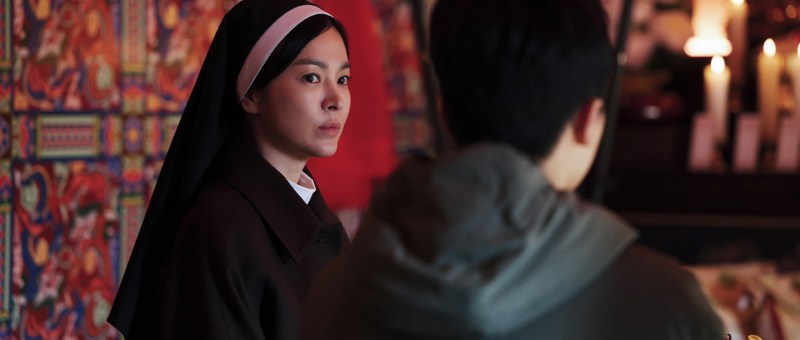
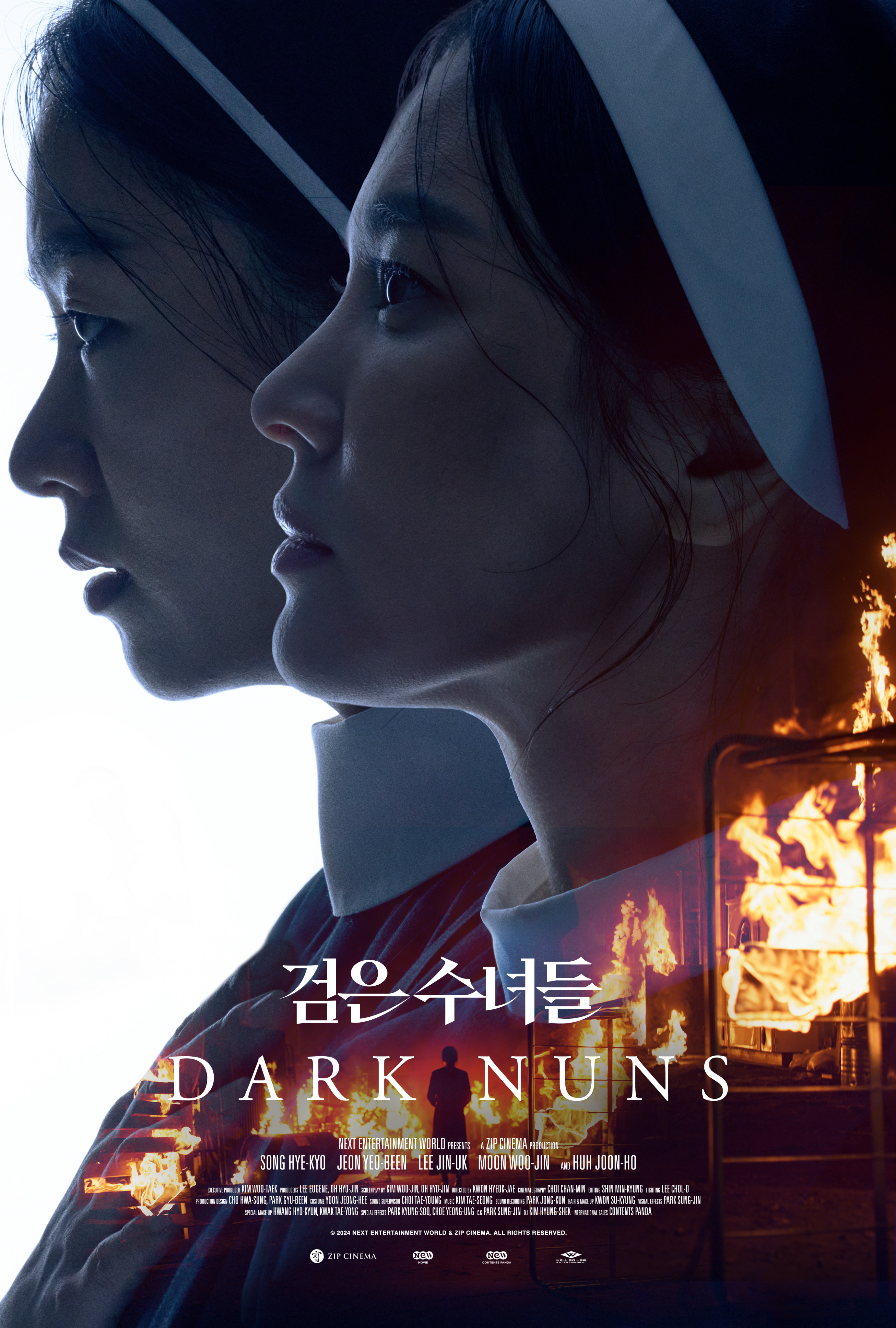
Large organisations have a tendency to gloss over inconvenient truths, but is it really in keeping with the teachings of the Church to ignore a confirmed case of demonic possession and allow a boy to die rather than admit that demons are real and members of the clergy are conducting successful exorcisms? According to Sister Giunia (Song Hye-kyo), a chain-smoking nun with a penchant for vulgar language, it is not, but she is largely hamstrung because of the ingrained misogyny of the patriarchal superstructure of the Catholic religion.
A spin-off from 2015’s film The Priests, Dark Nuns (검은 수녀들, Geomeun Sunyeodeul) goes in hard for the Church’s hypocrisy. As Giuna squares off against a powerful demon when taking over from two priests who’ve botched an exorcism on a teenage boy, it taunts her that the blood of all the demons she has slain will echo in her womb like a drum. There’s a suggestion that the existence of a nun is itself is an affront to God, as if a woman who has rejected her maternity and remained celibate is an aberration suggesting that a woman’s only proper role lies in motherhood. The fact that Giuna is later diagnosed with uterine cancer implies the same, as if she has cursed herself in her decision to serve God and become a bride of Christ. In her final confrontation with the demon, it tells her again that she will die of the tumour in her womb, a fact she already knows, but Giunia counters that she will exorcise the demon from this boy and use her womb to imprison it. Which is to say, she will kill him with her maternity and thereby fulfil her ideal role by becoming a “mother” to this demon, and symbolically to Hee-joon (Moon Woo-jin) the possessed boy, before condemning them both to the flames.
This fact itself is ironic, as the council at the Church refused her request to conduct an exorcism because she is not ordained and “only” a nun. Of course, a woman cannot be ordained in the Catholic Church and the priesthood is open only to men. Her powerlessness within the organisation makes it easy for them to dismiss what she is saying while writing her off as a crazed devotee of the weird teachings of Father Kim, the priest from the earlier film. When they finally do give permission for an “unofficial exorcism” after Giuna has contacted the Rosicrucians in Rome to borrow some holy artefacts necessary for the ritual, the council inform her that the exorcism will be performed by Father Paolo (Lee Jin-wook). A sceptic who believes demonic possession is a psychological phenomenon not a spiritual one, Father Paolo is an odd choice but there is something quite moving and transgressive when in he fact takes off his priestly robes and places them over Giunia’s shoulders, ordaining her and acknowledging both that what she has said is true and that she is the only person who can carry out this exorcism.
This is doubly true as Father Paolo had also tried to use the teachings of the Church to press another nun, Sister Michela (Jeon Yeo-been), by leading her to believe that her own spiritual awareness was a psychological illness that she should struggle to overcome through faith and medicine. It seems that Michela and other women like her may have found themselves retreating within Catholicism to reject the destiny of becoming a shaman while she herself was placed in a Catholic orphanage as a “cursed” child born between a human and a demon. Giuna had friend who was once a fellow nun but has now left to assume her true calling as a shamaness. The two remain good friends and often work together while Giuna is open to the presence of other gods and other forms of spiritual divination such as Michele’s talent with the Tarot. As such, all of these practices exist within a wider spiritual universe which is another challenge to the Church’s oppressive rigidity in its denial of folk beliefs and ancient traditions. After all, there is no real gender bias in shamanism, or if there is, it runs the other way for the majority of shamans are women.
In any case, beating the demon requires everyone to work together for a common goal using, as the Rosicrucian father says, “all available means”. Through participating in the exorcism, Sister Michela begins to accept her own identity later continuing to work with Deacon Choi to track down the remaining 12 Manifestations while accepting Sister Giuna as a mentor figure. They are each in a way freed from the Catholic Church while simultaneously remaining inside of it as they progress with their mission of quieting the demonic forces at large in the world and protecting the innocent from their rippling evil.
Dark Nuns is released digitally in the US July 15 courtesy of Well Go USA.
Trailer (English subtitles)
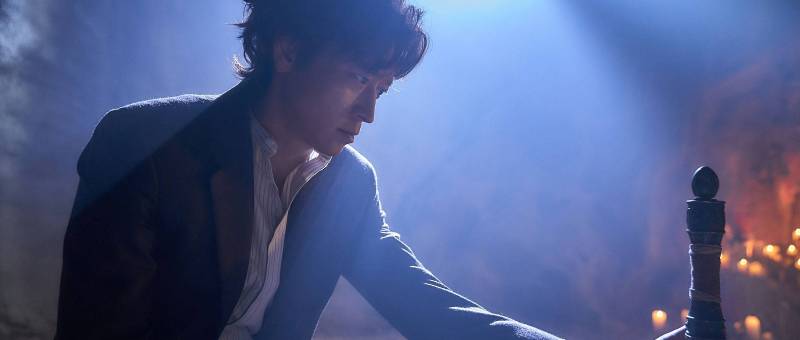



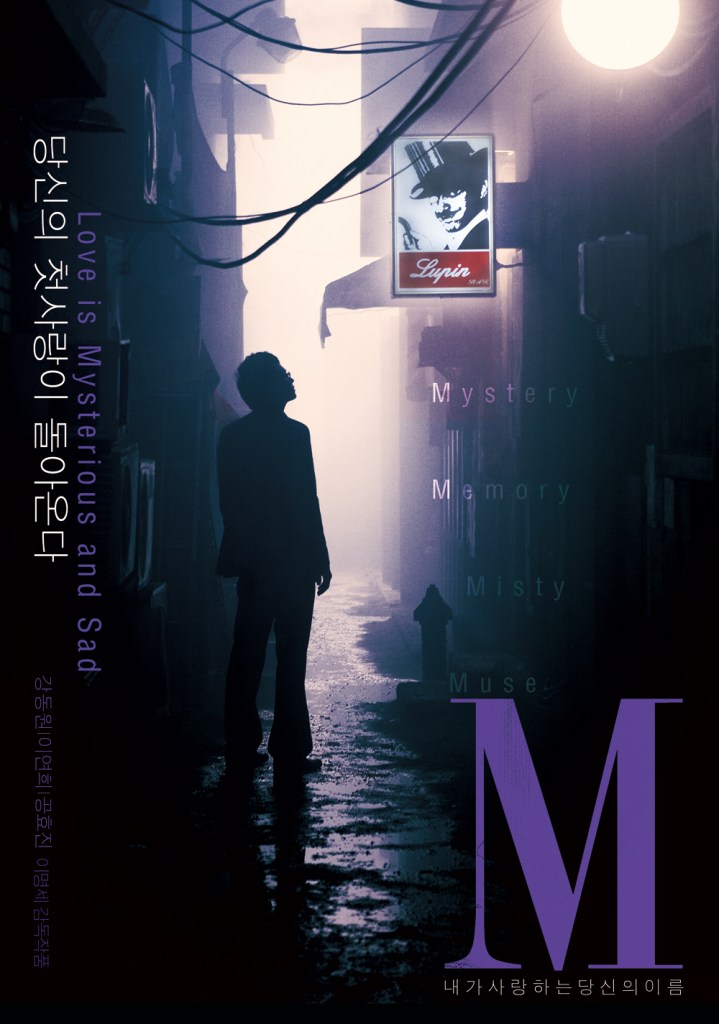 “More specific, less poetic” the distressed author hero of Lee Myung-se’s M (엠) repeatedly types after a difficult conversation with his editor. Almost a meta comment on Lee’s process, it’s just as well that it’s advice he didn’t take – M is a noir poem, a metaphor for an artist’s torture, and a living ghost story in which a man shifts between worlds of memory, haunted and hunted by unidentifiable pain. Reality, dream, and madness mingle and merge as a single kernel of confusion causes widespread panic in a desperate writer’s already strained mind.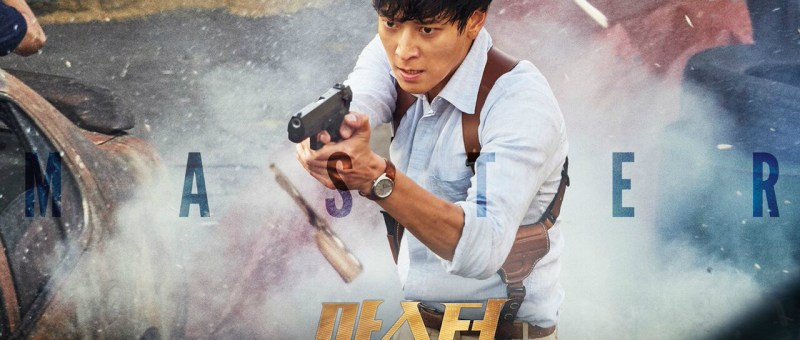
 Corruption has become a major theme in Korean cinema. Perhaps understandably given current events, but you’ll have to look hard to find anyone occupying a high level corporate, political, or judicial position who can be counted worthy of public trust in any Korean film from the democratic era. Cho Ui-seok’s Master (마스터) goes further than most in building its case higher and harder as its sleazy, heartless, conman of an antagonist casts himself onto the world stage as some kind of international megastar promising riches to the poor all the while planning to deprive them of what little they have. The forces which oppose him, cerebral cops from the financial fraud devision, may be committed to exposing his criminality but they aren’t above playing his game to do it.
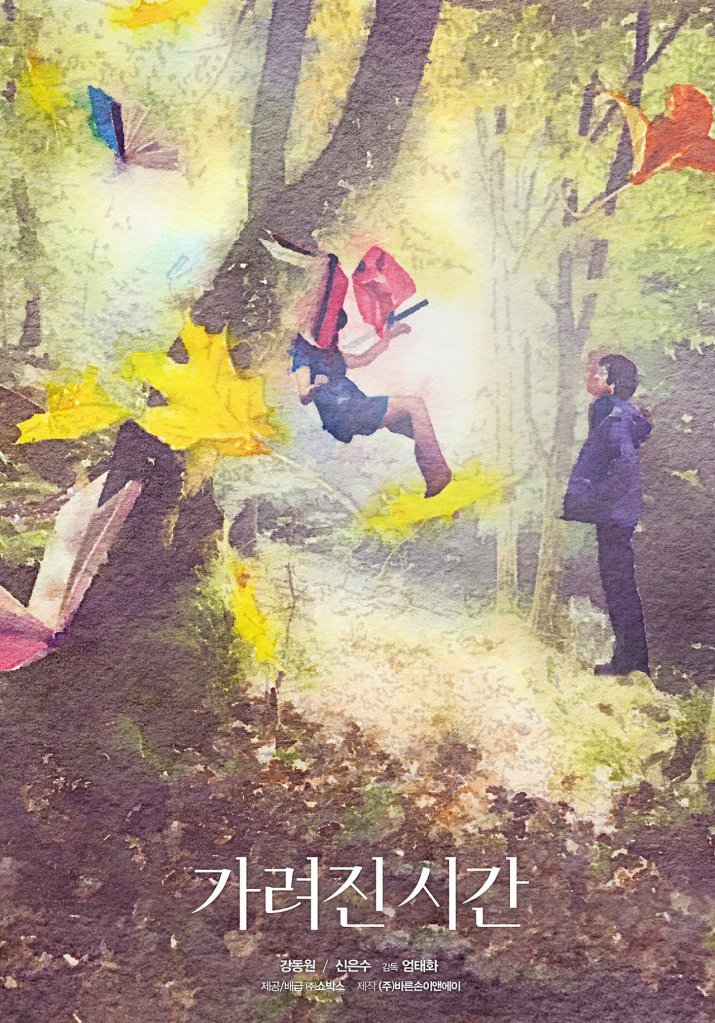 When no time passes, does anything change? Yes, and then again, no, if Um Tae-hwa’s Vanishing Time: A Boy Who Returned (가려진 시간, Garyeojin Shigan) is to be believed. Dealing with the nature of time, connection, and faith Um’s film is a supernaturally tinged fairytale which never seriously entertains the more rational explanation offered by the naysayers, but is filled with the innocence of childhood and the essential naivety of adolescence. Melancholy, though somehow uplifting, Vanishing Time neatly avoids the pitfalls of romantic melodrama for a genuinely affecting coming of age story as its heroine is forced to make peace with her traumatic past through accepting the loss and sacrifice of her present.
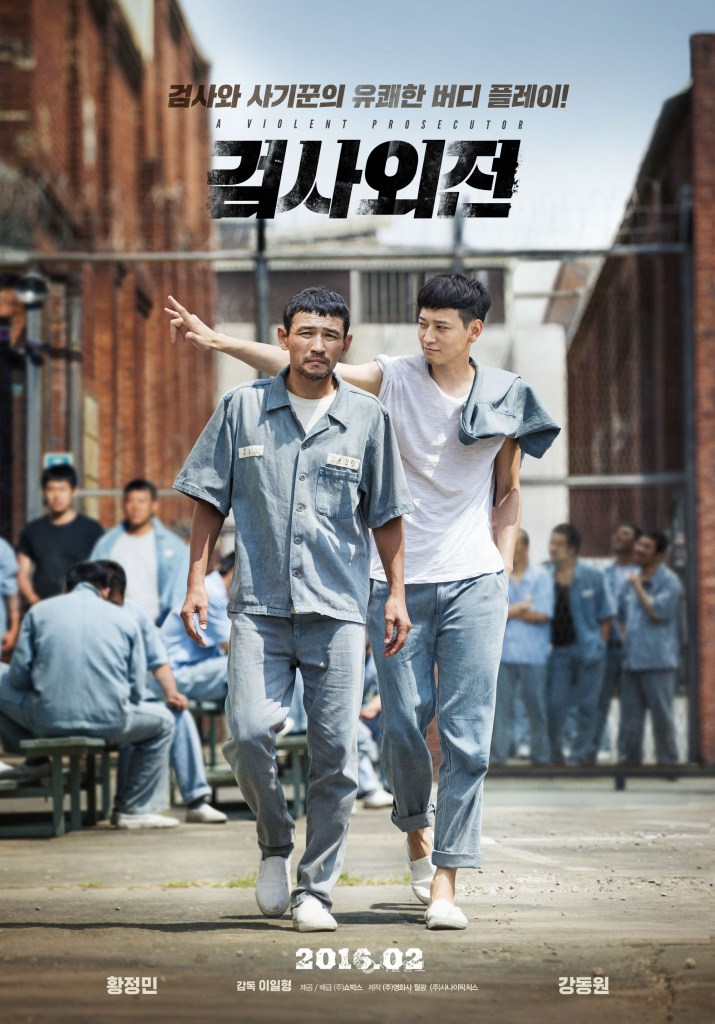 Review of Lee Il-hyeong’s A Violent Prosecutor first published by
  Windows on Worlds