In the Wake (護られなかった者たちへ, Takahisa Zeze, 2021)

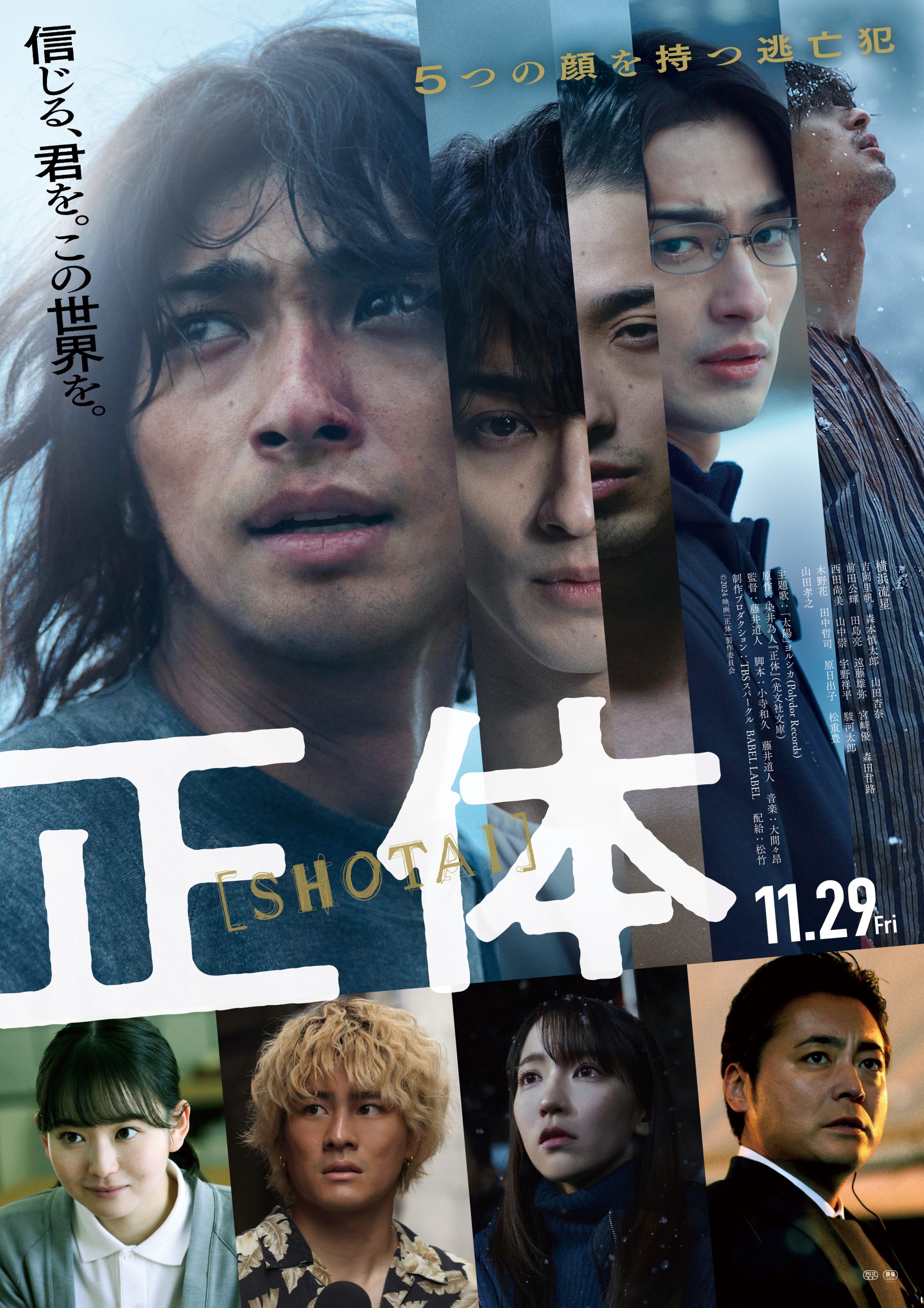
According to a young woman at the centre of Takahisa Zeze’s In the Wake (護られなかった者たちへ, Mamorarenakatta Monotachi he), natural disasters are monsters that devour humans with no rhyme or reason, but people close to her have died by human hands while left at the mercy of a hypocritical social welfare system. Though the social workers insist that benefits are something everyone is entitled to when they need support, others go to great lengths to stop anyone getting them. “That’s the country we live in,” one explains with a tone that implies he thinks this is exactly as it should be.

That social worker is the second to be found dead in suspicious circumstances nine years after the devastating 2011 earthquake and tsunami. The police obviously suspect a grudge, that someone who was turned down for benefits got fed up and killed him in revenge. But as assistant Mikiko (Kaya Kiyohara) says, it’s unlikely to be any of them because they are all “too busy trying to survive,” so they don’t have time to waste on things like vengeance. Zeze then switches to the welfare office where a social worker is trying to explain to an elderly applicant all of the different forms and documentation he’ll need to prepare for his claim. These people already have to jump through hoops to prove their “neediness,” while most of them feel defeated and humiliated in even having to ask and would prefer not to have to depend on the government. 

But a lot of Mikiko’s work involves challenging those suspected of committing benefits fraud. The first of two people she talks to is a single mother with mental health issues (Chika Uchida) who’s had to start working full-time and consequently gone over her allowance meaning her benefits should stop and she should pay back what was “wrongfully” claimed. The woman insists she needs the extra money because her daughter was being bullied for being on benefits so she wants to send her to cram school and be able to buy educational supplies, but Mikiko remains unsympathetic. The second is a man who it’s admittedly harder to sympathise with as he appears to have bought quite a fancy car which again takes him over the limit as a car is classed as a luxury item rather than a necessity. Mikiko doesn’t think they should pay out when he could easily sell the car. Of course, it’s not that simple. The man may need the car in order to work and without it would have no choice but to rely on benefits to a greater extent. In any case, he gets on Mikiko’s nerves because to her it’s people like him that prevent them helping more “genuinely” needy cases. 

But on the other hand, when they could and should have helped they refused and effectively blackmailed an old lady into revoking her application even though she had only 6000 yen (£30) left in the bank and was on the brink of starvation with no one else to turn to. Another of the social workers insists that good neighbours are the most effective way of tackling poverty which is equal parts unreasonable and unrealistic. Then again, there was a kind of solidarity that arose in the wake of the earthquake in which an old woman’s kindness saved a young man and little girl from being dragged away by the weight of their despair, giving them a new home and surrogate family along with proof of the fact that there is always someone there to help and that kind of compassion can be a kind of salvation. 

Even so, Mikiko’s insistence that you have to ask to receive, along with the welfare officer’s almost vampiric obsession with getting the applicant themselves to clearly state they need help, seems contrary to her philosophy in which it should just be provided with no questions asked. They know how difficult asking for help can be and deliberately leverage the social stigma of being on benefits to discourage people from applying for them. Citing increased demand and government cut backs in the wake of the earthquake, the social worker confusingly suggests that by declining more cases they can help more people in the long run which doesn’t make a tremendous amount of sense while his eerie grinning hints that he has begun to enjoying sadistically humiliating these vulnerable people who’ve been brave enough to come forward and ask for that to which they are otherwise entitled. 

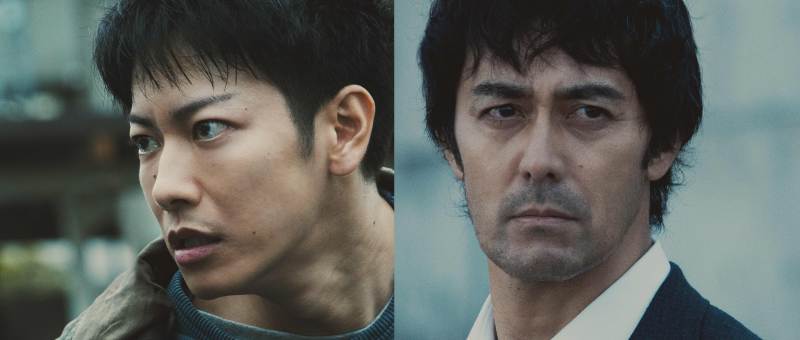
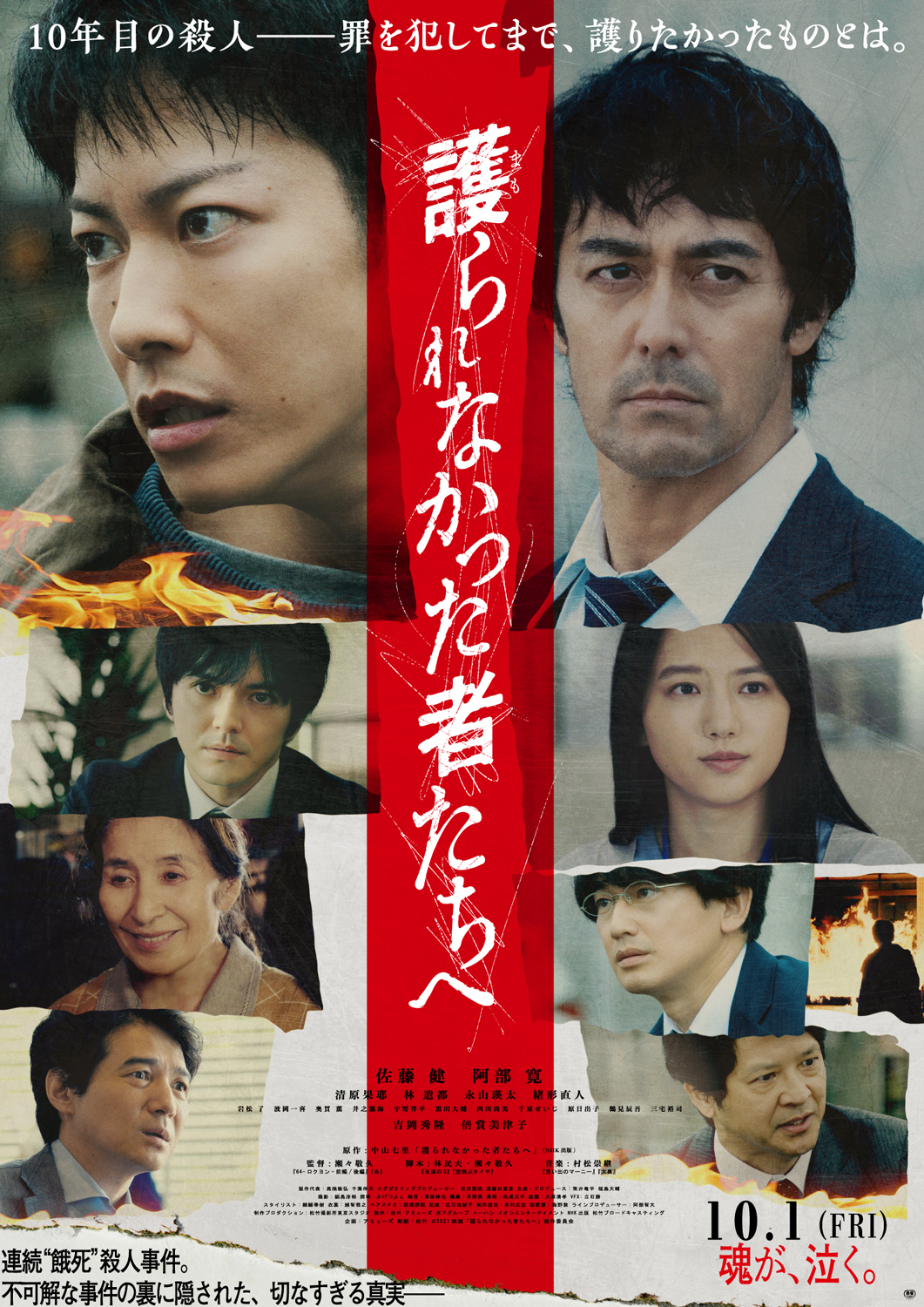
They are all living in the wake of this disaster, something of which aloof yet empathetic detective Tomashino (Hiroshi Abe) is all too aware having lost his wife and son in the disaster. As his son’s body was never found, he too lives in a state of limbo but through investigating the killings begins to find a kind of closure along with an unexpected sense of understanding with a gloomy young man, Yasuhisa (Takeru Satoh), himself a suspect and struggling to make sense of the past, his survival, and the ongoing injustice of the world around him. The film takes its Japanese title, “those who were not protected”, from a note Mikiko writes about the importance of empathy in social work encouraging her colleagues to rebel even if their bosses tell them not to, but also hints at the grief and guilt felt by those left behind that in the end there were those they were not able to save but they can perhaps make their peace with that by continuing to help those around them even if their society largely refuses to do so.


In the Wake screens as part of this year’s Japan Foundation Touring Film Programme.

Trailer (English subtitles)

The Moon (月, Yuya Ishii, 2023)

If you can judge a society by the way it cares for its most vulnerable, then at least according to Yuya Ishii’s The Moon (月, Tsuki), adapted from the novel by Yo Hemmi, Japan is not doing very well. Inspired by a real life incident in which a disaffected young man went on a rampage murdering patients at a facility for the disabled claiming they were a drain on national resources, the film probes into some dark areas of the human psyche asking what people really think deep down and who we do and don’t see as being human just like us.

Blocked writer Yoko (Rie Miyazawa) only takes the job at a care facility because her literary career has stalled and her husband (Joe Odagiri) is out of work. Each of them is still reeling from the death of their three-year-old son who was born with a heart defect and suffered brain damage during an operation that meant he never spoke and was fed through a feeding tube. Working at the care facility brings up painful memories and directly confronts Yoko with realities of her son’s life and death while she later discovers that she is pregnant again and isn’t sure whether or not to have the baby fearing it may have the same condition and knowing that as a woman over 40 there is an increased chance she may give birth to a child who has complex needs.

In many ways it’s Yoko’s own reaction to her pregnancy which underlines the film, the lunar imagery intensely linked with that of her ultrasounds while she reckons with her own feeling of perhaps not wanting to bear an “abnormal” child, as someone puts it. Of course, this very personal sentiment is informed by the loss of her son and the experience of living and caring for him for the three years he was alive, but it also informs her perspective on the care, or lack of it, sees at the facility where patients are sometimes confined to their rooms indefinitely, left covered in their own excrement, or allowed to harm themselves through lack of stimulation. Like Yoko most of the other orderlies seem to have no medical training and two in particular mistreat the people in their care for their own amusement. On witnessing an orderly strike a patient for no reason while frogmarching him back to his room, she asks him if that’s really okay but he just replies that okay or not it’s the way they do things here. She tries to take her concerns to the facility’s director, but he basically tells her the same thing and even threatens her employment if she continues to make a fuss. 

Yoko closely identifies with another woman who happened to be born on exactly the same day she was yet has been confined to bed for 10 years and is assumed to be unable to communicate. According to another orderly, also called Yoko (Fumi Nikaido), Ki-chan could walk and was partially sighted when she arrived but someone decided that it would be easier to care for her if she stayed in her room so now her muscles are too wasted to walk while they also covered up her windows because they thought dim lighting would keep her more docile. Essentially, they further disabled her for their own convenience and concluded that because she could not communicate with them in a way they considered usual that she had nothing to communicate. It doesn’t seem to occur to them that biting the other Yoko’s arm, for instance, is also communication as are some of the behaviours exhibited by the other patients which the orderlies respond to with force or violence.

Shoko, the girlfriend of another orderly Sato (Hayato Isomura), is deaf and remarks to the other Yoko that she doesn’t need to hear to be able to understand yet a value judgement seems to have been placed on these people’s lives based solely on their ability to communicate through conventional means. Yoko is accused of romanticising notions of disability, while many people may outwardly say they believe those with physical or intellectual disabilities are equal to themselves and deserve the same levels of respect and dignity they are also unwilling to deal directly with the unpleasant side of their care such as cleaning up bodily fluids which may have strong and penetrating odours. Both the other Yoko, who has literary aspirations of her own, and Sato make frequent reference the stench of reality, something which often left out or not spoken of. The other Yoko accuses Yoko of leaving the smell of decay out of her award-winning book on the Great Kanto Earthquake of 1923 which she later reveals was something urged by her editor who instructed her to soften the edges to create a story that readers would find uplifting and inspirational.

One of the unpleasant things glossed over about 1923 earthquake was the pogrom against Koreans which took place in its wake, something that is tacitly referenced during the attack on the care facility as the killer determines to ask each of the victims if they have a soul despite having already decided that those who cannot speak do not. During the pogrom, those suspected of being Korean were often asked to pronounce certain words to see if they had a Korean accent, only many people from other areas of Japan also pronounce them in the same way so the test proved nothing. The killer wants to see themselves as “normal”, that their way of thinking is just the same as everyone else’s only they don’t have the courage to speak and that their course of action is one most people tacitly support because they also do not believe that the people at the care facility are human or that they have a soul.

Raising her concerns, Yoko has a long philosophical conversation with Sato which doubles as a self-interrogation while it is also in some senses true that the people at the care facility are each refractions of herself. In any case, the conditions and contradictions of the facility appear to place a strain on the mental health of those who work there who are encouraged to simply get used to the way the system works rather than attempt to change it. Sato complains that he struggles to discern dream from reality, while reality itself is often distorted by a lack of desire to talk about anything that might be unpleasant or inconvenient.

Even a discussion that might have been unpleasant or inconvenient to have is interrupted in the closing moments, though the most important things are indeed said while Yoko and her husband are able to sit face to face and begin rebuilding their relationship in the wake of the loss of their son. Ishii conjures an atmosphere of true dread as events slowly creep towards an inevitable conclusion, but also peppers Yoko’s life with small moments of joy if underscored by a searing horror that many are prepared to unsee until brought to a violent confrontation with the contradictions and hypocrisies that dwell deep within their own hearts.


The Moon screened as part of this year’s Camera Japan.

Trailer (English subtitles)

Great Absence (大いなる不在, Kei Chikaura, 2023)

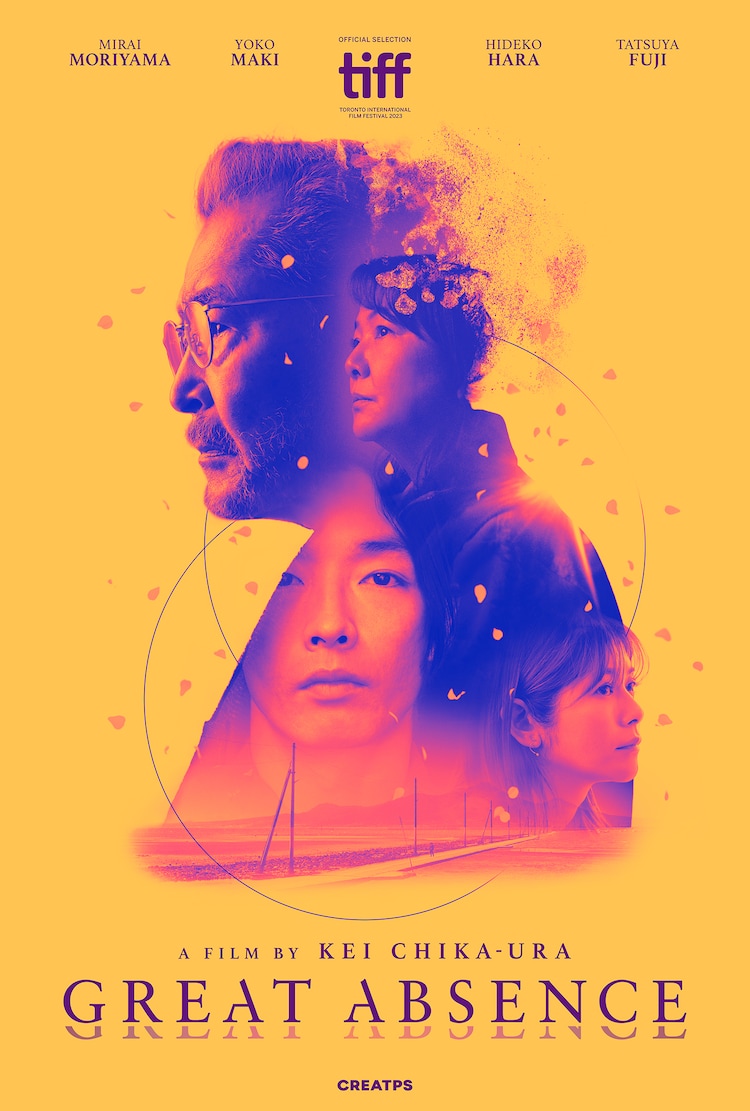
“She’s not here. That’s everything,” is what the hero of Kei Chikaura’s poetic drama A Great Absence (大いなる不在, Oinaru Fuzai) is told when enquiring about the whereabouts of his missing stepmother and in the end is forced to accept it. That’s all there is, she isn’t here. The ways that Naomi (Hideko Hara) is there and at the same time not become central to the narrative in which absence is also of course a deeply felt presence.

That might also describe Takashi’s (Mirai Moriyama) relationship with his estranged father whom he’s barely seen since his parents divorced when he was 12. Yohji (Tatsuya Fuji) was evidently a difficult man, fussy and superior. Every line that comes out of his mouth is delivered as a mini lecture and generally filled with barbed criticism even if that might not really be what he meant to say. That might be why Takashi has stayed out of contact with him, though he has little choice but to respond after being contacted by the police who tell him that Yohji called them claiming he and his wife were being held hostage. Apparently suffering with advanced dementia, Yohji has now been placed in an eldercare facility though no one seems to know what’s happened to Naomi with a vague idea that she had been hospitalised sometime after falling ill and that living alone exacerbated Yohji’s cognitive decline.

Someone later asks Takashi why he came given that with the long years of estrangement no one would have blamed him for saying it was no longer any of his business, but there does seem to be latent desire for some kind of connection albeit one frustrated by awkwardness and the unhealed wounds of the past. Yohji had been a ham radio enthusiast which suggests that he was trying to reach out to people though struggled with communication and only ever found the words in writing as evidenced by the unexpectedly poetic love letters Takashi finds stapled into the diary which once belonged to Naomi but now somehow rests with him. 

Takashi spends much of the rest of the film wanting to return the diary as if he would be abdicating responsibility for it, refusing this particular inheritance along with any curiosity about the man his father is both then and now. In the care home, Yohji believes he is being held prisoner by a foreign power and offers only bizarre and disturbing explanations for what might have happened to Naomi, while attempts to communicate with the sons from her previous marriage are frustrated by longstanding resentment. Takashi’s stepbrother informs them that Yohji refused to contribute to her medical fees claiming he didn’t see why he should though it seems that he is trying to enact some kind of revenge or is seeking compensation for what he feels Yohji took from him. He also blames Yohji for the decline of his mother’s health convinced that the strain of living someone so casually cruel even before the intensification of his dementia eventually caused her to become ill.

He might in a way have a point, though it seems it was absence that also ate away at Naomi as the man who wrote her all those long and profound letters began to slip away, becoming aggressive and irritable. He may not have forgotten her, but also did not quite recognise the woman she was. It may be that it became impossible for her go on living with someone who was no longer there just as Yohji feels the ache of her absence and is mired in the regret and longing of the young man he once was who first let her slip through his fingers. 

This sense of absence may also have crept into Takashi’s own marriage with his wife (Yoko Maki) complaining that he may not have told her what had happened with his father if he had not needed to cancel another family event, nor did he want her to accompany him though eventually she insisted and perhaps succeeds in closing a gap through their shared attempts to unravel the secrets of Yohji and mysteries of the past. The sequences from the play which Takashi is performing that bookend the film, he speaks of a broken king who may not even be a king at all and echoes the sense in which Yohji has finally become absent from himself. At times profound and elegiac, the crisp 35mm photography adds to the sense of ongoing melancholy and irresolvable loss if tempered by an elusive serenity.


Great Absence screened as part of this year’s Toronto Japanese Film Festival. It will also be making its New York Premiere as part of this year’s Japan Cuts on July 18 ahead of its theatrical opening in the US on July 19.

Popran (ポプラン, Shinichiro Ueda, 2022)

“Wieners are stuck to the body, they can’t go flying!” a confused father attempts to convince his toddler son, but as the young boy had said that isn’t quite the case. The hero of Shinichiro Ueda’s Popran (ポプラン) has been, well, to put it bluntly, a bit of a dick to just about everyone in his life but when even his bits seem to have become tired of his schtick it can’t help but provide something of a wakeup call. More surrealist morality drama than scatological comedy, Popran’s heart at least is in the right place as its hero attempts to, literally, piece himself back together to repair his fractured integrity. 

As we first meet 30-ish entrepreneur Tagami (Yoji Minagawa ), he’s being interviewed for a documentary that wants to explore the real lives of well-known people. As might be expected, the opening questions are fawning, pointing out his vast success at such a young age as the developer of app and manga publishing platform but the atmosphere soon changes when they stray into less positive territory. It seems Tagami’s success might have come as a result of betraying his old friend and business partner, while he also abandoned his wife and child to chase success in Tokyo and apparently has become estranged from his parents. His well-meaning PR shuts down the interviewer’s attempts to ask anything remotely challenging, yet it’s obvious that something inside Tagami is dying even as he reads out a cheesy speech he’d written about the importance of following the compass of your heart from a cue card held up by his assistant. 

We can see what kind of man he is or has been when an excited employee approaches him in the corridor about an exciting project but, feigning politeness, he has to ask his assistant who the guy was once he’s gone. At a birthday party for one of their writers, he leers over a woman sitting behind him and offers to introduce her to their editing department when she tells him she’s interested in writing something herself despite his clearly stated policy of not running original material only buying rights to distribute perennially popular series. It’s after taking her to bed with false promises that he discovers his penis is missing. 

More than a symbol of his masculinity, the errant penis is an indictor of his misplaced desires and lack of both moral fibre and impulse control. To achieve success he’s screwed over countless people besides the young woman who seems to have been the last straw for his literally alienated genitalia leaving a trail emotional chaos in his wake. After discovering that he is not the only one to fall victim to the “Popran” phenomenon he is forced to face himself, his moral cowardice, anxieties, and fears, and reckon with his sense of inadequacy and disappointment. Just as in the message he’d delivered to the youngsters watching the documentary, he too needs to take a look at the compass of his heart and realise he’s been reading it wrong chasing down his penis with a butterfly net before realising he knew where it was all along he just needed to go back to where it all started and remember who he really is. 

Then again, there is perhaps something of frustrated masculinity in Tagami’s quest. As his friend point out, he makes all his money exploiting other people’s labour while offering nothing new of his own. In the interview, he’d said he wanted to be a mangaka but felt he wasn’t good enough so decided to become a distributor instead setting up the company with a colleague from the manga cafe where he was working. But they parted ways because his friend wanted to publish original material and with his eye on the bottom line Tagami forced him out. Where his friend is now running a small studio from his apartment and even while not wealthy creatively fulfilled, Tagami has become rich but empty. Obviously that’s not to say there’s no value in the kind of work he does, but he’s begun to appropriate others’ success as his own with no real thought for their well-being. Chasing his dick around is also in its way a desire to regain his creative mojo as symbolised in his re-energised commitment to publishing original material rather than simply raking in royalties from safe and stable classics.  

As is often pointed out to him, his fantastical tale sounds like something out of a manga though Popran is certainly less reflexive than Ueda’s previous efforts telling a story which is much smaller in scale though also in its way heartwarming as the hero is pulled around by the penises of past and present if not future before reaching a moment of emotional maturity that allows him to exercise a more healthy control over his desires knocking his dickish behaviour on the head to wise up and realise being a man’s about treating others with respect and dignity. Some things you can’t just stick back on if they fall off, but you can at least acknowledge that you should have treated them better and resolve to be happy that they have at least found better futures as you might yourself if only you can figure out which compass to follow. 


Popran streams in Germany until 6th June as part of this year’s Nippon Connection.

Original trailer (English subtitles)

Images: Ⓒ ”Popran” Film Partners

Shall We Dance? (Shall we ダンス?, Masayuki Suo, 1996)

If your life has gone pretty well and you’ve more or less achieved conventional success but you’re still somehow unhappy then what is it that you’re supposed to do? Sugiyama (Koji Yakusho), the hero of Masayuki Suo’s charming ballroom dancing dramedy Shall We Dance? (Shall we ダンス?) is beginning to wonder, after all he’s a “serious” man as his wife repeatedly describes him but is it really acceptable for a middle-aged husband and father to chase emotional fulfilment or would he be cheating on the salaryman dream in daring to nourish his soul?

As he later says, Sugiyama has followed a conventional path in life. He has a respectable job as an accountant, married at 28 and had a child at 30. By 40 he was able to buy a family home, but also acknowledges that he sold his soul to the company to do so seeing as with the mortgage hanging over his head he is now fully locked in to the corporate system and couldn’t leave even if he wanted to. Yet he’s not quite like his co-workers, an early scene sees the roles somewhat reversed as he, the boss, declines the invitations of a drunken subordinate to stay out longer after an effectively compulsory after work drinking session to return to his family home at only 9pm but going straight to bed when he gets there. He and his wife Masako (Hideko Hara) share a room but sleep in separate beds presumably so he doesn’t wake her when he gets up early to go to the office making his own breakfast before he leaves. 

“It’s not a matter of like or dislike, it’s work” Sugiyama tells his co-worker as she complains that the more glamorous sales department gets all the best perks and she’s sick of working in accounts, hinting at his inner malaise in his relentlessly corporate life. That’s one reason he’s captivated by the sight of a beautiful yet sad woman gazing out of a window from a building above on his train journey home. When he gets off the train to look for her, he in one sense leaves the salaryman rails breaking with the conventions that he is expected to fulfil in search of something more. Mai (Tamiyo Kusakari), a former ballroom dancer taking a temporary sabbatical from competitive sport teaching at her father’s studio, is just as unhappy as he is but for contrary reasons. She has lost the joy of dance, for her it has become as soulless a job as Sugiyama’s accountancy and she too struggles with the image she has of a dancer and what that means for her in terms of personal fulfilment. 

Yet as Sugiyama explains in his opening voiceover, ballroom dancing is viewed as something of a naff hobby mostly associated with sleazy old men only there for the opportunity of physical contact with women of varying ages. When he spots his co-worker Aoki (Naoto Takenaka) at the dance class it’s embarrassing for both of them, each promising not to say anything to anyone at work, the floor later erupting in laughter when someone finds a picture of Aoki taken at a competition in the newspaper. Developing an interest in the sport, Sugiyama buys a ballroom dancing magazine but interrupted by his daughter quickly hides it as if he had been looking at pornography or some other material he feels to be shameful. 

The irony is that Masako had wished Sugiyama would go out more, realising that he’s selflessly dedicated himself to the salaryman dream in order to provide for their family, but then becomes suspicious and resentful as he leaves her alone to pursue his new hobby which he cannot disclose to her out of embarrassment. She in turn sniffing perfume on his shirts fears he’s having an affair, but is unable to ask him about it directly preferring to hire a private detective (Akira Emoto) instead. Leaving aside that each of them ends up secretly spending money when they’re supposed to be saving for the mortgage, the oppressive social conformity of the salaryman existence is beginning to erode their relationship. Forced into the role of the conventional housewife, Masako too is lonely expected to find fulfilment only in home and family while preparing to re-enter the world of work now her daughter is old enough to care for herself because of the financial burden of the mortgage rather than her own desire to fulfil herself. Sugiyama isn’t having an affair, but still she feels betrayed because he left her behind to chase emotional liberation on his own rather than taking her with him never really noticing her loneliness. 

Yet as Sugiyama is repeatedly told, dancing, unlike the salaryman game, is about more than learning the steps, it’s about feeling the music and finding joy in movement. That’s something Mai has also lost sight of, finally realising that she too was a selfish dancer who’d been dancing alone all along unable to fully trust her partner rediscovering her joy in dance as she coaches not only Sugiyama but his classmates towards their own liberation. Sugiyama remains conflicted because the excessively corporatised society leads him to believe that it’s taboo to devote oneself to anything other than work or in essence to experience joy that is not directly related to productivity, that he should be wholly “salaryman” and nothing else, just his wife should be nothing more than that. It’s this oppressive conformity that undermines their conventional marriage rather than Sugiyama’s transgressive decision to get off the salaryman train, put down his briefcase, and embrace his desire for personal fulfilment. Only through this act of mutual emotional authenticity can they restore familial harmony. A minor meditation on the emptiness of the increasingly elusive salaryman dream in the economically stagnant ’90s, Suo’s charming drama insists on joy as a basic human need in a society which often trivialises personal happiness.


Shall We Dance? screens at the BFI on 21/30 December as part of BFI Japan.

Original trailer (no subtitles)

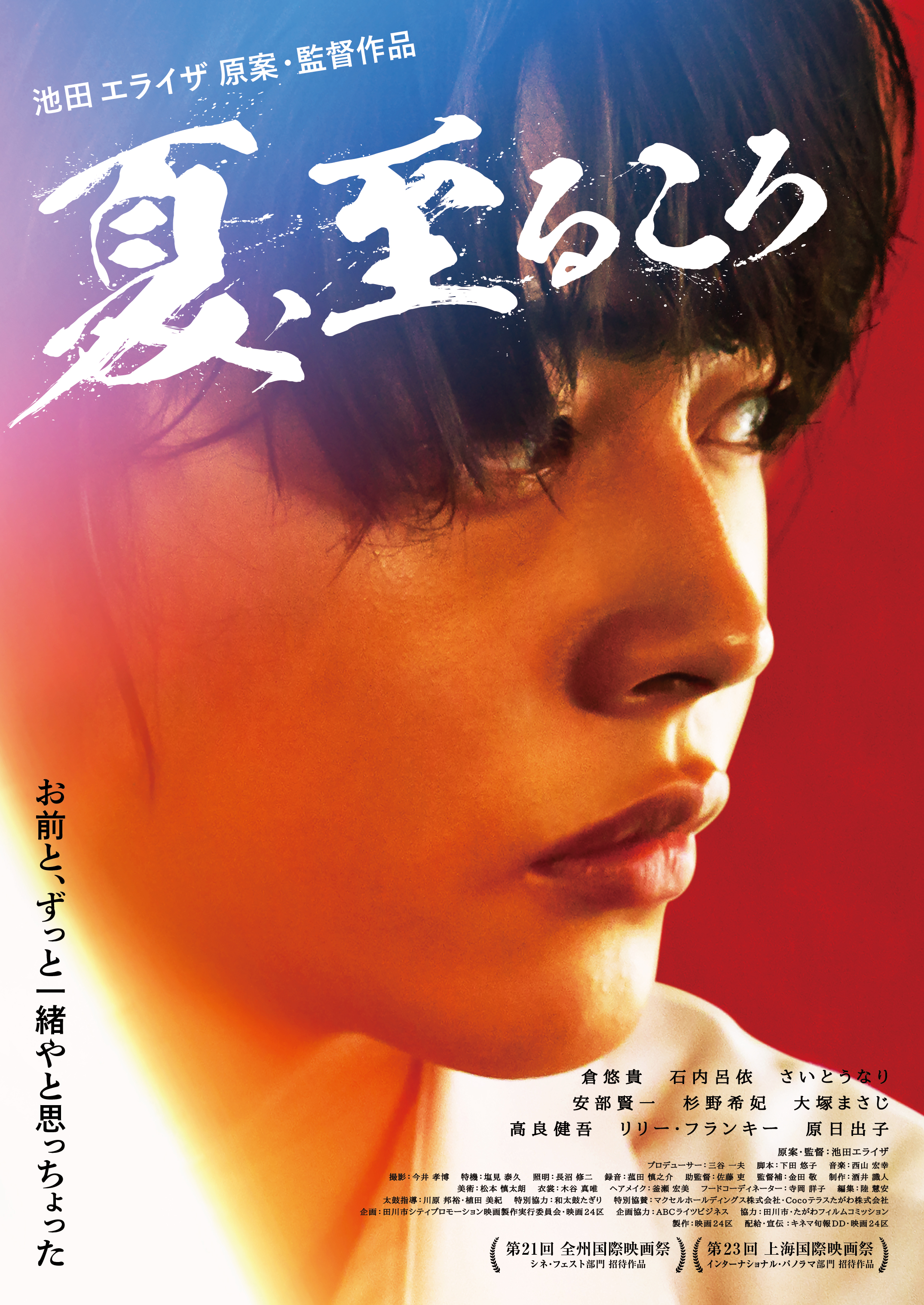
Town Without Sea (夏、至るころ, Elaiza Ikeda, 2020)

“Happiness is something you don’t notice even if it’s right next to you” the hero of actress Elaiza Ikeda’s directorial debut Town Without Sea (夏、至るころ, Natsu, Itaru Koro) is told by a strangely perceptive small child. The nature of happiness is something that seems to be bothering him while he contends with adolescent anxiety little knowing what to do with the further course of his life while fearful in the knowledge that his relationship with his childhood best friend must necessarily change. 

Approaching the final year of high school, taiko-enthusiast Sho (Yuki Kura) has no dreams or aspirations and has been avoiding thinking about what to do after graduation. Pressed by his teacher, all he can offer is that he’d like to become “air”, which is in its own way slightly alarming though it hints at his sense of emptiness and despair. His childhood best friend, Taiga (Roi Ishiuchi), meanwhile has a clearly defined, extremely sensible life plan which is why he’s abruptly giving up taiko so he can attend cram school and get into uni with the aim of becoming a civil servant. As we discover, Sho has been something of a follower making most of his existing decisions based on whatever Taiga was going to do, but he can’t merely follow him this time and will have to come to some sort of decision about his individual future. 

“I can’t walk alone. I don’t know what to do” he confesses to a surprisingly sympathetic teacher (Kengo Kora), while as it transpires Taiga is having similar thoughts. The two boys are much more co-dependent that they assumed, but that very co-dependency begins to drive them apart when coupled with their adolescent anxiety. Taiga fears that he is simply too “boring”, giving up taiko because his carefully honed technique cannot measure up to Sho’s anarchic power. According to him he took up taiko after spotting Sho playing at a festival thinking he looked so “free and cool”, yet Sho equally thinks he’s not as a good a drummer and cannot match Taiga’s meticulous training. Taiga is shifting away from their friendship because he secretly feels inferior and wants to leave before being around Sho makes him feels miserable, a logic Sho is not fully equipped to understand. 

“Why does everybody quit?” he asks in exasperation, meeting a strange young woman who like them wants to pull away from something before she ends up hating both it and herself. Likened by Taiga to the kind of manic pixie dream girl who frequently turns up during the last summer of high school in manga, Miyako (Nari Saito) does not quite come between the two boys in the expected way but does bring out their contradictory qualities before abruptly disappearing from the narrative, ahead of the pair in suddenly deciding that she’ll figure something out on her own. Having decided all he wants is a future of ordinary happiness, Taiga can’t help resenting his friend feeling that whatever decision he makes, getting a job or going to uni, he’ll wind up happy whereas he presumably will not with his unexciting yet sensible life as a civil servant. 

There is an undeniably homoerotic quality to the boys’ friendship, their brief falling out almost like a lovers’ tiff in its melancholy intensity. Sho necessarily fears the loss of his friend, perhaps instinctively knowing he’s chosen a path he likely cannot follow and feeling rejected because of it. He obsessively meditates on the meaning of “happiness” unable to settle on a means of achieving it while unsure of what exactly it means. He asks his friends and family but discovers that happiness means different things to different people, may change over time or not quite be what you first thought it was, or be as simple as a sunny day in your hometown. He does however begin to accept that even if separated, his relationship with Taiga will not necessarily change they will still be “together” if more in spirit than body. Recalling something Taiga had said about the sea which he has never seen, he makes his choice defiant in its independence. Hailing from Fukuoka herself, Elaiza Ikeda’s remarkably assured directorial debut crafts a warm, empathetic coming-of-age tale centring on the intense friendship between two men but discovering a sense of wonder and contentment in the everyday as its conflicted hero finds a sense of rootedness in the strength of his relationships that grants him the freedom to roam. 


Town Without Sea streamed as part of this year’s Japan Cuts.

Original trailer (English subtitles)

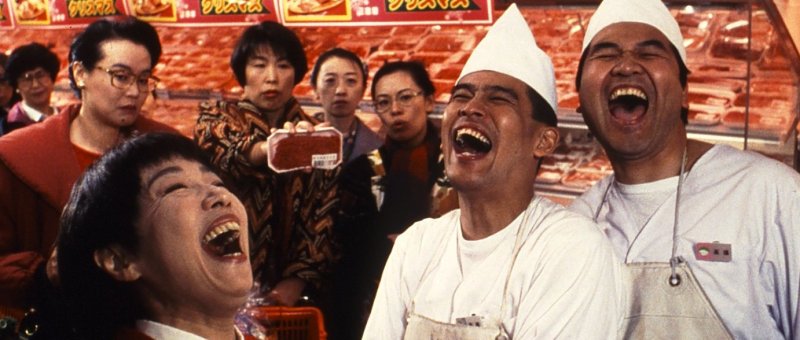
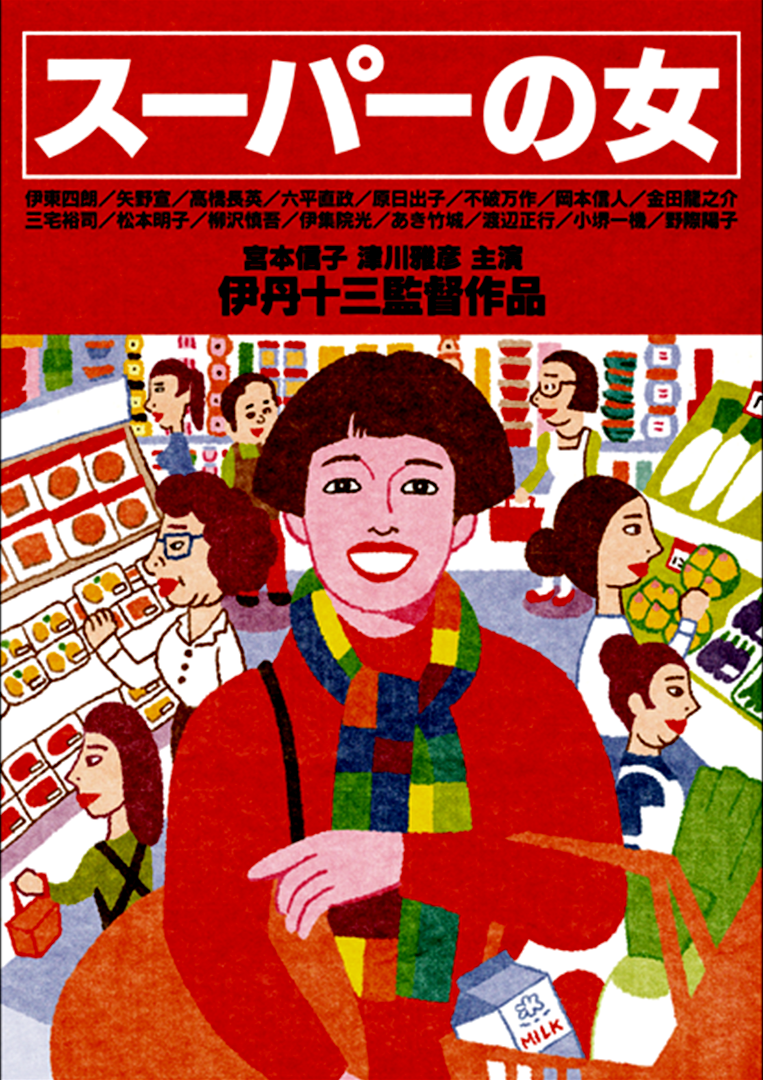
Supermarket Woman (スーパーの女, Juzo Itami, 1996)

By 1996 Japan had entered an extended period of economic stagnation which signalled the end of post-war aspiration but for many at least the false promises of the Bubble era proved hard to dispel. In what would be his penultimate film, Supermarket Woman (スーパーの女, Supa no Onna), Juzo Itami turns his attentions to the insular world of the nation’s family-held, independent supermarkets to ask a few questions about integrity in business which cut straight to the heart of what kind of society post-Bubble Japan intended to be given yet another opportunity to make itself anew. 

As the opening text crawl explains, this is a story not about giant supermarket chains but your friendly indie local. “Honest Mart” is a family-owned, mid-range supermarket in a declining industrial area nominally run by absentee CEO Goro (Masahiko Tsugawa) who was bequeathed the place by his father but is a melancholy drunkard delegating responsibility to his manager. The store has a huge problem in that a rival has recently re-opened under the new name “Discount Demon” and seems primed to steal all their business. On a stakeout of the new place, Goro runs into a childhood friend, Hanako (Nobuko Miyamoto), who is now a widow returning to the area. With her lifelong experience as a veteran housewife, Hanako knows a few things about supermarkets and she’s not very impressed with Discount Demon, doing a few quick calculations to realise the supposed discounts aren’t as enticing as they seem while common gimmicks like the all pervasive red glow that makes their meat look fresher than it really is only irritate her. Goro asks her for a “professional” opinion on Honest Mart without telling her who he is, only to discover she’s even less impressed with them, certain that his place is on the way out thanks to its dated decor, uninviting atmosphere, and low quality produce. 

The irony is Honest Mart is not much better than Discount Demon, both stores are subject to the same industry standards in which a certain degree of obfuscation is permissible. “In business honesty doesn’t pay” Hanako is told by the onsite butcher after she questions his tendency to mix meats to pass them off as more expensive cuts, while she later discovers that the store engages in the practice of repackaging unsold meat and fish with new expiration dates and is not very particular about its suppliers when it comes to buying in ready-made products. Brought on board to save the store, Hanako breezes in with a new mission to win the hearts and minds of her customers, and she can’t do that if she can’t have confidence in her stock. In any case, her the customer is always right policy quickly brings her into conflict with the store manager, an older more conservative man who actively resists innovation and resents having his authority undercut by an interloping woman. 

Meanwhile, we can also see that customer attitudes have changed. There’s a problem with availability of trolleys because, perhaps unusually for Japan, customers are just abandoning them willy-nilly in the carpark instead of retuning them to the trolley point like responsible shoppers. One man is even for some reason intent on stealing a large number of shopping baskets, caught by Hanako loading them into his car. Everybody wants cheap, which is understandable especially given the economic situation, and they might even be a little underhanded when it comes to getting it, but they also expect a reasonable level of quality and to be able to trust that the food they’re buying is safe to feed their families. Hanako is most alarmed that the ladies who work in the kitchen area, who are obviously wives and mothers themselves, do not shop at Honest Mart because they know what goes on at the store and they don’t trust it. 

“A housewife knows” Hanako is fond is saying. Her revolution is in essence a vindication of “the housewife”, perhaps the most maligned and dismissed figure of the mid-90s society, putting to good use all of her veteran experience both of running a home and of working a series of part-time jobs including those in supermarkets which she claims to love. Approaching the problem from the point of view of a consumer, she attempts to help Goro achieve his dream of making Honest Mart number one in Japan not through making it the most financially successful but the most loved by listening to women like her in the form of a focus group of local aunties some of whom had previously been serial complainers. 

Then again, some of her decisions are in a sense contradictory as she attempts to streamline the business along classically capitalistic lines in suggesting that the store doesn’t really need its overqualified butcher and fishmonger because the part-timers could be trained to do a “good enough” job. “Good enough” is in a sense her business philosophy, only not in the sense that somewhere like Discount Demon which falsely advertises regular steak as discount Wagyu means it, rather that her customers are after an everyday level of produce and so it’s not surprising that premium meats don’t sell. She wants to get rid of the butcher, who turns out to be on the fiddle, and the melancholy fishmonger disappointed no one wants his top quality seafood, because their “artistic temperament” is disruptive to the flow of the store and their presence is perhaps emblematic of the bloated, pretentious management style which is holding it back. 

Positioning the “housewife’s choice” as the ultimate seal of approval, Supermarket Woman advocates for a return to wholesome, small-town values, prioritising a sense of integrity as Honest Mart projects itself as a corporate force their customers can trust, perhaps anticipating a trend in dedicating itself to providing good quality fresh produce at fair prices in direct opposition to Discount Demon and its underhanded trickery. “Honest Mart keeps its word” Goro assures, pledging to honour a mistaken ad which promised eggs at prices so good it caused minor riot. In the end, it’s all about trust and integrity. If you don’t have that, you don’t have anything and the housewives of post-Bubble Japan will it seems vote with their feet. 


Currently available to stream in the US via Criterion Channel.

Original trailer (no subtitles)

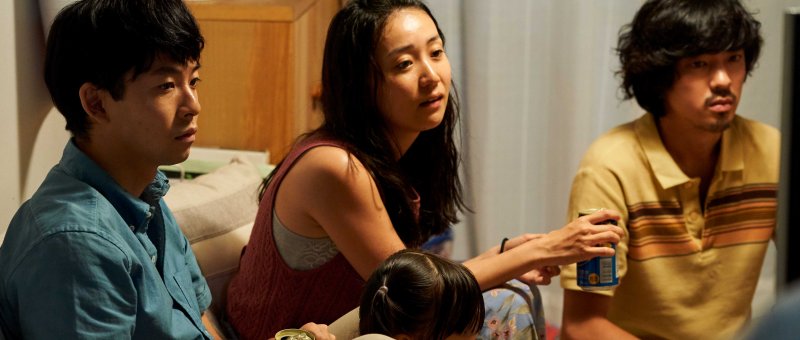
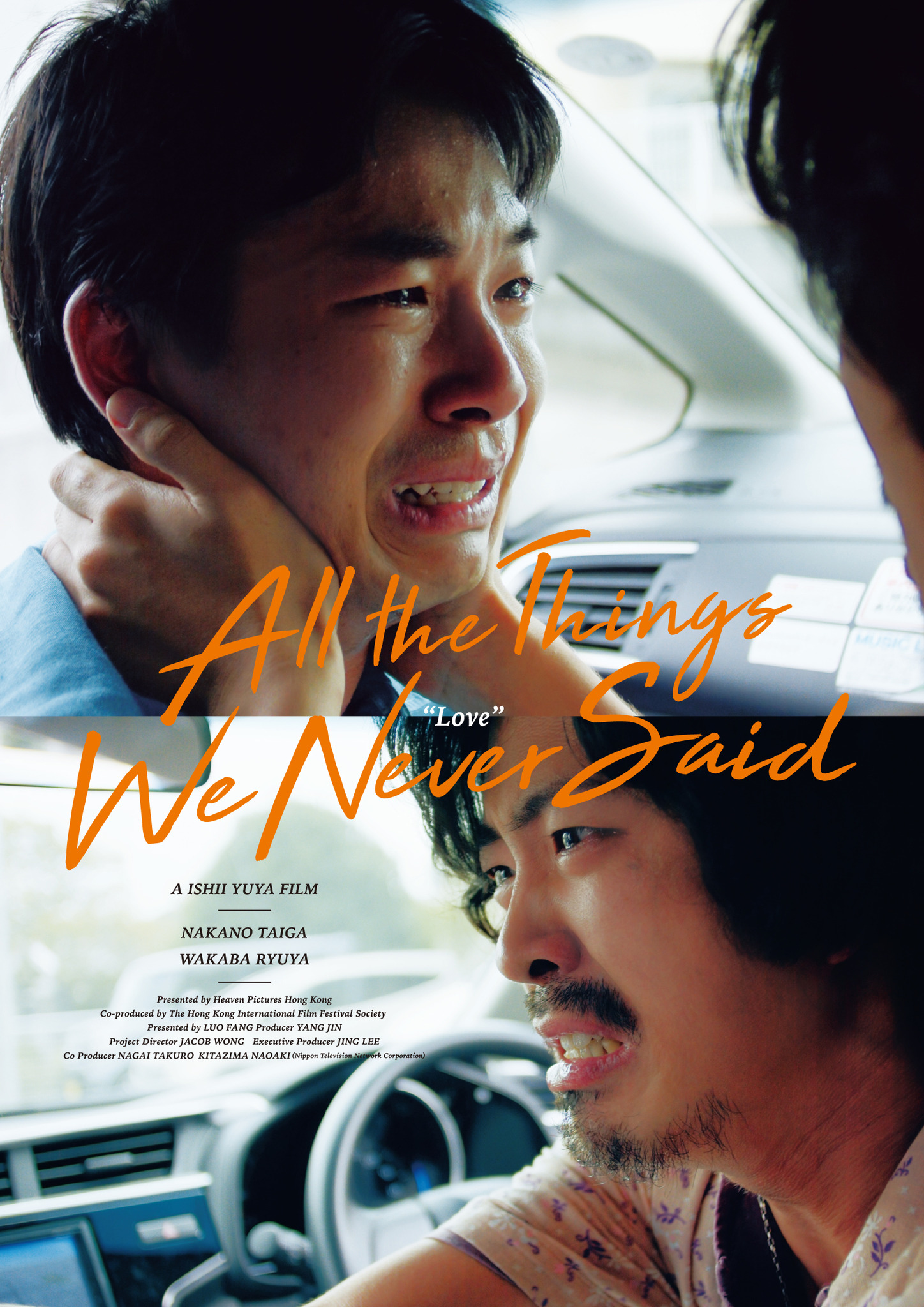
All the Things We Never Said (生きちゃった, Yuya Ishii, 2020)

The broken dreams of youth and middle-aged malaise push a trio of former high school friends towards existential crisis in Yuya Ishii’s melancholy exploration of emotional distance,  All the Things We Never Said (生きちゃった, Ikichatta). Commissioned as part of the B2B A Love Supreme project created by the Hong Kong International Film Festival Society and China’s Heaven Pictures which tasked six Asian filmmakers with the task of proving that high quality films can still be made on a micro-budget, Ishii’s latest finds him in the same register as his poetic take on urban angst The Tokyo Night Sky is Always the Densest Shade of Blue as his frustrated protagonists each pay a heavy price for the seeming inability to communicate their true feelings honestly. 

Opening with an idyllic scene of three high school friends enjoying a breezy summer day, Ishii cuts abruptly to the present, interrupting the wistful love song playing in the background mid-flow. Now in his 30s, Atsuhisa (Taiga Nakano) is a married father whose only dream is to be able to afford a nice house with a garden for his wife and daughter, maybe even get a dog. To this end, he’s been taking lessons in English and Mandarin with high school friend Takeda (Ryuya Wakaba) with the intention of one day starting their own business though they once dreamed of becoming musicians. All of that comes to nothing, however, when he begins to feel dizzy at work one day and returns home early to find his wife, Natsumi (Yuko Oshima), with another man. Unable to offer any real sound of protest, he accidentally smashes a panel on the glass door to their bedroom, apologises for interrupting, and leaves in a daze to pick up his young daughter Suzu (Yuno Ota) from school. 

Natsumi’s infidelity evidently comes as a complete surprise, though it seems obvious that their marriage is far from perfect. “My life is just stress and getting fatter” Natsumi openly complains to Takeda, her sense of inertia and impossibility seemingly more than simple dissatisfaction with her life as an ordinary housewife. For his part, Atsuhisa is as emotionally distant as they come, a near silent zombie dead eyed and permanently absent from himself. He is continually preoccupied by the absence of his late grandfather, now nothing more than an increasingly anonymous photograph on an altar as if he never existed at all. Atsuhisa asks himself if his grandfather really lived as a way of avoiding the same question in himself as he sleepwalks through a conventional life that proves infinitely unsatisfying while he chases elusive dreams of comfort and security. 

Natsumi’s revelation that she’s been completely miserable for the entirety of their married life because she’s never felt loved likewise shocks him, but if her intent was to provoke emotional honesty in her husband it fails. She pushes him to fight, to offer some kind of resistance but he simply accepts her decision to end the marriage. The sense of impotence is palpable, Natsumi turning off the TV set because she can hardly do anything about the reactors at Fukushima Daiichi so what’s the point in knowing about them. “How else can we live?” someone else later adds, other than to simply decide not to think about the things you cannot change. Atsuhisa tells himself that it’s meaningless anyway, it will all “fade away” in the end so there’s no sense in trying to resist. 

Yet he continues to struggle, wondering in a sense if he could perhaps claim agency over his life if only he could learn to communicate his true feelings honestly. He asks himself if it’s because he’s Japanese that he can’t, if his culture actively prevents him from speaking freely when it comes to desire. Of course, everyone else is Japanese too which perhaps makes his question moot, but those around him do indeed seem to suffer from the same sense of wilful repression, even Natsumi tragically withholding her real feelings and ultimately working against herself out of a mistaken sense of guilt. “You don’t love me, that’s why you can be honest” an ex of Atsuhisa’s points out during an emotional farewell, cutting to the quick in suggesting that his problem is that he fears the risks of emotional intimacy. 

Two boys and one girl is always going to be a story tinged with a degree of sadness no matter how it turns out, but on that idyllic summer day no one could ever have thought it would end like this. Takeda, manfully keeping his true desires under wraps perhaps in love with Natsumi himself but too diffident to have said anything or overly mindful of his friends’ feelings, does his best to be the emotional buffer supporting both halves of a couple rapidly spiralling away from themselves but is ultimately unable to prevent them from making decisions they may regret even as they are are made. “My love wasn’t good enough” Atsuhisa laments in his inability to make it felt, finding proof of life only in absence through the memory of those shining summer days. A little rough and ready around the edges but filled with a raw poetry Ishii’s melancholy drama puts its hero through the emotional wringer but in the end perhaps sets him free to speak his heart even if others are too ashamed to look.


All the Things We Never Said streamed as part of this year’s San Diego Asian Film Festival.

Original trailer (no subtitles)

Not Quite Dead Yet (一度死んでみた, Shinji Hamasaki, 2020)

©2020 Shochiku Co., Ltd. Fuji Television Network, Inc.

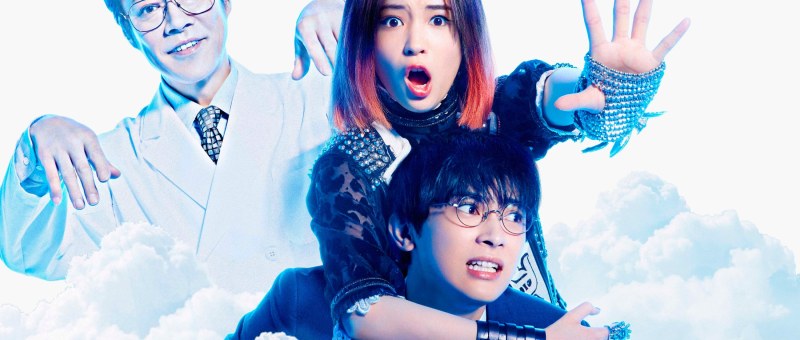
“What’s important is purpose, to live for something. Without it you’re as good as dead” according to the hero of madcap existentialist farce Not Quite Dead Yet (一度死んでみた, Ichido Shinde Mita). The feature debut from ad director Shinji Hamasaki pits a rebellious student against her overly literal, authoritarian dad as the pair begin to come to a kind mutual understanding only once he “dies” after being tricked into taking an experimental drug in order to unmask conspiracy within his own organisation. 

College student Nanase (Suzu Hirose) intensely resents her father (Shinichi Tsutsumi), the CEO of Nobata Pharmaceuticals which he has long been pressuring her to join. She’s currently the lead singer in death metal band Soulzz only according to a record scout at one of their shows their problem is that they’re all “zz” and no soul. Meanwhile, Nobata has assigned an underling, Matsuoka (Ryo Yoshizawa), to shadow her partly because Matsuoka too has very little presence and is in fact nicknamed “ghost” for his essential invisibility. The trouble starts with the escalation of a corporate feud as Nobata’s old buddy Tanabe (Kyusaku Shimada) starts manoeuvring to get his hands on the company’s research into an anti-ageing serum codenamed “Romeo”, planting a mole inside the organisation. As a consequence of his research another of the scientists nicknamed “Gramps” has stumbled on another drug which renders someone temporarily “dead” for a period of two days, naming it “Juliet”. Watabe (Yukiyoshi Ozawa), a consultant Nobata has brought in to streamline the business, convinces him to take the experimental drug in order to flush out the mole while secretly working with Tanabe to take over the company by forcing through a merger while Nobata is out of action. 

A typical socially awkward scientist, Nobata believes that life is about experiment and observation, a belief system which has thoroughly irritated his daughter who still lives at home but has divided the territory in half with clearly marked red tape. Nanase’s animosity towards her father apparently stems back to the death of her late mother Yuriko (Tae Kimura), angry with him that he never left his desk and didn’t make it to the hospital in time to see her before she passed away. “Life’s not a lab experiment” she sings, recalling her childhood during which her overly literal father took away life’s magic by patiently over explaining fairytales, scoffing that Prince Charming probably didn’t revive Sleeping Beauty with a kiss but a transfer of static electricity, while continuing to order her around in fatherly fashion now she’s all grown up. Perhaps still stuck in a petulant adolescence she started the band to vent her frustrations with the world in the form of a death metal “mass”, but she’s growing up. Her bandmates are getting jobs or getting married, she’s still stuck with no real clue about what it is she actually wants to do with her life except that she doesn’t want anything to do with Nobuta Pharmaceuticals.  

Once her father “dies”, however, she begins to gain a new appreciation for his life philosophy able to see but not hear his “ghost” while his body lies on a table in the office cafeteria. Nobata went into pharmaceuticals to help people, but has been led on a dark and vacuous path pursuing anti-ageing technology which is in itself a rejection of change and transience. Ending all her sentences with the word “death”, that’s not something Nanase can get behind. She believes in growing old gracefully, that they make drugs not to cheat death but to be able to spend longer with those they love. As her father had advised Matsuoka to do, she begins to find her purpose, rediscovers her soul, and figures out what it is she’s supposed to do with her life.

Matsuoka, however, seems to be permanently “invisible” despite the tentative romance that develops as he and Nanase attempt to subvert the conspiracy to stop them doing her dad in for good, brushing up against the venal Tanabe who seems set to muster all his corporate advantages against them partly because of an old grudge against Nobata. Of course, you have to wonder why the conspirators didn’t just poison him rather than having him go Juliet and then entering a race against time to cremate him before he wakes up, but as Nobata reminds us there are many things which science cannot explain. A cheerfully silly Christmas tale of rediscovering what it means to be “alive” in the presence of death, Not Quite Dead Yet is zany seasonal fun but with plenty of soul as its heroes learn to shake off cynical corporatism for a healthy respect of the values of transience.


Not Quite Dead Yet screened as part of Camera Japan 2020.

Original trailer (English subtitles)

Images: ©2020 Shochiku Co., Ltd. Fuji Television Network, Inc.

Lying to Mom (鈴木家の嘘, Katsumi Nojiri, 2018)

Lying to Mom posterLearning to live with loss is difficult for any family, but when the loss was caused by suicide the pain is even more acute as those left behind try to understand why it is their loved one had to die and if there was anything else they could have done to prevent it. The family at the centre of Lying to Mom (鈴木家の嘘, Suzukike no Uso) choose, initially at least, to avoid dealing with it at all. Each taking their individual paths through grief, they keep the past painfully alive by pretending that oldest son Koichi (Ryo Kase) is only temporarily absent and will eventually return.

Koichi, who has been a hikikomori for many years, takes one last look at the peaceful suburban scene outside his window and hangs himself from a storage closet in his room. His mother Yuko (Hideko Hara), out at the time, only discovers the body when trying to get him to come down to lunch. Panicked, she injures herself and ends up in a coma in hospital while nothing could be done for Koichi. When she wakes up some time later, she’s lost all her memories of the incident and the family don’t have the heart to tell her that her son is gone so they pretend he went to work for his uncle in Argentina.

This is of course very comforting to Yuko who now believes that as a result of her illness Koichi has finally been able to leave his room for a more productive life, but it places a strain on the other family members – father Yukio (Ittoku Kishibe) and daughter Fumi (Mai Kiryu), who remain conflicted about keeping up the pretence while dealing with their own grief in secret. Fumi, whose idea it was to lie in the first place, types out beautiful letters supposedly from Koichi to be handwritten in his handwriting by an associate in Argentina which detail his new life full of freedom and promise overseas.

Meanwhile, Yukio ponders on his relationship with his son with whom he admits he never quite bonded. He sets about trying to find a mysterious woman named on Koichi’s life insurance policy less for practical reasons than to ascertain some sort of evidence that his son lived, even if he lived the last years of his life alone in a room. The reasons for Koichi’s isolation are never exactly explained with Yuko blaming high school bullying and the stagnant economy, but it is clear that he never managed to find himself in Japan and perhaps if he really had gone to Argentina things might have been different.

Wracked with guilt, Fumi finds herself trying out a support group for relatives of those who died by suicide but struggles to put her own thoughts in order. Though people try their best, insensitivity reigns when they try to offer words of condolence. Only love can save people, Fumi’s colleague smugly tells her with a random story about coaxing a shy high school student out their room, little realising he’s tacitly accusing her of not trying hard enough to save her brother. People can’t be saved, Fumi retorts, and she might well have a point. Even the leader of the support group shows himself up when he considers banning a grief-stricken woman with a loud personality because her problems are “smaller” seeing as she’s wealthy. As another attendee tells him, people grieve in different ways and having money or not is unlikely to affect the degree of your emotional pain even if it might in some sense reduce the burden. Besides, his assumptions about her are mostly wrong because he’s not been paying attention to the things that really matter only to his own surface level prejudices.

Despite the prevalence of suicide, the Suzukis still find themselves embarrassed by Koichi’s passing. They tell people it was an illness or avoid mentioning it all. Meanwhile they keep the secret from Yuko and avoid talking about it amongst themselves until finally forced to deal with all of their anger, guilt, pain and confusion. A comforting lie may serve its purpose, but only an emotional reckoning can clear the air. There may be no real answer to why Koichi did what he did, but the Suzukis will have to make their peace with it, finding fresh hope in the process as they begin to repair their emotional wounds together as a family.


Lying to Mom was screened as part of the 2019 Udine Far East Film Festival. It will also be screened at the 2019 Nippon Connection Film Festival on 30th May at 7.30pm.

International trailer (English subtitles)