Maru (まる, Naoko Ogigami, 2024)

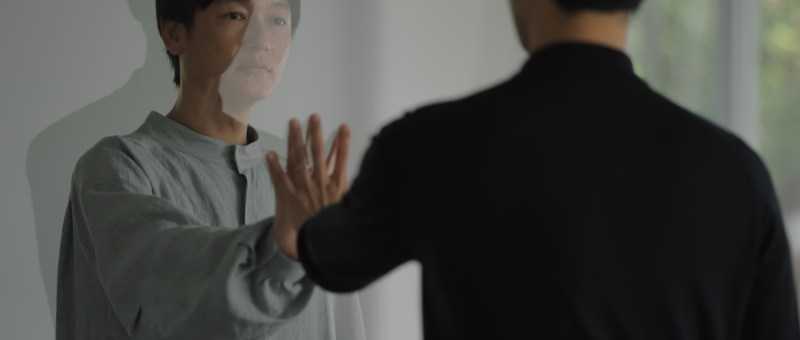
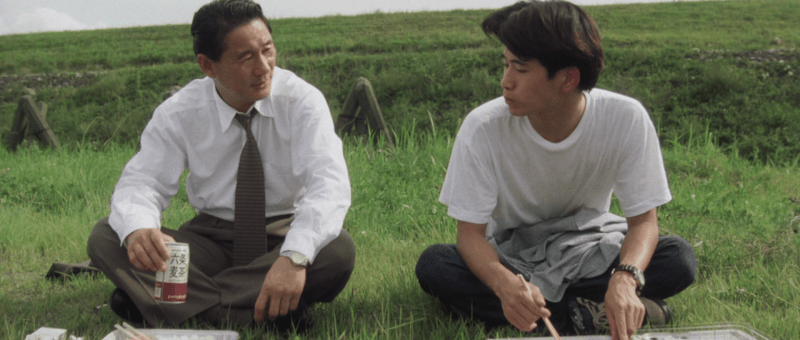
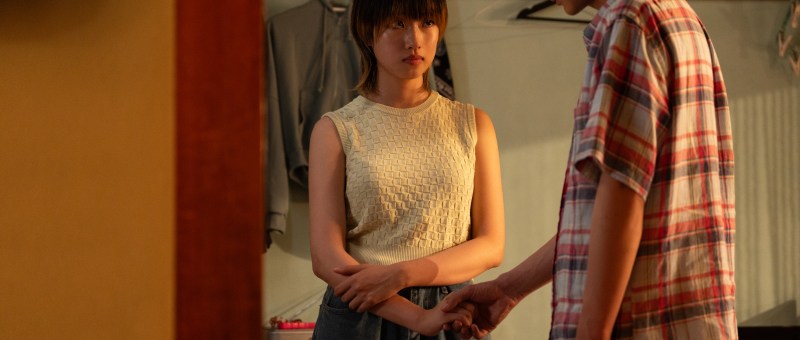
Taken to task by a coworker (Riho Yoshioka) for allowing himself to be exploited as an assistant to an internationally famous artist who views them as little more than tools and takes all the credit for their work, Sawada (Tsuyoshi Domoto) asks if she knows who built Horyu Temple. He has to supply the answer himself, Prince Shotoku. But of course, he didn’t. It wasn’t  as If he drew up the plans or cut the wood with his own hands. 1300 carpenters built it, but no one thinks about them. Only about Prince Shotoku, because he commissioned the work and paid for it. Sawada doesn’t think what he’s doing is all that different, and that times haven’t really changed all that much. Not many people get to make a living doing what they love, so perhaps that’s enough for him. 

But his colleague asks if he sees himself more as a worker than an artist, as if she were unintentionally making a value judgement on the nature of art. The line between artist and artisan maybe so thin as to not exist, but why is it that we think of art which is perceived to have a practical application differently from that which we assume is intended only as a means of self-expression? “What about your own art?” she asks Sawada, but he doesn’t really have a notion of it because he’s been so focussed on earning a living as part of a wider capitalist superstructure in which art too is a commodity. Akimoto (Kotaro Yoshida) is basically running an art sweatshop mass-producing pieces for an international market and operating it like a brand in which everything is released under his own name. When Sawada falls off his bike and breaks his dominant arm, Akimoto simply fires him.

But then, things begin to get strange. Sawada draws some circles with his left hand and includes them with a few things he plans to sell to a second-hand shop where they’re picked up by a strange man who describes himself as a “magician who can’t do magic” and offers him fantastic amounts of money for his work even though all he did was draw a circle. Sawada discovers what he drew is called an “enso” and represents “serene emptiness”, but at the same time others seem to project whatever they want to see in the hole inside while Sawada himself is uncertain what should be there. The magician tells him that his follow-up work is no good because his enso are full of desire in his newfound lust for fame and riches, but at the same time he and his art have also become a commodity and like Akimoto he’s locked into producing more of what people want rather than expressing himself or finding artistic fulfilment. 

His colleague returns to attack him again. Now she criticises him for exploiting art to make money. “Art that’s expensive and just for a few wealthy people isn’t real art,” she says. She sticks to her message that the labour of those like her is being exploited and the world is set up for a few wealthy elites. Their chant of “we want sushi too” might seem flippant, but it represents the world that they’re locked out of. Sawada’s incredibly intense, struggling mangaka neighbour is obsessed with getting sushi too, though there’s plenty of it on the buffet at Sawada’s show which Sawada eyes hungrily. Eventually he’s reduced to grabbing some to eat on his own in a stairwell, signalling his liminal presence within this space. He’s the artist and it’s his show, but he isn’t really part of this world and no one’s really interested in him except when he’s giving mystical quotes as part of his marketing brand. 

The conclusion that he comes to that his art at least should exist for art’s sake. That all he ever wanted to do was paint as a means of being true to himself, only that simple desire has got lost amid the complications of modern life. It’s very hard to draw circles of serenity when you’re living in a rundown apartment block with a worrying subsidence problem and your neighbour screams all night in despair before punching a hole in your wall which you’ll probably have to pay to have fixed. Nevertheless, through Ogigami’s elliptical tale, Sawada does perhaps begin to find a path back to his own art or at least what art means to him which is after all what’s in the middle circle even if all anyone looks at is the edges. 


Maru screened as part of this year’s Camera Japan.

Trailer (no subtitles)

The Man Who Failed to Die (死に損なった男, Seiji Tanaka, 2025)

Feeling hopeless in his professional life and surrounded by a city of frustrated, angry people, comedy writer Ippei (Mizukawa Katamari) decides to end it all by throwing himself under the evening train, but as fate would have it, services are interrupted because of an incident at the previous station. Reconsidering his decision, he refunds his ticket and goes back to his life, but he soon finds himself haunted, in literal figural senses, by the other person who died and, in some senses, ended up saving his life.

Like his earlier film Melancholic, Seiji Tanaka’s The Man Who Failed to Die (死に損なった男, Shini sokonatta otoko) is partly about the things we don’t see which in this case is that many people are struggling and have fallen into despair believing they have no one and nowhere to turn. Before he decides to die, Ippei is knocked over by a cyclist who curses at him for being in his way before riding on, while a woman out running has no option but to jump over him and then carries on her way. Later, he bumps into a man at the station who becomes angry and aggressive, ironically telling him that he should “fuck off and die”. The implication is that in this city everyone is so busy rushing about and overworked that it’s left them frazzled and impatient, overly focussed on the demands placed on them and unable to notice or reach out to others. 

It’s another minor irony that Ippei works in comedy which is supposed to entertain people, cheer them up, and relieve their stress, but it’s actually very hard work and incredibly competitive. When he returns after his failed attempt to die, he’s cornered by his manager and a comedian who is annoyed that she hasn’t been given as many lines as the men and feels she’s being discriminated against on the grounds of her gender. Ippei tries to explain that she’s got the punchlines and there are fewer of them because the comedic rhythm, but it’s something that’s difficult to explain without performing the piece in front of an audience. He’s also been dumped by one of the groups he works with because they’ve chosen to go with a bigger producer who has better TV connections. The duo he’s working with now are struggling with some material that’s not really hitting home while preparing for a competition that’s only a couple of weeks away. Ippei suggests completely reworking the routine, but is obviously difficult for everyone and not least himself who’s going to have to come up with a killer idea in record time. 

Which is all to say he’s under a lot of stress, and if he did just hallucinate the ghost of the man who died in place of him, Tomohiro (Bokuzo Masana), that would be understandable. Tomohiro has unfinished business, and thinks that Ippei should take care of it for him seeing as he technically saved his life, but what he wants him to do is kill the abusive ex who’s started stalking his daughter again now the restraining order’s expired. The film sort of suggests that Wakamatsu (Yutaka Kyan) became violent because of these same stresses after losing his businesses during the pandemic, but nevertheless he’s a frightening and controlling presence while Aya (Erika Karata) is quite clearly terrified of him. Once again, when Ippei interrupts Wakamatsu in the street trying to force his way into Tomohiro’s house, another passerby picks up his dog and walks on without stopping to check if everything’s alright. Perhaps it’s fair enough that they didn’t want to get involved in a dangerous situation, but to speaks to the ongoing indifference of society in which few are willing step in and help women like Aya and men like Wakamatsu are allowed to go on bullying and tormenting those around them.

Getting involved in Tomohiro’s quest does however help Ippei to get a handle on his life and an acceptance that having failed to die he’s still here and has a chance to start again. He begins to realise that the reason he wanted to die was that although he had achieved his dreams of working in comedy, it all seemed quite meaningless and he’d lost sight of what took him there in the first place. Rather than contribute to the angry society around him, he resolves to be happy for other people’s successes and understand that even if someone appears to be successful it doesn’t necessarily mean they aren’t struggling or in need of help too. Filled with a gentle absurdity and good humour, the film is despite its darker themes an argument for a little more compassion and solidarity in the face of the constant pressure of a fast-paced society.


The Man Who Failed to Die screened as part of this year’s Camera Japan.

Trailer (no subtitles)

Good Luck (グッドラック, Shin Adachi, 2025)

Taro’s (Hiroki Sano) problem as far as he sees it, is that he lacks self-confidence and is unable to understand why other might like him, though he fears few do. That’s especially true of his girlfriend/financial backer Yuki (Saki Kato) about whom he makes a short documentary because he thought it would be good to make a film about the person who’s most important to him. But Yuki fires back that the person who’s most important to him is himself, so he should turn the camera around, but that’s exactly what he doesn’t want to do even if the film is really about himself anyway. 

To that extent the film backfires in that, when he’s unexpectedly invited to a festival in Beppu and and convinced by Yuki to go because she’s irritated by just how little effort he seems to put in, all anyone can talk about is Yuki who they say must love him very much or at any rate has a lot of patience and understanding. This is doubly true of the lady running the Bluebird Theatre who says out loud live during the Q&A that his film was boring, and she only chose it because of the contrast between how mediocre the film was and Yuki’s force of personality. She suggests that Taro doesn’t know what sort of films he wants to make, or even why he’s making them in the first place, and she’s right.

Awkwardly, this sense of confusion seems bound up with his relationship with Yuki which is unbalanced in his mind because she asked him out rather than the other way round. As he tells Miki (Hana Amano), an extremely extroverted young woman with an amazing laugh that he meets on his travels, his biggest regret in life is not being able to tell he girl he liked that he liked her in high school. This indecision and lack of confidence have left him directionless in his film career and uncertain in his relationships while it seems clear Yuki is not really his muse despite what others might say about her star quality if only by virtue of how sorry they feel for her for having to put up with Taro.

But then again, he’s basically swept away Miki too who hijacks his last couple of days touring the saunas around the hot springs resort. She explains that she likes to travel alone because she difficulties interacting with other people, though she gets along much better with strangers which is why she clicks so quickly with Taro even if he’s only hanging out with her by virtue of being too polite/spineless to decline her invitations. The pair end up echoing Before Sunrise in their walking tour of the natural attractions of the area, while Miki tells him that her biggest regret in life is that she hasn’t achieved anything that society values even if there are things that she’s good at and fears that she won’t be able to do the things that she wants to do before she dies. 

Truth be told, Taro doesn’t really do much for Miki or ask any real followup questions while simultaneously beginning to fantasise about her as recounted through an incrediblely meta sequence taking place in his treehouse room. Nevertheless, he begins to see in her the kind of muse he’s been looking for along with discovering why he wants to make films and what kind of films he wants to make. But in then in true Adachi fashion, maybe Taro is just as superficial as he says he is and later drawn to another pretty woman on a train all while not making that much of an effort to get back to Yuki whose father has had a heart attack to which Taro seems mostly indifferent. There are certainly lots of strange women around Taro from the gloomy innkeeper in Beppo to the gaggle of ladies at a shrine convinced he’s an old high school friend, but as much as he has a talent for encountering the surreal, Taro doesn’t seem to know what to do with it and remains a somewhat passive observer to afraid to voice his feelings, simultaneously making films only about himself that nevertheless express nothing of his own soul.


Good Luck screened as part of this year’s Camera Japan.

Trailer (no subtitles)

Sato and Sato (佐藤さんと佐藤さん, Chihiro Amano, 2025)

Aged 37 and recently divorced herself, lawyer Sachi (Yukino Kishii) listens to a man whose wife has evidently left him complain that what really soured him on her was that there was a dead bug in their living room that remained in the same spot for months on end, which indicated to him that his wife only ever swept the room as if it were round, literally cutting corners in their married life. He also complains that she only ever fed the children ready meals for dinner and they only ever had toast for breakfast. “I mean, would anyone call that a woman?” he rolls his eyes and sighs, expecting instant support from his legal team. It doesn’t seem to have occurred to him that he could simply have swept up himself or sorted breakfast and dinner, though he now brands his wife an unfit mother and seeks full custody, perhaps only as a means of hurting her or vindicating himself.

It’s this patriarchal take on the division labour that comes under the microscope in Chihiro Amano’s profoundly moving marital drama, Sato and Sato (佐藤さんと佐藤さん, Sato-san to Santo-san). Following the gradual disintegration of a relationship under the pressures of contemporary married life along with changing notions of gender roles, toxic masculinity, and the ways in which men and women navigate the domestic environment, the film seems to ask why it is that there isn’t more equality across the board, with practical and emotional responsibilities for the home still disproportionately falling on one partner.

This is all is more obvious when Tamotsu (Hio Miyazawa) ends up becoming an accidental househusband after repeated failures to pass the bar exam. He and Sachi, who share a surname which is also the most common in Japan making them a pair of everypersons, met as members of the university coffee club and, in truth, seemed somewhat mismatched from the start. She just bought the deal of the day and had the beans ground there. He’s carefully researched the best on offer and had the beans roasted to perfection with the intention of grading them on the day for the best flavour. Depending on how you see it, perhaps they complement each other and round out the corners to become one whole, but, on the other hand, maybe they aspire to different things. Nevertheless, they become a happy young couple full of hope and expectation for the future. But their relationship is soured by Tamotsu’s failures, and only more so when Sachi says she’ll study for the bar with him only to end up passing herself when he again yet fails.

Of course, it’s embarrassing for Tamotsu on a personal level that he can’t pass the exam, especially when he’s so told so many people that he’s going to be a lawyer. He’s been putting everything else on hold, including his relationship with Sachi having put off meeting her parents until he’s passed out of fear he’ll disappoint them. The sense of inadequacy begins to eat away at him, especially after Sachi begins working as a lawyer and is taking care of most of their bills. The other men we meet in the film, especially Sugai who is being divorced by his wife of 50 years, stress their position as a provider, as if that were all they needed to do in order to fulfil their role and buy their wife’s devotion. But Mrs Sugai, who now refuses to see him, states only in a letter that living with him is unbearable and he all he ever did was shout at her so there’s no prospect of communication. Tamotsu too is further driven into despair by the thought that others see him as “unmanly” because he’s being supported by his partner, though in reality masculinity is a performance for other men and not really something most women care about. What begins to bother Sachi is not his failure, but that she feels as if he’s given up and is not really contributing to their relationship or seriously studying to pass the exam. 

On a visit back to his hometown due his grandmother’s health crisis, starts to bond with a local woman and almost forgotten childhood friend who has herself escaped an abusive marriage but lost her children to her in-laws. He sees in her a more idealised kind of traditional wife, but after conplimenting him that his wife must be very lucky as he helps clear up at the bar where she works while all his friends doze off drunkenly, she gives him a rude awakening. He’s just like the others after all. He wants comfort, which is to say emotional labour from her, a woman he doesn’t really know, and the absolution sought by every man who says his wife doesn’t understand him. He wants to be told that he’s right and good, even while he blames Sachi and his domestic responsibilities for his inability to pass the bar. While talking with his old friends and hearing that his ageing father is planning to close their family farm, he starts to think about moving back and starting some sort of non-profit but as Sachi says when he puts it to her rather abruptly, he’s not really serious. Even if this sort of life might really suit him better, it’s not a decision he’s made after coming to the realisation that the bar exam is beyond him, but an attempt to run away not only from his failure but his domestic responsibilities. 

But by the same token, even while the roles are reversed Sachi falls into many of the same traps as an insensitive husband. So busy with her own working life, she doesn’t really see things from Tamotsu’s perspective and is only irritated by what she sees as his failure to commit to one thing or another. He is annoyed when she does things like point out there’s no toilet paper or contemplates buying a washing machine to make his life easier, because really he doesn’t think these things should be his responsibility and suggesting they are makes him feel like less of a man. They can’t orient themselves around the idea of a marriage as a domestic partnership in which they split both domestic and external labour equally and are each responsible for the whole. 

But then again, perhaps society isn’t ready for that either. Though Tamotsu does actually take care of the home environment and is the main caregiver for their son, Fuku, others still look to Sachi where a child is concerned. When they’re called into school because Fuku has apparently seriously injured another child in a squabble over building blocks, Tamotsu wants to ask more questions about how this happened, but Sachi immediately takes over and reassures the teachers she’ll make the necessary apologies to the other family, whispering in private that they’re all too busy to string this out which may not, of course, be very helpful in terms of Fuku’s further development. Conversely, when the pair are picked up by police after a violent argument in the street, the officer insists he has to write down “unemployed” even if Tamotsu says he’s a househusband, while when Sachi replies “lawyer” he assumes she’s trying to assert her right to legal representation and chuckles that she’s not under arrest so it isn’t necessary. She has to show him her lawyer’s pin to explain, and even then he just stares at them dumbfounded by their usual family setup. 

Sachi’s friend Shino who consults her for divorce advice when her husband cheats on her, reflects that Sachi might have had it easy in one sense because she never needed to change her name and accommodate herself with the loss of identity that comes with being called “Mrs Hasegawa” or “Miki’s mum” rather than by her birth name which admittedly was passed down from a father rather than a husband. For Shino taking back her maiden name was more important than a divorce in allowing her to reclaim herself as an individual who has choices and agency and isn’t someone who exists only in relation to a man in her social role as wife and mother. The film suggests the reason the marriage is unsustainable is precisely because society doesn’t accept it as a partnership of equals, so even when Tamotsu finally passes the bar, they end up with what’s perceived as two husbands and no one taking care of the domestic space to which the only solution is two households. With profound empathy for each, the film takes care not to apportion any blame, except perhaps on the parade of useless husbands being sued for divorce while unable to understand why their wives have left them or accept any responsibility for the failure of the marriage, but sees only the sadness of romantic failure and the impossibility of an uncompromised happiness in an otherwise oppressive society.


Sato and Sato screened as part of this year’s Camera Japan.

Trailer (no subtitles)

Make a Girl (メイクアガール, Gensho Yasuda, 2024)

A socially awkward teenage scientist takes a friend’s advice too literally and builds himself a girlfriend in Gensho Yasuda’s indie animation, Make a Girl (メイクアガール). The central irony is that Akira (Shun Horie) makes Zero (Atsumi Tanezaki) to improve his productivity, but in fact ends up learning how to interact with people from her. Nevertheless, consciously or otherwise, he’s started off from a questionable position given that his notions of what a girlfriend should be are bound up with his unresolved feelings for his late mother along with outdated sexist attitudes. 

Akira’s mother Inaba was a genius scientist who passed away of an illness sometime previously leaving Akira alone with only their huge lab and a drive containing her memories. Fearing he can’t live up to his mother’s legacy, Akira’s inventions are largely useless time-wasting devices which make ordinary tasks take longer than they would if done in the normal way. That’s why he’s so taken with his friend’s story about how getting a girlfriend has improved his productivity at his part-time job. Not really understanding why his friend’s productivity improved, he decides to create a “girlfriend” for himself, but is only doing so in the hope that she will magically allow him to level up. She is then a sentient being that exists solely to support him by being cute and sweet while he otherwise puts nothing at all into the relationship.

Zero’s desire to fit into the stereotypical “girlfriend” role is signalled by her learning to cook so that she and Akira can eat together, while when she tries to go on a stereotypical date with him, she opts to go clothes shopping and says that she’s realised that she likes it when he makes all her choices for her. Akira is really in the awkward position of being both a paternal figure and a boyfriend, branded a “father” to his creation by his mentor while at the same time associating Zero with his late mother even as he tries to “date” her, albeit in a curiously asexual way. It turns out that his mother’s AI coding contained several safeguards which effectively mean that Akira has total control over Zero and if she attempts to defy him, she automatically tries to strangle herself. When he begins to find her annoying because her desire to spend more time with him gets in the way of his research, he simply gets her an apartment and says he just wants to be friends.

Led into a quagmire of existential questioning both by Akira’s indifference and the probing of his friends, Zero begins to wonder who she really is and if she only “likes” Akira because he designed her that way. Though she desperately tries to get Akira back by being an even more perfect girlfriend, which is after all her life’s purpose, she begins trying to claim her identity by overcoming her programming, which is to say escaping his control to be her own self. Akira, meanwhile, finally realises that what he felt for her wasn’t “annoyance” but “love”, if only if still rooted in all the things she can do for him rather than an acceptance that what his friend meant was that falling in love had given him an eagerness for life through the mutual exchange of emotion, care, and support. 

In any case, Zero’s actions take on a misogynistic quality as if Akira were, in a way, attacked by a “crazy girlfriend” who was only ever going to mess up his life because women always get in the way. The fact that the antagonist is also a woman who is jealous of his genius and a kind of rival to Zero further rams the idea home that women only cause trouble and are a threat to a man’s autonomy, even as Akira is still clearly overly attached to the memory of his late mother. The voice of reason is his wiser than her years friend Akane (Sora Amamiya), though even she at times seems jealous of Zero and shares many of the same outdated notions about what a woman should be. It’s almost as if Akira too is a construct who was only turned on yesterday which is why he has no idea about human feelings or how to interact with other people and is, in effect, learning them vicariously through Zero, who is mainly picking them up from Akane but getting a double dose of patriarchal programming that proves much harder to break than any of Akira’s code.


Make a Girl screened as part of this year’s Camera Japan.

Trailer (no subtitles)

The Young Strangers (若き見知らぬ者たち, Takuya Uchiyama, 2024)

You have to protect your space from the violence of this world, a compromised father advises his sons, yet it’s something that neither he nor they are fully capable of doing. Billed as the “commercial debut” from the director of the equally emotionally devastating Sasaki in my Mind, Takuya Uchiyama, The Young Strangers (若き見知らぬ者たち, Wakaki Mishiranu Monotachi) paints a somewhat bleak portrait of contemporary Japan as place of desolation and abandonment, but at the same time is melancholy more than miserable in the earnestness with which they all dream of a better life somewhere beyond all of unfairness and injustice.

But Ayato (Hayato Isomura) seems to know that he’s burdened with some kind of karmic fate. His life oddly echoes that of his former policeman father and takes on an ironic symmetry even as he was unfairly left to pick up the pieces as a teenager adrift in the wake of parental betrayal. Now his late 20s, Ayato is a worn out and dejected figure who barely speaks after years of doing multiple jobs, in addition to running the snack bar his parents opened as a new start, to pay off the debts his father left behind. Now his mother has early onset dementia and her care is also something else he must manage as best he can with support from his girlfriend Hinata (Yukino Kishii), a nurse, and less so from his conflicted brother, Sohei (Shodai Fukuyama), who has a path out of here as an MMA champion if only he can stick to the plan and keep up with his training. 

As his best friend Yamato (Shota Sometani) points out, he’s hung onto everything his father left him but is equally in danger of losing his future. He seems wary of his relationship with Hinata, afraid to drag her into his life of poverty and hardship, while he watches friends get married and start families. He once had a promising future too, as the star of the school football team, but like everything else that came to an abrupt end in the wake of family tragedy. There are hints of trouble with law in his younger years that may have made it even more difficult for him to earn a living wage, along with giving him an unfavourable view of authority figures. Seeing another young man hassled by the police, he steps in to inverse but ends up in trouble himself. The policemen, take against him and when he’s beaten up by thugs who drag him out of the bar, they arrest him instead and let the others go. Time and again, bad actors seem to prosper and get away with their crimes, while good people like Ayato continue to suffer. When Yamato tries to come to his defence and questions the police, they lie and tell him Ayato’s just a waster as if the world were better off without him.

The boys have this game they play where put two fingers up against the back of a friend’s head and shout “bang”. It’s like there’s a bullet that always coming for them, and Ayato too fantasises about shooting himself in the head to escape this misery. Sohei, meanwhile, makes violence his weapon in taking the martial arts his father left him to forge a new path for himself while vowing not to be intimidated by violence. But violence is all around them from the literal kinds to that of an uncaring and oppressive society, and as much as Ayato fights in his own way to protect his family he can’t keep them all together nor the darkness at bay. He badly needs Sohei’s help, but also knows he can’t ask him to give up his way out or take away his future while Sohei is already pulling away. He thinks it’s time to look into a more permanent solution for their mother, and that they should let the past go, but Ayato wants to hold on to all of it as a means of giving his life meaning. “It’s not your fault, but it will be if it carries on,” a sympathetic neighbour tells Ayato after finding his mother in his cabbage patch again and leaving him to one again clear up the mess. Haunted by images of the past that in Uchiyama’s masterful staging segue into and out of the present, Ayato desperately searches for a way out of his suffocating existence, but encounters only betrayal and injustice amid the constant violence of an indifferent society.


The Young Strangers screened as part of this year’s Camera Japan.

Trailer (no subtitles)

Welcome Back (Naoto Kawashima, 2024)

“Once you play the heel, you can’t go back,” according to up-and-coming boxer Teru’s (Kaito Yoshimura) coach, but it turns out to be truer than for most for the aspiring champion for whom getting up off the mat proves an act of impossibility. While he plays the hero for younger brother figure Ben (Yugo Mikawa) and talks a big game before stepping into the ring, in reality Teru is riddled with insecurity and using bluster to overcome the fear that he can’t live up to the image Ben has of him.

The terrible thing is, he might be right and Ben, a young man with learning difficulties who later gives his age as 10 though clearly in his 20s, may be beginning to see through him. “I lost because I looked at you,” he later says of a failed attempt to fight off their chief rival, but it might as well go for his life which he’s spent in Teru’s footsteps ever since his mother abandoned him with Teru’s family when they were just children on the same housing estate.

As such, Teru does genuinely care for Ben, but has also been hiding behind him in allowing him to become something like a mascot or cheerleader, someone over whom he feels superior but also looks up to him as the sort of person he wants to be but perhaps isn’t. In any case, his boxing career has been going well and he’s on track to become the Japanese champion, but at the same time he’s proud and arrogant. He thinks he knows better than his coach, and likes to make a big entrance trash talking his opponents in a larger-than-life manner that might be more suited to pro-wrestling than the comparatively more earnest world of boxing and earns him a degree of suspicion as a result. His opponent Kitazawa (Yoshinori Miyata) is his opposite number in that, as Teru points out, he’s deathly serious and certain in his abilities which is why he’s able to KO Teru mere seconds into their title match. No longer “undefeated”, Teru simply gives up and retires from boxing only to spiral downward while working as a supermarket mascot, eg. Ben’s old job from which he also gets him fired by messing it up for both of them because of his pride and temper.

But for Ben, the certain truth of his life has been that “Teru never loses”. Now that Teru lost, something’s very wrong with the universe and he has to put it right, which is why he decides to fight Kitazawa himself even if he has to walk to Osaka from Tokyo to do it because they’ve got no money for transport. What neither Teru nor Aoyama (Yuya Endo), a boxer Teru once defeated in another title fight but ends up helping him and Ben on their quest, is that after obsessively watching Teru all this time, Ben is actually quite a talented, if untrained, fighter. They were hoping they could get him to give up on his plan by finding someone weaker than Kitazawa to defeat him so he’d know he had no chance, but he basically fights his way all across Japan to prove that Teru really is the hero he always thought him to be. 

This turns out to be inconvenient for Teru because inside he feels himself to be a loser and since his single defeat has been running away from the fight. As he later begrudgingly realises, none of this would be happening if he’d knuckled down done the training so he’d be able to beat Kitazawa in the first place rather than being consumed by his pride and arrogance. He should be the one fighting Kitazawa, not Ben who is putting himself in danger because the world doesn’t make sense to him any more. Kitazawa, meanwhile, has his number and seems to look down on him for his lack of fighting spirit, correctly surmising he will walk away from the chance to fight him for real when he opts for a last resort of trying to bribe him to fake a sparring match so that Ben will see him win and be able to go on with his life. 

But nothing quite goes to plan, and it seems like Ben might be starting to see that Teru might actually be using him to bolster his own sense of low self-esteem which obviously means that he does and always has looked down on Ben. Having come to a realisation that he needed to play the role of the hero that Ben needed him to be, perhaps what he sees is that Ben has outgrown him and that despite his constant insistence that “Ben is a child” is capable of doing what he couldn’t in fighting back even when the odds seem impossible. Teru is defeated by life, but fighting back in his case might look like something a little less glamorous that starts with eating some humble pie and calling in a favour to get a shot at a regular job he’ll have to take a little more seriously. In one way or another, their accidental road trip clarifies the dynamics of their “brotherly” relationship, but at the same time leads them to a point of division in which moving forward might necessarily mean they’re going in different directions.


Welcome Back screened as part of this year’s Camera Japan.

Trailer (no subtitles)

Army on the Tree (木の上の軍隊, Kazuhiro Taira, 2025)

Based on an unfinished play by Hisashi Inoue, Kazuhiro Taira’s Army on the Tree (木の上の軍隊, Ki no Ue no Guntai) confronts the absurdity of war by marooning its heroes in a banyan tree far above the conflict but also increasing unwilling to come down and face an uncertain reality. Instead, they remain in a kind of limbo, trapped somewhere between life and death in continuing to fight their war in their own way while unbeknownst to them, the wider world moves on.

In any case, this “army of two” is comprised of very different men with a complicated and ever-shifting dynamic. Lieutenant Yamashita (Shinichi Tsutsumi) is a loyal militarist from Miyazaki on the mainland, while private Agena (Yuki Yamada) is a local who has never left the Okinawan island where his family were once farmers, until the Japanese army requisitioned their land. The truth is that Japan is a coloniser here, too, and there’s an awkwardness involved in the way they see the islanders as both Japanese and not. While discussing the building of a new air base Yamashita describes as the envy of the Orient, one of the other officers suggests they will simply use “the locals” in suicide attacks as if their lives are completely disposable and not of equal value to those of the mainland soldiers, while simultaneously suggesting they belong entirely to the empire for the commanding officers to use as they see fit. They’ve been training the civilian villagers in local defence using spears to attack straw models labelled “Churchill” and “Eisenhower”, but when one older man jokes about smearing his with excrement so the enemy might have a better chance of dying of infection, Yamashita beats him about the head for what seems like an eternity.

It’s Yamashita who seems to cling fiercely to militarist ideology and his loyalty to the emperor, even if there’s an obvious conflict in the fact that he’s “run away” to hide in this tree with Agena while the rest of his men are dead. This also gives him an additional psychological reason to want to stay up there so that he won’t have to face his guilt and shame in the defeat and having survived it along with having allowed all of his men but one to die. Trapped there together, the two men have no reason to believe that anything has changed and think the battle is still ongoing with American soldiers patrolling the forest. They attempt to survive foraging for food and water, drinking from a trough into which a dead body has fallen while Yamashita at first firmly rejects the idea of eating tinned food left behind by the Americans, describing it as “enemy food” and the eating of it as an act of treachery. Agena is not so foolish and finally gets Yamashita to eat some and avoid starvation by tipping some of it into an old Japanese army ration tin.

But as much as Yamashita is in charge by virtue of military hierarchy, he’s also a stranger here while Agena is intimately familiar with the terrain. He has a much better idea of knowing how to survive in the forest and which plants and insects are okay to eat. The truth is that the army had confiscated all this land to turn it into an “unsinkable aircraft carrier” which the local recruits had to build with their own hands. Once the situation deteriorates, they’re ordered to blow the whole thing up to prevent the Americans taking it over rendering their labour entirely pointless especially as their only goal is to slow the Americans down. They have no real prospect of stopping them or of surviving the assault. Meanwhile, as Agena points out, neither he nor the island will ever be the same again. His mother had lost her mind after their land was taken and his father failed to return from the war, while most of his friends are dead and the places he played as a child have taken on new meanings or perhaps no longer exist. The world before the war is lost to him, and he can’t ever go home again, unlike Yamashita who still has somewhere, and presumably also someone, to go back to.

Yamashita is not altogether appreciative of this fact as much as he comes to see Agena as a stand in for the son from whom he’d become estranged because of his hardline authoritarianism. Nevertheless, the bond that’s arisen between them does begin to reawaken his humanity and dissolve the rigidity of his ideology so that he is gradually able to accept the reality that Japan has lost the war, their battle is over, and it’s time to come down from the tree. Taira largely avoids judgement or falling into the trap of glorifying these men’s actions as soldiers who refused to give in, focussing instead on the absurdity of their position along with the literal and psychological dimensions of their purgatorial existence as they attempt to process how to move forward into an unknown world while still tormented by the old.


Army on the Tree screened as part of this year’s Camera Japan.

Trailer (no subtitles)

Procurer of Hell (地獄の饗宴, Kihachi Okamoto, 1961)

By 1961, the Japanese economy had largely recovered and the nation was emerging into an era of rising prosperity, but there were also those who were left behind or could progress into the new Japan. Shot with Okamaoto’s trademark irony, Procurer of Hell (地獄の饗宴, Jigoku no Kyoen) is a darkly comic tale of one such man who could have quit while he was ahead and started a new life if only he hadn’t been so greedy or perhaps so hung up on revenge. 

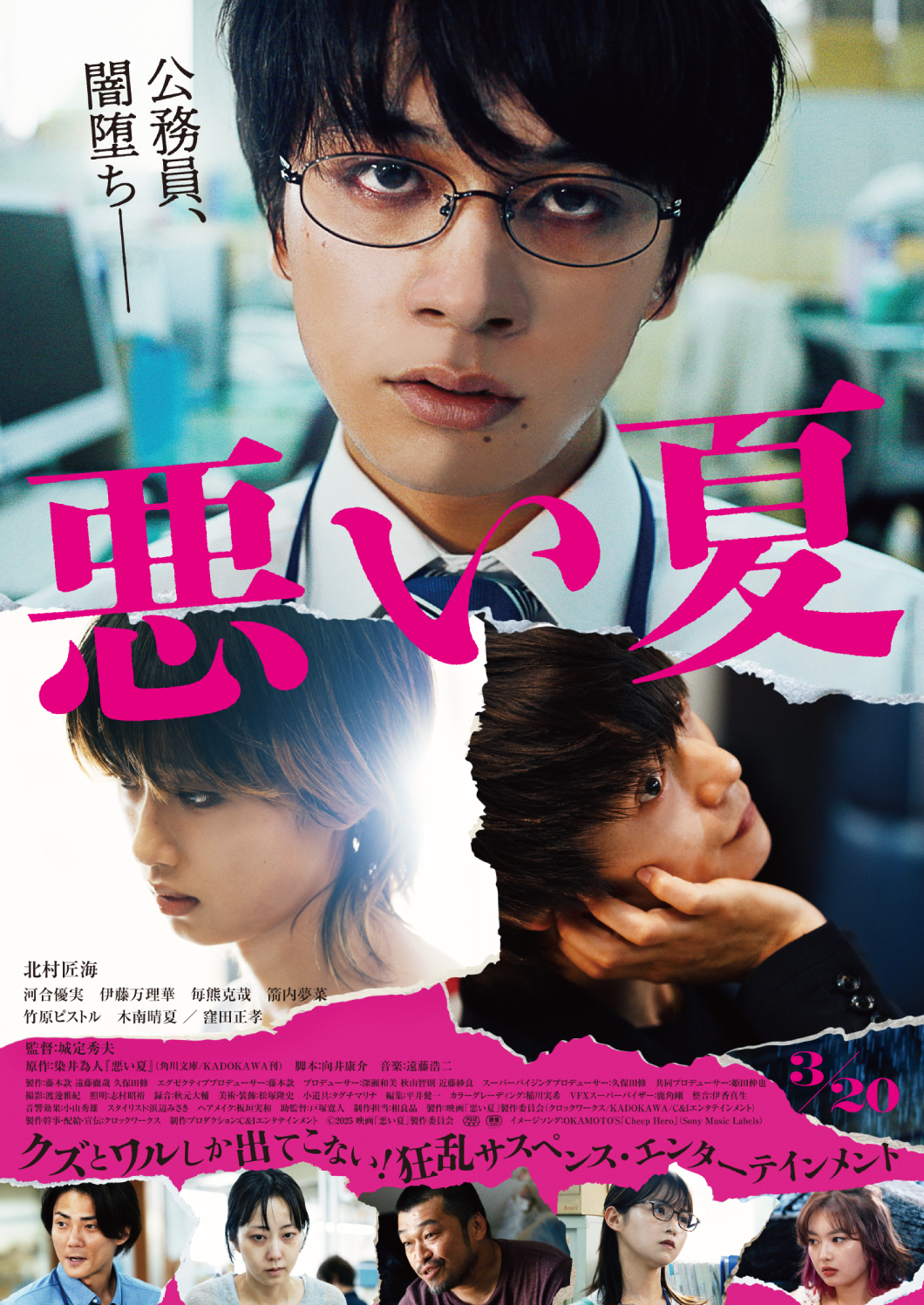
In a sign of the newly international society, Tobe (Tatsuya Mihashi) runs a shady business that claims to provide “English lessons” with blonde women are that are in reality appointments with sex workers. He also peddles pornographic images and dabbles in blackmail. When he finds a roll of film at the station, he gets it developed and discovers it contains photographs of his sergeant during the war, Itami (Jun Tazaki), who raped the Chinese woman he wanted to marry back in Manchuria. Tobe was unable to help her after getting his hand impaled on a tree branch from which he could not free himself. The scar he still bears on his hand is a mark of his corruption and a reminder of the moment which seems to have soured him on humanity and turned him into a cynical and amoral man. He decides to use the photographs to torment and blackmail Itami to get the money to help a widowed single mother he’s interested in secure a better future for herself by taking over a coffee shop from the owner who plans to retire.

As such, he does it for “good” reasons and Kazuko (Junko Ikeuchi) and her son Saburo represent for him a better future in the new Japan in which he would own a photo studio and live a law-abiding life. Saeko (Reiko Dan), Itami’s secretary with whom he was also having an extra-marital affair, is in other ways his opposite number and the representative of the dark side to which Tobe is drawn. Like him, she tries to play the situation to her advantage by playing the innocent before finally throwing her lot in with Tobe and suggesting he help her double-cross Itami so they can run off with the money he embezzled from his company before faking his own death in a convenient train crash. That Tobe extracts sexual favours from Saeko in return for giving her the photos and negatives interferes with the supposed nobility of his quest and apparently pure-hearted love for Kazuko and her little boy, while Saeko gradually shifts from exploited victim to calculating conspirator manipulating Tobe just as he believes himself to be manipulating her.

In any case, it remains true that he could have just settled for the money he needed for the cafe and walked away from this overly complicated situation involving Itami’s legal wife and associates who have actually embezzled the money and want the pictures back because they need Itami to be dead for their plan to work, but he doesn’t. He becomes fixated on getting his fair share of the ill-gotten gains much more than helping Kazuko or getting his revenge against Itami, which wasn’t really much of a revenge anyway considering what Itami had actually done during the war. But on the other hand, Itami seems to have become a rather powerless figure having married into his wife’s family to work in their business while she plots to have him confined to a psychiatric hospital to keep him out of her way. Saeko too is manipulating him. She has no real feelings for Itami and only wants the money, masterminding this whole scheme to get her hands on it with no intention of fleeing abroad with him. Similarly, she plays the victim with Tobe, telling him that Itami paid for her brother’s school fees and that she wants the photos back to avoid her brother or Mrs Itami finding out it about it and feeling hurt.

But while they’re fixating on the 150 million yen embezzled from the business, there are crowds of angry people turning up at the building society Itami runs complaining that their savings have disappeared and wanting to know if they’re going to get the houses they’ve been promised. Tobe walks through the May Day protests calling for better working conditions and higher wages, pointing to the ways this society is still veering off course in deliberately leaving some-people behind by rooting the new economic prosperity in exploitation. Tobe’s assistant wants to join the protest, but Tobe tells him they don’t really belong with the workers because of their nature of their business. The blackmail scam is his revenge not only on Itami but on everything that’s happened to him since the war and this ridiculous post-war society that he nevertheless hopes to join through these immoral means. The song of the canary he buys for Saburo begins to haunt him as a symbol of the wholesome life he might lead, but that life cannot really be won that way. He and Saeko are really two of a kind, she apparently brought low by her unexpectedly genuine feelings for him as even the police, picking him up for something else, leave them bleeding in the street surrounded only by emptiness and futility mere feet from the hospital in their own relentless pursuit of the “real” criminals.


Detective Conan: One-Eyed Flashback (名探偵コナン 隻眼の残像(フラッシュバック), Katsuya Shigehara, 2025)

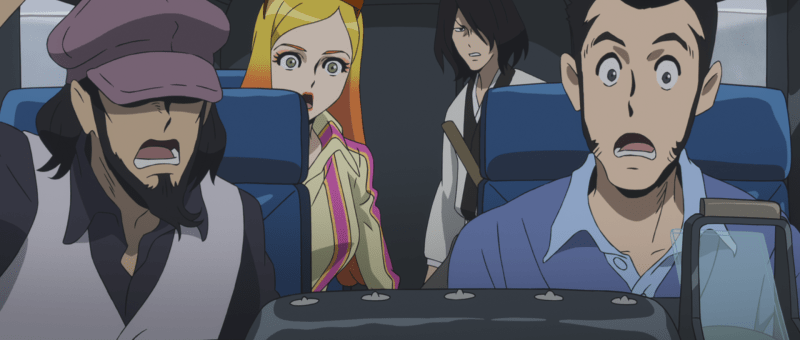
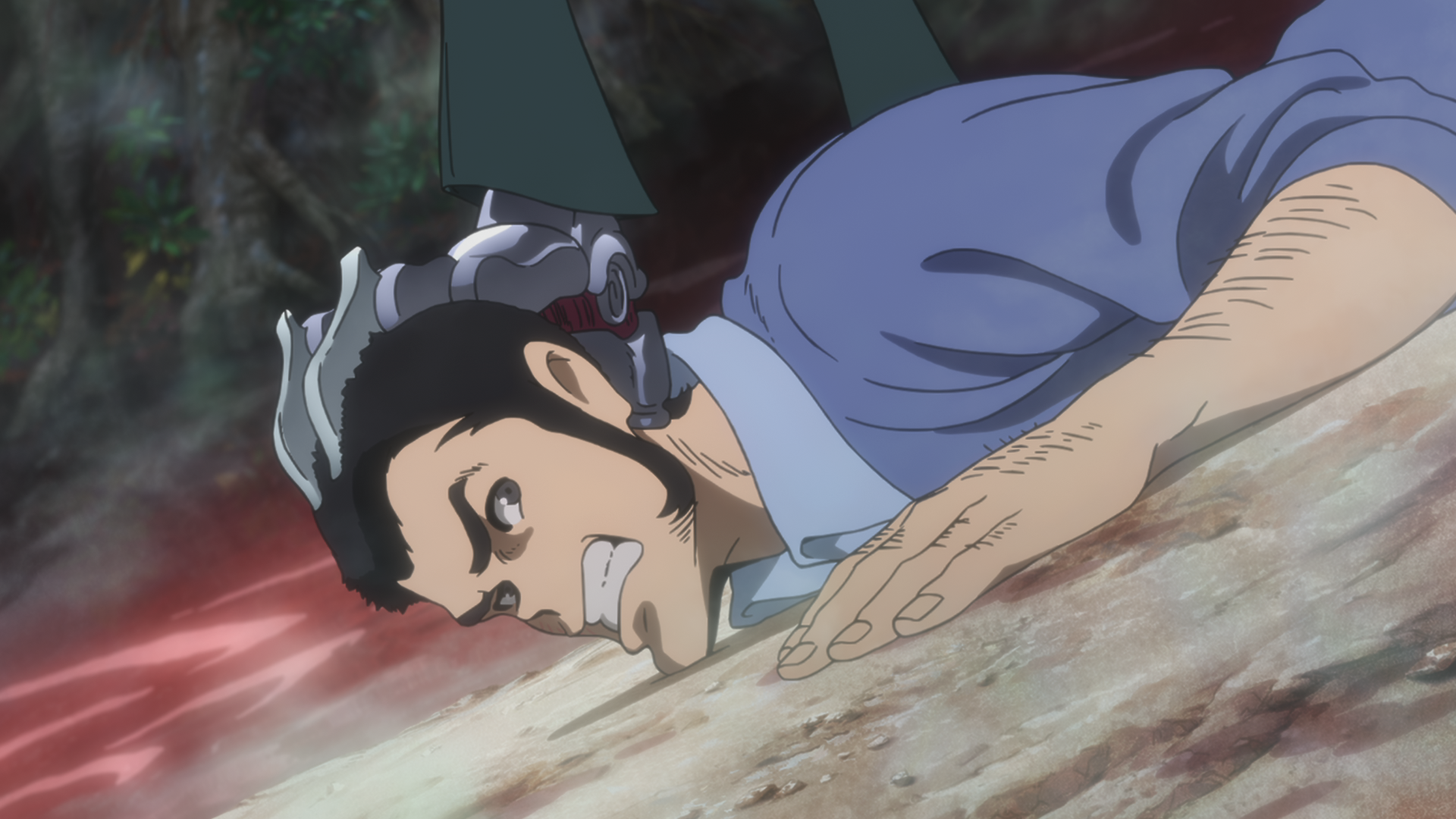
Detective Conan (Minami Takayama) returns for the 28th instalment in the long-running animated film series, Detective Conan: One-Eyed Flashback, (名探偵コナン 隻眼の残像(フラッシュバック), Meitantei Conan: Sekigan no Flashback) as he finds himself embroiled in another mystery revolving around Inspector Yamato’s (Yuji Takada) near fatal collision with an avalanche, a potential terrorist attack on a radio observatory, and the murder of one of Kogoro Mori’s (Rikiya Koyama) old friends. Meanwhile, justice is under fire as the government are working on reforming the plea deal system which leaves some feeling short-changed by justice and that the criminals are getting off too lightly while victims of crime continue to suffer.

Indeed, there’s a kind of symmetry between Conan’s guardian Kogoro, who took him in after he was shrunk to the size of a child by the evil Black Organisation, and bereaved father Funakubo who blames himself for what happened to his daughter Maki because he sent her back to his gun shop where she got caught up in a robbery. Before she left, she said she had something to tell him, but he never got to hear what it was, just as Kogoro never heard what his former colleague from his police days, Croco, wanted to tell him when he set up a clandestine meeting in a local park but was killed by a mysterious assassin before he could say anything. 

Once again, Conan is on the case, though Kogoro more or less sidelines him and insultingly repeatedly reminds Conan that this is not a game. Nevertheless, Inspector Yamato specifically asks for his help, while Conan begins to suspect something bigger is motion when he’s unsubtly bugged by someone he assumes is probably an undercover Public Security officer. All roads lead back to Amuro (Takeshi Kusao), who handles the situation from the cafe in Tokyo where he works to maintain his cover identity. 

Nevertheless, it all links back to the gun shop robbery and its lingering effects on the victims. Not only was one of the thieves not caught, but the other got off on a plea bargain which has left Mr Funakubo on a constant quest for justice in which he is forever hassling the Nagano Police for updates on his case. Meanwhile, there’s interpersonal drama in play in the relationship between police officers Yamato and Yui (Ami Koshimizu) who are also wrestling with unspoken feelings and the fallout from Yamato’s presumed death in the avalanche in which he lost his memory and wasn’t found until a few months later. The wound to his eye is symbolic of his inability to recall the whole of what happened before he was overcome by the snow. He must have seen the face of the man he was chasing at the time, but he can’t remember it. 

Though the mystery itself may not be as complicated as others in the series, involving few clues or difficult puzzles to be solved and relying instead on Conan’s keen intuition and people skills, it leans heavily into a sense of conspiracy and paints Public Security in an unflattering light as they attempt to bug Conan and then in a post-credits scene, are seen to offer another “plea deal” to a suspect in return for keeping Public Security out of their testimony while blackmailing them that, should they choose to speak out, all their secrets will also be revealed to the public and those close to them will suffer. In any case, Conan gets a few more opportunities to use his all-powerful skateboard amid the film’s increasingly elaborate action sequences as he squares off against the crazed villain hellbent on vengeance and an ironic defence of the law.

Where Public Security come in for scrutiny, the police are depicted as universally good, reminding the suspect that it’s the police’s job the enforce the law without fear or favour while protecting ordinary people both physically and emotionally. As messages go, it might be a little authoritarian, but it’s also true that the police take Conan seriously in ways others may not. While they’re all busy with the crime(s), Conan’s friends are also all in Nagano along with Ran (Wakana Yamazaki) enjoying what’s supposed to be a stargazing holiday before being dragged into the case and providing important backup for Conan. As the tagline says, the truth won’t stay buried forever and Conan does his best to play off Public Security and the police in order to solve the case, avenge Kogoro’s friend, and also protect justice in Japan as the courts debate the plea bargain issue and its effect on criminals and victims alike as they try to rebuild their lives in the wake of crime.


Detective Conan: One-Eyed Flashback is in UK cinemas from 26th September courtesy of CineAsia.

Trailer (Japanese / Traditional Chinese subtitles)