Happy Life (嬉々な生活, Yoshihiko Taniguchi, 2024)

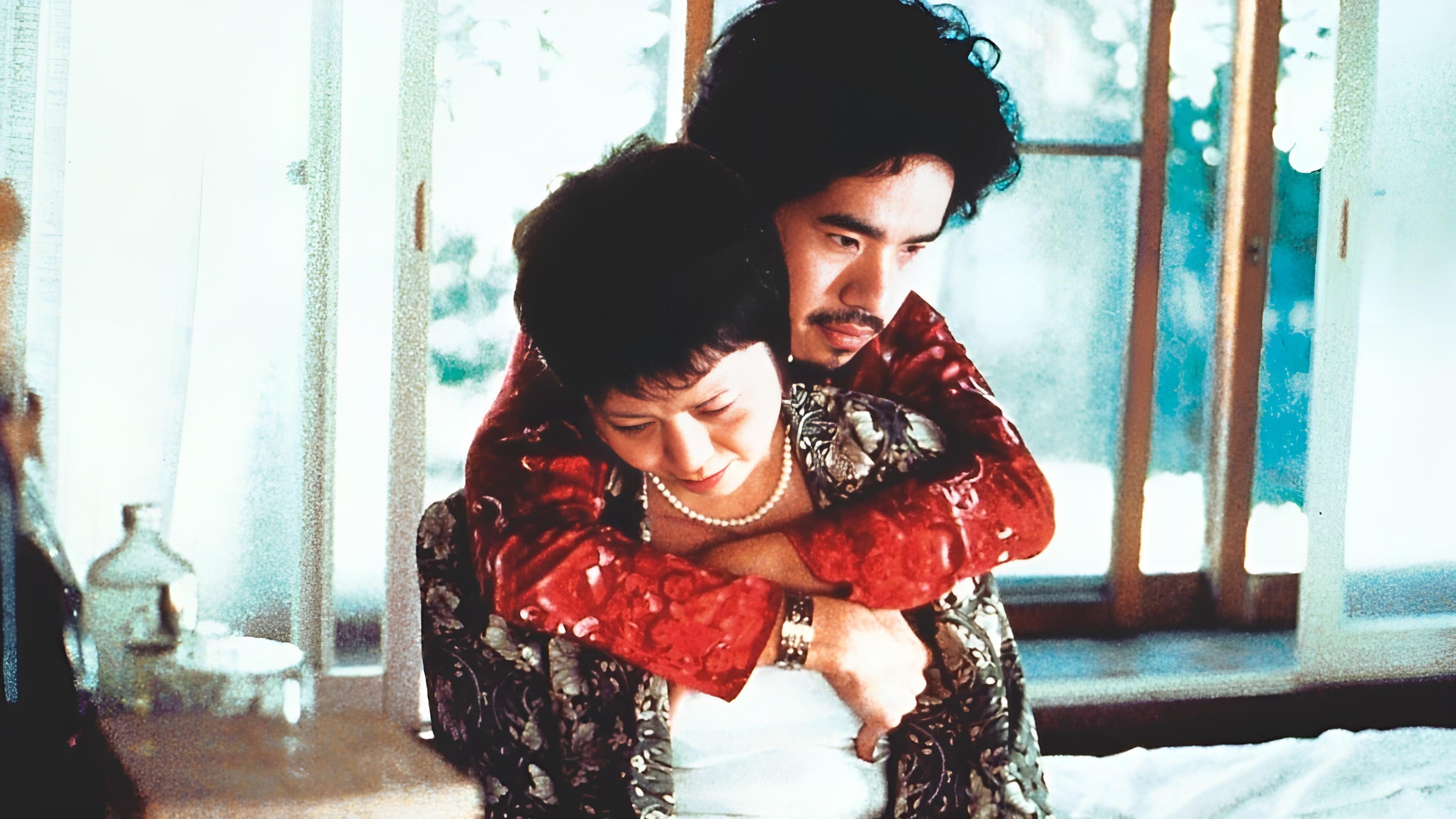
A teenage girl finds herself responsible for her family after her mother’s sudden death and father’s descent into depression in the ironically named Happy Life (嬉々な生活, Kikina Seikatsu). Filmed with gritty realism, Yoshihiko Taniguchi’s indie drama explores life on the margins but also the judgement and stigmatisation of those who are struggling, along with the echoing effects of parental neglect and a wider lack of compassion and understanding in the community.

Kiki once had a happy life but after her parents moved into a larger apartment on a housing estate, it all seemed to go wrong. Her mother died suddenly, and her father Kensuke has become depressed which has left him unable to work and plunged the family into financial insecurity. As the oldest of three siblings, Kiki has had to pick up the strain with the consequence that she has little time to think about her own future. She tells a friend that she doesn’t have any dreams, but it maybe more that she already feels them to be impossible. She’s more or less stopped going to school and is checking out ways to earn a lost of money fast including a few jobs for a dodgy relative of her friend Miyu who keeps trying to talk her into taking up compensated dating or embark on a blackmail plot of their unpleasant head teacher they say is at any rate at least over friendly with pupils. 

Mr. Maehara is also harassing Kiki’s seemingly similarly depressed teacher who has a habit of putting things in his letter box as revenge. Though he chided her for not addressing Kiki’s truancy problem or investigating whether there might be issues at home, Ms. Kozuma does later take an interest in Kiki and her family which does allow her to begin emerging from her own depression after quitting her teaching job. Lifting some of the burden from Kiki, she helps out by cleaning the apartment and cooking for the family while encouraging Kensuke to apply for benefits and seek psychiatric treatment for his declining mental health.

Those on the danchi are supportive in some ways and in others not. Many of the neighbourhood women feel sorry for the children and often give them leftover food, but at the same time they’re wary of Kensuke and have lost both patience with and sympathy for him. The family is now several months behind on the rent and some of the other residents dissapparove of the family being allowed to go on living there while there is no immediate sign that their living standards will continue to rise. A window herself, Mrs Miyake takes Kensuke to task for failing his children but he doesn’t have much of an answer for her, while Ms Kozuma tells her they should be patient because Kensuke ill and can’t simply snap out it to resume a paternal role over his family.

For his own part, he resents Ms Kozuma’s help because it highlights his own failing but is unable to do anything about his situation while lost in dreams of his late wife. Matters come to a head when he inexplicably takes a little girl’s scooter and throws it on the ground which proves the last straw for a community that’s already come to think of him of “scary”. The irate father of the little girl goes so far to suggest that the family should leave because Kensuke makes people “uncomfortable”, even though his own aggression makes him dangerous and unpredictable. Kiki tries to talk back and defend her father, but the other man simply tells Kensuke that he needs to teach his kids some manners because his daughter’s got problems too, signalling the extent to which anyone who doesn’t fit the norm is not really welcome in this society. 

Even so, thanks to the help of Ms Kozuma and means of connecting with her late mother, Kiki gains the courage to dream, too, deciding she will go to high school after all and would like to become a nurse. Though often bleak in its depiction of the family’s mounting disintegration, the film does allow a ray of possibility to leak through suggesting that Kiki will be able to rediscover a happy life sometime in the future even if right now she doesn’t even have the time to imagine in.


Happy Life screens 30th May as part of this year’s Nippon Connection.

Trailer (English subtitles)

Kaiju Guy! (怪獣ヤロウ!, Junichiro Yagi, 2025)

“This is my grand revenge against the world,” a frustrated civil servant insists while watching a giant avatar of himself destroying the town. Yamada (Gumpy) always wanted to make Kaiju movies, but now approaching middle age he’s given up most of his dreams and aspirations and lives a dull life working in the tourism division of the local council. An opportunity presents itself when he’s put in charge of a PR video for the town at the behest of its ultra-conservative mayor.

Junichiro Yagi’s Kaiju Guy! (怪獣ヤロウ!Kaiju Yaro!) has a meta quality given that it’s about a film designed to promote the local area, but there are many other parallels in play. The first would be Yamada’s unsatisfying life standing in for that of a corporate drone, while the mayor (Michiko Shimizu) is later cast as the villain precisely because of her reverence for “tradition” and is under the impression that changing anything would be a betrayal of her ancestors in a nod to the rigidity of local government. Yamada’s teacher had told him to smash through the constraints, though that’s something he’s only just beginning to find the strength to do. 

Though Yamada immediately suggests making a kaiju movie, he’s quickly shot down and reminded the mayor wants a conventional puff piece they can use to promote the town. Back in middle school, everyone had laughed at him for his DIY kaiju movie except his teacher who told him not to worry about what other people think and that those who challenge the status quo will always come in for attack or ridicule. Back then, the town of Seki had been the monster, though this time it’s supposed to be the victim that will eventually be saved. The mayor’s script had ironically been for a particular brand of hometown movie that’s become common in Japanese cinema in recent years in which a young person has their dreams crushed in Tokyo and rediscovers the charms of the place where they grew up after returning home in defeat. But there is something quite sad about the juxtaposition of Yamada thinking through the themes of the movie while riding his moped along empty streets which are flanked by rows closed shops.

The economic possibilities of the town becoming a tourist hotspot if the movie does its job might be one reason why many of the local businesses immediately pitch in to help besides a desire to display their hometown pride. Of course, most of them pull out when Yamada reimagines it as a kaiju movie even if he has a few supporters who think a kaiju movie might be fun and interesting way to sell the positives of Seki. In the course of making his movie, with the help of a grumpy, retired kaiju movie master by the name of Honda (Akaji Maro), Yamada discovers a way to use various local assets, such as filming sparks at the factory to create the fire-breathing effect and capturing the strange sound of a local bird for its roar. The heroes of the film become the local businesses supporting it who appear as a mini squad teaming up to fight the monster, while Yamada himself plays the marauding beast and “saviour” of the town going after the mayor and city hall to challenge their conservative insistence on tradition. 

What he eventually discovers is that even the mayor herself is oppressed by “tradition supremacy” and once had to give up her own hopes and dreams to conform to her family’s insistence on the way things should be done. Her abrupt decision to make the film may have been a reflection of her latent desire for change, both for herself and for Seki even as she constantly harps on about cormorant fishing and sword making which are apparently the two biggest draws. Ironically, the film completely fulfils its role as a PR movie for Seki capturing the small-town charms of the area along with its warm community spirit. Smashing through barriers with his kaiju movie, Yamada’s dull and grey existence is suddenly brightened through accessing his creativity and having his artistic desires validated by those around him. Not only are kaiju movies not naff or nerdy, but a source of fun that can bring the community together as well encourage visitors from outside if only to explore the kind of place that could have produced something so wonderfully unconventional.


Kaiju Guy! screens 30th May as part of this year’s Nippon Connection.

Trailer (English subtitles)

Images: © 2024 Team KAIJU GUY!

The Solitary Gourmet (劇映画 孤独のグルメ, Yutaka Matsushige, 2024)

Isn’t it funny how a good bowl of soup can make everything better? Based on the manga written by Masayuki Qusumi and illustrated by Jiro Taniguchi, the feature-length edition of the long-running series has a distinctly soupy feel as salaryman Goro (Yutaka Matsushige) finds himself travelling Japan and abroad in search for the ingredients of a soup an old man ate as a child. Airing since 2012, The Solitary Gourmet TV series was a trendsetter for Japanese comfort foodie cinema and has given rise to several other similarly themed shows in which the protagonist visits a real life establishment and enjoys whatever they have to offer from food to sake, sweets, and even traditional bathhouses.

In fact, there’s even a meta joke towards the end of Solitary Gourmet (劇映画 孤独のグルメ, Geki Eiga: Kodoku no Gourmet) in which one of the restaurants Goro goes to is featured in a show about a foodie salaryman while he plays a fellow customer. The newly international setting reflects the increased budget of a theatrical feature and also helps to expand the series’ episodic format in leading Goro on a crazy chase that begins with the daughter of an old friend in Paris (Anne Watanabe) who enlists him to hunt down the ingredients for her grandfather’s cherished soup. Of course, this provides an excuse for Goro to go to the remote Goto Islands and learn about the local cuisine while running around collecting random samples like he’s on a side quest in an RPG. 

Then again, it also offers him the chance for some surreal adventures, including getting cast away on an uninhabited island before being rescued by the Korean-speaking residents of a food research institute. It’s there that he meets Shiho (Yuki Uchida), a Japanese woman living on “an island for women who are fed up with men,” and a former restaurant worker retreating from a marriage fracturing under the pressures of trying to run a restaurant in the post-COVID society. When Goro later catches up with her husband (Joe Odagiri), he too is a depressed, broken figure who now only serves fried rice in his incredibly unwelcoming restaurant. But being talked into helping Goro recreate the old man’s beloved soup seems to reactivate his creative juices and give him the desire to get back on his feet. 

Star Yutaka Matsushige directing for the first time throws in a brief homage to Tampopo but what the film is most interested in is the universality and healing power of a tasty broth from the onion soup Goro eats in Paris to the Haejangguk, or hangover soup, that he orders in Korea while being watched over by an exasperated immigration officer (Yoo Jae-myung). That Goro’s quest takes him so far hints at the shared history of the two nations and the various culinary influences and universalities running between them with soup a means of healing and friendship. Exchanging a few words of Korean, Goro tries to ask what the name of the fish in his soup is, only to come to an understanding when the immigration officer writes it down for him in Chinese characters. 

All this food really does bring people together, as Goro gets pretty much everyone he meets roped into his quest to recreate the old man’s childhood dish as his deathbed request. Matsushige recreates the zany humour of the TV series including his familiar “I’m hungry” catchphrase, followed by the camera taking three steps back and picturing Goro in front of some notable landmark. He also doesn’t seem to be getting much work done while running around trying to figure out this soup even he’s never actually tasted it and is reliant on the old man’s fragile recollections. Goro had been in Paris to deliver a painting of somewhere he once lived and the old man remarked that photographs are records of time but painting turns them into memories. Food, or more specifically soup, might do something similar, at least according to the old man who is desperately trying to reclaim something of the home comforts of his youth. Of course, the old man is the only one who knows what the soup tastes like, so perhaps Goro is on a fool’s errand, but as he later says, soup does seem to be the water of life and thanks to its healing qualities a universal symbol of peace and harmony not to mention friendship and kindness.


The Solitary Gourmet screens 29th May as part of this year’s Nippon Connection.

Trailer (English subtitles)

Images: ©2025 “Solitary Gourmet” Film Partners

Missing Child Videotape (ミッシング・チャイルド・ビデオテープ, Ryota Kondo, 2024)

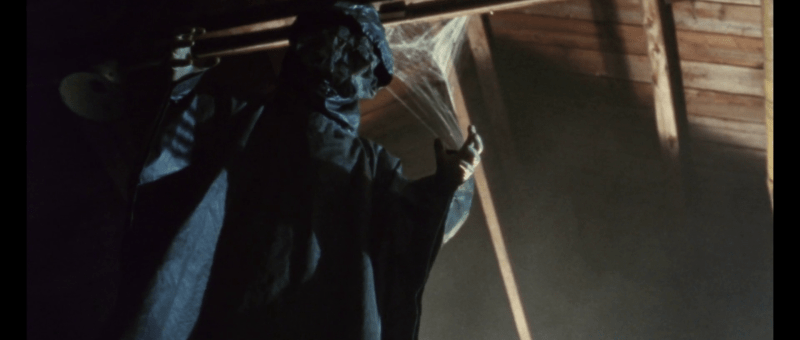
“Now you’re it,” a little boy says, but in a game of hide and seek it can be difficult to tell the seeker from the sought. Inspired by classic J-horror, Ryota Kondo’s eerie debut feature Missing Child Videotape (ミッシング・チャイルド・ビデオテープ) takes the innate fear we have of things that are so old they surpass our understanding and couples it with a more psychological dread in which the heroes are quite literally haunted by their personal traumas.

The irony is that we first meet Keita saving a little boy lost in the forest, though he’s haunted by his failure to do the same for his younger brother Hinata who disappeared 13 years previously when they were both children. Keita’s mother regularly sends him VHS tapes of the day Hintanta went missing he shot while playing with his father’s camera. Keita had been rude to his mother and seemingly resented his little brother tagging along behind him. He tells Hinata to go away, which he of course then does, never to be seen again. The boys somehow wander into a disused building where Keita suggests they play hide and seek, mostly so Hinata will go hide and stop bothering him. Catching sight of Hinata in a corridor, Keita tells him that he’s now “it” so it’s time to come look for him instead, but now he can’t find his brother anywhere. His rising panic is palpable from the terror in his voice to the increasing shakiness of the camera, even as it transitions into the mental state of the adult Keita as if the tape itself were on a constant loop in his mind. 

There is a suggestion that the boys are still playing hide and seek and that Hinata has also been trying to find his way back to his brother all this time. As for the now grown-up Keita, he’s fairly detached and on a surface level a little indifferent, still resenting his brother for seizing an eternal spotlight. He’s sick of everyone talking about it all the time and equally of the ambivalence of being the brother of the boy who disappeared, alternately pitied and suspected. He thinks his parents actually thought he probably killed Hinata but did nothing about it, while he always resented them anyway. Even as a child, it seemed apparent to him that they were only playing the roles of a family and none of it was “real”. In any case, he did not want to be forced into the role of big brother with all the responsibility that entails. 

To that extent, Keita is also a “missing child” and a man who is still a boy lost in a disused building that apparently never existed. His search for his brother is also a way of reclaiming himself and opening up to more complete human connections. The film is curiously ambiguous in its depiction of the relationship between Keita and Tsukasa, the man with whom he lives who has psychic abilities and is able to see ghosts and supernatural entities. Tsukasa tells the equally haunted reporter Mikoto that he’s “the person who lives with him,” but the pair otherwise behave more like a couple if one that seems content to let their secrets breathe.  

Nevertheless, Tsukasa comes to the conclusion that Keita is “under the influence of the mountain,” which as it turns out, has taken several more victims before and since Hinata’s disappearance. Another strange young man tries to warn Keita not to go back there, telling him a weird story about how his grandmother cannot really be his grandmother because of the ironic results of her sacrifice to the mountain gods. Indeed, this curse may reflect the lack of respect we’ve shown to the natural world as the mountain has become a dumping ground for unwanted things from bits of temples to a collection of funerary urns. Perhaps “unwanted” people are being thrown away there too, spirited away by the mountain and placed in some other realm. 

Kondo includes two kinds of tape each of which is imprinted with the psychic echoes of a traumatic event as Mikoto comes across a cassette recorded by students who also found the building that doesn’t exist, reflecting both the technological anxiety of classic J-horror along with the way that trauma replays and imprints itself on the present. Keita still appears to be haunted, and not least by himself as well as whatever did or didn’t happen the day his brother disappeared and the latent guilt he feels because of it. Playing hide and seek with himself, it seems that Hinata, and those he’s lost, may indeed have been with him all along, though both seeker and sought are apparently both trapped within this infinite loop of fear and loneliness. 


Missing Child Videotape screens 28th May as part of this year’s Nippon Connection.

Original trailer (English subtitles)

Images: ©2024 “Missing Child Videotape” Film Partners

Sweet Bean (あん, Naomi Kawase, 2015)

Naomi Kawase has been a festival favourite since becoming the youngest Camera D’Or winner in 1997 with Suzaku, picking up the Grand Prix 10 years later with The Mourning Forest. Her work has however proved divisive with some decidedly unconvinced by her new age aesthetics and wilful obscurity. Set in suburban Tokyo rather than picturesque Nara, Sweet Bean sees Kawase for the first time working on a literary adaptation rather than her own original script, producing her most accessible and narratively straightforward work to date. 

The film opens with one of Kawase’s trademark handheld sequences that sees a dejected, middle-aged man trudge to work at a job he clearly hates and is perhaps not particularly good at. For reasons which will be explained later, Sentaro (Masatoshi Nagase) does not even like dorayaki but is currently the proprietor of a small, unsuccessful store selling them mainly to a group of irritatingly excitable teenage girls. One day, an old woman surprises him by responding to his help wanted sign. Despite clarifying there was no age restriction on the position, Sentaro turns her away with the gift of a free sample only she later returns and takes him to task. The pancakes were not too bad, she tells him, but the filing is intensely disappointing. Unbeknownst to Tokue (Kirin Kiki), Sentaro has been bulk buying the “an” sweet red been paste from a catering company. She’s been making an for over 50 years and has brought along a sample which Sentaro first bins in irritation but then thinks better of it, realising as he tastes some that Tokue is the real deal. 

As Tokue later says, she decided to approach the dorayaki shop after noticing the sadness in Sentaro’s eyes, wanting to ask him what it was that made him suffer. She remembers a time where her eyes were full of just that sadness, feeling a similar sense of hopeless imprisonment, in her case reflecting a fear that she would never again be able to walk through the outside world after being quarantined in facility for those suffering from Hansen’s disease when she was a teenager (the Leprosy Prevention Law was lifted only in 1996). Yet having suffered so much, as we later learn even denied the opportunity to become a mother because of her condition, 76-year-old Tokue is full of joy and positivity enjoying her life to its fullest while envying the “freedom” of the annoying trio of high school girls at the dorayaki store, sadly relating that at their age she dreamed of becoming a Japanese teacher reading poetry with her students, another dream denied. 

The other high school girl, Wakana (Kyara Uchida), who comes into the store just before closing so she can take home the rejected pancakes, is perhaps feeling equally constrained, is touched by Tokue’s tale because her own mother isn’t even keen for her to finish high school proclaiming that studying doesn’t put food on the table. The three of them generate an intergenerational friendship as Tokue begins transmitting her knowledge, painstakingly teaching Sentaro how to make “real” an, which as it turns out is an art which can’t be rushed. Seeing the world on a microlevel she communicates with the beans, “I always listen to the stories the beans tell” she explains, visualising the sun and rain and wind which brought them on the long journey to be a part of this bean paste, even going so far as to thank them for their service. As she tells Sentaro, “We all have our stories” realising it’s not perhaps yet time to hear his or share hers. Yet for all her positivity, “sometimes we are crushed by the ignorance of the world”. Tokue’s bean paste generates a lengthy queue outside the store, but custom dries up after a rumour gets round that the old lady who makes it is a leper. 

Like Tokue Sentaro too had once been isolated from the world, now burdened by guilt and obligation that perhaps make him cynical and aloof but is eventually touched by Tokue’s earnestness, not just her lust for life but the fact that she works hard and possesses great skill. His boss tells him to unceremoniously fire her, but he is struck by the unfairness of it all, that she’s still being discriminated against for nothing more than outdated prejudice. It’s her kindness and generosity of spirit which begins to show him the “sweetness” of life, finally converted to the charms of the dorayaki despite proclaiming himself not possessed of a sweet tooth. 

The protagonists of Kawase’s previous films often found spiritual release in traditional dance which is notably absent in the urbanised Sweet Bean, though the positivity perhaps extended more to finding accommodation with the sadness of life than actively embracing its joys. Tokue had in her own way freed herself and hoped that others could learn to do the same, urging both Sentaro and Wakana to find the confidence to follow their own paths while affirming that “we were born into this world to see and listen to it, I think whatever we become each of us has meaning in our lives”. A recognisably Kawaseian evocation of mono no aware shot against the cherry blossoms, Sweet Bean is uncharacteristically direct in message but even in its essential melodrama quietly moving in its awestruck love for the natural world and for the liberating power of simple human kindness as a path to existential happiness. 


Trailer (English subtitles)

Samurai Hustle Returns (超高速!参勤交代 リターンズ, Katsuhide Motoki, 2016)

At the conclusion of 2014’s Samurai Hustle, it seemed that samurai corruption had been beaten back. Corrupt lord Nobutoki had got his comeuppance and the sympathetic “backwoods samurai” Naito was on his way home having found love along the way. Of course, nothing had really changed when it comes to the samurai order, but Naito was at least carving out a little corner of egalitarianism for himself in his rural domain. 

The aptly named Samurai Hustle Returns (超高速!参勤交代 リターンズ, Cho kosoku! Sankin kotai returns) picks up a month later with Naito (Kuranosuke Sasaki) taking a rather leisurely journey home in preparation for his marriage to Osaki (Kyoko Fukada) only to receive news that there has been a “rebellion” in Yunagaya. Predictably, this turns out to have been orchestrated by none other than Nobutoki who has been released early from his house arrest thanks to his close connections with the shogun but has been humiliated at court and is otherwise out for revenge with a slice of treasonous ambition tacked on for good measure. Just as in the first film, but in reverse, Naito and his retainers must try to rush home to get there before the imperial inspector arrives or else risk their clan being disbanded. 

Meanwhile, the shogun is absent at the wheel after having decided to resurrect an old tradition abandoned because of its expense and inconvenience to make a pilgrimage to Nikko. In an interesting parallel, the farmers are uncharacteristically upset with Naito, blaming him for the destruction of their fields because he wasn’t there to protect them. Naito also feels an additional burden of guilt given that, having run flat out all the way to Edo, he took his time coming back leaving his lands vulnerable to attack while he now risks losing the castle. Nobutoki wastes no time at all looking for various schemes to undermine him while secretly plotting to overthrow the shogun and usurp his position for himself. 

As in the first film, the battle is between samurai entitlement and the genial egalitarianism of Naito’s philosophy. “The real lords of Yunagaya are people like you who are one with the soil,” he tells the farmers, while Nobutoki sneers that “lineage rules supreme in this world, inherited wealth breeds more”. It doesn’t take a genius to read Nobutoki’s machinations as a reflection of his insecurity, that he invests so much in his rights of birth because he has no confidence in his individual talents. Naito counters that it’s the people around him that matter most, “people are priceless. Friends are priceless,” but Nobutoki rather sadly replies that people will always betray you in the end. Even the shogun eventually agrees that “anger brings enemies, forbearance brings lasting peace” but treats Nobutoki with a degree of compassion that may only embolden him in his schemes.

“Nepotism has endangered the shogunate,” the shogun ironically sighs apparently lacking in self-awareness even if beginning to see the problems inherent in the samurai society but presumably intending to do little about them. “No government should torment its people,” Naito had insisted on boldly deciding to retake his castle but even if this particular shogun is not all that bad, it’s difficult to deny that his rule is torment if perhaps more for petty lords like Naito than for ordinary people or higher-ranking samurai. Naito struggles to convince Osaki that she is worthy of his world and only finally succeeds in showing her that she has nothing prove and love knows nothing of class. The people of Yunagaya are impoverished but happy, satisfied with the simple charms of pickled daikon unlike the greedy Nobutoki whose internalised sense of inadequacy has turned dark and self-destructive. 

Then again, Naito is still a lord. He obeys the system out of love for his clan and a genuine desire to protect those around him but otherwise has little desire to change it actively even if his quiet acts of transgression in his closeness with the villagers and professions of egalitarianism are in their own way a kind of revolution in a minor rejection of the shogun’s authority to the extent that the time allows. Nevertheless, with his return journey he once again proves the ingenuity of a backwoods samurai getting by on his wits as he and his men race home to save their small haven of freedom from samurai oppression from the embodiment of societal corruption.


Trailer (no subtitles)

Samurai Hustle (超高速!参勤交代, Katsuhide Motoki, 2014)

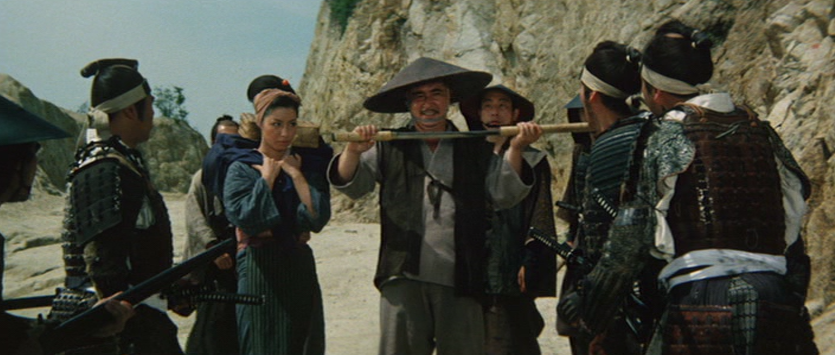
A kindhearted lord finds himself in deep trouble when he’s suddenly called back to Edo despite having just returned from his biennial service in Katsuhide Motoki’s jidaigeki comedy Samurai Hustle (超高速!参勤交代, Chokosoku! Sankin Kotai). Set in 1735, the film is in some senses unusual in pointing the various class biases even with the hierarchal samurai society as the tiny rural clan at the film’s centre are swept into intrigue by the machinations of an ambitious courtier who thinks they lied about their goldmine being extinct and plans to get his hands on it by dobbing them in to the Shogun.

The problem is that they really weren’t lying. The Yunagaya clan is dirt poor, especially after having spent a small fortune travelling to Edo and back. In this era, even distant lords were called to Edo every two years to serve at court. They were expected to parade to the capital in style, showing off their wealth and status as they go which is of course inordinately expensive. The expense was the point. Practices like these along with forcing clans to move domains on a whim were designed to weaken their resources so they’d have no recourse to rebellion even if they were even more annoyed about being forced to travel back and fore for no real reason. 

It took Lord Naito (Kuranosuke Sasaki) and his retinue 10 days to walk home, which is why it’s even more of a shock to get a letter telling them to high-tail it back in five or risk being dissolved by the shogun. Evil retainer Nobutoki (Takanori Jinnai) knows it’s impossible for them to arrive on time which is how he plans to get his hands on the gold. What he didn’t count on, however, is the unexpected scrappiness of a “backwoods samurai” who’s used to having to find ingenious solutions to difficult problems because he doesn’t have the money to solve them. Nobutoki is essentially a snob who looks down on country folk and thinks Naito does not befit the rank of a samurai anyway, sneering at his humble gift for the Shogun of some locally sourced daikon pickles. 

The homeliness of the daikon signals Naito’s down to earth nature as a fairly egalitarian samurai who doesn’t really care about hierarchy and status even if he knows he has to play the game. What he cares about is the safety and happiness of his people, which is one reason he’s going to bust his arse to get back to Edo and clear his name. Aside from his humanitarian principles, also giving away some of their rice stocks to neighbouring clans suffering during a time of famine, Naito is also thought of as an eccentric because of his severe claustrophobia which makes it impossible for him to close the door when using the bathroom, let alone travel in a palanquin, though he’s found an ingenious solution for that one too. 

In an odd kind of paradox, he becomes a defender to proper samurai values in his opposition to Nobutoki who plays fast and dirty, sending out ninja assassins on the road to try to ensure he won’t make it to Edo before the deadline. Meanwhile, he bonds with a feisty sex worker who, like him, is dealing with childhood trauma and is sick of entitled noblemen who look down on the poor despite being a fellow human who as she puts it poops and screws just like everyone else. In a way she frees him from the confines of his hierarchal existence by helping him overcome his claustrophobia, at least while she’s at his side, while he saves her from her oppression by transgressing class boundaries and bringing her into the samurai world if only as a concubine.

Nevertheless, as he warns her, being poor is hard even when you’re a samurai, and ironically his circumstances aren’t much better than hers even if he has a superficial level of comfort and security tempered by his genuine ability to appreciate the simple charms of daikon over fancy Edo cuisine. After all, sometimes samurai become peasants or peasants become samurai and for an impoverished lord like Naito the distinction is fairly thin, though he evidently does his best to protect those around him from both sides of the class divide while remaining unafraid to tell the Shogun exactly what he thinks of him. After all, you’ve got to roll with the times, especially if you’re a backwoods samurai at the mercy of a harsh and arbitrary system but also far enough away from the mechanisms of power to begin to ignore them. 


Trailer (no subtitles)

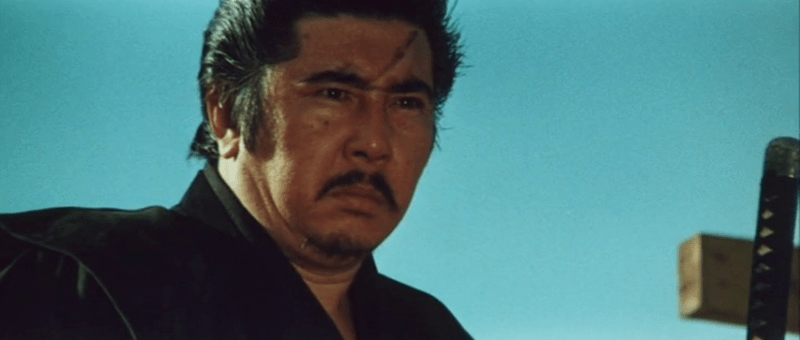
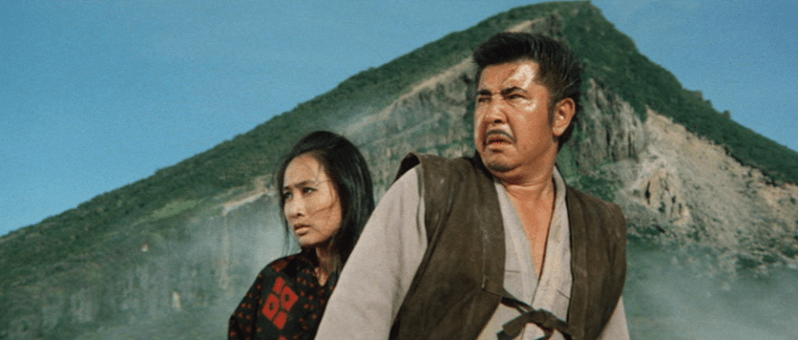
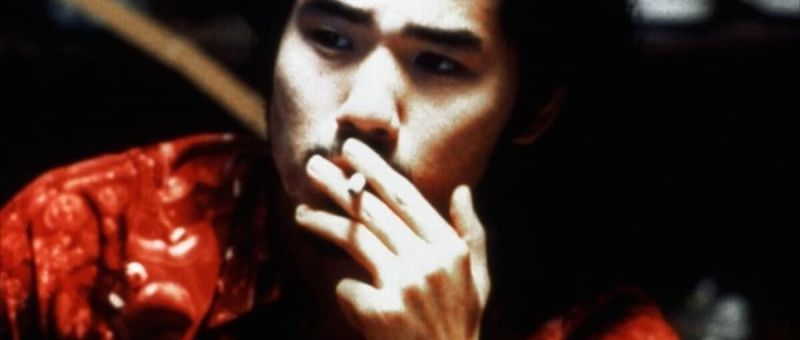
Sasori in U.S.A. (Daisuke Goto, 1997)

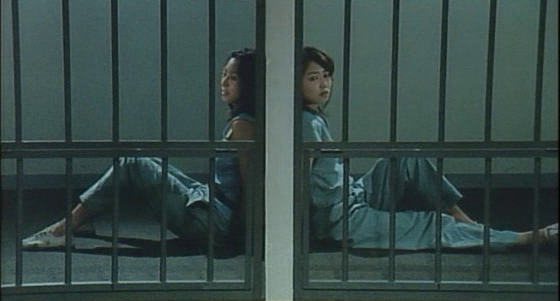
An attempt to reboot the Female Prisoner Scorpion series for V-cinema had stalled in the early ‘90s when the then star of Death Threat abruptly pulled out of a sequel that was to be a production with Hong Kong’s Golden Harvest. In 1997, however, Nami Matsushima was once again resurrected only this time as a US co-production with most of the film shot in Los Angeles and in a mix of Japanese and English. 

Relocating the franchise overseas is in some ways surprising given that the first film of the original series opened with the national anthem and shots of the Japanese flag. It was explicitly clear that they were talking primarily about the social conditions of Japan in the 1970s. Likewise, Sasori in U.S.A. seems to walk back on some of the themes of patriarchal oppression that informed the previous instalments preferring instead to refocus on themes such as racism, the failure of the American Dream, and the powerlessness of living under a cruel and arbitrary foreign power, which is an entirely contrary perspective to the earlier film’s attempts at critiquing corruption with Japan itself. 

It’s never really made clear why Jiro (Tetta Sugimoto) and Nami (Yoko Saito) are in the US in the first place, though Nami’s sympathetic journalist friend implies that Jiro came there to make his fortune only to become frustrated with the limits of the American Dream. This Nami is a well-paid interior designer, at least according to her prison file, if one completely in thrall to Jiro whom she met in the US an unspecified amount of time previously. When Jiro is killed by a car bomb, Nami ends up being arrested for his murder because she stood to gain 1.2 million dollars by his death (though they appeared to have a very comfortable life to begin with, so it’s not clear why she’d take such drastic action). Apparently too traumatised to defend herself, Nami failed to hire a proper lawyer or fight her case and has not launched an appeal but spends all her time vowing revenge, which of course means she has to escape from prison. 

That might be a minor problem for the film, which is to some extent in its marketing selling itself as a women in prison picture. This is indeed the most exploitative of the films so far with a salacious shower scene and titivating moments of touching and kissing each other, while Nami is also harassed by an obnoxious blonde prisoner who seems to be running the cell block while in cahoots with the sadistic warden who, as this is America, is incredibly religious and forever quoting from the Bible while raping his inmates. Nami eventually stabs him in the eye in what may be an homage to the original series. 

Nevertheless, Nami soon escapes in the company of another prisoner who is second generation Japanese-American and has been blind since birth. Like Nami, Yukiko (Shizuka Ochi) also has a mission of revenge against the American hoodlums who raped her and shot her Dominican boyfriend Dino to death. Though the narrative actually has almost nothing to do with Female Prisoner Scorpion, the twist will be very obvious to anyone familiar with the series as Nami has indeed been betrayed by a man she thought loved her. Discovering Jiro may have been embezzling money and in fact knocking off the lawyers who tried to sue the car company he worked for for making defective cars rather than being knocked off by them, Nami is forced to reckon with the illusionary quality of her American success story. Jiro meanwhile rails about entrenched racism and unfairness, decrying the police and justice system as “insane” which they well might be or at least in their treatment of Nami. Broken by the failure of his American Dream, he becomes a pitiful and tragic figure.

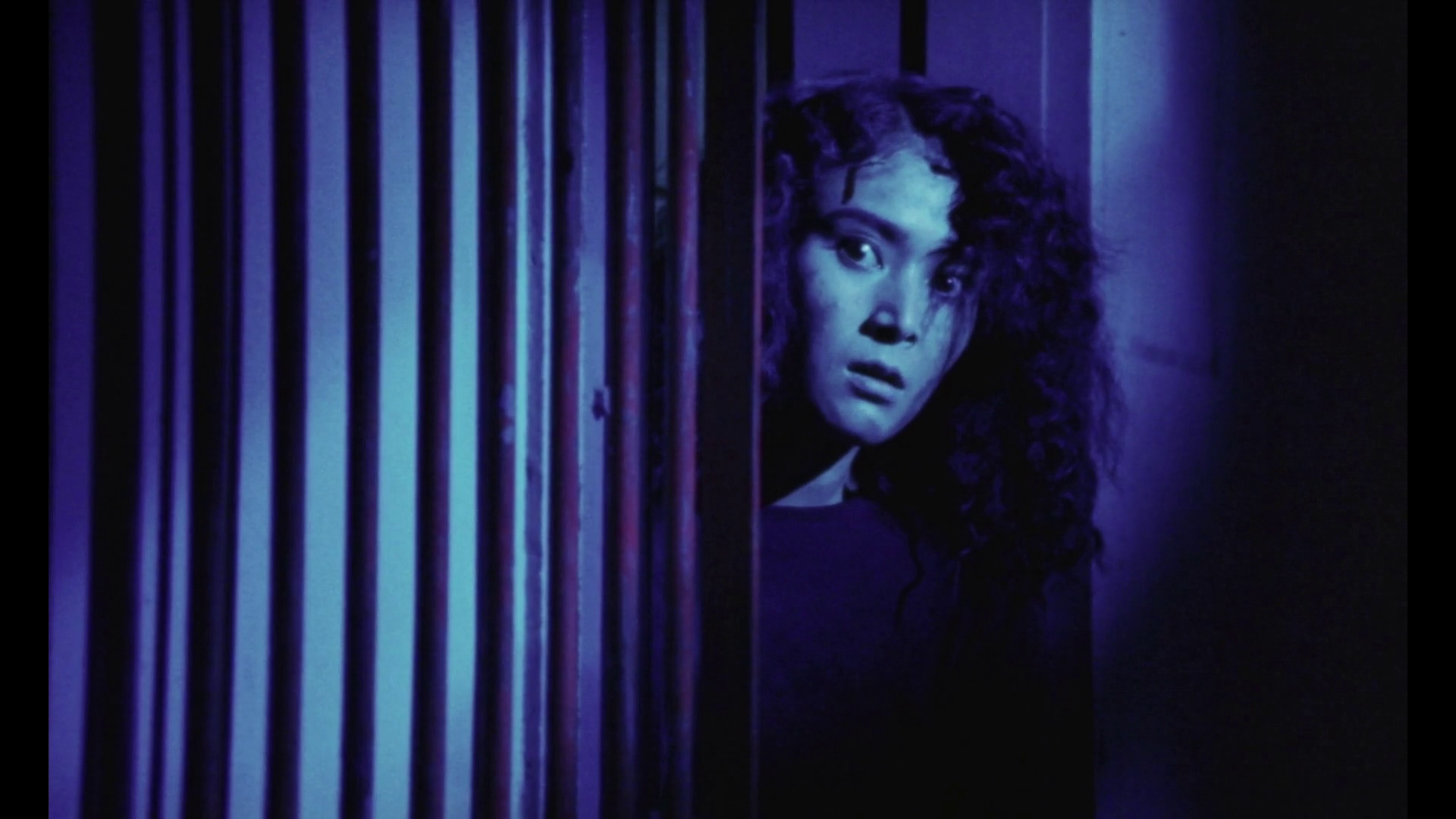
Even so, Nami’s revenge remains a personal affair rather than an all out attack on a corrupt and oppressive social order ruled by misogyny and male failure. Though the production values are perhaps a little higher than one might expect and the direction leaning towards the artier side with its blue-tinted eroticism, shower scenes aside, the film remains very much of its time and has very little in common with the Female Prisoner Scorpion franchise save its women in prison elements and a late allusion to an actual scorpion. It is though interesting for its perspective on the American Dream and America in general as a place of greed, violence, and intensely hypocritical religious fanaticism. 


The Beast Hand (獣手, Taichiro Natsume, 2024)

This world makes monsters of us all in Taichiro Natsume’s low-budget indie body horror Beast Hand (獣手, Kemonote). In many ways, Osamu (Takahiro Fukuya) is pursued by his own left arm in his continual powerlessness and tendency towards self-destructive acts of crime and violence. But it’s also true that it isn’t just his hand that makes him monstrous to the world around him and that his “deformity” is also symbolic of the ways in which he is excluded from mainstream society.

Indeed, Osamu already lives a marginal existence in a cramped, reclaimed space on the edges of a town. Having served time in prison, he gets by doing casual labour and quite literally kicking the can down the road, while we also seem him shoplift a can beer after paying for his dinner. His life appears to be defined by futility even before Inui (Yota Kawase), a man with whom he seems to have shared a criminal past, arrives on his doorstep and barges his way back into his life. Technically on parole but having absconded from his probation office, Inui forces Osamu to give up the contact details for his old girlfriend, Koyuki (Misa Wada), who stopped visiting him in prison and was apparently so desperate to get away from him that she had “full body surgery” to essentially become someone else and start a new life.

Starting a new life is it seems something that they both want to do but are each unable to shake off the hold that Inui has over them. He, however, is in the same position and though he bullies and assaults them both, bows down before a man he met in prison who gave him extra food from the canteen. The old prison friend wants help on a job robbing the woman who still hands out physical pay-packets to workers at a local factory, but Inui turns him down stating that he’s still on parole and it’s too risky though secretly plotting to have Osamu do the job on his own. Predictably, it all goes wrong and Osamu ends up losing an arm only for Koyuki to drag him to a backstreet doctor who first refuses to help but then apparently experiments on him with a drug he’s researching into regenerative health with the consequence that Osamu’s arm grows back but as a monstrous lump of throbbing grey muscle that he is no longer able to fully control. At moments of high emotion, the arm takes him over and he’s transformed into a mindless, thrashing beast to the extent that Koyuki has to chain him to the wall to ensure her own safety.

Having bonded in their shared sense of subjugation, they once again attempt to change by living a more normal life in a small town by the sea. But even here, Osamu is rejected in part because of the arm itself, which he keeps disguised in bandages and a sling as if it were broken, and otherwise because of his secrecy about it which sees him fired by the kindly older gentleman running a factory where Osamu found temporary employment. Koyuki becomes pregnant, but financial pressures and the lingering anxiety about what kind of child this world might produce eats away at them. Osamu isn’t sure if the baby’s his or Inui’s nor which of those two options is better given that the child might inherit whatever’s infected his arm, while Koyuki is no longer certain about the viability of raising a child in their present circumstances. Both from single-parent families, they lamented that neither of them had the experience of being taken to the beach by their parents which seems to be the idyllic picture of a carefree childhood they’re trying to recapture.

But still they find themselves hounded and pursued, this time by a shady businessman who doesn’t want cure Osamu but to exploit him by ripping off his arm and using the technology for his own nefarious ends. The remorseful doctor also wants a tissue sample, but promises a salve in return that would at least subdue his violent impulses and allow him to live a more normal life. The implication is, however, that the only way Osamu can have the semblance of a happy family is by wilfully sacrificing himself and accepting that he has no place within in it. Condemned by his monstrousness to the edges of the frame, he accepts his liminality rather than railing against it and resigns himself to self-isolation as a permanent exile from a continually unforgiving society.


The Beast Hand is released in the US on DVD and blu-ray May 13 courtesy of Cleopatra Entertainment and available from MVD.

Trailer (English subtitles)

BON-UTA, A Song from Home (盆唄, Yuji Nakae, 2019)

Exiled from their homes, the residents of Futaba lost more than just their material possessions when the area was declared uninhabitable following the Fukushima nuclear disaster. With former residents scattered all over the country never knowing when or if they will be able to return, a community has been ruptured and its history is in danger of dying out. Yuji Nakae’s poignant documentary Bon-Uta (盆唄) explores this sense of loss through the prism of the Bon dance while meditating on the notion of exile in comparing the experiences of migrants and Hawaii and their descendants. 

A photographer, Ai, has been photographing Bon dances in Japan and Hawaii and was struck by the Hawaiian response to the 2011 earthquake, seeing as many of the Japanese-Americans living in Hawaii traced their ancestry back to the Fukushima area. Hisakatsu and Haruo, childhood friends from Futaba, travel to Hawaii and observe the Bon dance, reflecting that it is different from that in Japan but perhaps in some ways better. Seeing how they have incorporated many different styles of Bon dance gives them the idea that they could save the Futaba dance by teaching it to the Hawaiian dancers, placing it in a kind of depository so that in 50 or a 100 years if Futaba becomes habitable again, their descendants could relearn it. But what they quickly discover is that it’s difficult to teach something that each of them has spent their whole lives learning in a matter of days, while the fact is that the community itself is central to the dance which loses its meaning when performed by those who’ve never been there. 

Nakae begins to meditate on insiders and outsiders as an older woman returns to her family home in the exclusion zone and uncovers papers from the 19th century which recount the discrimination her own family faced on being encouraged to move to the village following a massive famine which had reduced its population by two thirds. Now outsiders in the areas in which they have resettled, the former Futaba residents lament that they can no longer practise their art because their homes are in much more urbanised locations where neighbours are in close proximity and they fear disturbing them with the noise. The film equates their yearning for their lost community to that felt by those who emigrated to Hawaii in the 19th century hoping to escape rural poverty but often found themselves trapped, unable to return because of the low pay and exploitative conditions of the island’s sugar plantations. 

The Hawaiian migrants sang songs of exile, of how they missed their homes and families and how hopeless felt in the false promises that had been made to them of better lives abroad. Even in this, their culture survived while another, now elderly, woman recounts singing for a Japanese orchestra during the war when such songs were technically forbidden as other young men keen to claim their identity as Japanese-Americans enlisted in the military. The former Futaba residents begin to see new hope that they too could find a way to preserve a sense of their hometown even if they can’t return to it, deciding to organise a Bon dance of their own in another town bringing together the unique dances of each district while honouring the spirits of those who have passed away. 

Hisakatsu writes a new Bon song of his own from the point of view of a cherry tree in Futaba to ward off the “ogres” which stand in for radiation as the tree looks forward to blossoming once again, hoping the people will eventually return. Featuring a lengthy animated sequence recalling the experiences of the 19th migrants to Futaba who found themselves rejected as outsiders while reflecting on the contemporary exile of the former residents, the film eventually discovers a note of positivity and hope that even now scattered and unable to return to their homes the community can survive through the practice of its culture in passing on the unique local Bon dance to successive generations just as the migrants in Hawaii passed theirs on to their children in the hope they too might one day be able to return home.


Trailer (English subtitles)