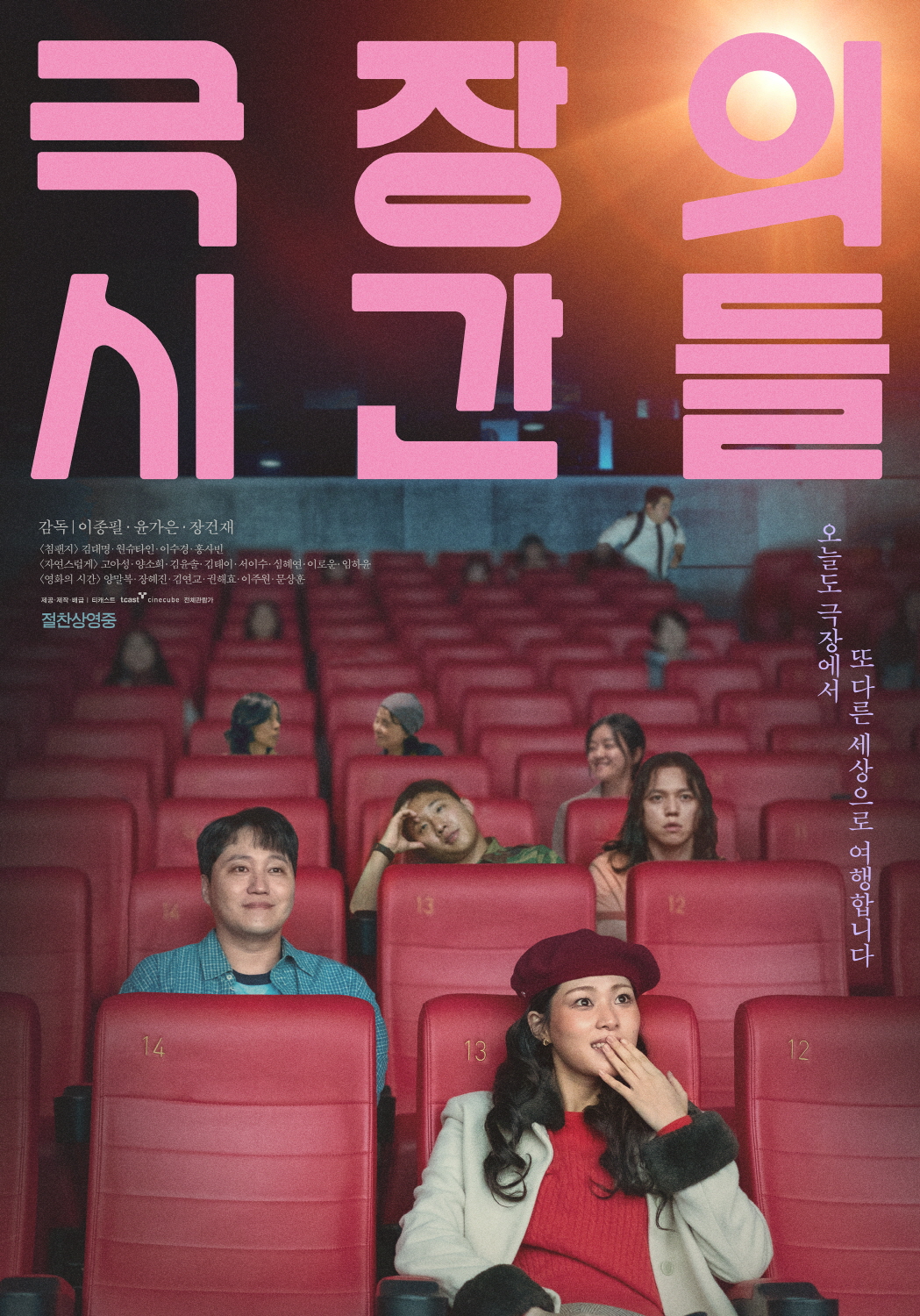
Made in celebration of the 25th anniversary of the Cinecube cinema in Seoul, Time of Cinema (극장의 시간들, Geugjang-ui Sigandeul) is an anthology film featuring three segments and bookended with a sequence set in the venue as a young woman takes lessons from the projectionist while classic films such as Ozu’s Late Spring play in the background. As such, each of the films has a kind of meta commentary on the nature of film, the industry and buildings as well as the impact it can have on people’s lives even if they happen to fall asleep during the movie.
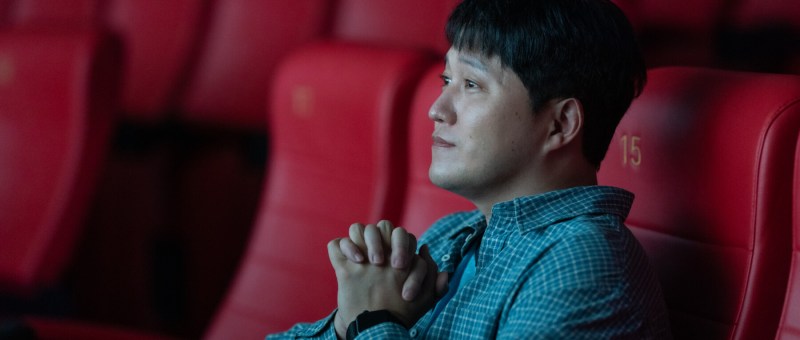
This kind of reflexivity is evident in the opening segment, Chimpanzee, which features its protagonists recreating the dance from Godard’s Bande à part. This segment also is set across two time periods and is revealed to be “a film” based on the recollections of the director’s youth in which he spent time watching movies with two close friends while in the military. This sense of loss for shared experiences of the past is something that echoes through the other sequences and in the last seems as if it could in some senses be returned through unexpected reunion. In any case, the director appears to reclaim them through imprinting his memories in the film as a means of reliving them. Its protagonists also have a kind of truth revealed to them that something they assumed to be merely a legend was perhaps true after all.
The second sequence, meanwhile, directed by Yoon Ga-eun plays with the nature of film itself as we’re show several scenes that turn out to be in progress shots from the filming of another movie in which a collection of little girls are asked to repeat the same scene in a frustrated attempt to make it seem more “natural.” At the end, they all sit down to watch the film they’ve made, but this is also a part of the “film”, while we have also already been watching them, leading us to ponder on these many levels of refection within the video footage. Well known for her films featuring children such as The House of Us, Yoon gets the most from her young cast while at the same time demonstrating how difficult it can be work with child actors even if what she mainly does is to leave them to their own devices, capturing their spontaneity and enthusiasm in the most natural way possible.
The third sequence meanwhile is more firmly rooted in Cinecube and explores the less glamorous side of filmmaking in taking a leaf out of Goodbye Dragon Inn’s book as the cleaning lady walks up and down the aisles collecting rubbish even if, as they mentioned in the first segment, this place is too fancy to sell popcorn. Though the cleaning lady rarely has time to watch any films, she ends up running into an old friend who’s just come in to use the bathroom and pressures her into seeing whatever’s playing which happens to be a special screening of a movie with a director Q&A. The old friend’s name also has the same pronunciation of the word for “film”, and though she and everyone else in the cinema falls asleep, her time spent there seems to return something precious that she had lost while she also reunites with her old friend.
In this way it paints cinema as an interactive experience and all the more so when visiting a cinema rather than watching passively, or inattentively, though a TV screen. By the same token, it shows the cinema staff working hard from the put upon box office lady trying to tell a desperate cinephile that he’s arrived too late to enter the auditorium and, in any case, has booked his ticket for the following day, to the cleaning lady and projectionist who meticulously keeps an eye on everything, both digital and analogue, to ensure that the film is being projected as intended. Cinemas are in that sense social spaces in which people share experiences with both strangers and friends while in some ways unaware of the relationship that’s arising between themselves and the screen and the images that may also be changing them in ways untold.
Time of Cinema screened as part of this year’s London Korean Film Festival.
Trailer (no subtitles)

