Dream (드림, Lee Byeong-heon, 2023)

A disgraced football player gets a shot at redemption after agreeing to coach a team hoping to take part in the Homeless Olympics in Lee Byeong-heon’s sporting drama, Dream (드림). The Homeless Olympics was founded in order to advocate for the end of homelessness while combatting discrimination and stigma and takes place annually with teams of homeless people from all over the world taking part. Set in 2010 and inspired by the first Korean delegation to participate, the film is essentially an underdog sports drama in which the act of scoring a single goal is the same as an overall victory.

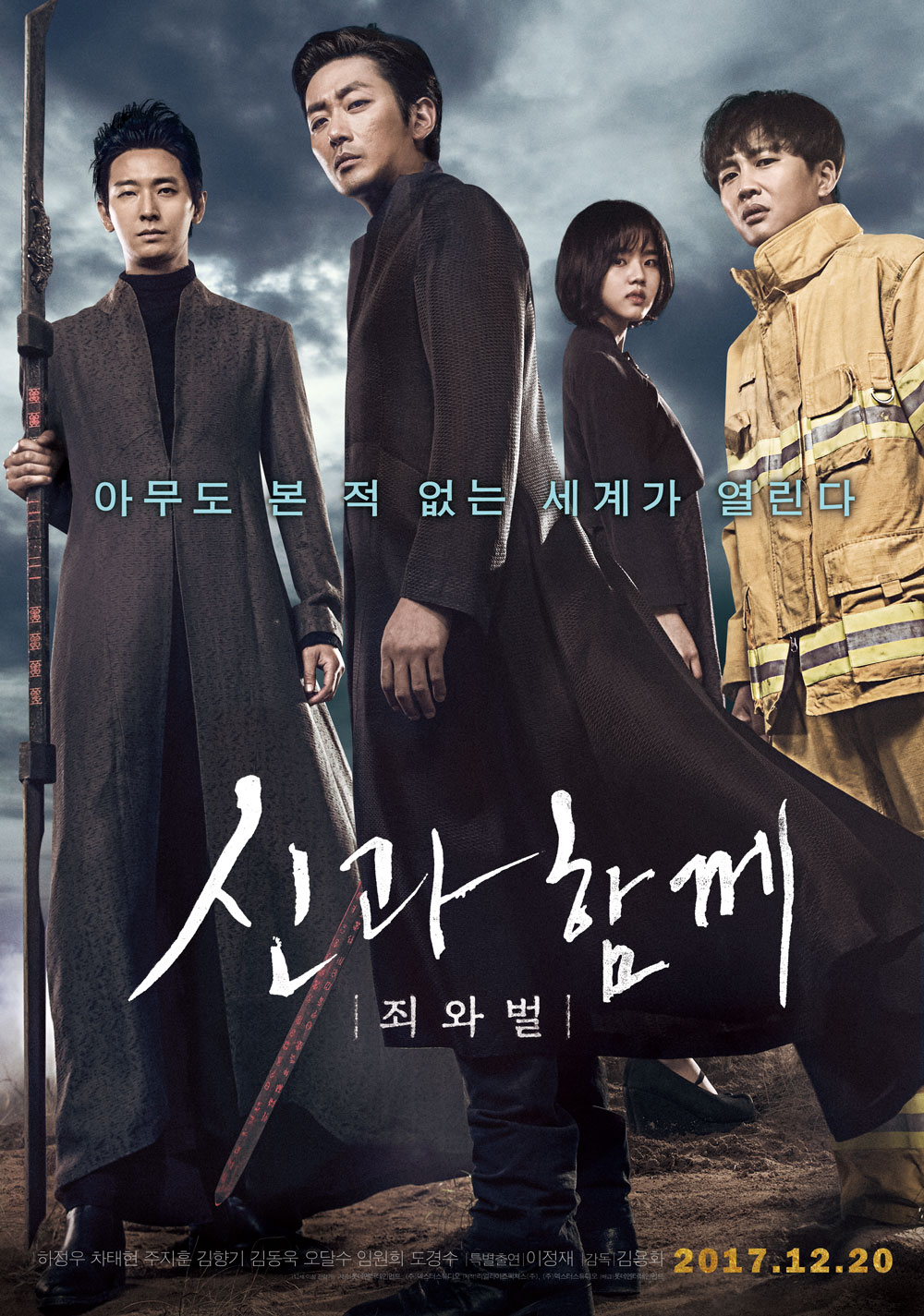
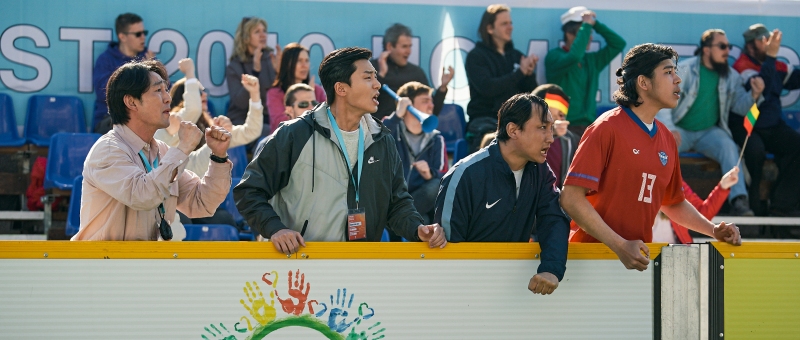
It is also, meanwhile, heavily critical of celebrity and sensationalist media each of which have a habit of latching onto popular causes in order to further their own careers. Hong-dae (Park Seo-jun) was a popular footballer insecure in his talents, but gained notoriety after poking an obnoxious reporter in the eyes when he repeatedly brought up the topic of his mother who happens to be a fugitive from justice. Deciding to retire from the game, Hong-dae is picked up by a talent agency who want to make him a star and is convinced to become the coach of the homeless football team in order to improve his personal brand while documentarian So-min (Lee Ji-eun) hopes to do something much the same by producing a semi-scripted reality show following the team’s fortunes.

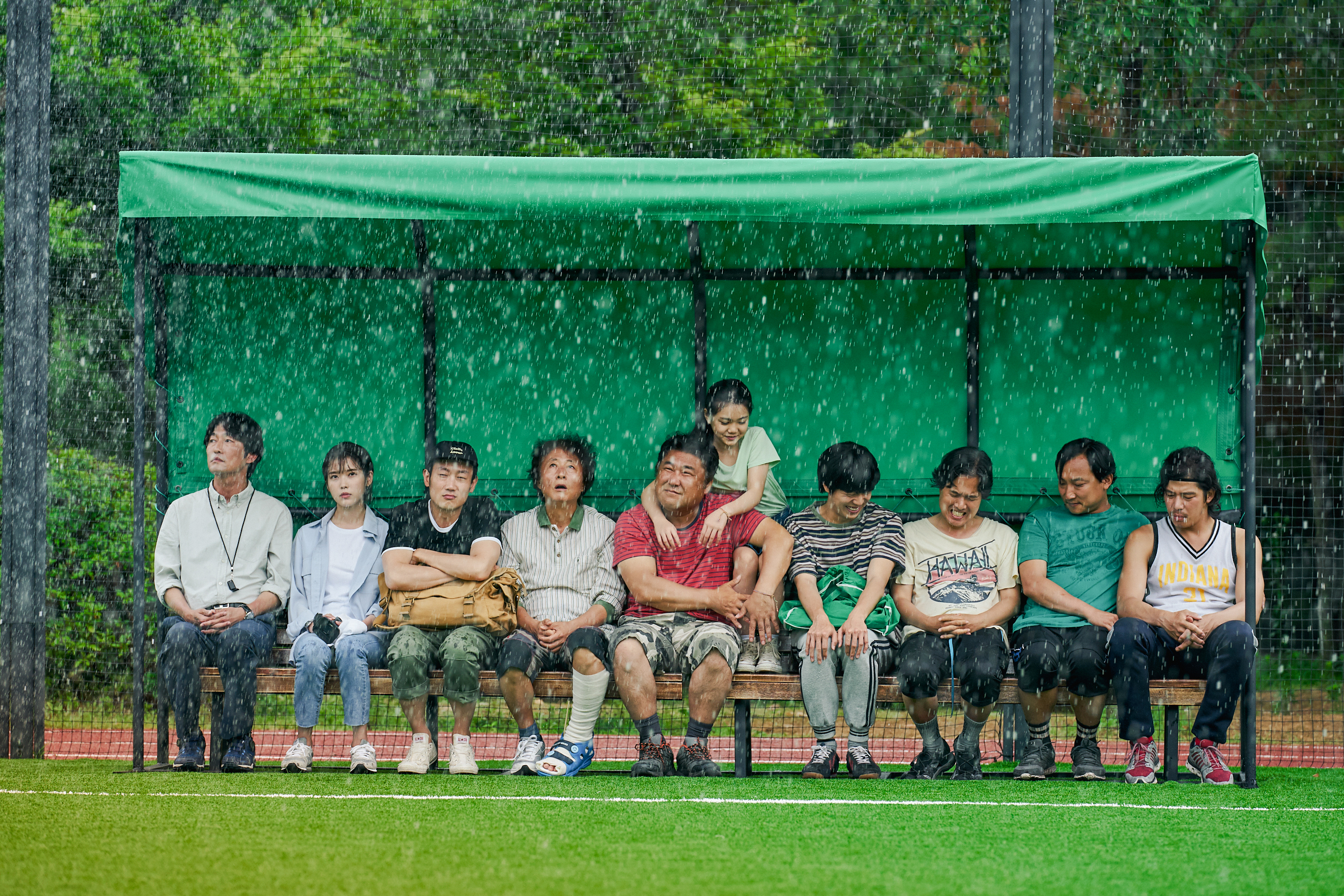
Accordingly, So-min instructs Hong-dae to let her “cast” the key players on the basis of their touching backstories rather than their sporting ability. She comes up with a selection of people who have each for various reasons ended up on the streets but are looking for a way to turn their lives around and repair fractured relationships with family members. One man turned to booze and women while riding high but found himself out of luck when the Asian Financial Crisis ruined his business, while another claims that he’s not really homeless just lying low for a while, and a third was scammed by a friend and saddened by the impending exit of his ex-wife and daughter who will shortly be moving to Australia with her new husband. The film strays into more interesting territory in exploring the story of 44-year-old Beom-su (Jung Seung-gil) who ended up on the streets after a workplace accident left him with a chronic illness he did not have the money to treat, but otherwise falls into the same trap as So-min’s documentary in taking a fairly superficial view of homelessness. By the end of the film many of the players have thankfully moved into stable accommodation but do so largely without explanation aside from having apparently managed to save up for a deposit. 

Positioning their battle for sporting success as a means of reclaiming their self-esteem might also uncomfortably suggest that the reason they’re on the streets is a matter of mental attitude while ignoring other systemic issues that led them there or prevented them from moving on (assuming that they wish to do so). Aligning their struggles with Hong-dae’s and to a lesser extent So-min’s might do something similar while they too are also battling cynicism and self-esteem issues, Hong-dae continuing to blame his mother for his problems complaining that he was born to be second place because she never put him first. As Hong-dae later points out, So-min is also to an extent exploiting the homeless in trying to create an inspirational narrative for her TV show before she like everyone else realises there are other ways to win besides the literal. 

The final message is more one of never giving up as the team finally travel to the Olympics and find themselves out of their depth before deciding to give it everything they have even if it’s very unlikely they will win. There had indeed been discrimination in Korea, a sponsor pulling out describing the homeless as “smelly and disgusting” and expressing a degree of squeamishness about involving them with their brand, but at the Olympics they become the most popular team despite their lack of skill purely because of their charismatic perseverance. One player’s late in the game announcement that he is gay but has now come to accept himself in the knowledge that the problem lies with the world that will not accept him also makes the case for a greater equality if perhaps clumsily conflating two different issues. Nevertheless, IU’s lively performance and the film’s warmhearted tone help to overcome any mild sense of discomfort in its otherwise genial tale of never giving up and regaining your self-esteem even if you feel as if the world has already abandoned you. 


Dream screens July 17 as part of this year’s New York Asian Film Festival.

International trailer (English subtitles)

Images: © 2023 PLUS M ENTERTAINMENT & OCTOBER CINEMA INC. ALL RIGHTS RESERVED.
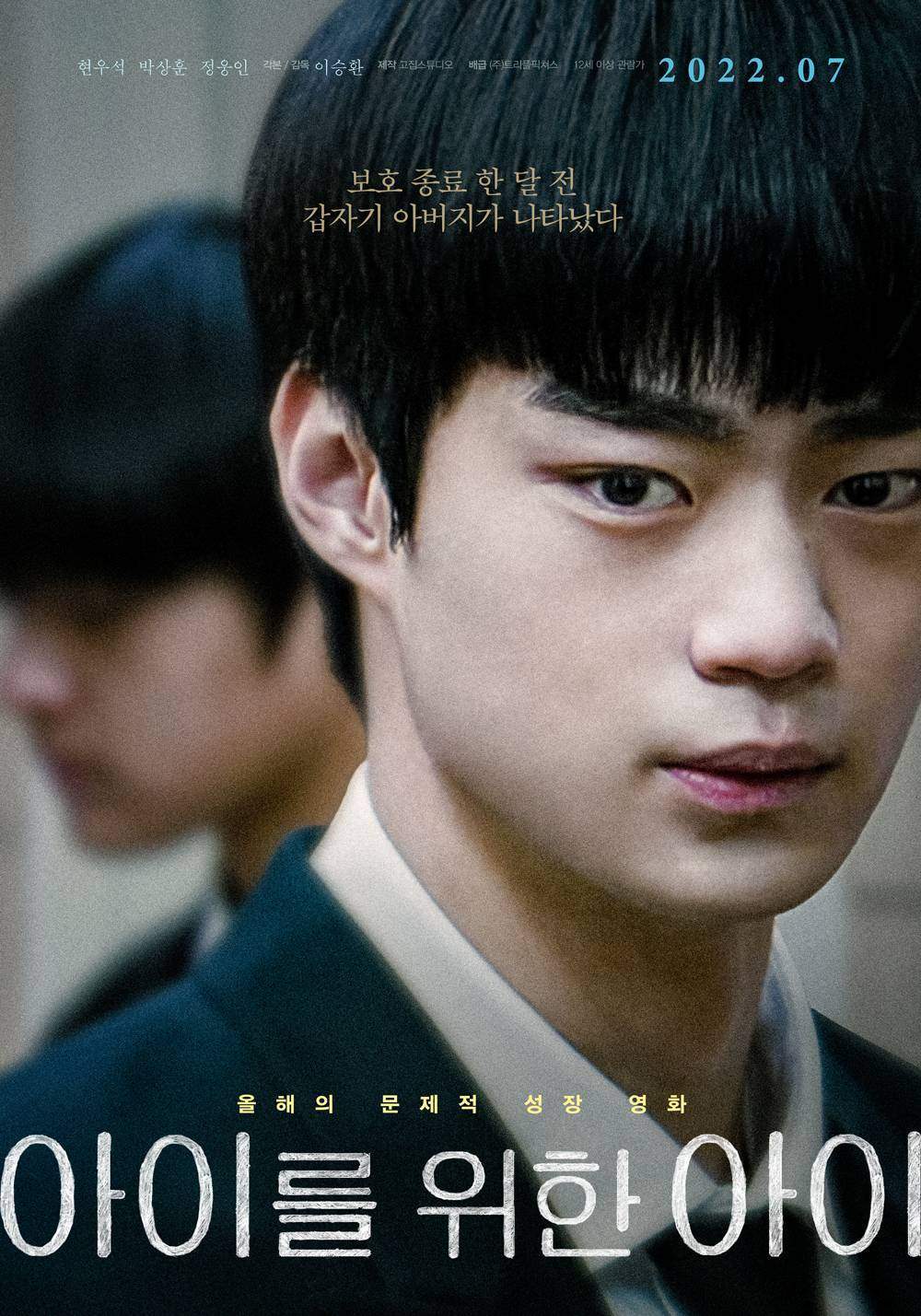
A Home from Home (아이를 위한 아이, Lee Seung-hwan, 2022)

Unexpectedly reunited with his estranged father, a young man is confronted with a series of choices on leaving the care system in Lee Seung-hwan’s darkly comic coming-of-age drama A Home from Home (아이를 위한 아이, Ayireul Wihan Ayi). The Korean title may mean something more like a child looking after a child, but the English also neatly encapsulates the hero’s dilemma on being ejected from the orphanage where he has lived for most of his life into a new “family” home with two strangers he hardly knows at all. 

Do-yun (Hyeon Woo-Seok) is about to come of age. In less than a month he will have to leave the orphanage where he lives and has nowhere else to go. Working as a takeaway delivery driver, he is acutely aware of the prejudice directed towards those who have no families with both his boss and unreasonable customers making jibes about how they expect no better from someone who “wasn’t raised properly”. Prejudice is one reason he longs to leave Korea for the promise of Australia, explaining that there he’ll simply be “Korean” rather than an “orphan” and will be able to build an independent life for himself. All his plans are scuppered, however, when a man turns up at the orphanage claiming to be his estranged father and offering to take him in. 

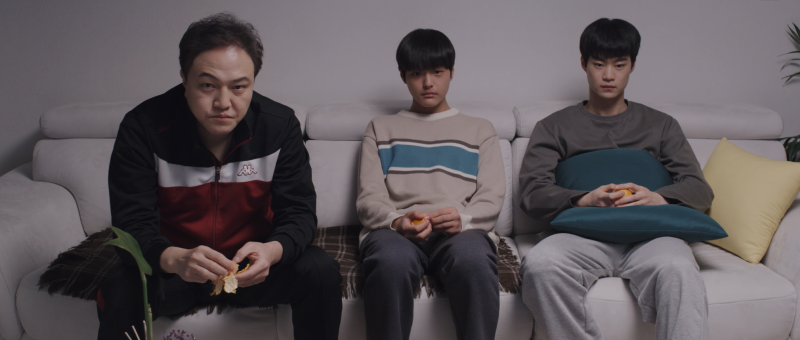
Understandably resentful, Do-yun is persuaded to accept the offer and discovers that he has a younger half-brother, Jae-min (Park Sang-Hoon). Seung-won (Jung Woong-In), his father, claims that he gave up Do-yun for Jae-min wanting to remarry after his first wife died but apparently unable to take his first son with him. That might be reason enough to resent Jae-min, but Do-yun doesn’t particularly only wanting to save enough money to get to Australia and leave the family behind. The problem is that Seung-won soon passes away leaving Do-yun with a still deeper sense of loss and resentment while wondering if Seung-won only returned to claim him because he needed someone to look after Jae-min in his absence. Only 20 years old, he ends up becoming Jae-min’s guardian and despite himself decides to put his Australian dreams on hold to look him. 

Becoming an accidental “father” so young does indeed force Do-yun to grow up quickly, learning to cook (well, divide a microwave dinner onto plates) and keep the apartment Seung-won left them tidy. Perhaps he’d have had to figure all that out for himself alone on leaving the orphanage and having to manage on his wages from the delivery job, but there is also a lingering resentment that he’s putting his life on hold for a “brother” he didn’t know until a few weeks previously wondering what sort of responsibility he really bears for him even as he begins to ease into a sense of familial comfort he had never known before. Even so, an unexpected revelation sees him questioning himself further and trying to figure out whether he really belongs with Jae-min at all or should cut his losses and go to Australia anyway. 

In an odd way, he comes to view his new familial relationship as “just another prison” while jealous of Jae-min’s opportunities and yearning for independent freedom. Meanwhile, he finds himself targeted once again by exploitative adults in the form of a gold-digging aunt and her obnoxious husband intent on getting their hands on Jae-min’s inheritance, and scammed out of money he’d saved for his new life abroad by another “brother” he’d grown up with in the orphanage. What he wants is to make a decision that’s his own rather than being railroaded by the circumstances of his life or manipulated by forces beyond his control but also begins to develop a genuine familial connection with Jae-min even while remaining mildly distrustful and trying to figure out where it is that he truly belongs. Exploring the effects of a societal prejudice against orphanhood as well as the practical and emotional difficulties faced by those who are abruptly ejected from the care system into an uncaring world, Lee’s strangely cheerful drama finds two young men searching for support but finally discovering they may have only themselves to rely on. 


A Home from Home streams in the US until March 31st as part of Asian Pop-Up Cinema Season 16.

International trailer (English subtitles)

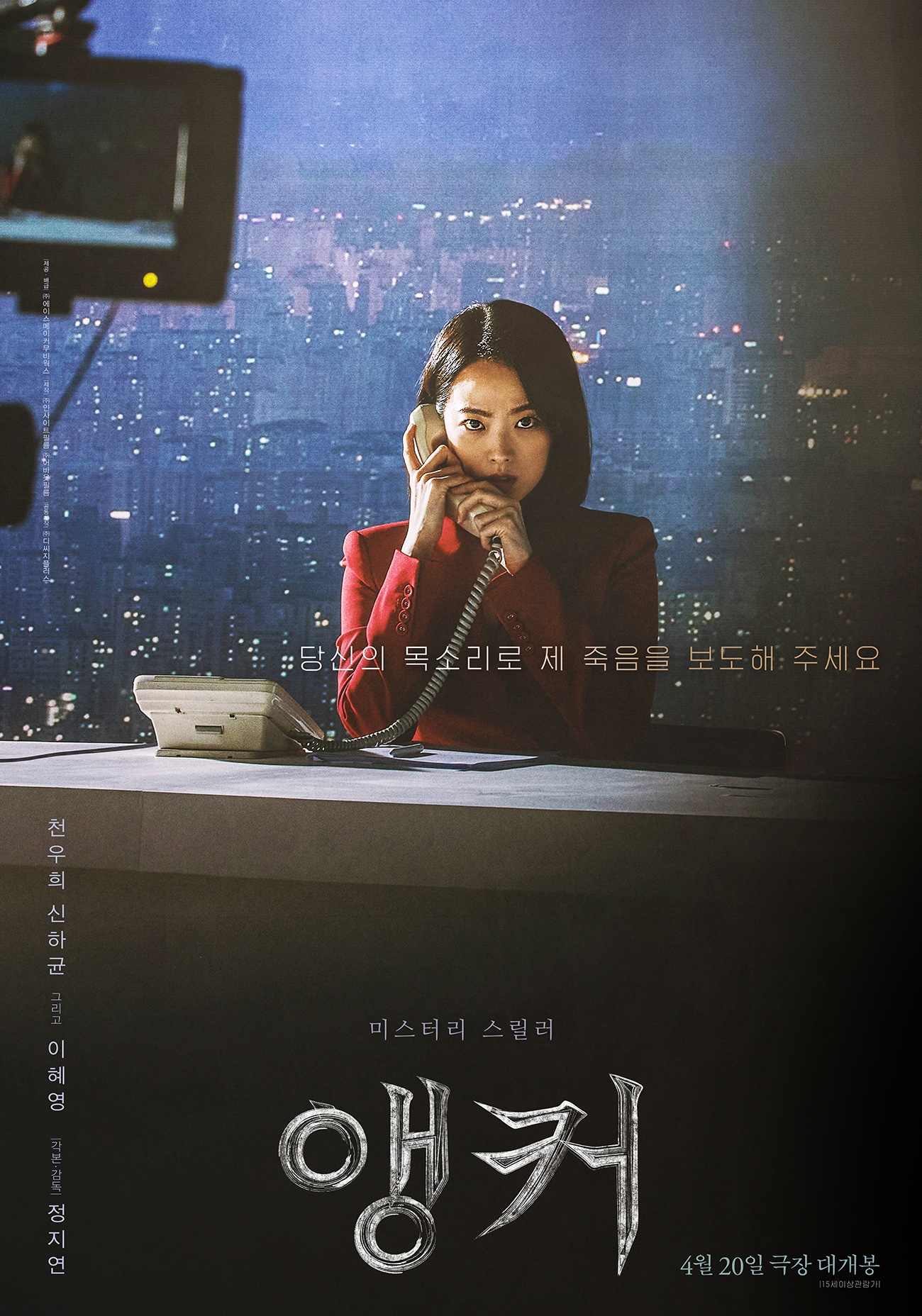
The Anchor (앵커, Jeong Ji-yeon, 2022)

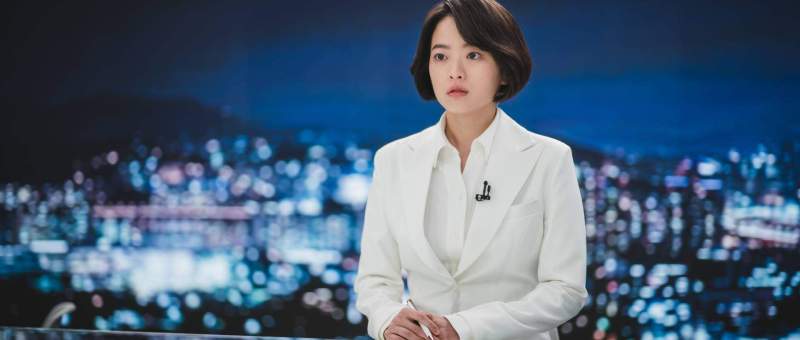
A successful newsreader’s sense of reality begins to fracture when she ends up becoming part of the story in Jeong Ji-yeon’s twisty B-movie psychological thriller, The Anchor (앵커, Anchor). As much about mothers and maternal anxiety as it is about a patriarchal and conservative society, Jeong’s eerie journey through the psyche of a traumatised woman is also a quest for identity and a search for the self as the heroine rails against her role as a mere conduit for the thoughts and will of others. 

In her mid-30s, Sera (Chun Woo-hee) is a popular anchor helming the most important news report of the day. Yet she’s facing a challenge from a younger rival who is not a trained presenter but a respected reporter who can bring a degree of editorial authority to the desk which her polished delivery cannot. As one of her bosses puts it, it’s the way that things are going which Sera seems to know seeing as he also remarks that she’s been trying to gain experience as a reporter so that she can be a “real anchor”. As it stands, her job is mostly to look presentable and support the male lead reading out words other people have written presented to her by autocue. Her mother (Lee Hye-young) is always needling her, insisting that she can’t afford to let her guard down even for a moment if she wants to keep her spot while further fuelling her sense of futility in suggesting that even becoming a news anchor may not have been her decision in the first place so much as in service to her mother’s desire for vicarious success. 

When a strange woman, Mi-so (Park Se-hyeo), calls in to the station one day insisting on speaking with Sera directly it seems like the perfect opportunity to prove her credentials as an investigative reporter but her male colleague immediately shuts the conversation down writing off the woman’s claims that she’s being harassed by an unknown aggressor as a prank call from a crazed fan. Sera follows his lead and in any case has to read the news, but something about the woman’s story disturbed her so she decides to check out her address and is shocked to discover the woman’s daughter dead in the bath and the woman herself hanging in her closet with her phone still in her hand. Perhaps echoing her own fragile mental state, Sera is haunted by the image of the woman hanging but does not seem to feel particularly guilty or responsible for her death in not following up immediately in case she and her daughter could have been saved so much as determined to turn the case into her personal crusade to decrease the likelihood of them kicking her off the desk.

The desire to investigate the case herself is in part a desire to assert her own identity as distinct from that projected onto her by her overbearing mother and chauvinistic husband who insists that her mother is controlling her but in reality just wants to control her himself. Min (Cha Rae-hyung) keeps badgering her about starting family but seems oblivious to her wishes though the couple appear to have been separated for some time only keeping up appearances to avoid the possible fallout from the scandal of divorce. Becoming a mother is in a way to lose one’s own identity especially in a society such as a Korea’s in which women who bear children stop hearing their own name, addressed only as so and so’s mum rather in their own right. It may partly be this sense of erasure which drives the resentment which exists between mother and child along with a persistent social stigma against women raising children alone especially if born out of wedlock. The idea of a woman seeking fulfilment outside of the home is still to some taboo with a strong social pressure for women to abandon their own hopes and desires and devote themselves entirely to the role of “mother”. 

On trying to decide how to frame the case, the editorial board is torn between viewing Mi-so as a victim of unjust societal pressures and condemning her as an evil woman who murdered her daughter and then herself, the police having decided that there was no third party involved despite Mi-so’s claims of an intruder. Even with a more compassionate framing, the message is pity rather than a drive for social change in which women like Mi-so who appears to be incredibly young, little more than a child herself, could get the help they need. Sera becomes convinced that a creepy psychiatrist (Shin Ha-kyun) specialising in hypnotism is somehow responsible though he frames the mysterious intruder as a kind of phantom, a manifestation of buried trauma ratting the doors trying to get in or else a convenient “entity” that allows the hauntee to deny their responsibility or reality. In any case, Sera’s investigations take her to a dark place but eventually arrive in a kind of psychological wombscape in which she must finally kill the image of the mother in herself in order to escape her mother’s house in a symbolic vision of birthing a new self having reclaimed her individual identity. Elegantly lensed and filled with visions of refracting mirrors reflecting Sera’s identity crisis Jeong’s eerie psychodrama eventually allows its heroine to find her own way out of unresolved trauma if only ironically.


The Anchor screened as part of this year’s London Korean Film Festival.

Original trailer (English subtitles)

1987: When the Day Comes (1987, Jang Joon-hwan, 2017)

fullsizephoto931939The political history of Korea is long and complex and oftentimes sad. The events depicted in 1987: When the Day Comes (1987), pivotal as they were, occurred just 30 years ago. Yet the recent past has also been one marked by protest, public anger, and political scandal though this time around with far less fear or danger. The protests of 1987 were a different story. The rule of Chun Doo-hwan, a military dictator who had seized power following the assassination of the previous dictator, Park Chung-hee, was one of extreme oppression which had already seen a widespread massacre of peaceful protestors by the state in Gwangju in 1980. Chun’s term, under the constitution, was set at seven years after which many hoped for a path to modern democracy but those hopes were dashed when he announced an intention to appoint his successor rather than call a free and fair election.

In depicting the climactic events of that summer, Jang Joon-hwan begins with chaos as a doctor is summoned to a mysterious room where a young man lies unconscious in a pool of water. The police have gone too far, and boy has died during interrogation. Aware of the potential danger of the public finding out that the state has in effect murdered a suspect in an act of torture, the head of the ACIB, Park (Kim Yun-seok), orders the body to be quickly cremated. This, however, needs a certificate signed by a prosecutor and Prosecutor Choi (Ha Jung-woo) is fed up with the ACIB and unwilling to cooperate especially as he smells a rat with the cause of death for a healthy 22-year-old listed as a “heart attack”. Not wanting to be on the wrong side of it if it does get out, Choi refuses the cremation and orders an autopsy which in itself triggers a series of other events eventually bringing the government to its knees.

The state remains cruel and duplicitous. The death of Park Jong-chul (Yeo Jin-goo) would become a catalyst and a rallying call, not just for the injustice of it but for the injustice of covering it up. Park’s family are denied their basic rights, his mother and sister literally dragged away from the morgue screaming while his traumatised father looks on in silent agony. They say that Park was a communist, that he died of fear because he weak while claiming all along to have done no wrong. Only when the “truth” begins to emerge does the ACIB decide to hang a few of its guys out to dry, urging them to “patriotically” take one for the team and head to prison for a while with a hefty compensation package to help sweeten the deal.

The death in custody becomes just one event in a situation spiralling out of control. Paranoid in the extreme, the Chun regime is also working on bringing down a “North Korean Spy Network” controlled by a democracy activist on the run who, unbeknownst to them, is also working with the Catholic Church who will eventually prove pivotal in delivering the truth to the people. Meanwhile, the press has also decided to jump ship, ignoring the government’s carefully crafted guidelines in favour of running actual news. Chun’s iron grip is slipping.

Jang’s biggest takeaway is that corrupt regimes crumble when enough people find the strength to go on saying no. It begins with Choi refusing to stamp a certificate then travels to the reporter who won’t back down, passes on to the secret revolutionaries bravely carrying messages at great personal costs, the not so secret clergy who perhaps have more protection to speak their minds (up to a point) than most, and of course the students in the streets who risked their lives to build a better future. One of the few completely fictional characters, the niece (Kim Tae-ri) of a prison guard (Yu Hae-jin) charged with conveying messages to an activist in hiding, proves the most illuminating in her inward struggle towards the democratisation movement. Afraid of the consequences and preferring to remain politically apathetic, she is eventually radicalised through witnessing the brutality of the regime first hand and suffering personal loss because of it.

Playing out as a taut thriller, 1987: When the Day Comes has a lived in authenticity from the motif of being constantly deprived of one shoe by a cruel and absurd regime to the deadly serious ridiculousness of men like Park who hate “the enemy” enough to destroy the thing they claim to love in pursuit of it. Timely and filled with melancholy nostalgia, Jang’s depiction of the pivotal events of 30 years ago is also a rallying cry in itself and an important reminder that the fight for justice is never truly won.


Screened at the 20th Udine Far East Film Festival.

International trailer (English subtitles)

Along With the Gods: The Two Worlds (신과함께-죄와 벌, Kim Yong-hwa, 2017)

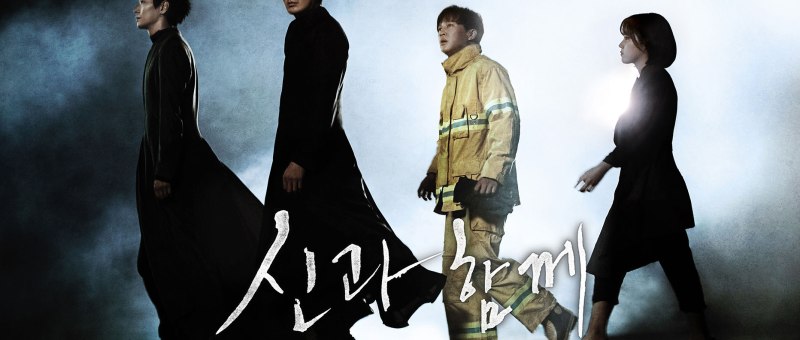
Along With the Gods- The Two Worlds posterThere’s nothing like death to give life perspective. If life is a series of tests, death is the finals but if you pass you get to come back and do it all again, otherwise you’ll have to spend some time in the afterlife thinking hard about what you’ve done and presumably studying for some kind of resits. At least, that’s how it seems to work in the complicated Buddhist hell of Kim Yong-hwa’s fantasy epic Along With the Gods: The Two Worlds (신과함께-죄와 벌, Sin gwa Hamkke – Joe wa Beol). The first in a two part series, The Two Worlds takes a saintly man and tries to pull him down only to build him back up again as a potent symbol of filial piety and wounded selflessness.

Firefighter Kim Ja-hong (Cha Tae-hyun) is killed leaping heroically from a burning building with a little girl wrapped in his arms. He doesn’t realise he’s dead until he’s greeted by two neatly suited, official looking types who explain to him that they are his “Guardians” and will be looking after him on his journey through the afterlife. It turns out that Ja-hong’s heroic death has earned him a “Paragon” badge – a rare occurrence, and he has a good chance of reincarnation before the 49th day if he can successfully pass each of the seven trials which mark passage through Buddhist Hell.

As the Guardians point out, it would be extremely difficult for a “normal” person to pass these seven trials and achieve reincarnation but as a Paragon Ja-hong should have an easier ride. Ja-hong is, however, an ordinary person with an ordinary person’s failings even if his faults are comparatively small. Ja-hong is literally on trial seven times – represented by his team of defence lawyers, the Guardians, he is charged with various sins each “judged” by a god presiding over a custom courtroom. Murder Hell is fiery chaos, indolence is assessed by a stern older lady (Kim Hae-sook), and deceit by (who else) a small child (Kim Soo-ahn) licking a large lollipop.

Ja-hong is indeed a “good person” but he has also been to dark places, wilfully deciding to turn and walk away from them in order to repurpose his rage and resentment into a determination to care for his seriously ill mother (Ye Soo-jung) and younger brother (Kim Dong-wook). Working tirelessly, Ja-hong has been selfless in the extreme, saving lives and saving money for his family whilst sacrificing his own life and prospect of happiness in order to provide for others. That’s not to say, however, that there isn’t a degree of “sin” in the selfishness of Ja-hong’s selflessness or that he hasn’t also been cowardly in making a symbolic recompense for a guilty secret rather than a personal apology.

Kim Yong-hwa weaves in a series of subplots including a lengthy shift into the life of Ja-hong’s brother Su-hong, a possibly gay soldier with an intense attachment to a comrade which eventually has tragic results. Su-hong’s mild resentment towards his brother becomes a key element in his trial, eventually developing into a more literal kind of spectre haunting the proceedings while perhaps creating even more turmoil and confusion in the living world thanks to a moustache twirling villain whose desire to “help” is probably more about saving face – the kind of “betrayal” which is not “beautiful” enough to get a pass from the Goddess.

In the end the court seems to bend towards Ja-hong’s moral philosophy, excusing his human failings through moral justification even when that justification remains flimsy as in the case of his “fake” letters intended to make people feel better through the comfort of lies. The essence of the judgement, however, looks for forgiveness – if a sin is forgiven in the mortal world, it is inadmissible in a celestial court. The message seems clear, face your problems head on and sort out your emotional difficulties properly while there’s time else you’ll end up with “unfinished business” and get bogged down in Buddhist Hell being attacked by fish with teeth and having old ladies asking you why you spent so much time watching movies about death rather than living life to the fullest.

Ambitious in its use of CGI, Along With the Gods: The Two Worlds acquits itself well enough in its carefully drawn (if lifeless) backgrounds and frequent flights of fancy which allow Ha Jung-woo’s enigmatic Gang-lim ample opportunity to whip out his fiery sword of justice. Narratively, however, it’s comparatively clumsy and content to revel in the melodrama of its tearjerking premise. A post-credits teaser linking part one and part two through the recurring figure of an old man who can see the Guardians presents a familiar face in an extremely unfamiliar light and hints at a great deal of fun to be had next time around – appropriate enough for a film about reincarnation, but then again it’s as well to have some fun in this life too, something The Two Worlds could have used a little more of.


Currently on limited UK cinema release courtesy of China Lion.

Original trailer (English subtitles)