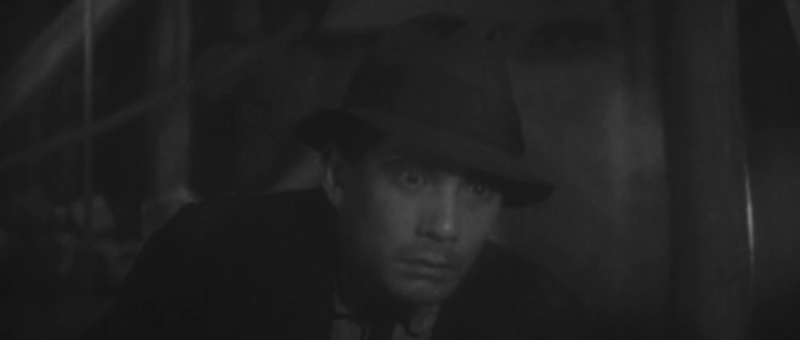
Though less well remembered now, Sotoji Kimura was a fairly prominent director at PCL in the 1930s having made Japan’s first musical Tipsy Life in 1933. A left-wing filmmaker who had been associated with keiko eiga and proletarian cinema, he nevertheless also later made imperial propaganda films and eventually decamped to Manei in Manchuria, remaining in China until 1953. Though he returned to filmmaking after his return to Japan, he never regained the same kind of success he’d experienced before the war.
Tokai no Kaii 7-ji 03-bun (Lit, “Urban Mystery: 7:03) seems like it may have been an outlier in his earlier career which doesn’t appear to have leaned much towards genre cinema. Though in some quarters billed as a horror film, likely because of the inclusion of the word “怪異” which implies some kind of strangeness or connection with the supernatural, it’s more of a noirish morality tale with an otherworldly edge as a compromised man attempting to reform himself after a living a dissolute life makes a series of poor choices after being given a copy of the following evening’s newspaper. A title card at the beginning states that the film is adapted from the final story written by Itsuma Maki penned especially for PCL. Itsuma Maki was a pen name used by Kotaro Hasegawa specifically for his true life mystery stories and his picture that is featured. Hasegawa had passed away from asthma at the young age of 35 a few months before the film’s release.
The story itself is said to be inspired by British writer Holloway Horn’s The Old Man, though all it seems to take from it is the morally compromised protagonist and the newspaper from the future. Miyamoto is in a bind because his girlfriend is pregnant and even with both of them working they’re struggling to make ends meet as is it. He calls his friend Tarama, who is a reporter, for financial help. It’s at this point that we learn both that Miyamoto used to live a fairly debauched life in the bars and clubs of Ginza and may also have had issues with gambling. He has, though, attempted to give all that up after meeting Noriko (Sachiko Chiba), a kimono-wearing respectable young woman who works in a shop selling Western fashions. They do not appear to be legally married, though Miyamoto refers to her as his wife, possibly because their financial situation does not allow it seeing as Noriko may have to give up her job if she married. Miyamoto is currently working for some kind of shady company that sells financial information and is in the middle of a dodgy deal with a government minister who suggests the nation is on the brink of financial collapse, but that they also have to at least appear financially responsible in a strange echo of Miyamoto’s situation.
Miyamoto has already tried asking his boss for financial assistance, but the boss is incredibly judgemental and unsympathetic. He calls Miyamoto irresponsible and suggests he’s embarrassed himself just by asking his employer for this kind of favour. To add insult to injury, he also tells him he should pay for the personal call he just made to Tarama on the office phone. When he’s approached by a strange old man on the street who seems to know his name, Miyamoto is rude at first and flat out tells him he doesn’t have money to buy the newspaper he’s selling. But the old man badgers him into taking one, claiming that it’s the edition from the following evening. The old man walks away smiling, remarking that Miyamoto is the only person on earth on who knows what’s going to happen tomorrow. Comparing the paper those of other passengers on the way home, Miyamoto confirms that it does seem to be from the following day, though when he disembarks he’s followed by hysterical laughter from the other passengers having repeatedly tried to confirm the day’s date along with obvious facts such as Friday 27th following Thursday 26th.
In any case, some of the newspaper headlines, including an earthquake and a fire breaking out at the bar where he was due to meet Tarama the following evening, come true further convincing him the content is accurate. An obvious solution presents itself in using the racing report to place a bet and win financial security for his new family, but Miyamoto doesn’t have the stake money. He only needs 20 yen, but even after waking a pawnbroker in the middle of the night, he can’t get more than eight. It’s at this point he becomes increasingly greedy and desperate, deciding to take advantage of a report of a late night robbery, staking the place out and robbing the thief as he makes his escape only to end up killing a seemingly innocent man who had even less in his wallet than he did.
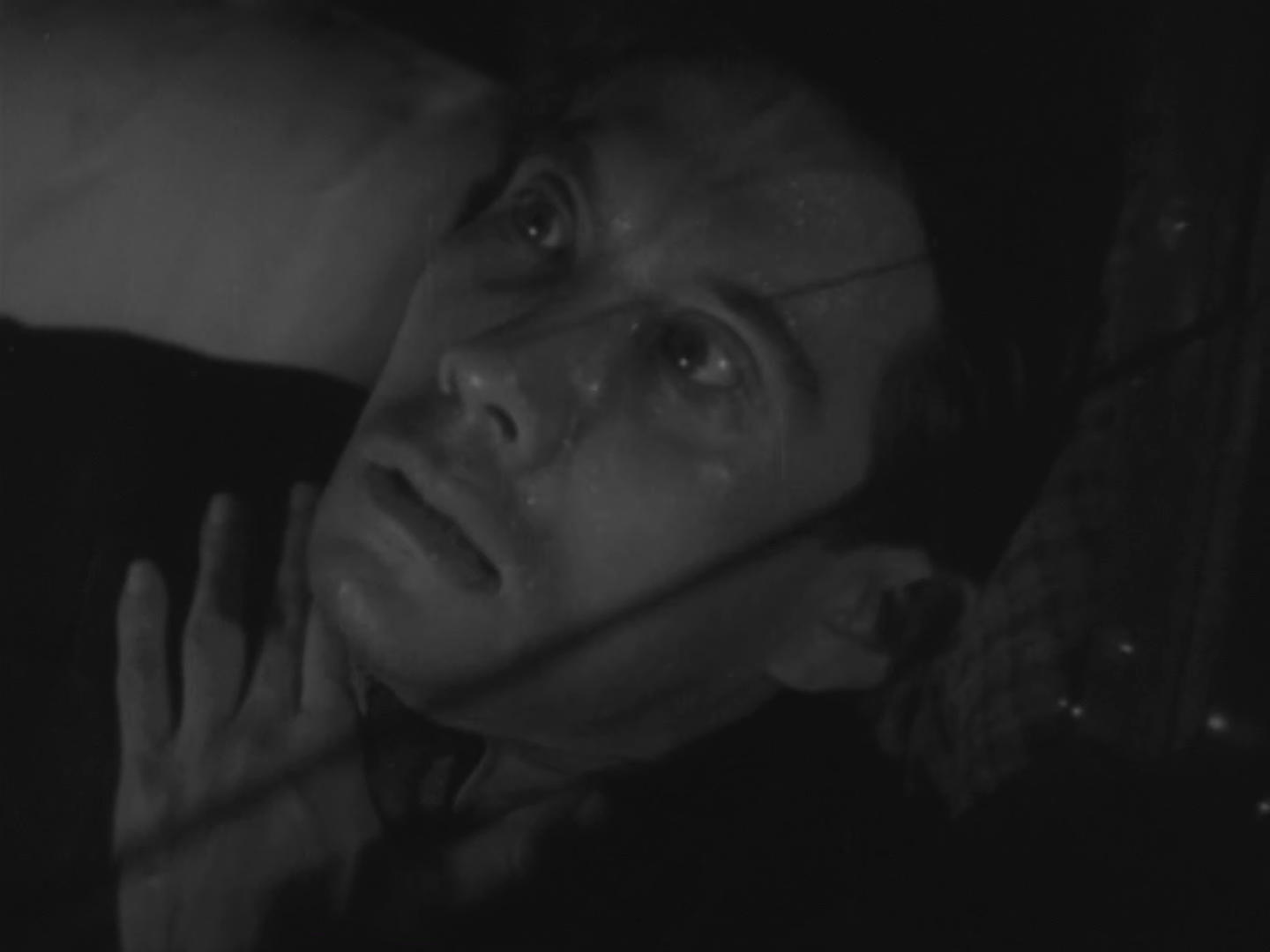
That the man had no money perhaps further bears out the straitened nature of the contemporary economy, though it seems clear enough that most of Miyamoto’s issues are the result of his personal failings. Perhaps the best thing to do would have been to throw the newspaper away. His attempt to use it to cheat at gambling might be understandable, but his decision to rob a man who had committed theft as if that were somehow more morally justifiable than committing the crime himself directly is not really defensible. On realising he may have killed the man, he simply shrugs and says he was “scum” anyway, as he steals his disappointingly empty wallet. His repeated attempts to get rid of it, which all fail as the universe mysteriously returns it to him, may symbolise his desire to discard his crime, but in the end he cannot escape his fate just as he failed to overcome his nature when presented with the newspaper. Kimura conjures an atmosphere of increasing dread as Miyamoto becomes ever more sweaty and paranoid amid the foggy streets of Tokyo before beginning to realise that he may have got his priorities all wrong and should perhaps have paid more attention to what the newspaper had to say before accepting its dubious bargains.
 Hiroshi Shimizu is best remembered for his socially conscious, nuanced character pieces often featuring sympathetic portraits of childhood or the suffering of those who find themselves at the mercy of society’s various prejudices. Nevertheless, as a young director at Shochiku, he too had to cut his teeth on a number of program pictures and this two part novel adaptation is among his earliest. Set in a broadly upper middle class milieu, Seven Seas (七つの海, Nanatsu no Umi) is, perhaps, closer to his real life than many of his subsequent efforts but notably makes class itself a matter for discussion as its wealthy elites wield their privilege like a weapon.