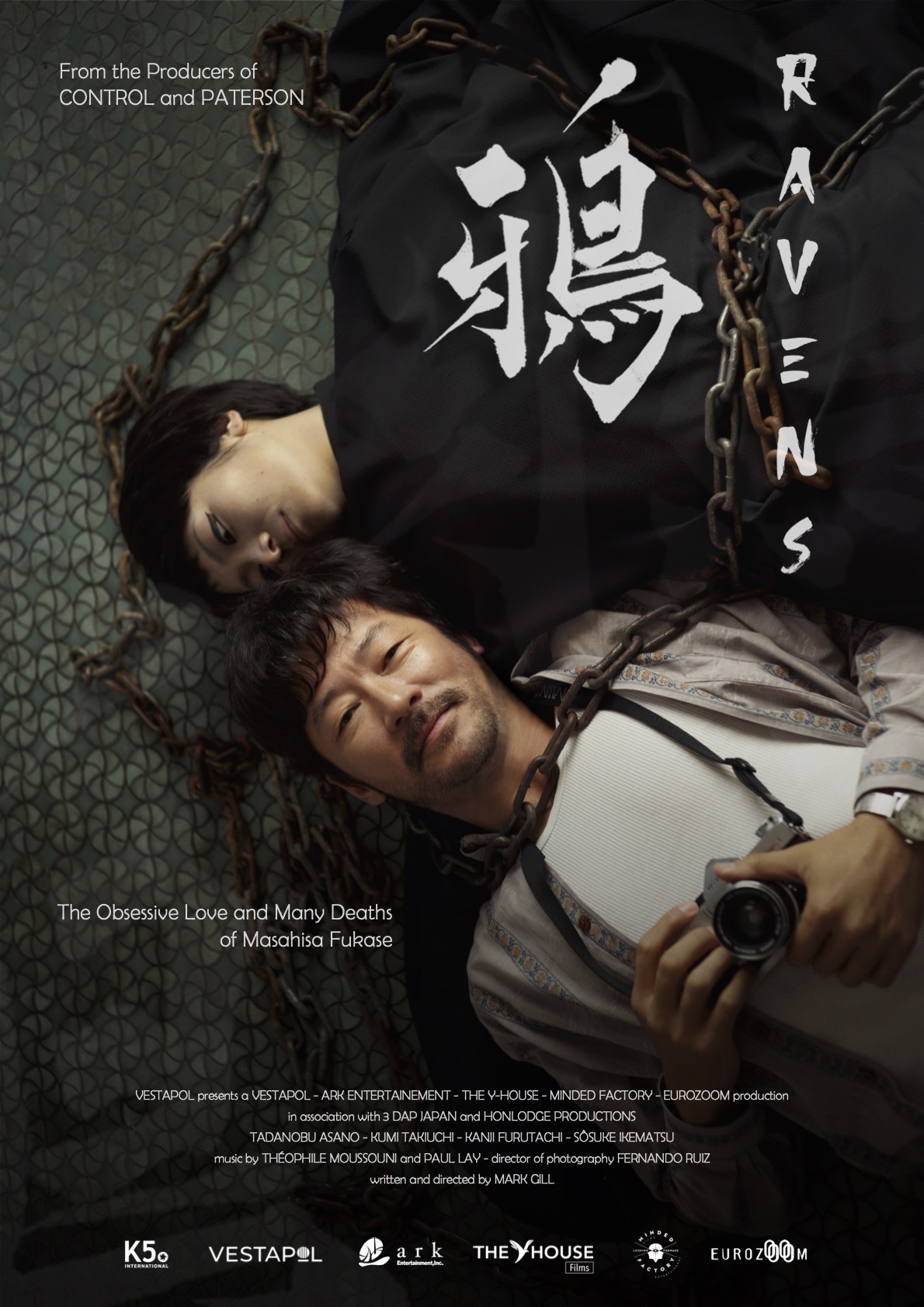
Ravens (レイブンズ, Mark Gill, 2024)

“All I see are self portraits”, the hero’s by then former wife cuttingly remarks on visiting his comeback exhibition in the company of her new husband, seemingly a much more conventional businessman. Japanese films about photographers are similar to those other countries make about writers in that their protagonists are often very flawed people, tortured artists consumed by their own trauma and often turning to drink at the expense of their personal relationships. Tadanobo Asano has in fact played similar roles a few times before. In Yoichi Higashi’s Wandering Home, he played real life war correspondent Yasuyuki Tsukahara who passed away from kidney cancer at the age of 42 after years of alcohol dependency, while in 1999’s One Step on a Mine, It’s All Over he played Taizo Ichinose whose obsession with getting a photograph of Angkor Wat eventually results in his death.

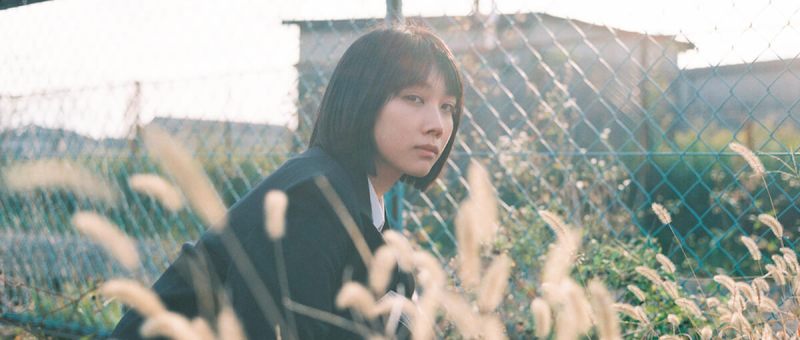
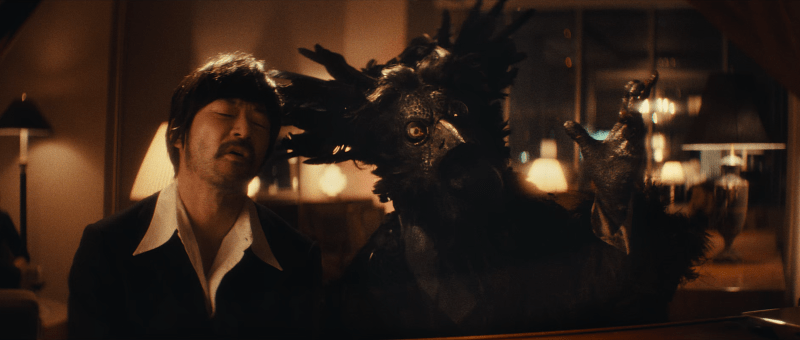
Masahisa Fukase was one of the key photographers of the post-war era and also an incredibly troubled soul. The conceit of Mark Gill’s Ravens (レイブンズ) is that Fukase is accompanied by a giant, anthropomorphised, English-speaking raven (José Luis Ferrer) who gives voice to his darkest thoughts and impulses. A magazine profile describes Fuksase’s work as having dark and occult influences, which the film attributes to the fact that his incredibly conservative father (Kanji Furutachi) used to lock him inside a more literal dark room as a punishment when he was a child. 

Like many of his contemporaries, Fukase’s photographs often express the widening gap between the traditional and the modern in the changing post-war society and the film also uses many of his motifs such as his family photographs to express the changing dynamics between them. Fukase himself is caught in the nexus of this continuing battle in inheriting the legacy of his father’s war trauma. A heavy drinking, violent man, Sukezo insists that as the oldest son Fukase must take over their family photography studio and that taking photogaps is a commercial activity not an artististic one. Fukase’s wife and muse Yoko (Kumi Takiuchi) often says the same thing, undercutting Fukase’s sense of purpose in his work even while he also denies Yoko’s role as a collaborator rather than simply as a subject. “Any woman will do,” the Raven tells him though that turns out not quite to be the case. 

Yoko complains that that Fukase never really looks at her but sees the world abstractedly through the lens of his camera which is really just another way of avoiding reality. She thinks she begins to understand him after belatedly meeting Fukase’s family years after their marriage and witnessing one of his father’s drunken rages first-hand, but it only seems to push them further apart. Despite his claims of artistry, Fukase quickly becomes jealous of the attention Yoko attracts as the star of his photographs as if she has eclipsed him, the artist, and can no longer be controlled by his camera. He clearly wanted the fame and acclaim through his success only seems to deepen his self-loathing and desire for death. His father had told that a man who failed to achieve success by 40 should kill himself, though when Fukase does eventually attempt to take his own life he does so by hanging, hoping that his assistant will photograph it, rather than by using the sword his father shoved at him.

Though Fukase describes Yoko as a very modern woman she too is caught by this cycle in that her mother tells her it’s a wife’s duty to forgive her husband even after he wounds with a knife during a drug-fuelled psychotic episode. Despite separating from him, Yoko continues to visit Fukase in the hospital where he remains after suffering a traumatic brain injury until his eventual death in 2012. In its way, it’s a frustrated love story in which the relationship between them is disrupted by the intrusion of outdated social codes, generational trauma, and Fukase’s own demons which appear to have been with him since childhood. The conviction that Yoko comes to is that all his pictures are actually reflections of himself and that he is incapable of seeing the world through any other lens even as he tells her that the sky is just the sky and ravens are just ravens, nothing means anything. He tells his assistant that he thought he was in search of death the whole time, but maybe it was death that was looking for him. Dreamlike and ethereal, Gill weaves back and fore throughout Fukase’s life from his conservative upbringing to the heady 1970s and gradual comedown of his later years before finally discovering a melancholy sense of serenity as Fukase, finally, dares to gaze back into the lens.


Ravens screens 20th June as part of this year’s Toronto Japanese Film Festival.

International trailer (dialogue free)

Escape (逃走, Masao Adachi, 2025)

Satoshi Kirishima’s incongruously smiling face was a familiar presence across on the nation for over 40 years until he finally made a deathbed confession revealing his true identity as a man wanted in connection with a series of bombings in the 1970s and that he’d successfully evaded the authorities until the very end of his life. What apparently appealed to director Masao Adachi, a former Japanese Red Army member, was the question of why he chose to come clean rather than enjoy his secret victory by taking the truth to his grave.

That might be a minor irony at the centre of the Escape (逃走, Toso) in that Satoshi (Kanji Furutachi) is essentially in flight from himself only to finally escape from his torment by accepting his original identity. As a young man, Satoshi had been a member of a left-wing cell that wanted to awaken the population at large to the ways Japanese society had not changed in continuing to discriminate against the Ainu, those from the Ryukyu Islands, Koreans and other minorities while modern corporations enact another kind of capitalistic imperialism built on exploitation. It was for this reason that they embarked on a bombing campaign targeting large companies, but due to a miscalculation with the explosives, the bombing of the Mitsubishi Heavy Industries Building in 1974 proved more destructive than intended resulting in loss of life. 

Satoshi was not directly involved in that bombing which was carried out by another cell but was wanted for allegedly setting up a bomb in the Economic Research Institute of Korea which did not result in any casualties. Details of the real Satoshi’s life during his 40 years on the run are thin on the ground, but Adachi paints him as a man torn apart by internalised conflict and unable to make peace with the sense of guilt he feels for those who killed even if he was not directly responsible. The film’s Japanese title is a kind pun in that it’s a homonym which can mean both “escape” and “struggle” which for Satoshi become one and the same. He’s in flight from his younger self while simultaneously preoccupied with how he can continue the revolution in the name of his friends who were not so lucky. Adachi structures the later part of the film as a kind of self-criticism session as Satoshi engages in various dialogues with himself notably as a Buddhist priest interrogating him about his worldly attachments. 

These worldly attachments also obviously separate him from his true calling to revolution including a non-relationship with a woman he meets at a concert venue and is later told has two previous convictions for marriage fraud. Most of the people around him are also leading double lives or harbouring secrets of their own including a man that Satoshi once worked with whom he finds out years later was also another former member of the far left movement living life on the run. The implication is that this sense of isolation and aloneness in wilfully having to suppress his identity became a kind of prison, but that it also liberates Satoshi to a more intensive examination of the self. 

To that extent, his escape is also from contemporary Japan and an act of resistance towards an increasingly capitalistic and indifferent society. Hoping to stay below the radar, Satoshi works a series of casual construction jobs chiefly because of their anonymity. There was plenty to be built in this era and jobs like these were plentiful, usually offering basic accommodation in a company dorm. He experiences the hardships of the working man first-hand and lives a life of asceticism in which live music and drinking are his only outlets. “We’re all dying to survive,” he reflects, “trying to go home,” though he no longer has a home to go to and has become estranged from his previous identity. He meditates on fallen comrades who either took their own lives or spent them in prison while convincing himself that he’s continuing the struggle on their behalf even in the act of running away in perfecting his “escape”. Though Adachi’s approach is less sentimental than Banmei Takahashi’s in I am Kirishima, he is not immune to sentiment as in his depiction of Satoshi’s final escape from life as the ultimate form of liberation even as his ghost proclaims he will continue to fight, but nevertheless introduces a meta commentary of self-examination in Satoshi’s constant questioning if his long years of struggle have really been worth it.


Escape screened as part of this year’s Nippon Connection.

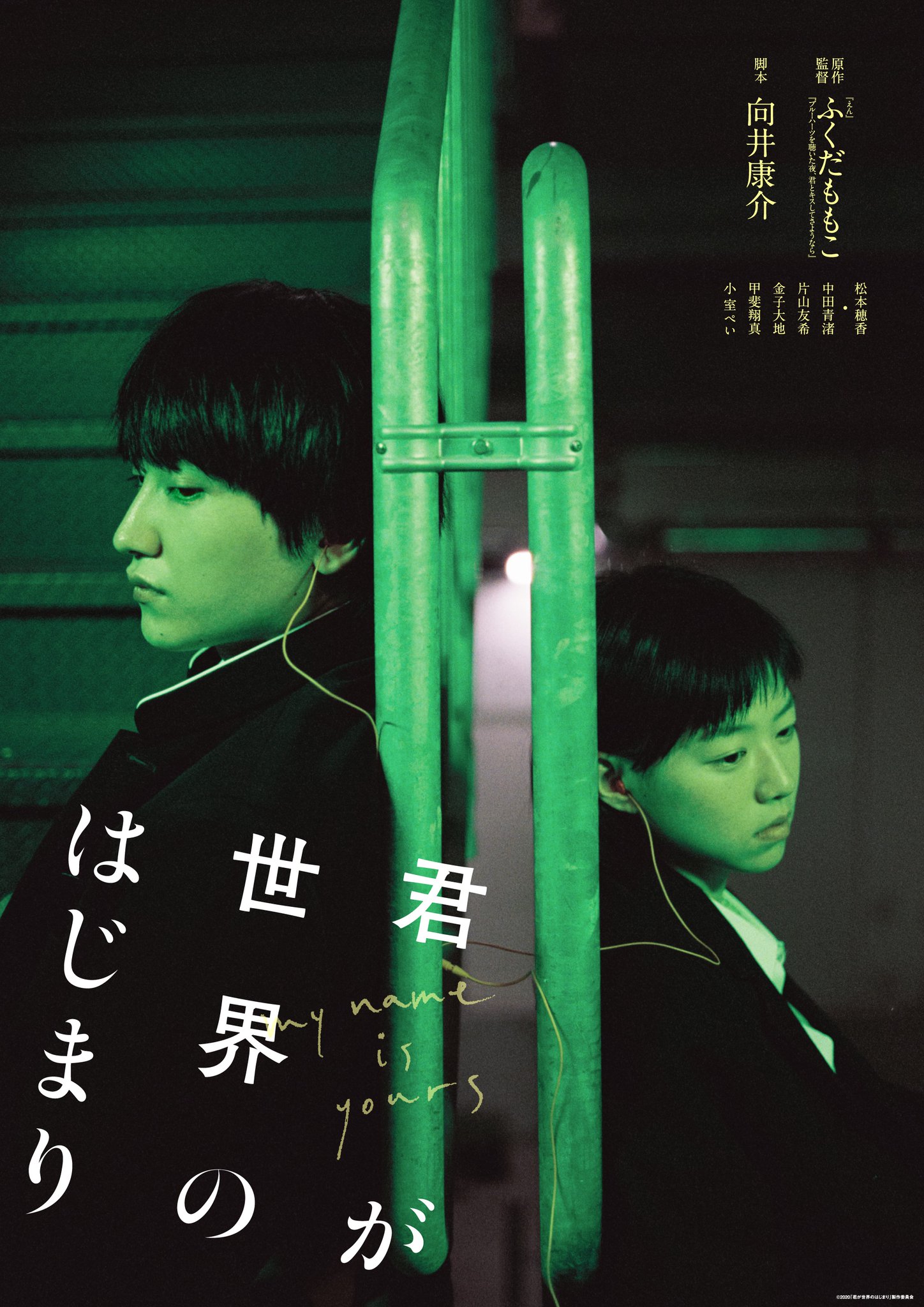
My Name is Yours (君が世界のはじまり, Momoko Fukuda, 2020)

A collection of Osaka teens process adolescent angst and generational anxiety but in the end find a gentle solidarity in their shared suffering while resolving to be kind in Momoko Fukuda’s adaptation of her own novel, My Name is Yours (君が世界のはじまり, Kimi ga Sekai no Hajimari). “People are unknowable” they solemnly resolve, admitting that you never really know anyone but later making an effort to share their secrets, if only gently, bonding in a new sense of openness as they begin to move forward into a brighter future. 

Fukuda opens however with a scene of crime as a high school student is arrested for the murder of their father. As we discover, several of the teens could be potential suspects, each in someway resentful of their dads though for very different reasons. Recently transferred Tokyo boy Io (Daichi Kaneko), mocked for his accent, is involved in some kind of hugely inappropriate sexual relationship with his middle-aged step mother as accidentally witnessed by moody classmate Jun (Yuki Katayama) hanging round the shopping mall in order to avoid going home to her overly domesticated dad (Kanji Furutachi ) whom she blames for her mother’s decision to leave the family. Narihira (Pei Omuro), meanwhile, was abandoned by his mother soon after birth and is sole carer to his father who seems to be suffering with early onset dementia. 

Childhood best friends En/Yukari (Honoka Matsumoto) and Kotoko (Seina Nakata) first encounter Narihira in their secret hideout, a disused school library, having a private cry leading Kotoko to fall madly in love publicly dumping her current boyfriend with extreme prejudice seconds later. Meanwhile, En becomes an accidental confidant to nice guy Okada (Shouma Kai) who has received a mysterious love letter he doesn’t quite understand because it’s come in the form of a classical poem only for Okada too to fall for Kotoko while Narihira seems to prefer En. 

Love triangles aside, each of the teens has their private sorrows some more secret than others but nevertheless producing chain reactions of their own in their inability to express themselves fully. But as angry and frustrated as they are, they still want to be kind if more to others than themselves. “If I only think about my own freedom how can I be kind to others?” Narihira sadly reflects confessing his occasional resentment in trying to care for his father. Even Io, seemingly realising how inappropriate his relationship with his step mother is, resolves that he wants to be kind to her despite the harm she may be doing him. “Wanting to hurt other people is absurd” he claims, unable to understand the impulse to exorcise his frustration through violence. 

Narihira attributes his salvation to having met En, explaining that in a sense she opened up a new world in giving him the courage to talk about his father sharing the secret with Okada who told the coach on their sports team who told him about a facility that might be able to help. Yet Narihira also begins to disrupt the previously close relationship between En and Kotoko, leaving Kotoko feeling jealous and En confused it seems on more than on level as the unexpectedly perspicacious Okada seems to have figured out forcing her in turn to reckon with and accept her own unspoken feelings. 

Taking refuge in a darkened shopping mall overnight, the teens unexpectedly bond through a musical performance of the classic Blue Hearts track Hito ni Yasashiku with its melancholy yet cheerful chorus encouraging each other to hang in there, remaining kind in a world which often isn’t. “Well, I can’t say for sure. Nobody can.” an amused secretary guard honestly answers asked by one of the teens if the mall will be torn down, his refreshingly direct answer perhaps adding to their new sense of confidence even in the face of the world’s uncertainty. A gentle, quietly nostalgic coming-of-age tale, Fukuda’s Osaka-set lowkey yet stylishly moody drama begins with violent darkness but ends in bright sunlight, the teens each finding a sense of equilibrium having come to new understandings about themselves and those around them bolstered by a youthful solidarity. Some secrets it seems still cannot quite be shared, but friendships resolve themselves all the same if in unexpected ways allowing a melancholy intensity to dissipate into a sad if fervent hope for the future. 


My Name is Yours screened as part of this year’s Camera Japan

Original trailer (English subtitles)

Hito ni Yasashiku music video

The Blue Hearts – Hito ni Yasashiku

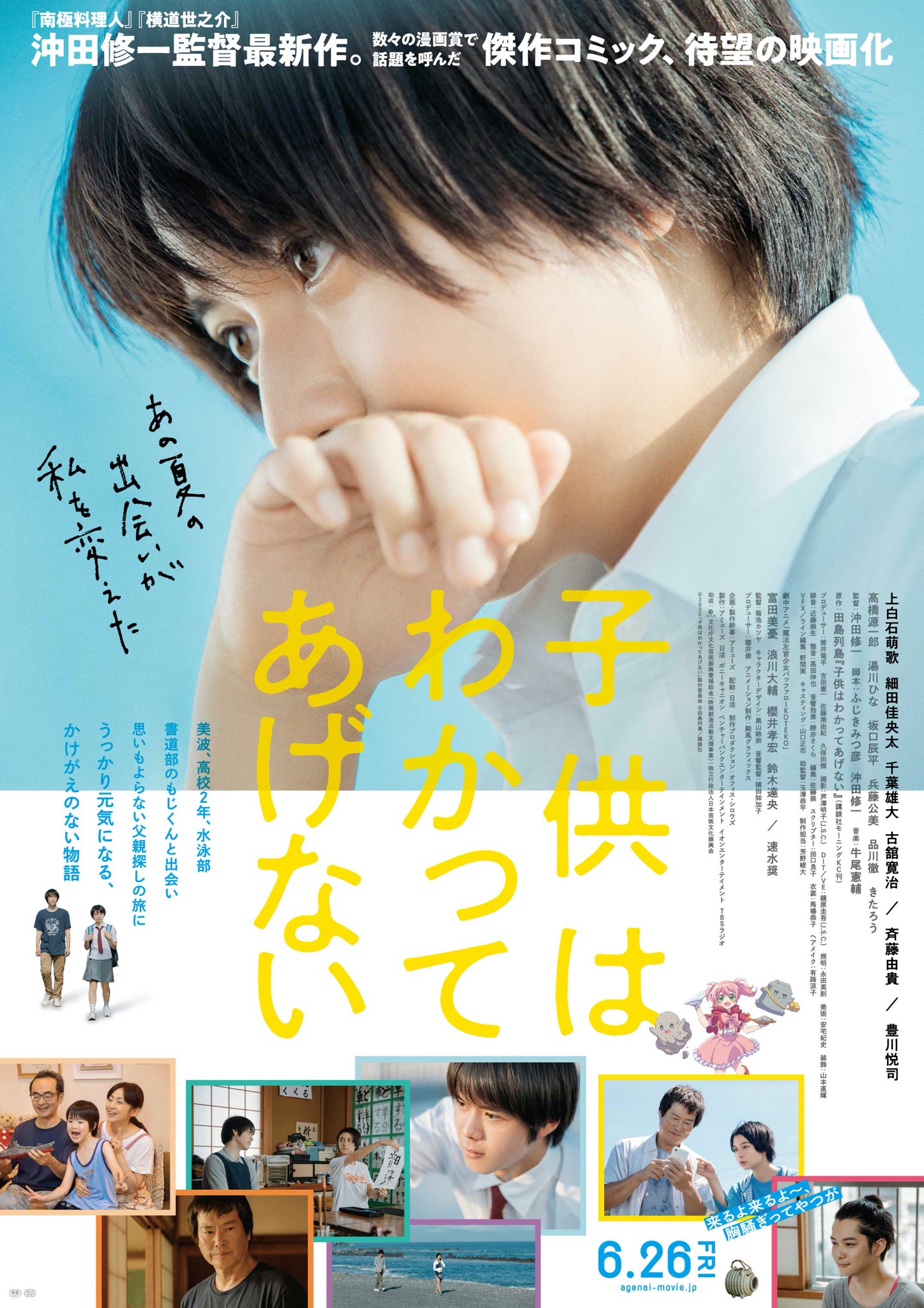
One Summer Story (子供はわかってあげない, Shuichi Okita, 2020)

“One man’s not enough to make a difference, you learn something and pass it on” the heroine of Shuichi Okita’s One Summer Story (子供はわかってあげない, Kodomo wa Wakatte Agenai) is told, learning about life from her philosophical, slightly defeated birth father. Adapted from the manga by Retto Tajima, Okita’s teen drama is in many ways a typical “summer story” in which a high schooler goes on a quietly life changing journey during one of the last summer breaks of their adolescent lives, but it’s also as much of his work is an empathetic plea for a kinder world built on mutual understanding and acceptance. 

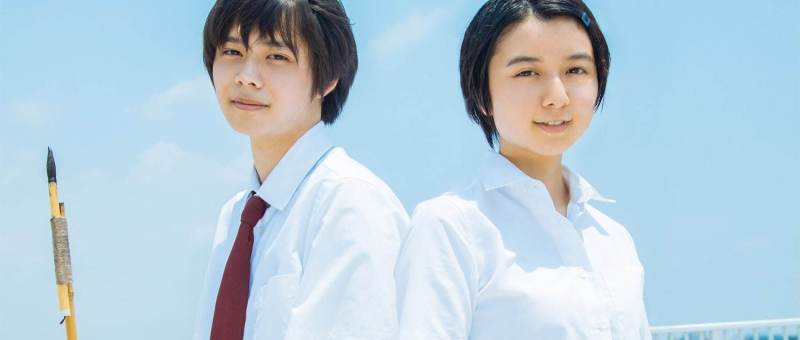
Okita signals as much with his animated opening, taken from the heroine’s favourite show, Koteko, in which a magical girl plasterer helps “Count Cement” repair his relationships with his estranged children, Mortar and Concrete, from whom he had withdrawn in shame realising that without water he is nothing while his kids could still make something of themselves through becoming bridges and houses. Koteko is something of a touchstone for Minami (Moka Kamishiraishi), a regular high school girl and member of the swimming team moved to tears by the opening song which preaches that walls aren’t something to be overcome but a canvas on which you can plaster your dreams. At the pool one day, she spots a boy on the roof painting a picture she quickly recognises as Koteko, rushing up there to befriend him as a fellow fan. In addition to being a Koteko-lover, Moji (Kanata Hosoda) is the son of a prominent calligraphy family and it’s at his house that she finds a vital clue, a talisman which matches the one she got from her birth father for her last birthday. 

Immediately following the end of the opening anime sequence, Okita shows us a happy family scene in which Minami’s stepdad (Kanji Furutachi) hands her tissues while she cries to the ending theme, joining in with the dance while her mum (Yuki Saito) cooks in the background and her live-wire half-brother runs round in his pants. Her family setup might still be considered unusual in conservative Japan, in fact one of her friends even exclaims that they’d never have guessed that her stepdad isn’t her birth father on hearing her mother was married before, but they are clearly very close and loving, ordinary in the very best of ways. Minami isn’t unhappy or lonely at home, she isn’t really thinking too much about her birth father even if perhaps on some level curious but the talisman becomes a thread to tug on, sending her on a quest of self-discovery seeking some answers about her past as she begins to come of age. 

To do this, she enlists the help of Moji’s older sibling Akihiro (Yudai Chiba), a transgender woman disowned by the conservative, traditionalist family of calligraphers and now living above a bookshop while working as a “detective”. As the pair find out, it’s less high crime than missing moggies that are Akihiro’s stock in trade but she’s moved to have a go helping to find Minami’s dad after looking at her bankbook containing her life savings, not for the amount but because she remembers saving up herself at Minami’s age to fund her reassignment surgery. Invoicing her later, Akihiro bills her zero yen telling her merely to make sure she uses her money to help others when she grows up, echoing the film’s pay it forward philosophy as advanced by Moji who teaches kids calligraphy at his dad’s school, advising Minami that people can only pass on skills they’ve learned from others and so perhaps she could teach someone to swim. Her birth father Tomomitsu (Etsushi Toyokawa), a former cult leader who lost faith in himself for being unable to teach his innate mind reading ability to his followers, eventually tells her the same thing, that what’s important in life isn’t grandstanding, trying to change the world all on your own, but sharing what you know in a gentle process of continuity and change. 

Ironically enough and in true teenage fashion, Minami finds new security in family after lying to her mother about going on a school trip to find her dad, later realising her mother is only slightly hurt about the lying and not at all about her reconnecting her birth father. Through her extended stay with him at the seaside she begins to find the courage step into herself, accepting the position of teacher in helping a lonely little girl learn to swim, while also processing her growing feelings for the equally shy Moji who leaves her space to complete her quest on her own but chases after her when he thinks she really might be in danger. A gentle summer story Okita’s breezy drama has a pleasingly timeless, occasionally retro feel, full of summer warmth in its spirit of acceptance and mutual support as its surprisingly carefree youngsters come to an appreciation of themselves and each other as they push forward into a more adult world with confidence and compassion. 


One Summer Story screened as part of Camera Japan 2020.

Teaser trailer (English subtitles)

Miyamoto (宮本から君へ, Tetsuya Mariko, 2019)

Three years after Destruction Babies, Tetsuya Mariko returns with another ultra-violent though strangely humorous masculinity drama as a mild-mannered salaryman embarks on a quest to win the heart of his one true love by proving himself a man even if aware that his efforts are entirely meaningless while he strikes out where it counts. Inspired by Hideki Arai’s manga, Mariko previously adapted Miyamoto (宮本から君へ, Miyamoto kara Kimi e) as a late night TV drama with the majority of the cast reprising their roles for the big screen feature.

As the film opens, the titular Miyamoto (Sosuke Ikematsu) is walking bruised and bloodied through a children’s park, staring at his unrecognisable face in the hazy mirror of a public bathroom. A regular salaryman, he’s later taken to task by his boss (Kanji Furutachi). After all, how does he expect people to do business with him when he’s lost all his front teeth and has his arm in a sling? His boss reminds him he’s about to be married and will soon be a father so perhaps a little more forward-thinking responsibility is in order. It seems that Miyamoto got into some kind of fight and improbably enough he won, the other guy apparently in hospital not to recover for months though thankfully he does not want to press charges. Nevertheless, Miyamoto seems strangely cheerful, happy in himself as he takes his bride to be, Yasuko (Yu Aoi), home to meet his parents who don’t disapprove but are extremely put out by his continued secrecy especially as Yasuko is already pregnant though something tells us there’s much more to this than your average shotgun wedding.  

Skipping back between the present day of the happily settled couple and the various stages of their courtship we begin to see a pattern developing as the hapless young salaryman falls for the pretty office lady only to discover she was technically using him to break up with an obsessive ex struggling to accept that their relationship is over. Challenged by bohemian playboy Yuji (Arata Iura), Miyamoto instinctively barks out that Yasuko is a special woman and he will protect her at all costs though the jury’s out on how exactly he plans to do that. In any case, Yuji exits and even if unconvinced, Yasuko is taken in by the idea of finding a protector. But Miyamoto is less than true to his word. When it really counts, he lets her down, passed out drunk as she’s assaulted by a friend from his rugby team (Wataru Ichinose). What ensues is partly, in his mind, a means of making amends to her by getting his revenge and a quest to reclaim his self-respect by asserting his masculinity in besting his girlfriend’s rapist in a fight. “It was me he insulted” Miyamoto somewhat problematically insists, rage shovelling rice into his mouth directly from the cooker while Yasuko can barely contain her resentment and exasperation with his continued failure to follow through while painting himself as the victim in her rape. 

Consumed by toxic masculinity, Miyamoto does indeed frame everything through the prism of his fracturing manhood, never jealous or abusive but comparing himself unfavourably to the other men in Yasuko’s life and convincing himself the way to beat them all is by proving himself the most manly through the medium of pugilism. Meanwhile, he emotionally neglects the woman he claims to love and promised to protect, temporarily distancing himself from her while he embarks on his quest, leaving her entirely alone to deal with her trauma. Yasuko makes it clear that she doesn’t care about his pointless and idiotic need to validate himself through male violence, but he does it anyway and then expects her to be impressed (which she isn’t, really). In any case he freely admits he did it all for himself, literally shredding his rival’s manhood in order to retake his own in addition to gaining an extremely ironic form of revenge.  

Absurd and ridiculous as it is, Miyamoto’s quest does at least allow him to gain the self-confidence which will eventually allow him to patch things up with Yasuko, ironically by affirming that he no longer sees the need to look for approval and will protect her and their new family forevermore. A dark satire of fragile masculinity filled with cartoonish yet surprisingly graphic violence, Mariko’s third feature nevertheless retreats from the pure nihilism of Destruction Babies towards a more positive if perhaps equally uncomfortable resolution as the no longer quite so insecure Miyamoto prepares to enter a new phase of his life as a paternal figure and protector of a family.


Miyamoto streams in the US via the Smart Cinema app until Sept.12 as part of this year’s New York Asian Film Festival.

Original trailer (no subtitles)

Tamaran Hill (たまらん坂, Tadasuke Kotani, 2019)

Does Japan have more uphills or downhills? You have to think about that one for a second, like one of those trick questions they put in books for children. Nevertheless, you can’t argue with the idea that so much of life is really about perspective and perhaps perspective itself can also be a subjective choice. Shot in crisp black and white with occasional animation and adapting the novel by Seiji Kuroi who actually appears at one particularly meta moment, Tadasuke Kotani’s Tamaran Hill (たまらん坂, Tamaranzaka) follows a young woman’s path towards forging, or perhaps rediscovering, her identity through a meditation on the word “unbearable”, its association with her father, and the long buried memories of a potential hometown. 

Hinako (Hinako Watanabe), a college student, lost her mother at four years old and is at something of a crossroads as she contemplates her future. Her teacher (Makiko Watanabe), who for some reason has an ever present robot assistant at her side, advises Hinako and her fellow students that if they want to get a good job what they need to get good at is the art of narrative lying. They need to assert their individuality in inoffensive ways, quantify their experiences in concrete numbers, but avoid embellishing facts in which hard evidence is available. Her advice to Hinako is that she needs to create a convincing “character” to pep up the self intro on her CV, perhaps paint herself as a survivor who lost her mother not to cancer of the vocal chords but in a natural disaster. 

Hoping to start at the beginning in rebuilding herself, Hinako begins researching the idea of “hometowns” only to be sidetracked by a book titled “Tamaran Hill”. The title catches her eye because “tamaran” which means “unbearable” is one of her father’s catchphrases, indeed we heard him say it numerous times after getting stuck at the airport by a typhoon meaning that he couldn’t get back for his late wife’s memorial service. In the book, the narrator details his friend’s increasing obsession with a slope near his home by the name of Tamaran Hill, something with which Hinako also becomes intrigued as she finds herself sliding into the narrative, the narrator detailing her own experiences as if she were reading them. 

It seems that for most, “tamaran” does indeed mean “unbearable”. The explanations for the name run from a deserting samurai decrying the folly of war as he ran from a nearby battlefield to Showa-era students resentful at having to climb uphill to gain their education but Hinako is disappointed to learn that the answer may be far more prosaic than she’d hoped. Reality and fiction begin to blur. She finds herself asking if an old man is merely a character from her imagination only to receive a philosophical answer that characters are composed of words but that words have vitality, warmth, and power. Meanwhile she begins to have visions of a mysterious past which mingle with those of the narrator’s friend leading her towards the “hometown” she has long been looking for. 

Hinako’s “unbearable” Buddhist priest father (Kanji Furutachi) apparently doesn’t like to talk about the past, which might be why she feels so lost, while he also berates her for not properly looking after her seemingly adopted younger brother. He actively hides from her the keys to her history, offhandedly remarking on the reappearance of a long absent relative in Hinako’s questions about a mysterious cosmos flower placed on her mother’s grave. Hinako wonders if it’s her mother’s fault that she can’t love anyone, retracing her steps inspired both by the novel and a letter hidden by her father in order to make sense of the brief and fragmentary memories which comprise her visions and thereby reconstruct an image of herself which is, essentially, narrative. 

Hinako’s process towards self identification hints at personal fictions and the strange alchemy of fantasy and reality that is memory, but she does at least seem to have straightened her story as per her teacher’s instruction, confidently stating that she has “decided” on her hometown. Perhaps the fiction is more reliable than truth in its manufactured certainties, and after all no one takes “just be yourself’ at face value. Does the slope go up or down, or is it actually on the level and it’s just that everything else is tilted? It’s all a matter of perspective, “unbearable” only in its inscrutability. 


Tamaran Hill streamed as part of this year’s online Nippon Connection Film Festival.

Original trailer (English subtitles)

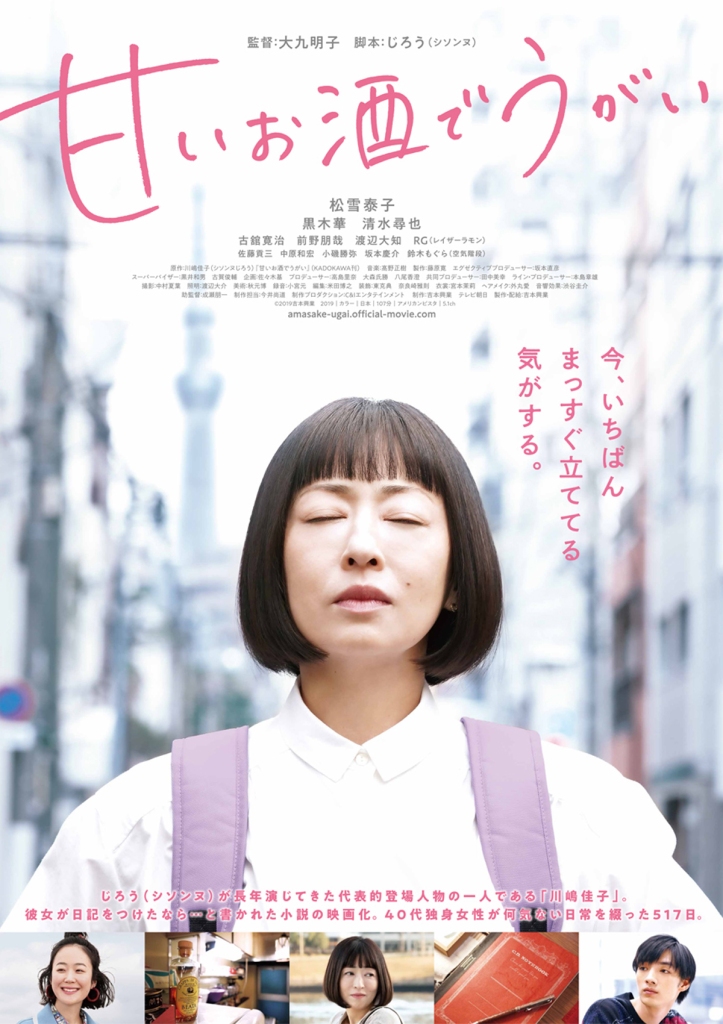
My Sweet Grappa Remedies (甘いお酒でうがい, Akiko Ohku, 2019)

In Tremble All You Want, Akiko Ohku showed us a painfully shy woman’s path towards seizing control of her romantic destiny while Marriage Hunting Beauty told us that there are no short cuts to love. My Sweet Grappa Remedies (甘いお酒でうがい, Amai Osake de Ugai) takes things one step further as a lonely middle-aged woman gradually finds the desire to make a change in her otherwise unchanging existence, coming to like herself as seen in the eyes of others and trusting in happiness however temporary it might turn out to be. 

40-something Yoshiko (Yasuko Matsuyuki) is an unmarried woman working at a publishing company. She tells us that she keeps a diary that she never expects any one to read, not even herself, and mostly spends her free time drinking alone at home or in elegant bars. From the sometimes lengthy gaps between entries, we can see that Yoshiko’s life is generally uneventful and essentially unchanging, that she has few friends, and though she gets by well enough on her own she often dwells on what might have been, disappointed that she was never able to become a mother. 

She is, however, a deeply caring person, sublimating her need for human attachment into anthropomorphising objects, gently patting her bicycle saddle as she parks it for the day and becoming alarmed that it has ended up “in prison” after being impounded. If she’d had children, she muses, she might never have let them leave the apartment. Yet when she discovers one of her favourite earrings is missing, she decides not to look for it because she accepts its decision, later welcoming it home when it makes an unexpected return. 

Overhearing the conversation of the women next to her at a bar, she wonders if their idle complaints that half the year is gone already are excessively negative but accepts that she too is living life in retrograde and needs to learn how to look forward with positivity, which might be why she starts making a series of small but active changes. She observes the world around her from a new angle in crossing a footbridge she has never crossed before, swaps her comfortable red loafers for grey high heels, and her futon for a bed. 

Some of these changes at least are down to an unexpected friendship with a young woman in her office, Wakabayashi (Haru Kuroki), who invites her out on paydays and brightens up the office atmosphere with her goofy antics. Yoshiko herself might be classically quirky, but she mainly keeps her quirks to herself, quietly getting on with her work, while Wakabayashi is the opposite, cheerfully outgoing yet perhaps just as lonely if in a less obvious way. It’s Wakabayashi who sets her on off another path by introducing her to a friend from university, Okamoto (Hiroya Shimizu), who has recently joined their company and to whom Yoshiko had already taken a liking in passing though he is more than 20 years her junior.  

Too shy to shout bingo, Yoshiko is a lifelong believer in love, observing a young couple at festival and hoping they enjoy a night of passion in the fullness of their youth. She still remembers old anniversaries with long gone exes and wonders if they still remember her, but resents the universe’s attempts to test her with texts from past lovers every time she becomes interested in another man. The fact that Okamoto is so much younger is never really an issue, though Yoshiko admits that she likes the fact he seems to favour older, lived in homes over sparkling new builds while she helps him look for a new apartment. 

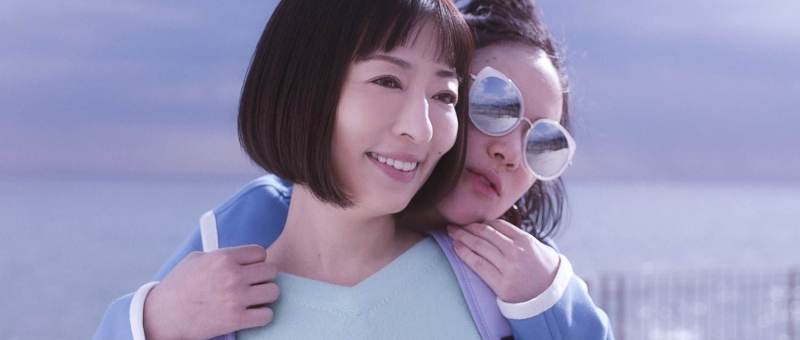
Yoshiko celebrates the fact that colour seems to be returning to her black and white days, her desire to see the dark sea where she feels closest to death in order to reaffirm her connection to life seemingly receding. From her childhood, Yoshiko had wondered if the woman she sees in the mirror is the same one everyone else sees, but later realises that the vision of herself reflected is “somewhat nice”, catching sight of herself in Wakabayashi’s mirrored sunshades and noticing that she is in fact smiling. Reinvigorated by her younger friends, Yoshiko steps into an acceptance of herself, looking forward rather than back and willing to take on new challenges rather than merely dropping into a defensive position of protecting the irreplaceable. No longer dark and foreboding, the sea is now sunny and calm, a scene of peace and positivity with nary a cloud on the horizon.


My Sweet Grappa Remedies is available to stream online (worldwide excl. Japan, Mainland China, Taiwan, USA, & Italy) from 9th to 14th June as part of this year’s Nippon Connection Film Festival.

Original trailer (no subtitles)

The Chaplain (教誨師, Dai Sako, 2018)

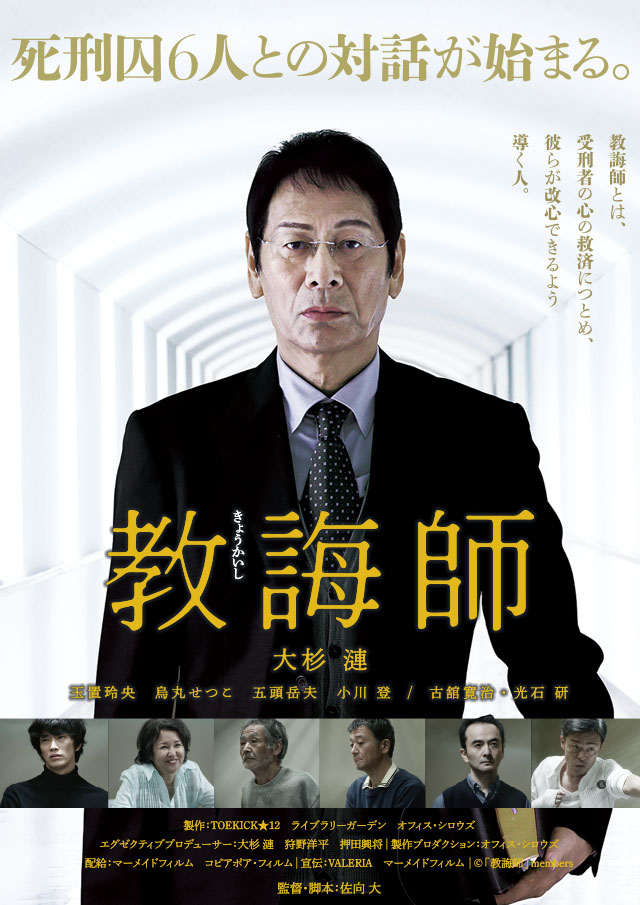
The Chaplian posterJapan is one of the few developed nations which still maintains the death penalty, though in practice infrequently. The sentence of death is handed down almost exclusively to mass or serial murderers, child killers, or those whose crimes are judged to be of extraordinary barbarity. Unlike other nations, Japan houses those on death row not in prisons but in detention centres, denying them the rights that are afforded to regular prisoners such as visitation, exercise, and entertainment. Execution must be carried out within five days of the judgement being handed down. The prisoner themselves is informed on the morning of their death and given a choice of last meal, but their family members, legal team, and the general public are only informed once it has taken place preventing any last minute attempts for a stay.

In what would be his final screen role (and his first as a producer), Ren Osugi stars as a prison chaplain, Saeki, attempting to guide a series of Death Row prisoners towards spiritual peace as they prepare to accept their judgement. Though none of the prisoners he visits protests their innocence, some are more repentant than others and not all of them have fully internalised the fact they will never leave the facility even when no further legal attempts to commute their sentences seem to be underway. Some might say there is an element of exploitation in sending a chaplain in at all seeing as this is literally a captive audience. The crimes which lead to being on Death Row are necessarily extreme, many prisoners either have no remaining family members or have been abandoned by them out of shame, leaving them intensely lonely and devoid of human contact (not even televisions or radios are permitted). They are therefore much more interested in conversation than they are in The Bible or accepting Jesus into their hearts.

Then again, Saeki’s first visit is to a man who says nothing at all, allowing him to fill the silence with some of his own backstory which hints at a personal trauma possibly informing his desire to save the souls of these unfortunate people. Another prisoner, by contrast, is all too eager to convert but, as Saeki soon realises, is almost entirely illiterate and therefore struggling to hear the word of God through being unable to read. Saeki does his best to help them, gently listening to their fears and worries but encounters a familiar series of social problems which made their fates inevitable stemming from entrenched poverty and social inequality.

Only six months into the job, he wonders if he’s really getting through and if his efforts are worthwhile. His most challenging prisoner is a young man convicted of a mass killing of those with learning difficulties (inspired by a real life case), whom he deemed to be a drain on national resources. A hyper-rational sociopath, Takamiya (Leo Tamaoki) baits Saeki with unassailable, coldhearted logic which asks why, if he’s happy enough to kill and eat “stupid” animals like cows and pigs, but not “clever” ones like dolphins, his application of the same logic to the human world can be wrong? If all creatures have an equal right to life, then killing for food is as wrong as any other kind of killing and the death penalty nothing more than state sanctioned murder. There is no rational answer for Takamiya’s philosophy and aside from his abhorrent, unfeeling rationality he may have a point when it comes to social hypocrisy. All Saeki can do is ask him to stand with the people that he killed, and acknowledge that God or no God, Saeki too will be with him until the very end.

If Takamiya begins to question the terrifying rationalism which led him to his truly barbaric act, he does so probably not because of Saeki’s ministrations but because of his proximity to death. Meanwhile, another prisoner, Suzuki (Kanji Furutachi), convicted of a stalker murder, seems to have picked up entirely the wrong message in coming to blame just about everyone else for his crime and absolving himself of responsibility. He might have found peace, but it is not the kind of peace he was supposed to find. Noguchi (Setsuko Karasuma), meanwhile, the only female prisoner, continues to talk about the future as if she really thinks she’s getting out. Only Shoichi (Takeo Gozu), an elderly man, seems to truly accept Saeki’s teachings though it is perhaps enough to make him feel as if he really is making a difference.

Sako opts for subtlety in pointing out the inherent hypocritical immorality of the death penalty and particularly in the context of the Japanese legal system which relies heavily on confessions often extracted under duress. Battling his own sense of guilt, Saeki tries to save himself by saving the souls of others but finds his work an uphill battle in a society which prefers not to speak of unpleasant matters and thereby renders itself absolute and unaccountable in the rigidity of its justice.


The Chaplain (教誨師, Kyoukaishi) was screened as part of Japan Cuts 2019.

Original trailer (English subtitles)

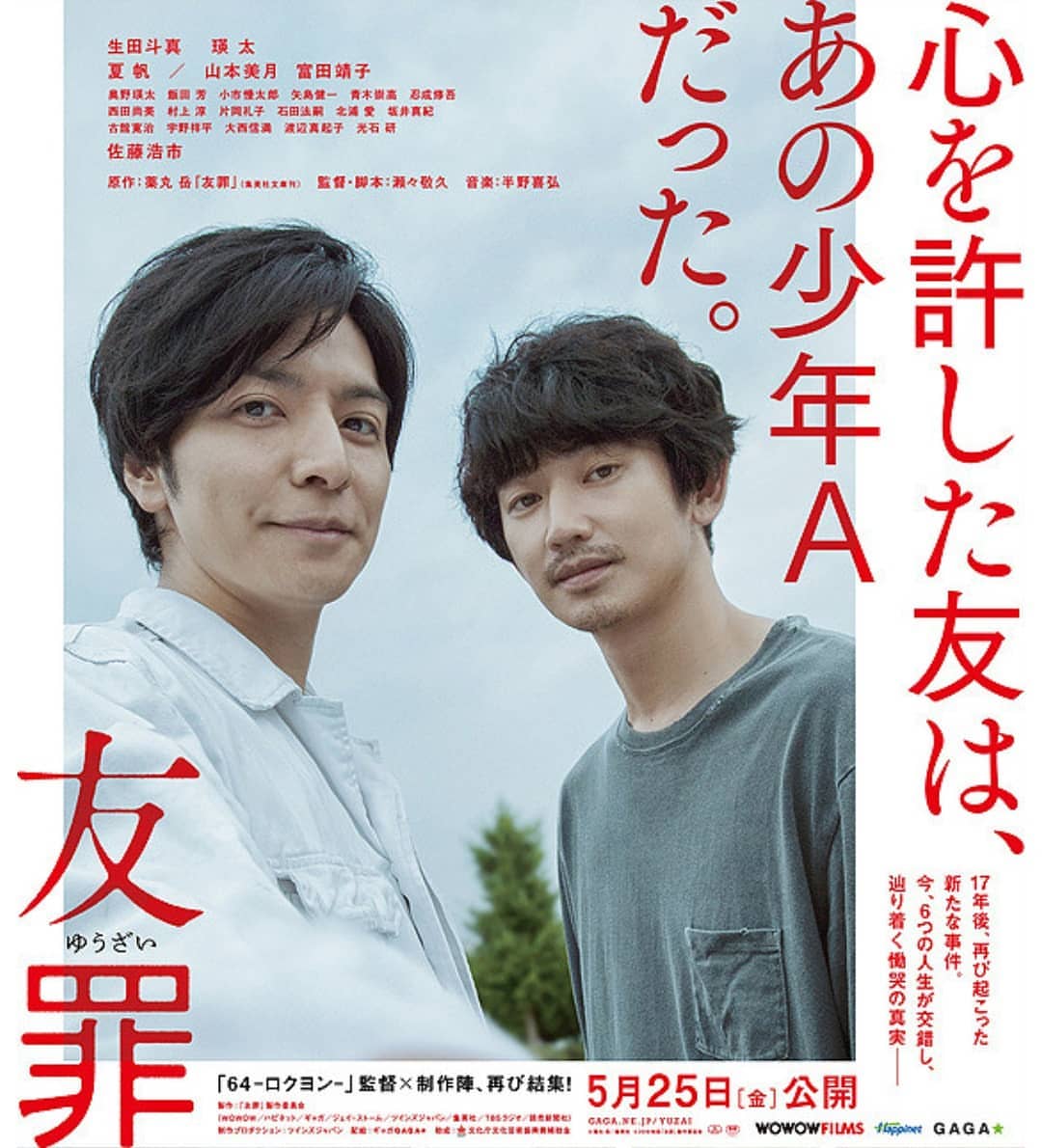
My Friend “A” (友罪, Takahisa Zeze, 2018)

My Friend A posterThe Japanese justice system is founded on the idea of confession and atonement, that if you admit your crime and show remorse you will be forgiven. The truth, however, is much more complex and those whose lives have been tainted by transgression are often rejected by a still unforgiving society. Director Takahisa Zeze describes his adaptation of Gaku Yakumaru’s novel My Friend “A” (友罪, Yuzai) as a picture of the world he longs to see at the end of the Heisei era, one which is less judgemental and more compassionate where the bonds between people can perhaps overcome the traumatic past.

In the present day, two very different men – failed journalist Masuda (Toma Ikuta) and the sullen and mysterious Suzuki (Eita), are inducted as probationary workers at a small factory. Suzuki’s determination to keep himself to himself does not endear him to the other workers who become convinced that he is hiding something from them. Suzuki is indeed hiding something, though his reasons for avoiding human contact are various and complex. When a young child is found murdered nearby in a method which echoes a notorious killing from 17 years previously, Masuda is contacted by an old colleague (Mizuki Yamamoto) investigating the case and begins to wonder if the secret Suzuki seems to be burdened by might have something to do with one crime or both.

In actuality, Masuda does not seem to believe that Suzuki is involved with the recent killing even if he comes to the conclusion that he is almost certainly the teenager convicted of the earlier crime. Nevertheless, he develops an awkward “friendship” with him which is partly exploitative as he ponders writing an exposé on the injustice that allows someone who committed such heinous acts, even in childhood, to start again with a new identity. “Injustice” becomes a persistent theme as seen in the melancholy tale of taxi driver Yamauchi (Koichi Sato) who is carrying the heavy burden of being the father of a son (Hoshi Ishida) who killed three children as a joy riding delinquent. Hounded by one parent, and accidentally harassing the others through his relentless attempts to apologise for his son’s transgression, Yamauchi has ruined his family through his own need for personal atonement. Having divorced his wife and lost touch with his son, he is enraged to learn that he plans to marry and will soon be a father. Even if his wife-to-be knows of his past and accepts it, Yamauchi believes his son has lost the right to live as other people live and finds it extraordinarily offensive that a man who took the lives of children would have a child of his own.

Yamauchi seems to want to put his family back together but only succeeds in tearing it apart. Corrupted families loom large from the mysterious photograph of the smiling boy surrounded by the scratched out faces of his parents and sibling found among Suzuki’s belongings, to the reform school boy taunted with the accusation that he might not have turned to drugs if only his parents had loved him more. Suzuki fixates on his reform school teacher Shiraishi (Yasuko Tomita), but she in turn has neglected her own daughter in her fierce desire to save the souls of these violent young men many of whom have become the way they are because they believe that they are worthless and no one cares about them. Meanwhile, Miyoko (Kaho) – a young woman drawn to Suzuki’s silent solidarity, struggles to escape her own traumatic past partly because she was shamed in front of her family who then were also shamed by her inescapable transgression.

Unlike Suzuki, Miyoko has committed no crime but is haunted just the same. As is Masuda though his guilt is real enough if of a more spiritual kind as he struggles to accept his role in the death of a friend who committed suicide when they were just children. Then again, Masuda’s struggle, like Yamauchi’s, is perhaps a solipsistic one in which what he is really mourning is not his friend but the vision of his idealised self. On visiting his late friend’s mother, Masuda bristles when she talks about his journalistic career and her hope that he is still “strong and just” like the teenage boy she believes stood alongside her lonely son when the truth is that he abandoned his friend when he needed him most because he was too cowardly to risk becoming a target himself. Despite his high ideals, Masuda had been working at a scandal rag and his only real piece of ethical journalism was a confessional about the destructive effects of high school bullying. He remains conflicted in his friendship with Suzuki not quite because he fears his dark past but because he fears his own moral cowardice – something he is reminded of when a housemate points out that no-one likes Suzuki and that if Masuda sides with him, no one will like him either. 

The question that is asked is whether discovering someone’s dark secret necessarily changes who they are now and if it is ever really possible for those who have in some way transgressed to return to society. As Suzuki puts it to Masuda in reflecting on their unavoidable commonality, they’re each men who rarely unpack their suitcases, always on the run from an unforgiving present. Yet there is perhaps hope despite Masuda’s ongoing diffidence in his eventual (self) confession and belated solidarity with a man he later recognises as a “friend” in acknowledgement of the unconditional bonds of genuine friendship.


My Friend “A” was screened as part of the 2019 Japan Foundation Touring Film Programme.

International trailer (English subtitles)

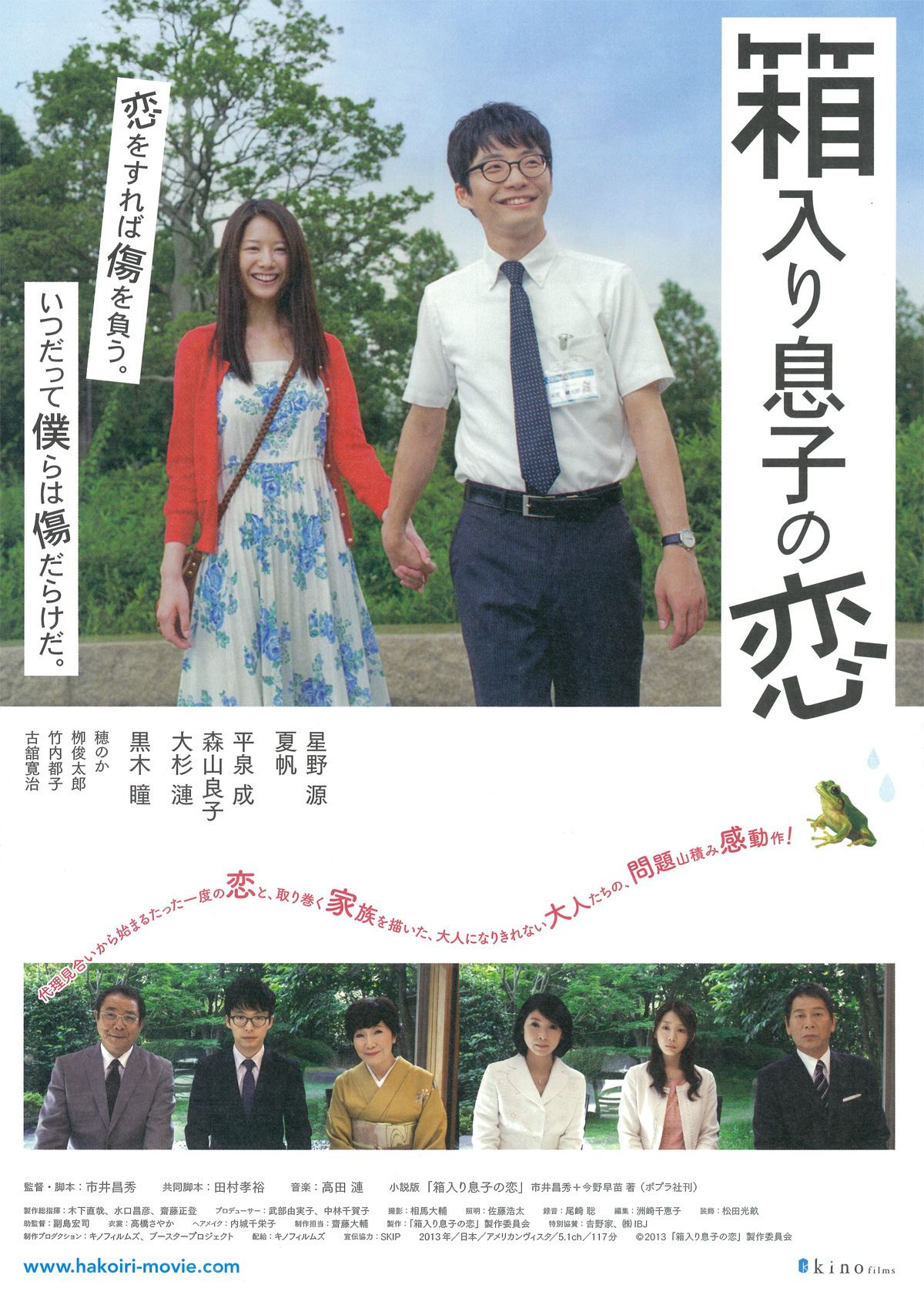
Blindly in Love (箱入り息子の恋, Masahide Ichii, 2013)

Blindly in love posterPost-war Japanese cinema was intent on investigating whether father really did know best while his children strived to find their place in a changing society. Contemporary Japanese cinema may feel as if the question has been more than well enough answered already but then again Japanese society remains conformist in the extreme and arranged marriage still an option for those who find it difficult to find a match on their own (remaining single, it seems, is still an option requiring intense justification). The protagonists of Blindly in Love (箱入り息子の恋, Hakoiri Musuko no Koi) find themselves in just this position as their well meaning (to a point) parents attempt to railroad them into the futures they feel are most appropriate while perhaps failing to deal with the various ways their own behaviour has adversely affected their children’s ability to function independently.

Kentaro (Gen Hoshino) is 35. He has a steady job as a civil servant and still lives at home with his parents which is hardly an unusual situation in contemporary Japan save for the fact he is not married and seems to have no interest in dating. Rather than eat with his colleagues, Kentaro comes home for lunch every day and returns straight after work, retreating into his bedroom to spend quality time with his pet frog and play video games. His parents, worrying that he may be lonely when they are gone, decide to find him a wife by effectively going speed dating on his behalf with a host of other parents in a similar position.

There they meet the Imais who are keen to marry off their 23-year-old daughter Naoko (Kaho). The elephant in the room is that everyone at this meeting is there because they believe there is something “wrong” with their children that makes them difficult prospects for marriage. Consequently, the Imais have decided not to disclose the fact that Naoko is blind until later in the negotiations.

The Imais’ ambivalent feelings towards their daughter’s disability speak to a persistent social prejudice which views those who have different needs as somehow less. Mr. Imai is a high flying company CEO who puts on a show of only wanting the best for his little girl, but he’s also a snob and a bully. He keeps trying to set Naoko up with “elites” like him, but those elites will also share his own prejudices in feeling that his daughter is “imperfect” and therefore not a prime match in the arranged marriage stakes. Kentaro, who unbeknownst to everyone except Mrs. Imai has already enjoyed a love at first sight meet cute with Naoko, is the only one brave enough to call Mr. Imai out on his hypocrisy when he accuses him of neglecting his daughter’s feelings in favour of asserting his own paternal authority. As you can imagine, Mr. Imai is not happy to have his faults read back to him.

Making the accusation at all is extremely hard for Kentaro who has just spent the last ten minutes getting a dressing down from Mr. Imai who has read out a list of his perceived imperfections from his unbreakable introversion to his lack of career success. Mr. Imai wants to know if a man like Kentaro who has basically been the office coffee boy for the last 13 years can keep his daughter in the manner to which she’s been accustomed. Kentaro has to admit that he probably can’t and that Imai has a point, but unlike Imai he is thinking of Naoko’s happiness. He sees her disability but only as a part of her personality and respects her right to a fully independent life which is something her father seems to want to deny her, not out of a paternalistic (or patronising) worry for her safety but simply as a means of control.

Conversely, Kentaro is attracted to Naoko precisely because he feels as if she might be able to see him in greater clarity in being unable to judge him solely on appearance. In a rare moment of opening up as part of his defence against Mr. Imai, Kentaro reveals the pain and suffering that have led him to withdraw from the world, admitting that after years of being taunted or ignored, branded an oddball and mocked for his rather robotic physicality he simply decided it was easier to be alone. It might be safe to say that Kentaro’s parents are being overly intrusive, that they are trying to impose their idea of a “normal” life on their son who may be perfectly happy playing video games alone for the rest of his days. Kentaro, however, is not quite happy and as is later pointed out to him had merely given up on the idea of any other kind of existence as an unattainable dream.

Giving up has been Kentaro’s problem and one that recurs throughout his awkward courtship. Like his pet frog, Kentaro has been perfectly contained within his own tank and somewhat fearful to crawl outside but is slowly finding the strength thanks to his bond with Naoko who struggles to overcome her conservative patriarchal upbringing and escape her father’s control. Yet it isn’t only the youngsters who have to learn to leave the nest but the parents who have to learn to let them go. Kentaro’s mum and dad have perhaps enabled his sense of disconnectedness by keeping him at home with them as a treasured only son, while the Imais’ problems run deeper and hint at a deeply dysfunctional household with a father who is controlling and eventually violent while Mrs. Imai tries to effect her daughter’s escape from the same patriarchal conservatism which has succeeded in trapping her. Blindly in Love refuses either of the conventional endings to its unconventional romance but edges towards something positive in affirming its protagonists’ continued determination to fight for their own happiness even if opposed at every turn.


Blindly in Love was screened as part of the 2019 Japan Foundation Touring Film Programme.

Original trailer (English subtitles)