Hanzo the Razor: The Snare (御用牙 かみそり半蔵地獄責め, Yasuzo Masumura, 1973)

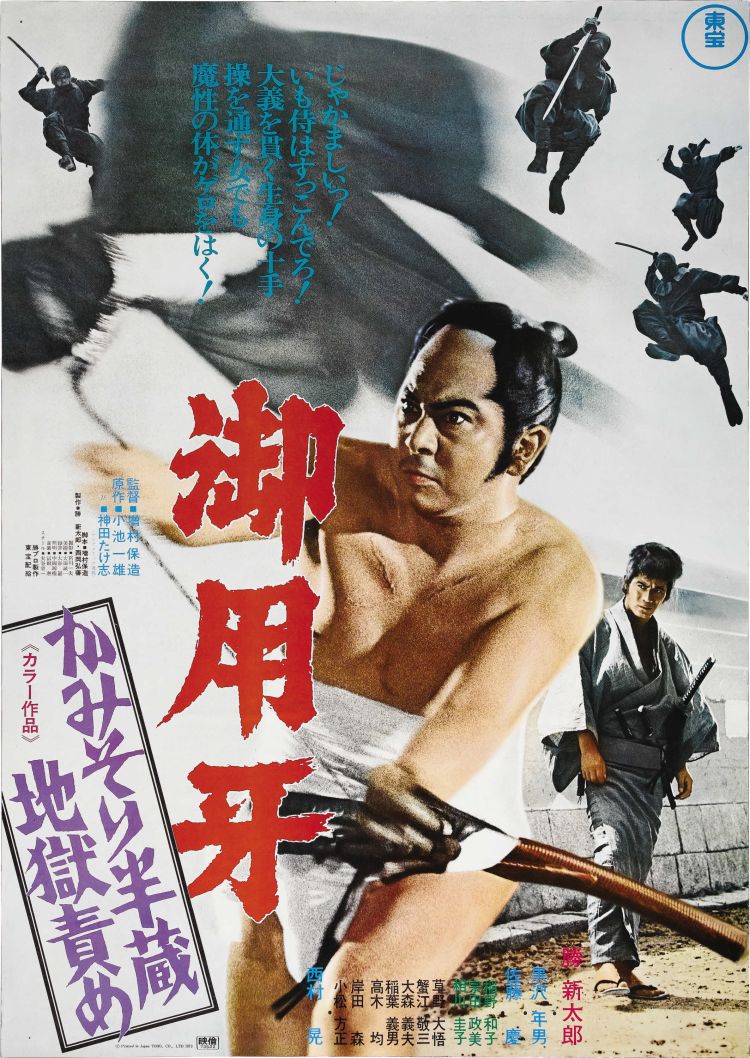
Hanzo the Razor the Snare posterYasuzo Masumura had spent the majority of his career at Daiei, but following the studio’s bankruptcy, he found himself out on his own as a freelance director for hire. That is perhaps how he came to direct this improbable entry in his filmography on the second of a trilogy of exploitation leading jidaigeki films for Toho. Essentially a vanity project for former Zatoichi star Shintaro Katsu who both produces and stars in the series, Hanzo the Razor: The Snare (御用牙 かみそり半蔵地獄責め , Goyokiba: Kamisori Hanzo Jigoku Zeme) is another tale of the well endowed hero of the Edo era protecting ordinary people from elite corruption, but Masumura, providing the script himself, bends it to his own will whilst maintaining the essential house style.

Hanzo (Shintaro Katsu) chases a pair of crooks right into the path of treasury officer Okubo. As expected, the lord and his retainers kick off but Hanzo won’t back down, shouting loudly about honour and justice much to his lord’s displeasure. Eventually Hanzo takes the two crooks into custody and they tell him exactly what’s happened to them this evening – they snuck over from the next village to steal some rice from the watermill but they found a dead girl in there and so they were running away in terror. Hanzo investigates and finds the partially clothed body still lying in the mill untouched but when he takes a closer look it seems the girl wasn’t exactly murdered but has died all alone after a botched abortion. Realising she smells of the incense from a local temple, Hanzo gets on the case but once again ends up uncovering a large scale government conspiracy.

Though it might not immediately seem so, Masumura’s key themes are a perfect fit for the world of Hanzo. In his early contemporary films such as Giants & Toys and Black Test Car, Masumura had painted a grim view of post-war society in which systemic corruption, personal greed, and selfishness had destroyed any possibility of well functioning human relationships. It was Masumura’s belief that true freedom and individuality was not possible within a conformist society such as Japan’s but this need for personal expression was possible through sexuality. Sex is both a need and a trap as Masumura’s (often) heroines chase their freedom through what essentially amounts to an illicit secret, using and manipulating the men around them in order to improve their otherwise dire lack of agency.

Hanzo’s investigation takes him into an oddly female world of intrigue in which a buddhist nun has been duped into becoming a middle-woman in a government backed scheme pimping innocent local girls to the highest bidder among a gang of wealthy local merchants. Hanzo berates the parents of the murdered girl for not having kept a better eye on her, but these misused women are left with no other recourse than the shady protection of others inhabiting the same world of corrupt transactions such as the local shamaness who has developed a “new method of abortion” just as Hanzo has developed a “new method of torture” which involves a bizarrely sexualised ritual in which both parties must be fully naked before she enacts penetration with her various instruments. Hanzo first tries more usual torture methods on the nun before indulging in his trademark tactic of trapping her in a net to be raised and lowered onto his oversize penis which he keeps in top notch by beating it with a stick and ramming it into a bag of rough uncooked rice.

Unlike the first film, the women are less ready to fall for Hanzo’s giant member. The nun complains loudly that her Buddhist vows of chastity are being violated while Hanzo’s later rape of the woman who runs the local mint is a much more violent affair. Hanzo grapples with her legs as she struggles, gasping as he opens his loincloth and reveals his surprisingly large appendage, once again playing into the fallacy that all women harbour some kind of rape fantasy. Hanzo has done this, he claims, to “calm her down”, because he could sense her sexual frustration and desperate need for male contact. To be fair to Hanzo, he does appear to be correct in his reading of the woman’s behaviour as she sheds her anxiety and becomes a firm devotee of the cult of Hanzo.

Meanwhile, political concerns bubble in the background as the main conspiracy revolves around consistent currency devaluations which are placing a stranglehold on the fortunes of the poor while their overlords, who are supposed to be protecting them, spend vast sums on claiming the virginity of innocent young girls. Hanzo may be a rapist himself (though he makes it clear that he derives no pleasure from his actions and only gives pleasure to the women involved), but he draws the line at the misuse of innocents, saving a little girl about to be violated by the master criminal Hamajima (Kei Sato) in a daring confrontation in which he boldly brings his own coffin, just in case.

Masumura broadly sticks to the Toho house style, but gone is the camp comedy of the first instalment with its giggly gossipers and humorous shots of Hanzo’s permanently erect penis. Instead he opts for an increase in sleazy voyeurism, filling the screen with female nudity whilst neatly implicating the male audience who enjoy such objectification by shooting from secretive angles as his collection of dirty old men crowd round a two way mirror to watch the lucky winner torture and abuse the soft young flesh they’ve just been bidding on. Like Sword of Justice, The Snare also ends with a slightly extraneous coda in which Hanzo settles a dispute with another official by means of a duel he would rather not have fought. Walking off bravely into the darkness, Hanzo utters only the word “idiot” for a man who wasted his life on petty samurai pride. Hanzo has better things to do, protecting the common man from just such men who place hypocritical ideas of pride and honour above general human decency in their need for domination through fear and violence over his own tenet of unrestrained pleasure.


Original trailer (no subtitles)
https://www.youtube.com/watch?v=2qwRTC0p3mM

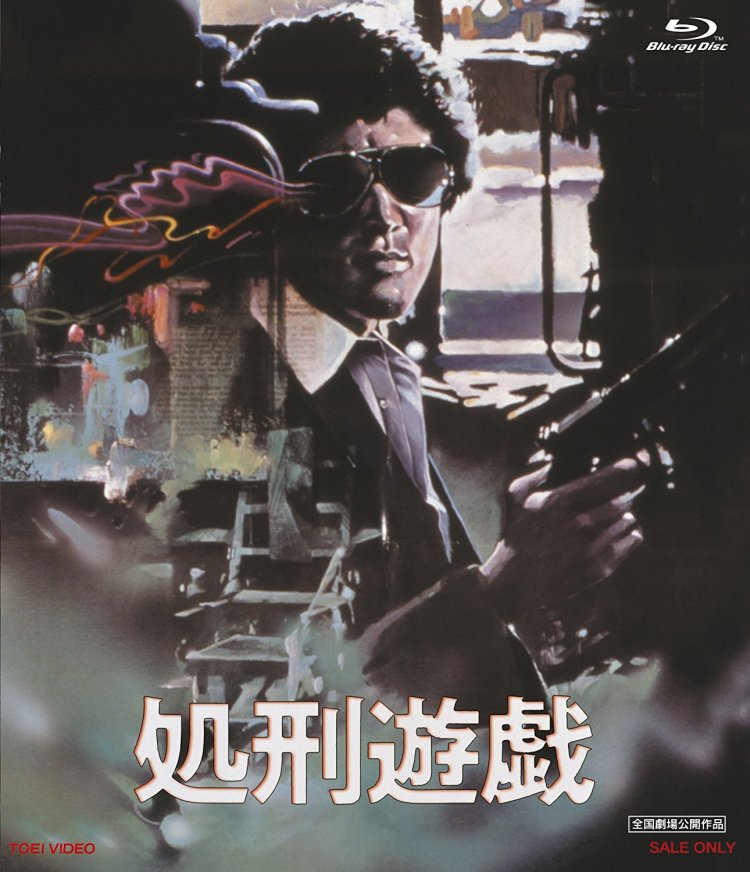
The Execution Game (処刑遊戯, Toru Murakawa, 1979)

Execution Game BDA year on from The Killing Game, Narumi (Yusaku Matsuda) has returned to his old profession, now branded The Execution Game (処刑遊戯, Shokei yugi). Like Killing, Execution is a variation on the themes of The Most Dangerous Game – conspiracy, betrayal, double cross, and corruption, but all in all Narumi’s world hasn’t changed very much even as he seems to become ever more dead to himself as he walks the dark city streets, trench coat, sunshades, and cigarettes blocking out its remaining light and warmth.

Unlike Dangerous or Killing, Execution opens indoors as Narumi lies half awake in an empty, dark and dirty room. Coming to, he remembers a girl and a car followed by a bump on the head but not much else. His attempt to escape lands him suspended from the ceiling in another room that’s shifted from green to red, but as he will shortly find out this is all part of a weird job interview. The shady guys who kidnapped him simply wanted to test his skills and, finding them adequate, now intend to force him to take their assignment to knock off their old hitman because he’s become too “weird” and they don’t need him around anymore. Narumi’s not too happy about any of this but then he does quite like getting paid. As usual, his first job leads to a second which has some wider implications involving international espionage.

Following his previous experiences, Narumi’s personal life seems to be less of a disaster but then that might be precisely because he has no personal life. In contrast to his increasingly detached persona, Execution marks the first time in the series in which he appears to enter into an entirely consensual relationship with a woman whom he genuinely seems to care about. Unfortunately she is not all she seems and, in a sense, betrays him. Nevertheless, even if the relationship is “fake” or at least part of an ongoing operation to trap Narumi into working for people he might otherwise avoid, it does provoke a kind of opening up as far as Narumi’s past is concerned. His seaside boyhood (perhaps why he chose the riverside town for his “retirement” in Killing) and longing for the ocean provide a clue to his restless heart as the sound of waves becomes a repeated cue signalling Narumi’s hidden emotional ebb and flow.

Yet externally he’s even more silent and closed off than before. Narumi’s hitman credentials have never been stronger and he pulls of his hits with steely precision. He is fearless in the face of danger, wading into the bloody finale with barely repressed fury, making sure none of these mass manipulators will survive their attempt to turn him into a disposable tool to be destroyed after use. Once again his second job provides him with a motive to get back in shape, making space for yet another training montage, but this time the mirrors are about more than vanity. Narumi’s world has always been dark, born of night and chaos, yet he remains the only point of order despite the illicit, dangerous, and immoral nature of his occupation. 

Narumi’s interaction with the young woman who runs the watch repair shop where he tries to get his pocket watched fixed is perhaps the best indicator of his progress over the series. The girl is first very taken with his watch which is rare and expensive, but is also later captivated by his cool exterior. She flirts with him, subtly, but Narumi deflects it. His demeanour towards her becomes paternal, finally he warns her against chasing every shady guy she meets – she doesn’t see the danger. This Narumi, in contrast to his rather pathetic existence in the first two films, is of the world but not in it. He sees himself as occupying a very different space than this young girl, and is resigned to walking a lonely road. The Execution Game is an apt way to describe his life story, yet even as something of him dies something else rises in his self imposed exile and desire for both self preservation and old fashioned nobility even within the bounds of his world weary cynicism.


Original trailer (no subtitles)

https://www.youtube.com/watch?v=aaFmxOdV34I

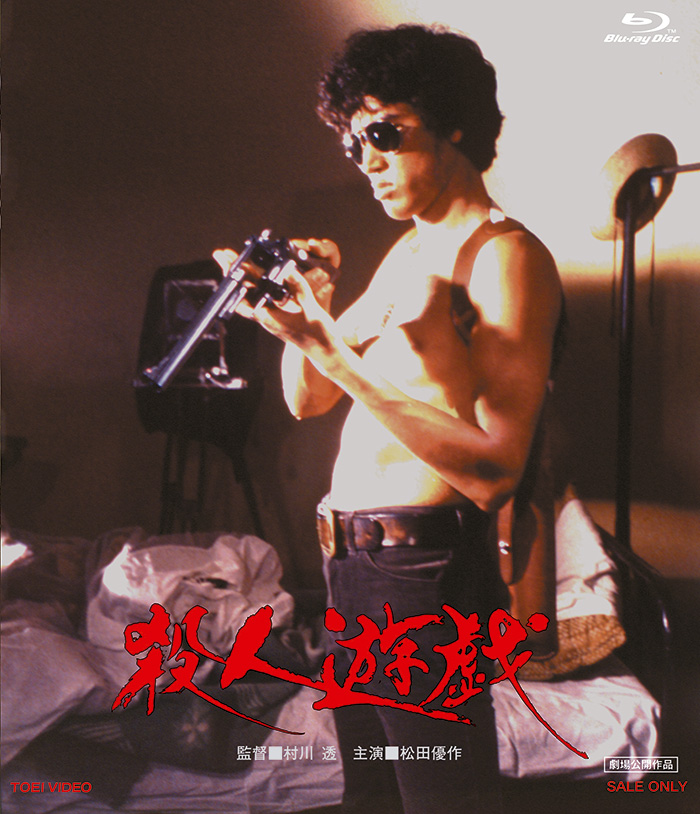
The Killing Game (殺人遊戯, Toru Murakawa, 1978)

the killing gameFollowing the success of The Most Dangerous Game, the second in what was to become a trilogy arrived within the year and once again stars Matsuda as the ice cold hitman Narumi. Sunnier in outlook, The Killing Game (殺人遊戯, Satsujin Jiken) unfolds along the same pattern as the first instalment as Narumi is dragged out of the shadows to intercede in a gang war only to find himself surplus to requirements.

Narumi (Yusaku Matsuda) has been retired from the killing game for the last five years and now lives a life of poverty and dissipation. Gone are his swanky apartment and stylish suits, now he lives in a bare hovel which is covered in dust and cobwebs, and he dresses like a farm boy in a white vest and jeans with a straw hat hanging on his back. He’s trying to lie low, but gets pulled into the kind of hostess bar he can’t really afford where he meets the first of two familiar faces which threaten to send him back into the middle of chaos. Akiko (Kaori Takeda), now a hostess at Bar Tako, is the daughter of the chairman Narumi bumped off in his last job before retiring but far from bearing a grudge against him, Akiko is grateful to have been set free. The second familiar face belongs to the same chairman’s former secretary/mistress, Misako (Yutaka Nakajima), who is now a mama-san at a bar popular with the local goons. All those years ago Narumi let Misako go in a moment of weakness and now regrets it but attempting to “reconnect” is going to land him right back in the thick of things.

Murakawa begins with a prologue which takes place in the noirish urban darkness of The Most Dangerous Game, but shoots in dreamy soft focus to emphasise that this is all memory before jumping forward five years. Exactly why Narumi has decided to give up a career in assassination is not revealed, nor is what he’s been doing the last five years, but he has apparently got himself an annoying sidekick who, in contrast to Narumi’s intense reserve, does not shut up. The first half of the movie is Narumi and his buddy trying to get by as outlaws including one humorous skit where they get themselves a van with a nudie pinup on the front plus a loudspeaker to humiliate debtors into paying up.

Things take a darker turn when Narumi runs into Misako – a chance meeting that seems almost like fate. Gradually the old Narumi begins to reappear. Deciding to pay Misako a visit he runs into her new man, gang boss Katsuda (Kei Sato), who figures out who he is and wants him to bump off another old gang boss. Narumi needs to get back in shape which he does via the tried and tested method of a training montage, lifting weights and running through the town with his trademark perm returning to its stylish buoyancy. This time around Narumi has buddy to help out, even if he only ends up being a liability, but the same strange dichotomy occurs – he may be an ace hitman, but Narumi is a mess without a gun in his hand.

Perhaps weathered by his experiences, Narumi is also much less cocky and much more unwilling to take a chance on trust. Once again he is betrayed by clients who’d rather not pay up and forced to play a “dangerous game” to bring the whole saga to a close in such a way as to keep both his life and the money. Rather than the surprising and largely inexplicable devotion of Dangerous’ Kyoko, Narumi finds himself torn between two women – the youthful Akiko who is grateful to Narumi for releasing her from an overbearing father, and the jaded Misako whose feelings for Narumi are complex, mingling fear, gratitude, attraction, and resentment into an irresistible storm of ambivalence. Again Narumi’s cool, animalistic aggression seems to be the key to his mysterious sex appeal but this time around there are no flickers of response as there were for the devoted Kyoko, these “relationships” are opportunistic and transactional.

Ironically titled, The Killing Game makes plain that Narumi will never be able to escape his chosen profession even if he wanted to. Without a gun in his hand Narumi is a pathetic wastrel, playing around at tuppenny schemes with his rather dim but talkative friend, and trying to play the big shot by buying out a hostess bar he is entirely unable to afford despite his recent windfall. The setting may be brighter, but Narumi’s word is still a nihilistic one in which he’s conditioned to expect betrayal and the only remaining vestiges of his humanity are his strange friendship with his bumbling sidekick and his ongoing fecklessness at coping with everyday life. Matsuda is as cool as ever in his effortless ability to cope with any given situation and kill with ruthless efficiency, but as Narumi edges ever closer to machine it is clear there is only one way to beat The Killing Game.


Original trailer (no subtitles)

https://www.youtube.com/watch?v=-fjYrwzafxw

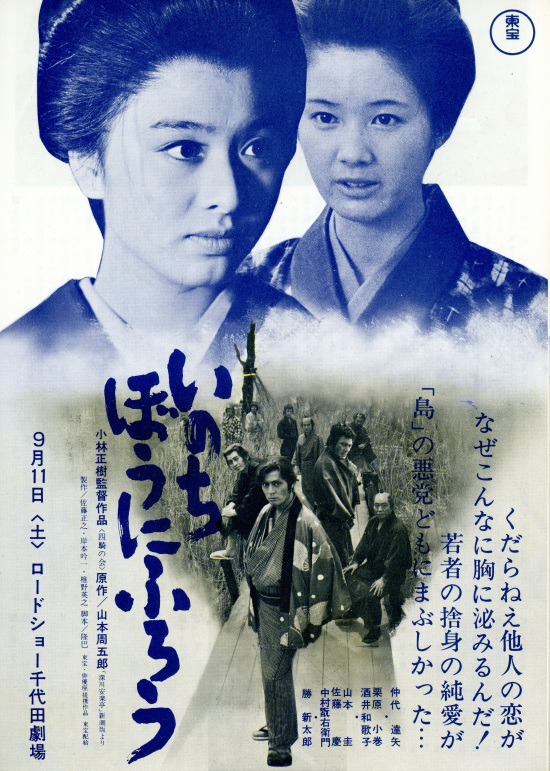
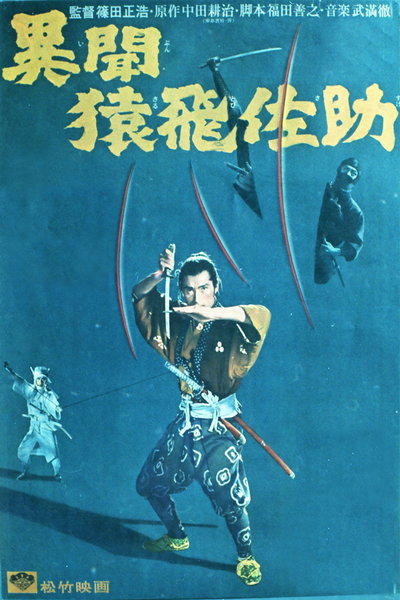
Inn of Evil (いのちぼうにふろう, Masaki Kobayashi, 1971)

inn-of-evil“Sometimes it feels good to risk your life for something other people think is stupid”, says one of the leading players of Masaki Kobayashi’s strangely retitled Inn of Evil (いのちぼうにふろう, Inochi Bonifuro), neatly summing up the director’s key philosophy in a few simple words. The original Japanese title “Inochi Bonifuro” means something more like “To Throw One’s Life Away”, which more directly signals the tragic character drama that’s about to unfold. Though it most obviously relates to the decision that this gang of hardened criminals is about to make, the criticism is a wider one as the film stops to ask why it is this group of unusual characters have found themselves living under the roof of the Easy Tavern engaged in benign acts of smuggling during Japan’s isolationist period.
Led by the innkeeper Ikuzo (Kan’emon Nakamura), the Easy Tavern is, effectively, the hideout of a smuggling gang conveniently located on a small island in the middle of a river where they can unload goods from the Dutch boats before shipping them on to Edo. Everything had been running smoothly, but the friendly policeman has been moved on and the new guy seems very straight laced. The gang’s routine existence changes one night when they receive two unexpected visitors – a young man they save from a beating in the street, and a drunk who wanders in looking for sake. The younger man, Tomijiro (Kei Yamamoto), brings a sad story with him in that all of his troubles have been caused by trying to save the woman he loves from being sold to a brothel. Moved by Tomijiro’s innocent ardour, even the most hardhearted residents of the Easy Tavern become determined to help him. Accepting a job everyone had a bad feeling about in order to get the money for Tomijiro to buy back his lady love before it’s too late, the gang’s unusual decision to risk their lives for someone else’s happiness may be the first and last time they ever do so.

The residents of the Easy Tavern have various different backstories, but the thing they all have in common is having been rejected by mainstream society at some point in their lives. The most high profile, Sadashichi (Tatsuya Nakadai), is known as “The Indifferent” which is both apt and slightly ironic. Sullen and cynical, he puts on a show about caring for nothing and no one but, as inn keeper’s daughter Omitsu (Komaki Kurihara) has figured out, it’s more that the opposite it true – he cares too much about everything. Abandoned as a child, Sadashichi’s sad story is that he once thought his saw his mother long after they were separated but killed her because she’d fallen into prostitution. Then again, perhaps it was just a woman who looked like her, or perhaps he made he whole thing up. Coming across a lost baby bird shortly after killing a man, Sadashichi is determined to look after it but is later distressed by the words of the drunk who reminds him that the bird’s mother is probably going crazy with worry. Sadashichi may identify with this lost little bird, but his empathy also extends to Tomijiro’s plight as his plaintive looks and gloomy face prompt him into action, if only to make them go away.

Similarly, the other members including “The Living Buddha” – a rabidly bisexual former monk thrown out of his temple for his lascivious ways, an effeminate homeless man, a stutterer, and an invalid all have reasons for living outside the law. As the sympathetic inn keeper later tries to explain to a policeman, most of these men are people who’ve faced rejection in one way or another. Craving sympathy, they’ve turned violent and suspicious, pushed away from the very things they wanted most. Far from an Inn of Evil, the Easy Tavern is the only place where these people have been able to find acceptance, building a community of lost souls from those cast out from society at large.

The decision to try and help Tomijiro to rescue his childhood sweetheart, cruelly sold by her selfish and uncaring father, is, in once sense, a selfless one but perhaps also reminds them of all the times they were also betrayed or abandoned and no one came to help. Even knowing the plan is unlikely to end well, the inn keeper is proud of his men’s decision, if they didn’t try to help the girl no one else would. They may be throwing their lives away in a pointless endeavour, but if they don’t at least try then what’s the point in living at all. This more than anything expresses Kobayashi’s constant preoccupation throughout his career in pointing to the essential goodness of those who refuse to simply accept acts of injustice as normal and stand up to oppose them, even if their resistance will produce little or no actual change.

Filming in a crisp black and white, Kobayashi creates an eerie atmosphere aided by Toru Takemitsu’s strangely ethereal score. The world of the The Easy Tavern is a dark one in which cruelty and betrayal lie at every turn and men ruin themselves through thoughtless and reckless decisions, but the best of humanity is to be found among this gang of outlaws who collectively decide it’s world risking their lives for someone else’s love story. Filled with impressive visual imagery including the strange sight of the looming bright white police lanterns and the impressively staged last stand as Sadashichi holds off the troops for Tomijiro to escape, Inn of Evil is a tightly controlled, minutely detailed character drama in which men who’d throw their lives away for nothing find that their sacrifice has not been in vain.


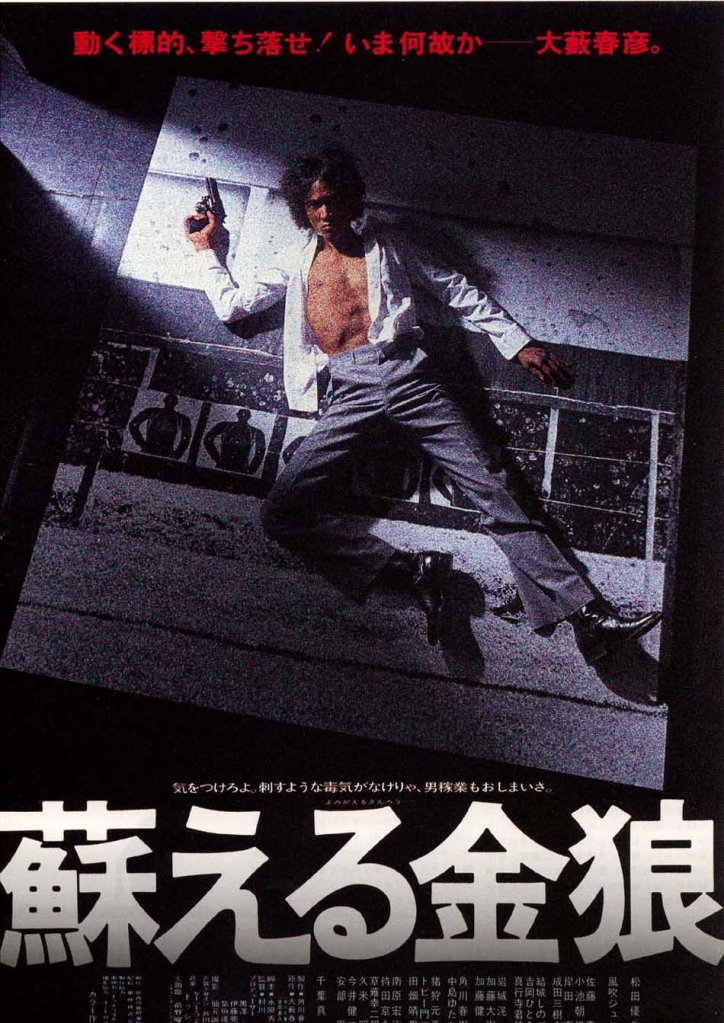
Resurrection of Golden Wolf (蘇る金狼, Toru Murakawa, 1979)

resurrection-golden-wolfYou know how it is. You work hard, make sacrifices and expect the system to reward you with advancement. The system, however, has its biases and none of them are in your favour. Watching the less well equipped leapfrog ahead by virtue of their privileges, it’s difficult not to lose heart. Asakura (Yusaku Matsuda), the (anti) hero of Toru Murakawa’s Resurrection of Golden Wolf (蘇る金狼, Yomigaeru Kinro), has had about all he can take of the dead end accountancy job he’s supposedly lucky to have despite his high school level education (even if it is topped up with night school qualifications). Resentful at the way the odds are always stacked against him, Asakura decides to take his revenge but quickly finds himself becoming embroiled in a series of ongoing corporate scandals.
Orchestrating a perfectly planned robbery on his own firm in which Asakura deprives his employers of a large amount money, he’s feeling kind of smug only to realise that the bank had a backup plan. The serial numbers of all of the missing money have been recorded meaning he can’t risk spending any of it. Accordingly he decides the “safest” thing to do is exchange the problematic currency for the equivalent in heroine. His plan doesn’t stop there, however. He also knows the big wigs at the top are engaged in a high level embezzlement scam and seduces his boss’ mistress, Kyoko (Jun Fubuki), for the inside track. Asakura is not the only game in town as another detective, Sakurai (Sonny Chiba), is blackmailing some of the other bosses over their extra-marital activities. Playing both sides off against each other, Asakura thinks he has the upper hand but just as he thinks he’s got what he wanted, he discovers perhaps there was something else he wanted more and it won’t wait for him any longer.

Based on a novel by hardboiled author Haruhiko Oyabu, Resurrection of Golden Wolf is another action vehicle for Matsuda at the height of his stardom. Re-teaming with Murakawa with whom he’d worked on some of his most famous roles including The Most Dangerous Game series, Matsuda begins to look beyond the tough guy in this socially conscious noir in which an angry young man rails against the system intent on penning him in. A mastermind genius, Asakura is leading a double life as a mild mannered accountancy clerk by day and violent punk by night, but he has every right to be angry. If his early speech to a colleague is to be believed, Asakura worked hard to get this job. A high school graduate with night school accreditation, he’s done well for himself, but despite his friend’s assurance that Asaukura is ahead in the promotion stakes he knows there’s a ceiling for someone with his background no matter how hard he works or how bright he is.

Under the terrible wig and unfashionable glasses he adopts for his work persona, Asakura has a mass of unruly, rebellious hair and a steely gaze hellbent on revenge against the hierarchical class system. He is not a good guy. Asakura’s tactics range from fisticuffs with street punks to molesting bar hostesses, date rape, and getting his (almost) girlfriend hooked on drugs as a means of control, not to mention the original cold blooded murder of the courier he stole the company’s money from in the first place. The fact he emerges as “hero” at all is only down to his refusal to accept the status quo and by his constant ability to stay one step ahead of everyone else. When the system itself is this corrupt, Asakura’s punkish rebellion begins to look attractive despite the unpleasantness of his actions.

Adding in surreal sequences where Asakura dances around his lair-like apartment in a quasi-religious ritual with his silver mask, plus bizarre editing choices, eerie music and incongruous flamenco, Murakawa’s neo-noir world is an increasingly odd one, even if not quite on the level of his next film, The Beast Must Die. Very much of its time and remaining within the upscale exploitation world, Resurrection of Golden Wolf is necessarily misogynistic as its female cast become merely pawns exchanged between men to express their own status. The tone remains hopelessly nihilistic as Asakura nears his goal of the appearance of a stereotypically successful life with an executive job and possible marriage to the boss’ daughter only to find his conviction wavering. Hopelessly bleak, dark, and sleazy, Resurrection of Golden Wolf is, nevertheless, a supreme exercise in style marrying Matsuda’s iconic image with innovative direction which is hard to beat even whilst swimming in some very murky waters.


Again, many variations on the English title but I’ve gone with Resurrection of Golden Wolf as that’s the one that appears on Kadokawa’s release of the 4K remaster blu-ray (Japanese subs only).

Original trailer (English subtitles)

https://www.youtube.com/watch?v=75mO5ysfwAc

The Beast Must Die (野獣死すべし, Toru Murakawa, 1980)

LP Soundrack record cover

Yusaku Matsuda was the action icon of the ‘70s, well known for his counter cultural, rebellious performances as maverick detectives or unlucky criminals. By the early 1980s he was ready to shed his action star image for more challenging character roles as his performances for Yoshimitsu Morita in The Family Game and Sorekara or in Seijun Suzuki’s Kagero-za demonstrate. The Beast Must Die (野獣死すべし, Yaju Shisubeshi, AKA Beast to Die) is among his earliest attempts to break out of the action movie cage and reunites him with director Toru Murakawa with whom he’d previously worked on Resurrection of the Golden Wolf also adapted from a novel by the author of The Beast Must Die, Haruhiko Oyabu. A strange and surreal experience which owes a large amount to the  “New Hollywood” movement of the previous decade, The Beast Must Die also represents a possible new direction for its all powerful producer, Haruki Kadokawa, in making space for smaller, art house inspired mainstream films.

Shedding 25 pounds and having four of his molars removed to play the role, Matsuda inhabits the figure of former war zone photo journalist Kazuhiro Date whose experiences have reduced him to state of living death. After getting into a fight with a policeman he seems to know, Date kills him, steals his gun, and heads to a local casino where he goes on a shooting rampage and takes off with the takings. Date, now working as a translator, does not seem to need or even want the money though if he had a particular grudge against the casino or the men who gather there the reasons are far from clear.

Remaining inscrutable, Date spends much of his time alone at home listening to classical music. Attending a concert, he runs into a woman he used to know who seems to have fond feelings for him, but Date is being pulled in another direction as his experiences in war zones have left him with a need for release through physical violence. Eventually meeting up with a similarly disaffected young man, Date plans an odd kind of revenge in robbing a local bank for, again, unclear motives, finally executing the last parts of himself clinging onto the world of order and humanity once and for all.

Throughout the film Date recites a kind of poem, almost a him to his demon of violence in which he speaks of loneliness and of a faith only in his own rage. Later, in one of his increasingly crazed speeches to his only disciple, Date recounts the first time he killed a man – no longer a mere observer in someone else’s war, now a transgressor himself taking a life to save his own. The violence begins to excite him, he claims to have “surpassed god” in his bloodlust, entering an ecstatic state which places him above mere mortals. A bullet, he says, stops time in that it alters a course of events which was fated to continue. A life ends, and with it all of that time which should have elapsed is dissolved in the ultimate act of theft and destruction. His acts of violence are “beautiful demonic moments” available only to those who have rejected the world of law.

Murakawa allows Matsuda to carry the film with a characteristically intense, near silent performance of a man driven mad by continued exposure to human cruelty. Hiding out in Date’s elegant apartment, Matsuda moves oddly, beast-like, his baseness contrasting perfectly with the classical music which momentarily calms his world. Mixing in stock footage of contemporary war zones, Murakawa makes plain the effect of this ongoing violence on Date’s psyche as the sound of helicopters and gunfire resounds within his own head. The imagery becomes increasingly surreal culminating in the moment of consecration for Date’s pupil in which he finally murders his girlfriend while she furiously performs flamenco during an dramatic thunderstorm. Date is, to borrow a phrase, no longer human, any last remnants of human feeling are extinguished in his decision to kill the only possibility of salvation during the bank robbery.

Anchored by Matsuda’s powerful presence, The Beast Must Die is a fascinating, if often incomprehensible, experience filled with surreal imagery and an ever present sense of dread. Its world is one of neo noir, the darkness and modern jazz score adding to a sense of alienation which contrasts with the brightness and elegance of the classical music world. At the end of his transformation, there is only one destination left to Date though his path there is a strange one. Fittingly enough for a tale which began with with darkness we exit through blinding white light.


There’s also another adaptation of this novel from 1959 starring Tatsuya Nakadai which I’d love to see but doesn’t seem to be available on DVD even without subtitles. This film has a selection of English language titles but I’ve used The Beast Must Die as this is the one which appears on Kadokawa’s 4K restoration blu-ray release (sadly Japanese subtitles ony).

Original trailer (no subtitles)

Samurai Spy (異聞猿飛佐助, Masahiro Shinoda, 1965)

samurai-spyNothing is certain these days, so say the protagonists at the centre of Masahiro Shinoda’s whirlwind of intrigue, Samurai Spy (異聞猿飛佐助, Ibun Sarutobi Sasuke). Set 14 years after the battle of Sekigahara which ushered in a long period of peace under the banner of the Tokugawa Shogunate, Samurai Spy effectively imports its contemporary cold war atmosphere to feudal Japan in which warring states continue to vie for power through the use of covert spy networks run from Edo and Osaka respectively. Sides are switched, friends are betrayed, innocents are murdered. The peace is fragile, but is it worth preserving even at such mounting cost?
Our “hero” Sasuke (Koji Takahashi) is a wandering spy for the Sanada clan, nominally part of the Tokugawa though with no strong allegiance to either side. Everywhere he goes he feels hunted, watched by shadowy forces and unseen motivators. After bumping into Mitsuaki (Mutsuhiro Toura), an old comrade who fought alongside him at the Battle of Sekigahara, Sasuke is pulled into the ongoing intrigue as his friend is murdered and he assumed to be the culprit. Things are further complicated when a mysterious woman to whom he had become attached, Okiwa (Misako Watanabe),  is killed in a similar fashion. A political shift is taking place as a high ranking Tokugawa official, Tatewaki (Eiji Okada), is in the process of defecting to the Toyotomi with white cloaked ninja master Takatani (Tetsuro Tanba) (presumably) working against him. Sasuke is charged with trying to sort all of this out but constantly finds himself on shaky ground as everything around him is constantly changing and the air is filled with conspiracy.

Shinoda aims to disorientate. After beginning with a brief historical narration to set the scene including a bloody excerpt from the horrific Battle of Sekigahara (the historical context presumably much more apparent to a Japanese viewer than an overseas one), he jumps forward 14 years and proceeds to give a rundown of the current situation. Quick fire naming and a lack of external context intentionally make it difficult to pin down who is who and which side is which. The opening sequence takes place in darkness with only moonlight and lanterns to light the way, so our players are always cast in shadows, only half visible and unidentifiable. Nothing is as it seems, the world is murky and the people in shadier still.

Sasuke fought at Sekigahara when he was just 15. His true coming of age has been in an era of peace and he is committed to sustaining that peace at all costs rather than return to the bloody, internecine warfare of the past. This stands in contrast to his double dealing friend, Mitsuaki, whose own coming of age was forged by war and so now finds himself at a loose end as warriors are obsolete in an age without war. Nevertheless, Sasuke feels the peace is threatened – all conversations are eventually about conflict, no one thinks about the meaning of death or what it is to be alive. Men like Mitsuaki have decided to live purely for pleasure, wanting nothing more than women and sake, thinking of nothing beyond satisfying their needs, and rarely consider the moral or political dimension of their actions. Mitsuaki’s unexpected degree of self interest accidentally threatens to completely destabilise the status quo, setting off a series of betrayals and counter betrayals in its wake, but all Mitsuaki was thinking about was a how to get paid twice for doing one job.

Navigating this complex network of allegiances and betrayals, Sasuke comes to discover what it is he really wants out of life and what he needs to do to get it. No longer a neutral observer, he has to pick a side and the one he picks that of the wronged. Coming to the aid of the threatened and oppressed, Sasuke adds himself to the list of enemies of the state yet he sees it as his duty to fight against the forces of darkness for a better, fairer world. Of course, he has his personal reasons for revenge but even these are partly born out of a sense of outrage for the injustice done to people who mattered to him.

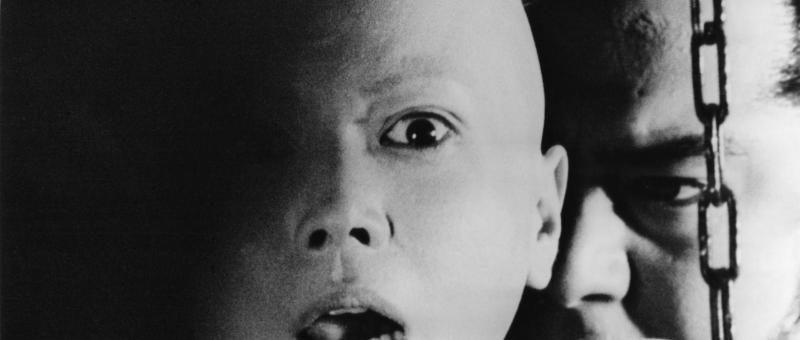
Yet for all of the real world intrigue and political allegory Samurai Spy is also imbued with an unsettling sense of the absurd. Sasuke is plagued, yet at times assisted, by the almost supernatural Takatani who, incongruously, dresses in a bright white outfit with the fabric of his hood tied up into horns on the front. Appearing as needed along with his more conventionally dressed ninja minions, Takatani seems to float through the air performing strange acts of ninjadom and acting with no firm course of action. Shinoda shoots the battle scenes from odd angles using slow motion to give them a strange kind of power, even in one instance allowing a severed limb to float to the ground. In a nod to the circularity of violence, he even allows the climactic fight to be interrupted and witnessed by a small boy, shocked by what he has seen. The fact that the situation is laid to rest by a forgotten deus ex machina is yet more evidence for the world’s essential leaning towards constructed narrative.

Filled with the fog of war (literally so in places), Samurai Spy dramatises the uncertainties of its environment through the extreme lack of visual clarity. The audience is as disorientated as Sasuke, continually wrong footed and left at a loss as to the true motivations of each of the major players. The atmosphere is palpably intense, as if sitting on a powder keg ready to explode at any spark of conflict. From this viewpoint, it’s impossible to see who is in the right and who the wrong or even if those two ideas are even appropriate ways of thinking about things. Peace stands on a knife edge and, ironically, only survives if robustly defended. Violence is shown up for all of its essential cruelty and senselessness yet it is the only thing which is certain. Sasuke, at least, seems to have made his own peace in one way or another but the world he leaves behind him is far from ready to do the same.


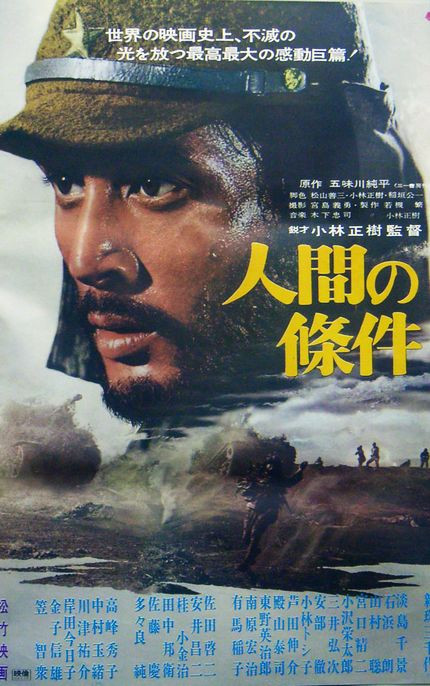
The Human Condition (人間の條件, Masaki Kobayashi, 1959-61)

human-condition

Review of Masaki Kobayashi’s magnum opus The Human Condition (人間の條件, Ningen no Joken) first published by UK Anime Network


If Masaki Kobayashi had an overriding concern throughout his career, it was the place of the conflicted soul within an immoral society. Nowhere is this better articulated than in his masterwork – the nine and a half hour epic, The Human Condition. Adapted from a novel by Junpei Gomikawa, Kobayashi’s film also mirrors his own wartime experiences which saw him conscripted into the army and sent to Manchuria where he was accounted a good soldier, but chose to mark his resistance to the war effort by repeatedly refusing all promotions above the rank of Private. Kaji, by contrast, essentially sells his soul to the devil in return for a military exemption so that he can marry his girlfriend free of the guilt that comes with dragging her into his uncertain future. At this point Kaji can still kid himself into thinking he can change the system from within but to do so means compromising himself even further.

The first of three acts, No Greater Love, takes place in Manchuria during the Japanese expansion where Kaji is working for a Japanese steel company. Fully aware that the company is using forced and exploitative labour, Kaji has been tasked with increasing productivity and has written a comprehensive report indicating that introducing better working conditions would positively affect efficiency as there would be less absenteeism and fewer sickness related gaps in the line. His boss is impressed and presents him with an offer of promotion managing a mine in the North. Kaji is conflicted but ultimately decides to accept as the post comes with a certificate of military exemption so he can finally marry his girlfriend, Michiko. However, his progressive ideals largely fall on deaf ears.

Road to Eternity finds him in the army where his left leaning ideas are even less appreciated than they were at the mine. Asked to train recruits, Kaji once again enacts a progressive approach which takes physical reinforcement out of the process and focusses on building bonds between men but his final battle comes too early leaving his team dangerously exposed. Kaji is briefly reunited with Michiko who has made a perilous journey to visit him but neither of the pair knows when or if they will see each other again.

The concluding part, A Soldier’s Prayer, finds a defeated Kaji wandering the arid land of Northern Manchuria on a desperate quest south with only the thought of getting back home to Michiko keeping him going. Eventually he is taken prisoner by Soviet forces but far from the people’s paradise he’d come to believe in, the Russians are just as unforgiving as his own Japanese. In the army he was a “filthy red” but now he’s a “fascist samurai”.

As much as Kaji is “good” man filled with humanistic ideals, he is also an incredibly flawed central presence. Already compromised by working for the steel company in Manchuria in the first place fully knowing the way the company behaves in China, his decision to take the mining job is an act of self interest in which he trades a little more of his integrity for military exemption and a marriage license. Needless to say, the head honchos at the mine who’ve been at the coal face all along do not take kindly to this baby faced suit from head office suddenly showing up and telling them they’ve been doing everything wrong. Far from listening to their experiences and arguing his point, Kaji attempts to simply overrule the mining staff taking little account of the already in place complex inter-office politics. This creates a series of radiating factions, most of whom side with Kaji’s rival and have come to view the cruel treatment of workers as a sort of office perk.

The complicity only deepens as Kaji becomes ever more a part of the machine. Kaji feels distraught after he loses his temper and strikes a subordinate, but before long he’s physically whipping a crowd of starving men in an attempt to stop them killing themselves through overeating. His biggest crisis comes when a number of Chinese prisoners are caught trying to escape and Kaji is unable to help them after specifically guaranteeing nobody would be killed. Forced to watch the botched execution of a brave man who refused to capitulate even at the end, Kaji is forced to acknowledge his own role in the deaths of these men, his complicity in the ongoing system of abuse, and his complete powerlessness to effect any kind of change in attitudes among the imperialist diehards all around him.

Kobayashi pulls no punches when it comes to examining the recent past. The steel company is built entirely on the exploitation of local workers who are progressively stripped of their humanity, whipped and beaten, starved and humiliated. The situation is only made worse when Kaji is forced to accept a number of “special labourers” from the military police. Tagged as prisoners of war, these men are not soldiers but displaced locals from Northern villages razed by Japanese troops. The train they arrive on is worse than a cattle truck and some of the men are already dead of heat, thirst, and starvation. The others pour out, zombie-like, searching desperately for food and water. Kaji is further compromised when the head of the mine has a plan of his own to subdue the men which involves procuring a number of comfort women which Kaji eventually does even if the entire process makes him sick. This is where the system has brought him – effectively to the level of a people trafficker, pimping vulnerable women to enslaved men.

Kaji comes to believe in a better life across the border where people are treated like human beings but anyone who’s read ahead in the textbooks will know this doesn’t work out for him either. Equally scathing about the left as of the right, The Human Condition has very little good to say about people, especially when people begin to act as a group. Even Kaji himself who has so many high ideals is brought low precisely because of his self-centred didacticism which makes it impossible for him to take other people’s views into account. With his faith well and truly smashed, Kaji has only the vague image of Michiko to cling to. Even so, he trudges on alone through the snowy landscape, deluded by hope, still dreaming of home. Trudging on endlessly, driven only by blind faith, perhaps that’s the best definition of the human condition that can be offered. A brutal exercise in soul searching, The Human Condition is not always even certain that it finds one but still retains the desire to believe in something better, however little in evidence it may be.


Trailers for each of the three parts (English subtitles)

https://www.youtube.com/watch?v=IpkKFLC2zvA

https://www.youtube.com/watch?v=Hpr_75YYX1o

https://www.youtube.com/watch?v=9uRym7Yd_bg


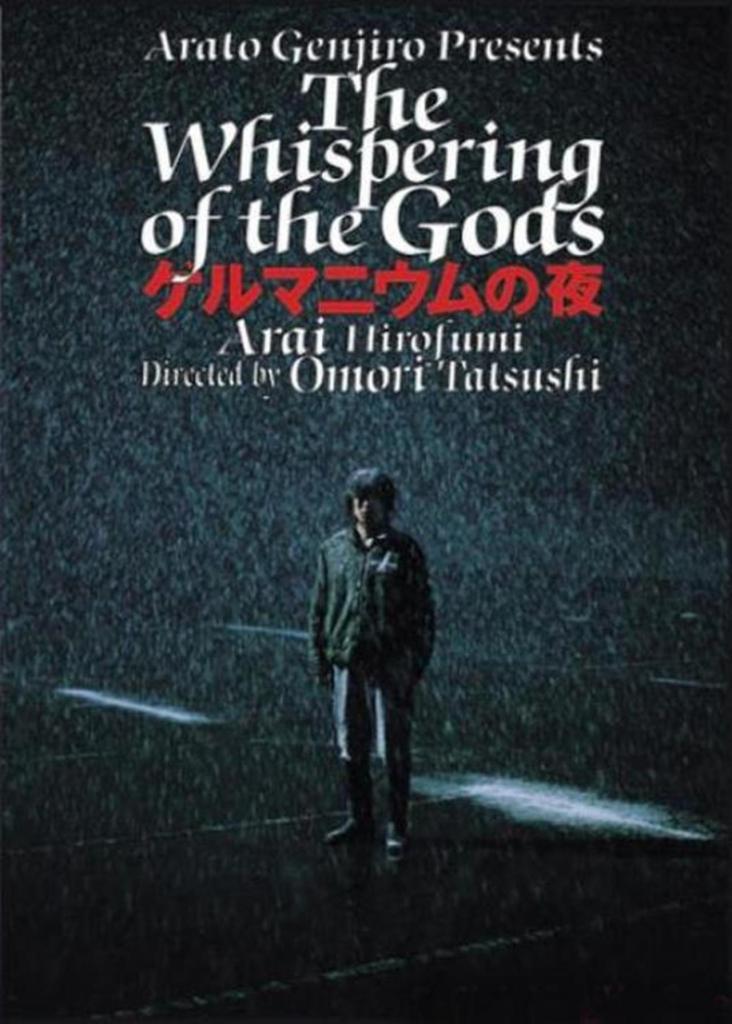
The Whispering of the Gods (ゲルマニウムの夜, Tatsushi Omori, 2005)

whispering of the godsIf you’ve ever wondered what it’s like to live in hell, you could enjoy this fascinating promotional video which recounts events set in an isolated rural monastery somewhere in snow covered Japan. A debut feature from Tatsushi Omori (younger brother of actor Nao Omori who also plays a small part in the film), The Whispering of the Gods (ゲルマニウムの夜, Germanium no Yoru) adapted from the 1998 novel by Mangetsu Hanamura, paints an increasingly bleak picture of human nature as the lines between man and beast become hopelessly blurred in world filled with existential despair.

Rou (Hirofumi Arai) has returned to the religious community where he was raised but his reasons for this seem to have everything and nothing to do with God. He claims that he “kind of killed some people” and also says he’s a rapist, but there’s no way to tell how much of what he says is actually the truth. After opening with a sequence of bulls trudging through snow, we see Rou listening to a priest read from the bible, but we also see that Rou is giving the priest a hand job whilst looking resolutely vacant. Later, after expending some pent-up anger by thrashing around some with junk and kicking a dog, Rou has a heart to heart with a novice nun, Kyoko, which quickly results in a forbidden sexual relationship. Forbidden sexual relationships, well – “relationships” isn’t quite the right word here, perhaps transactions or just actions might be more appropriate, are very much the name of the game in this extremely strange community of runaways and reprobates each keen to pass their own suffering down to another through a complex network of abuse and violence.

An early scene sees Rou throw a metal pipe across his shoulders in an oddly Christ-like pose. He’s certainly no Messiah, he wants to take revenge on these people by being the very worst of them, but ultimately he does come carrying a message. Using the same tools against them as they’ve used against him all his life, he exploits the loopholes of religiosity to expose its inherent hypocrisy. He confesses sins he may or may not have committed as well as those he plans to commit. In giving him unconditional absolution for an uncommitted sin, has the priest just given him a free pass to balance the celestial books by going ahead and violating a random nun? As well as well and truly messing with the resident priest’s head, Rou’s rampant sexuality also exposes the latent longings present within the nuns themselves who are supposed to control their sexual urges, brides of Christ as they are, yet they too covertly indulge themselves in receiving satisfaction from the various kinds of strange sexual behaviour currently on offer.

Life on the farm is nature red in tooth and claw as one particularly brutal scene sees a male pig castrated with a pair of garden shears during a failed act of copulation. Later a pig will lie in neatly dissected pieces, dripping with blood and fluid. There’s no romance here, just flesh and impulse. Forming a kind of friendship with a younger boy, Toru, who is also being abused by the priests at the compound, Rou offers to take revenge for him but it seems the boy just wanted to confide in someone, to begin with. Later, Rou will take a kind of action and Toru offers to repay him by continuing the behaviours he has learned through a system of perpetual manipulation, unwittingly drawing Rou even more deeply into the spiral of abuse and hypocrisy that he set out to destroy.

Omori opts for a straightforward arthouse aesthetic which matches the bleakness of the environment and barrenness of spirituality found in this supposedly Christian commune. In fact, Omori had to go a roundabout route to get this film shown given its controversial nature which saw him set up a temporary marquee theatre to avoid having the film cut to get an Eirin certificate before getting it into more mainstream cinemas in his desired version. What it has to say about the base essence of humanity is extremely hard to take, though no less valid, and its picture of a hellish world filled with nothing but despair punctuated by guilt filled sexual episodes and violence in which there is nothing left to do but continue shovelling shit until you die is an uncomfortably apt metaphor for contemporary society.


Mangetsu Hanamura’s source novel does not appear to be available in English but actually seems to be even more disturbing than this extremely depressing film – more info over at Books From Japan.

Unsubbed trailer:

Outlaw: Goro the Assassin (無頼 人斬り五郎, Keiichi Ozawa, 1968)

goro the assassinSo, once again Goro Goes Straight is sadly not the title of this fourth film in the tale of the noble hearted gangster “Goro the Assassin” (無頼 人斬り五郎, Burai Hitokiri Goro). After getting his friend out of a jam, the pair end up in prison. Goro is released three years later but his friend, Masa, is poor health and eventually dies a prisoner’s death with no one to collect his body meaning he’ll be buried in a lonely prison grave alongside the rest of society’s unwanted rubbish. On their final meeting, Masa asks Goro to find his sister for him and tell her that he’s doing alright. This message now well out of date, Goro decides to try finding Masa’s sister anyway if only to find out why she never came to see him even as he lay dying.

However, Goro once again runs up against another gang and some old enemies whilst trying to complete his quest and start an honest life at the same time. After taking a job working on the boiler at a hotel, he strikes up a friendship with the receptionist, Yuki (Chieko Matsubara again), whom he also bumped into a few times on his way there. She has some problems with the yakuza herself going back to the traffic “accident” which killed her father.

Family is once again the big key here. Goro is originally angry with Masa’s sister for abandoning her yakuza brother but the truth is more complicated. Having only each other in the world, Masa’s sister has been reduced to working in the red light district – in part to get some money together to help Masa. She never got the messages about his ill health because of moving around so much and was also ashamed to let him know where she’d been working. Now that Masa is dead, her sacrifice is meaningless.

It’s also family which gets Yuki into trouble, in an indirect way, after she accepts some money from the yakuza who killed her father. Perhaps intended to salve his conscience, the money brings Yuki to the attention of the other gangsters and their various extortion scams which eventually leads to her giving up her job at the hotel. Of course, by this point, she’s fallen in love with the noble and brooding Goro which also puts her in the line of fire as things heat up for him with the local tough guys.

Again it isn’t really clear how this film links in with the others in the series but this time around Goro is a much more playful character, bright and cheerful and only occasionally brooding. He’s cracking jokes all over the place and Yuki even refers to him as the “amusing guy from the bus” when he comes to ask about the boiler job. This only adds to his “cool” appeal as he appears somehow far above everything, looking down on the yakuza world with a sort of ironic eye that implies all of this is quite ridiculous but nevertheless inevitable.

Goro still dreams of going straight and leading a more normal life but once again it eludes him. Yuki again utters the phrase that he’s a yakuza in name only and doesn’t have a killer’s heart but Goro disagrees. Throwing down his short sword he declares he longs to live a life without it but it seems surgically attached to him now, he’ll never be free of it. Again, at the end of the movie he sends his chance of a way out of the gangster life off on a ferry to ensure her own safety at the cost of his personal happiness.

Directed again by Keiichi Ozawa who handled the second film in the series, Goro the Assassin has more outdoor scenes only sticking to the studio for the red light district sequences. It doesn’t quite have the visual style of the other instalments with fewer set pieces which tend to be centred around the fight scenes themselves rather than anything going on around the same time. By the time the ending rolls around there’s a kind of progress in standing still as, after taking care of the bad guys, Goro sees a vision of Yuki standing far off on the horizon. Rather than staggering off lonely and alone as in the other films, he stands and stares which, though not exactly a happy ending, is a little more hopeful than the doom laden conclusions the films have each featured so far.


Outlaw: Goro the Assassin is the fourth of six films included in Arrow films’ Outlaw: Gangster VIP The Complete Collection box set (which is region free on DVD and blu-ray and available from both US and UK).

English subtitled original theatrical trailer:

https://www.youtube.com/watch?v=McI68d_cj6U