
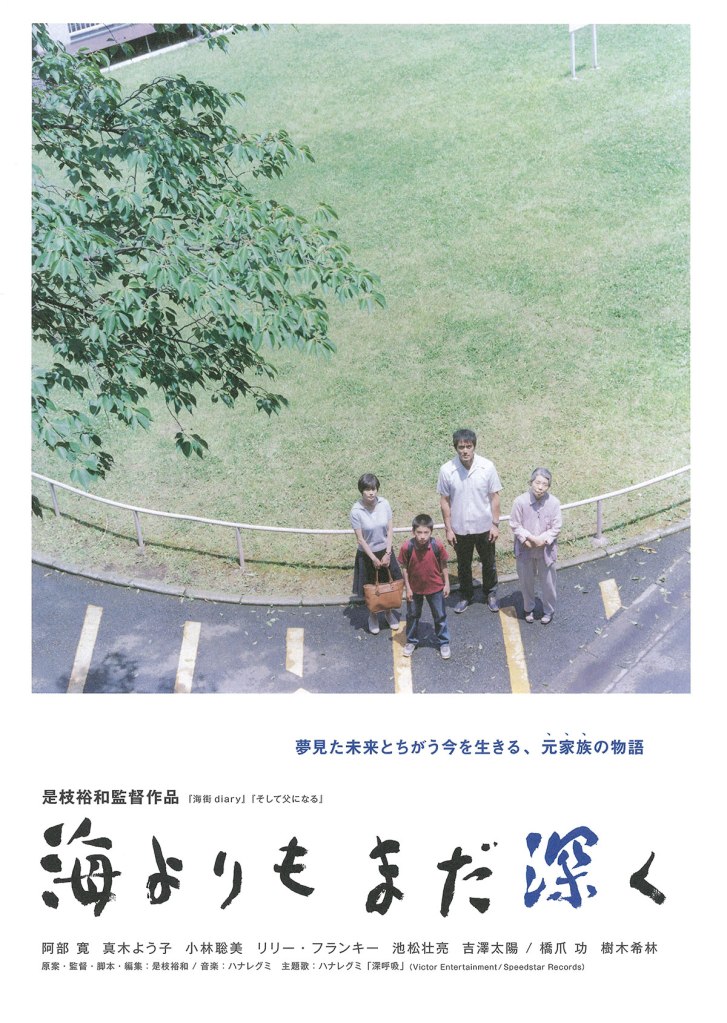
 It’s never too late to be what you might have been – a statement attributed to George Eliot which may be as fake as one of the promises offered by the protagonist of Hirokazu Koreeda’s latest attempt to chart the course of his nation through its basic social unit, After the Storm (海よりもまだ深く, Umi yori mo Mada Fukaku). Reuniting Kirin Kiki and Hiroshi Abe as mother and son following their star turns in Still Walking, After the Storm is, in many ways, a story of decline and lost potential though it leaves room for a new beginning if only the past can finally be left behind.
Ryota (Hiroshi Abe) is a one time prize winning novelist now working at a sleazy detective agency. He’s also a divorced father and well meaning deadbeat dad who never pays his child support but turns up every Sunday to hang out with his 11 year old son, Shingo (Taiyo Yoshizawa), much to the consternation of his ex-wife, Kyoko (Yoko Maki). Ryota hasn’t quite accepted that the marriage is over and has been using his detective skills to spy on Kyoko, discovering that she has a new man in her life who’s the exact opposite of him – successful, wealthy, and part of the elegant set.
Like father, like son (to echo another of Koreeda’s films), Ryota has inherited some of his worst qualities from his recently deceased dad. When we first meet him, Ryota has surreptitiously returned to his childhood home and let himself in with the spare key only to start rifling through draws, pocketing old lottery tickets and appraising the value of every object in sight. His mother, Yoshiko (Kirin Kiki), is actually a little bit relieved at her husband’s passing as she’s finally free of his unpleasant behaviour. Remembered as a liar and a cheat, an untrustworthy man whom everyone avoided, Ryota’s father is not the best role model leaving both of his children determined not to follow in his footsteps. This is Ryota’s first failure, and the one he’s most reluctant to acknowledge.
Desperately wanting to reclaim his place within his own family, Ryota goes to great lengths to get the money for his child support payments, somehow still hoping to be forgiven. Ryota’s eyes are always on the prize, but always on the unattainable rather than the real possibilities right in front of him. After double dealing on his clients by effectively blackmailing them, not to mention pressuring his colleague to lend him money, Ryota fritters it away on gambling trying to win it all, rather than settling for making the best of what he has. His quick fix approach to life has already cost him his wife’s faith as she is far less obliged to put up with the kind of nonsense Yoshiko was expected to grin and bear.
Yet Ryota seems to have the desire to be better, only lacking the faith to accept the possibility. When Ryota tries to blackmail a high school boy over an affair with a teacher, the boy declares that he’ll never grow up to be the kind of man Ryota is. Ryota, wounded, replies that it isn’t easy to grow up and be the man you wanted to be. As a child, Ryota wanted to be a civil servant because it was the exact opposite of his father, but he’s ended up becoming his father anyway. Shingo also claims to want to be a civil servant rather than something flashier like a professional baseball player but perhaps his desires are born more out of a sense of self realisation than an active opposition. When someone later asks Ryota if he’s the man he always wanted to be, he truthfully replies that he isn’t, but he’s working on it.
Events come to a head when Kyoko, Shingo, and Ryota end up staying over at Yoshiko’s apartment because of the oncoming typhoon. Played out with a quiet kind of restraint, old grievances are aired, understandings are reached, and each arrives at the next morning with a new sense of clarity. After the storm has broken, there’s nothing left to do but assess the damage and then begin trying to rebuild as best you can.
Ryota’s epiphany comes to him as he’s wearing his father’s shirt and about to sign his own name with his father’s prized brush and ink stone. There’s something to be said for owning yourself, even if you can’t exactly be proud of it. Yoshiko asks why men can’t learn to love the present – if all you ever do is obsess over what you’ve lost or what you could gain, life will pass you by. Ryota may not have changed very much after coming through the storm, but he’s working on it. Who knows, he might even mean it, this time.
Reviewed at the 2016 BFI London Film Festival.
Original trailer (English subtitles)
The original Japanese title for the film, Umi yori mo Mada Fukaku, is taken from the lyrics to the Teresa Teng song Wakare no Yokan.
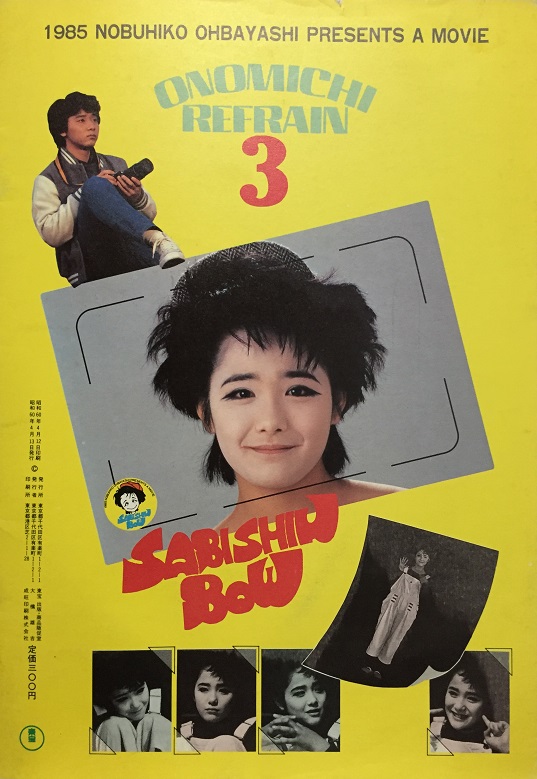 Miss Lonely (さびしんぼう, Sabishinbou, AKA Lonelyheart) is the final film in Obayashi’s Onomichi Trilogy all of which are set in his own hometown of Onomichi. This time Obayashi casts up and coming idol of the time, Yasuko Tomita, in a dual role of a reserved high school student and a mysterious spirit known as Miss Lonely. In typical idol film fashion, Tomita also sings the theme tune though this is a much more male lead effort than many an idol themed teen movie.
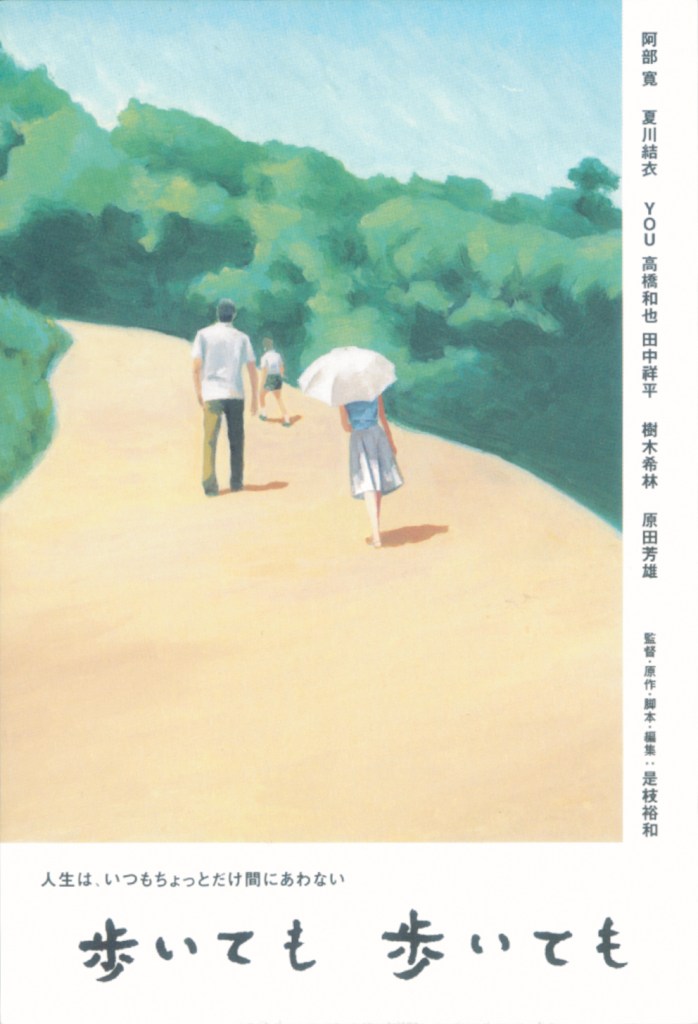 Life is full of choices, but the one thing you can’t choose is your family. Like it or not you’re stuck with them for life and even if you decide you want nothing to do with them ever again, they’ll still be hanging round in the back of your mind for evermore. Koreeda swings the camera back around the fulcrum of Japanese society for this dissection of the fault lines and earthquake zones rubbing up against this very ordinary family.
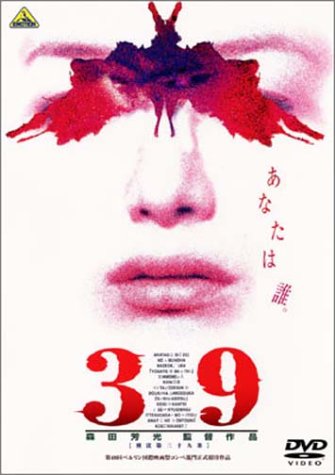 Article 39 of Japan’s Penal Code states that a person cannot be held responsible for a crime if they are found to be “insane” though a person who commits a crime during a period of “diminished responsibility” can be held accountable and will receive a reduced sentence. Yoshimitsu Morita’s 1999 courtroom drama/psychological thriller Keiho (39 刑法第三十九条, 39 Keiho Dai Sanjukyu Jo) puts this very aspect of the law on trial. During this period (and still in 2016) Japan does nominally have the death penalty (though rarely practiced) and it is only right in a fair and humane society that those people whom the state deems as incapable of understanding the law should receive its protection and, if necessary, assistance. However, the law itself is also open to abuse and as it’s largely left to the discretion of the psychologists and lawyers, the judgement of sane or insane might be a matter of interpretation.
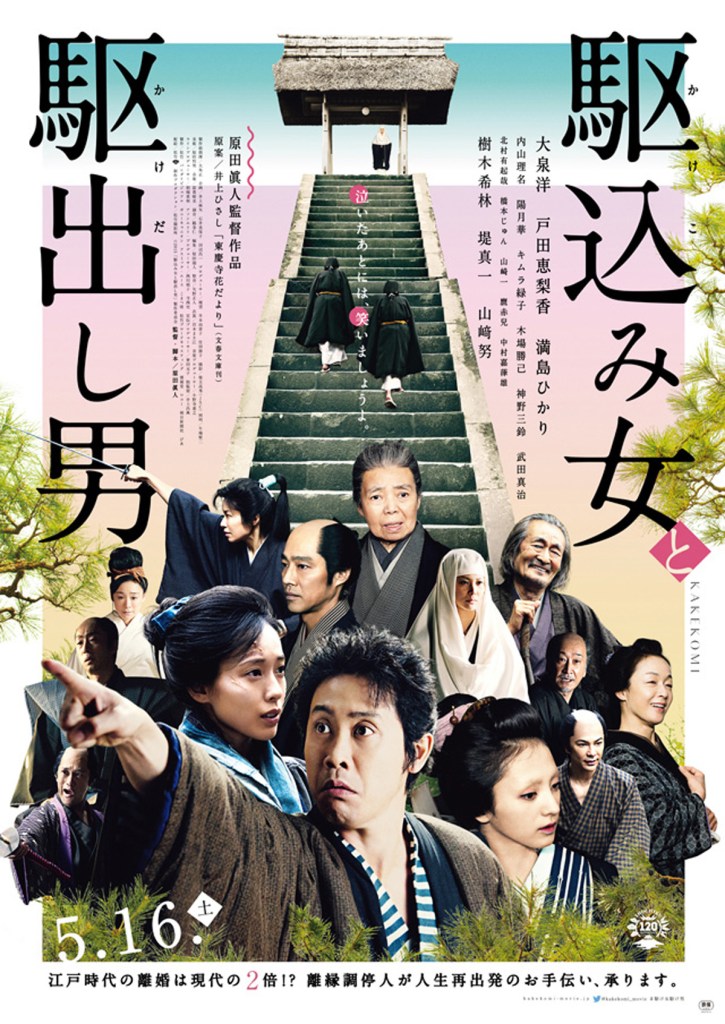 The world of the classical “jidaigeki” or period film often paints an idealised portrait of Japan’s historical Edo era with its brave samurai who live for nothing outside of their lord and their code. Even when examining something as traumatic as forbidden love and double suicide, the jidaigeki generally presents them in terms of theatrical tragedy rather than naturalistic drama. Whatever the cinematic case may be, life in Edo era Japan could be harsh – especially if you’re a woman. Enjoying relatively few individual rights, a woman was legally the property of her husband or his clan and could not petition for divorce on her own behalf (though a man could simply divorce his wife with little more than words). The Tokeiji Temple exists for just this reason, as a refuge for women who need to escape a dangerous situation and have nowhere else to go.
 Never one to be accused of clarity, Seijun Suzuki’s Capone Cries a Lot (カポネおおいになく, Capone Ooni Naku) is one of his most cheerfully bizarre movies coming fairly late in his career yet and neatly slotting itself in right after Suzuki’s first two Taisho era movies,
 Windows on Worlds