
Last Mile (ラストマイル, Ayuko Tsukahara, 2024)

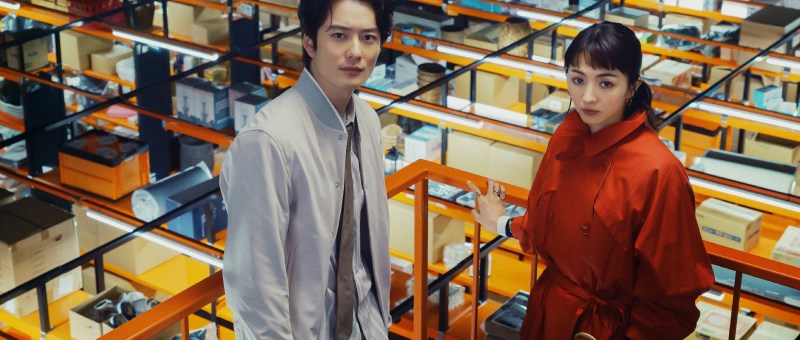
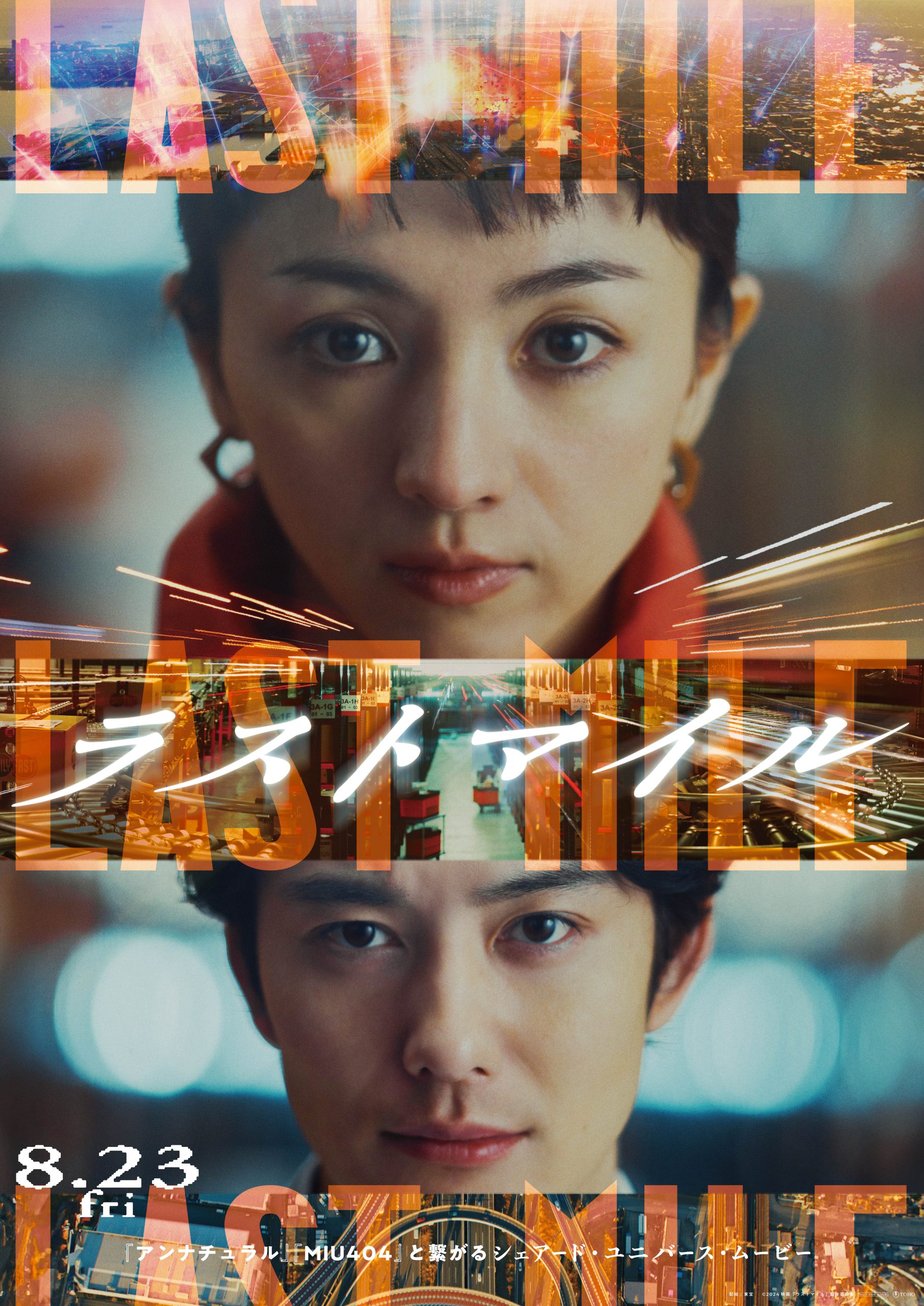
“Customer-centric”, what does that actually mean? The Amazon-like US-based conglomerate at the centre of Ayako Tsukahara’s Last Mile (ラストマイル) prides itself on its customer-centric philosophy, but at the end of the day, what that really means is that they give us what we tell them we want through our purchasing patterns and browsing history. That would be that we want everything as cheap and fast as it’s possible to be and don’t really think about the wider implications or what a world of infinite convenience might be doing to the society around us.

At least from the perspective of corporate lackey Elena (Hikari Mitsushima), recently returned from the US, the reason Daily Fast pressures its delivery staff to lower costs isn’t to maximise their profits, it’s so they can go on providing lower prices to customers which to her is all part of their customer-centric approach. This doesn’t really gel with her off-the-cuff remark about the warehouse not having a safety net to protect the workers from accidental falls or, she ominously adds, prevent people from jumping. That she brought it up at all might signal that she knows something’s not quite with the way this company treats its employees, though as it turns out she may have something else on her mind. In any case, when she arrives on her very first day the entrance to the complex is little better than a cattle market with a man on loud speaker barking instructions about were to go to the 800 members of staff some of whom have only been brought in to bulk up for the upcoming Black Friday sale. 

Which is all to say, it wouldn’t be all that surprising if the fact that some of their parcels have been exploding on delivery were a concerted attack against their ultra-capitalist philosophy, though actively delivering bombs to people who didn’t order them is not very “customer-centric” in any case. Obviously, Elena isn’t keen on this either but is also convinced that it can’t really be their fault because they have strict and dehumanising security measures in place preventing the workers from bringing in anything inessential. Even after she works out that the bomber has actually warned them that there are 12 bombs out there, she wilfully withholds the evidence from law enforcement to avoid damaging their share prices while trying to minimise business interruption rather than do anything sensible like stop delivering people parcels until they’ve figured out what’s going on with the bombs, though the real mystery is why the police don’t really seem to have the power to do that and, in fact, end up working with the warehouse to check each parcel individually to keep the conveyor belts going.

From the aerial view, the city itself resembles the warehouse with the roads taking the place of the belts as delivery vans shuttle along them. Seventy-something delivery driver subcontractor Sano (Shohei Hino) once had a friend who used to say that they were the ones who kept the country running. Yacchan became the number one driver largely because he took 10 minutes to eat his lunch and worked every hour god sent for dwindling pay with the implication that his gruelling schedule contributed to his early death. Sano’s son Wataru (Shôhei Uno) has just started working with him on the van after being laid off from an electronics job. They made quality washing machines that were designed to be efficient and to last, but of course they couldn’t compete with cheaper brands so they went bust.

Elena berates herself for being “too Japanese” for the American company which is to say that she takes pride in her work. That’s not to say that everything about the American business culture is bad as she encourages her assistant, Ko (Hikari Mitsushima), to call her Elena and to feel free to speak his mind rather than equivocate to avoid causing offence. But despite their “customer-centric” approach, it’s clear that the company puts profits above all else and treats its workers, who are not actually employees, poorly, without concern for their wellbeing. Yagi (Sadao Abe), the boss of logistics first Sheep Express which is the prime courier for Daily Fast, laments that he’d love to hire more drivers to help them through this crisis but he can’t because they’re always squeezing his budget and no one will work for their terrible rates except for those who, like Sheep Express itself, have no other options and will have put up with it because they’re dependent on Daily Fast. And because they’re dependent on Daily Fast, it means we all have to keep buying stuff we don’t really want or need just keep the belts going because we’re terrified about what will happen if they stop.

There is a direct comparison between Wataru’s well-made washing machines and the cheap and fast consumerist model that’s gradually taken over that suggests things like craftsmanship and integrity have gone out the window in a world where no one really bothers to go the last mile anymore, though it’s his steadfast engineering that eventually saves the day while even Elena comes to rethink her career trajectory and advises the drivers to strike and end this culture of exploitation because it turns out Daily Fast needs them more than they need Daily Fast. But maybe we don’t really need Daily Fast either, and we’re as much to blame for letting them give us what we think we want without really considering what that actually means. Perhaps a “customer-centric” society’s not all it’s cracked up to be, especially when workers and consumers are often the same people stuck on conveyor belts knowing there’s only one way to stop them.


Last Mile screens 19th June as part of this year’s Toronto Japanese Film Festival.

Trailer (no subtitles)

Takano Tofu (高野豆腐店の春, Mitsuhiro Mihara, 2023)

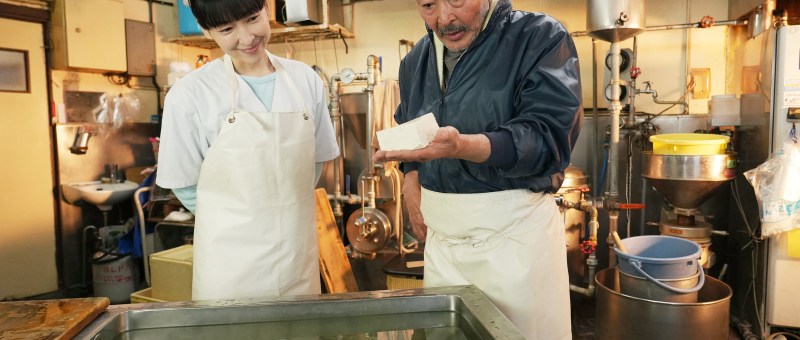
There’s an untranslated title card at the beginning of Mitushiro Mihara’s poignant dramedy Takano Tofu (高野豆腐店の春, Takano Tofu-ten no Haru) that describes the film as a story about the end of Heisei and it is in many ways about the end of an era, or perhaps of eras, but equally new beginnings and the eternal wellspring of life. With subtle hints of Ozu playing out as a kind of mashup of Late Autumn and Late Spring, it suggests that it’s never really too late to find happiness or to start something new even while preserving the best of the old. 

Harbingers of change are, however, lingering on the horizon as a customer to Takano Tofu remarks agreeing with daughter Haru (Kumiko Aso) that they need to innovate to stay in the game when the big new supermarket opens a few streets away. But change is not something father Tatsuo (Tatsuya Fuji) is keen on and especially when it comes to his tofu which is why he’s cancelled Haru’s popular new product of fried tofu and cheese despite its popularity and is also dead against her idea of expanding their network to sell in Tokyo.

There is something inherently comforting about the peacefulness of this quiet corner of Onomichi as Mihara captures it even if it also seems like a place out of time more Showa even than Heisei with its family businesses and old-fashioned shopping arcade. But equally there’s an underlying loneliness and answered longing along with a sense of lives disrupted by historical circumstance. Ironically enough, Tatsuo receives news from the hospital that one of the arteries to his heart is blocked requiring an operation to get everything working again and then immediately bumps into an old woman about his own age with whom he eventually bonds over the shared traumas of living in post-war Japan along with the lingering social stigma towards those affected by the dropping of the atomic bomb. We later learn that the failure of Haru’s marriage was in part caused by her father-in-law’s prejudice fearing her irradiated genes would contaminate his bloodline.

Then again, perhaps the pity expressed towards Fumie (Kumi Nakamura) as a woman who never married plays into outdated and sexist social attitudes that also lead Tatsuo and his friends to decide to find a mate for Haru given his sudden mortality crisis and fear that like Fumie she will be left alone when he eventually passes away. Of course, what it amounts to is a bunch of old men trying to decide who a middle-aged woman should marry while deliberately avoiding asking her if that’s even something she’s interested in. Having experienced marriage already perhaps she’s no desire to do so again and is perfectly happy the way things are. In any case she’s infinitely capable of finding a husband for herself if she wanted one. The prospective match they come up with for her is perfect on paper, youngish, handsome, wealthy and cultured, yet as it turns out what Haru might prefer is someone more ordinary, down to earth, and straightforward ironically enough just like tofu. 

As she later says, Tatsuo’s tofu has the flavour he gives it. Nicely textured, surprisingly soft on the inside, with a slight hint of astringency. There may be a minor pun involved in the Japanese title in that it can be read either as “Haru of Takano Tofu”, or as the meaning of her name implies “Spring at Takano Tofu” hinting both at a sense of transience and resurgence as Tatsuo takes in the cherry blossoms with Fumie and reflects on all they’ve experienced throughout the long years, the hardship and heartbreak of the post-war era. Yet as he says life is for living and it’s as much as you can hope for to look back and laugh at a life well lived. Maybe some things don’t need to change all that much, like carefully produced artisanal tofu as rich in soul as those who make it, but there’s always room for a little innovation and tiny chances for new happiness that could easily pass you by if you aren’t willing to take a risk or two and place a bet on change.


Takano Tofu screened as part of the 18th Season of Asian Pop-Up Cinema.

Original trailer (no subtitles)

Lonely Castle in the Mirror (かがみの孤城, Keiichi Hara, 2022)

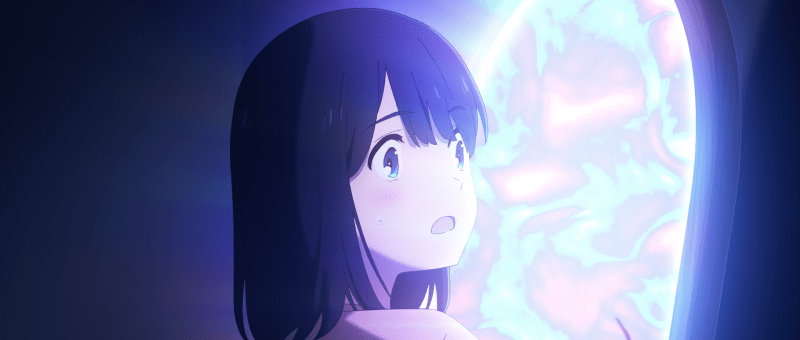
Kokoro isn’t “lying” when she complains of a stomach ache to avoid going to school, it’s just that it’s the anxiety she feels at the prospect that is making her physically ill. Based on a novel by Mizuki Tsujimura, Keiichi Hara’s fantasy-infused anime Lonely Castle in the Mirror (かがみの孤城, Kagami no Kojo) explores the effects of school phobia in uniting a series of teenagers who each for one reason or another have turned away from education often because of bullying or the rigidity of the contemporary schools system. 

As we discover, Kokoro (Ami Toma) gradually stopped going to school after her life was made a misery by manipulative popular girl Sanada who operates a small clique of bullying minions yet appears all sweetness and light with the teaching staff. Unable to fully explain what’s been going on, Kokoro largely remains at home while her understanding mother (Kumiko Aso) explores opportunities in alternative teaching and tries to support her as best she can. Though the film is very sympathetic towards Kokoro and the children in insisting that it isn’t their fault they can’t attend school but the fault of an unaccommodating system, it perhaps misses an opportunity to fully commit to educational diversity when the end goal becomes getting Koroko back in class undaunted by the presence of her bully. 

Nevertheless, it offers her another outlet when the mirror in her bedroom suddenly becomes a magic portal that transports her to a fantasy fairytale castle where she meets six other school phobic teens who are all dealing with similar issues. A young girl in wolf mask informs her that they have until the end of the school year to locate a key which if turned will grant one, but only one, of their wishes. When the key is turned, they will all lose their memory so it’s unclear if they will know whether or not the wish was granted but in any case are left with a choice between achieving their dreams and the new friendships they’ve formed at the castle. The issues that plague each of them are various from bullying to dealing with grief, purposelessness, a feeling of not fitting in, parental expectations, and an implication of sexual abuse at the hands of a close relative. As the Wolf Queen tells them “collaboration is beautiful” and it is the connections they forge with each other that give them strength to go back out into the world while each vowing to pay it forward and make sure to stand up to injustice by protecting other vulnerable kids like themselves when they’re able to. 

Even so, Kokoro takes her time on even deciding whether or not to use the mirror and for some reason the castle is only open business hours Japan time. If they stay past five they’ll be eaten by wolves! Many things about the fantasy land do not add up and Kokoro begins to worry that it’s all taking place in her head, her new friends aren’t really real, and she’s being driven out of her mind by the stress of being the victim of a campaign of harassment she can’t even escape by staying home minding her own business. But through her experiences she is finally able to gain the courage to speak out against her bullying while supported by her steadfast mother and an earnest teacher who is keen to find the best solution for each of her pupils rather than trying to force them back into a one size fits all educational system. 

In any case, Kokoro’s quest is to find her way back through the looking glass to rediscover her sense of self and take her place in mainstream society free of the sense of loneliness and inferiority she had felt while being bullied by Sanada and her clique of popular girls though in an ironic touch the film does not extend the same empathy to her or ask why Sanada has an apparent need to need to pick a target to destroy. A variable animation quality and occasional clash of styles sometimes frustrate what is at heart a poignant tale of finding strength in solidarity and learning to take care of each other in a world powered more by compassion than an unthinking devotion to the status quo.


Lonely Castle in the Mirror screened as part of this year’s Nippon Connection.

International trailer (English subtitles)

Adrift in Tokyo (転々, Satoshi Miki, 2007)

An aimless young man finds unexpected direction while walking the streets of the city with an unlikely father figure in Satoshi Miki’s meandering dramedy Adrift in Tokyo (転々, Tenten). These two men are indeed adrift in more ways than the literal, each without connections and seeking a concrete role in life while attempting to make peace with the past. But like any father and son there comes a time when they must part and their journey does indeed have a destination, one which it seems cannot be altered however much they might wish to delay it.

That Fumiya (Joe Odagiri) is aimless might be assumed from his unruly hair and the fact that he thinks tricolour toothpaste might be enough to jolt him out of his sense of despair but is confirmed by his matter of fact statement that he’s in his eighth year of university where nominally at least he’s studying law. His problem is that he’s amassed massive debts to a loanshark, Fukuhara (Tomokazu Miura), who breaks into his apartment and threatens him by shoving a sock in his mouth before leaving with his ID and driving licence. Fukuhara, however, later decides to make him another offer that he will cancel the debt and even give Fumiya even more money if only he will agree to wander around Tokyo with him for an unspecified time until they reach Kasumigaseki where he intends to hand himself in at police headquarters claiming to have recently murdered his wife. 

Like many things that Fukuhara says, it’s not clear whether or not he has indeed killed his wife though Miki frequently switches back to a scene of a woman who seems to have passed away and has been laid out in bed though she shows no signs of having died violently. Her zany co-workers keep thinking they should check on her seeing as she hasn’t shown up in days but something always distracts them and they end up forgetting about her entirely. The body appears to have been treated with love, hinting that if what Fukuhara says is true and this woman was his wife whom he killed in a fit of passion he has quite clearly thought through his plan of action rather than attempting to flee the scene and is perhaps only delaying the inevitable while walking out some other trauma in the company of Fumiya a surrogate son mirroring the description he gives of taking walks in the company first of his father and then of his wife. 

Fumiya deflects every question and agrees that he hates memories having burned his photo albums before leaving for university. He claims that he has no parents, describing the people who raised him as just that, as his mother and father both abandoned him as a child leaving him in a perpetual state of arrest which is one reason he’s still a student four years after most people have graduated. He never went to the zoo or rode a rollercoaster or called a man dad and seems to think of himself as nothing much of anything at all. Yet the fake can sometimes be more real than the real as he eventually discovers becoming part of an awkward family unit with Fukuhara’s “fake” wife (Kyoko Koizumi) he used to accompany to weddings as a paid guest, just beginning to enjoy being someone’s son when Fukuhara decides he’s reached the end of his road. 

There is a sense that everyone is chasing the ghost of someone else or perhaps even themselves, Fumiya finding shades of the father who abandoned him in career criminal Fukuhara who tells someone else that he once had a son who died in infancy, and seeing something of his mother in fake wife Makiko discovering transitory roots in an unlived imaginary childhood. But then there are also occasions of cosmic irony such as a coin locker bag being full not of money but of bright red daruma dolls and tengu noses, or a rebellious street musician meekly bowing to the police. A repeated gag says you’ll have good luck if you spot iconic actor Ittoku Kishibe out and about in the streets, and perhaps in a way Fumiya does in learning to make peace with his childhood self walking with Fukuhara who also comes to accept his failures as a man, a husband, and perhaps a father too. Filled with zany humour and a warmth underlying its melancholy, Adrift in Tokyo is a meandering journey towards a home in the self and a sense of rootedness in the middle of a sprawling metropolis filled with infinite possibility. 


Adrift in Tokyo is released on blu-ray in the UK on 12th December courtesy of Third Window Films.

Original trailer (English subtitles)

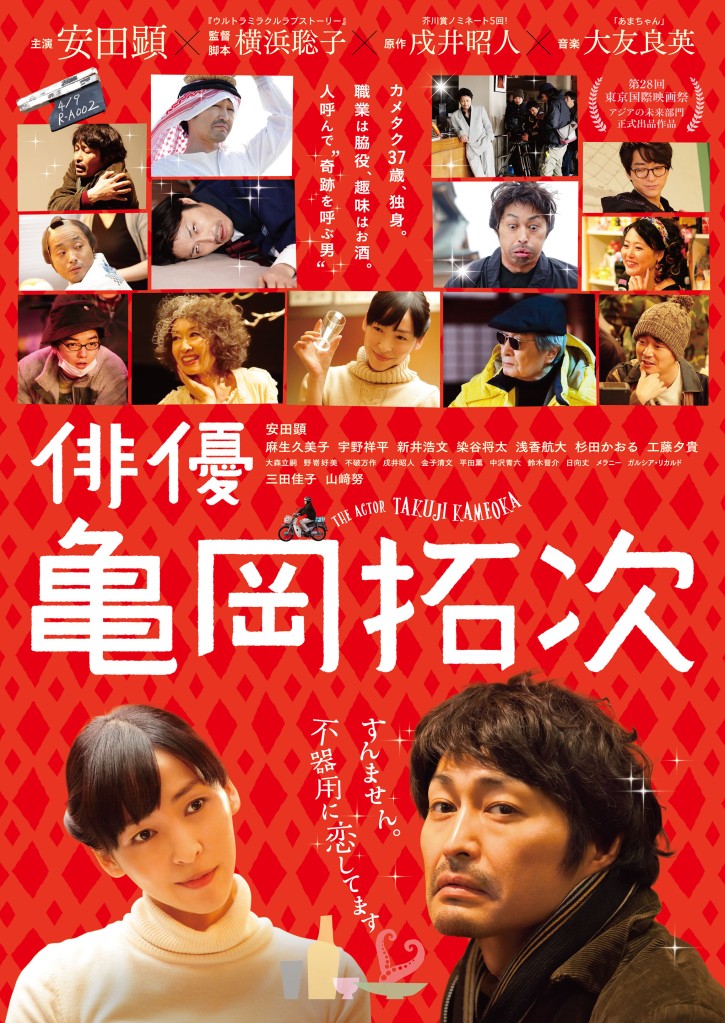
The Actor (俳優  亀岡拓次, Satoko Yokohama, 2016)

“There are no small parts, only small actors” according to the mantra of the bit part player, but perhaps deep down everyone wants to play the lead. Most jobbing actors will tell you that they’re happy to be working and if you work as much the dejected hero of Satoko Yokohama’s The Actor (俳優  亀岡拓次, Haiyu Kameoka Takuji), you can make a pretty decent living with a little more job security than a big name star whose career will inevitably hit the odd dry spell. Yet, who doesn’t want to at least feel that they’re the lead in their own life story? Spending all your time being other people can make you lose sight of who you really are and live your life with a sense of cinematic romanticism forever at odds with accepted reality. 

Takuji Kameoka (Ken Yasuda) is a classic background actor, turning up in small roles in TV dramas, often playing the villain of the week or appearing as a prominent extra. Meanwhile, his offscreen life seems to be lived in a booze-soaked haze, hanging out in his favourite bar surrounded by similarly dejected middle-aged men or occasionally meeting up with colleagues. Even his agent expects him to be sozzled when she rings to confirm new jobs though to be fair she doesn’t seem too bothered about it. 

Kameoka has perhaps made his peace with the kind of actor he is, but there’s also an inbuilt anxiety in waiting for people to ask what it is he does, knowing that it sounds glamorous and exciting when, to him at least, it’s anything but. Chatting with a pretty young woman, Azumi (Kumiko Aso), working behind a bar in a small town where he’s filming, Kameoka spins her a yarn about being a bowling ball salesman rather than be forced into a conversation about the life of a jobbing actor which might perhaps depress him more. Alone in the bar, the pair of them strike up a rapport over shared sake, but Kameoka forgets that in essence she’s just the same as him – acting, performing her role as the cheerful hostess, keeping him happy to sell more drinks. Later, she tells him that she’s switching roles, “recasting” herself as a good wife and mother, pointing again towards the unavoidable performative quality of conforming to socially defined labels such as “wife”, “mother”, “landlady”, “actor” or “man”. 

Everyone is, to some degree, acting, forced to perform a role in which they may privately feel miscast but are unable to reject. Kameoka is losing sight of who he is and so his life begins to feel increasingly like a movie, obeying narrative logic rather than that of “reality” while he often drifts off into flights of fancy in which he gets to play not the lead but a slightly bigger supporting part, recasts himself as the star of a favourite film, or finds himself momentarily in a film noir. Real or imagined, his directors have nothing but praise for him to the degree that it somehow feels ironic. He’s brought in to show the rookie leads how it’s done, an accidental master at dropping dead on camera, but as the landlady at his local says of another actor on TV, he just doesn’t have that leading man sparkle. Of course, not having that kind of presence is perfect for being a background player but a great shame when he has the talent to succeed, just without the burden of “star quality”. 

Then again, his talent is uncertain. Despite telling his agent that he doesn’t do stage, he agrees to work with a famous actress/director on an avant-garde theatre piece. Though she’s much harder on the young female star, Matsumura (Yoshiko Mita) rarely compliments his acting and eventually advises him that he’s unsuited to stage work because he has “film timing”. Privately, he might agree, but a job’s a job. Ironically enough, the performance that Matsumura failed to bring out in him is vividly brought to life during a very weird audition for a Spanish director who happens to be one of Kameoka’s favourites. He inhabits the role so strongly as to completely become it to the extent that its world rises all around him, but all too soon the audition is over with a simple “that’s great, thank you – we’ll be in touch”. Kameoka even suffers the indignity of crawling under the frozen shutters to exit the building while the next hopeful, a top TV actor he worked with on a previous job, makes his way inside. 

The woman in Kameoka’s audition fantasy is clearly Azumi, something that becomes clearer to him still during another flight of fancy that recasts him as a romantic hero making the grand gesture of a rain soaked dash, motorcycle filmed against rear projection, as he prepares for the inevitable “happy ending”. Reality, however, triumphs once again. Lovelorn, Kameoka declares himself lonely and indeed is always alone, not one of the “main cast” just a “bit player” hanging round until his scene and then moving on to the next project. He waves at women who weren’t waving at him, sympathises with a failed singer turned bar hostess, and celebrates the unexpected marriage of a friend but in a strange sense perhaps misses “himself”, gradually eclipsed by all the roles he plays onscreen and off. “Who are you?”, the Spanish director’s interpreter asks. “Takuji Kameoka, Japanese Actor”, is as good an answer as any. 


Screened as part of the Japan Foundation Touring Film Programme 2020.

Original trailer (English subtitles)

The Wonderland (バースデー・ワンダーランド, Keiichi Hara, 2019) [Fantasia 2019]

birthday wonderland poster 1The demands of adulthood are apt to overshadow any young teen’s life, but you can’t shake them off just by lying in bed and refusing to age. So the heroine of Keiichi Hara’s The Wonderland (バースデー・ワンダーランド, Birthday Wonderland) discovers as she determines to hideout from emotional complexity, waiting for the storm to pass and cowardly failing to defend a friend in the process. The last thing she wants is the responsibility of being “the chosen one”, but the thing about that is that you don’t get to choose and if the universe has plans for you it would be very irresponsible to refuse.

After (not) getting involved in a minor spat amongst friends about coloured hair clips, Akane (Mayu Matsuoka) decides the best solution is to feign illness, turn off her phone, and avoid going to school. Her kindly mother (Kumiko Aso), seemingly aware she’s not really ill, decides to let her stay home anyway but all she ends up doing is mistreating the cat in frustration and moping about, so her mum despatches her to her aunt Chii’s (Anne Watanabe) place to pick up her birthday gift which she presumably can’t open until the big day tomorrow. Truth be told, Akane doesn’t much like her aunt Chii, she’s far too free spirited and unpredictable for the neurotic teen, but she could stand to learn something from her irrepressible lust for life.

Akane gets the perfect opportunity to do just that when she sticks her hand onto a palm print in her aunt’s shop and is promptly greeted by a dapper-looking man with a fabulous moustache and his tiny minion (Nao Toyama) who crawl up through the hidden basement to explain that she is the “Goddess of the Green Wind” they’ve been searching for and must come with them right away because their nation is in peril! As expected, Akane doesn’t want to go, but is chivvied along by her overexcited aunt and a strange amulet the man, an alchemist named Hippocrates (Masachika Ichimura), places around her neck.

The amulet, he tells her, helps you move forward even if you want to go back. That is, in a sense, Akane’s entire dilemma as she finds herself on the cusp of adulthood, afraid to step forward and accept the responsibilities of maturity while longing to return to carefree childhood days when there was nothing much to worry about and always someone around to look after her. Like any good fairytale, she finds her mirror in the other world in a melancholy prince who remains so reluctant to take part in an essential ritual that he is almost willing to burn the world to avoid having to acknowledge his royal responsibilities.

Meanwhile, Akane is slow to adjust to the charms of her new Wonderland, refusing to engage and loudly stating her desire to go home while her aunt tries to encourage her to embrace a sense of adventure. Chii, the film’s best asset who proclaims “no alcohol no life” while thoroughly enjoying sparring with the uptight Hippocrates (who perhaps is also enjoying the challenge though might not want to admit it), might in some senses be a barrier to Akane’s self-actualisation but is also an important source of safety for her in an unsafe world and just irresponsible enough to push her niece towards taking the right kind of risks in order to do the right thing and save the kingdom.

The reasons the kingdom is in peril in the first place are hugely symbolic – an ongoing water crisis caused by governmental negligence is draining the world of colour while literally drying it out. Getting used to her new surroundings, Akane begins to see their charm. This world, near identical to her own in many ways, diverged around the industrial revolution. Where “our” world rocketed into a frenetic lust for convenience, the rhythms of this one stayed the same, a perpetual village society in which cheerful people live laidback lives surrounded by the beauty of nature – something Akane later comes to worry her own world is losing. Gradually letting go of her fear and getting a better idea of the kind of life she might want, Akane gains the courage to embrace responsibility through directly supporting someone else as they learn to do the same.

A whimsical coming of age tale, The Wonderland excels in world building but somehow never quite achieves the level of emotional engagement it seems to be looking for even as its sullen, detached heroine perhaps begins to realise she did a great disservice to her friend when she failed to defend her during the silly hair ornament argument largely because she personally didn’t want to rock the boat and put herself in the firing line. Her horizons suitably expanded, Akane finds she no longer needs an amulet to keep moving forward even when longing to look back and resolves to step into adulthood with an easy, laidback confidence learned from her palls on the other side.


The Wonderland was screened as part of the 2019 Fantasia International Film Festival.

Original trailer (English subtitles)
Luxurious Bone (贅沢な骨, Isao Yukisada, 2001)

Luxurious Bone poster

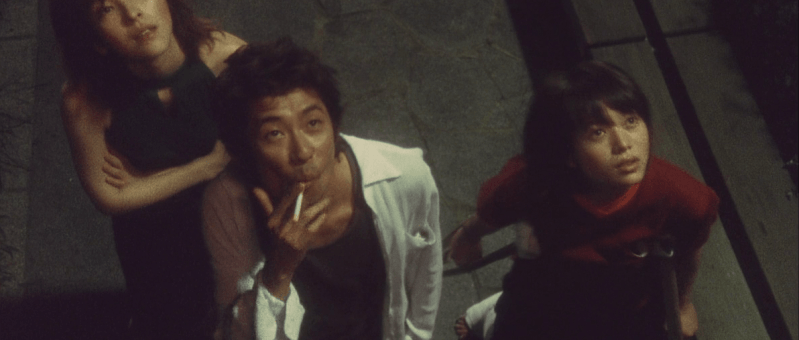
Isao Yukisada made his name with the 2004 hit Crying Out Love, in the Centre of the World, but even before becoming a “junai” pioneer his early films were far from strangers to melancholy, impossible romance. The strangely titled Luxurious Bone (贅沢な骨, Zeitakuna Hone, AKA Torch Song) is a case in point in its early, ambiguous treatment of same sex love and emotional repression. Though in some senses very much of its time, Yukisada’s sad chamber drama is a sensitive exploration of the path towards awakening, if ultimately not to happiness.

The drama begins when Miyako (Kumiko Aso) gets the titular “luxurious bone” lodged in her throat. In this case, it’s an eel bone which is a fish too expensive for either she or her roommate Sakiko (Tsugumi) to eat very often, hence its tinge of luxury even if there’s relatively little difference when it’s tickling your trachea. “Roommate” might not be the best way to describe exactly what Sakiko is to Miyako, though their relationship seems curiously ill-defined. The two women share a bed, and seemingly a life, but perhaps platonically. Sakiko wants to look for a job, but Miyako doesn’t quite want her to because she’s happy to support the pair of them on her wages as a sex worker. Likewise, Sakiko isn’t quite happy with Miyako’s line of work, not because she’s jealous or judgmental, but because she worries the job is unpleasant. Miyako reassures her that it’s fine because she feels nothing at all during sex so mostly it’s just dull.

All that changes however when Miyako meets unusual client Shintani (Masatoshi Nagase) who goes to the trouble of buying her a hamburger bento because he heard that’s the sort of thing you’re supposed to do in these situations. Shintani blows Miyako’s mind which isn’t something she was expecting or quite knows what to do with. On hearing the news Sakiko seems mildly worried, but following a strange series of events Shintani ends up becoming a minor part of their lives as the third wheel in their previously stable though somehow awkward relationship.

Miyako’s intense opening voice over makes reference to a secret she cannot bear to speak that will lie closed within her heart for all eternity. The fish bone becomes a symbol of the thing stuck in her throat, the truth she is too afraid to voice. Choking, Miyako gasps for air like a goldfish floundering in shallow water but cannot find the strength to swallow.

As we will later discover, this dark secret is bound up with her complicated feelings for Sakiko of which she seems to feel afraid and ashamed, wanting to possess her love in its entirety but also unable to access it and hating herself for her continuing need for possession and control. Her unexpected connection with Shintani is, after a manner of speaking, simply a more “acceptable” way of accepting her desire for Sakiko as she later reveals when confessing that she only ever thought of Sakiko when making love with Shintani which is presumably why only he was ever able to give her a satisfying experience.

Unable to cope with the intensity of her feelings, Miyako turns self destructive and attempts to lure Shintani into a sexual relationship with Sakiko who, apparently, is afraid of intimacy altogether having been raised in an abusive, neglectful home in which she was convinced that she was “dirty” and unloveable, an obstacle in the way of her father’s new relationship with a much younger step-mother (Makiko Watanabe).

Something of a cliché in itself, Luxurious Bone first attempts to delegitimise the feelings of the two women for each other by introducing the figure of Shintani to suggest that their problems are largely down to not having met a good man. Miyako sleeps with Shintani to feel closer to Sakiko, while Sakiko begins to move past her emotional trauma only thanks to the gentle machinations of Shintani. Their strange ménage à trois brings them together whilst driving them apart as the two women attempt to touch each other through Shintani while he remains detached and conflicted if perhaps wilfully used. Miyako’s self destructive impulses push her towards burning her world before facing what it is that frightens her. Only a strange encounter with another woman in a club shows her that her fear was not so much love as submission, while Sakiko tries to reconnect with her childhood self to move past her emotional trauma.

Despite its motion towards a positive resolution, Luxurious Bone cannot quite find the courage of its convictions and as quickly delegitimises the love as it tried to legitimise it through leaving Sakiko broadly where she started – lost, confused, and afraid, uncertain if unresolved longing is a natural condition of living. Perhaps of its time and overly simplistic in its treatment of complex issues from traumatic childhoods to shame and repressed sexuality, Luxurious Bone nevertheless has its heart (broadly) in the right place even if it leaves its lovelorn youngsters in the same position as many a Yukisada hero still looking for their place in a cruel and arbitrary world.


Original trailer (no subtitles)

Torch Song by The Humpbacks which features prominently throughout. The song was actually written for the film and is performed by Masatoshi Nagase.

Fly Me to the Saitama (翔んで埼玉, Hideki Takeuchi, 2019)

Fly Me to the Saitama posterThe suburbia vs metropolis divide can be a difficult one to parse though there’s rarely a culture that hasn’t indulged in it. In England, for example, suburbia is to some a byword for quiet respectability, an aspirational sort of village green utopianism built on middle-class success as opposed to frivolous urban sophistication. Then again, city dwellers often look down on those from the surrounding towns as “provincial” or even dare we say it “common”. Saitama, a suburban area close enough to Tokyo to operate as a part of the commuter belt, has long been the butt of many a joke thanks to a quip from an ‘80s comedian which labeled it “Dasaitama” in an amusing bit of wordplay which forever linked it with the word “dasai” which means “naff”.

“Dasaitama” is a label which seems to haunt the protagonists of Hideki Takeuchi’s adaptation of the popular ’80s manga by Mineo Maya. Fly Me to the Saitama (翔んで埼玉, Tonde Saitama) opens in the present day with an ordinary family who are accompanying social climber daughter Aimi (Haruka Shimazaki) to Tokyo for her engagement party. While dad is quietly seething over this perceived slight to his beloved homeland, someone turns on the local radio station which is currently running an item on an “urban legend” about a long ago (well, in the ‘80s) period of oppression in which residents of Saitama (and other neighbouring “uncool” towns) had to get a visa to travel to Tokyo where they were treated as second-class citizens fit only for the jobs regular Tokyoites didn’t want to do and forced to live in hovels (which the snobbish city dwellers somehow thought made them feel more at home). The legend recounts the tale of a brave revolutionary who convinced the Saitamans to rise up, shake off their internalised feelings of inferiority, and reclaim their Saitama pride!

Shifting into an imagined fantasy of 20th century Japan which is in part inspired by warring states factionalism, Fly Me to the Saitama is, in the words of Aimi, a kind of “boys love” pastiche which riffs off everything from The Rose of Versailles to Star Wars while indulging in the (happily) never really forbidden love of mayor’s son Momomi (Fumi Nikaido) who has a girl’s name and feminine appearance but is actually a guy, and the dashing would-be-revolutionary Rei (Gackt) who has just returned from studying abroad in America and inevitably brought back some original ideas about individual freedom and a classless society. Having been born and raised in Tokyo, Momomi has a fully integrated superiority complex which encourages him to look down on Saitamans as lesser humans, almost untouchables, whose very existence is somewhat embarrassing. Only after being humbled, and then kissed, by Rei are his eyes opened to the evils of inequality and the ongoing corruption within his own household.

It goes without saying that much of Fly Me to the Saitama’s humour is extremely local and likely to prove mystifying to those with only rudimentary knowledge of daily life in Japan at least as far as it extends to regional stereotypes and ambivalent feelings towards hometown pride in a nation in which many still find themselves taking care not to let their accent slip after having moved to the capital lest they out themselves as an unsophisticated bumpkin. Yet there is perhaps something universal in its fierce opposition towards ingrained snobberies and petty class hierarchies which pokes fun both at the social climbing small-towners like Aimi desperate to escape the “dasai” countryside for the bright lights of Tokyo, and her proudly “dasai” dad, while asking the hoity-toity Tokyoites to get over themselves, and making a quiet plea for a little peace, love, and understanding along the way.

Then again, the Saitamans may have had a little more than freedom on their minds. If the “Saitamafication” of the world resulted in an expansion of mid-range shopping malls and chain restaurants filled with peaceful, happy people would that really be such a bad thing? Saitama might not be as “exciting” or as “cool” as Tokyo but it’s a nice enough place to live when all’s said and done. Perhaps that’s a frightening thought, but if the Saitama revolution ushers in a brave new world of freedom and equality then who really could argue with that?


Fly Me to the Saitama is screening as the opening night movie of the eighth season of Chicago’s Asian Pop-Up Cinema on March 12 at AMC River East 21, 7pm where director Hideki Takeuchi will be present in person for an introduction and Q&A.

Original trailer (English subtitles)
Nazeka Saitama – a novelty record released in 1981 and somewhat appropriately recorded in a style popular 15 years earlier.

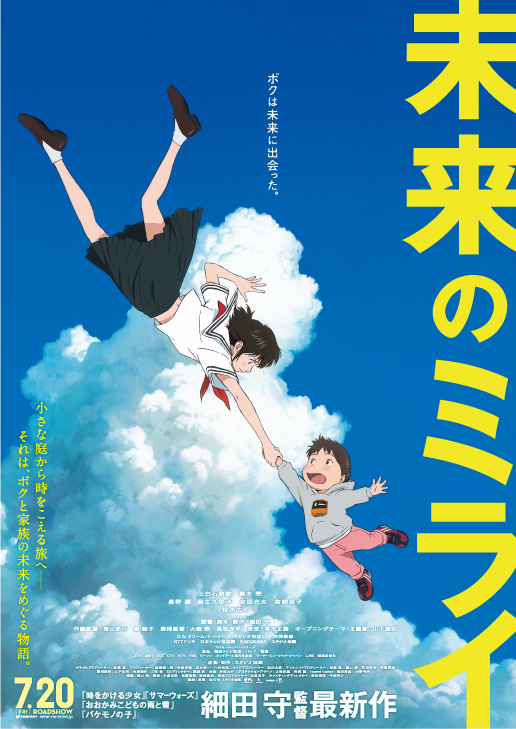
Mirai (未来のミライ, Mamoru Hosoda, 2018)

Mirai posterIn Mamoru Hosoda’s Wolf Children, a young woman experiences heartbreak when the love of her life is cruelly cut down, leaving her alone with two small children whose particular needs send her off in search of a new way of living. Hosoda’s filmography is filled with family drama, of how difficult and painful the relationships between parents and children can be. Wolf Children was the story of a mother’s tragedy in that she has to set her children free in order to see them grow. The Boy and the Beast was a young man’s struggle to make peace with his father. Mirai (未来のミライ, Mirai no Mirai) presents an altogether less “complicated” vision of family life, steeped in authentic detail and gentle warmth.

The hero of the tale is Kun (Moka Kamishiraishi) – a train obsessed four year old suddenly presented with a new baby sister later named “Mirai” (Haru Kuroki). Having been an only child used to receiving all of his parents’ attention, Kun is intensely resentful of the various ways his life has changed. Feeling pushed out, he begins to throw tantrums, become argumentative, even threaten to run away from home. Meanwhile the family dog, Yukko, looks on with thinly veiled contempt as Kun gets a little of his own medicine in no longer being the centre of attention.

Taking refuge in the front garden which is a major feature of the family home designed by his architect father, Kun begins to receive a series of visitations – firstly from an anthropomorphised Yukko and then by the teenage incarnation of his little sister on an urgent mission to the past to ensure her absent minded father packs the Hina Matsuri dolls away on time lest she end up an old maid, prevented from marrying her one true love because of ancient superstition (and her father’s forgetfulness). After interacting with the older Mirai, Kun travels off on further flights of fancy to observe his mother at his age and even his late great grandfather – a dashing, motorcycle riding hero who walked with a limp thanks to a lucky wartime escape.

Snatched from vague comments overheard from his parents and grandmother, Kun’s adventures teach him new and valuable ideas about the world. He learns that it’s alright not to understand everything right away because that’s what life is for. As someone later puts it, there’s a first time for everything and once you’ve learned one thing you’re halfway way to knowing everything else. Meeting his mother as a youngster shows him that she was once a messy toddler too and that all things come in time.

Kun still doesn’t quite understand, but comes to a new appreciation of his home and his family as a part of something far larger of which he is merely a mid-point on an ever expanding scale. Mirai shows him his “family tree” as manifested literally in the one in the family garden. Somewhat oddly for a girl from the future, Mirai likens it to a card index like the ones at the library (perhaps one of her old fashioned preoccupations like the Hina Matsuri superstitions) filled with personal stories in which no one is ever really forgotten. Having gotten himself into quite a fix and wound up at a very futuristic looking Tokyo train station, it’s family which eventually sets Kun on his way back home, having remembered who he is in relation to others.

Yet Kun’s family is also intensely modern and going through changes of its own. Kun’s mother will be going back to work soon after Mirai’s birth – something still somewhat unusual in traditional Japan while in an even more seismic leap towards equality Kun’s father, who will be working from home, has committed to sharing responsibility for the domestic realm in looking after the children during the day as well as taking care of the cooking and the cleaning while Kun’s mum works. Kun’s mother might bristle at her husband’s eagerness to accept praise for only doing his fair share while struggling with ordinary day to day tasks, but the couple have soon found a happy equilibrium in embracing the joys and anxieties of building a family. Another beautifully profound tale from Hosoda, Mirai is a lovingly rendered exploration of what it is to live a life among lives with all the rewards and responsibilities that entails.


Screened as part of the 2018 BFI London Film Festival.

International trailer (English subtitles)

Bare Essence of Life (ウルトラミラクルラブストーリー , Satoko Yokohama, 2009)

©Little More Co.

bare essence of life posterThere might be a pun involved in the title of Bare Essence of Life – another example of a Japanese film with a katakana English title, Ultra Miracle Love Story (ウルトラミラクルラブストーリー), given a completely different English language title for overseas distribution, but that would be telling. Following her feature debut German + Rain, Satoko Yokohama once again tells a tale of small town misfits only this time of an Aomori farm boy whose brain is wired a little differently to everyone else’s – “not broken, just different”. Though everyone in the village knows Yojin (Kenichi Matsuyama) and is familiar with his sometimes unusual behaviour, a young visitor taking a temporary job in a quaint rural backwater may need a little more time to acclimatise.

Yojin is, as he says, a little different from the others. Neatly signalling a problem with executive functioning, he lives his life to the tune of several different alarm clocks with deliberately different sound cues to help him remember what he’s supposed to be doing. Grandma also helps with that too through use of a giant whiteboard which has Yojin’s daily itinerary on it so he can keep track of where he is and record his thoughts about the day. Yojin’s grandfather has passed away but has left him some valuable horticulture tips on a cassette tape which Yojin listens to diligently every day whilst tending to his cabbages, trying to work out a good way of keeping them safe from creepy crawlies seeing as grandma doesn’t really trust him with insecticide (later events will prove this to be wise).

Everything changes when brokenhearted school teacher Machiko (Kumiko Aso) arrives all the way from Tokyo as temporary cover for maternity leave at the local nursery. Oddly, seeing as there are so few young people around, the school seems pretty busy with youngsters but then again perhaps they’ve come from neighbouring villages which would explain why the parents are sometimes so late coming to pick their kids up. In any case, Machiko instantly captures Yojin’s heart and he becomes fixated on the idea of making her his one and only. Machiko, however, is battling her own romantic woes and is originally quite taken aback by Yojin’s odd combination of directness and innocence.

Yojin is, undoubtedly, a lot to take in, but the villagers are all very used to his ways and mostly just shrug his various antics off even when they entail inconveniences like office paperwork suddenly scattered to the wind, or getting pelted with vegetables after taking issue with Yojin’s sales patter. Grandma bears the brunt of his rudeness not to mention self-centred attitude and otherwise difficult behaviour but she also worries how he’s going to look after himself when she’s gone. Hence the vegetable patch – a literal testing ground. Machiko makes Yojin wish he were different, and a half-baked experiment in which he buries himself up to the neck in his cabbage patch (perhaps to better understand cabbages so that he can figure out how to grow them) and a neighbourhood boy sprinkles him with pesticide shows him a way he can make it happen.

So begins Yojin’s long, strange path towards “evolution” as he discovers that exposure to various chemicals helps him slow everything down so he can be a little more like everyone else. Moving into the centre ground makes his presence more palatable to Machiko, giving them time to bond during nighttime walks as Machiko outlines her curious theories on the forward motion of the human race. Machiko wonders if humanity’s need to control the unpredictable, smooth out rough edges and tame nature is limiting its ability to change and grow, yet even as she says so Yojin is attempting to temper his own wildness expressly for Machiko. Nevertheless, getting to know him Machiko comes to the conclusion that maybe what Yojin needs is to become more Yojin, rather than dousing himself in dangerous chemicals which seem to have provoked some kind of strange metamorphosis as yet unknown to medical science.

Chemicals aside, Yojin’s world takes a turn a definite turn for the surreal as he chats with headless ghosts and then temporarily joins the ranks of the undead himself. Yokohama has a point or two to make about the use of pesticides – a neighbourhood woman warns Machiko to head indoors when she first arrives because it’s crop spraying day, but then refuses to buy Yojin’s “organic” vegetables because she’s not convinced anything grown without chemical assistance could really be “safe” or “clean” enough for consumption. This need to control nature may eventually ruin it, and us too – much as Machiko’s hypothesis posited. Maybe Yojin is the most evolved us all, defiantly in touch with his essential nature and, perhaps, finally allowing his soul to find its true home if in the strangest of ways.


Screened as part of Archipelago: Exploring the Landscape of Contemporary Japanese Women Filmmakers.

Original trailer (English subtitles)