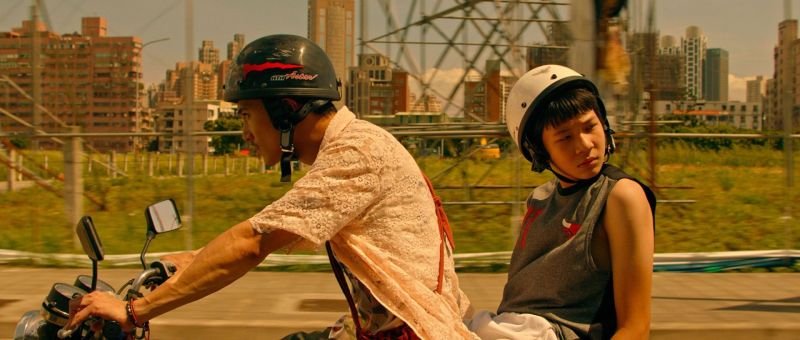
 Taiwan is often thought to be among the most liberal of Asian nations and is one of the few to have legislated for registration of same sex partnerships. This is, however, not to say that there is no homophobia or that it is possible for anyone and everyone to be free to live the way they choose. If Dear Ex (誰先愛上他的, Shuí Xiān Ai Shàng Tā de) is to be believed, there is still quite a long way to go in terms of total acceptance though what the film is really interested in is the emotional fall out from lingering stigma and the various relationships which end up being created because of it.
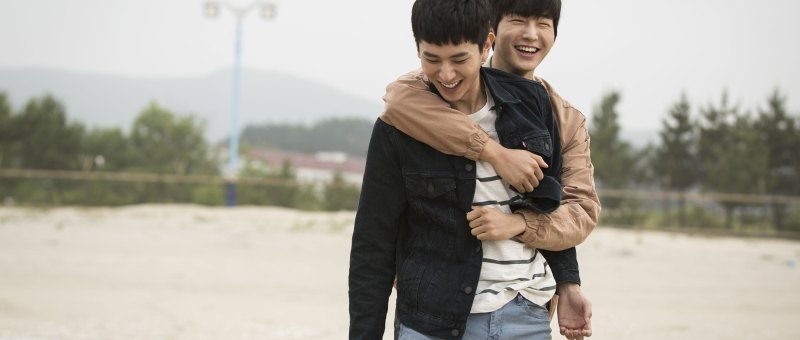
Teenager Song Chengxi (Joseph Huang) has just lost his father. Or rather, he has just lost him again. Despite what his mother told him, Chengxi already knew that his father, Zhengyuan (Spark Chen), had left the family to be with another man, but the problem now is that Chengxi’s dad has named his lover, Jay (Roy Chiu), as the sole beneficiary for his life insurance policy. Chengxi’s mother Sanlian (Hsieh Ying-xuan) is not very happy about this and is determined to get her hands on an inheritance she believes “rightfully” belongs to her and to her son and which she wants to use to send Chengxi to study abroad so he can become “respectable” and “successful”. Fed up with his nagging mother, Chengxi decamps and, bizarrely enough, moves in with Jay who has barely any opportunity to refuse, eventually brokering something like a rapprochement between the “other woman” and the “other man”.
Though Sanlian emerges as the least sympathetic of the three central characters, she is also the one who has suffered most because of her husband’s decision to opt for a sham marriage in order to become a “normal man”. Having found love with Jay 17 years previously, Zhengyuan eventually left him rather than attempt to live an authentic life as a gay man. Thinking that he needed to force himself to be “normal” he married Sanlian and had a son, but the marriage was always distant and unhappy. Sanlian at her youngest seems shy and girlish, cheerfully helping the nervous Zhengyuan locate a missing parcel, while the version we see of her now is shrewish and embittered, humiliated by her husband’s abandonment and distraught in wondering if the entirety of her married life has been a lie and her husband never loved her at all.
In this respect the intense feelings of shame and resentment are perhaps no different for anyone in a relationship with an adulterous spouse, but for Sanlian they run deeper precisely because Jay is a man which leaves her feeling even more at fault and prone to lashing out. Sanlian is fond of referring to Jay as the “mistress” to which he points out, amusingly recasting himself as a “manstress”, that really she has been the unwelcome third wheel in the relationship between the two men.
Even if her anger is largely down to personal injury, Sanlian’s resentment contains an inescapable kernel of homophobia. Zhengyuan left his lover and got married because because he was too ashamed/afraid to go on living with the man he loved, but his decision ruined the life of the woman he made his wife only to selfishly abandon in order to live his last days as his authentic self safe in the knowledge that society could hardly touch him now. Sanlian has tried her best to turn Chengxi against Jay, not wanting him to become “corrupted” and insisting that Jay is a “bad man” who “stole” his father away. Getting to know him, however, and realising that Jay had cared for his dying father all alone, Chengxi starts to wonder why it is that Jay must be such a “bad” man, especially when he realises that he didn’t even know about the life insurance policy which puts his mother’s gold-digging hypothesis right out of the window.
Arguing with his wife while trying to break the news to her of his leaving, Zhengyuan poignantly reminds her that she doesn’t have the right to define the word “family”. Yet when Jay suggests telling his mother the truth about their relationship, Zhengyuan advises him not to because it would only make her “sad”. Jay wonders why anyone would be “sad” to hear one person tell another that they love them, as does Zhengyuan though he shrugs and replies that that’s just the way it is. Later Sanlian considers trying to blackmail Jay by threatening to out him to his mother whom she assumes will be heartbroken and disgusted despite Jay’s assertion that his mother loves him very much and will probably get over it (though he has evidently not decided to test his hypothesis just yet). Partly out of guilt, and finding a sense of empathy in Jay’s deep grief over the death of a man who regarded him as a husband, Sanlian starts to come around and begins to accept his place in the life of the man she married – a man they both loved and have lost.
Told with warmth and whimsy and filled with cute graphics seemingly lifted from Chengxi’s exercise book, Dear Ex is a timely plea for tolerance and understanding believing each of those things is possible only when one learns to put aside one’s own pain to consider someone else’s, coming to realise they are often the same.
Screened at the 20th Udine Far East Film Festival.

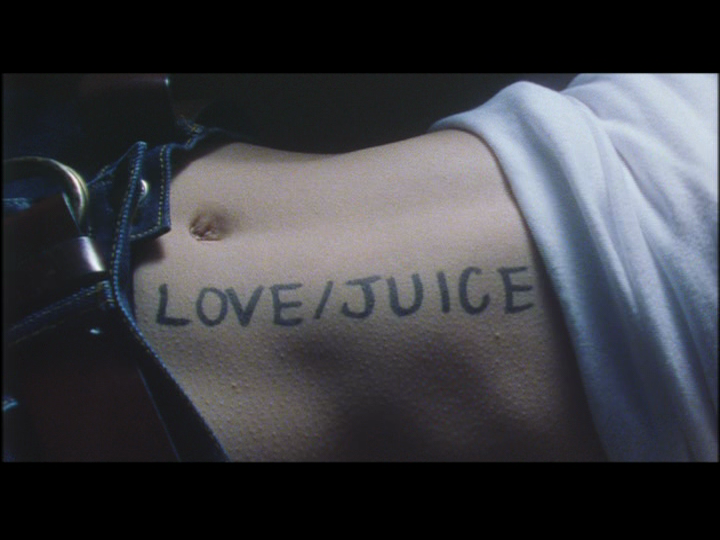 Some situations are destined to end in tears. Kaze Shindo’s Love Juice adopts the popular theme of unrequited love but complicates it with the peculiar circumstances of Tokyo at the turn of the century which requires two young women to be not just housemates but bedmates and workmates too. One is straight, one is gay and in love with her friend who seems to get off on manipulating her emotions and is overly dependent on her more responsible approach to life, but both are trapped in a low rent world of grungy nightclubs and sleazy hostess bars.
 In
In  Chekhov’s The Cherry Orchard is more about the passing of an era and the fates of those who fail to swim the tides of history than it is about transience and the ever-present tragedy of the death of every moment, but still there is a commonality in the symbolism. Shun Nakahara’s The Cherry Orchard (櫻の園, Sakura no Sono) is not an adaptation of Chekhov’s play but of Akimi Yoshida’s popular 1980s shojo manga which centres on a drama group at an all girls high school. Alarm bells may be ringing, but Nakahara sidesteps the usual teen angst drama for a sensitively done coming of age tale as the girls face up to their liminal status and prepare to step forward into their own new era.
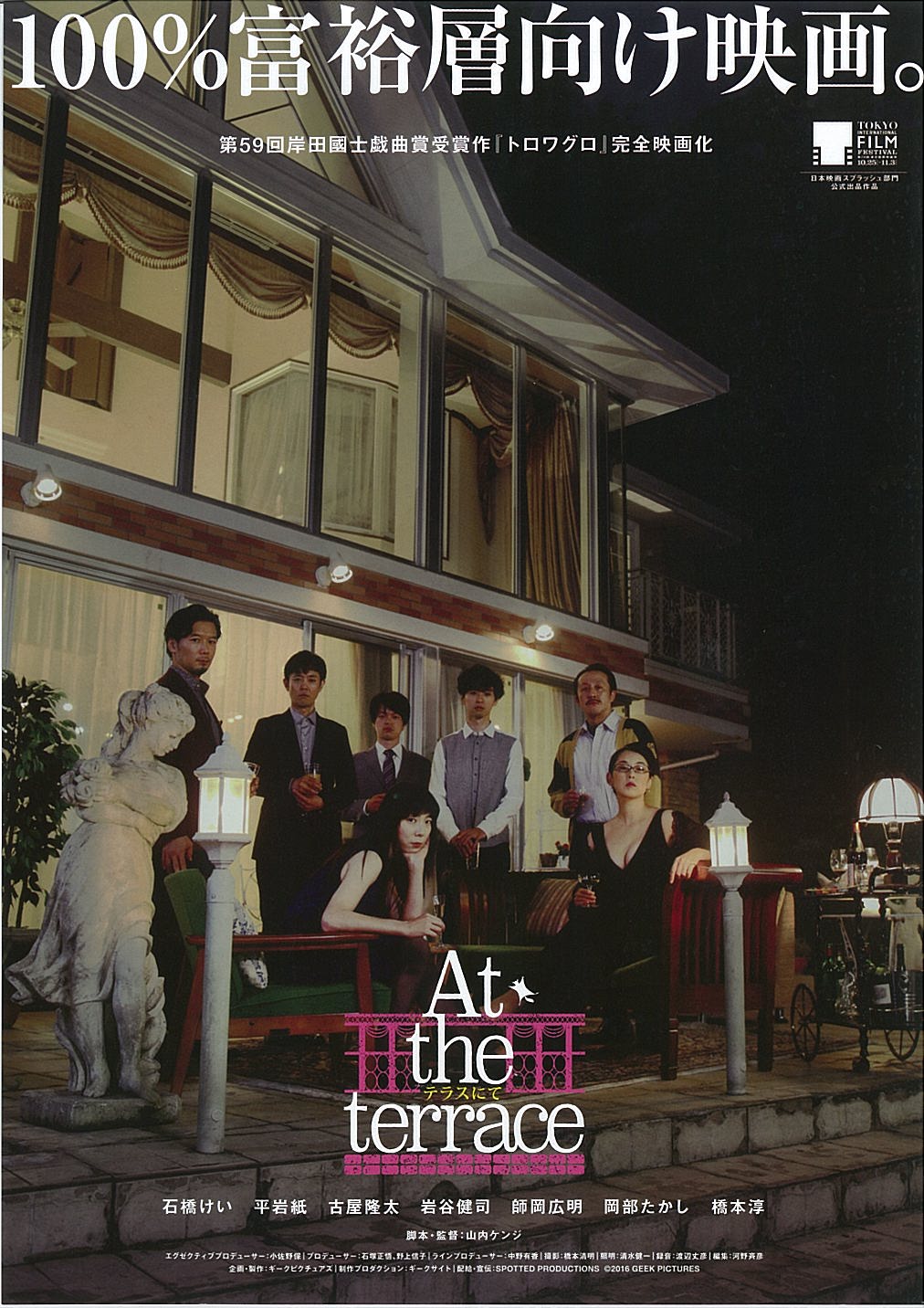 Every keen dramatist knows the most exciting things which happen at a party are always those which occur away from the main action. Lonely cigarette breaks and kitchen conversations give rise to the most unexpected of events as those desperately trying to escape the party atmosphere accidentally let their guard down in their sudden relief. Adapting his own stage play titled Trois Grotesque, Kenji Yamauchi takes this idea to its natural conclusion in At the Terrace (テラスにて, Terrace Nite) setting the entirety of the action on the rear terraced area of an elegant European-style villa shortly after the majority of guests have departed following a business themed dinner party. This farcical comedy of manners neatly sends up the various layers of propriety and the difficulty of maintaining strict social codes amongst a group of intimate strangers, lending a Japanese twist to a well honed European tradition.
 Windows on Worlds