Minbo, or the Gentle Art of Japanese Extortion (ミンボーの女, Juzo Itami, 1992)

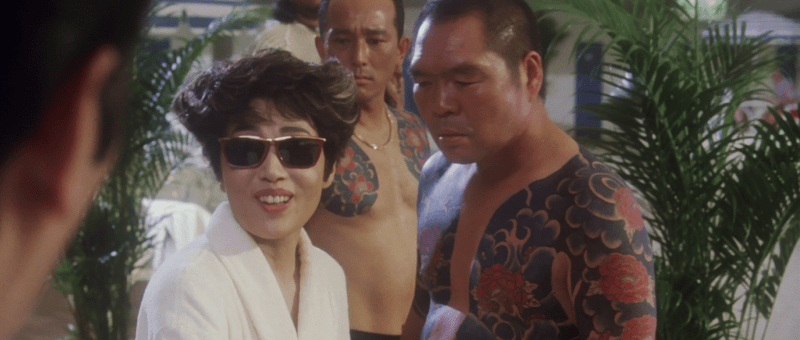
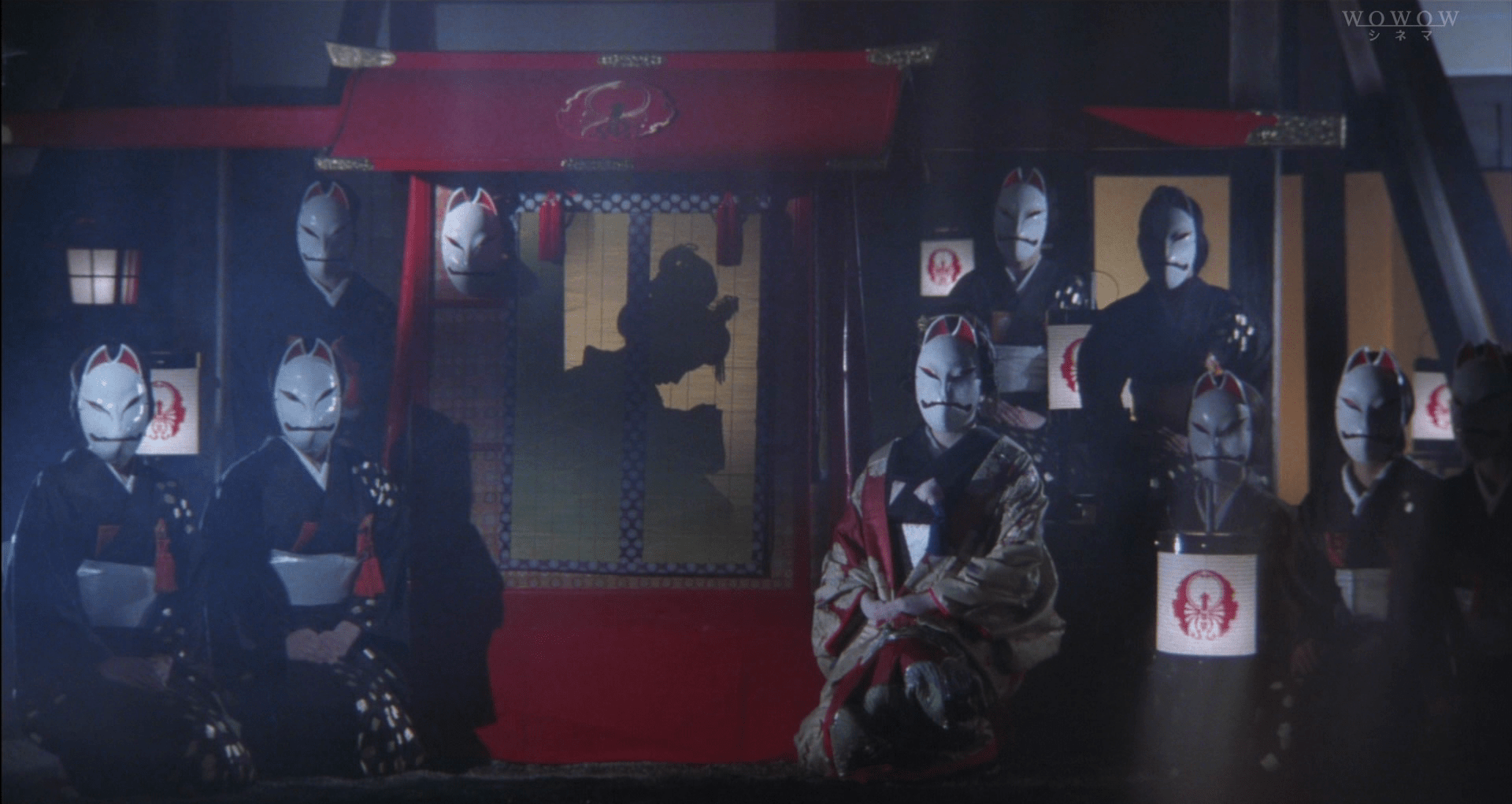
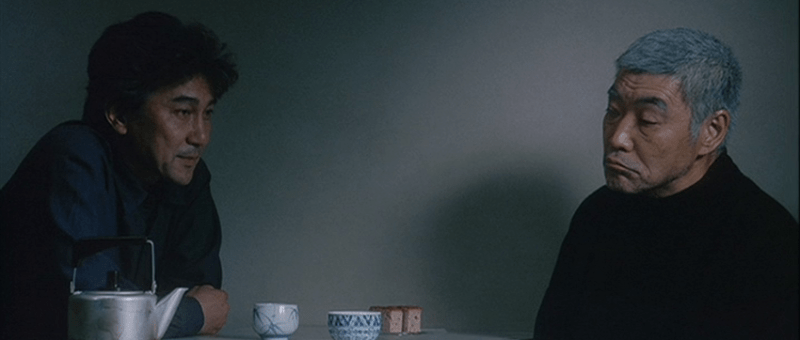
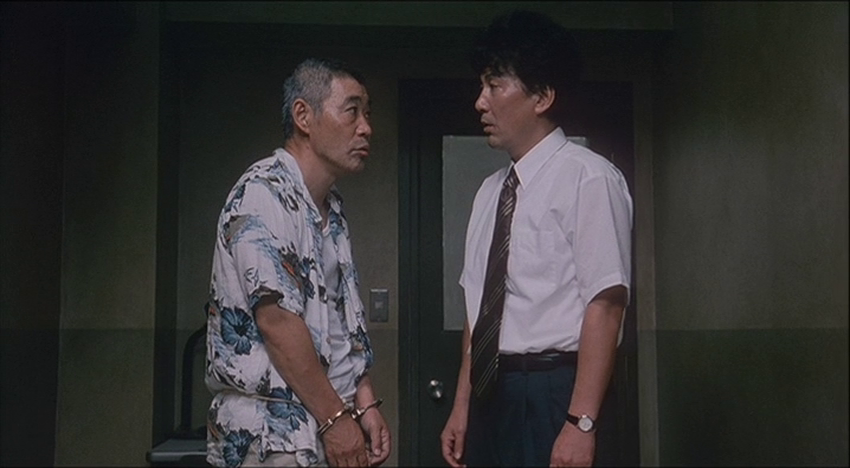
“Yakuza are vain, treat them politely,” the heroine of Juzo Itami’s 1992 comedy Minbo, or The Gentle Art of Japanese Extortion (ミンボーの女, Minbo no Onna) instructs a hapless pair of hotel employees trying to solve the organised crime problem at their hotel, but it’s a lesson Itami would go on to learn himself after he was attacked by gangsters who slashed his face and neck with knives. Itami in fact died in fairly suspicious circumstances in 1997 having fallen from the roof of a high-rise building leaving a note behind him explaining his “suicide” was intended to prove his innocence in regards to an upcoming newspaper story alleging an affair with a young actress. Given Itami’s films had often made a point of skewering Japanese traditions and that taking one’s own life is not the way most would choose to clear their name, it has long been suggested that his death was staged by yakuza who’d continued to harass him ever since the film’s release. 

It’s true enough that Minbo may have touched a nerve in undercutting the yakuza’s preferred image of themselves as the inheritors of samurai valour standing up for the oppressed masses against a cruel authority. Of course, that isn’t really how it works and getting the yakuza on your side in a civil dispute may be a case of out of the frying pan into the fire. It’s the yakuza themselves who are the oppressive authority ruling by fear and intimidation. Even so, the yakuza as an institution were in a moment of flux in the early ‘90s following the collapse of the bubble economy during which they’d shifted further away from the street thuggery of the post-war era into a newly corporatised if no more respectable occupation. This change is perhaps exemplified by “minbo”, a kind of fraud in which gangsters get involved in civil disputes underpinned with the thinly veiled threat of violence. 

The yakuza who plague the Hotel Europa, for example, pull petty tricks such as “discovering” a cooked cockroach in the middle of a lasagne, or claiming to have left a bag of cash behind which is later handed back to the “wrong” person by the front desk who probably should have asked for ID. Itami frames the presence of the yakuza as a kind of infestation, suggesting that if you do not tackle it right away it soon takes over and cannot be removed. Dealing with the problem directly may cause it to get worse in the short term, but only by doing so can you ever be rid of them once and for all. At least that’s the advice given by forthright attorney Mahiru (Nobuko Miyamoto) who demonstrated that the only way to deal with yakuza is to show them that you aren’t afraid because at the end of the day the law is on your side. 

Part of the “woman” cycle in which Itami’s wife Nobuko Miyamoto stars as a sometimes eccentric yet infinitely capable woman solving the problems of contemporary Japan through old-fashioned earnestness and everyday decency, Minbo finds its fearless heroine explaining that the yakuza themselves are a kind of con. In general they won’t hurt civilians because then they’re much more likely to be arrested. Going to prison is incredibly expensive and therefore not likely to prove cost effective. She knows that if she can catch them admitting they’ve committed a “crime” then they can’t touch her, and they won’t. They do however go after the rather more naive hotel boss Kobayashi (Akira Takarada) whom they try to frame for the rape of a bar hostess, drugging him after he unwisely agreed to meet them alone to hand over blackmail money. Then again, the hotel isn’t entirely whiter than white either. Kobayashi admits they can’t pull strings with the health ministry over the cockroach incident because they previously used them to cover up a previous instance of food poisoning. 

In any case, the yakuza end up looking very grubby indeed. It’s hard to call yourself a defender of the oppressed when you’re pulling petty stunts no better than a backstreet chancer. Yet like any kind of irritating insect, they too begin to evolve gradually developing a kind of immunity to Mahiru’s tactics in themselves manipulating law only they aren’t as good as she is and they are after all in the wrong. She’s a little a wrong too in that if pushed too far the yakuza will indeed stoop to physical violence against civilians, but she also knows that they thrive on fear and that to beat them she may have to put her safety on the line to prove they have no power over her. It seems Itami felt something similar issuing a statement shortly after his attack to the effect that “Yakuza must not be allowed to deprive us of our freedom through violence and intimidation, and this is the message of my movie”. As gently humorous as any of Itami’s movies and no less earnest, Minbo paints the yakuza as a plague on post-bubble Japan and suggests that it’s about time they were shown the door. 


Trailer (no subtitles)

The Tattooed Hitman (山口組外伝 九州進攻作戦, Kosaku Yamashita, 1974)

The close brotherhood between two men is disrupted by changing times in a more contemporary gangster drama from Kosaku Yamashita, Tattooed Hitman (山口組外伝 九州進攻作戦, Yamaguchi-gumi gaiden: Kyushu shinko-sakusen). As many are fond of saying, times have changed and the yakuza must try to change with them or else meet a melancholy end. But as the hero admits, change is something he has no intention of doing even as his old school gangsterism leaves him increasingly at odds with the corporatising ways of the contemporary yakuza. 

The change in the times is obvious from the film’s opening sequence set in 1957 in which an attempt is made on the life of petty boss Ishino (Tatsuo Umemiya) by a gunman who shouts “die, for the good of the world” before firing a pistol and running away. Ishino has been targeted in a dispute over construction rights connected with the regeneration of hot springs resort, Beppu. The hit seems to have been ordered by rival gang, Sakaguchi (Eizo Kitamura), the leader of which is also a prominent local politician who is content to abuse his power for his own financial gain. So confident is he in his safety, that Sakaguchi even gets the police involved rather than deal with it himself. 

Ginji (Bunta Sugawara) has been Ishino’s sworn brother since their teenage delinquent days and determines to get revenge by raiding the Sakaguchi offices and killing one of their high ranking officers. Seeing as he’s already wanted by the police for a previous murder, Ishino sends Ginji to Osaka to lay low while working for an associate, Daito, mainly as a debt collector. It’s this act of separation which introduces a rift between the two men. While Ginji waits patiently to be recalled, Ishino climbs the ranks of corporatised gangsterism by learning to play by the new rules. 

To fill the void, Ginji takes on a new “brother” or perhaps surrogate son in the wayward Ken (Tsunehiko Watase) whom he first meets cheating at pachinko at a parlour where his pregnant wife Fusako (Mayumi Nagisa) is working. It’s Ken who first drags him into a brewing turf war as Korean gang Soryu threaten to disrupt the local equilibrium not least by selling drugs of which Ginji does not approve. Ginji “saves” Ken from joining Soryu by essentially making him his one of his guys though he doesn’t really have much of a position in Daito’s gang, offering him a sense of grown-up responsibility by handing him a pistol with the only the instruction to make sure he shoots with two hands. Unfortunately, Ken will follow his advice but otherwise ends up almost causing an incident with another gang by shooting a man who disrespected him in the street. Ginji marches straight down there to sort things out, but on arrival discovers an arrangement has already been made with his boss which further strains his sense of pride and confidence in his position as a yakuza.

Ginji feels something similar on being invited to a party to celebrate Ishino’s promotion only to be seated with the lowly footsoldiers and ignored by Ishino all night. Ishino rejects him still further in agreeing to plan to send him back to Kyushu out of the way hoping that his old school hotheadedness can finally be tempered. Others meanwhile voice concern that Ginji may have forged a relationship with rival Kobe gangs during the 18 months he abruptly disappeared from Osaka and has only come back to cause trouble. Ginji perhaps knows that he has no more future in the contemporary society, others remarking that seems like someone who is in a sense already dead for having accepted that he will die and most likely in Hakata, the town he had wanted to conquer with Ishino who had crushed his dreams in his newfound pragmatism by calmly explaining that they would never have the power to take it. 

Koji Takada’s screenplay positions Ginji’s gradual decline as an allegory for the yakuza himself while citing the new legislation that this particular series of incidents made necessary creating the new offence of assembly with dangerous weapons as a decisive moment in weakening the yakuza as an institution. Ginji remains a man displaced by his times unable to move forward into a new society in the way that Ishino has but stuck in a permanently post-war mentality despite the constant reminders that “times have changed”. Yamashita adopts the trappings of the jisturoku drama with frequent references to real life events and narrative voiceover but otherwise maintains his classicist formalism while ending on a note of ambivalence that tells us a certain kind of justice may have been served but the cycle of violence may not yet be completed.


Original trailer (no subtitles)

The Last Dance (大病人, Juzo Itami, 1993)

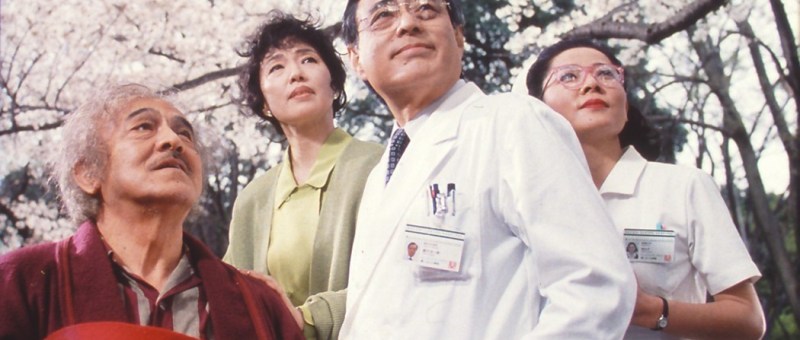
A self-involved film director gets a lesson in what it is to live when he discovers that he has terminal cancer in a lighthearted melodrama from Juzo Itami, The Last Dance (大病人, Daibyonin). Itami was apparently inspired by his own stay in hospital after being attacked by yakuza offended by his previous film Minbo and like his debut The Funeral the film has a few questions to ask about the nature of death along with the functioning of the medical system. 

That’s partly because film director Buhei Mukai (Rentaro Mikuni) is not initially told of his diagnosis. His well-meaning doctor, Ogata (Masahiko Tsugawa) a old university friend of his wife, elects to tell him only that he has a stomach ulcer in keeping with an old-fashioned policy that worries patients may lose hope and give up too easily on discovering the extent of their illness. Buhei meanwhile continues to obsess about his condition, convinced it must be cancer and that his wife, Mariko (Nobuko Miyamoto), and the medical staff are lying to him, at one point pretending to be his own uncle in order to tease the truth out of Ogata over the phone and attempting suicide when he accidentally implies that Buhei may not have long left. 

His distress is compounded by the irony that in the film he was working on when he became ill he was starring as a composer with advanced cancer whose wife has also been diagnosed with a more aggressive form of the disease. Whatever we might think about Buhei, it’s fair to say that the film’s sexual politics have not aged well. Not only was he having an affair with the actress playing his wife, but continues to flirt inappropriately with the medical staff and at one point even tries to force himself on his wife who was in the process of leaving him when he was first diagnosed. His lechery seems primed to appeal to men of a similar age while hinting at his virility and desire for life, but is nevertheless crass and often uncomfortable. Nevertheless, as Mariko says he’s like a child inside cheekily joking with the doctors about his drinking and smoking habits while running away from anything unpleasant and trying to get out of having to undergo treatment. 

Itami had often remarked on the weaknesses of Japanese men who “can’t stand loneliness, can’t make decisions alone, can’t face anyone who disagrees with them and can’t accept responsibility for their mistakes,” Buhei seemingly possessing all four. In part regretting her decision to keep the seriousness of his illness from him, Mariko reflects that in the end all they did was leave Buhei alone in his fear and anxiety as the only one who didn’t know the truth, engineering a kind of conspiracy as they cheerfully told him to “soldier on” knowing there was no hope. Yet during his time in the hospital, Buhei is also confronted by the ethical dilemmas of medical treatment on witnessing doctors desperately try to resuscitate a man who was miserable, in pain, bedridden, and unable to communicate, just waiting for the end. As even his grieving wife calls out to the doctors to let him go, Buhei wonders if it’s right to preserve life at all costs especially when the patient has not been given a choice in his treatment and may not have been informed that they have no possibility of recovery. 

Coming to a new realisation he challenges Ogata’s conviction that death is his enemy, telling him that he should see it less as defeat than acceptance reflecting on the irony that he never felt so alive as when dying. Whimsical if occasionally maudlin, Itami throws in a surrealist dream sequence in which Buhei approaches the other side and comes to realise that death might not be so frightening after all even as he watches himself from above in an out of body experience witnessing the accidental violence inflicted on his body by those trying to save it. In some senses, Buhei is fairly unredeemed, winking at his indifferent mistress even on his death bed, but is in others humbled as he looks back on his life with its regrets and unfulfilled promises, repairing his relationship with his long suffering wife while admitting that under different circumstances he and Ogata might have become good friends. Offering a sometimes critical view of medical practice and ethics, Itami’s poetic meditation on what it is to die loses none of his ironic humour even in its unfolding tragedy. 


Blood of Revenge (明治侠客伝 三代目襲名, Tai Kato, 1965)

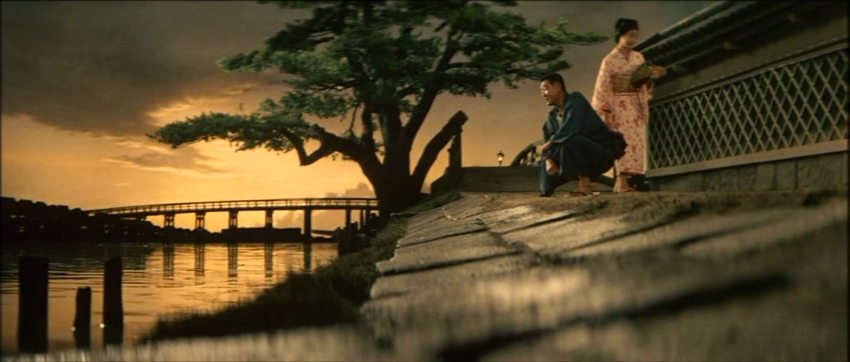
An earnest yakuza trying to walk a more legitimate path faces off against a thuggish businessman in Tai Kato’s late-Meiji ninkyo eiga, Blood of Revenge (明治侠客伝 三代目襲名, Meiji kyokyakuden – Sandaime Shumei). Though set in the confusing world of 1907, Kato’s tale is in some ways not so different from contemporary gangster dramas in its suggestion that even in the early days of the 20th century the yakuza were already somewhat out of date while the fancy capitalist who calls them so is not so far off from the corporatised gangsters of the high prosperity era. 

Kato opens with a tense scene at a festival in which local boss Kiyatatsu is knifed by an impassive assailant who later claims to have been acting alone and that he did it to make a name for himself by stabbing a big time yakuza boss. Kiyatasu’s hot-headed son Haruo (Masahiko Tsugawa) suspects that rival businessman Hoshino (Minoru Oki) is somehow behind the attack but is talked out of a self-destructive bid for revenge as his father reminds him that they are “not a mob” but “honest businessmen” and acts of violence would impact their business negatively. 

Kiyatatsu may once have been a big time yakuza boss but it’s clear he’s made an attempt to go straight by founding a legitimate business that began trading lumber and now sells construction supplies that are helping to expand the rapidly modernising late-Meiji economy. He is closely involved with a construction project to introduce a modern water distribution system for the good of the people of Osaka organised by another former yakuza, Nomura (Tetsuro Tamba). Hoshino, who was indeed behind the attack and is secretly backed by his own band of mercenary yakuza, had Kiyatatsu knifed in the hope of getting his hands on the contract, later stooping to other dirty tricks such as ruining their cement supply so that he can swoop in with a special deal on his own.  

Just like yakuza, businessmen appear to have a code and letting personal feelings interfere with business is just as bad as letting ninjo get in the way of your giri. Hoshino is a bad yakuza in a business suit, his Western clothing just another symbol of his villainy. Kiyotatsu’s guys including noble retainer Asajiro (Koji Tsuruta) all wear kimono with the young son Haruo later shifting to a suit after taking over the business in a bid to appear less like a yakuza and more like a serious young professional. Though Hoshino sneers at Asajiro that yakuza are already out of date and that he hates their tendency to solve every problem through violence he is little more than a thug himself keeping a small band of yakuza onside to do his dirty work.

Yet there is something in what he says that the yakuza belong to an earlier age and are unable to travel into the new post-Meiji society men like Normura are building. Insiting that Japan must embrace international trade, Nomura builds piers as a kind of outreach to a new world and does so for the good of the people rather than himself, living up to an old yazkua ideal in trying to ensure prosperity for all. Kiyotatsu is already distancing himself from the gangster way of life, explaining to a travelling gambler to whom he grants hospitality that he does not allow gambling in his home and believes that modern gangsters should find new ways to live, but is constantly tarred by the yakuza brush unable to fully escape the legacy of his tattoos. When Asajiro is appointed the new head of the clan it comes as quite a shock to the young Haruo who is outraged having believed it was his birthright to succeed his father. Ever noble, Asajiro suggests that he succeed as the head of the clan and Haruo as the heir to the legitimate business saving him from a sordid yakuza existence. 

Even this cannot save the clan from destruction in the light of Hoshino’s avaricious greed forcing Asajiro on a bloody path of revenge while forced to give up the woman he loves because of his code of duty. Asajiro’s kindness is signalled by his decision to buy a geisha for three days so she can visit her dying father in the countryside but Hatsue (Junko Fuji) remains otherwise entirely trapped. Her contract is bought out by boorish assassin Karasawa (Toru Abe) who treats her cruelty and buys her complicity in insisting that should she disobey he will turn on Asajiro. Asajiro’s eventual arrest makes it clear that he is not a man who can survive in the new times because his brand of nobility is clearly out of fashion even as he takes revenge on an increasingly corrupt society by standing up against the duplicitous Hoshino ironically taking a leaf out of Haruo’s book that by appeasing men like Hoshino they only enable their own oppression. Kato’s characteristic low level photography reflects the anxiety of the times dwarfing these old-fashioned men with an awkward modernity they are ill-equipped to survive.


Crest of Betrayal (忠臣蔵外伝 四谷怪談, Kinji Fukasaku, 1994)

“I was trying to reform our times!” cries a man about to abandon his revolution at the moment of its inception. “The times have reformed us” his friend retorts, rejecting him for his self-interested cowardice before seconds later deciding to follow his example. Largely remembered for his contemporary jitsuroku gangster pictures, Kinji Fukasaku’s tale of rising individualism amid political turbulence and economic instability Crest of Betrayal (忠臣蔵外伝 四谷怪談, Chushingura Gaiden: Yotsuya Kaidan) hints at a perceived moral collapse in contemporary post-Bubble Japan defined by a sense of nihilistic impossibility in marrying the classic ghost story Yotsuya Kaidan with the noble tragedy of the 47 Ronin. 

The action opens the very concrete date of 14th March 1702 which as an early title card reminds us is at the close of the Genroku era which had been regarded as a “golden age” but its appearance of affluence had in fact been semi-engineered by the shogunate’s unwise decision to continue debasing the currency which later led to an inflation crisis (sounding familiar?). Meanwhile, in the samurai world Tsunayoshi, the fifth Tokugawa shogun, has deposed 38 Daimyo creating 40,000 masterless samurai each vying either for new positions as retainers in other clans or some other way to survive in a manner which befits their station. 

The 14th March, 1702 is a significant date in terms of the narrative in that it marks the first anniversary of the death of Lord Asano who was ordered to commit seppuku after offending another lord, Kira Kozuke-no-Suke Yoshinaka (Takahiro Tamura), leaving his house ruined and his retainers masterless. Samurai code dictates they seek revenge, but leader Oishi (Masahiko Tsugawa) suggests they bide their time leaving him and the clan open to accusations of cowardice or betrayal, mocked by peasants at the memorial service while Oishi decries their appetite for samurai drama. Enter Iemon Tamiya (Koichi Sato), antihero of the classic Yotsuya Kaidan, who had apparently joined the clan only two months before it was dissolved after years as a wandering ronin biwa player and alone has the courage to ask him if he truly has no appetite for vengeance moments after Oishi has scandalised his men by pointing out that it was Asano’s “short-temperedness” which destroyed their clan. His only answer is that it cannot be now, they must wait a year in order to prove their internal resolve. 

In marrying the two classic tales, Fukasaku directly contrasts the sublimation of the individual self into the samurai code as in the internecine nobility of the 47 ronin avenging the death of their lord knowing their own must shortly follow, and the self-serving individualism of (in this case) conflicted opportunist Iemon. Iemon has indeed been reformed by his times, becoming a thieving murderer out of desperation and misplaced filial piety after he and his father were forced into a life as itinerant biwa players on the dissolution of their clan. In most versions of the classic tale, Iemon is an ambitious sociopath who tricks his way into marrying up but loses interest in new wife Oiwa after she bears his child, later doing them both in to marry the daughter of a wealthy merchant who took a liking to him in a market square. Here, Oume (Keiko Oginome) is taken with him after he hacks the sword-bearing hand off an aggressor but unbeknownst to Iemon her father is a retainer of his sworn enemy leaving him with a double conflict, while Oiwa is a lowly bath house sex worker pregnant with a child he does not truly believe is his. 

The radical samurai had wanted to “reform our corrupt times”, but Iemon like his friend who drops out of the movement after being taken on as a successor to a hatamoto and becoming a direct retainer to the shogunate, comes to the conclusion that the times cannot be reformed and he must conform to them. If he chooses Oume, he betrays his loyalty to his lord by uniting with his rival to further his own prospects, a decision many will understand it is perhaps little more than leaving one firm for a better job at another, but it’s also an unforgivable subversion of the samurai code which drives him deeper even than the class conflict which sometimes informs his choices in Yotsuya Kaidan into a hellish spiral of greed and immorality. “The world hates your type” Oishi reminds him, “they’ll kill you, like a snake. Can you live fighting with the world for the rest of your life?” He asks, pitying Iemon for his self-destructive decision to turn away from “justice” for personal gain knowing that he will never reconcile himself to his choices nor will the world approve them. 

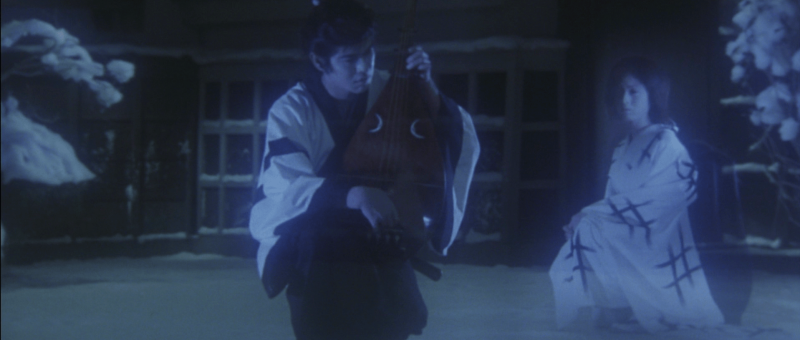
Yet as in Yotsuya Kaidan it’s not so much his latent sense of guilt that does for him as Oiwa’s curse, her ghost with its face ruined by his transgression taking its otherworldly revenge though interestingly only indirectly against him even as she provokes Iemon into destroying his chances for the secure, comfortable life he’d chosen for himself. The 47 ronin, meanwhile, continue with their righteous mission even if it’s a stretch to insist that their vengeance serves the cause of justice or is even intended to “reform these corrupt times”. Those corrupt times, Fukasaku seems to argue, forged a man like Iemon rather than the toxic masculinity, personal insecurity, or innate sociopathy which are generally ascribed to him to explain his dark deeds, and so these corrupt times of post-Bubble insecurity might create more like him. Finding the director in a noticeably expressionistic mood, opening with an ominous storm and climaxing in an unexpected, supernatural blizzard, Crest of Betrayal adopts a register of high theatricality and an etherial air of mystery culminating in a beautifully executed series of ghost effects overlaid with a watery filter but ends on a note of hopeful ambiguity in which Oiwa’s curse has perhaps been healed even if Iemon finds himself condemned, a wandering samurai for all eternity. 


Original trailer (no subtitles)

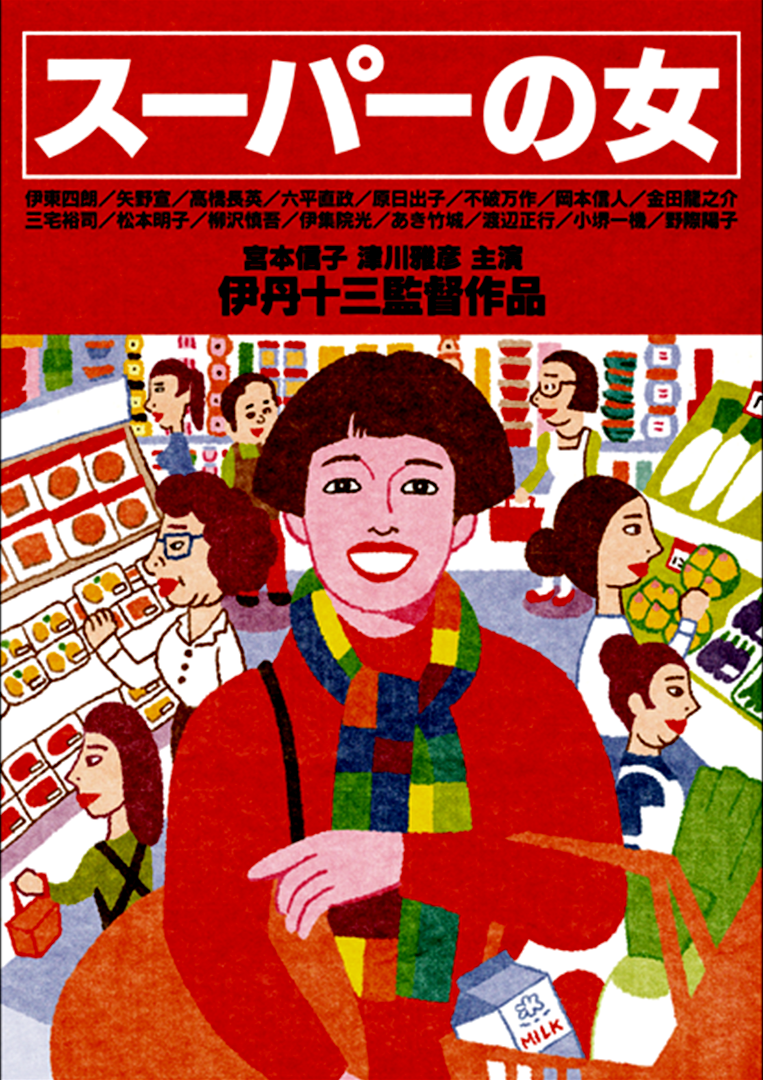
Supermarket Woman (スーパーの女, Juzo Itami, 1996)

By 1996 Japan had entered an extended period of economic stagnation which signalled the end of post-war aspiration but for many at least the false promises of the Bubble era proved hard to dispel. In what would be his penultimate film, Supermarket Woman (スーパーの女, Supa no Onna), Juzo Itami turns his attentions to the insular world of the nation’s family-held, independent supermarkets to ask a few questions about integrity in business which cut straight to the heart of what kind of society post-Bubble Japan intended to be given yet another opportunity to make itself anew. 

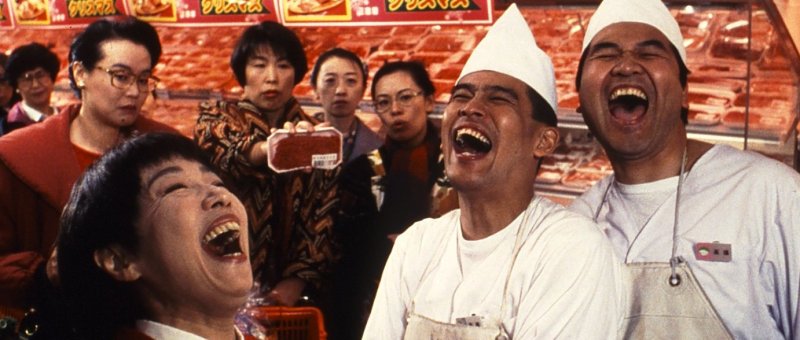
As the opening text crawl explains, this is a story not about giant supermarket chains but your friendly indie local. “Honest Mart” is a family-owned, mid-range supermarket in a declining industrial area nominally run by absentee CEO Goro (Masahiko Tsugawa) who was bequeathed the place by his father but is a melancholy drunkard delegating responsibility to his manager. The store has a huge problem in that a rival has recently re-opened under the new name “Discount Demon” and seems primed to steal all their business. On a stakeout of the new place, Goro runs into a childhood friend, Hanako (Nobuko Miyamoto), who is now a widow returning to the area. With her lifelong experience as a veteran housewife, Hanako knows a few things about supermarkets and she’s not very impressed with Discount Demon, doing a few quick calculations to realise the supposed discounts aren’t as enticing as they seem while common gimmicks like the all pervasive red glow that makes their meat look fresher than it really is only irritate her. Goro asks her for a “professional” opinion on Honest Mart without telling her who he is, only to discover she’s even less impressed with them, certain that his place is on the way out thanks to its dated decor, uninviting atmosphere, and low quality produce. 

The irony is Honest Mart is not much better than Discount Demon, both stores are subject to the same industry standards in which a certain degree of obfuscation is permissible. “In business honesty doesn’t pay” Hanako is told by the onsite butcher after she questions his tendency to mix meats to pass them off as more expensive cuts, while she later discovers that the store engages in the practice of repackaging unsold meat and fish with new expiration dates and is not very particular about its suppliers when it comes to buying in ready-made products. Brought on board to save the store, Hanako breezes in with a new mission to win the hearts and minds of her customers, and she can’t do that if she can’t have confidence in her stock. In any case, her the customer is always right policy quickly brings her into conflict with the store manager, an older more conservative man who actively resists innovation and resents having his authority undercut by an interloping woman. 

Meanwhile, we can also see that customer attitudes have changed. There’s a problem with availability of trolleys because, perhaps unusually for Japan, customers are just abandoning them willy-nilly in the carpark instead of retuning them to the trolley point like responsible shoppers. One man is even for some reason intent on stealing a large number of shopping baskets, caught by Hanako loading them into his car. Everybody wants cheap, which is understandable especially given the economic situation, and they might even be a little underhanded when it comes to getting it, but they also expect a reasonable level of quality and to be able to trust that the food they’re buying is safe to feed their families. Hanako is most alarmed that the ladies who work in the kitchen area, who are obviously wives and mothers themselves, do not shop at Honest Mart because they know what goes on at the store and they don’t trust it. 

“A housewife knows” Hanako is fond is saying. Her revolution is in essence a vindication of “the housewife”, perhaps the most maligned and dismissed figure of the mid-90s society, putting to good use all of her veteran experience both of running a home and of working a series of part-time jobs including those in supermarkets which she claims to love. Approaching the problem from the point of view of a consumer, she attempts to help Goro achieve his dream of making Honest Mart number one in Japan not through making it the most financially successful but the most loved by listening to women like her in the form of a focus group of local aunties some of whom had previously been serial complainers. 

Then again, some of her decisions are in a sense contradictory as she attempts to streamline the business along classically capitalistic lines in suggesting that the store doesn’t really need its overqualified butcher and fishmonger because the part-timers could be trained to do a “good enough” job. “Good enough” is in a sense her business philosophy, only not in the sense that somewhere like Discount Demon which falsely advertises regular steak as discount Wagyu means it, rather that her customers are after an everyday level of produce and so it’s not surprising that premium meats don’t sell. She wants to get rid of the butcher, who turns out to be on the fiddle, and the melancholy fishmonger disappointed no one wants his top quality seafood, because their “artistic temperament” is disruptive to the flow of the store and their presence is perhaps emblematic of the bloated, pretentious management style which is holding it back. 

Positioning the “housewife’s choice” as the ultimate seal of approval, Supermarket Woman advocates for a return to wholesome, small-town values, prioritising a sense of integrity as Honest Mart projects itself as a corporate force their customers can trust, perhaps anticipating a trend in dedicating itself to providing good quality fresh produce at fair prices in direct opposition to Discount Demon and its underhanded trickery. “Honest Mart keeps its word” Goro assures, pledging to honour a mistaken ad which promised eggs at prices so good it caused minor riot. In the end, it’s all about trust and integrity. If you don’t have that, you don’t have anything and the housewives of post-Bubble Japan will it seems vote with their feet. 


Currently available to stream in the US via Criterion Channel.

Original trailer (no subtitles)

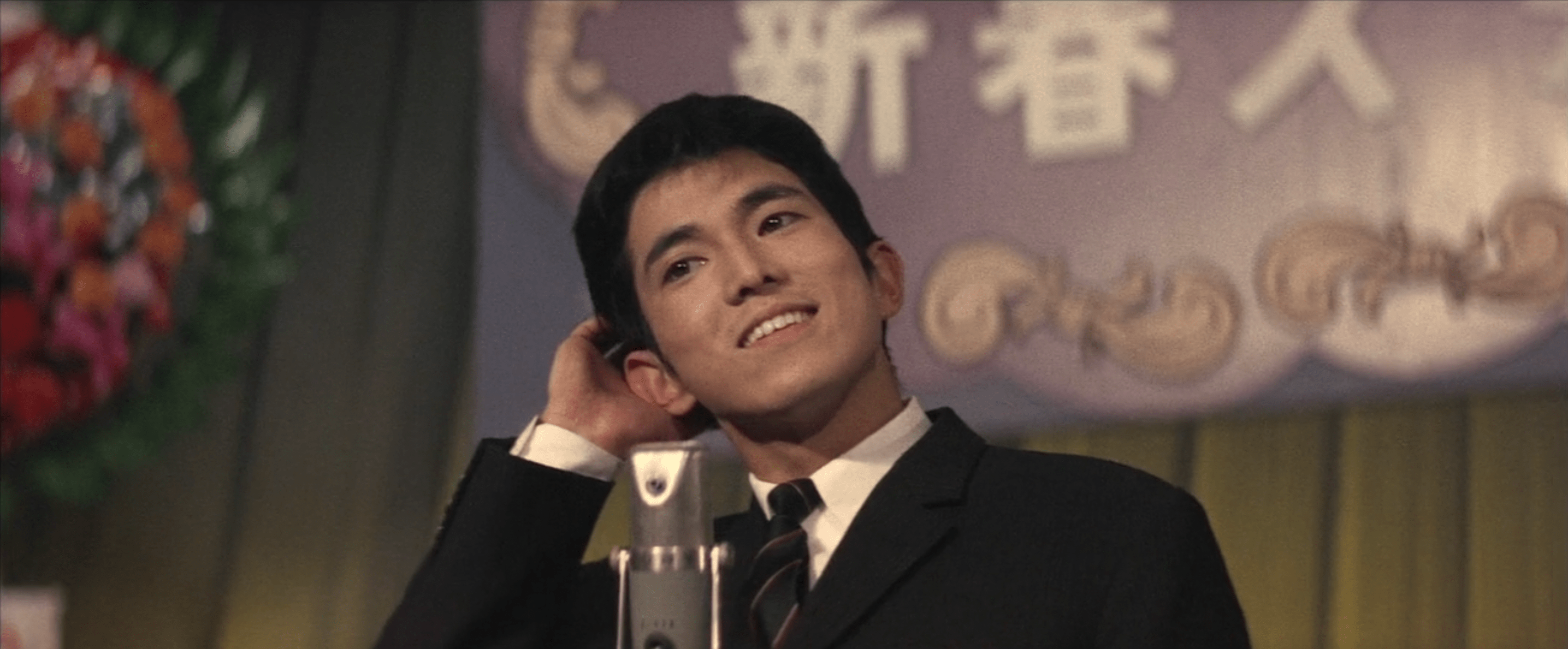
Sing, Young People (歌え若人達, Keisuke Kinoshita, 1963)

Keisuke Kinoshita has sometimes been dismissed by Western critics for his supposed sentimentality, but his mid-career comedies can be surprisingly cynical. Scripted not by Kinoshita but Taichi Yamada, 1963’s Sing, Young People (歌え若人達, Utae Wakodotachi) is in someways an exception to the rule, a breezy take on the student comedy updated for the present day, but underneath all the absurdist humour and jibs about youthful ennui is a real sense of adolescent hopelessness as these aimless young men ponder their “pitch-black” futures in a rapidly changing Japan where the best they can hope for is fulfilling the salaryman dream.  

Shooting in glorious colour, Kinoshita opens with a lengthly pan over contemporary Tokyo which the jaunty voice over describes as “the number-one city in the world” before homing in on the incongruous figure of a strangely dressed man holding a sign advertising “sensual massage beauties”. A relic of an earlier advertising age, the wandering sign man nevertheless catches sight of someone even “weirder” than he is, a student wearing a student’s cap! Kinoshita then takes us on a brief detour through Japan’s major universities demonstrating that no one is so uncool as to wear a student’s cap in the age of protest, drawing a direct contrast to the student comedies of old while showing us a series of scenes of students “playing” hard with part-time jobs in bands or as models, training hard in preparation for the upcoming Olympics, fomenting the revolution, or fighting in the streets. In the first of many meta touches, our hero, Mori, is eventually woken by the narrator after falling asleep in class, his eyes “gleaming with hopes for the future”. 

Or, perhaps not, he’s just tired. Mori (Tsutomu Matsukawa) is as he describes himself a man without hopes or dreams who believes that the road ahead of him is “pitch black”. Dropping a brush from the window washers’ platform at one of his part-time jobs, he asks himself if there shouldn’t be more to life than this. The only son of his widowed mother, he’s pinned everything on graduating from a top university but feels powerless and empty, adrift in the post-war landscape. Where his calculating friend Miyamoto (Yusuke Kawazu) fills the void with romance and a determination to “get lots of As” and then land a top job, his roommate Okada (Shinichiro Mikami) earnestly studies hard afraid to disappoint his austere family but also quietly resentful in his lack of autonomy, and the dopey Hirao (Kei Yamamoto) simply goes about being nice to people more or less forcing them to eat the traditional treats his loving mother is forever sending. 

Yet for all the bleakness Mori seems to see in his future, he only ever falls up. Luck follows him and he’s presented with ever more fantastic opportunities at every turn. In fact, it’s his slightly grumpy expression as he cleans the windows of an office building that leads to them snapping a picture and making him a cover star without ever bothering to ask his permission though they do eventually pay. Still Mori remains indifferent, telling a reporter who tries to interview him that he had nothing to do with the cover, he has no dreams or aspirations for the future but lives his life day by day. He describes himself only as “nervous”. His words run ironically over the magazine literally becoming tomorrow’s chip paper, used by a stall owner to wrap her croquettes, as a stand for a hot pot, and otherwise bundled up to be pulped. Nevertheless, the cover leads to great opportunities from a TV network looking for a fresh face to front their new youth-orientated drama serial. 

Despite all the promise, Mori remains indifferent, later irritating a new colleague and potential love interest (Shima Iwashita) when he idly suggests he might just give up acting and fall back on the salaryman dream. As she points out, she had to fight all the way to achieve her dreams of becoming an actress so hearing someone say they’re going to throw away a tremendous opportunity that came to them entirely by chance is mildly offensive. Miyamoto meanwhile is growing lowkey resentful, realising that maybe nothing matters after all it’s all just dumb luck. Mori deliberately didn’t do anything because he thought his life was pointless but everything has landed right at his feet while Miyamoto’s life is crumbling. He’s lost all his girlfriends and endured a lonely New Year alone in the dorm, coming to the conclusion that his future really is “pitch black”.

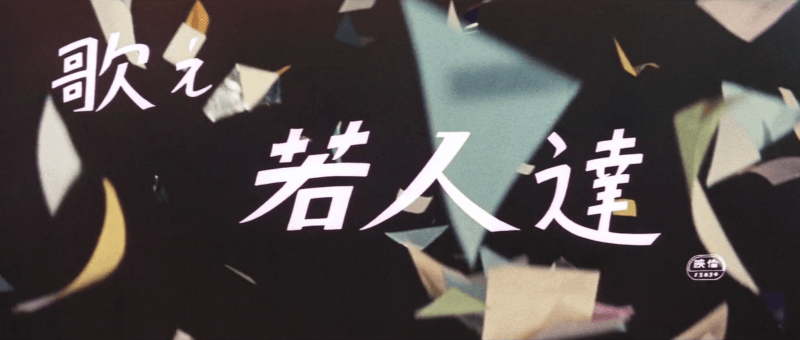
Nevertheless, it’s difficult to remain resentful about a friend’s accidental success and so each of the men eventually finds direction in even in directionlessness. Mori realises that he might as well ride his wave of fame for as long as it lasts, accepting in part at least his sense of powerlessness, while Okada does the reverse in deciding to rebel against his authoritarian family by marrying in secret. Miyamoto resolves to make a success of himself in his own way, and Hirao seemingly accepts the hand fate has dealt him with good humour. Kinoshita ramps up the meta comedy with Mori joining Shochiku, encouraged to try and work for that “excellent” director Keisuke Kinoshita, later referencing Garden of Women, while Mariko Okada and Keiji Sada turn up as onstage guests at an event launching him as a young actor. Playfully using outdated, quirky screen wipes and opening with an artsy title sequence featuring colourful confetti falling up, Kinoshita perhaps adopts a slightly ironic tone in satirising the all pervasive sense of confusion and hopelessness among the younger generation but does so with only sympathy for those coming of age in uncertain times. 


Night and Fog in Japan (日本の夜と霧, Nagisa Oshima, 1960)

night and fog in japan posterUnlike many of his contemporaries, Nagisa Oshima entered the world of filmmaking almost by chance. While studying law at Kyoto University, he’d become deeply involved in the leftist student movement and reportedly joined Shochiku’s assistant director program in 1954 solely because no other company would hire him. His path there too was hardly typical and saw him become a leading light of the studio’s extremely temporary bid to play Nikkatsu at their own game with a series of gritty youth dramas which included the melancholy Cruel Story of Youth and infinitely bleak The Sun’s Burial. It was his fourth film, however, which proved the most controversial perhaps unexpectedly given its otherwise dry subject matter. Named for Alain Resnais’ incendiary documentary, Night and Fog in Japan (日本の夜と霧, Nihon no Yoru to Kiri) was pulled from cinema screens following the assassination of the leader of Japan’s Socialist Party by a right-wing nationalist just three days after the film’s release.

Oshima’s film is in itself an attack on the left, though one from an entirely different angle. The failure of the student movement would become a preoccupation for the left-leaning avant-garde movement of the early ‘70s, but one could argue that though the movement had been dealt a huge blow by the failure to stop the renewal of the ANPO treaty despite the mass protests of 1960 it had not yet “failed”. Indeed, protests continued and intensified throughout the 1960s until weakened by a government crackdown in the run up to the treaty’s renewal in 1970 and were only really ended by the horror exposed by the Asama-Sanso Incident in 1972.

In a strange way, Oshima’s impassioned attack on the misguided rigidity of radical student politics almost presages the dark place into which the movement would eventually fall through the already emergent generation gap between the earnest contemporary students keeping up the fight, and the jaded post-war generation who have long since given up the struggle for bourgeois comforts. He opens, of all places, at a wedding notable for its solemnity as a young student radical, Reiko (Miyuki Kuwano), weds a newspaper reporter, Nozawa (Fumio Watanabe), she met at the climatic June 15 protest. The wedding is later interrupted by two melancholy outsiders – one the leader of the students currently on the run from the police, and the other an older man coming in from the cold, though both with the intention of confrontation.

As we might have assumed, the younger man, Ota (Masahiko Tsugawa), is not the jilted lover of the bride. It’s the revolution he’s come to accuse her of betraying through her rejection of their comrade, Kitami – missing since the failed raid on the Diet building, whom Ota assumes to have been her lover now thrown over for the “cage” of family. Reiko’s “betrayal” is mirrored in the drama between the older generation as we gradually discover the complicated history between the groom and Misako (Akiko Koyama), the dejected wife of the current head of the Socialist Party, Nakayama (Takao Yoshizawa).

The demands of ideological purity are mirrored in the strangely moralistic attempts to police female desire in suggesting that both women have made “practical” choices at the expense of their personal integrity. The major drama, however, revolves around the older students’ overreaction to having caught a “spy” in their dorm, keeping him imprisoned while they try to bully him into betraying his true masters. One student however, Takao (Masahiro Sakon) – nursing an unrequited crush on Misako, refuses to believe the man is guilty and is thereafter accused of betraying the movement by allowing him to escape. Takumi (Ichiro Hayami), the second ghost at the feast, has come to ask if it was the movement which betrayed Takao by ignoring his emotional fragility, causing him to abandon faith not only in it but in himself.

Throughout it all, Nakayama remains the stoical voice of authority, blaming anything negative on the nebulous figure of the “imperialists” while insisting on superficial “unity” which really means do as I say and don’t rock the boat. The students want more and they look to the older generation for guidance, but the old guard have lost the faith. Even among the youngsters, few think the cause can be won. The struggle is between those who give up, and those who keep fighting anyway for the right to “march towards a brighter tomorrow”. As a student, Nakayama had dismissed the “spy” as unworthy of their revolution because he was an uneducated worker, but now dismisses the students because they exist outside of the economic structure and therefore cannot occupy a space within a workers’ movement. This wedding, which might have been the unification bringing together the old and the new, has become a funeral that marks the death of post-war idealism, betrayed by the bourgeois need for respectability. The students know their movement will fail, but they move anyway. Nakayama, meanwhile, makes speeches about unity to his dejected contemporaries, berating the students for their lack of “realism” as if insisting that the route to social change lies in concession to populist conservatism.

“I feel empty and sad” the post-war students lament, watching their movement withering on the vine. Betrayed by the older generation, the contemporary students have no role models to follow and no real hope for the future, but still they fight on earnestly. A fierce condemnation of political hypocrisy, dogmatic rigidity, and bourgeois paternalism, Night and Fog in Japan sees no way out of its existential malaise as its would-be-revolutionaries remain lost in a fog confusion with no exit in sight.


Original trailer (no subtitles)

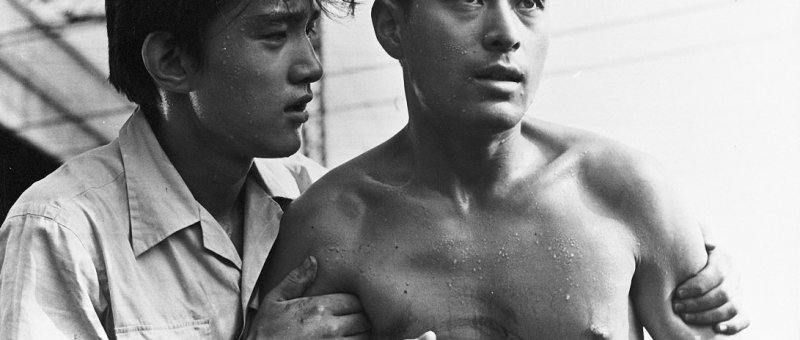
The Sun’s Burial (太陽の墓場, Nagisa Oshima, 1960)

sun's burial poster

“Love and hope for the youth!” reads a prominent sign in the middle of a hopeless slum in Oshima’s bitterly nihilistic youth drama The Sun’s Burial (太陽の墓場, Taiyo no Hakaba). Then at Shochiku, home of polite melodrama, Oshima was one of a handful of youngsters (that also included Kiju Yoshida and Masahiro Shinoda) bumped up to director ahead of schedule in an attempt to find voices who could speak to youth in much the same way Nikkatsu was doing with its incendiary tales of the new bright young things. The Sun’s Burial would be Oshima’s penultimate film for the studio before he stormed out after they pulled his next film Night and Fog in Japan from cinemas fearing its fierce critique of a divided left torn apart by dogmatic rigidity and generational conflict was too on the nose in wake of the assassination of the Socialist Party leader by a right-wing nationalist.

Set in the slums of Kamagasaki, Osaka, The Sun’s Burial follows a collection of desperate adolescents trying to survive in an intensely hostile environment. Our “hero” the conflicted Takeshi (Isao Sasaki), is inducted into a street gang after getting beaten up by young tough Yasu (Yusuke Kawazu). Along with his friend Tatsu, he is originally quite taken with the idea of becoming a gang member, but blanches when he passes a room full of captive women, one of whom is being beaten for having conceived a child.

Meanwhile, across town, his polar opposite, the cynical survivor Hanako (Kayoko Honoo) is running a blood racket, literally bleeding the proletariat to sell their bodily fluids on to the cosmetics trade. Technically operating under the aegis of her petty thug father Yosematsu (Junzaburo Ban), Hanako is in business with a doctor and a couple of minions but later has her authority undercut by a mad old imperialist known as “The Agitator” (Eitaro Ozawa) who keeps insisting that the Russians are coming and they have to be ready.

Not permitted to maintain power in her own right, Hanako is forced to shuttle between male protectors, occasionally pitting one against the other in a bid to come out on top. In addition to her blood business, she also engages in casual sex work and seemingly has no qualms about wielding her sex appeal as a weapon in order to manipulate male power. Pushed out by The Agitator, she turns to gang leader Shin (Masahiko Tsugawa) for a temporary alliance. When he too cuts her out, she thinks about tipping off the area’s big Yakuza boss, Ohama (Gen Shimizu), to Shin’s whereabouts, always looking a few moves ahead while the callous Shin remains wary and ever vigilant.

In a move which surprises and disturbs the naive Takeshi who is nevertheless captivated by her cynical self assurance, Hanako is entirely indifferent to the suffering of other women, willingly co-operating with Shin while knowing that he runs an abusive prostitution ring. Takeshi’s loss of innocence comes early when he is sent to go out and find some victims with his friend Tatsu who convinces him to club a high school boy canoodling with his girlfriend over the head so they can rob him. Takeshi looks on in mild confusion and horror as Tetsu proceeds to rape the young woman, turning to Hanako for guidance but all she does is shrug. The high school boy later commits suicide, presumably unable to bear the shame of having failed to protect his girlfriend, leaving Takeshi feeling as if he has blood on his hands. To Hanako, however, the boy’s death is no one’s fault but his own, a product of his own weakness. A strong person, she posits, would have sought revenge. What sort of person ups and dies without a fight?

Meanwhile, back in the slum, a man hangs himself after falling victim to The Agitator’s latest scam – getting involved with a dodgy gangster’s exploitative scheme to buy up legitimate IDs from desperate people and sell them to even more desperate undocumented migrant workers. Full of tales of Empire, The Agitator declares that he’s going to march them all up to Tokyo and teach those noisy students a lesson, proving somehow that populist militarism is not yet dead in quiet corners of Japan. The Agitator has several followers among the middle-aged and older denizens of Kamagasaki, taken in by his bluster and lacking any other sources of hope. They follow him because he demands to be followed and because he made them a series of promises. Only when they realise his plans rest on exploiting people even more unfortunate than they are, and suddenly realising he never got round to paying them either, do they finally rebel, burning down the slum in protest of their hopeless circumstances.

Berated for her cynicism by the now compromised Takeshi, Hanako offers only the defence that she has survived and will continue to survive where others may not if they allow their consciences to take precedence over self-preservation. Bleak as it gets, Oshima ends on with a note of anxious industry as his determined heroine dusts herself off and gets “back to work”, escaping from the ruins of the burned out slum in the bright morning sun. “No hope for Japan now” an embittered member of the older generation laments, and Oshima, it seems, is apt to agree.


Original trailer (no subtitles)

Good-for-Nothing (ろくでなし, Kiju Yoshida, 1960)

Good for nothing dvd coverIn the mid-1950s, Nikkatsu had accidentally provoked social outrage with a series of films later known as “taiyozoku” or Sun Tribe movies which revolved around aimless post-war youth who largely rejected the strident ambition of their parents for lives of dissipated abandonment. While the original author of the book that kickstarted it all fully intended to create moral panic, Nikkatsu perhaps hoped to capitalise on the inherent cool of adolescent rebellion and did it seems find an audience they hoped to continue courting with their youth movies even after the forced end of the taiyozoku movement. Shochiku, the home of polite melodrama, was a world away from Nikkatsu’s brand of angry young man but declining receipts encouraged them to get in on the action and so they began giving some of their younger ADs a chance to direct features in the hope of finding bold new voices who could speak to youth (a demographic their usual fare was not perhaps reaching).

Among these directors, Kiju (Yoshishige) Yoshida would go on to greater heights of avant-garde cinema but his Shochiku debut is perhaps more or less the kind of thing the studio was looking for. Released in the same year as Koreyoshi Kurahara’s The Warped Ones, Good-for-Nothing (ろくでなし, Rokudenashi) is another tale of youth gone wild only one with a much deeper sense of self pitying futility which casts its ill-fated hero as a noble soul left without purpose in the rapidly stratifying society of post-war Japan.

Against a heady yet whimsical jazz score (composed by Shochiku stalwart Chuji Kinoshita, brother of Keisuke), the action opens with a gang of petty delinquents kidnapping the secretary of one of their fathers, Hisako (Kakuko Chino), as she leaves the local bank. Toshio (Yusuke Kawazu) is in many ways the typical taiyozoku hero in that he is extremely rich and therefore filled with ennui because his life has no real purpose. He is not, however, the hero of Yoshida’s film. Gradually, our focus shifts to the intense figure of university student Jun (Masahiko Tsugawa) who, unlike the other members of the gang, remains internally conflicted as to the forward direction of his life and his complicated relationship with Toshio.

Whereas the taiyozoku films most often focussed on the bright young things of the new era – the children of those who had become rich in the post-war economy but had few values and were content to bury themselves in imported hedonistic pleasures, the “heroes” of Good-For-Nothing are the collaborators. If the taiyozoku were despised by the older generation as parasites living off inherited wealth and contributing nothing to society, then the guys like Jun are the parasites on the parasites. This is perhaps a view Jun holds of himself, wilfully embracing the “rokudenashi” label as expression of his intense self-loathing and acting in accordance with its values as an act almost of self-harm.

Toshio rebels against his sense of powerlessness in the darkest of ways – by setting his sights on taking his father’s “haughty” secretary down a peg or two. He may not like her confidence, self possession, and earnest determination towards honest industry but it is exactly these qualities which begin to attract Jun as representative of the society he has rejected but secretly longs to belong to. A poor student, he’s tried doing things the “right” way – part-time jobs, hard work etc, but has little interest in the student movement and views himself as “weak” for allowing himself to be swayed by the easy life of those like Toshio even in the full knowledge that he cannot live that way forever and his time at the beach will be as short as a summer vacation.

Hisako sees the conflict in Jun and tries to pull him towards a more positive path but is also attracted to him because of his darkness and nihilistic ennui. She too is unhappy with the status quo, living with her brother and his wife who quarrel about money and the disappointments of the salaryman dream while the office playboy hassles her at work and is only spurred on by her constant rejections. Hisako knows getting involved with Jun is playing with fire, especially if it keeps her in the orbit of the continually declining Toshio whose worrying behaviour is perhaps enabled by his well meaning liberal (though arch capitalist) father who is hoping his son will find his own way through hitting rock bottom, but salvation is a temptation it’s difficult to resist.

The heroes of the taiyozoku movies are aimless because they have no economic imperatives towards individual progress, but those like Jun or indeed like those of The Warped Ones are aimless because they see no sense of purpose in an intensely class bound society in which, paradoxically, all the cards are held by men like Toshio. Some, like Jun’s gang mate, decide the best way forward is to become a willing underling living off Toshio’s largesse who is, in his own way, intensely lonely and filling the friendship void with minions. Others, like Hisako, decide to plug on anyway despite the disappointments of socially conservative success. For men like Jun, however, the prognosis is as grim as in much of Yoshida’s later work, suggesting his nihilism is justified because there is no hope for men without means lost in the widening gulf of post-war inequality where any attempt at moral righteousness is likely to be rewarded only with further suffering.


Original trailer (Japanese with French/Traditional Chinese subtitles)

https://www.youtube.com/watch?v=ZDtyXoKKv0k