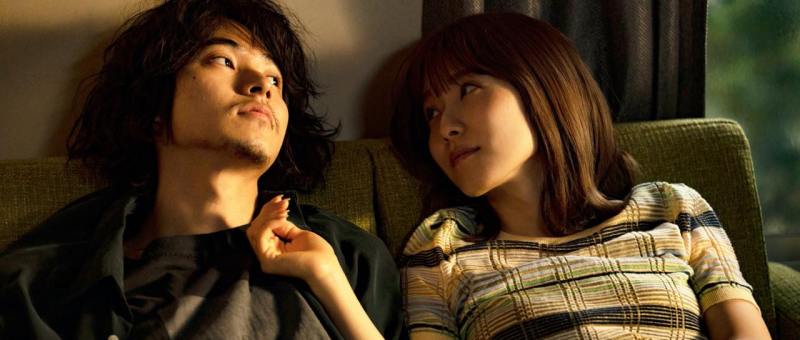

The problem with tortured artists is that rather than be content with destroying themselves, they destroy someone else instead. Japanese cinema has a preoccupation with narcissistic heroes, and even if he does have a rare degree of self-awareness the protagonist of Isao Yukisada’s adaptation of the novel by comedian Naoki Matayoshi, Theatre: A Love Story (劇場, Gekijo), is among the most insufferable in the sheer depths of his resentful self-loathing. The “a love story” suffix is an addition for the English title though it proves true enough in that this is a story about a love of theatre which is really a love of life and possibility only our gloomy hero is still far too much in the shadows to be able to see it clearly.
Nagata (Kento Yamazaki), whose fear of intimacy appears to be so great that he never gives away his first name, is first found wandering the streets like a zombie, muttering the words “How long will I last?” to himself before coming to a pause in front of a gallery window in which is displayed a painting of a monkey screaming under a full moon. The vision of existential despair appears to match his own and he’s obviously captivated by it, as is a young woman, Saki (Mayu Matsuoka), who quickly walks away after he creates awkwardness by intently staring at her. She tries to escape because, to be honest, not only is he a class A street creep, but he seems as if he might actually be disturbed. He asks her to go on a date the next day (today is too hot), later confessing he wanted to take her for a drink but is broke all of which makes it sound like he wants money as well as her phone number. Feeling sorry for him she gives in and is seemingly not even that bothered when he attempts to order her drink for her without asking what she wants at a nearby cafe.
In many ways, the “meet cute” of Nagata and Saki typifies the entirety of their relationship which spans the better part of an ill-defined decade. The nicer she is to him, the more resentful he becomes. What the pair have in common is “theatre”. He’s a pretentious, avant-garde playwright, she’s a bubbly aspiring actress whose faith in the genius he keeps insisting he has only reinforces his sense of insecurity. The problem isn’t so much that lack of success is eating away at him, as it is that he actively resents the successes of others. He even becomes irritated when Saki praises Clint Eastwood, as if Clint Eastwood were his competition. Nagata simply can’t stand it when other people are praised as if the mere fact of someone else’s happiness actively depletes his own, has taken something from him, or is solely a reflection of his failures as an artist and a human being. It is really is all about him. He even refuses to take Saki to Disneyland because then he’d be in competition with Disney and if Saki said anything nice at all about the experience it would just piss him off.
What seems impossible to understand is why Saki stays, especially after Nagata moves in with her and continues to bum around paying no rent while she works three jobs and tries to finish her uni degree. Eventually she asks him for a small contribution, maybe just something towards the utility bills, but he bizarrely replies that it’s her apartment and it’s irrational to pay for someone else’s utilities which is odd seeing as he’s just got out of the bath and has therefore clearly been using the facilities. In his voiceover, he confesses that he said that in order to avoid having a serious conversation and perhaps to mask a sense of internalised shame over essentially being a kept man, something which is only finally brought home to him by an old acting acquaintance, Aoyama (Sairi Ito), who offers him some freelance writing work but that only seems to deepen his artistic crisis as he battles a sense of selling out in neglecting his playwriting.
If Saki is underwritten it is partly intentional in that we see her only through Nagata’s eyes and he barely looks, seeing in her only a source of a salvation he is too afraid to accept. He snaps at her and calls her stupid, causes her anxiety, embarrasses her in front of her friends and is, as Aoyama puts it, “a jerk”. His behaviour is in any case abusive, but he’s so blinkered that he never notices that she’s the same as him, anxious on an existential level and in search of mutual protection. By the time he’s done with her, she’s no longer so bright and cheerful, well on the way to alcoholism born of depression and sense of failure on reflecting that she’s a woman approaching 30 who has probably failed to make it as an actress in Tokyo, is exhausted by her city life, and has been slowly destroyed by Nagata’s mix of feigned indifference and possessiveness. Aoyama and his best friend from school Nohara (Kanichiro Sato) make a final desperate intervention to save Saki, pointing out that in his toxic narcissism he destroys her to save himself, unable to bear the idea of her awakening to that which he deeply believes but does not want to acknowledge, that really he’s just no good.
“As long as we have theatre there’s no need to despair” Nagata finally exclaims, rediscovering a love for the form in its capacity to remake the world, to show him both what is and could be as he rewrites his tragic, delayed coming-of-age romance as an emotionally authentic stage play now convinced, like the old Saki, that he really does want everyone to be happy after all. Theatre: A Love Story is the age old tale of the curtain coming down on an arc of one’s life, accepting that something has ended and that it’s OK, it’s just the way life is. Saki, somewhat problematically declares she wouldn’t have it any other way because she loved Nagata for everything he was and if he’d changed he wouldn’t be the same. In a sense we’re left with Nagata’s artistic validation and a tacit condonation of his emotionally abusive behaviour, but then Yukisada undercuts the final message with a melancholy credits sequence in which he perhaps hands back to Saki even in her passivity as she finally looks for an exit.
Currently available to stream via Amazon Prime Video in the UK (and possibly other territories).
Original trailer (no subtitles)


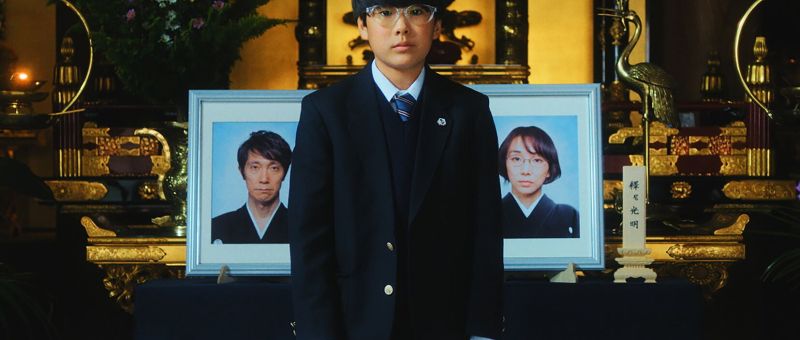

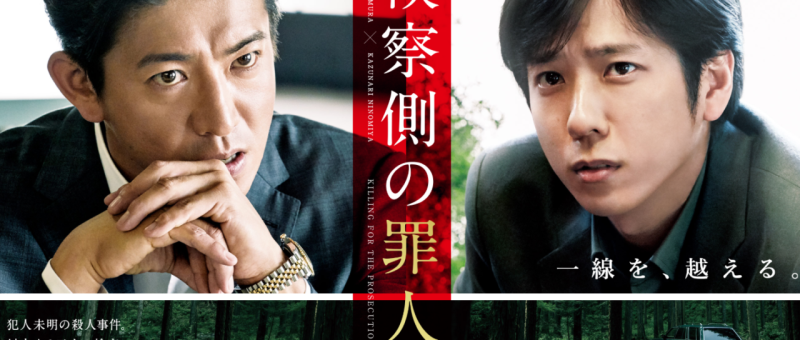
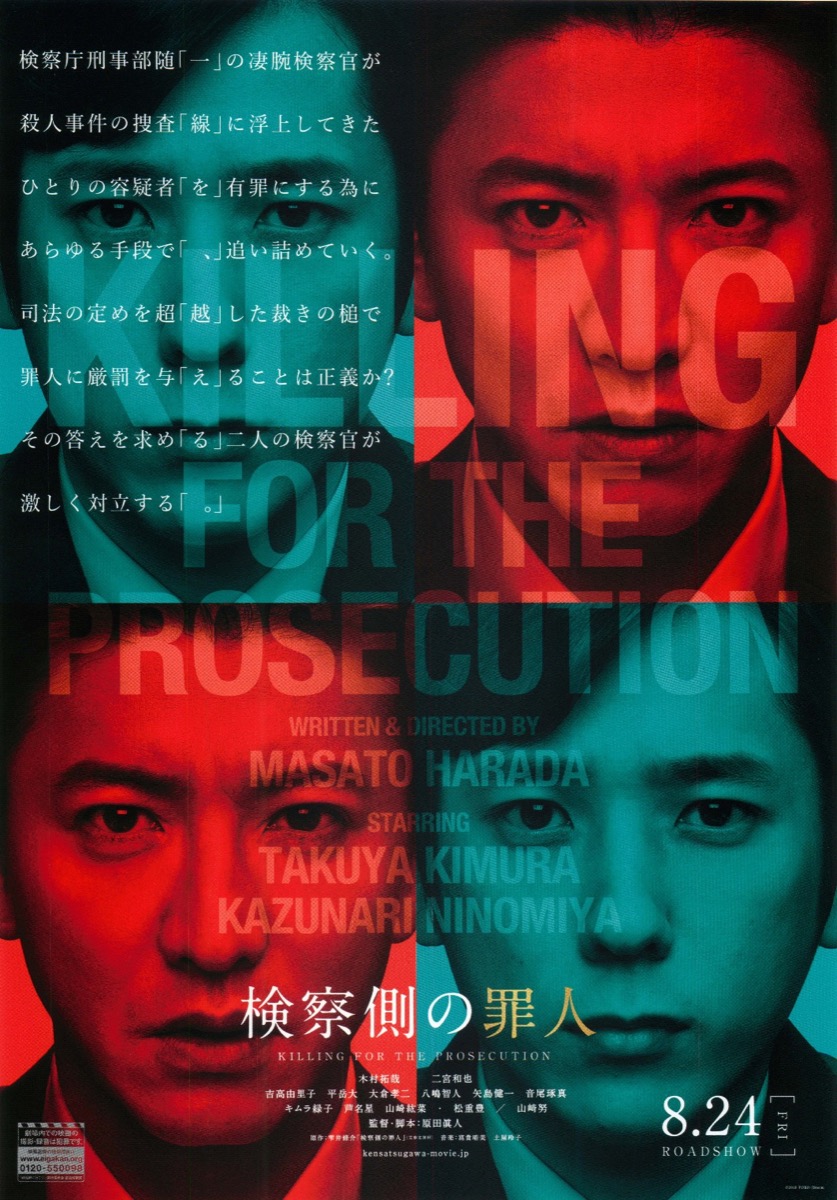


 Yasushi Sato, a Hakodate native, has provided the source material for some of the best films of recent times including Mipo O’s The Light Shines Only There and Nobuhiro Yamashita’s
  Times change so quickly. The “danchi” was a symbol of post-war aspiration and rising economic prosperity as it sought to give young professionals an affordable yet modern, convenient way of life. The term itself is a little hard to translate though loosely enough just means a housing estate but unlike “The Projects” (団地, Danchi) of the title, these are generally not areas of social housing or lower class neighbourhoods but a kind of vertical village which one should never need to leave (except to go to work) as they also include all the necessary amenities for everyday life from shops and supermarkets to bars and restaurants. Nevertheless, aspirations change across generations and what was once considered a dreamlike promise of futuristic convenience now seems run down and squalid. Cramped apartments with tiny rooms, washing machines on the balconies, no lifts – young people do not see these things as convenient and so the danchi is mostly home to the older generation, downsizers, or the down on their luck.
 Post-golden age, Japanese cinema has arguably had a preoccupation with the angry young man. From the ever present tension of the seishun eiga to the frustrations of ‘70s art films and the punk nihilism of the 1980s which only seemed to deepen after the bubble burst, the young men of Japanese cinema have most often gone to war with themselves in violent intensity, prepared to burn the world which they feel holds no place for them. Tetsuya Mariko’s Destruction Babies (ディストラクション・ベイビーズ) is a fine addition to this tradition but also an urgent one. Stepping somehow beyond nihilism, Mariko’s vision of his country’s future is a bleak one in which young, fatherless men inherit the traditions of their ancestors all the while desperately trying to destroy them. Devoid of hope, of purpose, and of human connection the youth of the day get their kicks vicariously, so busy sharing their experiences online that reality has become an obsolete concept and the physical sensation of violence the only remaining truth.
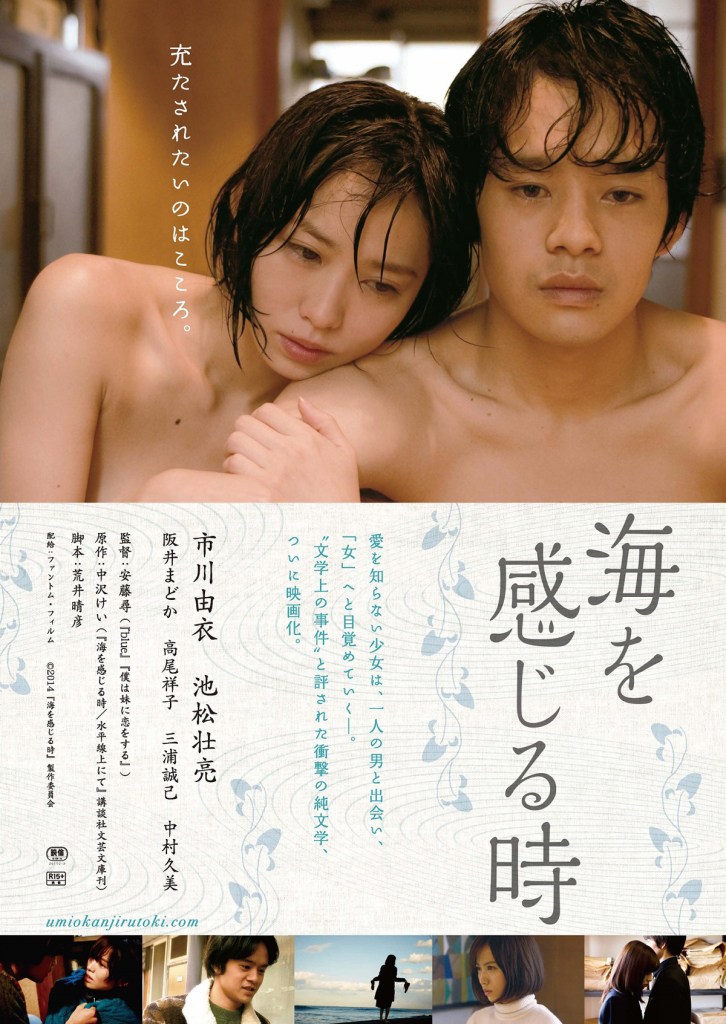 One of the most surprising things about the 1978 novel When I Sense the Sea is that its author was only 18 years old when the book was published. Though the protagonist begins as a 16 year old high school girl, author Kei Nakazawa follows her on into adulthood as the damage done to her teenage psyche radiates like a series of tiny, branching chasms stretching far back into a difficult childhood. This 2015 adaptation from Hiroshi Ando, Undulant Fever (海を感じる時, Umi wo Kanjiru Toki), maintains a distant and detached tone which, while not shying away from the erotic nature of the discussion, is quick to underline the unfulfilling and often utilitarian nature of the central couple’s relationship.
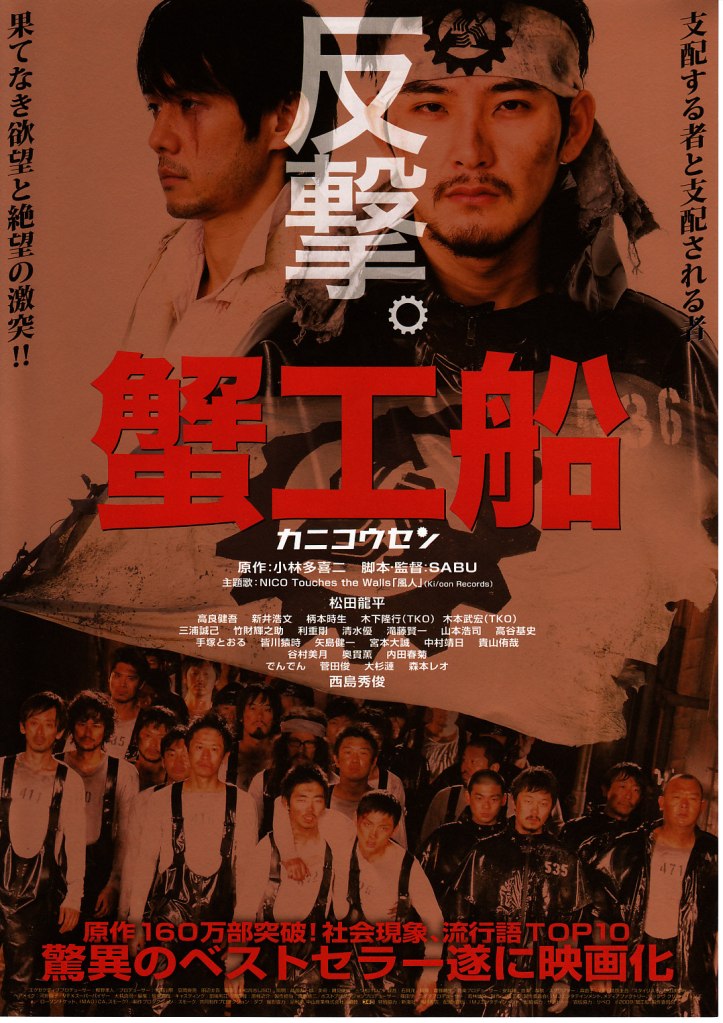 Back in 2008 as the financial crisis took hold, a left leaning early Showa novel from Takiji Kobayashi, Kanikosen (蟹工船), became a surprise best seller following an advertising campaign which linked the struggles of its historical proletarian workers with the put upon working classes of the day. The book had previously been adapted for the screen in 1953 in a version directed by So Yamamura but bolstered by its unexpected resurgence, another adaptation directed by SABU arrived in 2009.
 Windows on Worlds