Carlos (カルロス, Kazuhiro Kiuchi, 1991)

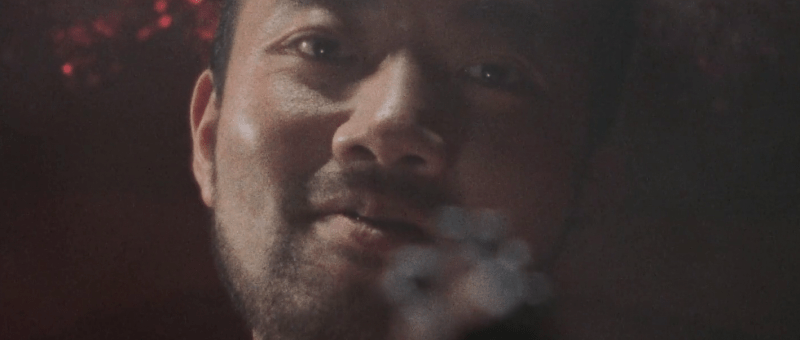
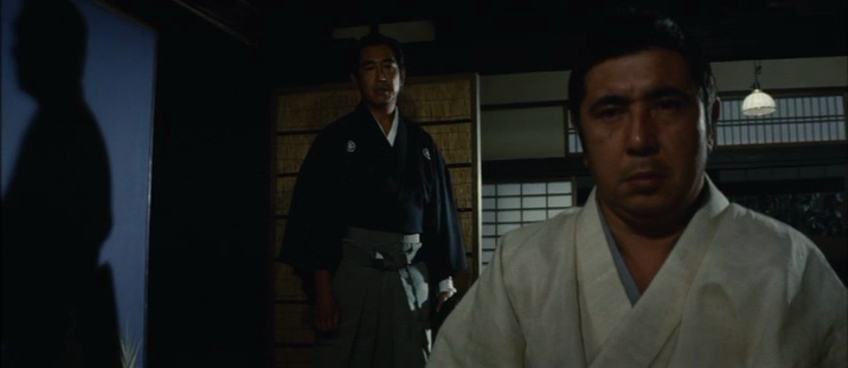
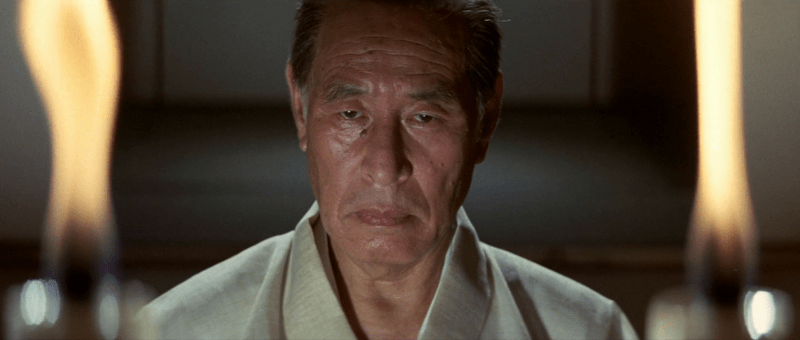
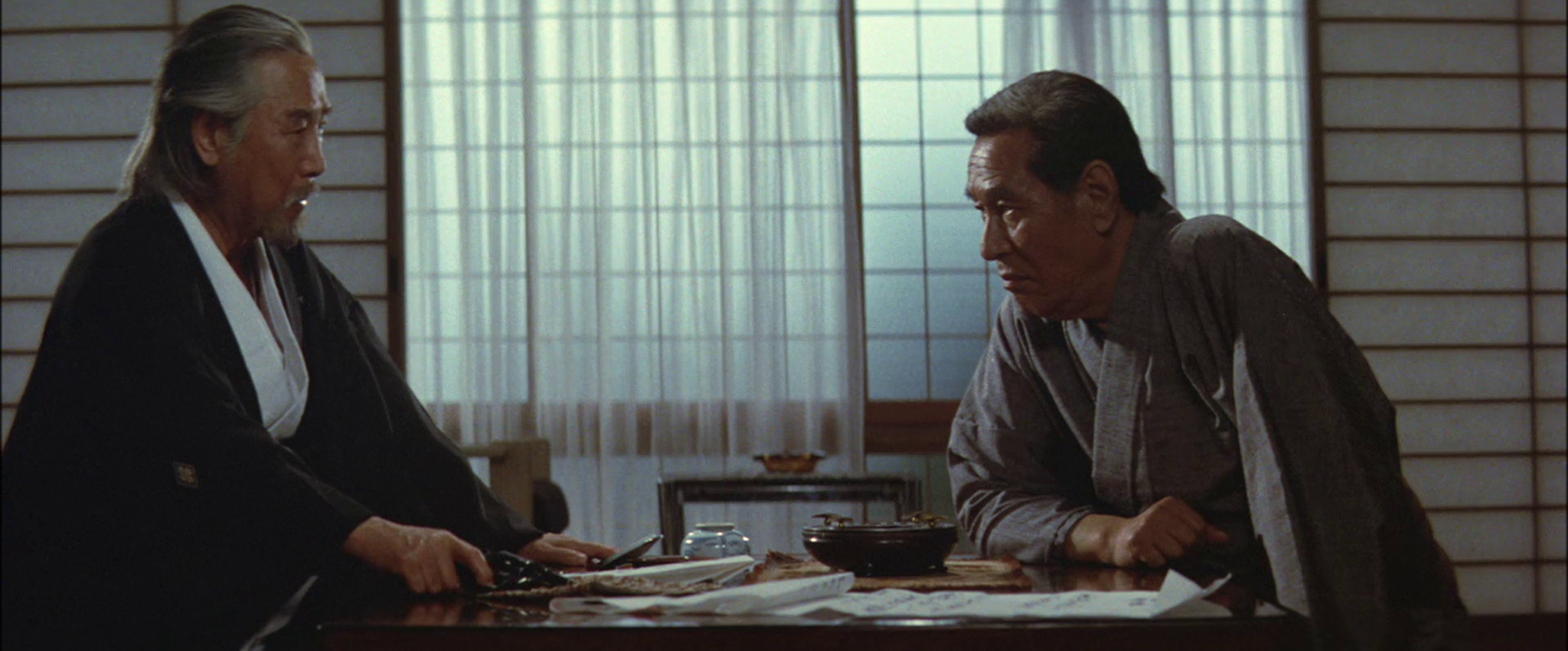
Fleeing a gang war with Columbian drug lords, a Brazilian gangster of Japanese descent tries his luck on the mainland but finds himself a perpetual outsider who can’t get himself taken seriously in Kazuhiro Kiuchi’s moody adaptation of his own manga, Carlos (カルロス). Owing a little bit to Brian De Palma’s Scarface, the tale takes place in a Japan mired in hopelessness and despair amid the spectre of economic collapse, while Carlos tries to play one gang off against another to exploit the terminal decline of the old school yakuza.

What we have here is a succession crisis. The Yamashiro boss (Minoru Oki) is planning to step down due to ill health though in the middle of a long-running dispute with the Hayakawa gang. When two of their guys are randomly killed, they assume only Hayakawa could be behind it little knowing that Carlos (Naoto Takenaka), a Brazilian-Japanese gangster on the run in Japan after killing eight policemen in a gang war in Brazil, killed them because they thought they didn’t need to obey the rules of the underworld with a “foreign” gangster. “We don’t need to treat those Brazilians as equals,” one says while already late to their appointed meeting. They haven’t paid Carlos for the guns he sold them, and when challenged, try to intimidate him into giving them away for free. But Carlos is sick of being intimidated and bumps them off himself. 

Carlos faces constant microaggressions about not being Japanese enough, though he speaks the language fluently without an accent. “Your crude taste doesn’t fly in Japan,” a yakuza tells him, criticising his outfit for being too informal when yakuza of this era generally dress in fancy suits and style their hair with military precision. That’s not really something that bothers Carlos, but he’s annoyed to be so easily dismissed and it’s true enough that he’s being used because they think he’s disposable. Not only is he not a “yakuza”, but as they don’t see him as Japanese either, they don’t need to accord him even the dignity they’d grant to a gang member. When Katayama hires Carlos to knock of his rival for the succession, Sato, he’s pissed off when Carlos takes things too far and puts on a show that threatens to blow the whole thing wide open by massacring Sato’s guys at baseball practice. To a man like Katayama, this is total idiocy and attributable to Carlos’ foreignness, both in his capacity for unnecessary violence and his lack of understanding of the rules of Japanese gangsterdom.

But the one place Carlos and his brother Antonio are fully Japanese is in the home of his aunt who also migrated from Brazil and their Japanese-born cousin Tomomi. Carlos’ aunt refers to them both by their Japanese names, Shiro and Goro, and cooks them Japanese food like sukiyaki. This pleasant domestic environment seems to represent a more settled life Carlos could have found outside of a crime family, especially as his brother Antonio grows closer to Tomomi, but there are also hints of darkness in his uncle’s early death from cirrhosis of the liver which suggests he may have had a hard life in Japan and taken to drink. Nevertheless, his aunt seems to have made a nice life for herself and her daughter and is overjoyed to expand her family by welcoming Carlos and Antonio.

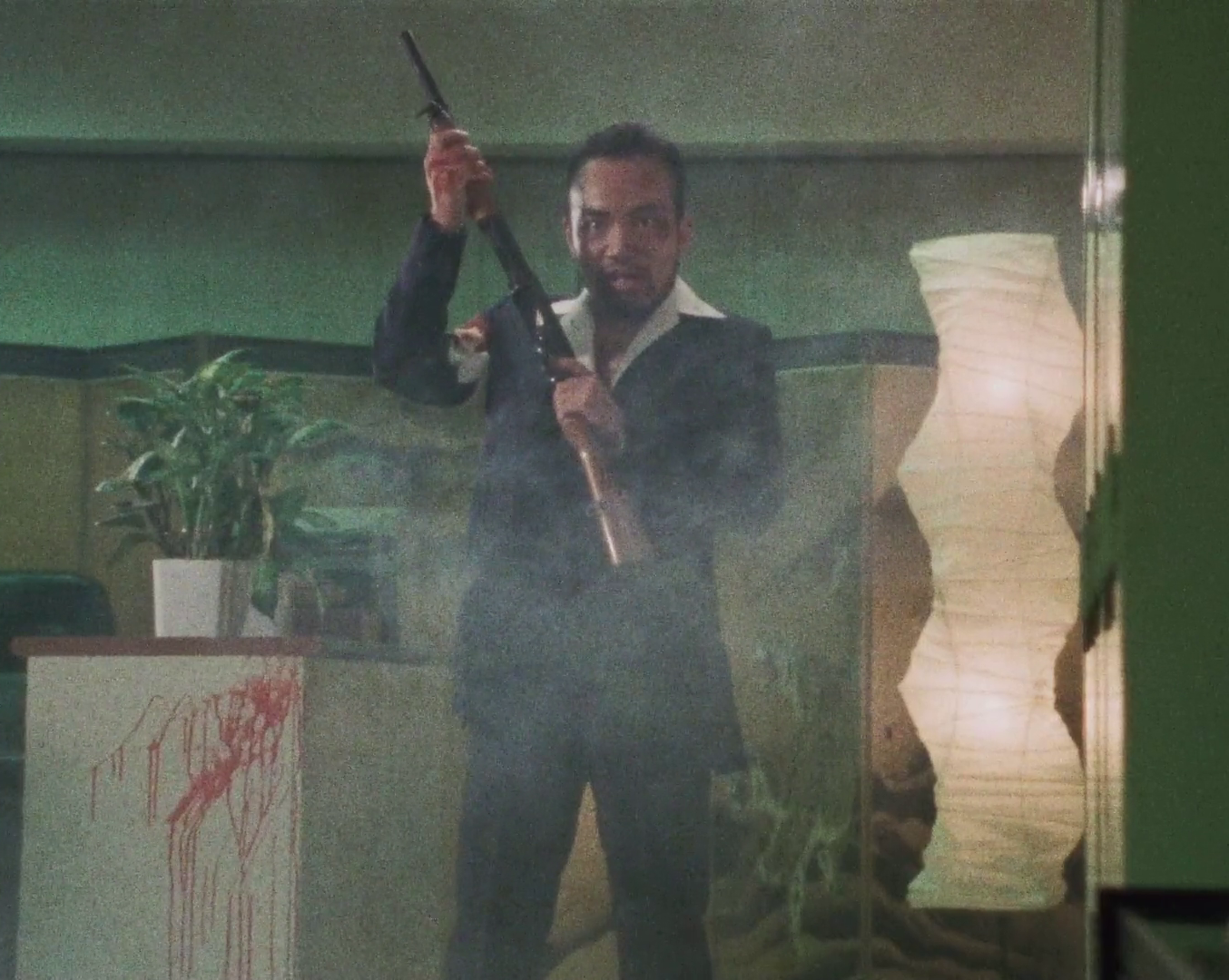
Yet this sort of life seems outside of Carlos’ reach while he continues to play the yakuza gangs off against each other while simultaneously longing for some kind of recognition and almost willing them to figure out it was him who killed Sugita and Yano, the obnoxious Yamashiro guys. Meanwhile, the weakened yakuza have also turned to a foreign hitman, a brooding and robotic American who lacks compassion or compunction and unlike Carlos seems to be a mindless killing machine. When Carlos bests him, it’s an eerie moment echoing Blue Velvet as his body rocks and then falls. By contrast, when Carlos fights his way to the head of the Yamashiro gang, Yamashiro gets puffed up and draws his sword swearing he’ll teach Carlos what a mistake it is to underestimate the Japanese mob, only Carlos simply shoots him in a moment of clear victory over this outdated adherence to a traditional code. Nevertheless, it’s clear that Carlos can’t win here either and there is no room in Japan for a man like him. His only option is to go out all guns blazing as a means of validating himself as a force to be reckoned with, someone who was worthy of attention and of being taken seriously. Shot by the legendary Seizo Sengen, Kiuchi’s manga-informed compositions dissolve into visions of loneliness and despair but in its final moments reaches a crescendo of defiance if discovered only in futility.


Sister Street Fighter: Fifth Level Fist (女必殺五段拳, Shigehiro Ozawa, 1976)

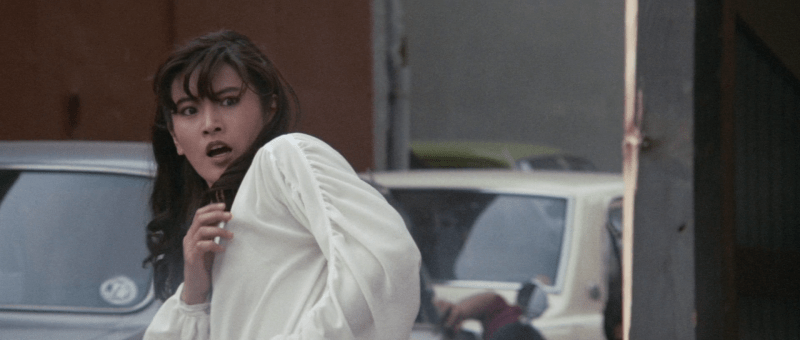
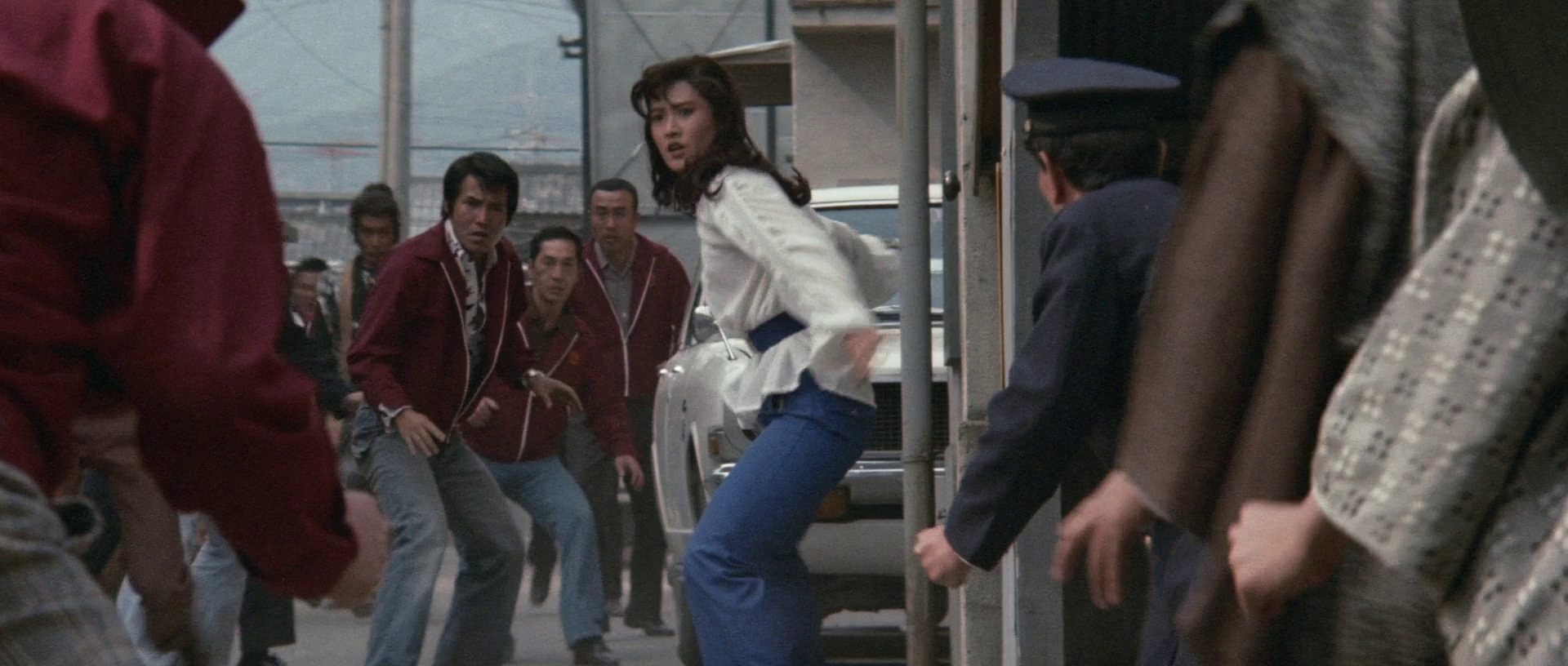
Though it’s tacked on to the Sister Street Fighter series, Level Five Fist (女必殺五段拳, Onna hissatsu godan ken) actually has nothing to do with it save borrowing a part of the title which is intended to signal the presence of its star. Thus, this is not really a martial arts movie but a much more conventional Toei action film in which the leading role is technically split between Etsuko Shihomi’s posh girl karate champ and Tsunehiko Watase’s sexist cop. It does however continue the smuggling theme with the drugs this time first being packed inside fish and then encased in Buddha statues to be exported to America.

Like many Toei films of the time, there is an underlying theme of anti-Americanism as the “Far East” big boss, posing as a Hollywood movie exec, is supposedly from there but has a strong accent suggesting otherwise. Meanwhile, the brother and sister at the film’s centre are a pair of children who were fathered by American servicemen at the bases in Okinawa who presumably took no responsibility for their upbringing. The brother’s father was black, while the sister’s was white, and though they have both suffered prejudice and discrimination because of their mixed ethnicity, it’s clear that Jim (Ken Wallace) has had it worse. Michi (Mitchi Love) makes good use of her native-level English abilities and martial arts skills to work as a bodyguard / interpreter for visiting dignitaries, but Jim seems to struggle to find employment and subsequently ends up working for a Korean gang run out of a local nightclub. 

The pair have a dream of saving up enough money to return to Okinawa, which was returned to Japan in 1971 after an extended period of US occupation, and opening a restaurant which the film positions as a desire to escape from the racism they experience on the mainland. When Jim says that Kiku (Etsuko Shihomi) is their only friend, he half implies that the discrimination they face is down to being Okinawan rather than their mixed ethnicity which would continue to be an issue even on the islands as it was in their childhood even if there may be more understanding given the continuing presence of the American military and larger numbers of mixed-ethnicity people. In any case, it’s true enough that even those from Okinawa do also experience discrimination on the mainland and are not always accepted as “Japanese” while their Okinawan identity is not respected either. 

Kiku is trying to protect her friends, but finds herself hamstrung by rigid cop Takagi (Tsunehiko Watase) who also happens to be the son of a friend of her father’s. Kiku’s father is apparently a self-made man and successful kimono merchant married to a more conservative woman with higher social ambitions. As the film opens, Kiku is dressed in a kimono and being subject to a formal omiai meeting for an arranged marriage with an admittedly promising candidate who graduated from an elite university and works for a prominent bank. But Kiku looks bored throughout and defiantly flouts social convention by suddenly claiming to have an appointment and walking out, much to her mother’s embarrassment. Her father lets her go and is apparently less bothered about this sort of propriety though later trying to put his foot down when she leaves the house dressed like a hippy rather than in a fine kimono which is not, after all, a very good advert for the family business. 

Her father also tries to set Kiku up with Takagi, but like her mother, Takagi also tells her to keep her nose out of the case and “try trusting a man for once”. He criticises her for saying that she doesn’t want to lose to a man and explains that men are attracted to women because of their “gentleness.” He adds that cooking and raising children are what make women happy, with the clear implication that Kiku is in the wrong for flouting conventional gender roles and should quickly conform by getting married and becoming a wife. Kiku appears to give him the benefit of the doubt and this confusion over gender roles is compounded when she poses as a boy and takes a job as a extra on the jidaigeki film set at the studio which turns out to be a front for drug runners. A queer-coded actor who is later told off for “stalking people again” tries to hit on her in a clear allusion to her masculinity. But unlike in the Sister Street Fighter films, she is ultimately defeated and tied to a log with a buzz saw coming at her only to be saved by the intervention of Takagi while the final scenes see her supporting him after he is (possibly fatally) injured defeating the bad guys.

All in all, it’s some rather confusing messaging but seems to come out on the side of male authority as represented by the police rather than Kiku’s father who is depicted as a weakened figure of masculinity owing to being henpecked by his wife and hoodwinked by his feisty daughter. Even the grinning sap from the gym who tried to put Chanel No. 5 on Kiku’s karate outfit, much to her annoyance, is later revealed to be an undercover cop. Which is all to say, that Kiku’s martial arts ability is almost a kind of joke and something that places her outside of conventional gender norms which should otherwise be “corrected” rather than praised, as it was in the Sister Streetfighter series which placed more emphasis on martial arts philosophy. Then again, the original trilogy ended on a similarly sour note in reaffirming Koyu’s maternity. It seems it’s less sisters doing it for themselves, than sisters doing as they’re told, which aside from anything else is a disappointing conclusion to one of the few female–led action franchises of the 1970s.


Original trailer (English subtitles)

Roaring Fire (吼えろ鉄拳, Norifumi Suzuki, 1981)

If Chiba’s karate films and the Sister Streetfighter series had been influenced by Shaw Brother’s kung fu films, Roaring Fire (吼えろ鉄拳, Hoero Tekken) is an homage to contemporary action and in some senses anticipates Jackie Chan and heroic bloodshed though in other ways harking back to the classic serial with its diamond-themed MacGuffin. A vehicle for rising action star Hiroyuki Sanada, the film reflects a new internationalist Japan but also confronts the toxic legacy of the feudal past in the fall of a once noble house.

Joji (Hiroyuki Sanada) has spent his entire life on a ranch in Texas only to discover from a deathbed confession by the man that he thought was his father that he had been kidnapped as an infant and is actually the son of the wealthy Hinohara family. But on travelling there, he immediately finds himself in the middle of a conspiracy. His twin brother Toru has gone missing after going to London to study ophthalmology in order to cure his sister Chihiro’s (Etsuko Shihomi) eye condition. Though his uncle, Ikki (Mikio Narita), welcomes him with open arms, a weird ventriloquist act by a man called Mr. Magic (Shinichi Chiba) that he’s taken to see suggests that the plane crash his parents died in may not have been an accident and his uncle killed them to take over the family business. 

Ikki is mixed up in the drugs trade with Hong Kong Triads and in keeping with Suzuki’s other films, we once again have a new solution to smuggling in hiding drugs in underripe banana skins. Lured to Ikki’s underground lair which has a large photo of Hitler on the wall and other Nazi memorabilia scattered around, Joji is given the “join us or die” speech, but ultimately manages to escape with some help from Abdullah the Butcher who is working as some kind of bodyguard but apparently takes a liking to Joji and declares they will be the best of friends forever after their initial fight. In any case, we soon realise that Ikki’s purpose in life is feudal revenge in that his mother was a geisha who died young because of her poverty and the nature of her work while staring at the Hinohiras’ giant mansion though his father apparently took no responsibility for him until after his mother died. His only goal in life is to take over the estate and otherwise destroy the rest of the family that never fully accepted him. 

Of course, Joji is in his way, but Joji doesn’t really want this legacy either and only wants to save his sister who turns out to be a kung fu ace despite her blindness but is otherwise unable to escape. In his final confrontation with Ikki, he reclaims the name of the man who raised him, Hibiki, and rejects that of Hinohara as if symbolically refusing his feudal inheritance. Mr Magic, really an Interpol agent, makes an executive decision to let him go which is also a representative authority figure setting him, and the younger generation, free from the feudal legacy to live a more international life. 

Nevertheless, Suzuki fills the film with a series of high-impact action sequences and extreme stunt work such as a crazy bus chase through Hong Kong which predates that in Police Story by a few years. The shuttles back and forth between Hong Kong and Japan, but it’s clear here that Ikki and his weird Nazi cohorts are the villains rather than the Hong Kong gangsters who really just exist and otherwise only factor into the story because of their desire for Queen of Sheba diamond that Joji’s birth father hid before he died so Ikki wouldn’t get his hands on it. A possibly poor taste allusion to the holocaust aside, Suzuki sticks to the plucky teen adventure format in which Joji gets into fights with the local guys and is quickly befriended by Chihiro’s teenage friends who all hang out at the mansion, rather than opt for a gloomy sense of paranoia and conspiracy even as Joji finds himself at the centre of a Hamlet-esque plot in which his uncle has usurped the throne and he must return to set it right. Yet rather than restoring the existing order, Joji effectively resets it by ending the family’s influence and then moving on into a freer existence shorn of filial responsibilities. 


Trailer (no subtitles)

Eleven Samurai (十一人の侍, Eiichi Kudo, 1967)

“If no one denounces the absurdity of this world, then our descendants will keep suffering,” a soon-to-be ronin insists in Eiichi Kudo’s revengers tragedy, Eleven Samurai (十一人の侍, Juichinin no Samurai). It seems clear from the outset that their actions will have little effect no matter whether they succeed or fail because the enemy is feudalism which may be approaching the end of its life but is definitely not dead yet. They can at least attempt to avenge their clan even if they can’t save it while refusing to let an entitled, selfish lord get away doing whatever he likes just because he happens to be the son of the former shogun and brother of the current one.

The opening scenes see Nariatsu (Kantaro Suga) chasing a deer having declared himself a “real hunter”. He ignores the cries of his men to watch where he’s going and sails over the border into the territory of Oshi which amounts to an invasion seeing as he is armed and has no permission to be there. The deer gets away, but Nariatsu shoots an old woodcutter whom he felt to be in his way with his bow and arrow. The Lord of the Abe clan that rules Oshi immediately takes him to task and tells Noriatsu that his behaviour is unbecoming for the son of the former shogun. He’s committed a murder in their territory, but they’re prepared to let it go as long as he leaves as soon as possible. But Nariatsu doesn’t like being told what to do and simply shoots the lord in the eye, potentially sparking a diplomatic incident. 

The Abe clan try to lodge a complaint in Edo, but are shut down by courtier Mizuno (Kei Sato) who fears that to acknowledge an event such as this would damage the moral authority of the Tokugawa regime. He decides to cover the whole thing up by claiming it was the Abe clan who insulted Noriatsu. The Abe clan will then be dissolved, and Oshi essentially gets nationalised. All of which suits Nariatsu just fine because he wants to take control of Oshi and expand his territory anyway. Part of his petulance seems to stem from the fact that he feels hard done by with such a small inheritance when his brother became the Shogun and received multiple fiefdoms. The previous Shogun, Tokugawa Ieyoshi, had produced an unusual number of children which became quite a problem in that he had to find lands for them all and eventually hastened the demise of the shogunate because of the additional strain. 

But Nariatsu is also an overgrown child who has no idea how to do anything for himself and no concern for the feelings or fortunes of others. When instructed to do something he doesn’t want to, Nariatsu petulantly stamps his feet and complains, and when his actions are challenged he simply replies that he’ll be telling his father. In fact, he is so infuriating that it’s likely most of his men secretly want him dead too, including his chief adviser Gyobu (Ryutaro Otomo) who was once the General Inspector but is now expected to babysit this absolute buffoon. Even though Nariatsu knows the Abe clan will be trying to kill him, he still sneaks out to the red light district and gets blind drunk with geisha which in itself is conduct unbecoming for a high ranking samurai such as himself. 

As such, he represents almost everything that’s wrong with the feudal order while Mizuno represents the rest. It’s Mizuno that secretly plots against the plotters, manipulating them into giving up their assassination mission by claiming to have switched sides only to backtrack and reveal he’s actually still working for Nariatsu fearing a reputational loss for the Tokugawa. Chief revenger Hayato (Isao Natsuyagi) is also banking on this fear of reputational damage, certain that the Shogunate won’t be able to bear the humiliation of Nariastsu being killed by a ronin so will instead claim that he died from an illness. Vowing to avenge the clan, Hayato righteously gives up his position to become one so that the Abes won’t be linked to the crime and is joined by 10 more similarly annoyed samurai. Six of them are already “dead” having been asked to commit seppuku for recklessly attacking Nariatsu on their own and blowing the whole operation. 

Hayato at least believes this to be a suicide mission. He leaves his loving wife and home and allows people to think he’s run off with Nui (Eiko Okawa), the younger sister of one of their number who died before he could join them. They do this because they think it must be done, and also because if no one stands up to samurai oppression it will never end. Wandering peasant Daijuro (Ko Nishimura) agrees with them. He wants revenge on the samurai for raping his sister after which his father and brother took their own lives. Nariatsu is as good as anyone else and he does very much need to die. 

But despite Daijuro’s homemade cannons, nothing quite goes to plan. Kudo sets his final battle in an atmospheric, misty valley that is an obvious stand in for the underworld. Hayato may succeed in killing Nariatsu but it’s a pyrrhic victory. Though he vowed “to put an end to this ridiculous world,” a samurai cannot really win this battle. It’s Daijuro who eventually walks off with Nariatsu’s head, symbolically decapitating the shogunate which the closing titles confirm was mortally wounded by this incident. With his striking black and white cinematography, Kudo does indeed paint this samurai world as a hellish place ruled over by an infinitely corrupt and self-interested authority. The nihilistic futility of it all is emphasised by the figure of a grown man sitting like a small child and splashing his sword in a puddle while surrounded by dead bodies. There might be a way out of this, but not for the samurai, only for those who will come after and perhaps finally be free of this world’s absurdity.


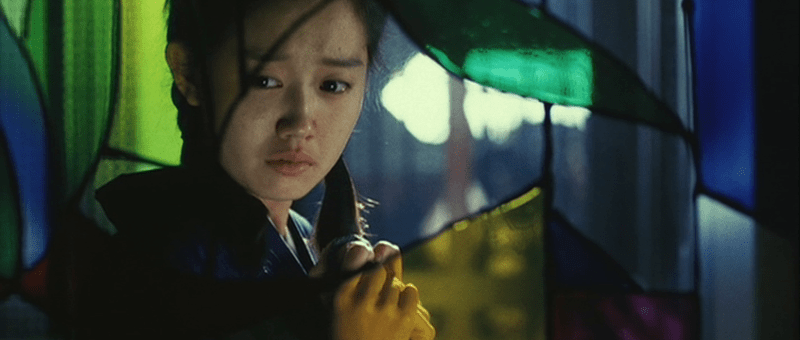
Labyrinth Romanesque (花園の迷宮, Shunya Ito, 1988)

“Poor things, born in the wrong time,” a woman laments of two girls perhaps not that much younger than herself yet as trapped by the age of militarism as anyone else. Adapted from a short story by Edogawa Rampo, Shunya Ito’s gothic mystery Labyrinth Romanesque (花園の迷宮, Hanazono no Meikyu) effectively skewers militarism’s hypocrisies and lays bare the dehumanising effects its nihilistic philosophy has wrought on the nation as a whole. When killing is almost an imperative, life has little value and brutality seemingly the only acceptable response to mass violence.

Ito conjures a sense of haunting by adding a modern day framing sequence in which the abandoned hotel is an eerie space of cobweb-ridden collapse. A wrecking ball arcs back and fore, threatening to unearth a truth long buried and this is after all a mystery, at least in part. With extraordinary finesse, the camera travels from the ruins into the hotel of old as a woman enters the frame. We are now in 1942. This is Yokohama, a harbour town, and so the “hotel” is filled with military personnel though transgressively it also seems trapped in a kind of before time. The sailors dance to American standards such as Georgia on my Mind and Goodnight Sweetheart though otherwise at war with America. All eyes are on sex worker Yuri (Hitomi Kuroki) and her dashing Zero Fighter pilot boyfriend, Takemiya (Tatsuo Nadaka).

But later we learn that Takemiya hated planes and was scared of heights to the point that it kept him up at night. Apparently from a military family, he felt unable to avoid going on with this militaristic charade and saw no future for himself other than glorious death. Everyone at the Fukuju Hotel is in their way already dead and chief among them the madam, Tae (Yoko Shimada), who becomes the prime suspect when her unpleasant husband Ichitaro (Akira Nakao) is murdered during the night. Her nemesis is however. Ichitaro’s sister, Kiku (Kyoko Enami), who has just been deported from the US where she had been living after selling herself into sexual slavery in order to financially support Ichitaro after their parents died. 

Kiku had been Tae’s madam, bringing her over from Japan at 17 and as she will do again, actively sitting on her face when she screamed and fought after being assigned her first customer. This brutalisation seems have driven Tae towards a desire for escape, but that was only available to her by marrying Ichiro who then betrayed his own sister to open another brothel that he ran with Tae before leaving the US and setting up in Yokohama in light of the declining relationship between America and Japan. Though she herself was brutalised, Tae can only earn her freedom by exploiting other women. At the beginning of the film two young girls, Mitsu (Mami Nomura), 18, and Fumi (Yuki Kudo), 17, arrive from the country excited for their new lives but without fully understanding what they’ve signed up to. Like Tae, Omitsu fights back when chosen by a sleazy, nouveau riche factory owner who made his money making planes for the navy, and while Tae tries to talk her down Kiku simply sits on her face and tells the man to do his business. Afterwards, Mitsu tries to kill herself and her friendship with Fumi is strained by her internalised sense of shame. Determined to save enough money to redeem Fumi’s contract before the same thing happens to her, she throws herself into sex work and begins to lose Fumi’s respect. 

It’s the two girls who see this place as haunted most clearly, firstly in catching sight of Tae wandering the corridors in her nighty on the night of her husband’s murder, and then by Fumi’s belief she has seen the pale ghost of a geisha only to realise it was just a wig on a shelf. Mitsu says it belonged to a woman who contracted syphilis, went mad, and then died, a fate she now fears may also befall her. Like many of the other women, the girls have been sold into sexual slavery by their parents most likely because their families are poor and they can’t feed their other children. This kind of rural poverty is of course exacerbated by the financial demands of imperial expansion while the dehumanising elements of militarism, the belief that everything must be devoted to the war effort, allow this heinous relic of the feudal past to continue. Sons after all belong to the emperor and will become brave soldiers fighting for their nation, while daughters have no intrinsic value other than as wives or sex workers to be advantageously traded or sold on.

It’s this that Fumi comes to realise and resent. She insists that she will never return to her home or parents because at the end of the day, they sold her. Yet she feels little sympathy on learning that one of the other women is a notorious criminal who murdered her foster parents because they too took girls in to sell them on. The hotel somehow becomes the nexus of all this pain and violence, a place the women can never escape. Ito does his best to make clear that this is hell by travelling through the air ducts, on towards the eerie glow of the furnace and the dank passages running under the hotel and out into the sea. The boiler room connects all other areas of the hotel and exposes all their secrets in the sound that travels through the ducts. But some secrets are designed to remain forever hidden until the wrecking balls of the contemporary era force them into the light and confront us with this buried history. Until then, the hotel exists in a ghostly state, Ito flooding it with hazy images and visitations that read as eternal apparitions of this place’s inescapable despair trapping all within its labyrinth of unresolved longing.


Trailer (no subtitles)

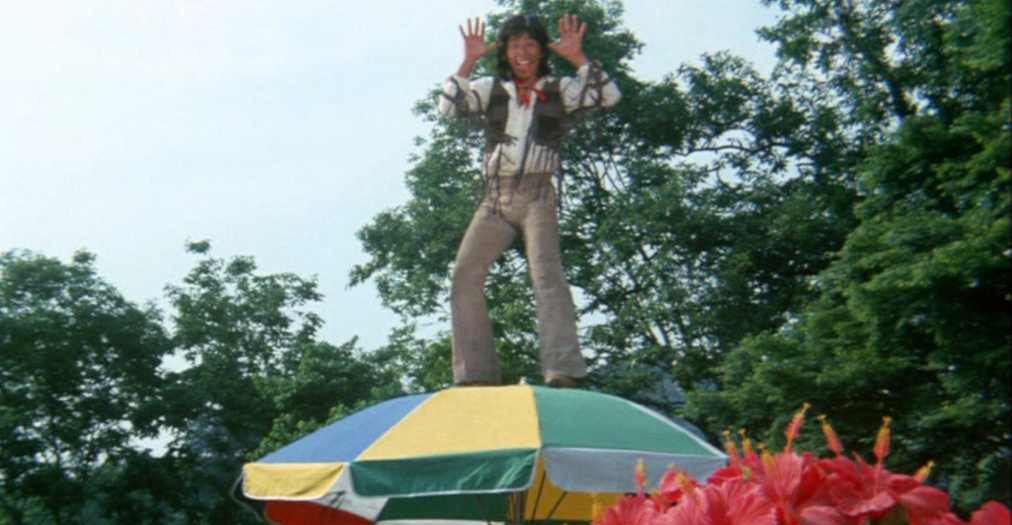
The Magic Serpent (怪竜大決戦, Tetsuya Yamanouchi, 1966)

Something of an oddity, Tetsuya Yamanouchi’s The Magic Serpent (怪竜大決戦, Kairyu daikessen) puts a tokusatsu spin on the classic ninja movie in a jidaigeki tale of revenge that ends ultimately in revolution rather than the restoration of the feudal order. A big screen monster movie from Toei, the film was released around the same time as the studio embarked on its signature line of tokusatsu serials such as Captain Ultra which aired the following year.

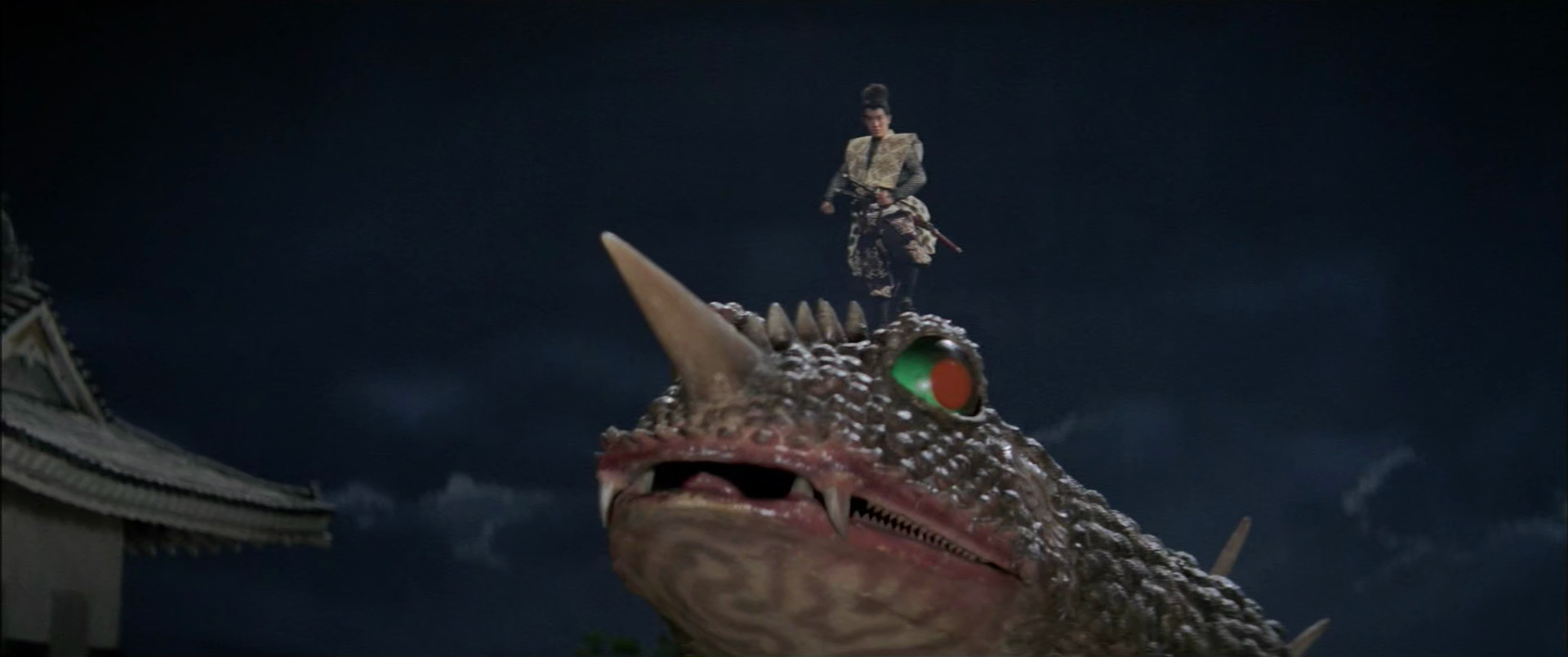
Drawing inspiration from the Tale of Jiraiya, the hero Ikazuchimaru (Hiroki Matsukata) later even giving himself Jiraiya’s name and indeed riding a giant toad, The Magic Serpent nevertheless seems to have been influenced by contemporary wuxia films from Hong Kong and Taiwan right down to the appearance of martial arts master with a flowing white beard and a distinctly philosophical way of speaking. At one point, Ikazuchimaru even rides an animated cloud much like the Monkey King in Journey to the West.

In any case, set in the pre-Edo feudal era the revenge tale revolves around treacherous lords as the ambitious Yuki Daijo (Bin Amatsu) teams up with evil ninja Orochimaru (Ryutaro Otomo) to kill his master, Ogata, and take over his castle. Daijo orders that Ogata’s son, Ikazuchimaru, be murdered so that he won’t cause them any problems in the future but the boy is rescued by a servant and makes his escape at which point Orochimaru transforms into a giant dragon and capsizes his boat. Luckily, a giant bird then arrives and pecks Orochimaru on the nose, rescuing Ikazuchimaru and taking him to the mountain retreat of ninja master Goma Douji (Nobuo Kaneko) where he trains for 14 years in preparation for his revenge.

To this point, it might be said that the corruption is to the feudal era rather than of it though through his travels Ikazuchimaru comes to see how the ordinary people suffer as a result of Yuki Daijo’s oppressive rule. He comes to the rescue of a small family who in turn help him to overcome Yuki Daijo’s checkpoints as they search for him having become aware that he has survived and is intent on his revenge. But unbeknownst to him, Orochimaru is also potting to exploit the threat posed by Ikazuchimaru by stealing his identity to oust Yuki Daijo and take over the castle himself as its “rightful” heir.

Meanwhile, Ichikazu meets his opposite number, Tsunade (Tomoko Ogawa), who is searching for a father she has never met and can identify only by a keepsake from her now departed mother. In a shocking turn of events, it transpires that her grandmother is also a ninja master and gives her a magic hairpin she can use to call for help. Both searching for their birthright, the two eventually wind up at the castle and a confrontation with a corrupted feudalism. The surprising thing is in this case that Ikazuchimaru rejects his place as the heir and declines to rebuild the clan. With the castle now destroyed by the fight between his giant toad, Ochimaru’s dragon, and a mystery third party, the feudal order itself has been ruined. “There are only beautiful fields for you farmers left to create,” he tells the surviving members of the family that helped him. “Stay healthy and cultivate great lands.” He leaves with Tsunade, who is returning to her grandmother, and vows to travel to the place where his master lies or symbolically to the place of his spiritual rather than biological father.

Yamanouchi went on to work more in television than movies, apparently a devotee of period drama in both his personal and professional lives yet, makes fantastic use of special effects on an otherwise limited budget even briefly switching to black and white when the ghosts of Ikazuchimaru’s murdered parents appear to torment the usurping Yuki Daijo. Thunder, lightning, and ninja tricks mix seamlessly with tokusatsu action as the giant monsters finally approach their showdown yet perhaps in keeping with the surprisingly progressive outcome Ikazuchimaru struggles against the evil powers of Orochimaru and in the end cannot win alone but only with the help of those around him as they rise to challenge not only Orochimaru’s evil subversion of morals both feudal and spiritual in his betrayal of his master, but the evils of the feudal order itself and finally free themselves from its oppressive yoke.


Father of the Kamikaze (ゝ決戦航空隊, Kosaku Yamashita, 1974)

By the mid-1970s, Japanese cinema at least had become much more comfortable with critiquing the wartime past, considering it from a greater distance than the often raw depictions of war in the films from the previous two decades. 1974’s Father of the Kamikaze (ゝ決戦航空隊, A Kessen Kokutai), however, is among the few to skew towards the nationalist rather than the ambivalence or simple anti-war messages of other similarly themed films of its era. 

Starring ninkyo icon Koji Tsuruta who served in the air force himself, the film is a kind of biopic dedicated to Admiral Onishi who oversaw the kamikaze operations at the end of the war. As is pointed out, Onishi had been against the war in general terms even before its inception and is originally against the philosophy behind the kamikaze squadrons but as Japan’s fortunes continue to decline he becomes its biggest advocate citing a kind of sunk cost fallacy that it would be in someway unfair to the men that have already died to surrender while insisting that suicide missions are the only feasible way to turn the tide because one kamikaze could take out a hundred men by destroying battleships singlehandedly. 

The film in part attributes this extreme solution to the prevailing with your shield or on it philosophy of the contemporary society which placed extreme shame on the act of being taken prisoner. In the prologue that opens the film, a squadron of downed pilots whose heroic deaths have already been recorded is discovered alive in an American prisoner of war camp but as being a prisoner of war is so shameful and would reflect badly on the military, the decision is taken to fix the books by sending the men on a mission from which they are not intended to return. Onishi is opposed to the plan, he asks why they can’t find a way for the men to live, but the decision is already made. In any case, he describes the action of a suicide mission as a “beautiful ideal” even when insisting that a war cannot be fought in that way not least for purely practical reasons in that they do not have the resources to be wilfully sacrificing skilled pilots and their planes. 

Having come round to the idea, however, Onishi is a crazed zealot who cannot accept the idea of surrender and even goes so far as to barge into a cabinet meeting to urge ministers against a truce even though the war is clearly lost. To his mind, the only way to honour the sacrifices of those who’ve died is to fight to the last man. Kozono (Bunta Sugawara), another officer opposed to the kamikaze, eventually meets a similar fate in refusing to obey the order to lay down his arms and ending up in a psychiatric hospital. His objection had partly been that it’s wrong to turn men into ammunition, but also that the kamikaze project is itself defeatist and self-defeating when there are men such as himself who are committed to fighting on.  

In this the film leans into the image of militarism as a death cult in which dying for the emperor is the only noble goal of the whole imperial expansion. In its eventual lionising of Onishi’s image, his bloody suicide atop a white cloth resembling the flag of Japan while his parting words scroll across the screen in text, it does not shy away from his more problematic aspects in which he fails to object to a request from a junior officer that soldiers should be allowed to test their swords on American prisoners of war, roundly telling a subordinate who breaks protocol to insist that such a thing is not only morally wrong but will ruin their international reputation that he has no need to think of consequences because Japan will win this war. He claims to want to find a way of defeat that will satisfy the living and the dead, but in reality cannot accept it not least in that it would entail admitting that he sent 2600 young men to their deaths for nothing. 

Tsuruta brings the same level of pathos to his performance as he did in playing conflicted yakuza stoically committed to a destructive code, but there’s no getting away from the fact that the film focuses mainly on Onishi’s personal suffering as a man who sent other men to die for a mistaken ideal and then could not admit his mistake offering an apology only in his death in which he urged the young people of Japan to work to rebuild the nation in the name of peace. In switching to the present day and showing us Onishi’s dilapidated former residence and in fact the room in which he died with its tattered shoji and peeling paintwork, he veers towards the nationalistic in uncomfortably reinforcing the nobility of his death rather than the folly of war or absurdist tragedy of the kamikaze programme. Adopting a quasi-jitsuroku approach with frequent use of onscreen text, a narratorial voiceover, and stock footage of kamikaze in action Yamashita may portray war as madness in Onishi’s crazed devotion but cannot help depicting it as a “beautiful ideal” even in the undignified violence of Onishi’s ritual suicide. 


Yakuza Graveyard (やくざの墓場 くちなしの花, Kinji Fukasaku, 1976)

“We don’t resort to violence. We observe the law.’ The hero of Kinji Fukasaku’s Yakuza Graveyard (やくざの墓場 くちなしの花, Yakuza no Hakaba: Kuchinashi no Hana) is berated by a superior officer for excessive use of force, but his criticism is in some senses ironic because it is the police force itself which becomes a symbol of the societal violence visited on those who can find no place to belong in the contemporary society. By this time the yakuza was already in decline and in the process of transforming itself into a corporatised entity while as a police chief explains increasing desperation has led to escalating gang tensions. 

Recently transferred maverick cop Kuroiwa (Tetsuya Watari) finds himself caught between two worlds in attempting to enforce the law through methods more familiar to yakuza. Soon after he’s had his gun taken away for exercising excessive force on a suspect he’d been independently tailing in the street on whom he’d found bullets designed to be used with a remodelled toy gun, Kuroiwa is pulled aside by another senior officer, Akama (Nobuo Kaneko) who takes him to a meeting with local yakuza boss Sugi (Takuya Fujioka). It seems obvious that Akama has cultivated a relationship with the Nishida gang which may not be strictly ethical for a law enforcement officer and hopes to bring Kuroiwa on board as a potential asset. They attempt to bribe him in return for information on the Yamashiro clan, the dominant organised crime association in the area, which has been hassling Nishida in an attempt to take over their territory. But Kuroiwa ironically tells them that they should “act like yakuza” and sort out their own problems rather than relying on the police before dramatically walking out much to to the consternation of everyone else present. 

Nevertheless, he eventually comes to sympathise with them as a symbol of the little guy increasingly crushed by corporate and authoritarian forces outside of their control. He finds out from a briefing that the police’s goal is the disbandment of the Nishida gang but when he asks why they aren’t going after the Yamashiro too he’s told to mind his own business and begins to realise that the police are in cahoots with organised crime. Whether they justify themselves that managing the Yamashiro to prevent a turf war is the best way to protect the public or are simply corrupt and in the pocket of big business, Kuroiwa can’t help but balk at the blatant hypocrisy of the law enforcement authorities. 

Later Kuroiwa reveals that he became a police officer after being bullied as a child in order to exert power over his life, or perhaps becoming an oppressor in order to avoid being oppressed. He was bullied because he had been born in Manchuria and even years later remains a displaced person at least on a psychological level. It’s this sense of displacement which allows him to bond with the Nishida gang’s accountant, Keiko (Meiko Kaji), whose father was Korean. Kuroiwa agrees to accompany Keiko to visit her husband (Kenji Imai) who is serving a lengthy prison term in order to tell him that the gang want to promote someone else to a position he viewed as his by right. The husband explodes in rage and uses a word some would regard as a slur to reference Keiko’s Korean heritage while she later attempts to walk into the sea feeling that there really is no place for her in the contemporary society. 

Just as she claims that she is neither Korean nor Japanese or much of anything at all, Kuroiwa is neither cop nor thug and similarly excluded from society at large. He ends up bonding with old school Nishida footsoldier Iwata (Tatsuo Umemiya), who is also ethnically Korean, for many of the same reasons and attempts to mount a doomed rebellion against their mutual oppression, but is hamstrung by his otherness which is only deepened when he’s taken prisoner by loan shark Teramitsu (Kei Sato) and given a mysterious truth drug developed by the nazis later becoming a user of heroin. Already marginalised, forced into crime by economic necessity and social prejudice, Iwata and Keiko like Kuroiwa himself struggle to escape their displacement while pushed still further out by systemic corruption and the amoral capitalism of an era of high prosperity. Shot with jitsuroku-esque realism and characteristically canted angles, Fukasaku injects a note of futility even within the hero’s tragic victory as he quite literally sticks two fingers up to the corrupted “brotherhood” that has already betrayed him.


Yakuza Graveyard is released on blu-ray on 16th May courtesy of Radiance Films. On disc extras include an in-depth appreciation of the film and the work of screenwriter Kazuo Kasahara from Blood of Wolves director Kazuya Shiraishi, and an informative video essay from Tom Mes on the collaborations of Meiko Kaji and Kinji Fukasaku. The limited edition also comes with a 32-page booklet featuring new writing by Miko Ko plus translations of a contemporary review and writing by Kasahara.

Original trailer (no subtitles)

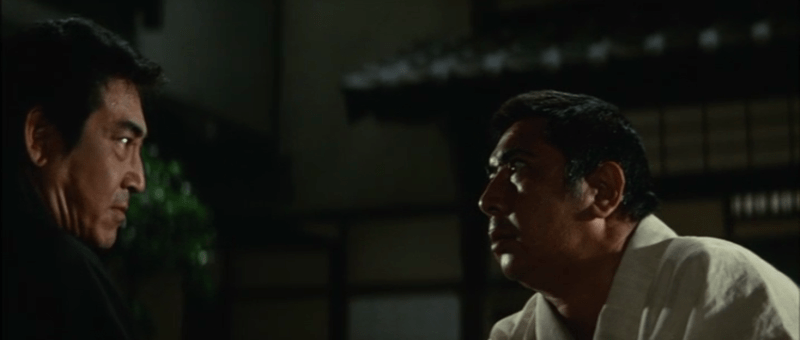
The Pledge (博奕打ち外伝, Kosaku Yamashita, 1972)

The gangster code slowly consumes series of men each trying to do the right thing but hamstrung by the actions of others in Kosaku Yamashita’s yakuza tragedy, The Pledge (博奕打ち外伝, Bakuchiuchi Gaiden). It is indeed a promise between brothers which damns them all, but the roots of it lie in repressed emotion and a desire to protect other people’s feelings by keeping a destructive secret while trying to satisfy oneself that one has behaved properly even if no one else understands. 

The battleground is Wakamatsu, Kyushu, where outsider Egawa (Koji Tsuruta) has united the local boatmen and is undercutting the prices of a rival gang led by Omuro (Tomisaburo Wakayama). While Omuro is out of town, his right-hand man Taki (Hiroki Matsukata) has decided to take advantage of a minor squabble between some of his guys and Egawa’s to initiate a small scale turf war hoping to take the river back under their control. He does this by kidnapping Egawa’s younger brother Masakazu (Goro Ibuki) to lure him to their headquarters alone, something of which Omuro does not approve on his return but decides to go with as an excuse to bring his rivalry with Egawa to a head. Just as the pair are squaring off, a mutual friend, Hanai (Ken Takakura), arrives and intervenes convincing the two men to lay down their arms for the moment at least.

It could be argued that it is this interrupted fight that is resolved in the film’s conclusion if only by inexorable fate. In a repeated motif, Omuro keeps to the code and is exasperated and disapproving of Taki’s underhanded tactics but accepts the responsibility for them himself knowing that Taki acted only on his behalf and his recklessness is only an expression of his love for him. There is indeed something homoerotic in the relationship between the two men as Omuro cradles a wounded Taki and attempts to comfort him that the fault is all his own, while resolving to accept Taki’s actions and build on them rather than try to deescalate or try to apologise. 

The real crisis occurs when the boss, approaching 60 which represents the full circle of a life, decides to name Omuro as a successor rather than the anticipated Hanai. Hanai stoically accepts though intending to leave the gang and travel to another part of Japan but other members of the clan are perplexed, little understanding the boss’ decision in feeling that Omuro is not of good character whereas Hanai is easily the better choice. As it transpires, the boss has made his decision deliberately in order to mitigate the fact that Hanai is secretly his illegitimate son whose origins he has kept secret in deference to his legal wife. He chooses not to name him as a successor in order to avoid causing him problems in his later life while justifying himself that he has not made the decision for dynastic reasons or out of simple favouritism. Yet the relationship between the two men, father and son, is raw and painful if founded on a deep understanding that leaves them unable to meet each other directly with emotional honesty. 

Because of his father’s decision, Hanai forces Egawa to promise that he will not antagonise Omuro which leads to problems in his own gang with his men angry and confused, unable to understand why Egawa is letting Omuro walk all over him. Compounding the problem, Egawa’s errant brother Tetsu (Bunta Sugawara) returns unexpectedly and as Egawa cannot tell him about the pledge without disclosing Hanai’s secret, thinks his brother is being messed around and raids Omuro’s offices to reclaim money he had extorted from Egawa. He learns the truth from devoted geisha Hideko (Yuko Hama) who is deeply in love with Egawa yet largely unable to act on it again because of the gangster code while pledging that she’d sooner die and prove her devotion to him than summit herself to Taki, who is also in love with her, even when he threatens her with a knife. 

The yakuza code dictates that Omuro must die though he is little more than a passive antagonist all too willing to accept the evil deeds that Taki did on his behalf because of the code of loyalty though he would not have dared to do them himself. Secrecy and repressed emotion drag all into a dark web of self-destructive violence until reaching their inevitable conclusion and perhaps bringing one cycle to a close if only in the birth of another. 


Original trailer (no subtitles)

Snake Princess (新蛇姫様 お島千太郎, Tadashi Sawashima, 1965)

Hibari Misora fights Edo-era corruption once again in another jidaigeki musical adventure from Tadashi Sawashima. Snake Princess (新蛇姫様 お島千太郎, Shin Hebihimesama Oshima Sentaro) sees her doing double duty as a sake-loving stage performer in love with a reluctant revenger, and an austere princess mourning the murder of her confidant and only friend but, as in some of her other films, the resemblance is never remarked upon nor is it any kind of plot point. There isn’t even really a “snake princess”, though snakes and the supernatural do play their part and there is perhaps less space for the derring-do and swashbuckling musical numbers which typically characterise a Hibari picture. 

The film opens with stage performer Oshima (Hibari Misora) waking up from a drunken snooze on a riverbank and realising she’s been left behind by her acting troupe. Running into the mysterious Ittosai (Minoru Oki) on her way, she hurries on to the next town to catch them up while he heads in the opposite direction towards Karasuyama and the Princess Koto (also played by Hibari Misora). Meanwhile, in the town, a rowdy samurai starts a drunken fight in an inn, demanding to drink with the innkeeper’s pretty daughter Suga (Tomoko Ogawa). The innkeeper refuses, offering the excuse that his daughter is at the palace with the princess, but the samurai doesn’t take no for an answer and starts thrashing about with his sword eventually killing the innkeeper for the offence he feels has been caused to him. The innkeeper’s son Sentaro (Yoichi Hayashi), a former pupil of Ittosai, then kills the samurai in revenge and is forced on the run, taken in by the leader of Oshima’s acting troupe, Juzo (Takashi Shimura), who apparently knew his father well. 

What ensues is of course a tale of intrigue and revenge mixed with mild romantic melodrama. Oshima begins to fall for Sentaro, but is warned that he is from a prominent non-samurai family and as such is unlikely to marry a travelling actress, itinerant players then belonging to a kind of underclass which is in part one reason why it is so easy for Sentaro to hide among them. Even so he is also subjugated by the samurai who frequently object to being ordered around by “commoners”, insistent on their privilege the refusal of which is the reason Sentaro’s father had to die. 

Meanwhile,  the Princess Koto is herself oppressed within the feudal system as a female ruling a clan in the absence of her father who has placed her in charge while he remains in the city. While Oshima falls for Sentaro, the relationship between Koto and Suga is perhaps transgressively equally close, Koto describing Suga as the only one she can trust within her own court and plaintively asking her to stay by her side forever. Unfortunately however Suga is murdered by the male court conspirators attempting to wrest power from the princess on her way back with evidence of their smuggling plot after meeting Ittosai on Koto’s behalf. Misled into thinking that Koto had his sister killed, Sentaro plots revenge but on learning the truth asks her why she hasn’t dealt with the wrongdoing among her own retainers, only later realising that even as the leader of the clan she lacks the power to do so and remains in a precarious position. 

Arguably, Oshima has more freedom, fearlessly walking the roads alone, drinking and gambling with the men refusing to abide by traditional social codes though perhaps in some ways permitted to do so precisely because of her position within the entertainer underclass. A further gender reversal sees the fallen Sentaro temporarily resorting to sex work as a host at an inn drinking with a melancholy noblewoman who fully expects to bed him for her five Ryo only for Sentaro to become indignant and throw the money back in her face, much to Oshima’s approval though she later becomes jealous and irritated questioning him if he’s ever done this sort of work before as if it would actually change her feelings for him. While Sentaro is forced into but then rejects the subjugated female role, Oshima chooses the male solution of trying her luck at the gaming tables, occasionally charging into a fight wielding a nearby object such as a handy water bucket. 

The snake theme of the title links back to the supernatural appearances of Suga’s silent ghost, protecting the princess with a wall of serpents when Sentaro plans to attack under the false assumption that she was responsible for his sister’s death. Musical numbers are largely restricted to a lengthy stage performance featuring Oshima and Sentaro’s evolving act utilising several sets and elaborate design while Sawashima ups the game a little from the lower tier Toei norm with varying locations shifting from a set-bound snowscape as Oshima is carted off by local goons, to a shot-on-location set piece as the conspirators take down a spy in the rocky desert. Revenge is eventually taken not only for the murders of Sentaro’s father and sister, but for the samurai transgressions of the Edo era, restoring order by wiping out the bad apples but also allowing Sentaro to free himself from his class-bound destiny and pursue a life, and love, of his choosing regardless of contemporary social codes.


Musical sequences (no subtitles)