Kokuho (国宝, Lee Sang-il, 2025)

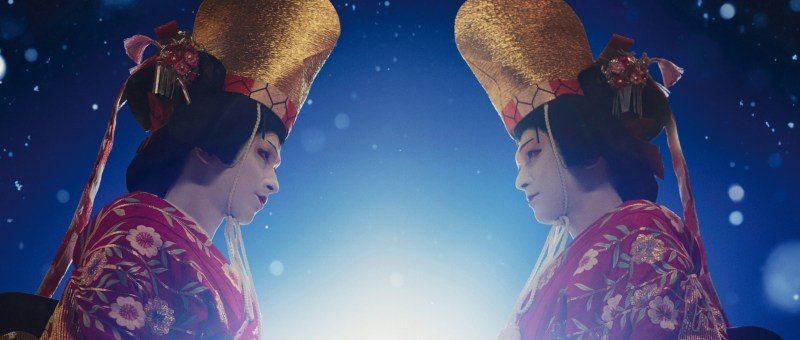
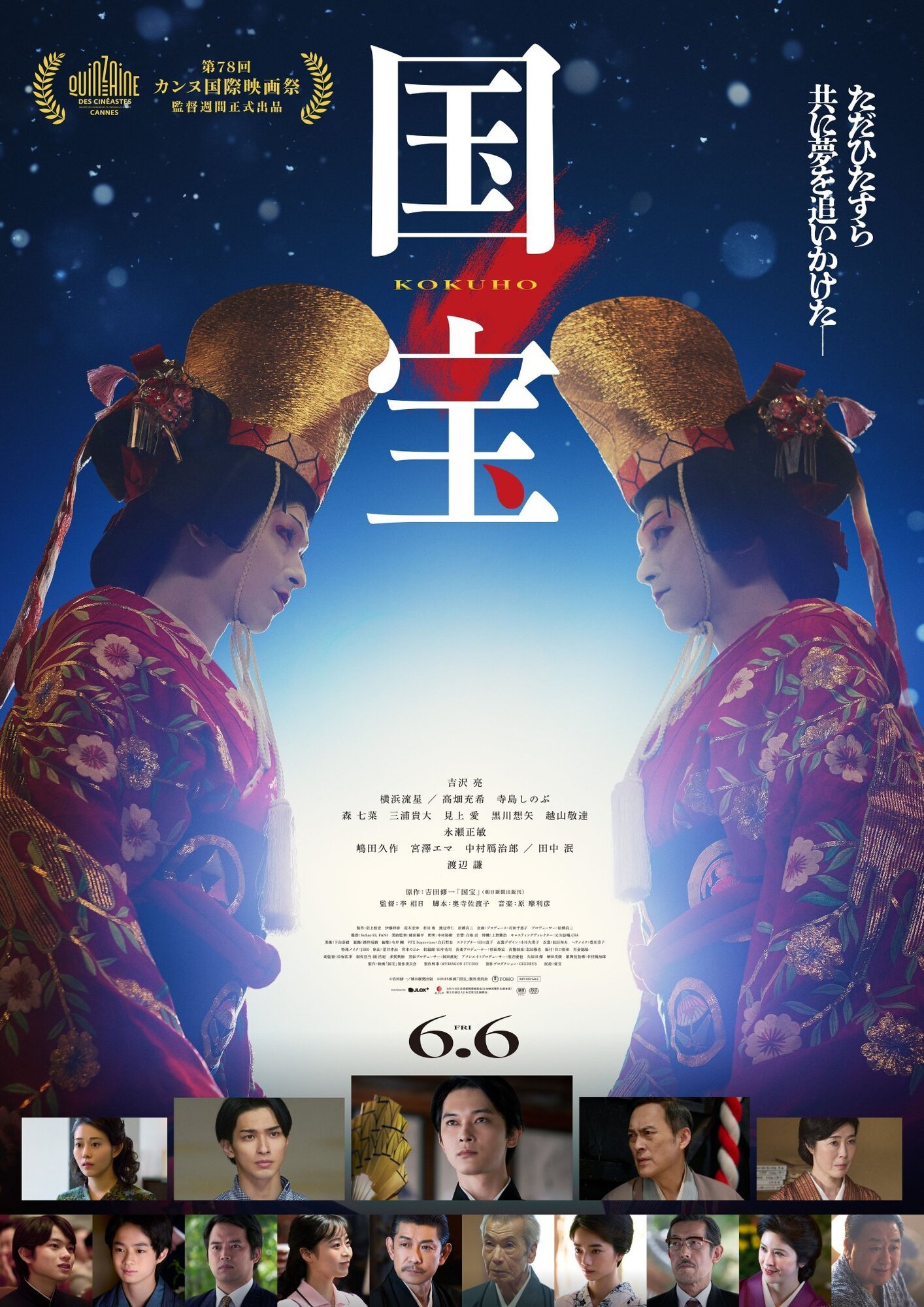
What does it mean to commit yourself so entirely to your art that you become it and effectively cease to exist? Playing the role of Ohatsu in Chikamatsu Monzaemon’s Love Suicides at Sonezaki, Kikuo (Ryo Yoshizawa) asks if Ohatsu’s lover Tokubei is really resolved to die for their love. The scene is intercut with his brother and rival Shunsuke leaving the theatre, led away by Kikuo’s girlfriend Harue (Mitsuki Takahata), just as Ohatsu leads Tokubei towards their mutual fate, as if Shunsuke were agreeing that he is not resolved to give his all to art in the way Kikuo evidently feels himself to be, at least in this moment.

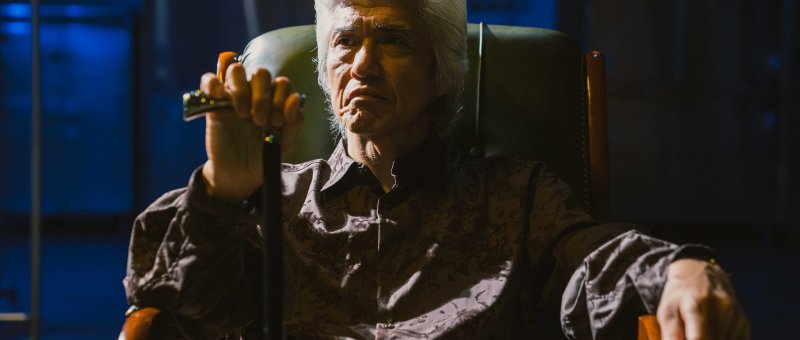
The roles between them are reversed several times before they eventually perform the play again, but each of them are, in effect, in a love suicide with the art of kabuki, though kabuki itself is destined to live on. In any case, the “kokuho” of the title is a living national treasure and one who has indeed embodied their art. We’re introduced to one early on, Mangiku (Min Tanaka), an ageless onnagata, or player of female roles, who has a quasi-spiritual quality and warns the young Kikuo that though his face maybe beautiful, it could also be a barrier to his art and, in the end, consume him. It is said of Mangiku that all he will leave behind him is his art. The words are spoken with pity, but this is really what it means to be a kokuho and the highest compliment that might be paid to an artist. Mangiku himself would likely approve, casting an eye around his spartan room and declaring himself unburdened. 

But Kikuo is only half-joking when he says he cut a deal with the devil to make him the best kabuki actor in Japan. As a woman he abandoned later scolds him, all his sacrifices were made by others. Actors are greedy, another laments, and it’s true enough that Kikuo feared little in his need for success. The irony is that he too was an heir, only to a yakuza dynasty to which he could not succeed. His was father was gunned down in front of him while preparing to draw his sword, while Kikuo’s rebound tattoo does him no favours in the end and his attempt to avenge his father’s death apparently fails. Nevertheless, he vies for the approval of his surrogate father and kabuki master Hanjiro (Ken Watanabe) who values his skills above those of his biological son Shunsuke (Ryusei Yokohama) who alternately resents having his birthright stolen from under from him and acknowledges that Kiku has an innate talent with which his bloodline can’t compete.

Nevertheless, there’s a genuine and enduring brotherhood between the two men that never quite slips into hate or acrimony even as circumstances conspire against them. They both want what the other has. In the kabuki world, bloodline is everything and Kikuo is viewed as a interloper usurping Shunsuke’s rightful position, while Shunsuke wants the raw talent he knows he lacks and no amount of training and commitment can buy. Yet it is in a way about resolve, or at least the willingness to give your life to the stage and die in the pursuit of art. Kikuo’s signature piece is the Heron Maiden, in which a heron falls in love with a young man and becomes a young woman. But her love is unrequited. She goes mad, and can only show her love for him by dancing until she dies. This is, in effect, Kikuo’s dance with kabuki, a waltz to the death as he yearns for the “scenery” he as been searching for and eventually finds the apotheosis of his art in the moment of the heron’s demise.

Like Lee Sang-il’s previous films Villain and Rage based on a novel by Shuichi Yoshida, the film is a poetic meditation on the price of the pursuit of art that revels in its sumptuous production design and the intricacies of the kabuki world. With shades of Farewell, My Concubine, it frames its central dynamic not quite one of straightforward rivalry but a brotherhood between two halves of one whole who each know that neither of them can really win, while becoming a kokuho is an endless pursuit of artistic perfection in which one must be resolved to kill the self and die on stage in a lover’s suicide with a forever elusive kabuki.


Kokuho screened as part of this year’s LEAFF.

Trailer (English subtitles)

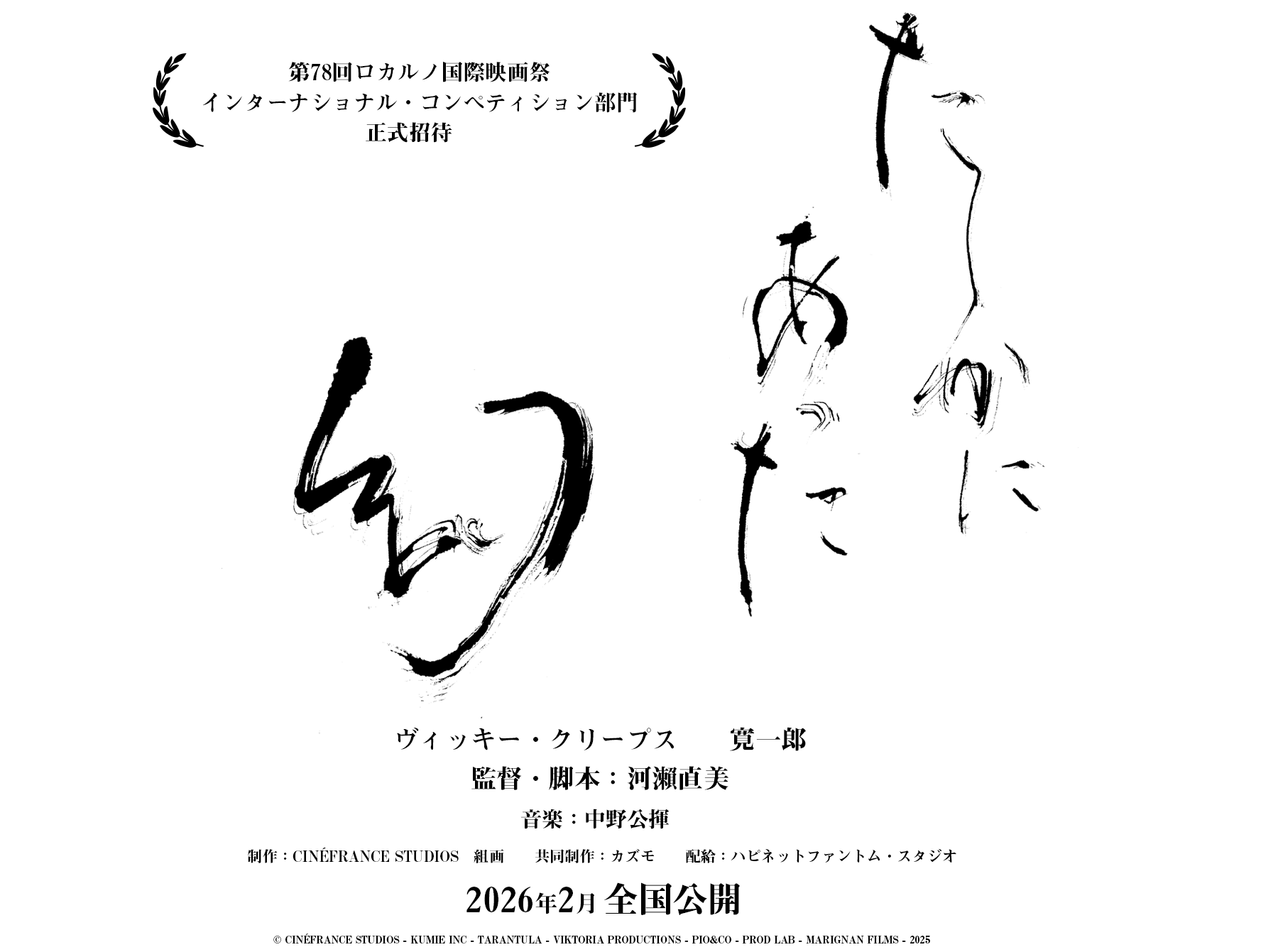
Yakushima’s Illusion (たしかにあった幻, Naomi Kawase, 2025)

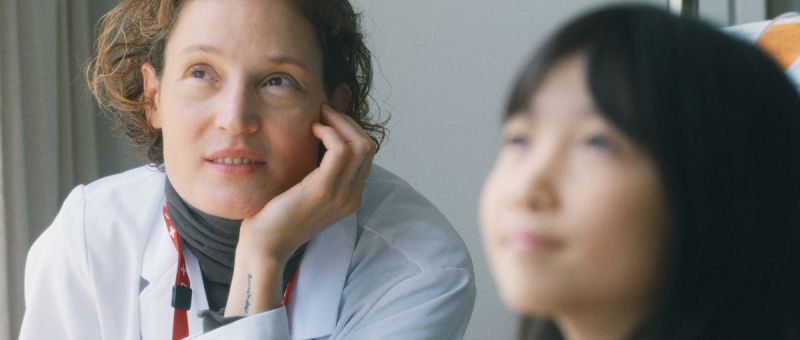
When is it that you can say someone is really dead? Grief-stricken paediatric organ transplant co-ordinator Corry (Vicky Krieps) finds herself pondering just this question while in Japan exploring differing attitudes to transplant surgery in Naomi Kawase’s latest, Yakushima’s Illusion (たしかにあった幻, Tashika ni Atta Maboroshi). Returning to her roots, Kawase includes several documentary-style sequences in which Japanese medical staff discuss traditional notions of life and death along with those relating to organ transplantation which remains taboo even in an otherwise advanced medical society.

One doctor relates that his own child had a transplant and they were plagued with harassment for “stealing” people’s organs. There’s a kind of ghoulishness in play, as if this practice were unholy in some way or were taking on a debt that can never be repaid. But from the perspective of the parents of children waiting for matches, there is indeed an undeniable sense of guilt involved given the knowledge that for their child to survive, another must have died and another parent just like them has suffered a loss. When a match finally comes up for one little boy, his mother feels conflicted knowing that a little girl that was ahead of them in the queue didn’t make it  and now it’s like they’ve taken her slot. Meanwhile the parents of the child that died battle their grief and confusion but decide to allow his organs to be made made available so that he will in some sense at least on. 

In this case, it was a heart transplant which presents the most complicated of existential questions given that traditionally death is marked by the cessation of the heart beating. Even when brain death has occurred, the body is considered to be living which obviously makes something like organ harvesting difficult if the patient is still considered to be “alive”. But on the other hand, it also means that death is infinitely postponed when the cessation of the heartbeat cannot be confirmed. Corry is haunted by the memory of an lover who disappeared without a trace and later discovers his family are trying to have him declared dead to smooth over an inheritance issue, though she objects because to her Jin is still alive even he’s not around.

It’s on Yakushima that Corry first meets Jin (Kanichiro), and one could say that he’s the illusion of the title. Indeed the Japanese title hints at his ethereal quality in translating as something like “the apparition that was really there”. He has an otherworldly quality and seems to exist outside of time with his old-fashioned camera and impish personality. Part of the film is set around Tanabata which is rooted in the tale of the Cowherd and the Weaver, Orihime and Hikiboshi, who were separated by a river and permitted to meet only on one day a year. This mythical quality adds to the sense that perhaps Jin was more ghost than man, a figment of Corry’s memory or a manifestation of her desires who was nevertheless himself consumed by loneliness. In a phenomenon known as “johatsu” in which people suddenly disappear without warning, Jin leaves her life as abruptly as he entered it leaving her with a series of regrets and lingering questions. 

It’s this shifting sense of dislocation with which the film plays in moving, as Jin describes it, through the shifting moments of the heart exchanging linear time for emotional chronology. Having lost her mother in childbirth, Corry is consumed by a fear of abandonment and incurable loneliness that is compounded by the fact that people really do disappear from her life with alarming frequency which is perhaps why she is so invested in saving the lives of these young children. Bonding with a couple who lost their son to illness and now operate a bento stand supporting other parents, she searches for a way to let go without letting go which she perhaps finds in the serenity of nature now captured with sweeping drone shots such as that which takes us inside a tree in search of the self. Frequent cameos from former Kawase collaborators such as Machiko Ono and Masatoshi Nagase in small roles add to the elegiac feeling even if the final message seems to be that life goes on in the image of a still beating heart giving new life and new hope even in the midst of death and loss.


Yakushima’s Illusion screened as part of this year’s LEAFF.

Sweet Bean (あん, Naomi Kawase, 2015)

Naomi Kawase has been a festival favourite since becoming the youngest Camera D’Or winner in 1997 with Suzaku, picking up the Grand Prix 10 years later with The Mourning Forest. Her work has however proved divisive with some decidedly unconvinced by her new age aesthetics and wilful obscurity. Set in suburban Tokyo rather than picturesque Nara, Sweet Bean sees Kawase for the first time working on a literary adaptation rather than her own original script, producing her most accessible and narratively straightforward work to date. 

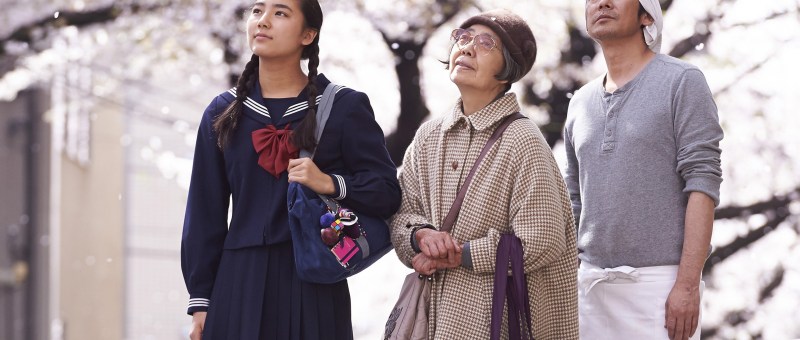
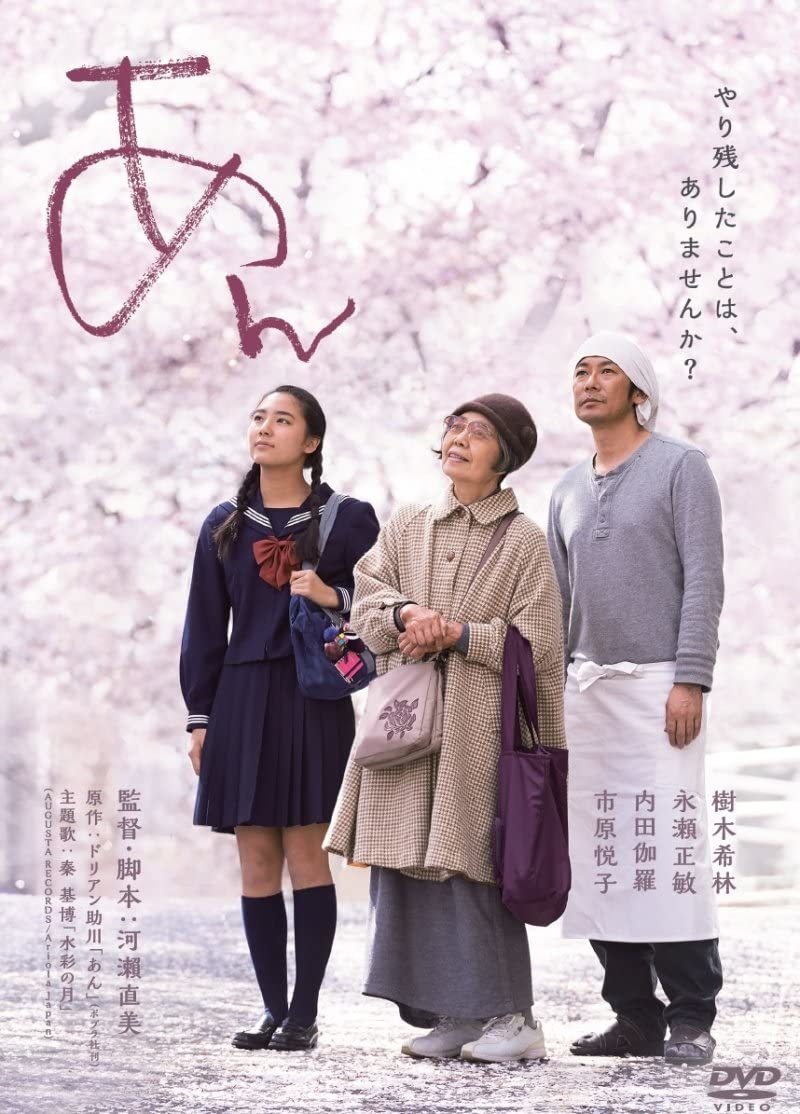
The film opens with one of Kawase’s trademark handheld sequences that sees a dejected, middle-aged man trudge to work at a job he clearly hates and is perhaps not particularly good at. For reasons which will be explained later, Sentaro (Masatoshi Nagase) does not even like dorayaki but is currently the proprietor of a small, unsuccessful store selling them mainly to a group of irritatingly excitable teenage girls. One day, an old woman surprises him by responding to his help wanted sign. Despite clarifying there was no age restriction on the position, Sentaro turns her away with the gift of a free sample only she later returns and takes him to task. The pancakes were not too bad, she tells him, but the filing is intensely disappointing. Unbeknownst to Tokue (Kirin Kiki), Sentaro has been bulk buying the “an” sweet red been paste from a catering company. She’s been making an for over 50 years and has brought along a sample which Sentaro first bins in irritation but then thinks better of it, realising as he tastes some that Tokue is the real deal. 

As Tokue later says, she decided to approach the dorayaki shop after noticing the sadness in Sentaro’s eyes, wanting to ask him what it was that made him suffer. She remembers a time where her eyes were full of just that sadness, feeling a similar sense of hopeless imprisonment, in her case reflecting a fear that she would never again be able to walk through the outside world after being quarantined in facility for those suffering from Hansen’s disease when she was a teenager (the Leprosy Prevention Law was lifted only in 1996). Yet having suffered so much, as we later learn even denied the opportunity to become a mother because of her condition, 76-year-old Tokue is full of joy and positivity enjoying her life to its fullest while envying the “freedom” of the annoying trio of high school girls at the dorayaki store, sadly relating that at their age she dreamed of becoming a Japanese teacher reading poetry with her students, another dream denied. 

The other high school girl, Wakana (Kyara Uchida), who comes into the store just before closing so she can take home the rejected pancakes, is perhaps feeling equally constrained, is touched by Tokue’s tale because her own mother isn’t even keen for her to finish high school proclaiming that studying doesn’t put food on the table. The three of them generate an intergenerational friendship as Tokue begins transmitting her knowledge, painstakingly teaching Sentaro how to make “real” an, which as it turns out is an art which can’t be rushed. Seeing the world on a microlevel she communicates with the beans, “I always listen to the stories the beans tell” she explains, visualising the sun and rain and wind which brought them on the long journey to be a part of this bean paste, even going so far as to thank them for their service. As she tells Sentaro, “We all have our stories” realising it’s not perhaps yet time to hear his or share hers. Yet for all her positivity, “sometimes we are crushed by the ignorance of the world”. Tokue’s bean paste generates a lengthy queue outside the store, but custom dries up after a rumour gets round that the old lady who makes it is a leper. 

Like Tokue Sentaro too had once been isolated from the world, now burdened by guilt and obligation that perhaps make him cynical and aloof but is eventually touched by Tokue’s earnestness, not just her lust for life but the fact that she works hard and possesses great skill. His boss tells him to unceremoniously fire her, but he is struck by the unfairness of it all, that she’s still being discriminated against for nothing more than outdated prejudice. It’s her kindness and generosity of spirit which begins to show him the “sweetness” of life, finally converted to the charms of the dorayaki despite proclaiming himself not possessed of a sweet tooth. 

The protagonists of Kawase’s previous films often found spiritual release in traditional dance which is notably absent in the urbanised Sweet Bean, though the positivity perhaps extended more to finding accommodation with the sadness of life than actively embracing its joys. Tokue had in her own way freed herself and hoped that others could learn to do the same, urging both Sentaro and Wakana to find the confidence to follow their own paths while affirming that “we were born into this world to see and listen to it, I think whatever we become each of us has meaning in our lives”. A recognisably Kawaseian evocation of mono no aware shot against the cherry blossoms, Sweet Bean is uncharacteristically direct in message but even in its essential melodrama quietly moving in its awestruck love for the natural world and for the liberating power of simple human kindness as a path to existential happiness. 


Trailer (English subtitles)

The Trap (罠 THE TRAP, Kaizo Hayashi, 1996)

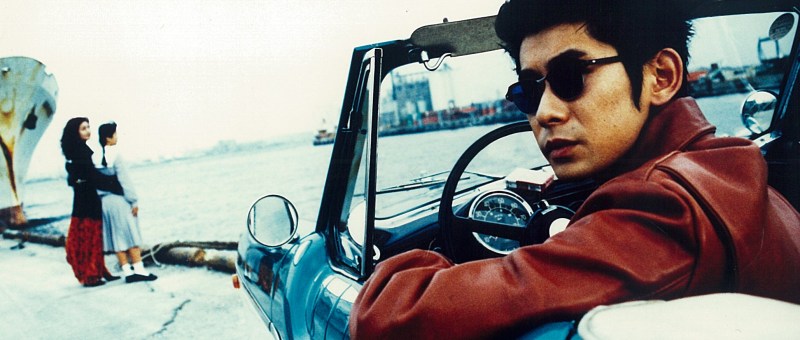
At the beginning of the final instalment of the Maiku Hama trilogy The Trap (罠, Wana), a strange-looking man dressed in a long overcoat and wearing a mask to hide a facial deformity tries to hire Maiku (Masatoshi Nagase) to look for himself. It’s a decidedly odd moment, and it seems that Maiku, who takes every job that comes, turns the man down because it’s just too weird though in a way his refusal to grant his request may contribute to the unfolding tragedy. If previous instalments saw Hayashi in Nikkatsu Noir and Fukasaku territory, this time around he seems to be channeling Seijun Suzuki in his intensifying surrealism and bold use of colour.

Indeed, in one sense, this is a tale of doppelgängers. We first see the strange man lurking outside the cinema standing so still that until he slowly turns his head we assume he is a statue. What we later realise is that he wanted Maiku to look for someone who was making use of his identity along with perhaps returning to him his own. Nagase too is playing a double role and Maiku is also searching for himself eventually confronted by the fact the man he’s been looking for has his own face. 

Nevertheless, as the film opens Maiku is riding high. He’s doing very well financially after making a name for himself saving a child from a burning building. His sister Akane has got into a prestigious college, and he’s fallen in love with a woman from the post office, Yuriko (Yui Natsukawa), who is mute but can hear. By contrast, box office lady Asa remarks that nothing good’s happened since Maiku got his police commendation for saving the child adding to the sense that things are going far too well for Maiku and probably quite likely to plunge the other way. There’s currently a serial killer on the loose who’s abducting young women, drugging them, and posing their bodies in public places. Unfortunately, Yuriko becomes a target for the killer(s) after a moment of kindness to someone who was being bullied in a park. 

An orphan raised in the church, Yuriko seems to be the embodiment of an otherwise absent purity. She tells Maiku off for gambling and generally tries to improve him as a person while he later acknowledges her willingness to sacrifice herself for others perhaps even at the cost of her own life. Her forgiving nature might help her overcome the fact that Maiku and the detectives effectively use her as bait on two separate occasions swooping in to save her only in the nick of time. This moral dichotomy reinforces a sense of tension in the city in which good and evil co-exist on different planes just as past and present had in the previous film and further transforms Yokohama into a mystical, haunted place of ever present dangers. 

The sense of surreality is further heightened by the casting of actor Tetta Sugimoto who starred in Stairway to the Distant Past as the man in red but here seems to be playing an idealistic rookie cop, again countering the cynicism of detective Nakayama (Akaji Maro) who just wants to cut corners and get the job done rather than get it done right. Thus when Maiku is framed as the killer, Nakayama indulges in his long standing grudge against him and is determined to nail Maiku despite rookie Kozu’s insistence that he couldn’t have done it because they were together at the time. When even fingerprints can be faked, there is no such thing as reliable evidence.

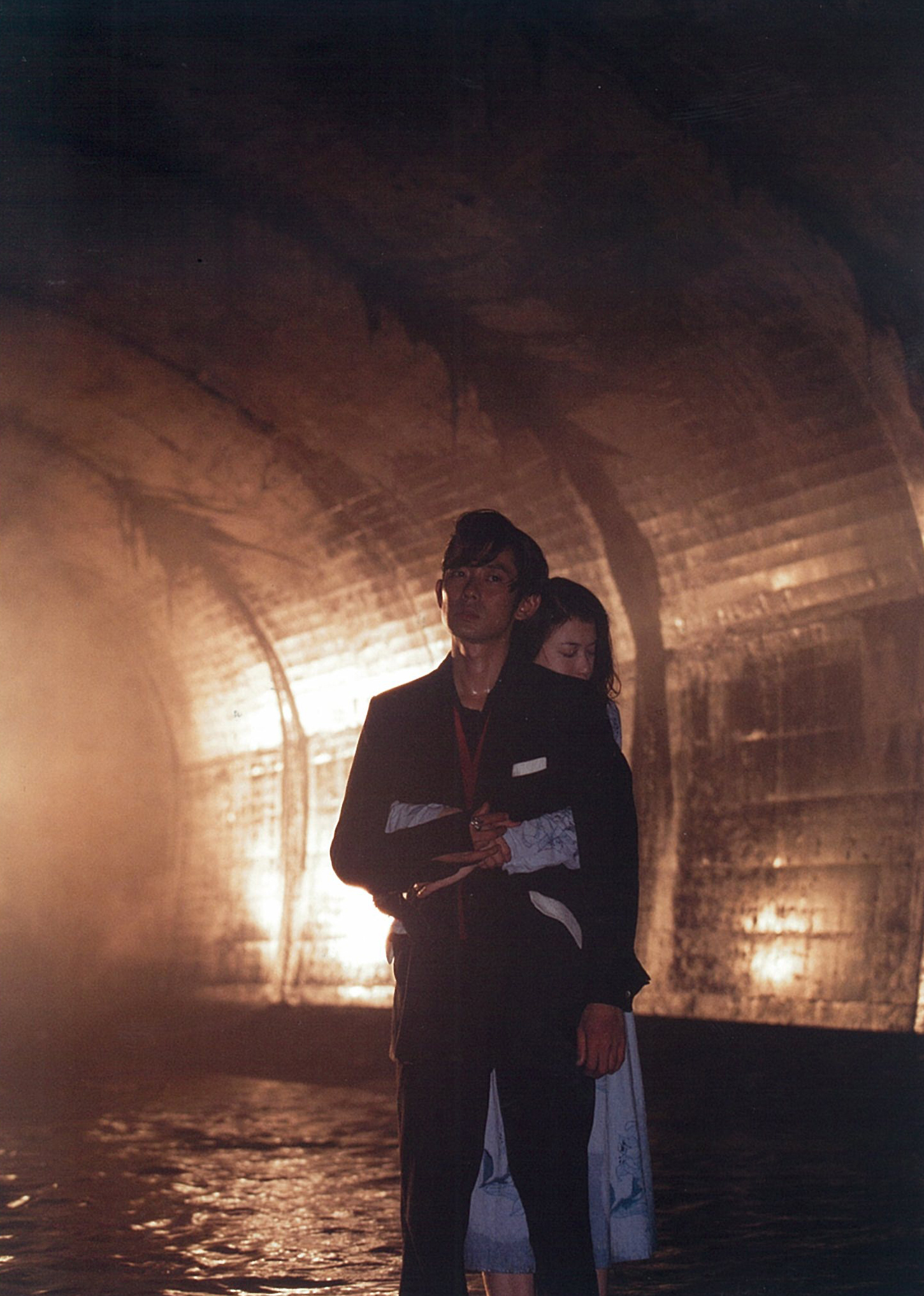
Hayashi once again makes fantastic use of colour from the expressionistic storm to the eerie, dreamlike closing sequence in which Maiku must face himself and battle his demons before being saved by the angelic Yuriko. Taking place in an atmospheric sewer tunnel, the climax has an oneiric atmosphere and surrealist edge as Miku confronts this man who has his own face only to lose the image of him at the critical moment and thereafter seemingly disappear himself. The moments after also have an unreal quality, a poster for the film we’re watching, The Trap, positioned behind Asa at the counter and Hai-Ping’s letter from the first film seemingly playing as part of the film screening in the cinema causing us to wonder if this too is a dream or fabricated future for one who will not return. Dark and disturbing in its implications, coloured by the real terror of living of Japan in the mid-90s which had just experienced a devastating earthquake and unprecedented terror attack, the film nevertheless displays the warmth of the Yokohama we’ve come to love with its cast of charming characters and cheerful atmosphere despite the eerie emanations at its centre.


The Trap screens 19th October at Japan Society New York.

Original trailer (no subtitles)

The Stairway to the Distant Past (遙かな時代の階段を, Kaizo Hayashi, 1995)

If The Most Terrible Time in My Life was channeling Nikkatsu Noir, Stairway to the Distant Past (遙かな時代の階段を, Harukana Jidai no Kaidan wo) sees Hayashi channel Fukasaku for a full-on confrontation with the legacies of the post-war era just as PI Maiku (Masatoshi Nagase) is forced to confront and attempt to cure the corrupted legacies of his own origins all while trying to save the city of Yokohama from drifting off to “another hell.” This time shooting in colour, Hayashi conjures a sense of mythic dread in the purple haze that hangs over a hidden city and the eerie blue of the path to get there.

But before all that, Maiku has fallen on such hard times his beloved car’s been repossessed and he’s stuck finding lost dogs for wealthy yet eccentric clients. Meanwhile, leader of New Japs gang Kanno (Shiro Sano) is running for political office while two of his underlings decide to freelance in order to take over the lucrative river trade which no one, not even the Taiwanese gang otherwise apparently in the ascendent, has ever dared to touch in fear of the mythic “White Man” who’s controlled the area since the post-war era with a ruthless efficiency that has seen any man challenge him not live to tell the tale. In the midst of it all is bigoted, and apparently pretty corrupt, policeman Nakayama (Akaji Maro) who first blackmails Maiku into helping him investigate a theft and smuggling ring on the river then apparently makes a deal with the White Man’s underlings who in turn blackmail him over his gambling debts but also claim they can make him chief of police if he chooses to play along.

Nakayama is a symbol of the rot in the contemporary city though he is in fact merely spineless, greedy, unpleasant and prejudiced. He asks Maiku for help because he’s hamstrung by the rules of policing which prevent him from doing the nefarious things he asks Maiku to do all of which leads to some pretty tragic consequences and a pair of orphaned children. The New Japs are perhaps a sign of further corruption still to come as Kanno tries to go legit as a politician but only as a means of increasing his influence and earnings. 

The river becomes a kind of nexus, the shore line between contemporary Japan and the “distant past” of the post-war era. Nakayama discovers that no one is technically policing it because it’s outside of everyone’s jurisdiction, while the White Man seems to have been in a position of unassailed power for half a century. As he later says, he’s the only one “living in the past” and perhaps quite literally so as Maiku has to transcend a literal stairway while guided by some kind of local prophet in order to travel to his world and finally risk his life to confront him. At the same time, Maiku is threatened by his own point of origin in the unexpected return of his mother, a now middle-aged stripper known as Dynamite Sexy Lily (Haruko Wanibuchi), who abandoned him and his sister and when he was just a child. 

Her name, along Maiku’s own, are perhaps hangovers from the Occupation era now even more out of place in a changed Japan. Making full use of the colour palate, Hayashi repeatedly flashes back to a pair of Lily’s red shoes as if signalling the unreality of the hidden city and the superimposition of past and present. His flashbacks to the late 1940s echo the cinematography of Fukasaku’s jitsuroku epics with their frenetic chases through black markets, but towards the conclusion the canted angles make it through to our era too and most particularly in the White Man’s lair, a blue-tinged industrial labyrinth that recalls the post-apocalyptic visions of a city still in ruins.

“Yokohama’s changed a lot,” Lily is told on her return and in fact several times after that. She likes it a little better now, the White Man no so much complaining that this city no longer has a place for him as if foreseeing his own eclipse and the oncoming end of an era. But then again, perhaps only the names have changed. All we’re left with is new gangsters with no code, and the White Man did at least stick to the rules even if he did so with ruthless authority. As for Maiku, his passage to the underworld seems to have brought him new clarity. His outfit now a little more sophisticated and mature, less an affectation borne of watching too many movies than an expression of himself. Nevertheless, Yokohama remains a small-town city, a cosy place with a generally friendly and easy going population albeit one with darkness hovering around the edges.


The Stairway to the Distant Past screens 18th/19th October at Japan Society New York.

Original trailer (no subtitles)

The Most Terrible Time in My Life (我が人生最悪の時, Kaizo Hayashi, 1994)

A Yokohama PI finds himself investigating a case of tragic brotherhood against the backdrop of a burgeoning gang war in Kaizo’s Hayashi’s retro crime movie The Most Terrible Time in my Life (我が人生最悪の時, Waga Jinsei Saiaku no Toki). In the first of three films featuring detective / cinema projectionist Maiku Hama (yes, that is his real name), Hayashi harks back to the Nikkatsu borderless action films of the 1960s along with classic noir while also exploring contemporary attitudes towards those not born in Japan. 

The force destabilising the local equilibrium is a gang that calls itself the “New Japs” and was founded by Zainichi Koreans who had acquired Japanese citizenship and now accepts members from other nations colonised by Japan who’ve also naturalised. The implication is that they’re agitating because the society still doesn’t fully accept them, something echoed by Maiku’s (Masatoshi Nagase) first client, a mister Kim, who says the police aren’t interested in his case because he’s a foreigner while when he actually encounters him Lieutenant Nakayama (Akaji Maro) does indeed make some quite prejudiced remarks. Hanging out in a mahjong parlour, Maiku comes to the aid of the waiter, Hai Ping (Yang Hai-Ping), newly arrived from Taiwan when he’s hassled by a racist customer noticing that the waiter’s actually carrying a knife under his shirt and might be about to ruin his life. 

Maiku loses a finger in the process (they sew it back on later), leaving Hai Ping to show up at his office with an improbably large amount of money Maiku refuses and then agrees to take when he hires him to find his brother De Jian (Hou Te-Chien) who came to Japan two years previously and has been missing ever since. Hai Ping’s relationship with De Jian speaks to Maiku because he’s also caring for his 16-year-old sister, their parents being absent from their lives just as Hai Ping and his brother were abandoned and then drifted into gang crime as a means of survival. He discovers that De Jian has married a Japanese woman of Chinese descent who like them was separated from her family which explains why she doesn’t speak any Chinese but was trotted out in a cheongsam as an exotic beauty when she was a sex worker which is how De Jian met her and got himself into trouble with gang when they ran away together. 

They are all in their way displaced people trying to get a foothold in Yokohama but finding varying degrees of success. A turf war is apparently about to break out between the Taiwanese and Hong Kong gangs, though we never actually see the one from Hong Kong only the New Japs and the Taiwanese who don’t actually fight but engage in vendettas with Hai Ping who is actually ordered to kill his own brother to prove his loyalty and atone for his crime. Maiku figures this out quite quickly and again tries to stop new his friend from making a huge mistake but not even he can prevent the fatalistic inevitability of the collision of all these competing honour codes and the implosion of a more literal kind of brotherhood in the face of that represented by the gang. 

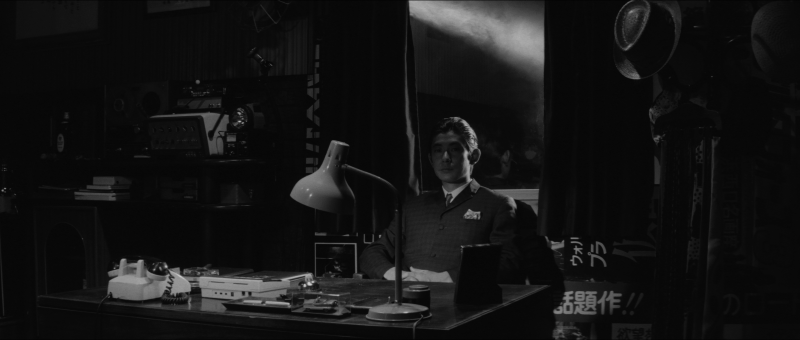
Despite the film’s title, which in a meta touch flips around on the marquee of the cinema where Maiku has his office which is currently screening The Best Years of Our Lives, Maiku will have some far worse times in his life in subsequent films but the Yokohama we encounter here is a lived-in neighbourhood with its collection of quirky characters and strange goings on. The tone is humorous and ironic as Maiku’s friends have to chase a dog to get his finger back or Maiku’s taxi driver friend reads magazines while driving and changes hats in line with his role, but it has an underlying noirish sense of sadness for the world’s cruelty in the unfolding tragedies Maiku is powerless to prevent. Shooting in a crisp black and white, Hayashi pays tribute to Borderless action with a cameo from Jo Shishido as Maiku’s father figure while allowing Maiku to inhabit a world slightly out of time or existing only in the movies in which detectives are always hardboiled and the only way to be happy is to abandon all your hopes and dreams before the world can destroy them.


The Most Terrible Time in My Life screens 12th/18th October at Japan Society New York.

Original trailer (No subtitles)

The Box Man (箱男, Gakuryu Ishii, 2024)

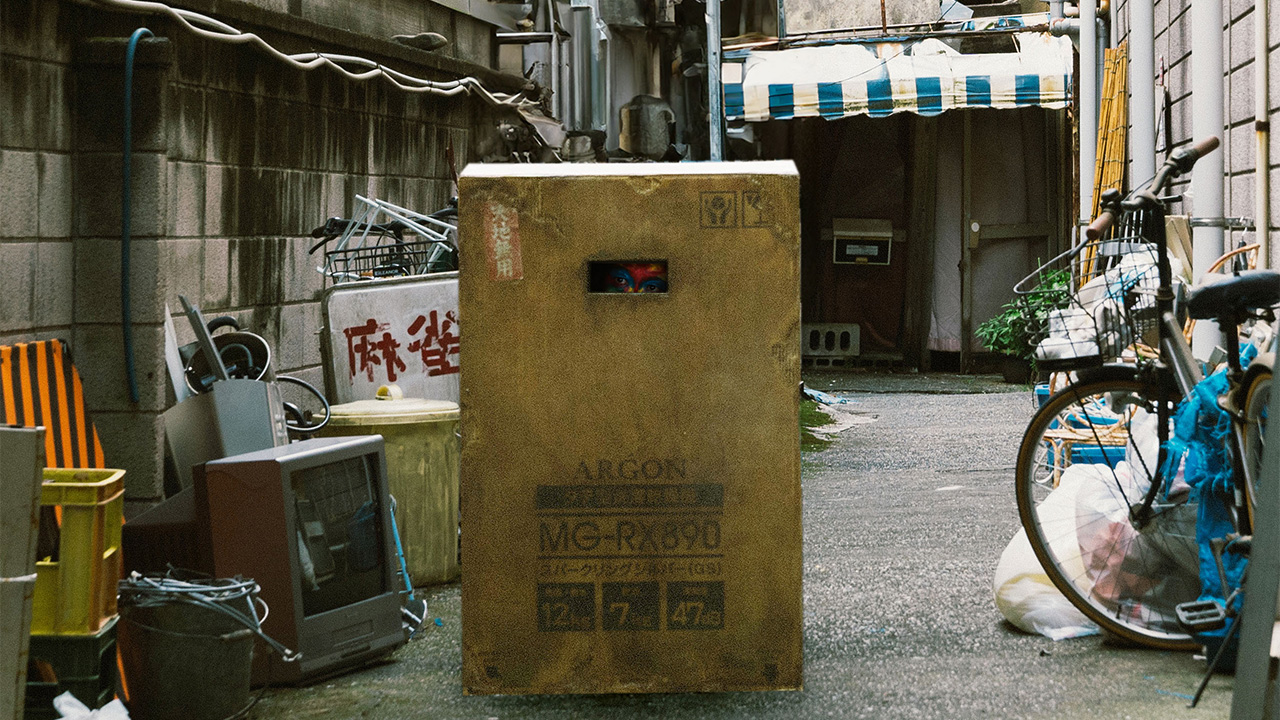
Those who obsess over the Box Man, become the Box Man, in Gakuryu Ishii’s adaptation of the Kobo Abe novel. Yet the unnamed hero’s problem is that he feels himself unable to become “the real thing” and is thereafter trapped inside a labyrinth while forever seeking an exit. It’s never clear to him, or to us, if the cardboard box he wears is really just that or something imbued with a supernatural power that actively masks his identity even from himself.

Tellingly, the only named character is a woman, Yoko (Ayana Shiramoto), who seems to exist outside of the box. She appears to be free, confident, aware of all she is and apparently certain of her identity. The Box Man, or perhaps “a” Box Man, meanwhile, is known only as “myself,” a former photographer (Masatoshi Nagase) who almost pities those who target him in memory of the Box Man who once infected and cursed him to the same fate. Watching the city through the tiny letterbox slit, he remains a step away from our world and later refers to the box as the entrance to some other place suggesting that it’s really we who are trapped on the other side of the cardboard.

He advances something similar when he in effect turns the box inside out, walling himself inside a single room by covering the windows and doors to box out the world but not really finding escape. Still, others seem to covet the title of Box Man, those also without concrete identities but going by names such as Fake Doctor (Tadanobu Asano) and the General (Koichi Sato), both of whom are apparently interested in the Box Man and tracking his every move. It seems they believe there can only be one real, authentic Box Man allowed, but become increasingly uncertain which of them is “real”. The notes the Box Man is keeping become key to his identity, but like a metaphor for the unseen hand of fate, one points out that perhaps someone else has written them out for them, Myself lamenting that the author has written a better version of himself than he ever could. 

There is something undeniably absurd about the way the Box Men scuttle around, occasionally sticking their ams out of the box’ flaps while arguing over the true identify of the Box Man despite having described the mystery as boring. The Fake Doctor seems to want to destroy the box, as if he wanted to obliterate it perhaps in an attempt to destroy the image of a mask to avoid the suggestion that he has one himself, while it remains unclear if this would free the other Box Man or trap him further while Fake Doctor would take his place. When Myself killed the Box Man before him, a mask may have been what he wanted. A photographer sick of seeing the world and longing to be free of it, to shed himself of an identity he no longer wanted only to search for it once again even as others try to crush it from without. 

The Box Man comes to the conclusion that it’s the world that should be boxed away, but of course it’s all the same. When he remarks that Yoko, after leaving their sanctuary, did not really escape but has simply gone to a deeper level, it’s reflective if his own desire to find meaning in a meaningless world. He claims that he dreams of a world yet to begin but is finally confronted perhaps by anonymity in witnessing a row full of Box Men apparently all also devoid of personality which might in an ironic sense tell him who is if only in reflection. 

Strange and surreal, Ishii lends an edge of absurdity to the strange existence of the Box Man while perhaps aligning the letterbox frame of his open window to that of the cinema screen and the artificial reality that surrounds us. In any case, it seems the other world the Box Man longed to enter was that of the self, his interior life expanding inside the box as a small galaxy he has somehow become lost inside, no longer able to see beyond himself but trapped inside an “exitless black hole” looking for a path to authenticity away from this “fantasy” in which everything is “fake” save the potential salvation of a distant guiding light.


The Box Man screens in New York July 13 as part of this year’s JAPAN CUTS.

Original trailer (English subtitles)

The Three Sisters of Tenmasou Inn (天間荘の三姉妹, Ryuhei Kitamura, 2022)

Caught in a space of existential limbo, a young woman struggles with the uncertain nature of life. What’s the point of living in a world that might end, she asks herself, seemingly not having realised that it’s as it always was, the world is always ending and may blink out at any given second. Ryuhei Kitamura’s adaptation of the manga by Tsutomu Takahashi The Three Sisters of Tenmasou Inn (天間荘の三姉妹, Tenma so no San Shimai) plays out a little like a mashup of Hirokazu Korea’s Afterlife and Our Little Sister, but ultimately meditates on how to live on in the shadow of loss.

After all, as the relentlessly cheerful heroine Tamae (Non) later says, life is hard but the world is not so bad and everyone has their part to play. That’s something she discovers for herself after falling into a coma following a traffic accident and arriving at Tenmasou Inn in the picturesque seaside town of Mitsuse. As is explained to her, the inn exists in a liminal space between Heaven and Earth where those caught between life and death are expected to make a choice on their direction of travel. 

But Tamae begins to enjoy her time at Tenmasou in part after learning that the owner’s daughters, Nozomi (Yuko Oshima) and Kanae (Mugi Kadowaki), are her half-sisters. They are fully aware of their liminal status and that unlike Tamae they can never return to the mortal world or make any kind of life for themselves in Mitsuse where time stands still. Nevertheless, Tamae’s relentless cheerfulness and knack for human empathy prove key assets, beginning to return an energy and warmth that has those around her giving new thought to their cosmic inertia and if it’s really possible to go on living in a constant state of timelessness. 

Tamae might want to stay, experiencing for the first time the sense of family that she’s searched for all her life. She considers giving up the rest of her time to stay with them, but is reminded that no one can stay in this transient place forever while this version of Mitsuse which seems to hang over the “real life” town may soon disappear. Those who live there describe it as like living in a dream, a confusing simulacrum of life in which no time passes. There are those who make the eventual decision to pass on towards rebirth while others opt to stay, still having unfinished business or perhaps just not quite yet ready. 

Recalling the 2011 tsunami, the film touches on the difficult subject of survivor’s guilt and how to come to terms with loss on a mass scale while Tamae tries to process what it means to live and to not to. She resolves that “people don’t end when they die” but live on in the memories of those who remember them, though her conviction that she must live on as a kind of conduit for the souls of others may also rob her of a degree of her selfhood in her own right to live simply as herself.

Even so as she admits life is hard. An old woman suffering with liver cancer who had been blind for many years looks for beauty in the afterlife only to be reminded that there are beautiful things everywhere if you take the time to look. She too has had a life of sadness, but discovers that it might not be too late to make up for lost time, while a very young woman who felt herself to be alone learns that she has a friend and there are those who care for her even she did nearly burn the inn down in a fit of temper. Unabashedly sentimental, the film is as much about moving on as it is about learning to live in the present as the various guests contemplate whether to return to the world of the living with all of its pain and loneliness, or proceed to that of the dead knowing that there’s no guarantee the next life will be any better. Melancholy but also in its way uplifting, Kitamura’s empathetic drama eventually settles on a note of poignancy in which the act of living becomes its own memorial and defiant act of remembrance in the face of constant and unexpected loss.


The Three Sisters of Tenmasou Inn screens in New York Aug. 6 as part of this year’s JAPAN CUTS.

Original trailer (English subtitles)

Party 7 (Katsuhito Ishii, 2000)

“This shit’s for real.” according to the front desk guy at Hotel New Mexico, an out of the way spot just perfect for those looking to lay low for a little while. Like a lot of Katsuhito Ishii’s work, Party 7 is essentially a series of self-contained vignettes which eventually collide following a series of bizarre coincidences revolving around some money stolen from the mob, a two-way mirror in a regular hotel room, and the receptionist’s tendency to almost literally shoot the shit. 

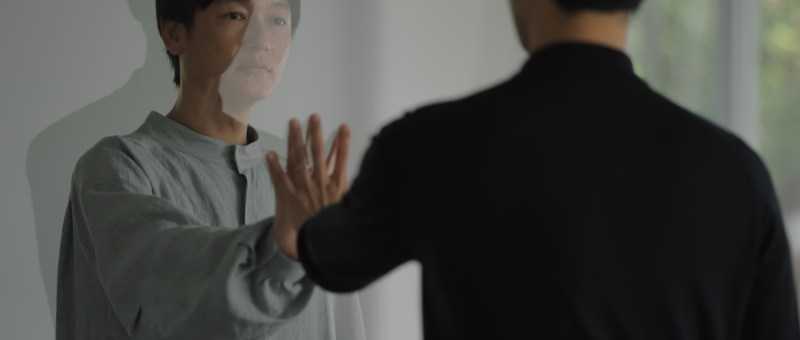
Following a brief prologue, Ishii opens with striking animated sequence which introduces each of the main players with an arcade game aesthetic and explains that Miki (Masatoshi Nagase) has stolen money from the mob and is currently on the run which is why he’s turned up at the infinitely weird Hotel New Mexico. The running gag is that Miki thinks he’s holed up somewhere no one will find him, but sure enough a series of “friends” soon turn up in part thanks to a loose-lipped travel agent. The fact that people can find it so easily dampens the impression of the Hotel New Mexico as some kind of interstitial space. It’s not so much existing in a weird parallel world as a bit run down and staffed by a series of eccentrics. It does however have a “peep room” hidden behind a two-way mirror where “Captain Banana” (Yoshio Harada) is attempting to pass his knowledge on to the young Okita (Tadanobu Asano), the son of a recently deceased friend who has been repeatedly arrested for voyeurism. 

Captain Banana’s insistence on his surreal superhero suit is in a way ironic, if perhaps hinting at the super empowerment of accepting one’s authentic self. “It’s your soul,” he tells Okita, “it’s screaming ‘I want to peep’.’” Meanwhile, Miki gets into an argument with his ex-girlfriend Kana (Akemi Kobayashi) who has turned up in the hope of reclaiming money that he owes her. Kana too seems to be less than rigorous with the truth if perhaps emotionally authentic. She’s now now engaged to a nerdy guy having somewhat misrepresented herself as the innocent girl next-door type. Her refusal to let her fiancé into her apartment perhaps hints at a more literal barrier to intimacy or at least that she is intent on preventing him from seeing her true self. What she doesn’t know is that her fiancé hasn’t been completely honest either, in part because he thinks she’s out of his league and is insecure in their romance. 

Miki too maybe somewhat insecure, having run off with the gang’s money after hearing them bad mouth his associate Sonoda (Keisuke Horibe) who has now been charged with killing him and getting the money back. But Sonoda too has reasons to doubt the boss’ affection for him after Miki and the others point out that gifts he thought were so valuable are really just cheap knock offs that suggest the boss thinks very little of him at all. Okita’s psychiatrist tells him that there are “no rules in making friends”, and maybe in a strange way that’s what everyone is trying to do. Kana wanted the money to overcome her anxiety about having no friends or family to invite to the wedding, while all Sonoda wanted was the boss’ approval and though Miki had deliberately gone somewhere he thought no one would find him nevertheless attracts a series of followers. 

Even the receptionists seem to be desperate for human contact with their strange stories of poo falling from the sky and bizarre approach to hospitality. “The point is whether you believe it or not,” one tells the other after spinning what sounds like a yarn but then again might not be. Ishii’s zany world has its own surreal logic culminating in a piece of cosmic irony and defined by coincidence as the otherwise unrelated stories begin to come together and slowly find their way to Hotel New Mexico but seems to suggest the point is in the serendipity of the meeting and its concurrent authenticity even if a literal shot in the arm is a less than ideal way of brokering a friendship.


Party 7 is released in the UK on blu-ray on 17th July as part of Third Window Films’ Katsuhito Ishii Collection.

Original trailer (English subtitles)

Mountain Woman (山女, Takeshi Fukunaga, 2022)

A young woman charged with disposing of the corpse of an infant has only a few words to impart as she lowers its body to the river, “Don’t be born human in your next life.” Set in late 18th century Tohoku where famine ravages the land, Takeshi Fukunaga’s bleak fable Mountain Woman (山女, Yama Onna) sees humanity in extremis pushed to its most inhumane but also offers refuge in spirituality and a retreat to a less sophisticated existence. 

Calling this existence sophisticated might be a stretch, but there is more than a little constraint attached to the idea of community in this typical farming village in a feudal society. Bad weather has produced two poor harvests, and the villagers are beginning to feel desperate. As the film opens, a woman goes through a painful and traumatic labour only for the midwife to silently offer a cloth to her husband (Takashi Yamanaka) who ignores her pleas and smothers the child. They have nothing to feed it, and perhaps a part of him thinks it’s kinder this way. A young woman, Rin (Anna Yamada), waits outside for the inevitable and accepts a few coins to spirit the baby’s body away. Rin’s family is shunned by the other villagers because of a crime her ancestors apparently committed, and it’s for this reason that they deal with the dead. 

When it comes to handing out the rice rations, the village chief gives Rin’s father Ihei (Masatoshi Nagase) only half but justifies it as a kindness explaining that he is entitled to nothing because his family owns no land (it was taken from them because of their ancestral crime) but even those tainted with the legacy of criminality are still considered part of the community and so they are doing what they can. It’s this liminal status that begins to eat away at Rin. She’s expected to support a community that as she later says considers her less than human and gives her nothing in return. When her father is caught stealing from the rice reserves, she selflessly claims responsibility and Ihei lets her, savagely beating his daughter in front of the village elders as if he thought that might be enough to settle the matter.

It’s at this point that Rin decides to leave the village, taking off her sandals and leaving them at the gate to imply that she has been “spirited away” though everyone likely knows she has walked into the mountains to die. Several times we see her gazing at Mt. Hayachine which is where locals believe souls go after death, praying to its goddess who was herself apparently a thief and sympathetic to those who find themselves in moments of desperation. As Rin tells her younger brother who is rejected by the community because he is blind, the goddess Hayachine accepts everyone the same, good or bad, rich or poor, unlike the hypocrites from the village desperate to find a scapegoat on whom to blame their plight. There is no longer any space for sentimentality in their lives. Listening only to an old shamaness who claims to be in contact with the gods, they squabble amongst themselves for what little that remains before deciding they must sacrifice a virgin girl to the Weather God to end the bad harvests. 

But what Rin discovers in the mountains is freedom in simplicity. Having broken a taboo in stepping beyond the Mountain God Stone, she is freed from the constraints of “civility” and later tells a man who has come to rescue her that she has no desire to return for only in the mountains has felt herself to be a true human being. She encounters another person there she assumes is the mysterious Mountain Man (Mirai Moriyama) and is kind to him though he never speaks and shows her only silent comfort. It may be this that later saves her life in a fable-like moment that frees her to return to the mountain and the only place she has ever felt alive, but also says something of the inhumanity of so-called civilisation that only in a “savage” land can she find comfort and serenity. Often shot in crushing darkness contrasted with the overwhelming light and beauty of the forest, Fukunaga’s bleak tale of human selfishness implies that only by shaking off the false sophistication of an oppressive “civilisation” can one discover true humanity.


Mountain Woman screened as part of this year’s Nippon Connection.

Original trailer (dialogue free)

Images: ©YAMAONNA FILM COMMITTEE