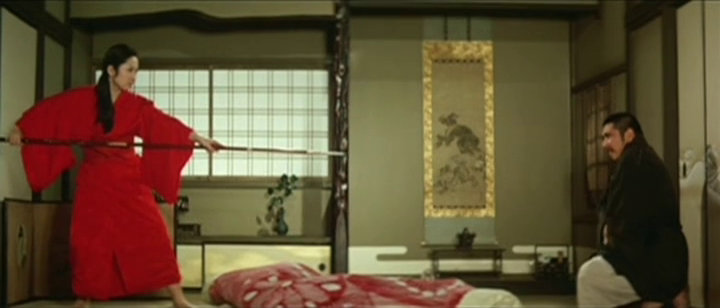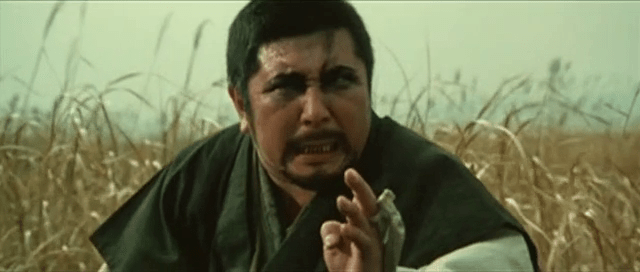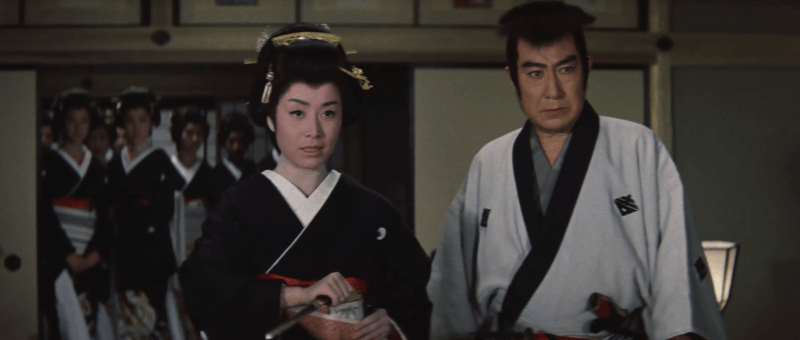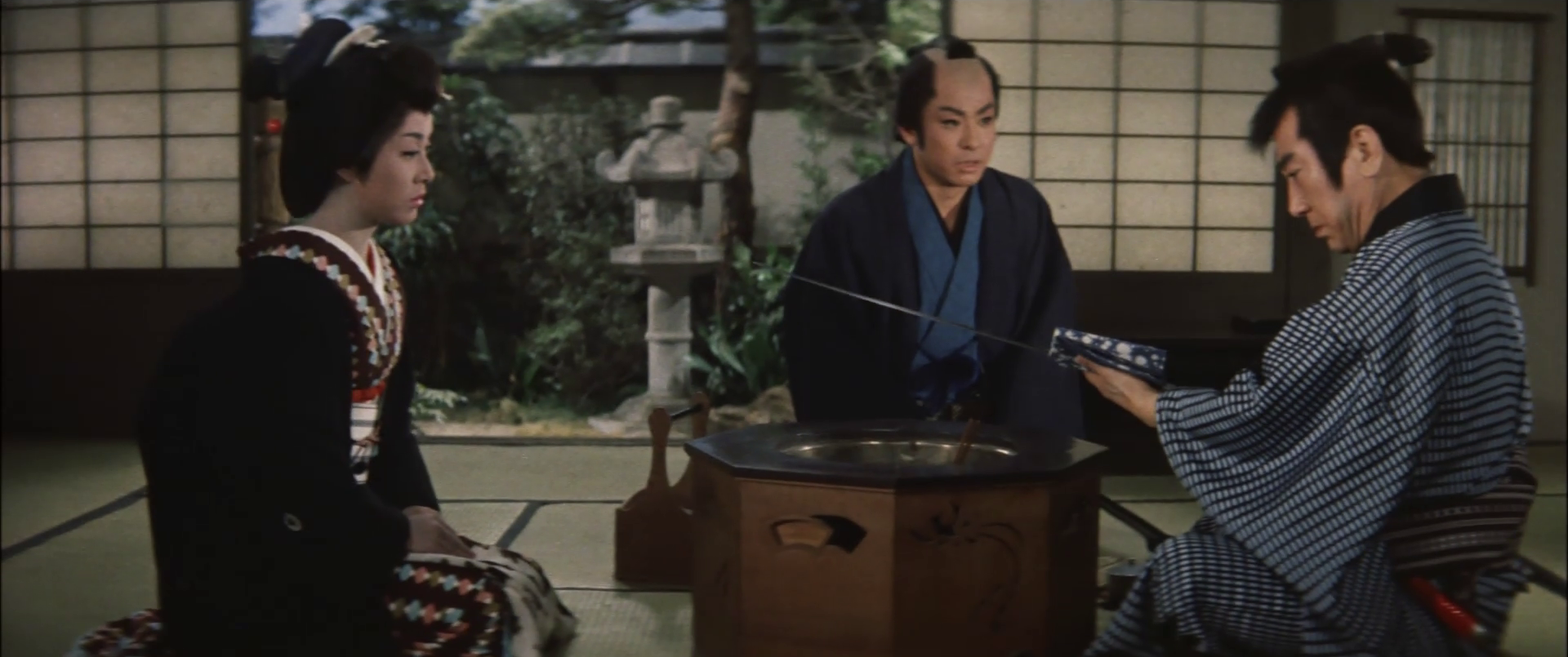
Big Time Gambling Boss (博奕打ち 総長賭博, Kosaku Yamashita, 1968)

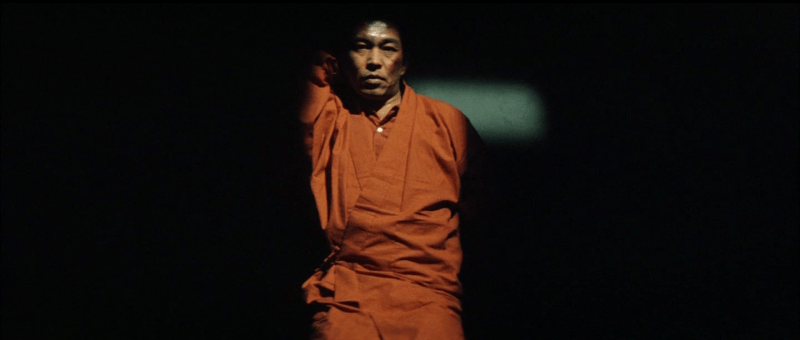
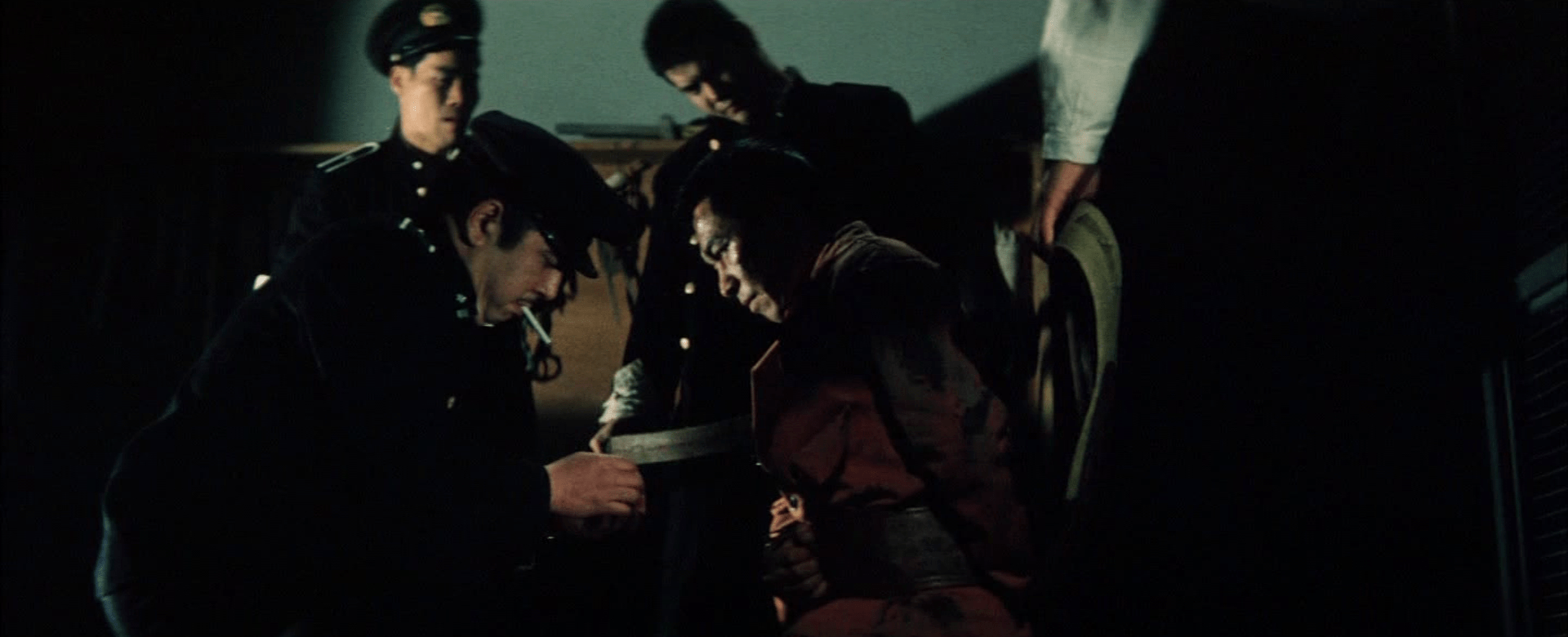
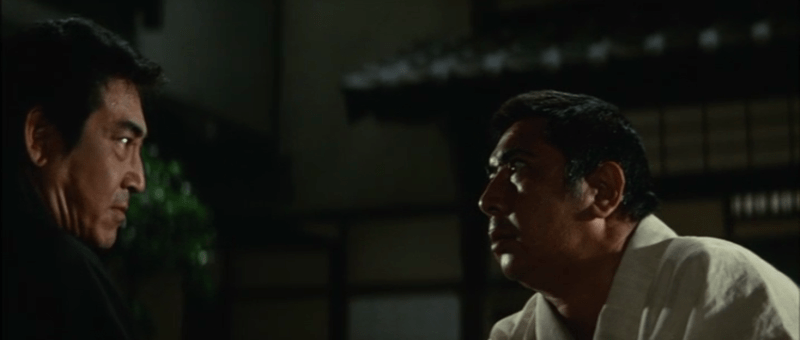
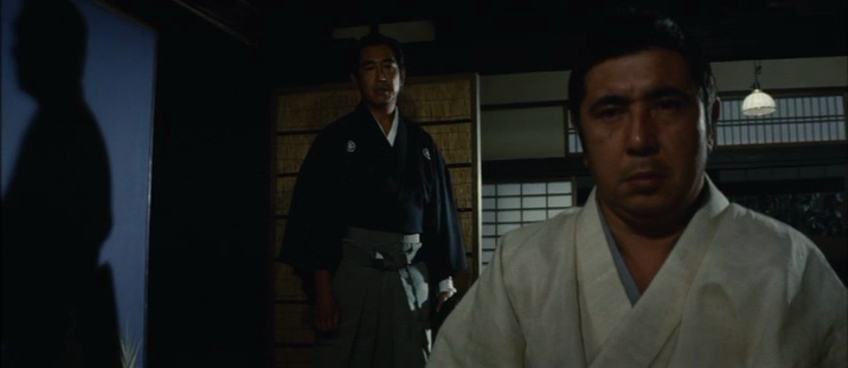
A Shakespearean tragedy of blood and honour, Kosaku Yamashita’s Big Time Gambling Boss (博奕打ち 総長賭博, Bakuchiuci: Socho Tobaku) discovers only fatalism and futility in the nobility of the yakuza code. The tragedy is that at any moment anyone could make a free choice to walk away, to abandon these arbitrary notions that convince them they must kill their friends and let their enemies go free, but they don’t because spiritually they cannot. Abandoning the yakuza code would in its own way a kind of death and mentally unsurvivable. 

There is however a greater tragedy in play. The film opens in the spring of 1934 with a villain remarking that it’s absurd to restrict oneself to one’s home terrified while a sword and the Japanese flag appear behind him. The catalyst for all this drama is Japan’s imperialist expansion. Yakuza fixer Senba (Nobuo Kaneko) and the shady Kawashima have hatched a plan to get all the yakuza clans to unite in a “patriotic” mission to traffic drugs to the frontlines looting as they go. Noble boss of the Tenryu Awakawa refuses, reminding them he’s just a simple gambling man and has no desire to get involved with politics before collapsing with a stroke. With Awakara alive but bedridden and no longer able to communicate effectively, the Tenryu decide to nominate a successor. The ideal candidate, Nakai (Koji Tsuruta), declines the offer on the grounds that he is a transplant from another gang in Osaka and thinks it would be inappropriate for an outsider to lead the clan. He proposes that his sworn brother, Matsuda (Tomisaburo Wakayama), should be appointed, though he is currently surviving a prison sentence so a caretaker should serve in his stead until his release. Most think this sensible though the proposed caretaker, Ishido (Hiroshi Nawa), also declines given the rules of seniority despite the fact that he is Awakawa’s son-in-law and so dynastic succession would also seem permissible. 

It’s during all of this finagling that Senba begins manipulating events to his advantage, gently manoeuvring the other lieutenants towards accepting Ishido as the new boss while he has no idea he’s being used as a pawn in Senba’s nefarious nationalist plotting. When Matsuda is released early, the entire situation kicks into overdrive in his outrage that the codes of rank have not been respected and that a man who is his inferior now sits at the head of the clan in a place he think’s rightfully Nakai’s but in light of his honourable refusal no one’s but his own. Even Matsuda later recognises his hot-headed recklessness in directly challenging Ishido over his decision to accept, insisting that the proper thing to do in his position would have been to persuade Nakai to take the job. Meanwhile, his own righthand man who’d been slumming it as a mere labourer in his absence, is dragged into intrigue in foolishly defending his honour by recklessly attacking Ishido’s men incorrectly believing they had provoked another gang’s attack on Matsuda little knowing it was all part of Senba’s plot. 

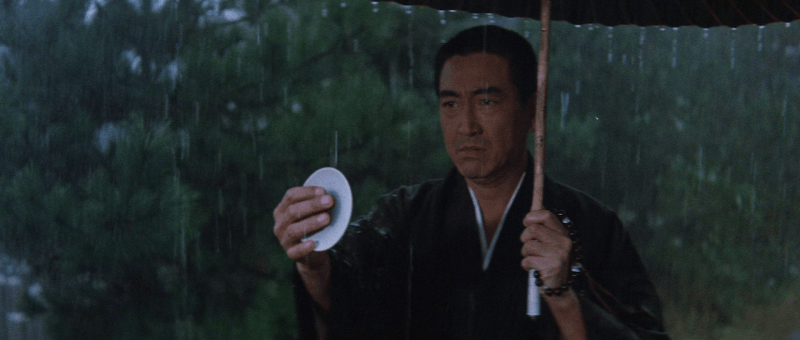
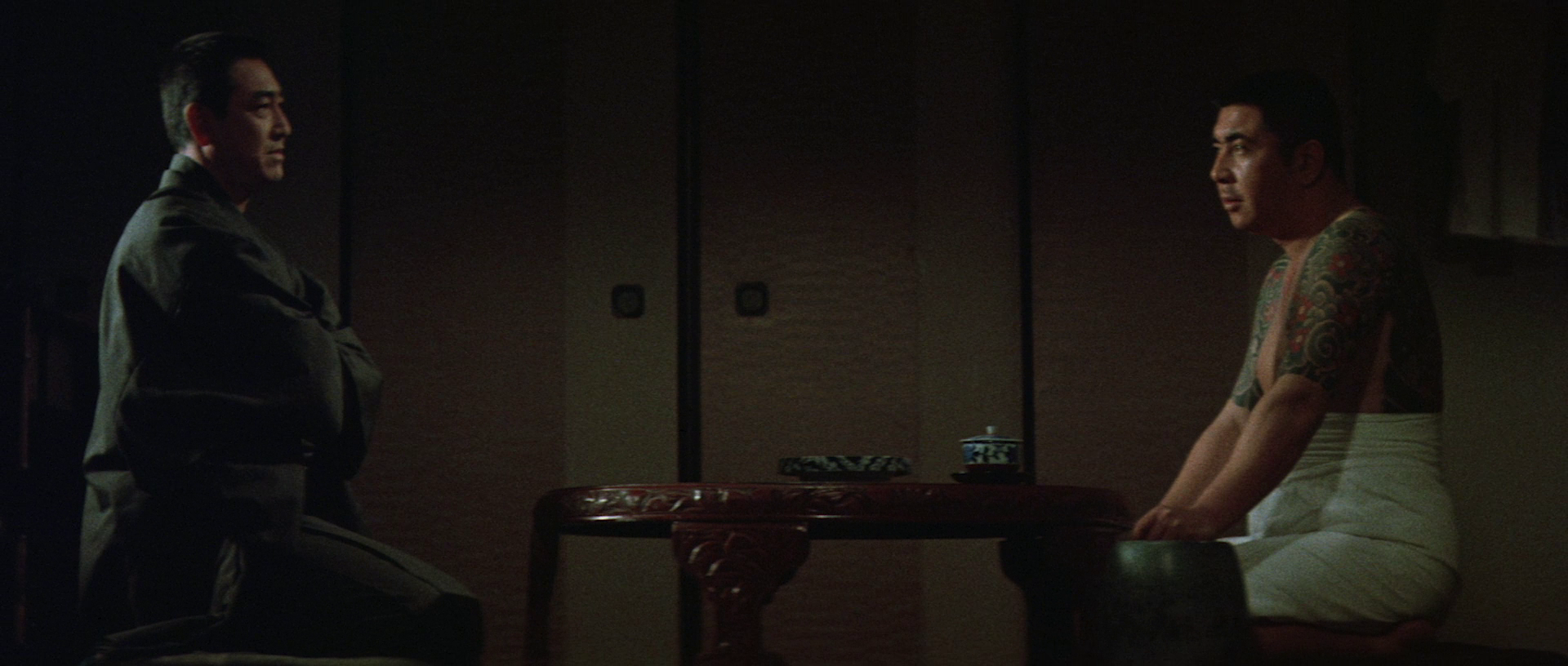
Nationalist trappings aside, Senba’s villainy is obvious from the moment he tells Nakai he thinks Matsuda was foolish for going to prison on the clan’s behalf and that he should have just found a scapegoat and put the blame on them, signalling himself a member of the new amoral yakuza who does not believe in giri and has no ninjo. Nakai rather is the opposite, as his old boss confirms in praising him for his correct decision to turn down the succession as it would not be right for him to accept as one who did not originate in their gang. Matsuda meanwhile pays too much attention to the letter of the code and not its spirit, obsessed with Ishido’s transgression and unable to let the matter drop to live a quiet life even as Nakai tries to convince him that the decision has been ratified by the lieutenants and the boss and so he must obey it. In a poignant moment, Nakai brings out the cup they used to seal their friendship and tells him that he will choose the clan, breaking the cup if Matsuda does not agree to accept a minimal degree of humiliation in returning with the intention of lying low and subtly reminding him that if he does not Matsuda will be placing a heavy burden on him that he may be forced to inflict lethal violence on his best friend and in fact brother-in-law. Realising the gravity of the situation, Matsuda immediately backs down, but events are now in motion that neither of them are capable of stopping. 

Of course, they could walk away but they don’t. Nakai offers the opportunity to Matsuda’s remorseful foot soldier Oto, telling him to leave the clan and take the woman he loves far away to live a peaceful life but of course he can’t because of his debt of loyalty to Matsuda. They are all trapped by the code which they follow and the villains ignore, laughing at them all the way. Then again, that’s what men like Nakai are for, born to set things right even if it comes at great personal cost. Even he finally snarls that he’s merely a murderer, rejecting any sense of honour in his actions while throwing a sword at the symbol of the system which has defined his life and submitting himself to the automatic operation of law of the state as a kind of martyr for system in which he may no longer believe. 


Trailer (English subtitles)

Eleven Samurai (十一人の侍, Eiichi Kudo, 1967)

“If no one denounces the absurdity of this world, then our descendants will keep suffering,” a soon-to-be ronin insists in Eiichi Kudo’s revengers tragedy, Eleven Samurai (十一人の侍, Juichinin no Samurai). It seems clear from the outset that their actions will have little effect no matter whether they succeed or fail because the enemy is feudalism which may be approaching the end of its life but is definitely not dead yet. They can at least attempt to avenge their clan even if they can’t save it while refusing to let an entitled, selfish lord get away doing whatever he likes just because he happens to be the son of the former shogun and brother of the current one.

The opening scenes see Nariatsu (Kantaro Suga) chasing a deer having declared himself a “real hunter”. He ignores the cries of his men to watch where he’s going and sails over the border into the territory of Oshi which amounts to an invasion seeing as he is armed and has no permission to be there. The deer gets away, but Nariatsu shoots an old woodcutter whom he felt to be in his way with his bow and arrow. The Lord of the Abe clan that rules Oshi immediately takes him to task and tells Noriatsu that his behaviour is unbecoming for the son of the former shogun. He’s committed a murder in their territory, but they’re prepared to let it go as long as he leaves as soon as possible. But Nariatsu doesn’t like being told what to do and simply shoots the lord in the eye, potentially sparking a diplomatic incident. 

The Abe clan try to lodge a complaint in Edo, but are shut down by courtier Mizuno (Kei Sato) who fears that to acknowledge an event such as this would damage the moral authority of the Tokugawa regime. He decides to cover the whole thing up by claiming it was the Abe clan who insulted Noriatsu. The Abe clan will then be dissolved, and Oshi essentially gets nationalised. All of which suits Nariatsu just fine because he wants to take control of Oshi and expand his territory anyway. Part of his petulance seems to stem from the fact that he feels hard done by with such a small inheritance when his brother became the Shogun and received multiple fiefdoms. The previous Shogun, Tokugawa Ieyoshi, had produced an unusual number of children which became quite a problem in that he had to find lands for them all and eventually hastened the demise of the shogunate because of the additional strain. 

But Nariatsu is also an overgrown child who has no idea how to do anything for himself and no concern for the feelings or fortunes of others. When instructed to do something he doesn’t want to, Nariatsu petulantly stamps his feet and complains, and when his actions are challenged he simply replies that he’ll be telling his father. In fact, he is so infuriating that it’s likely most of his men secretly want him dead too, including his chief adviser Gyobu (Ryutaro Otomo) who was once the General Inspector but is now expected to babysit this absolute buffoon. Even though Nariatsu knows the Abe clan will be trying to kill him, he still sneaks out to the red light district and gets blind drunk with geisha which in itself is conduct unbecoming for a high ranking samurai such as himself. 

As such, he represents almost everything that’s wrong with the feudal order while Mizuno represents the rest. It’s Mizuno that secretly plots against the plotters, manipulating them into giving up their assassination mission by claiming to have switched sides only to backtrack and reveal he’s actually still working for Nariatsu fearing a reputational loss for the Tokugawa. Chief revenger Hayato (Isao Natsuyagi) is also banking on this fear of reputational damage, certain that the Shogunate won’t be able to bear the humiliation of Nariastsu being killed by a ronin so will instead claim that he died from an illness. Vowing to avenge the clan, Hayato righteously gives up his position to become one so that the Abes won’t be linked to the crime and is joined by 10 more similarly annoyed samurai. Six of them are already “dead” having been asked to commit seppuku for recklessly attacking Nariatsu on their own and blowing the whole operation. 

Hayato at least believes this to be a suicide mission. He leaves his loving wife and home and allows people to think he’s run off with Nui (Eiko Okawa), the younger sister of one of their number who died before he could join them. They do this because they think it must be done, and also because if no one stands up to samurai oppression it will never end. Wandering peasant Daijuro (Ko Nishimura) agrees with them. He wants revenge on the samurai for raping his sister after which his father and brother took their own lives. Nariatsu is as good as anyone else and he does very much need to die. 

But despite Daijuro’s homemade cannons, nothing quite goes to plan. Kudo sets his final battle in an atmospheric, misty valley that is an obvious stand in for the underworld. Hayato may succeed in killing Nariatsu but it’s a pyrrhic victory. Though he vowed “to put an end to this ridiculous world,” a samurai cannot really win this battle. It’s Daijuro who eventually walks off with Nariatsu’s head, symbolically decapitating the shogunate which the closing titles confirm was mortally wounded by this incident. With his striking black and white cinematography, Kudo does indeed paint this samurai world as a hellish place ruled over by an infinitely corrupt and self-interested authority. The nihilistic futility of it all is emphasised by the figure of a grown man sitting like a small child and splashing his sword in a puddle while surrounded by dead bodies. There might be a way out of this, but not for the samurai, only for those who will come after and perhaps finally be free of this world’s absurdity.


Wicked Priest 5: Breaking The Commandments (極悪坊主 飲む打つ買う, Buichi Saito, 1971)

The Wicked Priest returns for his final adventure and once again finds himself tackling the corruptions of the mid-Meiji society. Titled in English “Breaking the Commandments” (極悪坊主 飲む打つ買う, Gokuaku Bozu – Nomu Utsu Kau), the Japanese title refers to something Shinkai (Tomisaburo Wakayama) admits part way through, that his ironically non-buddhistic life revolves around drinking, gambling, and women all vices he seems unable to give up even as he continues to fight justice for the oppressed little guy amid the burgeoning capitalist society of the new Japan.

Indeed the film opens with him in a brothel where he’s exhausting one woman after another and demanding she be replaced with a fresh model while simultaneously covering for petty crook Hideji (Teruo Ishiyama) who is hiding his sex worker girlfriend in the cupboard to save her from a local gangster. In the first few instalment, Shinkai is a lecherous yet lovable rogue who in his own way respects women but in these last two instalments is certainly less kind, treating these sex workers more or less as disposable while later threatening to rape a lady gambler who tried to trick him. In any case, after realising that even Hideji who he went out of his way to help is trying to deceive him, Shinkai ends up getting involved with a local dispute over transportation licences and a nefarious land-sharking plan run by thuggish gangsters with the collusion of the police chief.

The land sharks want to take over the abandoned mansion where Hideji and his family of crooks are currently living in the company of a former samurai lord who seems to be suffering with some kind of delusion that it’s still the Sengoku era. The police chief isn’t up for the idea at first but the gangsters falsely imply that those living in this area of town are merely “jobless people and criminals” that they don’t need to worry about. But their plan depends on bringing on board Wajima who holds the license for running freight carts but Wajima is an honest man who isn’t interested in bribes and has no respect for those who exploit others. He refuses to participate in the project.

Shinkai too refuses to let the gangsters get away with mowing over Hideji and the others and is once again saved by Ryotatsu (Bunta Sugawara) who agrees to put off their final fight until Shinkai is finished cleaning up this dirty little town. He largely does this by donning an elaborate disguise and teaming up with lady gambler Gin to trick conspirator Kawashima into giving back Wajima’s (Takashi Shimura) license after setting him up so he’d lose it. Meanwhile he also tries to repair another broken father-son relationship between Wajima and his errant boy Ryutaro (Kyosuke Machida) whom he’d kicked out some years previously after he became a yakuza and got into trouble with the law. 

What seems clear is that the chaos of Meiji has allowed the greedy to profit over the changing orders of the hierarchical society, no longer bound by traditional notions of good conduct or basic humanity. The police chief first objects to the plan, stating that many people living in the area the gangsters have earmarked for their docks are honest and hardworking and shouldn’t be lumped in with “criminals”, but is soon won over by a bribe and is also supporting a mistress in a separate household. Yet even so, Shinkai turns this same weapon back on Kawashima (Fumio Watanabe) in pretending to be a general from Tokyo who will soon be his father-in-law, leveraging his social advancement to bring him back into line in appealing to his greed and ambition while hinting at a militarist future in reminding him that Wajima’s carts were essential during the Satsuma Rebellion and may be so again should the occasion call.

After seeing off a series of bounty hunters, one sent in via a honey trap that suggests the gangsters really know their enemy, Shinkai has no option but to clear out the corruption himself at the point of a sword culminating in another bloody showdown which is also in its own way a means of protecting Ryutaro from a pointless revenge. “If I die the devil in hell will be in for a big surprise!” Shinkai cooly remarks as he marches off to fight for justice, but then there’s another battle waiting for him in the postponed grudge match with Ryotatsu as the two men tussle atop a sand dune ironically trapped in a co-dependent cycle of vengeance and salvation while Shinkai’s wandering most likely will never end.


Wicked Priest 4: The Killer Priest Comes Back (極悪坊主 念仏三段斬り, Takashi Harada, 1970)

At the heart of the Wicked Priest series is an idea of rootlessness, the wandering monk Shinkai (Tomisaburo Wakayama), an orphan, often finding himself dragged into familial disputes between fathers and sons for one reason or another often estranged from each other. The aptly named Wicked Priest 4: The Killer Priest Comes Back (極悪坊主 念仏三段斬り, Gokuaku Bozu: Nenbutsu Sandangiri) finds Shinkai returning to his hometown after reencountering a childhood friend who’s found himself on the wrong side of a historical divide.

When Shinkai and Takegoro (Ichiro Nakatani) left their childhood village, they swore to become the best priest and mountain owner in Japan respectively but that obviously hasn’t worked too well for either of them. Takegoro evidently joined the wrong side during Bakumatsu chaos, a fact rammed home when his attempt to use currency issued by a feudal lord is rebuffed in a gambling den whose owner reminds him that it is now worthless. Only official currency issued by the central government is considered legal tender. On top of all that, it seems Takegoro might also have been cheating which signals just how far he has fallen. Running into him by chance, Shinkai ends up saving the day while accidentally humiliating a chastened Takegoro who is given a further dressing down by the old school lady yakuza boss Kuroda (Chieko Naniwa), also known as “the Thunder Woman”, who appears to be in charge, shooting off his little finger as an attempt to save face. 

In any case, the encounter has Shinkai feeling nostalgic and he decides to return to his hometown to hold a proper memorial service for his late mother. Only once there he ends up being drawn into another cycle of local corruption on discovering that the river workers are being exploited by rival yakuza groups who are working them to exhaustion and paying almost nothing. The leader of the Gondawara is quite obviously up to no good as he wears a western suit and has a handlebar moustache, quite clearly an amoral capitalist while his rival Ryuo (Eizo Kitamura) is a violent thug in ominous sunshades. In actuality, however, they are both branches of the yakuza syndicate led by Kuroda who is of the old school and doesn’t approve of their exploitative mindset. Just as she had Takegoro, she gives both men a good telling off reminding them that the river workers are essential for providing a steady supply of coal without which the new industrial economy will flounder. 

It’s also true that this same industry is fuelling militarisation and an eventual eye towards expanding imperialism, but Kuroda does seem to be mainly mindful of the workers welfare immediately insisting they should be paid a fair wage which is five times more than they’re currently getting. Ryuo and Godawara superficially agree but intend on simply exploiting their workers differently by demanding five times as much work for five times as much pay in a fifth of the time. Shinkai does his best to defend the rights of the local people, but is faced with a dilemma on realising that Takegoro is member of Godawara and hellbent on killing him having become cynical and desperate, willing to sell out a childhood friend for a few pennies. 

Part of Shinkai’s mission is winning Takegoro back over the side of right while reuniting him with his mother whom he’d been too ashamed to visit. On the other hand, this is perhaps the first time Shinkai shows a darker side to himself on threatening to rape a lascivious nun who tricked him into a martial arts contest while rebuffing his amorous intentions. He’s also still being pursued by Ryotatsu (Bunta Sugawara) and ironically ends up temporarily losing his sight himself but just as always Ryotatsu decides to come to his rescue mostly because it would be very annoying if someone else killed him first before he’s got his revenge. He also agrees to wait for Shinkai to finish his mother’s memorial service before scheduling their death match, the most patient revenger in jidaigeki history. In any case, it all ends with another massive showdown as a wounded Shinkai purifies the town of corrupt yakuza and liberates the river workers while finally getting to honour his late mother’s memory leaving Ryotatsu to make his exit deciding that vengeance can wait until the mourning’s over.


Tengu Priest (お坊主天狗, Yasushi Sasaki, 1962)

Disparate denizens of Edo are united in one thing in Yasushi Sasaki’s light hearted jidaigeki, Tengu Priest (お坊主天狗, Obozu tengu), revenge. Like many jidaigeki, what they really want is revenge against the evils of feudalism to which they have each fallen victim, but also acknowledge that they have found something better in being outside it in the solidarity that exists between them as outsiders free from the obligations of samurai society if also with loose ends waiting to be tied.

Once a hatamoto with a 1000 Koku stipend, Obo Kichiza (Chiezo Kataoka) is now a much feared figure keeping order in Edo. When some yakuza toughs are hassling the geisha Kozome (Hibari Misora) at the theatre, insisting that she serve them sake even as she reminds them she’s off the clock, one look from him stops them dead though Kichizo is also impressed with Kozome’s nerve. Like him, Kozome is also in Edo for revenge. Formerly a samurai’s daughter, she became a geisha to look for the man who killed her father in a stupid quarrel over a fencing duel. Kichiza, meanwhile, seeks revenge against the local lord, Honda Etsu (Masao Mishima), who killed his father in a fit of temper when he ordered him to commit seppuku for causing his son-in-law to fall off his horse but he refused. 

Loyal retainer Kinpei (Ryutaro Otomo) had begged for his forgiveness and insisted that he could get Etsu to reform but three years have passed and not only has he bribed his way to head office but his behaviour has declined still further. We see him cruelly cut down a maid seemingly for no reason, simply ordering his men to get rid of the body. Etsu has a reputation for random violence while drunk, but as he is the lord, there are no real consequences for him. His retainers cover up his crimes, and Kinpei’s sole attempt to talk some sense into him goes nowhere, meanwhile his chief adviser Shichinosuke (Sentaro Fushimi) is basically running the show telling others the lord is not in his right mind and cannot make decisions so he must make them for him.

They are all, including Etsu himself, victims of the feudal order in which the systems of power are necessarily corrupt. In his yakuza persona, Kichiza has struck up a friendship with another geisha, Kozuru (Naoko Kubo), who was actually a lady in waiting working as a maid at his estate. She has long been in love with him, but the class difference would have made any union impossible. Ironically, she remarks to Kozome that even in their present state they are still a Hatamoto and a lady in waiting so she dare not express her love for him. Only once his revenge is concluded and he’s fully abandoned his samurai status can Kichiza truly be free to embrace a relationship with Kozuru while conversely Kozome regains her life as a samurai’s daughter by avenging the death of her father.

Kozome asks for Kichiza’s help to track down the target of her revenge, but he also respects her wishes and understands that it’s something she must do herself as does eccentric sword sharpener Shinzaburo (Hashizo Okawa ) who actively stands back so she, another wronged woman, can stick the knife in. Hibari Misora’s role in the film is smaller than one might expect as her revenge subplot is secondary to Kichiza’s and she has relatively little screen time with only a brief musical sequence during a naginata dance though she does participate in the high octane final showdown in which all grievances are exorcised and a kind of order returned to the samurai realm even if it must be destroyed to so as Kinpei resolves to protect both the lives and livelihoods of their many retainers and the integrity of Kichiza, going so far as to congratulate Kozome on the successful completion of her revenge. 

Yet what made the whole thing possible was Kichiza’s own band of outlaw drifters whom he allowed to live in his home he later says just so that they would have a place to come and be together so that they might more easily reintegrate into mainstream society. He might have lost his domain and samurai status but has discovered something better in this accidental community. They may be in a sense almost like retainers to him, but if so they stay by choice rather than obligation and help out of a genuine sense of loyalty and affection. In essence, in taking his revenge, he frees himself from the oppressive nature of the samurai code and is able to live like an ordinary man lamenting that if only he and Kinpei had both been ronin they could have enjoyed their time together for longer. Lighthearted and cheerful despite its dark themes, the film is nevertheless a condemnation of the hypocrisies and abuses of a feudal society in which freedom is to be found only among those who live outside it.


Eighteen Years in Prison (懲役十八年, Tai Kato, 1967)

Genre star Noburu Ando had a certain cachet in that he had been a yakuza prior to becoming an actor. He had in fact been the head of his own gang which at its high point had over 300 members and controlled much of the lucrative Shibuya nightlife scene. His first onscreen appearance was in a gangster movie in which he played himself. Rather than the jitsuroku epics he would later become associated with, Tai Kato’s Eighteen Years in Prison (懲役十八年, Choueki Juhachi Nen) essentially casts him in a ninkyo role as a noble if compromised former captain of the kamikaze squad who finds himself caught between the contradictions of post-war Japan and the American occupation. 

Indeed, in this as in many other yakuza movies set during the immediate post-war era, the Americans are really just the biggest gang. Suffering with survivor’s guilt, Captain Kawada (Noboru Ando) has set up an association together with former comrade Tsukada (Asao Koike) to look after he dependent relatives of men who fell in war. To do this, he has to resort to criminality raiding American boats for supplies such as sugar and rice which he redistributes to war widows and their families. His ultimate goal is amassing enough money to buy a patch of land in the town centre and do away with the black market which exploits the vulnerable replacing it with a legitimate market so the surviving family members can set up businesses to support themselves. 

Around this time, the association manages to track down the younger sister of one of their men who died as a kamikaze, Hisako (Hiroko Sakuramachi ), and discovers she is living in desperation having lost the family home to aerial bombing. As her mother is seriously ill and she needs money for food and medical treatment, Hisako contemplates turning to sex work and is almost assaulted by a gang of drunk and abusive American servicemen from whom she is rescued by a passing Kawada. This incident makes plain his resentment towards the occupation and sense that it is the American influence that is wilfully suppressing the efforts of the Japanese people to rebuild their society. It’s this resentment that lends a note of justification to Kawada’s decision to rob a nearby factory of valuable copper wire to get the money to save Hisako’s mother thereby saving her from falling into sex work and thereafter helping to achieve their ultimate goal of building the market. The raid, however, goes wrong. Kawada sends an injured Tsukada back to the association and is arrested.

In prison he discovers only more corrupt authority in which guards beat and torture prisoners, just another bigger gang. He finds out that block warden Hanya (Tomisaburo Wakayama) is actively accepting bribes and in cahoots with some of the inmates that attempt to terrorise newbies to the point that one attempts suicide by swallowing glass though Hanya refuses to call for help forcing Kawada and some of the other men to pull the alarm themselves. The sources of moral authority lie in the new college-educated deputy warden recently returned from five years as a POW in Manila, and a veteran yakuza with a grudge against Hanya who apparently had his girlfriend raped leading to her suicide. 

Though the film is titled eighteen years in prison, Kawada becomes eligible for parole in 1952 which is of course the year the occupation ends. By this point he discovers that Tsukada has abandoned their idealistic mission and turned full yakuza, building an immense red-light district on the land they bought for the market and making himself rich through the violent trafficking and exploitation of women. Eventually confronted, he tries to convince Kawada that the world has changed, that the post-war years of privation are over and that he sees only “the ghost of a nation that lost the war” rather than burgeoning new economy stimulated by the Korean War and an ironically a repositioned America now no longer occupiers but still somehow influential if leaving a vacuum a man like Tsukada may step into. It’s no coincidence that he threatens Hisako with deportation to a brothel in Okinawa he’s set up to service American servicemen in a place where the conditions of occupation are still largely in place. 

Tsukada clearly feels that he need have no more responsibility for his wartime conduct, roundly telling Kawada that the families of the fallen are not his responsibility and should “stop leeching off other people and start working for a living”. Hisako’s long lost younger brother Kenichi (Masaomi Kondo) who ended up alone on the streets after being conscripted as a student factory worker and returning to find his home in ashes, turns the blame back on the authorities reminding them that it’s their fault, they started the war the cost him his home and family and turned him into the half-crazed man of violence who immediately introduces himself as “King” on moving up from a juvie prison. Much of Kawada’s prison life is then given over to saving Kenichi, a representative of the next generation, from becoming mired in a life of nihilistic crime. 

In many ways, he remains a squad leader trying to atone for having sent so many young men to die by accepting the responsibility for their families while trying to protect those left behind from the vagaries of the post-war era including the amoral capitalism represented by the infinitely corrupt Tsukada. Dressed in a military uniform ironically pinched from an American soldier he goes on the rampage knowing that he has to deal with Tsukada himself in order to defend the post-war future from those like him who’ve apparently learned nothing much at all even from such recent history. Shooting from his characteristically low angles, Kato explores the seedy underbelly of the beginnings of the economic miracle while his noble hero does his best to offer a course correction to those who have already forgotten their responsibility not just to others but to those they left behind.


The Pledge (博奕打ち外伝, Kosaku Yamashita, 1972)

The gangster code slowly consumes series of men each trying to do the right thing but hamstrung by the actions of others in Kosaku Yamashita’s yakuza tragedy, The Pledge (博奕打ち外伝, Bakuchiuchi Gaiden). It is indeed a promise between brothers which damns them all, but the roots of it lie in repressed emotion and a desire to protect other people’s feelings by keeping a destructive secret while trying to satisfy oneself that one has behaved properly even if no one else understands. 

The battleground is Wakamatsu, Kyushu, where outsider Egawa (Koji Tsuruta) has united the local boatmen and is undercutting the prices of a rival gang led by Omuro (Tomisaburo Wakayama). While Omuro is out of town, his right-hand man Taki (Hiroki Matsukata) has decided to take advantage of a minor squabble between some of his guys and Egawa’s to initiate a small scale turf war hoping to take the river back under their control. He does this by kidnapping Egawa’s younger brother Masakazu (Goro Ibuki) to lure him to their headquarters alone, something of which Omuro does not approve on his return but decides to go with as an excuse to bring his rivalry with Egawa to a head. Just as the pair are squaring off, a mutual friend, Hanai (Ken Takakura), arrives and intervenes convincing the two men to lay down their arms for the moment at least.

It could be argued that it is this interrupted fight that is resolved in the film’s conclusion if only by inexorable fate. In a repeated motif, Omuro keeps to the code and is exasperated and disapproving of Taki’s underhanded tactics but accepts the responsibility for them himself knowing that Taki acted only on his behalf and his recklessness is only an expression of his love for him. There is indeed something homoerotic in the relationship between the two men as Omuro cradles a wounded Taki and attempts to comfort him that the fault is all his own, while resolving to accept Taki’s actions and build on them rather than try to deescalate or try to apologise. 

The real crisis occurs when the boss, approaching 60 which represents the full circle of a life, decides to name Omuro as a successor rather than the anticipated Hanai. Hanai stoically accepts though intending to leave the gang and travel to another part of Japan but other members of the clan are perplexed, little understanding the boss’ decision in feeling that Omuro is not of good character whereas Hanai is easily the better choice. As it transpires, the boss has made his decision deliberately in order to mitigate the fact that Hanai is secretly his illegitimate son whose origins he has kept secret in deference to his legal wife. He chooses not to name him as a successor in order to avoid causing him problems in his later life while justifying himself that he has not made the decision for dynastic reasons or out of simple favouritism. Yet the relationship between the two men, father and son, is raw and painful if founded on a deep understanding that leaves them unable to meet each other directly with emotional honesty. 

Because of his father’s decision, Hanai forces Egawa to promise that he will not antagonise Omuro which leads to problems in his own gang with his men angry and confused, unable to understand why Egawa is letting Omuro walk all over him. Compounding the problem, Egawa’s errant brother Tetsu (Bunta Sugawara) returns unexpectedly and as Egawa cannot tell him about the pledge without disclosing Hanai’s secret, thinks his brother is being messed around and raids Omuro’s offices to reclaim money he had extorted from Egawa. He learns the truth from devoted geisha Hideko (Yuko Hama) who is deeply in love with Egawa yet largely unable to act on it again because of the gangster code while pledging that she’d sooner die and prove her devotion to him than summit herself to Taki, who is also in love with her, even when he threatens her with a knife. 

The yakuza code dictates that Omuro must die though he is little more than a passive antagonist all too willing to accept the evil deeds that Taki did on his behalf because of the code of loyalty though he would not have dared to do them himself. Secrecy and repressed emotion drag all into a dark web of self-destructive violence until reaching their inevitable conclusion and perhaps bringing one cycle to a close if only in the birth of another. 


Original trailer (no subtitles)

The Phantom Goblin (まぼろし天狗, Nobuo Nakagawa, 1962)

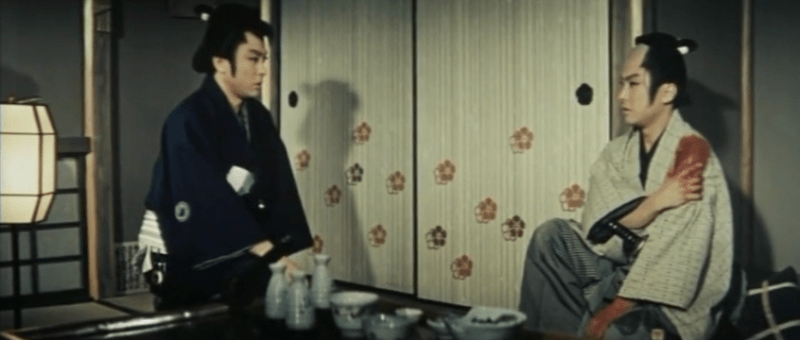
“Everything is money these days” as a pirate king cheerfully proclaims in Nobuo Nakagawa’s tale of Edo-era corruption, Phantom Goblin (まぼろし天狗, Maboroshi Tengu). Perhaps named to capitalise on Nakagawa’s reputation for spookiness, Phantom Goblin features no real ghosts and only metaphorical goblins in the bright red tengu masks sported by the hero’s mysterious clan while otherwise conforming to the Toei programmer house style and starring jidaigeki superstar Hashizo Okawa in a double role as brothers separated at birth and reunited by their resistance towards the inherently corrupt authority of Edo society. 

Drawing parallels with the present day, the film opens at a bawdy banquet at which corrupt councillor Tanuma (Isao Yamagata) is being entertained by a pair of local social climbers with a floor show of dancing girls. Shortly after the performance begins, however, one of the women collapses writhing in agony and loudly crying out for drugs. Embarrassed, the lords would rather this not get out deciding to finish the woman off and dump her body in a nearby well. Unfortunately for them, the plan is interrupted by local policeman Shuma Moriya (Hashizo Okawa) who arrives in time to hear the woman exclaim the words “drugs” and “mastermind” before she passes away. Determined to figure out the truth, Moriya heads to the not so secret hideout of a local gang but is shot in the arm and has to take refuge in an inn where he encounters a man who looks just like himself, Kyonosuke Asakawa (also Hashizo Okawa) of the Goblin clan, who eventually sends him to his estate to recover and assumes his position as policeman in order to root out the truth. 

A former hatamoto who apparently resigned his position after finding himself unable to support corrupt lords, Kyonosuke declares himself “frustrated with how things are run”, realising that the system is rotten beyond repair on hearing that Moriya has been fired by a corrupt magistrate apparently in league with the conspirators. While comparatively rare in Edo-era dramas, drugs are a controversial subject in any age but in keeping with the sensibilities of the early ‘60s Phantom Goblin eventually slips into the Sinophobia then rampant in contemporary crime dramas as it becomes clear the drugs trade in the feudal economy is being driven by Chinese pirates trafficking it in from overseas while weak willed lords enable their rise to power. 

There is however a touch of conservatism in Kyonosuke’s desire to see justice served in that he fears a world in which “if you can buy power and position with money, then one day we will have a chief counsellor who is a pirate”. While he’s undoubtedly got a point, it’s also true that he is in a sense protecting his own privilege conveyed by birth rather than worth in addition to rejecting the influence of the “foreign” as he raises his sword against a Chinese pirate in order to target the corrupt lords who’ve been collaborating with him in order to bolster their own power and position. Kyonosuke wanted to “clean out evil in Edo”, but eventually succeeds rather ironically in simply becoming a part of the system himself after having supposedly cleaned it out by getting rid of the “obviously” corrupt elites. 

Recovering from his shoulder injury and flirting with the adopted sister of Kyonosuke, Moriya is largely relegated to a secondary role though the secret brotherhood of the two never develops into much of a plot point even as they bond as men too honest for the world in which they live. Nor do the respective romantic dilemmas ever materialise even as the conflicted figure of a female bandit in love with the noble policeman is forced to pay for her crimes with her life, unable to progress into the purified world the brothers are about to create. Working in the Toei house style, Nakagawa abandons his taste for the strange or otherworldly contenting himself only with a few ironic tengu masks and the literal shadows surrounding the shady mastermind while indulging in genre staples such as the comic relief provided by Kyonosuke’s bumbling retainers and the double casting of Hashizo Okawa as two brothers alike in both appearance and sensibility who find themselves unable to accept the increasing corruption of their society and determine to oppose it. 


Law in Ghost Island (幽霊島の掟, Yasushi Sasaki, 1961)

The post-war world was one of increasing globalisation which brought with it anxiety as well as hope as Japan readied itself to step back onto the world stage. The populist cinema of the early ‘60s is marked by ambivalent attitudes to international influences, not just towards creeping Americanisation and its perceived costs but perhaps somewhat uncomfortably towards the wider world and Asia in particular with the same old prejudices which had marked the previous 20 years rearing their heads once again. Voice of the post-war era, the films of Hibari Misora are, by contrast, about as forward looking and progressive as it was possible to be but Law in Ghost Island (幽霊島の掟, Yurei-jima no Okite) in which she plays a noticeably smaller part, is a bizarre exception in which a “lawless” melting pot outpost must be “civilised” by Japanese influences else the creeping rule of thuggish Asian gangs finally reach Japan “proper”.

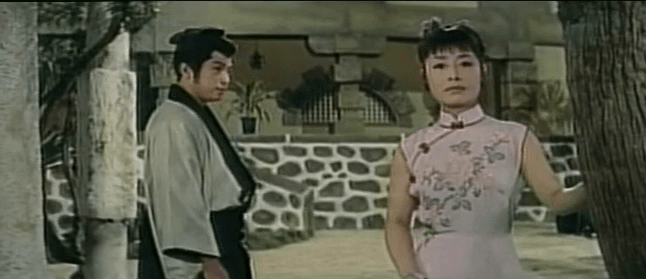
We’re deep in the Bakumatsu. The Black Ships have already arrived and there is considerable political trouble brewing back in Japan. That’s not our immediate concern however because we’re on a creepy boat with slovenly ronin Yagi Hanzo (Hashizo Okawa) and a mysterious woman wearing a cheongsam (Hibari Misora). Fellow petty gangster and slave trafficker Bunji (Chiyonosuke Azuma) is suspicious of Hanzo, but decides he’s probably just an unlucky retainer on the run from something or other and might prove useful. Therefore, on arrival at Dragon Island, Bunji starts on trying to recruit Hanzo for his boss Chou Yang Po (Isao Yamagata), but Hanzo’s his own man and he hasn’t come here looking for a job. Fearing Hanzo is a government official here to bring the law down on all their heads, Chou tries to force him to harm a man they have in custody and believe to be working for the state. Hanzo gets round this by breaking a chair over the man’s back but leaving him otherwise unharmed, keeping his cover (if that’s what it is) firmly intact.

During his stay on Dragon Island, Hanzo will meet several other shady characters, many of them dressed in outfits more usually associated with the Chinese, Indians, nondescript “islanders”, and strange movie pirates, but what must be assumed is that though Japan “owns” this distant island it is unable to police it and as such it has become a den of scum and villainy in which various tribal gangs vie for hegemony and control over the lucrative smuggling hub which has unwittingly formed in direct response to Japan’s unwise policy of internal isolation which is itself at breaking point thanks to Perry’s Black Ships which we later hear are also on their way to Dragon Island.

Our key into this conflict is the crazed child of the leading gangster, Isakichi (Hiroki Matsukata), who dresses like a cowboy and likes to showoff his hard-won saloon credentials as sharpshooting libertine and all round party animal. Hanzo is not as impressed by this as Isakichi was hoping though an awkward sort of camaraderie eventually arises between them. Meanwhile, Isakichi has fallen in innocent love with the sister of his childhood best friend who is deep into a putative resistance movement hoping to end the stranglehold the smugglers have placed over the previously peaceful island.

Misora’s Madame Song, for some reason posing as a Chinese sex worker, hints at the various ways nothing is quite as it seems in her astute observations of the world around her, sensing that Hanzo is hiding something but also assuming that he is on the “right” side. There is conspiracy everywhere – the putative revolution at home is sending its shockwaves all the way out here as our unscrupulous gangsters try to procure guns to send to various sides on the mainland, while Madame Song ironically laments that what Dragon Island needs is to be more like Japan which is to say ruled less by law itself than an internalised acceptance of the proper order of things. Uncomfortably, it also probably means sending the people who aren’t wearing kimono somewhere else and trying to stop them tricking nice women from Kyushu into coming to tropical islands where they discover they’ve been trafficked into sex work and are unable to leave.

Among Toei’s lower budgeted efforts, Law in Ghost Island bills itself as a supernatural tale and does indeed open with a creepy scene of a misty boat but Hanzo doesn’t end up anywhere like the isle of the dead only a fantasy tropical “paradise” filled with zany movie pirates. Somewhere between pirate fantasy and western, Law in Ghost Island is closer to the kind of spy spoofs Toho would start producing in a few years’ time and even ends with a strangely comic scene in which just about everyone reveals themselves as spy for the same side during the climactic final shootout having been too busy playing spy games to figure any of it out before.

The final messages too are uncomfortable and ambivalent as Hanzo affirms that if there were more “good samurai” Japan would not become lawless like it is here while also claiming Dragon Island for the mainland in fear external forces may use it as a base to attack Japan. The smugglers pay heavily for their “treachery” in contributing to internal mainland chaos while the revolutionary islanders declare their intentions to make the island a better place, which mainly seems to mean making it more “Japanese” which is a fairly ambivalent message whichever way you look at it. Misora only sings two songs and is relegated to a minor mystery in the strange goings on of Ghost Island which features absolutely no ghosts or supernatural intrigue. It does however perhaps shine a light on a strange moment of cultural flux however how unflattering that mirror may turn out to be.


Brief clip of some of Hibari’s songs (no subtitles)

https://www.youtube.com/watch?v=ryNk8dAVVnI