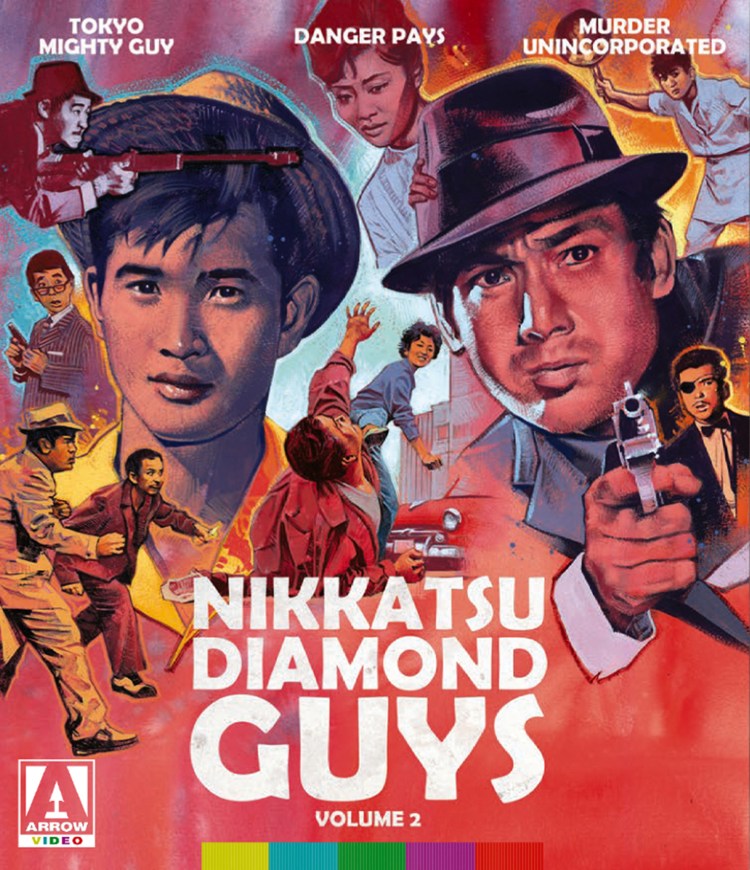
Nikkatsu Diamond Guys Vol.2

nikkatsu diamond guys 2Review of Arrow’s Nikkatsu Diamond Guys volume 2 up at UK Anime Network.


Following on from their previous release, Arrow return to Nikkatsu’s 1960s output with three more films which each star some of their “Diamond Guys” A-list stars, this time focussing again on Akira Kobayashi and Jo Shishido. In contrast to the three films featured in the Diamond Guys Vol. 1 set (Voice Without a Shadow, Red Pier, and The Rambling Guitarist), vol. 2 showcases Nikkatsu’s lighter side with three feel good tales each skewing much more towards comedy though still operating within the crime genre.

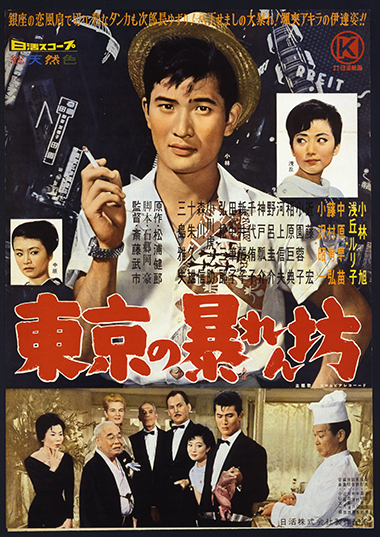
The first film in the set, Tokyo Mighty Guy, is, like The Rambling Guitarist, the first in what would later develop into a new film franchise lead by star Akira Kobayashi. After beginning with a kitsch musical sequence which would be at home in any Hollywood fluff fest of the era, the film takes on a neighbourhood comedy aesthetic as aspirant middle class guy Jiro becomes the big man around town. He’s well educated and has just returned from studying overseas in Paris but is working with his parents in a restaurant serving French cuisine which they have just opened in fashionable Ginza.

Jiro does as he pleases and doesn’t take any nonsense from anyone. He sends yakuza packing and helps a local bar owner sort out her financial and romantic problems (which are deeply intertwined) as well as the love life of one of her employees who’s been duped by a faithless rich guy. Western looking and modern in approach, this is a look at socially mobile city youth in 1960 just as the nation starts to push forward both economically and socially.

Danger Pays, by contrast, has less social commentary but takes on the challenging arena of the slapstick crime comedy. When a van containing watermarked paper destined for the mint is stolen, all the underworld is abuzz with petty crooks hoping to get their hands on Japan’s best forger. Eccentric trio “Glass Hearted Joe” (dapper dresser, extreme fear of the sound of scraping glass), Slide-Rule Tetsu (walks with a cane, likes maths), and Dump-Truck Ken (yeah, he has a dump truck) team up with martial arts enthusiast and former secretary Tomoko (Ruriko Asaoka) in a quest to get their hands on the (fake) money no matter what ridiculous scams they become involved in.

Quickfire slapstick humour at its finest, Danger Pays takes place in a cartoon-like world filled with bizarre stunts and ridiculous action. The breathless pace continues throughout but the tone shifts significantly in the final third as the gang find themselves trapped in a room which is about to be filled with gas and then holed up in an elevator shaft for an impromptu shootout. Despite the bodies and the blood the four continue with their ramshackle plotting but there are yet more surprises headed their way.

The surreal theme continues into the final film for the also Shishido starring Murder Unincorporated. When one of five local gangsters is assassinated by “Joe of Spades” and the remaining four fear they’re next on his hit list, they hire a selection of eccentric assassin bodyguards to find and neutralise their enemy. Each of the hitmen has his own theme and signature weapons running from European poetry to baseball and extreme fear of fish but their opposing numbers are equally strange and the gang is about to find out that the situation is even more complicated than they thought it might be.

Murder Unincorporated exists within a strange meta bubble in which hitmen recount their sorry origin stories to convince us that they had no choice but to become contract killers. Inspired by the famous Kansai comedian Kobako Hanato, the film runs at a ferocious pace with complex wordplay and increasingly surreal set pieces to create a truly absurd colourful and cartoon world that makes very little actual sense but is extremely funny.

Nikkatsu is best known for its action output but this latest collection proves the “borderless’ nature of the genre which isn’t generally associated with comedy. Gone are the melancholy heroes of volume one, these are figures of fun, but in the nicest possible way. Danger Pays and Murder Unincorporated both lean more towards the surreal whereas Tokyo Mighty Guy’s humour is of a more mainstream, wholesome kind, and the film definitely takes place in a more recognisably realistic world (though heightened and with an “aspirational” edge). Even if Seijun Suzuki famously got himself fired for making movies which made no sense and no money, Nikkatsu’s ‘60s output was not always against a touch of surreal playfulness as these intensely colourful, often silly escapades demonstrate with ample style.


Nikkatsu Diamond Guys vol. 2 is currently on sale from Arrow Films. You can check out more detailed reviews of each of the three movies below:

Murder Unincorporated (大日本殺し屋伝, Haryasu Noguchi, 1965)
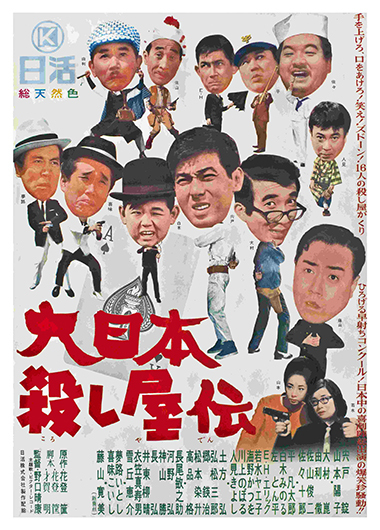
0089_86_MURDER_UN-INCORPORATED“If you don’t laugh when you see this movie, I’m going to execute you” abacus wielding hitman Komatsu warns us at the beginning of Haryasu Noguchi’s Murder Unincorporated (大日本殺し屋伝, Dai Nihon Koroshiya-den). Luckily for us, it’s unlikely he’ll be forced to perform any “calculations”, and the only risk we currently run is that of accidentally laughing ourselves to death as we witness the absurd slapstick adventures of Japan’s craziest hitman convention when the nation’s “best” (for best read “most unusual”) contract killers descend on a small town looking for “Joe of Spades” – a mysterious assassin known only by the mole on the sole of his foot.
After the amusing Bond style opening, we witness the first victim of Joe of Spades who happens to be one of the five top gangsters in town. Sure enough, the other four then receive a threatening phone call to the effect that they’re next in line for a bullet in the brain. After ringing up an assassins agency and holding a series of auditions, the head honchos wind up with a gang of hitmen bodyguards each of whom have their own theme and wacky back story.

The leader of the gang is Heine Maki – a poetry loving, bowler hatted killer whose signature weapon is a heavy book of poems with a gun hidden inside,. He’s joined by O.N. Kane – an ex-baseball player who missed out on the major leagues through being too good and carries a baseball bat that’s really a gun, “Knife” Tatsu – ex-sushi chef knife thrower with an intense fear of fish, Al Capone III – a midget who claims to be the Japanese grandson of Al Capone and is obsessed with the Untouchables TV show, and of course Komatsu himself whose signature move is to throw his abacus in the air and invite chaos in the process.

The guys are really a little more than this small town can handle though they quickly discover the situation is nowhere near as straightforward as they thought and wind up facing off against some equally eccentric foes. That’s not to mention the mama-san at Bar Joker who turns out to be at the center of the case and a local mechanic who’s suspiciously handy with a pistol.

There really are no words to describe the quick fire, extremely zany universe in which Murder Unincorporated takes place. This is a world ruled by crime in which each of our “heroes” showcase extremely sad backstories which explain why they had absolutely no choice but to turn to killing people to survive. Take “Knife” Tatsu for example, he became a hitman because he was unable to kill the fish gasping away on his cutting board so he decided to kill people instead. O.N. Kane turned murderous after being let down in his baseball dream, Heine has a romantic tale of lost love, Capone III simply has it in the blood, and Komatsu? He wants to be a pharmacist…

This is all inspired by legendary Japanese funnyman Kobako Hanato who is famous for his Southern Japan flavoured absurd comedy routines. Kon Ohmura, who plays Komatsu, was one of his top collaborators for a time and became one of Japan’s all time great comedians. Meta quips such as remarking that the police are about to turn up “for the first time in this film” and involved jokes like the one that sees Komatsu tracking down identical “Joes” in varieties club, diamond, heart (amusingly, dressed as a geisha and playing pachinko), before heading into a punchline it would be a crime to spoil only add to the feeling that absolutely anything could happen and that would be perfectly OK.

Director Noguchi mostly keeps things straightforward but builds a fantastic comedic rhythm managing the quick fire dialogue and general absurdity with ease. Much of the film is told in flashback or reverie but the device never becomes old so much as easily syncing with with general tone of the film. There are some more unusual sequences such the opening itself, keyhole view, and a later sequence where we see directly though Komatsu’s big square glasses but otherwise the deadpan filming approach boosts the inherent comedy in the increasingly surreal situations. Quirky, oddly innocent, absurd, and just extremely laugh out loud funny, Murder Unincorporated is a world away from Nikkatsu’s po-faced crime dramas but exists in a crazy cartoon world all of its own that proves near impossible to resist!


Murder Unincorporated is the third and final film included in the second volume of Arrow’s Nikkatsu Diamond Guys box set.

Tokyo Mighty Guy (東京の暴れん坊, Buichi Saito, 1960)

Tokyo Mighty GuyThe bright and shining post-war world – it’s a grand place to be young and fancy free! Or so movies like Tokyo Mighty Guy (東京の暴れん坊, Tokyo no Abarembo) would have you believe. Casting one of Nikkatsu’s tentpole stars, Akira Kobayshi, in the lead, Buichi Saito’s Tokyo Mighty Guy is, like previous Kobayashi/Saito collaboration The Rambling Guitarist, the start of a franchise featuring the much loved neighbourhood big dog, Jiro-cho.
In this first instalment, Jiro (Akira Kobayashi) has just returned from some overseas study in Paris where, rather than the intellectual pursuits that he planned, Jiro mostly wound up with a love of French cuisine. His parents have just opened a small French restaurant in fashionable Ginza and Jiro is now working there too despite the more lucrative paths that might be open for someone with a college education, language skills and overseas experience.

Jiro is also a hit with the ladies, and the daughter of the family that run a nearby bathhouse, Hideko (Ruriko Asaoka), has quite a crush on him though Jiro seems fairly oblivious to this fact despite her revealing to him that her family have received an offer of arranged marriage. After a high ranking official crashes his car into the family restaurant, Jiro becomes embroiled in a series of complicated local political and shady business plots which conflict strongly with his righteous and individual nature.

Tokyo Mighty Guy begins with a cute musical title sequence that would be much more at home in a glossy musical of the time than in a smalltime gangster flick which is what lurks around the edges of this feel good, youthful tale. Indeed, Kobayashi gets ample opportunity to show off those pipes as he sings to himself alone in the male side of the bathhouse and later repeats snatches of the song throughout the film. There’s a single being peddled here, but it’s being done in a fun, if unsubtle, way.

Jiro is very much a man of his age. He’s the big man in the neighbourhood – middle class, educated, studied abroad, likes the finer things such as foreign food and sharp suits, but he’s got the words social justice engraved on his heart so you know you can go to him with your troubles and he’ll help you figure them out. He doesn’t take any nonsense from anyone; he sends the yakuza protection mob packing and even convinces one of them to go straight with a trainee chef job in his restaurant. No wonder the animal loving former politician has taken such a liking to him – he’s the kind of man it’s hard not to like.

That’s not to say Jiro’s a saint, he’s out for himself just like everyone else. We can see how much distress there is for others when we venture into a rundown tenement filled with the genuine poor who have too many children and not enough resources. Actually, the film isn’t terribly kind about these people and treats them more or less as an embarrassing joke but it does demonstrate how the bigwigs have exploited the needs of the lower orders in more ways than one. Jiro, at least, won’t stand for this kind of deception and misuse of traditional social bonds but he will still use it as leverage to bring things to a fittingly ironic solution that is to the benefit of everyone aside from those that were originally in the wrong.

Cute and quirky is definitely the theme and even where there are darker elements, the cheerful atmosphere is tailor made to eclipse them. Saito doesn’t roll out any particularly impressive directorial tricks but allows the absurd humour of the script to do his work for him, highlighting it with surreal touches such as the face of an absent lover appearing in the moon or the celebratory feeling of hundreds of advertising leaflets dropping from the sky like confetti. Light and fluffy as it is, Tokyo Mighty Guy is time capsule from the socially mobile youth of Tokyo in 1960 who don’t want arranged marriages or to take over the family business. The world has opened up for them with a new vista of foreign culture and multicultural cool. The message is clear, the future belongs to guys like Jiro, and by extension to the Jiro wannabes lining up to watch him prosper from their cinema seats.


Tokyo Mighty Guy is the first of three films included in the second volume of Arrow’s Nikkatsu Diamond Guys box set.

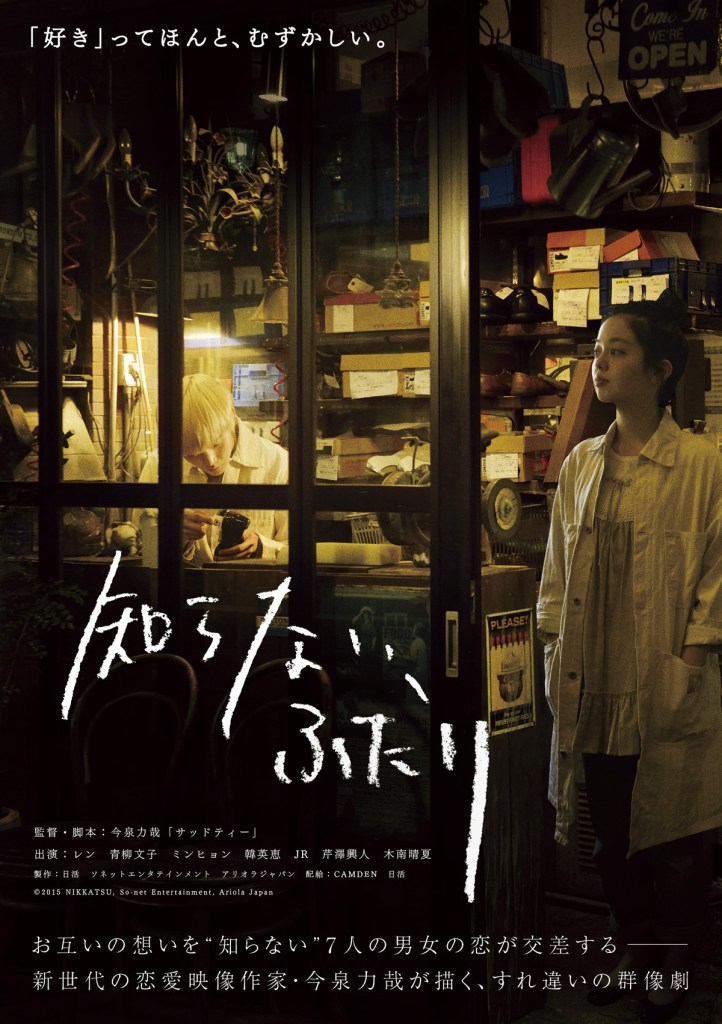
Their Distance (知らない、ふたり, Rikiya Imaizumi, 2015)

Their DistanceAh young love! So beautiful, so complicated, so retrospectively trivial. Intrigue engulfs a group of young Koreans living in Japan, their co-workers, and even their English teacher and her fiancee in Rikiya Imaizumi’s indie youth meets boyband quirky romance movie, Their Distance (知らない、ふたり, Shiranai Futari). The aptly named picture paints a vista of misdirected love, miscommunication and misjudged honesty to show how messy romance can be even when it’s intent on being cute.
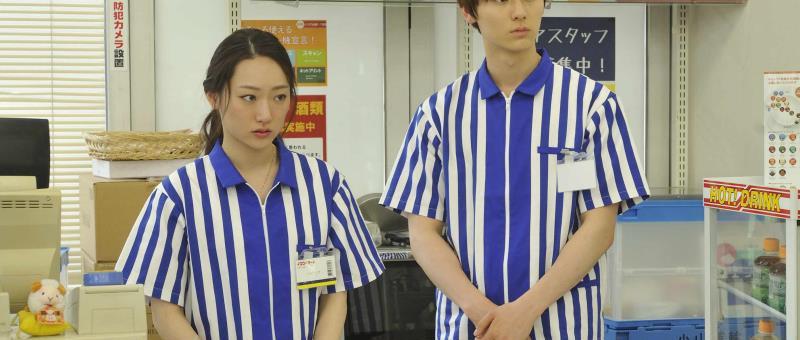
The hub of the story is a small shoe repair store where Korean migrant Leon (Ren) is an apprentice. Having been involved in a traumatic incident two years previously which has left him with a huge amount of personal guilt, he’s entirely cut himself off from human interaction of any kind, leaving the store each lunchtime to eat alone and miserably on a solitary bench surrounded by concrete. Despite this, one of his Japanese colleagues, Kokaze (Fumiko Aoyagi) has developed a crush on him and is patiently waiting for him to decide it’s OK to be happy again.

Events are set in motion when he finds fellow Korean Suna (Hanae Kan) asleep on his favourite bench after a night of binge drinking to forget her troubles with boyfriend Ji-woo (JR) who’s developed a thing for his English teacher, Kanako (Haruka Kinami). Kanako, as well as being a little older, has a fiancé already, Awakawa (Tateto Serizawa), who happens to be in a wheelchair following an accident, before which he had also been cheating on her. The two Koreans are also joined by a third who works with Suna at her part-time job at a convenience store, Sangsoo (Min-hyun). Sangsoo ends up in the shoe repair store where he falls for Kokaze, completing our love…heptagon?

This is all very complicated already. Ji-woo decides to unburden himself by revealing his feelings for his teacher to Suna even though he doesn’t actually want to break up with her and the teacher turns him down for a number of very sensible reasons. His case of (probably selfish) extreme honesty sends Suna into a bout of drunken confusion during which she meets Leon and becomes semi-attached to him despite not being able to remember much about him because she was pretty much out of it the whole time.

Flitting between the innocence of a hand written love letter to quasi-stalking, and even a third layer of stalking the stalker, Their Distance has an oddly schizophrenic tone which darts between quirky comedy and serious drama without much consistency. The most interesting plot thread concerns Kanako and her fiance´ who are both a little older and ought to know what they’re doing but only seem to confuse and mislead each other even when they’re making a point of mutual honesty. Neither can be sure of why the other is still in the relationship and if the true love partner is the wheelchair itself – did she stay because she didn’t want to leave a disabled man (even though he’d been cheating on her before the accident), or did he stay with her because now he’s in the wheelchair he thinks he won’t find anyone else? Arawaka gives Kanako an out by offering to separate so she can pursue her dreams of living abroad and travelling the world but refuses to say one way or the other what his true feelings about the marriage are causing more than a little emotional confusion for the put-upon Kanako who is also getting drawn into the maelstrom of her students’ romantic problems.

Ji-woo treats Suna in a similar way by revealing his growing feelings for Kanako yet leaving all the decisions entirely in her hands. He claims he’s doing the right thing by being “honest” but actually he’s being a coward by refusing to choose (and anyway, seeing as the teacher turned him down there’s no real reason to tell her). This kind of childishness is almost forgivable in the younger guys who, after all, are still inexperienced, but in a man of Arakawa’s age, diffidence is far from an attractive quality.

Imaizumi has three members of top Korean boy band NU’EST as his gang of Korean émigrés and has half an eye on cute idol drama with the other half pointed firmly at the indie/arthouse scene. Though the performances are strong across the board, Imaizumi never quite manages to reconcile these two distinct forms and his detached, almost ironic tone may not hit home with an audience primed for pop star drama. Ultimately, Their Distance has relatively little to say, its message is very slight indeed, and it takes an awful long time to deliver. However, Imaizumi’s observations about romance through the ages have a universal and timeless quality which along with the mild humour and generosity of spirit on show make Their Distance worth the journey, though not perhaps the fare.


Their Distance is actually available now in the UK and other regions from Nikkatsu via iTunes either as an enhanced iOS app or as a regular video from the store (where it has subtitles in English, French, Spanish, and Portuguese).  You can apparently rent it on Nikkatsu’s YouTube channel as well as Google Play and Vimeo (click the link to the YouTube page in the video below for a full collection of subtitle/territory specific links for each of the platforms).

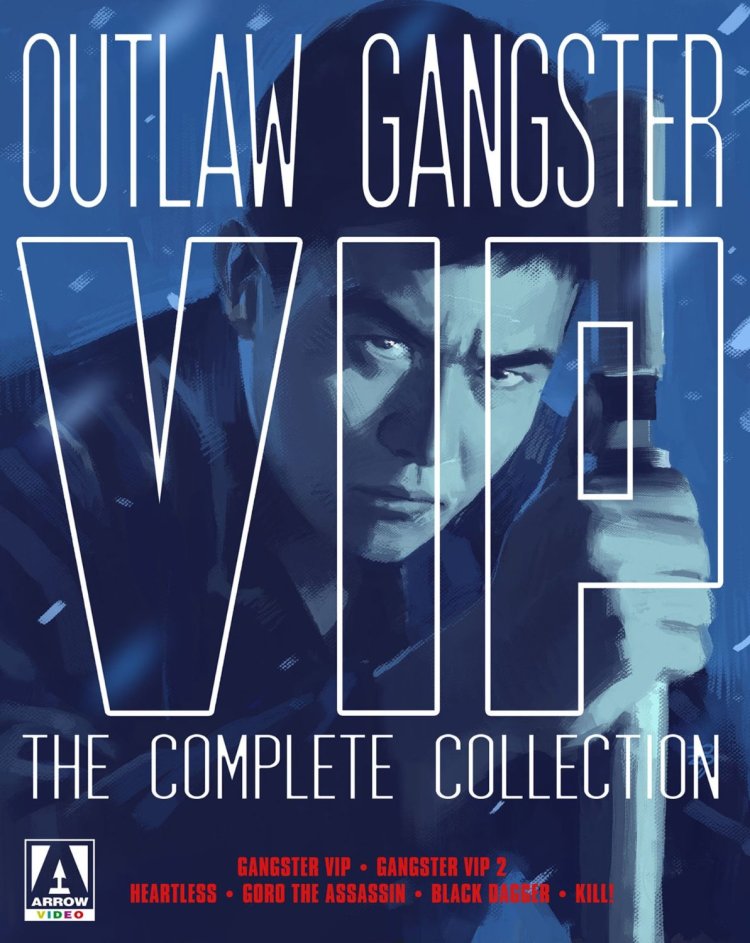
Outlaw: Gangster VIP the Complete Collection

outlaw gangster collectionReview of the Outlaw: Gangster VIP the Complete Collection dual format box set from Arrow Films first published by UK Anime Network.

There are two distinct eras of yakuza movies in Japan – the “ninkyo eiga” strand of traditional, noble gangsters acting out of a sense of loyalty and honour and the “jitsuroku” approach exemplified by Kinji Fukasaku’s Battles Without Honour and Humanity series which sought to show yakuza life for what it was – short, bloody and ultimately pointless. The Outlaw series provides a perfect bridge between the two as it’s based on the true life memoirs of former yakuza Goro Fujita but opts for a genre hybrid by essentially reframing the popular youth movies of the day as gangster noir rather than the down and dirty naturalism of Fukasaku’s magnum opus.

The Outlaw series consists of six films though only the first two are in direct continuity with each other. Gangster VIP 1 & 2 begin the saga of noble hearted gangster Goro who was orphaned when his mother died of illness during the war leaving him to look after his younger sister who also later dies either of illness or of malnutrition becoming the first of the women Goro is unable to save. He ends up a street kid and is eventually sent to reform school from where he escapes with an older boy, Sugiyama, who later resurfaces as a member of a rival gang in Part 1. These two films also chronicle Goro’s ongoing romance with the innocent Yukiko who falls in love with him after he saves her from a gang of thugs.

However, after Gangster VIP 2, the series has little internal continuity and the saga of Goro and Yukiko falls silent. This is actually a little confusing as many of the actors from the other films in the series frequently turn up playing entirely different characters, not least Chieko Matsubara who plays Goro’s love interest in every film but is actually a similarly named yet entirely different woman each time even if she also has a very similar backstory to that of Yukiko in the very first film.

Each chapter follows the same basic pattern – Goro gets out of prison/moves/goes looking for someone and ends up getting into trouble with the local gangsters despite his intense desire to leave the yakuza world behind. The chance of salvation is always offered in the form of Chieko Matsubara who plays exactly the same character each time even though she has different names and falls in love with Goro a little quicker with each passing frame. Goro is the noble hearted wanderer so he always opts to sacrifice his own potential happiness rather than get other people mixed up in his bloody and unpredictable gangster world.

The first few films in the series are more deeply rooted in the post-war past with the major theme being the loss of family and the yakuza providing a home for those otherwise without hope. Having been orphaned and left to starve on the streets, cruelly ignored by passersby and the society at large, men like Goro were forced to form associations with each other for survival and to turn to crime through lack of other options. Given the perilousness of their times, even the yakuza brotherhood is uncertain and these relationships are hollow and ever changing – a far cry from the unconditional love and support supposedly offered by the traditional family unit.

Moving on slightly, the series grows up with Goro as he moves form lamenting his rootless nature to an inability to put down roots for himself as he knows that his dangerous lifestyle is not something he wants to bring a wife, and particularly children, into. Things never end well for the married yakuza in these films who often see their wives or girlfriends kidnapped, raped or used against them in some other way and the overriding message is that love is both a weakness and an irresponsible indulgence for those who live or die by the sword.

The series features three different directors with Red Pier director Toshio Masuda helming the first which is perhaps the most accomplished even if Masuda is often criticised for not having a distinctive style of his own. Keiichi Ozawa picks up for parts 2, 4, 5, and 6 which each more or less follow the style laid out by Masuda though he does add in a few flourishes of his own including a very groovy showdown in a contemporary nightclub in the final film. Part three, Heartless, is directed by Mio Ezaki and is perhaps the weakest in the series though does at least break with the style and direction a little more than might be expected whilst adding a few thrills along the way.

The Outlaw series has perhaps not been fully appreciated outside Japan but now hopefully will be thanks to this excellently put together set from Arrow. The series as a whole feels a little safe at times and often pulls its punches where it had the opportunity to push for something with more bite but its doom laded tale of a noble gangster with a ruined heart is the kind of effortless, nihilistic cool that is hard to beat. Another excellent offering of Nikkatsu Noir mixed with existential youth movie and yakuza trappings, the Outlaw series is a long overdue addition to the world of Japanese action movies and one that every genre enthusiast will be eager to explore.


Outlaw: Gangster VIP the Complete Collection is currently available in a region free dual format Blu-ray/DVD box set in both the US and UK.

Trailer for the series as a whole:

Links to reviews of all six films:

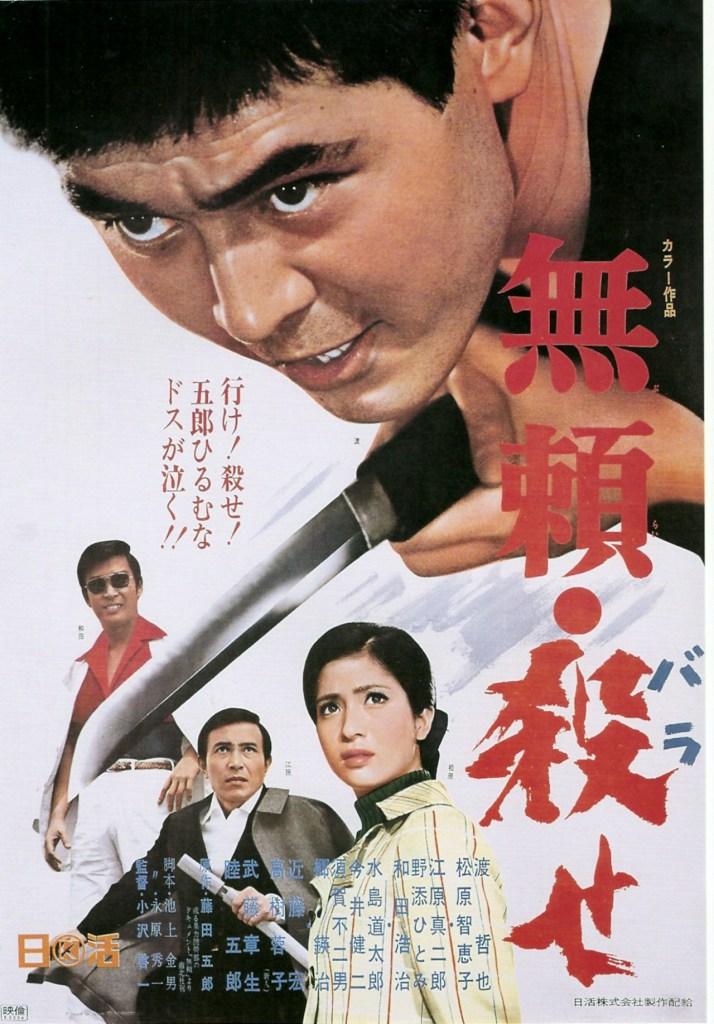
Outlaw: Kill! (無頼 殺せ, Keiichi Ozawa, 1969)

outlaw killGoro, Goro, Goro – will you never learn? Maybe he will because this is the last film in the series! Appropriately titled Outlaw: Kill! (無頼 殺せ, Burai Barase), this sixth and final film in the Outlaw series sees Goro once again moving to a new town and trying to lead a more honest life but unfortunately he’s wandered in at just the wrong time because a local gang boss has just been sent to prison after defeating a group of assassins leaving a dangerous vacuum and leading, therefore, to the outbreak of a turf war.
Goro’s first fight is with a gang of thugs who were hassling an elevator girl in a department store – the girl being Yumiko, played by Chieko Matsubara, becoming Goro’s love interest once again. Luckily or unluckily, Goro runs into an old friend from his prison days who is also one of the gang bosses involved in the turf war. After his friend promises him that he will incur no debt from him and he won’t get in the way of Goro finding a proper job, Goro agrees to move in with him and his wife – who only turns out to be the sister of elevator girl Yumiko which is not even the most predictable coincidence in this whole saga.

Despite his protestations about not getting involved in local gang politics, Goro’s attachment to his friend and his growing family means he can’t altogether avoid getting pulled back into the messy gangster world of violence and betrayal. Things end up going just about as well as they ever do and Goro is only able to clean up some of the chaos in this disputed area by creating even more counter chaos.

The format is becoming tired by the time we reach Outlaw: Kill! and it’s true that the film revisits exactly the same narrative beats as all of the other films, though it does so in a fairly exciting fashion. That said, there’s much less nuance here – we get that Goro sees himself as a lonely drifter who doesn’t deserve happiness, a self hating yakuza who is engaged on a long and hopeless walk to the grave. Perhaps it’s just because everyone’s getting older, but now it’s less about never having had a home or a proper place to belong than it is about the (im)possibility of building your own family. Goro’s friend, Moriyama, is married and going to be a father which Goro thinks is a nice thing, broadly, but also worries about what is means for a yakuza who may be killed at any second to have a wife and a child dependent upon him. Goro, being the noble sort of fellow he is, has decided that romance is irresponsible if you’ve already pledged your heart to the outlaw’s creed.

Once again directed by Keiichi Ozawa, Kill! sticks to the formula of his other offerings in the Outlaw series but opens with stylish series of colour filter stills rather than the action filled title sequences of the previous films. The fight scenes are exciting and actually quite bloody but perhaps not as innovative as some of those seen earlier in the series. In an interesting mix of old and new, Ozawa stages his final fight in a club but this time it’s a very contemporary night spot filled with guys and girls dressed in stylish, colourful outfits whilst a hippyish rock band play a cover of a famous pre-war ballad. Swooping around, notably shooting one sequence through a transparent floor/ceiling, Ozawa seems to be pushing forward more, breaking with the traditional ‘50s aesthetic for a new and crazy, youth counter-culture inspired moment which looks forward to the Stray Cat Rock series much more than back to the now ancient ninkyo eiga or sun tribe films.

Maybe Goro’s had his day too as Kill! ends in pretty much the same way as all but one of the previous films with Goro staggering away from the destruction he has wrought into a barren and snow filled landscape. Doomed to be a wanderer forevermore, Goro is a relic of the cruel post-war world which never gave him a break but his story’s now old hat. A man without a home is left forever alone, marching onward to the next confrontation or the final relief of a lonely grave.


Outlaw: Kill! is the six and final ( 😦 ) film included in Arrow Films’ Outlaw: Gangster VIP The Complete Collection box set (which is region free on DVD and blu-ray and available from both US and UK).

English subtitled original theatrical trailer:

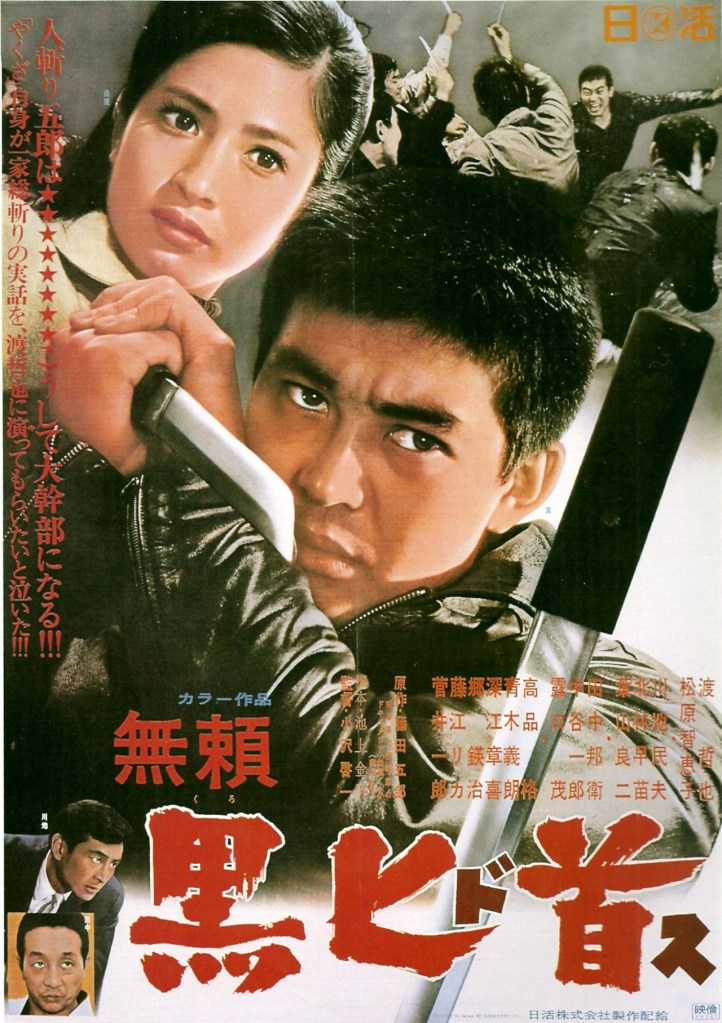
Outlaw: Black Dagger (無頼 黒ヒ首, Keiichi Ozawa, 1968)

outlaw black daggerGoro (Tetsuya Watari) just can’t catch a break. He sends his one true love off on a train to safety only to see her dramatically return because she can’t bear to leave his side. Her devotion costs her her life as she places herself between Goro’s manly chest and an assassin’s knife. Heartbroken, Goro gets out of town only to run into another old flame who is now a mama-san and has apparently married another yakuza (despite the fact that Goro parted with her because of his chaotic yakuza lifestyle). As usual, the past won’t let him go – this time in a more literal sense as Goro encounters another woman who looks exactly like the girlfriend who died in his arms….

This time for the fifth instalment in the Outlaw series, Black Dagger (無頼 黒ヒ首, Burai Kurodosu), it’s not so much family as romance which takes centre stage as we witness just how dangerous it can be to fall in love with a yakuza. Yuri (Chieko Matsubara), the girlfriend Goro couldn’t save, died because she loved him too much.  Saeko loved him too – he succeeded in getting rid of her but she ended up rebound married to another guy who kind of looks like him but isn’t as good, and now there’s Shizuko (Chieko Matsubara again) – a warmhearted nurse who’s once again fallen for Goro’s noble tough guy act. Goro knows the price of love and he thinks he’s no good so he tries to avoid letting himself fall, both for his own safety and for his prospective love, but in the end the one fight he can never win is the one against his own heart.

Oddly Goro gets on quite well with Saeko’s husband, though he’s not keen to get involved with his troubles. He warns him that it might be better to let Saeko go as in the end yakuza only cause suffering for their women and soon enough Goro is proved right when the local gang become intent on pimping Saeko out leaving her husband pretty much powerless to resist.

Apparently this cuts both ways as a sad song from a band of street musicians recounts that a good wife can be a man’s weakness. Again it isn’t really clear how this instalment fits with the others but Yuri’s story is certainly very similar to Yukiko’s as seen in the first two movies and Goro’s guilt over not being able to protect her comes to colour the rest of his life. Once again Goro tries to say goodbye to love, advising Shizuko of the folly of falling for a man like him – she should just find someone nice and be happy. Full of nobleness and conviction, Goro strides out to clean up the town for good, knowing he may not return to see the fruits of his labours.

Black Dagger is once again directed by Keiichi Ozawa and is more or less in keeping with his other efforts in the series, mixing studio bound action with occasional forays into wider outdoor expanses. The film opens with an impressive montage title sequence and fight scene, but other than that the only set piece we get is the street singer sequence towards the end though the final fight is once again action packed and impressively filmed. Black Dagger perhaps doesn’t bring anything too new to the franchise, but it does improve on its already familiar narrative with another doomed love story and a series of shattered dreams for poor old Goro. Unlike the more hopeful ending of the last film, Black Dagger ends on exactly the same note as the other Outlaw movies as Goro staggers away from the crime scene, knife in hand and ready for the next crisis to come his way.


Outlaw: Black Dagger is the fifth of six films included in Arrow films’ Outlaw: Gangster VIP The Complete Collection box set (which is region free on DVD and blu-ray and available from both US and UK).

English subtitled original theatrical trailer:

Outlaw: Goro the Assassin (無頼 人斬り五郎, Keiichi Ozawa, 1968)

goro the assassinSo, once again Goro Goes Straight is sadly not the title of this fourth film in the tale of the noble hearted gangster “Goro the Assassin” (無頼 人斬り五郎, Burai Hitokiri Goro). After getting his friend out of a jam, the pair end up in prison. Goro is released three years later but his friend, Masa, is poor health and eventually dies a prisoner’s death with no one to collect his body meaning he’ll be buried in a lonely prison grave alongside the rest of society’s unwanted rubbish. On their final meeting, Masa asks Goro to find his sister for him and tell her that he’s doing alright. This message now well out of date, Goro decides to try finding Masa’s sister anyway if only to find out why she never came to see him even as he lay dying.
However, Goro once again runs up against another gang and some old enemies whilst trying to complete his quest and start an honest life at the same time. After taking a job working on the boiler at a hotel, he strikes up a friendship with the receptionist, Yuki (Chieko Matsubara again), whom he also bumped into a few times on his way there. She has some problems with the yakuza herself going back to the traffic “accident” which killed her father.

Family is once again the big key here. Goro is originally angry with Masa’s sister for abandoning her yakuza brother but the truth is more complicated. Having only each other in the world, Masa’s sister has been reduced to working in the red light district – in part to get some money together to help Masa. She never got the messages about his ill health because of moving around so much and was also ashamed to let him know where she’d been working. Now that Masa is dead, her sacrifice is meaningless.

It’s also family which gets Yuki into trouble, in an indirect way, after she accepts some money from the yakuza who killed her father. Perhaps intended to salve his conscience, the money brings Yuki to the attention of the other gangsters and their various extortion scams which eventually leads to her giving up her job at the hotel. Of course, by this point, she’s fallen in love with the noble and brooding Goro which also puts her in the line of fire as things heat up for him with the local tough guys.

Again it isn’t really clear how this film links in with the others in the series but this time around Goro is a much more playful character, bright and cheerful and only occasionally brooding. He’s cracking jokes all over the place and Yuki even refers to him as the “amusing guy from the bus” when he comes to ask about the boiler job. This only adds to his “cool” appeal as he appears somehow far above everything, looking down on the yakuza world with a sort of ironic eye that implies all of this is quite ridiculous but nevertheless inevitable.

Goro still dreams of going straight and leading a more normal life but once again it eludes him. Yuki again utters the phrase that he’s a yakuza in name only and doesn’t have a killer’s heart but Goro disagrees. Throwing down his short sword he declares he longs to live a life without it but it seems surgically attached to him now, he’ll never be free of it. Again, at the end of the movie he sends his chance of a way out of the gangster life off on a ferry to ensure her own safety at the cost of his personal happiness.

Directed again by Keiichi Ozawa who handled the second film in the series, Goro the Assassin has more outdoor scenes only sticking to the studio for the red light district sequences. It doesn’t quite have the visual style of the other instalments with fewer set pieces which tend to be centred around the fight scenes themselves rather than anything going on around the same time. By the time the ending rolls around there’s a kind of progress in standing still as, after taking care of the bad guys, Goro sees a vision of Yuki standing far off on the horizon. Rather than staggering off lonely and alone as in the other films, he stands and stares which, though not exactly a happy ending, is a little more hopeful than the doom laden conclusions the films have each featured so far.


Outlaw: Goro the Assassin is the fourth of six films included in Arrow films’ Outlaw: Gangster VIP The Complete Collection box set (which is region free on DVD and blu-ray and available from both US and UK).

English subtitled original theatrical trailer:

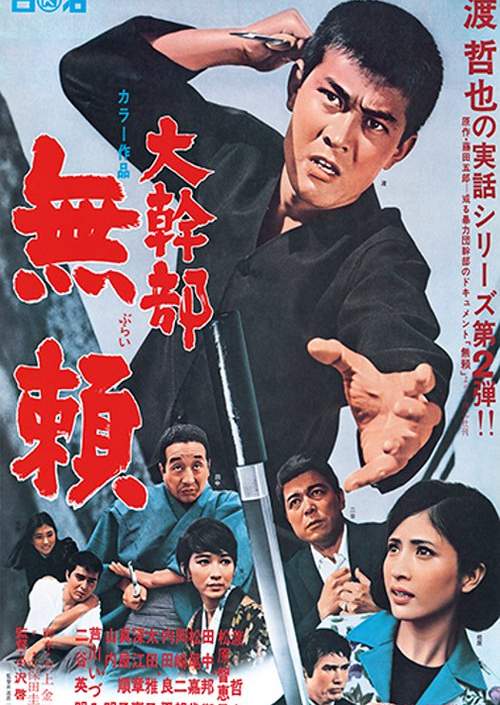
Outlaw: Gangster VIP 2 (大幹部 無頼, Keiichi Ozawa, 1968)

Outlaw Gangster VIP 2So, as it turns out the end of Outlaw: Gangster VIP was not quite as final as it might have seemed. Outlaw Gangster VIP 2 (大幹部 無頼, Daikanbu Burai) picks up not long after the end of the first film when Goro (Tetsuya Watari), having recovered from his injuries, takes a train to go and find Yukiko (Chieko Matsubara) with the intention of starting an honest life with her away from the temptations of the big city. However, as often happens, his past follows him.

Like the first film, Outlaw: Gangster VIP 2 also begins with a black and white flashback sequence reminding us of Goro’s childhood only this time with a voice over from Goro himself who goes on to include the first film’s events in his recap. Goro might have come to the country to get away from the gangster life but as soon as he steps off the train he gets himself into trouble with a local gang by interfering with a few tough guys who are trying to entrap a group of actresses and force them into their employ. One of the leading actresses is just as taken with Goro as Yukiko was in the first film and gives him her red scarf as a thank you. Goro is still very much with Yukiko though and trudges off through the snow to find her.

She and Yumeko, Sugimoto’s former girlfriend, are living in a small hut but Yumeko has fallen ill and is refusing to see a doctor out of fear of the expense. Goro gets a legitimate logging job but before long the company hits trouble and he’s let go. All the while Yumeko’s condition is weakening and the three are in desperate need of money. One of the local gangsters Goro runs into trouble with turns out to be an old friend who offers him a job. Goro was hoping to leave the Yakuza world behind forever but it seems it isn’t finished with him yet…

In many ways this second instalment in the Outlaw: Gangster VIP series is very much more of the same as noble outlaw Goro battles the ever more cruel and corrupt forces of the Yakuza underworld in defence of women folk and underdogs everywhere. Directed this time by Keiichi Ozawa the film is disappointing only where it begins to feel like a rehash by following the familiar story beats of the first film with its betrayed underlings and treacherous bosses yet still manages to feel fresh and exciting for most of the running time.

The action this time around takes place in the vast snowy expanses of Northern Japan and has a much more open feeling overall with greater use of location shooting rather than the studio bound atmosphere of the first film. Ozawa follows Masuda’s lead but angles for a few expressive sequences of his own such as attempting to cut a flamenco dance sequence (starring a young Meiko Kaji acting under her original name) with a potential stand off and less successfully by playing a high school girl volleyball game against the final fight to the death which is going on in the waterway below.

The concept of home and having a home town is once again emphasised as a recurring motif where the desire for a normal life and family can get a man killed – the recurrent message being that a yakuza is a man without ties to the normal world. Such relationships are now denied him by his bond to his gangster brothers and will not only place in danger those you most love, but will ultimately lead to your own downfall too. Once again Goro wrestles with his desire to build a more normal life with Yukiko and the self knowledge that his yakuza past will never let him rest and perhaps the best thing for her is to make her go.

Outlaw: Gangster VIP 2 can’t quite match the power of the first film’s finale and often feels as if it’s retreading the same ground yet it is quite interesting ground to retread. Even if there weren’t another four films in the series, one gets the feeling that fate hasn’t finished toying with Goro yet and even if the yakuza world continues turning in the same ancient cycles of violence and revenge, Goro at least will be standing on the side of right, perpetually and ironically fighting in an attempt to put an end to it all for good.


Outlaw: Gangster VIP 2 is the second of six films included in Arrow films’ Outlaw: Gangster VIP The Complete Collection box set (which is region free on DVD and blu-ray and available from both US and UK).

English subtitled original theatrical trailer:

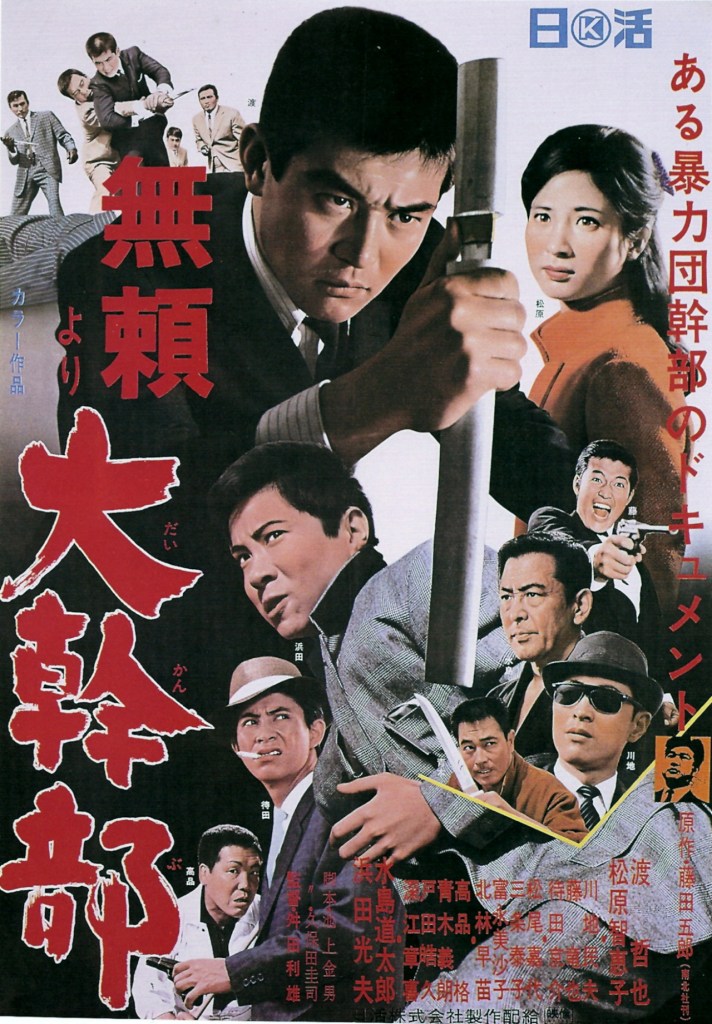
Outlaw: Gangster VIP (「無頼」より大幹部, Toshio Masuda, 1968)

outlaw gangster VIP 1 posterBy 1968 the fate of the gangster movie was somewhat in flux as the old ninkyo style was on its way out yet the jitsuroku approach, later to find its zenith in the Battles Without Honour and Humanity series, hadn’t quite taken hold. Outlaw: Gangster VIP provides an essential bridge as it takes its inspiration from the writings of one time yakuza Goro Fujita but at the same time brings together many of the themes that were dominating Nikkatsu’s output at the time from their star led, youth appeal billboard cool to their noir inflicted, nihilistic crime thrillers as a kind of culmination of everything they had been producing up to that point.

The first film in the series, Outlaw: Gangster VIP (無頼」より大幹部, Burai yori Daikanbu) begins with a black and white prologue seemingly set around the end of the war in which a young boy endures firstly the death of his mother and then the younger sister who has been left in his care – presumably through hunger or at least ill heath exacerbated by malnutrition. Eventually he himself is arrested after being caught trying to steal food and is sent to a reform school from which he escapes alongside another boy, Sugiyama.

Flash forward to a grown up version of Goro (Tetsuya Watari) lounging around in a dingy apartment and the film expands into glorious, if garish color. Goro is summoned to a local drinking establishment where his yakuza boss is under attack. On getting to the bar and coming to his boss’ defence he finds that the aggressor is none other than Sugiyama. Saving his boss by stabbing his friend he nevertheless ensures Sugiyama’s survival with a carefully placed blow though both are sent back to prison. Goro gets out three years later to discover his girlfriend has married someone else and the yakuza world is just as dog eat dog as it was when he left it.

As in many other films of this burgeoning genre, the yakuza is more or less a surrogate family of grown up orphaned street kids who’ve bound together for increased odds of survival. There maybe strong bonds between brothers, but the old ways of samurai style honourable conduct are long gone (if they ever really existed at all). Suigyama’s gang have failed to protect his girlfriend who has been reduced to prostitution despite his sacrifices for them – an unthinkable act in traditional terms, but Sugiyama’s boss is the new kind of uncaring, ambitious yakuza who cares nothing for traditional ethics.

The yakuza as a home for waifs and strays is a theme which continues throughout the series with the constant references to “hometowns” and a desire to get out of the city for a simpler, more honest life. People keep telling Goro that he’s not a real yakuza, that deep down he doesn’t have a gangster’s heart. This is true, to an extent, as Goro is the kind of noble criminal seen in the ninkyo genre who clings fast to the old ways – loyal to his friends and his clan, seeking to protect those who need it over choosing to further exploit the already vulnerable. He’s a gangster because life left him with no other options. For a street kid and reform school escapee, what possible other place could there be for him to survive than in the arms of his yakuza brothers?

An exile from the world of conventional society, Goro cuts a lonely path which ties into the nihilistic noir themes of the genre as he wanders around in very cool looking leather jacket. Mostly still studio bound, Masuda opts for a fairly straightforward approach yet with some noir-esque canted angles and a few interesting set pieces. The unusual finale in which Goro faces the treacherous yakuza kingpins against the background of a cabaret act serves as impressive highlight of the film, perfectly contrasting its garish technicolor world with the darkness underneath as Goro staggers off along a street dark with something more night and towards an eventual salvation of one kind or another.


Outlaw: Gangster VIP is the first of six films available as part of Arrow’s amazing new blu-ray and DVD box set which is released in UK and USA and is completely region free (hurrah!).

I’ve also written a full writeup of the box set as a whole over at UK Anime Network which you can read right now if you’re the sort of person who likes to skip to the end. Otherwise, get ready for five more tales of broken hearted tough guys….

English subbed version of the original theatrical trailer: