
 If freedom exists in Japanese cinema, it exists only through sexual liberation. Only in this most private of acts can true individual will be expressed. Sion Sono, ever the contrarian, wants to ask if that very idea of “freedom” is in itself oppressive and he’s chosen to do that through his contribution to the Roman Porno Reboot Project in which five contemporary directors attempt to recreate Nikkatsu’s line in ‘70s soft-core pornography.
Opening in a room of bold primary colours – the sunlit walls of the yellow bedchamber and the garish red of the doorless bathroom, Sono homes in on the figure of Kyoko (Ami Tomite) who lies face down on a bed with her underwear around her ankles. She seems somehow broken and exhausted, staring into a piece of glass from a shattered mirror and making ominous statements to herself. Suddenly her mood changes, no longer the maudlin woman she transforms into the cute and quirky high schooler so beloved of certain genres of Japanese entertainment. When her assistant arrives, Kyoko delights in humiliating her, forcing Noriko (Mariko Tsutsui) to crawl around on all fours wearing a dog collar and then ordering her to allow herself to be raped by an (all female) team of newspaper reporters.
So far, so Petra von Kant, but Sono doesn’t stop here. He shows us that this brightly coloured room is a stand-in for Kyoko’s fracturing psyche, a failed attempt to order her chaotic world. Someone shouts “cut” and we’re on a film set – roles are reversed, Kyoko is no longer in control. Her memories enter free fall as she flits between an awkward (possibly imagined) childhood, and her present predicament as, alternately, plaything and dominatrix.
The roots of Kyoko’s confusion stem back to the contradiction in her parents’, or really her society’s, attitude to sex. During a very strange family dinner, Kyoko and her younger sister have a frank discussion with mum and dad about male and female genitals and how they fit together. The language is pointed, but Kyoko’s father has very clear ideas about what is obscene and what isn’t – “Cocks” are what men stick into prostitutes and they’re obscene, but he has no sensible answer when pressed on how exactly “cocks” and “male genitalia” can be all that different. Her parents tell her sex is indecent and shameful while continuing to talk about their own sex life openly and refusing to shield their daughters from their obvious appetites. They offer no answer for this continuing paradox, only the affirmation that Kyoko’s desires are “indecent” and must be rejected.
Kyoko’s sister finds her freedom in another way, but Kyoko pursues hers through sexuality, looking for a connection in midst of true liberation. She wants to become a “whore” which the adult version of herself describes as “a woman so pure it breaks her own heart”, but what she’s looking for is the freedom which eludes her in her day to day living. Kyoko and later Noriko repeat the mantra that they will dismantle the “annoying freedoms which restrict me”, lamenting that there is no freedom of speech in a country like Japan and that no woman has ever been able to attain their own freedom in a world entirely controlled by men. A protest against the renewal of the ANPO security treaty runs on the TV while Kyoko’s sister holds up a book of butterflies, exclaiming that all the free things fly away. The women of Japan, according to Noriko, praise free speech but reject their own freedom, forced to chase false liberations and endlessly allowing themselves to be manipulated by a culture they themselves willingly create.
The fly away butterflies hit the ceiling, and Kyoko’s captive lizard cannot escape its bottle. Sono seems to suggest that there is no true freedom, that the very idea of “true freedom” as mediated through the idea of sexual liberation is itself another fallacy used to manipulate women into doing what men want. Kyoko ends up in a “Roman Porno” to empower herself, but is disempowered by it – rendered an anonymous object trapped inside an entirely different kind of tube. Blinded by colours and memory she searches for an escape but finds none, groping for the mechanism to set herself free from the delusion of liberation but grasping only empty air.
Antiporno is available to stream in the UK via Mubi until 8th January and will be released on blu-ray by Third Window Films in April 2018.
Original trailer (English subtitles)

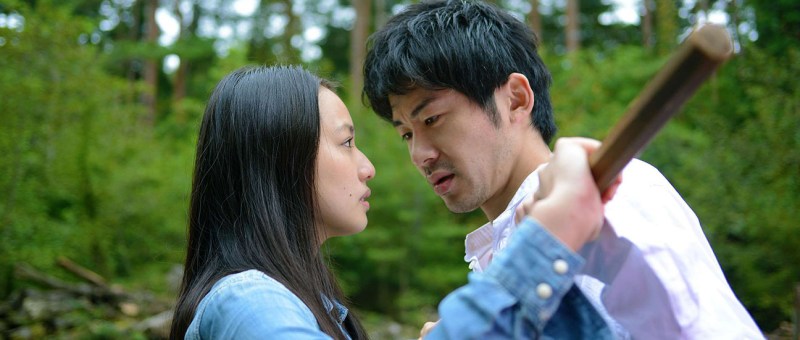

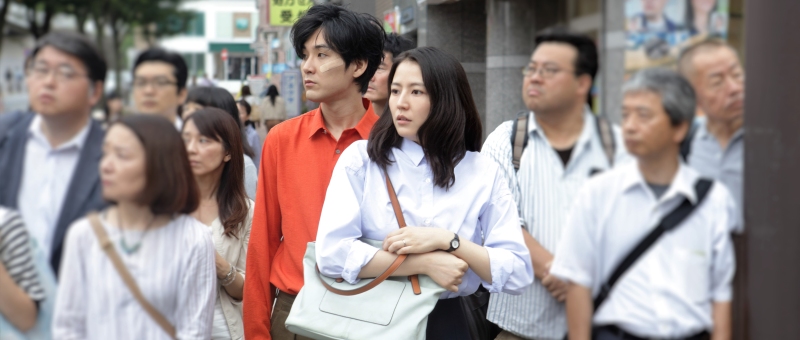


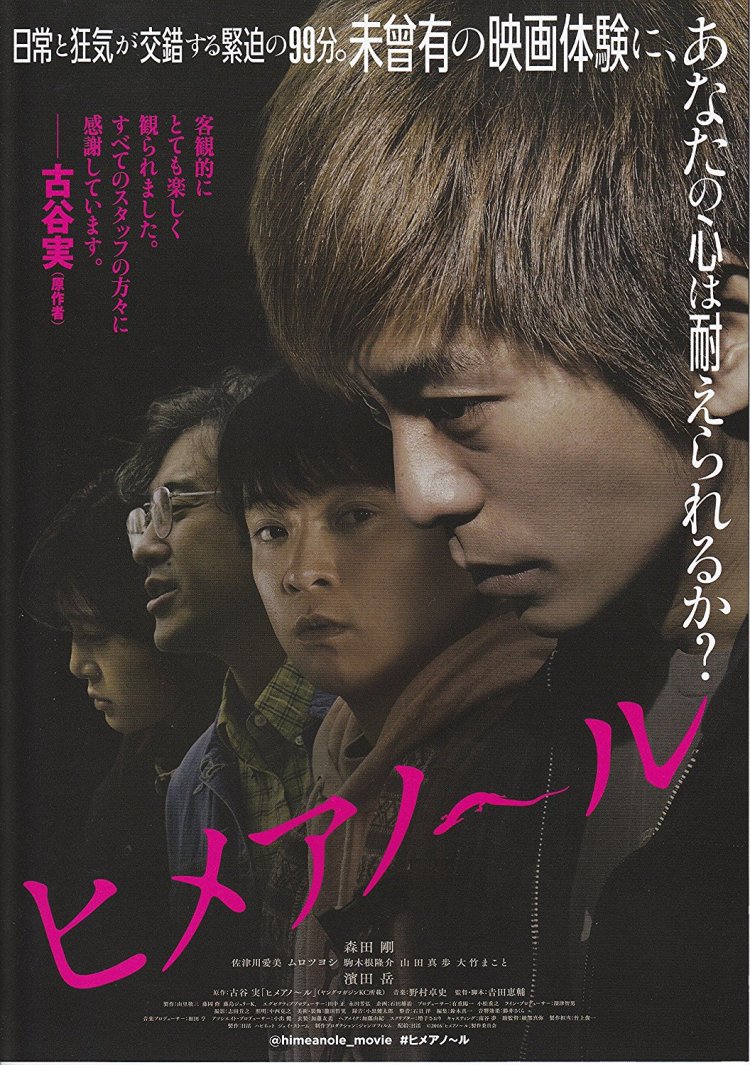 Some people are odd, and that’s OK. Then there are the people who are odd, but definitely not OK. Hime-anole (ヒメアノ~ル) introduces us to both of these kinds of outsiders, attempting to draw a line between the merely awkward and the actively dangerous but ultimately finding that there is no line and perhaps simple acts of kindness offered at the right time could have prevented a mind snapping or a person descending into spiralling homicidal delusion. To go any further is to say too much, but Hime-anole revels in its reversals, switching rapidly between quirky romantic comedy, gritty Japanese indie, and finally grim social horror. Yet it plants its seeds early with two young men struggling to express their true emotions, trapped and lonely, leading unfulfilling lives. Their dissatisfaction is ordinary, but these same repressed emotions taken to an extreme can produce much more harmful results than two guys eating stale donuts everyday just to ask a pretty girl for the bill.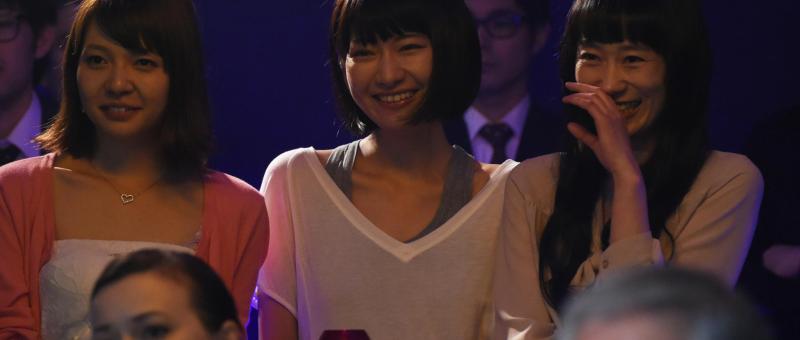
 Towards the end of the 60s and faced with the same problems as any other studio of the day – namely declining receipts as cinema audiences embraced television, Nikkatsu decided to spice up their already racy youth orientated output with a steady stream of sex and violence. The Roman Porno line took a loftier approach to the “pink film” – mainstream softcore pornography played in dedicated cinemas and created to a specific formula, by putting the resources of a bigger studio behind it with greater production values and acting talent. 40 years on Roman Porno is back. Kazuya Shiraishi’s Dawn of the Felines (牝猫たち, Mesunekotachi) takes inspiration from Night of the Felines by the Roman Porno master Noboru Tanaka but where Tanaka’s film is a raucous comedy following the humorous adventures of its three working girl protagonists, Shiraishi’s is a much less joyous affair as he casts his three lonely heroines adrift in Tokyo’s red light district.
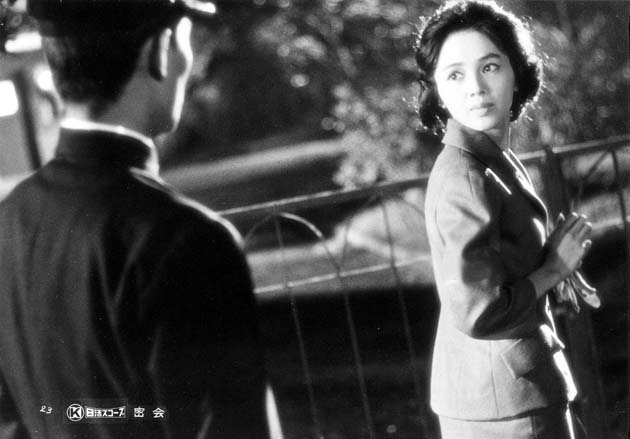 Aside from the genre defining Crazed Fruit which kick-started the era of the “seishun eiga” and, in its own way, the Japanese New Wave, Ko Nakahira has remained under seen and under appreciated outside of Japan. Completed just three years after the youth fuelled frenzy of Crazed Fruit with its freewheeling playboys and their speedboat crises, The Assignation (密会, Mikkai) is a much more measured, mature meditation on social constraint, guilt and the slow drip feed of poisonous thought. Nakahira wastes none of his characteristic energy in the necessarily tight 76 minute runtime, but this is an exercise in high tension as a pair of illicit lovers are suddenly confronted with their crime after accidentally witnessing a murder.
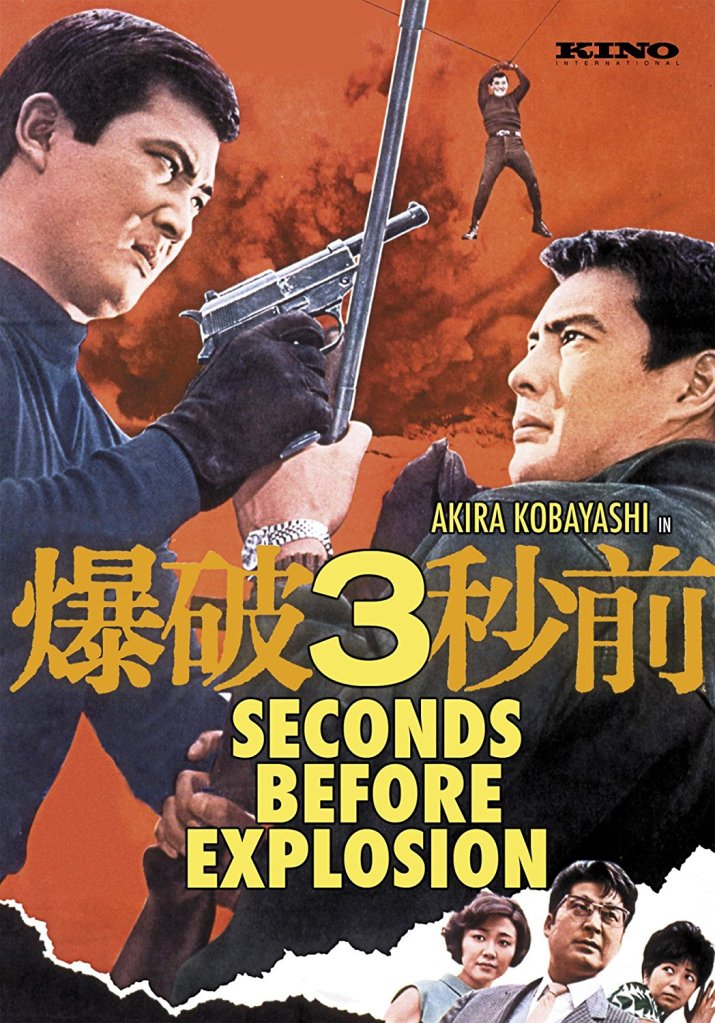 If Nikkatsu Action movies had a ringtone it would probably just be “BANG!” but nevertheless you’ll have to wait more than three rings for the Kaboom! in the admittedly cartoonish slice of typically frivolous B-movie thrills that is 3 Seconds Before Explosion (爆破3秒前, Bakuha 3-byo Mae). Once again based on a novel by Japan’s master of the hard boiled Haruhiko Oyabu, 3 Seconds Before Explosion is among his sillier works though lesser known director Motomu Ida never takes as much delight in making mischief as his studio mate Seijun Suzuki. What he does do is make use of Diamond Guy Akira Kobayashi’s boyish earnestness to keep things running along nicely even if he’s out of the picture for much of the action.
 Windows on Worlds