
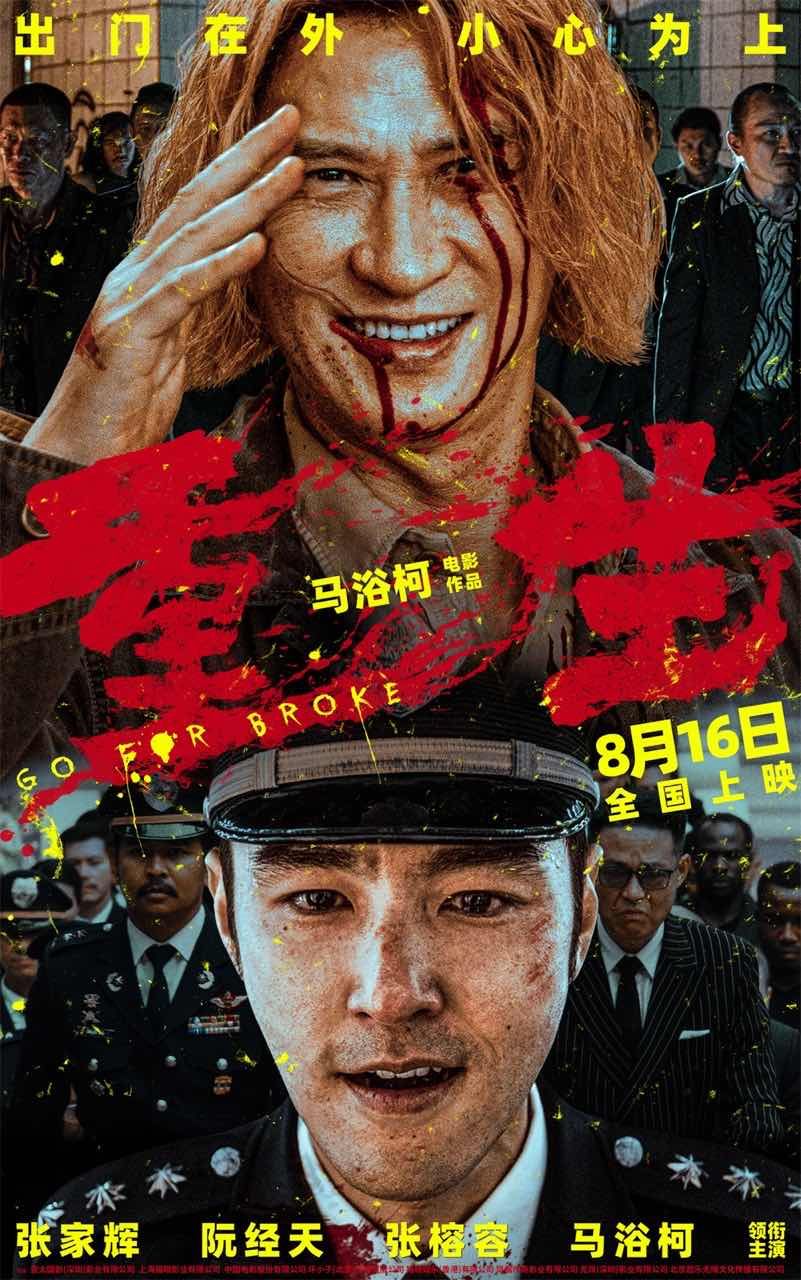
Once again set in a fictional South East Asian nation, Marc Ma’s action drama Go For Broke (重生, chóngshēng) is a rather unsubtle entry into the anti-drugs propaganda genre in which a former soldier goes undercover to undermine a drug lord’s empire after his family is destroyed by gangsters and narcotics. As such, it may appear insensitive in including such lines as “once addicted you can never quit,” and “addicts not only harm themselves but drag their families into hell,” which the demonise the user even if it makes clear that “drug cartels will stop at nothing to lure people into addiction for profit”.
A case in point, Zhang Yao’s (Nick Cheung Ka-Fai) wife is tricked into consuming illegal drugs by Thai-speaking gangsters without her knowledge or consent, though their end goal seems only to be getting her addicted rather than pressing her into other forms of exploitation to make money for them in return for the drugs. In any case, once she starts using drugs, Zhang Yao’s wife becomes incapable of caring for their daughter who wanders off and is hit by a car. Zhang Yao perhaps feels some responsibility for this as, after retiring from the army, he took a job on a boat to earn money that was supposed to fund their future, leaving his family undefended. Though he forgives his wife, she cannot forgive herself and sees no way out of her addiction so takes her own life.
Two years later, Zhang Yao is working with a police officer, An Du (Ethan Juan), who claims to oppose the rampant police corruption fostered by the police chief, his uncle An Pei (Jack Kao). After killing off the real one in prison, Zhang Yao goes undercover as the long-lost son of a local businessman/drug lord Mu Kun (Vithaya Pansringarm) who is suffering from an illness sparking a succession crisis within the gang as right-hand man Herta clearly expected he’d become the new boss on Kun’s death. After joining the gang, Zhang Yao sets about disrupting the relationship between Kun and police chief Pei, a drug user himself, which underpins the local drugs trade.
The “fictional South East Asian nation” setting allows the film to explore themes of police corruption which wouldn’t pass censorship if it were set on the Mainland, but corruption does seems to be otherwise endemic with Pei claiming that men are not good or bad but strong or weak. As long as you’re strong enough, you can oppress those below you, he tells Du before telling him to call his mistress so that he can enjoy oppressing her. Du appears to have feelings for Nanqian (Sandrine Pinna) who is trapped in her relationship with Pei because her policeman father’s life was also ruined by drugs. Like Zhang Yao’s wife she sees no way out of her situation while Pei physically and mentally abuses her.
It becomes clear that each of these people’s lives have been negatively affected by a family member’s drug use for which they want revenge against the dealers. In the absence of justice, they’ve had to take things into their own hands. As twist piles on twist, Ma implies that that a vast network is working in the shadows to oppose the drugs trade and the inherent corruption in their society. Though the society itself is rotten to its core, there is a purification that seems to take place as the vigilantes bring light back to otherwise dark place, but at the same time, all the blame for the rise in drug use is placed on dealers forcibly addicting people while ignoring the underlying social circumstances which may have led people in despair to turn to drugs and at the same time demonising those who take them for having dragged everyone else into their “hell”. The use of blood splatter also lends a degree of cartoonishness to the action sequences as Ma seems to draw from exploitation cinema in the film’s general outlandishness while otherwise slightly at odds with the persistent grimness of the drug-ridden society. It does, however, have a degree of poignancy in its melancholy conclusion that seems to imply that salvation may be possible after all.
Trailer (Simplified Chinese / English subtitles)

