Neo Chinpira: Zoom Goes the Bullet (ネオ チンピラ 鉄砲玉ぴゅ~, Banmei Takahashi, 1990)

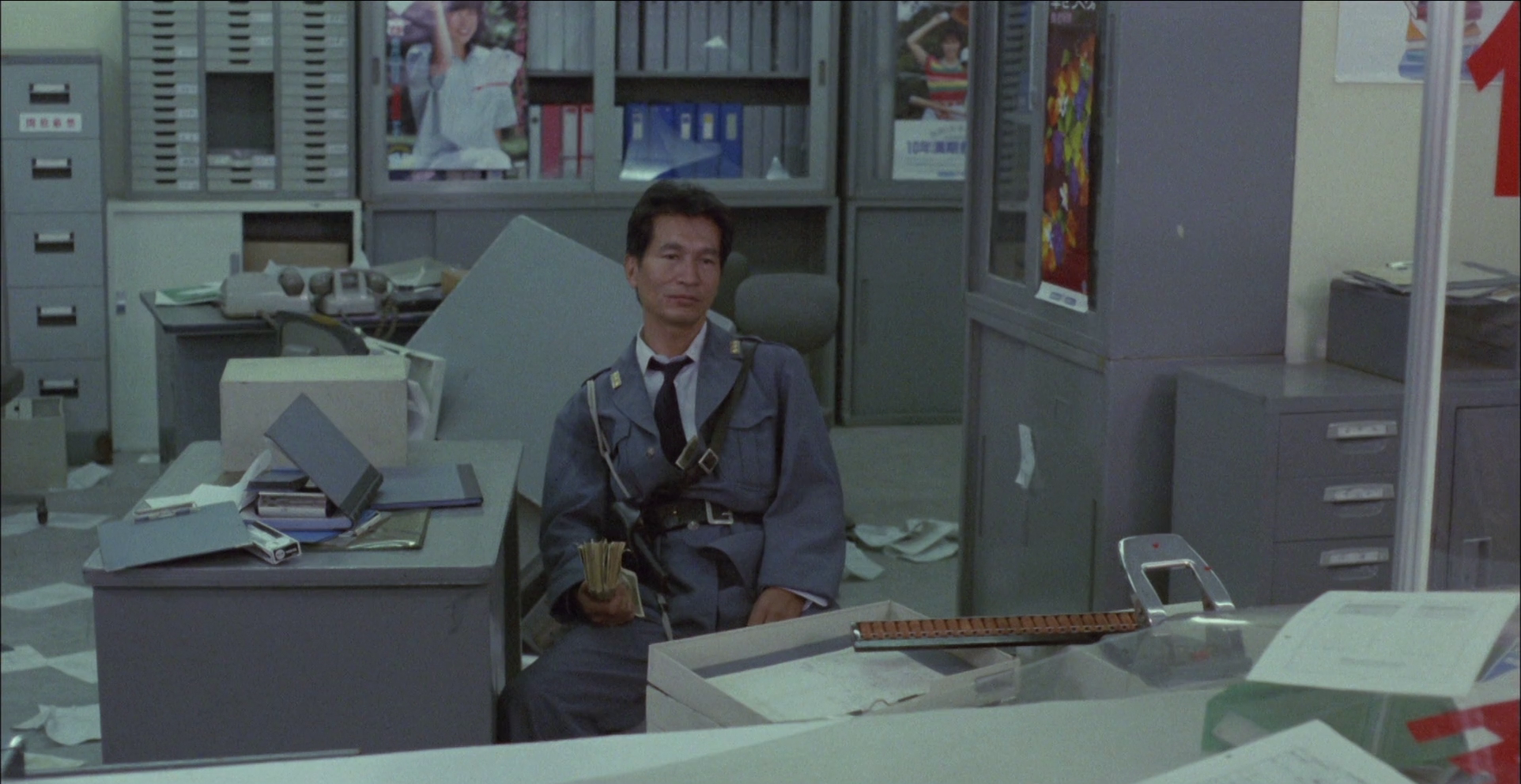
In the classic yazkua films of old, going to prison for the gang could be a badge of honour and one of the ways you could catapult yourself into the higher ranks. By the 1990s, however, the yakuza is a much depleted force and it seems few are willing to give up years of their lives on a point of honour for an uncertain reward. At least, that’s how it is for most of the gangsters at the centre of Banmei Takahashi’s Neo Chinpira: Zoom Goes the Bullet (ネオ チンピラ 鉄砲玉ぴゅ~, Neo Chinpira: Teppodama Pyu) , a slacker comedy in which a young hanger on faces a dilemma when he’s made the lookout on a squad sent to bump off a rival only for his squamates go to great lengths to injure themselves first so they won’t have to go through with it.

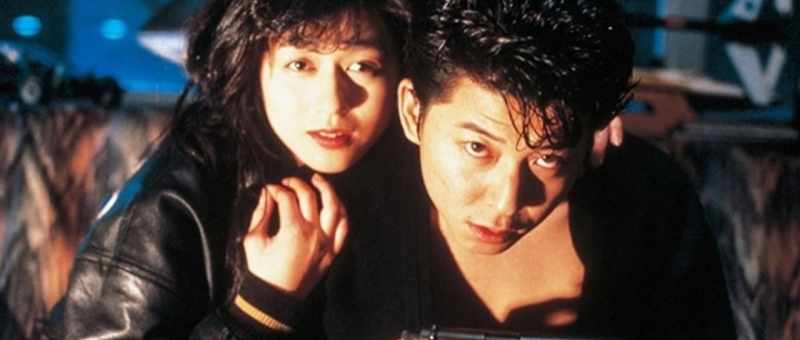
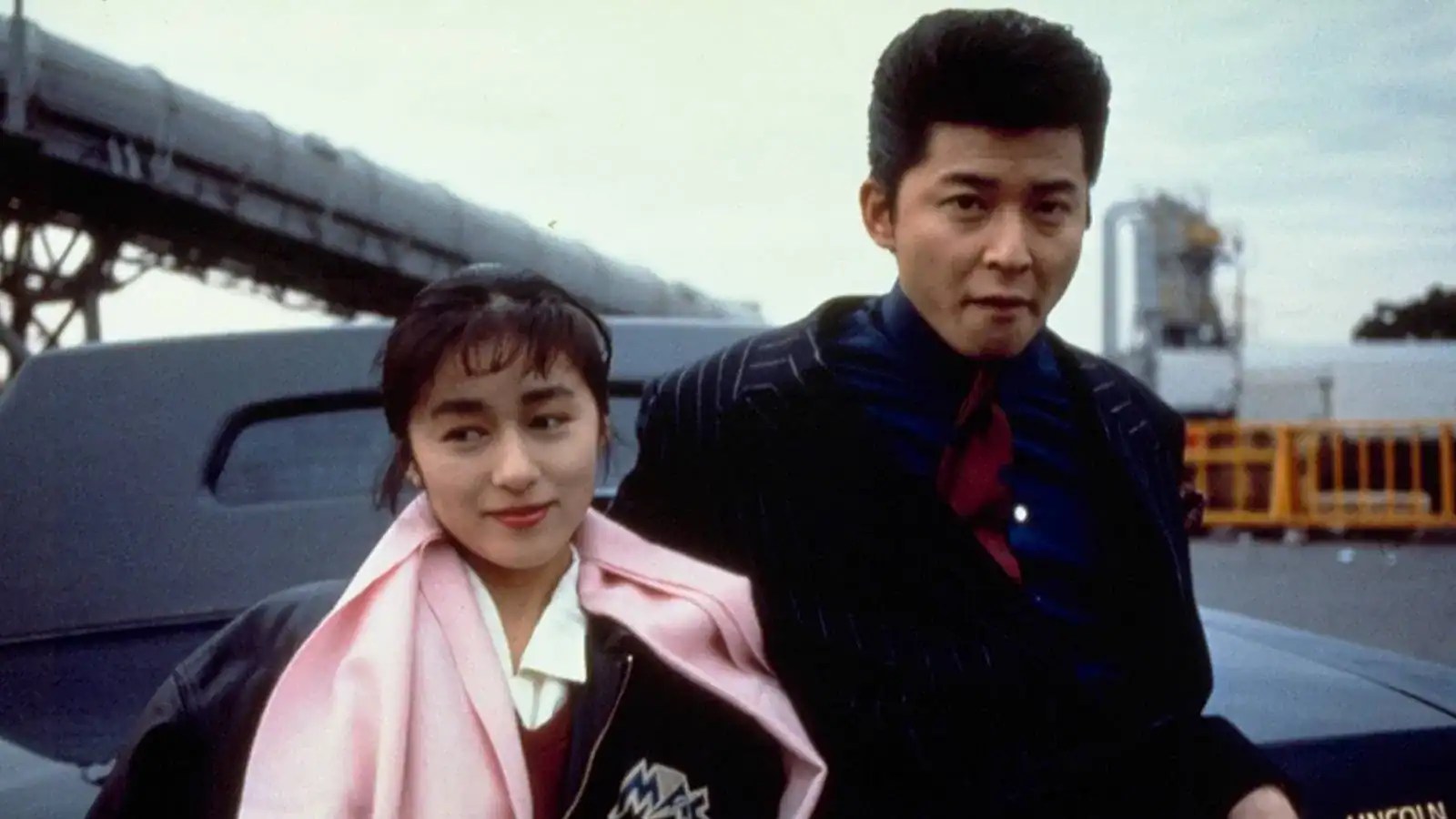
Junko (Sho Aikawa) is an unlikely hero. With a rockabilly quiff and a red jacket, he’s nominally the driver for gangster Yoshikawa (Toru Minegishi) which means he gets to drive his limo and act like a big man for a while making calls on his carphone. But as much as Junko shows off to his girlfriend Noriko, a hostess at a Korean bar, by instructing the landlady not to clear up his empty bottles because they’ll make a good weapon in an emergency, he’s otherwise something of a joke. The limo ends up getting “stolen” by a young woman who just likes American cars and sexually aroused by gunfire.

Even Yumeko (Chikako Aoyama) chuckles that Junko sounds like a girl when he says he wants to see the ocean while they’re driving around. “Junko” is ordinarily a girl’s name. He picked it up as a kind of hazing based on an alternate reading of his name kanji. She says the same thing again when he reveals he’s never brought a girl back to his place before, probably because it’s in a disused building he was given to manage where he’s surrounded by junk like an old barber’s chair and pinball machine while the figure of Humphrey Bogart in the Maltese Falcon looks down at him from a poster as if embodying his unattainable gangster dreams. As masculine icons go, Junko is also plagued by his uncle, Mizuta (Joe Shishido), a legendary gangster and representative of old school yakuza who take the code seriously and wouldn’t put up with people like Junko’s colleagues who engage in “zooming”, deliberately shooting themselves to get out of being ordered to carry out a hit. He’s not overly impressed by Junko either, unable to understand why he’d become an errand boy for a petty gangster rather than be his own boss as a small-time crook.

Junko’s dilemma is whether he’s really up to this task and will be to go through with it or will end up chickening out and injuring himself too. Crows are more cowardly than they seem, Yumeko explains in an obvious allegory for the yakuza. They pick a place and defend it as a group, while their numbers are way up lately so their individual turfs are shrinking. But now Junko’s all on his own and filled with uncertainty not knowing if he can pass this rite of passage and be accorded a man or will forever be trapped in a liminal space of adolescence never to be taken seriously or make any progress in his life. In an effort to toughen up, he swaps his red jacket for a suit and finally puts on a shiny leather overcoat, ripping off the buttons to bind it more tightly around him with the belt as if it were a kind of armour. 

Somehow the lighthearted ridiculousness of this world of bumbling yakuza and creepy corrupt cops lends an additional poignancy to Junko’s final gesture as he sets off on his path, not really believing he will return. He doesn’t even wait for the pictures he had taken at a photo booth. They won’t be much use to him where he’s going, but at the same time it’s like he’s treading water never quite getting closer to his destination but continuing along his long sad walk. Banmei Takahashi sticks firmly to his pink film roots, sticking in a weird sex scene at regular intervals as Yumeko becomes enraptured by pistols, but also has quite a lot of fun with his “uncool” gangsters and the lost young man who looks up to them while perhaps knowing that this image of stone cold masculinity only really exists in the movies.
Sister Street Fighter: Hanging by a Thread (女必殺拳 危機一, Kazuhiko Yamaguchi, 1974)

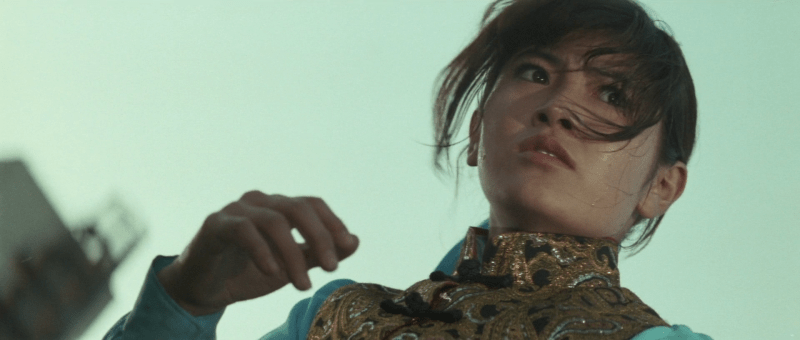
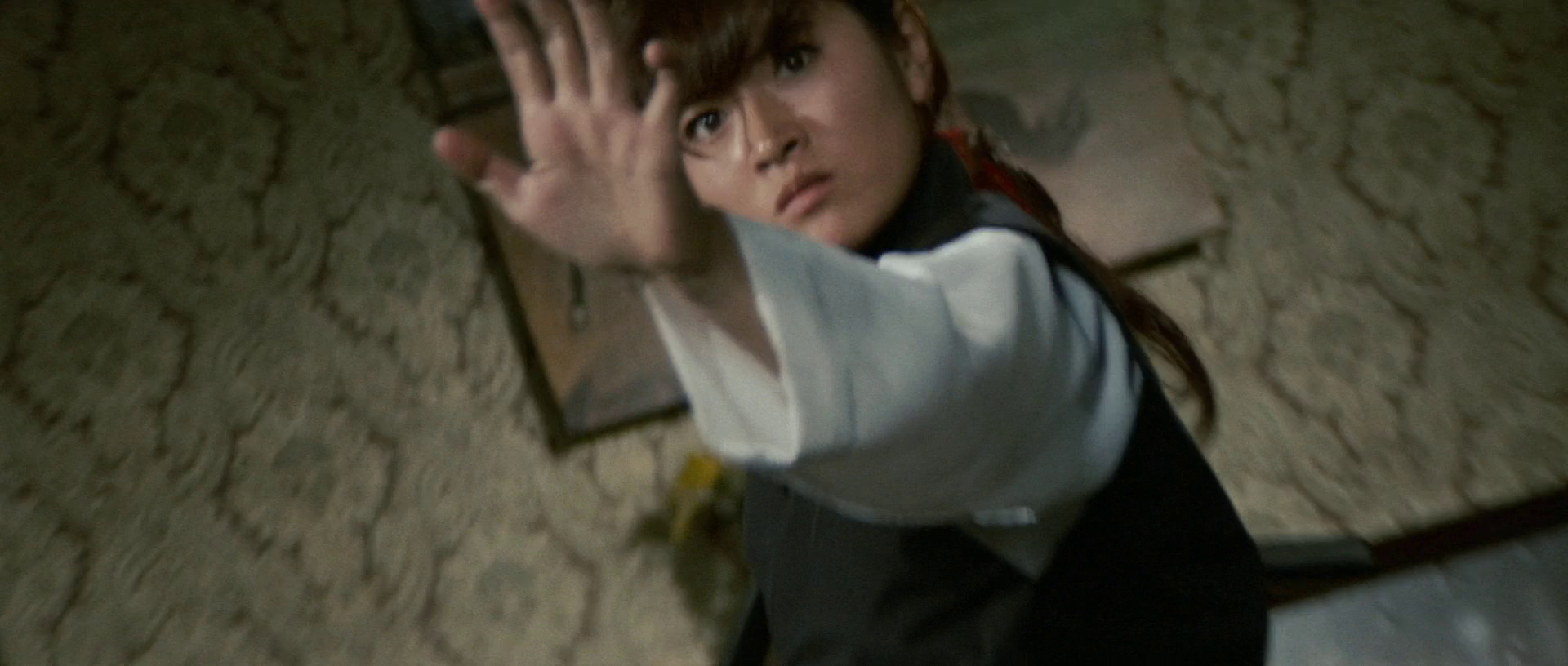
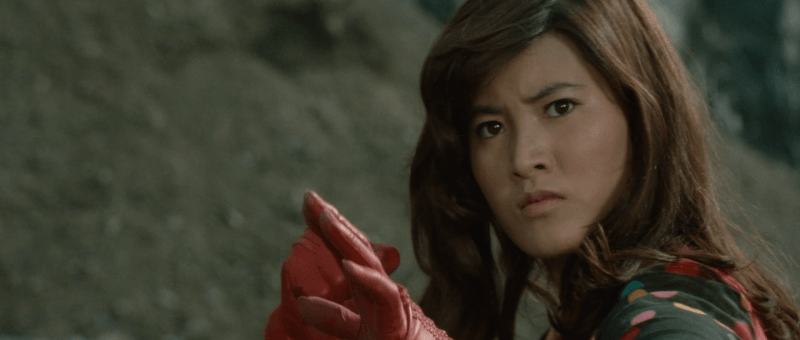
Li Koryu (Etsuko Shihomi) returns to fight crime in Japan in the second in the Sister Street Fighter series, Hanging by a Thread (女必殺拳 危機一, Onna hissatsu ken: Kiki ippatsu). The first film apparently tested so well so that studio execs ordered a second one right away to fill a big New Year slot. That might in one sense explain why the film is pretty much the same in terms of narrative, yet this one does go a little further while swapping the drugs subplot for diamonds.

Koryu comes to the aid of a man being attacked by thugs in a Hong Kong marketplace and is somehow completely unfazed when he plucks out his false eye with instructions to give it to Professor Enmei (Hideaki Nagai) who is also known to Koryu because he’s the father of her old school friend, Birei (Hisako Tanaka). Unfortunately, the false eye contains microfilm that suggests Birei has been kidnapped by vicious Japanese gangsters. The professor therefore sends her to Tokyo on a rescue mission and we discover that she also has an older sister, Byakuren (Kanya Tsukasa), who was never mentioned in the earlier film, who is living in Japan having chased her dream of becoming a jewellery designer.

This time around, it’s diamonds not drugs, but the gangsters still haven’t cracked this smuggling business and have come up with the very weird idea of hiding them in the bum cheeks of attractive young women. Meanwhile, they also force the women into sex work. Osone’s (Hideo Murota) female business partner Mayumi, played by Madam Joy, a drag queen who starred in several Toei films in the mid-70s, films them from a distant window to get material for blackmail. Nevertheless, she only cares about the diamonds, unlike the boss and several of the gang which once again includes a rival martial arts outfit who have in it for the Shorinji temple. 

Shinichi Chiba does not appear in the film, but Koryu does gain a kind of sidekick in the form of Tsubaki (Yasuaki Kurata), a sleazy-looking guy whose intentions are permanently unclear. The film goes a little bit further with its awkward orientalism opening in a Hong Kong marketplace with some offensively stereotypical music and a bunch of fire crackers, even if once again in trends in the opposite direction from most films of the time in that the crooks are all Japanese and it’s a half-Chinese woman who’s coming to sort them all out. The gangsters have apparently been trafficking the women abroad for sex work, then bringing them back with the diamonds in their bums which seems like a plan with a lot of potential problems even if they hadn’t made the huge mistake of kidnapping a friend of Koryu and then later her sister. 

But then again, Koryu’s cases seem to be fairly isolated. Once she takes out these bad guys, that’s it. There’s no wider conspiracy save a general sense that the world itself is corrupt and indifferent to human suffering. Osone has a strange love of taking people’s eyes, which might be a way to stop them seeing who he really is. He has, after all, already taken the stars from Byakuren’s along with her dreams of a new life in Japan finally becoming the jewellery designer she always dreamed of being. Despite her determination to save her sister, Byakuren soon realises that Osone is most definitely not a man of his word. His curiously old-fashioned outfits and demeanour suggest he’s seeking a place with the elites of an earlier time while indulging in some fairly odd behaviour. 

Once again, Koryu squares off against his equally weird henchmen who start attacking her the moment she lands in Japan, and eventually ends up stabbing someone with the severed arm of another enemy still holding his knife. Still, the tone is generally cheerful and upbeat despite the strangeness of the tale and series of losses Koryu experiences including a challenge to her pride when she’s bested by one of the martial arts goons. In this continually uncertain and increasingly surreal world, Koryu’s fists, it seems, are one of the few things that can absolutely be relied upon along with evil smugglers and their bizarre new plans for circumventing the law of the land out of nothing other than lust and greed.


Original trailer (English subtitles)

The Great Chase (華麗なる追跡, Norifumi Suzuki, 1975)

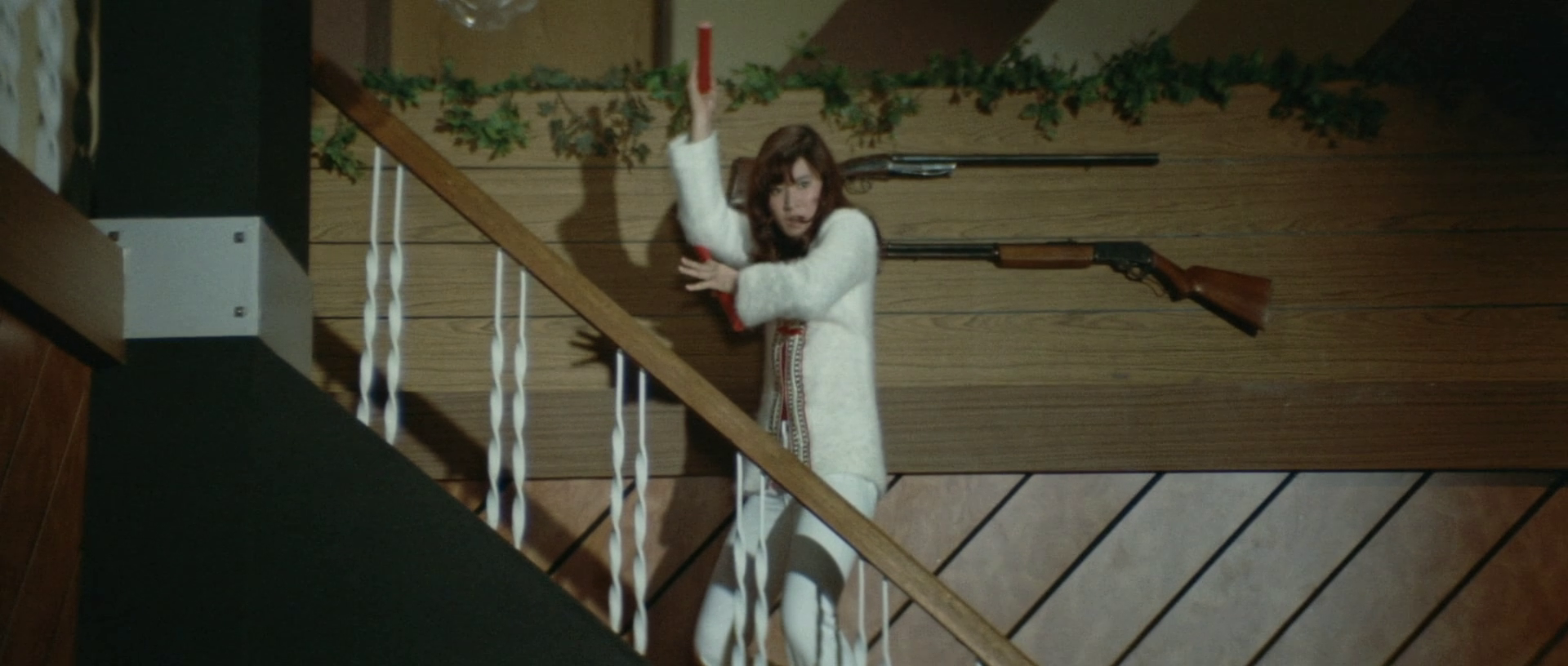
What about if you rebooted the Bannai Tarao series, but the hero was a female spy who is also a champion race driver and martial artist? Norifumi Suzuki did actually make a Bannai Tarao move in 1978 starring Akira Kobayashi, but the heroine of The Great Chase (華麗なる追跡, Karei-naru Tsuiseki) certainly loves a disguise or two and like the famous man of a thousand faces seems to have no trouble pulling them off as she infiltrates a gang of evil traffickers led by a furry which has come up with an ace new plan of packing heroin into coffins and having them shipped to nuns!

Oh, and the gang were also behind the death of her father who “committed suicide” in prison after being framed for drug smuggling. The Great Chase takes place in a world of pure pulp which somehow maintains its sense of cartoonish innocence even after Shinobu (Etsuko Shihomi) has infiltrated the heart of darkness and seen most of her associates killed by sadistic gang boss Inomata (Bin Amatsu). But at the same time, it delves into a deep sense of ‘70s paranoia as it becomes clear that the authority figures are all corrupt. Inomata has become a politician, while Shinobu’s father’s murder was orchestrated by the prison warden who was working with him in return for financial gain. The man who framed her father was a friend of his, implying that no one can really be trusted when there’s money to be made.

In a roundabout way,as this sense of anxiety is only reinforced by Shinobu’s role as some sort of secret agent working for the spy ring run by her uncle which is currently hot on the trail of the drug dealers even if they haven’t yet figured out who their boss is. Conversely, her home life is as wholesome as it could be with her two adopted siblings who run a florist’s along with Shinobu’s fan club. Her status as a kind of race car idol lends Shinobu a particular kind of ‘70s cool and turns her into some sort of superhuman figure capable of triumphing over any kind of adversity like a superhero worthy of any kid’s lunchbox. The siblings, Nagi (Fujika Omori) and Shinpei (Naoyuki Sugano), were taken in as orphans by her father which once again signals his goodness in contrast to the greed and selfishness of the gang that had him killed to cover up their crimes. 

That they peddle in drugs marks them out as a force of social disruption, but they’re also actively heretical in hiding behind the shield of the church. Suzuki frequently uses religious imagery in his films and here again echoes the romanticism of School of the Holy Beast with the use of red roses to decorate the coffin of the unfortunate young woman who has been turned into a vessel for smuggling drugs and has for some reason been laid out otherwise entirely naked. When it comes to retrieving the merchandise, we can see that many of the habits are being worn by men while Inomata himself masquerades as a priest. Then again, perhaps he is merely indulging his love of costume play seeing as he also has a hobby of wearing a furry bear suit to attack and rape women in his living room. 

Inomata’s claws then seem to represent something else, a rapacious, grasping sense of patriarchy in which he also uses drugs to bind women to him. Shinobu’s childhood friend Yukiko (Hisako Tanaka) has apparently fallen victim and laments that she is possessed by him body and soul to the point that the old Yukiko is dead which is why she hasn’t been able to step in and help Shinobu and is doing so now fearing that it may cost her her life. Suddenly, it’s all quite grim with the basement sex cult, whipping and torture, but Shinobu maintains her plucky spirit and is somehow able to lure Inomata towards a cable-car-based showdown. With a cameo from real life wrestler / singer Mach Fumiake, the film enters a kind of meta commentary on a real-life Shinobu (though she was not, as far as anyone knows, one of Japan’s top spies), but otherwise remains within the realms of pulp in which the heroine is able to pull off her difficult mission with the help of her talent for disguises before dramatically unmasking herself as the woman who’s going to take them all down. Camp to the max and incredibly surreal, the film never drops its sense of silliness even as the grim events enveloping Shinobu lead to tragic consequences that she barely has time to deal with before barrelling straight into the next duel with the forces of corruption.


*Norifumi Suzuki’s name is actually “Noribumi” but he has become known as “Norifumi” to English-speaking audiences.

The Killing Machine (少林寺拳法, Norifumi Suzuki, 1975)

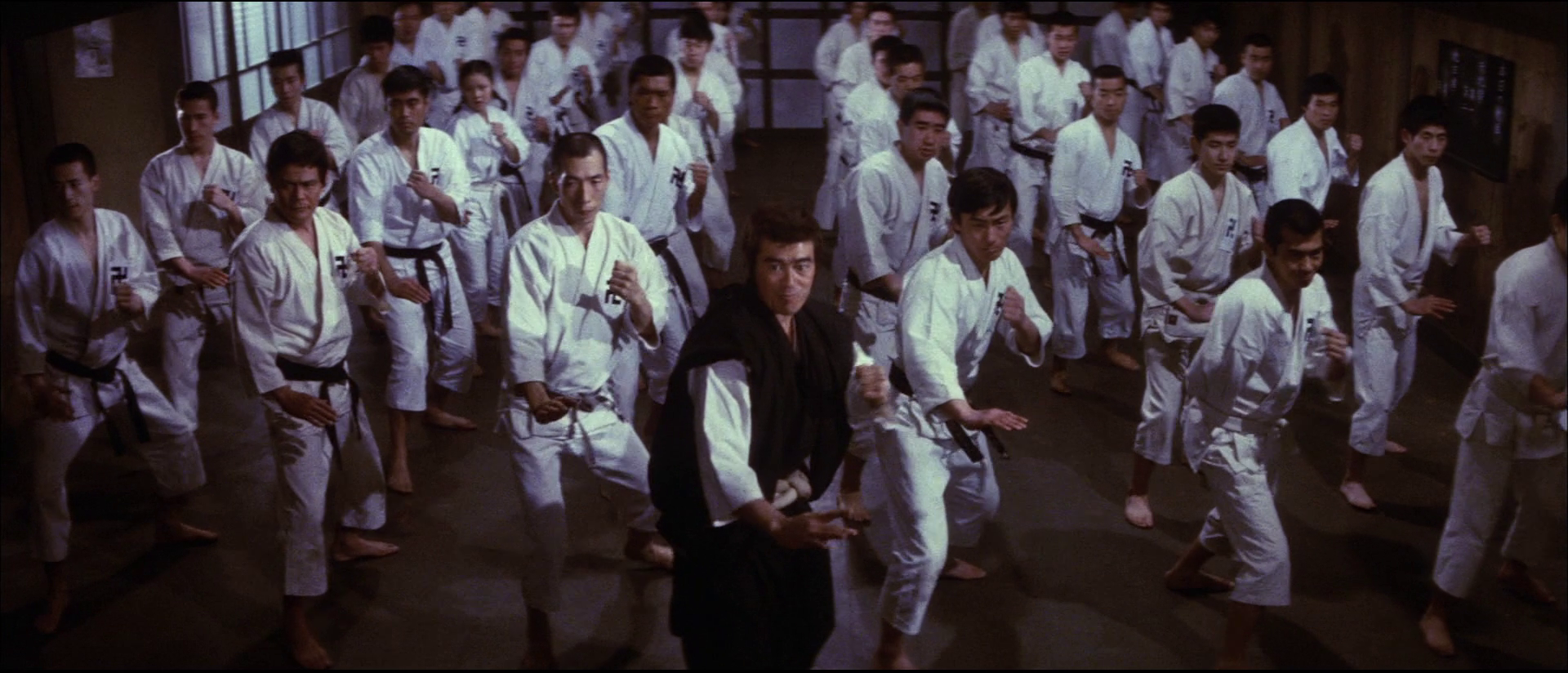
“As long as somebody like you is around, there’s hope for Japan,” an oddly sympathetic prison warden says to the last patriot standing in post-war Osaka. The title of Norifumi Suzuki’s Sonny Chiba vehicle The Killing Machine (少林寺拳法, Shorinji Kempo) maybe somewhat inappropriate or at least potentially misleading as the film is deliberately constructed as a martial arts parable emphasising the spiritual philosophy of self-improvement and compassion that is inextricable from its practice.

To that extent, the hero, Soh Doushin (Shinichi Chiba), is trying to fight his way out of the miasmas of the immediate post-war era. As may be apparent, Soh has taken a Chinese name, though Soh was apparently his along and belonged to a former samurai family whose nobility has been crushed by militarism. As the film opens, however, he’s a Japanese secret service operative in Manchuria blindsided by the news of Japan’s surrender. Soh is it seems a nationalist and a patriot, but a fairly revisionist one who stands up to the abuses of the Japanese army. He later says that he protested the way that the local Chinese population were often treated and he does indeed raise a fist toward an officer who wants to sell a young Japanese woman to a Chinese soldier in return for a guarantee of their safe passage to a boat heading out of the country. The young woman’s mother protests that she is an innocent virgin, a fact that has some later relevance. Soh refuses to let the officers take her, though evidently separated from her later.

When he meets the young woman again in the bomb-damaged backstreets of Occupation Osaka, she is dressed in Western clothing as opposed to the smart kimono she wore in Manchuria and is about to become a “pan pan” or streetwalking sex worker catering to American servicemen. Of course, Soh can’t let this happen either, but as she later tells him, she was raped by Russian soldiers during the retreat and now feels herself to be despoiled. She never wears kimono again and becomes a kind of symbol for a despoiled nation that Soh is reluctantly forced to accept he cannot save in part because his philosophy, which is still uncomfortably rooted in the philosophy of militarism, only valued strength when it should have valued love. The kind of love that Kiku (Yutaka Nakajima) had for her brother that made her willing to sacrifice herself for his wellbeing. 

Even so, Soh is doing his best to issue a course correction by caring for a small group of war orphans and helping them support themselves by running a rice soup stall so they won’t end up becoming dependent on the yakuza or the black market. It’s the yakuza and their increasingly corporatising nature that become Soh’s chief enemies, though standing right behind them are the Occupation Forces. They are, of course, just the biggest gang, as we can see when one of the kids steals a few tins from the gangster’s crate which is marked with text making it clear it came from the mess hall at the American base. The backstreets are full of sleazy soldiers and pan pans or otherwise the starving and dejected, sometimes violent demobbed soldiers filled with despair. It’s these men that Soh wants to buck up, telling them to rediscover their fighting spirit and giving them the opportunity to do so through learning Shaolin martial arts.

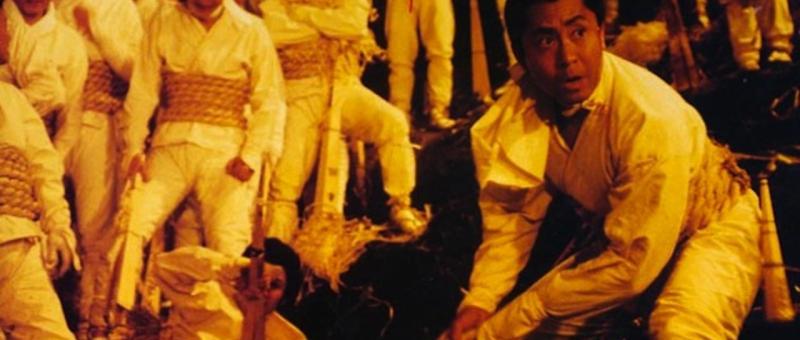
Of course there are those who don’t want to learn Chinese kung fu in the midst of their defeat, but what Soh is advocating is something that has a greater spiritual application even than karate can also have. It’s a kind of humanitarian riposte to the futility of the post-war society that might sometimes fail to recognise the depths of the impossibility faced by many in insisting they can be faced by discipline and moral fortitude but at the same time is not really judgemental except toward those who have deliberately abandoned their humanity, such as the trio of goons who rape a school for amusement (the girl is later seen among the students at Soh’s school along with the children from Osaka). The girl’s father reports it to the police, but the police and the gangsters are in cahoots, so nothing gets done. Soh cuts the guy’s bits off so he won’t be doing that again. Strength without justice is violence, he realises. But justice without strength is inability. Strength and love like body and mind should never be separated. The closing shots show an entire mountain covered in white-clad figures practising Shaolin kung fu and joining the humanitarian revolution rather than the cruel and selfish one represented by the gangsters with their red-light districts and black markets. It may be a simplistic solution, but it is in its way satisfying and at least a rejection both of the militarist past and the capitalistic future.


*Norifumi Suzuki’s name is actually “Noribumi” but he has become known as “Norifumi” to English-speaking audiences.

Roaring Fire (吼えろ鉄拳, Norifumi Suzuki, 1981)

If Chiba’s karate films and the Sister Streetfighter series had been influenced by Shaw Brother’s kung fu films, Roaring Fire (吼えろ鉄拳, Hoero Tekken) is an homage to contemporary action and in some senses anticipates Jackie Chan and heroic bloodshed though in other ways harking back to the classic serial with its diamond-themed MacGuffin. A vehicle for rising action star Hiroyuki Sanada, the film reflects a new internationalist Japan but also confronts the toxic legacy of the feudal past in the fall of a once noble house.

Joji (Hiroyuki Sanada) has spent his entire life on a ranch in Texas only to discover from a deathbed confession by the man that he thought was his father that he had been kidnapped as an infant and is actually the son of the wealthy Hinohara family. But on travelling there, he immediately finds himself in the middle of a conspiracy. His twin brother Toru has gone missing after going to London to study ophthalmology in order to cure his sister Chihiro’s (Etsuko Shihomi) eye condition. Though his uncle, Ikki (Mikio Narita), welcomes him with open arms, a weird ventriloquist act by a man called Mr. Magic (Shinichi Chiba) that he’s taken to see suggests that the plane crash his parents died in may not have been an accident and his uncle killed them to take over the family business. 

Ikki is mixed up in the drugs trade with Hong Kong Triads and in keeping with Suzuki’s other films, we once again have a new solution to smuggling in hiding drugs in underripe banana skins. Lured to Ikki’s underground lair which has a large photo of Hitler on the wall and other Nazi memorabilia scattered around, Joji is given the “join us or die” speech, but ultimately manages to escape with some help from Abdullah the Butcher who is working as some kind of bodyguard but apparently takes a liking to Joji and declares they will be the best of friends forever after their initial fight. In any case, we soon realise that Ikki’s purpose in life is feudal revenge in that his mother was a geisha who died young because of her poverty and the nature of her work while staring at the Hinohiras’ giant mansion though his father apparently took no responsibility for him until after his mother died. His only goal in life is to take over the estate and otherwise destroy the rest of the family that never fully accepted him. 

Of course, Joji is in his way, but Joji doesn’t really want this legacy either and only wants to save his sister who turns out to be a kung fu ace despite her blindness but is otherwise unable to escape. In his final confrontation with Ikki, he reclaims the name of the man who raised him, Hibiki, and rejects that of Hinohara as if symbolically refusing his feudal inheritance. Mr Magic, really an Interpol agent, makes an executive decision to let him go which is also a representative authority figure setting him, and the younger generation, free from the feudal legacy to live a more international life. 

Nevertheless, Suzuki fills the film with a series of high-impact action sequences and extreme stunt work such as a crazy bus chase through Hong Kong which predates that in Police Story by a few years. The shuttles back and forth between Hong Kong and Japan, but it’s clear here that Ikki and his weird Nazi cohorts are the villains rather than the Hong Kong gangsters who really just exist and otherwise only factor into the story because of their desire for Queen of Sheba diamond that Joji’s birth father hid before he died so Ikki wouldn’t get his hands on it. A possibly poor taste allusion to the holocaust aside, Suzuki sticks to the plucky teen adventure format in which Joji gets into fights with the local guys and is quickly befriended by Chihiro’s teenage friends who all hang out at the mansion, rather than opt for a gloomy sense of paranoia and conspiracy even as Joji finds himself at the centre of a Hamlet-esque plot in which his uncle has usurped the throne and he must return to set it right. Yet rather than restoring the existing order, Joji effectively resets it by ending the family’s influence and then moving on into a freer existence shorn of filial responsibilities. 


Trailer (no subtitles)

The Mosquito on the Tenth Floor (十階のモスキート, Yoichi Sai, 1983)

A beaten-down beat cop’s existential crisis progressively deepens after he throws himself into financial ruin to buy a computer in Yoichi Sai’s debut The Mosquito on the Tenth Floor (十階のモスキート, Jikkai no Mosquito). Like Pool Without Water, star Yuya Uchida conceived and co-scripted the film as a vehicle for himself and was apparently inspired by the sight of some blood, his own, on a wall where he’d squashed a mosquito though he also claimed the the 10 in the title is intended to reference the 10 commandments in addition to simply where the unnamed protagonist lives.

The fact that he lives on the 10th and top floor in a building with no lift is symbolic of his dismal circumstances. On the one hand he can rise no higher but on the other is stuck with an inconvenient living situation precisely because of his inability to rise socially. As it transpires the hero, a policeman, joined the force right out of high school with aspirations of rising to the rank of captain but has spent the entirety of his 20-year career manning a police box. He’s repeatedly failed the exam for promotion to lieutenant and realistically speaking is now simply too old to make much further progress. A man of few words, he listens as the other officers who took the exam with him outline the hierarchal structure of the police force while meditating that as a man on the wrong side of 40 his possibilities have decreased and it’s more than likely he’ll be stuck in the police box until he retires. 

His boss later says as much, sympathising with him but also pointing out that a policeman is also a public servant with a role to serve within the community. He is supposed to make people feel safe and contribute to the progress towards a crime-free society, but it’s clear that his life has spiralled out of control precisely because he cannot ally his career goals with the kind of life he wished to lead. His wife divorced him two years ago seemingly because she wanted a greater degree of material comfort and became resentful that he failed to progress in his career and could not move on from the low-salaried position of an ordinary street cop. She now makes a living selling golf club memberships, looking ahead to the oncoming Bubble-era and a society of affluent salarymen which is very much what her new boyfriend seems to be. Meanwhile, she lives in a very nice townhouse with their teenage daughter and constantly hassles the policeman for falling behind with his child support and alimony payments. He’s also racked up a healthy tab at a karaoke bar where he regularly hangs out and has a serious gambling problem with betting on boat races seemingly his only other form of social outlet.

As his daughter and others keep reminding him, the world is changing and his decision to buy a computer after unwisely taking out a payday loan is in part a symbol of his desire to progress into the modern society even if, somewhat ironically, others chastise him for spending what is then a huge amount of money on something they think of a child’s toy. Otherwise an upstanding policeman who irritatedly deflects a colleague’s joke about bribing someone to pass the exam, the policeman finds himself taking out one payday loan to pay another with loansharks constantly ringing him at the police box to remind him he’s behind on his payments. To overcome his sense of powerlessness, he begins by abusing his authority in catching a punk woman shoplifting and arresting her but then taking her back to his flat to play computer bowling and take advantage of her sexually. He later does something similar with a bar hostess, Keiko (Reiko Nakamura), who took him home when he was drunk. Though the encounter begins as rape, Keiko soon gives in and even comes back for more claiming that she’d never done it with a policeman before and it exceeded her expectations which is in many ways reflective social attitudes at the time. Emboldened, he invites danger by raping a female traffic cop, tearing her clothes as she fights back, screams, and cries though she presumably does not report him given the professional and social consequences that may adversely affect her life and career if she chose to. 

His ex-wife Toshie (Kazuko Yoshiyuki) says she’s not even sure if he’s human anymore, and his failed attempt to rape her after his boss reminds him that he advised against getting a divorce in the first place because it would negatively affect his chance of promotion may be a perverse way to prove he is though it obviously backfires. Having failed in every area of his life and with no prospect of ever getting back on track or starting again, he begins to go quietly insane typing rude words into his computer while the constant calls from loansharks take on a mosquito-like buzzing as does his own final wail of despair and powerlessness as he’s brought down by same authority he once served. His aloneness and confusion are palpable when he ventures into the city and discovers his teenage daughter Rie (Kyoko Koizumi) dancing in Harajuku staring at her intently but then walking away having invaded this space reserved for the young. “Police yourself!” one of the Rockabilly guys ironically instructs him on noticing that he’s dropped his ice cream cone, explaining that the police might shut them down if they’re discovered to be using the space irresponsibly by littering. Rie and her friends tell him to get a life, explaining that the world is changing while tapping him for cash he doesn’t have but is too embarrassed to refuse, laying bare the extent to which he and those like him have been left behind by the economic miracle, buzzing around maddeningly in mid-air with safe nowhere safe to land. 


Original trailer (no subtitles)

Violent Streets (暴力街, Hideo Gosha, 1974)

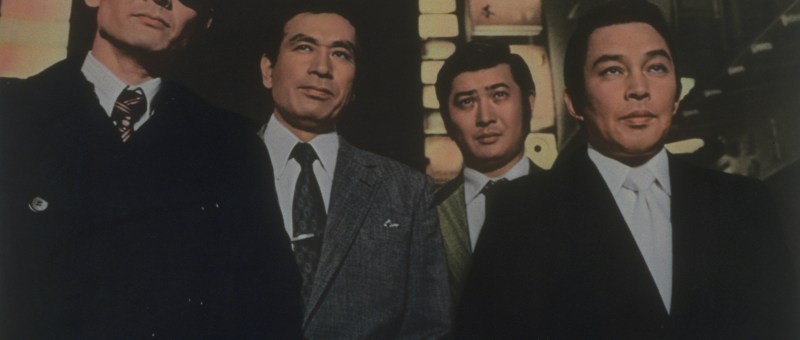
“Nothing’s like it used to be anymore” sighs a woman who’s had to betray herself but has tried to make break for it only to discover there is no way back. Hideo Gosha’s Violent Streets (暴力街, Boryoku Gai) is like many films of its era about the changing nature of the yakuza in an age of corporatised gangsterdom. Now “legitimate businessmen” who claim to no longer deal in thuggery, their crimes are of a more organised kind though a turf war’s still a turf war even if you’re fighting from the boardroom rather than simply getting petty street punks to fight it for you in the streets. 

In a touch of irony, former yakuza Noboru Ando stars as a man who’s tried to leave the life behind but is pulled back into underworld intrigue when his former foot soldiers mount an ill-advised bid for revenge against the clan they feel betrayed them. After serving eight years in prison for participating in the last turf war, Egawa was given flamenco bar Madrid on the condition that he dissolve his family and attempt to go straight as a legitimate businessman. The Togiku gang has since gone legit and distanced itself from most of its old school yakuza like Egawa. But now a yakuza conglomerate from Osaka is moving in on their old turf and the Togiku want the Madrid back as a bulwark against incursion from the west which is why they’ve been sending the boys round to cause trouble in the bar. 

Egawa is the classic ex-gangster who wants to turn himself around but is largely unable to adapt to life in a changing society. He is technically in a relationship with a bar hostess who has a severe drinking problem in part exacerbated by his inability to get over his former girlfriend who left him and married the boss, Gohara, while he was in prison. His former foot soldiers attempt to convince him to get the gang back together and take revenge, resentful of having been used and discarded, but he tells them to let it go, that they’ve all got “honest jobs” and that they should try to live as best they can. Like him, the guys are ill-equipped to make new lives in the consumerist society and cannot move on from the post-war past. Hoping to engineer a turf war between the Osaka guys and Togiku, they kidnap a popular TV personality/pop singer (Minami Nakatsugawa) attached to a station which Togiku controls and frame a rival affiliated with the Osakans for taking her. 

This just goes to show the various ways in which newly corporatised yakuza have expanded their business portfolio, heavily participating in the entertainment industry moving beyond bars, clubs, and the sex trade into mainstream television and idol stars. Egawa’s old friend Yazaki (Akira Kobayashi) is his opposing number, just as caged but trapped within the confines of the new gangsterdom, reprimanded by his boss for raiding the rival studio’s offices and undoing the gang’s attempt to rebrand themselves as legitimate businessmen rather than violent street thugs. “I can’t stand being humiliated” he explains as Gohara points out he’s stepped right into their trap now giving the Osakans an excuse for retaliation. “The Togiku group is a defanged, domesticated dog” Yazaki barks, “I can’t pretend to be an obedient company employee forever and do nothing”. 

Neither man is able to progress into the new era of rising prosperity, both little more than caged animals thrashing around trying to break free but continually crashing into the bars. Just as Egawa’s old guys had tried to engineer a turf war hoping that the two gangs would take each other out and leave a vacuum they could fill, arch boss Shimamura (Tetsuro Tanba) flies above the city in a helicopter as the “worms fight among themselves” and observes the chaos below as he completes his silent conquest of the contemporary economy like some modern day Nobunaga of corporatised gangsterdom. 

Taking over the Togiku through a process of corporate infiltration and gradually ridding themselves of all the old school yakuza ill-suited to the shady salaryman life, the contrast between the world of cabaret bars and back street dives and Shimamura’s smart suits and helicopters couldn’t be more stark. A slightly sour note is struck by the use of a transgender assassin (Madame Joy) who performs a lesbian floorshow by day and kills by night while working with a bald sidekick who carries a parrot on his shoulder, her coldness bearing out the tendency of yakuza movies to associate queerness with sadistic savagery. Gosha rams his point home with the otherwise surreal scene of a pile of abandoned mannequins by a swamp that becomes a popular yakuza kill site homing in on the emptiness of their eyes and the uncanniness of dismembered bodies, mere empty shells just like the men who die in this literal wasteland. Egawa perhaps feels himself to be a man already dead long before being pushed towards his act of futile rebellion, somewhere between sitting duck and caged dog fighting for his life between the chicken coops of a moribund small-town Japan. Marching to a frenetic flamenco beat of rising passions and barely contained rage, Violent Streets leaves its former foot soldiers with nowhere to go but down while their duplicitous masters continue to prosper riding the consumerist wave into a new and prosperous future.


Violent Streets opens at New York’s Metrograph on Dec. 16 as part of Hideo Gosha x 3

Trailer (English subtitles)

Fire Festival (火まつり, Mitsuo Yanagimachi, 1985)

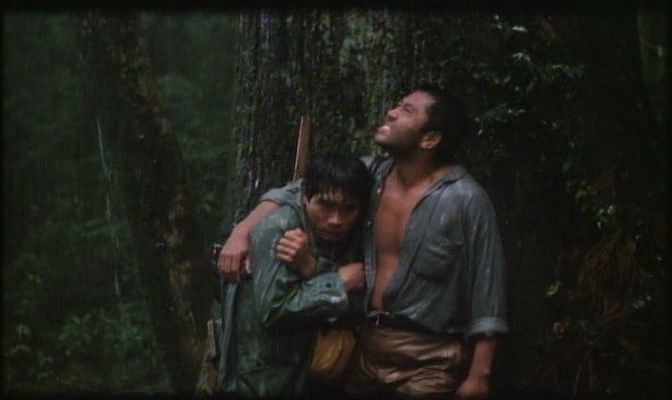
By 1985 the Japanese economy was approaching its zenith yet along with increasing economic prosperity had come social change of which small-town Japan was either casualty or sacrificial victim. “Nigishima will stay as it is” declares the last holdout of an increasingly obsolete way of life in Mitsuo Yanagimachi’s intense modernity drama, Fire Festival (火まつり, Himatsuri), a manly mountain man and animalistic force of nature by several metrics unsuited to life in the contemporary society into which he is ultimately unable to progress. 

There are many things which it seems have not changed in Nigishima for generations, one being the animosity between the cohorts of its bifurcated community, those who live by land and those who live by sea. Rural depopulation may have forced them to come closer but it has also increased their sense of mistrust while both industries continue to suffer in an economy which no longer prizes their humble rural output. Despite being catapulted into a promised modernity by the advent of the railway to great fanfare in 1959, it now seems that Nigishima cannot survive without a new road which could be paid for by the development of a marine park only mountain man Tatsuo (Kinya Kitaoji) owns the property right in the middle of the earmarked area and has hitherto refused to sell further increasing the tension between the two communities. 

Tatsuo is thought of, and thinks of himself, as a big man in the area quite literally it seems as part of the reason he enjoys this status is down to his being unusually well-endowed. He believes himself to have a special relationship with the mountain goddess, often joking to the other men about having a sexual relationship with her while sometimes describing her as his girlfriend. Several times he is mistaken for an animal, firstly by the boatman bringing his childhood sweetheart and sometime mistress Kimiko (Kiwako Taichi) back to the island who assumed he was a monkey crawling along the cliff edge thoughtlessly throwing rocks at them, while he often gambols through the forest whooping like some kind of Tarzan. Entirely unreconstructed, his worldview is patriarchal and misogynistic. All of his banter with the other men is sexual, constantly referring to his penis while greeting his friends with lewd hand gestures thrusting his fist into his pocket as if waving with an erection. The cure for offending the goddess he tells his young protege Ryota (Ryota Nakamoto) is to drop his trousers and display his manhood, Tatsuo strangely believing this would appease her for taking wood from a sacred tree or killing without permission. 

Smearing the blood of a sacrificial animal over his chest and forearms he dedicates the death to the goddess, a gesture he will repeat in the film’s violent and tragic conclusion yet there is also arrogance in his conduct as if he believes himself above natural law, protected as the goddess’ favourite even as he describes himself as “suffocated” by the women in his life from his mother and five older sisters all of whom indulge him to his wife, kids, and mistresses. He has trained his dogs to hunt wild boar without the use of guns in a method he admits even other hunters describe as “cruel” while breaking a local taboo shooting monkeys in the forest well aware of nature red in tooth and claw. As such, there is little nobility to be seen in his determination to preserve this already obsolete way of life. His virility maybe contrasted with that of the ageing land broker Yamakawa (Norihei Miki) and his failed attempts to bed sex worker Kimiko who tricks him into paying off her debts, but he at least knows the way the wind is blowing explaining to her that towns such as Nigishima survive only through things like marine parks or hotels or even nuclear power plants. Without the road, the town will die. 

Yet in 1959 they were told the railway would save them and it seems it did not. Tatsuo’s love making with Kimiko in a boat borrowed from a treacherous fisherman who later agrees to sail it transgressively into sacred waters is intercut with memories of the rail line’s opening ceremony, two teenagers who might have been them or at least of around the same age ride an elephant on the jetty while the townspeople arrange themselves into the formation of the character for “celebration” captured by the aerial photographer above. For Tatsuo as a boy, was this a rebirth of Nigishima or the beginning of its demise as the coming modernity began to eat away at its foundations? 

The fire festival is “for men”, according to Tatsuo, “to drive out evil spirits”, his manliness getting the better of him as he disrupts the proceedings to attack a man he accuses of having brought “false fire”. These are the lessons he teaches to surrogate son Ryota whose devotion to him borders on the homoerotic, Tatsuo cradling him during the climactic rain storm and he seeming to develop a fascination for Kimiko as a kind of indirect fixation. Ryota has learned Tatsuo’s chauvinism mimicking his lewd hand gestures and swaggering walk, his cruelty in sacrificing 1000 yen to trick Yamakawa into injuring his hand in a bear trap, and his arrogance ensuring that his problematic masculinity will survive into another generation presumably no more capable of halting the march of modernity than he has been. Tatsuo poisons the waters with fuel oil which as one of the greek chorus of fish wives points out does not catch fire, Tatsuo himself smouldering until an inevitable explosion. Receiving some kind of epiphany during a mystical congress with the goddess in the middle of a storm, he knows what he must do and accepts that he cannot progress into the modern society. Smoulderingly intense in its small-town animosity and primeval sensibilities, Yanagimachi’s poetic tragedy of futility and the broken promises of a badly distributed modernity may accept the the sacrifice but mourns it all the same. 


Fire Festival screens at the BFI on 20/27 December as part of BFI Japan.

Clip (English subtitles)

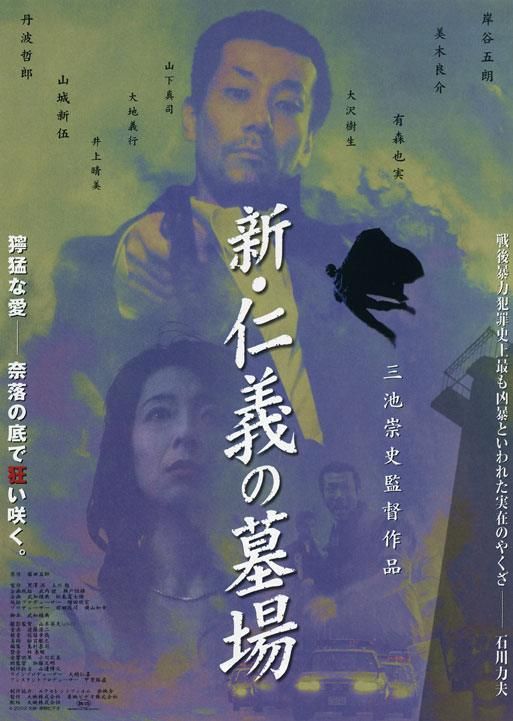
Graveyard of Honor (新・仁義の墓場, Takashi Miike, 2002)

In Kinji Fukasaku’s 1975 jitsuroku eiga Graveyard of Honor, a collection of voices open the film musing on whether the hero was corrupted by the times in which he lived or merely born crazy. Like most jitsuroku or true account gangster movies of the ‘70s, Fukasaku’s Graveyard of Honor is a post-war story about a man who failed to adapt himself to the rules of his society which was of course in constant flux though the rules of the yakuza are perhaps as fixed and timeless as any. Inspired by the same source material Takashi Miike’s comparatively subdued, contemplative Graveyard of Honor (新・仁義の墓場, Shin Jingi no Hakaba) maintains the moody, noirish feel of the ‘70s gangster drama complete with melancholy jazz score but updates the legend of Rikio Ishikawa to late 20th century Japan which again finds itself in crisis, floundering for direction and filled with despair. The bubble has burst in more ways than one as the young in particular awaken to the fact they have been deceived by the false promise that the good times of the Bubble years were cost free and would last forever leaving them abandoned in a world they no longer recognise as their own. 

Unlike Rikio Ishikawa who, we are told, always wanted to be a gangster, Rikuo Ishimatsu (Goro Kishitani) falls into the gokudo world by chance, his life thereafter one long fall until the bloody suicide with which the film opens. A bleach blonde dishwasher at a Chinese restaurant, he gets an offer he can’t refuse when he calmly defuses a would be assassin by hitting him on the head with a chair, earning the eternal gratitude of boss Sawada (Shingo Yamashiro) who takes him on and makes him his protege. This meteoric rise in the yakuza ranks, however, is not without its drawbacks especially in that it destabilises the internal politics of the Sawada gang with old retainers instantly resentful that this young upstart has leap frogged them to sit at the boss’ side while they’ve patiently put the work in only to be sidelined. 

A stretch in prison for avenging the boss’ honour brings him into contact with Imamura (Ryosuke Miki), later his sworn brother but also his opposing number, possibly the last honourable yakuza. “A yakuza without honour isn’t worth shit” Imamura’s boss later remarks, instructing him that Rikuo is a liability he’ll have to take responsibility for, but in this graveyard of honour that kind of responsibility is the one that will get you killed. Honourable yakuza can no longer survive in the world of corporatised thuggery that is the modern gokudo existence. Later we realise that the tale is being narrated by Rikuo’s former underling, Kikkawa, who reminds us that “even yakuza are human beings” existing within a social structure with clearly defined rules which must be followed, yet the rules themselves are largely superficial and Kikkawa survives because he subverts them, abandoning the reckless Rikuo for the certainty of Sawada and setting himself on the traditional gokudo path of sucking up to the boss in the constant hope of advancement. 

Kikkawa is, in a sense, the grovelling salaryman to Rikuo’s frenzied maverick, one as much they symptom of the age as another. Rikuo’s rise occurs against the economic boomtown of Japan in the ‘80s which is as much a paradise for gangsters as for anyone else but also a kind of twilight, the yakuza as an institution relegated to the Showa era and the post-war past. Gangsters forced out of their families like the desperate ronin of the feudal era further destabilise an already chaotic environment which, like that of the post-war years, is filled with despair and disillusionment only to be further disrupted by the advent of natural disaster and economic collapse. 

Like the yakuza of the jitsuroku, those of Miike’s Graveyard of Honor struggle to reorient themselves in a changing society, no more equipped to deal with economic stagnation than their forbears were for the end of occupation and the increasing irrelevance of gangsterdom in a world of economic prosperity. Increasingly paranoid and anxious, Rikuo sees betrayal in all quarters and remains essentially powerless, eventually imprisoned in what appears to have been previously used as a child’s bedroom. He seeks escape in drugs which he finds by chance, and then in romance with an equally powerless woman who bizarrely seems to have fallen in love with him after he brutally raped her though their strange, drug-fuelled quasi-wedding ceremony is the tenderest, most vulnerable we ever see them. Yet as the opening scene implied, all there is is futility. Knowing what he knows, Kikkawa meditates on his memories of happier days when he was just a minion at Rikuo’s side. In this graveyard of honour only the slippery survive and the only way to be free is to fall, and fall hard. 


Original trailer (English subtitles)

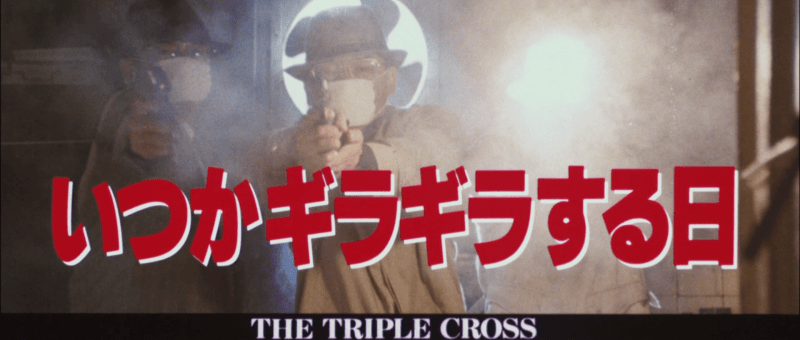
The Triple Cross (いつかギラギラする日, Kinji Fukasaku, 1992)

“It’s never over for men like me” laments the hero of Kinji Fukasaku’s infinitely zeitgeisty 1992 action thriller The Triple Cross (いつかギラギラする日,  Itsuka Giragira Suru Hi), though the director might as well be talking for himself. Fukasaku is most closely associated with the jitsuroku gangster genre which he helped to create at Toei in the mid-1970s with the hugely influential yakuza cycle Battles Without Honour and Humanity. Through the difficult ‘80s, he’d sustained his career with a series of commercial projects and critically acclaimed prestige pictures, which is perhaps why he felt secure enough to go all in with an absurdist take on the death spiral of the Bubble Era. 

As the film opens, a trio of veteran crooks commits a series of flawless armed robberies which makes them all very wealthy. In an age of excess, crime is perhaps for them more a way of life than a means of survival save for one, Imura (Renji Ishibashi), who has massive debts from loansharks and is living with a constant sense of anxiety that his failures as a man and as a father may result in his beloved wife (Kirin Kiki) and daughter leaving him (for which he wouldn’t blame them). Kanzaki (Kenichi Hagiwara), the veteran gangster, enlists his girlfriend Misato (Yumi Takigawa) along with Imura to scout a possible new job their “boss” Shiba (Sonny Chiba) is planning up in Hokkaido. When they get there it turns out that Shiba has taken up with an extraordinarily irritating much younger woman, Mai (Keiko Oginome), and through her has befriended a young guy, Kadomachi (Kazuya Kimura), who’s come up with a plan to rob the takings from a nearby resort which he has heard run to 200 million yen transported in cash by car via remote mountain road. 

Kadomachi, who later claims he was once a police officer, is an annoyingly entitled young punk with bleach blond hair who wants the money to open a live music venue in order to support real rock and roll. So manic he seems to be on something, it’s a surprise that the guys agree to work with him though after a quick hazing they apparently decide he’s OK only to bitterly regret their decision when it turns out he was mistaken about the amount being transported. As veteran pros, the trio know that it’s better to just be happy with what you can get and move on, but they had each hoped this job might be the last and the disappointment proves too much for Imura who flips out and points a gun at his friends intending to take the lot but is calmly talked down only for Kadomachi to grab a gun and start shooting, making off with the whole 50 million. 

Deliberately down with the kids with his pulsing club score, Fukasaku seems to be taking a swipe at the Bubble generation who want everything now and fully expect to get it. Shiba pays the price, essentially, for refusing to act his age, trying to be young and hip like Mai and Kadomachi, while Imura is perhaps the opposite unable to escape from the post-war era with its poverty and vicious loansharks while also facing discrimination as a zainichi Korean which further deepens his anxiety for his teenage daughter. Yet getting her hands on the money Mai confesses that she has absolutely no idea what to do with 50 million yen, spending 50,000 on a handkerchief just because while even Kadomachi is eventually struck by a sense of futility in realising the money has corrupted him though he knows that it will eventually slip through his fingers. “People, life, they pass us by” he muses sadly while Mai confesses all she wanted was for someone to “notice” her, which they eventually perhaps do only it’s in the context of a nationwide manhunt. 

The vacuous youngsters are finally slapped down by the calm and collected Kanzaki whose lack of ostentation serves him well in the ensuing war on two fronts as he goes up against not only Kadomachi but the loanshark he was in debt to in an attempt to get his hands on the money. Fukasaku takes the jitsuroku and turns it inside out for a tale of Bubble-era excess filled with increasingly elaborate action sequences culminating in a high octane car chase and a shoot out with the entire garrison of the Hokkaido police force, yet as before crime only yields futility, the money floating away in Hakodate harbour, while we end on a trademark note of irony that shows us banks on every street corner, money is literally everywhere. What does crime mean now, what is the point of such ceaseless acquisition in an age of plenty? For Kanzaki, perhaps it just spells opportunity and well you can’t argue with that. 


Original trailer (no subtitles)