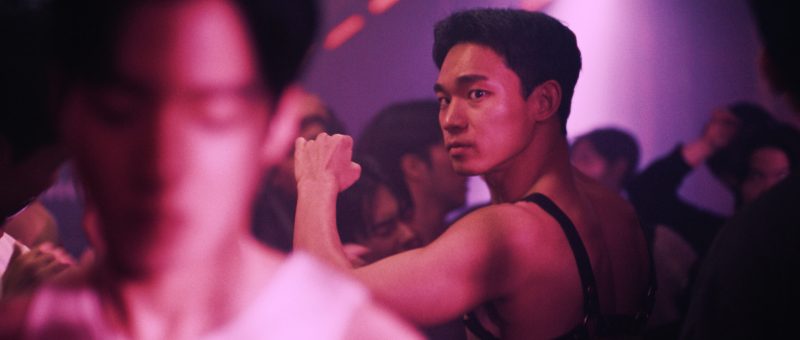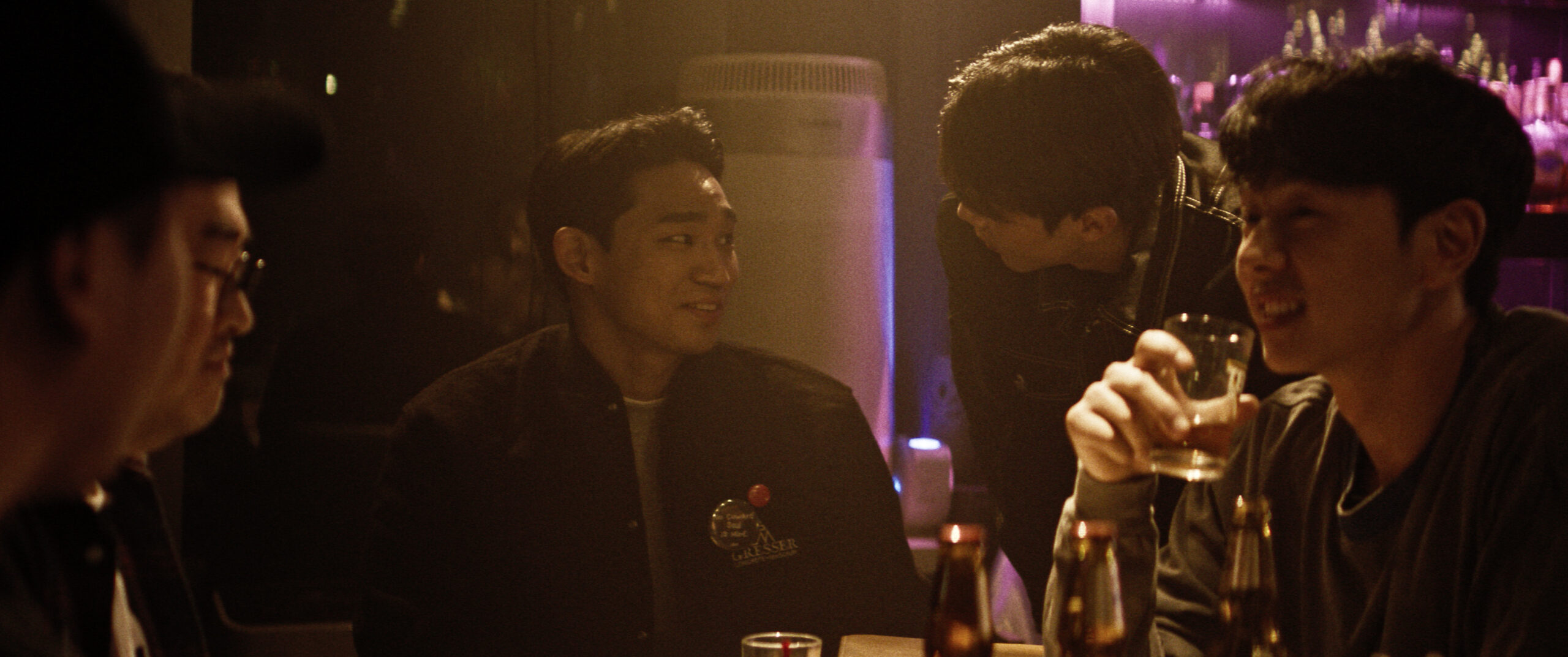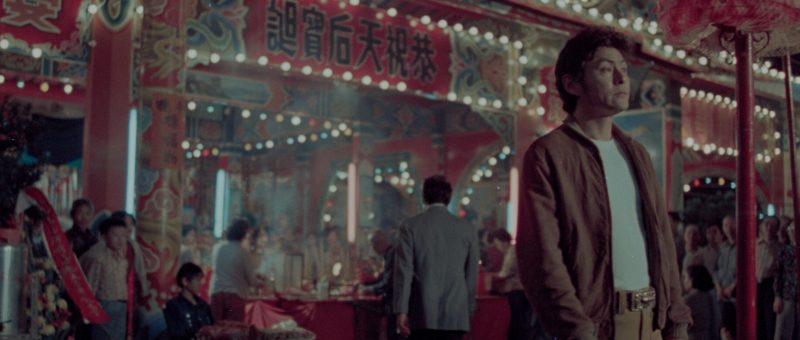
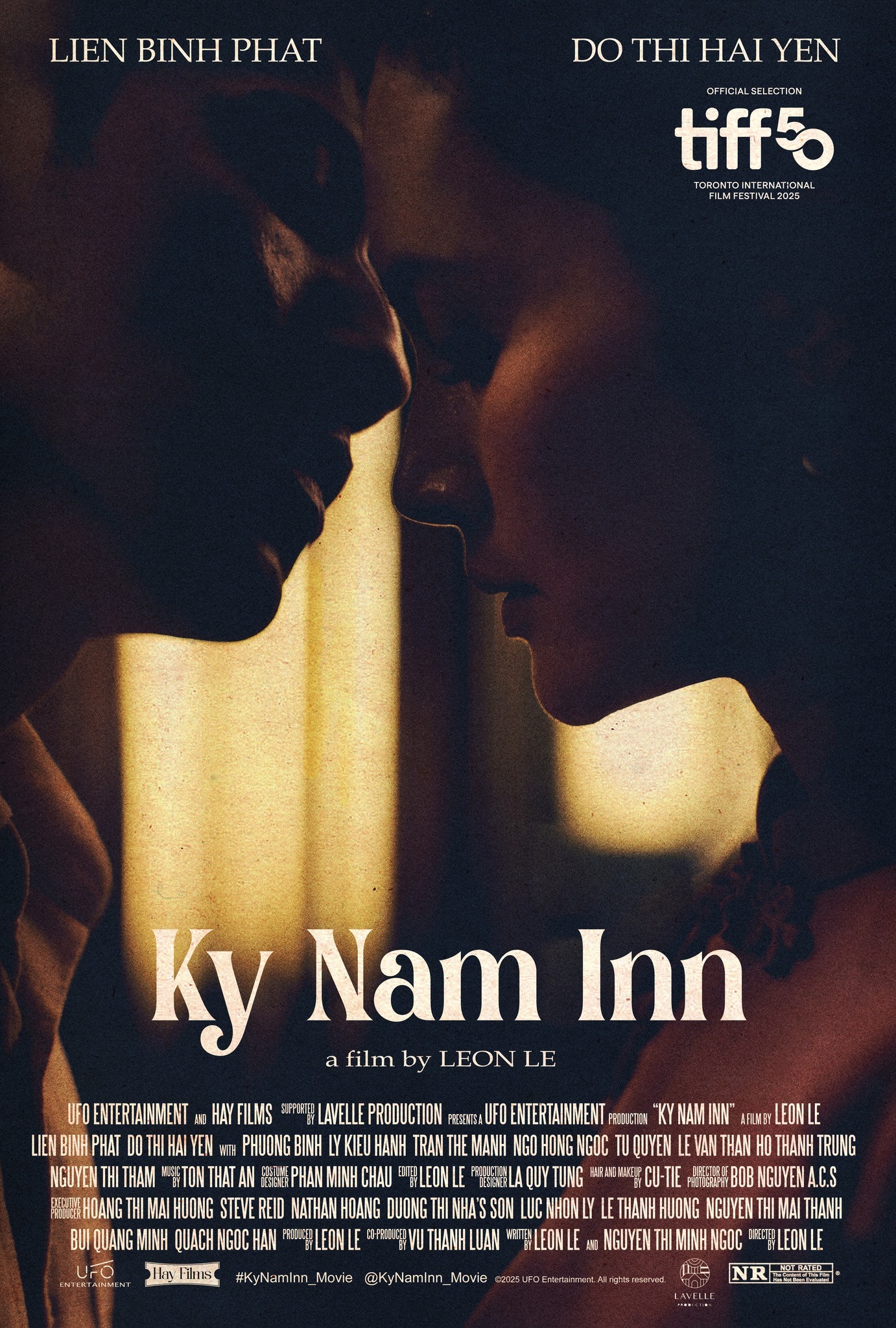
Ky Nam Inn (Quán Kỳ Nam, Leon Lê, 2025)

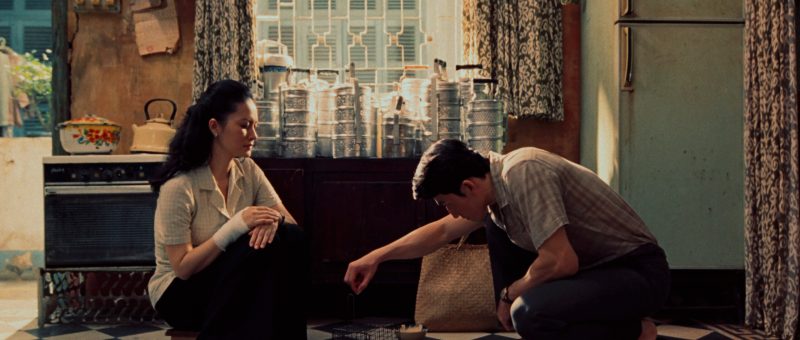
As related in the opening voice over, “ky nam” is a type of agarwood that only forms when the tree is wounded. The tree lets out tiny drops of a fragrant resin to heal itself that in many years become “ky nam”. It also, however, the name of a woman with whom the writer has fallen in love who has herself spent many years trying to heal the past, much as her nation is still doing as it remakes itself after years of war and not to everyone’s liking.

A slow-burning love story, Leon Lê’s Ky Nam Inn (Quán Kỳ Nam) is set mainly in Saigon in 1985 as a “red seed” nephew of an influential Party man is sent to live in a small housing complex while he works on a new translation of Antoine de Saint-Exupéry’s The Little Prince. The book has been translated before to great acclaim, but the new regime must have a new translation and it must prove as good as the old. Khang (Liên Bỉnh Phát) only became a translator because he was so impressed with the dexterity of Bui Giang’s language in the original translation, but now he must erase and surpass him because times have changed and Bui Giang belongs to the old world. When Khang and Ky Nam encounter him by chance, he’s been reduced to directing street traffic, knocked over by the hustle and bustle of the flower market as if time were flowing past him like a fast-moving current.

In her own way, Ky Nam (Đỗ Thị Hải Yến) is much the same. She was once a well-known writer with a recipe column in a magazine, but is now living a lonely life as a widow running a meal delivery service for her neighbours yet avoided by many of them because of her problematic background. Her husband seems to have died in a labour camp, and her younger son has gone “missing”. 1985 was the year when the highest number of people tried to flee the country. Young men could be conscripted for the war with Cambodia, and so Ky Nam sent her youngest away but there’s been no word of him since. Her surviving son, Don, wants to hold a memorial service believing that the only conclusion is that Duong did not survive the journey though Ky Nam remains confident he’s still out there, somewhere. 

Su, a mixed-race boy who helps out in Ky Nam’s kitchen, also wants to leave though in part because he is bullied, discriminated against, and made to feel like a burden by the family who took him in. His uncle refused permission for him to finish high school, and has arranged for him to become a part of another “family” to be able to emigrate to America. As much as he’s there as the new hope of the Communist elite, Khang also has his sights set on studying abroad in France and it’s never clear how long he will be allowed to stay in this transitory space between the new Vietnam and the old which makes his growing affection for Ky Nam all the more poignant. Like him, she is an intellectual well versed in French literature though now finding herself at odds with the contemporary reality. The French schools they attended have all been renamed, as the new regime does its best to erase the history of the colonial era.

Perhaps that’s why Khang is so drawn to her as he struggles with his own role in this society. He barely knew the influential uncle who engineered this future for him and is acutely aware that if his translation’s no good, everyone will say he was only given the opportunity because of his personal connections. Meanwhile, his uncle, Tan, has arranged it so that he won’t be given a key for the front gate and will have to ring the bell to enter the complex while the doorman and community leader will be reporting all his movements. Nevertheless, that doesn’t seem to have much affect on his behaviour as he settles into the community and continues helping Ky Nam even after it’s made clear to him that associating with someone who has a problematic background could negatively affect his standing. As someone says, Khang will eventually have to choose between career and love.

For Ky Nam, it isn’t that much of a choice. She knows this love is impossible, so she tries to refuse Khang’s help and keep him at arms’ length all the while yearning to hold him closer. During their final night together as they roam the streets of Saigon until morning, Ky Nam says she’s reminded of heroine of Camus’ Adulterous Woman who breaks away from her husband to escape to an abandoned fort by herself for a brief taste of freedom before going back to her disappointing life. Khang says he didn’t like the ending, but later wonders if Ky Nam were not like the woman, only pretending to have forgotten her gate key so they could spend this brief time together. He confesses, though, that he doesn’t know how to end his own story and is wary of disrupting the new life that Ky Nam has made for herself after he ironically helped her heal a rift with her judgemental neighbour which has allowed her to expand her business. He now is a kind of exile too, marooned in Hanoi waiting for passage elsewhere having left the apartment complex and along with it his rose to experience more of the world. Yet for all its sadness, there’s a joy in it too that this lost love existed at all and became the tiny drops that may one day save the tree.


Ky Nam Inn screens as part of this year’s San Diego Asian Film Festival.

Trailer (English subtitles)
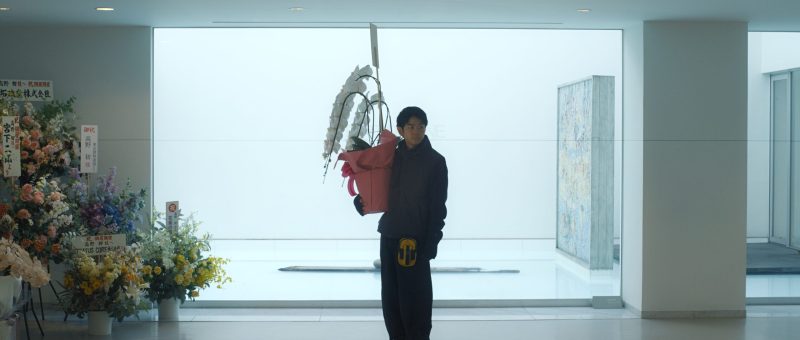
Brand New Landscape (見はらし世代, Yuiga Danzuka, 2025)

Do we inhabit spaces, or do the spaces inhabit us? Yuiga Danzuka’s autobiographically inspired Brand New Landscape (見はらし世代, Miwarashi Sedai) situates itself in a haunted Tokyo which is forever remaking itself around its inhabitants like a constantly retreating cliff edge that leaves them all rootless and in search of a home that no longer exists. Some long for a return to the past and wander endlessly, while others defiantly refuse to look back and are content to let history eclipse itself in a journey towards an ineffable “new”.

These imprinted spaces come to represent the disintegration of a family torn apart by their shifting foundations. Ten years previously, Ren (Kodai Kurosaki) and Emi’s (Mai Kiryu) mother, Yumi (Haruka Igawa), took her own life during a family holiday after their father Hajime (Kenichi Endo) told her that, despite his promises, he would be returning to Tokyo to pursue a work opportunity. “It’s pointless to go back and forth like this,” he remarks with exasperation, making it clear that he’ll be going no matter what she says. Rather than simply being a workaholic, Hajime is a deeply selfish person who doesn’t much care how other people are affected by the decisions that he makes. He wants this opportunity to prove himself and acts out of a mixture of vanity and a desire for external validation through professional acclaim rather than the love of his family. He claims he’s doing this for them, that the opportunity will provide additional financial security and a better quality of life for his children, but Yumi replies that they don’t need any more money. All she wanted was family time, albeit within this artificial domestic space of a rented holiday villa by the sea.

Three years after their mother’s death, Hajime left the children to chase opportunities abroad and they haven’t seen him in years. Younger son Ren is now working as a floral delivery driver for a company selling expensive moth orchids. It’s on a job that he first learns that Hajime has returned and is holding an exbitiion of his work that includes the controversial Miyashita Park redevelopment project designed to fuse the natural space of the park with a commercial centre the exhibition’s copy describes as a symbol of the “new” Tokyo. It also, however, required the displacement of a number of unhoused people who were living in the park in order to provide space for upscale outlets such as Louis Vuitton and Gucci. When Hajime accepts the opportunity to work on another such project, a young woman on his team voices her concern. She asks him where these unhoused people are supposed to go, but Hajime says it’s not his problem. It’s for the authorities to decide. She asks him if he’s considered the effect taking on such a large project will have on their team when the company is already working beyond its limit, but he gives her all the same excuses he gave Yumi that make it clear he’s not interested in the needs and well-being of his employees just as he wasn’t interested in those of his family. “It’s pointless going back and forth,” he tells her while trying to sound sympathetic but really emphasising that his decision is made and nothing she could say would sway him from his course.

Maybe, to that extent, oldest daughter Emi is much the same in that she’s decided she doesn’t want to see her father and resents Ren’s attempts to force her into doing so. She’s about to move in with her boyfriend and looking ahead towards marriage, but also prone to “low energy” days like her mother and anxious in her relationships, fearful that like that of her parents’ they can only end in failure. Ren, meanwhile, struggles with authority figures like his ridiculous boss who tries to assert dominance by giving him a public telling off about the non-standard colour of his hip pack, and then yells at him that he’s fired only to chase him out of the building throwing punches when Ren calmly replies that shouting only makes him look silly. In the midst of the drama, another young woman states her own intention to quit, politely bowing to everyone except one particular man before walking out the other door towards freedom as if to remind us that there are countlessly other stories going on in this city at the same time.

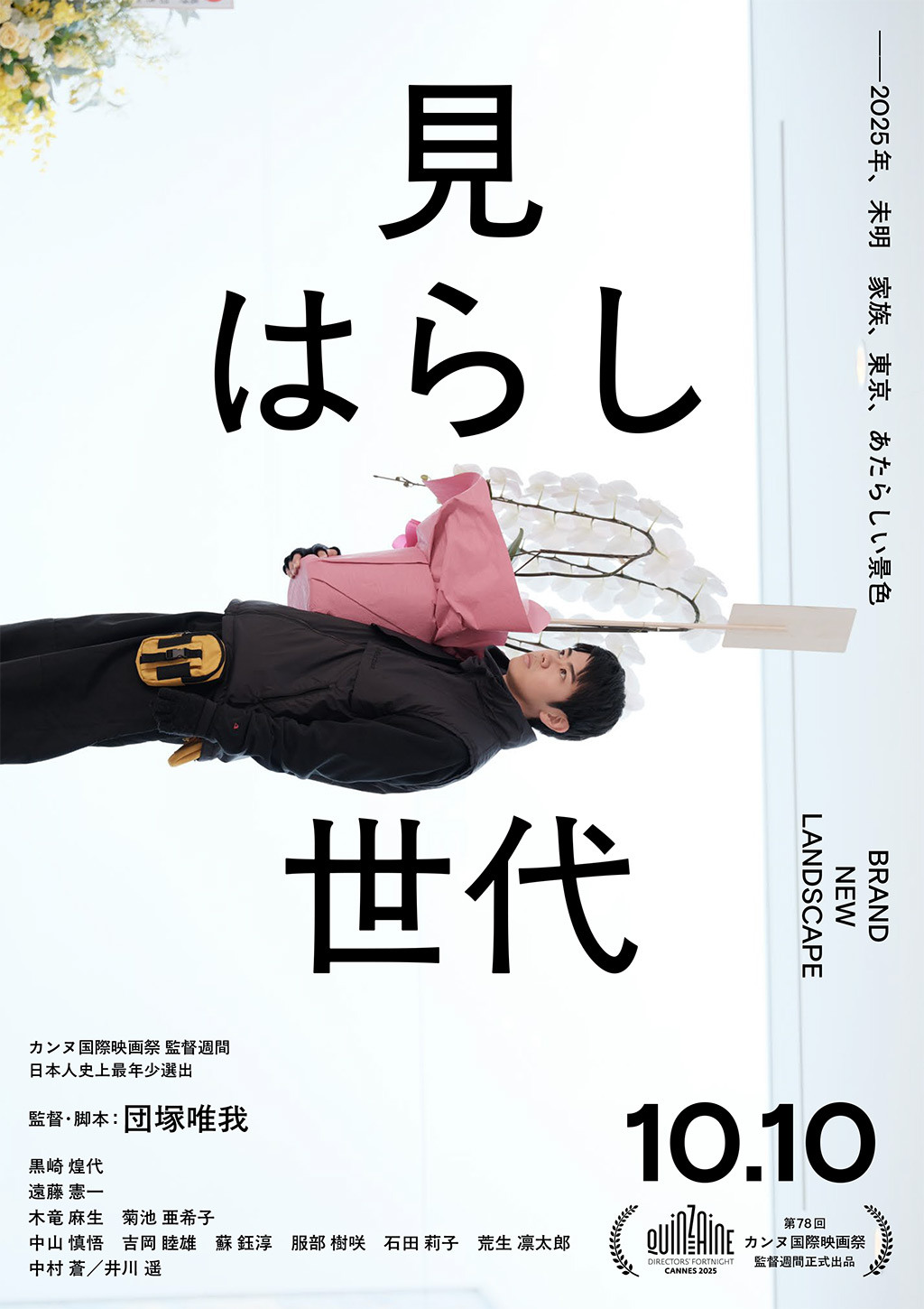
There’s a moment when Ren is delivery the orchids that he just stands there holding them, like he doesn’t know where to go or what to do. He’s lost within this space and is unable to find his way back within a Tokyo that’s always changing. In an attempt to find some sort of resolution, he drives Emi back to the service station where they had their final meal as a family, only their mother’s chair remains painfully empty. A perpetually falling ceiling light hints at the unreliability of these spaces. It isn’t and can’t ever be the same place it was before and has taken on new meanings for all concerned. Ren stares up at the Miyashita Park development as if caught between admiring his father’s achievement, wondering if it was worth it, and mourning the loss of everything it eclipsed in building over the past with a “new” that will quickly become the “old” and then be rebuilt and replaced. Nevertheless, he has perhaps begun a process of moving on even if for him moving forward lies in looking back.


Brand New Landscape screens as part of this year’s San Diego Asian Film Festival.

Original trailer (no subtitles)

3670 (Park Joon-ho, 2025)

In recent years, indie films about North Koreans in the South have focused on the discrimination they face and how difficult it can be for them to integrate into South Korean society, not because of how different it is from everything they’ve known, but because the South doesn’t quite accept them. The problems of the hero of 3670 are, however, two-fold in that he is also gay and finding it difficult to straddle both communities while looking for companionship.

The opening scene finds him having sex with a guy from a dating app in a darkened room, but as soon as they’re finished, his partner gets up to shower and insists on leaving, refusing Cheol-jun’s (Cho You-hyun) invitations to get dinner and clearly uninterested either in friendship or romance. He asks him where he’s from, and on figuring out he’s from the North, rolls his eyes a little asking if he doesn’t have any gay friends yet. Cheol-jun doesn’t have any South Korean friends at all, let alone gay ones, and has never met any other gay people who left North Korea. He’s never disclosed the fact that he is gay to his North Korean friends or aunt living in the South who is his only familial link, which leads to moments of accidental insensitivity when his friends push him to date a North Korean girl they mistakenly think is interested in him, and his aunt tells him to settle down and get married in the South as his parents would have wanted him to.

The film seems a little ambivalent about Cheol-jun’s third community which is the Church. While it might be as Cheol-jun says helpful in a lot of ways in giving him something to belong to and helping with things like scholarship applications, it’s somewhat exploitative in that their help is obviously conditional on Cheol-jun accepting their religious beliefs which are otherwise in conflict with desire to find freedom as a gay man. Cheol-jun sometimes picks up extra money speaking at Church events in which he outlines how grateful he is to have been “saved” by the grace of God which brought him to the South away from the Godless North. Unlike other similarly themed films, 3670 doesn’t tread any further into how those from the North can be almost fetishised and exploited for their stories, but it is clear that that the Church is also using him to further their own aims. On the advice of his hookup date, Cheol-jun ends up attending a mixer for gay men which he keeps secret from his North Korean friends where he meets Yeong-jun (Kim Hyeon-mok), a gay man of the same age who lives in his area and shops at the convenience store where he has a part-time job, and later gets him a paying gig speaking about his salvation at his church.

Yeong-jun’s mother is a deaconess, and it seems that, in some ways, Yeong-jun is even less free that Cheol-jun who is beginning to discover a new kind of freedom as he introduces him to the gay scenes in Jogno and Itaewon. He views himself as inferior because he doesn’t believe himself to be conventionally attractive and has been having trouble passing the interview process to get a job (possibly those two things are somewhat connected in his mind). Yeong-jun also hasn’t said anything to his mother about being gay and sometimes goes to church to placate her even though he thinks there’s no place for him there as a gay man with the rather repressive religion that his mother practices. When he gets a job and is fully independent, he plans to stop attending church, making clear that for him, as a gay man in a capitalistic society, his freedom rests in financial security and achieving socially defined success by joining the workforce.

The fact that’s capitalism to which Cheol-jun must adjust himself is echoed in his advisor’s advice that he needs to market himself and give the university he’s trying to apply to a reason to choose him over another candidate. When he becomes a member of Yeong-jun’s friendship group, they also tell him that he needs a “selling point”, which they think should be his North Koreanness. But in an odd way, these ironic words of advice do lead to him becoming more at home with himself even if he’s also still caught between these two communities. With his North Korean friends, he dresses in a dowdier style, but puts on fashionable clothes and a university baseball cap to hang out in queer spaces with Yeong-jun. He tells his North Korean friends that he’s going to visit his aunt while occasionally blowing them off to see his gay friends, making it clear that he cannot exist simultaneously in both spaces as a North Korean and as a gay man.

But as much as Cheol-jun begins to find himself, Yeong-jun founders. Cheol-jun overhears some of his gay friends making fun of him for his North Koreanness and suggesting they only hung out with him out of pity, robbing him of this new community through spite and bitchiness rooted in a series of misunderstandings along with the social dynamics within the gay community and the friendship group itself. Nevertheless, when he does actually meet another North Korean man through the hook-up app, he helps him accept himself too by introducing him to these queer spaces in much the same way Yeong-jun did and showing him that it’s alright and it’s not as difficult or frightening to inhabit these spaces as he might have assumed it to be. 

Cheol-jun finds freedom here, at least much more freedom than he would have in the North. He’s not in the same kind of danger. But even many of the men in Yeong-jun’s friendship group are closeted and live as “straight” men, keeping quite about their private lives and restricting their authentic selves to Itaewon and Jogno, much as Cheol-jun keeps his North Korean and gay selves separate until he eventually decides to confide in some of his friends and finds them unexpectedly supportive because like him they too are here in search of happiness. The title of the film comes from a code Yeong-jun’s friends use to organise meetups hinting at their clandestine nature and desire to avoid inviting outsiders into their secure community. Cheol-jun, by contrast, is now free to wear his trendy clothes with his North Korean friends and to be open and unguarded in either community, effectively eliding the division between the two. Though his relationship with Yeong-jun who evidently meant a lot to him and changed his life in many ways may have been disrupted by the societal realities of the South from lookism not just in the gay community but the wider society to conventional definitions of success and entrenched homophobia along with the way they impact on a man like Yeong-jun, Cheol-jun has perhaps discovered a home for himself and a kind of freedom in his life as a gay North Korean man in the South.


3670 screens as part of this year’s San Diego Asian Film Festival.

Trailer (no subtitles)

The System (行規, Peter Yung Wai-Chuen, 1979)

“How else can people like me survive?” a unwilling informant ironically asks in Peter Yung Wai-Chuen’s New Wave cops and robbers thriller The System (行規), while Inspector Chan (Pai Ying) is already far too aware of the ironic symbiosis of law enforcement and crime. He’s dependent on informants to be able to do his job and catch the kingpins, but that means the informants continue to perpetuate crime. Even when they manage to make an arrest, they have to let the suspect go because it turns out that they’re already cooperating with another officer. The police aren’t so much solving crimes as, at best, managing, if not actually enabling them.

Director Peter Yung drew on research he’d done for a documentary to depict police work and the realities of drugs in late British Colonial Hong Kong in a more authentic way, often using held camera and shooting on location out in the streets. Chan is seen as something of a zealot, an idealistic cop too pure-hearted to understand his colleagues’ dirty jokes and with a penchant for retreating to Lantau Island to go bird-watching, even if his address to his officers is a little on the crude side. Nevertheless, even if he hates police corruption, he’s not above playing this game and is keen to recruit exclusive informants of his own, essentially by blackmailing them, finding evidence of crimes they’ve committed and promising to overlook it if they agree to feed him information. 

That’s how he recruits Tam (Sek Kin), a drug user with a gambling problem working for a syndicate run by Hung (Nick Lam Wai-Kei), the kingpin Chan has been trying to catch for a decade. But at the same time, Tam appears to keep his life of crime separate from that as a family man with two children and an ailing mother. He doesn’t really want to help Chan because he fears retribution from Hung, but he doesn’t want to go to prison for 36 years and leave his family destitute, either. Tam may be carrying on with underworld figure Third Auntie (Lisa Chiao Chiao) who runs the domino parlour which acts as a hub for the gang, but he’s not necessarily bad or dangerous, just someone trying to live under this oppressive system.

For those reasons, the relationship between the two men is tense and fraught with danger and resentment. The first operation ends up going wrong when Customs interferes, arresting Third Auntie which is a huge problem for Tam as is the fact they seized the drugs, which is a problem for Hung. But even Hung knows how this game works. He knows Tam betrayed him by working with the police, but he doesn’t necessarily blame him. He just asks for the money he assumes the police paid him in exchange for the lost drugs, and also has Tam beaten up for good measure. The beating in particular causes Tam to resent Chan and plot revenge by framing him as corrupt. That doesn’t go to plan either, but even though Tam constantly betrays him, Chan remains loyal and defends Tam to his increasingly irate bosses in the hope he’ll finally lead them to Hung.

It’s this aspect of police corruption that really hangs over the film. Even Customs take a position of the drugs they seize for themselves, which is how Chan is able to convince them to release Third Auntie. The operation is nearly derailed by a corrupt cop who frequents Third Auntie’s domino parlour, trying to bet with his gun when he runs out of money and then following her to demand a payoff for not reporting the drugs. Chan makes reference to the fact that the drug dealers think nothing of paying off police because the profits they can make selling drugs in Hong Kong are so vast, but, thankfully, it doesn’t happen so much any more because of the institution of ICAC. ICAC is held up as a kind of threat even if Chan suggests that it’s already cleaned up the police force and ushered in a new culture of earnest policing, though even he says that it’s caused a drop in morale that might be improved if they can catch a big fish like Hung.

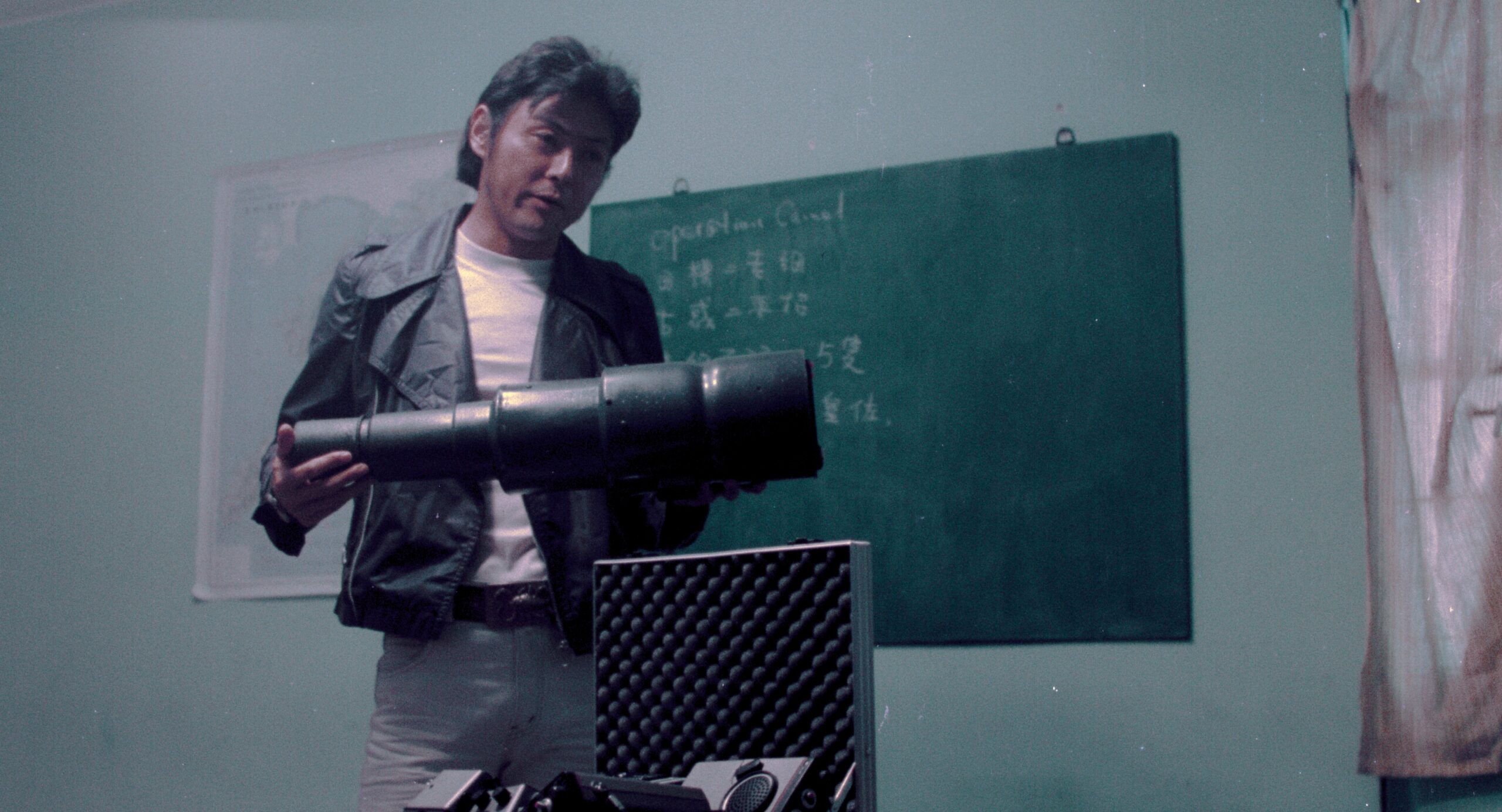
Chan’s bosses are British, while he later ends up working with an American DEA officer who gives them even more new technology like radio mics, though Chan was already keen to show off their modern policing methods, which include things like hidden cameras, secret recordings, and a massive telephoto lens. “We’re just using each other,” the corrupt cop says when his partner asks him if he’s not pushing his luck by going back to ask Third Auntie for more money after noticing how big her haul is knowing that she can’t really do anything about it without exposing herself. In the end, they are all trapped by this ridiculous system of symbiotic crime that leads only to destruction.


The System screens as part of this year’s San Diego Asian Film Festival.

Between Goodbyes (Jota Mun, 2024)

There’s a small irony at the centre of Jota Mun’s documentary Between Goodbyes in that she often cuts back to  contemporary stock footage of television items covering the subject of adoptions in Korea. Pundits are full of panic about the rapidly expanding baby boom of the post-war era and concerned about a growing lack of resources to care for them. Fast-forward 50 years and the problem has reversed as the news items are full of panic about the ageing population and record low birth rate. Still, it’s clear that the nation has not yet fully reckoned with its history of international adoptions which employed dubious practices to separate parents from children and essentially sold babies abroad in a business model more akin to human trafficking. 

Mieke’s mother Okgyun is wracked with guilt about the decision she made to give her up, which was motivated mostly by her poverty, but also a series of social stigmas including that towards large families. With three children already, they simply couldn’t afford another and Okgyun had planned on an abortion though was talked out of it and advised to put the baby up for adoption on the promise that it would have a much better quality of life in America. Of course, the reality was not always so rosy and Okgyun and her husband have spent every moment of their lives since thinking about their missing daughter. Twenty years later, Mieke’s father became determined to find her and eventually discovered she had been sent to the Netherlands. 

For Mieke, the knowledge that her parents had wanted to find her was a source of comfort but also awkward and as she puts it “overwhelming”. Though to them she was their long-lost daughter, to her they were strangers and as she had been raised abroad, she could not even speak their language. Mieke had also experienced a series of other losses including that of her adoptive parents. An uncle and aunt had taken her in, but it didn’t work out leading to a further sense of rejection and abandonment. She describes finding a surrogate family in community but also hints at a constant sense of displacement, never quite feeling at home anywhere.

For these reasons, she found it difficult to relate to her birth parents when they first approached her and struggled to accept the intensity of their emotion. Later, her partner along with the film’s director, ask Mieke if she isn’t afraid of losing them too, as if she’s trying to stave off another abandonment by keeping them at arms’ length while also struggling to balance her own sense of identity caught between an interest in her Korean heritage and sense of belonging, and her Dutch upbringing and life in the Netherlands. There’s an also an additional sense of poignancy in that had Mieke been raised by her birth parents in Korea, she may not have been as free to live as her authentic self in a much more conservative social culture. A secondary reason that she’d avoided keeping in touch with her parents when they first contacted her was that she knew she would have to come out to them and was unsure as to how they’d react. 

Her birth family have, however, fully accepted her wife Marit, and though some of them may say they don’t quite understand, are fully supportive and just happy that she’s happy. On the other hand, it’s true enough that every reunion entails another goodbye with a concurrent sense of abandonment on each side. Another woman from a society supporting parents who gave their children up for adoption remarks that it’s only really with the reunion that the grieving process begins with the intense sense of loss for all missing years, the time and memories that have been stolen for each of them. Incomplete family portraits coloured by a sense of absence symbolise the longing for something that cannot be restored, while Mieke and her mother seem to be divided by an invisible wall. Still in overcoming the language barrier and learning to communicate in a much more direct way, the relationship begins to reforge itself. Perhaps as Okgyun says, there’s no such thing as complete happiness, but there is perhaps warmth and forgiveness and new beginnings that might not quite make up for lost time but do perhaps have the potential to become something else.


Between Goodbyes screens May 1 as part of this year’s San Diego Asian Film Festival Spring Showcase.

Trailer

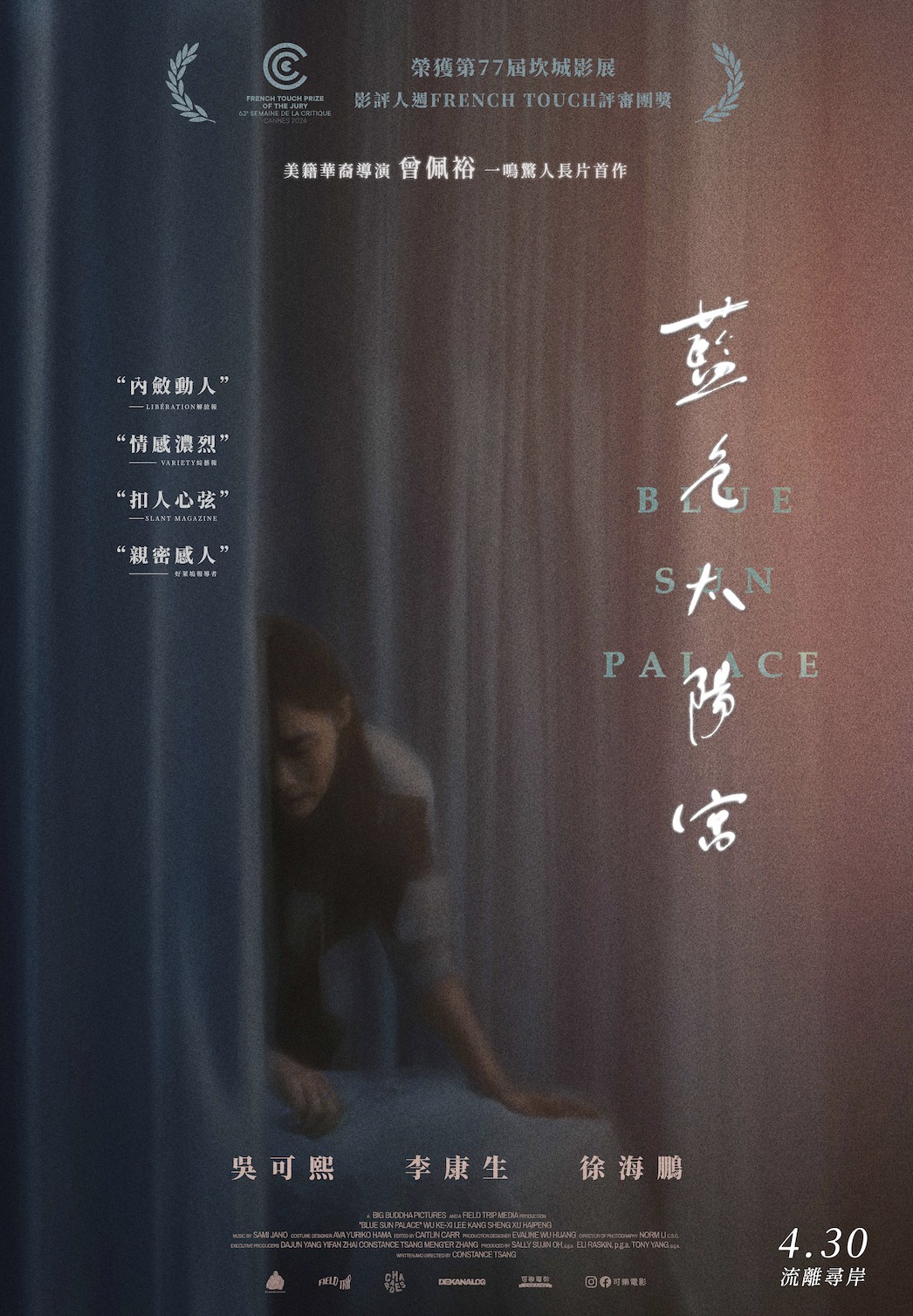
Blue Sun Palace (藍色太陽宮, Constance Tsang, 2024)

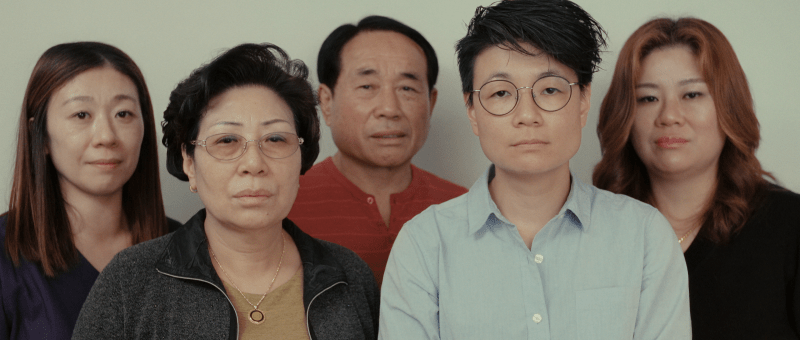
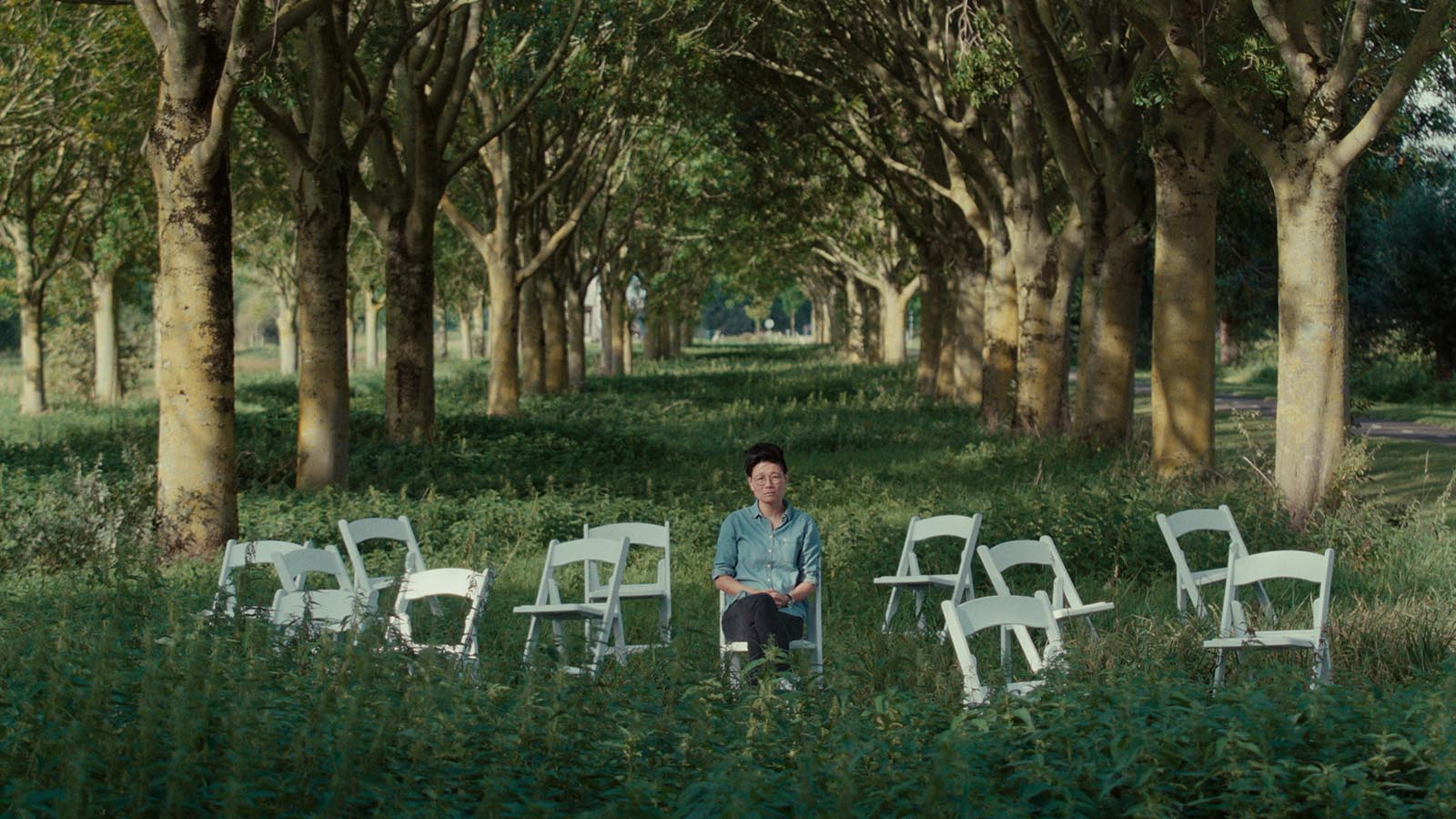
“It’s funny how  quickly people you love become strangers,” a middle-aged man muses while talking about more than one thing at the same time. Those at the centre of Constance Tsang’s New York-set drama Blue Sun Palace (藍色太陽宮, lánsè tàiyang gōng) are all in a sense displaced and some of them by several levels while they try to accommodate themselves with the lives they’re living now along with their hopes and expectations for the future.

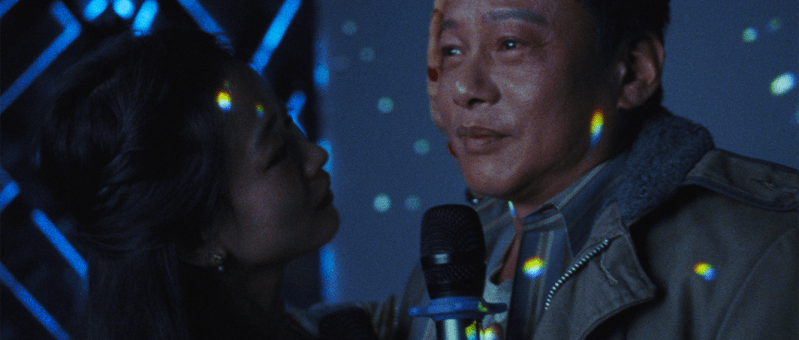
Didi (Xu Haipeng) and Amy (Wu Ke-xi) are old friends working in a massage parlour which has a large sign on the door stating that they do not provide sexual services. The two women huddle on a stairway, finding a private space of isolation that reduces the world to them alone. Didi and her sort of boyfriend Cheung (Lee Kang-sheng) do something similar as they dine in a restaurant and then retreat to a karaoke booth before Didi takes him back to the massage parlour where Amy absents herself to give them some room until awkwardly spotting Cheung leaving in the morning. It’s clear that the massage parlour is itself an isolated world where Mandarin is the only spoken language inhabited only by the female staff members who are all migrants from China. Didi appears to be the lynchpin of this community, keeping the parlour running and looking after the other women while they all seem to look to her for dependability and solidarity. 

Yet there’s a hovering tension between Didi and Amy who seems wary of Cheung, or perhaps merely jealous in an unspoken attachment to her friend, and also reminds her that they’re not supposed to have guests in their room. The exclusively male clients who are mainly though not exclusively non-Chinese men are also intruders in this space and as Didi tries to warn Amy pose a latent threat to them. A very tall man shortchanges them, but Didi stops Amy when she tries to chase after him. She tells her that it’s not worth it and she’ll just make the money up herself. It’s better to be safe, though it’s advice she doesn’t quite take to heart or perhaps lets her guard down at the wrong moment. The men treat them with thinly veiled contempt, perhaps believing they don’t really deserve to be paid in full or to be treated as fully human beings. A customer of Amy’s bullies her into giving him a happy ending and then refuses to pay, becoming violent when challenged but then apologising before running from the room. 

As an escape from the grimness of the Blue Sun massage parlour, Didi has a dream of moving to Baltimore to open a restaurant with Amy and be closer to her daughter who is currently being raised by her aunt. Cheung hadn’t known about the daughter when he idly fantasised about living in a little house by the sea with Didi and a big dog, though she knew about the wife and daughter who have now become strangers to Cheung. In any case, their fantasy was just that and so perhaps it didn’t really matter if neither of them was telling the whole truth. Baltimore seems to have taken on a mythical quality for each of them as a kind of longed for but unreachable paradise in which they might find happiness if only they could get there. 

But in the end, even these bonds are fragile and the community fractured by tragedy and economic realities. In Didi’s absence, Amy and Cheung develop a surrogate bond in their shared grief and loneliness but also remain at odds with each other, ultimately heading in opposing directions in which it seems as if Amy may be able to find new directions while Cheung is bound only for the blue sun of a shoreline in winter and a solitary cigarette. He says he doesn’t want to go back to Taiwan because he wouldn’t know who to be, though as Amy points out none of them know who they are here either. She at least may have found an answer, or if not, reaccommodated herself to a new reality but for others there’s only sadness and inertia along with the cold comfort of lost love and impossible dreams in a world of constant displacement.


Blue Sun Palace screens April 28 as part of this year’s San Diego Asian Film Festival Spring Showcase.

Trailer (English subtitles)

Sunshine (Antoinette Jadaone, 2024)

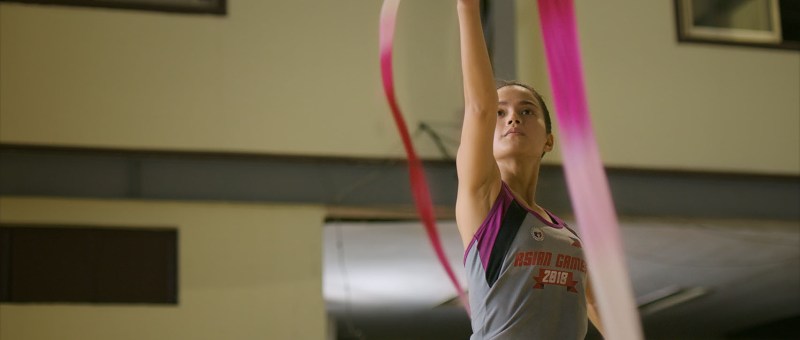
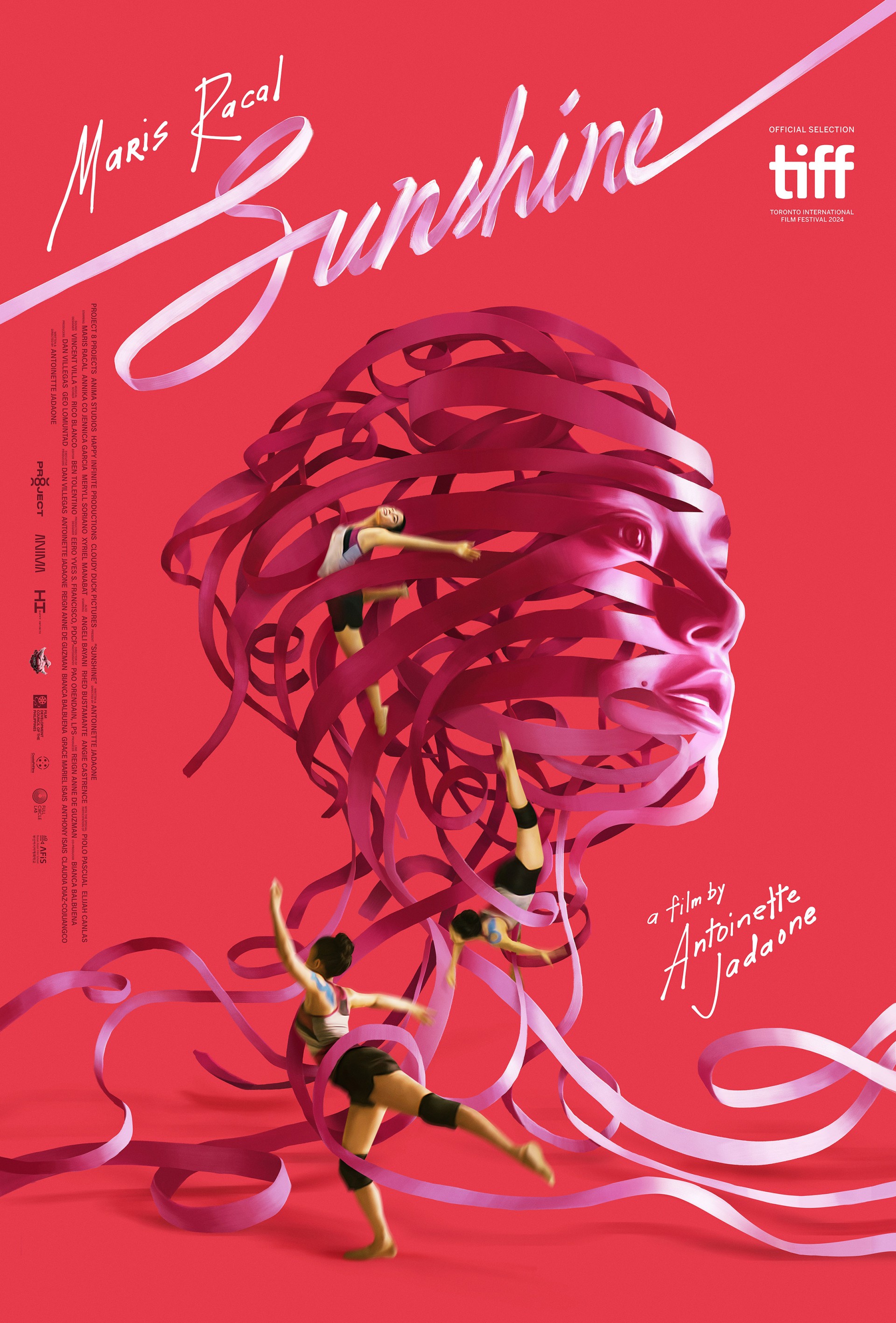
“Don’t drag me into this,” a boy says after hearing that his girlfriend is pregnant, having already questioned if the baby’s really his. Miggy signals his lack of responsibility by directly asking Sunshine what “her” plan is, making it plain that she’s on her own and he does not see himself playing an active role in a predicament he essentially sees as nothing to do with him. Aside from Miggy’s father Jaime, who happens to be a protestant pastor, men are largely absent from Antoinette Jadaone’s Sunshine and even when they appear rigid figures of patriarchal control. 

Sunshine implies that she’s only in this mess because Miggy pressured her into unprotected sex, but she’s left to deal with the fallout on her own. Still in school, she’s about to take her last shot at getting onto the Olympic rhythmic gymnastic team but risks losing everything she’s worked so hard for if her pregnancy is discovered. Even when she goes to buy a pregnancy test, she’s asked for ID and judged by the woman behind the counter while it’s otherwise true that abortion is illegal in all circumstances in the Philippines, meaning Sunshine’s only options are finding and paying a wise woman for medicine to provoke a miscarriage. 

It’s the reactions of other women that Sunshine most fears from her otherwise supportive coach, whose ambitions also rest on her performance, to her best friend who does in fact shun her on her mother’s insistence, and her older sister who is caring for the whole family and seems to be a single mother herself having had a baby at a young age. Like a grim siren, Sunshine’s niece won’t stop crying as if echoing the alarm of her impending maternity and her own discomfort with it. It’s a network of women that she turns to for solutions if not for advice. There’s no one Sunshine can ask for that, because what she’s looking for is illegal. All she can do is stand outside the church and pray that God take mercy on her by allowing her to wake up from this nightmare. There’s something quite ironic when she’s told to ask forgiveness from God “the father” by a religious and judgemental female doctor as if laying bare the patriarchal and oppressive underpinnings of the entire society. 

Yet cast onto a surreal odyssey through Manila in search of solutions, Sunshine finds herself becoming the supportive presence she herself doesn’t have. While pursued by a very judgmental little girl who echoes her inner confusion by branding her a “murderer” and questions her decision making, Sunshine is approached by another little girl who appears to be heavily pregnant and is begging for money to see a faith healer whom she hopes will help her end her pregnancy. Despite her own experience, Sunshine asks her why she doesn’t ask her boyfriend for help but the girl explains that he’s not her boyfriend, he’s her uncle, so she’s even more powerless and alone than Sunshine is. No one’s going to do anything about the Uncle Bobots of the world, but they’re only too happy to criminalise and abandon a little with no one else to turn to. 

Realising that the girl was trying to abort her child, the male doctor at the hospital refuses to treat her knowing full well there is a possibility she may die. Only a sympathetic female doctor is later willing to help. Sunshine too almost dies after her first attempt at taking an abortion pill which she does all alone at a love hotel where the woman on the counter didn’t want to give her a room because people who go to hotels on their own are a high risk for suicide. When she does eventually find out, Sunshine’s sister is actually sympathetic and stands up to Jaime on her behalf when he makes a bid to take over her life and force her into maternity by getting Miggy to apologise and unconvincingly insist that he actually loves her and their baby while leveraging his wealth and privilege against her by recommending that she be cared for by his family doctor and the best hospitals at his expense. It does however provoke a degree of clarity in Sunshine’s insistence that she doesn’t want to be a mother and has no intention of becoming one while rediscovering herself in rhythmic gymnastics and making peace with her younger self. A sometimes bleak picture of young womanhood in the contemporary Philippines, the film nevertheless finds relief in pockets of female solidarity and the conviction that it doesn’t have to be this way for the younger generation who should be free to pursue their dreams and make their own choices about what they do with their bodies.


Sunshine screens April 26 & 30 as part of this year’s San Diego Asian Film Festival Spring Showcase.

Bona (Lino Brocka, 1980)

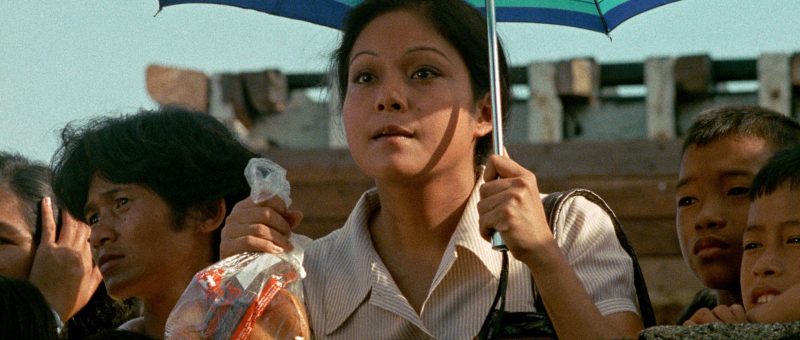
Towards the end of Lino Brocka’s Bona (Nora Aunor), the heroine recounts a dream she had in which she tries to escape a fire but finds herself met only by more flames. The inferno she attempts to outrun is that of the oppressive patriarchy of a fiercely Catholic society in which men can do as they please, but women are held to a different standard and in the end have little freedom or independence. 

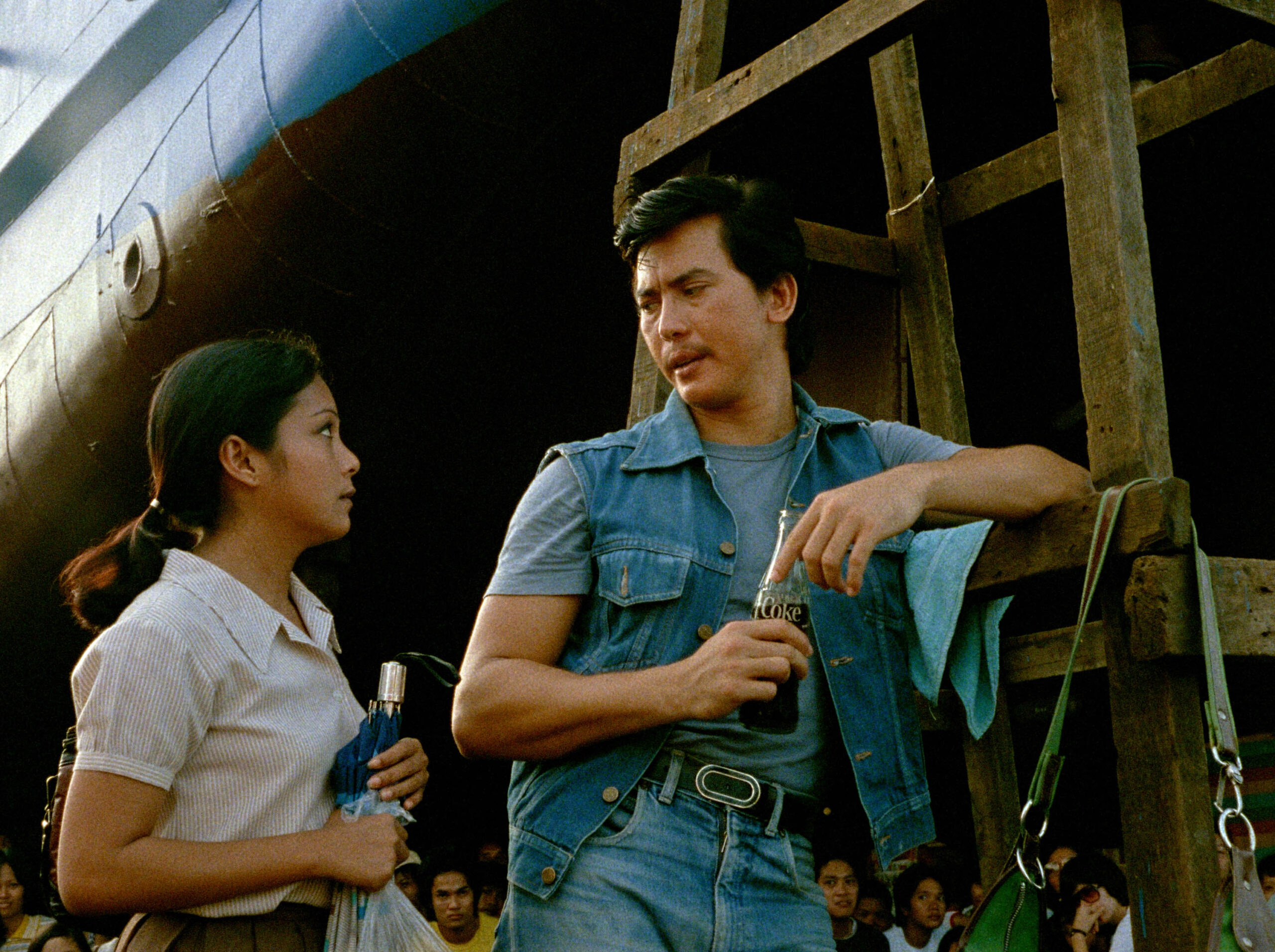
Brocka opens with a lengthy sequence of a religious festival in which the suffering Mary is carried through the streets on the shoulders of men. Teenager Bona looks on but worships at a different altar, that of Gardo (Phillip Salvador), a struggling bit-player trying to make it in the Philippine film industry. What becomes apparent is that her fascination with Gardo is borne of her desire to escape her family home and the tyrannical reign of her authoritarian father (Venchito Galvez) who berates her for not helping her mother out enough with her business and later whips her with his belt because she stayed out too late. 

Though her family is quite middle class, Bona instals herself in Gardo’s home in the slums in search of greater freedom but ends up becoming his skivvy or perhaps even a kind of maternal figure patiently taking care of him while he continues to bring other women home and even charges her with taking another teenage girl he’s got pregnant to the doctor (who charges him “the same as before”) for an abortion. It’s possible that in Gardo she sees a different kind of masculinity, a performance of manliness, but gradually comes to realise he’s nothing more than an opportunistic lothario with no emotional interest in women let alone her. 

But by then, it’s too late. She’s stuck in a kind of limbo barred from returning home to her family because of her status as a fallen woman who has shamed them by living with a man she is not married to. Even once her father dies, her mother warns her to avoid her brother because his rage is indescribable and he does indeed drag her out of the funeral by her hair while issuing threats of violence. Perhaps what she was looking for was greater independence or an accelerated adulthood with the illusion of freedom, but she can only find it by relying on Gardo rather than attempting to chart her future alone. We can see that other women in the slum are in much the same position, loudly arguing with their husbands who cheat, laze around drinking, and permit them little possibility for any kind of individual fulfilment. 

Yet there is a moment where Bona seems free, ironically dancing at the wedding of a young man, Nilo (Nanding Josef), who she’d turned down but now perhaps regrets it comparing the conventional married life she might have had with him to the prison she’s designed for herself in her life with Gardo. Nilo may be the film’s nicest man, but at the same time he’s still a part of the system that Bona can’t escape. In fact, the only woman fully in charge of herself is a wealthy widow who later buys Gardo’s, not exactly affections, but perhaps loyalty. “She’ll do,” he less than romantically explains after admitting to marrying her for the convenience of her money oblivious of the effect the news may have on the by now thoroughly humiliated Bona whose rage is just about to boil over. 

Unable to free herself from this fanatical devotion or to find possibility outside it, Bona is trapped by her desires and marooned in a kind of no man’s land in which she cannot exist as an independent person but only as servant to a man. “I’ll just serve you,” she explains on moving in and thereafter slavishly catering to all of Gardo’s whims while he largely ignores her. She hasn’t so much escaped her father’s house, but built a prison for herself from which she cannot escape despite her oncoming displacement. A creeping character study, the film finds the titular heroine searching for a way out of the fire only to find herself engulfed by flames with no real prospect of salvation amid the ingrained misogyny of a fiercely patriarchal society.


Bona screens Nov. 14 as part of this year’s San Diego Asian Film Festival.

Trailer (English subtitles)
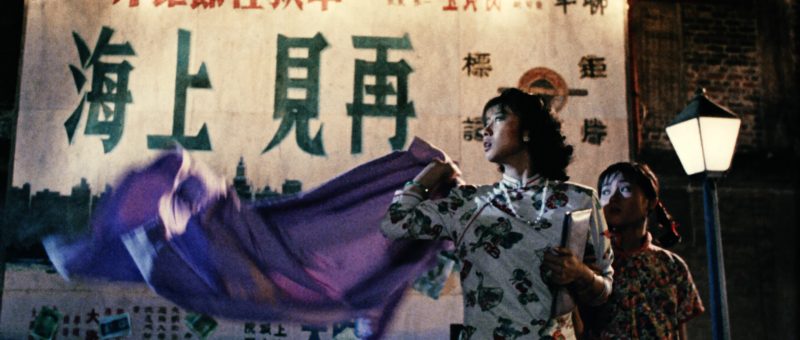
Shanghai Blues (上海之夜, Tsui Hark, 1984)

There’s a strange kind of melancholy optimism born of false courage and desperation that colours Tsui Hark’s Shanghai Blues (上海之夜). A clown soon to become a soldier tells a woman he meets in the dark under a bridge as the city burns and Shanghai falls to the Japanese to remember that they will win. 10 years later the wounded of that same war reassure each other that their time will come, they didn’t survive just to die here now seemingly cast out by the society they risked their lives to save.

The Shanghai Stool (Sally Yeh Chian-Wen) arrives in is in a moment of euphoric liberation caught between cataclysmic revolutions with the civil war and eventual coming of the communists hovering on the horizon. A wide-eyed country girl, she’s almost lost amid the hustle and bustle of the city in which the motion never stops. Like many, she is immediately displaced on her arrival, discovering that the relatives with whom she hoped to stay are no longer at their address and she is therefore homeless and alone. The clown, Do-re-mi (Kenny Bee), now a member of a marching band unable to play his instrument, thinks she’s the girl from the bridge in part because she’s wearing the same outfit but mainly because she has the same short hair cut and so he follows but loses her. Meanwhile, she has a kind of meet cute with Shushu (Sylvia Chang Ai-Chia), now a jaded nightclub showgirl still pining for the clown, in which they each believe the other is trying to take their own life but end up becoming best friends and roommates unwittingly living directly below Do-re-mi. 

In this 30s-style screwball world, identities are always uncertain and often obscured by darkness or else the continual march of the crowd. Yet there’s a kind of romanticism in this act of seeing and not seeing. Only in darkness do Shushu and Do-re-mi finally recognise each other and when their romantic moment is interrupted by the end of a power cut, they smash the neon lights opposite to reclaim it as if to reject the intrusion of this glaring modernity. To that extent, the implication may be that this innocent kind of romantic connection can’t survive the bright lights of the big city or that light blinds as much as it illuminates. In several sequences, the characters inhabit the same space but cannot see each other while a nefarious thief lurks on the edges of the frame unseen by all. On realising that Do-re-mi is the clown/soldier for whom she’s been waiting for the last 10 years, Shushu knows that she will have to break her friend’s heart or her own and that Stool’s dream of a family of three is unrealisable amid the constant rootlessness of this transient city. 

To that extent, Stool is an echo of herself as the innocent young woman she was on meeting Do-re-mi under the bridge rather than the more cynical figure she’s become due to her experiences in the wartime city. In the film’s closing moments, Stool meets another version of herself in the form of a wide-eyed young woman in a plain dress who asks her if this is Shanghai but the only reply she can give is that she wishes her luck because for her Shanghai is now a city of heartbreak just it has been one of sadness and futility for Shushu. “I have one hope, if I give it to you I won’t have any,” Shushu tells her lovelorn boss as an expression of the despair that colours her existence in which the distant possibility of romantic fulfilment is all she has to live for. 

The fact that the lovers later flee Shanghai for Hong Kong seems to take on additional import as those in Hong Kong consider a similar trajectory with their own revolution looming while adding to the sense of continual displacement, disrupted communities, and worlds on the brink of eclipse. This Shanghai is a bleak place too with its lecherous gangsters and seedy businessmen but has a sense of warmth even amid its constant motion in its serendipitous meetings and friendships born of the desire for comfort and company in the face of so much hopelessness. In the end, perhaps romanticism is the only cure for futility just as the only thing to do in a world of chaos is to become a clown.


Shanghai Blues screens Nov. 13 as part of this year’s San Diego Asian Film Festival.

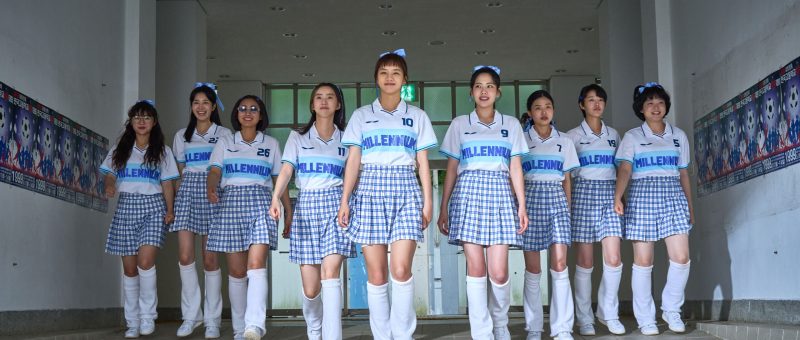
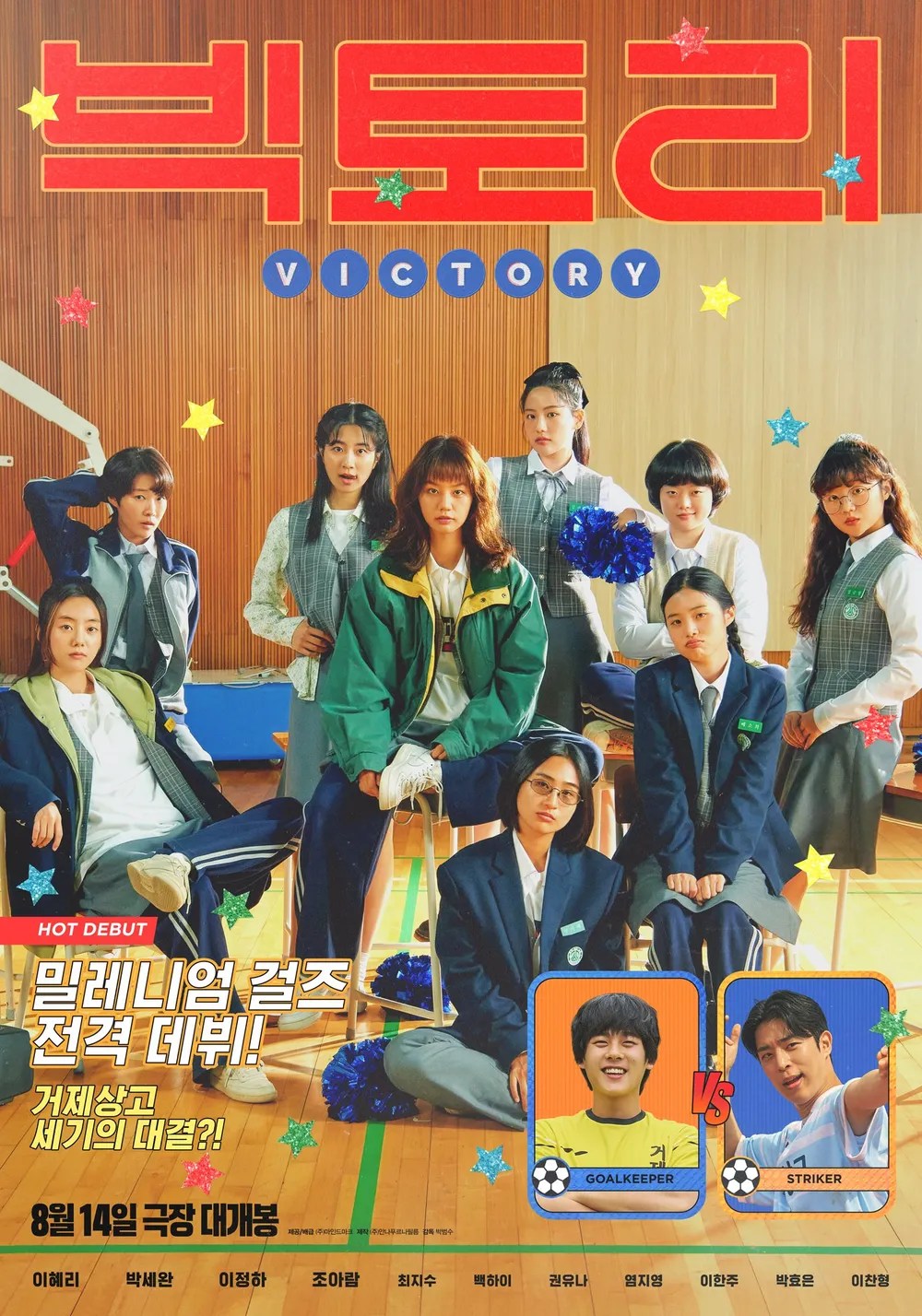
Victory (빅토리, Park Beom-su, 2024)

At the end of Park Beom-su’s millennial coming-of-age drama Victory (빅토리) there’s a title card quoting scientific data that people perform better with encouragement. In order to get the headmaster to agree to their starting a cheerleading squad so they can use the clubroom for dance practice, the heroine comes up with a ruse that the moribund football team will play 50% better with the cheerleaders encouraging the crowd to shout their support. But of course it’s really the girls who prosper through a process of mutual encouragement and solidarity.

Set in a small town in 1999, the film’s heroines dream of becoming K-pop dancers in glamorous Seoul. Feisty Pin-sun (Lee Hye-ri) doesn’t see much of a future for herself in Geoje much to her father’s consternation and is forever asking to transfer to a high school in the capital though in truth all she wants to do is dance. The deputy-head seems to have it in for her, taking the clubroom away from them and belittling their dancing while Pil-sun and her best friend Mi-na (Park Se-wan) are older than the other kids having been forced to repeat a year after getting into a fight with a rival school at a disco. Cheerleading’s not something they had much interest in until meeting snooty new student Se-hyun (Jo Ah-ram) who’s moved to their rural backwater with her brother who has been lured their as a top scorer for the school’s football team by the football-crazy headmaster. 

The fortunes of the makeshift team are directly contrasted with the protestors at the shipyard where Pil-sun’s father works. Pil-sun’s father seems to be a man beaten down by life. He’s taken a managerial position but finds himself conflicted in the midst of a labour dispute with his bosses pressuring him to name the ringleaders of the strike so they can shut the protests down. Faced with unfair and exploitative conditions, the men are protesting for basic rights such as not being forced to work overtime  and weekends and having a right to time off. Pil-sun’s father may agree with them, but doesn’t want to risk his job and tries to placate both sides with a spinelessness that later appears cowardly to his daughter Pil-sun. Perhaps as a single-father, he’s mindful of the necessity of keeping his job but otherwise appears obsequious and willing to debase himself in the service of a quiet life. When Pil-sun is once again in trouble in school, her father drops to his knees and apologises much to Pil-sun’s embarrassment.

Yet like the shipyard workers, the girls fight in unity if in this case for cheerleading success. This is after all a synchronised sport that requires the team to act as one. Though they may not universally get on initially, interactions with the team help each to realise their special talents and give them additional confidence to dance their way into a future of their choosing. Meanwhile, they’re each faced with a millennial dread that now seems nostalgic in its references to Y2K and the end of the world. There may not be very much for them in this small town, but there is at least each other along with their burning desire to succeed. 

It’s this  infectious sense of determination that really does seem to improve the atmosphere in this gloomy environment, the protestors also joining in their routine while Pil-sun’s father eventually gains the courage to reassess his loyalties. They are each sustained by the community around them, supported and encouraged by their friends and comrades. The point is rammed home by the fact that Se-hyun’s striker brother Dong-hyun (Lee Chan-hyeong) turns out to be something of a disappointment, while goofy goalie Chi-hyung (Lee Jung-ha) proves unexpectedly reliable telling Pil-sun that he prefers to be the last line of defence rather than the pre-emptive strike as he proves by defending her when the gang is hassled by older kids from another school. With a series of knowing meta jokes (“Girls’ Generation.” “That sounds so dumb.”), Park piles on the sense of nostalgia for a perhaps more innocent turn-of-the century world but equally for the gentle days of youth as the teens dance their way through hardship and heartbreak bolstered by their unbreakable bonds and sense of hopeful determination for brighter futures that are theirs for the taking.


Victory screens Nov. 12 as part of this year’s San Diego Asian Film Festival.

Original trailer (English subtitles)