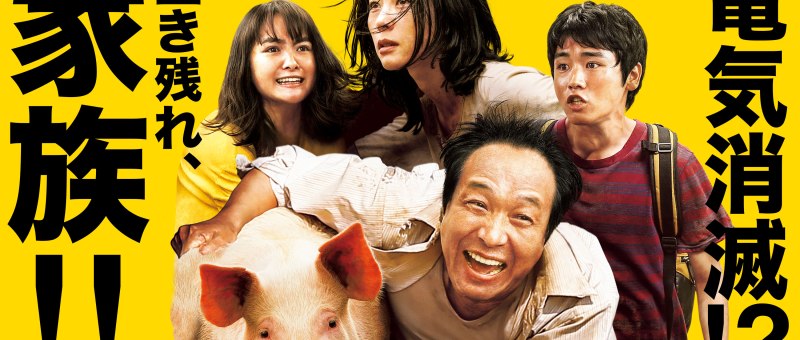
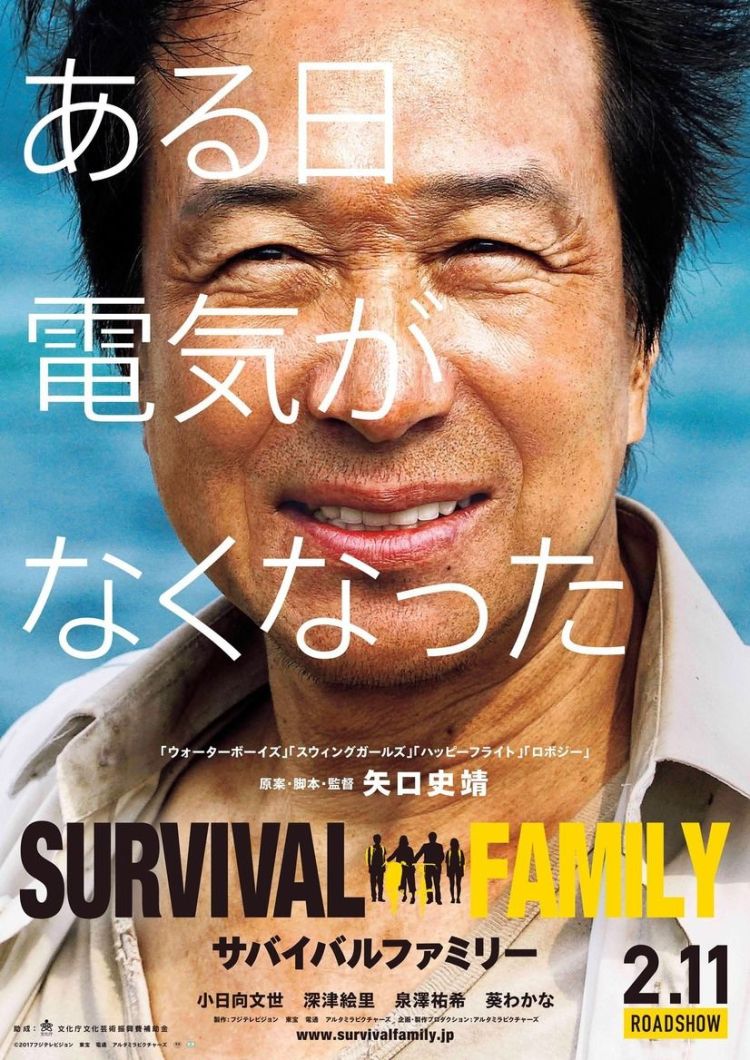
 Modern life is full of conveniences, but perhaps they come at a price. Shinobu Yaguchi has made something of a career out of showing the various ways nice people can come together to overcome their problems, but as the problem in Survival Family (サバイバルファミリー) is post-apocalyptic dystopia, being nice might not be the best way to solve it. Nevertheless, the Suzukis can’t help trying as they deal with the cracks already present in their relationships whilst trying to figure out a way to survive in the new, post-electric world.
Receiving a package from grandpa fills the Suzukis with horror more than gratitude. Mum Mitsue (Eri Fukatsu) can’t bring herself to cut the head off a fish and the sight of the giant bug that crawls out of the lettuce is just too much to bear. Her teenage daughter, Yui (Wakana Aoi), is not very excited either, tapping her smartphone with her fake nails, while her son Kenji (Yuki Izumisawa) spends all his time alone in his room with headphones permanently attached. Mr. Suzuki, Yoshiyuki (Fumiyo Kohinata) – the family patriarch, is a typical salaryman, obsessed with work and often in bed early.
All that changes one day when Yoshiyuki’s alarm clock does not go off. There’s been a power outage – nothing works, not the TV, not the phone, not even the tower block’s elevator. Being the salaryman champ he is, Yoshiyuki tries to make it into to work in other ways but the power’s out across the city and there’s nothing to be done. Everyone is sure the power will come back on soon, but days pass with the consequences only increasing as supermarket shelves become bare and water frighteningly scarce. After his boss decides to take his chances in the mountains and a neighbour dies as a direct result of the ongoing power shortage, Yoshihyuki decides to take the family on the road to find Mitsue’s country bumpkin father in the hope that he will have a better idea of how to survive this brave new world.
Yaguchi is quick to remind us all of the ways electricity defines our lives, even if we’ve begun to forget them. Not only is it a question of mobile phones being out and lifts being out of order, but gas appliances are also electric ignition as are the pumps which drive the water system. So used to the constant stream of electricity, no one quite realises what its absence means hence Yoshiyuki’s big idea is to get a plane from Haneda airport. Ridiculous as it may seem, he’s not the only one to have underestimated the part electricity plays in flight and the aviation industry as the airport is swamped by people trying to escape the rapidly disintegrating city. Credit cards no longer work leading to long checkout lines as the old ladies with their abacuses make a startling return to checkouts while bemused shoppers attempt to use the ATM machine to get more cash.
Cash itself still has worth, at least for a time. Eventually the barter system takes over as food and water become top price commodities. A very flash looking man tries to trade genuine Rolex gold watch and later the keys to his Maserati for food but is roundly informed that none of his hard won prizes is worth anything in this new back to basics era. Thanks to Mitsue’s housewife skills of frugality and haggling, the family are able to get themselves a small stockplie of resources but find themselves tested when the less fortunate ask them for help.
The crisis brings out both the best and the worst in humanity. As the family make their escape from the city on a series of bicycles, they pass a succession of salesmen all upping the price of bottled water by 100% each time. Profiteering is rife as the unscrupulous procure ordinary foodstuffs to be sold for vast amounts of money. Yet the Suzukis rarely find themselves on the wrong side of trickery and even encounter a few kindly souls willing to help them on their journey such as a gang of cycle wear clad survival experts and a very forgiving farmer who takes the family in when they help themselves to one of his escaped pigs (a sequence which allows Yaguchi to go on another Swing Girls-style pig chase only without the slo-mo and classical music).
Forced to reconnect, the family become closer, gradually coming to know and accept each other whilst finding new and unknown talents. Living simply and harmoniously has its charms, ones that don’t necessarily need to disappear if the power ever comes back on. The only certainty is that you can’t survive alone, and who can you count on if you can’t count on family?
Screened as the opening night movie of the Udine Far East Film Festival 2017.
Original trailer (English subtitles)
 1969. Man lands on the moon, the cold war is in full swing, and Star Trek is cancelled prompting a mass write-in campaign from devoted sci-fi enthusiasts across America. The tide was also turning politically as the aforementioned TV series’ utopianism came to gain ground among liberal thinking people who rose up to oppose war, racial discrimination and sexism. It was in this year that Godzilla creators Ishiro Honda and Eiji Tsuburaya brought their talents to America with a very contemporary take on science fiction in Latitude Zero (緯度0大作戦, Ido Zero Daisakusen). Starring Hollywood legend Joseph Cotten, Latitude Zero gives Jules Verne a new look for the ‘60s filled with solid gold hotpants and bulletproof spray tan.
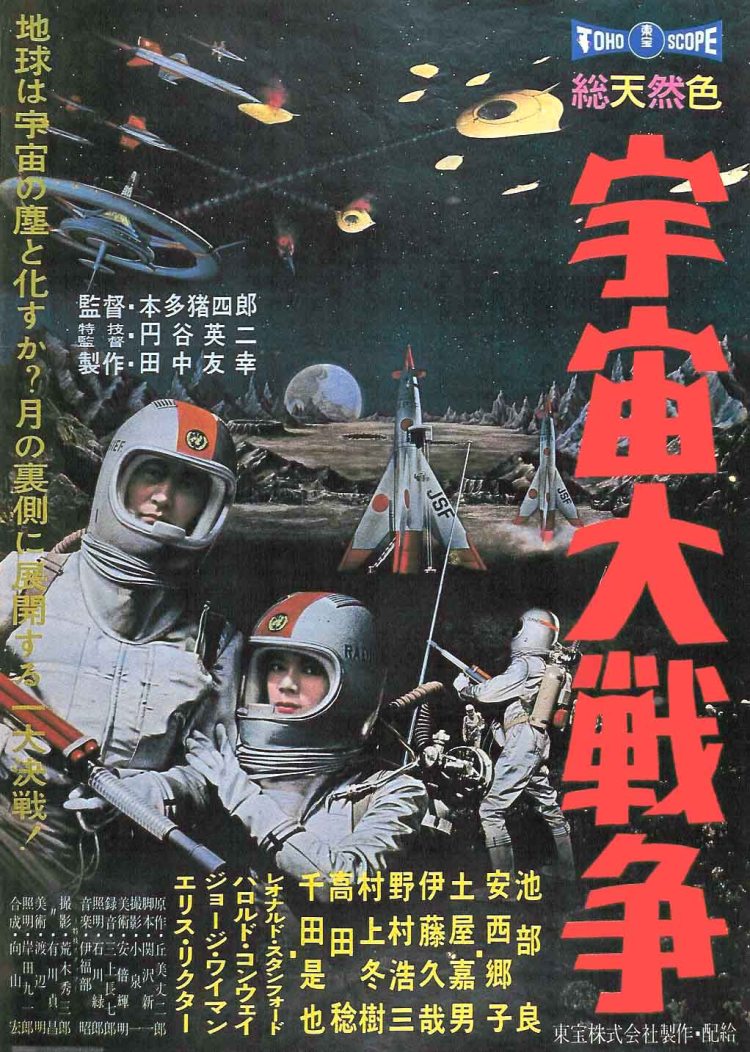 Ishiro Honda returns to outer space after The Mysterians with another dose of alien paranoia in the SFX heavy Battle in Outer Space (宇宙大戦争, Uchu Daisenso). Where many other films of the period had a much more ambivalent attitude to scientific endeavour, Battle in Outer Space paints the science guys as the thin white line that stands between us and annihilation by invading forces wielding superior technology. Far from the force which destroys us, science is our salvation and the skill we must improve in order to defend ourselves from hitherto unknown threats.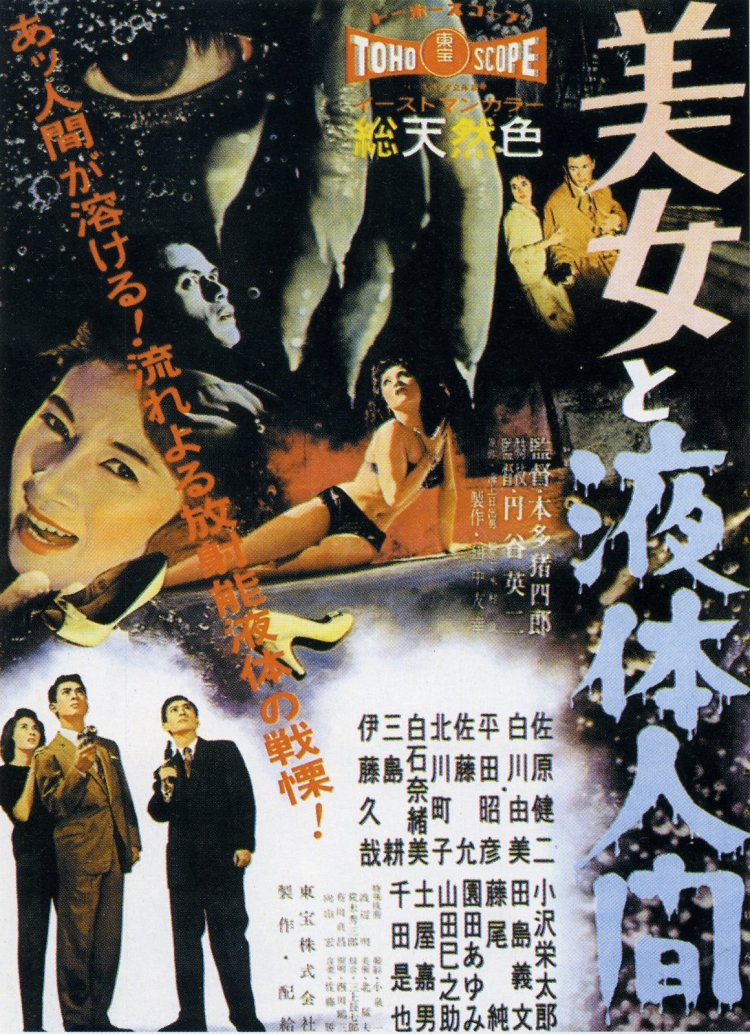
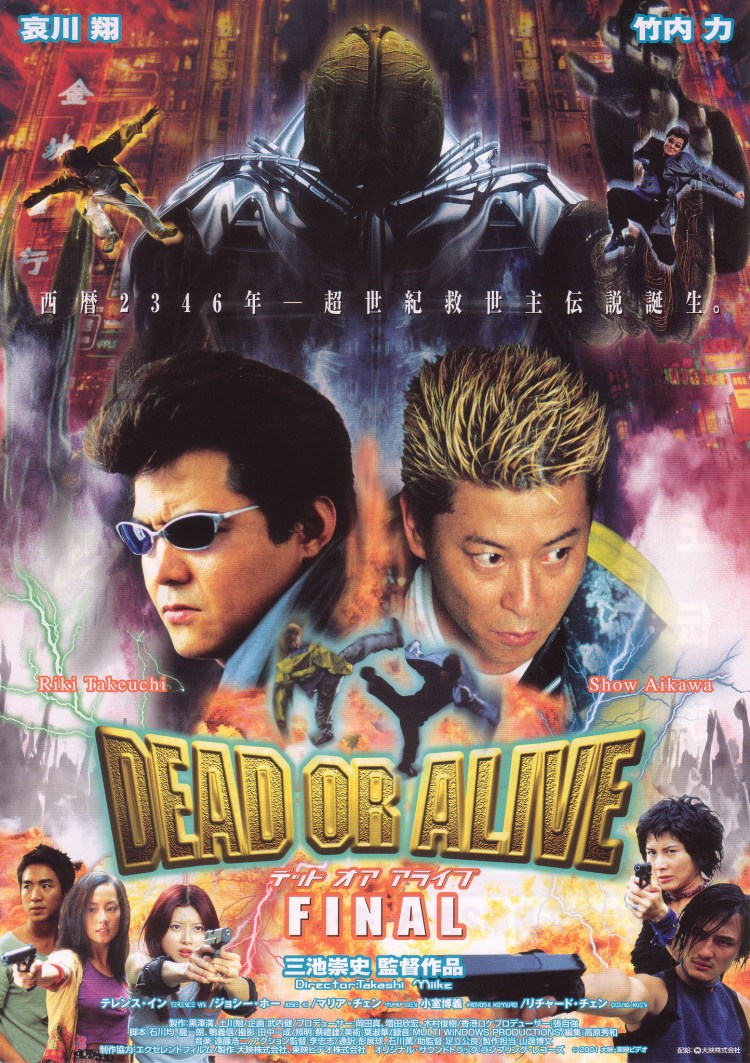
 Terra Formars – Terror for Mars? It’s all about terror in the quest for terra and reform in Takashi Miike’s bug hunt extravaganza adaptation of Yu Sasuga and Kenichi Tachibana’s manga. In fact, much of the plot is more or less the same as Aliens, but our motley crew is not a crack team of space marines headed by a recently awoken from stasis super survivor who proves unexpectedly dextrous in a robotic forklift exoskeleton, but a collection of human “bugs”, parasitical criminals who’ve each been made an offer they can’t refuse. High budget and boasting a starry cast, Terra Formars (テラフォーマーズ) definitely falls into the throwaway Miike category and proves curiously dull despite its ridiculous set up, but then if you happen to be into bugs there’s really a lot to like here.
 Based on the contemporary manga by the legendary Fujiko F. Fujio (Doraemon), Future Memories: Last Christmas (未来の想い出 Last Christmas, Mirai no Omoide: Last Christmas) is neither quiet as science fiction or romantically focussed as the title suggests yet perhaps reflects the mood of its 1992 release in which a generation of young people most probably would also have liked to travel back in time ten years just like the film’s heroines. Another up to the minute effort from the prolific Yoshimitsu Morita, Future Memories: Last Christmas is among his most inconsequential works, displaying much less of his experimental tinkering or stylistic variations, but is, perhaps a guide its traumatic, post-bubble era.
 The ‘70s. It was a bleak time when everyone was frightened of everything and desperately needed to be reminded why everything was so terrifying by sitting in a dark room and watching a disaster unfold on-screen. Thank goodness everything is so different now! Being the extraordinarily savvy guy he was, Hiroki Kadokawa decided he could harness this wave of cold war paranoia to make his move into international cinema with the still fledgling film arm he’d added to the publishing company inherited from his father.
 The Girl Who Leapt Through Time is a perennial favourite in its native Japan. Yasutaka Tsutsui’s original novel was first published back in 1967 giving rise to a host of multimedia incarnations right up to the present day with Mamoru Hosoda’s 2006 animated film of the same name which is actually a kind of sequel to Tsutsui’s story. Arguably among the best known, or at least the best loved to a generation of fans, is Hausu director Nobuhiko Obayashi’s 1983 movie The Little Girl Who Conquered Time (時をかける少女, Toki wo Kakeru Shoujo) which is, once again, a Kadokawa teen idol flick complete with a music video end credits sequence.
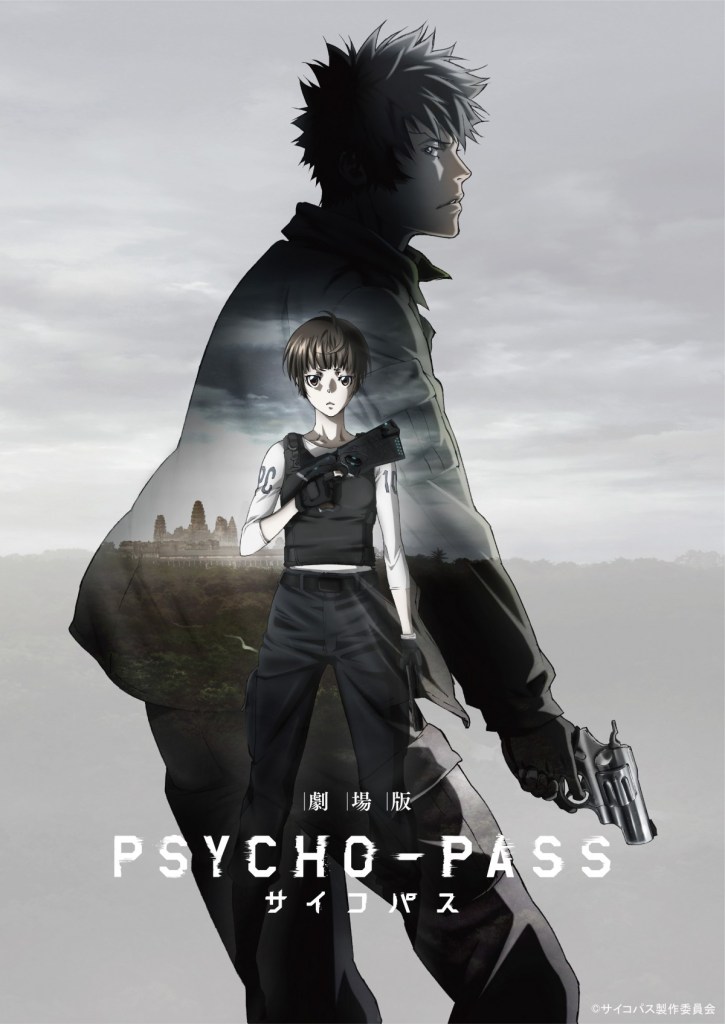 The Japan of 2116 is a peaceful place. Crime is at an all time low thanks to the Sybil system which monitors the nation’s citizens issuing them a “Crime Coefficient” rating assessing how likely they are to commit a crime. When a potential criminal’s Psycho-Pass reaches an unacceptable level, the Public Safety Bureau are called in to hopefully put a stop to any criminal activity before it has the chance to occur.
 Windows on Worlds