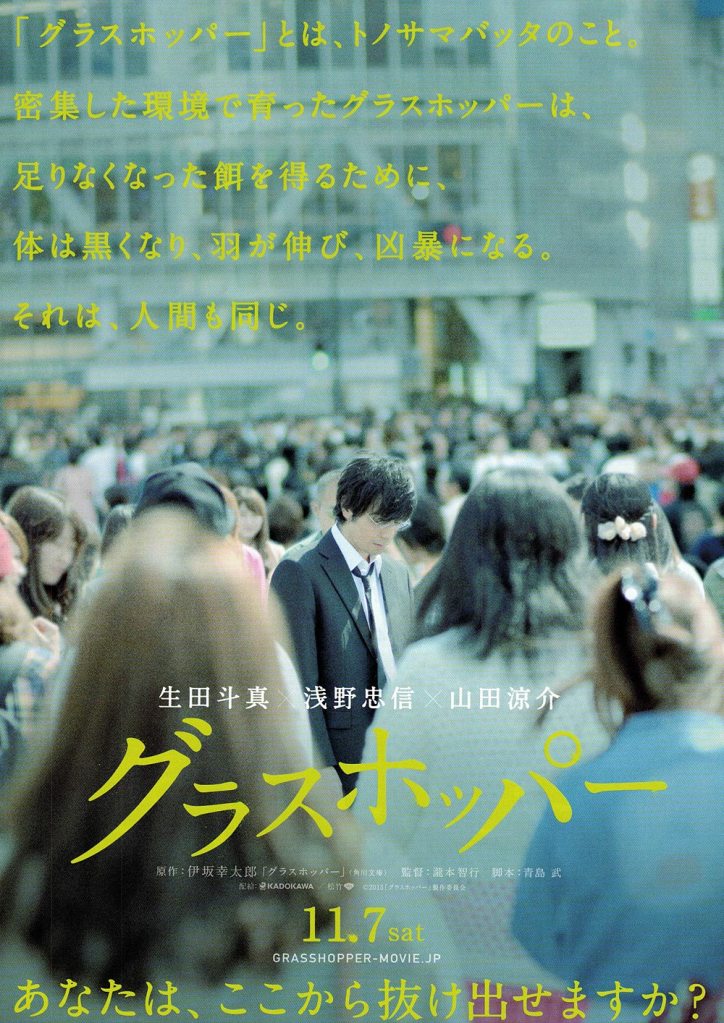
Grasshopper (グラスホッパー, Tomoyuki Takimoto, 2015)

grasshopperThe best revenge is living well, but the three damaged individuals at the centre of Tomoyuki Takimoto’s Grasshopper (グラスホッパー) might need some space before they can figure that out. Reuniting with Brain Man star Toma Ikuta, Takimoto moves away from the more overtly sci-fi elements but maintains a level of everyday strangeness that adds weight to this standard B-movie affair. A revenge thriller in which revenge itself is shown to be a fallacy, Grasshopper manages to mix its grimy grind house violence aesthetic with an oddly hopeful view of human nature.

One tragedy connects three very different people. Halloween, Shibuya – a crazed man at the wheel of a 4×4 receives a phone call instructing him to “crush all those bugs”, because he’s “the saviour”. The man obeys and plows into the holiday revellers crushing them like insects under his wheels. One victim, Yuriko (Haru), who died pushing a child out of harm’s way happened to be the fiancée of middle school science teacher, Suzuki (Toma Ikuta). Revisiting the spot where she fell, Suzuki unexpectedly receives a letter informing him that the events which occurred at Halloween were not as straightforward as the media asserts and he should set about investigating the father and son working at “Fraulein”. His mind burning with thoughts of vengeance, Suzuki abandons his old life and launches himself headlong into the criminal underworld in search of answers.

Meanwhile, the evil kingpins at the centre of things have sent their ace hitman with a difference, Kujira (Tadanobu Asano), to silence a troublesome reporter. Kujira’s unusual assassination method involves a kind of hypnosis in which he forces his victims to acknowledge their darkest sins and eventually commit suicide. Though this sounds like the ideal plan for evading detection, the gangsters are nervous that Kujira has learned to much through his near death conversations with his targets and send a duo of slightly less competent killers on his trail. This leads us to our third strand – sociopathic blade wielding killer, Semi (Ryosuke Yamada), and his stray cat rescuing handler, Iwanishi (Jun Murakami).

Suzuki finds himself out of his depth in the murky, crime ridden underworld. Talking to yet another hitman he crosses paths with, Suzuki is offered the grasshopper analogy which lies at the centre of the film. Pusher (Hidetaka Yoshioka) tells him that unlike regular migratory locusts which are generally green, there is a mutant breed which undergoes a “swarm phase” in which their wings grown darker and longer, becoming ever more destructive in the quest to feed themselves in a crowded environment. People, Pusher claims, are no different. The film is filled with these mutant insects, crushing their fellow humans like roaches under boots, yet there’s something to be said for the migratory guys who keep moving and oppose the mutant breed through stealth and cunning.

Each of the three men is looking for a kind of revenge even if it’s ultimately self inflicted. Unusual hitman Kujira has hit the assassin’s version of angel wings in that he can see the faces of all the men and women he has killed, quite literally haunting his every move and offering a running commentary on his life. Setting out for vengeance against the men who’ve ordered his death, Kujira knows he’s nearing the end of his path yet before he gets there he will have to face off against Semi with whom he has no particular quarrel despite having just given Semi a reason to seek vengeance against him. Semi’s quest for revenge is pointed at Kujira but their mutual need for satisfaction will destroy each of them whilst also bringing them together as equals.

Everything prior to the fateful Halloween is bathed in golden light where warm colours predominate in Suzuki’s fond memories of his fiancée, but everything after is dark, reds and blacks tinged with insect green as grasshoppers swarm like harbingers of a great evil. Revenge itself is constantly frustrated and ultimately swept away from each party by shadowy forces secretly working against the darkness. Nothing is quite as it seems, no one is quite telling the truth. Yet as deep as the original conspiracy goes, the counter conspiracy consistently exceeds it.

Filled with impressive action sequences from Semi’s well choreographed balletic knife displays to large scale crowd scenes and good old fashioned fist fights, Grasshopper owns its down and dirty origins but reinvigorates them with a degree of modern sophistication. Yuriko, a soup chef, insists that the true secret ingredient in her cooking is genuine emotion – that this is what’s left behind when everything else is gone. Suzuki could choose to dive inside his cocoon of unresolved vengeance for the rest of his life but that would not have been what Yuriko wanted for him. In this anti-revenge drama, vengeance is the fallacy that detracts from the truth – that the ultimate form of revenge is learning to live with the past rather than wasting time settling scores.


Original trailer (no subtitles)
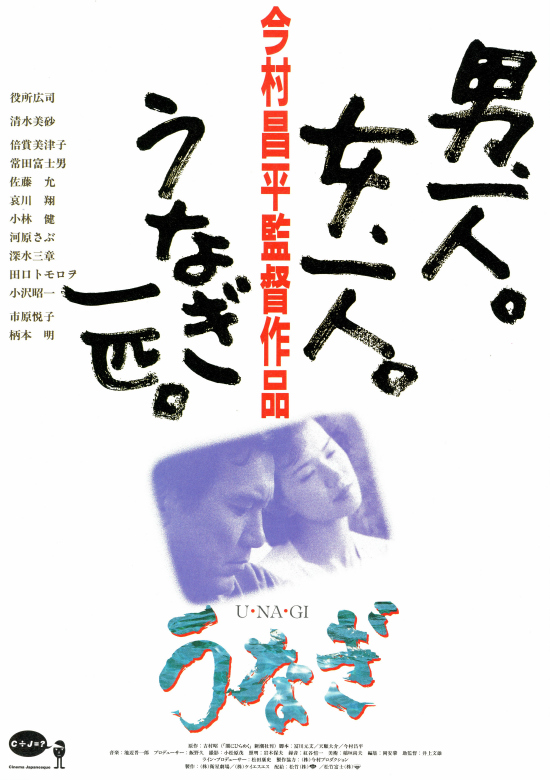
The Eel (うなぎ, Shohei Imamura, 1997)

The EelDirector Shohei Imamura once stated that he liked “messy” films. Interested in the lower half of the body and in the lower half of society, Imamura continued to point his camera into the awkward creases of human nature well into his 70s when his 16th feature, The Eel (うなぎ, Unagi), earned him his second Palme d’Or. Based on a novel by Akira Yoshimura, The Eel is about as messy as they come.
Mild-mannered salary man Yamashita (Kouji Yakusho) receives a handwritten letter filled with beautiful calligraphy delivering the ugly message that his wife has been entertaining another man whilst he enjoys his weekly all night fishing trips. Confused at first, the note begins to work its way into Yamashita’s psyche and so he decides to leave his next fishing trip a little earlier than usual. Peeping through the keyhole, he finds his beloved wife enjoying energetic, passion filled sex with another man. Drawing a knife from a nearby shelf, he enters the room and attacks the pair killing the woman but letting the lover get away.

Yamashita immediately and with perfect calmness turns himself in at the local police station, still covered in his wife’s blood and carrying the murder weapon. Released on a two year probationary period after eight years in jail, there is no one to meet Yamashita when he comes out and so he remains under the guardianship of a Buddhist priest in a nearby town. Accompanied by his only friend, a pet eel, Yamashita takes possession of a local disused barbershop and sets about trying to rebuild his life.

Things change when Yamashita comes across an unconscious woman lying in the grass while he’s out looking for things to feed his eel. The strange thing is, this woman looks exactly like his wife. Eventually, Keiko (Misa Shimizu) recovers and comes to work with Yamashita in his new enterprise but as the pair grow closer the spectres of both of their troubled pasts begin to intrude.

As the small town residents of Yamashita’s new home often remark, Yamashita is a strange man. His deepest relationship is with his eel which the prison guards, who seem quite well disposed towards him, allowed him to keep in the prison pond even though pets are not generally allowed. When asked why he likes his eel so much, Yamshita replies that the eel listens to him and doesn’t tell him the things he does not wish to hear. Like Yamashita, the eel is isolated inside his tank, content to absent himself from interacting with other creatures, both protected and constrained by transparent walls.

After his release from prison, Yamashita begins to reflect on his crime which he doesn’t so much regret but has no desire to repeat. His other double arrives in the form of fellow inmate and double murderer Tamasaki (Akira Emoto) who keeps trying to convince Yamashita that he is living dishonestly by not having visited his wife’s grave or read sutras for her. Though Yamashita pays no heed to most of his advice which is more self-pity and anger than any real concern for Yamashita’s soul, some things begin to get to him, most notably that perhaps the fateful letter never existed at all and is nothing more than the manifestation of Yamashita’s jealous rage.

Though the film presents everything that happens to Yamashita as “real”, his state of mind is continually uncertain. Not only is the provenance of the letter doubted, he doubts the existence of Keiko because she looks (to him at least) like the returned ghost of the woman he killed, and even the final confrontational arguments with Tamasaki take on an unreal quality, as if Yamashita were arguing with himself rather than another man who also represents his own worst qualities – impulsivity, violence, self doubt and insecurity. The film is so deeply embedded in Yamashita’s subjective viewpoint that almost nothing can be taken at face value.

Yamashita is, in a sense, trapped in a hall of mirrors as his own faults are reflected back at him through the people that he meets. Keiko, rather than being physically murdered by a jealous lover, attempted to take her own life after being misused by a faithless (married) man. Her past troubles are, in some ways, the inverse of Yamashita’s as she finds herself at the mercy of dark forces but internalises rather than externalises her own anger. Cheerful and outgoing, she quickly turns Yamshita’s barbershop into a warm and welcoming place which the local community takes to its heart.

Yamashita, however, remains as closed off as ever though he does strike up something of a relationship with a lonely young man who wants to use his barber’s pole to try and call aliens. When Yamashita asks him what he’s going to do if the aliens actually come, the young man replies that he wants to make friends with them. Yamashita astutely remarks that the young man’s desire to meet aliens is down to a failure to connect with people from his own planet – an idea which the young man equally fairly throws back at him. Perhaps out of fear rather than atonement, Yamashita exiles himself from the world at large though gradually through continued exposure to the genial townsfolk and Keiko’s deep seated faith in him, he does begin to swim towards the surface.

Imamura adopts his usual, slightly ironic tone to lighten this otherwise heavy tale allowing the occasional comic set piece to shine through. Yakusho delivers another characteristically nuanced performance as this entirely unformed man, unsure of reality and trapped in a spiral of self doubt and confusion. His original crime of passion is at once chilling in its calmness but also messy and violent as he gives in to animalistic rage. After showing us a street lamp glowing an ominous red, Imamura steeps us in blood as his camera becomes progressively more stained making it impossible to forget the shocking betrayal of this unexpected violence.

Yamashita remarks at one point that he died that day alongside his wife. The Eel is a story of rebirth as its protagonists begin to swim towards the shore in support of each other, though like the titular marine creature there is no guarantee that they will make there alive. Yamashita is a cold blooded murderer and creature of suppressed rage yet Imamura is not interested in moral judgements as much as he is in the messier sides of human nature. A chance offering of redemption for the unredeemable, The Eel offers hope for the hopeless in a world filled with goodhearted eccentrics where all faults are forgivable once they are understood.


Original trailer (no subtitles)

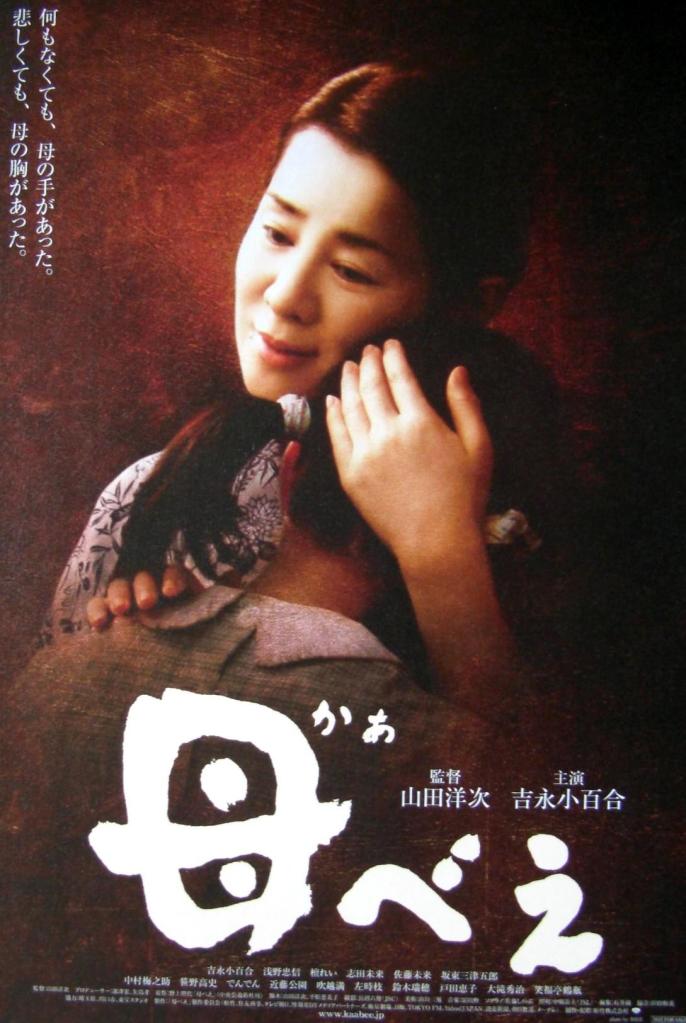
Kabei: Our Mother (母べえ, Yoji Yamada, 2008)

KabeiYoji Yamada’s films have an almost Pavlovian effect in that they send even the most hard hearted of viewers out for tissues even before the title screen has landed. Kabei (母べえ), based on the real life memoirs of script supervisor and frequent Kurosawa collaborator Teruyo Nogami, is a scathing indictment of war, militarism and the madness of nationalist fervour masquerading as a “hahamono”. As such it is engineered to break the hearts of the world, both in its tale of a self sacrificing mother slowly losing everything through no fault of her own but still doing her best for her daughters, and in the crushing inevitably of its ever increasing tragedy.
Summer, 1940. The Nogamis are a happy family who each refer to each other by adding the cute suffix of “bei” to their names. The father, Tobei (Bando Mitsugoro X), is a writer and an intellectual opposed to Japan’s increasing militarism and consequently has found himself in both political and financial difficulties as his writing is continually rejected by the censors. Eventually, the secret police come for him, dragging him away from his home in front of his terrified wife and daughters. After Tobei is thrown into jail for his “thought crimes”, the mother, Kabei (Sayuri Yoshinaga), is left alone with her two young girls Hatsuko and Teruyo (Hatsubei and Terubei in family parlance).

Though devastated, Kabei does not give up and continues to try and visit her husband, urging his release and defending his reputation but all to no avail. Thankfully, she does receive assistance from some of her neighbours who, at this point at least, are sympathetic to her plight and even help her get a teaching job to support herself and the children in the absence of her husband. She also finds an ally in the bumbling former student, Yamazaki (Tadanobu Asano), as well as her husband’s sister Hisako (Rei Dan), and her brother (Tsurube Shofukutei) who joins them for a brief spell but ultimately proves a little too earthy for the two young middle class daughters of a dissident professor.

The time passes and life goes on. The war intensifies as do the attitudes of Kabei’s friends and neighbours though the family continues its individual struggle, sticking to their principles but also keeping their heads down. By the war’s end, Kabei has lost almost everything but managed to survive whilst also ensuring her children are fed and healthy. A voice over from the older Teryuo calmly announces the end of the conflict to us in such a matter of fact way that it’s impossible not wonder what all of this was for? All of this suffering, death and loss and what has it led to – even more suffering, death and loss. A senseless waste of lives young and old, futures ruined and families broken.

Yet for all that, and to return to the hahamono, the Nogami girls turned out OK. Successful lives built in the precarious post-war world with careers, husbands and families. Unlike many of the children in the typical mother centric movie, Hatsuko and Teruyo are perfectly aware of the degree to which their mother suffered on their behalf and they are both humbled and grateful for it. Kabei was careful and she kept moving to protect her children in uncertain times. Seen through the eyes of a child, the wartime years are ones of mounting terror as fanatical nationalism takes hold. Bowler hatted men seem to rule everything from the shadows and former friends and neighbours are primed to denounce each other for such crimes as having the audacity to wear lipstick in such austere times. In one notable scene, the neighbourhood committee begins its meeting by bowing at the Imperial Palace, until someone remembers the paper said the Emperor was in a different palace entirely and they all have to bow the other way just in case.

Though the tale is unabashedly sentimental, Yamada mitigates much of the melodrama with his firmly domestic setting. We see the soldiers massing in the background and feel the inevitable march of history but the sense of tragedies both personal and national, overwhelming as it is, is only background to a testament to the strength of ordinary people in trying times. An intense condemnation of the folly of war and the collective madness that is nationalism, Kabei is the story of three women but it’s also the story of a nation which suffered and survived. Now more than ever, the lessons of the past and the sorrow which can only be voiced on the deathbed are the ones which must be heeded, lest more death and loss and suffering will surely follow.


Original trailer (English subtitles)

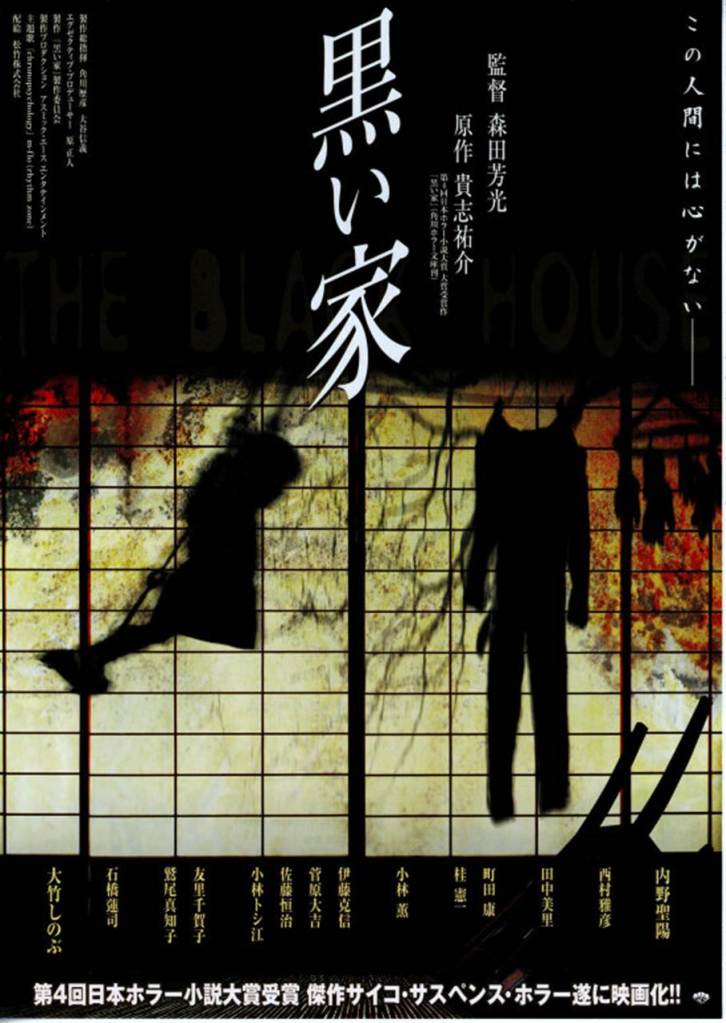
The Black House (黒い家, Yoshimitsu Morita, 1999)

black house posterYoshimitsu Morita, though committed to commercial filmmaking, also enjoyed trying on different kinds of directorial hats from from purveyor of smart social satires to teen idol movies, high art literary adaptations and just about everything else in-between. It’s no surprise then that at the height of the J-horror boom, he too got in on the action with an adaptation of Yusuke Kishi’s novel of the same name, The Black House (黒い家, Kuroi Ie). Though tagged as “J-horror” you’ll find no long haired ghosts here and, in fact, barely anything supernatural as the true horror on show is the slow descent into madness taking place inside the protagonist’s mind.
Wakatsuki (Masaaki Uchino) is a nice young man with a good job investigating claims at an insurance office. Unfortunately, this gives him a slightly dim view of humanity as he comes into contact with scamsters and even people willing to maim themselves just so that they can claim on their policies. One day, he receives a strange phone call from a woman who wants to know if her insurance policy will pay out in case of suicide. Wakatsuki, slightly panicked, tells her that it really depends on the circumstances and, jumping to the conclusion she plans to kill herself, urges her to get help and talk things over with someone before doing anything rash.

The next thing he knows, Wakatsuki is despatched to her house to sort things out whereupon he makes an extremely gruesome discovery – the woman’s son, though only a child, has hanged himself in the back room. Obviously extremely shocked and distressed, Wakatsuki heads home with the nagging suspicion that Sachiko (Shinobu Ootake) and her husband Komoda (Masahiko Nishimura) have done something truly dreadful. The couple take turns coming into the office to find out what’s taking so long with their claim and gradually the situation begins to spiral desperately out of control.

Always one for irony,  Morita’s tone varies widely here. There’s an oddly Twin Peaks-like vibe with the jolly jazz score giving way to synths at moments of high tension, not to mention the run down industrial town setting. If that weren’t enough Lynchery, there’s even a moment where a severed hand is found in a patch of grass, crawling with ants just like the ear found by Jeffrey at the beginning of Blue Velvet. Morita seems to be telling us not to take any of this too seriously yet his subjects include parents harming or even murdering their children to claim on an insurance policy as well as bloody violence and dismemberment of corpses.

In fact, the insurance guys don’t spend too long trying to figure out if the boy actually killed himself but Wakatsuki becomes preoccupied by the idea the husband, Komoda, is behind the whole thing (the boy was only his step-son after all) and will now try and kill his wife to claim her insurance too. The couple are certainly both very strange people and the insurance company also have a problem as the policy was signed off on during a campaign drive in which a now dismissed employee made use of a personal connection to try and meet her unrealistic quota. Wakatsuki eventually engages an equally eccentric psychology professor who takes him out on a weird nighttime odyssey to a seedy strip club where he expounds on a epidemic of psychopathy among the younger generation. Even Wakatsuki’s girlfriend, Megumi, has some off the wall ideas based on an essay Sachiko wrote in elementary school (though actually Megumi’s view has some merit).

Things hit a more conventional note from this point on landing us with a familiar slasher villain who begins stalking Wakatsuki, even trashing his apartment before kidnapping his girlfriend and keeping her prisoner in the “Black House”. Wakatsuki heads to the den of evil by himself in the dark (in true horror movie fashion) where he finds a whole bunch of other dismembered corpses (and a few other surprises). He might think he can put his troubles behind him after this extremely traumatic incident, but this is still a horror movie so the killer gets away to strike again by throwing a bright yellow bowling ball at his head through the office toilet window.

Morita is not being serious at all, even for a second, but somehow he still manages to create an oddly threatening atmosphere of suspense despite the extremely weird things which are going on. He creates a complex set of visual cues from the recurring sunflower motif repeated on Sachiko’s shirt to the glistening yellow bowling ball, goldfish (in a toilet bowl if not a percolator), repeated sounds of cockroaches and old fashioned reel printers, and even the green glow from both old fashioned computer systems and the company’s insurance documents. Undoubtedly bizarre, The Black House is mind bending psychological-horror-movie-cum-Freudian-slasher that is primed for both head scratching puzzlement and confused chuckling as Morita has a lot of fun messing with our senses.


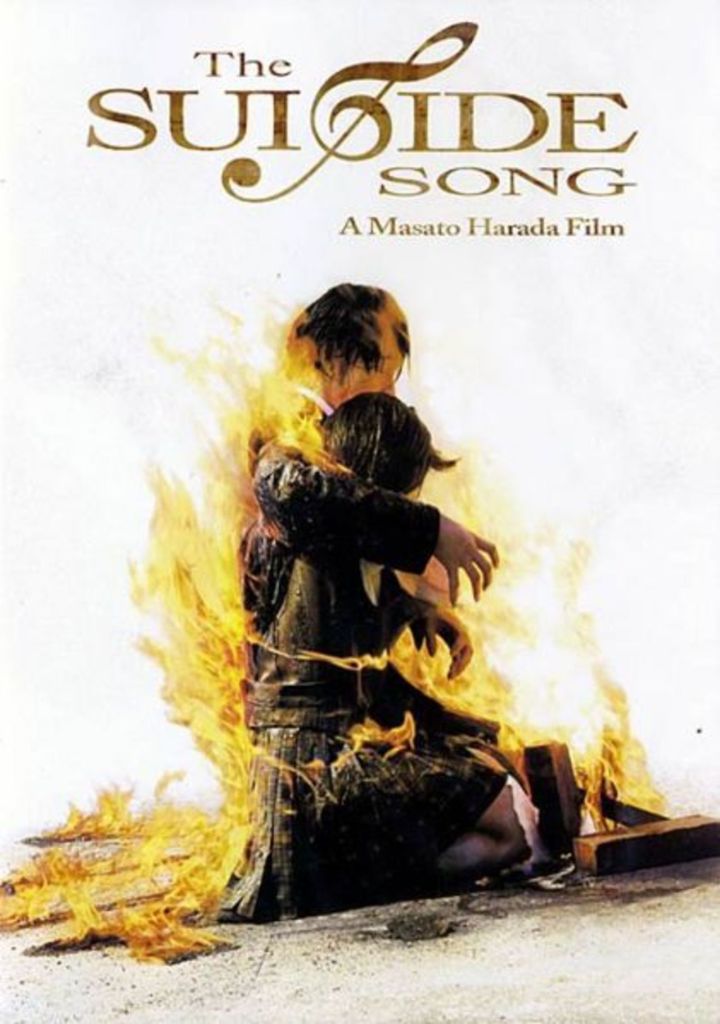
The Suicide Song (伝染歌, Masato Harada, 2007)

Suicide Song US Tokyo Shock DVD Cover
US Tokyo Shock DVD cover

There comes a time in every director’s life when fate leads them down the strangely tempting path of the idol movie. In recent years, sweet and innocent is no longer quite enough to cut it and when your film stars a bunch of kids from AKB48, you’re going to need 48x the kawaii factor so even though the DVD cover is suitably macabre and The Suicide Song (伝染歌, Densen Uta) is marketed as a J-Horror movie, there’s quite a lot more singing and dancing than might be reasonably expected.

In true idol star horror movie fashion, the film begins with some cutesy high school scenes before one student, Kana (Atsuko Maeda), starts in on her teacher who basically wants to skip a whole bit of the text book because it’s not on the exam. The potentially irrelevant teaching matter concerns famous Japanese playwright Chikamatsu whose big thing was, you guessed it, double suicides. Shortly after this, Kana is heard singing a weird song and then cuts her own throat with a kitchen knife right in front of her friend and classmate, Anzu (Yuko Oshima). It seems there has been a spate of these spontaneous suicides of teenage girls which occur after singing this particular song so skeevy newspaper guys Macasa, led by occult obsessed Riku (Ryuhei Matsuda ) and his ex-military buddy Taichi (Yusuke Iseya), decide to do some “investigative journalism”. Anzu and some of the other kids wind up helping out too, eventually coming under threat of that very same curse….

The idea of a “suicide song” isn’t a new one. Gloomy Sunday – a 1930s Hungarian folk song which achieved widespread acclaim thanks to an English language cover version recorded by Billie Holiday in 1941 became an urban legend after numerous suicides were linked to the doleful track and its extremely bleak lyrics. This time around, it’s AKB48’s inoffensive Boku no Hana which apparently drives anyone who tries to sing it to their deaths. Like Gloomy Sunday, the song features extremely nihilistic lyrics which echo the existential confusion and romantic disillusionment that many of its young listeners are undoubtedly experiencing. A perfectly rational explanation for why so many young women might be taking their lives with this particular song on their lips, yet Suicide Song is not particularly interested in exploring the various real world pressures which might push high school students towards death when their lives ought to be just beginning.

It’s not long before the curse makes the leap to supposedly solid adult males. Later, one character tries to weaken the importance of the song by suggesting that it just opened a door for the suppressed feelings that were already there. That each of the victims already wanted to die and and simply allowed themselves to make use of this real world meme to give themselves permission to end it all. This is an interesting idea in some ways, though comes close to victim blaming and conveniently lets the central characters off the hook for failing to save their friends who have already fallen for what is either a curse or mass hysteria. In any case, like most Japanese horror movies and mysteries, the real villain is a circle of buried secrets. The traumatic past must be faced, brought out into the light and then given a proper burial to end the ongoing chaos.

Harada is playing a very strange game. He adds in generic J-horrorisms such as odd jump cuts, stuttering, power outages and possessed video footage as well as a good deal of shadiness in the form of the low rent newspaper guys and the investigation turning up something as dark as a teenage gang competing to see how many kids they can get to kill themselves using the song as a marker. Yet, he generally keeps things cute and light just like your average teen idol romance movie. We’re even treated to a very special AKB48 performance at their club in Akihabara (“Japan’s Most Sophisticated Show” !) where they sing Aitakatta for a room full of devoted middle aged guys who are their biggest fans. There are also frequent cinematic quotations from such Hollywood classics as Vertigo and The Lady From Shanghai (not to mention a completely shoehorned in paintball sequence using Ride of the Valkyries a la Apocalypse Now) which seem to hint at some kind of greater plan, but whatever it is never quite materialises.

Whatever Harada’s intentions may have been, Suicide Song is a strange beast which veers widely in tone from wacky comedy to supposed horror film. In actuality there are very few real scares despite the J-horror aesthetic and the comedy never amps itself up to the level of parody. If the intention was to create some kind of weird, subversive genre hybrid, the punches have been well and truly pulled. Watched as a horror movie Suicide Song is prone to disappoint, though its moments of absurd comedy and cute schoolgirl drama prove enjoyable enough for those able to adjust their expectations on the turn of a dime.


The Suicide Song is available with English subtitles on R1 US DVD from Tokyo Shock.

English subtitled trailer (aspect ratio is slightly stretched):

Street Without End (限りなき舗道, Mikio Naruse, 1934)

Street Witout EndNaruse’s final silent movie coincided with his last film made at Shochiku where his down to earth artistry failed to earn him the kind of acclaim that the big hitters like Ozu found with studio head Shiro Kido. Street Without End (限りなき舗道, Kagirinaki Hodo) was a project no one wanted. Adapted from a popular newspaper serial about the life of a modern tea girl in contemporary Tokyo, it smacked a little of low rent melodrama but after being given the firm promise that after churning out this populist piece he could have free reign on his next project, Naruse accepted the compromise. Unfortunately, the agreement was not honoured and Naruse hightailed it to Photo Chemical Laboratories (later Toho) where he spent the next thirty years.
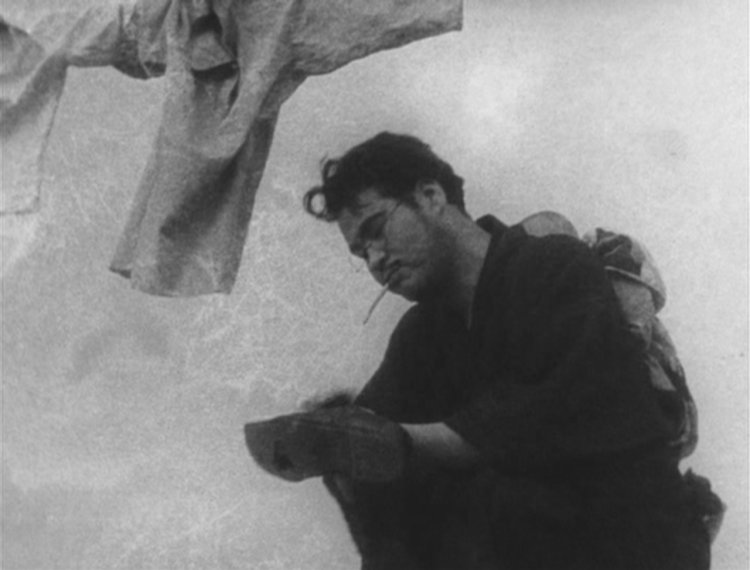
Although Street Without End is a conventional melodrama in many senses, it’s also quite a complex one playing with multilayered dualities and symbolic devices. After beginning with some brief pillow shots of the real city streets, we meet the stars of the show, Sugiko and Kesako, who are both waitresses in a local tea room. Whilst walking together, Sugiko is presented with an offer from a movie studio currently looking for new talent but isn’t really convinced, though the money would come in handy for her younger brother’s college tuition. A little while later she gets another offer from her boyfriend, Harada, who wants to get married as his parents are trying to pressure him into an arranged marriage at home. Sugiko agrees but is knocked over by a car on her way to meet him with the result that Harada thinks she’s changed her mind and goes home alone. Slowly she grows closer to the man who knocked her over, Yamanouchi, and eventually marries him instead but quickly finds herself out of place in his upperclass world.

Kesako, by contrast, ends up picking up on Sugiko’s job offer and joining the studio herself. She takes her unsuccessful artist boyfriend with her though their relationship suffers as she falls in with the studio crowd. Both women get what they thought they wanted, only to discover it to be not what they wanted at all.

Sugiko’s story is the main thrust of the narrative as she marries up through misfortune after Yamanouchi carelessly runs her over. He himself plays the part of the sensitive nobleman who’s bullied by his more conservative mother and sister who’ve picked out a girl exactly like them for him to marry. In a gesture that’s probably born out of rebellion rather than love, Yamanouchi brings Sugiko home as his wife but then leaves her to the mercy of the people he most feared himself. An ordinary working class woman, Sugiko quickly angers her mother in law by treating the servants like actual people and not having the poise expected of a Yamanouchi wife. Yamanouchi is too soft to defend himself, let alone his choice of wife, and so Sugiko’s life eventually becomes untenable sending Yamanouchi off the rails with it. Naruse includes a less than subtle intertitle here which states “EVEN TODAY, FEUDAL NOTIONS OF FAMILY CRUSH THE PURE LOVE OF YOUNG PEOPLE IN JAPAN”, which makes his position plain but seems a little strong for the anti-romantic nature of the relationship between the rebound Sugiko and the “getting back at mother” Yamanouchi.

Both Yamanouchi and Harada were interested in Sugiko as shield against an unwanted arranged marriage. Sugiko was unconvinced by both offers but her decision to marry Yamanouchi is one which ultimately went against her unconventional nature (as borne out by her unconventional decision to leave it). Sugiko and Kesako appear as mirrors of each other as Kesako nabs Sugiko’s job offer and starts to climb the studio ladder. Just as Sugiko finds the life of an upperclass housewife is not all she thought it would be, so Kesako begins to find the acting profession, which she’d previously dreamed of, equally unfulfilling. By the time we loop round the end, we arrive at the beginning again with both ladies in pretty much the same space they were in before though perhaps a little clearer about what it is they want from life. The final scene is one more of acceptance and self realisation than it is about moving forward, but then there’s a curious reappearance of a familiar face on a passing bus. It remains to be seen if this is hope leaving town or merely circling.


Street Without End is the fifth and final film included in Criterion’s Eclipse Series 26: Silent Naruse box set.

Flunky, Work Hard (腰弁頑張れ, Mikio Naruse, 1931)

flunky work hardMikio Naruse is often remembered for his female focussed stories of ordinary women trying to do they best they can in often difficult circumstances, but the earliest extant example of his work (actually his ninth film), Flunky, Work Hard (腰弁頑張れ, Koshiben Ganbare), is the sometimes comic but ultimately poignant tale of a lowly insurance salesman struggling to get ahead in depression era Japan.

Okabe is the lowly insurance agent of the title. He works hard for his money, but there are slim pickings round here to begin with and a lot of competition from rival agents so Okabe struggles to provide for his wife and his little boy, Susumu, in the way that he would like. Okabe subjects himself any sort of humiliating behaviour on offer to try and get a contract including engaging in leap frog with a well to do lady’s children to try and seem more “friendly” than his rival broker.

Susumu, by contrast is a rebellious little boy and is aways getting into scraps with the neighbourhood kids who tease him because of his parents’ money problems. This wouldn’t usually be too much of a problem and Okabe even tells him it’s OK to defend himself when the other kids start in on him. Only this time Susumu has been fighting with the well to do lady’s sons which is going to make Okabe look bad and make it more difficult to convince her to take out a policy with his firm over another.

Okabe loses his temper and scolds the boy who runs off in anger and confusion only to get into a serious accident. His father, not knowing it’s his son that’s been injured, uses the news of a little boy getting hurt to try and convince the other mothers to take out insurance policies on their children. Later he feels bad about shouting at Susumu and decides to buy him a present, only he might already be too late…

Flunky, Work Hard starts out like the nonsense comedies Shochiku were known for at the time with a little of their common man approach thrown in, but quickly heads into melodrama territory as Susumu meets with his unfortunate destiny. This sequence is the most notable in the film as it’s far more experimental in nature than anything found in Naruse’s later work. Dipping into a montage of kaleidoscopic images, diagonal splits and the awful momentum of a train hurtling along a predetermined track only to meet with a horrifying, unexpected obstacle, this extremely complex sequence is the perfect cinematic expression of the blood draining from a father’s face as he contemplates the fact that he might have just lost his son through having lost his temper over something as trivial as a few shiny coins. Okabe is not a bad man, or even a bad father, but just another ordinary guy trying to make it through the depression. Even so, he may be about to pay a terrible price for failing to side with his son in favour of businesses prospects.

Like many silent films from this era, almost all of Naruse’s early work appears to be lost. Flunky, Work Hard is somewhat atypical when considered alongside his later career which had a strong female focus and leant more towards social commentary than the slapstick humour seen here. However, its tale of a father desperately trying to find a way to support his son in difficult economic circumstances only to find that his efforts may cost him the very thing that he was trying to protect all along is one which is instantly recognisable in any era.


Flunky, Work Hard is the first and earliest of the five films included in Criterion’s Eclipse Series 26: Silent Naruse box set.

Mr. Thank You (有りがとうさん, Hiroshi Shimizu, 1936)

Mr. Thank YouBus trips might be much less painful if only the drivers were all as kind as Mr. Thank You and the passengers as generous of spirit as the put upon rural folk travelling to the big city in Hiroshi Shimizu’s 1936 road trip (有りがとうさん, Arigatou-san). Set in depression era Japan and inspired by a story by Yasunari Kawabata, Mr. Thank You has its share of sorrows but like its cast of down to earth country folk, smiles broadly even through the bleakest of circumstances.

Mr. Thank You is everyone’s favourite bus driver. In fact, some of his passengers have even deliberately decided to “miss” the previous bus because they heard he was driving the next one. It’s not hard to see why, he’s a good a driver and a very polite, nice young man who’s been given the affectionate “Mr. Thank You” nickname because of his habit of shouting a loud thank you to everyone who moves out of the way for his bus to pass in the narrow mountain roads (the aforementioned pedestrians are also to be seen waving wildly and shouting his nickname back at him as he grins at them in the rear view mirror). He’s also prepared to stop and pick up passengers along the way as well as carrying messages between villages and filling requests for the latest records to hit Tokyo stores.

Mr. Thank You was apparently shot without a firm shooting script other than the inspiration of Kawabata’s story so the dialogue has a very immediate, contemporary feeling. There isn’t so much of a story as a journey taken with this disparate group of people all travelling from one place to another for various different reasons with the small interjections of other passersby on the roadside. The main drama occurs between a woman and her daughter who have such ashen faces they might as well be ascending the gallows, a very modern whiskey swilling travelling woman, and a grumpy guy with a handlebar moustache who seems very anxious about the bus being delayed by all these pleasantries. Along the way, Mr. Thank You offers commentary on some of the people he knows from his regular trips which amounts to a collection of sad stories decrying the state of the nation in which fathers are selling their daughters and mad men wander the streets searching for lost love.

“Young women used to laugh, but you never hear that now.” Says one passenger glancing at the sad face of a girl on a bus to the city. The mother and daughter seem reluctant to talk about their journey but it’s obvious to all that the girl is to be sold to a geisha house, never to see her home again. Mr. Thank You is sympathetic to her plight whilst silently listening to the lamentations of his customers like a sober barman. At one point he wonders out loud if he might be better off driving a hearse – acknowledging his own complicity in taking money for escorting this poor girl off to a life of rack and ruin. The flirtatious modern woman sitting behind him (most likely a prostitute herself) reminds him that women who pass these mountains rarely make a return journey, perhaps there is another way he could help her even if he can’t do the same for everyone.

Shimizu also stops a minute to consider the human costs of all this rapid progress. Taking a brief break from driving, Mr. Thank You chats to an acquaintance who has been working on the road building programme. A Korean migrant, she is among the most put upon of workers. She hoped she might have enough money to ride on Mr. Thank You’s bus just the once, but no sooner has one road been completed than she’s despatched off to build another one on another mountain so she’ll have to bid him goodbye. Mr. Thank You (seemingly quite taken with her and sorry to hear they may not meet again) offers to let her ride for free but she looks back at the masses of other people who are walking the mountain passes because they can’t afford the bus either and says it’s OK, she will stay with them, walking onward with everyone else caught in the same predicament as herself.

Filmed in 1936 Mr. Thank You has an extremely modern sensibility with a lot of naturalistic location shooting outside of the cramped environment of the bus which forms the main setting for the drama. The bus drives onward without stopping as obstacles fade from view only to reappear in the rear view mirror like ghosts, phantom images reflected on the landscape here one minute and gone the next. Time and history are marching on though one gets the impression Shimizu at least does not approve of the way his country is heading. The passengers on Mr. Thank You’s bus all have their troubles, but they’re trying to do the best they can by putting a brave face on it. They laugh, they drink, they sing but eventually they will all have to get off the bus, away from the careful protection of Mr. Thank You, and return to land of badgers and foxes where it’s every man for himself and those who cannot pay the fare will have to walk the rest of the way on their own two feet alone.


Mr. Thank You is the second of four films in Criterion’s Eclipse Series 15: Travels with Hiroshi Shimizu box set.

Scene featuring the Korean migrant worker (with English subtitles)

Temptation (誘惑, Kozaburo Yoshimura, 1948)

TemptationFeelings can creep up just like that, to quote another movie. Like Wong Kar-Wai’s In the Mood for Love, Temptation (誘惑, Yuwaku) also echoes Lean’s Brief Encounter with its strains of accidental romance between unavailable people even if only one of the pair is already married. However, this time there’s much less deliberate moralising though the environment itself is a fertile breeding ground for the judgemental.
The film begins with Takako (Setsuko Hara) paying her respects at the grave of her recently deceased father only to run into an old pupil of  his arriving for the same reason. Takako and Ryukichi (Shin Saburi) are both making the arduous trip back to the city and decide to travel together. Stopping over in Gifu, they find difficulty in getting a hotel room because of a big horse race due to take place the next day and rather awkwardly end up sharing a bed. After Takako becomes upset and ponders what she’s going to do now her father is gone, Ryukichi offers to let her move in with him and the children. Discussing this with his wife who is an invalid living away from the family, he talks paternally of Takako and of a wish to look after her as a way of honouring the memory of his former teacher. However, it isn’t long before the inevitable happens and the pair begin to fall in love.

Ryukichi first met Takako as a little girl when he was her father’s student but she’s 21 years old now – a grown woman by any standard, and plenty old enough to know what she’s doing. He describes her as still “silly”, like a child, and indeed Setsuko Hara breaks out some of her most radiant (if occasionally pained) smiles and almost mocking laughter to play a complex mix of putting a brave face on grief and genuine happiness at being back in a family home. Though feeling the crippling loss of her only family member has left her feeling devoid of a purpose in life, Takako is an essentially good and kind person who sees the best in people and is only too happy to help Ryukichi with the children while his wife is ill as well as continuing with her medical studies.

After leaving academia, Ryukichi has become left leaning politician committed to creating a better, fairer nation. Like Takako he is also an honest and decent person with a high sense of personal integrity. His motives for bringing Takako into the house were innocent, yet gradually his feelings for her begin to shift from the paternal to the romantic causing him a considerable amount of stress as he battles the need to remain faithful to his wife even in her absence while his attraction to Takako continues to grow.

The impending threat of illicit action stalks the screen almost like the stealthy figure of the killer in a slasher movie. At one point where the feelings threaten to overwhelm the couple despite their best efforts to suppress them, Tokie (Haruko Sugimura) – the sickly wife, unexpectedly turns up in true melodrama fashion as if summoned by the lovers’ guilty consciences and accompanied a chorus of stinging strings.

Tokie herself played by veteran actress Hariko Sugimura, is every inch the wounded wife though her plight is played with a little less vindictiveness than in a similarly themed gothic novel where the bedridden spouse suddenly rises as if from the grave itself to haunt the new lovers while still alive. Originally approving of Ryukichi’s desire to help Takako, Tokie’s fears are awaked when seeing her playing with the children on the beach – all long legs and youthful skin, moving in a way she fears she never will again. “Everything inside my chest is ruined” she tells Ryukichi before returning sadly inside, alone, prematurely exiling herself from her own family.

That said, Temptation refuses to follow the established pattern in that it suddenly reverts to a standard romance with no feeling of judgement inflicted on the couple whose love story has occurred in an illicit fashion. Tokie has a late in the game change of heart and the guilty spectre that haunts the couples of European melodrama fails to arise meaning that neither party is left feeling a need to reject their true feelings out of a desire to atone in some way for their inappropriate emotions and putative (if not actualised) betrayal.

This is surprising in some ways as the films also wants to offer a mildly left wing narrative represented by the poor boy fellow student of Takako who is arrested near the beginning of the film for selling flour masquerading as sweetener. He is of peasant stock and ultimately opts to return to simple and honest country life. Offering to take Takako with him, he gives her an opportunity to escape the temptation which is plaguing her and live quietly and naturally in an honest and humble way. In another film, this would be the solution – an abandonment of bourgeois emotion by giving up on her married, middle class politician who, for all his fine talk of open plan houses and rejection of “feudal” ideas, is still a reactionary and part of the system. However, strangely, emotion wins out and the audience gets a “happy ending” (of sorts) which feels a little bit out of place.

Temptation plays with many forms during its running time most notably romantic melodrama but often feels more like a thriller with its various twists and turns which always threaten to disrupt the narrative in unexpected ways. Consequently the film has something of an uneven tone and begins to drag a little even given its fairly short running time. This becomes a particular problem approaching the finale which lacks weight despite its obvious potential for melodrama. Still, even if Temptation is often more interesting than it is engaging it does offer a series of striking visual motifs as well at the superb performances of its leading players.


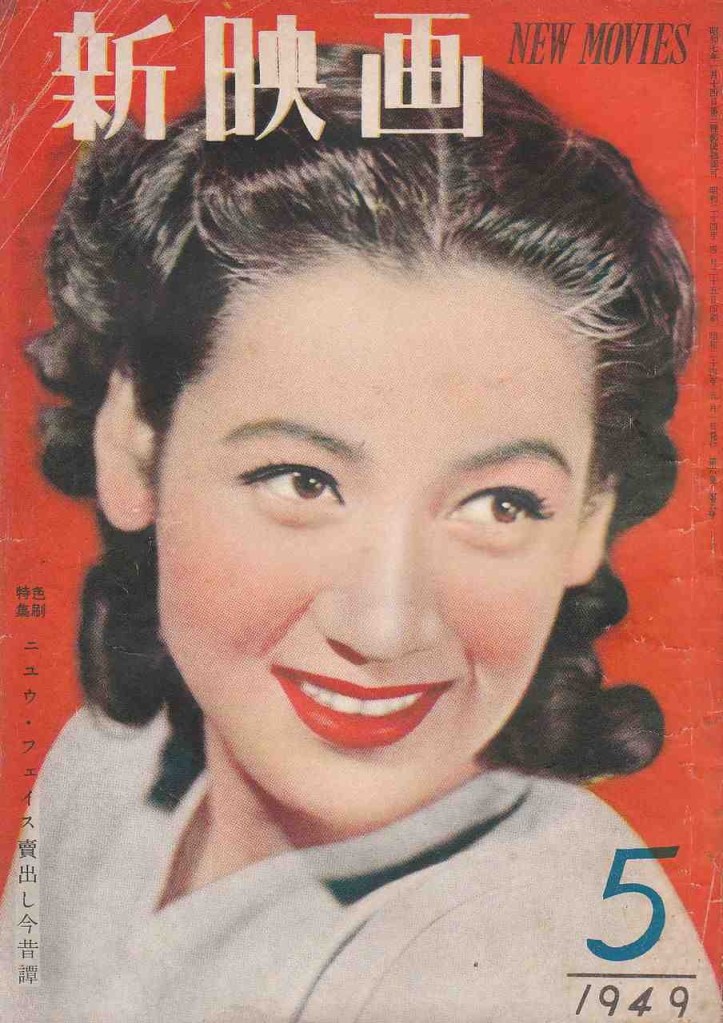
No trailer for this one, but here’s a picture of Setsuko Hara on the cover of Shin Eiga magazine in 1949 (which is a publication I can’t seem to find out much about). Btw, this is another one with a Kaneto Shindo script!

setsuko hara

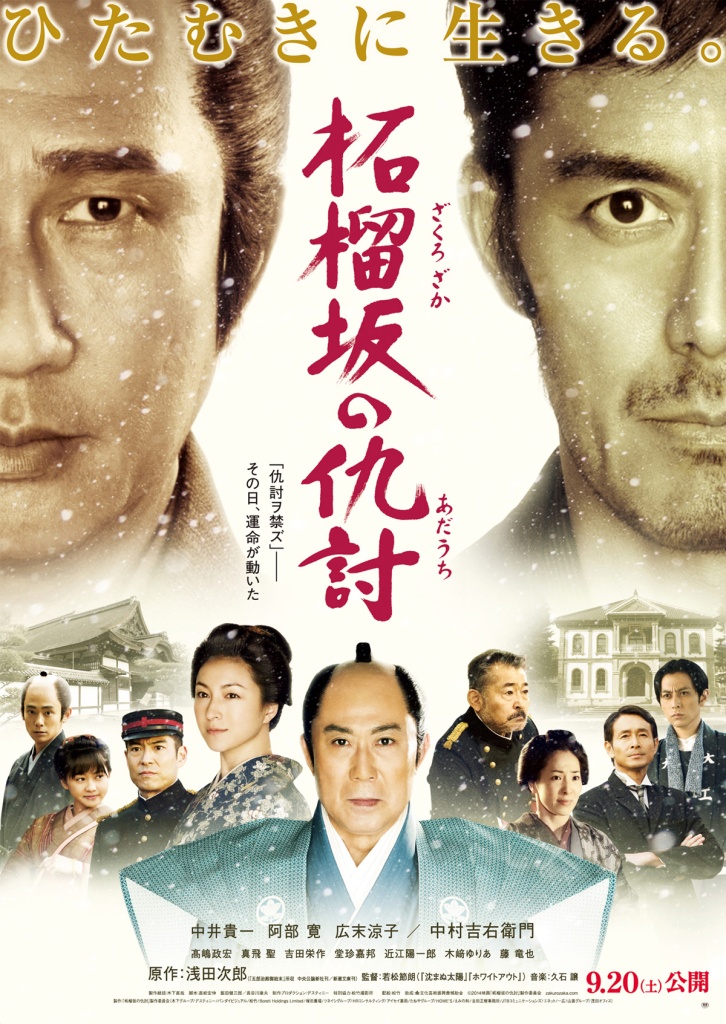
Snow on the Blades (柘榴坂の仇討, Setsuro Wakamatsu, 2014)

Snow on the Blades 2Times change, and men must change with them or they must die. When Japan was forced to open up to the rest of the world after centuries of isolation, its ancient order of samurai with their feudal lords and subjugated peasantry was abandoned in favour of a more Western looking democratic solution to social stratification. Suddenly the entirety of a man’s life was rendered nil – no more lords to serve, a man must his make his own way now. However, for some, old wounds continue to fester, making it impossible for them to embrace this entirely new way of thinking.

Kingo is one such man who finds himself frustrated by history in Setsuro Wakamatsu’s adaptation of a novel by Jiro Asada, Snow on the Blades (柘榴坂の仇討, Zakurozaka no Adauchi). In 1860 (as we count it) he married a beautiful young woman and received a promotion as the bodyguard for his lord, Ii Naosuke. However, one fateful day his progressive master is ambushed by a rival clan making a pretence of arriving with a petition that needs to be heard. Kingo and his men fail in protecting their lord and though many of the survivors commit suicide in shame, Kingo is charged with finding the remaining perpetrators and exacting his revenge. His quest spans almost fifteen years of turbulent Meiji era history as he trudges all over Japan looking for rumours of men who no longer quite exist all the while a lonely wife waits for him at home, becoming the sole breadwinner for this new life of forced “equality”.

The man Kingo has been looking for, Naokichi, is also living an unfulfilling life, hiding from retribution but also from himself and his own remorse over the deeds of a young man whom he no longer recognises. He has the possibility of building a new life with a local widow and her sweet little daughter who’s taken a liking to him, but like Kingo he’s held frozen by the old ways and can’t quite allow himself to bring a woman and child into his life of shame and fear.

Both men have been left behind by history. Kingo is the more obvious relic with his anachronistic top knot and old fashioned Japanese dress but Naokichi is also unable to move forward until he faces his past. For much of the running time Snow on the Blades plays out like a conventional mystery or revenge tale with Kingo on the road trying to track down those who he believes wronged his master in an attempt to atone for his failures through vengeance, but all that awaits him at the end of his journey is a lonely grave. The problem is, he liked his lord who was good and progressive man, filled with kindness and poetic sentiments. His regret over not being able to save him is more than failed duty, it is also personal grief and guilt though he finds little comfort in pursing those he believes to responsible.

Having spent thirteen years striving for something Kingo suddenly finds himself adapting to the times and beginning to believe perhaps this isn’t what his lord would have wanted anyway. Both men, confronted by each other and by several different kinds of history, are forced to face themselves as they are now and as they were then and assess what all of these codes and honour systems are really worth. Snow on the Blades is often beautifully photographed and filled with scenes as lovely as any woodblock painting but, it has to be said, somewhat dull as its central psychological dramas fail to ignite. Impressive production values and universally strong performances from its high profile cast lift the film above its fairly generic narrative but can’t quite save it from its rather trite message and run of the mill period drama aesthetic.


The assassination at Sakuradamon or Sakuradamon Incident is a real historical event in which the Japanese Chief Minister Ii Naosuke was murdered by ronin samurai working for the Mito clan outside the Sakurada Gate of Edo Castle in 1860. Ii Naosuke was a leading proponent of opening up to foreign powers (albeit as a sort of defense mechanism) but made an enemy of just about everyone through his tyrranical actions and was a very unpopular figure at the time of his death though his image has now been somewhat rehabilitated.