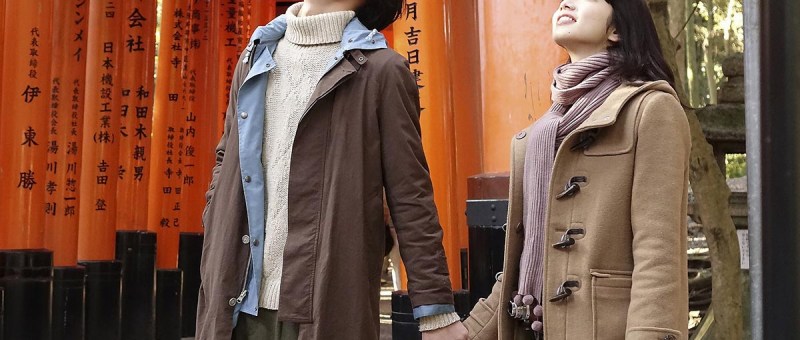
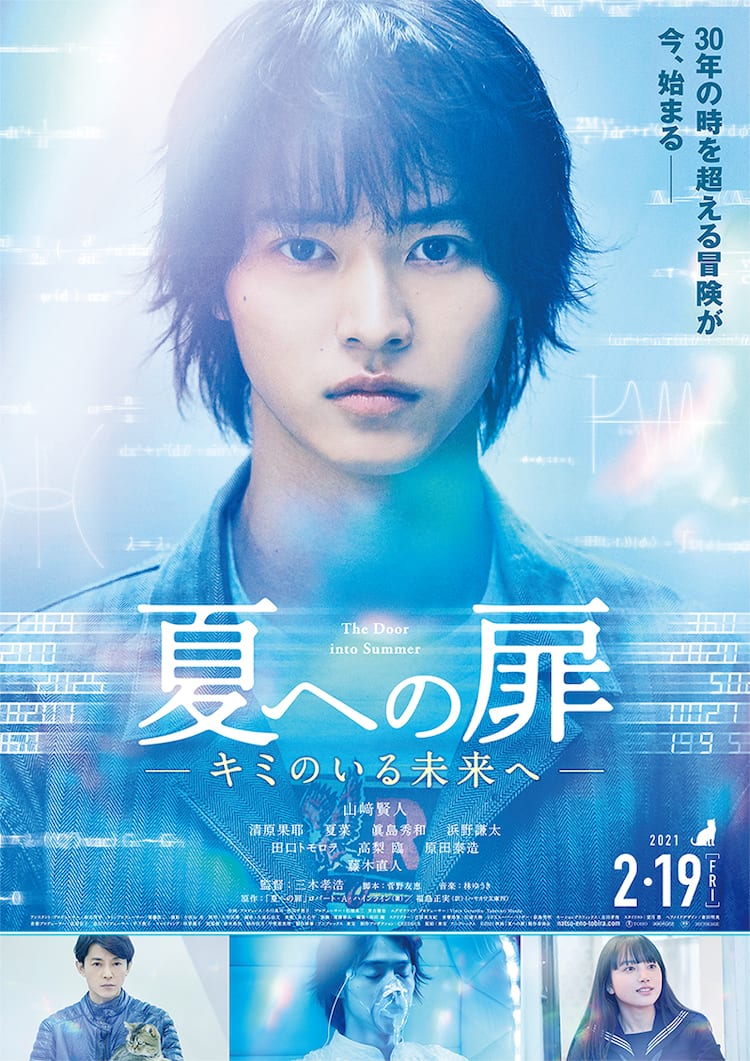
The Door into Summer (夏への扉 ―キミのいる未来へ―, Takahiro Miki, 2021)

Takahiro Miki has made something of a name for himself with a particular brand of bittersweet youthful romance often featuring a fantastical element such in Girl in the Sunny Place, or My Tomorrow, Your Yesterday. Adapted from a novel by Robert A. Heinlein, The Door Into Summer (夏への扉 ―キミのいる未来へ―, Natsu e no Tobira: Kimi on iru Mirai e) is in many ways more of the same, repurposing a sci-fi-inflected, slightly uncomfortable love story as an inspirational tale of never giving up and learning to overcome personal trauma in order to seek true happiness. 

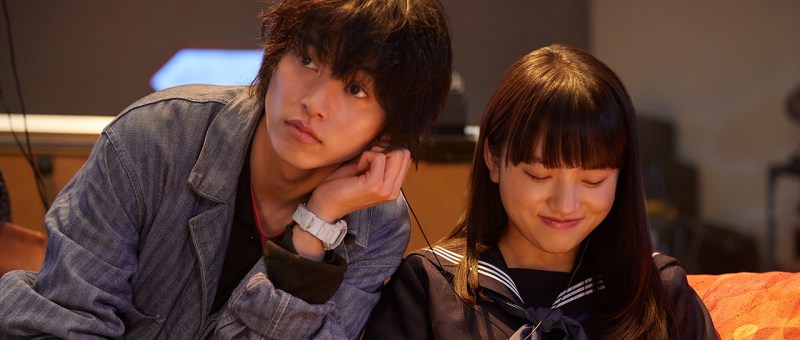
In 1995, 27-year-old Soichiro (Kento Yamazaki) has experienced a lot of loss in his life. His mother passed away soon after he was born, followed by his father when he was 17. He was then taken in by a family friend and became a big brother to then 7-year-old Riko (Kaya Kiyohara), but his adoptive parents then died in a plane crash. While Riko went to live with her uncle Kazuto, Soichiro became a robotics prodigy with an internalised sense of despair that prevents him making lasting connections, believing that his fate is always to lose everything he loves. His prophecy is in a sense fulfilled when he’s duped into signing away some of his shares in the robotics company founded by his adoptive father by an unscrupulous colleague. Filled with despair, he decides to enter a cryostasis programme for 30 years intending to transfer his remaining stocks to Riko, in part avoiding the inappropriate crush she has on him and hoping to escape from reality along with his best friend/cat Pete to start again in another time when the programme promises his investments will have matured leaving him with a good quality of life. Before he can do that, however, an attempt to confront his wrongdoers backfires when he’s placed into their proprietary cryosleep programme to ensure he’s out of the way for the next three decades. 

To that extent, you’d have to wonder why they’d bother rather than just getting rid of him for good. In any case, when he wakes up he realises that the shady company that housed him, Mannix, went bust years ago leaving him with no savings and also no cat because his enemy didn’t give much thought to poor Pete. In the future, however, he gets a fancy new rogue robot companion, also called PETE, who supports him as he tries to adjust to the digital world his inventions helped create before realising that he must have at some point time travelled back to 1995 to put things “right” (to a certain extent) so that could happen and starting in on that. This accidental paradox is never really addressed, Soichiro travelling to the past because he knows he already has, but not giving himself very much time to complete the magic plasma battery that powers the future while remaining in hiding until ready to disrupt his tormentors’ dastardly plan, rescue his beloved cat Pete, save Riko, and return to the future to make sure that nothing else changes in the new 2025. 

It is indeed Pete that inspires the film’s title in his revulsion of winter weather, always insisting on checking all the internal doorways in the hope that one magically leads to summer which is a roundabout metaphor for film’s secondary message in the insistence on perseverance, never giving up or losing hope in a brighter future even it seems impossible. Nevertheless, it can’t be denied that there’s something slightly uncomfortable in the relationship between 27-year-old Soichiro and his 17-year-old adoptive sister Riko even as he repeatedly reminds her she’s still a child and should live her life with people her own age, especially given the implications of the romantic resolution which attempts to smooth over this awkwardness by placing them on a more equal footing if somewhat artificially. In the end, however, the most important tool for saving the future turns out to be companionship and unconditional support of the kind that Pete offered the orphaned Soichiro, a quality he later programs in to his over-curious robot “son”, PETE. Miki doesn’t do much with the hard sci-fi trappings of the original novel, but does in his best tradition craft an innocent romance as the hero learns to look for his eternal summer in the present rather than the past while overcoming his internalised despair in his cursed fate to embrace love and happiness. 


Trailer (no subtitles)
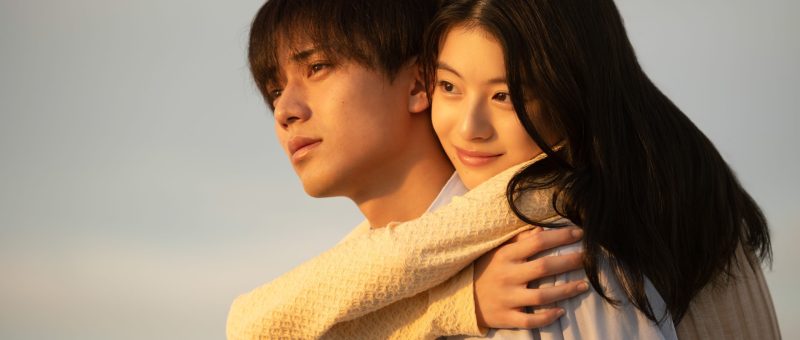
Drawing Closer (余命一年の僕が、余命半年の君と出会った話。, Takahiro Miki, 2024)

Takahiro Miki has made a name for himself as a purveyor of sad romances. Often his protagonists are divided by conflicting timelines, social taboos, or some other fantastical circumstance, though Drawing Closer (余命一年の僕が、余命半年の君と出会った話。, Yomei Ichinen no Boku ga, Yomei Hantoshi no Kimi to Deatta Hanashi) quite clearly harks back to the jun-ai or “pure love” boom in its focus on young love and terminal illness. Based on the novel by Ao Morita, the film nevertheless succumbs to some of genres most problematic tendencies as the heroine essentially becomes little more than a means for the hero’s path towards finding purpose in life.

17-year-old Akito (Ren Nagase) is told that he has a tumour on his heart and only a year at most to live. Though he begins to feel as if his life is pointless, he finds new strength after running into Haruna (Natsuki Deguchi) who has only six months yet to him seems full of life. Later, Haruna says he was actually wrong and she felt completely hopeless too so actually she really wanted to die right away rather than pointlessly hang round for another six months with nothing to do and no one to talk to. But in any case, Akito decides that he’s going to make his remaining life’s purpose making Haruna happy which admittedly he does actually do by visiting her every day and bringing flowers once a week.

But outside of that, we never really hear that much from Haruna other than when she’s telling Akito something inspirational and he seems to more or less fill in the blanks on his own. Thus he makes what could have been a fairly rash and disastrous decision to bring a former friend, Ayaka (Mayuu Yokota), with whom Haruna had fallen out after the middle-school graduation ceremony that she was unable to go to because of her illness. Luckily he had correctly deduced that Haruna pushed her friend away because she thought their friendship was holding her back and Ayaka should be free to embrace her high school life making new friends who can do all the regular teenage things like going to karaoke or hanging out at the mall. Akito is doing something similar by not telling his other friends that he’s ill while also keeping it from Haruna in the hope that they can just be normal teens without the baggage of their illnesses. 

The film never shies away from the isolating qualities of what it’s like to live with a serious health condition. Both teens just want to be treated normally while others often pull away from them or are overly solicitous after finding out that they’re ill but at the same time, it’s all life lessons for Akito rather a genuine expression of Haruna’s feelings. We only experience them as he experiences them and so really she’s denied any opportunity to express herself authentically. Rather tritely, it’s she who teaches Akito how to live again in urging him that he should hang in there and continue to pursue his artistic dreams on behalf of them both. Meanwhile, she encourages him to pursue a romantic relationship with Ayaka, in that way ensuring that neither of them will be lonely when she’s gone and pushing them towards enjoying life to its fullest.

Nevertheless, due to its unbalanced quality and general earnestness the film never really achieves the kind of emotional impact that it’s aiming for nor the sense of poignancy familiar from Miki’s other work. Perhaps taking its cues from similarly themed television drama, the production values are on the lower side and Miki’s visual flair is largely absent though this perhaps helps to express a sense of hopelessness only broken by beautiful colours of Haruna’s artwork. Haruna had used drawing as means of escaping from the reality of her condition, but in the end even this becomes about Akito with her mother declaring that in the end she drew for him rather than for herself. Even so, there is something uplifting in Akito’s rediscovery of art as a purpose for life that convinces him that his remaining time isn’t meaningless while also allowing him to discover the desire to live even if his time is running out.


Trailer (English subtitles)

My Teacher (先生!、、、好きになってもいいですか?, Takahiro Miki, 2017)

My Teacher posterJapanese cinema is having a mini moment of shojo crisis in its awkward obsession with student/teacher romance. While similarly themed age-gap “romances” such as After the Rain might have been better able to navigate the difficult seas of misplaced adolescent affection, Narratage and latterly My Teacher (先生!、、、好きになってもいいですか?, Sensei! …Suki ni Natte mo ii Desuka?), seem to have gone in a less palatable direction in accidentally implying that our squeamishness with these obviously inappropriate attachments might not be justified. The latest from romantic melodrama veteran Takahiro Miki, My Teacher is a perfect exemplification of the inherent problems with shojo romance and, in this case somewhat ironically, its inability to process the implications of a necessarily romantically naive perspective.

Our heroine, Hibiki Shimada (Suzu Hirose), is a shy, awkward teenager with a hopeless crush on her handsome, if somewhat aloof, history teacher, Mr. Ito (Toma Ikuta). Unlike her classmates, Hibiki has been slow to a romantic awakening and confused by her friends’ various and rapidly changing crushes. Nevertheless, like her best friend Chigusa (Aoi Morikawa), Hibiki has begun to develop feelings for a teacher – Ito whose gruff exterior hides a considerate heart. Mistaking his general kindness for an extension of personal affection, Hibiki has fallen in love and even whilst knowing that there is something not quite acceptable about her feelings decides to pursue her inappropriate crush in the manner only a naive schoolgirl can.

Ito, as expected, turns down Hibiki’s confession with weary resignation. A kind man who seems to limit his interactions with other humans in order to avoid becoming over involved, he is aware of the delicacy of the situation but also of its dangers as regards his own standing as an educator and responsible adult. He wants to protect his student, emotionally and physically, but is at a loss as to how to handle his dilemma without causing her further distress. Consequently, he fails to definitively shut down a tricky set of circumstances in good time, allowing to Hibiki to bamboozle him into an awkward bargain in which she asks him if her crush will be “OK” if she manages to score over 90% on the upcoming test. Surprised, Ito laughs and reminds her of her woeful results in the previous midterms. Understanding that she’s been turned down, Hibiki nevertheless regards Ito’s awkward laughter as a flicker of possibility and continues on in hope.

Had My Teacher continued in the same vein, with Mr. Ito valiantly attempting to guide Hibiki towards a healthier romantic consciousness while remaining mindful of the tenderness of her feelings and the delicacy of the situation as a whole, it might have entered more interesting and less problematic thematic territory. Unfortunately, it remains firmly rooted in shojo romance in which the heroine’s innocent desires must be recognised and so Mr. Ito’s nobility eventually crumbles as he begins to fall for the “earnest”, “awkward” schoolgirl and forgets his “position as a teacher”, finally giving in to “temptation” even if he then agrees that the responsibility for his transgression must rest entirely with him. Ito attempts to remove himself from the situation in recognition of the harm he may be causing, but the film won’t let him because it needs a resolution that is “romantic” rather than “realistic”.

“Realism” rears its head when the inappropriate relationship between the pair is eventually uncovered and Ito hauled before a staff committee to explain himself but the school’s understandable decision that he must be summarily fired for gross misconduct is undercut by its presentation as an act of unavoidable tragedy that fails to make a distinction between “genuine feeling” and “abuse of position”, conveniently forgetting that in these kinds of cases that is not a distinction that it is useful to make. Chigusa, trying to encourage her friend in her great romance, affirms that there is no one in the world it is not OK to love, which might have some truth in it seeing as love itself is rarely wrong, but there are instances where acting on that love would be and a teacher/student relationship is definitely one of them especially where the student is still a minor.

Indeed, the kids resent the fact that everyone treats them as children but they are, as a similarly exasperated teacher tries to explain to them, not yet adults as exemplified by their consistently self-centred perspectives which prevent them from realising the difficult position in which their decision to air their inappropriate feelings places those whom they claim to love. This dawning realisation is heralded as the pathway to adulthood in finally coming to an acceptance of the individual’s place within a community bound by ethical rules and the responsibility one has towards the feelings of others most particularly when they conflict with one’s own. It is however undercut by the irresponsible decision to push the innocent romance to its “natural” conclusion even if it has the decency to wait until after graduation until it does so. Ethically questionable as it is, Miki’s obvious talents are not in question and his beautifully composed emotionally moving aesthetics are out in force but only serve to emphasise the uncomfortably naive sensibilities of the source material.


International trailer (English subtitles)

My Tomorrow, Your Yesterday (ぼくは明日、昨日のきみとデートする, Takahiro Miki, 2016)

Tomorrow I will date with yeaterday's you posterLike the Earth and the Moon, are lovers destined to move past and away from each other, sharing the same space only for a cosmic instant yet forever connected by the arc of their existences? It’s a heavier question than you’d expect from your average romantic melodrama. My Tomorrow, Your Yesterday (ぼくは明日、昨日のきみとデートする, Boku wa Asu, Kino no Kimi to Date Suru), another finely crafted tragic romance from genre master Takahiro Miki, is a kind of sci-fi “junai” in which the barriers to romantic fulfilment aren’t cultural or societal or medical, but cosmic in that our star-crossed lovers occupy opposing temporal realms which conspire against their union while also carving it into the arc of the spacetime continuum like a cruel existential joke.

At 20, art student Takatoshi (Sota Fukushi) spots the beautiful Emi (Nana Komatsu) on his morning commute. Hit by a thunderbolt, he falls for her instantly but is shy and diffident. Despite himself, Takatoshi decides that if she alights at the same station as him then it’s really meant to be and he can’t not at least try talking to her. Alight she does and he chases after her as best he can only for his cheerful attempt to ask for a phone number to be rebuffed by the ultimate excuse that she doesn’t have one. Surprisingly, Emi’s claim turns out to be the truth rather than an attempt to politely decline his attentions, though Takatoshi is surprised that his attempts at romance eventually provoke a few tears from the visibly moved Emi. The pair eventually start dating and are well into the world of young love when Emi reveals her secret – she is from a parallel universe where time runs in the opposite direction. Takatoshi’s future is her past, and her past his future. Their universes only overlap every five years for a maximum of 30 days and so this is their one and only shot at true love.

Miki begins in true romantic fashion as Takatoshi giddily pursues his first, idealised romance only latterly beginning to see signs of trouble on the horizon in Emi’s sometimes quirky behaviour and strange ability to predict the future. They walk through the usual steps towards becoming a committed couple, finally dropping the honourifics in  mutual recognition of their deepening bond, but every decisive step reduces Emi to tears in a fashion that runs beyond the merely cute or girlish. Takatoshi, young, naive, and in love, finds his mild suspicion vindicated when he discovers Emi’s diary which seems to run in reverse order and mainly contains entries for dates which have not yet happened.

Gradually, Takatoshi begins to realise that he and Emi exist on opposing planes, destined forever to orbit each other with only this brief moment of connection to sustain them. He muses on whether moving past each other is the natural path of a romance before learning to accept the transitory nature of love so that he might appreciate this brief gift he’s been given even in the knowledge that it will soon be over. Briefly petulant, he resents Emi’s dependence on the diary, filled as it is with “facts” from his 25-year-old self gleaned during a “previous” meeting, wondering if she is merely going through the motions of their predetermined romance and spoiling his vision of easy, serendipitous love in the process.

Privileging his own perspective, Takatoshi comes late to the realisation that Emi has been making a series of sacrifices on his behalf and that their strange romance is likely to prove much more painful for her than it will for him. Their relationship is built not on “shared” memories, but only in their brief moments of togetherness as they actively forge a present for themselves which is distinct from their two worlds of past and future. Like the diverging points which heralded their meeting, they are travelling in different directions – every first for him is a last for her as their moments of joy and pain become strange mirrors of their eventual heartbreak. Nevertheless, each eventually comes to the realisation that their love is worth enduring despite its inevitably sad end and that something of it is destined to remain even in the entropic melancholy of their love story. An old fashioned romance in every sense, My Tomorrow, Your Yesterday offers a surprisingly deep appreciation of true love anchored by mutual understanding and emotional equality even if it acknowledges that the world is cruel and that love is unlikely to survive as anything more than a bittersweet memory.


Original trailer (no subtitles)

Girl in the Sunny Place (陽だまりの彼女, Takahiro Miki, 2013)

girl in the sunny placeThe “jun-ai” boom might have been well and truly over by the time Takahiro Miki’s Girl in the Sunny Place (陽だまりの彼女, Hidamari no Kanojo) hit the screen, but tales of true love doomed are unlikely to go out of fashion any time soon. Based on a novel by Osamu Koshigaya, Girl in the Sunny Place is another genial romance in which teenage friends are separated, find each other again, become happy and then have that happiness threatened, but it’s also one that hinges on a strange magical realism born of the affinity between humans and cats.

25 year old Kosuke (Jun Matsumoto) is a diffident advertising executive living a dull if not unhappy life. Discovering he’s left it too late to ask out a colleague, Kousuke is feeling depressed but an unexpected meeting with a client brightens his day. The pretty woman standing in the doorway with the afternoon sun neatly lighting her from behind is an old middle school classmate – Mao (Juri Ueno), whom Kosuke has not seen in over ten years since he moved away from his from town and the pair were separated. Eventually the two get to know each other again, fall in love, and get married but Mao is hiding an unusual secret which may bring an end to their fairytale romance.

Filmed with a breezy sunniness, Girl in the Sunny Place straddles the line between quirky romance and the heartrending tragedy which defines jun-ai, though, more fairytale than melodrama, there is still room for bittersweet happy endings even in the inevitability of tragedy. Following the pattern of many a tragic love story, Miki moves between the present day and the middle school past in which Kosuke became Mao’s only protector when she was mercilessly bullied for being “weird”. Mao’s past is necessarily mysterious – adopted by a policeman (Sansei Shiomi) who found her wandering alone at night, Mao has no memory of her life before the age of 13 and lacks the self awareness of many of the other girls, turning up with messy hair and dressed idiosyncratically. When Kousuke stands up to the popular/delinquent kids making her life a misery, the pair become inseparable and embark on their first romance only to be separated when Kosuke’s family moves away from their hometown of Enoshima.

“Miraculously” meeting again they enjoy a typically cute love story as they work on the ad campaign for a new brassiere collection which everyone else seems to find quite embarrassing. As time moves on it becomes apparent that there’s something more than kookiness in Mao’s strange energy and sure enough, the signs become clear as Mao’s energy fades and her behaviour becomes less and less normal.

The final twist, well signposted as it is, may leave some baffled but is in the best fairytale tradition. Maki films with a well placed warmth, finding the sun wherever it hides and bathing everything in the fuzzy glow of a late summer evening in which all is destined go on pleasantly just as before. Though the (first) ending may seem cruel, the tone is one of happiness and possibility, of partings and reunions, and of the transformative powers of love which endure even if everything else has been forgotten. Beautifully shot and anchored by strong performances from Juri Ueno and Jun Matsumoto, Girl in the Sunny Place neatly sidesteps its melodramatic premise for a cheerfully affecting love story even if it’s the kind that may float away on the breeze.


Original trailer (no subtitles)