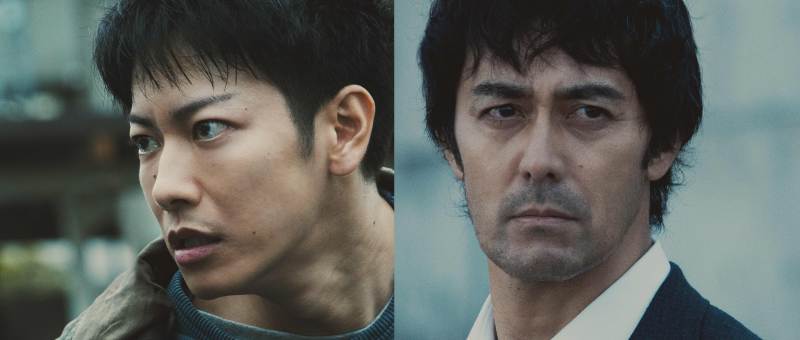
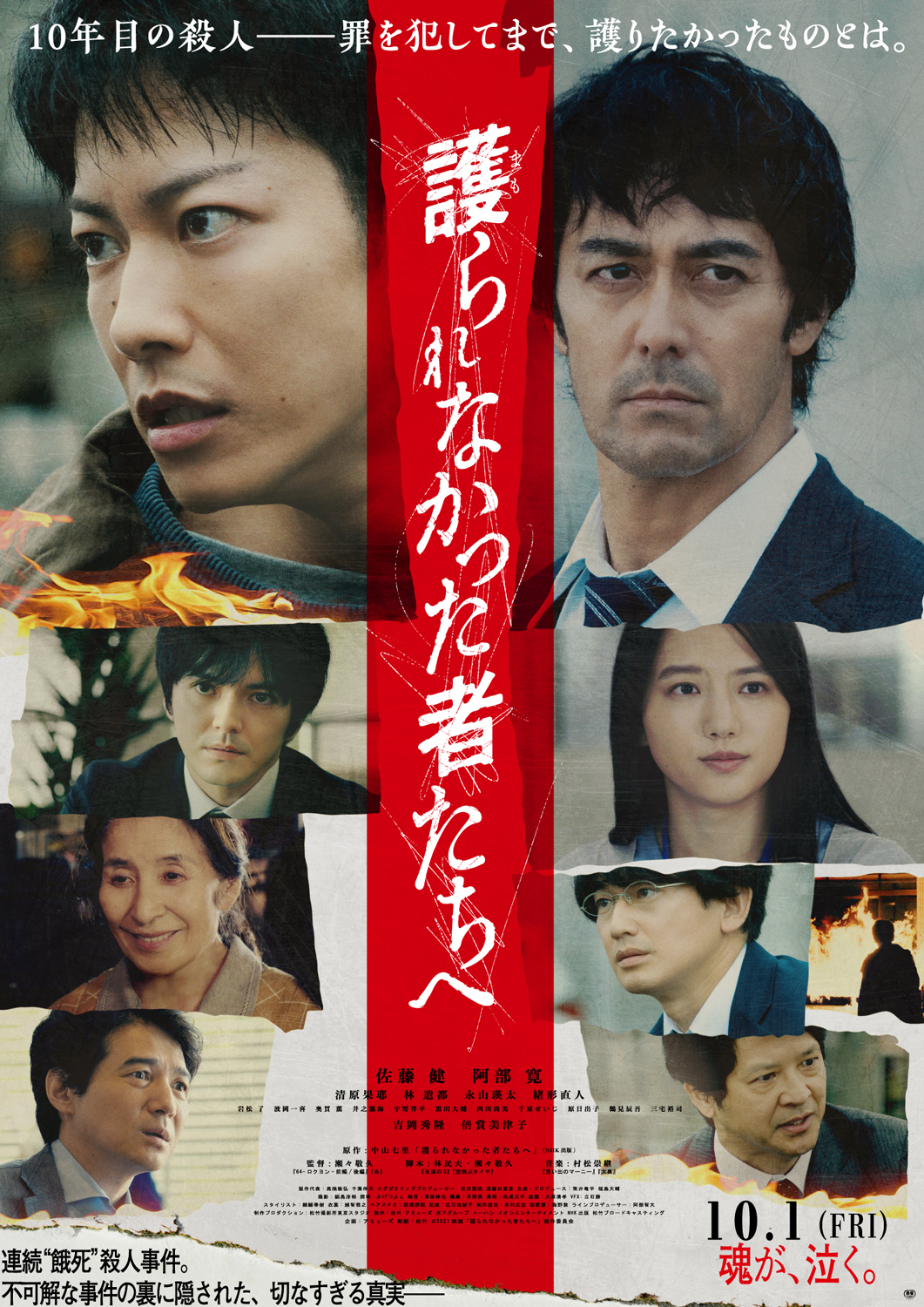
In the Wake (護られなかった者たちへ, Takahisa Zeze, 2021)

According to a young woman at the centre of Takahisa Zeze’s In the Wake (護られなかった者たちへ, Mamorarenakatta Monotachi he), natural disasters are monsters that devour humans with no rhyme or reason, but people close to her have died by human hands while left at the mercy of a hypocritical social welfare system. Though the social workers insist that benefits are something everyone is entitled to when they need support, others go to great lengths to stop anyone getting them. “That’s the country we live in,” one explains with a tone that implies he thinks this is exactly as it should be.

That social worker is the second to be found dead in suspicious circumstances nine years after the devastating 2011 earthquake and tsunami. The police obviously suspect a grudge, that someone who was turned down for benefits got fed up and killed him in revenge. But as assistant Mikiko (Kaya Kiyohara) says, it’s unlikely to be any of them because they are all “too busy trying to survive,” so they don’t have time to waste on things like vengeance. Zeze then switches to the welfare office where a social worker is trying to explain to an elderly applicant all of the different forms and documentation he’ll need to prepare for his claim. These people already have to jump through hoops to prove their “neediness,” while most of them feel defeated and humiliated in even having to ask and would prefer not to have to depend on the government. 

But a lot of Mikiko’s work involves challenging those suspected of committing benefits fraud. The first of two people she talks to is a single mother with mental health issues (Chika Uchida) who’s had to start working full-time and consequently gone over her allowance meaning her benefits should stop and she should pay back what was “wrongfully” claimed. The woman insists she needs the extra money because her daughter was being bullied for being on benefits so she wants to send her to cram school and be able to buy educational supplies, but Mikiko remains unsympathetic. The second is a man who it’s admittedly harder to sympathise with as he appears to have bought quite a fancy car which again takes him over the limit as a car is classed as a luxury item rather than a necessity. Mikiko doesn’t think they should pay out when he could easily sell the car. Of course, it’s not that simple. The man may need the car in order to work and without it would have no choice but to rely on benefits to a greater extent. In any case, he gets on Mikiko’s nerves because to her it’s people like him that prevent them helping more “genuinely” needy cases. 

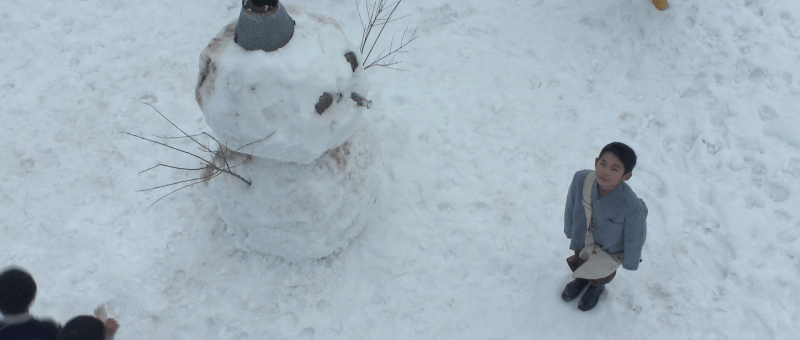
But on the other hand, when they could and should have helped they refused and effectively blackmailed an old lady into revoking her application even though she had only 6000 yen (£30) left in the bank and was on the brink of starvation with no one else to turn to. Another of the social workers insists that good neighbours are the most effective way of tackling poverty which is equal parts unreasonable and unrealistic. Then again, there was a kind of solidarity that arose in the wake of the earthquake in which an old woman’s kindness saved a young man and little girl from being dragged away by the weight of their despair, giving them a new home and surrogate family along with proof of the fact that there is always someone there to help and that kind of compassion can be a kind of salvation. 

Even so, Mikiko’s insistence that you have to ask to receive, along with the welfare officer’s almost vampiric obsession with getting the applicant themselves to clearly state they need help, seems contrary to her philosophy in which it should just be provided with no questions asked. They know how difficult asking for help can be and deliberately leverage the social stigma of being on benefits to discourage people from applying for them. Citing increased demand and government cut backs in the wake of the earthquake, the social worker confusingly suggests that by declining more cases they can help more people in the long run which doesn’t make a tremendous amount of sense while his eerie grinning hints that he has begun to enjoying sadistically humiliating these vulnerable people who’ve been brave enough to come forward and ask for that to which they are otherwise entitled. 

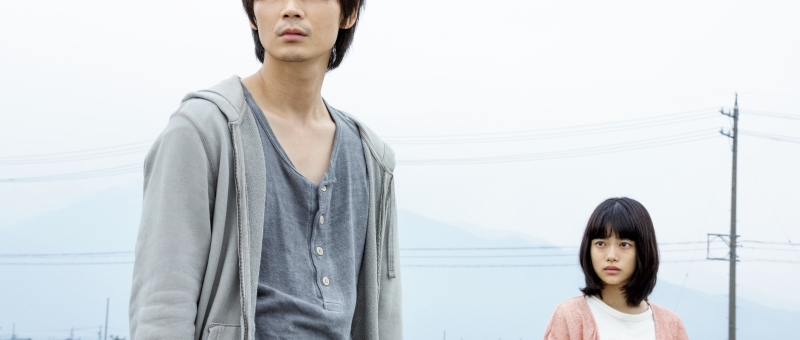
They are all living in the wake of this disaster, something of which aloof yet empathetic detective Tomashino (Hiroshi Abe) is all too aware having lost his wife and son in the disaster. As his son’s body was never found, he too lives in a state of limbo but through investigating the killings begins to find a kind of closure along with an unexpected sense of understanding with a gloomy young man, Yasuhisa (Takeru Satoh), himself a suspect and struggling to make sense of the past, his survival, and the ongoing injustice of the world around him. The film takes its Japanese title, “those who were not protected”, from a note Mikiko writes about the importance of empathy in social work encouraging her colleagues to rebel even if their bosses tell them not to, but also hints at the grief and guilt felt by those left behind that in the end there were those they were not able to save but they can perhaps make their peace with that by continuing to help those around them even if their society largely refuses to do so.


In the Wake screens as part of this year’s Japan Foundation Touring Film Programme.

Trailer (English subtitles)
Heaven’s Story (ヘヴンズ ストーリー, Takahisa Zeze, 2010)

“When your family’s murdered, aren’t you entitled to happiness?” remarks a bereaved husband trying to move on from tragedy to a similarly bereaved little girl who is determined not to. “I don’t think so”, she coldly replies, dragging him back into a dark world of hate and vengeance. At that time perhaps best known for his career in pink film, Takahisa Zeze’s 4.5-hour epic Heaven’s Story (ヘヴンズ ストーリー) weaves a tale of interconnected hurts born of violence and its legacy, parental betrayals, and irreconcilable loss. The only victory is survival, but it’s a prize none of us will win. The best we can hope for is continuity, and perhaps leaving something more behind us than fear or rage. 

Our heroine, Sato (Moeki Tsuruoka), is orphaned when her parents and older sister are brutally murdered by a disgruntled employee exacting some kind of petty revenge on her father. The killer is later found dead in a hotel room, presumed to have taken his own life. The tragedy is however just one of many. Passing by a TV screen, Sato catches a report detailing the death of her family members and their murderer which is immediately followed by a press conference with a very angry young man whose wife and infant daughter were killed in random attack by a passing drifter who has been given an indeterminate sentence on account of the fact that he was underage and suffered greatly during his childhood. Tomoki (Tomoharu Hasegawa), the bereaved husband and father, vows revenge angrily insisting he won’t ask for the death penalty because he wants the killer, Mitsuo Aikawa (Shugo Oshinari), released as soon as possible so he can kill him with his own hands. Only eight years old, Sato identifies with his rage. The man she wants to kill is already dead and she’s been robbed of the chance of closure through vengeance so vicariously latches on to Tomoki’s quest for retribution, making him something of a personal hero. 

Tomoki’s words were offered in the raw pain of his loss. His reaction is understandable, but as he later says, people started to lose sympathy for him once he called for the killer’s death. As time moves on, he perhaps starts heal, marrying again and having another little girl, starting a new life in a new place which of course does not overwrite his past loss but is a new start. That’s something Sato can’t allow or understand. She feels irrationally betrayed by Tomoki’s decision to leave his loss in the past and move on to a new life. Rocking up at his tranquil island home, she accuses him of forgetting the dead, guilting him into thinking he’s betrayed the memories of his wife and child by not knowing that Mitsuo has been released from prison let alone not having taken his revenge. 

Mitsuo, however, has also attempted to move on. It can’t be denied that he committed a heinous, unforgivable crime, but he is also, in a sense, a victim himself. His mother took her own life when he was 13 because his father was abusive and he carries that abuse with him, which of course does not excuse his crime but might help to explain it. Kyoko (’70s folk singer Hako Yamasaki), a lonely doll maker, is taken by his enigmatic statement that he wants to be remembered by the unborn and begins writing to him in prison, eventually agreeing to adopt him as her son though she is already suffering with the early stages Alzheimer’s. Later in a tense conversation with Tomoki, Mitsuo describes Kyoko as a woman of great warmth and if it were not for her he might perhaps have killed again. Her positive maternal presence gives Mitsuo the sense of anchoring through parental love that he had never had, restoring him towards a more normal kind of existence as he diligently cares for her while her condition continues to deteriorate. 

Time swindles them all. Kyoko desperately tries to remember something she’s forgotten, while Sato is locked into a pleasant childhood memory of walking with her parents to see a newly completed housing estate which seems to be the very embodiment of a post-war utopia, a large green space surrounded by neatly arranged, identical blocks with well appointed family homes piled one on top of the other. The conclusion takes us somewhere similar, only inverted, in the empty shell of a disused danchi, once a home to a bustling mining community now abandoned by the modern era. In the monologue which opens the film, Sato recounts a folktale about a monster who lived in the hills and attacked people, but did so only accidentally in his loneliness and longing to be a part of the world around him, but the people were afraid and so they rejected him and his monstrousness intensified. Tomoki destroys his second family in an internecine need to avenge the first driven by Sato’s demonic need for vicarious retribution, while Mitsuo’s attempt to move into the light is frustrated by an inability to escape his past. All the fear, and hate, and suffering, breeds only more of the same. “Heaven’s Story” may be in many ways the story of violence, but violence is not its resolution. Sato makes a kind of peace with the past, but will also carry that legacy of pain back into the complicated urban world as far from the heavenly vistas of tranquility which exist now only in her memory as it’s possible to be. 


Original trailer (no subtitles)

The Cold-Blooded Trap (冷血の罠, Takahisa Zeze, 1998)

“This place is full of people like me” a violent criminal jeers, admitting that he’s killed “plenty” of women but not necessarily the one he’s being questioned about. There is indeed something eerie that seems to have taken over this small corner of Shibuya in Takahisa Zeze’s dark millennial thriller The Cold-Blooded Trap (冷血の罠, Reiketsu no Wana). “Strange things are happening here” another investigator notes, “someone’s malice has infected this whole place.” Yet the sense of haunting may be closer to home than it first seems as two men attempt to come to terms with a traumatic past by solving present mystery. 

Even the police seem to concede that the strange goings on are a “continuation” of something else. As we first meet him private detective Fujiwara (Sho Aikawa) appears to be following a young woman home from the station only as we later discover she hired him herself to watch over her because she had the feeling she was being watched. Fujiwara watches her enter her apartment building and then calls her to say everything looks clear on the ground, but a short time later a body wrapped in sheets is dropped from the roof onto the street below. The weird thing is that it’s the same building Fujiwara’s sister Noriko used to live in, only she took her own life and that of her child by jumping off the roof five years previously. 

Not only does Fujiwara feel as if he failed in his duty to protect his client, but he’s forced into a similar contemplation in his latent guilt surrounding his sister’s death. The most obvious reason for Noriko to have considered suicide was that her salaryman husband Hanazono (Hidetoshi Nishijima) had been having an affair with a work colleague, Yoko (Asuka Kurosawa), yet Hanazono refuses to accept responsibility and is convinced that Noriko was murdered by a mysterious serial killer stalking the streets of Shibuya. 

The irony is that we first think Hanazono is the faceless killer after watching him enter the woman’s apartment building, only to learn that he may have been investigating Noriko’s death. Later these assumptions are overturned again, but even he concedes that he seems suspicious. Wandering around the city at night, he runs into women alone who immediately see him as a threat and assume he may be a dangerous criminal who means them harm. The realisation first shocks him, but then gives way to a physical high in the adrenaline rush of fleeing the scene. He comes to the conclusion that he must get into the killer’s mindset in order to catch him and begins actively stalking people around the city, following them home and checking mailboxes to find out names. 

Fujiwara doesn’t trust Hanazono for obvious and understandable reasons, but even so he begins following him as Hanazono continues to follow the killer. Zeze opens the film with fuzzy 90s camcorder footage trained on the forecourt of a station from a balcony opposite. The camera follows a woman as she leaves, and Fujiwara behind her with eerie intent evoking the mild paranoia of millennial surveillance. Later Hanazono films his own POV walking through the midnight city, once again lending the streets a sense of lurking malevolence and dread-fuelled fatalism even before he arrives at his shocking destination. 

Yet we wonder if Hanazono is just a paranoid obsessive with his giant map of crime insisting that seemingly isolated incidents of violence are somehow linked. Before Fujiwara hears about the woman’s death on the news they were reporting on insolvent banks hinting at a financial anxiety in the contemporary society, and as the suspect Fujiwara later tracks down suggests there are lot of distressed or perhaps disturbed people around. The crimes may really be random, but they are also connected by virtue of being provoked by an anxious society even if as Hanazono admits there are several criminals behind them. Whether or not he gets the answer he seeks, Fujiwara will have to accept that he too bears some responsibility as Hanazono has perhaps already done even if desperate to deny it. “I’ve always been responsible” he admits while taking control over his life, only the elliptical structure of the film may imply otherwise. Dark and eerie, Zeze captures a sense of millennial dread in the streets of the capital filled as they are with “random” crimes and lurking killers in the haunting anxiety of constant threat.


Clip (English subtitles)

The Promised Land (楽園, Takahisa Zeze, 2019)

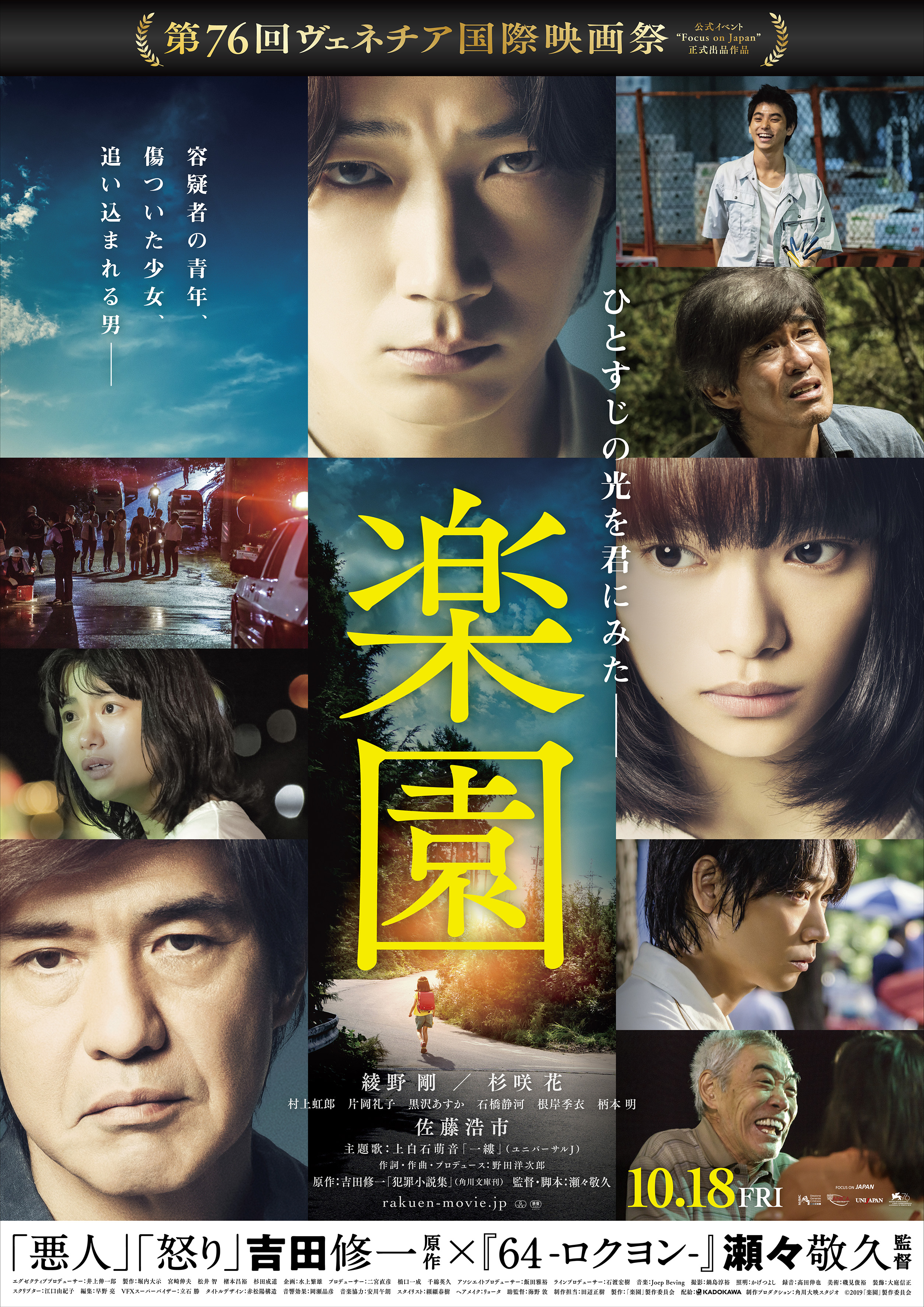
Small-town Japan is no Promised Land in Takahisa Zeze’s adaptation of a pair of short stories by mystery writer Shuichi Yoshida. Japanese cinema has often had an ambivalent relationship with the rapidly depopulating countryside, split between a sickly furusato idealisation of rural life as somehow purer than its urban counterpart and lampooning city slickers tired of that same sense of urban ennui but discovering that the traditional way of life is often hard especially when you don’t know how to do it and have no friends in communities which can often seem hostile to newcomers. 

What newcomers to the small town at the centre of The Promised Land (楽園, Rakuen) discover is latent racism, mutual suspicion, and toxic local politics which bends towards the feudal as those now old go to great lengths to cling on to their power. Hardly a rural idyll but a space of atavistic decay. The rot begins 12 years prior to the main action when a little girl, Aika, doesn’t come home for tea after playing with a friend. A search of the local area is organised, but only her little red school bag is found. 12 years later the other girl, Tsugumi (Hana Sugisaki), is consumed by a sense of survivor’s guilt feeling as if she is underserving of happiness in the knowledge that if she had only taken a different path that day Aika might not have disappeared. When another girl goes missing, suspicion falls on a wounded young man, Takeshi (Go Ayano), who speaks little and is intensely traumatised by his childhood experiences of xenophobic bullying having come to Japan with his non-Japanese mother (Asuka Kurosawa) at seven years old. 

Bystanders in the crowd preparing a search for the second missing girl are quick to blame the other, one loudly casting suspicion on “Africans” living nearby while another brings up a man who sells second-hand cars she feels is a little odd. Takeshi gets the blame because he exists to the side of the community but also because he is meek and vulnerable, unable to defend himself until pushed into a corner and provoked into an explosive act of self-destructive violence. “Suicide brings redemption” Aika’s grief crazed grandfather (Akira Emoto) shrieks as if urging a young man on towards his death based on nothing other than prejudice and bloodlust. Later he admits that he just wanted someone to blame as if that would bring an end to the matter but of course it didn’t, it only added to the burden. 

Meanwhile, middle-aged beekeeper Zenjiro (Koichi Sato) who returned to the village to look after his parents following the death of his wife (Shizuka Ishibashi) from leukaemia also finds himself under suspicion but mostly as part of a concerted harassment campaign conducted by two local elderly men who have appointed themselves village elders and resent his attempt to go directly to city hall in order to fund a new business venture without going through them. Zenjiro is originally from the village, this is his hometown, but he was also away a long time and is in a sense other as a new returnee at first courted as a potential suitor for the similarly returned widowed daughter of the local bigwig, Hisako (Reiko Kataoka), and then aggressively shunned to the point he begins to lose his mind leading to another shocking act of irrepressible violence. 

“No one trusts anyone” Tsugumi laments, angrily tearing away an annoying sign asking residents to report any “suspicious behaviour”. She insists they need to face the past in order to move on, something Zenjiro was ultimately in capable of doing, but later claims that she doesn’t need to know what happened to Aika, she’s going to live her own life. The path leads towards an acceptance that she wasn’t responsible for what happened to her friend and has no need to live her life in the shadow of guilt, yet she still falls victim to small-town attitudes more or less bullied into a romantic friendship with a distinctly creepy young man (Nijiro Murakami) who admits to slashing her bike tires so she’d be more likely to accept a lift from him. 

According to Takeshi, there’s no such thing as the “promised land”, a sentiment also expressed by Hisako who agrees that all places are the same save your hometown something which Takeshi seemingly never had. Tsugumi’s problematic suitor tells her she ought to create the promised land for all of them, which might be as close as the film comes to a mission statement in suggesting that the individual has agency to craft the world in which they live while subtly undercutting it in the melancholy stories of Takeshi and Zenjiro each hounded towards acts of self-inflicted violence by an intransigent community mired in a primitive us and them mentality. Far from paradise, small-town Japan is a land of fear and suspicion where outsiders are unwelcome and the old hold sway, complaining that their kids all end up in the city while secretly perhaps satisfied in the knowledge their authority will not be challenged. If there is a promised land, you won’t find it here. 


The Promised Land streams in Germany until 6th June as part of this year’s Nippon Connection.

Original trailer (no subtitles)

Images: © 2019 “The Promised Land” Film Partners

The Chrysanthemum and the Guillotine (菊とギロチン 女相撲とアナキスト, Takahisa Zeze, 2018)

Chrysanthemum and the Guillotine poster 1“I see it now, we can’t change anything” a despondent would-be-revolutionary decries in a moment of despair. Almost 100 years later, you might have to concede they have a point when the world finds itself on a tipping point once again and the same old prejudices refuse to disappear. Takahisa Zeze’s The Chrysanthemum and the Guillotine (菊とギロチン 女相撲とアナキスト, Kiku to Guillotine Onna Zumo to Anarchism) casts an unflinching eye back towards the Japan of 1923 caught in the aftermath of a devastating natural disaster which followed on from a chaotic era of rapid social change and bewildering modernisation during which a series of battles were being fought for the future direction of a nation still trying to define itself in world dominated by empires.

When the Great Kanto Earthquake struck claiming mass loss of life and extreme damage to infrastructure, the ensuing chaos gave rise to a vicious rumour that Koreans were taking advantage of the situation to foment the independence movement by poisoning wells and committing arson leading to a pogrom against anyone who failed to prove themselves Japanese enough to satisfy the mob. Meanwhile, the same forces also turned on political opponents whose influence they perceived as destructive to their own aims culminating in the murder of prominent anarchist Sanae Osugi along with his feminist wife Noe Ito and their six-year-old nephew.

We begin, however, with a different band of outsiders in the Tamaiwa itinerant female sumo wrestler troupe many of whom have taken refuge in an isolated world of female solidarity in order to escape abusive relationships. Kiku (Mai Kiryu) is one such woman who found the courage to run away from a violent husband on catching sight of the powerful female wrestlers who made her realise that she too could become strong like them. Having accepted that “weak people can’t change anything”, Kiku has vowed to become “strong” in order to claim her own agency and ensure that she can’t be pushed around ever again.

Meanwhile, an anarchist sect known as the Guillotines are fomenting a more general kind of revolution but have not been very successful and are now on the run from the authorities which is how they end up running into the female wrestlers and more or less bringing them into the struggle. Led by libertine and (as yet) unpublished poet Tetsu Nakahama (Masahiro Higashide), the Guillotines are more romantic bandits with high ideals than serious revolutionaries. They rob the rich to fund their “activism” but spend most of the money on sex and drink while plotting revenge for the murder of Osugi with various schemes which imply that at heart they aren’t so different from that which they hate.

Nevertheless, the forces of darkness are rising and history tells us that, temporally at least, they will win. The vigilante militias which carried out the massacres were largely made-up of farmer soldiers who’d served in Russia and experienced terrible hardship. Unable to bear the idea that their traumatic wartime experiences had been a senseless waste, they doubled down on militarist ideology and insisted on their nationalistic superiority. This led them to hate, to regard anything that lay outside of their code as inferior and dangerous. Though the massacres were condemned by the government and the perpetrators prosecuted for their crimes, the convictions were largely quashed a short time later which is why we see our major villains rewarded by the state and our revolutionary “heroes” imprisoned for their resistance towards state oppression and desire to create a fairer, more equal society.

Ironically enough, Nakahama’s big utopian idea is an overly idealistic vision for a future Manchuria which in hindsight proves extremely uncomfortable but is perhaps an indication of the naivety of the times. Even so, the Guillotines for all their romanticism are essentially progressive in their thinking and in full support of sexual equality, insisting on the necessity of the wrestlers to embrace their physical capabilities in order to defend themselves against an oppressive and patriarchal society fuelled by male violence. Though this in itself might be mildly problematic in implying that in order to become “equal” women must learn to be more like men, it also plays into the film’s subtle sense of irony in which the tools of militarism are being subverted in order to oppose it. The “intellectual” Guillotines find their revolutions failing, while fighting fire with fire may be the only surefire way to win even if it legitimises the problematic act of violence in the process. Then again, as another of the Guillotines puts it, the truly strong are those who have no need of killing. 

In any case, the Tamaiwa stable becomes a tiny enclave of progressive values built on female solidarity though they ultimately discover that solidarity is not quite enough and they cannot protect each other from the ravages of the times without external assistance. Even so, they attempt to hold the line, literally pushing back against the fascist incursion while insisting on their right to resist as human beings with will and agency. The prognosis seems bleak. 100 years later the same battles are still being fought and the same tensions rising in the wake of new disasters yet there are also those who will continue to resist and like the Tamaiwa wrestlers refuse to give in to those who threaten to restrict their freedom.


The Chrysanthemum and the Guillotine was screened as part of the 2019 Nippon Connection Film Festival.

Original trailer (no subtitles)

The Lowlife (最低, Takahisa Zeze, 2017)

The Lowlife 2017In terms of the mainstream cinema industry, the AV (“adult video”) world is viewed with suspicion and distain. AV is where unlucky women end up after having the misfortune to encounter unscrupulous yakuza or be born to feckless parents whose debts they are forced to pay with their bodies. However, mainstream cinema perhaps has a reason to demonise its rival on top of reflecting persistent social stigmas relating to the expression of sexuality. Takahisa Zeze began his career in “pink film”, which is to say softcore pornography, and casts a non-judgemental eye over the modern hardcore porn scene in The Lowlife (最低, Saitei), adapting a novel by AV actress and gravure model Mana Sakura which explores the lives of three women who each have been impacted by the industry.

The first two of our heroines – college dropout Ayano (Kokone Sasaki), and melancholy housewife Miho (Ayano Moriguchi), have made a free choice to enter the AV industry mostly out of loneliness and insecurity. Ayano, who claims to be the only “ugly” one among her many sisters, is convinced to take part in a porn shoot by an unscrupulous boyfriend but finds herself reassured in being adored by the camera and appreciated on set, if only briefly. Miho, meanwhile, is trapped in an unsatisfying marriage to a man who has begun sleeping in his study and continually puts off the discussion of starting a family despite Miho’s intense desire to become a mother. Checking on her husband one morning she is dismayed to find a porn DVD in the open tray of his laptop which feels like a double betrayal in that he has obviously not been “working” all night and has avoided intimacy with her while finding release somewhere else. Irritated, Miho takes the extreme decision of becoming a porn star herself as a strange kind of revenge and motion towards personal fulfilment.

Our third heroine, Ayako (Aina Yamada), however, is looking at the same problem from a different angle in that she is daughter of a single-mother who had previously worked in the porn industry before returning home to her own single-mother to start again and raise her daughter. Takako (Saki Takaoka) is a difficult, flighty woman who still likes to live the high life drinking with random guys and rolling in late or sometimes not at all to the constant worry of her anxious daughter. A gifted artist, Ayako is a shy, gloomy girl who finds it hard to connect with her peers and resents her mother for her unconventional lifestyle. Her problems intensify when she wins a prominent art prize and irritates a classmate who seems to be stalking her causing him to spread the rumour of Takako’s past all over the school.

Social stigma is indeed one of the main problems each of the women face. Ayano, who seems to be otherwise happy enough with her life AV, gets an unexpected visit from her concerned mother and scornful sister when someone presumably spots her in a video and decides to have a word. As Ayano points out to her annoyingly judgemental sister, that means whoever told them just outed themselves as an AV-watcher so perhaps she should ask her boyfriend about that before making sarky comments. Nevertheless, nobody really says anything about the men who consume pornography, only about the “immoral” women who star in them. Ayano’s mother Izumi (Makiko Watanabe) blames herself, complaining that Ayano was the only one of her daughters she never quite bonded with, by turns angry with her for “shaming” the family and concerned that she has “thrown her life away” by becoming forever tainted with the stigma of having been involved in the sex industry.

Corrupted maternity becomes a somewhat uncomfortable theme as each of the women assesses their relationships with other women in the context of the traditional family. Having given up work and become a housewife as society expects, Miho has done everything right but is intensely unhappy because her husband will not move to the next step by starting a family. At 35, she feels her life stagnating, that everything is already settled and nothing will change from now until the time she dies. Neglected by a husband who seems to have lost interest in her as a woman as well as in their shared endeavour of building a home, she finds herself drawn to AV as a path to sexual fulfilment which isn’t really infidelity while also subverting her image of superficial perfection and embracing another identity outside of the home. She remains, however, conflicted as she gazes jealously at a happy family out on holiday at the pleasant mountain lodge where they’ll shoot the movie away from prying eyes. Her involvement in AV is, in a way, also an act of self harm as she punishes herself for her inability to become a mother, while also getting back at her disinterested husband.

Even so, Zeze is careful to frame the AV industry in a positive light. On arrival at the agency, Miho is greeted by an extremely sensitive and sympathetic manager who does his best to ease her concerns while making her feel safe at her most vulnerable. Having felt so neglected and lonely at home, the AV world provides her with a place that she is appreciated, desired as a woman and treated like a star. Similarly, Ayano who had believed herself “ugly” and unlovable begins to gain confidence in herself thanks to being appreciated by the camera, eventually striking up a relationship with a nice guy journalist in a bar which seems like it might develop into something more. While some might argue that the industry is merely exploiting feminine insecurities, it cannot be denied that both women find in it a path towards self acceptance and actualisation.

Despite the fiercely non-judgemental tone, a late plot twist further casts Miho’s transgression as a fall rather than a rise while an eventual connection with Ayako further deepens the maternal subtext as she completes the circle by mothering the lost young woman trying to come to terms with her atypical family situation. Ayako’s grandmother too seems to prescribe motherhood as the answer to all life’s mysteries even if the answer is often that they can’t be solved and all that remains is the urgency of living. Zeze’s depiction of the porn industry might be a rosy one glossing over the seamier side in favour of presenting a world built on empowerment rather than exploitation, but its infinitely sympathetic eye makes plain that porn is just a job like any other and the women who work in it do not deserve the scorn that society often chooses to heap on them.


Original trailer (no subtitles)

My Friend “A” (友罪, Takahisa Zeze, 2018)

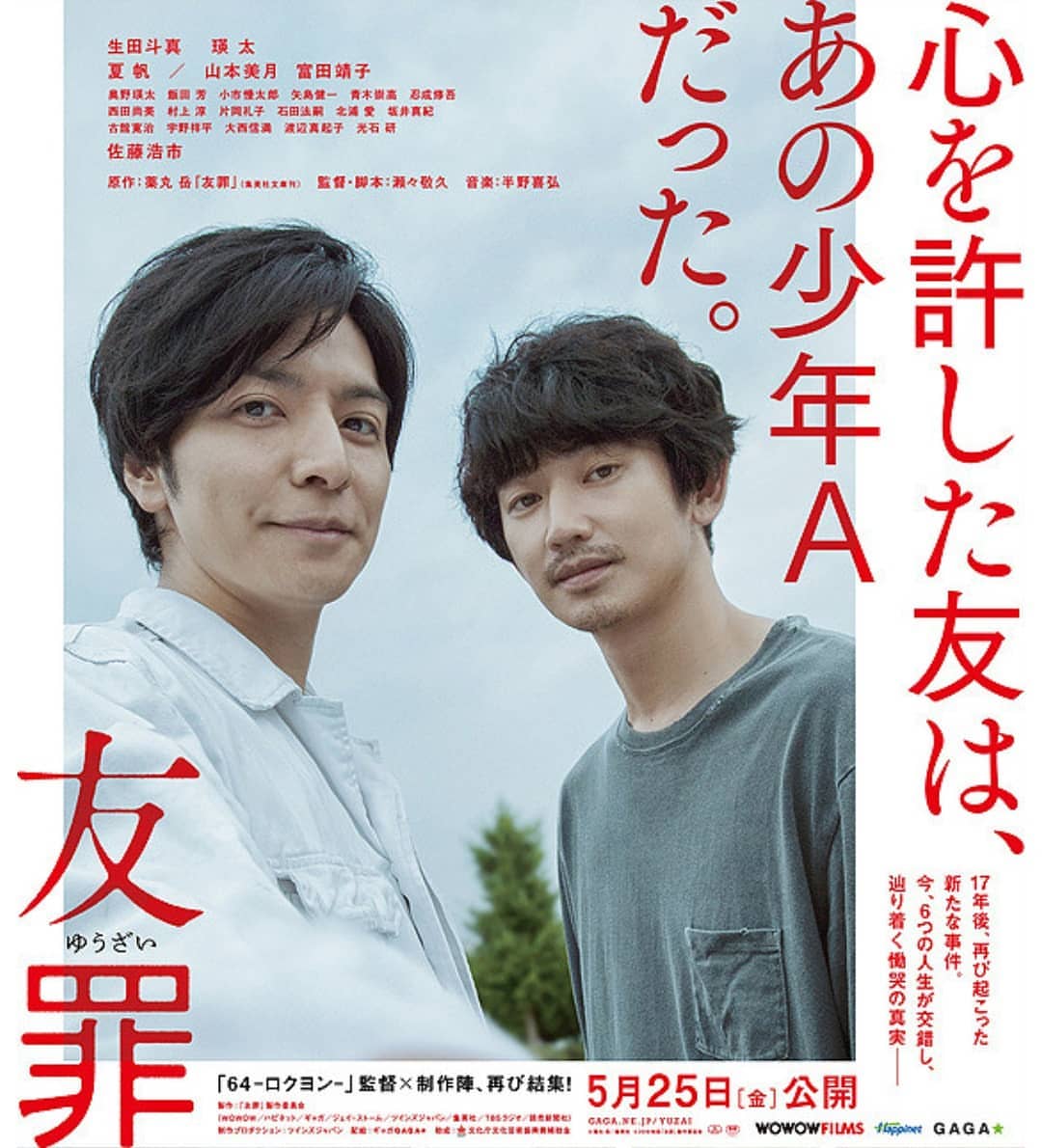
My Friend A posterThe Japanese justice system is founded on the idea of confession and atonement, that if you admit your crime and show remorse you will be forgiven. The truth, however, is much more complex and those whose lives have been tainted by transgression are often rejected by a still unforgiving society. Director Takahisa Zeze describes his adaptation of Gaku Yakumaru’s novel My Friend “A” (友罪, Yuzai) as a picture of the world he longs to see at the end of the Heisei era, one which is less judgemental and more compassionate where the bonds between people can perhaps overcome the traumatic past.

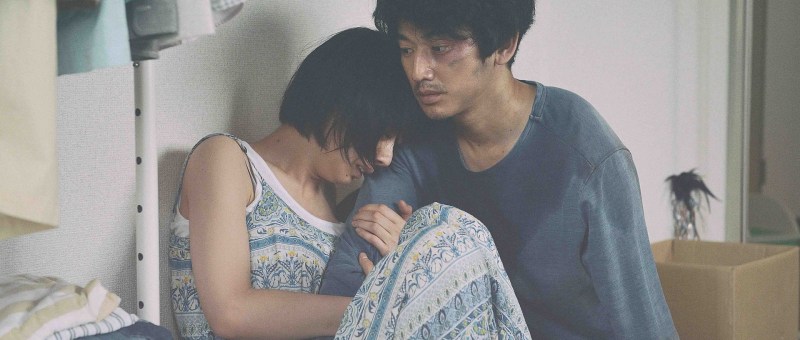
In the present day, two very different men – failed journalist Masuda (Toma Ikuta) and the sullen and mysterious Suzuki (Eita), are inducted as probationary workers at a small factory. Suzuki’s determination to keep himself to himself does not endear him to the other workers who become convinced that he is hiding something from them. Suzuki is indeed hiding something, though his reasons for avoiding human contact are various and complex. When a young child is found murdered nearby in a method which echoes a notorious killing from 17 years previously, Masuda is contacted by an old colleague (Mizuki Yamamoto) investigating the case and begins to wonder if the secret Suzuki seems to be burdened by might have something to do with one crime or both.

In actuality, Masuda does not seem to believe that Suzuki is involved with the recent killing even if he comes to the conclusion that he is almost certainly the teenager convicted of the earlier crime. Nevertheless, he develops an awkward “friendship” with him which is partly exploitative as he ponders writing an exposé on the injustice that allows someone who committed such heinous acts, even in childhood, to start again with a new identity. “Injustice” becomes a persistent theme as seen in the melancholy tale of taxi driver Yamauchi (Koichi Sato) who is carrying the heavy burden of being the father of a son (Hoshi Ishida) who killed three children as a joy riding delinquent. Hounded by one parent, and accidentally harassing the others through his relentless attempts to apologise for his son’s transgression, Yamauchi has ruined his family through his own need for personal atonement. Having divorced his wife and lost touch with his son, he is enraged to learn that he plans to marry and will soon be a father. Even if his wife-to-be knows of his past and accepts it, Yamauchi believes his son has lost the right to live as other people live and finds it extraordinarily offensive that a man who took the lives of children would have a child of his own.

Yamauchi seems to want to put his family back together but only succeeds in tearing it apart. Corrupted families loom large from the mysterious photograph of the smiling boy surrounded by the scratched out faces of his parents and sibling found among Suzuki’s belongings, to the reform school boy taunted with the accusation that he might not have turned to drugs if only his parents had loved him more. Suzuki fixates on his reform school teacher Shiraishi (Yasuko Tomita), but she in turn has neglected her own daughter in her fierce desire to save the souls of these violent young men many of whom have become the way they are because they believe that they are worthless and no one cares about them. Meanwhile, Miyoko (Kaho) – a young woman drawn to Suzuki’s silent solidarity, struggles to escape her own traumatic past partly because she was shamed in front of her family who then were also shamed by her inescapable transgression.

Unlike Suzuki, Miyoko has committed no crime but is haunted just the same. As is Masuda though his guilt is real enough if of a more spiritual kind as he struggles to accept his role in the death of a friend who committed suicide when they were just children. Then again, Masuda’s struggle, like Yamauchi’s, is perhaps a solipsistic one in which what he is really mourning is not his friend but the vision of his idealised self. On visiting his late friend’s mother, Masuda bristles when she talks about his journalistic career and her hope that he is still “strong and just” like the teenage boy she believes stood alongside her lonely son when the truth is that he abandoned his friend when he needed him most because he was too cowardly to risk becoming a target himself. Despite his high ideals, Masuda had been working at a scandal rag and his only real piece of ethical journalism was a confessional about the destructive effects of high school bullying. He remains conflicted in his friendship with Suzuki not quite because he fears his dark past but because he fears his own moral cowardice – something he is reminded of when a housemate points out that no-one likes Suzuki and that if Masuda sides with him, no one will like him either. 

The question that is asked is whether discovering someone’s dark secret necessarily changes who they are now and if it is ever really possible for those who have in some way transgressed to return to society. As Suzuki puts it to Masuda in reflecting on their unavoidable commonality, they’re each men who rarely unpack their suitcases, always on the run from an unforgiving present. Yet there is perhaps hope despite Masuda’s ongoing diffidence in his eventual (self) confession and belated solidarity with a man he later recognises as a “friend” in acknowledgement of the unconditional bonds of genuine friendship.


My Friend “A” was screened as part of the 2019 Japan Foundation Touring Film Programme.

International trailer (English subtitles)

The 8-Year Engagement (8年越しの花嫁 奇跡の実話, Takahisa Zeze, 2017)

8-year bride posterRomantic melodrama has long been a staple of Japanese cinema which seems to revel in stories of impossible love. The short lived boom in “jun-ai” or “pure love” romances which blossomed at the beginning of the century may have petered out gracefully after plundering every terminal or debilitating illness for traces of heartbreaking tragedy, but the genre has never quite gone away and is unlikely ever to do so. Takahisa Zeze’s The 8-Year Engagement (8年越しの花嫁 奇跡の実話, 8-nengoshi no Hanayome: Kiseki no Jitsuwa) is, however, a slightly different case in that it is inspired by a true story which became something of a hot topic in the relatively recent past. Romantic in a grand, old fashioned sense, the film shifts away from the melodrama of misery while praising the power of perseverance and the enduring potency of true love in bringing about unexpected miracles.

In 2006, shy and retiring car mechanic Hisashi (Takeru Satoh) tries and fails to get out of a party his chatty colleague is arranging for that very evening. Sullen and resentful at having been roped into a social occasion he was not mentally prepared for, Hisashi says barely anything and then manages to free himself when the others decide to go for karaoke. Just as he’s walking off mildly regretful, one of the other partygoers, Mai (Tao Tsuchiya), comes back to harangue him about his “attitude”. Hisashi explains that he’s sorry but he’s not very good at this sort of thing anyway and the truth is he wanted to go home because he’s got a killer stomach ache which being forced to eat fatty meat and down sake out of politeness has done nothing to help. Mai approves of this excuse, and even loops back after leaving to meet the others at the karaoke to hand him a heat pack she had in her bag in the hope that it might help with the stomach trouble. The pair start dating, become wildly happy, and get engaged. Three months before the wedding, Mai is struck down by a rare illness and winds up in a coma.

The romance itself is tucked up neatly into the first half hour or so and mostly conforms to genre norms – he is shy and extremely sensitive, she is extroverted and extremely kind. The love story proceeds smoothly, though there are signs of trouble to come in Mai’s increasing clumsiness followed by headaches which lead to memory loss and finally a painful hallucinogenic episode resulting in prolonged hospitalisation. Zeze wisely scales back on medical detail and focuses on Hisashi’s devotion and unwavering belief that Mai will one day open her eyes and return to him. Rather than cancel the wedding date, Hisashi decides to keep it open in the hope that Mai will be well enough to attend before booking the same date, the date of their first meeting, in every subsequent year just in case she should wake up and regret missing out on her dream wedding.

As the condition is so rare, no one is sure what the prognosis will be though the doctors admit there is a strong possibility Mai may never awaken or that if she does there may well be extensive brain damage and irreparable memory loss in addition to life long medical needs. Hisashi puts his life on hold and comes to the hospital every day, making short video messages he sends to Mai’s phone so she can catch up on what she’s missed when she wakes up. His devotion does however begin to worry Mai’s doting parents (Hiroko Yakushimaru & Tetta Sugimoto) who eventually decide to explain to him that as he’s “not family” there’s no need for him to feel obliged to stick around. They do this not because they’re territorial over their daughter’s care, or that they don’t like Hisashi, they simply worry that he’s going to waste his life waiting for a woman who will never wake up. As he’s still young and has a chance to start again, they try to push him away in the harshest way possible – through cool politeness, but are secretly pleased when he refuses to be pushed.

People making other people’s decisions for them as a means of reducing their suffering becomes a recurrent theme. Rather than say what they mean, kindhearted people say the things which they believe are for the best and will end someone else’s suffering through a moment of intense pain. Everyone is so keen to spare everyone else’s feelings, that they perhaps suffer themselves when there is no need to. Hisashi’s supportive boss remembers a rather odd comment he made during his interview – after replying that he enjoyed fixing things when asked what made him apply for the job, Hisashi’s boss asked him what he thought about while he did it to which he replied “love”. Love does it seems fix everything, at least when coupled with undying devotion and a refusal give up even when things look grim. A romantic melodrama with a positive ending The 8-year Engagement is a happy tearjerker in which love really does conquer all despite seemingly unsurmountable odds.


Screened at the 20th Udine Far East Film Festival.

Original trailer (English subtitles)