
 If there is a frequent criticism directed at the always bankable director Yoji Yamada, it’s that his approach is one which continues to value the past over the future. Recent years have seen him looking back, literally, in terms of both themes and style with remakes of films by two Japanese masters – Ozu in his Tokyo Story homage Tokyo Family, and Kon Ichikawa in Her Brother. While he chose to update both of those pieces for the modern day, 2008’s Kabei sent him back to the traumatic years of militarism and warfare for a story of maternal sacrifice and national tragedy. The Little House (小さいおうち, Chiisai Ouchi) brings this recent meandering around the past full circle with its deliberately Ozu-esque aesthetic and flashback tale of atonement as one woman leaves the truth she could never bear to speak on paper as a last dying confession.
After the death of his great-aunt Taki (Chieko Baisho), who never married and has no other family besides himself, his sister, and father, Takeshi (Satoshi Tsumabuki) discovers a biscuit box with his name on it filled with keepsakes and the conclusion of a kind of autobiography he’d been encouraging Taki to write in the last few months of her life. Cutting back and forth between the contemporary interactions of the older Taki and her great-nephew, and the younger Taki’s (Haru Kuroki) life as a Tokyo maid from the mid-1930s to the end of the war, The Little House takes its cues from The Go Between as an innocent bystander becomes the unwilling guardian of a secret the holding of which will prove to be a lifelong burden.
An 18 year old girl in 1935 from a poor family in Japan’s frozen North, Taki’s options are few – early marriage, geisha house, or maid. All things considered, maid is the best option and Taki is thrilled to be travelling to the big city with all of its untold excitements. After a spell working for a famous novelist, Taki becomes the housekeeper of the “Little House” – a curiously cute Western style cottage with a bright red roof out in the suburbs. Her mistress, Tokiko (Takako Matsu), is an oddly flighty woman, fiercely independent of spirit but living within the confines of her time. Crisis approaches the family not with the onset of war but with the arrival of Mr. Hirai’s sensitive, artistic, colleague, Shoji (Hidetaka Yoshioka), whose softly spoken ways quickly find their way into Tokiko’s heart.
In fact, The Little House, is not a million miles away from an expansion of a similar narrative device previously employed in Kabei but this time Tokiko is no pillar of strength, singlehandedly upholding the traditionally saintly virtues of the Japanese mother but a flesh and blood woman caught in the storm of a turbulent era. Taki becomes our passive observer as she sits, almost invisibly, in the corner of every scene, unwilling chaperone or accidental accomplice. As she witnesses the growing attraction between Tokiko and Shoji begin to spark into something more dangerous she finds herself conflicted, not knowing the best way to help her mistress. Should Tokiko be discovered, it wouldn’t just be a scandal leading to the end of a marriage, but considering the stringency of the times the outcome could be far more serious for all concerned.
When Takeshi eventually meets Tokiko’s son Kyoichi (Masakane Yonekura), he echoes many of the older Taki’s sentiments but adds that it was an era in which everyone was “forced to make an unwilling choice”. Taki finds herself forced to choose between action and inaction and does something she thinks is for the best, but is then forced to live with the suffering of wondering if she did the right thing.
The film does not seem entirely clear on her motives for her choice – it half commits to a possible love triangle between Taki, Tokiko, and Shoji by emphasising Taki and Shoji’s shared Northern roots and by Shoji’s subsequent inclusion of both women in his artwork. Taki, however, seems to be looking more to her mistress than her suitor, wanting nothing other than to stay in the Little House with Tokiko and Kyoichi for evermore. A later scene featuring a “mannish” university friend of Tokiko seems to reinforce the directions of Taki’s unspoken desire, though if her declaration of loyalty to the Little House following a disastrous marriage proposal was intended to voice it, it falls on deaf ears.
This being the case, Taki and Shoji become almost mirrors of each other – each somehow on pause, still living inside the Little House long after it ceased to exist. The loss of the Little House is not just the destruction of a building but the obliteration of everything it stood for, not only in terms of Taki’s investment in the family who live there, but in its evocation of early Showa dreams, individuality and innocence.
As the well educated Takeshi points out, Taki’s memories are often too rosy to tally with the history books, but even given the grimness of the times as they seem in hindsight, she has a right to the romanticism of her youth. The increasingly difficult political circumstances rarely impinge on the female centred domestic environment, but are made felt firstly through the husband’s toy business which begins by chasing the Chinese market and then is reduced to making wooden toys only and trying to marry off its eligible employees to woo more investment, and through the family’s excitement about the upcoming Tokyo Olympic games which are subsequently canceled. Tokiko’s later exclamation of “Isn’t it awful everything’s disappearing” does not just refer to the sudden absence of luxury from soaps to previously ordinary foodstuffs, but to her whole bourgeois way of life suddenly brought crashing down by a series of events she has no control over.
Yamada channels Ozu with initially distracting obviousness both in the contemporary and period sequences, matching his famous compositions from the straight to camera dialogue to the mid level tatami mat view and propensity for shooting through corridors and doorways. The world of the Little House is a curiously artificial one as Yamada shoots on an obvious stage set complete with tiny twinkling lights for stars which both looks forward to the artwork at the film’s conclusion and signals its nature as an unreal, constructed, environment existing only within Taki’s memory. Were it not that the Ozu compositions creep into the contemporary sequences, it could almost be read as a representation of Takeshi’s internal dramatisation of Taki’s memoirs as mediated through classic cinema.
The Little House is, indeed, resolutely old fashioned. Far too subtle for its own good, The Little House is an exercise in restraint in which the central love triangle never even hits the simmer, let alone the boil. Given the well trodden nature of the narrative, even the most inattentive viewer will have correctly guessed the big reveal well before Takeshi puts two and two together, rendering the final explanatory segment entirely redundant. Never quite as affecting as it would like to be, The Little House is a muted experience, perpetually pulling back each time it approaches doing something more interesting with its material. Nevertheless, it does provide an interesting perspective on its period setting as its collection of tragically romantic heroes march forward blindly into a maelstrom of oncoming destruction.
HK trailer (English/traditional Chinese subs)
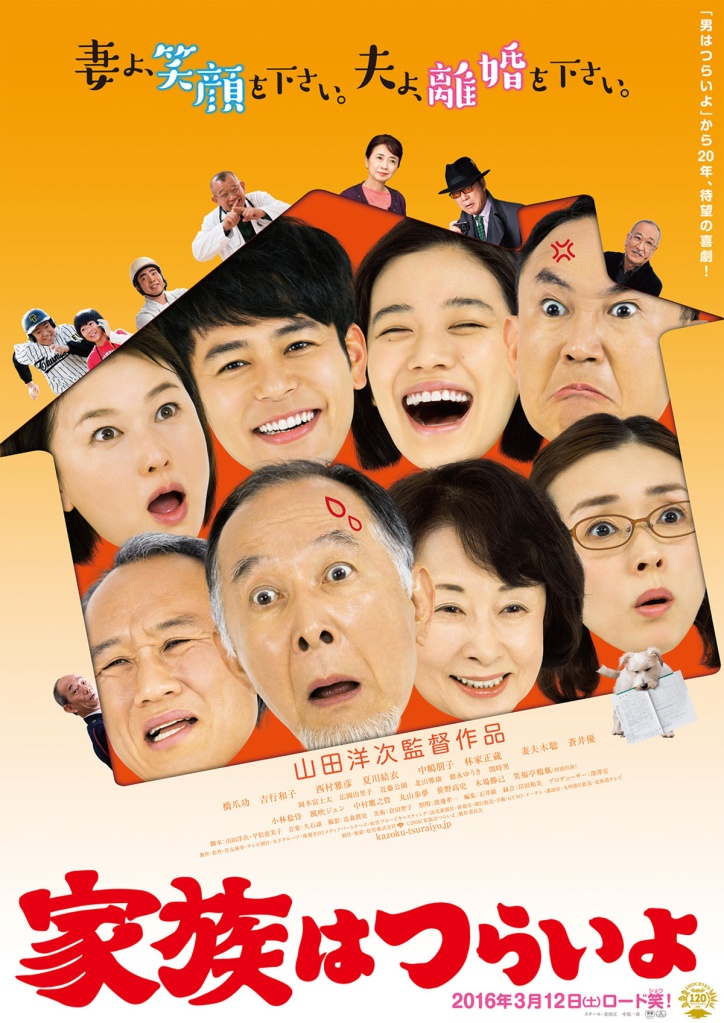 Prolific as he is, veteran director Yoji Yamada (or perhaps his frequent screenwriter in recent years Emiko Hiramatsu) clearly takes pleasure in selecting film titles but What a Wonderful Family! (家族はつらいよ, Kazoku wa Tsurai yo) takes things one step further by referencing Yamada’s own long running film series Otoko wa Tsurai yo (better known as Tora-san). Stepping back into the realms of comedy, Yamada brings a little of that Tora-san warmth with him for a wry look at the contemporary Japanese family with all of its classic and universal aspects both good and bad even as it finds itself undergoing number of social changes.
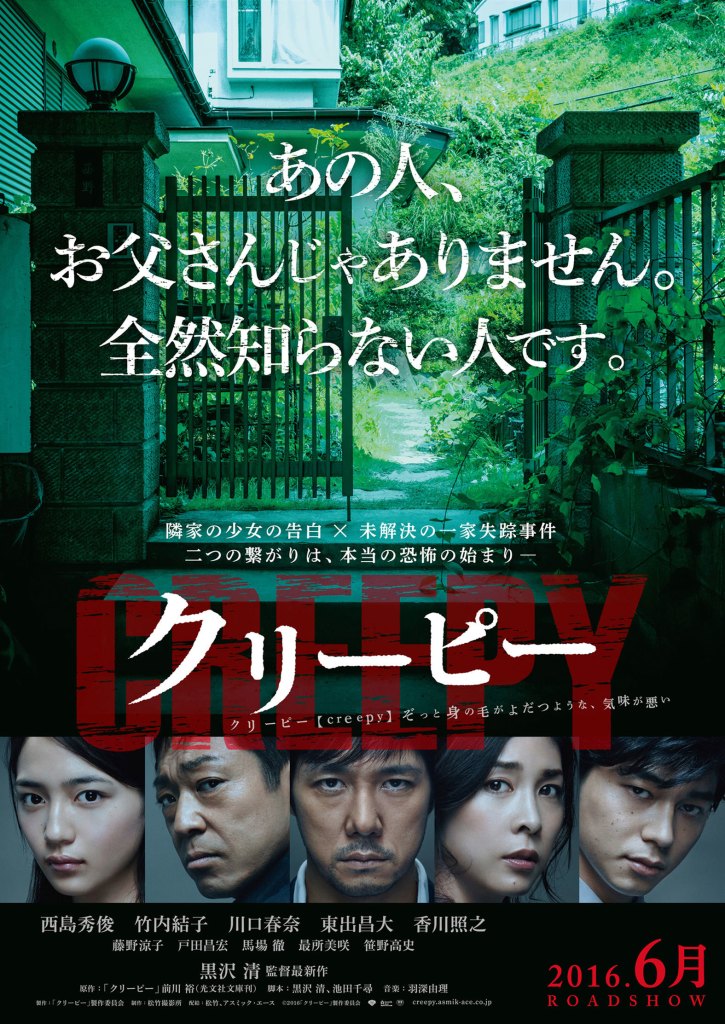 How well do you know your neighbours? Perhaps you have one that seems a little bit strange to you, “creepy”, even. Then again, everyone has their quirks, so you leave things at nodding at your “probably harmless” fellow suburbanites and walking away as quickly as possible. The central couple at the centre of Kiyoshi Kurosawa’s return to genre filmmaking Creepy (クリーピー 偽りの隣人, Creepy Itsuwari no Rinjin), based on the novel by Yutaka Maekawa, may have wished they’d better heeded their initial instincts when it comes to dealing with their decidedly odd new neighbours considering the extremely dark territory they’re about to move in to…
 Nobuhiko Obayashi is no stranger to a ghost story whether literal or figural but never has his pre-occupation with being pre-occupied about the past been more delicately expressed than in his 1988 horror-tinged supernatural adventure, The Discarnates (異人たちとの夏, Ijintachi to no Natsu). Nostalgia is a central pillar of Obayashi’s world, as drenched in melancholy as it often is, but it can also be pernicious – an anchor which pins a person in a certain spot and forever impedes their progress.
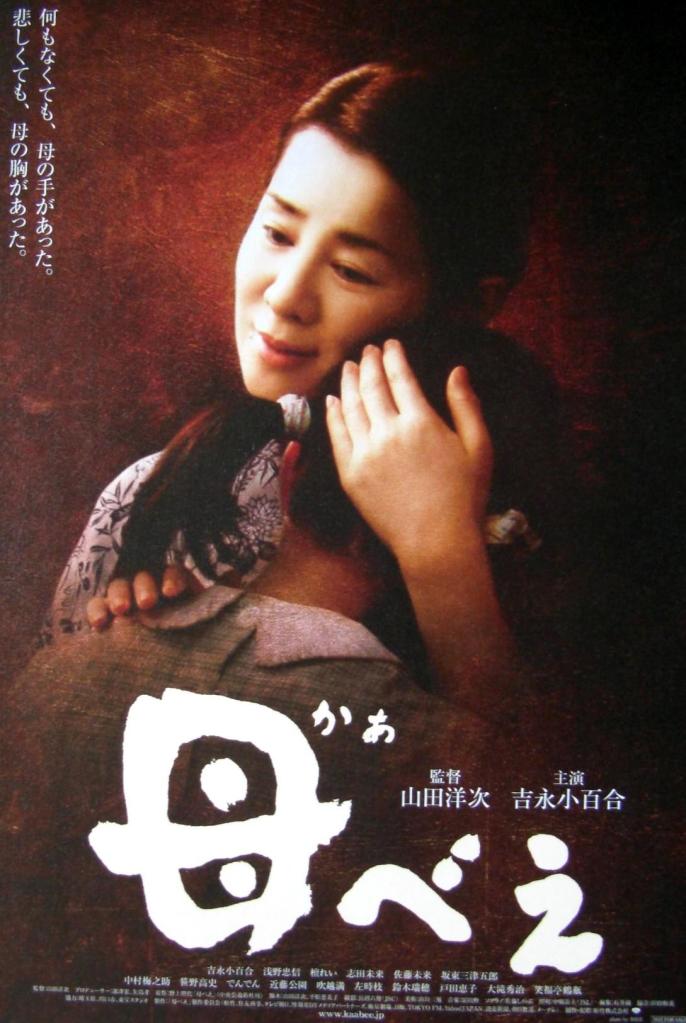 Yoji Yamada’s films have an almost Pavlovian effect in that they send even the most hard hearted of viewers out for tissues even before the title screen has landed. Kabei (母べえ), based on the real life memoirs of script supervisor and frequent Kurosawa collaborator Teruyo Nogami, is a scathing indictment of war, militarism and the madness of nationalist fervour masquerading as a “hahamono”. As such it is engineered to break the hearts of the world, both in its tale of a self sacrificing mother slowly losing everything through no fault of her own but still doing her best for her daughters, and in the crushing inevitably of its ever increasing tragedy.
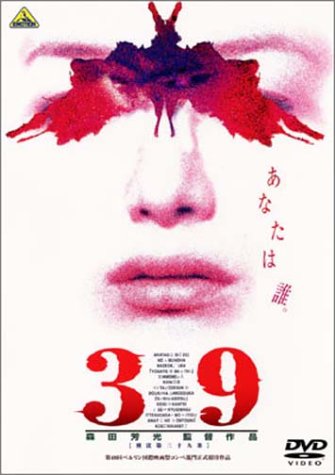 Article 39 of Japan’s Penal Code states that a person cannot be held responsible for a crime if they are found to be “insane” though a person who commits a crime during a period of “diminished responsibility” can be held accountable and will receive a reduced sentence. Yoshimitsu Morita’s 1999 courtroom drama/psychological thriller Keiho (39 刑法第三十九条, 39 Keiho Dai Sanjukyu Jo) puts this very aspect of the law on trial. During this period (and still in 2016) Japan does nominally have the death penalty (though rarely practiced) and it is only right in a fair and humane society that those people whom the state deems as incapable of understanding the law should receive its protection and, if necessary, assistance. However, the law itself is also open to abuse and as it’s largely left to the discretion of the psychologists and lawyers, the judgement of sane or insane might be a matter of interpretation.
 Windows on Worlds