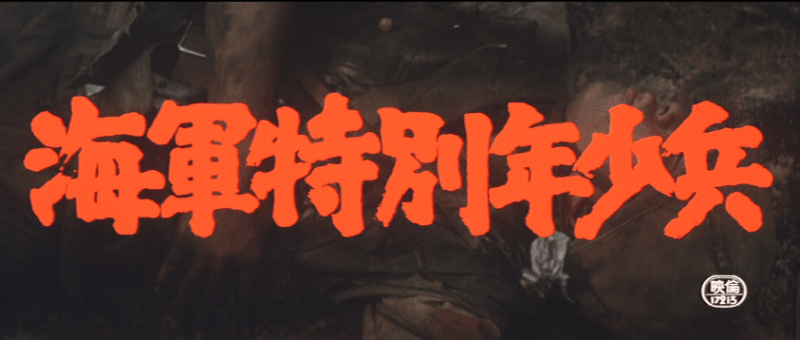
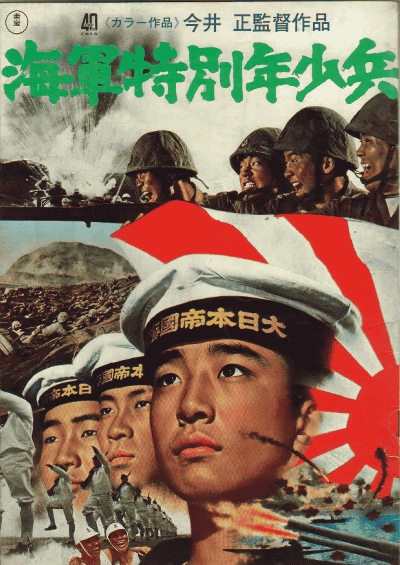
 Often regarded as a “left-wing” filmmaker, even later pledging allegiance to the Communist Party of Japan, Tadashi Imai began his career making propaganda films under the militarist regime. Describing this unfortunate period as the biggest mistake of his life, Imai’s later career was dedicated to socially conscious filmmaking often focusing on those oppressed by Japan’s conservative social structure including the disenfranchised poor and the continued unfairness that often marks the life of women. 1972’s Eternal Cause (海軍特別年少兵, Kaigun Tokubetsu Nensho-hei, AKA Marines Cadets/ Special Boy Soldiers of the Navy) sends him back to those early propaganda days but with the opposite spin. Painting Japan’s tendency towards authoritarianism and its headlong descent into the folly of warfare as a direct result of social inequalities and the hierarchical society, Imai tells the dark story of the “special cadets”, children from military academies who eventually found themselves on the battlefield as members of the last, desperate defence of an already lost empire.
Imai opens at the grim conclusion – February 1945, Iwo Jima. A squad of young men catch sight of their “Instructor” just as he falls and are shortly all killed themselves by approaching American forces. The Americans, sympathetically portrayed, wander the corpse laden battlefield and lift the arm of one particular body lamenting that the fallen soldier is “just a boy”, and that Japan must be in a very bad state indeed if it has come to this. One of the soldiers, not quite dead as it turns out, manages to get to his feet. The Americans are wary but give him time in case he wants to surrender but the boy tries to charge them, crying out that he is a “Marine Cadet”. They have no choice but to shoot him dead.
Moving back around 18 months to June 1943, the “Marine Cadets” are new students at a military academy. On arrival they are instructed that everything they brought with them, including the clothes they are wearing, must be sent home. They are now at war and must forget civilian life. This dividing line neatly marks out the central contradiction in the Marine Cadets’ existence – they are children, but also marines.
Enrolment in the school is voluntary rather than conscription based and the young men have many reasons for having decided to enter the military, most of them having little to do with dying bravely for the Emperor. There is, however, a persistent strain of patriotism which brought them to this point as they find the sacrifice they offer to make all too readily accepted by their nation. The education on offer is wide-ranging and of high quality – the boys will learn English as well as geography, history, science and maths, all of which will hopefully turn them into well educated, efficient military officers, but there is profound disagreement between the teaching staff and “instructors” as to how that education should be delivered.
Sympathethetic teacher Yoshinaga (Katsuhiko Sasaki) believes in education and wants to contribute to raising these children in love seeing as he is in loco parentis. Kudo (Takeo Chii) the military instructor, however, disagrees. He believes in harsh discipline in which progress is encouraged through physical punishment and a strong shame culture. Yoshinaga reminds Kudo that the boys are just children and that such punishment based motivational techniques place the boys at each other’s throats and will undermine the spirit of comradeship and togetherness which is essential for the well functioning of any military unit. Kudo counters that the boys became men when they enlisted, that he was raised this way himself, and that a culture of violence binds the men together into a kind of hive mind which moves and thinks as one. Kudo does not waver in this belief even after his tactics have tragic consequences, but does come to love the children in his care, entrusting them to Yoshinaga as he prepares to face the battlefield himself.
As Kudo leaves, he stops to admit that the boys are children but also wants Yoshinaga to understand something he thinks may not have occurred to him. The boys are mostly poor children, who, he says, have only themselves to rely on unlike the officers who are by and large from middle-class families with extended safety nets of privilege. Kudo’s doctrine of progress through strength is born of being born at the bottom of the heap and needing to struggle to survive. They have made themselves strong in order to resist the consistent oppression of their economic circumstances which often prize nothing other than their physical capabilities.
Poverty is indeed a major motivator. The most sympathetic of the boys, Hayashi (Michiko Araki), has enlisted alongside another boy from his village, Enami (Taketoshi Naito), whose teacher father has fallen headlong for the militarist folly and is even allowing military representatives into his classroom to offer recruitment talks to the boys. He recommends Hayashi join the Marine Cadets as a matter of practically – Hayashi’s family is dirt poor and his father is a drunkard. Joining the academy means reducing the burden on the family who have many other children and also that he will eventually be able to send money home as well as being well provided for himself. Despite a lack of aptitude for soldiering, Hayashi is eventually grateful – in the academy he gets a taste of comfort he never knew at home as well as a sense of comradeship and brotherhood away from the hostile home environment dominated by the violence of a drunken father. Another boy makes a similar decision to escape his indifferent foster family after being orphaned. Despite the fact that his sister has embarked on a life of prostitution to support him, his relatives offer him only scant comfort and keep most of her money for themselves.
Yoshinaga’s complaints about the nature of the education the boys receive is quite naturally countered with a question as to why he is at the school at all given that these boys are destined only to become cannon fodder in a war which clearly all but over. His pleas for kindness and compassion largely fall on deaf ears. The boys are still children – our narrator is 14 when he enlists at the academy, but they have been encouraged to think of themselves as men. Their halfling status embarrasses them and they’re keen to prove themselves as brave soldiers of Japan. Yoshinaga, true to his word, tries to save the boys – ordering them to hide during final attack sure that the Americans will take pity on these child soldiers and prevent their lives from becoming meaningless sacrifices laid on the altar of an uncaring nation. He is unsuccessful because the boys’ heads are already filled with the idea of glorious sacrifice. Ashamed to be thought of anything other than Marine Cadets, they launch their own attack and sacrifice their lives willingly.
Imai is at great pains to remind us that this society cares nothing for the boys, 5,020 of whom fall on the battlefield, or for the poor in general who bear the brunt of a war that is waged against their interests. The approach is distinctly old fashioned for 1972 and the message at times unsubtle, but given that the film appears less than thirty years later than the events it depicts when those who survived would themselves still be young, perhaps fathers of teenage sons themselves, it serves as a timely reminder of past madness and a pointed warning for the consumerist future.
 Depictions of wartime and the privation of the immediate post-war period in Japanese cinema run the gamut from kind hearted people helping each other through straitened times, to tales of amorality and despair as black-marketeers and unscrupulous crooks take advantage of the vulnerable and the desperate. In This Corner of the World (この世界の片隅に, Kono Sekai no Katasumi ni), adapted from the manga by Hiroshima native Fumiyo Kouno, is very much of the former variety as its dreamy, fantasy-prone heroine is dragged into a very real nightmare with the frontier drawing ever closer and the threat of death from the skies ever more present but manages to preserve something of herself even in such difficult times.
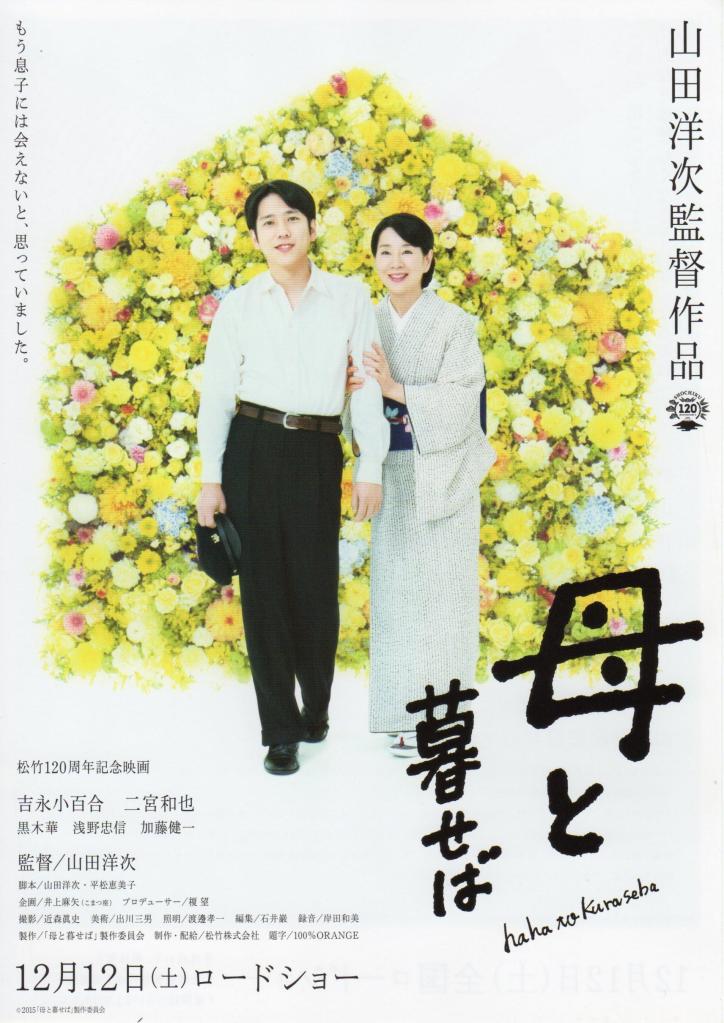 After such a long and successful career, Yoji Yamada has perhaps earned the right to a little retrospection. Offering a smattering of cinematic throwbacks in homages to both Yasujiro Ozu and Kon Ichikawa, Yamada then turned his attention to the years of militarism and warfare in the tales of a struggling mother,
 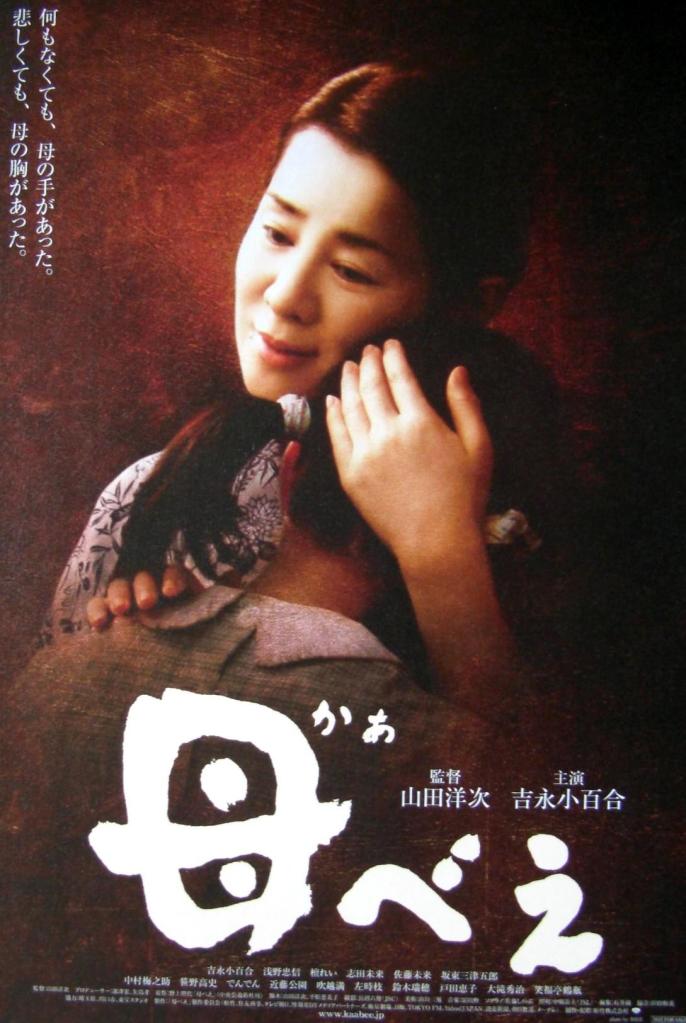 Yoji Yamada’s films have an almost Pavlovian effect in that they send even the most hard hearted of viewers out for tissues even before the title screen has landed. Kabei (母べえ), based on the real life memoirs of script supervisor and frequent Kurosawa collaborator Teruyo Nogami, is a scathing indictment of war, militarism and the madness of nationalist fervour masquerading as a “hahamono”. As such it is engineered to break the hearts of the world, both in its tale of a self sacrificing mother slowly losing everything through no fault of her own but still doing her best for her daughters, and in the crushing inevitably of its ever increasing tragedy.
 A late career entry from socially minded director Shohei Imamura, Dr. Akagi (カンゾー先生, Kanzo Sensei) takes him back to the war years but perhaps to a slightly more bourgeois milieu than his previous work had hitherto focussed on. Based on the book by Ango Sakaguchi, Dr. Akagi is the story of one ordinary “family doctor” in the dying days of World War II.
 In late June of 1945, one woman is escorting another through a US checkpoint in Berlin. The young American soldier is somewhat cocky and feigns an officious sort of suspicion that causes him to demand the bandaged woman reveal her face – just to be sure. The obvious agony she feels just beginning to unwind the various layers which hide her identity is enough to convince him that he’s made a cruel mistake and he lets the pair pass.
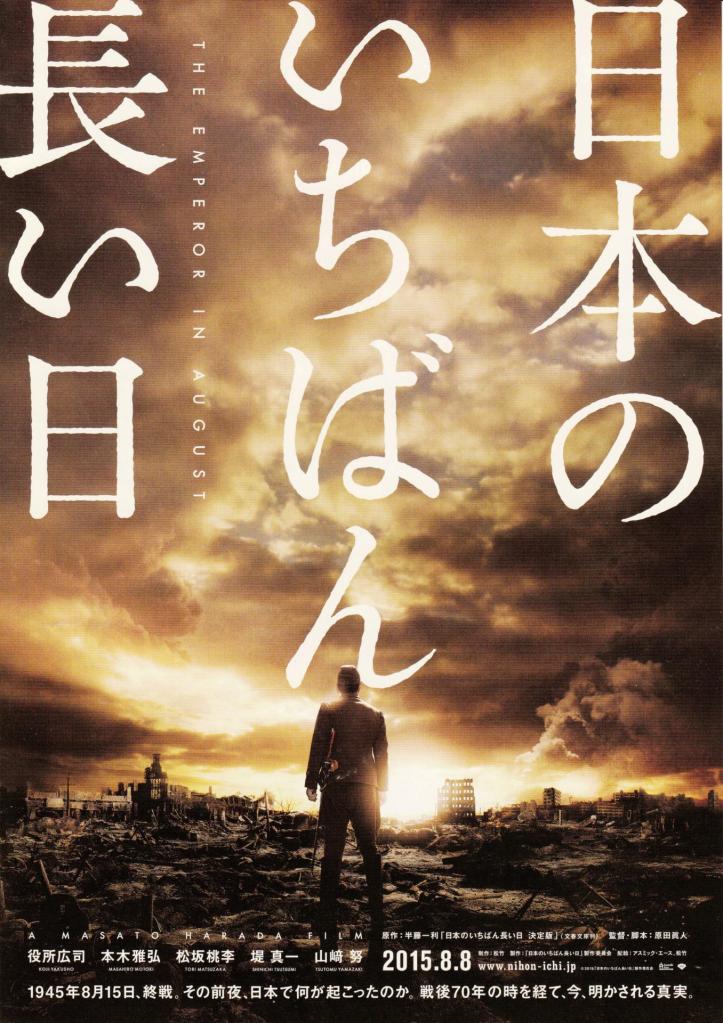 How exactly do you lose a war? It’s not as if you can simply telephone your opponents and say “so sorry, I’m a little busy today so perhaps we could agree not to kill each other for bit? Talk later, tata.” The Emperor in August examines the last few days in the summer of 1945 as Japan attempts to convince itself to end the conflict. Previously recounted by Kihachi Okamoto in 1967 under the title Japan’s Longest Day, The Emperor in August (日本のいちばん長い日, Nihon no Ichiban Nagai Hi) proves that stately events are not always as gracefully carried off as they may appear on the surface.
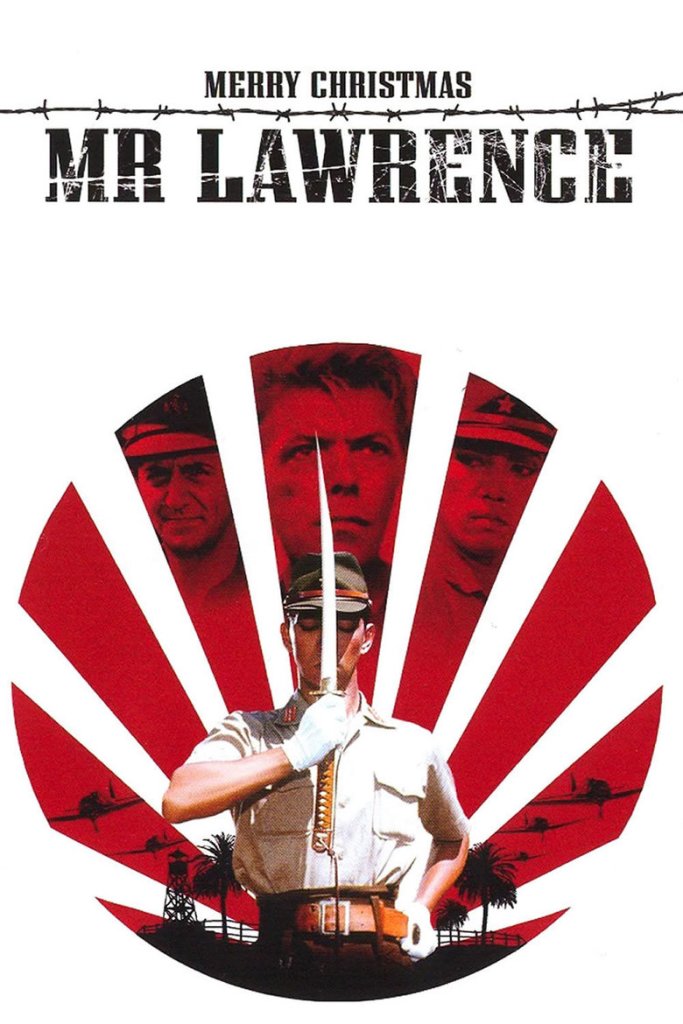 Of all the post-war Japanese filmmakers, the one who liked to twist the knife the most was surely Oshima. No subject too taboo, no pain too raw – he liked to find the sore spot and poke at it a little, if only in the hope of encouraging an accelerated healing, albeit one which would leave a scar to remind you that once you suffered. With Merry Christmas, Mr. Lawrence (戦場のメリークリスマス, Senjou no Merry Christmas) he takes an unflinching look at the treatment of Japan’s prisoners of war and contrasts the Japanese forces with the different attitudes of the (mostly) British soldiers held within the walls of the camp.
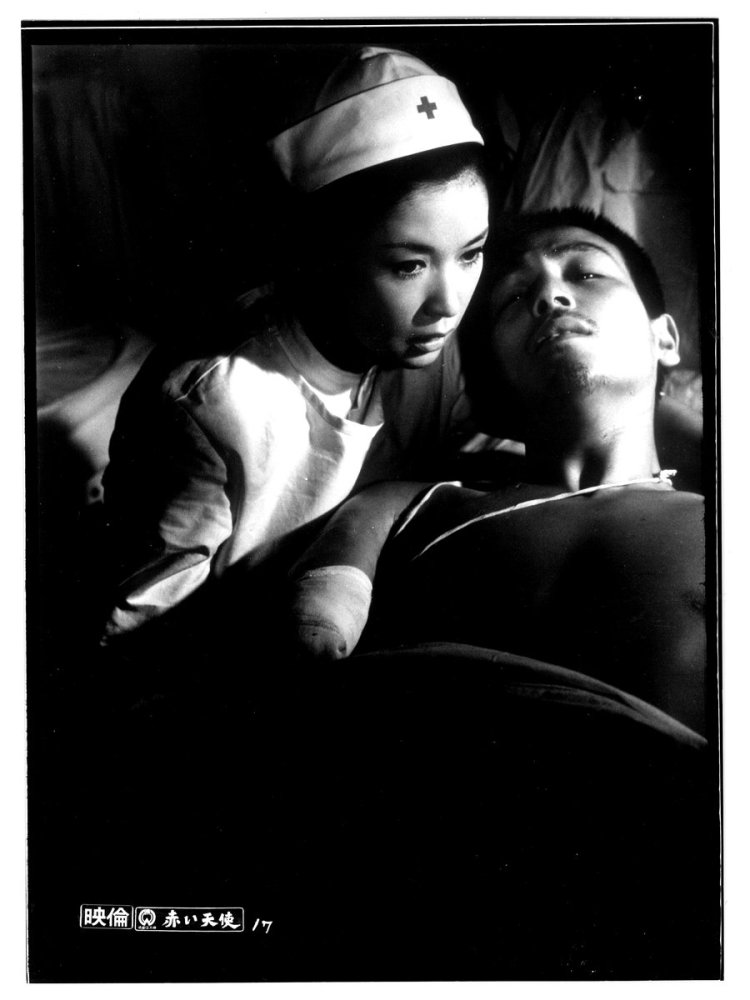 Red Angel (赤い天使, Akai Tenshi) sees Masumura returning directly to the theme of the war, and particularly to the early days of the Manchurian campaign. Himself a war veteran (though of a slightly later period), Masumura knew first hand the sheer horror of warfare and with this particular film wanted to convey not just the mangled bodies, blood and destruction that warfare brings about but the secondary effects it has on the psyche of all those connected with it.
 Windows on Worlds