The Greatest Challenge of All (喜劇 一発勝負, Yoji Yamada, 1967)

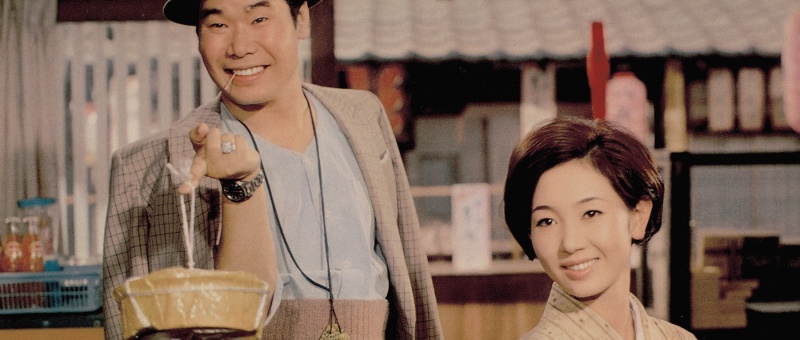
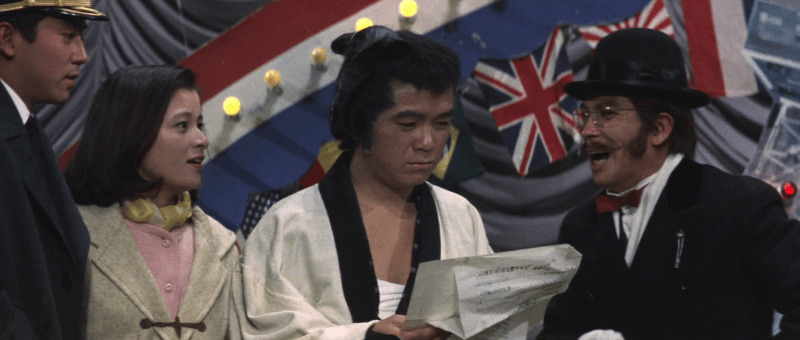
A prodigal son rocks the social order in Yoji Yamada’s anarchic nonsense comedy, The Greatest Challenge of All (喜劇 一発勝負, Kigeki: Ippatsu Shobu). The greatest challenge may be trying to manage Kokichi (Hajime Hana), a roguish Del Boy-like figure with an impossible dream of striking it rich. While in some senses he anticipates the equally  anarchic yet basically goodhearted Tora-san, he also represents a modernising and aspirant Japan determined to leave behind dusty old tradition for a new “deluxe” future.

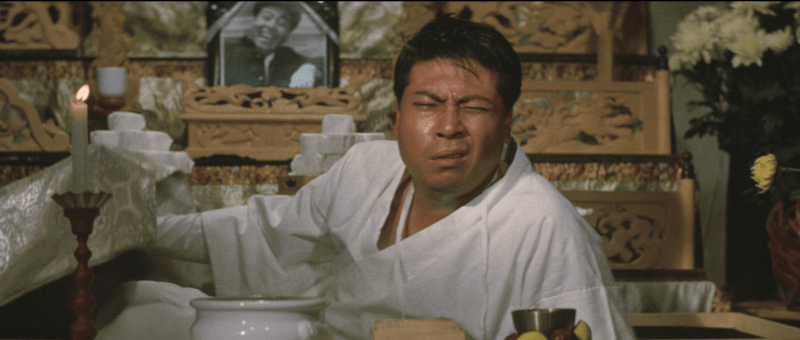
Having taken to the road after being disowned by his conservative father (Daisuke Kato), Kokichi returns 15 years  later a middle-aged man with seemingly nothing to show for his many years of wandering. He has no idea that he has a daughter, Mariko, by a local woman that his parents took in and raised as if she were theirs which was not an especially uncommon solution to the problem of illegitimate birth in the post-war era. Nor did he know his mother had passed away before walking in on her annual memorial service. This sense of parental disconnection one level reflects a lack of filiality that marks him out as a “modern” man uninterested in these familial obligations or a sense of duty towards his family, but it’s also true that it’s to family that he’s returned having mellowed in middle-aged and in a way looking to settle down.

In any case, his life seems to have been a series of crazy episodes from briefly becoming a sumo wrestler to meeting a mysterious woman on a bridge who gets him a job as a snake charmer. When two yakuza types kick up a fuss about not being able to have their usual room at the inn during his mother’s memorial service, Kokichi manages to frighten them off just with bluster, hinting at the way he may have lived for the last 15 years. He also has two friends who turn up to see him, one of whom is a former yakuza who refers to Kokichi as if were his boss and they were a little trio of crime-adjacent buddies.

But it does appear that Kokichi has come with a business plan in mind, convinced that he can find the source of a hot spring in the town and build a resort hotel on top of it. To do this, he tries to convince his father to sell him his land and the inn the family run so he can knock it down and build a “deluxe” modern, Western-style hotel in its place. Kokichi’s father obviously isn’t keen. This inn has been in the family for generations, he really wouldn’t want to ruin that and especially not for one of Kokichi’s harebrained schemes. Yet again this brings us back to the battle between the conservatism of Koikichi’s father, and Kokichi’s own consumerist modernism that is more individualistic and no longer sees beauty in the past, only backwardness and stagnation. When he finally does find his hot spring, he builds a vast modernist complex with a botanical water park housed in a giant Hawaiian-themed conservatory complete with dancing hula girls. 

His corrupting presence is most discernible in the changing role of Fumi (Tanie Kitabayashi), the family’s housekeeper who generally dressed in kimono but on moving to Kokichi’s mansion she begins wearing Western dress. Fumi had at one time left the family because Kokichi had unwittingly forced her to betray it in helping him get his hands on a precious family heirloom to pawn as capital for his new business venture. Having done so brings her to a confrontation with the contradictions of her role within the family, both a surrogate mother to Kokichi and also a servant who is expected to abide by a certain code with not stealing from your employers a key tenet. She feels she can no longer look Kokichi’s father in the eye and must now return to her home in the country even though she has likely not seen it since she was a young woman. Having undergone this change, she can no longer return to the inn but is brought back to Kokichi’s modernist home once he strikes it rich. 

But Kokichi too is later confronted by hypocrisies of his own position as a free-spirited man and finally a father on learning the truth about Mariko. Hanging out at the hot spring, the 16-year-old Mariko has attracted the attentions of a couple of fashionable young men and wants to leave with them to visit Tokyo. Despite the intrusion of the modern in the hot springs resort, Mariko doesn’t want to stay in this “deadbeat” town and longs for the bright lights of the big city. Kokichi’s father understandably says no, but Kokichi is originally all for it, perhaps seeing his own desire to be free of his father’s oppressive authority. However, he soon changes his tune on assuming his paternity. He too tells Mariko she can’t go and strikes her for talking back. But just as he had, she leaves anyway. His modernity is no longer modern enough, and the young will always walk towards the future.

One exception might be Kokichi’s painter sister Nobuko (Chieko Baisho) who appears to be happy enough living at the inn and with seemingly no intention of marrying which might be her own kind of rebellion against traditional mores. While other similarly themed films may have emphasised the importance of hard work and the reality of the salaryman dream, this one suggests that it really is possible to bumble along and then strike it lucky but also that you never really travel as far from home as you might think. The desire for patriarchal control rises in Kokichi, but is now ineffectual. Though he didn’t raise her, Mariko is a child of the world he’s created and simply chooses to leave with a final sock in the eye to traditional filiality. 


Trailer (no subtitles)
Let’s Have A Dream (九ちゃんのでっかい夢, Yoji Yamada, 1967)

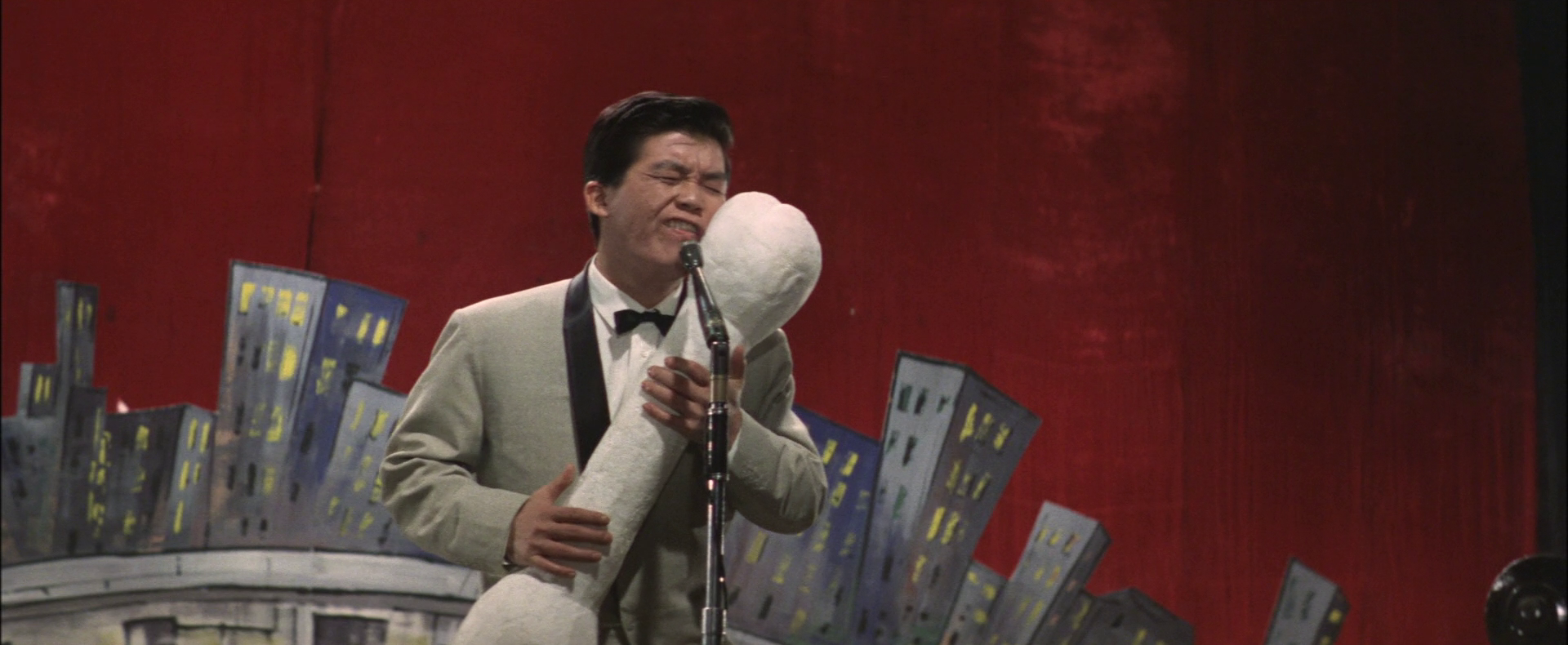
Convinced he’s dying of a terminal illness, a young nightclub singer yearns for death in Yoji Yamada’s romantic farce, Let’s Have a Dream (九ちゃんのでっかい夢, Kyu-chan no Dekkai Yume). In fact, the Japanese title is “Kyu’s Big Dream,” directly putting the name of the star into the name of the picture though he does in fact play a character called “Kyutaro” whose music career is starting to take off just as he convinces himself that his life is hopeless. Best known for “Ue o Muite Aruko”, Kyu Sakamoto was a huge singing star throughout the 1960s until his death in a plane crash at the very young age of 43.

Based on a novel by Nobuhiko Kobayashi who was working with Sakamoto on a television show at the time (and asked for a pseudonym because he wasn’t sure how the movie would turn out), the film is however partly an exploration of the nation’s growing internationalism. Indeed, the film opens with the Pan Am logo and then immediately travels to Switzerland where an elderly lady is dying having apparently never married or had children but still attached to the memory of her first love, a man from Japan. Accordingly, she decides to leave her entire fortune to that man’s grandson, Kyutaro (Kyu Sakamoto), which comes as a total shock to her closest living relative, “The wicked Mr Edward Allan Poe.” Her butler then vows to travel to Japan to tell Kyutaro the good news, but ends up sitting next to the hit man Edward Allan Poe hires on the plane.

But Kyu has already hired a hitman to take himself out because he thinks he’s suffering from a terminal disease and feels nothing other than fear and hopelessness. Though all he wants to do is die, he is unable to take his own life and so has decided this is the best way. He’s also in love with a childhood friend who works in a diner at the docks, but unbeknownst to him Ai (Chieko Baisho) has just got engaged to their other friend Kiyohiko (Muga Takewaki), a sailor. To add to the sense of European romanticism, Kyu writes long notes to himself about his sadness and melancholy all while the countess’ right-hand man continues to refer to him as the luckiest man in the world. 

In a running gag, the hitman speaks mainly in French and the Countess’ butler in cod German hinting at a new kind of internationalism. The hitman Kyu hires through shady local guy Pon (Kanichi Tani) is, however, much less sophisticated. He can’t afford a gun and fails to kill Kyu several times in other ways usually injuring himself in the attempt which again makes Japan look somewhat inferior to the rest of the world just as the opulent vistas of the Countess’ castle contrast so strongely with the down and dirty nature of the docks where Kyu lives and works. 

Despite being so desperate to die, Kyu pulls away when the hitman he hired tries to kill him which along with his inability to take his own life may suggest that he really does want to live after all. Though she evidently does not return his romantic feelings, Ai clearly cares for him deeply describing Kyu as like oxygen for her while trying to get to the bottom of what’s with wrong with him but it takes Kyu a little longer to figure out that people care about him even if not quite in the way he was hoping they would. Even so, there’s no denying the farcical quality of all that’s befallen him as he finds himself “the luckiest man in the world,” caught between two hitmen, and staving off eventual romantic heartbreak.

Still, even this plays into the melancholy sense of romanticism and elliptical ending as Kyu eventually gets to fulfil one of his big dreams by going to Europe and getting to live the life of a heartbroken count from a 19th century romantic novel. As a vehicle for Sakamoto, the film also features several of his songs along with dance routines and some otherwise goofy clowning while Chieko Baisho also performs a short but sweet rendition of My Bonnie Lies Over the Ocean. It’s all undoubtedly very silly but somehow heartfelt and wholesome for all its buried melancholy and deeply felt romanticism. 


Original trailer (no subtitles)

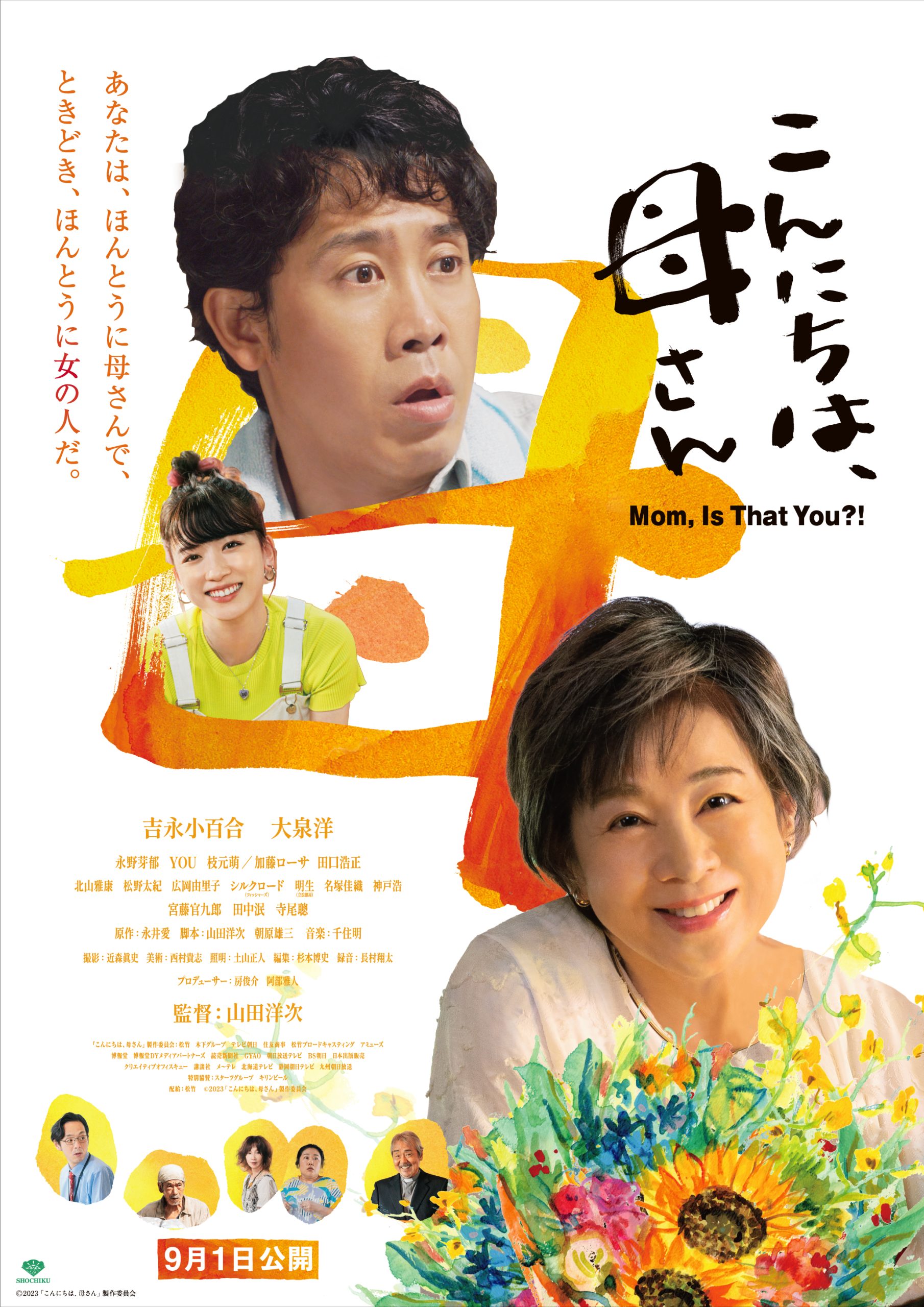
Mom, Is That You?! (こんにちは、母さん, Yoji Yamada, 2023)

“People of my generation can’t throw anything away,” an older woman admits on her hearing her daughter-in-law has just been featured in a TV series about decluttering. Inspired by Ai Nagai’s 2001 play, the latest from veteran director Yoji Yamada Mom, Is that You? (こんにちは、母さん, Konichiwa, Okasan) seems to hint at a series of circular generational divides while suggesting that the children of the Bubble-era in particular are too quick to get rid of things they don’t think they don’t need anymore.

That’s the irony of soon-to-be 50-year-old Akio’s (Yo Oizumi) salaryman job in HR. It’s his job to cut dead wood from the company and this current round of polite requests to employees of a certain level to take early retirement includes his uni friend Kibe (Kankuro Kudo) who doesn’t take kindly to what he sees as a personal betrayal. Unlike Akio who is beginning to tire of the salaryman dream, Kibe fiercely fights for his position and identity as an executive at a big company even when faced with banishment room treatment and disciplinary dismissal after an altercation with the boss.

But what Kibe doesn’t know is that Akio is already facing a series of crises. His marriage has collapsed and his university student daughter Mai (Mei Nagano) is having a crisis of her own. Fresh from her tidying success, her mother has told her that all she can do is get good grades followed by a boring salaryman job like her dad’s which doesn’t seem to be what she wants which is why she’s run off to stay with her grandmother Fukue (Sayuri Yoshinaga) who runs a traditional shop selling tabi socks near the Sumida River. Fukue has a kindly, laid-back attitude remiscent of the shitamachi spirit found in other Yamada films in contrast to the stressed out uptightness of Akio who hasn’t told her about his impending divorce nor work troubles but finds himself paying a visit home in an attempt to sort himself out only to find Fukue keeping herself busy with a local charity group and nascent relationship with a church pastor. 

Fukue’s charity work is emblematic of a waste not want not philosophy that has otherwise disappeared from the modern society as they pick up the things other people don’t want and donate them to the needy even if it sometimes seems a little simplistic or patronising. Biting into some reject crackers from the local rice cracker shop, Akio reflects that they’re something that’s made to console people and it’s work that has meaning unlike his soulless corporate job that gives him nothing other than stress and money. At the time the play was written, the fallacy of the salaryman dream was clear for all to see in the post-Bubble society but to a man like Akio getting a company job was a big deal and his success is still the talk of his mother’s friends even he starts to wonder if he still has time to start again and discover a more meaningful way of living.

Some of these ideas, and the timescales involved, make much more sense for the play’s millennial setting rather than the film’s apparent present day given the references to the firebombing of Tokyo which would require the older protagonists to be their late 80s to even remember. Akio dismisses his mother’s charity work and insists that the homeless are only those who opted out of the competitive society he too has come to doubt or else were excluded from it, while he’s resentful of her attachment to the pastor in contrast to Mai who is excited by the prospect of her grandmother’s love affair and enduring possibilities of age while Fukue is beginning to fear not death but dependency if her health should suddenly decline. 

It’s in the midst of her heartbreak that the film affords Fukue a new beginning if in coming full circle, Akio choosing to make a clean break with the unhappiness in his life and Mai embracing her youth while falling for the old world charms of her grandmother’s tabi sock shop almost exclusively catering to sumo wrestlers, who as someone points out never waste anything, and people trying ceremony for the first time at 60. Like most of Yamada’s work, the film has a gentle humanity and melancholy poignancy but also a sense of hope and continuity that run contrary to an overly corporatised society in which young and old are already losing faith.


Mom, Is That You?! screened as part of this year’s Toronto Japanese Film Festival.

Original trailer (No subitles)

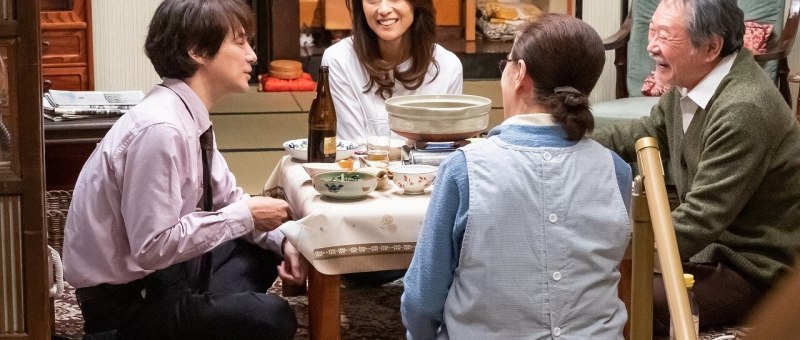
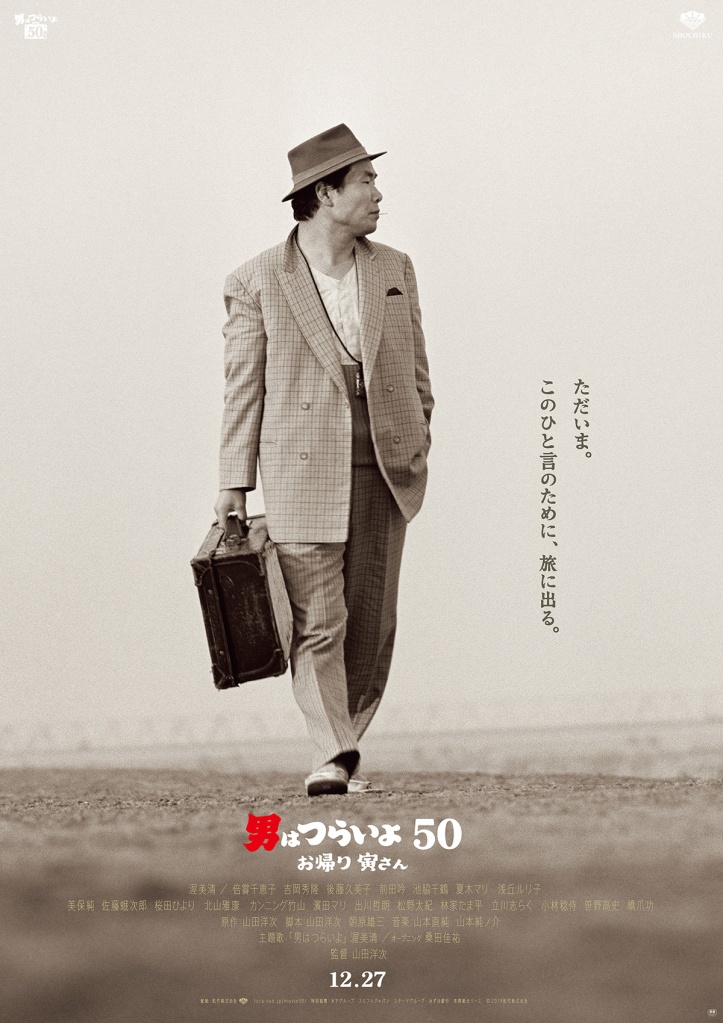
Tora-san, Wish You Were Here (男はつらいよ50 – お帰り 寅さん, Yoji Yamada, 2019)

From 1969 to 1996, travelling salesman Tora-san appeared in 48 films, a 49th movie special appearing after star Kiyoshi Atsumi’s death brought an unavoidable end to the series. Tora-san, Wish You Were Here (男はつらいよ50 – お帰り 寅さん, Otoko wa Ysurai yo 50: Okaeri Tora-san) arrives to mark the 50th anniversary of the first film’s release, and as the series had done in its later stages, revolves around Tora’s neurotic nephew, Mitsuo (Hidetaka Yoshioka), who is now a middle-aged widower and father to a teenage daughter. Feeling somewhat wistful, Mitsuo’s thoughts turn to his now absent uncle, wishing he were still around to offer some of his trademark advice along with the gentle warmth and empathy which proved in such stark contrast with his otherwise anarchic and unpredictable personality.  

Yamada, who directed all but two of the series in its entirety, opens with another dream sequence this time of Mitsuo as he finds himself overcome with memories of his first love, Izumi (Kumiko Goto), who is now married with children and living abroad working for the UNCHR. Mitsuo’s wife passed away from an illness six years previously and he’s so far resisted prompts from his relatives to consider remarriage though it seems fairly obvious that his editor, Setsuko (Chizuru Ikewaki), has a bit of a crush on him. Having taken a gamble giving up the secure life of a salaryman to become a novelist, Mitsuo’s first book is about to be published and it’s at a signing that he serendipitously re-encounters Izumi who just happened to be in the store that day on a rare trip to Japan and spotted the poster. 

Like many Tora-san films, Wish You Were Here is about the bittersweet qualities of life, the roads not taken, the misdirections and misconnections, and the romanticisation of a past which can no longer be present. At a crossroads, Mitsuo ponders what might have been recalling the shattered dreams of his first love which seems to have ended without resolution because of the unfairness of life. He wishes that his crazy uncle was still around to make everything better, offering more of his often poetic advice but most of all a shoulder to cry on as he’d been for so many women throughout the series. But Mitsuo himself has always been more like Tora than he’d care to admit, if tempered by his father Hiroshi’s shyness. He too is a kind man whose bighearted gestures could sometimes cause unexpected trouble. What he’s learning is in a sense to find his inner Tora, embracing his free spirit through his art if not the road, but also coming to a poetic understanding that sometimes the moment passes and there’s nothing you can do to take it back, only treasure the memory as you continue moving forward. 

That’s a sentiment echoed by Lily (Ruriko Asaoka), one of Tora’s old flames, who now runs a stylish bar in Tokyo. The beauty of the Tora-san series was that it aged in real time. The actor playing Mitsuo played him as a child and we saw him grow up on screen just as we saw Shibamata change from post-war scrappiness to bubble-era prosperity and beyond. The family’s dango-shop has had an upscale refit and there is now a modern apartment complex behind it where the print shop once stood. Seamlessly splicing in clips from previous instalments as Mitsuo remembers another anecdote about his uncle, Yamada shows us how past and present co-exist in the way memory hangs over a landscape. Once or twice, the ghost of Tora even reappears hovering gently behind Mitsuo only to fade when he turns around to look while there’s an unavoidable sadness as we notice the Suwas’ living room is now much less full than it once was. 

Aside from his uncle, it’s the warm family atmosphere that Mitsuo recalls from his childhood, something which, like Tora, he might not have always fully appreciated. Driving Izumi to a potentially difficult reunion with her terminally ill estranged father (Isao Hashizume), he refers to his own parents as “annoying” in the “pushy” quality of their kindness, something which irritates Izumi who points out that she’d have loved to have such a warm and supportive family and if she had she might never have gone to Europe, implying perhaps that their fated romance would been fulfilled. The Shibamata house was Tora’s port, he could wander freely because he had somewhere to go back to where they’d always let him in no matter what kind of trouble he caused.

A fitting tribute to the Tora-san legacy, Wish You Were Here is also a joyful celebration of the Shitamachi spirit. Tora might be gone, but the anarchic kindness and empathy he embodied lives on, not least in the mild-mannered Mitsuo and his cheerful daughter who seems to be continuing the family tradition of meddling in her loved ones’ love lives as her lovelorn father prepares to move on in memory of Tora, the free spirited fool.


Tora-san, Wish You Were Here streamed as part of this year’s Japan Cuts.

International trailer (English subtitles)

Tora-san, My Uncle (男はつらいよ ぼくの伯父さん, Yoji Yamada, 1989)

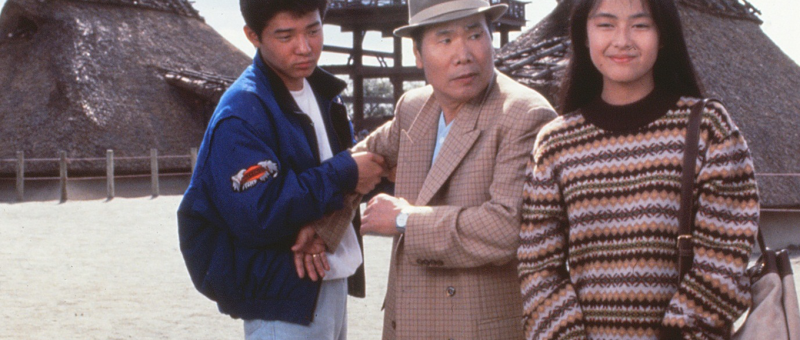
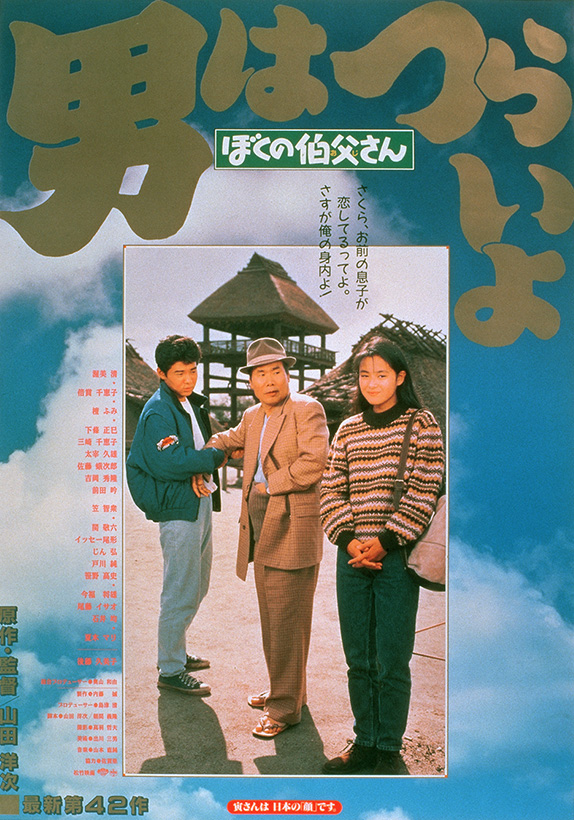
“My uncle was born a kind man, but his kindness is intrusive. He’s short tempered too, so often his kindness ends up causing a fight” according to the introduction given by Mitsuo (Hidetaka Yoshioka), nephew of the titular Tora-san (Kiyoshi Atsumi) in the 42nd instalment in the long running series, Tora-san, My Uncle (男はつらいよ ぼくの伯父さん, Otoko wa Tsurai yo: Boku no Ojisan). People may say he’s “an oddball”, but just recently, Mitsuo claims, he’s learned to appreciate his uncle’s peculiar charms. Up to this point, the series had followed a familiar pattern in which Tora-san has an encounter on the road and returns home to visit his family in Shibamata falling in love with an unattainable woman along the way. My Uncle, as the title perhaps implies, shifts the focus away from Tora directly towards his wayward nephew Mitsuo now a moody teenager studying to retake his university entrance exams. 

The problem is, Mitsuo is having trouble concentrating because he’s fallen in love. Izumi (Kumiko Goto) was a year below him in high school but after her parents got divorced she moved away and is currently living with her mother (Mari Natsuki) who runs a hostess bar in Nagoya. Mitsuo has been wanting to go and visit but his father, Hiroshi (Gin Maeda), has banned travel until after his exams and his authoritarian ruling has placed a strain on their relationship while Sakura (Chieko Baisho), Mitsuo’s mother and Tora’s younger sister, is getting fed up with his moodiness. That might be why she asks Tora to have a word with him on one of his rare visits, hoping Mitsuo will be able to talk frankly to his uncle about things he might not want to discuss with his parents. Only when Tora’s uncle (Masami Shimojo) and aunt (Chieko Misaki) point out the dangers does she realise her mistake. Perhaps you might not want your son to receive the kind of advice a man like Tora might give. Their misgivings are borne out when Tora brings him home a little the worse for wear after teaching him how to drink sake (and flirt with waitresses). 

Rather than Tora it’s Mitsuo we follow as he ignores his parents and goes off to find Izumi on his own. Mitsuo is not Tora, however, and he’s still fairly naive, unaware of the dangers inherent in a life on the road which is how he gets himself into a sticky situation with a man who helped him (Takashi Sasano) after he had a bike accident but turned out to have ulterior motives. After discovering that Izumi has gone to live with her aunt (Fumi Dan) in the country and finally arriving, Mitsuo begins to have his doubts. She wrote to him that she was lonely so he jumped on his bike and came, but now he wonders if that was really an OK thing to do or if she might find it a little excessive, even creepy. Her neighbours may gossip after seeing a (slightly) older boy from Tokyo suddenly turn up on a motorbike, maybe like Tora he’s acted on impulse out of kindness but has accidentally made trouble for her?

Meanwhile, Sakura and Hiroshi are at home worried sick, aware their son has grown up and evidently has some important rite of passage stuff to do, but it would have been nice if he’d called. Everyone’s used to Tora breezing in and out of their lives and it’s not as if they don’t worry, but it’s different with Mitsuo. Luckily and through staggering coincidence Mitsuo ends up running into Tora who, perhaps ironically, gets him to phone home and then starts helping him out with his youthful romantic dilemma. Though some of the advice he gives is a little problematic, there’s a fine line when it comes to being “persistent” in love, he is nevertheless supportive and proves popular with Izumi’s mild-mannered aunt and lonely grandfather-in-law (Masao Imafuku) who subjects him to a day-long lecture about traditional ceramics which he listens to patiently because as he says, old people are happy when someone listens to them. The problems are entirely with Izumi’s extremely conservative school teacher uncle (Isao Bito) who appears to terrorise his wife and objects strongly to Mitsuo’s impulsive gesture of love, bearing out Mitsuo’s concerns in implying that he’s endangering Izumi’s reputation, though apparently more worried about how it looks for him as a school teacher if she’s caught hanging out with a motorcycle-riding “delinquent”. The final straw is his telling Mitsuo off for neglecting his studies, insisting no one so “stupid” could ever hope to go to uni.

Left behind, Tora tries to defend Mitsuo to the snooty uncle, telling him that he’s proud of his nephew for doing something kind even if others don’t see it that way, but the uncle simply replies that they obviously disagree and abruptly walks off. Perhaps there’s no talking to some people, but Tora does what he can anyway. Mitsuo gains a new appreciation for his kindhearted family, not to mention his eccentric uncle. “Trips make everyone wise”, Tora tells Hiroshi, well except for some people, he later adds before once again getting literally cut off from everyone waiting for him back in Shibamata. The signs of bubble-era prosperity are everywhere from Mitsuo’s motorbike and comparatively spacious family home to the increased mobility and the upscale interior of Izumi’s mother’s “snack” bar, but Tora is still a post-war wanderer bound for the road, drifting whichever way the wind blows him.


Tora-san, My Uncle streamed as part of this year’s Japan Cuts.

Original trailer (no subtitles)

Tora-san Meets the Songstress Again (男はつらいよ 寅次郎相合い傘, Yoji Yamada, 1975)

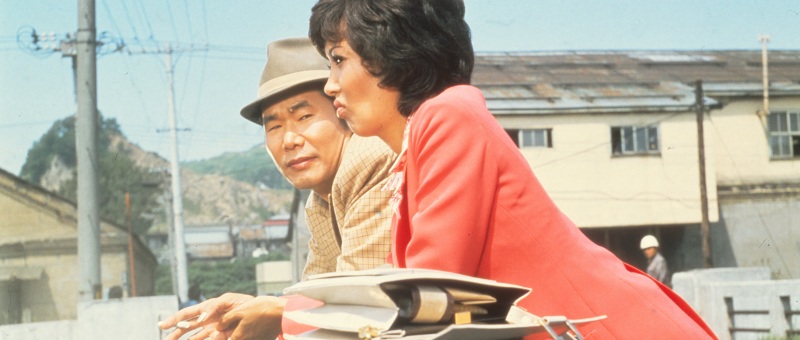
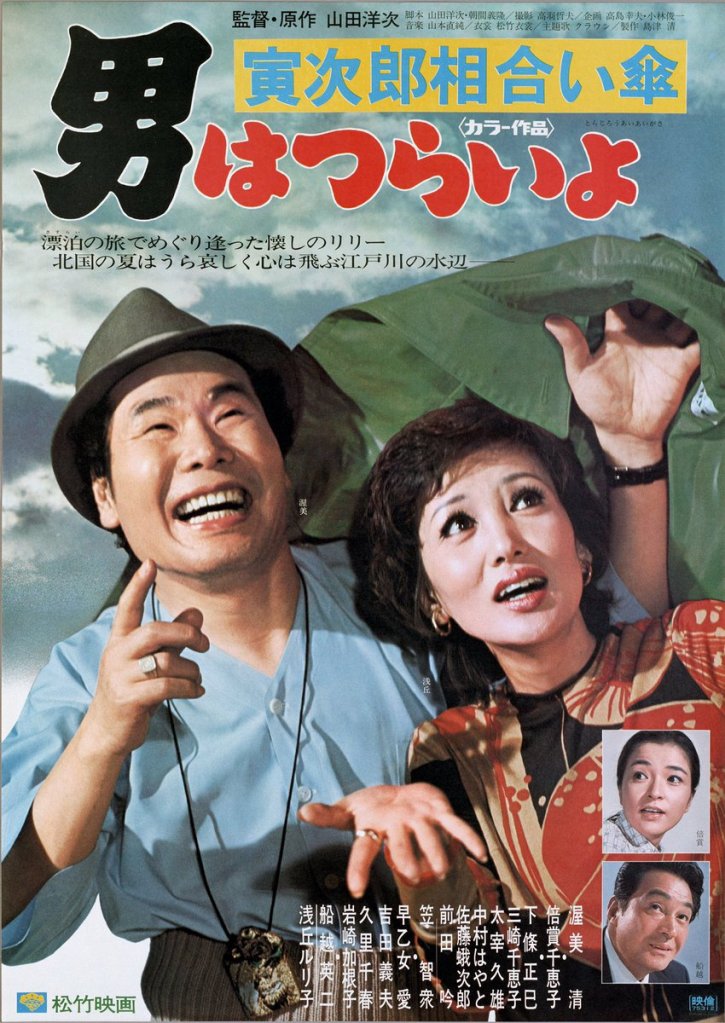
Spanning 48 films and almost 30 years from the middle of the economic miracle to the post-Bubble depression, the Tora-san series provided a certain kind of comforting stability with its well established formula that saw the titular travelling salesman alternately hit the road and return home to his wholesome family waiting and worrying in Shibamata, always glad to see him but also anxious as to what kind of trouble he’ll be causing this time around. Among the most melancholy of the series, Tora-san #15, Tora-san Meets the Songstress Again (男はつらいよ 寅次郎相合い傘, Otoko wa Tsurai yo: Torajiro Aiaigasa, AKA Tora-san’s Rise and Fall) sees him flirt with the idea of settling down while others wrestle with the costs of the salaryman dream and the contradictions of the post-war era. 

Yamada opens, however, with an exciting dream sequence in which Tora (Kiyoshi Atsumi) re-imagines himself as a heroic pirate saving his family members, and all the residents of Shibamata, from enslavement by some kind of evil capitalist villain. He wakes up and leaves the cinema, but Shibamata is perhaps on his thoughts once again acting as it does as a kind of “port” in his life of perpetual wandering. For the moment he’s travelling with a depressed salaryman, Hyodo (Eiji Funakoshi), whom he rescued at a train station fearing he may have been about to take his own life. Meanwhile, back in Shibamata, Tora’s old friend Lily (Ruriko Asaoka) has come looking for him at the dango shop apparently now divorced, tearfully explaining to Tora’s sister Sakura (Chieko Baisho) that she wasn’t well suited to being a housewife after all and is planning to head back out on the road as an itinerant singer. 

Perhaps ironically, Tora is angry with Hyodo for causing worry to his family by disappearing without notice, eventually ringing Sakura to tell her to ring Hyodo’s wife and let her know he’s alright (why he doesn’t just ring himself is a mystery, and in any case he only has the one coin for the payphone so runs out of time to explain). What we can infer is that Hyodo has in a sense achieved the “salaryman dream” but it’s left him feeling empty and unfulfilled. Mrs. Hyodo appears to be very prim and proper, their home spacious and tastefully decorated. When Sakura calls two men from her husband’s company are with her trying to figure out where Hyodo could have gone. She explains that her husband is a timid man and earnest, it’s unlikely he’s gone off with another woman and it’s out of character for him go AWOL from work so she’s at least very relieved to learn he’s alive even if Tora ran out of time to say where they were. Hyodo isn’t really sure anyone’s missing him, and as we later discover his flight is part mid-life crisis in that he’s heading to the hometown of his first love. He assumes she also will have married and has no illusions of a romantic reunion but simply wants to make sure she’s happy (as he, presumably, is not). Discovering she’s a widow gives him pause for thought, but on seeing her he realises the futility of his situation and resolves to return home to his dull and conventional salaryman life. 

It’s a huge source of irony to Tora that anyone might envy him. Indeed, Mrs. Hyodo quite snobbishly insists on asking Sakura about Tora’s company joking that “he can’t just be a pedlar” much to Sakura’s embarrassment. But that sense of freedom and the open road appears to be something Hyodo is looking for, childishly romanticising hardship, finding sleeping on park benches and helping Tora pull salesman’s scams in the street exciting rather than worrying (he could after all always just go home). Yet he also envies Tora for having such a loving and forgiving family, explaining that his now look down on him because he’s been demoted at work, as if they only value him for what he represents an embodiment of the salaryman dream. Lily too is as much in love with Tora’s family as anything else, though the complex relationship between the pair begins to scandalise the conservative local community. Sakura frames it as a joke but puts it to Lily that it would be nice if she and Tora could marry so she’d be a part of their family. Lily unexpectedly agrees, overcome with emotion, but Tora is his old insensitive, if perhaps perceptive self, declaring that they’re too alike. Like him she’s a bird meant to wander. She’d only stay until she felt ready to fly. 

Tora-san and Lily are wandering souls cast adrift in the post-war era, unable to find firm footing while Hyodo’s existential angst suggests the salaryman dream is not the answer either. Only Sakura and the Kurumas seem to be doing well enough, living their ordinary, wholesome lives in Shibamata. “She probably has problems we don’t know about” Tora’s aunt remarks watching Queen Elizabeth II waving gracefully on the television, lamenting that it must be tiring to have to stand around so long. Everyone has problems but they carry on. In Shibamata they try to be kind and especially to big-hearted men like Tora no matter what kind of trouble they may cause.


Tora-san Meets the Songstress Again streamed as part of this year’s Japan Cuts.

Original trailer (English subtitles)

Tora-san, Our Lovable Tramp (男はつらいよ, Yoji Yamada, 1969)

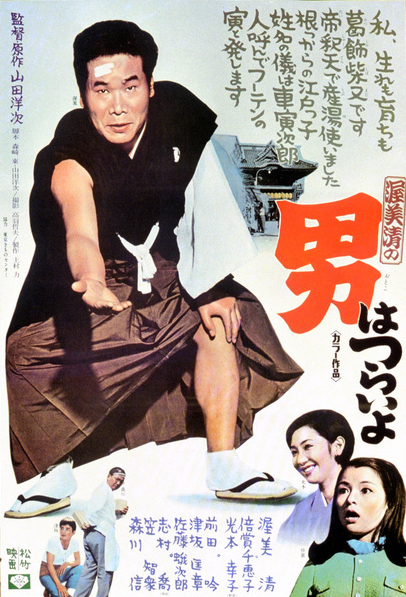
“It’s tough being a man” according to the Japanese title of the long running series affectionately known as “Tora-san” to its many fans. Tora-san began as a TV drama broadcast in 1968-9 in which the hero died of a snakebite in the very last episode much to viewers’ disappointment. Director Yoji Yamada then resurrected the loveable travelling salesman and made him the star of a reboot movie which proved so popular that it spawned a 48-film series which lasted until the death of star Kiyoshi Atsumi at the age of 68 in 1996. 

Yamada directed all but two instalments in the series each of which broadly follow a similar pattern to that introduced in the first film following the eponymous Tora as he gets himself mixed up in some kind of trouble, returns home to visit his family in Shibamata, and falls in love with a beautiful but unobtainable woman known as the “Madonna” in the series’ “mythology”, if you can call it that. At the beginning of Tora-san, Our Lovable Tramp (男はつらいよ, Otoko wa Tsurai yo), Torajiro Kuruma (Kiyoshi Atsumi) or “Tora-san”, explains that he’s been in a wistful mood thinking about his hometown while viewing the cherry blossoms and has decided to go back to Shibamata for the first time in 20 years having left swearing never to return after arguing with his father who has since passed away as has his brother. Tora-san’s only remaining family members are his younger sister Sakura (Chieko Baisho), a small child when he left but now a grown woman in her mid-20s, and an uncle (Shin Morikawa) and aunt (Chieko Misaki) who’ve been looking after her and run a small dango shop. 

Being away for 20 years necessarily means that Tora has been on the road since he was a young teenager back in 1949 when Japan was still very much in the throws of post-war chaos, in contrast to the increasingly prosperous nation it has since become. On his return to town he is relieved to discover that the local priest (Chishu Ryu), as well as his aunt, still remember and recognise him but shocks them all with an incongruous, and frankly over the top, show of politeness as he expresses gratitude and filial piety towards his uncle and aunt for having raised his sister but then immediately afterwards tries to sell them some of his tacky sales goods including some kind of electronic bracelet with supposed health benefits. Nevertheless, the family, including his sister Sakura who works as a typist at an electrical goods company, are very glad to seem him after all these years. 

Hardly in the house five minutes before peeing in the garden instead of using the bathroom like a regular person, Tora is already undercutting the image he first presented and causing trouble with the neighbours. The major drama occurs when he ends up accompanying Sakura to an omiai arranged marriage meeting set up by her boss in a fancy hotel. Sakura hadn’t been keen to go to the omiai, her uncle and aunt assume because arranged marriages are already outdated, but as we later discover she’s developed a fondness for factory worker Hiroshi (Gin Maeda) who lives in the house directly behind theirs. The uncle and aunt encourage the match because it’s an opportunity to marry up, viewing it as better than Sakura could otherwise hope for as an orphan with no dowry. Tora agrees with them, encouraging his sister not to write off tradition, but he has little understanding of the etiquette for these kinds of situations and quickly scandalises the refined, upper-class family by drinking far too much, making bawdy jokes about the composition of Chinese characters, and using vulgar language. As expected the suitors decide not to take things further, though luckily Sakura’s boss does not seem to mind or hold Tora’s behaviour against her.

On the road since he was little more than a child, perhaps it’s no wonder that Tora struggles when trying (or not) to adapt to the rules of civilised society though as he later tells us, he also had a traumatic childhood beaten by his father who resented him for being illegitimate, conceived during a drunken indiscretion with a geisha (Sakura is a half-sister born to his father’s legal wife). At one point he loses his temper completely and finds himself slapping Sakura, accidentally starting a mass brawl in their courtyard, though it’s obvious afterwards that he deeply regrets his behaviour and despite being forgiven by his ever patient sister feels as if it might be better to leave again before he makes even more trouble for his family. 

Tora is, however, perhaps good trouble in that his heart is (broadly) in the right place even if he makes a lot of mistakes. He meddles in Sakura’s love life and almost destroys her chance of romantic happiness, but it all works out in the end and he might have a point in implying that without his mistaken intervention she and Hiroshi would have just gone on in silent longing. Nevertheless, he remains a romantically naive figure, falling for the elegant daughter of the local priest (Sachiko Mitsumoto) who surprises him by expressing a fondness for low entertainment but in real terms is never going to marry a man like Tora. “Mine’s a hard world” he explains to a boatman, sadly making his way back towards the road filled with a deep sense of despair but pressing on all the same, trying his luck wherever he goes just another plucky, though no longer so young, guy, left behind by the rapid pace of the post-war economic miracle.  


Tora-san, Our Lovable Tramp streamed as part of this year’s Japan Cuts.

Original trailer (English subtitles)

The Village (同胞, Yoji Yamada, 1975)

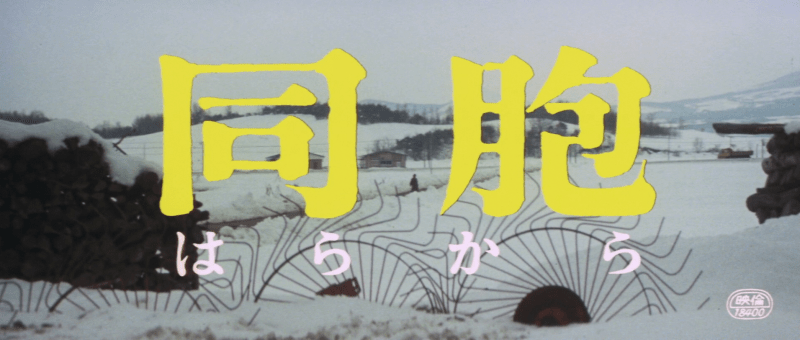
The Village posterBest known for the long running Tora-san series, Yoji Yamada has often been disregarded by international critics for a perceived over indulgence in sentimentality. Nevertheless, his films are often at pains to capture a Japan which is changing with a noted ambivalence towards the results of those changes. Home From the Sea had rooted itself in the difficult decision of a young couple in realising that their way of life was no longer sustainable in a rapidly modernising economy. The Village (同胞, Harakara) returns to a similar theme, once again harping on “furusato” while the conflicted younger residents of a farming village struggle with the decision to accept the life passed down to them by their parents or abandon it in favour of the bright lights of an urban future.

Narrated by Takashi (Akira Terao), a young farmer and president of the local youth club, The Village revolves around one heady spring in which the arrival of a sophisticated woman from Tokyo injects additional stimulation into the sometimes stagnant community. Takashi, in many ways a very typical resident of Matsuo and many other rapidly depopulating rural villages like it, has taken over his family dairy farm following the death of his father when he was relatively young. His brother, Hiroshi (Hisashi Igawa), took a factory job to help make ends meet and put Takashi through school but has now become embittered and resentful as the widowed father of two young girls. Trapped by circumstance he berates Takashi for his diffidence in remaining uncommitted to farm life while perhaps dreaming of something better that he is too afraid to pursue.

The arrival of Hideko Konno (Chieko Baisho) seems to give Takashi a new sense of purpose. Hideko works for an itinerant theatre company based out of Tokyo which makes a point of taking shows to remote areas which might not ordinarily get much access to the arts. The snag is that the locality will have to take the responsibility of producing the show and absorbing the shortfall should they fail to sell enough tickets to cover costs. Takashi is tempted but he’s also well aware of the risks – the investment is sizeable given the relative poverty of the rural area and the risks involved with failure extreme.

Yamada places the dilemma surrounding whether or not to produce the show at the forefront, but the questions are bigger than they might at first seem. It has to be said that farming, whatever its rewards, is an extremely hard life. As a character puts it in the emotively titled play “Furusato”, it’s disheartening when you get a bad harvest and all your work goes for nothing but it’s almost worse when the harvest is good and the value of your work drops exponentially. For Takashi and the others, the youth association is a much needed social outlet even if many of them regard it as something of a joke and rarely get around to doing very much with it. The idea of the play is attractive to them for several reasons, having something more interesting to do not the least among them, not to mention offering a valuable break in routine in what can often be an overly ordered and somewhat stagnant existence.

However, the very same reasons the play appeals to the youngsters are the ones their elders find suspicious. Having made their peace with rural life and learned to adapt to its rhythms, the older generation worry that the young ones are being swayed by outside influences and neglecting their work in favour of idle pursuits. Meanwhile, many of the youngsters have already left to try their luck in the cities, some of them returning and bringing new experiences back with them while others resolve to remain where the lights are brighter.

Setting the scene, Yamada reminds us the factories have long been encroaching on farmland and that this “ancient” way of life is becoming ever harder in a rapidly modernising economy, but through their involvement with the play and its extremely close to home themes, the members of the youth association are finally able to look at their village through new eyes, seeing not only its immense visual beauty for the first time but learning to reappreciate the value of community and friendship. Life in the city might be more glamorous but perhaps it’s no less hard and only lonely in a different way. At once a celebration of and lament for a changing rural landscape, The Village asks an accidentally profound series of questions about life and happiness but once again puts its faith in goodhearted people creating meaning from togetherness in a world that might otherwise set them apart.


Original trailer (no subtitles)

Home from the Sea (故郷, Yoji Yamada, 1972)

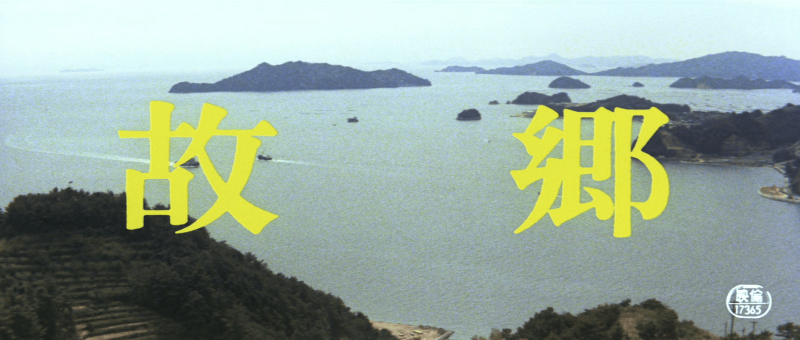
Home from the sea still 1By the early 1970s, Japan was well on its way to an economic recovery with memories of post-war privation fading and modern consumerism rapidly taking hold in the national mindset. Contemporary cinema understandably saw this as a good thing, that brighter times were coming and soon enough everyone would be enjoying a comfortable, prosperous life. The future, however, was not always evenly distributed and modernisation brought with it problems as well as solutions. Yoji Yamada’s Home from the Sea (故郷, Kokyo/Furusato*) paints a melancholy picture of a changing Japan as an earnest young couple are forced to consider leaving their beloved hometown to seek their fortunes elsewhere.

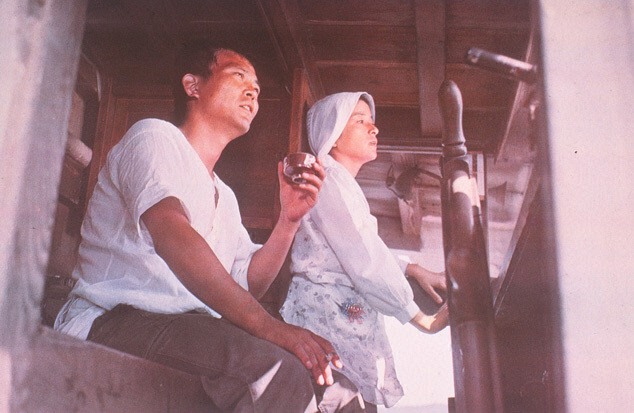
Seiichi Ishizaki (Hisashi Igawa) owns a small transport boat he uses to ferry rocks between construction sites. He is sometimes joined by his wife, Tamiko (Chieko Baisho), who serves as the boat’s engineer. The couple live with Seiichi’s elderly father (Chishu Ryu) and their two daughters on a small island in the Inland Sea. Times are hard. Fuel costs are increasing making Seiichi’s business much less profitable while his boat is old and slow. The maintenance costs alone are difficult to contemplate and the family cannot afford to invest in one of the new steel boats which are currently sucking up most of the available work. Seiichi’s younger brother who used to work on the boat with him has already given up and moved on, taking his wife and children to another town where he works in a factory. Many people seem to think Seiichi would do well to do the same, but he is stubborn. He refuses to be pushed out of his ancestral home and occupation simply because of the unfairness of his times.

A little way into the film, a friendly fishmonger, Matsushita (Kiyoshi Atsumi), who often stops by to have dinner with the family expounds on the beauty of the town. He can’t understand why anyone would want to leave somewhere as lovely as this. Unlike the Ishizakis, Matsushita wasn’t born on the island but in Korea – his parents died during the repatriation after the war and he’s been getting by on his own ever since. He’s done many different jobs and lived in many different places but has chosen to make his home here. A fishmonger’s job is probably always safe (to an extent, at least) in a small harbour town, but Seiichi’s isn’t and he needs money to feed his family. There is no other work on the island, and so there is no way to stay without making the boat pay.

The boat, however, is already 19 years old. Transport ships are only intended to last 10. The engine is faulty and the hull is in desperate need of repair but a visit to the original shipwright reveals that to do so would not be cost effective. The best thing to do would be to buy one of the shiny new steel vessels like their neighbour’s, but that’s far out of Seiichi’s reach. All along the shoreline, you can see the charred remains of boats belonging to those like Seiichi who’ve finally come to the conclusion that their era has passed.

“Can’t beat the Big” is a local mantra. In early ‘70s Japan, counterintuitively enough, size is everything. Not just the boats themselves, but the fleets and the architecture of life. You can’t survive as your own boss anymore because the little guy alone has no power when corporations and conglomerates are extending their reach even into tiny islands. Seiichi goes to have a look at the factory in Onomichi to which he’s been recommended by a friend. It’s not as bad as he thought, but it’s huge and filled with hundreds of identically dressed faceless men. The food is awful, and they’d have no friends. Nevertheless, needs must. If you can’t fight the Big you’ll have to become a part of it or it’ll swallow you whole.

Still the sadness of leaving one’s hometown behind against one’s will with one eye always looking back towards the shoreline is difficult to bear. Seiichi’s father, who had been looking after the children and was therefore extremely close to them, will be staying behind with no one left to look after him save the community itself. Progress might be a good thing, but there are costs too and small town Japan is one of them. It’s sad, but there’s nothing you can do about it. The post-war world might not require so much “gaman” anymore, but bearing the demands of modernity just might.


*According to Shochiku’s website and the narrator in the trailer, the official title is “Kokyo” which is the Sino-Japanese reading of the kanji (故郷) but it’s also often listed under the title “Furusato” – the slightly more emotive native Japanese reading.

Original trailer (no subtitles)

Shitamachi no Taiyo (下町の太陽, Yoji Yamada, 1963)

(C) Shochiku 1963

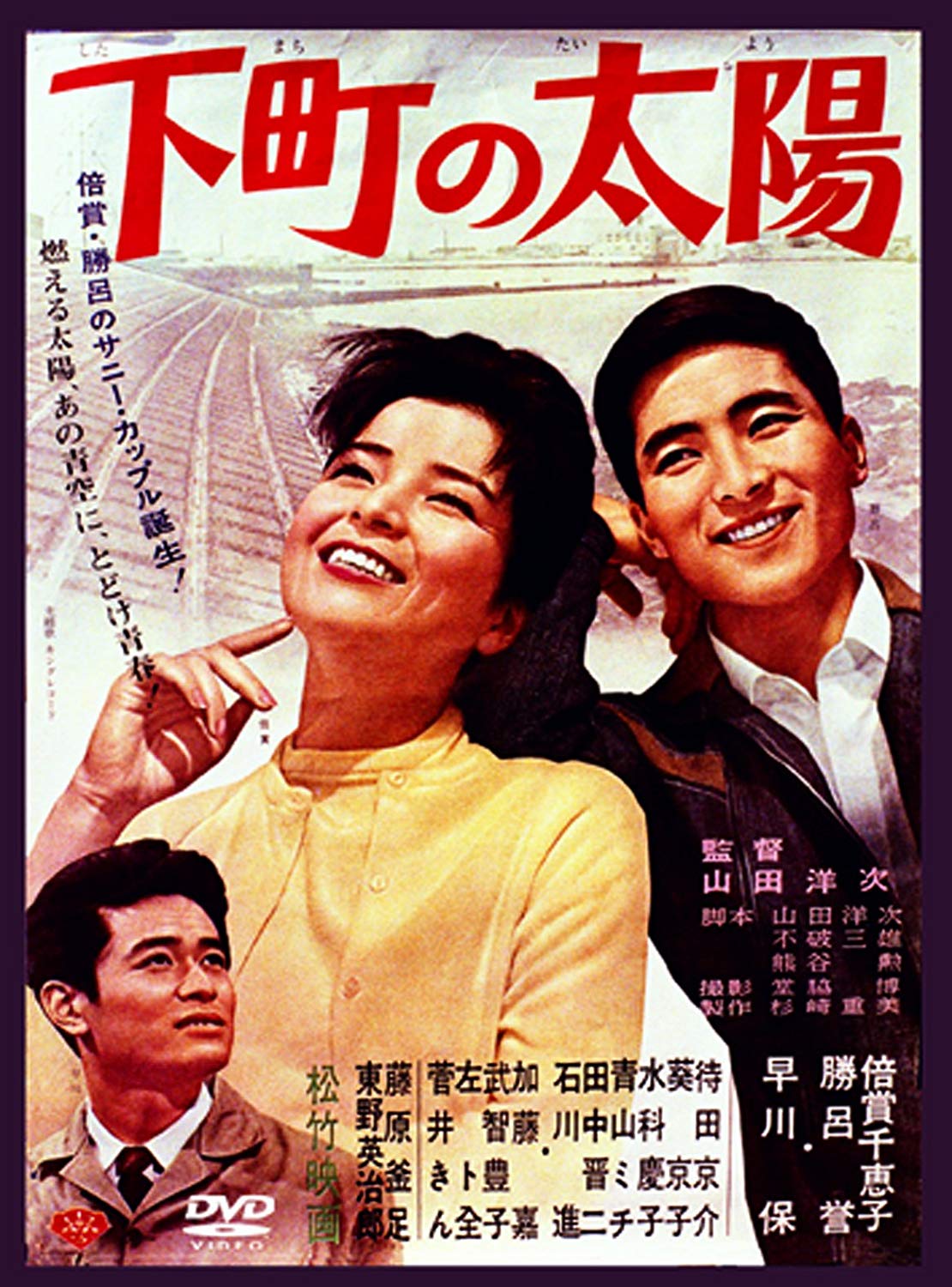
Shitamachi no Taiyou DVD coverYoji Yamada’s debut feature, The Strangers Upstairs, was very much of its time as it attempted to capture the aspirational fighting spirit of the post-war era through the struggles of a nice young couple who are trying to “get on” and escape their humble origins for the salaryman dream through achieving the goal of home ownership as quickly as possible. His second film, Shitamachi no Taiyo (下町の太陽, also known as The Sunshine Girl / Sunshine in the Old Neighbourhood), takes a slightly different look at a similar issue as a young woman from Shitamachi – a working class industrial area on the outskirts of Tokyo, agonises over her future prospects as she considers a marriage to her longterm boyfriend who has ambitions to join the salaryman revolution.

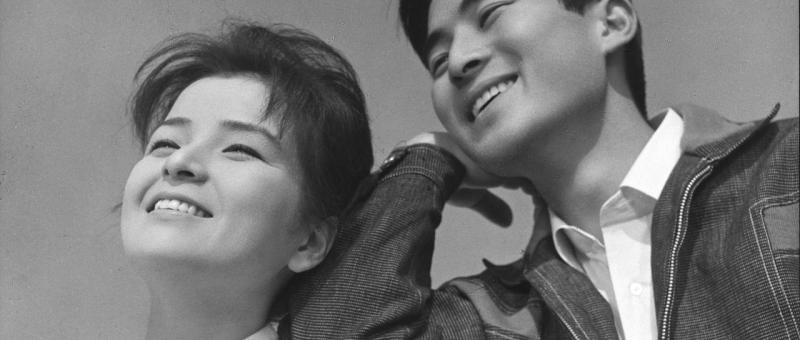
Yamada opens with shots of Shitamachi and its prominent smokestacks while the now famous song plays in an instrumental version over the credits, before abruptly shifting to visions of the upscale Ginza where Machiko (Chieko Baisho) and her boyfriend Michio (Tamotsu Hayakawa) are enjoying a demonstration of an extraordinarily expensive, state of the art radio before retreating to a cafe where they agree that sometimes its more fun to “aspire” to things than actually obtain them. After all, there’s no way they could ever afford the diamond rings they walked past on their way out of the department store unless they decided to rob the place. Both Machiko and Michio are residents of Shitamachi and work in a local soap factory. Michio, however, has his sights firmly set on the path to a middle-class life and is planning to take the exam for a promotion to head office – though he lacks qualifications, Michio is confident because he’s studying hard (though more so because his dad and his section chief served together in the war so Michio is sure a good word will be put in for him).

Despite her fondness for Michio, Machiko has her doubts about his overriding ambition to get out of Shitamachi. Since her mother died, Machiko has been the lady of the house and primary caregiver for her naughty little brother Kenji (Joji Yanagisawa) while her older brother Kunio (Toshio Suzuki) is the family brainbox and also planning to bust out only through the path of education rather than advancement. Having left education behind, Machiko is happily contributing to the family finances with her job on the packing line at the soap factory which is, all things considered, not too bad – the work may be dull and methodical but also relatively quiet and stress free, not to mention sweet smelling. Nevertheless, Machiko does not necessarily want to work on the shop floor all her life but knows her opportunities are limited.

This fact is one cruelly brought home to her by a moody Michio when descends into a major sulk on learning that he hasn’t passed the test for head office because another of his colleagues outdid him – both in terms of his study ranking and in one upping him in having a direct connection to the director. While Machiko tries her best to sympathise and put up with his moody petulance, Michio chooses to throw her sympathy back in her face by abruptly announcing that she can’t understand the pain he’s going through because careers are irrelevant to women who only use them as a stopgap until they get married. Thoroughly annoyed, Machiko leaves Michio to his wallowing before things get any worse but she can’t argue with the fact that he’s only said what most people think.

Still, Machiko isn’t even sure she wants to get married. One of her friends, Kazuko (Kyoko Aoi), recently won the jackpot – she married a nice man who did get a promotion to head office and won the housing lottery for a home on one of the shiny new “danchi” – brand new apartment complexes for upwardly mobile young couples and the very embodiment of post-war aspiration. However, when Machiko and a friend visit the new bride they find that she is not quite as happy as one might expect. Though married life is peaceful enough and she and her husband evidently get on, Kazuko is also intensely lonely. With her husband away at work all day and often out playing golf with colleagues on Sundays too (not to mention after hours drinking and miscellaneous get togethers), there’s precious little for Kazuko to do, stuck at home all day cooking and cleaning while waiting for her husband to return. Having moved to the danchi she’s also lost her community and is no longer close enough to her friends to see them very often.

Meanwhile, Machiko is also somewhat disturbed by Kazuko’s collection of expensive cosmetics which her husband has instructed her to buy because he’s “very particular” about her appearance. Kazuko makes sure her makeup is on point before her husband gets home because that’s apparently what he likes. Machiko, however, does not like this – to start with, she thinks Kazuko looks better without. Not that there’s anything wrong with wearing makeup because you want to wear it, but the idea of wearing it because someone told you to and you’re worried they’ll “get bored” with your face doesn’t strike her as a particularly healthy relationship dynamic. If this is what a love marriage is like, perhaps Machiko would rather do without.

Despite her otherwise close relationship with Michio, it quickly becomes obvious that she does not love him and if she decides to marry him it will be because it’s the “sensible” decision rather than any great romantic desire. Annoyingly enough, Michio hasn’t really even asked her, he just assumes they will marry once he gets his promotion. He also assumes that Machiko, like him, will want to shake the dust of Shitamachi off her feet for good for the bright lights of Tokyo. Machiko, however is not so sure. “Getting on” is one thing and there’s nothing wrong with “aspiration”, but that doesn’t mean you need to look down on the people who come from the same place as you – after all, the sun still shines even in Shitamachi and there’s nothing wrong in choosing to be happy here rather than always chasing an unattainable dream of conventional success.

Another possibility presents itself when Machiko meets an unrefined boy who has an ordinary job in the steelworks. Though their first meeting did not make a good impression – he creepily chased her off a train and then made a mess of trying to explain why, they later bond when she realises he has befriended her troubled little brother and the pair then end up spending a pleasant evening together which is far more romantic than any of her dull and conventional outings with Michio. Then again the choice she faces isn’t between two men but whether or not to embrace her own ability to make a definitive choice about her future. What she rejects is cold and selfish path of men like Michio who only want to get ahead and are willing to step on anyone who gets in their way to make it happen. Machiko doesn’t want fancy radios and diamond rings, she just wants to not have to worry too much about money and for someone to actually listen to what she’s saying. She doesn’t want to end up like Kazuko, all alone in a sparkling apartment with nothing to do but knit. When Michio tells her to shut up and do as he says because he’ll definitely make her happy, the choice seems clear. Hard work, community, and maybe the fiery boy who seems determined to get a yes rather than assuming he already has one. Who wouldn’t want to live here?


Original trailer (no subtitles)

https://www.youtube.com/watch?v=3GP13Tmm6TA

Famous title song performed by Chieko Baisho