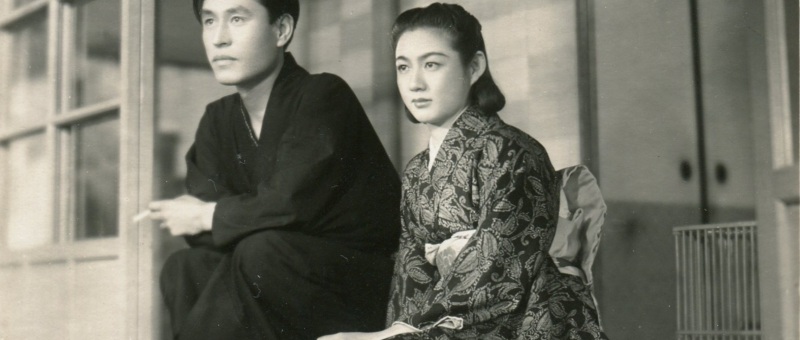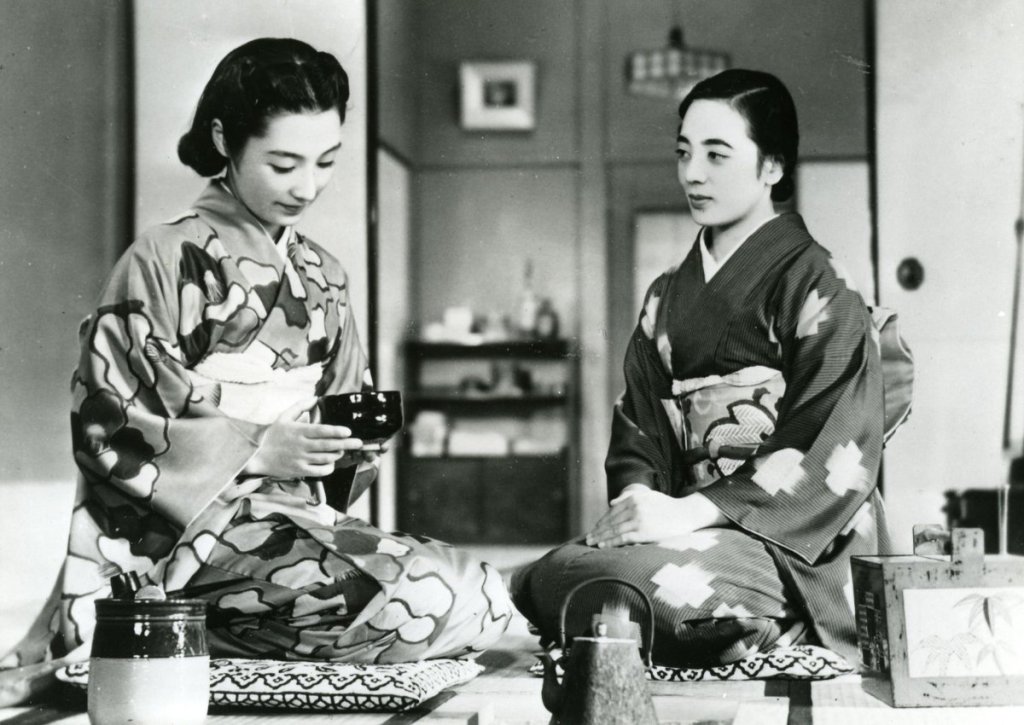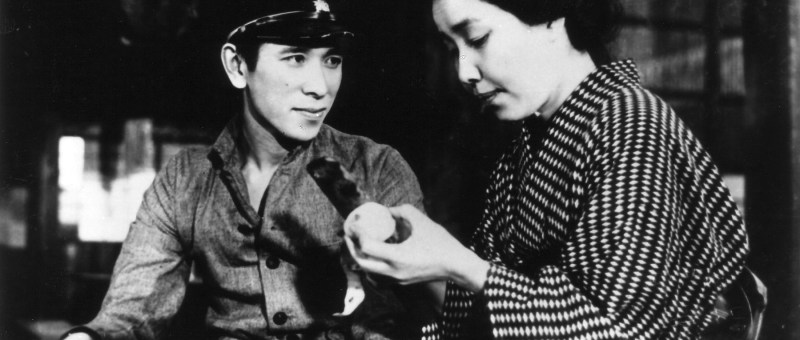
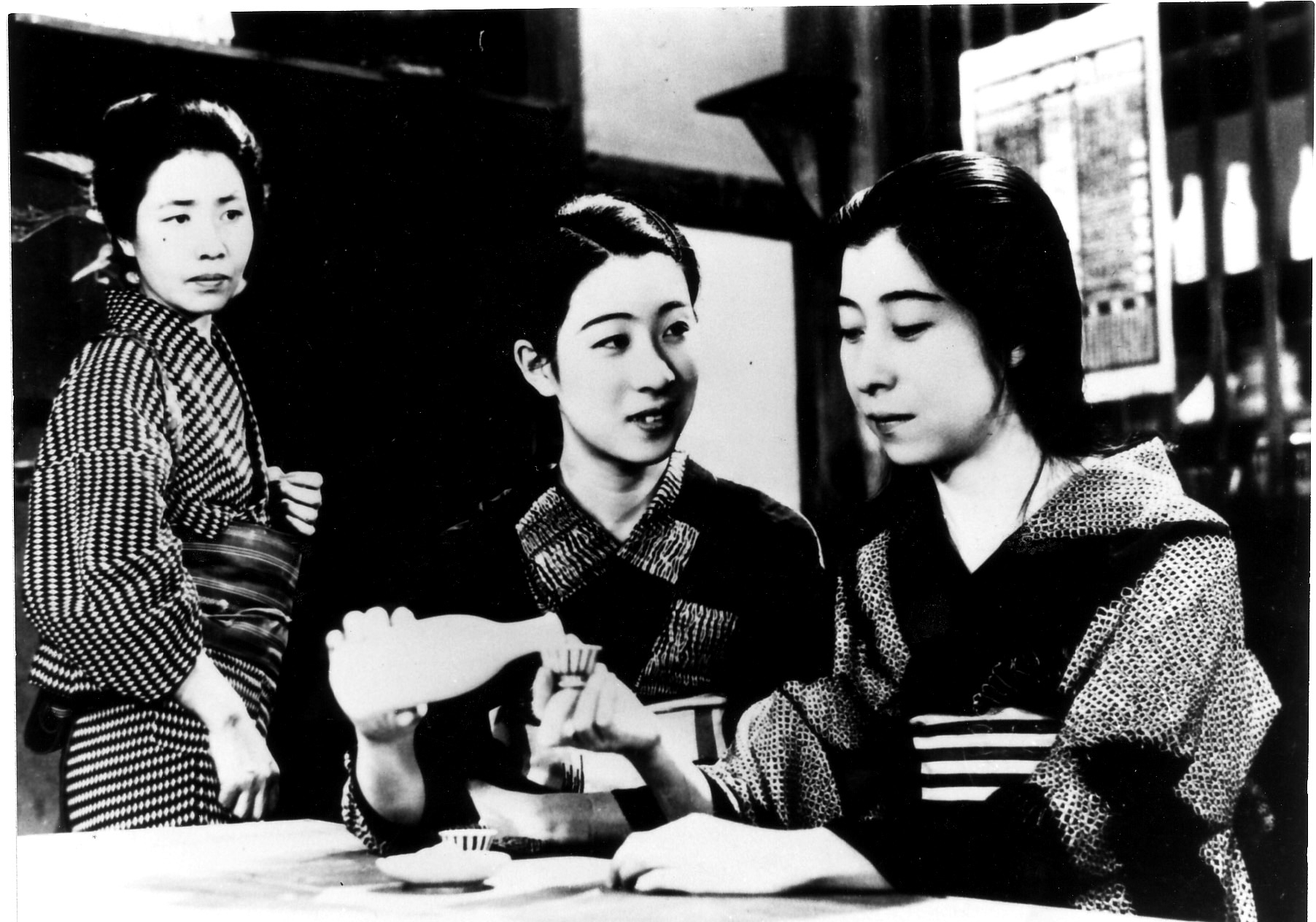
A Story of Floating Weeds (浮草物語, Yasujiro Ozu, 1934)

Japanese cinema is filled with tales of maternal self-sacrifice which is more often than not rejected by ungrateful children unable to understand the depths of a mother’s love. More contrarian than most would have it, Yasujiro Ozu’s abiding interest is with fathers and particularly with those who are flawed but loving. 1934’s A Story of Floating Weeds (浮草物語, Ukigusa Monogatari) which he later remade in colour 25 years later, is a tale of one such father and another of his “Kihachi” movies, but situates itself in a liminal space defined by Kihachi’s precarious position as a member of a virtual underclass of travelling players. 

Kichachi’s (Takeshi Sakamoto) troupe is returning to a small town after four years where they hope to stay a year. Unbeknownst to the other members, Kihachi has an ulterior motive in that the town is home to his former lover Otsune (Choko Iida) and his illegitimate son, Shinkichi (Koji Mitsui) who thinks that Kichachi is just a family friend and that his father was a civil servant who has now passed away. As is usual in travelling player stories, the troupe is in crisis and on the verge of disbanding, so Kihachi’s frequent absences do not go unnoticed, particularly by his current mistress Otaka (Rieko Yagumo) who has a petty and vindictive streak. When one of the veteran actors spills the beans, she marches straight over to Otsune’s to make trouble but Kihachi, sick of her possessive behaviour, breaks up with her. To take revenge, she bribes another actress, Otoki (Yoshiko Tsubouchi), to seduce Shinkichi. 

The central issue is one of Kihachi’s frustrated paternity. It’s clear that he couldn’t be physically present for his family but has always done his best to support them financially while Otsune runs a small restaurant. They are not married and their present relationship seems to be more one of companionship than romance but whatever label they might put on it they get along well and both deeply care for their son. While in town, Kihachi busies himself with fatherly activities, playing board games with Shinkichi or fishing in the local stream. It pains him that his visit may be short and that Shinkichi, who seems to like him a great deal, has no idea he is his son. 

That is largely because Kihachi’s only hope in life is that he spare Shinkichi from the depressing life of a travelling player. He has been paying for his education and Shinkichi is now almost a man, apparently a post-graduate student at an agricultural school. When he expresses an interest in coming to see the show, Kihachi seems panicked and tells him the kinds of shows he does are not for people like him and that he should stay home and study. Shinkichi laughs at the fatherly advice but little knows that it comes from a place of shame. Travelling players are regarded as an underclass. They are often barred from inns and not considered polite company.

“My son belongs to a world better than yours,” he shouts to Otaka during a heated, rain-drenched argument during which she threatens to expose him. Otoki, the other actress, was originally reluctant to enact Otaka’s plan, but later found herself falling for Shinkichi. Perhaps a young man bedding a travelling actress isn’t a grand shame or much of a problem for him, at least not so much as to provoke Kichahi’s despair in exclaiming he has caused his son’s ruin, but destroys his father’s hopes of keeping him out of that untouchable world for which he had sacrificed so much including his paternal love. 

Yet like the ungrateful child of a hahamono, on learning the truth Shinkichi rejects his sacrifice and feels only his abandonment, refusing to believe that any father could be so “selfish”. The rejection comes at a low point, immediately after Kihachi loses the acting troupe and considers returning to Otsune for a settled, ordinary life as a husband and father. Otsune scolds her son, reminding him that all he wanted was to give Shinkichi the settled, ordinary life that he could never live as a travelling player. It seems this life will always elude him, he is barred from his own home and must forever wander. Being a good father means he must keep far away from his son, a floating weed with no place to call home.
My Elder Brother (私の兄さん, Yasujiro Shimazu, 1934)

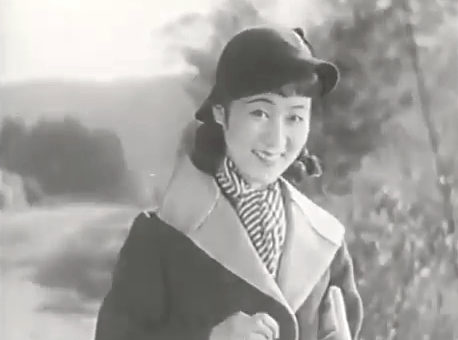
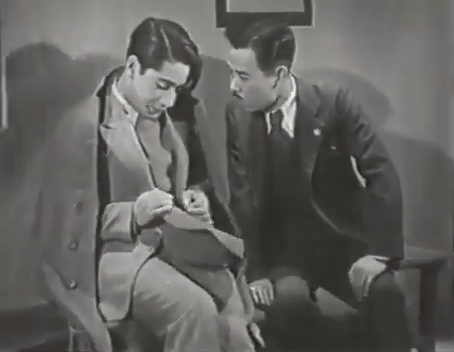
A wastrel son and runaway daughter get a few lessons in filiality in Yasujiro Shimazu’s genial ‘30s comedy, My Elder Brother (私の兄さん, Watashi no Niisan). Reflecting the changing the times, the film is in many ways about navigating the sometimes fraught relationships among a blended family though like many hahamono, it’s the stepson who is most devoted to his mother while the birth son is consumed by a sense of guilt and inadequacy in his accidentally awkward positioning within the family hierarchy.

The filial piety of eldest son Shige (Reikichi Kawamura) is established early on by the fact he’s not at work because his mother is ill and he’s off visiting her. He does in fact return late at night, though there’s a question mark over his qualities as a boss as the drivers at the taxi firm he runs remark that he’s been ignoring their attempts to negotiate with him for better conditions not least the provision of assistants which has been given additional weight by one driver’s experience with a disturbed fare who attempted to strange him with his belt.

The strange and violent opening sequence in which a cabbie is attacked by a crazed passenger is never referenced again and out of keeping with the otherwise lighthearted tone of the film though does add to a sense of danger later echoed in the appearance of two guys who first seem like yakuza but are actually just two grumpy old men trying to retrieve a young woman who’s run away in defiance of an arranged marriage. In any case, tearaway brother Fumio (Kazuo Hasegawa), who arrives drunk in the back of a cab, has indeed fallen into bad company with yakuza whom he describes as his friends though Shige warns him they’re probably just after his money.

Fumio has returned because he’s learned his mother is ill, though he’s reluctant to see her given his present condition. When he does actually meet her, she says that she hates him and calls him a good-for-nothing, worthless man. It seems her animosity is partly motivated by a sense of guilt and embarrassment that her biological son has brought shame to the family she married into and especially to Shige. For his part, Shige acknowledges that he also felt resentful when Fumio and his mother moved in but explains that he was still a child clinging to the memory of his late birth mother. Fumio explains to the young woman he picks up, Sumako (Kinuyo Tanaka), who is on the run from her uncle and the man her stepmother wants her to marry, that he left home because of his precarious status and sense of inadequacy but liked the sense of freedom his independence gave him even if he is ashamed of the kind of life he’s lived on the fringes of the underworld. 

Sumako is experiencing a similar dilemma as she feels herself unable to bond with her stepmother to the extent that she has not been able to articulate that she objects to the arranged marriage her relatives have set up for her. She laments that if it were her birthmother she should be able to tell her everything, but Fumio counters that Shige had been jealous of him because he could exchange harsh words with his mother because of their closeness in a way he never could because he is not her biological son. Reinforcing a sense of obligation between parents and children might have been an important message in the mid-1930s, but the film is perhaps unexpectedly progressive in its openness and desire to embrace these then considered less usual family arrangements born of second marriages in emphasising the brotherly bond between the two men and Sumako’s successful escape from an unwanted marriage simply by speaking her true feelings to her mother not to mention the suggestion of a cross class romance between rich girl Sumako and the middle-class Fumio.

Meanwhile, the film also has an international bent in the prominent signs for Chevrolet and Hollywood-esque aesthetics, drawing inspiration from American and European crime films for the violent opening sequence and underworld setting. Shimazu hints at the shadiness of Fumio’s backstreets life, but equally of Sumako’s uncle and his moustachioed friend lending an undertone of darkness to the mid-30s society but otherwise keeps things light in the innocent courtship between Fumio and Sumako who can mediate their attraction only by remarking on the beauty of a sunset. 


The Wolves (狼, Kaneto Shindo, 1955)

Post-war desperation drives a collection of otherwise honest men and women towards a criminal act that for all its politeness they are ill-equipped to live with in Kaneto Shindo’s biting social drama The Wolves (狼, Okami). “Wolves” is what the criminals are branded, but the title hints more at the wolfish society which threatens to swallow them whole. After all, it’s eat or be eaten in this dog eat dog world, at least according to a cynical insurance salesman hellbent on exploiting those without means. 

Each of the five “criminals” is an employee at Toyo Insurance where they’re immediately pitted against each other, reminded that in order to qualify for a full-time position they need to meet their quotas for six months. The orientation meeting is cultilke in its intensity, the boss insisting that only in insurance can you become a self-made man while recounting his own epiphany as to the worthiness of his profession. They are told that the only two things they need are “faith and honesty”, and then “faith and pursuasion”, while encouraged to think of their work as an act of “worship”, “for the salvation of everyone”. 

Yet they’re also told to exploit their friends and family by pressuring them into taking out life insurance policies in order to help them meet their quotas. As one man points out, friends and relatives of the poor are likely to be poor themselves, but these are exactly the kind of people they’re expected to target. They’re told there’s no point going after the weathly because they’re already insured, but there’s something doubly insidious in trying to coax desperate people who can’t quite afford to feed themselves into paying out money they don’t have on the promise of protecting their families from ruin. One man even asks if the policy covers suicide and is told it does if you pay in for a year, sighing that he doesn’t want to wait that long.

“Suicide or robbery, choose one,” one of the salespeople reflects after failing to make their quota once again. They each have reasons to be desperate, all of them already excluded from the mainstream society and uncertain how they will find work if the job falls through. Akiko (Nobuko Otowa) is a war widow with a young son who is being bullied at school because of his cleft palate for which he needs an expensive operation. She’s already tried working as a bar hostess but is quiet by nature and found little success with it. Fujibayashi (Sanae Takasugi) is widowed too with two children and five months behind rent for a dingy flat in a bomb damaged slum where the landlord is about to turn off her electric. Harajima (Jun Hamamura) used to work in a bank but was fired for joining a union and is trapped in a toxic marriage to woman looking for material comfort he can’t offer. Mikawa (Taiji Tonoyama) too is resented by his wife, a former dancer, having lost his factory job to a workplace injury while the ageing Yoshikawa (Ichiro Sugai) was once a famous screenwriter but as he explains people in the film industry turn cold when you’re not hot stuff any more. 

Their unlikely descent into crime has its own kind of inevitability in the crushing impossibility of their lives. They may rationalise that what they’re doing is no different from the insurance company that exploits the vulnerable for its own gain, thinking that if they can just get a little ahead they’d be alright while feeling as if robbery and suicide are the only choices left to them and at the end of the day they want to survive. Perhaps you could call them “wolves” for that, but they’re the kind of wolves that give the guards from the cash van they robbed their train fare home after bowing profusely in apology. The real wolves are those like Toyo who think nothing of devouring the weakness of others, promising the poor the future they can’t afford while draining what little they have left out of them. As the film opens, Akiko looks down at a bug writhing in the dirt attacked by ants from all sides and perhaps recognises herself in that image as the sun beats down oppressively on both of them. Breaking into expressionistic storms and unsubtly driving past a US airbase to make clear the source of the decline, Shindo paints a bleak picture of the post-war world as a land of venal wolves which makes criminals of us all. 


Kinuyo’s First Love (絹代の初恋, Hiromasa Nomura, 1940)

The changing social mores of the 1930s are played out in the fortunes of two sisters unwittingly falling for the same man in Hiromasa Nomura’s melancholy romance Kinuyo’s First Love. One of Shochiku’s most bankable directors, Nomura had one of his greatest hits with the romantic melodrama Aizen Katsura starring Kinuyo Tanaka and Ken Uehara. Tanaka was herself so popular in this period that her name was sometimes inserted into the titles of films in which she starred as it had been in earlier Nomura collaboration Kinuyo the Lady Doctor though this time she plays another stoic and self-sacrificing woman who gives up her own chance of happiness for that of her sister. 

Kinuyo (Kinuyo Tanaka) is the oldest daughter of the Miyoshi senbei shop and has been acting as a mother to her sister Michiyo (Kuniko Igawa) since their own passed away some years previously. Their father, Mr Miyoshi (Reikichi Kawamura), has a job as a doorman at a Western-style hotel, but as the opening sequence proves he’s no longer as young as he was. When Kinuyo reminds him to be careful on his way, he snaps back that he’s “not that old”, though proceeds to forgot almost everything he needs including his hat and walks off with Michiyo’s significantly smaller bento rather than his own. The bento mixup, however, enables a meet cute between Michiyo, who has a job on the trading floor of a stockbroker’s, and the boss’ ennui-ridden son Shoichiro (Shin Saburi). Meanwhile, Kinuyo ends up falling head over heels for him when he gives she and her friend his tickets for a kabuki play after his geisha girlfriend stands him up. 

The arrangements of the Miyoshi family are perhaps odd for the time in that Kinuyo seems to be supporting the family well enough with the senbei store alone even though she keeps giving half the stock away to a little girl who comes every morning. She desperately wants her father to retire and evidently feels their finances wouldn’t suffer without his wages. When he’s eventually fired for being old by the young boss who apparently “just likes everything new” and doesn’t appreciate the hotel’s history or Mr. Miyoshi’s place within it, she’s pleased rather than worried and sets about finding things for him to do at home where she can keep an eye on him and he can still feel useful. Michiyo meanwhile though she has received a good education and has managed to get a stable modern office job feels much the same secure in the knowledge that it doesn’t really matter if she gets fired because Kinuyo can go on supporting them all without her help. It’s perhaps this freedom that all own her to talk to the boss’ son like he was a regular human, something that immediately impresses him because he’s fed up of people sucking up to him or only telling him what they think he wants to hear. 

To that extent, Shoichiro maybe an example of the wastrel modern boy who is ruined by his privilege as evidenced in his lack of interest in the family business and relationships with geisha though the film is also usually sympathetic of his go-playing girlfriend Fusa (Yoshiko Tsubouchi) whom he callously throws over after falling in love with Michiyo ironically because of her seeming modernity in her willingness to be straight with him. But then, lingering feudalism continues to overshadow their romance in the obvious class difference which exists between them. Mr Miyoshi wonders if the marriage is a good thing or if they will simply be incompatible but Kinuyo, even on realising that her sister’s suitor is the man with whom she has also fallen in love, assures him social class needn’t be an issue unless they make it one while simultaneously explaining that Michiyo will need to sever ties with them to fully join Shoichiro’s social rank because they are no longer good enough to be accounted members of her family. To make her point, she begins teaching Michiyo matters of upper-class ettiequte such as the importance of kneeling down to open a shoji with the wooden kick board rather than risk damaging the paper by opening it while standing up. 

Michiyo’s forthrightness might be seen as modern, but her values are otherwise old-fashioned bringing Shoichiro back to the “right” path of honest handwork through refusing to indulge him. Meanwhile a very clear message is being sent that the older generation need to step out of the way, as Kinuyo puts it make their children capable and then let them work as Shoichiro’s father has perhaps failed to do while Mr. Miyoshi has done all too well. For a film of 1940, Kinuyo’s First Love has surprisingly little political content but is perhaps intended to send this message of industry among the young while the family’s senbei store may otherwise satisfy the censors in its presentation of a traditionally Japanese culinary craft. Having adopted the role of the mother, Kinuyo selflessly sacrifices her own happiness for that of her sister even though it will mean their separation but remains undefeated even in her heartbreak sniffling through her tears that she will go on looking for a good husband for herself refusing to “burden” her father with a responsibility which would traditionally belong to him declaring herself perhaps the most modern of them all. 


Late Chrysanthemums (晩菊, Mikio Naruse, 1954)

The post-war economy was difficult for most, though by the mid-1950s the situation was perhaps improving. The four former geishas at the centre of Naruse’s Late Chrysanthemums (晩菊, Bangiku) , adapted once again from a series of stories by Fumiko Hayashi, are all in their way attempting to find a way through to the modern society but are nevertheless stuck in the past, unable to move forward as women more or less left behind by a changing idea of “modernity” which no longer has a place for them. 

The most successful of the women, Kin (Haruko Sugimura), has become a ruthless moneylender engaging in real estate speculation. As the film opens she’s waiting for the arrival of a business associate for a meeting about a house she’s trying to flip, clear that they’ll need to kick out the desperate widow who is currently living there. Kin has lent money to her old “friends” with whom she spent her youth as a geisha before the war. Otamae (Chikako Hosokawa) and Otomi (Yuko Mochizuki) are widows with unfilial children, Otamae now working as a maid in a love hotel while her son Kiyoshi (Hiroshi Koizumi) struggles to find a job, and Otomi a washerwoman selling blackmarket cigarettes as a sideline while her daughter Sachiko (Ineko Arima) is a forthright modern woman who refuses to enable her mother’s irresponsible vices. Nobu (Sadako Sawamura), meanwhile, married late to a man from outside of Japan and has opened a small bar where she hopes to start a family, brushing off Kin’s insensitive insistence that she is already too old to bear a child. 

Kin has prospered and become wealthy, but she’s done so largely at the sacrifice of maternity. She disparages the other women, telling them she’s grateful not to have had children because not even they can be depended upon, but is also embittered that she’s missed out on life and love, substituting material wealth for emotional fulfilment. Otomi and Otamae have problems with their children and regrets about their lives, but they both resent Kin for her heartless rationality. Kin is in a sense supporting them with her money, even if she wants it back with interest, and continues to see herself as doing a favour for women she considers friends, hurt that they often run or hide when they see her coming but insisting that she is only trying to survive while implying that the other women have failed to achieve the self-sufficiency she has achieved because they’ve lived irresponsibly by placing their trust in men and frittering their money away on the temporary pleasures of drink and gambling. 

Otomi’s thoroughly modern daughter Sachiko thinks something much the same. When Otomi approaches her for a loan, she says no, fearing that her mother has another lover she will end up subsidising or that she will spend it all on drink and pachinko. Sachiko does, however, offer to buy her mother dinner which at least ensures she will get a good meal. Sachiko’s shock news is that she plans to marry an older man, though he seems not to be particularly wealthy seeing as she later sarcastically asks Kin to buy her a house because they’ll be living with other tenants in a small flat. Otomi objects, not only because Sachiko hasn’t mentioned any of this to her before, but because she thinks Sachiko is being overly practical and gives her some surprisingly transgressive advice to the effect that she should have her fun with various men while she’s young so she’ll be able to figure out which is the best to spend a life with. Sachiko quite reasonably asks how that worked out for her, to which Otomi obviously has no answer and leaves the restaurant feeling dejected enough to ask Kin for the money she was after instead. 

Otamae’s problem is of the opposite order. Her son Kiyoshi cheerfully rolls home in the morning after staying out all night and tells her he’s become a kind of gigalo, dating a slightly older woman who is technically the kept mistress of another man. The situation is ironic in the extreme, but despite her own past as a geisha, Otamae doesn’t like it that her son is engaging in a compensated relationship, while he suggests that perhaps she messed him up by making him refer to her as his sister in public. Eventually Kiyoshi is offered a job in a mine in Hokkaido, salmoning the post-war migratory movement and leaving his mother (as well as the mistress) behind to fuel the economic recovery from the provinces. 

Otomi and Otamae have only each other to rely on, men and children have all proved undependable. Kin, the most fiercely independent, is literally haunted by the spectre of failed romance. Nobu, snaps that Kin made her money by swindling her clients, which might be why she takes the side of Seki (Bontaro Miake), a man who tried to commit double suicide with Kin but survived and was ruined. Kin sees it differently. Seki tried to kill her when she refused to die with him, so understandably she is not keen to reconnect. Nobu advises him to visit her and ask for money as “compensation”, which whichever way you look at it is crass and troubling, that Kin is expected to compensate a man for his ruined prospects caused by his obsessive romantic violence towards her which she claims has put her off men for life. Nevertheless, she continues to meditate on the memory of Tabe (Ken Uehara) whom she loved when he was a student, even visiting him in his Hiroshima barracks after he was drafted. She is thrilled to receive a letter from her first love, but declares herself disappointed minutes after he arrives for a visit. Tabe is just another failed salaryman who thinks women like her have it easy and harps on about how looking at his “old” wife makes him nostalgic for the women he loved in his youth. Like everyone else, he’s after her money. Kin burns the photo of him in uniform and gives up any lingering dream she might have had of romantic fulfilment. 

The women find themselves trapped by conflicting visions of “modernity” which are wildly different from those of their youth. They miss their “carefree” lives as geishas, now perhaps somewhat romanticised, along with the misplaced idealism of their time of Manchuria, while lamenting that as single older women they cannot be anything other than dependent. Only Kin is able to achieve self-sufficiency, but does so effectively as the film suggests at the cost of her “femininity”, becoming hard and cold, ruthlessly practical but not perhaps uncaring even as she continues to subsidise the only “friends” she has perhaps in the knowledge that they fiercely resent her. Yet their lives continue. Nobu runs her bar, Otomi and Otamae send their children off with grudging respect while vowing to follow their examples, and Kin, after a moment of crisis, ventures off towards new prospects. For good or ill they shift towards the modern world, more understanding of its rhythms and their place within it than before, but perhaps no more secure.


New Woman Question and Answer (新女性問答, Yasushi Sasaki, 1939)

Director Yasushi Sasaki is most likely best remembered for his post-war work at Toei where he specialised in jidaigeki and musicals, frequently working with tentpole star Hibari Misora on her period drama vehicles. He began his career, however, at Shochiku in 1929 as an assistant to Hiroshi Shimizu, later working with Yasujiro Ozu before being promoted as a director in his own right and gaining a reputation as a skilled producer of musical dramas with the release of Lovers’ Duet in 1939 which starred a young Mieko Takamine as an aspiring singer. 

Released in the same year, New Woman Question and Answer (新女性問答, Shin Josei Mondo) is by contrast a high-minded melodrama and rather surprising for the world of 1939, playing much more like the new constitution films appearing after the after such as Victory of Women which would unfortunately prove the last appearance from star Michiko Kuwano who sadly passed away on set during filming. At heart a female friendship drama, the film takes aim at the snobbery and lack of compassion among a group of upper-middleclass women while offering a slightly contradictory yet progressive view of the place of women in a changing society. 

As the film opens, seven former high school friends are having a small party with one member, Michiko (Kuniko Miyake), set to resign from their club intending to give up her university studies in order care for her ailing father and prepare to get married. Michiko’s marriage scandalises her friends in part because it’s a love match, but Toki (Michiko Kuwano) is horrified to realise on seeing her fiancé’s photo that the man Michiko intends to marry is her sister’s boyfriend, Murakawa. Murakawa indeed breaks up with Oyo (Hiroko Kawasaki), a geisha, brushing off their relationship as casual and meaningless while insisting that he has to think of his future which is why he’s marrying the wealthy Michiko. Toki first talks to her sister who is stoical and self sacrificing before having it out with an unrepentant Murakawa and then directly with Michiko who refuses to break the engagement viewing it only as a trivial matter of his having broken up with another woman to be with her. 

What she says, however, is less forgivable bluntly stating that she doesn’t think a geisha’s life should be equal to her own. It apparently rings no alarm bells for her that Murakawa frequents the red light district, or that if he can treat another woman so callously he might not be good husband material, she simply sees a geisha as not worth worrying about. Michiko had kept her sister’s occupation a secret from her friends fearing just such judgement, telling them that Oyo works in a beauty parlour, and is therefore unable to explain why she and Michiko have fallen out or why she chooses not to attend the wedding. While they think Oyo is a working woman they universally admire her, yet on accidentally discovering the truth they soon change their tune, one young woman having an intense prejudice against geishas for having “deceived” her father for some reason never thinking perhaps that’s something she should have taken up with him. While some are only disappointed that Michiko kept the truth from them, the group eventually disowns her after making a series of offensively judgemental remarks only to be taken to task by Oyo’s less patient friend who returns that “no geisha could be so heartless” as to break a friendship over such trivial prudery. 

Even so the film sees the need to offer additional justifications for Oyo’s decision to become a geisha in order to put her sister through college, insisting that her goal of becoming a lawyer is also necessary in order to satisfy the dying wish of her father who died in prison after being deceived in business. Nevertheless the women are eventually forced to face their unfair prejudices, if only through the education they receive on entering the work force and finally understanding how the “real world” works, restoring their sense of female solidarity and extending it also to the ranks of geisha as they join in with the girls’ club song while celebrating Toki’s promotion to the bar. 

This does seem to be an age in which it becomes possible for a woman to become independent, earning a university degree and entering a profession which will allow her to support herself though this more progressive message is somewhat walked back during the closing moments in which Toki herself ponders getting married, her companions reminding her that “the duty of a housewife matters most of all” even while affirming that there is no problem with her continuing to work as a married woman. Meanwhile, as Michiko’s friendly neighbour later laments a woman is sunk with an unreliable husband as Murakawa turns out to be having married her for her money only to discover there was none and leave her only with note explaining he intends to go travelling for a couple of years. She first states that she intends to work and support herself waiting for her husband’s return only to discover she is pregnant and thereafter reliant on the goodwill of her former servants. She discovers that the only viable line of work open to her is as a bar hostess, ironically adjacent to the geisha whose lives she had previously believed to have been so unequal to her own. 

Nevertheless, the rather neat conclusion sees her reunited with Murakawa who had not only abandoned her but returned and asked for money, attempting to kidnap their baby when she objected to his attempt to install himself in her new life and thereafter landing her with a murder charge against which she is defended by the newly qualified Toki despite what appears to be a fairly massive conflict of interest. The triumph is both a victory of female friendship overcoming even the most unbridgeable of rifts and an awkward concession to the conservative status quo which demands a restoration of the traditional marriage insisting that Murakawa has now reformed in accepting his responsibilities while also reinforcing the class barriers against which the film had otherwise argued in the eventual union of the two servants one of whom had long been in love with Michiko. In any case despite its contradictions, New Woman Question and Answer provides a surprisingly progressive view of women’s rights and opportunities in the contemporary society affording them not only agency but the possibility at least of independence and personal romantic fulfilment of their own choosing. 


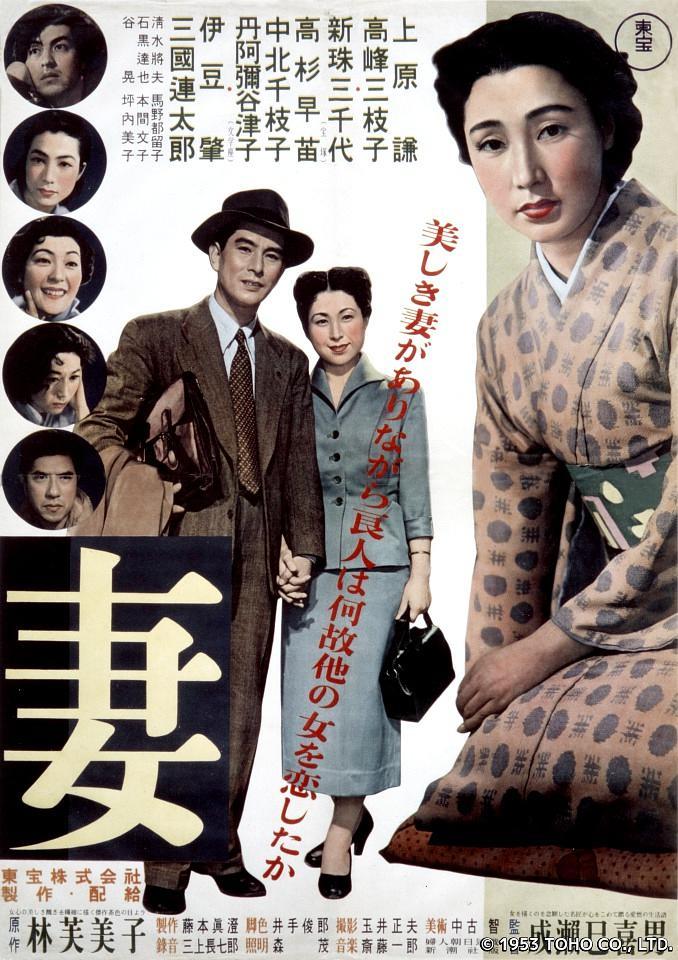
Wife (妻, Mikio Naruse, 1953)

The post-war world, to a certain way of thinking at least, promised a greater degree of freedom in which it might no longer be necessary to go on stoically bearing unhappiness in service to a social ideal. Then again, old habits are hard to break and not everyone is quite so equipped to acknowledge that misery can in a sense be a choice. Mikio Naruse’s Wife (妻, Tsuma) finds itself at a moment of transition in which the meaning of everything the word meant was perhaps beginning to change while the idea that a woman might choose to reject the role was no longer a taboo but an increasingly viable possibility. 

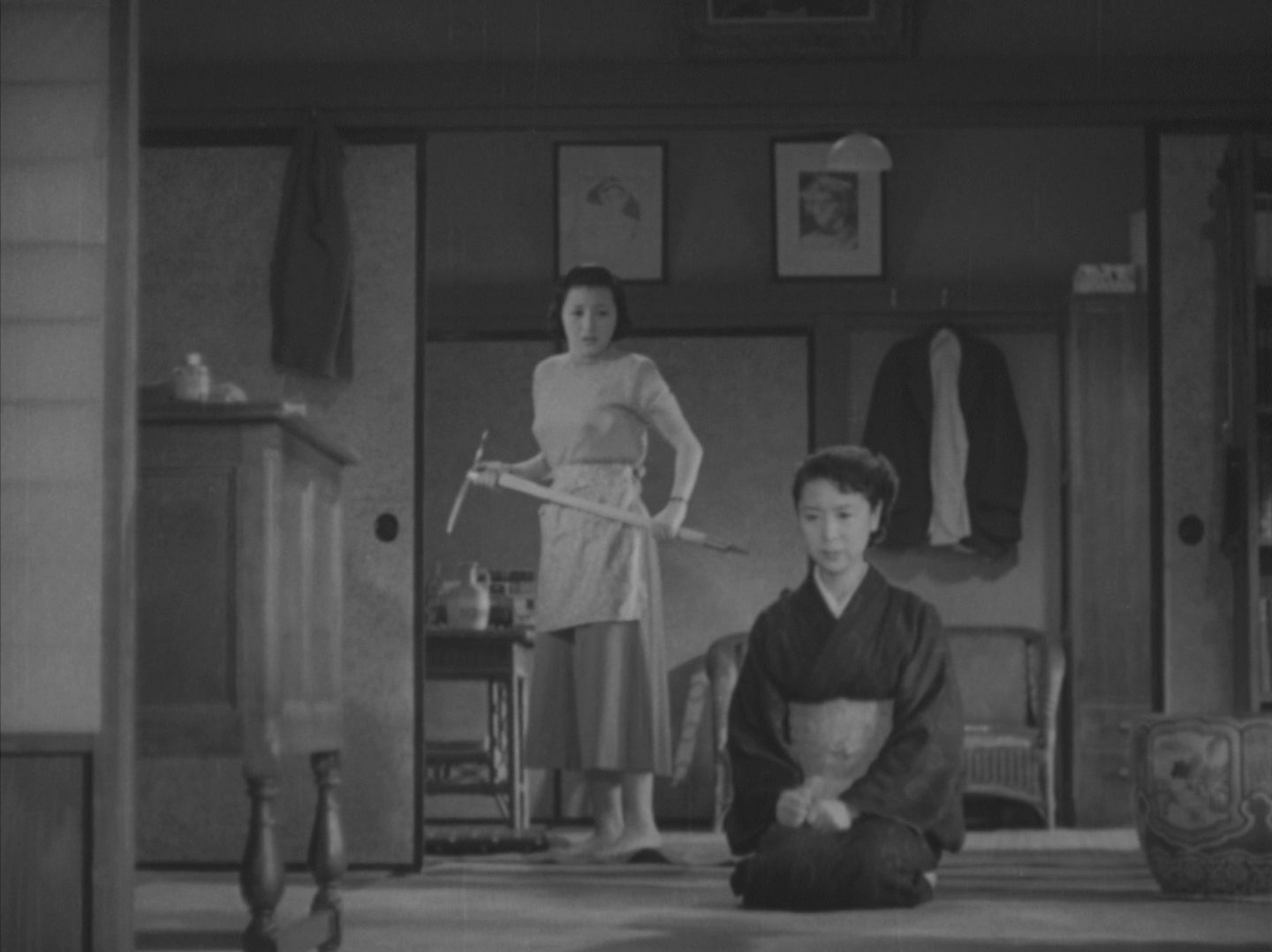
To the unhappily married Mineko (Mieko Takamine), however, the idea of independence remains somewhat distasteful. Each morning her husband, Nakagawa (Ken Uehara), leaves the house without a word. In fact, he doesn’t even look at her before silently walking away. She complains that she has no idea what he’s thinking, all he ever tells her is that he’s “tired” but she also resents him for failing to provide for her in the way that she perhaps expected. The couple live in a sizeable home, but Mineko has to rent out the upstairs to a series of lodgers as well as taking in sewing as a side job to make ends meet. What seems perfectly apparent is that the couple are ill suited, both in terms of temperament and of personal desires. Nakagawa is a soft hearted, romantic sort of man who isn’t particularly bothered if their lodgers pay their rent or not, while his wife is emotionally distant and infinitely practical as perhaps life has taught her to be. 

The peculiarities of life in Japan in 1953 place considerable strain on not only on the Nakagawas but on each of the other couples that we see. Those who married in haste during the war may be regretting their choices, while others, like Eiko (Chieko Nakakita) who rents the upstairs room with her husband Matsuyama (Hajime Izu), complain that the men they waited so long for came back changed. That Matsuyama cannot find a job in the difficult economic circumstances of the post-war society may not be his fault, but the necessity of relying on his wife for economic support has nevertheless eroded his sense of masculinity and left him a resentful drunk, destroying his wife’s love for him. Mineko is slightly scandalised when another tenant, art student Tanimura (Rentaro Mikuni), reveals that Eiko works not in a store but in a bar in Ginza, that being in truth the only kind of job that pays enough to support a married couple and a mother-in-law that a woman can get in 1953. Eventually Eiko leaves her husband, something else that scandalises Mineko, and resolves to live an independent life rather than remarry.

The idea of independence is repeatedly mentioned to her, but Mineko continues to reject it. Her sister jokingly suggests going into business together, while another customer, a widow with a young son, floats the idea of leaving the home of her late husband and opening a shop to support herself independently. She believes remarriage is not a viable option because she has a child, a thought echoed by another widow, Fusako (Yatsuko Tanami), who eventually decides to do something similar by returning to her hometown and going into business with a friend. Opening a shop is a popular option, but it of course requires investment and relies on having strong support, in Fusako’s case from female solidarity in teaming up with another woman in a similar situation. 

It might be easy enough to say that becoming financially independent is a choice on offer only to widows with children who have, in some way, already fulfilled their social obligations, while women like Eiko who chose childless self-sufficiency would still struggle to find acceptance even if their career were not dependent on an industry still itself taboo. That Nakagawa and Mineko have no children perhaps places an additional strain on the marriage. Nakagawa tells a colleague complaining about his family that he wonders if children might have made his life easier, while his only moment of contentment seems to be in playing with Fusako’s young son on the morning after spending an illicit night with her in an inn at Osaka. She sadly tries to ask what might be next for them, but he only wants to live in that moment knowing that their future is an impossibility. 

Despite his unhappiness, Nakagawa doesn’t seem motivated towards ending his marriage, perhaps out of guilt or because as friend later suggests it’s not so much Fusako that he loves as the possibility of a different future. On his return from his Osaka trip, he encounters a new tenant, Mineuchi, who has found her own way to be independent in becoming a mistress. Nakagawa seems to find the arrangement mildly distasteful, though it’s perhaps not so far off what he’s planning to do with Fusako. Mineuchi paid premium for the room and has even brought her own refrigerator and an electric gramophone so she is in a sense living the dream, especially as her “patron”, a furniture store owner, only visits twice a month. 

After learning that Nakagawa has fallen in love with Fusako, Mineko wonders if she should pay her a visit, but then receives one herself from the furniture store owner’s tearful wife who reveals that he is not a wealthy man and has ruined himself, and therefore her, after being bewitched by a Ginza bar hostess. Later, Mineko discovers that the furniture store owner’s wife took her own life in humiliation, lamenting that she didn’t have to go so far just because of her husband’s indiscretion, but also threatens to do the same herself to try and guilt Fusako into giving up her husband. 

Yet, pretty much everyone seems to tell Mineko that this is all her own fault and the reason her perfectly good husband has looked elsewhere is because she has failed as a wife. Sharp and emotionally distant, she alienates those around her but is devastated to realise that she’s lost her husband’s love and will most likely never be able to regain it. Her decision to talk not to him but to Fusako hints at the way in which women see each other as rivals and not as friends, actively holding each other back, as her sister Yoshimi (Michiyo Aratama) also does in insisting on the social order over personal feeling, rather than attempting to find understanding or mutual support. It doesn’t seem to occur to her that ending her husband’s dream of romantic escape through emotional manipulation is unlikely to improve the quality of her married life. 

Mineko, however, never contemplates independence. She tells Fusako that she won’t consent to a divorce just to claim alimony, but privately wonders what would become of her if she left her husband. She might be able to put a stop to it this time, but who’s to say he won’t find someone else. What she seems primed to choose is socially mandated misery, rejecting the “freedoms” of the post-war age to end an unhappy marriage because she can’t conceive of herself as anything other than a “wife” and being miserable is apparently better than being nothing at all. 


The Munekata Sisters (宗方姉妹, Yasujiro Ozu, 1950)

Though they may eventually turn melancholy, the films of Yasujiro Ozu are often cheerful affairs in which kindhearted people bear life’s troubles with stoic dignity. There are few villains, only those trying to live even while living is hard. The Munekata Sisters (宗方姉妹, Munekata Shimai) adapted from a story by Jiro Osaragi and produced for Shintoho rather than home studio Shochiku, however, strikes a much less happy tone, ambivalently condemning its heroine to unhappiness through her own adherence to the codes it otherwise insists are noble. 

The two titular sisters, Setsuko (Kinuyo Tanaka) and Mariko (Hideko Takamine), live in Tokyo where Setsuko runs a small bar which supports the family while her moody husband Mimura (So Yamamura) has long been out of work. Their father, Mr. Munekata (Chishu Ryu), has returned to Kyoto where, a doctor informs Setsuko in the opening scenes, he is suffering from terminal cancer but surprisingly healthy all things considered. Like his oldest daughter, Kyoto suits Mr. Munekata because as he puts it it is full of the beauty of old Japan, though Mariko has soon had enough of temples and palaces and longs to return to the modernity of the contemporary capital. Whilst in the city, however, they run into an old friend from Manchuria, Hiroshi (Ken Uehara), with whom Mariko soon realises her sister had been in love but he left for France before they could declare their feelings while she was already engaged to her present husband. 

Mariko, a youthful woman dressing exclusively in modern Western fashions, is quite taken with the idea of her sister’s failed romance and determines to get the pair back together. She has only resentment for her moody brother-in-law and has long been aware that Setsuko’s marriage is a failure. Within her seeming modernity, Mariko is surprisingly conservative when it comes to traditional gender roles, resenting Mimura for failing to provide for the family as a man is expected to do. Overcome with despair, he spends his days in a drunken stupor playing with stray cats rather than seriously looking for a job, defined by wounded male pride in his obvious discomfort with the fact that his wife is supporting him through the business that she operates herself. Mariko tells him to man up, tired of the way he leaves each of the women anxious in their own home, but Setsuko, more conservative still, reminds her younger sister that marriage isn’t all sunshine and rainbows and that sometimes all you can do endure. 

Mariko regards her sister’s way of thinking as “old-fashioned”, while Setsuko disapproves of her vacuous “modernity” which she sees as little more than social brainwashing that leads her to blindly follow only what is “fashionable” without thinking for herself. Mr. Munekata had said those who refused to see the beauty in old things were simply “ignorant”, but when asked to arbitrate between the sisters adopts a more equivocal position. You are you and your sister is your sister, he insists, you have your own ways of thinking and neither of you is wrong, you have simply to choose the path which suits you best. He does however caution against Mariko’s “fashionable” mindset, reminding her that it isn’t good to be mindlessly swayed by the prevailing trends, what’s important is to think deeply and value your own life. Those who only do what’s fashionable are boring, he tells her.

Later Mariko describes “modernity” as “not growing old despite the years” perhaps to counter Setsuko’s earlier dismissal that new things never become old because they don’t last. In any case, she is still in many ways a child with an underdeveloped appreciation for complex emotions which might explain why she suddenly proposes to Hiroshi herself as if she means to marry him on her sister’s behalf. She also unfairly takes against a wily widow, apparently a “friend” of Hiroshi’s from Paris who may or may not be in love with him but has obviously not replaced Setsuko in his heart. Setsuko however is conflicted, accepting financial help from Hiroshi to keep the bar open but resentful of her husband’s suggestion there is anything improper between them. She is an “old-fashioned” woman after all. Like What Did the Lady Forget?, Munekata Sisters also posits domestic violence as a reset button on a marriage as Mimura angrily slaps his wife across the face several times, but thankfully here it signals the death knell rather than rebirth of their relationship. Mimura has reasserted his manhood, but it has only shown him just how desperate and empty he has become. His wife no longer has respect for him, let alone love. 

Yet Mimura continues to control her feelings, implying that the failure of the relationship is her fault alone because she never loved him. He has slowly destroyed himself out of resentment and romantic disappointment. It seems that, though he was too cowardly to confess his feelings, Hiroshi has never forgotten his love for Setsuko and the possibility remains that she may be able to claim a happier future through abandoning her “traditional” way of thinking (“fashionable” in its own way), separating from her husband to marry for love. But in the end her code will not allow it. Guilt casts a shadow over her heart, leaving her feeling that she is no longer allowed happiness and must sacrifice her true desires to atone for the failure of her marriage. A glimmer of hope remains in Hiroshi’s determination to wait, trapping himself within the repression of patriarchal social codes, but in the end even Mariko is forced to recognise her sister’s nobility as she too tours the beauty of old Japan without complaint in new contemplation of its ambivalent charms.


Sing, Young People (歌え若人達, Keisuke Kinoshita, 1963)

Keisuke Kinoshita has sometimes been dismissed by Western critics for his supposed sentimentality, but his mid-career comedies can be surprisingly cynical. Scripted not by Kinoshita but Taichi Yamada, 1963’s Sing, Young People (歌え若人達, Utae Wakodotachi) is in someways an exception to the rule, a breezy take on the student comedy updated for the present day, but underneath all the absurdist humour and jibs about youthful ennui is a real sense of adolescent hopelessness as these aimless young men ponder their “pitch-black” futures in a rapidly changing Japan where the best they can hope for is fulfilling the salaryman dream.  

Shooting in glorious colour, Kinoshita opens with a lengthly pan over contemporary Tokyo which the jaunty voice over describes as “the number-one city in the world” before homing in on the incongruous figure of a strangely dressed man holding a sign advertising “sensual massage beauties”. A relic of an earlier advertising age, the wandering sign man nevertheless catches sight of someone even “weirder” than he is, a student wearing a student’s cap! Kinoshita then takes us on a brief detour through Japan’s major universities demonstrating that no one is so uncool as to wear a student’s cap in the age of protest, drawing a direct contrast to the student comedies of old while showing us a series of scenes of students “playing” hard with part-time jobs in bands or as models, training hard in preparation for the upcoming Olympics, fomenting the revolution, or fighting in the streets. In the first of many meta touches, our hero, Mori, is eventually woken by the narrator after falling asleep in class, his eyes “gleaming with hopes for the future”. 

Or, perhaps not, he’s just tired. Mori (Tsutomu Matsukawa) is as he describes himself a man without hopes or dreams who believes that the road ahead of him is “pitch black”. Dropping a brush from the window washers’ platform at one of his part-time jobs, he asks himself if there shouldn’t be more to life than this. The only son of his widowed mother, he’s pinned everything on graduating from a top university but feels powerless and empty, adrift in the post-war landscape. Where his calculating friend Miyamoto (Yusuke Kawazu) fills the void with romance and a determination to “get lots of As” and then land a top job, his roommate Okada (Shinichiro Mikami) earnestly studies hard afraid to disappoint his austere family but also quietly resentful in his lack of autonomy, and the dopey Hirao (Kei Yamamoto) simply goes about being nice to people more or less forcing them to eat the traditional treats his loving mother is forever sending. 

Yet for all the bleakness Mori seems to see in his future, he only ever falls up. Luck follows him and he’s presented with ever more fantastic opportunities at every turn. In fact, it’s his slightly grumpy expression as he cleans the windows of an office building that leads to them snapping a picture and making him a cover star without ever bothering to ask his permission though they do eventually pay. Still Mori remains indifferent, telling a reporter who tries to interview him that he had nothing to do with the cover, he has no dreams or aspirations for the future but lives his life day by day. He describes himself only as “nervous”. His words run ironically over the magazine literally becoming tomorrow’s chip paper, used by a stall owner to wrap her croquettes, as a stand for a hot pot, and otherwise bundled up to be pulped. Nevertheless, the cover leads to great opportunities from a TV network looking for a fresh face to front their new youth-orientated drama serial. 

Despite all the promise, Mori remains indifferent, later irritating a new colleague and potential love interest (Shima Iwashita) when he idly suggests he might just give up acting and fall back on the salaryman dream. As she points out, she had to fight all the way to achieve her dreams of becoming an actress so hearing someone say they’re going to throw away a tremendous opportunity that came to them entirely by chance is mildly offensive. Miyamoto meanwhile is growing lowkey resentful, realising that maybe nothing matters after all it’s all just dumb luck. Mori deliberately didn’t do anything because he thought his life was pointless but everything has landed right at his feet while Miyamoto’s life is crumbling. He’s lost all his girlfriends and endured a lonely New Year alone in the dorm, coming to the conclusion that his future really is “pitch black”.

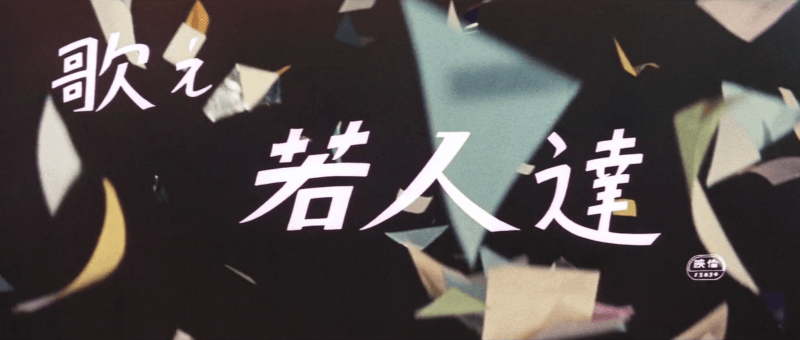
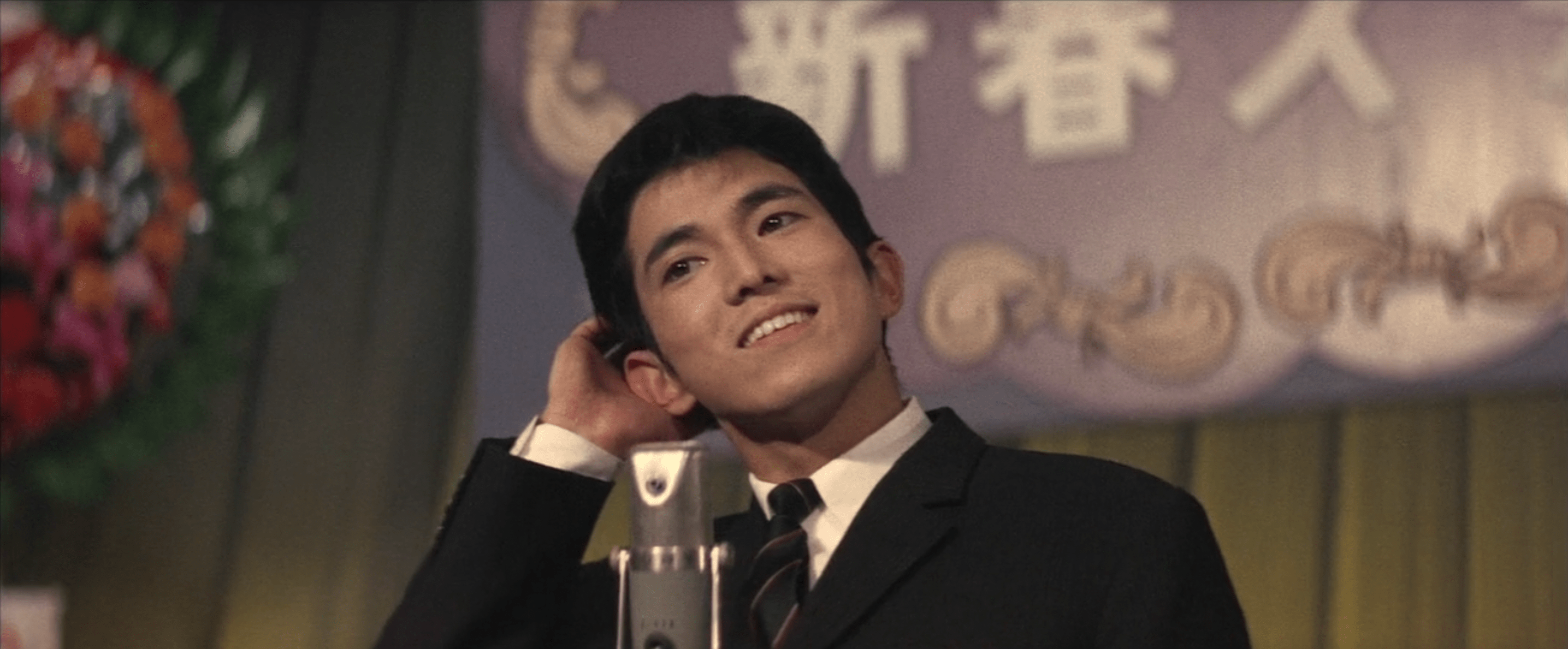
Nevertheless, it’s difficult to remain resentful about a friend’s accidental success and so each of the men eventually finds direction in even in directionlessness. Mori realises that he might as well ride his wave of fame for as long as it lasts, accepting in part at least his sense of powerlessness, while Okada does the reverse in deciding to rebel against his authoritarian family by marrying in secret. Miyamoto resolves to make a success of himself in his own way, and Hirao seemingly accepts the hand fate has dealt him with good humour. Kinoshita ramps up the meta comedy with Mori joining Shochiku, encouraged to try and work for that “excellent” director Keisuke Kinoshita, later referencing Garden of Women, while Mariko Okada and Keiji Sada turn up as onstage guests at an event launching him as a young actor. Playfully using outdated, quirky screen wipes and opening with an artsy title sequence featuring colourful confetti falling up, Kinoshita perhaps adopts a slightly ironic tone in satirising the all pervasive sense of confusion and hopelessness among the younger generation but does so with only sympathy for those coming of age in uncertain times. 


Brothers and Sisters of the Toda Family (戸田家の兄妹, Yasujiro Ozu, 1941)

Yasujiro Ozu made only two films during the height of the war. After being drafted for the second time in 1943, he famously sat out the main action from the relative safety of Singapore where he was able to indulge his love of Hollywood cinema to an extent impossible in Japan. Somewhat surprisingly, 1941’s Brothers and Sisters of the Toda Family (戸田家の兄妹, Toda-ke no Kyodai) does not seem to fit the censor’s ideal in that it contains little to no patriotic content and never mentions the war save for presenting the idea of “Manchuria” as a place to start again free of burdensome codes of social oppression but, crucially, embraces classic ideas of filial piety which is presumably how it came to be approved by the powers that be. 

Shortly after the Toda family gathers for the first time in quite a while to celebrate Mrs. Toda’s (Ayako Katsuragi) 61st birthday, Mr. Toda (Hideo Fujino) drops dead of a heart attack and it is discovered that the family firm is near bankruptcy. The large, Western-style mansion where the family photo so recently took place will have to be sold and Mrs. Toda and her unmarried daughter Setsuko (Mieko Takamine) will have to move in with one of the married children. 

Like the later Tokyo Story, Brothers and Sisters of the Toda Family concerns itself with the failure of filial piety in an increasingly corrupt society. Multigenerational homes might once have been a cultural norm, but perhaps it’s understandable that few people might be excited about the prospect of their mother suddenly moving in with them especially as the traditional Japanese house is not designed with personal space in mind. Power dynamics seem to be the problem at the first home where daughter-in-law Kazuko (Kuniko Miyake) makes no secret of the fact that the two women are in the way. She resents having to shift everything around and reorder her home to give them space upstairs, complains about their noisy pet bird, and is then put out when Setsuko and her mother fail to greet her guests even though she specifically asked them to absent themselves in order to avoid meeting them. 

At the next home, however, it’s more a question of maternal heirarchy. Daughter Chizuru (Mitsuko Yoshikawa) has two children and the oldest, her son Ryokichi (Masao Hayama), is very attached to his grandma, so much so that he confides in her about skipping school because he got into a fight and is worried about reprisals. Chizuru’s main objection to them moving in had been that it might distract Ryokichi from his studies, and it’s clear that she finds it difficult to assert her own maternity with her mother hovering in the background. She accuses Mrs. Toda of interfering by keeping her promise to Ryokichi and not telling her about skipping school, making it impossible for them to keep living in the same house. 

Rather than descend on the home of the last daughter, Ayako (Yoshiko Tsubouchi), who is hurt but perhaps relieved to hear they won’t be living with her, Mrs. Toda and Setsuko decide to move into a dilapidated summer house the family thought too worthless to sell. They are now thoroughly marginalised, living in a literal half-way home having lost their position in society. Setsuko, naive but earnest, is the keenest to adapt to her circumstances. Her best friend Tokiko (Michiko Kuwano) is from an “ordinary” family and tries to point out, as nicely as possible, that Setsuko is going to find it much more difficult than she thinks to move beyond her privilege. Aware of her precarious circumstances, she expresses the intention to work but is quickly shut down by Chizuru who finds the idea highly offensive and in fact embarrassing. She urges her to think about a socially advantageous marriage instead.  

Shojiro (Shin Saburi), the youngest and as yet unmarried son, urges her to do something much the same at the film’s conclusion but also offers his sister the freedom to fulfil herself outside the home by accompanying him to the land of the possible, Manchuria. Previously regarded as a feckless failure, Shojiro decided to take up the opportunity to make something of himself in Japan’s new colonial endevour. On his brief return to mark the first anniversary of his father’s passing, he appears in a China-style suit and fiercely takes his siblings to task for their disrespect of his mother. It has to be said, however, that he does not particularly take Mrs. Toda’s feelings into account and foregrounds his own duty of filial piety in insisting that she live with family rather than alone excluding the possibility that she too may prefer her freedom. In any case, it’s freedom he dangles before Setsuko in suggesting that in Manchuria you can do as you please without needing to worry about what others think. He offers her the possibility of marriage, but also of working and a kind of independence which is bound within the family. For herself, Setsuko wants to bring Tokiko too, positing a possible arranged match between her friend and her brother which other members of the family may find inappropriate in its transgressive breach of the class divide. 

The family is both dissolved and restored as the three Todas prepare to remove themselves from a corrupted Japan for, ironically, a new start in the home of old ideas, China, where there is both the promise of modernity and all the “good” aspects of the traditional, to whit filiality. Fulfilling the censors demands in subtly criticising the decadent, selfish, and hypocritical lifestyles of an impoverished nobility while presenting Manchuria as an opportunity remake a better, purer (and subversively progressive) Japan through imperialist pursuits, Brothers and Sisters of the Toda Family offers an ambivalent portrait of contemporary Japanese society in which the young save themselves but only by saving their parents first. 


Brothers and Sisters of the Toda Family is available on blu-ray in the UK as part of the BFI’s re-release of Tokyo Story in its recent 4K restoration which also includes an introduction to Tokyo Story from Tony Rayns, and Talking with Ozu: a tribute to the legendary director featuring filmmakers Lindsay Anderson, Claire Denis, Hou Hsiao-hsien, Aki Kaurismäki, Stanley Kwan, Paul Schrader and Wim Wenders. The first pressing also comes with a booklet featuring an essay by Professor Joan Mellen, archival writing by John Gillett and Lindsay Anderson, and a biography of Yasujiro Ozu by Tony Rayns.

It is also available to stream online via BFI Player as part of the BFI Japan Yasujiro Ozu collection.

Titles and opening (no subtitles)