We Have Boots (我們有雨靴, Evans Chan, 2020)

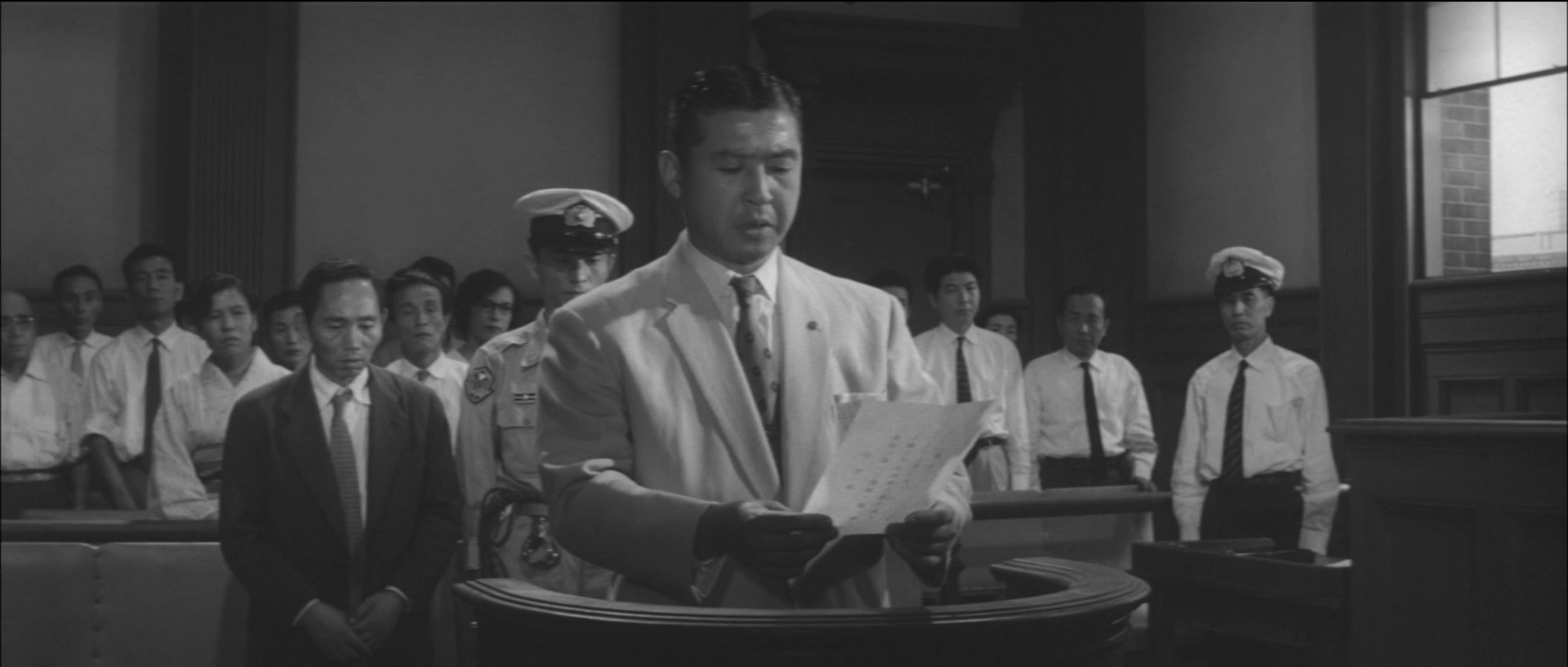
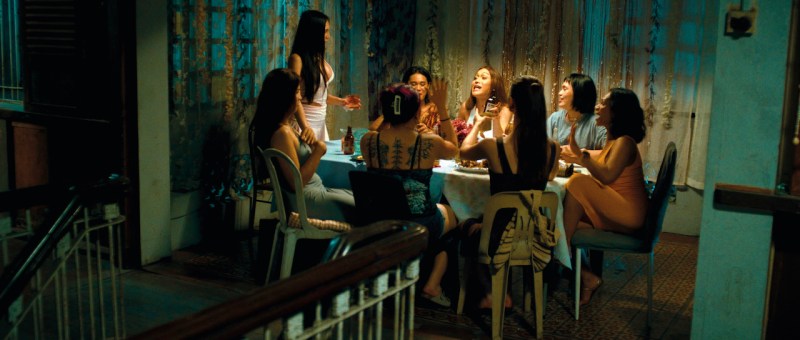
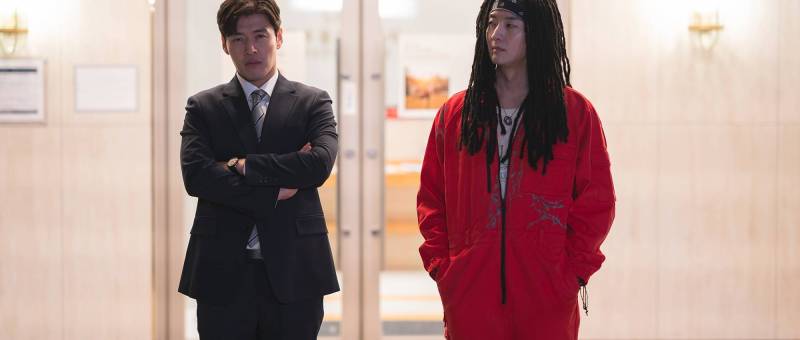
“Fight pragmatically for the impossible” is the advice from Chan Kin-man, cofounder of Hong Kong’s Occupy Central Campaign, in Evans Chan’s follow-up to his 2016 documentary Raise the Umbrellas, We Have Boots (我們有雨靴). Part of a projected trilogy which began with To Liv(e) in1991 examining Hong Kong in the aftermath off Tiananmen Square and may never now, the director fears, be completed, the sprawling two-hour doc runs through six turbulent years of Hong Kong protest, dissecting the failures of the Umbrella Movement and implications of the passing of the National Security Law in the midst of a global pandemic in June 2020.

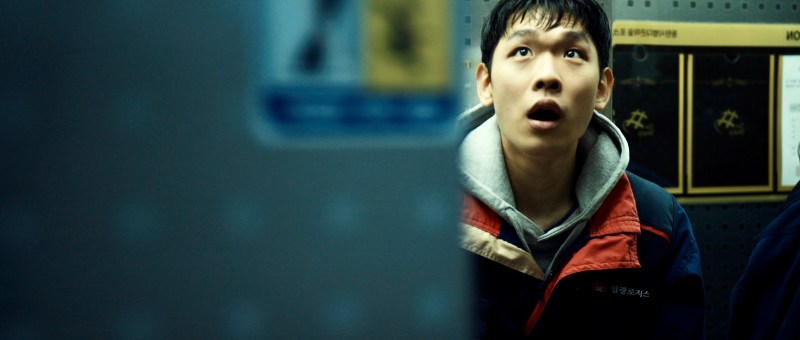
Evans Chan opens with a faintly ridiculous propaganda video which outlines what the film describes as “Chinese exceptionalism” in that China can feel fairly smug about itself as it did not rely on exploitation, colonial massacre, or slavery to become prosperous nor has it submitted itself to Western democracy. The narrator of the video appears to view the people of Hong Kong as brainwashed foster children turned against their homeland by the “fake news” of international propaganda seeking to portray it as a source only of authoritarian oppression and, in fact, growing up to become “time bombs” posing a threat to Mainland security. In an ironic cut, Chan then drops us directly into a traumatic raid on a subway station in which we witness extreme and random police brutality directed against ordinary citizens. 

Yet Chan is not sparing of the Movement either, directly documenting concerns among the protestors at the Umbrella Movement five years after the fact as they complain of over centralisation, that their “democratic” movement did not practice what it preached when the main platform acted like a command centre and refused to listen to other points of view including those advocating for violent action. Meanwhile the more militant arm of protest movement finds it increasingly difficult to escape criticisms of entrenched xenophobia in its openly anti-Mainland stance, describing Chinese migrants as “smugglers and looters” in reference to a trend accusing frequent visitors from the Mainland trafficking supposedly safer commodities such as baby milk which had been the subject of scandals owing to lax safety standards. The same group also objects to Mainland women dancing in the streets as an affront to local Hong Kong culture, adopting the Sanskrit “Cina” to refer to the country while viewing those coming from wider China as “colonisers” rather than migrants hellbent on undermining the traditional culture of the island. 

Nevertheless, Chan also makes plain the various levels of Kafka-esque obfuscation the opposition faces in its goal of gaining universal suffrage and true democracy for Hong Kong. Young councillors are abruptly disqualified after “misusing” their swearing-in speeches by flying flags which state Hong Kong is not China or otherwise badmouthing the Mainland or political process. Unable to find appropriate offences to discourage the ringleaders, they come up with nebulous charges such as “incitement to incite public nuisance” which are essentially meaningless not to mention counter-productive save that they prevent those who receive custodial sentences from standing for further political office. 

One young man appears only in full protest gear clad in black head to toe, presumably keen to maintain his anonymity as he details his role as a frontline protestor. We’re reminded that China essentially disappeared five booksellers from Causeway Bay for the crime of selling problematic books, only one of whom later resurfaced explaining he’d been held on the Mainland against his will. The leaders of the movement fully expect to pay with their freedom and, according to Chan Kin-man at least who turns down the opportunity of exile abroad, view participation in their trials as facet of their resistance. “Being young is a crime,” the anonymous protestor laments. His generation don’t expect to have money, they don’t expect to have children, in short they do not expect to have a future, all they have is resistance. While the international press holds up Hong Kong as a bastion against incremental authoritarianism in an age of democratic recession, China describes the Be Water protests as “riots” and continues to target prominent protest leaders driving some into exile. With a mix of stock footage, talking heads interviews, and experimental dramatisations, Chan spins a melancholy picture of a Hong Kong facing the crushing despair of the Security Law, but as the poem which inspired the film’s title reminds us, they have umbrellas, they have boots, they have each other and so the fight is not yet over. 


Trailer (English subtitles)

Dong (东, Jia Zhangke, 2006)

“It’s all pointless anyway, so let’s just do whatever we feel up to,” according to the sometime protagonist of Dong (东), the first in what would become Jia Zhangke’s artist trilogy. Shot alongside Still Life, Jia’s profile of artist Liu Xiaodong takes him from the soon-to-be drowned world of the Three Gorges to the floating Bangkok in a seeming inversion of his artistic pursuits but also perhaps contemplating his role and significance as an artist in the face both of great change and immutable legacy. 

Liu’s primary project in the Three Gorges is to document the existence of the labourers working to dismantle the town of Fengjie prior to its drowning by means of one of his five-part paintings. He tells us that he likes to be able to see his subjects from far away to gain greater “distance and precision”, looking down on them from above as if he were standing on a wall. He is, in a sense, already elevating himself, adopting a somewhat elitist view as an all-seeing artist even as he is careful to redraw reality through advanced theatrical staging which sees the men dressed only in a pair of blue trunks as they “relax” on a rooftop with the mountains behind them. Yet we also see him as a tiny figure roaming the increasingly ruined landscape of Fengjie, lost amid its emptiness or dwarfed by the endless majesty of the Gorges. His insignificance is perhaps brought home to him when he makes a difficult journey obstructed by flooding to the home of one of his subjects who recently passed away in an accident, bringing with him fancy toys for the children and photographs for the adults but equally out of place in this man’s home, an intruder on their grief and accidental narcissist scene stealing at a funeral. 

It is perhaps this sense of displacement that sends him to Thailand where he admits he understands nothing and can only “comprehend the human face, the girls’ scantily clad bodies”. Taking his subject as a collection of local sex workers, he has not chosen a natural background for the paintings as he usually would but can only “focus on the body in its elemental form”. Yet in contrast to his depiction of the labourers, his female models are in fact not particularly scantily clad at all even as they’re painted with a detached melancholy in opposition to the cheerful camaraderie of the workers relaxing on the roof. Indeed, Liu seems to have a preference for the vigour and vitality of the male form, making a rather unexpected remark on the magnificence of one young man’s penis before launching into an explanation of his practice of martial arts as a means of self-defence against a flawed legal system. 

“If you attempt to change anything with art, it would be laughable,” he later tells us, explaining that the most he can do is try to express himself, admitting in a sense that he too exploits his subjects in turning them into art which is intended to critique their exploitation. “I wish I could give them something through my art. It’s the dignity intrinsic to all people,” he somewhat pompously adds, as if he thought them robbed of their dignity before and that it was something in his power alone to bestow before going on to lament that he resents the primacy of the Western tradition, revealing that he’s begun to admire the “visual impact of historical relics” of ancient Chinese art which has led him to value the ruined and incomplete. But then he adds, it’s all pointless anyway, you might as well do what you feel, later voicing his anxiety as an artist operating in relative freedom with no real way to assess his achievements outside of his own satisfaction. 

Even Jia perhaps loses patience with his subject’s eccentric philosophising, peeling off to follow one of the Thai models on her bus journey home where on turning on her TV set she learns of flooding in her village, neatly mirroring the villagers near Fengjie. Liu tells us that sad things are closer to reality, but Jia paradoxically returns to us to a kind of joy despite the obvious irritation of the model as waiters randomly dance in small cafes before undercutting it with complexity as a pair of blind musicians busk in a busy marketplace, trailing their song with a portable karaoke machine less for the love of it or the art or even the desire to be heard than the desire to be fed. 


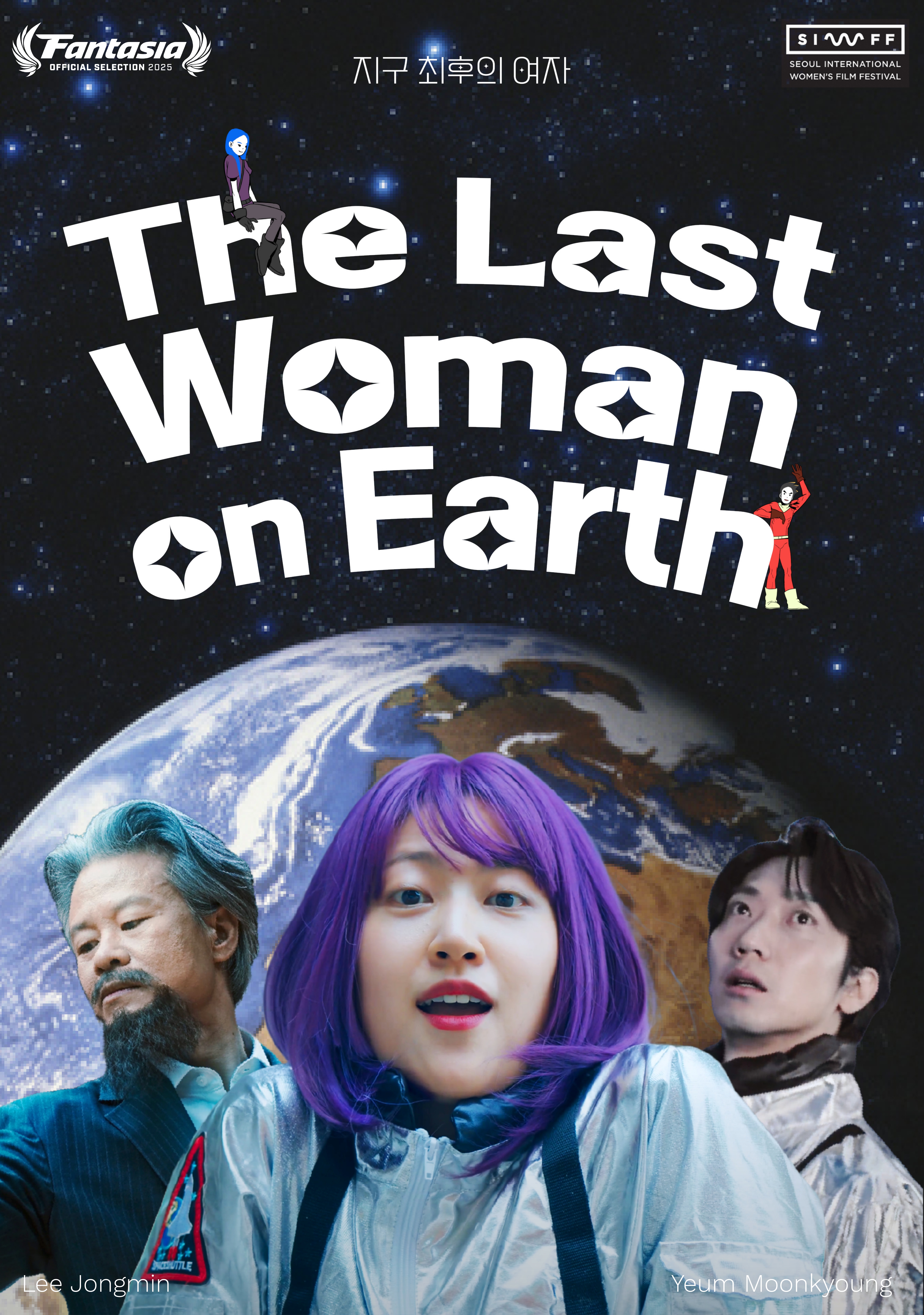
Left-Handed Girl (左撇子女孩, Tsou Shih-Ching, 2025)

A small family’s attempt to start over by moving to Taipei is frustrated by the baggage they take with them and that which was already there in Tsou Shih-Ching’s whimsical family drama, Left-Handed Girl (左撇子女孩, zuǒpiězi nǚhái). As women alone, they must contend with a patriarchal society and harsh economic environment along with a conservative culture that is often unforgiving of difference and reluctant to grant second chances to those it believes have transgressed its boundaries.

The titular left-handed girl, I-Jing (Nina Ye) describes the city as seeming like a magical place, though it’s certainly noisy and indifferent to her presence. Her mother Shu-Fen (Janel Tsai) laments that their apartment is smaller than it looked in the photo, as if signalling a sense of disappointment even before their new life has started. Oldest sister I-Ann (Ma Shih-Yuan) never finished high school and has got at a job at betel nut stand where the boss explains to a new recruit that her job is to create a sexual fantasy for the customer. I-Ann’s grandmother chastises her for her revealing outfit, warning her about “perverts and psychos” and that it’s dangerous to dress like that in the big city.

The grandparents are representative of a generation who grew up under an authoritarian regime and are fiercely traditional. Though the grandmother tells him to let it go, I-Jing’s grandfather is outraged and offended by her left-handedness. He tells her that it’s the Devil’s Hand meant only for doing the Devil’s work and bans her from using it in his home. I-Jing takes him a little literally and comes to believe that her left hand is an evil entity, but rather than being afraid, sees it as somewhat liberating in allowing her to do morally questionable things such as shoplifting. Only when an action habitually conducted with her left hand while forcing herself to draw with her right has unforeseen and tragic consequences does she begin to believe that her hand is a liability and consider cutting it off.

While her grandmother appears to be involved with some kind of human trafficking gang to make extra money, she’s reluctant to supply any more financial aid to Shu-Fen partly because of complaints from her siblings and particularly her sister. Though the grandmother had said the apartment would be left to the three of them equally, Shu-Fen knows she’s planning to leave everything to their brother whom she continues to idolise, though he’s long since moved to Shanghai and rarely visits. Awkwardly turning down another gig from her handler, she tells him her son has organised a lavish celebration for her 60th birthday. In reality, the daughters have planned everything with the son only arriving to mop up the glory. That it’s other women who perpetuate these outdated, patriarchal social codes is fully rammed home by the arrival of the wife of I-Ann’s boss with whom she has been having an affair. On learning that I-Ann is pregnant, she demands that I-Ann give the baby to them to raise if it’s a boy as they only have three girls. 

Shu-Fen, meanwhile, finds herself returning to care for her estranged husband who is dying of terminal cancer despite his abandonment and ill-treatment of her. Her decision doesn’t seem to be motivated by compassion or lingering affection so much as obligation. She feels she has to do this for him because he has no other family and she is still technically his next of kin. I-Ann in particular, along with the rest of her family, does not approve and is irritated that she’s once again allowing herself to be dragged down by a man. After he passes away, Shu-Fen is liable not only for all his medical fees but his funeral too, leaving her unable to meet her current expenses such as the rent for her pitch at a local hawker site where she supports the family with a noodle stand.

Her family also don’t seem to take to Johnny (Brando Huang), a man who seems nice and supportive, but also works as a market trader. The family appear to look down on him and implicitly on Shu-Fen for being engaged in what they see as a lowly occupation in much the same way that I-Ann becomes a figure of fun on bumping into some people from high school who are all now in university, though she left with no qualifications. Because of her betel nut store occupation, the boys treat her like a sex worker, while the boss, whom she did not know was already married, evidently never took their relationship very seriously. A desire to avoid reputational damage results in a series of destructive secrets that are abruptly blown open during the emotionally tense 60th anniversary party, but it does perhaps clear the air allowing the three women to reinforce their bond and finally begin living their own lives.


Trailer (English subtitles)

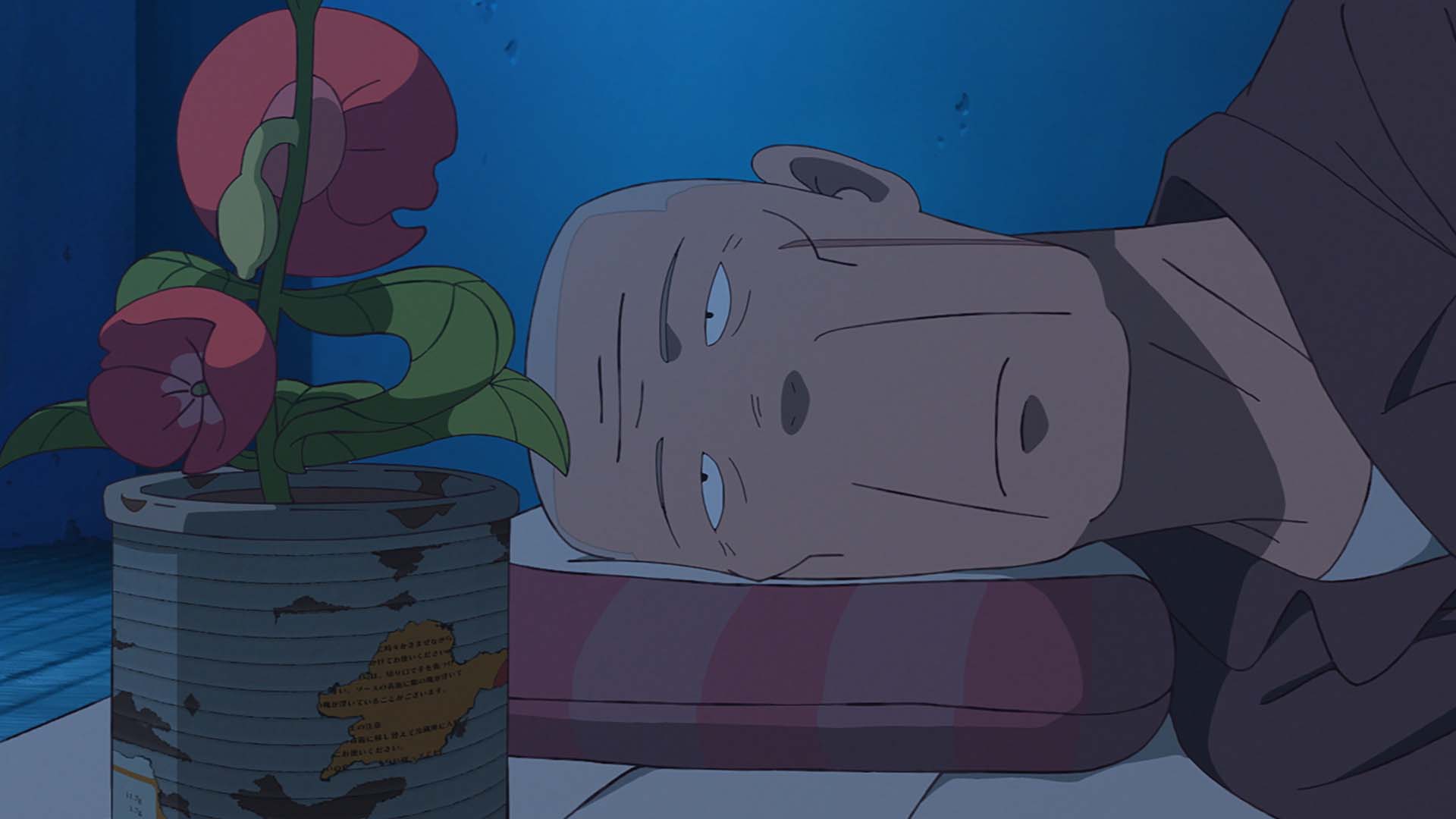
The Great Flood (대홍수, Kim Byung-woo, 2025)

Humanity survived a great flood once before, or so we’ve been led to believe. The mysterious forces at the centre of Kim Byung-woo’s The Great Flood (대홍수, Daehongsu) believe we can survive it again, albeit in an altered form. Or then again, maybe not. What begins as a disaster movie soon shifts into speculative fiction exploring the nature of “human emotion” and whether such a complex thing can ever really be replicated synthetically.

After their apartment is surrounded by floodwaters slowly climbing past their third floor flat, An-na (Kim Da-mi) tries to make her way to higher floors with her often uncooperative six-year-old son Ja-in (Kwon Eun-seong). As in recent similarly themed films, the apartment block becomes a microcosm of the contemporary society with An-na encountering stairs that have been blocked and neighbours who aren’t happy about those from lower floors encroaching on their space. Religious maniacs block access and insist this is God’s will. The only way out is a human sacrifice. Meanwhile, thuggish looters rob abandoned flats despite the fact that all of these previously valuable items are probably worthless now that no one knows when the waters will stop rising let alone when they will recede. 

It turns out, however, that An-na is an important person because she works for the Emotion Engine Development Team at the Darwin Center which has apparently known about this all along and has planning ways for humanity to survive for quite some time. It’s soon revealed that Ja-in is not An-na’s biological son but an experimental AI child she’s been developing to create the Emotion Engine. After the initial flood, An-na and Ja-in become separated and she is plunged until a looping series of simulations structured like a video game in which she must reunite with her son to give the Engine maternal instinct and save humanity.

Whether intentional or not, this is all incredibly sexist. Though apparently a top researcher, An-na’s worth is now entirely defined by her ability to become a mother. A flashback reveals An-na asked her boss if she could give Ja-in back because motherhood isn’t for her, while in flashbacks to her time with him she’s shown repeatedly hurting his feelings by neglecting him for her work. He asks to use her work iPad to do his drawings because she doesn’t look at them otherwise, while she’s irritated by his badgering when she’s obviously busy. The conceit is that she can’t find Ja-in because she doesn’t understand why he left her. She worries that he might not want to go with her anyway because she “abandoned” him to go with the men from the Darwin Centre to be saved from the flood and continue her research to save humanity.

The man sent to save her, the unemotional Hee-jo (Park Hae-soo), was also abandoned by his mother and is cynically looking forward to seeing what decision An-na will make. He’ll feel reassured in some way if she chooses to leave Ja-in behind because it will mean that it wasn’t just him, this is the way “human emotion” works. An-na obviously has an opportunity to recast “human emotion” than just recreate it, if that weren’t perhaps against the spirit of what she’s doing. In any case, the earlier part of the film is full of these dilemmas as Hee-jo encourages her to leave struggling people behind so they can make it to the roof for the helicopter. Even so, she comes across people who haven’t abandoned their humanity such as an old man continuing to feed his wife who seems to have dementia with the waves approaching and a man who stays with his pregnant wife who has gone into labour. In the end, An-na can only complete this quest by embracing her humanity by saving the little girl who is trapped in the lift and helping the pregnant lady rather than by abandoning them to survive alone.

This is also true of overcoming her maternal anxiety to believe she can be a mother to Ja-in which is also positioned as becoming a mother to all mankind as a kind of eve in a new digitised world. The apartment blocks are shaped like datacentres and the water reinterpreted as fire as if this is where people live now. Even so, we can’t be sure whether any of this, even the first flood, was ever really “real” or part of the AI-training scenario in which the Engine must be trained by “real” experiences, or if the An-na who accepts her motherhood and asks to be the test subject sent with Ja-in is the “real” woman or the model from the simulations. In any case, is humanity really surviving by being recreated as AI or bringing about its own demise? In our world at least, the waters may already be rising.


Trailer (English subtitles)

Faceless (正体, Michihito Fujii, 2024)

The Japanese title of Michihito Fujii’s crime thriller Faceless (正体, Shotai), “true identity”, might suggest that there is a mystery surrounding the hero, that he is deliberately misrepresenting himself so that it is difficult to know who he “really” is. But in reality the opposite is true. His cover identities are only ever superficial and, in essence, he is always his true self which is one reason he encounters so many supportive people during his flight from the law in an attempt to clear his name after being convicted of a crime he didn’t commit.

Inspired by Tamehito Somei’s novel, the film is another in a long line critical of the authoritarian Japanese justice system which has a 99% conviction rate. Though its defenders may say that the lack of acquittals proves that cases are only brought to trial when the police are absolutely sure, that isn’t quite the case and the judicial system is often over-reliant on confessions which may be given under extreme duress and are therefore unreliable. Sayaka (Riho Yoshioka), a reporter who becomes determined to prove Keiichi’s innocence, has her own negative experience with the justice system when her father, ironically a lawyer, is falsely convicted of groping a schoolgirl on a train. As her father points out, when so many people are hounding you he can understand why some give in and just say they did it to make it all stop. 

The police officer, Matanuki (Takayuki Yamada), also appears conflicted from the beginning and requests a full investigation of the crime but his superior tells him to just pin it on Keiichi (Ryusei Yokohama). The law is about to change so that 18-year-olds will be tried as adults, so he thinks it would set an example for other young people that they can’t take advantage of their adolescence to commit crimes assuming they won’t be prosecuted fully or that their records will be wiped when they come of age. There had been a minor moral panic at one time about children actively exploiting this legal loophole, though Matanuki’s boss’ dismissive attitude hints at his conservative perspective and authoritarian viewpoint. When Keiichi’s case begins to receive public interest, he tells Matanuki that the conviction must stand and that the “truth is unimportant in this case” because admitting they made a mistake would be disadvantageous for the police force’s reputation. Despite himself, however, Matanuki continues to follow his boss’ orders and pursue Keiichi even if he stops short of following them fully by refraining from firing at him when he tries to get away. 

Asked by Matanuki why he tried to escape from death row, Keiichi tells Matanuki that he wanted to believe the world was good and that if he stood up for what was right people would listen. It’s a trite sentiment that’s undermined by the central flaw of the narrative which is that Keiichi is an ideal wrong man. That he prospers simply being “nice” seems like a kind of cosmic judgement that insists, despite all the bad things that have happened to Keiichi, the universe rewards people who are “good” which is both a moral judgement and highly unrealistic. Like Fujii’s Day and Night, the film hints at the prejudice directed at men like Keiichi who have no blood family and were raised in care while also pointing the finger at similar systemic injustices such as exploitation of labourers denied proper compensation for workplace injuries by thuggish bosses who intimidate them out of pressing for their rights under existing labour law.

As such the film posits solidarity as the best weapon against an oppressive system as the various people who’ve witnessed Keith’s “true self” and been helped by him come to his aid in return. What turns his fortunes is a critical mass of ordinary people standing up and saying that this isn’t fair, giving Matanuki the confidence to defy his boss by going rogue and admitting their mistake publicly at a press conference thereby returning the case to the people and preventing the authorities from covering it up. That justice is eventually served sort of reinforces the idea that this is a good world after all because it’s filled with basically good people who believe in truth and fairness even if the people that govern them don’t, which, though it might be a superficially happy ending for all, is rather optimistic and otherwise ignores that not everybody is so lucky and nothing has fundamentally changed within the justice system to prevent things like this happening again.


Trailer (no subtitles)

Revelations (계시록, Yeon Sang-ho, 2025)

A put upon pastor’s life begins to spiral out of control when he comes to suspect a recently released sex offender has kidnapped his child in Yeon Sang-ho’s grim spiritual drama, Revelations (계시록, Gyesirok). Less about the crime at its centre, the film is more an exploration of our intense desire to justify our actions and remake the world in a way that makes sense to us while refusing to see or accept the reality of others.

Min-chan (Ryu Jun-yeol) runs a small evangelical church that is part of a larger religious organisation and like any other ambitious employee is hoping for advancement. With the area undergoing redevelopment, a larger church is to be built and Min-chan’s wife Si-yeong (Moon Joo-yeon) comes to the conclusion that his mentor Pastor Jung gave him this smaller church to build a congregation in preparation for heading up this larger one. But Jung rather insensitively asks him if he can think of anyone to run it while suggesting that ideally he’d prefer to give it to his son, Hwan-su, though Hwan-su doesn’t feel ready and thinks Min-chan would be a better fit. Min-chan consoles himself by repeating the pastor’s words that God will show them the right person for the job and is secretly heartened when Hwan-su is out of the running due to the exposure of an extra-marital affair with a parishioner. But on the other hand, he’s recently discovered his wife has been having an affair with her personal trainer, which means he wouldn’t get the job either if anyone found out.

As such, he’s under an intense amount of pressure and increasingly dependent on revelations he believes are from God. When Yang-rae (Shin Min-jae) walks into his church, Min-chan is intent on recruiting him but is unnerved by his ankle bracelet. When his own child goes temporarily missing, he becomes convinced that Yang-rae has taken them, especially when he sees Yang-rae loading up his van with shovels. Though this is an example of Min-chan’s latent prejudice and a contradiction in his religiosity given that he has no idea what Yang-rae might have done and is uninterested in helping him only in increasing the numbers of his congregation, it turns out that Yang-rae has taken another child from among his parishioners. Having had an altercation with Yang-rae and attempting to cover up his crime, Min-chan pretty much forgets about A-yeong (Kim Bo-min) and believes he has received a revelation that she’s dead and it’s his mission to purge the evil of kidnappers by killing Yang-rae, coming over all fire and brimstone and ignoring Yang-rae when he points out they’ll never find A-yeong if he dies.

For Min-chan, Yang-rae has become a faceless figure of evil in a similar way he has for traumatised policewoman Yeon-hee (Shin Hyun-been) who is haunted by the ghost of her sister who took her own life after being kidnapped and tortured by Yang-rae. A psychiatrist she meets explains to her that the ghost isn’t real but only a manifestation of the guilt she feels for not being able to save her sister. Her desire to save A-yeong is also a means of making peace with the traumatic past, but even she is caught between the desire for revenge and that of finding her in being at least tempted to pull the trigger and kill Yong-rae herself. She had also been further harmed psychologically by the fact that Yong-rae got a reduced sentence on the grounds of the horrific childhood abuse he’d suffered at the hands of his step-father. But it’s only by acknowledging that he wasn’t a faceless evil but a real person with his own feelings and trauma that she can come to understand him and put the clues together to find A-yeong. 

As the psychiatrist says, Min-chan’s God, Yeon-hee’s ghost, and Yang-rae’s one-eyed monster are all the same thing. They’re trying to overcome the reality that most tragedies in life are caused by things we can’t control. Placed into a police cell, Min-chan has a large square window that floods the room with light, but also a large smudge in the wall that looks sort of like Jesus. He begins scrubbing at it, trying to clarify the image, but it just becomes muddier and could just as easily be a demon rather than God, leaving him finally uncertain as to from whom he was receiving his “revelations”, be they from God, the devil, or just his own confused mind, while dealing with the stress of having his masculinity and career progress undermined in being cheated on by his wife and passed over by his mentor. While Yeon-hui has laid her ghosts to rest, all Min-chan is left with is uncertainty.


Trailer (English subtitles)

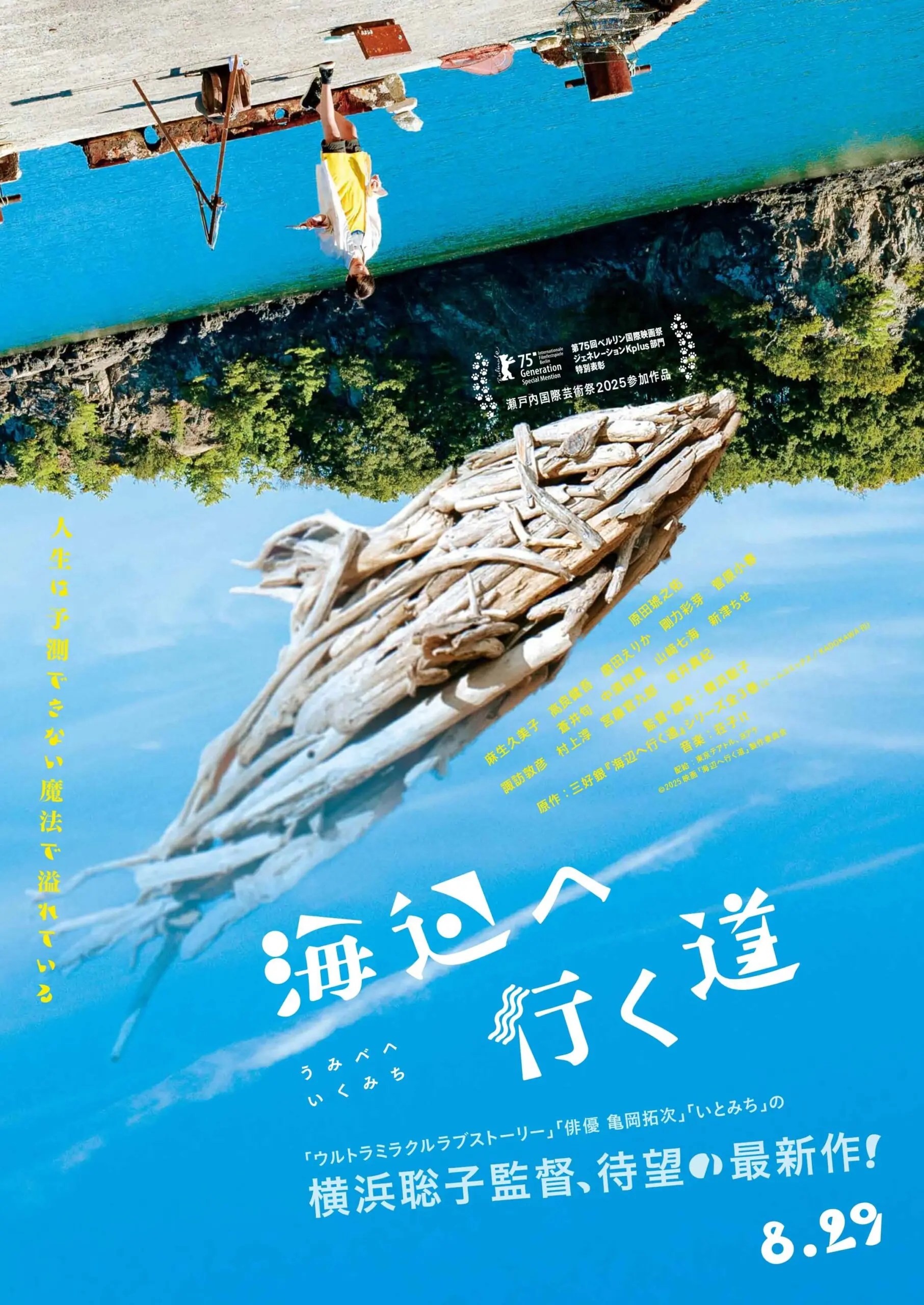
Delicate Skillful Fingers (白い指の戯れ, Toru Murakawa, 1972)

Toru Murakawa is most closely associated with his long and fruitful partnership with Yusaku Matsuda which came to define a certain kind of 1970s cinema, but he began his career at Nikkatsu in 1959 in the sales department before resigning and rejoining a year later as an aspiring director. At Nikkatsu he worked with established directors such as Toshio Masuda and Ko Nakahira, as well as with external directors such as Shiro Moritani before making his directorial debut in Nikkatsu Roman Porno, a line of soft core pornography the studio launched amid the collapse of the studio system, with Delicate Skillful Fingers (白い指の戯れ, Shiroi Yubi no Tawamure), in 1972.

Murakawa would actually leave the studio in the same year having completed two more Roman Porno films, returning to his hometown of Yamagata where he had married into the family of well-known metalwork artist Kenten Takahashi both training with him and helping his older brother Chiaki Murakawa set up the Yamagata Symphony Orchestra. In any case, his temporary withdrawal from the film industry had nothing to with a lack of success in his debut feature. Delicate Skillful Fingers was a critical hit and the first of Nikkatsu’s Roman Porno line to feature in Kinema Junpo’s prestigious Best Ten. It was also the debut film for lead actress Hiroko Isayama and, perhaps not entirely coincidentally, the first time the studio put the male star front and centre in their branding campaign. 

Co-scripted by another top Roman Porno name Tatsumi Kumashiro, the film follows the innocent and naive Yuki (Hiroko Isayama), who is so sensitive that the sight of a wrecked car makes her cry in sympathy, as she falls deeper into the world of petty street crime after being chatted up in a cafe by a goofy guy who just happens to have a problem with kleptomania. At least according to his sometime girlfriend Shoko, Jiro (Hajime Tanimoto) came from a wealthy family and attended a fee-paying school, seemingly stealing for the thrill of it rather than financial need. It has to be said that Yuki is rather ditsy, bamboozled into buying food to cook Jiro dinner while entering into a strange dialogue with a robot offering greetings in Chinese as to whether she should give him her virginity which she eventually does, perhaps recklessly, though it ends up not going particularly well, with Jiro having to explain that “the ceremony is now ended” without it seems much fanfare. In any case when he’s picked up by the police and put away for three years because he already had a record, Yuki has to quite her factory job because of persistent police harassment and bizarrely ends up living with Shoko who has predatory lesbian designs on her Yuki responds to but with a degree of internalised shame. 

Shoko’s desire for other women is in someways depicted as an expression of corruption caused by her pickpocket lifestyle as she implies sometime later in suggesting that Yuki will “come to like it” linking the idea of lesbian sex and the act of pickpocketing as implied by “delicate skilful fingers” of the film’s title. Yuki’s bodily submission but mental resistance is intended to suggest her lingering innocence, yet to submit herself to the hedonistic amorality of the pickpocket lifestyle. Rejecting Shoko, she later becomes sexually involved with Jiro’s former cellmate Taku (Ichiro Araki) who is responsible for teaching her how to pickpocket. Taku is otherwise seemingly less interested in sex, but allows Yuki to take the lead while he remains somewhat passive, lying still and still and chewing gum, always with his sunshades remaining firmly on. He even at one point passes her off to an associate in the middle of making love to her, Yuki first resisting on realising what’s going on but eventually giving in to it though clearly not willingly. 

The contrast between the two men, Jiro and Taku, is stark with Jiro clearly asking for consent at each step and waiting for Yuki to confirm it even if in the end he fails to perform whereas Taku seems to be merely using sex which doesn’t interest him to earn her trust and convince her to help him out in his various criminal operations. Yuki is seduced into a world of crime, but remains romantically naive, foolishly sacrificing herself for Taku and insisting she alone was responsible when cornered by the police while he simply walks away and then jokes with a policeman that he’ll look after her when she’s out. Even so, her loyalty to Taku, in contrast with Shoko’s continuing cynicism, proves that she is not fully corrupted by the pickpocket life, even if she foolishly damns herself by needlessly protecting him at the cost of her own future and wellbeing. On the other hand, to so is entirely her own choice just as it was her own choice to sleep with Jiro in the full embrace of her agency. Murakawa’s Nikkatsu debut is a gritty, grimy urban tale of amoral post-war youth but, even in its tragic conclusion, signals the hero’s spineless indifference and hands victory to the heroine who remains uncorrupted but only to her eternal cost. 


Don’t Look Up (女優霊, Hideo Nakata, 1996)

“Have you ever seen an old movie and not been able to get it out of your head?” For those of us who grew up in the pre-internet age, daytime television was a treasure trove of classic cinema where unexpected discoveries were made. Maybe you only caught a few minutes of a film whose title you never knew, but the images are burned into your brain like nothing before or since. It’s tempting, then, to wonder if it isn’t Muroi (Yurei Yanagi), the nascent director, who’s projecting the darkest corners of his mind onto this haunted celluloid, though as it turns out this film was never actually aired.

If Muroi saw the haunted film as a child, it was because the ghost within it chose to broadcast herself by hijacking the airwaves. As his friend points out, however, perhaps he just saw a newspaper report about an actress dying in an on-set fall and saw it in his mind, creating a movie of his own or perhaps a waking nightmare that continues to plague him into adulthood. In any case, the film he’s trying to make is a wartime melodrama rather than a ghost story, but it’s one that’s clearly built around dark secrets and hidden desires. Hitomi (Yasuyo Shirashima) reveals that her character killed her mother in the film to take her place and later kills a deserting soldier with whom she’s been in some kind of relationship that the younger sister threatens to reveal in fear that should the villagers find out they’ve been hindering the war effort by hiding a man who’s shirked his duty to the nation they’ll be ostracised and people will stop sharing their food with them.

But Hitomi has real-world issues too. There’s something going on with her overbearing manager who seemingly didn’t want her to do this film which is why she’s not on set with her. When she eventually turns up, she seems to have some psychic powers. After handing Hitomi an amulet, she runs from the studio screaming. Hitomi agrees there’s something eerie about this place. As the projectionist remarks, this studio is 50 years old, built during the post-war relaunch of the cinema industry. Many things have happened here. But Nikkatsu is now a ghost itself and these disused production facilities are a haunted spaced. The floorboards creak and the rigging may give way any moment, bringing down with it the dream of cinema.

That’s one reason Muroi is advised not to look up and break this sense of allusion, along with recalling the more recent tragedy of an actress’ accidental fall. As much as Hitomi and Saori (Kei Ishibashi) begin to overlap with the image of the ghostly actress, it’s Muroi who is eventually swallowed by his dream of cinema in his determination to climb the stairs and find out what horrors are lurking in the attic before being dragged away to some other world. Nevertheless, this is a film that could only be made with celluloid. Nakata slips back and fore between the film that we’re watching and the cursed negative with its ghost images from previous exposure. This is evidently a low-budget production too, made using end cuts from other reels. As someone points out, this unused footage would usually be thrown out but has somehow mysteriously ended up infecting their film and releasing its ghosts. The projectionist burns it, describing the film as “evil” and suggesting that it’s better to let sleeping dogs lie.

But Muroi seems unable to let it go, chasing his childhood nightmare in trying to explain the mystery behind the footage. Hitomi describes herself as being haunted by a role long after the film as ended. It’s the same when someone dies, she says. They hang on for a while. The actor too remarks that he feels like the camera hates him, as if he were feeling the ghost’s wrath directly but otherwise unable to see her. Yet we have this sense of history repeating and a curse that’s sure to recur while this film too will remain unfinished and linger in the realm of the unrealised. Nakata too only undertook this film after losing his job to Nikkatsu’s collapse and trying to finance a documentary about Joseph Losey as if captivated by his own dream of the cinematic past and the haunting images of a bygone world.


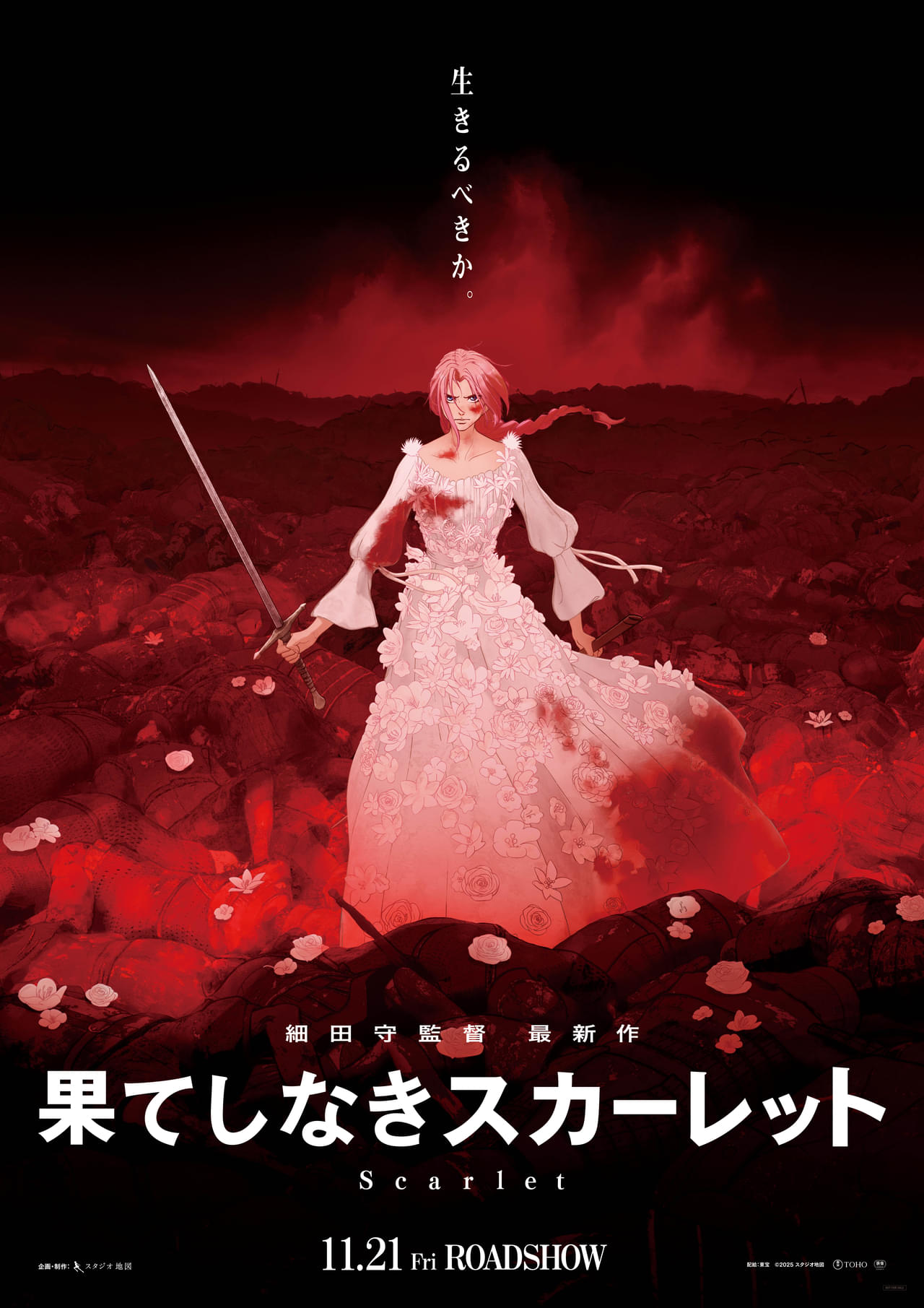
Mission: Cross (크로스, Lee Myung-hoon, 2024)

“Justifying each other’s existence, is that what marriage is about?” Asks top cop Mi-seon (Yum Jung-ah) while contemplating her vaguely dissatisfying marriage to househusband Kang-mu (Hwang Jung-min). In the opening sequences of Lee Myung-hoon’s action rom-com Mission: Cross (크로스), Mi-seon describes Kang-mu as a lottery ticket that’s never going win and suggests she only puts up with him because he’s not the worst man in the world and maybe marriage means putting up with each other. Only on discovering his long-buried secret does she begin re-evaluate him along with what marriage means to her.

Part of what puts her off, however, is Kang-mu’s seeming unmanliness. As a househusband, a rarity in South Korea’s patriarchal society, Kang-mu takes good care of care of her but Mi-seon finds it vaguely annoying and is irritated by his tendency to raid her wallet. It’s also Kang-mu that hosts when her colleagues come over for celebrations after solving a case and he’s got labelled Tupperware in his fridge with homemade kimchi for them. Nevertheless, they all jokingly refer to Kang-mu as Mi-seon’s “missus” which is also in part born of their characterisation of Mi-seon as a man because of her no-nonsense nature and the authority she holds over them. When Kang-mu asks Mi-seon’s colleague Sang-un (Jung Man-sik) to give her a wrist brace he bought her but thinks she’s too proud to accept from him, she jokingly asks if he fancies her but he replies that he only likes women. Nevertheless, Sang-un too is positioned as unmanly because his wife cheated on him which led to their divorce. The other two officers, meanwhile, are obsessed with romantic drama and act out their own version of events after spotting Kang-mu with another woman and becoming convinced that he’s having an affair.

Kang-mu, however, has a secret past as an intelligence officer from which he got fired for conducting an unauthorised mission to stop a Russian arms shipment reaching North Korea. While they were on the boat, they discovered that it was actually going to South Korea while one of his men was killed by the Russian Mafia. Six years later, one of his old colleagues has gone missing while trying to expose a procurement fraud scam run by the mysterious General Park through a fake contract to buy a new aerospace weapon from the Russians. Meanwhile, Mi-seon is investigating the attempted murder of a young woman who was shot after delivering a USB stick containing accounting files to a dead drop. 

Obviously, the cases are connected and Mi-seon is about to make a discovery about her husband but not before she experiences the unexpected jealousy of suspecting that he might actually be having an affair. The film actively turns an established trope on its head in that there are countless dramas in which a secret agent thinks he’s married to a regular housewife only to find out she used to be a top assassin, but in its way still ends up conforming to traditional gender roles while essentially subverting them. Mi-seon’s attraction to her husband is reignited when he becomes more stereotypically masculine by charging in with guns and rescuing her. In any case, finding out truth seems to complete the puzzle so that she can reconsider the point of marriage to reflect “Even if the whole world is against you, I’m on your side. That’s what marriage is.” 

Even so, the end result is that they fight crime together rather than Mi-seon having to take a back seat while she also commits to making it work rather than being vaguely irritated with Kang-mu but not making any attempt to improve their marriage. Lee cleverly plays with the tropes of the genre to create a genuinely surprising twist complete with a Bond-style maniacal villain playing off the region’s complicated geopolitics by working with the Russians who are thought to be colluding with North Korea against the South when really just in it for themselves. While the final mid-credits sequence, a reference to Hwang’s Netflix series Narco Saints, is a little uncomfortable in its implications, it’s clear that there’s a lot more milage in this potential franchise built around the unusual dynamics of the central pair’s marriage as well as those of Mi-seon’s equally unusual team of lovelorn romantics.


Trailer (English subtitles)

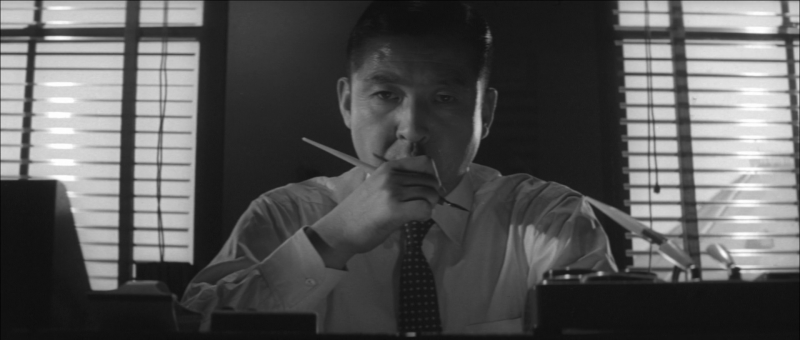
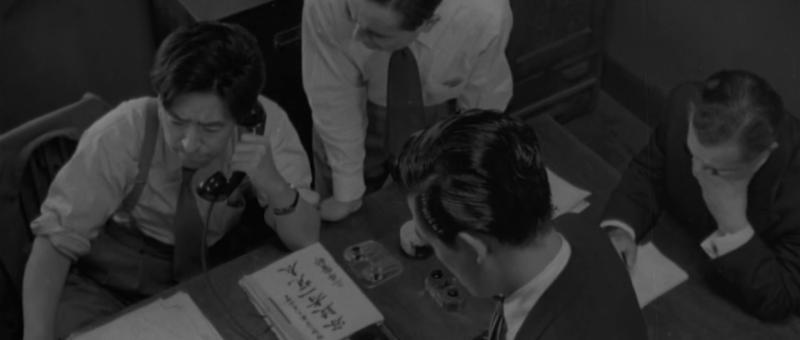
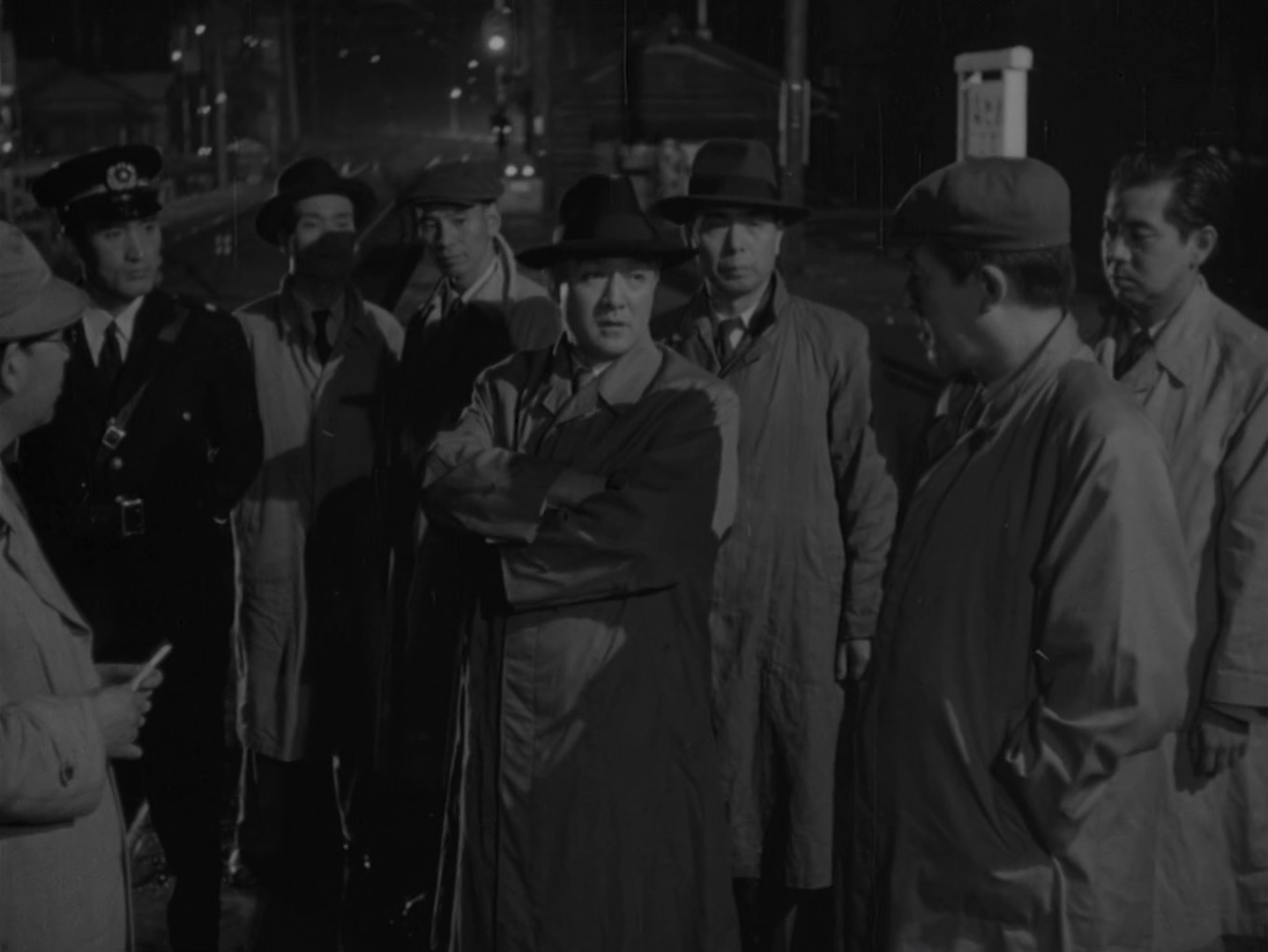
Both You and I (俺もお前も, Mikio Naruse, 1946)

Two dippy salarymen finally rise up against a feudalistic corporate culture in a rare comedy from Mikio Naruse, Both You and I (俺もお前も, Ore mo Omae mo). Essentially a vehicle for real life manzai double act Entatsu Yokoyama and Achako Hanabishi, it’s also an Occupation-era social message movie intended to discourage workers from extending too much deference to their employers, though its positioning of the left-wing student movement as the future countering the militarist past is perhaps surprisingly radical.

In other ways, however, it harks back to the salaryman movies of the 1930s such as Naruse’s own Flunky, Work Hard and Ozu’s I was Born, But… in which the male office worker has been essentially emasculated and forced to debase himself in order to please his boss. As the film opens, Ooki (Achako Hanabishi) and Aono (Entatsu Yokoyama) are guests at their boss’ dinner party at a geisha house where they’ve been ironically invited as entertainment. The pair of them take the place of the geisha doing a silly dance to entertain the boss who quips that they’re cheap considering how much it would cost to hire a pair of comedians. It’s worth saying that Ooki and Aono are not particularly doing this in a calculated way but actively appreciate being appreciated by the boss and see it as their duty to keep him happy. At times, others suggest that it’s their attempt to ingratiate themselves with him, though they seem quite surprised by the suggestion in part because they still believe in an old-fashioned idea of the employer-employee relationship in which the company is supposed to look after them, so they assume they’ll make career progress naturally by being affable team players and aren’t really worried about losing their jobs despite all this talk of restructuring.

Their boss, however, thinks the pair of them are idiots and takes advantage of their loyalty towards him by getting them to dig his garden and complete other inappropriate personal tasks. He gives them a pair of tickets for an onsen resort as a kind of reward, but once they get there, they realise he’s done it to get them to bring back his “luggage” which is actually black-market supplies for his daughter’s birthday party. The boss’ superiority over them is signalled by his large Western-style house, while Ooki and Aono both live in humbler, traditionally Japanese homes. Aono is a widower with four children though he can’t remember how old they are the oldest two daughters are of marriageable age. The boss even requests the eldest, Hatsuko’s presence at the party, but it quickly transpires that he wasn’t inviting her but asking her to do unpaid serving work signalling the class disparity between the middle-ranking salarymen and the boss.

But it’s at the party that things start to change as Hatsuko talks her father out of doing another silly dance as part of the entertainment, in part because of her embarrassment but mostly because her sister Yasuko’s (Itoko Kono) boyfriend is a guest and she’s worried it’ll put him off marrying her. This angers the boss, who insultingly suggests that Aono and Ooki aren’t even fully human and only become a whole person when together so one alone is as useless as an orphaned sandal. Meanwhile, Ooki’s son, whom he’s very proud to say is in university, is rehearsing a communist play that’s about a strike at factory. Ooki doesn’t really understand it, but is worried about the neighbours overhearing and the police getting involved. He still has a pre-war mindset and hasn’t realised that things like freedom of expression now exist. His son tells him that it’s only right to speak up. If you can’t say anything because you’re afraid of getting fired, then you’ll just end up getting exploited. But Ooki and his wife insist they feel too indebted to the boss to be able to talk about him like that. He thinks his son will change his mind when he enters the world of work. Sadao replies that he understands why his father had to do it, but insists that the world is unjust and has been created by the capitalists for their own benefit.

Pushed too far, Ooki and Aono do eventually decide to confront the boss even if they immediately back track when he arrives at the office by hanging up his hat and dusting his desk. They accuse him of being a wartime profiteer who caroused with militarists and made his money by exploiting their labour while he now abuses the black market. They find themselves supported by the other workers from the other side of the door as they insist they’ll fight the restructuring along with the boss’ underhanded plan to sell the company to a rival. They’ve discovered workers’ solidarity and resolved not to be complicit any more with a feudalistic working culture, though it’s unclear if anything will really come of it. They are nevertheless free from their lives of constant debasement and have reasserted their individual identities while otherwise being an unbreakable pair.