 Terra Formars – Terror for Mars? It’s all about terror in the quest for terra and reform in Takashi Miike’s bug hunt extravaganza adaptation of Yu Sasuga and Kenichi Tachibana’s manga. In fact, much of the plot is more or less the same as Aliens, but our motley crew is not a crack team of space marines headed by a recently awoken from stasis super survivor who proves unexpectedly dextrous in a robotic forklift exoskeleton, but a collection of human “bugs”, parasitical criminals who’ve each been made an offer they can’t refuse. High budget and boasting a starry cast, Terra Formars (テラフォーマーズ) definitely falls into the throwaway Miike category and proves curiously dull despite its ridiculous set up, but then if you happen to be into bugs there’s really a lot to like here.
Running through the Tokyo of 2597 which seems to be some kind of Blade Runner theme park, Shokichi (Hideaki Ito) and Nanao (Emi Takei) are trying to escape the oddly bug-like police only to be captured and taken to the lair of mad scientist and all round fabulous guy, Honda (Shun Oguri). He has a proposal – join his mission to Mars and get a large amount of money instead of getting a death sentence for the murder they were on the run for. Reluctantly, they agree but there are several things Honda forgot to tell them – they’ve been given alien bug DNA which gives them super powers, and the “cockroaches” they’re supposed to be exterminating have mutated into giant humanoid creatures capable of planning and tool use. Oh, and everyone on the first mission died horribly.
By 2597, the world has become massively overpopulated but luckily enterprising scientists had come up with a plan for terraforming Mars through the use of various kinds of moss distributed by millions of cockroaches. The terraforming process is now complete and it’s time for colonisation to begin but no one really thought about what to do with all their insectile helpers. No longer “mere” bugs, the highly evolved Roaches are now the (not quite) indigenous peoples of Mars. Miike does not push the colonisation narrative (and nobly attempts to mitigate the elements which have seen the original source material decried as racist) but you can’t get away from the fact that the Roaches have every right to fight back and defend their homeland from an invading force wielding superior technology and hellbent on mass extermination.
Honda’s big idea (well, one of his big ideas as it turns out) was to send a bug to catch a bug. In some senses, all of the assembled bait could be regarded as human pests – petty criminals and reprobates offering nothing of value to society. Given the pace of the film and the subsequent carnage, none of them is given much time to shine so we mostly remember them by their epithets – creepy serial killer, hikkokomori hacker, teenage prostitution ringleader, illegal immigrant, former yakuza and dodgy ex-police officer – in other words, people with no options that no one will miss. They’ve each been more or less forced into this position by their peculiar circumstances as exploited by Honda and his team who have given them a “risky” operation involving alien DNA which has given them bug-like powers from super sharp pincers to venomous stings.
Bug hunt is an apt way to describe the subsequent action as the crew activate their inner insects and prepare to squash some Roaches only to die in various painful looking ways, usually by losing their heads. There’s a distinctly Aliens undertone to the entire enterprise, even borrowing a key plot revelation from the film’s ‘80s anti-corporate message but it’s all so unimportant next to the bug killing that it most likely gets missed. Repetitious in the extreme, the two hour runtime is stretched to breaking point with battle after battle of mostly losses as the Roaches effortlessly swat our puny human heroes.
Production design is the most impressive element but even this borrows heavily from such similarly themed genre landmarks as Blade Runner, Aliens, Total Recall, and to a lesser extent Starship Troopers. Ultra camp from Honda’s obsession with his fashionable outfits to the Ultraman style practical effects of the bug suits, Terra Formars later fails to capitalise on its surreal and ridiculous premise, remaining disappointingly straightforward in terms of tone for much of the running time. Keen entomologists will perhaps enjoy the animated info sequences introducing the various beetles, flies, and other assorted creatures as well as those same traits being acted out by our heroes but for everyone else Terra Formars may prove a rather dull expedition to the previously red planet, now a green and pleasant land but very definitely inhabited and defended. Plenty of bug splatting action with only minimally disquieting overtones but a sorry lack of excitement, Terra Formars is a disappointingly by the numbers sci-fi effort from the usually exuberant Miike but does at least look good.
Original trailer (No subtitles – massive spoilers)
 “Why is there so much madness and too much sorrow in the world? Is happiness just a concept? Is living just a process to measure man’s pain?” asks a key character towards the end of this eight hour film, but he might as well be speaking for the film itself as its director, Lav Diaz, delivers another long form state of the nation address. This is a ruined land peopled by ghosts, unable to come to terms with their grief and robbing themselves of their identities in an effort to circumvent their pain. Raw yet lyrical, Diaz’s lament seems wider than just for his damaged homeland as each of its sorrowful, disillusioned warriors attempts to reacquaint themselves with world devoid of hope.
 Yukio Mishima’s Temple of the Golden Pavilion has become one of his most representative works and seems to be one of those texts endlessly reinterpreted by each new generation. Previously adapted for the screen by Kon Ichikawa under the title of
 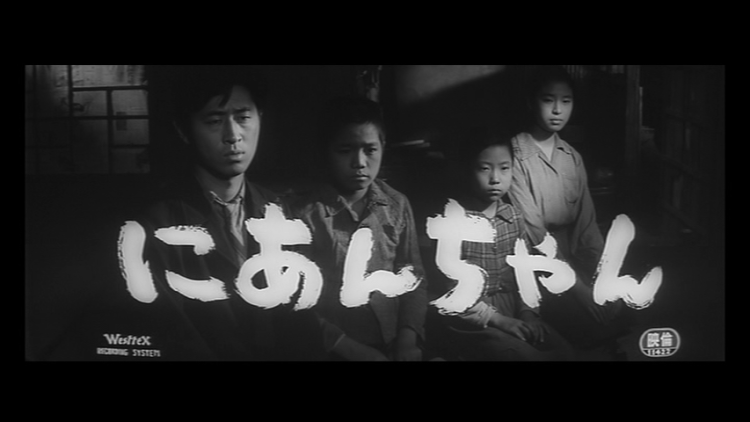 Like most directors of his era, Shohei Imamura began his career in the studio system as a trainee with Shochiku where he also worked as an AD to Yasujiro Ozu on some of his most well known pictures. Ozu’s approach, however, could not be further from Imamura’s in its insistence on order and precision. Finding much more in common with another Shochiku director, Yuzo Kawashima, well known for working class satires, Imamura jumped ship to the newly reformed Nikkatsu where he continued his training until helming his first three pictures in 1958 (Stolen Desire, Nishiginza Station, and Endless Desire). My Second Brother (にあんちゃん, Nianchan), which he directed in 1959, was, like the previous three films, a studio assignment rather than a personal project but is nevertheless an interesting one as it united many of Imamura’s subsequent ongoing concerns.
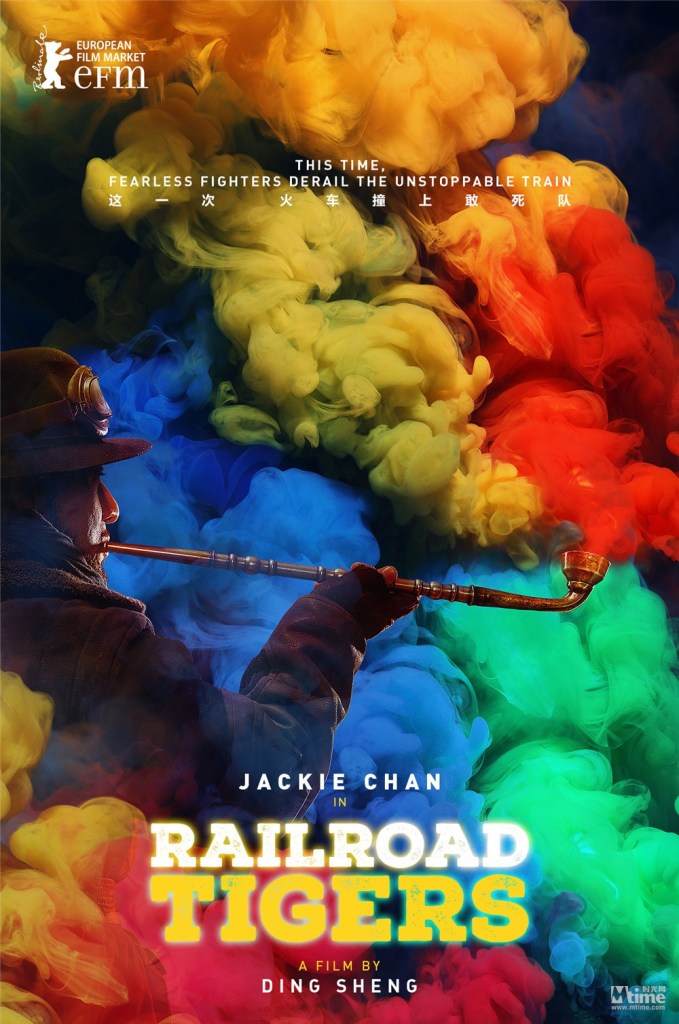 Trains! They seem to be the latest big thing in Chinese cinema, but at least Railroad Tigers (铁道飞虎, Tiědào Fēi Hǔ) has more rolling stock on offer than the disappointingly CGI enhanced effort which formed the finale of
  Looking at the poster and its “A Most “Oshare” Movie” tagline, you’d assume Cats in Park Avenue (公園通りの猫たち, Koendori no Nekotachi) to be a very stylish story about some fashionable felines living on an uptown street comparable to the famous New York landmark but the title is entirely coincidental as it’s a literal translation of the Japanese and just means the cats live on a street near the park. These cats are full on alley cats, scrappy and free, roaming the rooftops of Shibuya and not giving a damn about whatever it is cats are supposed to do. Ostensibly a throw away young adult movie about a group of dance students and their obsession with a gang of local street cats, Cats in Park Avenue takes on a surprisingly individualist message as the virtues of freedom and validity of life outside the mainstream are resolutely reinforced through cute animation and nonsensical musical sequences.
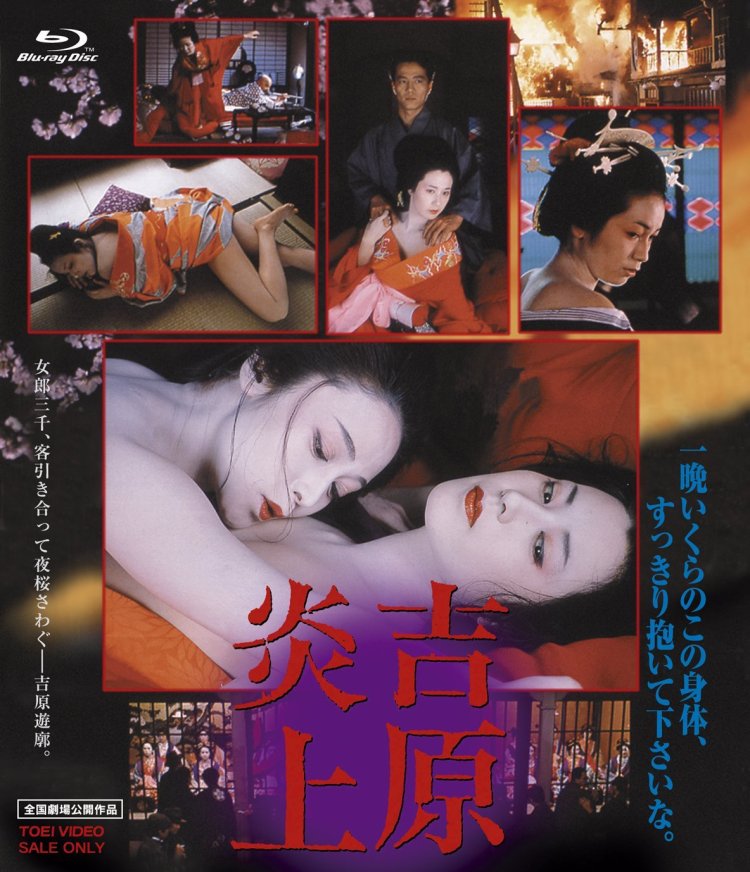 Hideo Gosha maybe best known for the “manly way” movies of his early career in which angry young men fought for honour and justice, but mostly just to to survive. Late into his career, Gosha decided to change tack for a while with a series of female orientated films either remaining within the familiar gangster genre as in Yakuza Wives, or shifting into world of the red light district as in Tokyo Bordello (吉原炎上, Yoshiwara Enjo). Presumably an attempt to get past the unfamiliarity of the Yoshiwara name, the film’s English title is perhaps a little more obviously salacious than the original Japanese which translates as Yoshiwara Conflagration and directly relates to the real life fire of 1911 in which 300 people were killed and much of the area razed to the ground. Gosha himself grew up not far from the location of the Yoshiwara as it existed in the mid-20th century where it was still a largely lower class area filled with cardsharps, yakuza, and, yes, prostitution (legal in Japan until 1958, outlawed in during the US occupation). The Yoshiwara of the late Meiji era was not so different as the women imprisoned there suffered at the hands of men, exploited by a cruelly misogynistic social system and often driven mad by internalised rage at their continued lack of agency.
 If there is a frequent criticism directed at the always bankable director Yoji Yamada, it’s that his approach is one which continues to value the past over the future. Recent years have seen him looking back, literally, in terms of both themes and style with remakes of films by two Japanese masters – Ozu in his Tokyo Story homage Tokyo Family, and Kon Ichikawa in Her Brother. While he chose to update both of those pieces for the modern day, 2008’s
 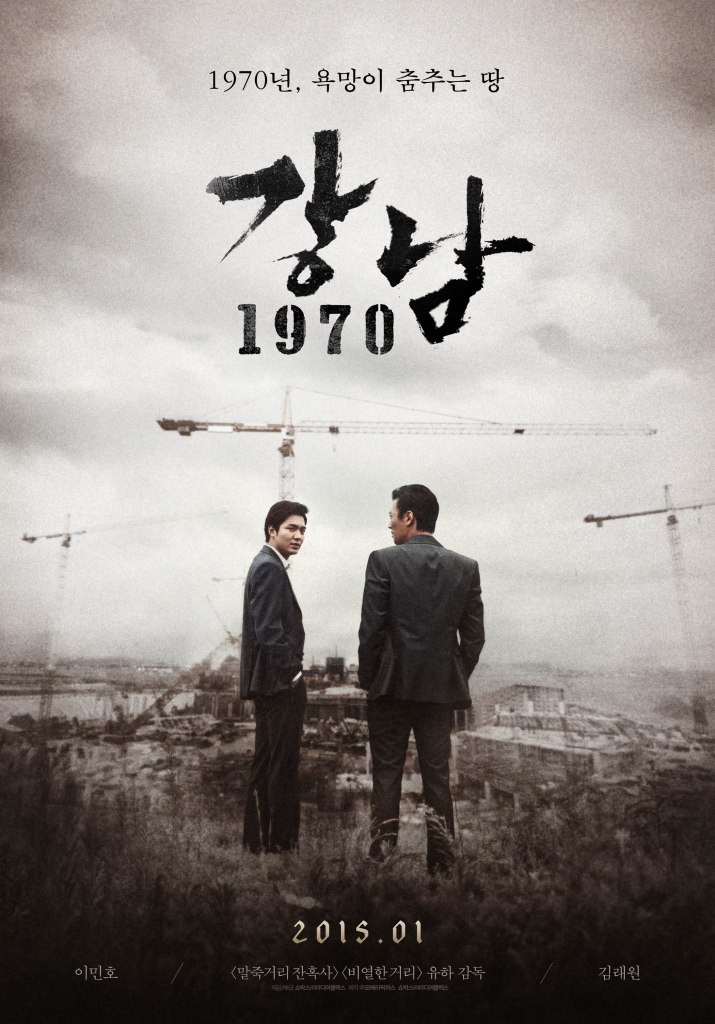 Yoo ha takes us back to the 1970s for some Gangnam Blues (강남 1970, Gangnam 1970) in a sorry tale of fatherless men caught up in dangerous times of ambition and avarice, very much at the bottom of the heap and about to be eclipsed by the “new world” currently under construction. Back then, Gangnam really was all just fields, owned by farmers soon to be cheated out of their ancestral lands by enterprising gangsters engaged in a complicated series of land grab manoeuvres, anticipating the eventual expansion of the bursting at the seams capital. Far from the shining city of today, Gangnam was a wasteland frontier town, the sort of place where a man can make a name for himself trading on his wits and his fists alone.
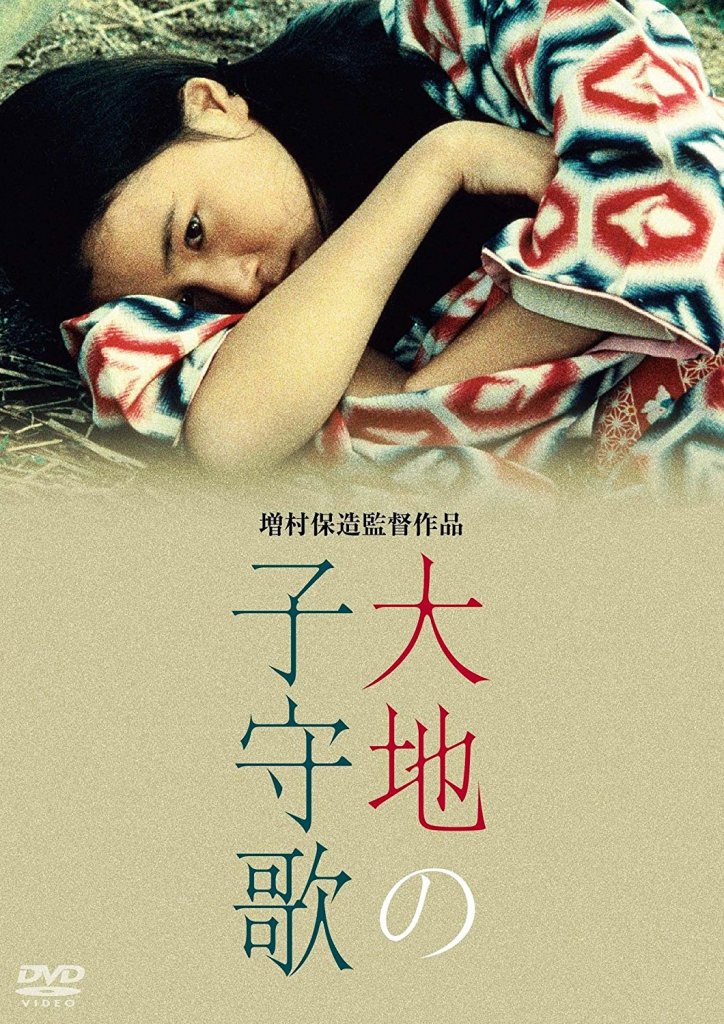 Yasuzo Masumura is best remembered for his deliberately transgressive, often shockingly grotesque critiques of Japanese society and its conformist overtones. Lullaby of the Earth (大地の子守歌, Daichi no Komoriuta) is one of his few completely independent features, filmed after the bankruptcy of Daiei where Masumura had spent the bulk of his early years. As such, it is quite an exception in terms of his wider career both in terms of its production and in its earthy, spiritual themes. Adapted from the 1974 novel by Kukiko Moto, Lullaby of the Earth is the story of an abandoned and betrayed woman but one who also draws her strength from the Earth itself.
