Suzuki=Bakudan (爆弾, Akira Nagai, 2025)

At first glance, the English-language title of Akira Nagai’s adaption of the novel by Katsuhiro Go, Suzuki = Bakudan, might seem a little strange, even aside from the incongruity of leaving “bakudan” (bomb) untranslated. But there is something to be said of the idea that there are little bombs everywhere, and each person is also powder keg waiting to explode given the right trigger. That might play in to the rather cynical view of the Hannibal Lector-like presence at the film’s centre who seems to be leading the police a merry dance with his various riddles and determination to play the part of a man whose mind has been ruined by alcohol and hopelessness.

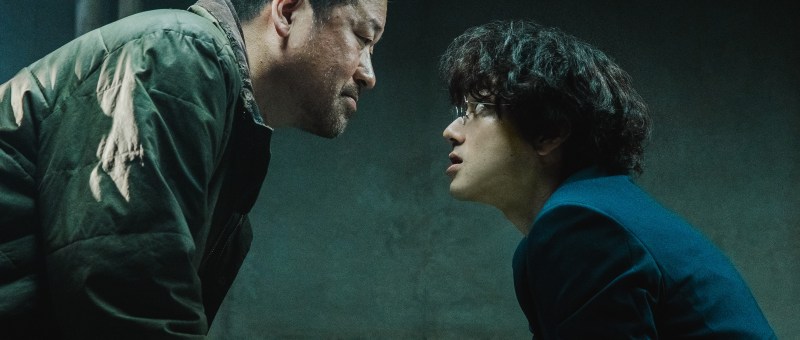
The first thing about Suzuki (Jiro Sato), arrested for busting up a convenience store, is that he gives a name that at least sounds fake and attempts to brazen it out. Detective Todoroki (Shota Sometani) tells him that the store owner doesn’t want to press charges and will settle for compensation to fix the damage, but Suzuki says he’s broke ad offers to help the police instead. He claims to have psychic powers and knows that a bomb is about to go off, but the police assume it’s an obvious delaying tactic and take no notice, until there’s actually an explosion in the middle of the city. 

The obvious conclusion that occurs to Todoroki is that Suzuki is the bomber, but at the same time he seems to think there’s something innocent about him. He is indeed as Todoroki and later Ruike say childish in his playfulness and means of expression, though there’s also a sinister edge to the way he speaks that suggests it’s all an act. He quotes poetry and and appears to ramble like a madman but while Ruike becomes convinced he’s dropping them arcane clues, others think he’s just manipulative and deliberately wasting their time. “Not every word has meaning,” one insists though it seems as if it really might for Suzuki who seems to list not being listened to by society as one of his grudge points.

The point that he makes frequent digs at the homeless despite identifying as one hints at this paradoxical sense of injustice in the contemporary society. In one of the traps he sets for the police, he sets them up with a binary choice of whether to save schoolchildren or the homeless community. The detectives don’t realise that’s what they’re doing, but still didn’t really think to much about the people who live in the park while desperate to find a potential bomb threat in a school. Later Suzuki lists off a series of people he can’t stand from the homeless to pregnant women, families, and lawyers, in fact pretty much everyone which itself seems to be more a reflection of an absurd social prejudice than his own feeling. 

He might, however, have a point about social indifference and the arrogance of the police with Todoroki’s superiors rolling their eyes and refusing to take Suzuki seriously while the bombs keep going off. Everything seems to link back to a disgraced police officer, Hasebe, who took his own life by jumping in front of train and was not supported by his colleagues aside from Todoroki who only utters that he’s not insensitive to his feelings which seems like a lukewarm advocation for the police brotherhood. Suzuki seems to have resented not being accorded one of the group, and holds the police in contempt for the way they treat their own. Yabuki (Ryota Bando) is also forever trying to get his foot on the ladder as a detective, but is only exploited by those above him which is one reason he’s willing to take so many risks to catch the bomber.

Suzuki tries to guess the shape of people’s hearts, and finds those of the policemen largely warped by office politics and backstabbing. Selfishness is the sad truth of humanity, he intones. And he might be right, people only really want the bombs not to go off near them and they’re less bothered by the idea of them hurting other people than they’d like to think. After all, Hasebe’s family’s lives imploded too when they were sued by the railway company after Hasebe’s suicide, hounded by the press, and ostracised by former colleagues. Acceptance by the group, it seems, is only ever really temporary. Still, Suzuki leads the police by the nose exploiting all their weaknesses and affecting the persona of a sane madman claiming to be psychic and to have been hypnotised to erase his memory but keeping all his cards close to his chest as the cat and mouse game between him and Ruike ratchets up in tension and finally reaches its ironic conclusion.


Suzuki=Bakudan screens as part of this year’s Nippon Connection.

Trailer (English subtitles)

Images: © Katsuhiro Go/KODANSHA Ltd. All Rights Reserved © 2025 FUJI TELEVISION NETWORK, INC./Warner Bros. Japan LLC/ KODANSHA LTD. All rights reserved
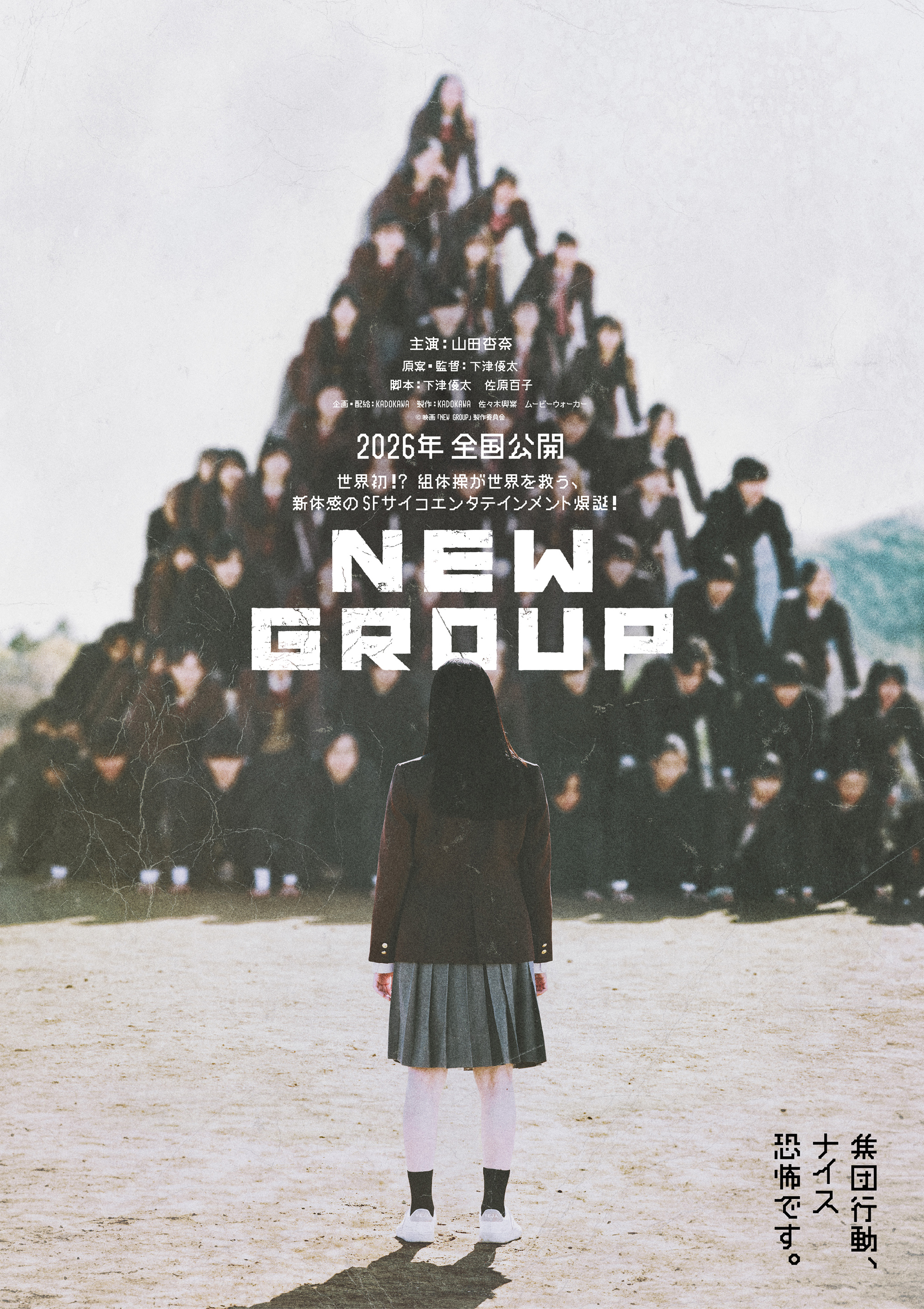
New Group (Yuta Shimotsu, 2025)

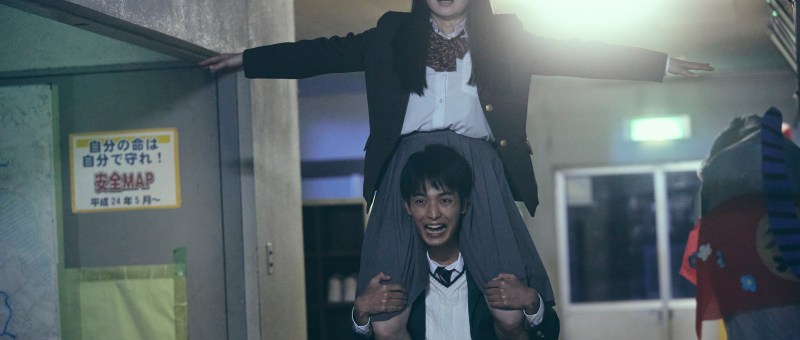
If all your friends went and formed a giant human pyramid, would you go and form a giant human pyramid too? Parents used to caution against such dangerous group think, but it has to be said that perhaps they only complained when the group activity didn’t suit them or required some additional expense they didn’t really want to pay. If the group activity was studying hard at school to get into a good university and become a successful member of society rather than buying the later must have fashion item to fit in at school, then they’d hardly complain about that.

Yuta Shimotsu’s absurdist satire New Group is in many ways about the deeply ingrained patterns of thought that exist within a society to the extent that they are rarely ever questioned. Ai (Anna Yamada) is coming to an age in which she is beginning to feel hemmed in by a conformist society but at the same time does not have the courage or confidence to challenge it. When she sees another girl being bullied, she wants to step in to defend her but all she manages to do is give the bullies a hard stare. Her friend Haru asks her what university she’s thinking of applying to to, but Ai only says she’ll apply to the same one as her and study the same thing. She can’t even answer when she’s put on the spot about what she wants to do for the school festival for fear of picking the wrong one and being ostracised from a particular faction, so she just goes along with the first person who asked for her vote.

As her teacher says, though there is a strong groupthink in play, everything comes to a binary. It’s always “uchi-soto”, us and them. But what does it mean to be a member of the main group? Ai isn’t convinced she wants to give up her autonomy just to fit in and increasingly feels herself to be an outsider. Her name is of course reminiscent of the English pronoun “I”, though it’s true meaning is “love”. She’s pulled out of inertia by a boy named “Yu” who nevertheless is later pulled into the pyramid and tells her that “ai” is here, meaning both that the group is love and Ai, the individual, belongs with in it. She replies that he’s wrong, that isn’t love, and it isn’t her. There is no room for the individual within the pyramidic structure of the group.

Yu has recently returned from abroad and is living alone free of parental authority which is why he doesn’t fit into the carefully controlled harmony of the school. He is out of step at marching practice and less afraid to voice his true opinions. He intervenes to save the other girl from the bullies and chastises Ai that just watching makes you complicit. Yu might as well be one of the space aliens they keep talking about on TV, a subversive force out to destabilise the harmonious society. Yet Ai’s doubts seem to have arisen because of a personal trauma. As a child, she chose the group over her younger sister who was then killed in an accident. She feared being excluded and essentially sacrificed her sister for approval while also denying her affiliation to the group that is her family.

The quest of Ai and Yu is then to maintain their selfhoods while operating in a society that demands conformity. Controlled by the maniacal headmaster, their schoolmates all immediately start marching to the beat of the PE teacher’s whistle and dutifully take their place in the pyramid in which all they do is uphold the structure of the group. As the pair are chased by the zombie-like figures, Ai has to confront the fact that it might just be easier to go with the flow, even if that too comes at a price. Even so, in her efforts to resist, is Ai not just creating another group of her own that can only exist because of its opposition to the first? If there is “I” there must also be “you” and never the twain shall meet. A TV commentator played by the director Takashi Shimizu tries to speak out about the nonsense groupthink being conveyed through the innocuous medium of daytime television but is dragged off air while shouting at everyone to wake up and think for themselves. It seems that few are brave enough to switch off and think for themselves while the only path to freedom lies in loneliness and exile even if in the end it is “love” that saves us after all.


New Group screens as part of this year’s Nippon Connection.

Trailer (English subtitles)

Images: ©2025 “NEW GROUP” Film Partners

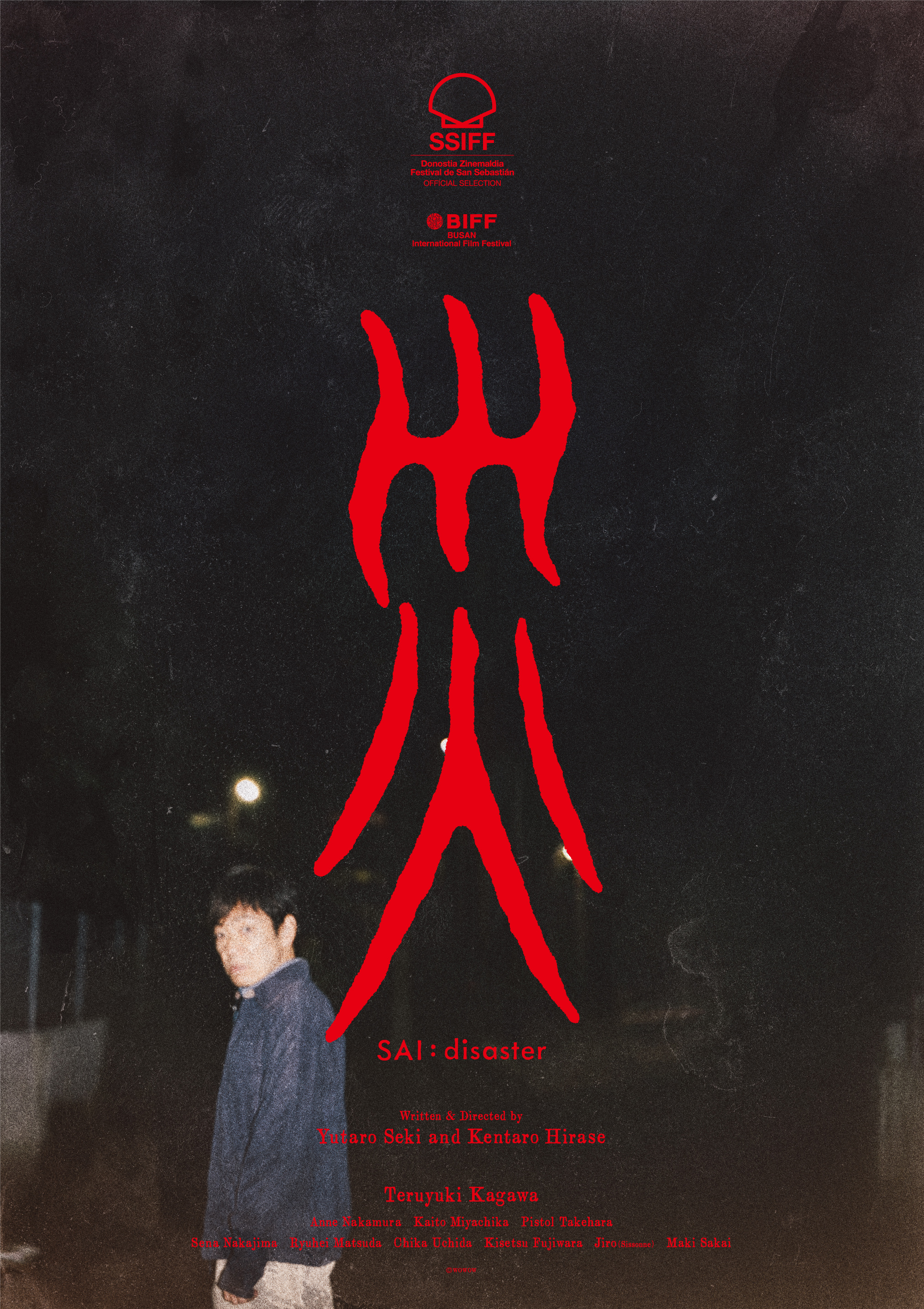
Sai: Disaster (災 劇場版, Yutaro Seki & Kentaro Hirase, 2025)

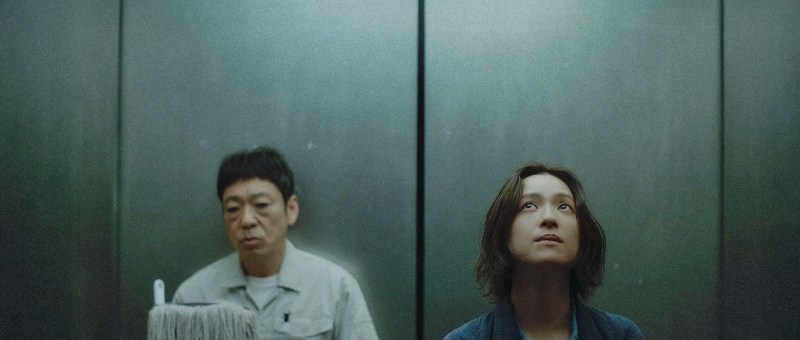
We like to tell ourselves that if we do everything right and follow all the rules then everything will be okay. But the reality is that life is chaotic and you have no control. No one knows when, where, or who, will suffer a disaster, as one man puts it. But then again, in Yutaro Seki and Kentaro Hirase’s Sai (災 劇場版, Sai Gekijoban), there may be someone who does know and acts as some kind of harbinger of doom guiding the unlucky towards their unhappy fates.

The mysterious man (Teruyuki Kagawa) appears in different guises to different people and apparently disappears not long after they do. A policewoman, Domoto (Anne Nakamura), is becoming convinced that a series of unexplained deaths in which the bodies were missing a small piece of their hair is the work of a serial killer, though others tell her it’s a just coincidence. It remains unexplained whether the mysterious man is, as Domoto suspects, a very human serial killer travelling all over Japan and inserting himself into people’s lives before engineering their deaths, or else a more supernatural creature and embodiment of the very nature of “disaster”.

In any case, a bereaved husband says he’d rather think of his wife’s death that way. Just something that happened for no rhyme or reason, like a landslide or an earthquake. It doesn’t matter to him whether she killed herself or was murdered, because the net result is that she’s dead. People don’t die for no reason, Domoto insists, but there is a kind of crushing inevitability to each of the stories as the mysterious man works his magic often offering a listening ear or a shoulder to cry on. Other times he seems oddly impish, encouraging one’s worst instincts as he does with recovering alcoholic Kuramoto (Ryuhei Matsuda) by constantly tempting him with drink.

The lives of the victims paint a particularly bleak vision of contemporary Japan as a place ruled by loneliness and fear. No one can get what it is they want, and they don’t even want that much. Kuramoto seems to want to rebuild his life after killing someone drunk driving by giving up drink and working hard to be reaccepted by his community, but his wife doesn’t want to see him and according to her mother at least, his problems were more serious than he first suggests. Schoolgirl Yuri (Sena Nakajima) just wants to continue with her education and eventually become an architect but is saddled with toxic parents who couldn’t care less about her future. The first victim that we see, a young woman running a restaurant for fishermen (Yumi Adachi), seems to be caught between loneliness and humiliation following the sudden disappearance of her husband. A cleaner working at the shopping centre (Chika Uchida) is the only one to take her job seriously, but has no luck with men. An inn keeper (Jiro Ohkawara) takes to smoking marijuana after his wife leaves him for another man while struggling to maintain his family business.

When his wife left him, the inn keeper assumed the worst had already happened and he’s survived his disaster, but it doesn’t really occur to him there could be another one waiting. The sense of dread that Seki and Kentaro Hirase conjure is the manifestation of this anxiety that something bad is lingering on the horizon just out of sight but ready to strike at any moment. In editing down the original six-part TV drama into a feature film, Seki and Hirase intercut each of the stories rather than letting them play out in linear fashion. It’s only later that we get dates, making it clear that all of these stories are taking place at different times and happening in sequence rather than parallel meaning that they could, perhaps, all be motivated by the same person and the mysterious man is just that rather than a malevolent supernatural entity or walking disaster in human form. Perhaps that’s all he really is anyway, no different from an earthquake or a landslide, just something that happens to you if you’re unlucky enough to stray into his path. As much as Domoto might try to create some kind of order by pinning a narrative onto the unexplained deaths or trying to solve the mystery, the truth is that some things cannot be explained. Disaster lurks at every turn and strikes when least expected.


Sai: Disaster screens as part of this year’s Nippon Connection.

Trailer (English subtitles)