Perfect Revolution (パーフェクト・レボリューション, Junpei Matsumoto, 2017)

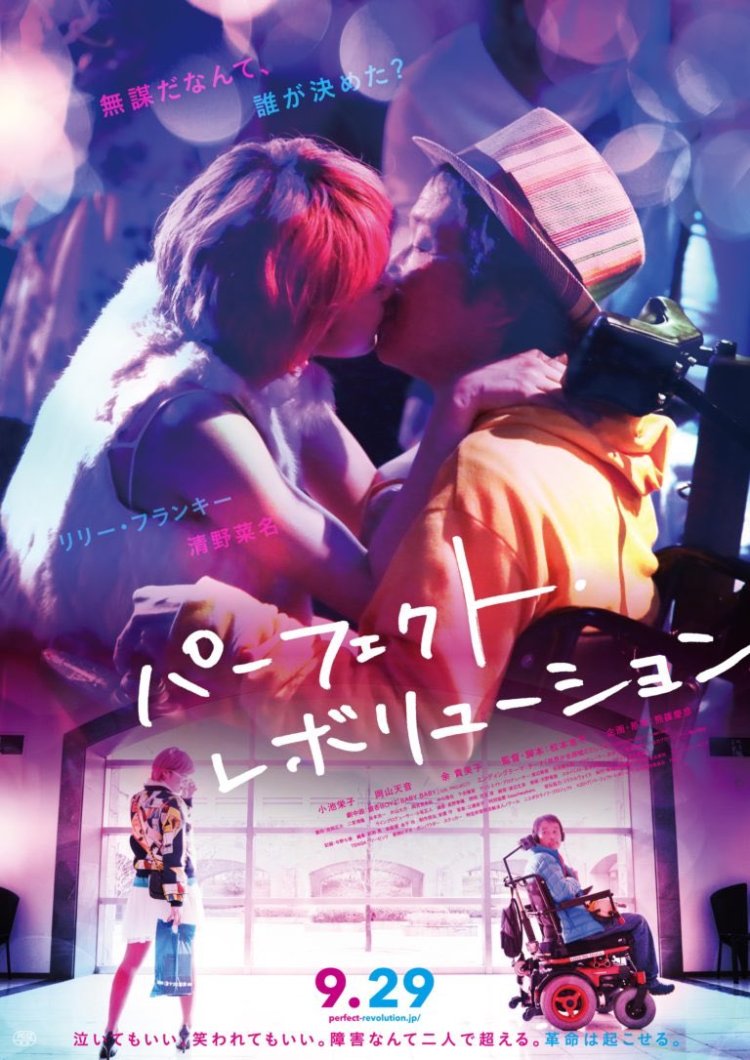
Perfect Revolution posterIf there is one group consistently underrepresented in cinema, it surely those living with disability. Even the few films which feature disabled protagonists often focus solely on the nature of their conditions, emphasising their suffering or medical treatment at the expense of telling the story of their lives. Junpei Matsumoto’s Perfect Revolution (パーフェクト・レボリューション) which draws inspiration from the real life experiences of Yoshihiko Kumashino – a Japanese man born with cerebral palsy who operates a not for profit organisation promoting awareness of sexual needs among the disabled community, makes a criticism of the aforementioned approach a central pillar of its narrative. Unlike many on-screen depictions of disabled people, Perfect Revolution attempts to reflect the normality of life with a disability whilst never shying away from some of the difficulties and the often hostile attitude from an undereducated society.

Kumashiro (Lily Franky), a man in his mid-40s, was born with cerebral palsy and has been using a wheelchair for most of his life. An activist for disabled rights, he’s written a book about his experiences and is keen to address the often taboo subject of sexuality among disabled people. Kumashiro has long since given up on the idea of romance or of forming a “normal” relationship leading to marriage and children but his life changes when a strange pink-haired woman barges into his book signing and demands to know why he’s always talking about sex but never about love. Kumashiro thinks about her question and answers fairly (if not quite honestly as he later reveals) that he doesn’t yet know what love is but is just one of many hoping to find out. This impresses the woman who approaches him afterwards and then refuses to leave him alone. Ryoko (Nana Seino), asking to be known as “Mitsu” (which means “honey” in Japanese – a nice paring with “Kuma” which means “bear”), suddenly declares she’s fallen in love with Kumashiro, whom she nicknames Kumapi.

The elephant in the room is that there is clearly something a little different about Mitsu whose brash, loud manner runs from childishly endearing to worryingly reckless. Mitsu is a sex worker at a “soapland” (a brothel disguised as a bathhouse in which the customer is “washed” by an employee) and sees nothing particularly wrong in her choice of occupation though recognises that other people look down on her because of it – something which she doesn’t quite understand and is constantly exasperated by. Perhaps offensively, she sees her own position as a woman (and a sex worker) as akin to being “disabled” in the kind of social stigma she faces but does not identify as being disabled in terms of her undefined mental health problems beyond accepting that she is “different” and has not been able to integrate into “regular” society. Nevertheless, she believes herself to be at one with Kumashiro in his struggle and is determined to foster the “perfect revolution” with him to bring about true happiness for everyone everywhere.

Thankfully Kumashiro is surrounded by supportive friends and family who are keen to help him manage on his own rather than trying to run his life for him but he does regularly encounter less sympathetic people from a drunken couple who decide to lay into him in a restaurant to a well meaning religious woman who runs after Kumashiro to tell him how “inspired” she feels just looking at him before trying to thrust money into his purse. Mitsu’s problems are less immediately obvious but her loud, volatile behaviour is also a problem for many in conformist Japan as is her straightforwardness and inability to understand the rules of her society. Mitsu has no one to look after her save a fortune teller (Kimiko Yo) who has become a surrogate mother figure, but it is a problem that no one has thought to talk to her about seeing a doctor even when her behaviour turns violent or veers towards self-harm.

Despite their struggles to be seen as distinct individuals, both Kumashiro and Mitsu are often reduced simply to their respective “differences”. Kumashiro does a lot of publicity for his book but is exasperated by well-meaning photographers who ask, tentatively, if they can photograph just his hands – literally reducing him to his disability. An “inspirational” TV documentary strand is also interested in interviewing Kumashiro and Mitsu, but only because of the “unusual” quality of their relationship. It quickly becomes apparent to Kumashiro that the documentarians aren’t interested in documenting his life so much as constructing a narrative around “damaged” outsiders that viewers can feel sorry for. Fearing that Kumashiro looks too cheerful, the producers ask him to remove his makeup and colourful clothing whilst explaining to Mitsu that they don’t want her to talk about sex work in a positive manner and would prefer it if she used a more acceptable euphemism rather than calling it what it is. Mitsu doesn’t realise she’s been had, but Kumashiro leaves the shoot feeling humiliated and annoyed.

Matsumoto does his best to present the issues sensitively, never patronising either Kumashiro or Mitsu but depicting them as real people with real faults just living their lives like everybody else. Neatly avoiding the classic Hollywood, happy ever after ending he emphases that there is still a long way to go but it is unfortunate that Mitsu’s situation is treated more lightly than it deserves and that her eventual desire to get treatment is undermined by the film’s liberated ending which is, nevertheless, inspirational as Kumashiro and Mitsu both commit themselves to the “perfect revolution” of a better, happier future both for themselves and for all mankind.


Screened at Raindance 2017.

Original trailer (no subtitles)
Mukoku (武曲 MUKOKU, Kazuyoshi Kumakiri, 2017)

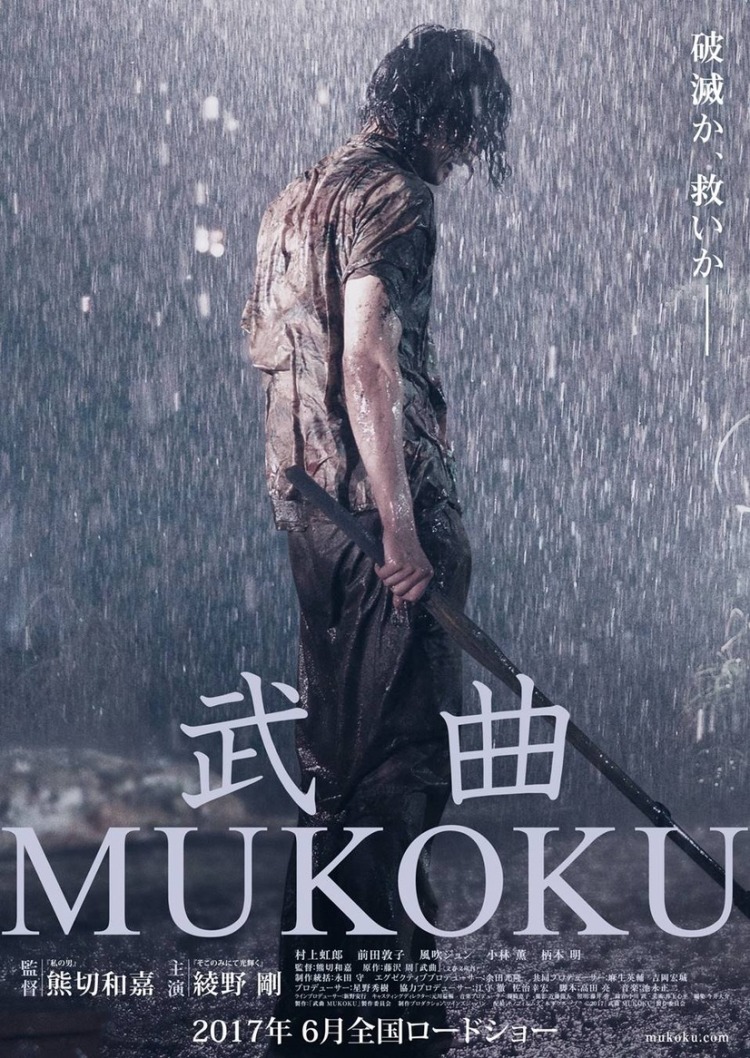
mukoku posterThe way of the sword is fraught with contradictions. Like many martial arts, kendo is not primarily intended for practical usage but for self improvement, emotional centring, and fostering a big hearted love of country designed to ensure lasting peace between men. Nevertheless, it tends to attract people who struggle with just those issues, hoping to find the peace within themselves though mastery of the sword. Kazuyoshi Kumakiri’s long and varied career has often focussed on outsiders dealing with extreme emotions and Mukoku (武曲 MUKOKU) is no different in this regard as the two men at its centre lock swords at cross purposes, each fighting something or someone else within themselves rather than the flesh and blood opponent standing before them.

Kengo Yatabe’s (Go Ayano) life has been defined by the sword. As a young boy his father, Shozo (Kaoru Kobayashi), began training Kengo intensively but his standards were high, too high for a small boy who only wanted to please his dad but found himself beaten with the weapon he was failing to master. Twenty years later Kengo is a broken man after a long deferred violent confrontation between father and son has left Shozo in a vegetative state, neither dead nor alive, no longer a figure of fear and hate but of guilt and ambivalence. Kengo has given up kendo partly out of guilt but also as a kind of rebellion mixed with self harm and is currently working as a security guard. He spends his days lost in an alcoholic fog, trailing an equally drunken casual girlfriend (Atsuko Maeda) behind him.

Meanwhile, high school boy Toru (Nijiro Murakami) is a classic angry young man working out his frustrations through a hip-hop infused punk band for which he writes the angst ridden poetry that serves as their lyrics. Toru has no interest in something as stuffy as Kendo but when he’s set upon by a bunch of Kendo jocks he decides he’s not going down without a fight. Winning through underhanded street punk moves would normally be frowned upon but the ageing monk who runs the high school kendo club, Mitsumura (Akira Emoto), is struck by his nifty footwork and decides to convince the troubled young man that the path to spiritual enlightenment lies in mastery over the self through mastery of the sword.

The wise old monk pits the self-destructive older man against the scrappy young one, hoping to bring them both to some kind of peaceful equilibrium, with near tragic results. Kengo’s ongoing troubles are born of a terrible sense of guilt, but also from intense self-loathing in refusing to accept that he’s become the man he hated, as broken and embittered as the father who made him that way. Shozo was a kendo master, but as the monk points out, in technique only – his heart was forever unquiet and he never achieved the the true peace necessary to master his art. Knowing this to be the truth only made it worse yet Shozo also knew the burden he’d placed on his son. They say every man must kill his father, but Kengo can’t let the ghost of his go – clinging on to a mix of filial piety and resentful loathing which is slowly turning him into everything he hates.

Toru’s problem’s are pushed into the background but seeing as his enemy is not the flesh and blood threat of an overbearing father but the elements and more particularly water, it will be much harder to overcome. Water becomes a constant symbol for each man – for Toru it’s an inescapable symbol of death and powerlessness, but for Kengo it represents happiness and harmony in rediscovering the good memories he has of his father from joyful family outings to less abusive summer training sessions. Mukoku is the story of three ages of man – the scrappy rebellious teen, the struggling middle-aged man, and the elderly veteran whose own heart is settled enough to see the battles others are waging. The “warrior’s song” as “mukoku” seems to mean changes with each passing season, nudged into tune by the graceful art of kendo.

Kumakiri embraces his expressionist impulses as a young boy finds himself suddenly underwater, vomiting mud and fish while Kengo has constant visions of his father, mother, and younger self ensuring the past is forever present. The ominous score and strange occurrences including ghostly graveyard old women who appear from nowhere in order to offer a lecture on the five buddhist sins lend a more urgent quality to Kengo’s disintegration, though interesting subplots involving a possibly alcoholic girlfriend and a mamasan (Jun Fubuki) at a local bar who might have been Shozo’s mistress are left underdeveloped. Two men face each other to face themselves, trying to beat their demons into submission with wooden swords, but even if the battle is far from over the tide has turned and something at least has begun to shift.


Screened at Raindance 2017.

Original trailer (no subtitles)
 

Junk Head (Takahide Hori, 2017)

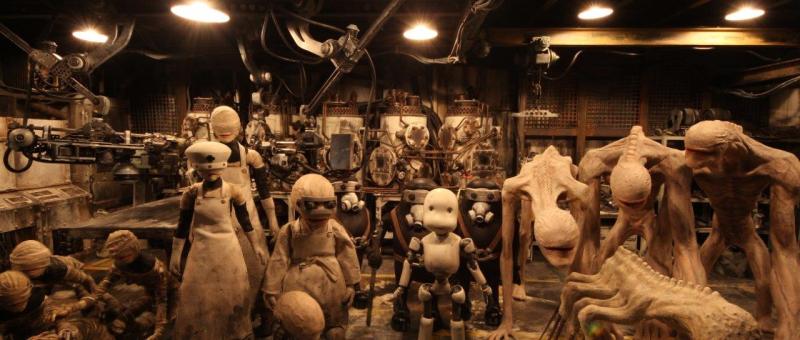
junhead still 2“God is Dead! We Killed Him!” exclaim some funny little mole/penguin people in Takahide Hori’s Junk Head, only to follow it up seconds later when a giant worm spits out the divine visitor from above with “He Hath Risen”.  An extreme feat of technical prowess, Junk Head is a marvel of cyberpunk production design tempered with wry humour and a weary exasperation as regards “humanity” and its children. A man loses his head, literally and figuratively, and finds himself on a journey into the deepest darkest underground filled with mutant clones and terrifying monsters, searching for salvation while groping for identity.

Far in the future, humanity thought it had it made – abnegating their responsibilities to a crowd of lowly clones and living a life of ease, but the clones rebelled and took themselves underground leaving humanity to fend for itself on the surface. Immortal through gene replacement therapy, humanity has also lost the ability to reproduce naturally and now that a disease has wiped out around 20% of the remaining population with no sign of stopping, there is urgent need to rebuild the species.

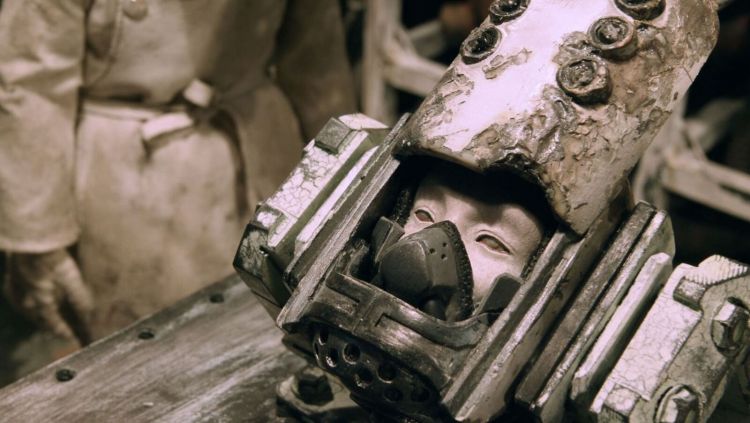
Hoping to find an answer in the world below, humanity sends one cyborg researcher on a desperate mission. Sadly, the capsule carrying the robot is shot down by wary humanoids living on the higher levels. His head continues to fall until it’s found by a scavenger party who take it to a doctor who “recognises” the head inside the helmet as “human”. Seeing as humanity is, in a sense, their creator, the clones stand back in awe of their new “God”. Now placed into an adorable little white stormtrooper-meets-I-Robot body, God can remember nothing of his past life and spends most of his new one trying to get to grips with his tiny hands and unwittingly walking into certain death only to be saved when the various evil creatures remember they don’t like the taste of metal.

As time moves on God takes on many forms as he falls further through the underground universe, swapping his cute round body for a blocky makeshift one without a voice but with a bigger heart. Having regained some of his memories immediately before his first transformation, the second God is not such a nice guy but “Junkers” is the type to whip up chairs for old ladies and walk miles to gather “Mashrooms” for his new masters, not to mention leaving some food behind for a hungry mutant girl. Once his memories are fully restored (through repeated blows to the head), God thinks back on his soulless life on the surface and realises he’s never felt so alive as he does 600 feet under. The sky might be pretty, but it’s cold up top.

As cute as God is (in all his incarnations), Junk Head’s world of basement horrors is surreal and terrifying. Some monsters are more harmful than others, but the major peril of the middle layers is persistent wormholes from which giant, toothy creatures emerge to devour unsuspecting travellers. Fleshy spiders hang from the ceiling and “Mashrooms” appear to be fleshy protuberances grown on humanoid backs imprisoned within walls. The post-apocalyptic underground city is a perfectly designed mix of makeshift and industrial architecture, covered in dust, grime, and scratches. God’s first body is appropriately worn before he even gets it, a true tribute to the depth of Hori’s conceptual design.

Drawing inspiration from Giger and Kubrik, the world which most comes to mind is, perhaps unexpectedly, David Lynch’s Dune. From the strange mole/penguin people and their rubbery suits to the torpedo shaped, bright red big busted women the underground is an industrial fantasy zone where tiny dinosaur-like snake worms waddle around adorably before being picked off for dinner. Hori brings scope to the claustrophobic world of tunnels and ducts by shooting at a distance with painterly compositions echoing German expressionism. He echoes Lynch again in the constant, dream-like use of dissolves and montage while the punk soundtrack and quick fire swapping from one empty corridor to another is reminiscent of Shinya Tsukamoto or Sogo Ishii. Despite its rather abrupt ending (which does at least tease further adventures for God in the wilderness), Junk Head is a charming, surreal odyssey through a post-apocalyptic wasteland filled with zany humour and rich in character detail. Hopefully the second coming of God will not be too far off.


Screened at Raindance 2017.

Original trailer (dialogue free)

Swaying Mariko (たまゆらのマリ子, Koji Segawa, 2017)

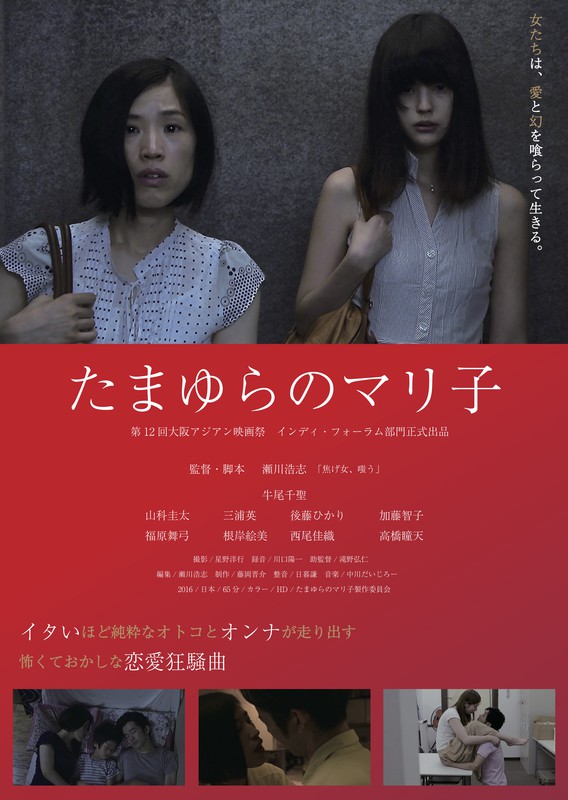
Swaying mariko posterJapanese indie has moved on of late, no longer content with deconstructing the modern family it now wants to take a good look at the modern marriage though Koji Segawa’s Swaying Mariko (たまゆらのマリ子, Tamayura no Mariko), for all of its copious darkness, may be a much more positive vision than might at first be thought. A tale of one woman’s gradual downward spiral into a world of violence, paranoia, and perversion Swaying Mariko’s Tokyo is one of icy silences and magnified spaces between people which seem to defy the otherwise cramped city streets. Loneliness and isolation are the twin forces which drive this spiral of resentment and anger but self-inflicted wounds quickly look for vengeance, usually in all the wrong places.

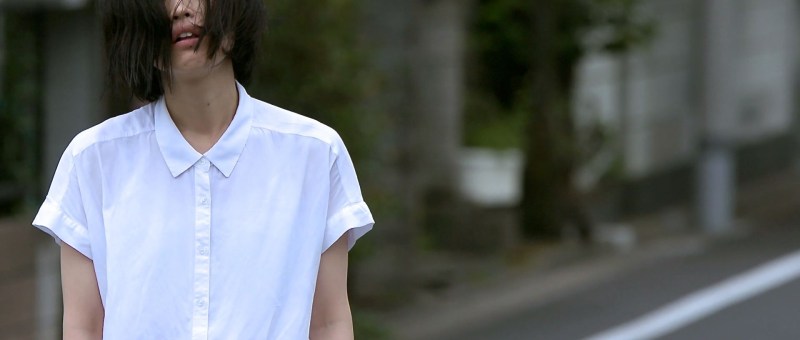
Mariko (Chise Ushio) is an ordinary middle-aged housewife with a young son, Riku, and an increasingly distant husband, Tomoharu (Keita Yamashina). By day, she works at a batting centre which is less a place for aspiring baseball players to practice their swings than for angry young men who want to hit things very hard. Consequently, her workplace is often unpleasant but aside from the aggressive conduct of the customers, her creepy boss has been making a point of sexually harassing her when not peeping on the girls’ changing rooms or actively having casual sex with one of Mariko’s colleagues in the rec-room. Convinced Tomoharu is having an affair, she takes to stalking him – on foot and online, even deciding to set up CCTV so she can spy on him when he invites an old uni friend to the house when he knows she’ll be out.

Mariko is not the only one, everybody (save perhaps her “babbling” workmate) seems to be gently seething with repressed rage. The batting cages are full of strung out salarymen in suits who are keen to raise their voices and gesture threateningly at timid employees who are very definitely not employed to be substitute softballs for their verbal bats. Mariko’s coping mechanism is her ascerbic interior monologue in which she passes judgement on everyone and everything, making the fair point that her image conscious colleague who won’t date short guys even if they’re rich probably isn’t going to bag a wealthy husband by providing sexual favours to the seedy boss at a rundown batting centre.

Rebuffing the timid colleague’s attempts to connect, Mariko repeatedly telephones a friend from a previous job who refuses all her calls. It seems Mariko has no other friends or family to turn to and is entirely alone with her marital worries which have placed a wedge between herself and her husband. The woman who never answers her calls along with another former colleague becomes a kind of inner chorus voicing Mariko’s own constant thoughts of inadequacy – that her friends don’t like her, that her husband no longer finds her attractive, and that she is a woman with no possible future to look forward to.

Mariko’s fantasy revenge is violent, bloody, and grotesque but possibly not so much as the fact that she actively gets off on savouring its taste. Tellingly, her temporary madness seems to be a common phenomenon as the salesman seems to know when Mariko attempts to buy the sharpest knife he has available and he wonders if he should sell it to her. A violent encounter sends Mariko reeling into a kind of maddening dance in which she decides to throw off all semblance of civility and behaves without restraint – hindering rather than helping an ungrateful woman, joining in with a dance in the street, throwing a bucket over the head of a stranger. When she sees violence being done on a seemingly innocent boy by a pack of thugs she doesn’t intervene but watches, catching up to one of the perpetrators to make him a surprising offer.

Mariko’s madness may be real or imagined but it’s far from an isolated case. Tomoharu’s secrets weren’t the ones she expected and were, in part, caused by her own suspicions and determined silence. Mariko may hate her part-time job (at least this current one) but her husband’s suggestion she give it up to be a full time wife and mother has her inwardly seething, her husband apparently reduced to a shivering coward by the temerity of a woman seeking fulfilment outside as well as inside the home. Ultimately their problems amount to a series of misunderstandings which can only be cleared up by a full and frank discussion the like of which is culturally taboo. Mariko may look like she’s exorcised a demon after dancing through her mad fever dream, but if she did then it perhaps migrated rather than disappeared, eagerly waiting to pounce on the next lonely soul being squeezed in the urban wringer.


Screened at Raindance 2017.

Oh Lucy! (オー・ルーシー!, Atsuko Hirayanagi, 2017)

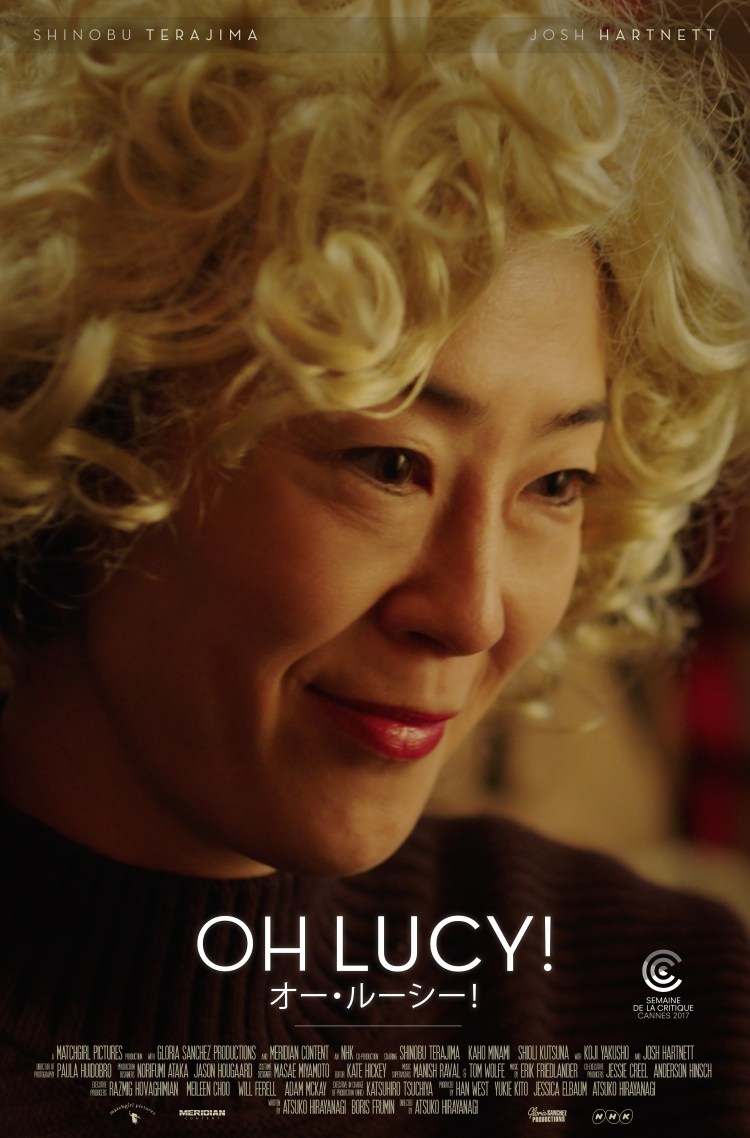
Oh Lucy! posterDespite its rich dramatic seam, the fate of the lonely, long serving Japanese office lady approaching the end of the career she either sacrificed everything for or ended up with by default has mostly been relegated to a melancholy subplot – usually placing her as the unrequited love interest of her oblivious soon to be retiring bachelor/widower boss. Daihachi Yoshida’s Pale Moon was perhaps the best recent attempt to bring this story centre stage in its neat contrasting of the loyal employee about to be forcibly retired by her unforgiving bosses and the slightly younger woman who decides she’ll have her freedom even if she has to do something crazy to get it, but Atsuko Hirayanagi’s Oh Lucy! (オー・ルーシー!) is a more straightforward tale of living with disappointment and temporarily deluding oneself into thinking there might be an easier way out than simply facing yourself head on.

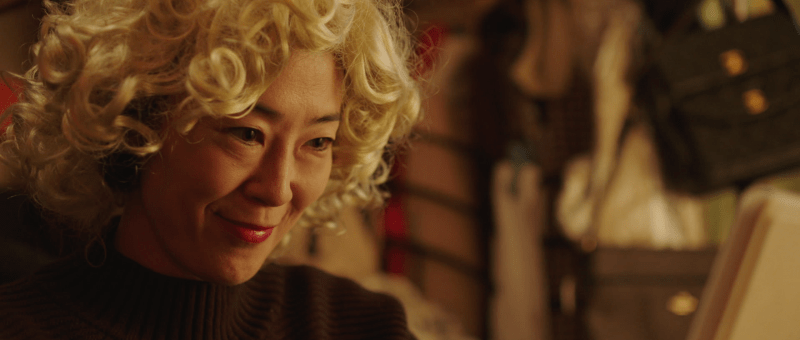
Middle-aged office lady Setsuko (Shinobu Terajima) is the office old bag. Unpopular, she keeps herself aloof from her colleagues, refusing the sweets a lovely older lady (herself somewhat unpopular but for the opposite reasons) regularly brings into the office, and bailing on after hours get togethers. Her life changes one day when the man behind her on a crowded station platform grabs Setsuko’s chest and says goodbye before hurling himself in front of the train. Such is life.

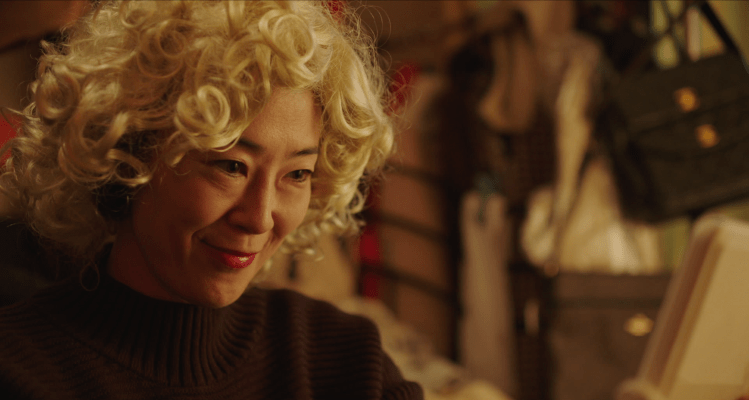
Taking some time off work she gets a call from her niece, Mika (Shioli Kutsuna) to meet her in the dodgy maid cafe in which she has been working. Mika has a proposition for her – having recently signed up for a year’s worth of non-refundable English classes, Mika would rather do something else with the money and wonders if she could “transfer” the remainder onto Setsuko. Despite her tough exterior Setsuko is something of a soft touch and agrees but is surprised to find the “English School” seems to be located in room 301 of a very specific brothel. John (Josh Hartnett), her new teacher, who has a strict English only policy, begins by giving Setsuko a large hug before issuing her a blonde wig and rechristening her “Lucy”. Through her English lesson, “Lucy” also meets another man in the same position “Tom” (Koji Yakusho) – a recently widowed, retired detective now working as a security consultant. Setsuko is quite taken with her strange new hobby, and is heartbroken to realise Mika and John are an item and they’ve both run off to America.

Setsuko’s journey takes her all the way to LA with her sister, Ayako (Kaho Minami), desperate to sort her wayward daughter out once and for all. As different as they are, Ayako and Setsuko share something of the same spikiness though Setsuko’s cruel streak is one she deeply regrets and only allows out in moments of extreme desperation whereas a prim sort of bossiness appears to be Ayako’s default. Setsuko’s Tokyo life is one of embittered repression, having been disappointed in love she keeps herself isolated, afraid of new connections and contemptuous of her colleagues with their superficial attitudes and insincere commitment to interoffice politeness. Suicide haunts her from that first train station shocker to the all too common “delays caused by an incident on the line” and the sudden impulsive decision caused by unkind words offered at the wrong moment.

“Lucy” the “relaxed” American blonde releases Setsuko’s better nature which had been only glimpsed in her softhearted agreeing to Mika’s proposal and decision to allow Ayako to share her foreign adventure. John’s hug kickstarted something of an addiction, a yearning for connection seemingly severed in Setsuko’s formative years but if “Lucy” sees John as a symbol of American freedoms – big, open, filled with possibilities, his homeland persona turns out to be a disappointment. Just like the maid’s outfit Setsuko finds in John’s wardrobe, John’s smartly bespectacled English teacher is just a persona adopted in a foreign land designed to part fools from their money. Still, Setsuko cannot let her delusion die and continues to see him as something of a saviour, enjoying her American adventure with girlish glee until it all gets a bit a nasty, desperate, and ultimately humiliating.

Having believed herself to have only two paths to the future – being “retired” like the office grandma, pitied by the younger women who swear they’ll never end up like her (much as Setsuko might have herself), or making a swift exit from a world which has no place for older single women, Setsuko thought she’d found a way out only to have all of her illusions shattered all at once. “Lucy” showed her who she really was, and it wasn’t very pretty. Still, even at this late stage Setsuko can appreciate the irony of her situation. That first hug that seemed so forced and awkward, an insincere barrier to true connection, suddenly finds its rightful destination and it looks like Setsuko’s train may finally have come in.


Screened at Raindance 2017

Expanded from Atsuko Hirayanagi’s 2014 short which starred Kaori Momoi.

Clip (English subtitles)

Rage (怒り, Lee Sang-il, 2016)

rage posterVillain, Lee Sang-il’s 2011 adaptation of a novel by Shuichi Yoshida, used a crime story to investigate the wider effects of social stigma and emotional repression – themes which are recurrent in the author’s work. Rage (怒り, Ikari) attempts to do something similar but its aims are larger, reflexively tacking the vicious cycle of social oppression and emotional repression in a society which actively suppresses the desire for expression in the aim of maintaining an illusion of harmony. A brutal, senseless killing has occurred and three suspects present themselves. The killer could be any one or none of them, but the fact of the matter is that when you cannot speak the truth, you cannot truly believe in anything or anyone.

In the blazing summer heat with its noisy cicadas and uncomfortable humidity, a young couple has been brutally murdered in their Hachioji home. There are few clues to be found save that the killer has painted the kanji for “rage” in blood on the wall. The police do, however, come up with a suspect and circulate a photofit which is anonymous enough to look like any youngish man who might make you feel uncomfortable for a reason you can’t articulate.

Meanwhile, a middle-aged man from Chiba, Maki (Ken Watanabe), anxiously wanders around Kabukicho until someone finds him and takes him to a brothel where his runaway daughter, Aiko (Aoi Miyazaki), has been working and has been very badly injured through her “eagerness to please her clients”. The father, trying to comfort his daughter who seems cheerful enough despite her ordeal, inwardly seethes with rage and is both relieved and worried when she begins a relationship with a secretive drifter, Tashiro (Kenichi Matsuyama).

Back in Tokyo, Yuma (Satoshi Tsumabuki) visits a gay bathhouse and roughly forces himself on a nervous man hunched in a corner. Despite the slight unpleasantness of their meeting, the two men eat dinner together and Yuma invites his new friend, Naoto (Go Ayano), to live with him in his well appointed apartment despite knowing nothing more about him.

Further south, a teenage couple enjoy a day out on what they think is a deserted island but the girl, Izumi (Suzu Hirose), discovers a backpacker, Tanaka (Mirai Moriyama),  living in some local ruins. Strangely drawn to him, Izumi keeps meeting up with Tanaka but an encounter in the city turns sour when her friend, Tatsuya (Takara Sakumoto), works himself into a jealous rage. Trying to get the drunken Tatsuya to the ferry, Izumi is raped by GIs from the local military base.

The Okinawan episode is, in many ways the key. Tetsuya invites Izumi to see a movie in Naha but they’re really going to observe a protest about the continued presence of the US military bases. Tatsuya wanted to be there to see it but pressed for an answer he doubts protest will achieve anything. Izumi, after her brutal encounter, says the same thing. She doesn’t want anyone to know. “Protesting won’t change anything”. No matter what she says, nothing will be done, no one would listen, nobody really cares.

Or, perhaps they simply care about the wrong things. Aiko gets home from her horrible ordeal in the city but everyone knows what she did there; her “sordid” past is the talk of the town. Her father says nothing, because like Izumi he knows it will do no good, but still he berates himself for it and his internalised anger grows.

Izumi does not want the stigma of being a rape victim, and Aiko does not want the stigma of being a “fallen woman”, their secrets are already out, but Yuma is jealously guarding his – living as a cautious gay man with his life strictly divided, his true nature walled off from his professional persona. Too afraid to be open about his sexuality, he projects his sense of unease and discomfort onto Naoto – first going overboard by inviting someone he just met and knows nothing about to live with him and then refusing to let him in all the way. Yuma asks Naoto not to attend his mother’s funeral despite the fact they had been friends because he doesn’t want the awkwardness of deciding how to introduce his boyfriend to a set of relatives he doesn’t really know. What he doesn’t do is ask any questions about Naoto’s past, jumping to conclusions and angrily slinging accusations when he thinks he’s caught Naoto out in a lie but his reaction and subsequent behaviour only bear out his own insecurities in his inability to trust the man the loves.

Each of the trio begins to doubt their friends or lovers with little more to go on than a police photofit which only superficially resembles them. The suspicion, however, is reflexive. It’s born of a society in which one is obliged to keep secrets and emotional honesty is frowned upon. No one speaks the truth because no one wants to hear it – it will only bring more suffering with additional social stigma. Sooner or later, when all of these unexpressed emotions reach a critical mass, they will explode. Such crimes could so easily be avoided were it easier to live a more open, less fearful life, but as long as it is impossible to trust oneself, there can be no unguarded trust between people.

Neatly in line with the self-centred narrative viewpoints, Izumi’s rape is relegated to a plot device as she herself disappears from the screen only to return briefly in the final coda. The effects of the rape are then explored as they impact on Tetsuya and Tanaka whose self images of masculinity are (seemingly) damaged by their failures to protect her. Izumi’s rape is viewed as something that happened to the men, as if she were a car that was scratched or a jacket torn. Self-involved as this is, it plays into the central theme – no one cares very much about anybody else’s feelings until those feelings are visited upon them by means of violence.

The murder occurs essentially because of a betrayal followed by unbearable, unexpected kindness. A woman felt sorry for a man, and so she trusted him and was betrayed. Two parties fail to trust the one they love because of a failing in themselves, their own sense of personal inadequacy will not allow them to believe in the other person’s faith in them, while another misplaces his trust in his need to find an ally and confidant to feel less alone and powerless. Prevailing social stigmas, selfishness, and a need to maintain the status quo have left all running scared, craving connection but too afraid to engage. When the system won’t let you be, violence, of one sort or another, is an inevitable consequence.


Original trailer (English subtitles)

The Day After Opens London Korean Film Festival 2017

The day after posterFollowing a long series of teaser screenings which culminated with Cannes hit The Villainess, the London Korean Film Festival has now revealed the complete lineup for this year’s event which runs from 26th October to 19th November 2017.
Opening Gala

The day After Still 2The London Korean Film Festival 2017 will open with one of three films released this year by prolific director Hong Sang-soo – The Day After. Another whimsical comedy of manners from Hong, The Day After stars Kim Min-hee as the new girl at a publishing firm completely unaware that she’s taken the place of the previous new girl who has been “let go” after an affair with the boss ended badly.

Closing Gala

first lap stillClosing the festival will be the second film from Kim Dae-hwan who picked up the best new director award at Locarno for this awkward tale of familial disconnection. The First Lap revolves around young couple Ji-young and Su-hyeon who are not married but have been living together for a few years. Discovering they might be about to have a child of their own, the pair decide to try and reconnect with their old families before starting a new one.

Special Focus: Korean Noir, Illuminating the Dark Side of Society

The Merciless still 1The special focus for this year’s festival is Korean Noir and Korean cinema has certainly had a long and proud history of gritty, existential crime thrillers. Running right through from the ’60s to recent Cannes hit The Merciless, the Korean Noir strand aims to illuminate the dark side of society through its compromised heroes and conflicted villains.

  • Black Hair – Lee Man-hee’s 1960s genre hybrid neatly mixes noir with melodrama as a gang boss’ wife is blackmailed after having been raped by one of her husband’s underlings only to be facially disfigured and cast away when her husband learns of her assault. Read the Review.
  • The Last Witness – Lee Doo-young’s 1980 mystery thriller follows a police officer’s investigation into the murder of a brewery owner which leads him back to events of 25 years earlier and into the darkest parts of his own soul. Director Lee Doo-young will be in attendance for a Q&A.
  • Dead End – Darkly humorous 19 minute short directed by City of Madness’ Kim Sung-soo.
  • The Rules of the Game – released in 1994, the second film from Jan Hyun-soo follows a young man who comes to the city to join a gang but ends up selling his girlfriend into prostitution.
  • Green Fish – the 1997 debut from the now legendary Lee Chang-dong follows a recently demobbed soldier who returns home to find nothing waiting for him and eventually falls in with gangsters.
  • Nowhere to Hide – Lee Myung-se’s experimental 1999 noir stars Ahn Sung-ki as a ruthless gangster.
  • Kilimanjaro – The Shameless director Oh Seung-uk’s 2000 debut also stars Ahn Sung-ki as a gangster alongside Park Shin-yang playing a pair of twin brothers one of whom is a criminal and the other a policeman. Director Oh Seung-uk will be in attendance for a Q&A.
  • Die bad – Veteran / Battleship Island’s Ryoo Seung-wan made his debut with this 2000 four part crime themed portmanteau film.
  • A Bittersweet Life –  Kim Ji-woon’s 2005 existential hitman thriller stars Lee Byung-hun as a conflicted mobster.
  • A Dirty Carnival – Yoo Ha’s celebrated gangland thriller from 2006
  • New World – an all powerful policeman tries to bring down a crime syndicate through underhanded means while an undercover cop begins to wonder if his mission will ever end in Park Hoon-jung’s tense psychological thriller.
  • Coin Locker Girl – a baby found in a coin locker gets sold to a gangland organ trafficker who decides to raise her as her own in Han Jun-hee’s dark 2013 drama
  • The Merciless – Premiered at Cannes in 2017 Byung Sung-hyun’s The Merciless is a violent thriller in which an undercover cop and the leader of a prison gang team up for gangland domination.

The Noir section will also feature a panel event, Forum on Korean Noir, featuring Eddie Muller (president Film Noir Foundation), Huh Moonyoung (film critic), Last Witness director Lee Doo-young, and Kilimanjaro director Oh Seung-uk.


Cinema Now 

master still one.jpgThe best in recent cinema across the previous year ranging from period drama to financial thriller, gangland action, social drama, and horror.
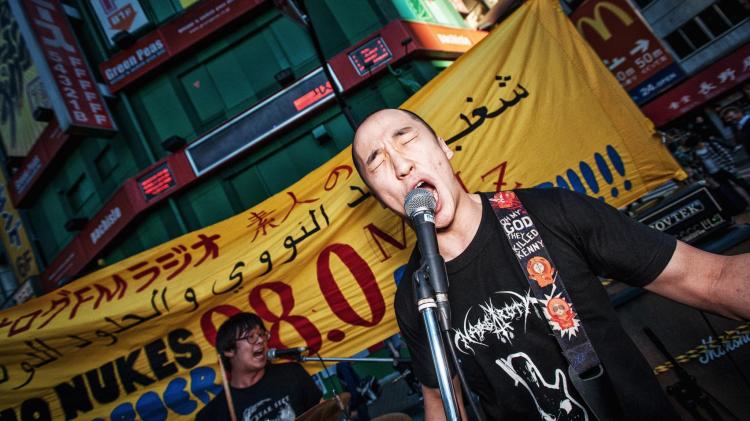
  • Come, Together – Shin Dong-il examines the destructive effects of financial pressures on a middle class family.
  • Crime City – turf war drama starring  Ma Dong-seok. Director Kang Yoon-sung will be present for a Q&A.
  • In Between Seasons – Intimate family drama following a mother’s reaction to discovering the relationship between her son and his best friend is closer than she thought.
  • Warriors of the Dawn – historical drama set in 1592 in which a group of mercenaries attempt to protect the newly crowned prince on a perilous journey.
  • Master – corporate thriller in which a team of fraud specialists led by Gang Dong-won attempt to unmask a dodgy financial guru played by Lee Byung-hun. Read the Review.
  • The Mimic – horror movie in which a monster lures children away to eat them by impersonating familiar voices.

Indie Fire Power

Bamseom Pirates Seoul InfernoProgrammed by Tony Rayns, this year’s indie strand has a special focus on documentary filmmaker Jung Yoon-suk who will be attending the festival in person to present his films.
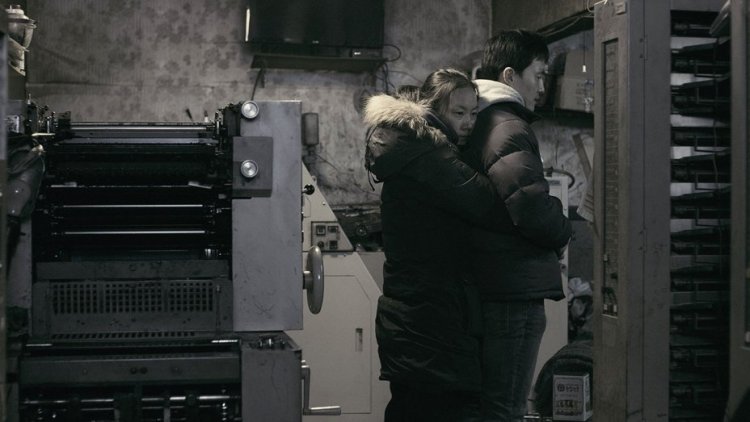
  • Non Fiction Diary – 2014 documentary directed by Jung Yoon-suk centring on a notorious clan of serial killing cannibals. Director Jung Yoon-suk will be present for a Q&A
  • The White House in My Country – documentary short by Jung Yoon-suk. Director Jung Yoon-suk will be present for a Q&A
  • Ho Chi Minh – documentary short by Jung Yoon-suk. Director Jung Yoon-suk will be present for a Q&A
  • Bamseom Pirates Inferno – 2017 documentary by Jung Yoon-suk focussing on an underground punk band. Director Jung Yoon-suk will be present for a Q&A
  • Merry Christmas Mr. Mo – indie comedy/drama from Lim Dae-hyung in which a dying barber’s only wish is to star in a short film directed by his estranged son.
  • A Confession Expecting a Rejection – witty drama following characters on and off screen as they discuss various topics from failed relationships to disappointing film courses.

Women’s Voices 

jamsil still 1Focussing on female viewpoints this year’s Women’s Voices strand includes one narrative feature and four short films.
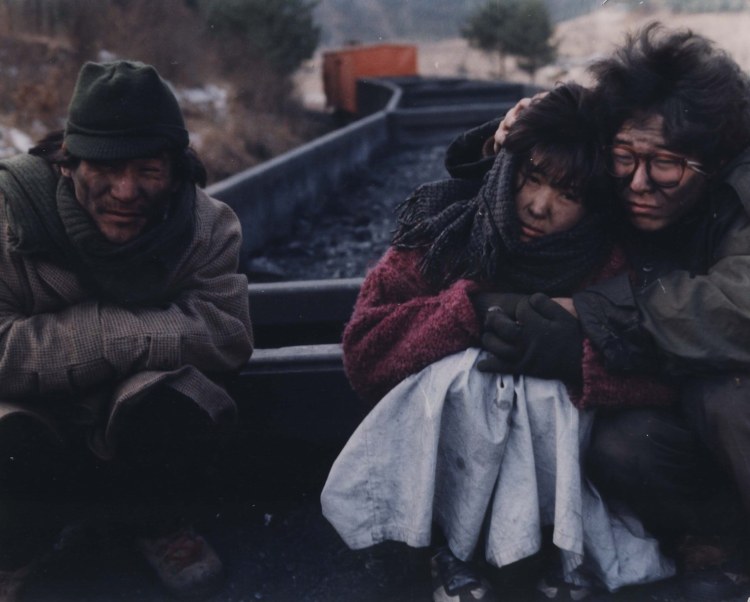
  • Jamsil – drama focussing on the lives of two women. Director Lee Wanmin will be present for a Q&A.

Shorts

  • Candle Wave Feminists – an examination of the misogyny hidden inside the campaign to unseat Park Geun-hye Director Kangyu Garam will be present for a Q&A.
  • My Turn – 15 minute drama focussing on pregnancy in the workplace.
  • Mild Fever – 36 minute drama in which a secret comes between a husband and wife.
  • Night Working – 28 minute drama exploring the relationship between a Korean factory worker and a Cambodian migrant.

Classics Revisited: Bae Chang-ho Retrospective

whale hunting still 2Three films from legendary director Bae Chang-ho each starring Ahn Sung-ki.
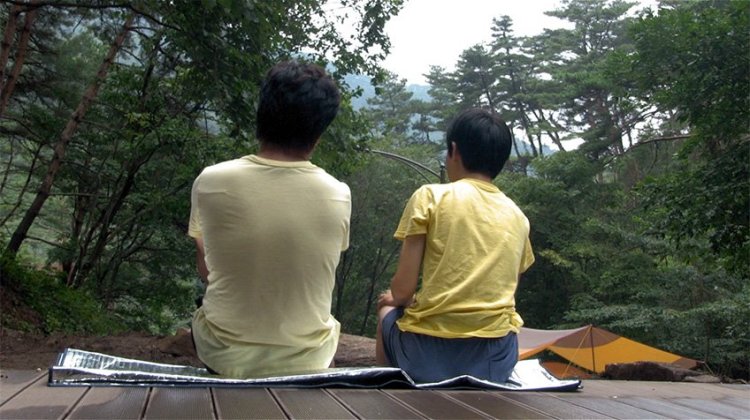
  • People in the Slum – drama revolving around a single mother who always wears black gloves and has a rebellious son with a tendency to steal things.
  • Whale Hunting – a boy gets rejected by his crush and runs away to hunt whales but ends up wandering round with a tramp and helping a mute girl find her voice again.
  • The Dream – a monk breaks his vows of chastity, attacks a young woman, leaves the monastery to start a family with her, but never captures her heart.

Documentary

good bye my heroWorkers’ rights and examinations of the Yongsan tragedy in which five civilians and one police officer lost their lives during a protest against redevelopment dominate the feature documentary strand.

  • Two Doors – documentary examining the Yongsan tragedy. Director Kim Il-rhan will be present for a Q&A.
  • The Remnants – documentary examining the Yongsan tragedy. Director Kim Il-rhan will be present for a Q&A.
  • Goodbye My Hero – an unemployed father battles for reinstatement
  • Dream of Iron – industrial ship building documentary

Animation

lost in the moonlight still 1Two charming yet very different animated adventures aimed at a younger/family audience.

  • Lost in the Moonlight – a shy young girl dreaming of the spotlight gets lost in a fantasy world.
  • Franky and Friends: A Tree of Life – Franky and Friends head off on a journey to save the world after nearly destroying it through wastefulness

Mise-en-scène Shorts

tombstone refugee still 1A selection of shorts from the Mise-en-scène International Short Film Festival.
  • Tombstone Refugee – alternative burial drama.
  • Home Without Me – a young girl looks for familial love
  • Thirsty – a man struggles to makes ends meet
  • Between You and Me – behind the scenes comedy drama.
  • Dive – drama about a boy’s love of water
  • The Insect Woman – centres on a young girl obsessed with insects.
  • 2 Nights 3 Days – follows a couple on the eve of their wedding anniversary.

Artist Video

This year’s collaboration with LUX | Artists’ Moving Image focusses on the work of two artists – Lim Minouk and Koo Dong-hee.

Lim Minouk

  • New Town Ghost
  • Wrong Question
  • Portable Keeper
  • The Weight of Hands
  • The Possibility of the Half
  • S.O.S. – Adoptive Dissensus

Koo Dong-hee

  • Tragedy Competition
  • The King Fish
  • Under the Vein: I Spell on You
  • Crossxpollination
  • What’s Not There

The London Korean Film Festival runs from 26th November to the 19th October at multiple Central London venues before heading out on tour to Glasgow Film Theatre, Manchester HOME, Sheffield Showroom, Nottingham Broadway Cinema, and Belfast Queen’s Film Theatre.

The full programme including details for all the films, screening times and ticketing information will be available on the official website in due course but you can also keep up with all the latest developments via the festival’s Facebook page, Twitter account, Flickr, YouTube and Instagram channels.

The Night I Swam (La Nuit où j’ai nagé / 泳ぎすぎた夜, Damien Manivel & Kohei Igarashi, 2017)

The Night I SwamCinema, at its most innocent, is a place where children can have fantastic adventures while the adults watching them from the other side of the screen worry though somehow or other it always manages to turn out OK. From the anxious whimsy of the The Little Fugitive, to the melancholy dreaminess of Palle all Alone in the World, and on to the anarchy of Home Alone, children in movies are much more resourceful than we give then credit for. The Night I Swam (La Nuit où j’ai nagé / 泳ぎすぎた夜, Oyogisugita Yoru), a Japanese/French co-production co-directed by A Young Poet’s Damien Manivel and Hold Your Breath Like a Lover’s Kohei Igarashi, is testament to this as its central little hero sets off on a perilous journey to show his dad, who has to leave very early for work at the fish market in town, a drawing he made of a fish.

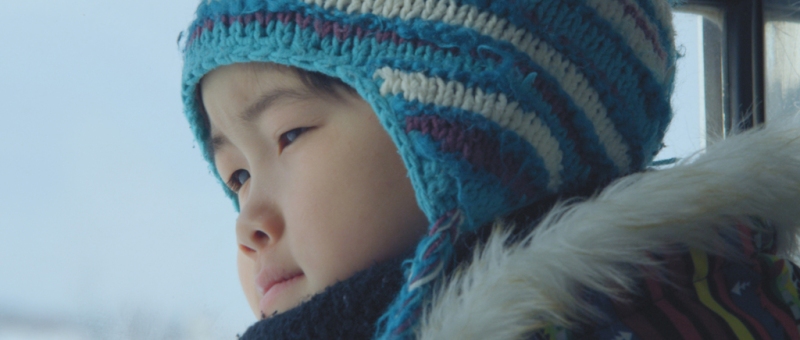
One fateful morning, while it’s still dark outside, a little boy wakes up and hears his father smoking a cigarette in the kitchen before going to work. The boy can’t get back to sleep. He tries to wake his mum but she’s deep asleep so he plays with the family dog, has a game with his toy animals, watches some TV and then draws a picture of a fish before trying to get a little more shuteye before he has to get up for school. The consequence of this is he’s very sleepy when it comes to getting ready in the morning as his mum helps him into the ski pants, jacket, and pretty blue hat that will keep him warm in the thick snow which is currently piled higher than his head on the way out of their home.

The little boy puts the drawing in his backpack and then sets off, but when he reaches the school gates he makes a surprising decision. He turns around, climbs over a fence and escapes! Playing in the snow for a while it seems as if the boy just didn’t fancy a day cooped up indoors but he has a plan and it requires getting on a train into the city…

The little boy’s journey is occasionally perilous. It’s certainly freezing cold out there, surrounded by snow and and ice, and the little tyke is so tired that at one point he just collapses and falls asleep in the snow. Somehow or other he seems to rally himself and continue on his journey even if he sheds some of his tools as he goes including a precious glove which he takes off to peel the oranges he’s brought along for sustenance. Once in the city he makes a dangerous dash across an icy road, wanders around a department store, and spends a while sitting in a food court, observing the busy lives around him like a visitor from a dream. When he gets to the fish market, it’s already closed, the place is eerily empty and deserted, waiting for the next day’s activity to begin.

Disheartened and completely exhausted, the boy starts testing doors on the cars in the carpark before crawling into a open van to keep warm and falls asleep. Luckily, the boy’s story has a happy ending as he meets some nice people who help him get back to his family safe and sound where he finally gets some proper sleep after his long adventure. The film’s most touching moments occur at the end as the boy’s dad hangs up his wet clothes to dry before looking at the drawing which the boy’s sister has pinned on the fridge before falling asleep next to his son, sharing this small amount of time they have together, while the boy’s mother watches TV downstairs with her little girl.

Shot in academy ratio and entirely dialogue free, The Night I Swam has an innocent, dreamlike quality as the little boy wanders through the snow, wide eyed and curious but set on reaching his destination even though he is clearly very tired, not to mention cold. Broken into three chapters with picture book font titles, The Night I Swam is a beautifully elliptical tale filled with whimsy and melancholy as the boy and his father are kept apart by practical concerns but united, perhaps, in dreams.


Currently available to view via Festival Scope (€4) until 19th September.

Original trailer

Feng Xiaogang’s Youth Headlines Impressive East Asian Lineup at TIFF

Feng Xiaogang Youth still 2Toronto International Film Festival (affectionately known as TIFF) has always been a proud champion of East Asian cinema and this year is no exception with a number of eagerly awaited films from high profile directors including the World Premiere of the latest from Feng Xiaogang and highly anticipated return to action cinema for John Woo alongside interesting debuts from up and coming new directors.

China

Youth still 4

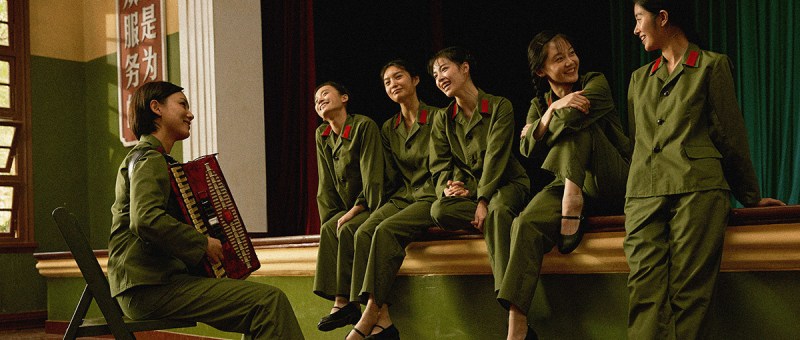
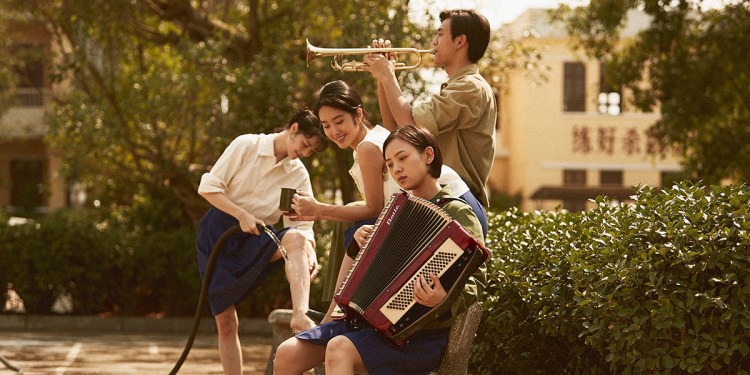
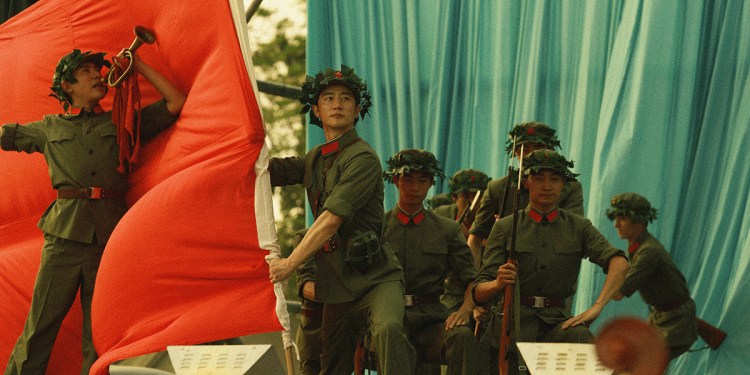
  • Youth – Feng Xiaogang’s followup to I am Not Madame Bovary makes its World Premiere at TIFF. A national coming of age story, Feng’s drama focusses on a ’70s military arts troupe as one particular dancer suffers at the hands of her peers but later emerges as a heroine.
  • Angels Wear White – Featured in competition at Venice, Vivian Qu’s Trap Street followup focusses on a pair of teenage girls assaulted in a hotel room and the receptionist who says nothing for fear of losing her job,
  • Dragonfly Eyes – the debut feature from artist Xu Bing, Dragonfly Eyes uses footage assembled from China’s many surveillance cameras to tell a sad love story.
  • Manhunt – John Woo returns to the realms of heroic bloodshed with a remake of a ’70s Japanese action classic starring Masaharu Fukuyama and Zhang Hanyu.
  • Mrs Fang – Wang Bing’s affecting documentary focusses on an elderly woman left alone to die in a small Chinese village.
  • Struggling – TIFF teams up with China Film Archive for a screening of this recently restored Chinese silent film from 1932.
  • The Conformist – Set on the Sino-Russian Frontier, Cai Shangjun’s The Conformist is an existential crime thriller revolving around a double agent working for the police whilst inhabiting the local underworld.

Indonesia

marlina the murderer in four acts still one

  • Marlina the Murderer in Four Acts – an Indonesian feminist western, Mouly Surya’s third feature follows a young widow out on a quest of revenge after a gang of bandits storm her farmhouse, rape her, and steal all her cattle. Armed only with a sword and a severed head, she takes to the road.
  • The Seen and the Unseen – making its World Premiere at TIFF Kamila Andini’s The Seen and the Unseen is a magical tale of a young girl retreating into a fantasy world to cope with the impending death of her twin brother.

Japan

oh lucy still 2

  • Birds Without Names – Kazuya Shirasishi’s Dawn of the Felines followup stars Yu Aoi as a young woman living with an older man (Sadawo Abe) but pining for her violent ex-boyfriend.
  • Oh Lucy! – Atsuko Hirayanagi’s sleeper Cannes hit is the story of a lonely middle-aged office lady who discovers a new side to herself when a charismatic English teacher (Josh Hartnett) gives her a blonde wig giving birth to the alter ego Lucy.
  • Radiance – the latest from festival favourite Naomi Kawase, Radiance stars veteran actor Masatoshi Nagase as a photographer losing his sight.
  • The Third Murder – a departure for director Hirokazu Koreeda, The Third Murder is a tense courtroom thriller starring Koji Yakusho as the defendant in a seemingly open and shut murder case but his lawyer (Masaharu Fukuyama) has his doubts about his client’s testimony.
  • Vampire Clay – veteran makeup artist Soichi Umezawa makes his directorial debut with this B-movie inspired tale of plasticine demons devouring the students at a rural arts school.
  • Wolf Guy – another special treat, Kazuhiko Yamaguchi’s 1975 Sonny Chiba starring tale of werewolf detectives gets a screening as part of the farewell to Midnight Madness’ Colin Geddes. Review.

Korea

poet and the boy still

  • The Poet and the Boy – Kim Yang-hee’s Jeju set character drama stars Yang Ik-june as a melancholy poet whose life changes when he encounters a handsome young man at a local donut shop.
  • The Day After – Hong Sang-soo’s third release in 2017 stars Kim Min-hee as a recent recruit to a publishing company where (unbeknownst to her) she’s taken over from a woman let go after an affair with the boss ended badly.

Philippines

Dark is the Night

  • Dark is the Night – Independent filmmaker Adolfo Alix Jr returns with an urgent look at life in Duterte’s Philippines as a middle-aged couple make a little on the side selling drugs but decide to give it up because of the danger only for their addict son to go missing.

Taiwan

fish out of water

  • A Fish out of Water – A young boy becomes fixated on the idea of finding his “past parents” in the debut feature from Lai Kuo-An.
  • The Great Buddha+ – an extension to director Huang Hsin-Yao’s 2014 short, The Great Buddha+ follows two security guards as they spy on their womanising boss for kicks but find out something they were not supposed to know.

Thailand

samui osng still one

  • Samui Song – the highly anticipated return of Last Life in the Universe’s Pen-ek Ratanaruang, Samui Song is a violent thriller in which a soap opera actress plots to escape her wealthy husband who has been brainwashed by a cult.

The Toronto International Film Festival runs from 7 – 17th October. The complete festival programme as well as full information on all the films can be found on the festival’s official website, and you can keep up with all the latest details through the official Facebook page, Twitter account, Instagram and YouTube channels.

A Day Makes UK Premiere at Nottingham’s Mayhem Film Festival

A Day posterCho Sun-ho’s time-loop drama A Day (하루, Haroo) will make its UK premiere at Nottingham’s genre leaning film festival, Mayhem.

OLYMPUS DIGITAL CAMERAJun-young, a successful surgeon but less than successful father, witnesses a car accident involving his daughter only to wake up as if it were just a dream. Realising that the events of his dream are proceeding as he saw them, Jun-young tries to save his daughter only to fail and have the exact same events repeat themselves over and over again until he meets another man in the same position who has been trying to save the life of the other victim. Together, the two men unite to save the lives of their loved ones and escape the nightmarish temporal loop in which they are both trapped.

Fantasia film festival trailer

A Day screens at 1.45pm on 14th October.

The festival will also play host to Sion Sono’s surreal sci-fi/horror odyssey Tag which receives a long awaited UK DVD/blu-ray release from Eureka this November.

tagTag screens on 14th October at 12pm. Check out our review of the film here.

Mayhem runs at Nottingham’s Broadway cinema from 12th – 15th October, 2017. You can find the complete lineup as well as ticketing information on the official website and you can also keep up with all the latest festival news via the official Facebook page, and Twitter account.