Kawase, Kurosawa, Miike and Hong Sang-soo x 2 Headline Cannes 2017

cannes 2017 posterFestival season is well and truly underway and in the first of two big announcements of today Cannes has confirmed its full lineup. China, HK, and Taiwan are notably absent this year but it’s otherwise a good one for Asian film with five features from Korea (inlcuding two from prolific director Hong Sang-soo) and three from Japan. Scroll down for a checklist by country:

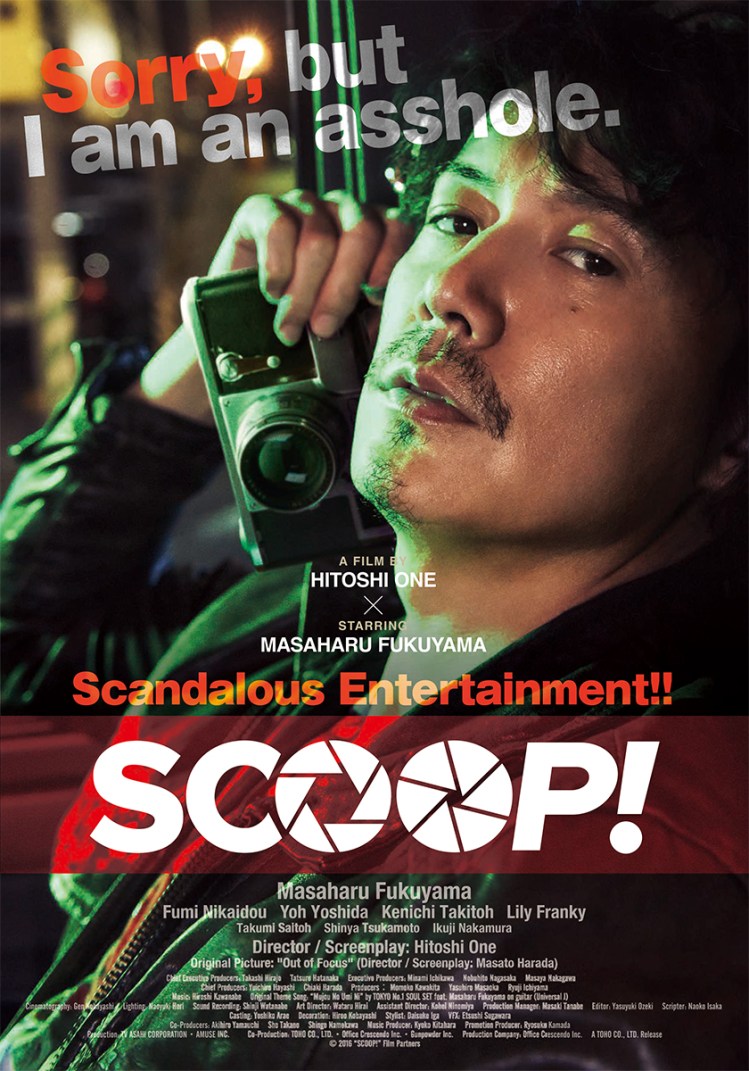
radianceIn the Competition section, Cannes favourite Naomi Kawase returns with her latest movie – Radiance (光, Hikari) which stars An’s Masatoshi Nagase as a photographer slowly losing his eyesight.

Trailer (no subtitles)

She’ll be up against Bong Joon-ho’s Netflix backed Okja (옥자)

okja.jpgThe story of a young girl’s struggle to save her mysterious animal friend from a giant multi-national company, Okja will be streamed worldwide on Netflix from June 28.

Hong Sang-soo rounds out the competition section with the first of two films he’s bringing to Cannes, The Day After. Hong is also featured in the Special Screening strand with Claire’s Camera which reunites him with French actress Isabelle Huppert.

Moving on to Un Certain Regard, Kiyoshi Kurosawa returns to the festival with Before We Vanish (散歩する侵略者, Sanpo Suru Shinryakusha).

before we vanish poster

This tale of love and alien invasion stars Masami Nagasawa, Ryuhei Matsuda, and Hiroki Hasegawa.

Trailer (no subtitles)

Takashi Miike’s Blade of the Immortal (無限の住人, Mugen no Junin) plays Out of Competition.

blade of the immortal poster

Adaptation of the well known manga stars Takuya Kimura.

Trailer (no subtitles)

The remaining two Korean entries land in the Midnight Screenings selection.

merciless poster

Byun Sung-hyun’s Merciless (불한당: 나쁜 놈들의 세상, Boolhandang: Nabbeun Nomdeului Sesang) stars Sol Kyung-gu in a prison / gang thriller

and Jung Byung-gil’s The Villainness (악녀, Aknyeo) stars Kim Ok-vin as a mysterious hitwoman from Yanbian who comes south to start a new life but gets mixed up with two South Korean guys one of whom also trains assassins.

the villainess poster

Checklist by country:

Japan

  • Naomi Kawase – Radiance (光, Hikari)
  • Kiyoshi Kurosawa – Before We Vanish (散歩する侵略者, Sanpo Suru Shinryakusha)
  • Takashi Miike – Blade of the Immortal (無限の住人, Mugen no Junin)

South Korea

  • Hong Sang-soo – The Day After
  • Hong Sang-soo – Claire’s Camera
  • Bong Joon-ho – Okja (옥자)
  • Byun Sung-hyun – Merciless (불한당: 나쁜 놈들의 세상, Boolhandang: Nabbeun Nomdeului Sesang)
  • Jung Byung-gil – The Villainess (악녀, Aknyeo)


Akitsu Springs (秋津温泉, Kiju Yoshida, 1962)

akitsu springsKiju (Yoshishige) Yoshida is best remembered for his extraordinary run of avant-garde masterpieces in the late 1960s and early 1970s, but even he had to cut his teeth on Shochiku’s speciality genre – the romantic melodrama. Adapted from a best selling novel, Akitsu Springs (秋津温泉, Akitsu Onsen) is hardly an original tale in its doom laden reflection of the hopelessness and inertia of the post-war world as depicted in the frustrated love story of a self sacrificing woman and self destructive man, but Yoshida elevates the material through his characteristically beautiful compositions and full use of the particularly lush colour palate.

At the very end of the war, consumptive student Shusaku (Hiroyuki Nagato) finds his aunt’s house destroyed by aerial bombing. Attempting to find her but proving too ill to go on, Shusaku is taken to a nearby inn by a good samaritan where he first encounters the innkeeper’s daughter, Shinko (Mariko Okada). Despite her mother’s protestations, Shinko takes a shine to Shusaku and is determined to nurse him back to health. Shusaku, however, is a gloomy sort of boy and, ironically, longs only for death. Though the pair fall in love their youthful romance is forever tinged with darkness as Shusaku declares his love not with a ring but with a rope – he asks Shinko for that most classically theatrical of unions in proposing a double suicide.

Shinko agrees, but is not quite ready to die. In another dose of irony, Shinko’s tears of fear and despair on hearing the Emperor’s final wartime broadcast confirming his surrender inspire Shusaku to want to live but the pair are eventually separated. Reuniting and parting over and over again, their complicated love story repeats itself over a period of seventeen years but the painful spectre of the past refuses to allow either of them the freedom to move beyond Akitsu Springs.

Mariko Okada was only 29 in 1962, but she’d already worked with some of the best directors of the age including Ozu whose An Autumn Afternoon was released the same year, and Naruse in Floating Clouds which has something of a narrative similarity to Akitsu Springs. This prestige picture was her 100th screen appearance for which she also took a producer credit. Despite the obvious importance attached to both of these elements, the studio took a chance on a rookie director with only three films under his belt. Two years later Okada would become Yoshida’s wife and go on to star in some of his most important pictures including Eros + Massacre and Heroic Purgatory. At first glance her role here is a conventional one – a love lorn, melancholy woman unable to let the ghost of a failed romance die, but Okada’s work is extraordinary as Shinko travels from flighty teen to rueful middle aged woman, hollowed out and robbed of any sense of hope.

At Akitsu Springs time passes and it doesn’t all at once. Yoshida refuses to give us concrete demarcations, preferring to simply show a child being born and growing older or someone remarking on having been away. The inn becomes a kind of bubble with Shinko trapped inside, but Shusaku comes to regard the place as a temporary haven rather than a permanent home or place to make a life. For her everything real is at the spring, but for him everything at the spring is unreal – an unattainable paradise. She cannot leave, he cannot stay. Only for short periods are they able to indulge their romance, but the time always comes at which they must part again often swearing it will be for the last time, never knowing if it will.

Yoshida neatly bookends the relationship with announcements over loudspeakers as Shinko originally fails to understand the Emperor’s speech in which he remarks on enduring the unendurable, only to be prompted into later action by the banal drone of a train station tannoy. It’s almost as if their lives are being entirely dictated by outside forces, powerless drifters in the post-war world, condemned to a perpetual waiting sustained only by hopelessness.

Shinko may have convinced Shusaku to live but his growing successes only seem to deplete her. Wasting away at an inn she always claimed to hate, Shinko grows old while Shusaku grows bitter yet successful in the city. They move past and through each other, unable to connect or disconnect, yearning for the completion of something which consistently eludes them. Yoshida films the standard melodrama with appropriate theatricality but also with his beautifully composed framing as the lovers are divided by screen doors or captured in mirrors. Okada glows in the light of falling cherry blossoms, acknowledging the tragic and transitory character of love, but her final action is one which echoes the beginning of her suffering and finally declares an ending to an unendurable romance.


Original trailer (no subtitles)

A Silent Voice (聲の形, Naoko Yamada, 2016)

silent-voiceChildren – not always the most tolerant bunch. For every kind and innocent film in which youngsters band together to overcome their differences and head off on a grand world saving mission, there are a fair few in which all of the other kids gang up on the one who doesn’t quite fit in. Given Japan’s generally conformist outlook, this phenomenon is all the more pronounced and you only have to look back to the filmography of famously child friendly director Hiroshi Shimizu to discover a dozen tales of broken hearted children suddenly finding that their friends just won’t play with them anymore. Where A Silent Voice (聲の形, Koe no Katachi) differs is in its gentle acceptance that the bully is also a victim, capable of redemption but requiring both external and internal forgiveness.

Classmates Shoko (Saori Hayami) and Shoya (Miyu Irino/Mayu Matsuoka) are almost mirror images of each other, sharing the first syllable of their names (at least phonetically) but representing two entirely opposite poles. Before Shoko transferred into his school, Shoya was the class clown, behaving disruptively and acting as the leader of a group of mean kids who, if not exactly bullies, certainly exert a degree of superiority over their meeker classmates. Shoko, hard of hearing, remains necessarily quiet, communicating through messages written on a notepad. Though some of the other pupils are fascinated by the novelty of someone like Shoko suddenly appearing, delighting in writing messages back and for and eagerly embracing the opportunity to learn sign language in order to communicate with her more easily, the mean kids, with Shoya as the ringleader, delight in making her life a misery just because they can.

Though some of the other children object to the way Shoya and the others are behaving, they do little to defend their new friend. Some of the more impressionable kids even halfheartedly join in, perhaps feeling bad about it but also enjoying being part of the angsty pre-teen group of nasty kids, but when it all gets too much and Shoko decides to move on everyone is suddenly struck with remorse and a need to blame someone else for the harm they’ve caused. Hence, Shoya gets a taste of his own medicine, ostracised by his peers as the lowlife who hounded a deaf girl out of school. Who’d want to hang around with someone like that?

Humbled, the stigma follows Shoya on into his next school as feelings of guilt and self loathing intensify until he reaches a point at which he can’t go on. Intending to finally end it all, Shoya unexpectedly runs into Shoko again and eventually manages to make a kind of motion towards an apology, attempting to make friends after all this time and making use of the sign language he’s taught himself to show his sincerity.

Isolated both by the continuing rumours of his primary school days and an intense personal feeling of unworthiness, Shoya finds it impossible to interact with his fellow students whose faces are each covered by a large blue cross. Bonding first with another lonely outcast, Shoya’s world begins to open up again but the spectre of his past continues to haunt him. Reconnecting with some of the other kids from primary school he finds that not everyone remembers things the same way they’ve become engraved in his mind. Though a few are anxious to atone, one of his former friends, Naoka (Yuki Kaneko), takes a different approach to the problem in continuing to blame Shoko – for the “attention” her condition attracts, the “requirement” for others to modify their behaviour to suit her, for simply existing in the first place enabling the behaviour which took place (about which Naoka remains unrepentant), and being the root cause that her merry band of friends fell apart.

If it seems like the tale disproportionately focuses on Shoya’s guilt and and redemption rather than Shoko’s suffering the balance shifts back towards the end as the pair truly mirror each other with another suicide attempt forming the climax of the second act. Shoko responds to her often cruel treatment with nothing other than friendliness, smiling with hands outstretched even whilst continuing to receive nothing but rejection. Though she may seem all smiles and sweetness, her overly genial persona is itself an act as she tries to overcompensate for the “burden” she feels herself to be causing through her need for “special treatment”. Eventually, Shoko snaps – firstly in primary school as her well meaning attempts to bring Shoya over to her side fail once again, and then later in a much more final way as she decides that there is nothing left for her in a world which fails to accommodate for difference.

The story of a girl who struggles to be heard, and a boy who refuses to listen, A Silent Voice is a quiet plea for the power of mutual understanding and reconciliation. Director Naoko Yamada and screenwriter Reiko Yoshida bring the same kind of quirky slice of life humour which made K-On and Tamako Market so enjoyable along with the raw visual beauty which has come to define Kyoto Animation to this often dark tale, perfectly integrating the more dramatic elements into the otherwise warm and forgiving world in a believable and natural way. Nuanced, complicated and defiantly refusing total resolution, A Silent Voice is one of the more interesting animated projects to come out of Japan in recent times and further marks out Yamada as one of its most important animation auteurs.


Screened as part of the Japan Foundation Touring Film Programme 2017.

Original trailer (English subtitles)

Destruction Babies (ディストラクション・ベイビーズ, Tetsuya Mariko, 2016)

destruction-babiesPost-golden age, Japanese cinema has arguably had a preoccupation with the angry young man. From the ever present tension of the seishun eiga to the frustrations of ‘70s art films and the punk nihilism of the 1980s which only seemed to deepen after the bubble burst, the young men of Japanese cinema have most often gone to war with themselves in violent intensity, prepared to burn the world which they feel holds no place for them. Tetsuya Mariko’s Destruction Babies (ディストラクション・ベイビーズ) is a fine addition to this tradition but also an urgent one. Stepping somehow beyond nihilism, Mariko’s vision of his country’s future is a bleak one in which young, fatherless men inherit the traditions of their ancestors all the while desperately trying to destroy them. Devoid of hope, of purpose, and of human connection the youth of the day get their kicks vicariously, so busy sharing their experiences online that reality has become an obsolete concept and the physical sensation of violence the only remaining truth.

The rundown port towns of Shikoku are an apt place to stage this battle. Panning over the depressingly quiet harbour, urgent, thrumming electric guitars bring tension to the air as the younger of two brothers, Shota (Nijiro Murakami), catches sight of his only remaining family member, older brother Taira (Yuya Yagira). Currently in the middle of getting a beating from local thugs, Taira signals his intention to leave town, which he does after his boss breaks up the fight and tells him to get lost.

By the time Shota has crossed the river, his brother is already lost to him. A vengeful, crazed demon with strange, burning eyes, Taira has taken the same path as many an angry young man and headed into town spoiling for a fight. Driven by rage, Taira fights back but only to be fought with – he craves pain, is energised by it, and rises again with every fall stronger but a little less human.

As he says, he has his rules (as mysterious as they may be), but Taira’s violent exploits eventually find a disciple in previously cowardly high school boy Yuya (Masaki Suda) who discovers the potential violence has to create power from fear in witnessing Taira’s one man war of stubbornness with the local yakuza. Yuya, a coward at heart, is without code, fears pain, and seeks only domination to ease his lack of self confidence. Taira, random as his violence is, attacks only other males capable of giving him what he needs but Yuya makes a point of attacking those least likely to offer resistance. Proclaiming that he always wanted to hit a woman, Yuya drop kicks schoolgirls and sends middle aged housewives and their shopping flying.

The sole female voice, Nana (Nana Komatsu) – a kleptomaniac yakuza moll who finds her validation though shoplifting unneeded items selected for the pleasure of stealing them, originally finds the ongoing violence exciting as she watches the viral videos but feels very differently when confronted with its real, physical presence and each of the implied threats to her person it presents. Tough and wily, Nana is a survivor. Where Taira staked his life on violence and Yuya on the threat of it, Nana survives through cunning. The victory is hers, as hollow as it may turn out to be.

Mariko’s chilling vision paints the ongoing crime spree as a natural result of a series of long standing cultural norms in which contradictory notions of masculinity compete with a conformist, constraining society. The entire founding principle of the small town in which the film takes place is that men come of age through violence, though the older man who has (or claims to have) provided the bulk of parental input for these parentless brothers describes Taira as if he were the very demon such festivals are often created to expel. Men of 18 years carry the portable shrines, he repeatedly says, but 18 year old Taira is a “troublemaker” and “troublemakers” must leave the town altogether.

If Taira sought connection through violence, Shota continues to seek it through human emotions – searching for his brother, hanging out with his friends, and drawing closer to his brother’s boss who offers him differing degrees of fatherly input. In contrast to his peers, Shota seems to disapprove of the way his cocksure (false) friend Kenji (Takumi Kitamura) treats women though it is also true that Kenji is actively frustrating his attempts to find his brother whilst dangling a clue right before his eyes. Nevertheless, the harshness of this unforgiving world seems determined to turn Shota into the same rage filled creature of despair as his older brother as injustice piles on injustice with no hope of respite.

Destruction Babies is apt name for the current society – born of chaos, trapped in perpetual childhood, and thriving on violence. Taira and Shota were always outsiders in a world which organises itself entirely around the family unit but the force which drives their world is not love but pain, this world is one underpinned by the physical at the expense of the spiritual. Metaphorically or literally, the lives of the young men of today will entail repeated blows to the face while those of the young women will require ingenious sideward motions to avoid them. Oblique, ambiguous, and soaked in blood, Destruction Babies is a rebel yell for a forlorn hope, as raw as it is disturbing.


Screened as part of the Japan Foundation Touring Film Programme 2017 and set for UK release from Third Window Films later in the year.

Original trailer (English subtitles)

Knife in the Clear Water (清水里的刀子, Wang Xuebo, 2016)

knife-in-the-clear-waterTharlo producer Wang Xuebo looks north in this rare cinematic showcase for China’s Hui people, a largely Muslim ethnic group concentrated in the rural North West. Using a cast of non-professional actors, Knife in the Clear Water (清水里的刀子, Qingshui Li De Daozi) marries a neorealist aesthetic with a Tarkovskian poetry as a widowed man faces the coming end of his own life largely through his self identification with his faithful bull, about to be sacrificed in the name of dead for the pleasure of the living. Setting religion to one side, this tale of rural poverty and people eclipsed by a landscape that’s as unforgiving as it is beautiful has an infinitely timeless quality even if this traditional way of life is just as moribund as the bull which drives it.

The family matriarch has died. Mild mannered paterfamilias Ma Zishan (Yang Shengcang) is now alone, bereft of both family and purpose. His wife may not long be dead, but there is the 40 day anniversary memorial to think of. Even if old Ma is not in the mood, Ma’s son, Yakub (Yang Shengcang – different actor, same name), is eager to make sure his mother has a fitting send off to mark her long years of sacrifice and toil. They could kill a chicken or perhaps a lamb, but with all the extended family coming in it might not be enough. Why not, he suggests, slaughter the family bull? They can’t afford to buy a new one, but the bull is already old and slow and no longer makes a good return on the resources needed to maintain it. Ma does not want this, but is powerless to refuse given all the financial and cultural concerns bound up in his son’s request.

All things considered, Ma had few pressing concerns in his life. He was not wealthy but he did not starve and does not seem to be unhappy in his lot other than his growing existential worries. Poverty is the normal way of things, but given the extreme need all around him, can Ma really conscience his son’s intention to spend lavish sums on a funeral feast which is intended to celebrate the dead – his own wife whom he would like honour, when his younger brother approaches him for rice in desperation at the thought of not being able to feed his pregnant wife? Touchingly, Ma visits a relative who relates a story of having met his wife in the marketplace not so long ago and lent her some money to buy a pair of shoes she’d been admiring. The woman meant to tease her by suggesting she ought to be able to buy anything she liked with her son’s fancy job in the city but could see Ma’s wife was upset as she sadly confessed that her son had his own family to think of and so she couldn’t bring herself to ask him for money.

Ma would have liked his son to return and farm the land as he, and generations before him, had done but Yakub tells him the life is so much better in the city – work is plentiful and much easier than tilling the soil in this inhospitable terrain. A scene of the family quickly whipping out the buckets and basins to harvest water during a sudden storm may reinforce the reasons he wouldn’t want to return but there is something serene about Ma’s simple life of prayer and farming which neatly contrasts with his son’s comparatively frenetic and nervous approach to life, caring more about the spectacle and less about the meaning.

This is perhaps why he acts so insensitively regarding the bull despite his father’s unusually sentimental attachment to it. Aside from being a long standing companion, as silent and pliant as Ma himself as they plough the fields and walk the mountain roads together, the bull serves to remind Ma of his own impending fate – an unwilling sacrifice to an unforgiving landscape. Ma, about to be put out to pasture himself, can see a kindred spirit in this weary beast, chained and cajoled, cruelly discarded now he’s outlived his usefulness. The bull, like Ma seems to be aware of his fate leading its master to wonder if, like the old story, it has seen the reflection of a knife in clear water warning of what is to come. No longer eating or drinking, the bull may not last until the fateful ceremony but whether its abstinence is a kind of self purification or a symptom of total despair, Ma is unable to say.

When the time comes, Ma turns away, wandering through the snowy, grave filled landscape alone until he finally becomes lost to us. The land swallows him, his chain may have been severed but he’s anything but free. Wang’s 4:3 framing is apparently inspired by Tarkovsky, as well as the painters Andrew Wyeth and Jean-Francois Millet, and his images do often have a classically inspired beauty reliant on static camera and noticeably contrived composition which may be at odds with the otherwise naturalistic approach. A sad tale of an old man and a bull contemplating the end of their world, Knife in the Clear Water is a familiar journey into the dying of the light but one no less well expressed for all of its subtlety and emotional weight.


Available to stream online from Festival Scope until 20th February 2017 in conjunction with International Film Festival Rotterdam.

Short clip from near the beginning of the film (English subtitles)

I Am a Hero (アイアムアヒーロー, Shinsuke Sato, 2016)

i-am-a-heroJapan has never quite got the zombie movie. That’s not to say they haven’t tried, from the arty Miss Zombie to the splatter leaning exploitation fare of Helldriver, zombies have never been far from the scene even if they looked and behaved a littler differently than their American cousins. Shinsuke Sato’s adaptation of Kengo Hanazawa’s manga I Am a Hero (アイアムアヒーロー) is unapologetically married to the Romero universe even if filtered through 28 Days Later and, perhaps more importantly, Shaun of the Dead. These “ZQN” jerk and scuttle like the monsters you always feared were in the darkness, but as much as the undead threat lingers with outstretched hands of dread, Sato mines the situation for all the humour on offer creating that rarest of beasts – a horror comedy that’s both scary and funny but crucially also weighty enough to prove emotionally effective.

Strange things are happening in Tokyo. The news has just had to make a correction to their previous item – apparently, it was the woman who bit the dog and no, they don’t as yet know why. Hideo Suzuki (Yo Oizumi), sitting in the corner apart from his sardonic colleagues, is a 35 year old manga assistant with dreams of creating his very own franchised series. Sadly, his ideas are always shot down by the publisher who barely remembers his name but does note that there’s always the same problem with his protagonists. They’re just too…”normal’? Returning home to his previously patient girlfriend with the news that he has, once again, failed, Hideo is unceremoniously thrown out as Tekko (Nana Katase) charges him with exactly the same complaint as his publisher had – only special people can achieve their dreams, she says. You’re not special, you’re just ordinary. Throwing out his ridiculous shotgun purchased for “research” alongside him, Tekko slams the door with an air of frustrated finality.

A short time later, some of Hideo’s co-workers are feeling unwell, as is Tekko who calls him to apologise but when he arrives at her flat what he finds there is obviously not Tekko anymore. Returning to work, Hideo also finds one of his colleagues wielding a bloody bat next to the body of another assistant. Heroically cutting his own throat on realising he’s been bitten, his friend passes the bat(on) to Hideo, now on the run from a falling city. Teaming up with high school girl, Hiromi (Kasumi Arimura), he heads for Mt. Fuji where it’s hoped the virus may not be able to survive but the pair eventually run into another group of survivors holed up in a outlet mall where the undead may be the last of their worries.

Sato gleefully ignores the genre norms, refusing to give in to cinematic rules by consistently moving in unexpected directions. Thus, Hideo remains a cowardly fantasist throughout much of the film. In an odd kind of way, this refusal to engage is his manner of heroism. Though he is afraid and avoids reality through frequently trying write his way out of a situation, cleverly manifested by nicely integrated fantasy sequences, Hideo does not run away and consistently refuses to abandon those around him even if might be to his own advantage. Eventually he does get his hero moment, finally finding the courage to fire the shotgun which has so far remained an empty symbol of his unattainable dreams, stopping to pick up his all important hat as every bona fide hero must, but his true moment of realisation comes when he’s forced to acknowledge his own ordinariness. Having been accustomed to introduce himself with the false bravado that his name is Hideo – written with the character for hero, his post-zombie warrior persona can finally consent to just being “the regular kind of Hideo”. Heroes are not a magic breed, they’re regular guys who are OK with who they are and are prepared to risk all for someone or something else.

The fact that Hideo has a gun at all is a strange one when guns are so rare in Japan though his devotion to the precise rules of his license even in this quite obviously lawless environment proves an ongoing source of comedy. It also makes him an unwitting target for the unscrupulous and puts him in danger with the unpredictable leader of the survivor community he accidentally wanders into. As with any good zombie tale, the undead are one thing but it’s the living you have to watch out for. Holing up in an outlet store of all places can’t help but recall Dawn of the Dead and Sato does, indeed, make a little of its anti-consumerist message as expensive trinkets firstly seem pointless trophies, unceremoniously heaped together in Tupperware, but ultimately prove a kind of armour against zombie attack.

The ZQN are classic zombies in many ways – you need to remove the head or destroy the brain, but they’re also super strong and have a poignant tendency to engage in repetitive actions from their former lives or repeatedly make reference to something which was obviously in their mind as they died. Thus Tekko has enough time to ring Hideo before the virus takes hold and a politician to vent about the incompetence of his colleagues but the ZQN turns salarymen into babbling choruses of “thanks for everything”, dooms shop assistants to exclaim “welcome” for eternity and leaves baristas stuck with “What can I get you today?”. Unlike your usual zombies, the ZQN retain some buried consciousness of their inner selves, able to recognise those close to them but condemned to devour them anyway.

Placing character development ahead of the expected genre trajectory, Sato weaves a nuanced essay on the nature of heroism and humanity as Hideo is forced to confront himself in order to survive. Though he tantalises with a possible deus ex machina, Sato never gives in to its use – if our heroes are going to survive, they have to save themselves rather than wait for someone with the hero genes to suddenly appear. Of course, they do so in an elaborate blood soaked finale which more than satisfies in the zombie action stakes. Witty yet heartfelt, if I am a Hero has a message it’s that if I am a Hero then you can be too – no one is coming to save us, except us, but if we’re going to do so then we have to conquer ourselves first so that we might help each other.


Original trailer (English subtitles)

Vanishing Time: A Boy Who Returned (가려진 시간, Um Tae-hwa, 2016)

vanishing-timeWhen no time passes, does anything change? Yes, and then again, no, if Um Tae-hwa’s Vanishing Time: A Boy Who Returned (가려진 시간, Garyeojin Shigan) is to be believed. Dealing with the nature of time, connection, and faith Um’s film is a supernaturally tinged fairytale which never seriously entertains the more rational explanation offered by the naysayers, but is filled with the innocence of childhood and the essential naivety of adolescence. Melancholy, though somehow uplifting, Vanishing Time neatly avoids the pitfalls of romantic melodrama for a genuinely affecting coming of age story as its heroine is forced to make peace with her traumatic past through accepting the loss and sacrifice of her present.

Thirteen year old Su-rin (Shin Eun-soo) is an orphan, living with her step-father who has just moved to a small island where he is engaged in the construction work on a new tunnel. Sullen and lonely, Su-rin does not get on with her step-father whom she holds responsible for the death of her mother in a car accident. All Su-rin wants is to disappear into another world. In fact, she even has her own blog dedicated to exploring possible portals to alternate dimensions and the best methods for provoking an out of body experience. Needless to say, Su-rin does not fit in at school and has immense trouble making friends, especially when they stumble across her online activity and brand her a weirdo.

Su-rin does, however, bond with another boy, Sung-min (Lee Hyo-je), who (though not actually an orphan) lives at the orphanage. Sung-min seems to have some success with the methods Su-rin suggests for out of body experiences and the pair gradually build a up friendship complete with a secret written code and strange rituals. Though Sung-min’s friends Tae-sik (Kim Dan-yool) and Jae-wook (Jeong Woo-jin) don’t want any girls around, Sung-min convinces them to let her come when they sneak into the cordoned off construction area to witness the tunnel blasting. Whilst there, they discover a secret cavern in which there is a strange glowing egg at the bottom of a pool. The boys steal the egg and ponder over what it is until Tae-sik remembers a story his grandfather told about a time stealing goblin that turns children into adults and adults into old people by means of an egg found in a mysterious cave which only exists at a time of a full moon.

When Su-rin emerges from the cavern after nearly being buried by an explosion, the boys have vanished. The community begins to fear the worst – everything from child abduction to an industry conspiracy to cover up a blast related accident, but some time later Su-rin is approached by an older man who claims to be Sung-min.

Um begins the film with the lens cap of a camera as a woman gives a perfunctory voice over explaining that this is the record of her three month psychiatric evaluation of the teenager Su-rin which she hereby offers to us in the hope that we will understand her. When the lens cap comes off, a black and white montage sequence follows detailing the police investigation into the disappearance of the three boys before flashing back to Su-rin seated in front of the camera. It’s clear that Su-rin is sticking to her story, but also that she hasn’t been believed, has not managed to save any of her friends, and is, in some way, suspected of collusion in the events which have engulfed her.

Filmed with earthy browns and greens, the overall atmosphere is one of fairy tale with its supernatural rituals and stories of goblins which feast on time and misery. Obviously very affected by the death of her mother and by her resultant loneliness in having only the step-father she refuses to bond with, Su-rin has already retreated into a fantasy world despite being unable to actively cross over through any of the possible methods she explores in her blog. Bonding with Sung-min through their shared experimentation, the pair attempt a summoning ritual in which they each leave messages for a possible visitor – hers a question about her mother, his a wish that he grow tall and make enough money to retire by thirty. Su-rin’s question goes unanswered, but in the best fairy tale tradition Sung-min is going to get what he asked for, only in the most terrible of ways.

When the boys stop time it first seems like a paradise. They can do whatever they like, running round town stealing slices of pizza and peeking up ladies’ skirts but the novelty quickly wears off when they realise they’re stuck in this ever unchanging world with no means of escape. Thinking ahead, the boys study hard soaking up all the available knowledge in this completely silent universe whilst also stockpiling cash so they’ll be prepared if the hands on the clock ever start turning again. Trapped inside this bubble for more than a decade, the boys have grown into men but in body only. The lack of ongoing experience has also trapped them inside their fourteen year old minds rendering them adrift in either place. Some of them find escape in other ways yet tellingly, time comes only when despair reaches its critical mass.

Um’s painterly vision of the time stopped universe is a beautifully constructed one in which the suspended forward momentum of objects is depicted as a kind of anti-gravity where manga and crisp packets hover in the air while even the heaviest furniture can be trailed on a string like a balloon. Repeated motifs of Su-rin looking at her shadow and the occasionally strange angles give the picture an off kilter atmosphere which further brings out the creepy fairy tale quality of the abandoned Western-style cottage in the woods and its European gothic aesthetics.

Only Su-rin is prepared to believe Sung-min, convinced both by her gut instinct driven by the recognition of their original connection and the hard evidence of their unique code and the scar on Sung-min’s arm. The film never seriously entertains the “rational” explanation offered by the police, but focuses on Su-rin’s desire to restore her friend to his rightful place in society by ensuring he is recognised as Sung-min, the boy who disappeared and has returned as a man. Gang Dong-won, pale and gaunt, gives off just the right level of eerie uncanniness as this strangely innocent man-boy, desperately wanting to go home but having no home to go to other than Su-rin. A tale of innocent, selfless love, Vanishing Time: A Boy Who Returned is a melancholy, often dark exploration of the journey into adolescence captured with a beautiful, surrealist eye and a beating human heart.


Original trailer (English subtitles – select from settings menu)

A Bride for Rip Van Winkle (リップヴァンウィンクルの花嫁, Shunji Iwai, 2016)

the_bride_of_rip_van_winkle“Being naked in front of people is embarrassing” says the drunken mother of a recently deceased major character in a bizarre yet pivotal scene towards the end of Shunji Iwai’s aptly titled A Bride for Rip Van Winkle (リップヴァンウィンクルの花嫁, Rip Van Winkle no Hanayome) in which the director himself wakes up from an extended cinematic slumber to discover that much is changed. This sequence, in a sense, makes plain one of the film’s essential themes – truth, and the appearance of truth, as mediated by human connection. The film’s timid heroine, Nanami (Haru Kuroki), bares all of herself online, recording each ugly thought and despairing notion before an audience of anonymous strangers, yet can barely look even those she knows well in the eye. Though Namami’s fear and insecurity are painfully obvious to all, not least to herself, she’s not alone in her fear of emotional nakedness as she discovers throughout her strange odyssey in which nothing is quite as it seems.

We first meet Nanami on an internet blind date with the man who will later become her husband. Looking lost and alone, she passively waits for her online suitor to find her in the busy city streets. Tetsuya (Go Jibiki) does indeed turn up and assume control of the situation, to which Nanami submits just as she has to everything else. Bonding over little more than their shared vocation of teaching the pair drift into a relationship and then later into a marriage, as is the natural order of things.

Though she seems happy enough, Nanami vents her frustrations in her caustic online blog. Isn’t this all just too easy? She asks herself. It’s almost like online shopping, she simply added a boyfriend to her basket and now she’s about to check out. A failure to win over Tetsuya’s mother adds to her sense of unease as does the fact she has no close friends or relatives (aside from her soon to be divorced parents) to invite to the wedding. Her decision to take the advice of an online friend and employ the shady fixer Amuro (Go Ayano) to hire a selection of professional party goers to bulk out her side of the hall will prove to be a disastrous one (though perhaps more in the short term), turning her entire life inside out.

Nanami’s essential personality trait is her passivity. Like Rip Van Winkle, she is largely asleep while things happen all around her. Though she dreamed of being a teacher, Nanami has only been able to find temporary supply roles with an agency but even this seems unlikely to last thanks to her softly spoken nature which makes classroom teaching a poor fit for her shy, attention avoidant personality. Discovered at her part time combini job by an old university friend, Nanami is embarrassed and has even been wearing a (useless but endearing) disguise in case any of her students come by despite the fact she chose a store far away from the school. Her friend now works at a hostess bar which Nanami finds a little bit shocking. That kind of unconventional way of living is not something she would contemplate, and so when offered the extremely dull but comfortable life alongside the dull but comforting Tetsuya, Nanami settles.

After Amuro spectacularly derails her non-happiness, Nanami is cast adrift which eventually leads her straight back into Amuro’s web of morally dubious activities. Taking a job as a maid at the cheap hotel she ends up in after leaving Tetsuya, Nanami also works part time as another of Amuro’s professional guests which is where she meets motivator no. 2 – Mashiro (Cocco), “actress” and all round live wire. Bonding over sad karaoke, Nanami and Mashiro later wind up working together as live in maids in a creepy, isolated mansion filled with poisonous animals. Enforced proximity leads to genuine friendship and then to more than that, but, ironically enough, Mashiro has not been entirely honest about her intentions and Nanami is soon adrift once again.

Undergoing a “fake” wedding that’s sort of real (in contrast with the “real” wedding which was sort of “fake”), at least in sentiment, Nanami looks much happier than in the extremely bizarre ceremony which bound her to Tetsuya. Nanami and Mashiro’s union was “engineered” yet mutually beneficial and ultimately genuine despite its artificial genesis. Making a last, heartbreaking speech, Mashiro attempts to explain herself and her life philosophy in a final act of nakedness. She prefers to pay for connection because, she says, the world is too full of kindness. There is so much happiness out there that it’s completely overwhelming. Sometimes there’s more truth in the lie than there is in the reality.

The resurfaced Iwai is both more cynical and more romantic than he has ever been before. He has serious things to say about constructed identities and disconnectedness, that the increasingly open nature of the anonymous online world only makes the real one seem less reliable and harder to navigate. We’ve all been wearing masks but we turned them round when we went online, and now perhaps we’re forgetting that we made them in the first place. Nanami may be adrift again at the film’s conclusion but she finds herself in a world of infinite possibilities. Emerging with more certainty and firmer sense of self, Nanami has retaken control and even if she doesn’t know where she’s going, the choice is entirely her own. Another beautifully nuanced, endlessly affecting character study from Iwai, A Bride for Rip van Winkle is a gloriously rich experience, filled with both hope and despair, but told with all the ethereal warmth and strangeness of the best of dreams.


This review refers to the 180 minute director’s cut, rather than the shorter international or four hour TV version.

Original trailer (English subtitles)

Bangkok Nites (バンコクナイツ, Katsuya Tomita, 2016)

bangkok-nites“Asia is a paradise for men” though not for anyone else, if Bangkok Nites (バンコクナイツ) is anything to go by. In Tomita’s previous film, Saudade, he explored the intercultural exchange between Thailand and Japan with one character having tried to escape there and failed, and another idly dreaming of running away with his Thai mistress. Five years later he revisits the same idea but from the other side as he weaves a meandering trail through the Japan-centric element of Bangkok’s red light district which eventually leads him on to other neighbouring nations whose landscapes still bear the scars of war and colonialism decades into a supposedly enlightened age.

We begin with Luck (Subenja Pongkorn), caught in reflection against a swanky hotel window overlooking her city. Her client is a Japanese man, clingy in the extreme though it’s unclear if his desire to avoid paying is out of consideration to his wallet or a genuine case of affection. Nevertheless, his whining is too much for Luck who eventually manages to escape the room and get back to work. Employed by a bar on Thaniya Road, an area of Bangkok’s red light district popular with Japanese tourists, Luck’s job involves sitting on a shelf in a large stable area where she and her colleagues wear colour coded badges so the customer can see their rates and services offered at a single glance.

Good friends with a Japanese man who works as a kind of procurer for the club, Luck ends up at a party where she runs into Ozawa (Katsuya Tomita) – a quasi-customer with whom she’d developed a deeper relationship around five years previously but subsequently lost contact. A former Self Defence Force soldier, Ozawa first came to Asia on a peacekeeping mission to Cambodia and has been back and fore ever since. During this most recent stay he’s begun to strike up a friendship with fellow Japanese guys working around the edges of the sex industry and related businesses including the drugs trade. After getting to know each other again, Luck takes Ozawa to her peaceful, rural, hometown beginning a journey which is to have a profound impact on his view of the continent.

There’s something a little sad about the small, sleazy world of the red light district and its collection of melancholy ex-pats eking out a living by exploiting desperate local women. Ozawa hovers on the fringes of this group, obviously a visitor to the brothels of Thaniya Road, but not quite a devotee. The other guys repeatedly refer to Thailand and other surrounding countries as “paradise” or a “utopia” where the women are “easy” and can be had at will and with few strings. One visitor remarks that he can have twenty nights of debauchery in Bangkok for the cost of one fancy night out in Roppongi. Yet for every one like him just trying to blow in and blow out with no fuss, there are a handful who can’t separate a transaction from a romance, becoming overly attached to women merely providing a service who, naturally, are not particularly seeking a long-term relationship with the sort of man who thinks a woman can be bought wholesale.

Luck is the number one on Thaniya Road, though she’s aware her time is limited. The work pays well and she’s been able to acquire an elegant Bangkok apartment as well as a house for her mother and siblings back in the country, but her heart is set on saving enough money to open an upscale European restaurant when she finally leaves the sex trade behind. Taking Ozawa back to her hometown, she explains to him that her life in Bangkok is just what happens to girls from the country. Children are raised by aunts while mothers live in the city, sending money back home, until they swap places and the children head to the city while the women return to raise the children of relatives. Most of her friends are also involved in the local sex trade, catering to foreign travellers with less than romantic ideas about the country and its “exotic” women.

Tomita paints this as another ongoing echo of the colonial past as foreign men come to Thailand for purposes of discreet pleasure, giving little thought to the interior lives of the real breathing women in front of them. Taking Ozawa around her home town, Luck shows him the beautiful European style mansion she grew up in with her mother’s second husband (her step-father and the only positive male input she ever mentions) who was an American working at a local air base. The bases are a relic of the Vietnam war, the legacy of which also rears its head once Ozawa makes his way into Laos where giant bomb craters still scar the landscape like pock marks on the face of the Earth more than forty years later. Ultimately these colonial wars trace themselves back to the first waves of colonisation but when Luck tries to look forwards she only sees the past – her desires are for the European, fancy restaurants and urban sophistication.

Ozawa looks at Luck’s hometown and (thinks he) sees a “paradise”, a calm and peaceful place where people drink and smoke their lives away with no worries. He thinks this ought to be enough, and perhaps he’s right, but women like Luck and her friends are still left with no other choice than to enter the sex industry in order to feed their families while the men bum around smoking, drinking, and whoring with other women. It could be a paradise for Ozawa, but it would only be supported by the private hell of the women all around him.

Tomita shoots in a straightforward style but also adds epic sweeping pastoral shots thanks to drone  camerawork and occasional touches of the surreal such as groups of shadowy figures in the forests who may be real or imagined, perhaps the ghostly spirits of past rebellions. Another figure encountered by Ozawa may also be a manifestation of these long-standing ghosts as he recites patriotic speeches and asks for money to help look after the refugees flooding into the forests thanks to the Vietnam war. Ozawa later meets the descendant groups of the guerrillas in Laos which includes disaffected Filipinos, Japanese, and Thais all looking for alternative ways of living.

Harnessing the power of popular song from classic ‘60s Thai pop to indie folk tunes about sold daughters and karaoke covers of The Carpenters, Tomita demonstrates how even music receives external influence but repurposes and exports it as a form of popular protest. Everyone is looking for an elusive form of paradise which does not exist, but their own actions and desires are often the very thing which prevents them from finding it. Tomita’s four years of research have been put to good use in creating a nuanced, thoughtful dissection of the ongoing effects of colonialism in a land still scarred by war and the painful wounds of the unexamined past.


Reviewed at the 2016 London East Asia Film Festival.

International trailer (dialogue free)

Harmonium (淵に立つ, Koji Fukada, 2016)

harmoniumKoji Fukada first ventured into the family drama arena with the darkly comic satire Hospitalité in 2010 in which frequent collaborator Kanji Furutachi played the decidedly odd “family friend” who quickly took over the household and exposed all of its weaknesses before departing as mysteriously as he arrived. This time Furutachi plays the man of the house, though like his counterpart in Hospitalité, has not been telling the whole truth. Unlike much of Fukada’s previous work, Harmonium (淵に立つ, Fuchi ni Tatsu) abandons the comedy overtones for a truly bleak and tragic atmosphere which seems to speak of the death of the family unit itself.

On a morning just like any other, Toshio (Kanji Furutachi), Akie (Mariko Tsutsui), and their small daughter Hotaru (Momone Shinokawa), take breakfast together around the kitchen table. Akie leads grace while Toshio reads his paper before Hotaru moves on to a story about the baby spiders in the garden and how they collectively eat their mother. After his wife and daughter have left for the day, Toshio lifts the shutter on his workshop only to see a familiar, if long forgotten, face standing behind it.

The two men talk and it’s clear they’re old friends but have not seen each other in a long time. Fresh out of prison, Yasaka (Tadanobu Asano) is dressed in an odd looking suit without a jacket, the top button of his pristine white shirt neatly buttoned up. Toshio offers Yasaka a job in his workshop and a room in his house – all without a word to Akie, but somehow there’s something other than an altruistic desire to help an old friend who’s fallen on hard times at play.

Yasaka moves in and is permanently on his best behaviour but it isn’t until it’s discovered that he has a talent for the harmonium and begins to help Hotaru improve her playing that Akie starts to warm to him. It also helps that he’s interested in her spiritual life at the local protestant church, unlike her husband, and is generally around and available to her. Learning how Yasaka ended up in prison and how he now feels about his crime, Akie comes to feel this melancholy man must be especially worthy to God, and sure enough a mutual attraction begins to arise between the pair.

There’s a kind of debt implied in the relationship between Yasaka and Toshio which has Toshio running scared, trying to keep his old friend sweet lest he call it in. Yasaka’s intentions remain unclear, has he come for revenge or for comfort, to restart his life or to rehash the past? There’s something inescapably odd about his presence with his identical black suit trousered, white shirted figure which simultaneously makes him look like someone who just came out of prison and has been given one outfit to help them get a job, and like a dodgy TV evangelist or cult leader – ever so slightly too buttoned down and contained. At one point he tells Toshio he’s starting to wonder why Toshio has all of this ordinary success and he doesn’t, he could take it if he wanted to. Toshio, it has to be said, is not trying very hard to protect his place at the head of the table.

Like Yoshimitsu Morita in that other landmark of the family drama turned inside out by an unscheduled visitor, The Family Game, Fukada also makes the dinner table the centre of the conversation. We can see right away that this is not a “harmonious” household through the unbalanced seating arrangements – Toshio on one side, barely speaking and reading his paper, while Akie and Hotaru sit together opposite him reciting grace before they eat. There’s an ugly, empty space at the expected fourth position which is soon to be filled by Yasaka, but his presence does little to alleviate the anxiety of three people sitting at a table meant for four. Notably, after an unexpected tragedy occurs in the second part of the film the table itself has been rotated ninety degrees and only half of it is ever used as the lower part is cut off with a small TV showing live footage from another room. The family no longer take meals together, the kitchen is no longer a warm and organised place but a cold and chaotic one.

The sins of the father are visited upon the child. Everyone thinks they’re guilty of something, and that someone else is paying for their wrongdoing (and by implication forcing them to suffer by proxy). The presence of the harmonium – a staple in small churches and parlours of the 19th century, has a strangely religious resonance that perfectly tallies with Akie’s adherence to her Protestant faith which infuses the house even in the absence of crosses or other forms of iconography. Yasaka carries with him a sense of malevolence, like a visiting demon tempting and provoking as he goes, though it ultimately remains unclear if he is even to blame for the tragedy which befalls the family or is simply another victim of it.

Retaining his elegantly composed, static camera, Fukada makes use of unusual and high impact cuts as well as a daring, unannounced jump forward in time. Red becomes a recurrent theme as it alarmingly cuts through the otherwise subdued colour scheme whether as a T-shirt hidden behind a calm white boiler suit, or the reflections of a car window as a particularly dark thought passes through a passenger’s mind. Filled with mismatched pairs and asymmetrical setups, the family find themselves locked into a wheel of repetitions until the final scene which sees them recreate a “happy” family photo in a kind of grim tableau as neglectful father Toshio desperately fights to revive his family. Darker in tone and filled with an almost supernatural malevolence, Harmonium is a tense and unpredictable drama probing at the status of the traditional family in an increasingly uncertain world.


Reviewed at the 2016 London East Asia Film Festival.

UK release trailer (English subtitles)