BFI to Host Complete Akira Kurosawa Retrospective

The BFI Southbank will host a two-month retrospective dedicated to Akira Kurosawa throughout January and February 2023 to accompany the rerelease of Rashomon on 6th January. Selected films are also currently available to stream in the UK via BFI Player.

Rashomon

Inspired by the Ryunosuke Akutagawa short stories In a Grove and Rashomon, Kurosawa’s twisting tale interrogates the nature of objective truth as a series of witnesses, including finally the murdered man himself, bear testimony regarding the murder of a samurai in the forest.

Society

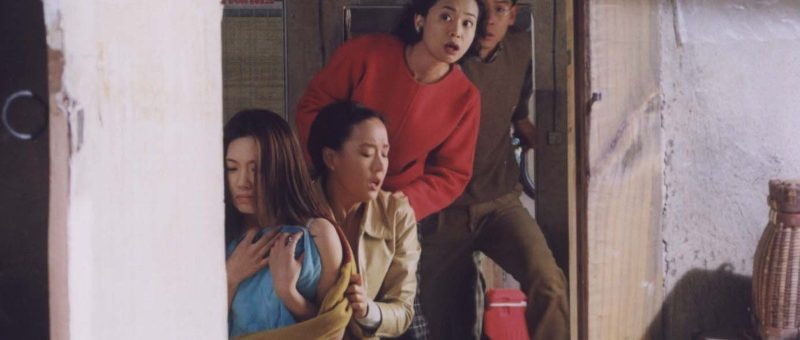
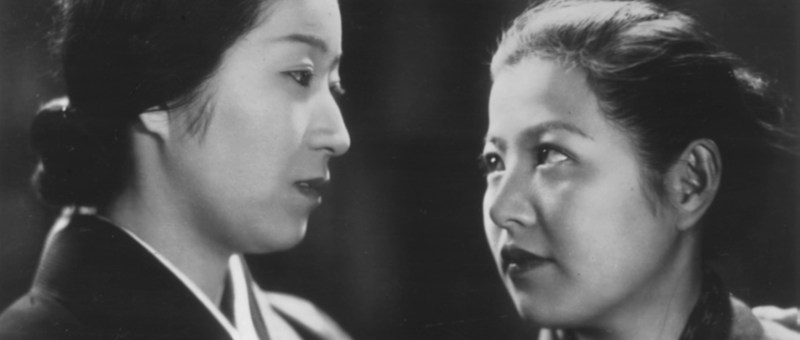
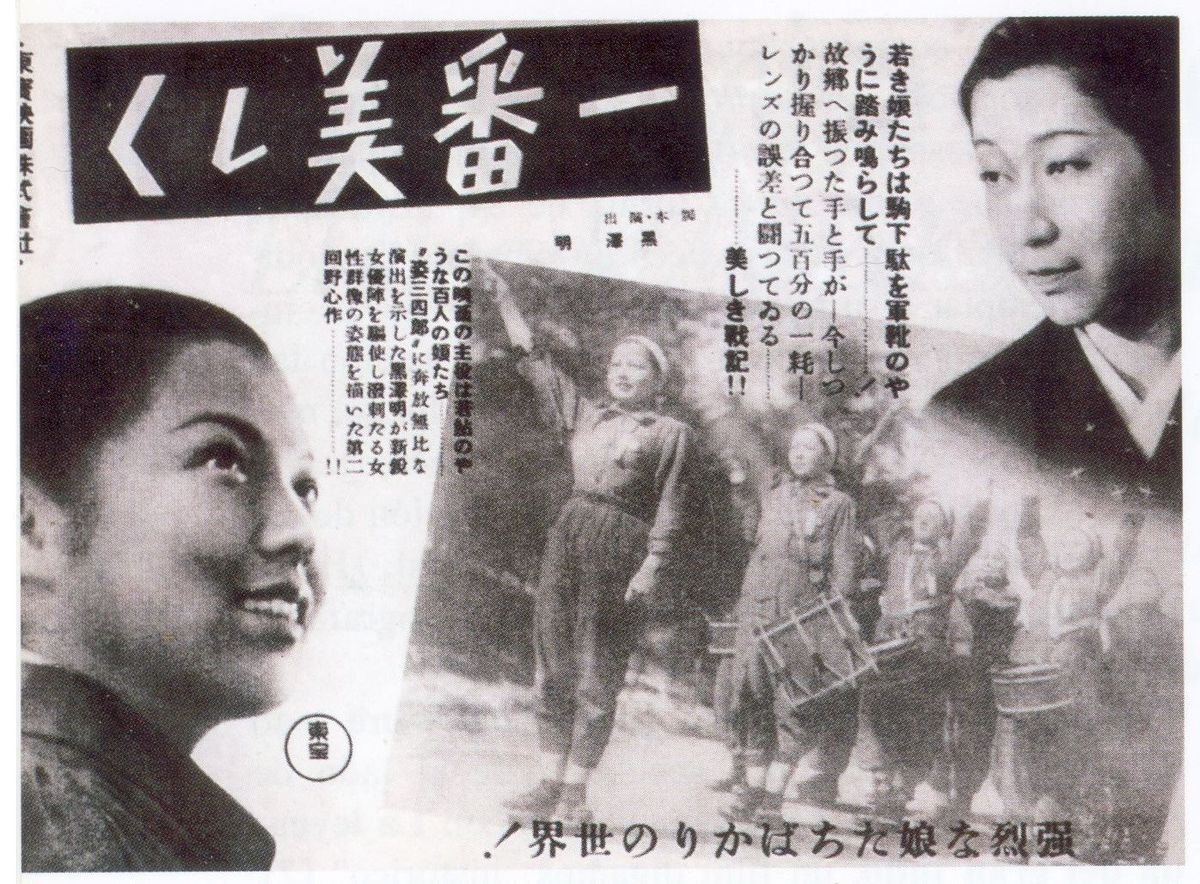
  • The Most Beautiful – naturalistic national policy film from 1944 following the lives of female factory workers.
  • No Regrets for Our Youth – 1946 drama starring Setsuko Hara as a professor’s daughter who marries a radical leftist later executed as a spy.
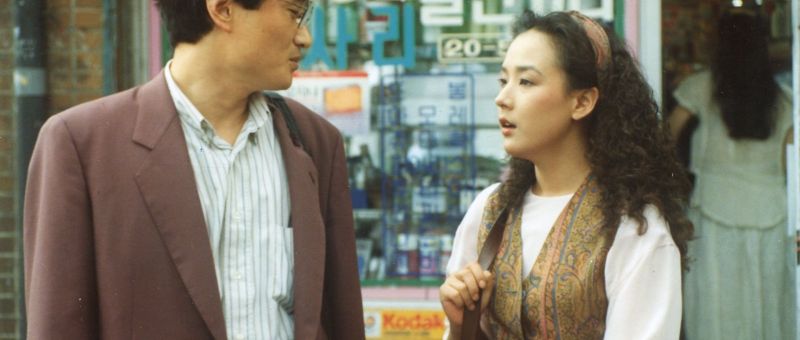
  • One Wonderful Sunday – post-war drama in which an engaged couple attempt to have a nice day out in Tokyo for only 35 yen.
  • Scandal – Toshiro Mifune stars as an artist standing up against the gutter press with the help of Takashi Shimura’s conflicted lawyer.
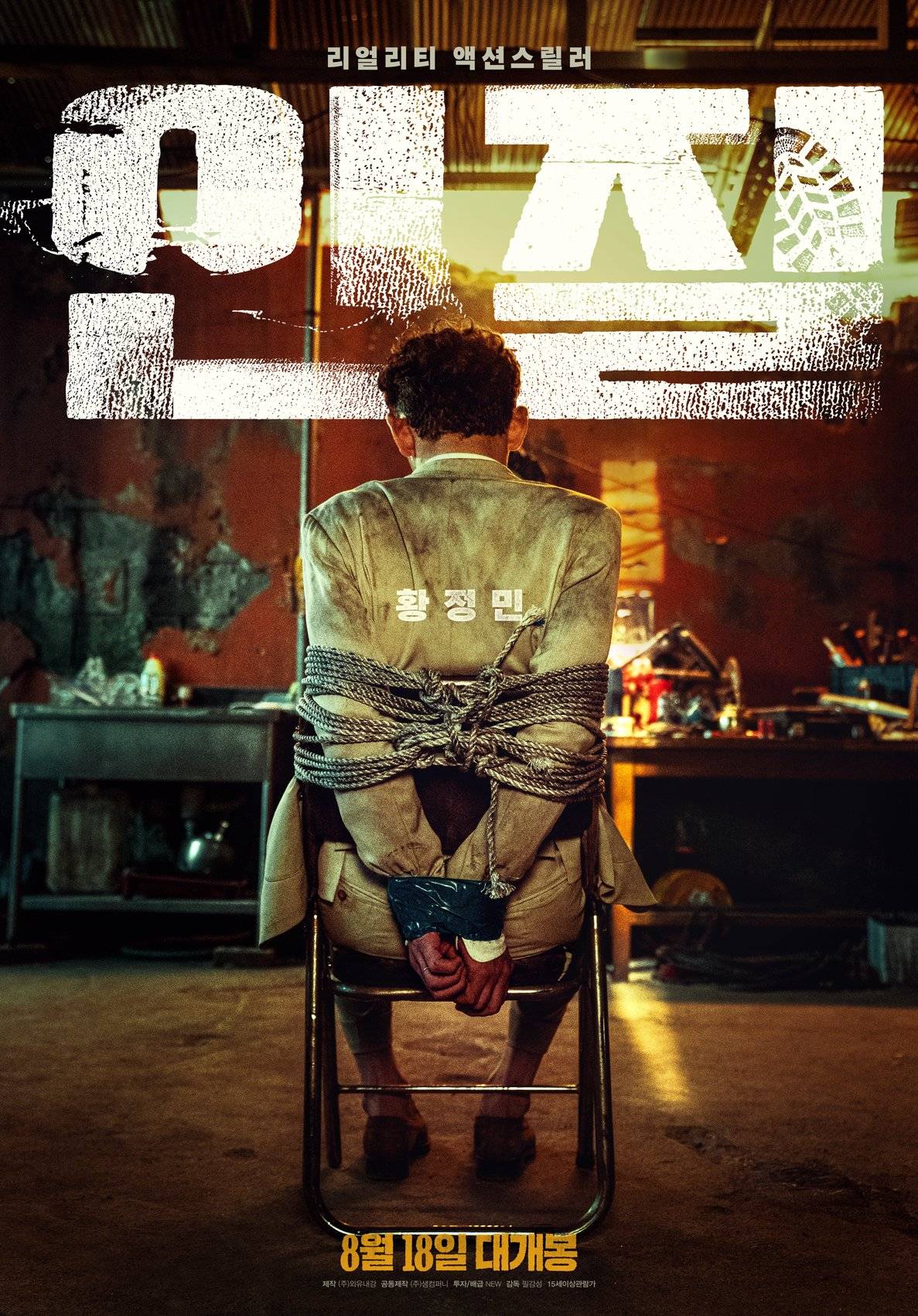
  • The Idiot – Kurosawa’s adaptation of the Dostoyevsky novel in which a man recently discharged from a psychiatric institution encounters romantic tragedy.

Social Status

  • The Men Who Tread on the Tiger’s Tail – roles are reversed and the feudal order temporarily subverted in Akira Kurosawa’s irreverent take on a kabuki classic. Review.
  • The Lower Depths – 1957 adaptation of Gorky’s novel following the lives of a collection of people living in an Edo-era tenement.
  • The Hidden Fortress – two bumbling peasants agree to escort a general and a princess in disguise to safe territory in return for gold.
  • Dodes’kaden – Kurosawa’s first colour film exploring the lives of a collection of people living in a shantytown above a rubbish dump.
  • Kagemusha – historical drama set during the Warring States period in which a petty thief is forced to become a double for the shogun.

Honour

  • Seven Samurai – classic jidaigeki gets a post-war twist as a collection of down on their luck wandering samurai come to the rescue of peasants beset by bandits. Review.
  • The Bad Sleep Well – contemporary take on Hamlet starring Toshiro Mifune as man enacting an elaborate revenge plot against the corrupt CEO who drove his father to suicide. Review.
  • Sanjuro – sequel to Yojimbo in which Mifune reprises his role as the titular Sanjuro as he helps some locals stand up to samurai corruption.
  • High and Low – Toshiro Mifune stars as a wealthy man encountering a dilemma when his chauffeur’s son is kidnapped after being mistaken for his own.

Family

  • I Live in Fear – Toshiro Mifune stars as a factory owner so terrified of nuclear attack that he becomes determined to move his family to the comparative safety of Brazil while they attempt to have him declared legally incompetent on account of his intense paranoia.
  • Rhapsody in August – drama in which a grandmother who lost her husband in the atomic bombing learns that her long lost brother is alive and living in Hawaii.
  • Throne of Blood – eerie retelling of Macbeth starring Toshiro Mifune as the man who would be king and Isuzu Yamada as his ambitious wife.
  • Ran – Kurosawa’s take on Shakespeare’s King Lear relocated to feudal Japan.

Professional Lives

  • Drunken Angel – post-war tragedy starring Toshiro Mifune at his most dashing as gangster dying of TB and Takashi Shimura as the compassionate yet alcoholic doctor trying to save him.
  • The Silent Duel – medical drama starring Toshiro Mifune as a young doctor who contracted syphilis from a patient while working as a wartime field medic.
  • Stray Dog – a policeman (Mifune) and his partner (Shimura) scour post-war Tokyo for a missing gun.
  • Ikiru – existential drama starring Takashi Shimura as a civil servant reflecting on his life after discovering he has a terminal illness.
  • Yojimbo – samurai western starring Toshiro Mifune as a ronin drifter wandering into a turf war.
  • Red Beard –  humanistic drama starring Toshiro Mifune as a gruff yet compassionate doctor to the poor. Review.

Unclassifiable

  • Sanshiro Sugata 1 & 2 – drama inspired by the life story of a legendary judo master.
  • Dersu Uzala – Russian-language drama adapted from the 1923 memoir by Vladimir Arsenyev.
  • Dreams – a series of eight surreal vignettes.
  • Madadayo – Kurosawa’s final film. Comedy drama inspired by the life of Hyakken Uchida.

Available on BFI Player

The Kurosawa season runs at BFI Southbank 1st January to 28th February 2023. For the full details on this and other BFI seasons be sure to check out the BFI’s official website where you can also find a link to BFI Player. You can also keep up with all the latest news by following the BFI on TwitterFacebookInstagram, and YouTube.

Tsuyukusa (ツユクサ, Hideyuki Hirayama, 2022)

A middle-aged woman decides to embrace possibility after her car is hit by a meteorite in Hideyuki Hirayama’s charmingly quirky dramedy, Tsuyukusa (ツユクサ). Though dealing with difficult subjects such as grief, depression, alcoholism, and loneliness, a spirit of warmth and generosity shines through in the quiet seaside town as its various inhabitants each in their own way find themselves pondering new beginnings and while discovering that change may be scary it’s worth taking the risk for greater happiness. 

49-year-old Fumi (Satomi Kobayashi) lives in a quiet village by the sea and works in a textile factory where the atmosphere is laidback and collaborative. For poignant reasons only later disclosed she’s formed a close relationship with her friend’s son Kohei (Taiyo Saito) who is obsessed with all things space. It’s Kohei who decides that whatever it was that hit her car while she was driving home one evening was probably a meteorite and declares that Fumi must be one very lucky lady because the chances of witnessing a meteorite strike are all but infinitesimal. Fumi too seems to take it as a good omen, wearing the moon rock that Kohei finds at the beach as a pendant and symbol of the new possibilities in her life. 

Meanwhile it seems clear that Fumi is dealing with a series of things including a problem with alcohol which is why she’s been attending a local support group which is surprisingly large given the size of the town. Then again she’s not the only one dealing with crisis, her two friends from the factory are also at a point of transition. Kohei’s mother Nao (Kami Hiraiwa) is at odds with her husband (Kiyohiko Shibukawa) who has accepted a job offer in another town but suggests that she and Kohei stay behind in part because he is the boy’s stepfather and worries about uprooting him especially as Kohei does not seem to have fully accepted him as a father. Taeko (Noriko Eguchi) meanwhile has embarked on a secret affair with a Buddhist monk (rakugo performer Tougetsuanhakusyu) she somewhat transgressively met when he read the sutras at her late husband’s funeral. Fumi is gradually warming up to new love of her own in taking a liking to Goro (Yutaka Matsushige), a melancholy gentleman of around her own age whom she often sees sadly blowing the tsuyukusa leaves like a harmonica in the local park. 

The village is for them a gentle space of healing, many coming from the city following some kind of emotional trauma and looking for a quiet place to escape their sorrow. Even Kohei is caught at a point of transition, exclaiming that all the adults he knows are liars while attempting to deal with his first real heartbreak and contemplating moving away from all his friends and the town he grew up in with a man he doesn’t quite feel he knows. But then as Goro points out, the tsuyukusa grow everywhere and happiness is always in reach as long as you decide to go out and fetch it. Fumi may originally over invest in the symbolism of the moon rock, as if being hit by a meteorite really was an omen of change and a kind of good luck charm in itself rather than a funny thing that happened and caused her to reevaluate her life but finally realises that she didn’t need a meteor strike to give her permission to be happy. 

Even so the quirky seaside town does seem to be a cheerful place with a series of colourful characters even if many of them are lonely or displaced. Fumi’s boss is forever doing tai chi by the beach after apparently being left by his wife and unsuccessfully travelling to Taiwan in search of a new one. The guy who runs the local bar used to be a whaler and sends customers out on errands on his behalf, while the old man who runs the alcohol support group finds his job so stressful that it’s driving him to drink. “Just fix the pain, please. Then I can keep on going” Fumi tells a dentist though it’s a fairly apt metaphor for life. Reminiscent of the work of Naoko Ogigami of which Satomi Kobayashi is perhaps a representative star, Tsuyukusa never shies away from the darker corners of life but nevertheless allows its warmhearted protagonist to rediscover joy if only in the simple things. 


Tsuyukusa screened as part of this year’s Five Flavours Film Festival and is available to stream in Poland until 4th December.

Original trailer (no subtitles)

Gyeong-ah’s Daughter (경아의 딸, Kim Jung-eun, 2022)

“It’s not your fault. And it’s not mine either.” a young woman declares, finally freeing herself of internalised shame while trying to live under the oppressively patriarchal social codes of contemporary Korea in Kim Jung-eun’s quietly enraged drama, Gyeong-ah’s Daughter (경아의 딸, Gyeongaheui Ddal). As the title implies, the film is as much about parents and children and the various ways the older generation unwittingly fail the younger in mistakingly clinging to the conservative ideas that defined their own youth but bring nothing but misery to all as it is about the pervasive misogyny of the modern society. 

Pushed to the edge, Yeon-su (Ha Yoon-Kyung) exclaims that she cannot bear being Gyeong-ah’s (Kim Jung-Young) daughter sick of her overly possessive, controlling parenting along with her initial failure to support her during one of the most miserable moments of her life. As the film opens, Gyeong-ah facetimes her daughter and the pair chat cheerfully for a while even though Gyeong-ah criticises Yeon-su’s new haircut as she shows her around her new apartment showing off the cheerful lights she’s stringed above her bed. But then, the conversation takes a turn for the strange with Gyeong-ah suddenly insisting that Yeon-su prove she is alone, taking the phone to the bathroom to show her there’s no one hiding in there and then even out in the hall in the event that she knew her mother might ask. We can well understand why Yeon-su, who is a grown woman about to start her first job as a high school teacher, might prefer to keep her mother at arm’s length unwilling to take the trouble of sharing her private life with her.  

It’s this sense of distance that informs Gyeong-ah’s reaction when she suddenly receives a strange video from an unknown number and realises that it is a sex tape featuring her daughter. First of all she feels betrayed that Gyeong-ah lied to her when she repeatedly, and invasively, asked if she had a boyfriend while otherwise badgering her about not being married. But then she also feels ashamed, horrified, to see her daughter engage in behaviour that she views as somehow sordid. When Gyeong-ah confronts Yeon-su she blames her, disgusted that her adult daughter was sexually active in the first place but doubly so that she allowed herself to be filmed while doing it. 

The fact that Yeon-su knew her boyfriend, Sang-hyun (Kim Woo-Kyum), was filming and did not stop him is brought up repeatedly as if this is all her fault for being so stupid or perhaps perverse to have agreed to it. As we discover, Yeon-su broke up with Sang-hyun because he was possessive and controlling a fact he proved by continuing to harass her with relentless text messages and phone calls to which she did not respond. Eventually he turns up at her place of work with flowers and does not take well to Yeon-su’s attempt to explain that his actions are not “romantic” but have actively frightened her. As she gets into a taxi to leave, he further threatens her by giving the cab driver her address reminding her that he knows where she lives while making it clear to him that she’s his woman. “What a reliable boyfriend” the driver quips, chuckling that he probably suspects he might kidnap her. Yeon-su wisely decides to go to her mother’s instead, only to get another earful about the dangers of staying out too late alone. 

Sang-hyun’s decision to send the sex tape to all of Yeon-su’s close contacts including Gyeong-ah is another attempt to exercise control over her life as act of revenge in being scorned. A sense of patriarchal entitlement seems to surround her. When a (negative) pregnancy test is found at the school, the principal mutters about conducting some kind of witch hunt on the look out for teenage lovers adding that “girls today are shameless” as if the boy bears no responsibility or else is simply led astray by a “bad” girl who should be taught a lesson in feminine purity. Later in a cafe, Gyeong-ah hears a man remark that he’s “popular with women at work”, when he makes a move they can’t resist him. Unable to cope with rejection, Sang-hyun destroys Yeon-su’s life yet faces no consequences of his own. She can no longer bear to be looked at, distancing herself from her friends and taking a leave of absence from her job barely leaving a tiny one-room apartment and forced to pay exorbitant sums to a data security company to try and erase the video from the internet knowing it will never really be “over” because someone could always just reupload it. 

On going to the police she’s again asked if she consented to the video being filmed and told that in practice no one really gets convicted for these crimes because they just say their phone was stolen or that they were hacked. Even Yeon-su’s lawyer later pressures her to settle out of court while she’s further harassed by Sang-hyun’s otherwise well-meaning mother who is forced to realise that she’s raised such a fragile boy. Gyeong-ah in turn is forced to reckon with her maternal failures, that though Yeon-su had supported her through her abusive marriage she was not there when she needed her and in fact tried to reinforce the same oppressive social codes that caused her nothing but misery all through her life. When the report of a woman who had killed her husband after long years abuse being sentenced to a lengthy prison term plays on the television in a cafe, even Gyeong-ah’s best friend exclaims that a woman should stick with her husband no matter what unable to understand what might have motivated the woman’s actions. 

Yet Gyeong-ah continues to ask her daughter why she’s not married, forcing her into this selfsame cycle of abuse and control. The old man that Gyeong-ah looks after has several sons, yet they’ve hired a middle-aged woman to look after him while his daughter, a successful lawyer, looks in occasionally and beats herself up that she’s somehow failing in her duty of care. She explains that she didn’t want to get married, but might have liked to have children, eventually sympathising with Gyeong-ah’s dilemma and offering some free life and legal advice to an increasingly depressed Yeon-su, though Gyeong-ah had perhaps judged her implying that she was wrong to choose a career over becoming a wife and mother. Gyeong-ah is beginning to realise the mistake in her complicity, but as Yeon-su says it’s not her fault and nothing good will come of it until each of them learns to stop blaming themselves so they can move on with their lives. When Gyeong-ah finally removes the family portrait from her wall and leaves it out for the bin men, just as Yeon-su had tried to do with the remnants of her relationship with Sang-hyun, it’s as if she’s freeing herself from the outdated patriarchal social codes that convinced her she had no right to resist or claim her own agency over her life. Yeon-su has perhaps taught her a valuable lesson while rediscovering her self-confidence and fighting back against the sheer entitlement of the fragile men that thought it was their right to ruin her life by shaming her into submission. 


Gyeong-ah’s Daughter screened as part of this year’s San Diego Asian Film Festival.

International trailer (English subtitles)

Sunshine of My Life (一路瞳行, Judy Chu, 2022)

A young woman comes to a better understanding of her family and her relationship with it after a series of crises some more serious than others in Judy Chu’s semi-autobiographical drama, Sunshine of My Life (一路瞳行). More a coming-of-age tale than an exploration of the difficulties faced by those with disabilities in the recent past, Chu’s heartfelt film nevertheless stresses familial solidarity as the heroine comes to realise that her misplaced resentment is mostly teenage angst and that at the end of the day her parents just want her to be happy.

Yan (Karena Ng) was born to two parents who are each blind. A perfectly ordinary though dangerous accident that could easily happen to a sighted mother leaves a toddler Yan scalded and unkind relatives questioning the couple’s decision to have a child at all implying it is somehow irresponsible and that they are incapable of caring for her. Nevertheless, Yan’s mother Hung (Kara Wai) resolves to do everything she can to keep her daughter safe beginning with attaching bells to her so she has a better idea of where she is and what she’s doing at all times. This early incident does in one sense colour Hung’s parenting style, constantly questioning herself as to whether she’s a good mother and preoccupied with the judgement of others all of which later feeds into her teenage daughter’s resentment as the older Yan grows tired of feeling responsible for her parents’ care. 

As a child, Yan had helped her parents by reading out menus and describing the world she sees around her but as a high school student she resents having to rush home after school rather than hanging out with her friends and also seems to be ashamed of her parents’ disability never telling anyone about her family and instead claiming that her mother is ill in hospital. She tells her art teacher that she just wants to get out of Hong Kong and doesn’t care where she goes so long as it’s far away while later telling her no good rich kid boyfriend that she’s searching for “freedom”. On one level she feels intense guilt for leaving her parents behind as if she were abandoning them, worried that they really can’t manage without her, but also fears for her own future and feels trapped as if she’s being asked to sacrifice her own hopes and dreams to stay by her parents’ side forever.  

Yan is indeed a teenage girl and has a slightly self-centred way of looking at things, never quite stopping to appreciate how difficult her parents lives can be in a conservative society that is often unwilling to accommodate difference. When her classmates all mock and jeer at a poster advertising a star gazing event for the blind all she can do is smile politely, and at one point she even walks straight past Hung waiting for her outside the school gates perhaps on one level simply embarrassed to have her mother meet her as any teenage girl might be but also anxious to hide her existence from her boyfriend. After being arrested by the police for illegal street selling, Yan’s father Keung (Hugo Ng) gets a job as a masseuse but is later exploited by his employer who tries to force him to sign a new contract accepting a 20% pay cut while increasing the manager’s commission. Keung refuses and is fired but vows to fight for the other workers to end discrimination against the blind and ensure they enjoy the same labour rights as sighted workers. 

Faced with a series of crises from a brush with criminality to her boyfriend’s sudden absence and her father’s failing health, Yan is forced to reconsider her relationship with her parents. On witnessing Hung stand up for herself and take her father’s corner Yan realises that she might have underestimated her mother’s capability and what she took for dependency was more a general sense of warmth in receiving care that made her life easier. Tinged with ’90s nostalgia from the ubiquitous cassette tapes Hung uses to record precious moments to pagers and pinups, Chu’s warmhearted drama finds a mother and daughter coming to a better understanding of each other as they both learn to embrace independence and freedom if in a slightly different way than originally anticipated.


Sunshine of My Life screened as part of this year’s Five Flavours Film Festival and is available to stream in Poland until 4th December.

Original trailer (Traditional Chinese / English subtitles)

Remember Me (金門留念, Hung Chun-hsiu, 2022)

Some way into Hung Chun-hsiu’s documentary Remember Me (金門留念) a woman takes part in a military reenactment firing large scale artillery from a now disused military base. What’s ironic is both that what was once a frightening reality of ongoing warfare has now been commercialised as an attraction for tourists, and the fact that the woman firing the gun pointed at China on this technically Taiwanese island is herself Chinese. As the opening graphics point out, the island of Quemoy (also known as Kinmen) is geographically closer to Mainland China though governed by Taiwan and for much of its mid-20th century history at the front line of an ongoing ideological battle between communists and nationalists. 

In the stock footage often employed by Hung, newsreaders can be heard uttering phrases about “vile communists” and eliminating communist “scum” along with impassioned sloganeering about taking back the “motherland” and freeing its people from the yoke of communism. The island was under near constant shelling until as recently as 1979 and consequently largely populated by the military many of whom were ordinary young men conscripted for national service. The island has obviously changed a great deal since then, though one unexpected casualty has been the gradual decline of the island’s photo studios. Less due to technological than demographic change, the first of Huang’s subjects explains that given the precarity of life in Quemoy soldiers would have their pictures taken as often as once a week, often full body portraits they would send home to their families as evidence that they had not been severely injured. Kuo-ming has been operating his photo studio for 46 years now one of only two still operating on the island. Like the gun show, the military portraits have also become a kind of costume play, Kuo-ming handing out army uniforms and prop weapons for people to pose with often against a painted matte backdrop of a local lake or else Japan’s Mount Fuji. 

Meanwhile, the photographs taken at the time hint at the loneliness felt by the men who were dispatched to the island, many of them opting to have pictures of their wives or girlfriends inset alongside them. Those who had no girlfriends sometimes used a picture of a famous model or actress as a personal keepsake though one photo which goes unexplained is inset with the photo of another man in uniform. It has to be said that many of these photos have a homoerotic quality, especially the ones featuring shirtless well-built men striking muscle poses, while others are unexpectedly feminine in nature featuring the soldier in soft focus and surrounded by flowers. The ones from later years are also sometimes playful, featuring soldiers sitting in a model speedboat in or in more relaxed, artistic poses. A man who had his photos taken there while on his military service reads a letter he wrote to a woman he loved promising a photo, one in which he later inset her portrait, little knowing that she did not return his feelings and only kept the correspondence up in fear he might harm himself if she turned him down. Though he discovered on his return she had married someone else, the couple found each other decades later and decided to have a “real” photo taken together at Kuo-ming’s shop dressed in faux army uniforms. 

Having married a local woman and decided to stay on Quemoy, former solder Shan-yung also used to have his picture taken at Kuo-ming’s to send back to his mother. He joined the army voluntarily as his family was poor and was shocked to be sent effectively to the front line. After leaving the service, he and his wife opened a karaoke bar largely catering to military personnel and though his business still seems to be doing well, bears out Kuo-ming’s description of the economic changes brought about by decreasing militarisation. Even so he feels a sense of guilt that his life has taken him so far away from his family that he is no longer able to care for his parents in their old age while taking care of his in-laws on Quemoy.

Chen-mei, the woman staging the live reenactment of firing the artillery gun, expresses something similar while explaining that she came to the island from the Mainland for an arranged marriage and now works as a civil servant. She concedes that it’s a little awkward for some of the Chinese visitors realising that their nation had been firing shells at the island for three decades, but suggests that it’s all in the past while espousing a well-meaning but possibility reductive One China philosophy that they are all one Chinese family who no longer need to care about labels like “communist” or “nationalist” because they live in an era of peace. The gun, and the remaining military garrison, may be a reminder it might be dangerous to take that for granted given the rising rhetoric on the Mainland in response to the desire for a recognition of Taiwanese independence. A father explains to his son that the artillery gun was a loan from the Americans to help resist communism, but when the boy asks him how long is left on the lease the man can only look confused and reply that he doesn’t really know. In any case, Remember Me seems to be keener on remembering the rosier side of life on Quemoy under fire as old soldiers look back on their youth if grateful that goats now roam their barracks and the only shells to be found are the ones commemorating a war that for now at least has ended. 


Remember Me screened as part of this year’s San Diego Asian Film Festival.

Original trailer (English subtitles)

A Lonely Island in the Distant Sea (절해고도, Kim Mi-young, 2021)

A dejected artist finds himself reconsidering his life’s choices when his teenage daughter drops out of education to become a Buddhist nun and he falls in love with a forthright professor in Kim Mi-young’s contemplative drama, A Lonely Island in the Distant Sea (절해고도, Jeolhaegodo). Though the title could easily enough refer to the hero himself, it echoes the sense of impossible longing symbolised by an island he could see but did not travel to though there was no real reason preventing him save his own feelings. In any case, the island and the day on which he saw it have become lodged in his memory as a nostalgic image of irresolvable desire. 

Now in early middle-age, Yun-cheol (Park Jong-hwan) is an unsuccessful sculptor who feels he has failed to live up to the promise of his youth and mainly earns his keep through commercial work such as crafting replicas of the solar system for a local museum. Divorced from his workaholic wife, he’s called in by his daughter Gina’s (Lee Yeon) school when they object to some admittedly disturbing artwork she had drawn on a series of roller blinds without permission. Yun-cheol is less concerned with the fact the paintings suggest that Gina is experiencing some kind of mental anguish than the school’s reaction to them, her teacher admitting that they took the blinds out and burned them. His anger is directed towards their wilful destruction of a work of art because it seemed to them more akin to vandalism or destruction of their property. Describing Gina as “mean”, they imply that they will ask her to leave suggesting that she would benefit from a different environment. In many ways that’s how Gina feels too, eventually revealing that she has decided to leave education altogether and later giving up her art to practice Buddhism. 

It’s the idea of abandoning her obvious talent that Yun-cheol struggles to understand. As a young man, he’d also considered becoming a monk or even a Catholic priest as, as he describes it, “safe paths for lost souls” if he failed to realise his ambitions of becoming an artist. Discovering that his daughter had had the same dilemma, even if she took a different path, shakes his sense of self in realising that his internal conflict was not unique. While trying to understand Gina’s desire to renounce the world, he begins to fall in love with a free spirited professor and cancer survivor but Ji-young (Kang Kyung-heon) is not prepared to wait around for him to sort himself out on his own and is quickly tired of his tendency to retreat into isolation rather than face his problems. Having learned only half a lesson, he later moves into Gina’s retreat where he is eventually asked to leave by the head nun bluntly who tells him that he is not suited for the monastic life. 

It may be that Yun-cheol exists outside of regular society because of his unusual upbringing in a mountain shack with his similarly isolated father, yet he struggles with himself and his relationship to art while seemingly unable to build lasting relationships with people as if they too were islands in a distant sea he could only gaze at from afar. He tells his daughter he would never abandon her in the way his mother had him but in a sense he might have done so in having lost the will to live amid his intense loneliness and lack of artistic fulfilment. Nevertheless, his growth comes in a kind of acceptance in acknowledging Gina’s choice to become a nun along with Ji-young’s declining heath and desire for isolation. 

When he had first met her, Yun-cheol had responded to Ji-young’s lecture about a would-be-revolutionary who did not go through with his cause by asking her why he would seek to implode the world in which he lived though this is the same thing Yun-cheol eventually does in his own mini-revolution choosing new paths in middle age whether in fear and regret or in search of possibility. A mystical meeting with a maternal wild boar helps to give him clarity though it seems he is forever destined to be a lonely island looking out at a distant sea filled with an unanswerable longing.


A Lonely Island in the Distant Sea screened as part of this year’s London Korean Film Festival.

Original trailer (no subtitles)

Executioners (現代豪俠傳, Johnnie To & Tony Ching Siu-Tung, 1993)

At the end of The Heroic Trio, the shadowy rise of authoritarianism seemed to have been beaten back. The three superwomen at the film’s centre had discovered joy and liberation in female solidarity and were committed to fighting injustice in a flawed but improving world. If Heroic Trio had been a defiant reaction to Handover anxiety, then sequel Executioners (現代豪俠傳) is its flip side shifting from the retro 40s Hong Kong as Gotham aesthetic to a post-apocalyptic nightmare world where nuclear disaster has normalised corporate fascist rule. 

As Ching (Michelle Yeoh) explains in her opening voiceover, a nuclear attack has ruined the city contaminating its water and leaving ordinary citizens dependent on the Clear Water Corporation for safe drinking supplies and basic sanitation. The trio have been scattered, pushed back into the roles from which they escaped at the first film’s conclusion save perhaps for Ching who continues to serve a duplicitous authority but does so with clearer eyes and a humanitarian spirit driving a medicine truck to ensure those in need have access to healthcare. Chat (Maggie Cheung Man-Yuk) meanwhile has reverted to her cynical bandit lifestyle, hijacking water trucks mostly for her own gain but also ensuring the water gets to the needy. Tung (Anita Mui Yim-Fong) has abandoned her Wonder Woman persona on the insistence of her husband who is now a high ranking policeman with the military authority devoting herself to the role of the traditional housewife and mother to her daughter Cindy. 

Though the women seem to have maintained their bond, Ching and Chat turning up for a Christmas celebration with Cindy, the political realities soon disrupt their friendship as they find themselves at odds with each other given their shifting allegiances. As in the first film, Chat has continued to accept work from dubious authority in the form of the Colonel including tracking down a man who embarrassed the police by firing a gun at a rally for a cult-like protest leader, Chung Hon (Takeshi Kaneshiro), only the gunman later turns out to be a patsy and Chat has unwittingly helped them bump off the voice of the people as an overture for a military coup. Ching is secretly working for responsible government trying to safeguard the President to prevent his assassination by the Colonel, but obviously cannot say very much about her mission arousing Tung’s suspicions that she may have been part of a plot to have her husband killed. 

In any case, the true villain turns out to be a kind of Wonder Woman mirror image in that the mysterious Mr. Kim (Anthony Wong Chau-Sang), CEO of Clear Water Corporation, is a man who wears a mask to hide his scarred face and dresses like an 18th century aristocrat as if engaged in some kind of Man in the Iron Mask cosplay. Kim and the Colonel have been collaborating to engineer a military coup by deliberately restricting water supplies. The oblivious Chung Hon had unwittingly been Kim’s stooge, stoking up public resentment about the water situation to give the government an excuse for a crackdown and the Colonel to move. Chat’s path to redemption amounts to vindicating the faint hope that the water contamination was a hoax, which she eventually does by taking Cindy with her to smash the corporate dam and return the water to its rightful flow and the people of the city. But like the Evil Master, Kim does not die so easily turning up for a surprisingly hands on fight squaring off against the barely unified trio who are only just beginning to repair their friendships on coming to a fuller understanding of the reality of their circumstances. 

They are all in a sense liberated, though less joyfully than in the first film and largely through violent loss. The good guys don’t always win and a fair few die while all the women can do is keep moving, fighting off one threat after another with few guarantees of success and not even each other to rely on. Where the first film had embraced a hopeful sense of comic camp, Executioners skews towards the nihilistic in its dystopian world of corporate overreach and increasing militarism in which the trio no longer trust each other and are each re-imprisoned inside their original cages from patriarchal social norms to capitalistic inhumanity and questionable loyalties with the only hopeful resolution resting on “the sincerity of our friendship” in a world which may be healing but is far from happy. 


Executioners screened as part of this year’s San Diego Asian Film Festival.

The Heroic Trio (東方三俠, Johnnie To, 1993)

Female solidarity becomes an unexpected weapon against stealthy authoritarian take over in Johnnie To’s gloriously camp superhero action fest, The Heroic Trio (東方三俠). Uniting three of the top stars of the age in Anita Mui, Maggie Cheung, and Michelle Yeoh the film flirts with Handover anxiety in the “Evil Religion” that threatens to steal the children of Hong Kong, but eventually locates the source of salvation in the heroine’s shared humanity brokered by a tripartite solidarity of justice and equality that defies both the patriarchal world around them and the cruel authoritarianism in which they have been raised. 

In an almost biblical allegory, large numbers of male infants have been going missing over the last 18 months and the police are, predictably, mystified relying on the reappearance of the mysterious superhero Wonder Woman to solve the mystery herself. Truth be told, top Inspector Lau (Damian Lau Chung-Yan) hasn’t yet realised that Wonder Woman is his own wife, Tung (Anita Mui Yim-Fong), so perhaps his investigative skills aren’t all that despite the dynamism of the opening scenes which see him demonstrate his masculinity by leaping out of a window stop a thief from driving off in his classic car which is parked outside a creepy mansion in the middle of nowhere. Nothing really gets done until the chief of police gets a note that his own infant son is next on the list, though he briefly considers simply swapping his kid for another couple’s child while hiring “Thief Catcher” Chat (Maggie Cheung Man-Yuk) to get him back when he’s kidnapped by an “Invisible Woman”, Ching (Michelle Yeoh), whom Tung manages to wound while saving the decoy baby. 

As it turns out, Ching has been taking the babies on behalf of “Evil Master” (Yen Shi-Kwan) who lives in an underground lair in the sewers and is the head of a mysterious cult hellbent on finding a new king for China. There may be a degree of Handover anxiety in Evil Master’s mission, seeking to possess and control Hong Kong by brainwashing its children eventually possessing Ching by removing her bodily autonomy while her sisters must quite literally free her from his icy grasp. Each of the kidnapped boys is said to have a divine destiny, though Evil Master doesn’t know which one is the new king and has a habit of simply killing the ones who disappoint him while the others are raised as mindless automatons consuming those like them and destined to become thoughtless killing machines like the bloodthirsty Kau (Anthony Wong Chau-Sang). 

Chat, who was raised as one of Evil Master’s minions but managed to escape thanks to the largess of Ching and his since become an ultra-capitalist bounty hunter if one less cynical than she originally seems, thinks it’s better to simply end the cannibal kids’ misery before they end up like Kau while Tung prioritises saving the infants so they can be returned to their parents before being subject to one of Evil Master’s weird rituals. Ching, meanwhile, is only participating in Evil Master’s plan to protect the man she loves, a mad scientist slowly succumbing to poisoning caused by his invention in true genre fashion. It is then in a sense love that causes Ching to reject her programming, but it’s the solidarity of Tung and Chat, along with a desire for vengeance, that finally gives her the courage to rebel. 

In a brief flashback, Tung had failed to save Ching during a tough training session with their mentor who had cruelly told her that she’d have to fight for justice alone while Ching, cast out, sought support by turning to the dark side. The scene repeats itself twice in the film’s closing scenes in which Tung is this time able to save Ching but only because of the support from their friend and equal Chat making up the third point of the triangle and anchoring them both firmly to ensure they will not fall. “Life is meaningful if you can face yourself” Tung tells Ching, shedding her mask having presumably dealt with her own dark past and pulling her sister up with her as an equal leaving the past behind to fight for a future of justice and freedom. 

To and action director Ching Siu-tung recast Hong Kong as Gotham with a production design quite clearly inspired by Western comic books in which the three heroines end by getting fancy capes that flicker in the wind. Chat, a motorcycle-riding delinquent force of nature, even at one point launches herself into battle on an oil drum propelled by dynamite which she later uses to take out the cannibal kids not to mention Evil Master himself. But it turns out the spectre of creepy, ritualistic authoritarianism doesn’t die so easily, Evil Master’s charred skeleton gets back up for one last hurrah until his brain finally explodes when confronted by Ching’s rejection having returned to the fold and now ready to sacrifice herself for a freer future for all. Essentially a comic book wuxia, To’s ironic action drama allows its heroic trio to find salvation in female solidarity anchoring each other in a world beset by fear and villainy.


The Heroic Trio screened as part of this year’s San Diego Asian Film Festival.

Hot Blooded (뜨거운 피, Cheon Myeong-kwan, 2022)

A dejected gangster decides to take the chance on a different kind of life but is soon pulled back into internecine underworld conflict where humanity is weakness and the only prize is a lonely hegemony in Cheon Myeong-kwan’s ‘90s-set thriller, Hot Blooded (뜨거운 피, Ddeugeoun Pi). As much about fathers and sons as it is about uneasy brotherhood, Choi’s adaptation of the novel by Kim Un-su harks back to the classic gangster picture in which the hero proves too noble for his surroundings and finds a single act of compassion provoking nothing more than chaos and misery. 

In the small enclave of Kuam, Busan, Hee-su (Jung Woo) is a petty foot soldier on the cusp of turning 40 who is becoming tired of this way of life. Loyal to his boss, Son (Kim Kap-soo), Hee-su is also aware that times are changing and the boss’ tried and tested approach may no longer meet them. When a vicious gangster, Yong-kang (Choi Moo-sung), returns from exile abroad after fleeing to escape a murder charge, gangland equilibrium is suddenly unbalanced not least by his shift into drug dealing that eventually places him at odds with Hee-su’s gang. After defusing a potential turf war, Hee-su decides he wants out and takes up with booze smuggler Yang-dong in the electric slot machine trade hoping to make enough money to open a small hotel on a nearby island with his longterm girlfriend and her adult son Ami (Lee Hong-nae) who has just been released from prison after falling in with a thuggish gang. 

As he eventually realises, Hee-su has merely ended up as a pawn stuck between Son and Nam, the head of a rival outfit trying to muscle in on their territory. His first problem is that his childhood friend, Chul-jin (Ji Seung-hyun), is a liaison for Nam’s gang. Son explains that only by taking out someone like Chul-jin can they start a negotiation with Nam to nix a gang war before it escalates, but Hee-su cannot bring himself to kill his friend while sufficiently unbalanced by his suggestion that he’s being played by Son as to doubt the old man’s advice. We’re given constant reminders that Chul-jin is a father of young children, while Hee-su has no children of his own but is a surrogate father figure to Ami. Effectively brothers, the two men met as orphans at a government facility and it’s clear that Hee-su sees Son as a man to whom he owes a fatherly debt while Chul-jin may not have any loyalty to anyone besides himself even as he claims that all he wants is to live peacefully with his children just as all Hee-su wants is to open his hotel and live with In-sook (Yoon Ji-hye) and Ami in a less violent environment. 

Hee-su’s decision to leave is a kind a of betrayal in itself, born of a desire to break free of the restrictive codes of gangsterdom and be his own man charting his own future but little realising that his life is still ruled by the laws of the underworld. Later someone asks him what it is he wanted to protect. All he can say is that there was something once, but he’s forgotten what it was. In leaving his gangster family he unwittingly destroys his dreams of forging his own, robbed of the more peaceful life he dreamed of by the chaos and violence of the underworld. The irony is that everyone describes Kuam as a “shithole”, a moribund small-town where even the casino hotel craze which is the centre of the gangster economy may be on its way out. Hee-su can’t really understand why they’re having a turf war over a place no one wants, only to realise it’s just a smokescreen to disguise what it is that’s really worth having and why. 

A late existential speech makes plain Hee-su’s predicament in Yang-kang’s logic that men like him fall to the depths of hell or become kings of all they survey. Yet for Hee-su it’s all much the same, rendered lonely by everything he’s lost while achieving the success craved by so many that is the opposite of what he wanted. It turns out Son may have had a point, the reason he survived so long was his ability to keep calm and play the long game. Hot-headed revenge is a luxury a gangster can’t afford as Hee-su finds out to his cost. “Fathers are all powerless” Chul-jin tries to tell him, though there’s something left of the old Hee-su in his final act of letting a man who betrayed him go because he’s the last in the boss’ bloodline potentially sealing his own fate in some far off act of vengeance. Very much a classic gangster drama in which a noble foot soldier finds himself torn by conflicting loyalties, Hot Blooded proceeds with a weary fatalism leaving its hero a coldblooded ghost which might be a fitting end for a man who once tried to make his fortune selling fake hot peppers.


Hot Blooded screened as part of this year’s London Korean Film Festival.

Original trailer (English subtitles)

Blue Island (憂鬱之島, Chan Tze-Woon, 2022)

“In reality, we are just the abandoned kids of the riot.” an ageing protestor advises, sitting in a jail cell talking to a younger version of himself about the way that youthful revolutions fail and age erodes ideals. Chan Tze-Woon’s documentary Blue Island (憂鬱之島) places the protestors of today into the protests of the past, asking them to reenact the actions of their forebears while considering what Hong Kong means to them now and how they feel about those who simply decide to leave believing this is a battle that cannot be won. 

In a scene that seems to reference Tang Shu Shuen’s China Behind, a young couple fleeing the Cultural Revolution in 1973 attempt to reach Hong Kong by swimming, the camera then finding the same man nearly 50 years later still swimming in the bay. As one of the protestors of today puts it, he fled injustice because he could not fight it as many young Hong Kongers have also now chosen to do in the wake of the Security Law. Yet most of these young people have chosen to stay, most accepting the choice of others to leave though perhaps feeling it premature, explaining that to them Hong Kong is their home and their family. 

The old man, Chan Hak-chi, says he saw Hong Kong as a place of freedom yet it was also colonial outpost ruled by another distant and oppressive power. In a key scene a young protestor, Kelvin Tam, is charged with paying the part of a protester arrested during the anti-colonial riots of 1967. “I am Chinese” he answers the English civil servant, in English, when pressed why he resists them as someone who grew up in their colony and attended their schools, “And here belongs to China”. He tells the Englishman that this is his place and it is the Englishman who should leave. The situation then reverses, the now invisible voice on the other side of the table asking him in Cantonese “why do you oppose China?” as someone raised on Chinese soil who studied in government schools. “I’m a Hong Konger”, he replies.

The man whose shoes he’s filling is in many ways his opposite number. The riots of 1967 were led by left-leaning activists who desired a reunification with Mainland China in reaction to oppressive British colonial rule. The scenes of young people being carted off by the police are near identical, but it is true enough how identity is often constructed in opposition. The ’67 rioters declared themselves Chinese as distinct from the British, while Tam identifies himself as a Hong Konger in opposition the Chinese. Yet as Raymond Young, once a young man imprisoned for riot, points out when has Hong Kong ever been able to control its own fate? Other young protestors lament that they are offered only two conflicting narratives of their history, one which begins with British rule as if the island just popped up out of the sea in the early 19th century, and the other penned by Mainland authorities to encourage a One China philosophy.   

Now a disappointed old man, Young remarks that he no longer takes an interest in Hong Kong politics also pointing out that in order for you to love your country your country must first love you implying perhaps that he does not particularly feel loved by the Mainland. He may have something in common with Kenneth Lam who arrived in Hong Kong in 1989 after Tiananmen Square and holds up a small scarf with the innocuous message that the people will not forget now that the annual vigils that used to mark the June 4 Incident have been banned. Becoming tearful at a gathering he remarks that he has something in common with the youngsters in that they both dreamed of a better world and have experienced the “shattered faith” of a failed revolution, like Young feeling abandoned in the society he failed to change. 

Lam now works as social justice lawyer, defending many of these young people who have been arrested for vague offences such as “incitement to incite public nuisance”, “conspiring to subvert state power”, or simply “rioting”. Chan ends on a montage of faces sitting in the dock accompanied by their occupations and the “crime” with which they have been charged, some young some old, many students but also lawmakers and civl servants, delivery people, your friends and neighbours accused just for voicing an opinion. The court itself is ironically a colonial hangover in which barristers wear wigs and conduct their legal business, if not the questioning, in English. A blue island indeed, Chan ends on a note of sorry futility echoed by an extending list of credits marked only as “anonymous”. 


Blue Island screened as part of this year’s San Diego Asian Film Festival.

Original trailer (English subtitles)