
Follow the Light (光を追いかけて, Yoichi Narita, 2021) [Fantasia 2021]

“We all want to run, but still we’re holding on” insists the hero of Yoichi Narita’s rural coming-of-age tale, Follow the Light (光を追いかけて, Hikari wo Oikakete). Not perhaps as its title implies a religious treatise, Narita’s gentle drama nevertheless chases faith in the future while exploring the effects of rural depopulation, economic stagnation, and familial fragmentation on the lives of the young but eventually rediscovers a sense of security, not to mention wonder, in the natural world along with the importance of community in creating a feeling of emotional rootedness. 

Teenager Akira (Tsubasa Nakagawa) has just moved back to his dad’s hometown following the divorce of his parents, his mother presumably having left the family. As one might expect he is sullen and resentful, wishing a meteor storm would destroy his new home and drawing violent comic books to that effect. He ignores everyone at school and is uninterested in making friends, continuing to view himself as an outsider who is not destined to stay. This feeling is compounded by the fact that the school itself is about to close down due to the declining numbers of children in the local area as a result of rural depopulation. 

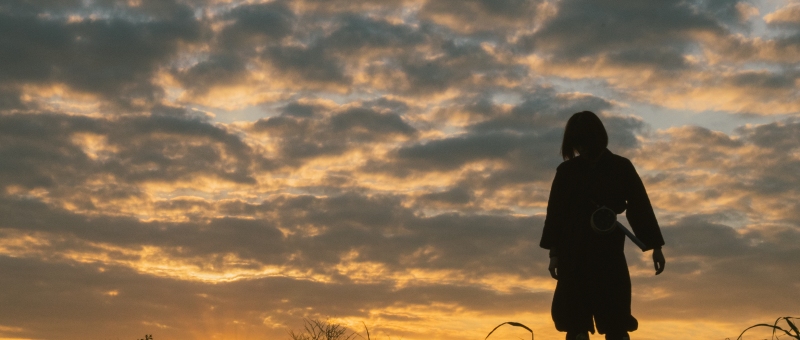
Akira’s interest is piqued, however, on witnessing a mysterious girl standing atop the roof of a farm house and surveying all below. Accidentally making friends with a bullied boy, Shota, Akira discovers the girl’s name is Maki (Itsuki Nagasawa) but is warned off her on the grounds that she is “crazy” and potentially violent. Akira ignores the warning, but is in any case guided towards the ostracised young woman by a mysterious light said to be caused by a UFO which leads him towards a crop circle in a rice paddy in the middle of which Maki is currently lying.

As Akira discovers, Maki has problems of her own in that her parents are in the middle of a debt crisis and about to lose the small petrol station they’ve been running as a family business. They are in fact just one of many casualties in the faltering local economy which is in a constant state of recession given that the young people all leave for the cities and there’s precious little money to be made in farming anymore. Akira’s father Ryota (Taro Suruga) went to Tokyo to be a musician, an ambition which obviously did not work out, and now he’s come back works for an organisation attempting to find solutions for the future of agriculture in an effort to bring prosperity back to the countryside. Akira’s teacher, Michiru (Rina Ikoma), by contrast who will soon be out of a job is disinterested in her work partly because she left to go to uni in Tokyo but was dragged back by parental pressure and remains intensely resentful trapped in a backwater provincial life quite clearly not of her choosing. 

It wasn’t of Akira’s choosing either and on top of dealing with the disruption of his parents’ separation he feels himself displaced as a city kid unused to the gentle rhythms of country life while struggling to understand the impenetrable local dialect. He originally does nothing on witnessing Shota’s bullying but later befriends him only for their friendship to be derailed by petty jealously in Shota’s resentment towards his growing interest in Maki. Maki, meanwhile, is also struggling with a sense of abandonment largely cared for by her down-to-earth farmer uncle in the wake of parental failure. Akira may originally feel the same way about his boomerang dad, returning home to live with grandma having failed in the city, but later perhaps comes to understand that return is not necessarily defeat while gradually warming to the joys of the country life with its wide-open vistas and kindhearted locals. 

Even so there’s a sense of desperation in these young lives as they watch their world dismantled in front of them as symbolised in the imminent closure of their school. Guided by lights they decide to look towards the future, positing a new sense of community open to anyone willing to be a part of it. As if echoing the sound of the Earth, Maki accepts her parental legacy in continuing to sing a traditional rural folksong once sung by her mother while Akira discovers a new sense of belonging in his father’s latent love for his old hometown. A hymn to a disappearing small-town Japan, Follow the Light is less lament than resurgent hope that something can be saved if only in change.


Follow the Light streamed as part of the 2021 Fantasia International Film Festival

Original trailer (English subtitles)
Ninja Girl (シュシュシュの娘, Yu Irie, 2021)

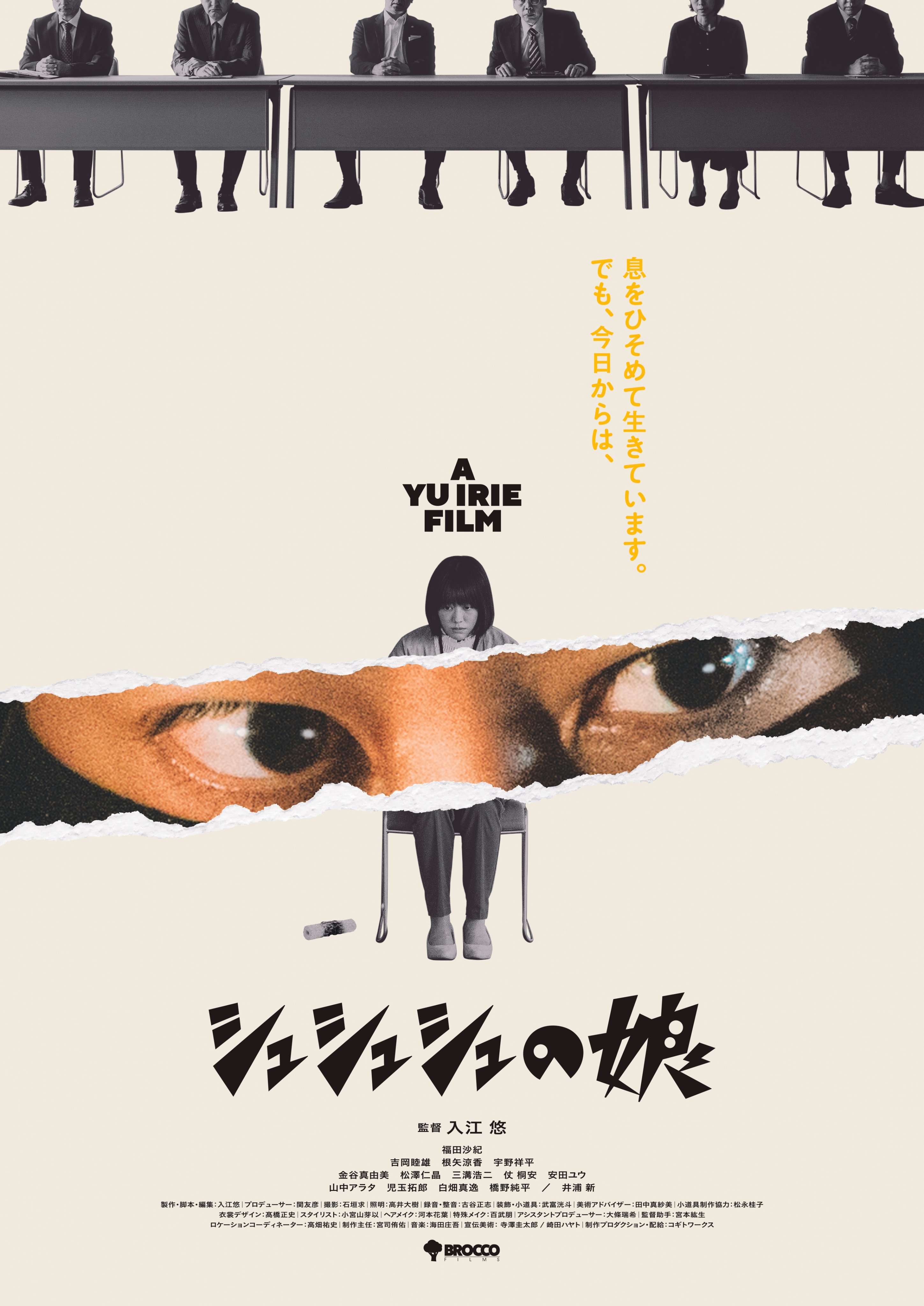
What can the ordinary person do when encountering injustice? Saying no is a start, but it might not be enough in the long run. According to the inspirational grandpa in Yu Irie’s Ninja Girl (シュシュシュの娘, Shushushu no Musume), if no one’s coming with you you’ll have to go on your own. Part coming-of-age drama, part political satire, Ninja Girl finds its reserved heroine coming into herself as she agrees to take on her grandfather’s unfinished mission and avenge the death of a family friend who took his own life in shame after being bullied into falsifying government documents in order to help a corrupt local council pass some overtly racist legislation. 

The reticent Miu (Saki Fukuda) takes care of her elderly grandfather (Shohei Uno) and has a steady job at the town hall, yet despite her ordinariness she is also a target for local shunning because of her grandfather’s intense resistance towards the “Immigrant Elimination Ordinance”. Miu isn’t in favour of it either, but is otherwise too shy to do much about it despite being harangued by her extremely unpleasant and intimidating supervisor Ms. Muteda (Mayumi Kanetani). On returning home one evening she overhears her grandfather talking to a family friend, Mano (Arata Iura), who appears depressed and talks of taking his own life after being strong-armed by Muteda among others to illegally alter and/or falsify official documentation in order to help them pass their odious bill. Mano then takes his own life in protest by jumping off the roof of the town hall, leaving Miu and her grandfather intent on avenging him by retrieving the evidence he’d preserved of governmental impropriety and exposing the mayor for what he is. Miu’s grandfather presents this as a “mission” he’s leaving to his granddaughter because he believes he’s not long left, revealing a long hidden family secret to the effect that Miu is actually descended from a long line of ninjas. 

Ms. Muteda tries to talk Miu round by insisting that the legislation is neither “discriminatory” nor “racist” which seems like a stretch when you’re using words like “eliminate”. After accepting her ninja legacy and using the book she’s found to make herself an authentic ninja outfit, Miu tries to do some digging all of which eventually takes her to a scrap yard mostly staffed by migrant workers whom Mano had been trying to help. Miu is originally turned away by the owner because of her association with local government but returns hoping to find the password for Mano’s thumb drive only to discover a weird gang of racist thugs dressed in lime green high visibility jackets beating up the scrap yard’s owner and spouting a lot of rubbish about how his workforce is taking jobs off Japanese people who apparently find themselves in need following the earthquake and coronavirus pandemic. 

For all of their talk about making Japan great again and keeping Japanese traditions in the hands of the Japanese, there’s a strange irony that their nemesis comes in the form of that most quintessentially culturally specific avenger, the ninja, and not only that a young female ninja rising up against oppression all on her own. Despite agreeing that she has no real skills, Miu’s grandfather thinks she’ll make a good a ninja because of her general invisibility while her childhood hobby of making blowpipes will also stand her in good stead. Accepting her “mission” gives Miu the kind of confidence otherwise lacking in her life to seize her own agency and stand up for what she believes in even when victory seems more or less impossible. Meanwhile, Muteda and her cohorts laugh loudly about how they’re only doing what the national government and other prefectures do in illegally altering their documents to make it look like they’re not doing anything wrong while they ride roughshod over the rights of ordinary people and pursue their xenophobic agenda. 

“Never again” Miu’s grandfather insists on recalling the pogroms which occurred after the 1923 Kanto earthquake leading to a massacre of Koreans, while finding himself branded a traitor to his nation. In another touch of irony, the cheerful children’s folksong Hana plays in the background as red balloons are launched to celebrate the Immigrant Elimination Ordinance in a nationalistic incongruity that seems to leave Miu more bemused than ever. Removing herself from this intensely corrupt social order and committing herself to ninja mastery while training alongside her her favourite collection of ‘80s pop hits, she determines to clean up town sending poison darts against the otherwise unopposed voices of disorder. Shot in a strangely comforting 4:3, Yu Irie’s quirky drama is drenched in the absurd but sends a very real message as its shy, reserved heroine steps into the shadows in order to resist societal corruption even while those all around her are content to stand by and watch as their freedoms are taken from them. 


Ninja Girl screened as part of this year’s New York Asian Film Festival.

Original trailer (no subtitles)

Babi (Namewee, 2020)

No stranger to controversy, Namewee’s latest, Babi, saw him once again questioned by the authorities when a complaint was lodged citing the film’s alleged “racist elements” which “tarnished Malaysia’s image” while the producer was also later accused of failing to gain the proper license for the film’s production. In fact, some were convinced that the film itself was fake and Namewee’s claims that it had been shortlisted for major international festivals were just bluster, yet it does really exist even if some really wish that it didn’t considering the rather bleak picture it paints of a society marked by racial discrimination and corrupted authority. 

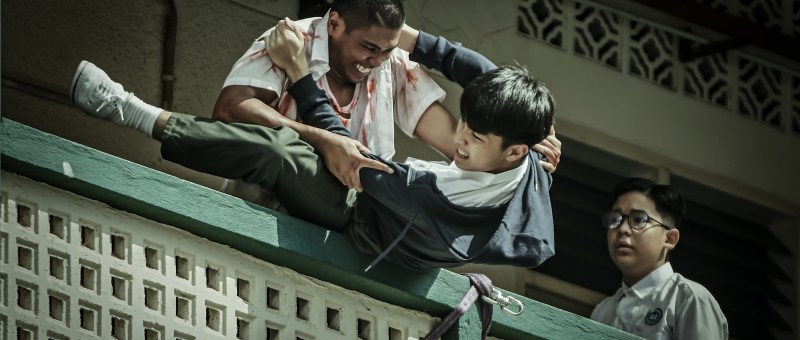
Namewee opens with a lengthy context sequence outlining major events which occurred in the year 2000 from the Australian Olympics to Bush’s election while claiming that the shocking story he’s about to tell is true but was never reported because, it’s implied, it was covered up by the authorities. A boy dies at an ordinary high school, apparently having gone over one of the balconies and landing in the courtyard below. The school, panicked, want to get this cleared up as soon as possible, preferably before going home time because they’d rather the parents didn’t find out about it and are desperate to keep it out of the papers. For all of these reasons, it’s best for them to call the boy’s death a suicide, yet empathetic and soon to retire police officer Singh insists on a full and proper investigation. 

What follows is a Rashomon-like series of alternative witness statements each of which move silently towards the truth. What’s certain is that a fight broke out between rival gangs in the cafeteria after rich kid Kiet’s coke was knocked over, he assumed deliberately. Kiet is an extremely unpleasant and entitled young man resentful that no one likes him but constantly harping on about his prominent father while showing off his wealth by, among other things, driving a BMW to school. This perhaps plays into an unpleasant stereotype as Kiet is a member of the ethnic Chinese community which, despite being a minority, is resented by some Malays the film suggests for its supposed stranglehold on the national economy. The Chinese minority, meanwhile, continue to suffer degrees of discrimination. The boy who died, Chong, had been turned down when applying for a university scholarship because of his ethnicity despite his Malay friend Yisin attempting to speak up for him with the teachers. 

The teachers are, however, not interested and apparently extremely racist themselves. Arch villain Mr. Nasir quite obviously has it in for anyone not Malay, snapping as the leader of the Indian boys is questioned that “Indians are all liars” which is even more awkward considering the lead policeman is an Indian Sikh. Bullying another Indian student, he likens the necklace he’s wearing to a “dog collar” while branding Chong an “outsider” and an “immigrant” when he dares to ask questions about the procedures for awarding scholarships which Mr. Nasir claims are intended for the indigenous community while continuing to insist that Chong must be rich simply because he is Chinese. 

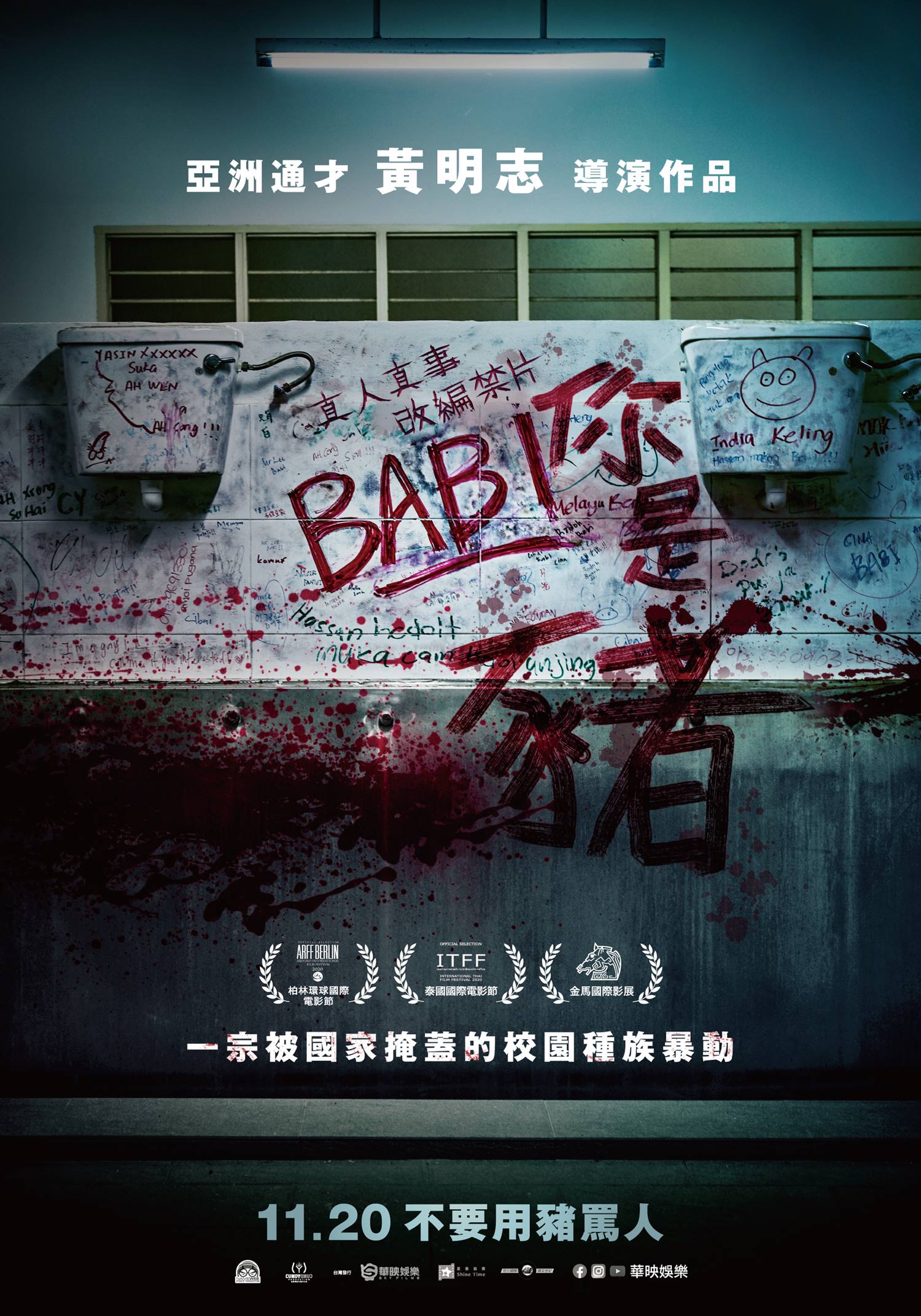
Mr. Nasir is himself a symbol of everything that’s wrong with the contemporary society and an embodiment of the corrupt authority that provokes the boys’ rebellion. He is actively, even gleefully, racist and routinely abuses his power in the most heinous of ways, while the leaders of the Chinese and Malay gangs also lost fathers to corrupt authority figures. Aside from his racism, Mr. Nasir is also extremely homophobic, taking aside an effeminate Indian student, ripping off his accessories, and later humiliating him. Yet his chief complaint is about the word scrawled on the bathroom wall, “Babi”, meaning pig, which he takes as a mockery of Islam. 

As the closing captions explain, the teachers were later transferred while a number of students were expelled from the school though we cannot know the veracity of Namewee’s claims, no one has apparently ever reported on the case. The incident remains “unreported but not forgotten”. In any case there is genuine poignancy in the frustrated friendship between a Malay boy and his two Chinese friends, eventually corrupted by jealousy and resentment caused by societal conservatism and discrimination. Yet as bleak and nihilistic as the film’s conclusion may seem, it does allow a ray of light in the youngsters’ eventual rebellion against the corruption which so oppresses them, united if only in a moment by their desire to break free of its duplicitous constraints. 


Babi screened as part of this year’s New York Asian Film Festival.

Original trailer (English/Traditional Chinese subtitles)

From Today, It’s My Turn!! (今日から俺は!! 劇場版, Yuichi Fukuda, 2020)

The high school fighting manga has long been a genre mainstay but perhaps hit peak popularity in terms of the big and small screen during the Bubble era with such well known hits as Sukeban Deka and Beb-Bop High School. More recent treatments have frequently bought into the genre’s inherent absurdity such as the contemplative and melancholy Blue Spring, or the anarchic Crows Zero series helmed by Takashi Miike to which Blue Spring’s Toshiaki Toyoda later added a sequel. Which is all to say, that a genre so deliberately puffed up and obsessed with macho posturing is near impossible to parody. Leave it Yuichi Fukuda to try with the retro nostalgia fest From Today, It’s My Turn!! (今日から俺は!! 劇場版, Kyo kara ore wa! Gekijoban), a theatrical sequel to the TV drama series adapted from the manga by Hiroyuki Nishimori. 

Set in the genre’s heyday of the 1980s, the action takes place in a small town in Chiba with an improbably large number of high schools. Nerdy high schooler Satoru (Yuki Izumisawa) floats the idea of transferring somewhere else, fed up with all the delinquents at his school disrupting his studies with their constant violence but then it seems like everywhere else is the same. The big problem is that their two top guys have recently been deposed during a conflict with rival school Nanyo leaving a power vacuum while their school is temporarily merging with Hokunei from the next town over seeing as they’ve already burnt their school building down. 

While many high school fighting manga focus on the hierarchy within one particular institution, From Today, It’s My Turn!! is much more concerned with the battle between rival schools even if some of the more antagonistic fighters are in fact secretly friends. The first fight that breaks out is between bleach blond Mitsuhashi (Kento Kaku) and blue-suited Imai (Taiga Nakano) over a juice carton he bought for Mitsuhashi’s aikido-trained girlfriend Riko (Nana Seino) which Mitsuhashi sees as an affront to his masculinity, though in truth the two guys seem to get along well enough in the long run. Most of this fighting is in essence performative posturing, something made plain by the unexpected cowardice of supposed top guy Mitsuhashi who it turns out frequently runs away when challenged even relying on Riko to get him out of trouble. 

Though there are female gangs and female lone fighters, this is largely a male affair as the women, excepting Satoru’s cousin Ryoko (Maika Yamamoto), are expected to perform their femininity as the boys perform their masculinity through fighting. The supposedly evil head of the girl gang from Seiran High, Kyoko (Kanna Hashimoto), turns into a walking embodiment of kawaii when encountering crush Ito (Kentaro Ito) who begins acting in an equally lovey-dovey fashion, but breaks right back into her delinquent tough girl persona as soon as he’s off the scene. Aikido expert Riko meanwhile is largely reduced to trying to keep Mitsuhashi out of trouble while adopting an air of nice girl refinement. Only Ryoko who determines to take revenge on behalf of the bullied Satoru with the aid of a bamboo sword is allowed to stay firmly within the confines of the sukeban

Nevertheless, despite their treatment of each other most of the gang members can’t abide bullying which is why they eventually turn on Hokunei realising that they’re the sort of guys that befriend vulnerable people only to betray them later. Yet like Mitsuhashi, Hokunei boss Yanagi (Yuya Yagira) is also an under-confident coward so insecure in his fighting prowess that he has to cheat by taping throwing knives to the inside of his blazer. Legitimate authority is it seems largely absent, parents either unseen or oblivious while the teachers are unable to offer much in the way of help, wandering round the town with a toy police car and a loudspeaker trying to fool the guys into dispersing. 

Fukuda’s brand of humour is nothing if not idiosyncratic and largely inspired by TV variety show sketch comedy which explains the random nature of many of the gags along with the absurdist manga to the max production design. He further amps up the incongruity by casting prominent actors clearly far too old for high school and then saddling them with ridiculous costumes to the extent that Taiga Nakano looks oddly like Frankenstein’s monster with his too broad shoulders and overly bouffant quiff. While action choreography leaves much to be desired, fans of Fukuda’s previous work will most likely have a ball though others it has to be said may struggle. 


From Today, It’s My Turn!! streamed as part of this year’s New York Asian Film Festival.

Original trailer (no subtitles)

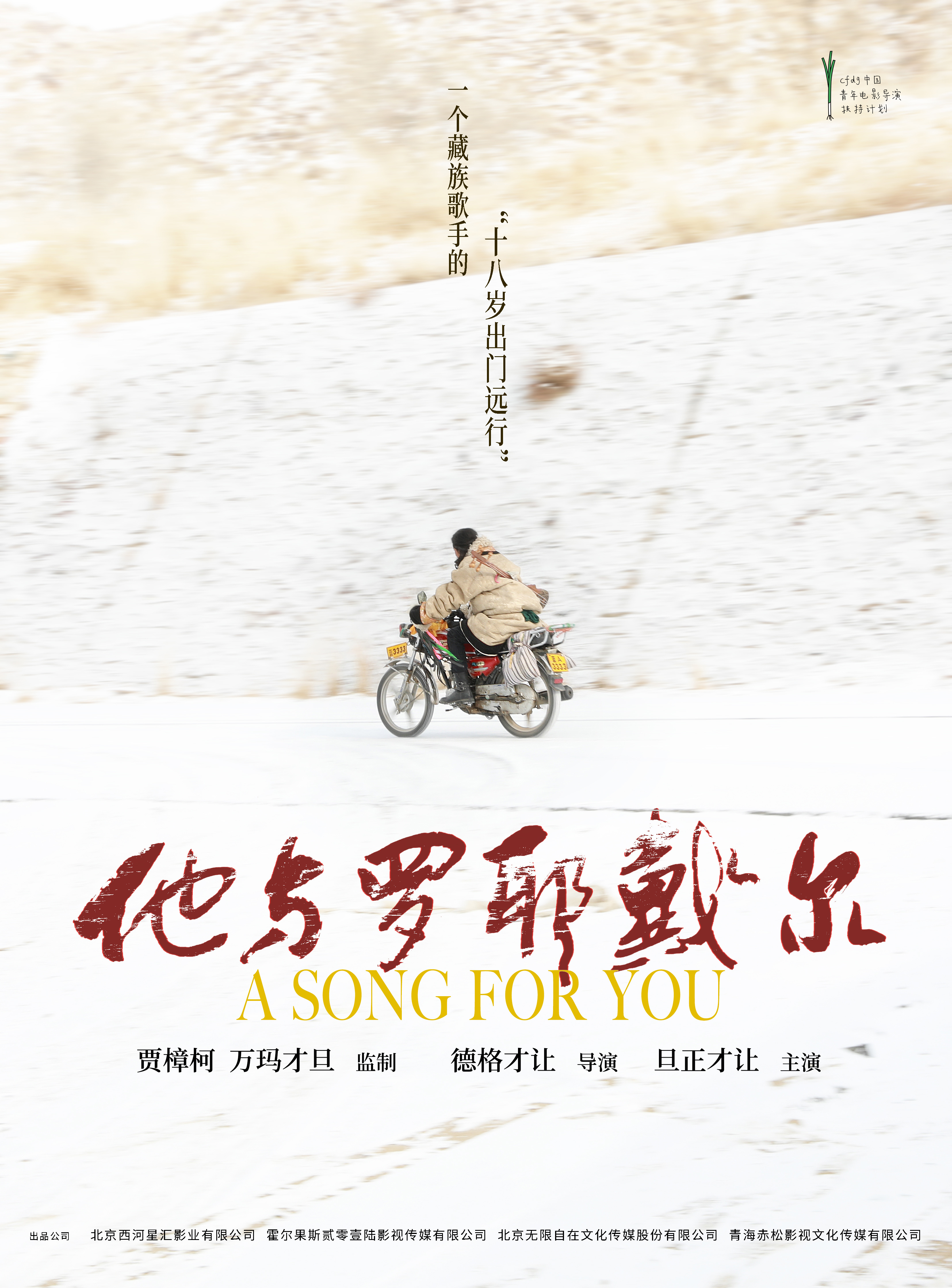
A Song for You (他与罗耶戴尔, Dukar Tserang, 2020)

A resentful musician is confronted with the corrupting influences of modernity while trying to make it as a singer in the directorial debut from Dukar Tserang, A Song For You (他与罗耶戴尔, tā yǔ luó ye dài’ ěr) . Guided by the goddess of music, Ngawang travels from his home in the desert to the city and then still further while holding fast to the purity of his traditional art but perhaps begins to discover that evolution is not always betrayal while learning a little something from those he meets along the way even if his elliptical journey ends in its own kind of tragedy. 

The son of a prominent musician in his home community, Ngawang (Damtin Tserang) longs to prove himself as a singer but is also rigid and uncompromising, getting into a fight with a friend of a friend who mocks him for stubbornly playing his traditional Zhanian zither when others have long since moved on to mandolin. Lhagyal sings the praises of popular musician Samdrup who seems to be something of a sore point to Ngawang, kickstarting a rant in which he accuses him of corrupting the art of Amdo singing with his modern evolutions such as drum machines and electronic backing. Lhagyal meanwhile argues that Samdrup has in fact saved their art and without his innovations no one would be at all interested in folk singing to begin with. The two men butt heads, but it’s Ngawang who ends up looking like a prig especially after he fails to place in the singing competition in which he’s come to perform after having arrogantly boasted of his talent. 

It’s at the concert that he first lays eyes on a mysterious woman, another singer singing of the birth of Amdo music. Ngawang later comes to believe she is some kind of incarnation of the goddess of music, Loyiter, owing to the similarity she bears to an icon revealed once he accidentally breaks open a talisman his father had given him after having a tantrum that it clearly doesn’t work because he didn’t win the competition. The nameless woman advises that the reason Ngawang’s talent was not appreciated was because no one takes you seriously if you don’t have an album which is why he ropes in his feckless friend Pathar to help him get to Xining where it seems records are made.

It’s in the cities where he begins to feel his most severe pangs of culture shock, taken to a bar where he again spots the mysterious woman but this time she’s a rock singer named Yangchen who again begins helping him meet the right people to further his musical ambitions. The contrast between his songs which sing of the beauty of the natural world, and the highly corporatised, technologically advanced world of the music business couldn’t be more stark. Ngawang could not understand the words of Yangchen’s song even though he appreciated the melody because it was in Mandarin, while the design shop he uses for a poster ends up making an embarrassing typo in the Tibetan script which they are unable to read. Ngawang just wants to sing, but finds himself roped in to making a “video album” with an over zealous director who accuses him of having no presence and a lack of expression that make him unfilmable as a performer. 

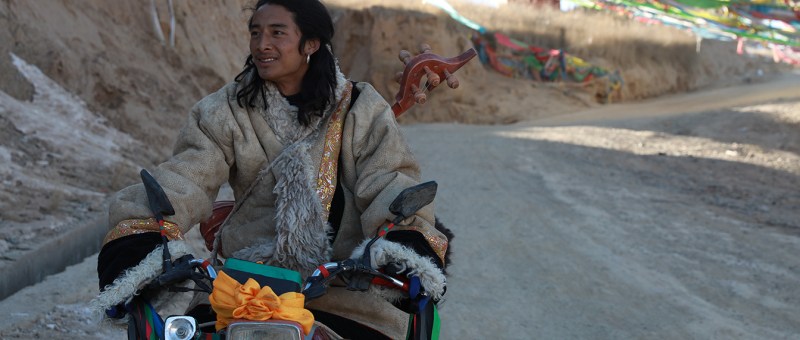
In any case, it isn’t just in the cities that modernity has begun to seep into the traditional. Stopping off on their road trip to deliver the sister of a man who ambushed them and then gave them a brief musical lesson to a monastery, Ngawang encounters a little boy begging in the street who seems to be homeless and alone. Noting the oversize Zhanian on his back he asks the boy for a song, which he sings in a melancholy rendition of life’s unfairness that some children have wealthy parents, some poor, and some none at all. Ngawang is embarrassed to realise he only has large notes, but the boy cheerfully pulls out a lanyard with a QR code Ngawang could have scanned to pay him via WeChat if only he had his phone. Throughout his wanderings Ngawang comes to a new understanding of the world around him which softens his rigidity while informing his music with a greater sense of openness even as he fails to notice a note of foreshadowing in Yangchen’s troubles only later realising he’s been away from home too long and there is always a price to be paid even if you serve the goddess of music. A light hearted musical odyssey and brief tour of the Tibetan plains, Dukar Tserang’s soulful road movie is an ode to singing for the love of it but also to openness and friendships, no matter how brief, made along the way. 


A Song for You screened as part of this year’s New York Asian Film Festival.

Trailer (English subtitles)

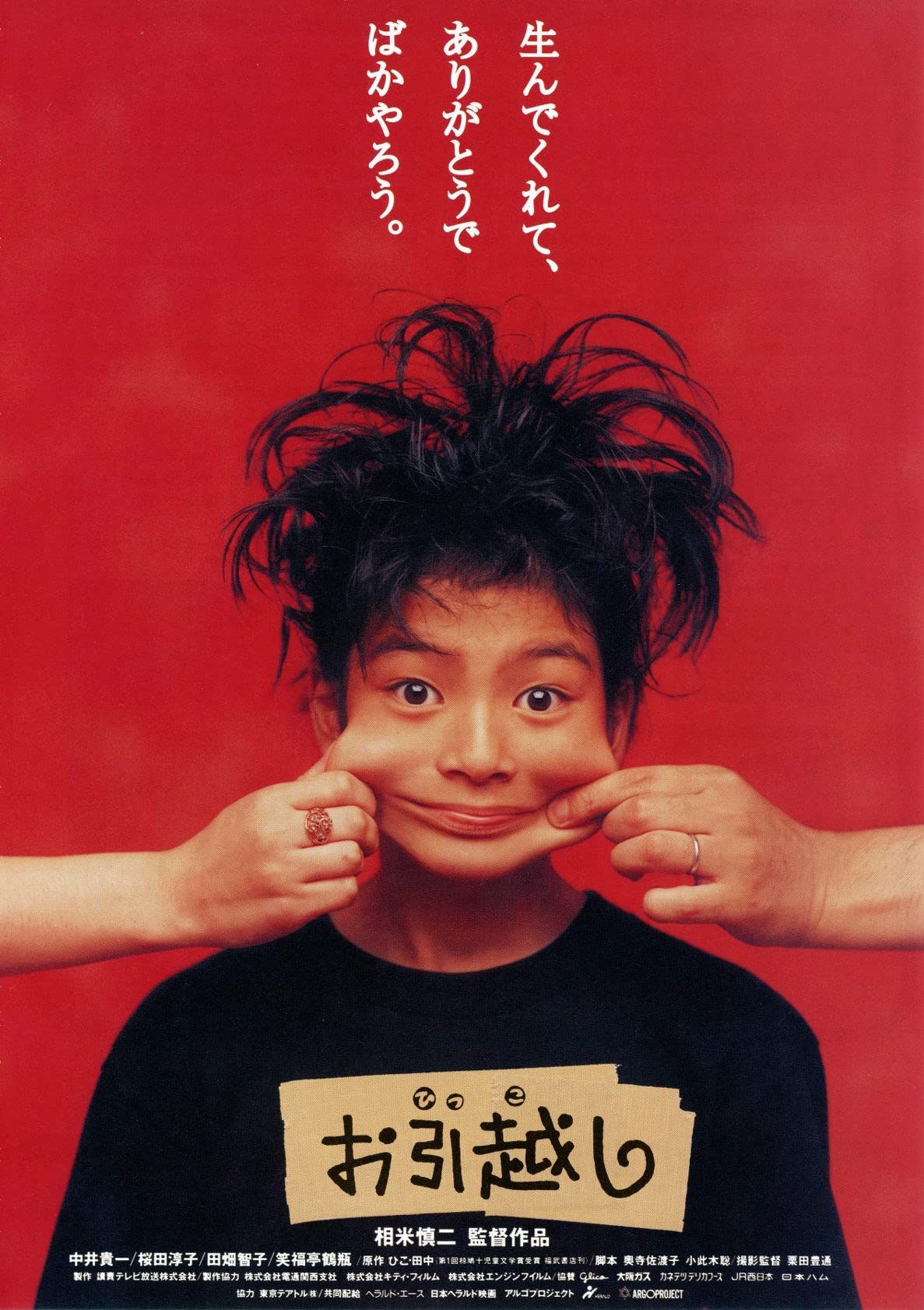
Moving (お引越し, Shinji Somai, 1993)

The title of Shinji Somai’s 1993 coming-of-age drama Moving (お引越し, Ohikkoshi) quite literally refers to the process of vacating one space in order to inhabit another but also to the heroine’s liminal movement into a space of adulthood while caught in the nexus of a recently destabilised society itself in a state of flux. Not only must she process the disruption of her father’s decision to leave the family home, but its wider implications that will one day leave her orphaned while coming to accept that such partings are only a part of life to borne with stoicism and sympathy. 

At around 12 or so, Renko (Tomoko Tabata) finds herself on the brink of change. Not only is she beginning to grow up, soon to be changing schools, but is also facing a further destabilisation of her home as her parents prepare to separate. The tension in the household is clear from our first meeting with the family as they sit around an almost violent, green triangular table the point aimed straight at us with Renko at the opposite end and her near silent mother and father on either side. As she often will, Renko attempts to parent her parents, repeatedly criticising her father for his poor table manners wondering if he’ll be able to take care of himself when living alone while later remonstrating with her mother for having had too much to drink while cautioning her to mind what the neighbours might think. 

Already unbalanced by the economic shock of the bubble bursting, the Japanese society of the early 90s was also changing evidenced in part by the separation itself. Divorce is still a minor taboo, even Renko herself had taken part in the shunning and bullying of another girl who’d transferred to their school after returning to her mother’s hometown following her parents’ separation, but this is perhaps the first era in which it becomes acceptable to end a marriage solely because one or both parties is unhappy rather than there being some additional pressure that endangers the family. “Marriage is survival of the fittest”, Renko’s mum Nazuna (Junko Sakurada) later exclaims during a heated exchange but we can also see that the marriage itself was already unusual perhaps uncomfortably suggesting an altered power balance and shifting gender roles led to its breakdown. Father Kenichi (Kiichi Nakai) had previously worked from home completing many of the domestic tasks while Nazuna had become the breadwinner with a successful career earning higher salary. She complains that when she was pregnant with Renko Kenichi sniped at her for not contributing to the household financially but changed his tune when her economic success undercut his sense of masculine pride. 

Despite apparently embracing her freedom Nazuna nevertheless seems to resent Kenichi for leaving, accusing him of deserting his family while he later floats the idea of trying again but only perhaps because he is feeling the ache of the loss of the home he previously hinted suffocated him in responsibility. Meanwhile, Renko is also forced to process the fact that a family friend, Yukio (Taro Tanaka), on whom she’d had an innocent childish crush, is engaged to be married. Overhearing their conversation she also learns that his fiancée is pregnant but unsure about having the baby. Given all of these changes, she begins to wonder why it is she was born, intensely anxious in potential parental abandonment while witnessing the remaking of her home. 

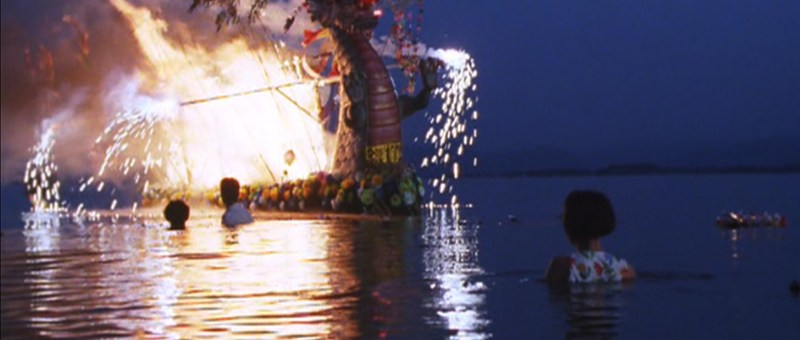
Yet to cure her of her anxiety Somai removes her from her environment, Renko once again taking on a parental role in borrowing her mother’s credit card to book a hotel and train tickets to a familiar destination they’d previously travelled to as a family. It’s in this liminal space that Renko begins roam, eventually encountering an old man with some important life lessons while undergoing a spiritual odyssey of her own as she weaves through a summer festival towards an ethereal encounter with her past self and the spectre of her future orphanhood. Somai’s characteristically lengthy tracking shots add to the sense of destabilisation, Renko’s world constantly in motion yet as she tells us herself she’s on her way to the future, moving on but on a more equal footing and discovering at least a sense of equilibrium in an ever shifting society.


Moving screens at the BFI on 29 December as part of BFI Japan.

Black Rain (黒い雨, Shohei Imamura, 1989)

Caught in a moment of transition, post-war Japan struggles to free itself from the lingering feudal legacy and the trauma of the immediate past in Shohei Imamura’s contemplative adaptation of the novel by Masuji Ibuse, Black Rain (黒い雨, Kuroi Ame). As many things change others stay the same, the Shizuma family burdened not only by the anxiety of a ghostly illness symptomless until it isn’t and the unfair prejudice of a wounded society, but the pressure of outdated patriarchal social codes along with a sense of filial failure in the inability to protect their ancestral estate. 

Imamura opens on the fateful morning the atomic bomb struck Hiroshima, voiceovers from 20-year-old niece Yasuko (Yoshiko Tanaka) and her uncle Shigematsu (Kazuo Kitamura), a soldier severing at a factory in the city, detailing what they were doing on that very ordinary day. What unfolds is a scene of hell, the train Shigematsu is riding on blown apart while he crawls free and tries to look for his wife, Shigeko (Kazuo Kitamura), packing up their house preparing for evacuation, eventually reuniting with Yasuko who had come into town to find them. Hoping to get to the factory, they make their way past charred and hideously warped bodies, a woman cradling her carbonised infant, a little boy overjoyed to have found his big brother only to go unrecognised because his face is melted away while skin hangs painfully from his forearms and fingertips. The brother only accepts him after checking his belt which has somehow miraculously survived. The trio eventually make it to comparative safety at the factory with relatively few injuries, only later learning of the implications of having been in such close proximity to the blast. 

Jumping ahead five years, the Shizumas are living quite comfortably in their ancestral home on a mountain estate largely spared the post-war agricultural land reforms because of its location, though Shigematsu attributes his mother’s dementia to an inability to accept the changing times not only their loss of a semi-aristocratic status but the essential failure of having proved unable to protect their ancestral lands. His immediate problem is however the marriage of the now 25-year-old Yasuko. We see him triumphantly leave a doctor’s office with a certificate stating that Yasuko is in good health he hopes will reassure her current suitor’s family in the face of persistent rumours that she too was a direct victim of the “flash”, rather than an indirect victim simply of the rain which Shigematsu mistakenly believes to have been less dangerous. 

At 25 this is Yasuko’s last chance, she’s aged out of the arranged marriage market. She has also had a promising job offer from the local post office but is minded to turn it down in the hopes of being married. Taking the post office job may be the most sensible option, but it also seems like defeat, an acceptance that she is unfit for marriage and a clear sign that Shigematsu and Shigeko have failed in their patriarchal duties to ensure that Yasuko finds a good husband and will be well looked after for the rest of her life. In this age, it is difficult for a woman to support herself alone even leaving aside the social stigma of being an unmarried woman. A marriage is therefore also a job, and the families fear one Yasuko may not be able to perform if as the rumours suggest her exposure to radiation may have left her unable to bear children. The situation is further complicated seeing as Shigematsu and Shigeko were not able to have children of their own, and with Yasuko’s mother Kiyoko having died young Yasuko is the last of the Shizuma line even if she technically may not bear their name. 

Lost in old memories and mistaking Yasuko for her mother, grandma (Hisako Hara) may have it right when she tells her not to marry for marriage only leads to death. Yet in an odd way, Yasuko’s liminal status perhaps grants her the right to turn away from these old-fashioned patriarchal expectations in making her own decision not marry even if she orients herself back towards the filial in requesting to stay with the aunt and uncle who raised her in order to care for them should they suddenly begin to experience symptoms of their exposure to “the flash”. Shigematsu continues to treat the notion of radiation sickness with an almost supernatural mentality, convinced that having seen the light or not is all that matters constantly trying to provide evidence that Yasuko was not there when the bomb went off while ignoring her exposure to the black rain which fell afterwards even while himself filled with the anxiety of not knowing if he may someday become ill even if he and Shigeko are in otherwise good health. 

He watches friends with secondary exposure become ill and die before him, recalling being asked to read sutras for the dead in the aftermath of the bomb though feeling himself unqualified, while some in the village perhaps jokingly accuse them of playing on their status as bomb victims as if they are merely lazy rather than actively sick. Meanwhile, across the way a young man with intense PTSD suffers flashbacks every time he hears an engine running and is compelled to throw himself in front of it as if it were an enemy tank. Yuichi (Keisuke Ishida) is ironically enough “a veteran of the suicide squad”, otherwise alright if fragile spending his days carving Buddhist Jizo statues may of which have grotesque, anguished expressions in contrast to the comforting, almost cute faces such statues usually bear. Just as the wider society distances itself from the survivors of the bomb, so they reject men like Yuichi. When Yuichi’s mother comes to propose an unlikely marriage between the two lonely youngsters who have become close after bonding through their shared anxieties, Shigematsu is offended, resenting the implication that they must believe Yasuko is a poor catch if daring to suggest she marry a man of a lower social class who is also in need of assistance in living with his mental illness. 

Yet her marriage continues to weigh heavily on Shigeko’s mind, feeling as if she has failed the Shizuma family in being unable to provide an heir and subsequently failing to secure a match for Yasuko. It is perhaps this anxiety that finally makes her ill, taking strange medicines provided by a dubious Shinto priestess who tells her it’s all her own fault for not being able to visit Kiyoko’s grave because someone has to stay at home to look after grandma. Only Shigematsu sees the writing on the wall, advising Yasuko that after grandma dies she should sell the estate and take the money as her dowry freeing her from the feudal and familial legacy and giving her permission to move into the modern post-war future even as she begins to doubt that the future has a place for her. 

Shooting in black and white and in a much more classical style than that which is found in his other work, Imamura adopts the aesthetics of Golden Age cinema to comment on the contemporary era now perhaps feeling itself sufficiently distanced from the toxicity of wartime trauma, suggesting that the entire society is in a sense soaked in black rain its inability to confront the recent past a poison slowly eating away at its foundations. “An unjust peace is better than a just war” Shigematsu is fond of saying, quoting Cicero dismayed by the heated geopolitical debates he hears on the radio he uses to set the clock, his friend dying without ever really understanding why the bomb was dropped, why on Hiroshima, why at that particular moment. Imamura denies us closure too, leaving on a note of anxiety if tempered with an all but forlorn hope for signs of a miracle on the horizon that the sickness can be healed and a better world will someday arrive.


Black Rain screens at the BFI on 28th December as part of BFI Japan and is also available on blu-ray as part of Arrow’s Imamura boxset or to stream in the UK via Arrow Player

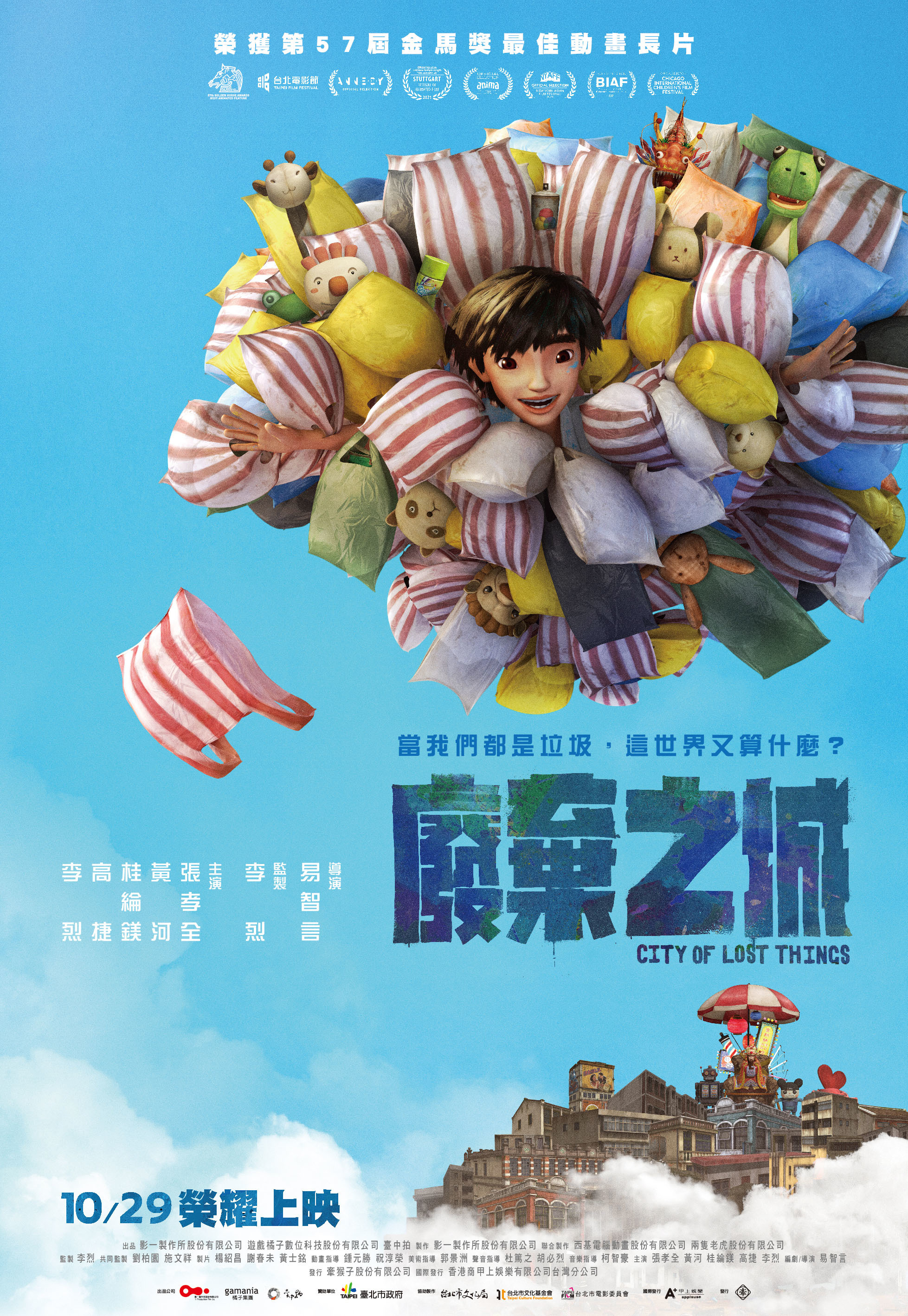
City of Lost Things (廢棄之城, Yee Chih-Yen, 2020)

A traumatised teenage boy attempts to escape his sense of alienation by relegating himself to the literal junkyard of humanity in the first animation from Blue Gate Crossing’s Yee Chih-Yen, City of Lost Things (廢棄之城, Fèiqì zhī Chéng). Not to be confused with tragic noir Cities of Last Things, Chen’s eventually inspirational drama resounds with positive energy as the embittered hero determines to love himself a little more in order to find the place where he belongs, where he can he strong and beautiful and “turn into something not trash”, while remaining unafraid to explore the darker edges of his loneliness and desperation as he searches for connection and community. 

As he explains in the opening voiceover, 16-year-old Leaf (River Huang) doesn’t like it at home where it seems his mother drinks, nor does he like it at school, or on the streets where he becomes the victim of violence. Coming to the conclusion he has nowhere else to go, Leaf is almost swept away by a giant rubbish truck along with a host of “other” refuse, accidentally saving a sentient plastic bag imaginatively named “Baggy” (Joseph Chang) which gets stuck under his shirt. Baggy guides him to Trash City where unwanted and discarded items live in a kind of ghetto ruled over by an oppressive guardian deity statue, Mr. G (Jack Kao), who also looks quite like the figure of legendary Chinese general Guan Yu. Baggy explains to him that he and many of the other pieces of “trash” trapped in the city long to escape the “siege” in order not to be “quiet trash” anymore but find a place they can be beautiful, and strong, and love themselves a little more. 

In contrast to the heroes of most children’s animation, Leaf is not a particularly sympathetic character, his obvious self-loathing of which “Trash City” is perhaps a metaphor beginning to boil over into something dark and potentially dangerous. In Trash City he finds a source of eternal escape, not wanting to leave but to remain in this place where he can feel at home, unjudged, and unbothered by the adult world while accepted by those around him as an equal. This is one reason he clings so fiercely to his new friendship with Baggy, immediately anxious on discovering his plan to leave Trash City in realising it must necessarily mean that they will one day have to say goodbye. Not wanting to lose this new friendship and return to loneliness he finds himself taking the self-destructive step of snitching on his friends little realising the consequences of his actions. 

Yet if Trash City represents Leaf’s sense of depression is also perhaps functions as a political allegory through the oppressive rule of Mr. G who refuses Baggy and the others permission to leave though he does so apparently for their own safety in order to evade the “armoured trucks” which literally suck up dissidents and crush them like rubbish in their rear compactors. In escaping Trash City, however, what Leaf must overcome is his sense of powerlessness and inconsequaility to believe that there is a place for him where he can lead a happy life surrounded by people who love him rather than regarding himself as human “trash” rejected by and unworthy of regular society. 

Nevertheless, there’s a slightly less cheerful metaphor in play in the obvious ironic twist that the place they’re looking for is a recycling centre which points to an external transformation rather than the change from within implied by Baggy’s constant messages of the importance of learning to love one’s self a little more. It also gives rise some awkward humour as Leaf looks for his friend in plastic buckets and subway seats which eventually leads to a slightly inappropriate adult joke likely to confuse younger viewers while uncomfortably implying that people and things only have value when they’re transformed into something “useful”. While the animation style is relatively simple, the charming worldbuilding and innovative production design of the almost steampunk city with its mannequin lamp guards and disco-crazy white goods help to smooth over any sense of hollowness while the overarching story of growing self-acceptance as the path out of despair is a refreshing take on potentially destructive adolescent angst as the hero resolves to find his place in the world rather than exiling himself from it. 


City of Lost Things screened as part of this year’s New York Asian Film Festival.

Original trailer (English / Traditional Chinese subtitles)

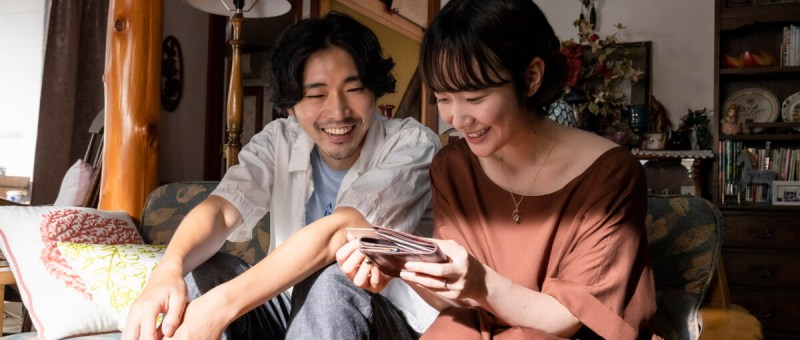
Sensei, Would You Sit Beside Me? (先生、私の隣に座っていただけませんか?, Takahiro Horie, 2021)

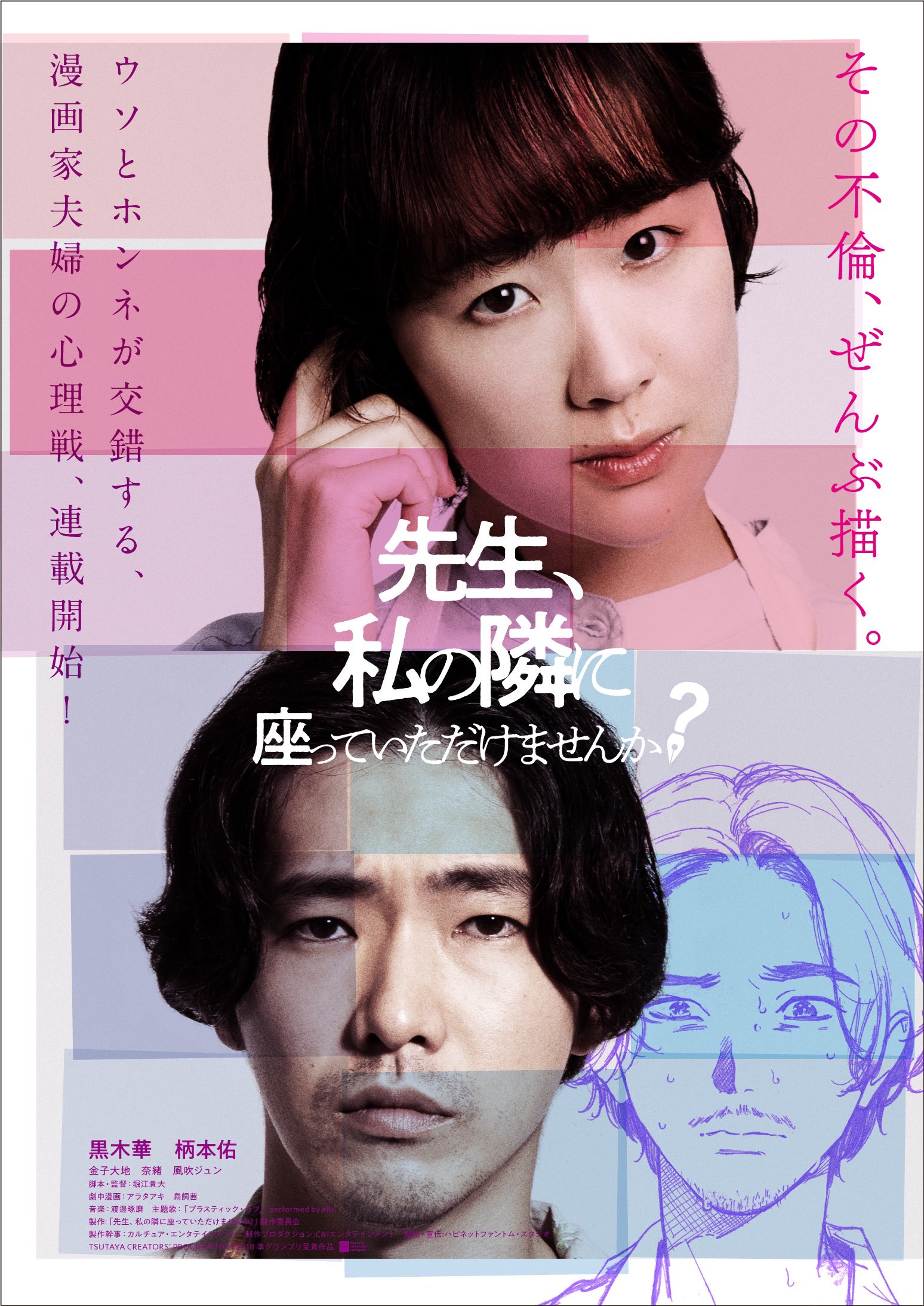
An under-confident mangaka tries to save her moribund marriage through a passive aggressive attempt at “realism”, but then is that really what she wants? What is she really up to? Takahiro Horie’s anti-rom-com Sensei, Would You Sit Beside me? (先生、私の隣に座っていただけませんか?, Sensei, Watashi no Tonari ni Suwatte Itadakemasenka?) is more complicated than it first seems, a tale of romantic revenge, of a woman’s determination to reclaim her independence, or perhaps even a slightly cynical not to mention sexist story of a betrayed wife’s attempts to rekindle her moody husband’s creative mojo in the hope of reigniting the spark in their marriage. What transpires is however a literary game of cat and mouse as a suddenly alarmed husband attempts to get ahead of the game through the transgressive act of reading his wife’s diary. 

A successful manga artist, Sawako (Haru Kuroki) has just completed a long-running series assisted by her husband of five years, Toshio (Tasuku Emoto) who was once a bestselling mangaka himself but hasn’t worked on anything of his own since they got married. Toshio appears to be prickly on this subject, and is in something of a bad mood while Sawako’s editor Chika (Nao Honda) waits patiently for the completed pages. Seemingly suspecting something, Sawako asks Toshio to escort Chika back to the station with the intention of following them only she’s interrupted by a phone call from the police to the effect that her mother (Jun Fubuki), who lives out in the country, has been in an accident and broken her ankle. Sawako and Toshio decide to go and stay with her while she recovers, though a change of scene seems to do little to relieve the pressures on their marriage. 

Indeed, on their first night there Toshio remarks that it’s been a while since they’ve slept in the same room which might go some way to explaining the distance in their relationship. Aside from that, Toshio superficially seems much more cheerful perhaps putting on a best behaviour act for his mother-in-law who makes a point of telling her daughter how “great” her husband is and how she’s almost glad she broke her leg because it’s brought him to stay. Her gentle hints to Sawako to let her know if there’s something wrong elicit only a characteristic “hmm” while she otherwise makes only passive-aggressive comments which suggest she fears her marriage may be on the way out. Having long been resistant to the idea of learning to drive even though she grew up in the country, Sawako starts taking lessons at a nearby school cryptically explaining to Toshio that perhaps she’d better learn after all because she’ll be stuck when he leaves her. 

Sawako’s “driving phobia” as she first describes it appears to be a facet of her underlying lack of self-confidence. She simply doesn’t trust herself to take the wheel and cannot operate without the safety net of someone sitting next to her. Having not got on with the grumpy old man she was originally assigned, Sawako gains the courage to take her foot off the brake thanks to a handsome young instructor, Shintani (Daichi Kaneko), who makes her feel safe while slowly giving her the confidence to trust in herself. The implication is that Toshio has been unable to do something similar in part because he’s so wrapped up in his own inferiority complex over his creative decline complaining that nothing really moves him anymore. When Chika advises Sawako choose a more “realistic” subject for her next series, she passively aggressively decides to go all in with a clearly autobiographical tale of adultery that suggests she is well aware her husband and editor are having an affair behind her back while the heroine experiences a passionate reawakening thanks to her handsome, sensitive driving instructor. 

Of course, Toshio can’t resist reading her “diary” and obsessing over how much of it is “true”. Perhaps Sawako intended just this effect, driving her husband out of his mind with guilt and jealousy indulging in a little revenge whether in fantasy or reality. The irony is that there are at least three “senseis” floating around including Sawako herself with the eventual decision of who, if anyone, she wants to sit beside her the unanswered question of her “revenge” manga. Her real revenge, however, may lie in her determination to grab the wheel, reclaiming agency over her life along with a new independence born of her ability to drive and therefore decide its further direction while toying with Toshio’s inner insecurity in order to effect a plan which is far more insidious than it might first seem. Filled with twists and turns, Horie’s cynical love farce eventually cedes total control to its seemingly mousy heroine as she gains the confidence to go solo or hand-in-hand as it suits her towards a destination entirely of her own choosing. 


Sensei, Would You Sit Beside Me? screened as part of this year’s New York Asian Film Festival.

International trailer (English subtitles)
Love Letter (ラブレター, Shunji Iwai, 1995)

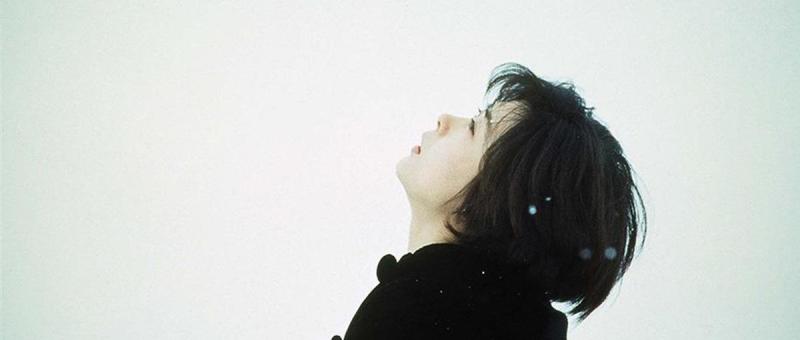
“People are forgotten so easily” a widow laments after an insensitive comment from a family friend, yet there is perhaps a difference between forgetting and letting go as exemplified in the distance between two accidental pen pals in Shunji Iwai’s profoundly moving romantic melodrama, Love Letter (ラブレター). A huge hit and pop culture phenomenon throughout Asia on its 1995 release, Iwai’s first theatrical feature bears many of the hallmarks of his enduring style in its soft focus, ethereal lighting and emphasis on nostalgia as the two women at the film’s centre each restore something to the other through their serendipitous correspondence. 

Iwai opens with a memorial service for Itsuki, the late fiancé of the heroine, Hiroko (Miho Nakayama), who passed away two years previously in a mountain climbing accident. Hiroko has since started a relationship with his friend Akiba (Etsushi Toyokawa) who avoided attending the memorial out of misplaced guilt and gave up mountaineering soon after Itsuki’s death. Akiba is keen to move their relationship forward, but fears that Hiroko is still stuck in the past unable to let go of her love for Itsuki. On a visit to Itsuki’s mother (Mariko Kaga), she finds an old address in his middle school year book for a home that apparently no longer exists and decides to mail him a letter saying nothing more than “How are you? I’m fine” of course expecting no reply. What she didn’t know, however, is that there were two Itsuki Fujiis in her Itsuki’s class, the other being a woman still living at the same address to whom Hiroko has accidentally mailed her correspondence. Confused, the other Itsuki (also played by Miho Nakayama) mails back and eventually finds herself recalling memories of the male Itsuki as an awkward, diffident teen she may have entirely misunderstood. 

Played by the same actress the two women are each in a sense trapped in an eternal present, unable to move forward with their lives. While Hiroko is consumed by grief and fearful of committing to her new relationship with Akiba lest she betray the memory of Itsuki, Itsuki is still struggling to come to terms with the traumatic death of her father 10 years previously who passed away from pneumonia after contracting the common cold leaving her with persistent health anxiety. Meanwhile, she is also struggling to move on from her family home which is in an increasingly perilous state of disrepair. She and her mother (Bunjaku Han) want to move into a modern apartment, while her grandfather (Katsuyuki Shinohara) prefers to stay even though it seems that the house will soon have to be demolished. 

Through their accidental correspondence, both women are forced to deal with recent and not so recent loss, Itsuki in some senses having forgotten the boy who shared her name while Hiroko remains unable to forget. Through his trademark ethereal lighting and frequent use of dissolves, Iwai hints at a sense of perpetual longing for the nostalgic past. The letters may not have been from the late Itsuki in a literal sense but were perhaps a message from him, connecting the two women and eventually freeing each of them as the love letter of the title is finally delivered ironically enough hidden inside a copy of Remembrance of Things Past. 

This sense of grief-stricken inertia is perfectly reflected in the snowy vistas of the lonely northern town of Otaru, thrown into stark contrast with the intense heat of the furnace in Akiba’s glassblowing workshop, or the gentle warmth of the old-fashioned stove in Itsuki’s room as she types replies to Hiroko’s handwritten letters. As Hiroko eventually reflects, they each knew a different Itsuki and have each in a sense both lost him if restoring something one to the other through the exchange of memories that grants Hiroko the understanding she needs to let go and Itsuki the poignant realisation of a youthful missed connection. A bittersweet meditation on love, loss, grief, and memory, Iwai’s epistolary drama has its own sense of magic and mystery in the strange power of this serendipitous connection leading to a tremendous sense of catharsis as a long delayed message finally makes its way home bringing with it a shade of melancholy regret but also possibility in the new hope of forward motion.


Love Letter screens at the BFI on 22/28 December as part of BFI Japan.

Original trailer (no subtitles)