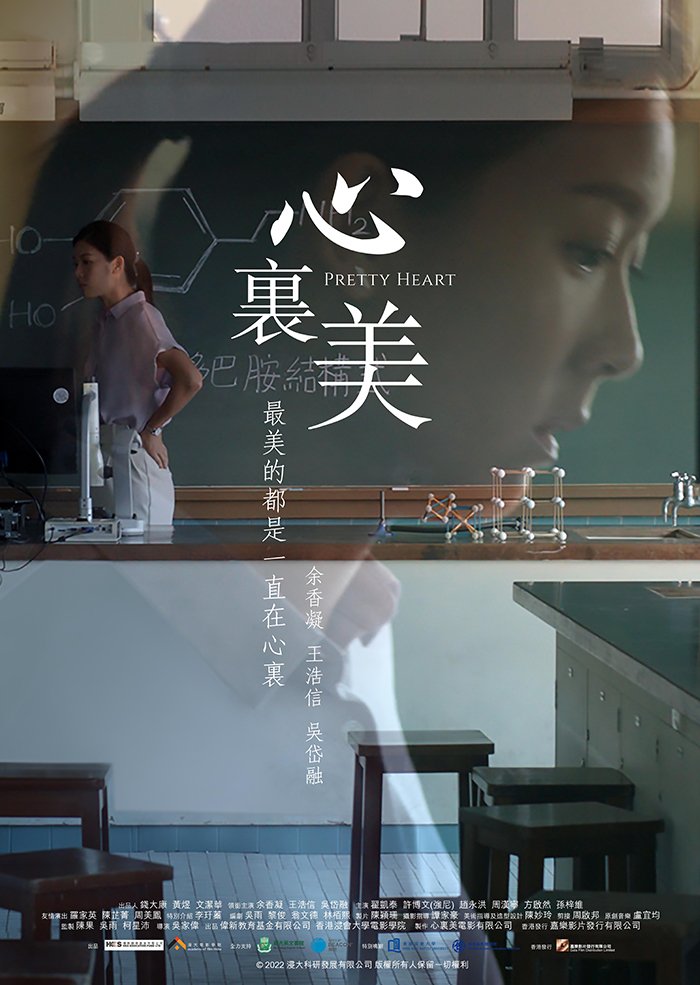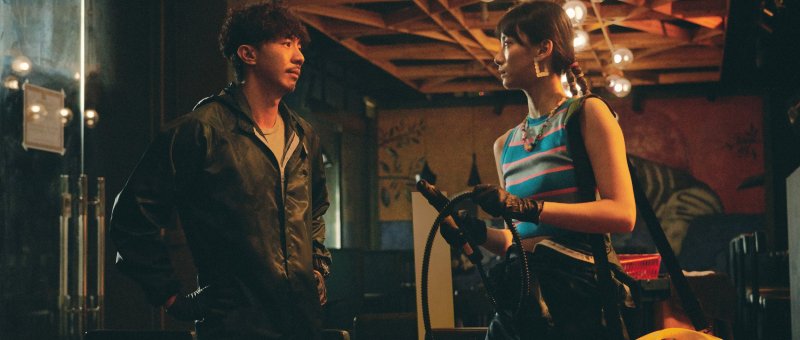
Pretty Heart (心裏美, Terry Ng Ka-wai, 2022)

An idealistic teacher finds herself questioning her views on education while confronting her traumatic past in Terry Ng Ka-wai’s gentle drama, Pretty Heart (心裏美). Partly a contemplation of the nature of education, the film has some serious questions to ask about the contemporary school system and in its inbuilt inequalities along with the complicated relationships between parents and children while ultimately opting for a kind of balance in which there is room for many kinds of learning. 

For Chloe (Jennifer Yu Heung Ying) education shouldn’t just be about passing tests but learning about how to live life, gaining the ability to think critically and enriching one’s existence. But at her school, which is funded by both public and private means, she’s regarded as something of a troublemaker by Mrs. Tsang, the wealthy head of the board who seems to have the headmaster well under her thumb. Mrs. Tsang is so hands on because her son Chi Kit is a pupil though a somewhat indifferent one sure that his money and connections will engineer his success. A small fight breaks out when a young girl, Shu Ting, who comes from an impoverished single parent family, tries to hand out tickets for video lectures by top cram school teacher K.K. Ho with Chi Kit insisting that only the elite who have the means to pay deserve a place in the room. 

The incident at once lays bare the fallacy that education is a levelling force enabling social mobility under in meritocracy when kids like Chi Kit will always be able to game the system in ways that those like Shu Ting cannot even if, as Mr. Ho tells another pupil, at the end of the day it’s the effort you put in that counts. What annoys Chloe about the elite cram school with its good-looking teachers and flashy showmanship is its devaluing of education in giving kids tips on how pass exams while telling them that they can safely ignore half of the syllabus to focus on the bits that are most likely appear to on the test paper without actually needing to understand much of what they’re memorising. Defending himself, Ho eventually argues that he merely provides a complementary service intended to run in concert with the kind of education Chole offers which is less geared towards test scores than comprehensive learning. 

Yet he also takes Chloe to task for her lack of connection with the kids and image of herself as a teacher pointing out that she has never really bothered to learn much about their lives outside of the classroom. Much of her animosity towards the cram school stems from the fact is it is run by her estranged father whom she assumes to be cynical and unfeeling yet has generated a fatherly relationship with Shu Ting and is doing his best to support her while she contends with difficult family circumstances trying to balance her need to support herself and her mother financially with her education. 

Witnessing Ho’s innate kindness to those around him forces Chloe to rethink her preconceptions while accepting that her reserve has sometimes interfered with her intentions as an educator. Re-encountering her father also causes her to revisit longstanding childhood trauma which may in part have been born of a childish misunderstanding she may be better placed to process as an adult woman. As her father says, the most important thing to learn may be the art of forgiveness and it seems that she has been poisoning herself with hate and resentment as manifested in her literal heart problems. 

The conclusion that the film comes to is that it’s not all so black and white and perhaps the good comes with the bad. Having begun to deal with her emotional trauma, Chloe seems to have become a better and more engaging teacher committed to helping her students in all aspects of her lives. It may not solve the problems of social inequality in the school system or fix the commodification of education symbolised in the existence of the cram school but does at least seem to generate a shift in the general environment which sees even a relieved Mrs Tsang step back from her elitism. Admittedly a little contrived in its melodramatic narrative, the film nevertheless has its heart in the right place as the melancholy heroine learns a few lessons of her own in dealing with the traumatic past.


Pretty Heart screens in Chicago on Nov.6 as part of the 15th season of Asian Pop-Up Cinema where actress Jennifer Yu Heung Ying will be in attendance to collect her Bright Star Award.

Original trailer (English subtitles)

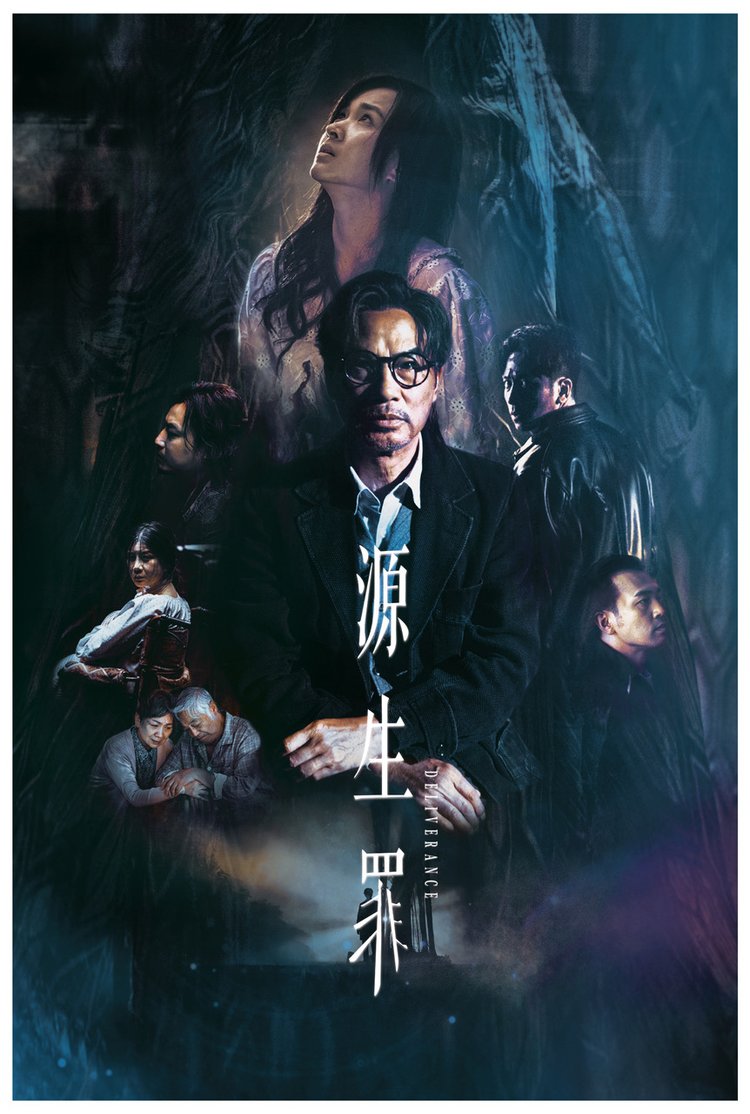
Deliverance (源生罪, Kelvin Shum, 2022)

A young woman haunted by the buried memories of repressed trauma discovers that sometimes it really is better not to know but also comes to a new appreciation of familial love in Kelvin Shum’s visually striking psychological chiller, Deliverance (源生罪). Meaning something more like original sin the Chinese title hints at the reconsideration of the traditional family which lies under the central mystery and prompts the heroine, long separated from her siblings, to question the nature of her familial bonds and whether she can really say that those closest to her have her best interests at heart. 

After living abroad for 15 years, Nicole (Summer Chan) has married and returned home to Hong Kong with her husband but is haunted by a shadowy figure that reminds her of her childhood trauma in being unable to remember anything about the night her mother passed away after a long illness. Back in a familiar environment and reconnecting with her siblings, old memories begin to surface particularly after a few sessions with her famous hypnotist brother, Joseph (Simon Yam). Gradually she begins to suspect that her mother may not have died of her illness as she was led to believe but may have been murdered and possibly by a member of her immediate family which was then under intense pressure from loansharks due to debts run up by her absent father who ran away and abandoned the family to their fate. 

The theme of abandonment continues to resonate, Nicole insecure in her familial relationships as her brothers sent her abroad to study shortly after their mother’s death. She can’t escape the idea that they are keeping something from her, and is quite literally haunted by her inability to remember what happened on the night her mother died. But as Joseph had said during one of his lectures, memory is a treacherous thing and if you don’t remember something perhaps that’s because it’s better not to. Then again as her brother Will adds, it’s impossible to escape your past and someday you will be expected to answer for it whether you remember it or not. 

Nicole’s insistence on knowing the truth may partly be motivated by the fact that she is shortly to become a mother herself, though Joseph tries to convince her that her eerie visions and increasing paranoia are side effects of her pregnancy. Trust is the foundation of relationships, and Nicole is beginning to feel as if she can’t trust anyone anymore, but nor can she trust her memories many of which are influenced by her brother’s hypnotism. Working as a doctor she is touched by the relationship between an elderly couple who remain devoted to each other as the husband (Kenneth Tsang) contends with terminal cancer, but is also struck by the discord between their children who argue loudly in the corridor about the responsibilities of care and the financial burden of their father’s medical treatment. 

The understanding she begins to come to is that all of these reactions can in fact come from a place of love even if it doesn’t really seem like it on the surface. Whatever happened to her mother it may be no different, and if her family are indeed keeping something from her it may be out of a desire to protect her from the truth however misguided a desire that may be. As Joseph had said in his speech, emotions can take lives but they can also save them, though it appears the pain of not knowing is eating away at Nicole’s soul and only the truth can set her free. Mr Lam, the terminal cancer patient, cheerfully explains that all of life is a journey towards death but only to emphasise that it’s how you use the time that’s important so obsessing over the past might not serve you so well in the end. In any case, the journey into her own psyche may be uncomfortable and reveal truths that are painful but allows Nicole to begin overcoming her trauma while repairing her existing familial bonds before beginning new ones. Shot with noirish visual flair featuring high contrast colour and a dreamlike eeriness in Nicole’s ever present haunting, Shum’s psychological mystery suggests orphaned files must be brought back into the fold and that there can be no healing without truth but also that the expression of love can take many forms not all of which are easily understood. 


Deliverance had its World Premiere as part of the 15th season of Asian Pop-Up Cinema.

Trailer (dialogue free)

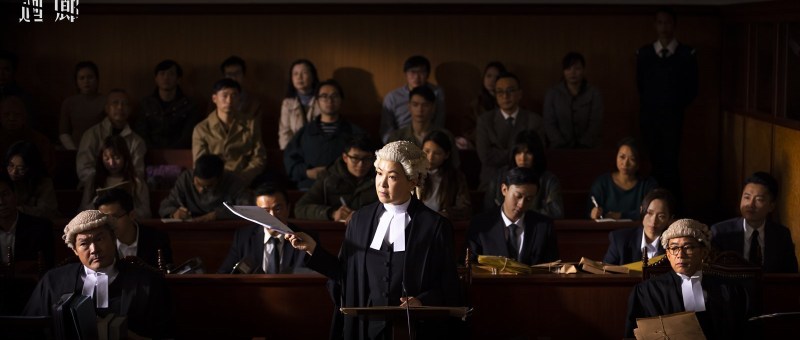
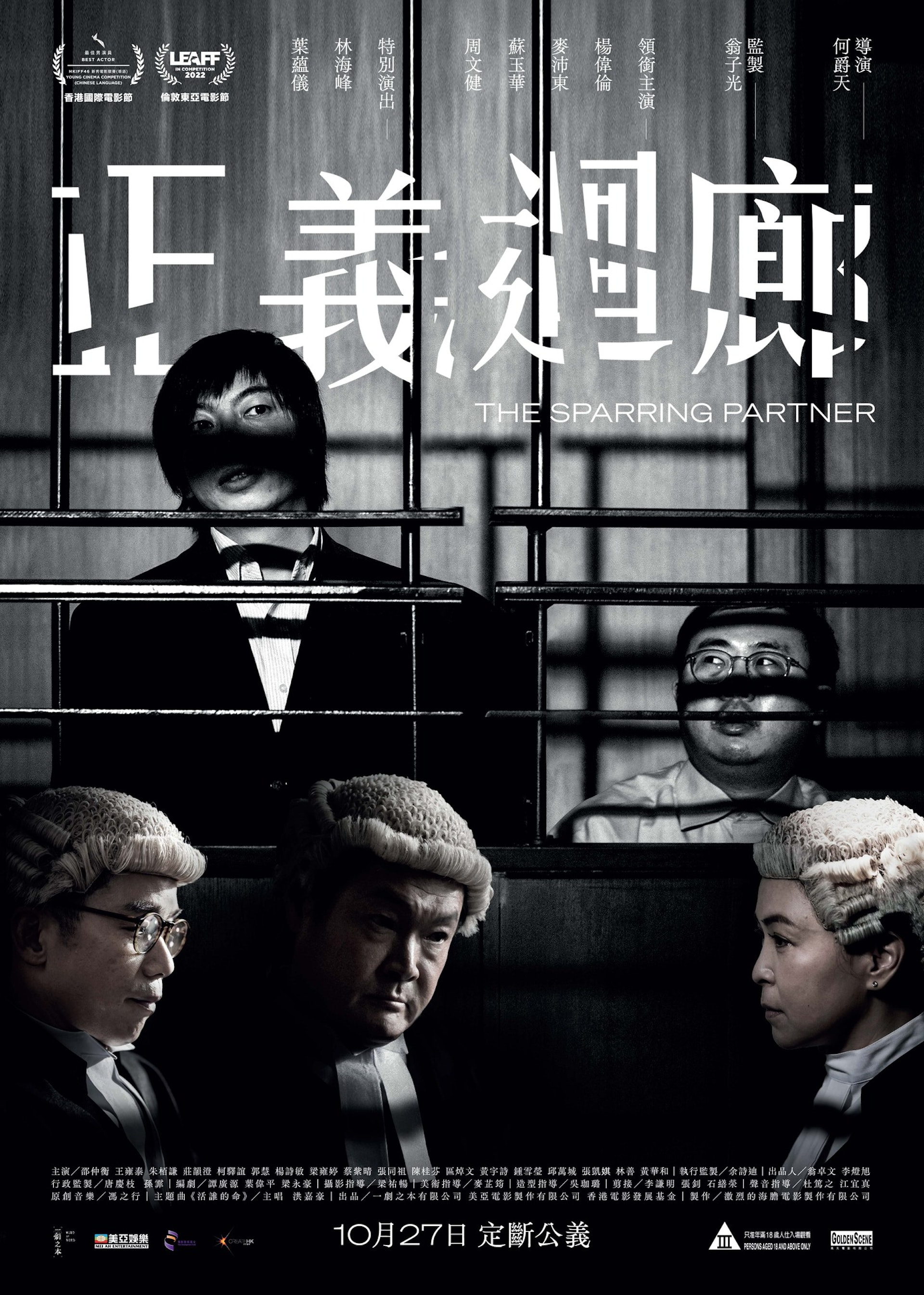
The Sparring Partner (正義迴廊, Ho Cheuk-tin, 2022)

Loosely based on a real life case in which a man murdered his parents then reported them missing and even went to the media for help looking for them, Ho Cheuk-tin’s The Sparring Partner (正義迴廊) distances itself from the sensationalism of the crime to ask a series of questions about human nature and the operation of the criminal justice system. The first of those questions is obviously why, but not just why did he murder the people who raised him but why did he go to the media and why did he eventually decide to confess. 

One reason Henry (Yeung Wai-lun) gives for killing his parents is that his upbringing was abusive, a fact later confirmed by his sympathetic cousin herself a devout Christian. It seems fairly clear that Henry has an inferiority complex for which he blames his mother and father, resentful that they made him play piano and wouldn’t let him play basketball to which he attributes the small stature that led to merciless bullying in school and fractured masculinity in adulthood. Ho often places the camera slightly behind Henry’s shoulder, emphasising his smallness and neatly reflecting the way in which he literally feels as if everyone is looking down on him. He has so far had a life full of failure, studying abroad but failing to make the grade and resentful towards his more successful older brother Ho Jin to whom his parents force him to sign over his share of a flat they bought as an investment after Henry’s gambling debts and inability to find a job left him unable to pay the mortgage. Losing a flat in Hong Kong is worse than losing a life Henry’s lawyer points out at trial, attempting to justify the resentment that led to Henry’s decision to not only murder but brutally dismember his parents. 

Another question mark, however, hangs over Henry’s accomplice and why exactly he chose to take him down with him. Angus (Mak Pui-tung), a man he met at a job interview, seems to have learning difficulties and may not quite understand what is going on. His sister describes him as naive and explains that he has a tendency to make friends with those who only hope to exploit him and may have been manipulated by Henry in fear for the safety of himself and his family or else simply not to lose the friendship. The extent of his involvement with the crimes remains unclear, Henry claiming that he was present and participated in the killing of his mother, while Angus insists that he only took part in the disposal of the bodies. Perhaps uncomfortably the film asks how much we can really trust Angus, suggesting that he may simply be manipulating the sympathy of others and is not really quite as naive as he makes out. 

In any case, his treatment at the hands of the police is as unjust as it comes, intimidated into offering a confession simply to make the interrogation stop so that he sleep and get something to eat. In court the truth hardly matters, a trial is about constructing a credible narrative. The lawyers for joint defendants Angus and Henry attempt to undercut each other, Henry’s arguing he is not responsible on the grounds of mental illness while implicating Angus as the instigator, and Angus’ intent on emphasising his disability suggesting was merely manipulated by Henry. The jurors in the jury room struggle to make sense of the case but also of their own role, tasked not with assessing guilt or innocence but the strength of the argument based on the evidence they’ve been given only for some of them to base their convictions on gut instinct anyway. 

They are perhaps aware that Henry is a master manipulator, he lied to his own brother and fooled all of Hong Kong with his video appealing for support before dramatically confessing online. He has obvious delusions of grandeur and idolises Hitler, claiming that had he been born at the right time he could have done what Hitler did. Ho often dramatises his moments of introspection as fantasy in which Henry poses as Hitler and speaks German to those around him before snapping back to reality and finding him experiencing a moment of clarity that makes him step back. Yet there are moments of heartbreaking authenticity in the “friendship” between the two men such as in their meeting at the job interview as they bond in a shared sense of rejection, the subtext of their crimes inviting the reading that they are intended as acts of vengeance against the society into which neither of them was able integrate. 

In the closing scenes, a policeman remembers evidence left behind during the initial sweep of the crime scene by his incompetent boss and returns to Angus’ apartment to find a migrant family living there who tell him they know there was a murder but they don’t care about things like that and are just grateful to have a home. Henry too continues his dark jokes about permanently devaluing his family’s apartments, but seems genuinely distressed on realising that his brother really may abandon him for his total lack of remorse while Angus finds himself exploited by the tabloid press only too eager for all the gory details. Ho’s closing images which find Angus enveloped in the webs of the spiders which plague his dreams perhaps hints at his place in a complex network of forces which contribute to his exclusion from prejudice towards the disabled to fatphobia along with the manipulation of men like Henry who promise friendship but only take advantage of his inability to resist. Then again, the fact of the matter is that you’ll never really know the truth, whether Henry did it all for the attention and ended up alone anyway or if it really was Angus who planned everything and fooled all of Hong Kong, like the jury all you can do is weigh up the evidence and draw your own conclusions.  


The Sparring Partner screened as part of this year’s London East Asia Film Festival and will open in UK cinemas on Nov. 18 courtesy of CineAsia.

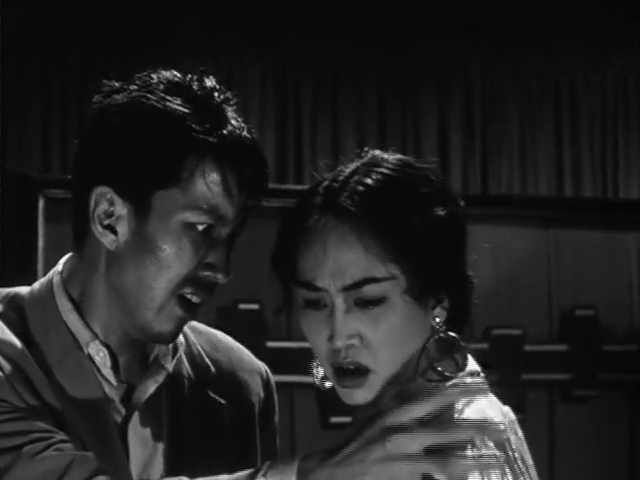
The Wild, Wild Rose (野玫瑰之戀, Wong Tin-lam, 1960)

A free-spirited nightclub singer’s dreams of love are shattered by fragile masculinity and an unforgiving society in Wong Tin-lam’s take on the classic opera Carmen, The Wild, Wild Rose (野玫瑰之戀, yě méiguī zhī liàn). Where similar films of the era may paint the heroine’s plight as punishment for her subversion of societal norms, Wong’s musical noir implies that perhaps she was too good, too pure-hearted for the increasingly selfish and judgemental society around her while the man she loves is simply too weak to accept her transgressive femininity. 

It’s with the man, Hanhua (Chang Yang), that we first enter the world of the EW Ritz cabaret bar. An “elite” English graduate, Hanhua has fallen on hard times and unable to find teaching work has been forced to take a job he sees as sordid and degrading as a pianist in a nightclub. He and his teacher fiancée Suxin (So Fung), literally the girl next-door, joke about it outside, Hanhua asking her if she’s worried about all the “pretty bad women” in such establishments and pointing at his engagement ring as an amulet of protection against predatory femme fatales. Once inside, however, he’s instantly captivated by the alluring singer, Sijia (Grace Chang), who nevertheless takes against Hanhua because unbeknownst to him he’s displacing her regular piano player, Old Wang (Lui Tat), who’s being let go by the greedy boss for showing up late because his wife is seriously ill. 

Unable to accept such callous behaviour, Sijia tries to use her position to speak up on Wang’s behalf and almost loses her own job in the process while irritating her stage rival and the boss’ squeeze Meimei (Shen Yun). While Meimei sings a quiet romantic ballad on the dance floor, Sijia embarks on a crowd-pleasing, gender-bending routine in the bar which proves both that she is the star in this establishment and that she can bend the crowd to her will turning them on whoever she sees fit. After a fight breaks out, Hanhua finds himself physically restraining Sijia to prevent her from stabbing Meimei with an icepick. Though this originally annoys her, Sijia is quite clearly turned on watching Hanhua fight off all of the other men who rose up to defend her honour. Once he is wounded, she again asserts her authority by calling them off and proceeding to flirt with Hanhua who leaves with Suxin vowing never to return. 

But as Old Wang had said, it’s tough to find a job these days and faced with his mother’s excitement about his new career prospects Hanhua has no choice but continue working at the Ritz. We can perhaps tell something of Hanhua’s background from the interior of his home which though modest has a large classical portrait on one wall and is otherwise neat and well organised. He evidently envisaged a conventional middle-class life for himself and is humiliated to have been reduced to a mere piano player in a backstreet bar, the kind of place that he sees as sordid and dangerous and would not ordinarily think of himself visiting. He sees Sijia in much the same way but perhaps stops short of admitting her danger, refusing to look at her or only with contempt while furiously denying his barely controlled desires of the kind which were perhaps unleashed by the fight at the bar. 

Yet all the qualities which attract her to him are the ones he eventually wants to destroy in her rebellious goodness and refusal to follow the unjust rules of her society. She tells him point blank not only in her song but repeatedly to his face that she is a fickle woman who believes there are no good men and is essentially in this only for a good time for as long as it lasts. In fact, her interest in him largely stemmed from a bet with a guy at the bar that she couldn’t seduce him in 10 days, stung by his rough rejection of her after the fight. But Hanhua is too conventional a man to understand or accept her. He gives in to his desires after discovering that she slept with a rich man only to get the money for a life saving operation for Old Wang’s wife, witnessing her self-sacrificing goodness and therefore deciding that she is “worthy” of him after all. Ultimately he expects her to play the role of a conventional housewife, refusing to allow her to continue singing in nightclubs even while he is unable to find another job having served time in prison for bludgeoning her abusive ex. His fragile masculinity had also caused him to blow up at Suxin when she went to the headmaster at her school and asked him to give Hanhua a less degrading job, humiliated to have a woman beg for him just he is humiliated to be supported by Sijia and especially by her doing a job he thinks is somehow improper. 

It is not Sijia who ruins Hanhua, but Hanhua himself and the toxicity of conventional social codes that feed into his sense of resentment. His obsessive desire to possess Sijia, to dominate and tame her, drives him to drink and uselessness to the point he completely degrades himself, pathetically pleading with Sijia not to leave, prepared to allow her to return to work or even take other lovers if only she does not abandon him. Sijia meanwhile is in a sense tamed by her love for Hanhua in that she decides that love is sacrifice, that she must live a more conventionally proper life as Hanhua’s wife and eventually that she must separate from him in order to preserve his future. In this she is redeemed in the eyes of Suxin and Hanhua’s mother who realise that she is a good woman who genuinely cared for Hanhua, but is finally done in by her goodness. Her morality cares nothing for properness and all for humanity, her kindness to Old Wang and her best friend eventually repaid while all Hanhua can think of is a redemption of his masculinity through violence driven just like Don José to the peak of madness in obsessive love. But there’s more than just inevitable tragedy in Sijia’s fate, there is a deep sense of injustice and that Hanhua’s actions were as much about stifling her transgressive goodness as they were about vindicating himself as a man which in any case is only pathetic in its unrighteousness. Masterful in its musicality, Wong’s romantic noir positions its heroine as dangerous but only because she is better than the world around her and the world around her knows but does not want to see. 


The Wild, Wild Rose screens in Amsterdam on 27th/29th/31st October as part of this year’s Imagine Fantastic Film Festival.

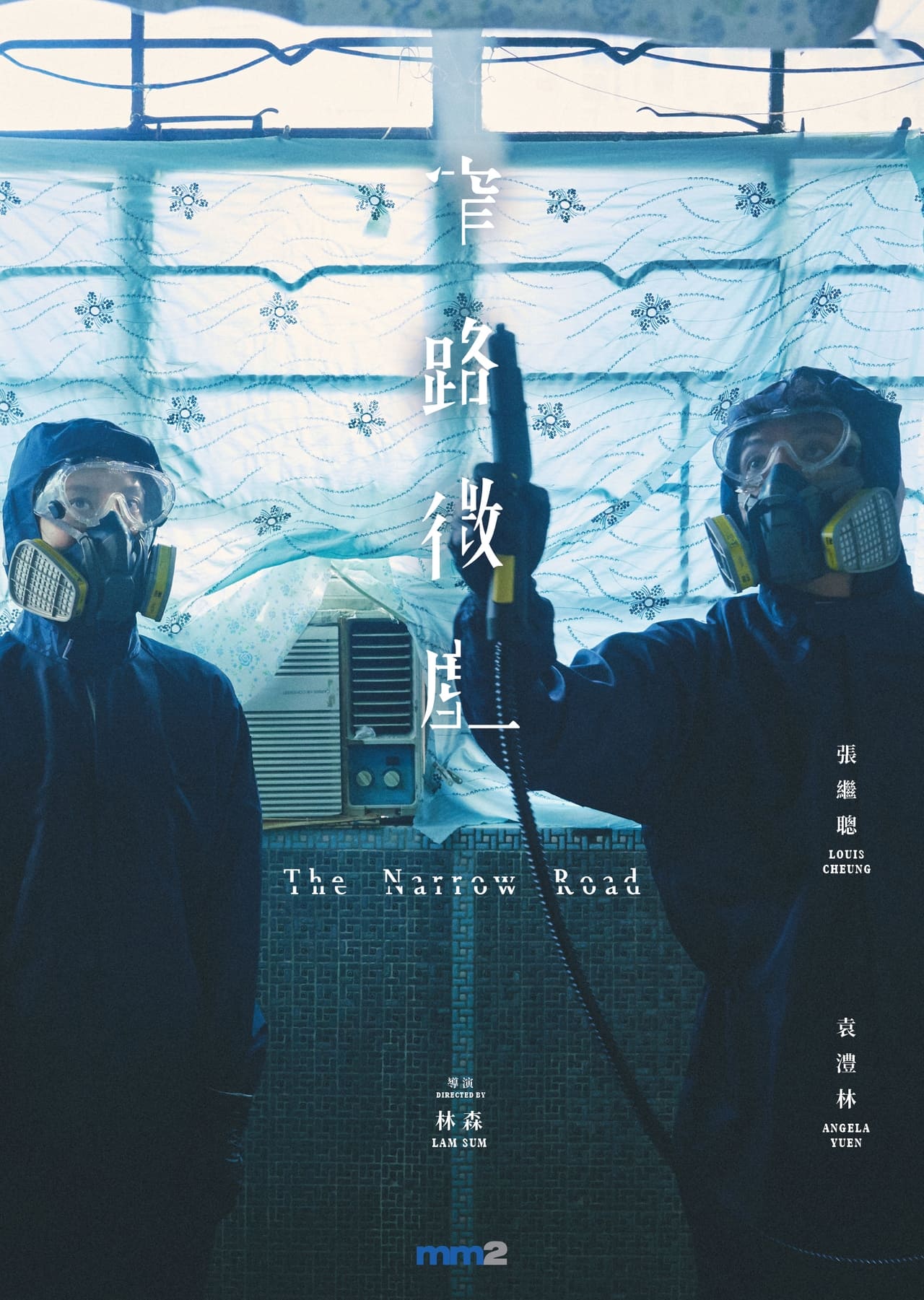
The Narrow Road (窄路微塵, Lam Sum, 2022)

An earnest middle-aged man and a cynical young woman become unlikely friends in pandemic-era Hong Kong in Lam Sum’s melancholy drama, The Narrow Road (窄路微塵). The narrow road is indeed the line they have to walk as they find their already precarious lives straitened by the increasing pressures of life under corona with few possibilities open to them other than to trust in each other and discover unexpected solidarity in their contradictory approaches to life. 

As a customer later suggests, some might say the pandemic is good for those like Chak (Louis Cheung) who runs a one man cleaning business, turning up after hours to disinfect cafes and offices which are still technically open but forced to close early because of the current restrictions. But as we can see Chak is exhausted and his faithful van which has the logo of his company proudly emblazoned on the side is on its last legs. He lives a simple life with his elderly mother who suffers with arthritis but is afraid of the expense of going to the doctor and seems to find joy only in the vague hope of getting lucky on the horses or else the lottery. 

A good-hearted man, Chak’s philosophy is life in that if you work hard and do everything properly then you’ll be alright. Hoping to take advantage of an increase in trade he takes on a young single mother, Candy (Angela Yuen), as an assistant but her outlook is the polar opposite of his as he discovers on spotting her pilfering ice cream bars from a convenience store after the clerk told her the discount had expired because she arrived a new moments after midnight. Cynical because of her experiences, Candy doesn’t see why she or her daughter should go without just because they don’t have money when some have so much they’d hardly notice a little missing, nor does she see the problem with cutting corners when it’s not like anyone notices anyway but Chak points out he’d know and wouldn’t like to feel as if he’d cheated someone or broken his word. 

But then desperate times sometimes call for desperate measures. Chak’s cleaning business is as reliant on a circulating economy as any other as he discovers when the disinfectants he needs for his work are on backorder from a supplier because of pandemic-related delays. When the pair are dispatched to clean up after a lonely death, it plunges Candy into a moment of existential crisis if the result of life is ending up as a stain on someone’s floor to be washed away by a stranger who is themselves faceless and invisible, merely “a cleaner”. As the pair work at night when no one else is around, it’s as if these properties are cleaned by magic, sparkling and new the next day, when the reality is that their work is more important than ever in ensuring public safety not to mention allowing other people to continue operating their businesses confident that they’re doing everything they can to protect their customers.  

In a poignant moment, Candy looks out at the beautiful view from a child’s bedroom in a wealthy family’s apartment and reflects that her living space does not even have a window. Her small daughter Chu eventually draws a picture of one they stick on the wall behind makeshift curtains making do with only the illusion of the light and air they have so far been denied because of their poverty. The world around them seems to be shrinking with businesses across the city closing their doors for good while those with the means to do so are choosing to go abroad for obvious political reasons hoping to start again somewhere else. Chak can only do his best to ride the waves and when even that isn’t possible to keep looking forward even if it means settling for what the moment allows while trying not to let it make him cynical or resentful. The world’s messed up but you don’t have to be, he tries to tell Candy, reminding her that children are sponges and that the lessons she’s teaching her daughter might not serve her well in adulthood. “You’ll hate me when you’re grown up” Candy concedes on doing another midnight flight to another “temporary” situation albeit one which does at least come with a window.

Still as Chak says, they might be smaller than dust but if God doesn’t see them it doesn’t matter as long as they see each other echoing the film’s central message of togetherness and solidarity not just amid the difficult background of the pandemic but as a philosophy for life. Lam’s unshowy yet poetic and beautifully lensed photography captures the sense of shrinking isolation in the early days of COVID-19 while subtly contrasting the fortunes of those like Chak and Candy living in tiny airless spaces who are forced to risk their lives with those who their labour protects. “Are poor people sentenced to death?” Candy asks and forces a concession that perhaps they are by the vagaries of an unfeeling, increasingly capitalistic society. 


The Narrow Road screens in Chicago on Oct. 29 as part of the 15th season of Asian Pop-Up Cinema.

Original trailer (English subtitles)

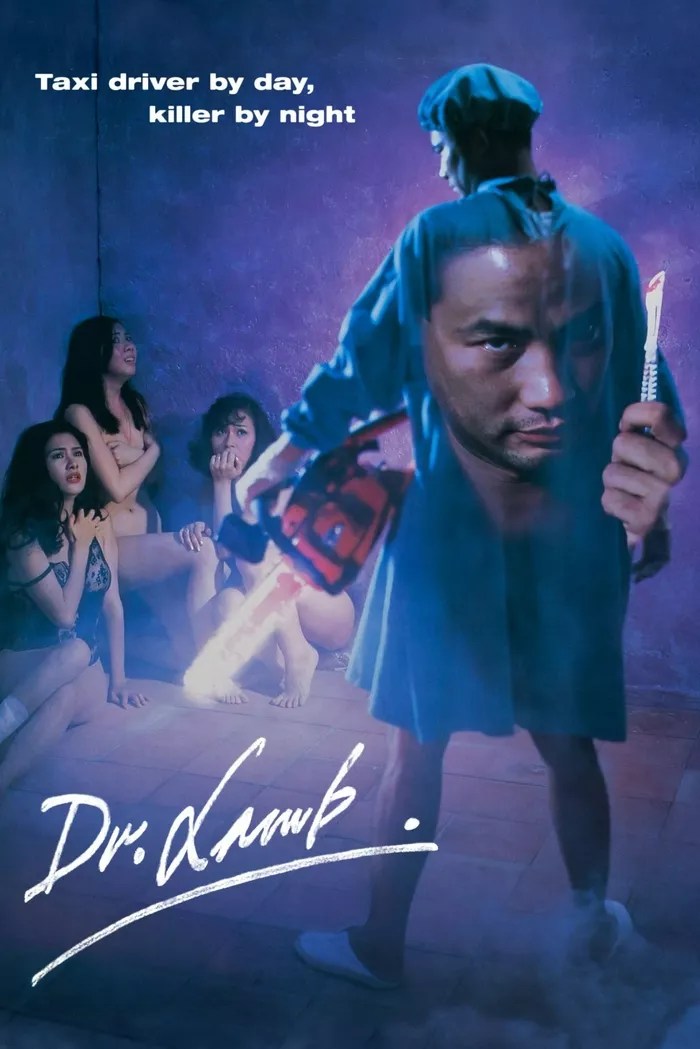
Dr. Lamb (羔羊醫生, Danny Lee Sau-Yin & Billy Tang Hin-Shing, 1992) [Fantasia 2022]

“Every good man should get revenge” the young protagonist of Danny Lee Sau-Yin and Billy Tang Hin-Shing’s depraved Cat III shocker Dr. Lamb (羔羊醫生) is told though as will become apparent, he is not a good man and if his heinous crimes are born of vengeance the target may remain indistinct. Long available only in a censored version which perhaps helped to create its gruesome reputation, the film like others in the early ‘90s Cat III boom is based on a real life case, that of taxi driver Lam Kor-wan who murdered four female passengers before being caught by police when an assistant at a photo shop alerted them to the disturbing quality of the negatives he had brought in to be developed. 

As such, the film is not a procedural. It begins with the arrest of a man here called Lin Gwao-yu (Simon Yam Tat-Wah) who claims the negatives are not his and that he brought them in on behalf of a friend named Chang (which is also coincidentally the name of the half-brother he continues to resent). On investigating the flat where he lives with his father, half-siblings, and niece, the police realise that Gwao-yu is in indeed a serial killer and the rest of the film is divided into a series of flashbacks as they try to convince him to confess and reveal how and why he committed these crimes the last of which he actually videoed himself doing. 

Nevertheless, the police themselves are depicted not quite as bumbling but certainly not much better than the criminals they prosecute in their own lust for violence, savagely beating Gwao-yu who refuses to speak in order to force him to confess. Fat Bing (Kent Cheng Jak-Si) is portrayed as a particularly bad example, encouraging the other cops to play cards rather than focus on their stakeout of the photo shop almost allowing Gwao-yu to escape and then titillated by the more normal pinups and glamour shots pinned to Gwao-yu’s wardrobe as well as some of the less normal ones before realising that the women in them are dead. There is some original controversy over whether they should be investigating at all given that taking weird pictures of nude women is not in itself illegal while the misogynistic attitudes of the police are carried over onto one of their own officers who is forced to play the part of the victim during a re-enactment and is later struck by a stray body part as a result of Fat Bing’s crime scene incompetence. One of the murders even takes place directly outside a police box where the victim had tried to ask for help but got no reply.

Pressed for a reason for his crimes Gwao-yu offers only that all but the last of his victims were bad women who deserved die, each in a repeated motif fatalistically colliding with his cab and crawling inside having had too much to drink. Flashbacks to his childhood place the blame on his wicked step-mother’s rejection along with that of his siblings while his father alone defends him if somewhat indifferently, describing him as merely “curious” on catching Gwao-yu voyeuristically spying on he and his wife having sex and disowning him only on discovering that he has also been abusing his niece who is strangely the only member of the family who seems to be fond of him. Yet it’s also this problematically incestuous living environment that has facilitated his crimes. Gwao-yu takes the bodies home to play with and dismember having the house to himself during the day because he works nights while continuing to share a pair of bunk beds with the brother he hates at the age of 28 either unwilling or unable to get a place of his own on a taxi driver’s earnings. Aside from his brother noticing a strange smell, the family who all think him weird anyway apparently remain oblivious to Gwao-yu’s crimes despite the jars containing body parts he keeps in a locked cupboard along with disturbing photographs of his dark deeds. Nevertheless it’s their police-sanctioned beating of him which eventually provokes his confessions. 

Set off by rainy nights, Gwao-yu twitches, gurns, and howls like a dog leering at his victims like a predatory wolf. In the police interrogation scenes he continues with his strange, dancelike movements as if in a trance reliving his crimes. The truth is that the police had not really investigated the disappearances of the women he killed, had no clue a serial killer was operating, and would not have caught Gwao-yu if it were not for his own lack of interest in not being caught in taking the photos to be developed publicly despite claiming to have the ability to have simply developed them himself while videoing his brutal treatment of one victim’s body and his disturbing “wedding night” with another. A final scene of Inspector Lee visiting Gwao-yu in prison visually references Clarice’s first visit to Dr. Lecter in Silence of the Lambs which might go someway to explaining the title which is otherwise perhaps ironic in Gwao-yu’s ritualistic use of a scalpel and specimen jars. In any case for all its lurid, disturbing content the film has a strange beauty in its atmospheric capture of a neon-lit Hong Kong stalked as it is by an almost palpable evil. 


Dr. Lamb screened as part of this year’s Fantasia International Film Festival and is available on blu-ray in the US courtesy of Unearthed Films.

Original trailer (no subtitles)

Mercenaries from Hong Kong (獵魔者, Wong Jing, 1982) [Fantasia 2022]

A former mercenary’s bid for revenge having failed in his responsibilities soon goes awry in Wong Jing’s third directorial feature Mercenaries from Hong Kong (獵魔者). As is constantly pointed out to the hero, perhaps he’s not so different from his target with his very selective brand of justice and morality. After all maybe the difference between medicine smuggler and drug trafficker is largely semantic and taking revenge after the fact hardly makes up for the failure to protect the innocent from a world you’ve helped create. 

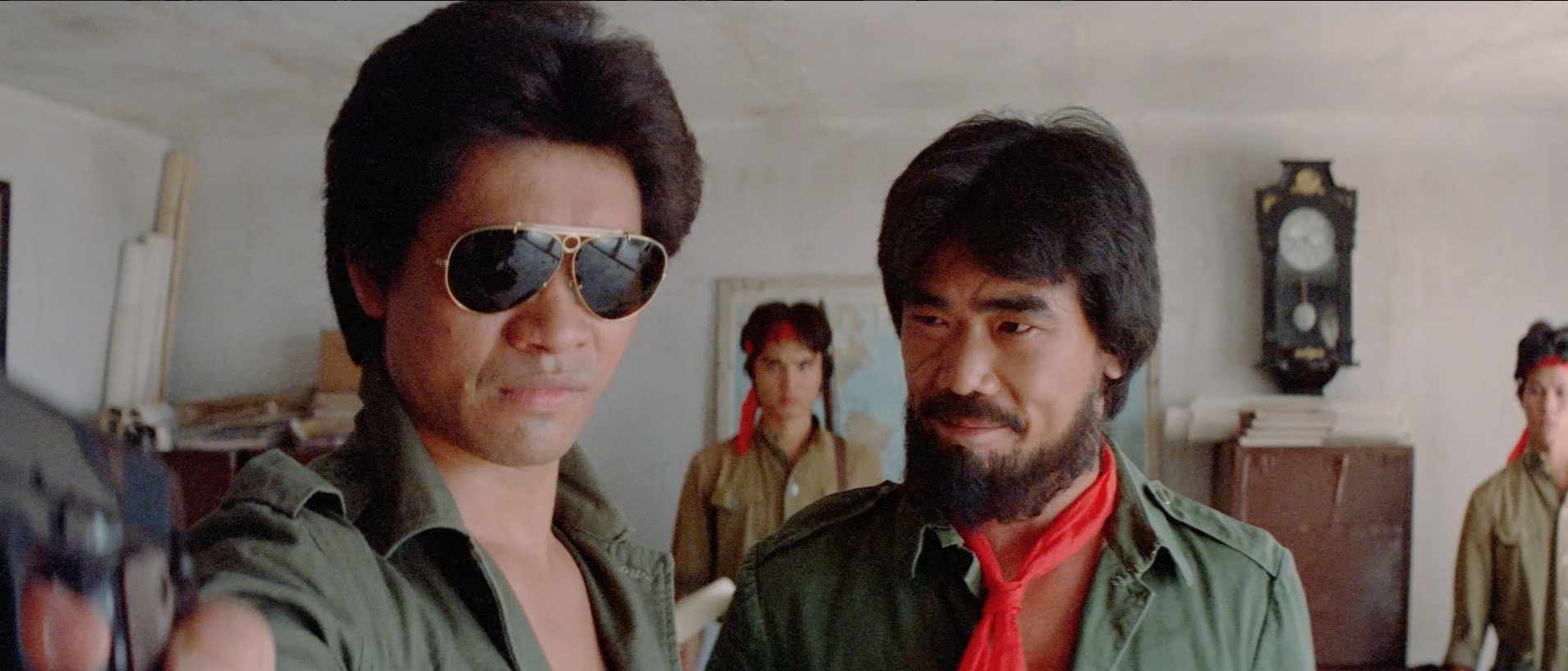
Li Lok (Ti Lung) is a pretty big figure on the underworld scene and as the ultra macho title sequence reveals a former mercenary who served in Vietnam. In the daring opening scene he sneaks into a gang hideout disguised as a telephone repairman and takes out a gangster in the middle of drugging a young woman whom he and his friend intend to rape and then murder. But Li Lok isn’t here to save the girl and in fact he doesn’t. He’s there because the gangster has done this kind of thing before and the previous victim was his 15-year-old niece whose care he had been entrusted with by his late brother before he passed away. Later one of his comrades will make a similar request of him and he will fail again apparently taking little stock of his responsibilities. 

Nevertheless, having knocked off the gangster annoys local big boss Shen who intends to have Li Lok eliminated but Hong Kong’s richest woman Ho Ying (Candice Yu On-On) convinces him not to because she has a job for Lok assassinating a top Thai assassin who killed her father and is now apparently blackmailing her with a cassette tape full of corporate secrets. All Lok needs to do is round up a posse and head to Cambodia where “the devil” Naiman (Ching Miao) is hiding out, kidnap him, and retrieve the tape to receive a massive life-changing payout while permanently getting Shen off his back. It all sounds like a pretty good deal to Lok along with the former buddies he recruits to join him who are all trapped in desperate poverty one with a sick little girl who desperately needs a kidney transplant. 

This is a Wong Jing film and perhaps there’s no need to dig too deeply into it, but there is something in the power Ying wields over Lok and his team by virtue of her wealth and privilege that speaks to the city’s growing inequality though it’s also true that perhaps the guys have all fallen low through their mercenary choices and are now unable to get a foothold in the contemporary society without resorting to crime. Yet perversely, Ying leverages Lok’s chivalrous sense of honour as part of her plan playing damsel in distress rather than dangerous femme fatale while he assumes he’s on a righteous mission planning to turn Naiman over to the authorities rather than just killing him while little caring that his actions threaten to destabilise an already chaotic situation in Cambodia. 

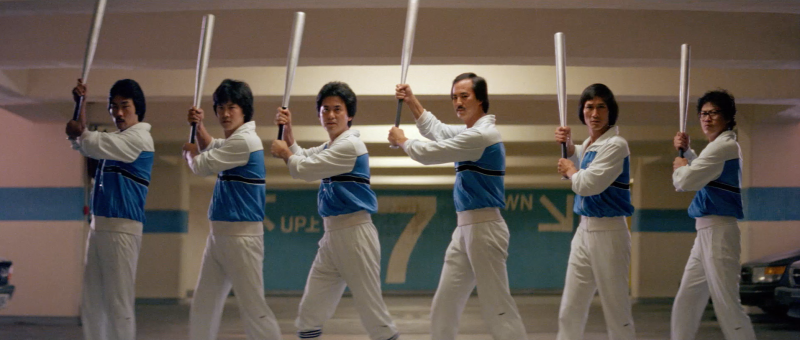
When one of the sworn brothers of the gangster that Lok killed in revenge is killed coming after him even after the truce, Lok is irritated that he died unnecessarily as if it offends his sense of justice that this man was not protected better by Shen. Yet as Naiman keeps pointing out to him, he’s no saint and perhaps no different. He could have saved the girl in the gang hideout but chose not to, escaping by jumping out of a window onto a van waiting below and riding off on a motorcycle (which is admittedly impressive). He claims to hate drug dealers but profited off war and misery in smuggling medicines across the border from Thailand into Cambodia even if he could tell himself he was running a kind of humanitarian service. Meanwhile Ying who is obviously involved in something shady if she’s dealing with people like Lok and his team, paying for their weapons and equipment which presumably includes the series of identical outfits the guys sport like some violent middle-aged boy band, wins an Outstanding Woman award and ironically pledges to use some of her wealth to fund community-based anti-drug programs. 

Li Lok may in a sense emerge victorious but also exactly where he started in failing to protect an innocent girl from a mercenary world. The Cantonese title might more literally be something like Devil Hunters, but Lok and his guys are certainly a mercenary bunch desperate to escape their poverty and hopelessness even if they may stand for a kind of justice and honour in brotherhood. This being a Wong Jing film there is plenty of crass humour including some that is very of its time along with gratuitous sex and female nudity but also a series of incredibly impressive action scenes and a bleaker than bleak conclusion which may suggest that the Loks of the world will be unable to protect the next generation from the violence they themselves have unleashed. 


Mercenaries from Hong Kong screened as part of this year’s Fantasia International Film Festival.

Original trailer (English subtitles)

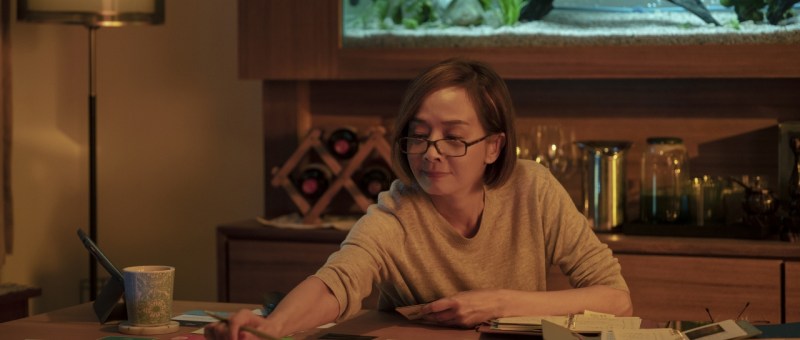
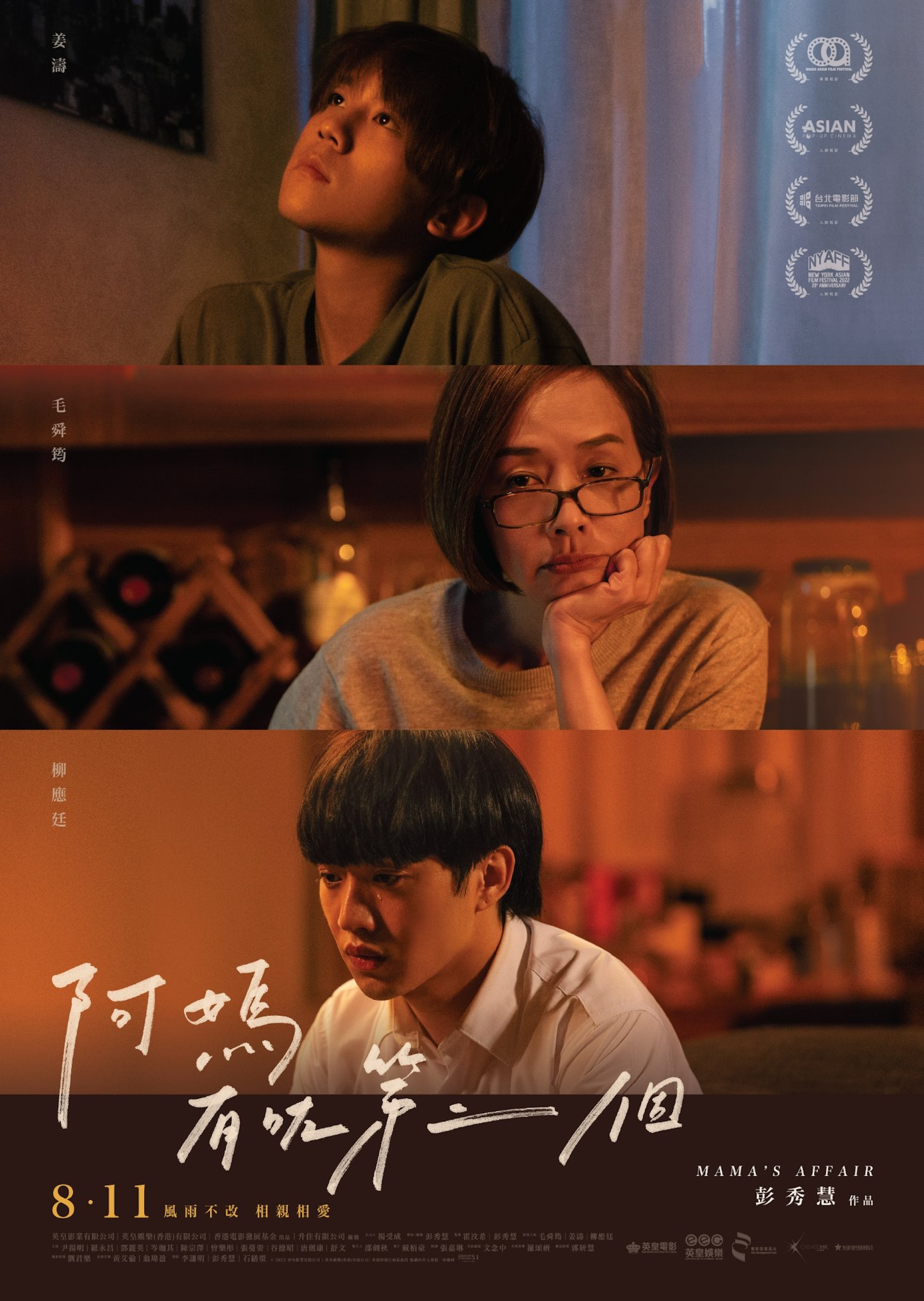
Mama’s Affair (阿媽有咗第二個, Kearen Pang, 2022)

A middle-aged woman finds her desire to take back her life after the failure of her marriage frustrated by her teenage son’s resentment and the lingering patriarchal social codes of the contemporary society in Kearen Pang’s familial dramedy Mama’s Affair (阿媽有咗第二個). The “affair” of the title is an ironic take on her new maternal relationship with a young man she takes under her wing framing it as in a way cheating on her son which is clearly the way he feels about it, while it’s clear that some still view her desire to find fulfilment outside of her role as a wife and mother as a betrayal of her family. 

Before her son was born, Mei-fung (Teresa Mo Shun-kwan) was a top talent manager at a record label but gave up her job at her husband’s insistence after suffering a miscarriage. With her son, Jonathan (Jer Lau of boyband Mirror), about to graduate high school and hoping to get into Cambridge University, she decides to re-enter the world of work but soon discovers that those she once helped in their careers are not necessarily keen to repay the favour. An old associate more or less laughs her out of the room suggesting she’s simply too old for the music business and recommends she join another old friend at his music company which turns out to be a school for small children. She takes the job anyway and quickly bonds with the two younger employees who introduce her to Fang Ching (Keung To of boyband Mirror), a young man with a prodigious talent for song and dance that has Mei-fung thinking of getting back into the management game.  

Though Jonathan had mostly reacted with indifference to his mother’s decision to return to work, claiming that he’d long wanted more independence anyway, he can’t seem to let go of a sense of resentment towards Ching which is compounded by his confusion surrounding the status of his parents’ marriage which it seems had long gone cold. His father Yan has moved out and though Jonathan doesn’t know it is having a baby with an old friend of his mother’s all of which informs his feelings of displacement as if he’s been pushed out of the family circle fearing that Mei-fung has gone out and got herself a new son who admittedly seems to appreciate her more. Displaced from his own family by tragic circumstances, Ching does indeed value the small things Jonathan has begin to resent in teenage angst yet is also unexpectedly sensitive and mindful of the ways in which his relationship with Mei-fung and presence in the household may be affecting Jonathan who is still struggling to come to terms with his parents’ decision to end their marriage without even really telling him. 

In an another ironic note it’s Mei-fung’s maternity which is positioned as her key strength as a manager, quietly lending support and encouragement that allows Ching to reach his full potential. On Ching’s arrival to the studio a mother had come in to the school with her young son who was bawling his eyes out because he wanted to join a dance class but the mother wouldn’t let him because she said he was too fat and would only embarrass himself only to be proved wrong when Ching invites him to try out on the dance floor demonstrating both the damage that can be done by a judgmental parent and the positive influence of an actively supportive environment. While Mei-fung keeps telling Jonathan he needs to learn to look after himself, she patiently nurtures Ching and eventually encourages to him sort out his complicated feelings towards his family while helping him achieve his dreams as an artist. 

In some ways, Mei-fung never really transcends the role of mother or escapes the tendency to define her role in relation to the two boys while somewhat resentful of all she was forced to give up because of the patriarchal, authoritarian mindset of the husband who later left her for a younger woman. Jonathan and Ching eventually sort things out through a good old fashioned fist fight generating a kind of brotherhood that leaves each of them equally displaced but also finding firmer footing more secure in their roles and relationships. “No one can handle everything alone” Ching wisely advises, as each of the trio develops a kind of independence founded on mutual solidarity, Mei-fung reclaiming her right to an individual life while giving each of the boys the courage to go off and pursue their destinies through the superpower of maternal love. 


Mama’s Affair is in UK cinemas from 19th August courtesy of CineAsia.

UK trailer (English subtitles)
Legendary in Action! (大俠Action!, Justin Cheung & Li Ho, 2022)

An unsuccessful film director looks for new opportunities in gaining closure with the past in Justin Cheung and Li Ho’s behind the scenes comedy, Legendary in Action! (大俠Action!). Echoing classic wuxia, the film finds its heroes searching for themselves while on a quest to revitalise the Hong Kong film scene in which they must battle unscrupulous investors, idol stars with limited acting experience, divided loyalties, the changing nature of the industry, and the ghosts of wuxia’s past. 

40-ish Tiger (Bill “Tiger” Cheung) made a big splash in his earlier career but when his first feature flopped he discovered that second chances are hard to come by in the contemporary film industry. Since then, he’s been making a living shooting sleazy shorts for live streamers while privately dying inside. When a mysterious investor turns up wanting to make a retro wuxia, Tiger is the perfect fit. Shopping an old script he’d written to provide an ending to a serial he loved as a child which was abruptly cancelled, he sets about fulfilling his childhood dream even recruiting the original star to reprise his role but soon finds out that the past is not so easily resurrected. 

This fact is brought home to him by irascible former action star Master Dragon (Chen Kuan-tai) who constantly reminds him that it wasn’t like this in his day usually because they had no health and safety regulations or working rights. Yet Master Dragon is also in a sense in search of himself in that he has begun suffering with dementia and is no longer able to separate fantasy from reality. Far too into his role, he ignores the script and attacks the actors playing bad guys for real but cannot quite recall his signature move while insisting on completing dangerous stunts by himself. He’d also insisted on trying to find the original actress to play the romantic lead, but finally settles for a feisty young woman, Greta (Wiyona Yeung), who is mostly in it for the cash but gradually warms to Master Dragon happy to know that someone cared for her after he waded in on her behalf when she was bullied by lecherous customers at the bar where she was working. 

Tiger meanwhile finds himself failing in his responsibilities as a husband and soon-to-be father, pouring everything into the film while neglecting his long-suffering wife who asks him why he thought now was a good time for his one last chance. When the shoot enters a crisis, he signs up for even more “meaningless” shorts and onerous employment contracts to get the money together to finish while asking his cast and crew to do the same, each of them facing their various issues while coming together as a team squaring off against the vagaries of the independent cinema scene.

Then again, Tiger doesn’t seem to have learned much about work life balance. Nor is Master Dragon a particularly good influence instructing those around him that if film is not their lives’ work, they shouldn’t be doing it. Master Dragon is on his own journey trying to reclaim his former self while dealing with the past just as Tiger is himself trying to bring something full circle in giving his childhood favourite the ending it deserves. In a closing speech, he aligns his struggles with those of the Hong Kong film industry in general positing the wuxia serial as a symbol of faded glory while implying that the contemporary film industry has run out of steam. “At some point we lost faith in Hong Kong Cinema”, he laments, complaining about rubbish films with bad scripts and terrible production values while praising the efforts of the crazy people who give their all to make them. 

“I won’t accept fate” he goes on, like the hero of a classic wuxia fighting for justice in an unjust world while insisting that it is possible to turn things around and restore the glory of Hong Kong film. Then again, as much as his film seems to bring closure and present a place from which to move forward perhaps its unwise to look for new directions in attempting to recreate the past rather than finding new ways to bring it with you into a more positive future. 


Legendary in Action! screens at Lincoln Center 17th July as part of this year’s New York Asian Film Festival.

Original trailer (Traditional Chinese / English subtitles)

Images: © Marigold Project

Chilli Laugh Story (闔家辣, Coba Cheng, 2022)

Family gatherings can sometimes be a little spicy, but channeling some of that passion into a family business eventually becomes too hot to handle for the ambitious hero of Coba Cheng’s New Year comedy Chilli Laugh Story (闔家辣). Set during the pandemic, the film finds its young hero embracing his lifelong dream of becoming an entrepreneur while giving his parents something to do so they won’t be bothering him but eventually discovering that the business world can be cruel and it’s family who will be there for you in the end if it all goes wrong.

At 24, Coba (Edan Lui) lives with his parents in a rented flat and has a job as a concert promoter which is obviously suffering under the ever changing COVID-19 regulations. Though as a child he’d hated his mother’s hot sauce, he soon realises he’s on to an ideal business opportunity seeing as restaurants are closed and more people are eating at home without easy access to fiery condiments. With his mum Rita (Gigi Leung Wing-Kei) chopping chillies and garlic and his dad Alan (Ronald Cheng Chung-Kei) trying not to get in the way, Coba concentrates on the branding and creates an online sensation with their “Chiu Chiu Chiu” chilli sauce inspired by a local recipe from Rita’s hometown. But while the business begins to take off relationships between the family members suffer under the strain of their differing goals and aspirations. 

Coba’s big thing has been that he doesn’t see the point in owning property and is content with renting, whereas all his mother ever talks about is buying their own place. What she sees as security and freedom, Coba sees as a burden he doesn’t want to be saddled with tied down by a 30-year mortgage. Her plan is to get a loan in Coba’s name to take advantage of a preferential rate for first time buyers, the parents having previously owned a flat they were forced to sell, even if that means applying for one without actually telling him. They are all keeping secrets from each other, Coba choosing not to disclose that he lost his concert gig and is concentrating on the business, while eccentric auntie Wendy (Sandra Ng Kwun-Yu) suffers something similar when her son, who rarely has time to talk, abruptly tells her he’s moving abroad and may not return. Meanwhile, Rita had been using her sister’s restaurant kitchen as a cover to get around licensing regulations but their success puts them at odds with their siblings who resent not being included in the business or its profits. 

Part of Coba’s desire for success to is assert his independence, yet he learns a cruel lesson after being offered an opportunity to collaborate with a weird corporate Guru who speaks only in English and offers pithy maxims while completing a giant all-white jigsaw puzzle in his minimalist all white room. His best friends from school are rich kids who ended up accidental CEOs in the family business, and he desperately wants that kind of approval talking big about being able to buy a flat for his mum with cash to avoid being saddled with the mortgage while hustling in the local food scene trying to talk an old man running a hotdog cafe into collaborating on a chilli dog to expand the brand only for the old man to tell him he’s too old to be jumping on the next new trend. 

Annoyed with his parents for cost cutting behind his back and making his decisions for him by applying for loans in his name, what Coba comes to realise is that having no plan isn’t always a bad thing because it means there are plenty of opportunities while the family strengthen their bonds after a little mutual honesty respecting each other’s wishes and responsibilities in acknowledging they didn’t need to monetise their connection to make it meaningful. Family is after all what New Year comedy is all about. Peppered with references to the pandemic, Cheng’s familial dramedy is full of the anarchic humour the New Year movie is known for from random gags to crazy puns and even throws in a couple of unexpected cameos from major stars in its closing sequences but clearly has its heart in the right place as the family learns to find the sweetness in the spice and Cobo new directions for his future.


Chilli Laugh Story opens in UK cinemas on 15th July courtesy of CineAsia.

UK trailer (Traditional Chinese / English subtitles)