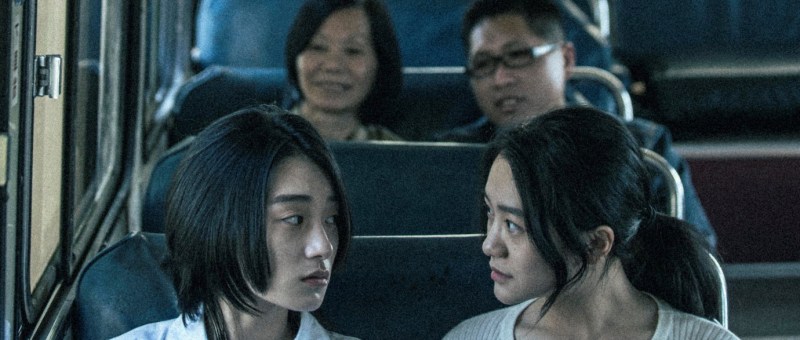
Summer Vacation 1999 (1999年の夏休み, Shusuke Kaneko, 1988)

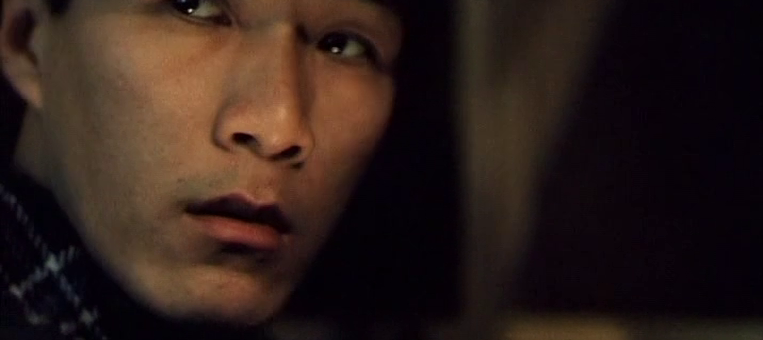
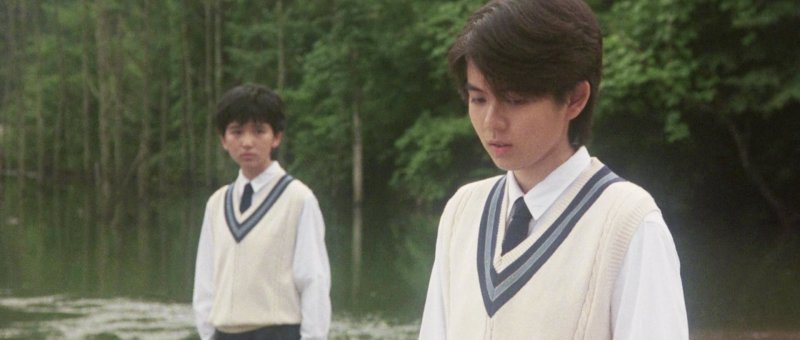
The curious thing, or perhaps a curious thing among many, about Shusuke Kaneko’s loose adaptation of Moto Hagio’s The Heart of Thomas Summer Vacation 1999 (1999年の夏休み, 1999 Toshi no Natsuyasumi) is that it takes place in a theoretical future that is also quite clearly an imaginary past. In a second introductory sequence, the voice of an adult man tells us that his is his memory, a fragment of the past kept alive by the clarity with which he remembers it. We don’t know who this voice belongs to, though the images encourage to think it must be the man the boy on screen, like the others played by a girl, will one day become but in another sense this boy doesn’t really exist either or at least is the bearer of several different identities.

The fact he travels to this remote mansion in the countryside on an otherwise empty train signal’s the place’s unreality and detachment from the regular world. We’re told it’s 1999, a year that was still to come on the film’s release in 1988, and inevitably hints at a millennial dread along with the new dawn the writer describes himself having in experienced in what is otherwise a summer holiday movie. However, in the opening sequence we witnessed a boy who looked very like this one slip what is later assumed to be a suicide note under another boy’s door before walking through the gothic space of the country mansion and out to a rugged cliff where he takes his own life by jumping into a nearby lake. The name of the boy who died, apparently brokenhearted and filled with despair after his romantic overtures to another boy were rebuffed, was named Yu (Eri Miyajima). This one claims his name is Kaoru (also Eri Miyajima) and is different in temperament in character to the boy who may have died, his body has not been found, though to the others staying at the school over the summer holiday he seems somehow like a vengeful ghost arriving to take them to task for Yu’s death. 

Kaneko specifically frames the school as haunted through the gothic photography of its billowing curtains and 19th century European aesthetics but also through its emptiness. The sound of children laughing, the boys who have left and returned somewhere else, echo through empty corridors further framing it as a place of memory and it seems true enough that the other boys who remain are trapped here in the same way they are trapped within themselves in their inability to express their emotions. The youngest of the boys, the sensitive Norio, (Eri Fukatsu) intensely resents Kazuhiko (Tomoko Otakara) who is as he describes beloved by all but himself cannot bear to be loved and may have contributed to Yu’s suicide through the abruptness of his romantic rejection. 

Later Kazuhiko recalls a memory of himself watching the sunset as a child in which he felt so terribly alone, as if he were the only person left on earth and there was no one with whom he could share this beauty. This sense of loneliness and isolation is further symbolised by the remote nature of the boarding school which seems to exist outside of time itself. Inspired by the setting of the novel, the boys dress in a fashion more associated with 19th century aristocracy than the late 1980s yet they are surrounded by machines and makeshift, retro futuristic technology in which they spend their days programming some kind of computer system. The leap into the lake is also into memory, but otherwise a kind of rebirth or rebaptism which allows Kazuhiko to make sense of himself and the other boys to come to an acceptance of Yu, Kaoru, and everything he embodies in relation to themselves. 

Even so, the elliptical nature of the film’s ending hints that this is a continually looping story replaying endlessly in the memory of a now much older man recalling the journey into adolescence in which he ruptured the shell of his ignorance much as the caterpillar becomes a butterfly even if that butterfly was something that Kaoru wanted to kill without harming its beauty. Perhaps in away that’s what the man has done in preserving this memory with its all of its gothic shades of billowing curtains and shadowy corridors amid the ethereality of the twilight of youth.


Summer Vacation 1999 screened as part of this year’s Queer East.
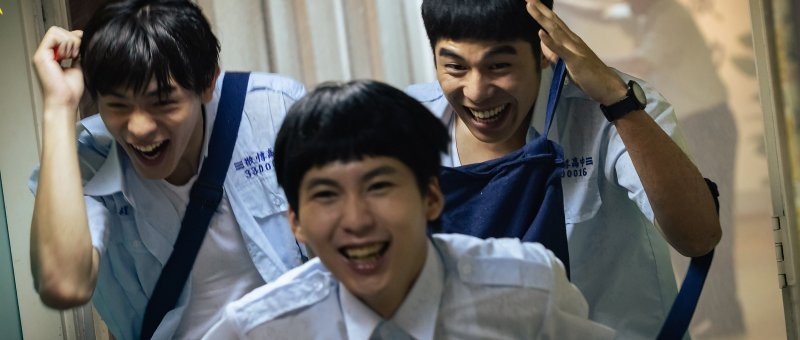
After School (成功補習班, Lan Cheng-lung, 2023)

In an odd kind of way, Lan Cheng-lung’s autobiographically inspired coming-age drama After School (成功補習班) charts how far Taiwan has come since the mid-90s while pivoting around the figure of Mickey Chen, a hugely influential LGBTQ+ filmmaker who passed away 2018. Chen was in fact Lan’s own cram school teacher and in terms of the film a voice for the future giving the children the permission to be themselves in the post-martial law society even as they struggle to break free of the authoritarian and fiercely patriarchal past. 

In a sense, cram school itself is the manifestation of that culture in that most of the kids have been forced to go there by their parents to pursue futures not of their choosing. The hero Cheng Heng (Zhan Huai-Yun), Lan’s stand in, wants to be a filmmaker but his dad wants him to be a maths teacher. That might be one reason he and his friend Cheng Hsiang (Chui Yi-tai), who lives with his family because problems with his own, spend most of their time messing around and playing childish pranks on the teachers and admin staff. Meanwhile, they’re far mare interested in potential romance than studying with Cheng Hsiang a bit of a ladies man and Cheng Heng nursing a crush on the school’s most popular girl Chen Si (Charlize Lamb). 

Nevertheless, the closeness between the boys gives rise to a few rumours that they may be gay. The idea is only further cemented by an ironic incident in which Cheng Heng sustains an embarrassing injury to his groin while watching a pornographic video he swiped from a cousin little realising that it was actually gay porn. His parents, or really more his father, do not take well to this and see it perhaps as just more evidence of his rebelliousness and lack of respect for his family in his desire to follow his own path rather than the one they’ve set down for him of getting a steady, respectable job as a teacher. 

That’s one reason that the arrival of Mickey (Hou Yan-xi), a recent graduate taking a temporary teaching job to save for studying abroad, is thought so disruptive because he encourages the kids to be who they are not who they’re taught to be. Mickey holds progressive sessions on sex and sexual identity, explaining concepts such sexual orientation and safe sex which is surprising not least because this is a cram school which exists solely to help kids do well on standardised tests rather than give them any broader kind of education. The headmaster, who is also the father of the boys’ friend Ho Shang (Wu Chien-Ho), is by contrast an authoritarian remnant of the martial law era who can’t permit any kind of liberalisation or individualisation and often inflicts corporate punishment on pupils deemed to have transgressed the rules of a polite society. 

But it’s Mickey who tries to help the boys accept and become comfortable with their sexuality and that of others, taking them to a gay bar where he interviews several of the regulars for his documentary. The barman once entered a marriage of convenience and had a child to please his parents but feels deep guilt and regret for the way he treated his wife and his since been disowned by his family. Now he hosts a New Year dinner for others like him who have nowhere else to go because their families have rejected them. The boys too are rejected by their fathers solely on the suspicion of homosexuality while the mothers remain broadly supportive of their children but trapped by those same patriarchal social codes caught between their authoritarian husbands and love for their sons.

Yet even with these more distressing themes, Lan’s film is at times a little too rosy, sticking to its lighthearted tone rather than fully address the implications of society’s attitude to the LGBTQ+ community in the mid-1990s as opposed to that of today in which Taiwan became the first Asian nation to legalise same sex marriage. Nevertheless, it presents a warm-hearted firsthand account of the effect Mickey had on those around him as the teens rebel against the authoritarian past to embrace their freedom and identities, no longer afraid to speak their feelings but determined to be themselves and accept the selves of others rather than live under the constraints of oppressive patriarchy and traditions.


After School screened as part of the 18th Season of Asian Pop-Up Cinema.

Trailer (Traditional Chinese / English subtitles)

Who’ll Stop the Rain (青春並不溫柔, Su I-Hsuan, 2023)

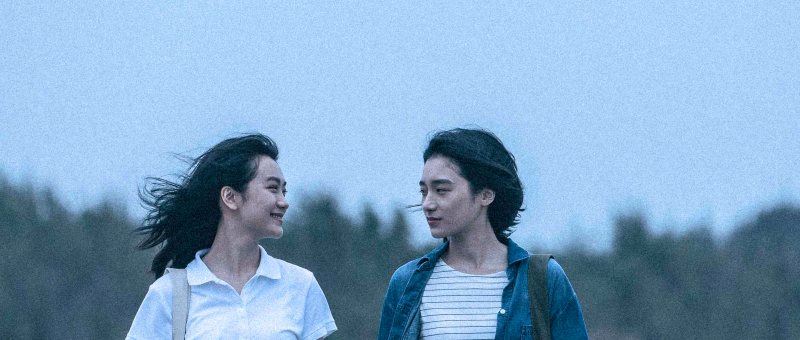
What does “freedom” actually mean? Su I-Hsuan’s post-martial law drama Who’ll Stop the Rain? (青春並不溫柔) sees a younger generation struggle to shake off the authoritarian yoke meanwhile it seems clear that freedom has its limits and has not been granted equally to or by all. Set in 1994 it takes place against the longest student strike in the nation’s history and ultimately pits the forces of protest and complicity against each other in the constant struggle for individual freedom. 

Free-spirited Chi-wei (Lily Lee) might be something of an outlier in this age, later expressing confusion to the comparatively repressed Ching that she doesn’t understand why they’re fighting for freedom when freedom was something they had always possessed. Yet at the university she finds herself constrained in what is supposed to be an artist’s school, denied creative freedom by stuffy professors who mark their students not by the quality of their work but their obedience and willingness to accept the lessons the professors see fit to give them. Chi-wei’s professor gives her telling off because he says her hair’s too messy, then humiliates her in front of the class by throwing her work on the floor and telling her to start again. Chi-wei, however, remains defiant and continues to work her own way regardless of what the teachers may say. 

It’s after a chance encounter with Ching (Yeh Hsiao-Fei) that she’s drawn into the student movement which opposes the authoritarian rule of the professors and demands greater creative freedoms for the students and society at large as this generation who came of age after martial law considers the kind of future they envision for themselves. But like any student movement, there are innate tensions within the group with some suggesting that its leader, Kuang (Roy Chang), is merely trying to relive the White Lily movement and is in fact less committed to the cause than he seems as evidenced by his willingness to enter dialogue with the staff against the wishes of his girlfriend, Ching. 

Unlike the others, Ching is a law student and not and artist. She’s also the daughter of a prominent, conservative and patriarchal politician and the group is somewhat ironically often dependent on her familial wealth. Her background perhaps makes it harder for her to emerge into a new, ostensibly freer age as bound by a set of ideas otherwise alien to Chi-wei who is at any rate absolutely herself and unafraid to be so. Ching tells her that she longs to be part of a group, which is presumably why she’s joined the artists in their protest even if others accuse her of simply rebelling against her privilege, which is something Chi-wei has little need for as she has already discovered the power of freeing her mind. 

It’s these forces that generate the push and pull between the two women as Chi-wei is eventually awakened to her sexuality by Ching only to experience her pulling away in her deeply internalised shame. Even so, she takes an approach that largely avoids direct confrontation but allows her to stay by Ching’s side, patient yet confused in attempting to create a safe space that Ching can accept as her own. Both women are also constrained by forces of traditional patriarchy with even Kuang stating that perhaps women shouldn’t be too independent after all or else they wouldn’t need him in an ironic moment foreshadowing his total redundancy. Meanwhile, Chi-wei is aggressively pursued by a fellow student who won’t be deterred by her frequent rejections and general lack of interest in men while ironically trying to convince her she’s been “brainwashed” by the strikers and is really a good girl, like him willing to bend to the authoritarian yoke. 

Perhaps it’s telling that it’s only once the strike is over and following a confrontation with her authoritarian father that Ching is able to overcome the barriers that prevent her from embracing her true desires and authentic self. In her opening voiceover, Chi-wei reflects that back then they still believed a tiny flame could burn down the forest implying at least that she was mistaken but even if a wider revolution ends if not exactly in failure than in compromise, disappointment, and rancour, it is true enough that the spark between these women was enough to burn through the forces that kept them apart to find a more individual kind of freedom that exists outside of oppressive superstructures even if as Ching says protest never ends.


Who’ll Stop the Rain screened as part of this year’s BFI Flare.

Trailer (English subtitles)

A Song Sung Blue (小白船, Geng Zihan, 2023)

Late into Geng Zihan ’s coming-of-age drama A Song Sung Blue (小白船, xiǎo bái chuán), the heroine’s father (Liang Long) who perhaps knows a little more about her than we might have assumed, tells her that love and resentment are often the same thing. At least, they are both unforgettable. Resentments are something Xian (Zhou Meijun) has in spades, though she has little way of expressing them outside of her sullenness and silence while perhaps learning some unhelpful lessons in her seemingly unreturned attraction to the daughter of her father’s receptionist. 

Firstly, Xian is resentful towards her mother who has abandoned her to go on a humanitarian mission to Africa for an entire year explaining that the hospital have promised her a long awaited promotion after which she won’t have to do the nightshifts and so can spend more with her daughter, the irony being that by that time Xian will be in her late teens and perhaps less keen to spend time with her mum. Secondly, Xian is resentful towards her estranged father whom she only sees at family gatherings and has little connection with. She also seems resentful towards the other children in the choir and has no real friends. When the choir runs out of female uniforms she’s told to wear one of the boys and stand at the back hoping no one will notice. Meanwhile, she’s a little surprised after venturing backstage and catching sight of her choir mistress embracing another woman. 

Yet in other ways Mingmei (Huang Ziqi), the daughter of her father’s receptionist with whom he is also in a relationship, is simply her inverse. Flighty and confident, Mingmei appears much older than her years and is training to be an air stewardess but inwardly seems hurt and vulnerable. She lives a fairly chaotic life in which she’s learned at an early age how to weaponise her sexuality and largely relies on sugar daddies for her financial upkeep while hating herself for doing so. It’s after learning that the man in question maybe about to leave his wife and marry Mingmei that Xian abruptly kisses her but is immediately rebuffed, Mingmei running a thumb across Xian’s lips as if more concerned about what she may have passed to Xian than outraged or offended.

Then again, Mingmei seems to have been aware of Xian’s attraction while no doubt tipped off by the fact that she was playing around with a stethoscope and presumably noticed her heart beating unusually fast. At times she seems insensitive, wilfully so or otherwise, or perhaps simply doesn’t know how not to manipulate the attraction that she inspires in others cruelly taking Xian along on one of her sugar daddy dates or asking her to help her dress. But then Xian also learns some problematic lessons, adopting some of Mingmei’s behaviour patterns in attempting to manipulate the attraction shown for her by a boy in the choir she is otherwise uninterested in by virtually forcing herself on him and then asking for a loan to get the money for Mingmei to open a store so she won’t have to rely on potentially violent sugar daddies and would therefore be more available to Xian who has also developed a white night desire to save her from her self-destructive instincts.

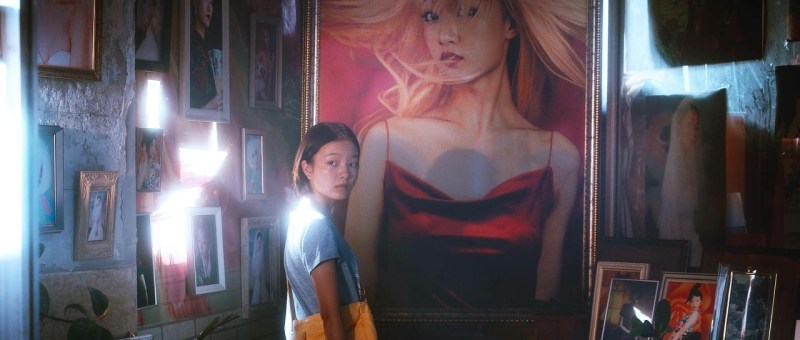
The only bright spot in Xian’s melancholy existence which is generally coloured in blue, her desire for Mingmei is palpable even gazing at the many photos of her taken by her father including one in striking red. Yet there’s an another sense of distance in her longing given that Mingmei is a member of the Chinese-Korean community. Xian is at once struck by this additional layer of exocitity and bewildered by her inability to understand it knowing no Korean nor much of Mingmei’s culture. The film takes its Chinese title from the song Xian sings at the choir recital, the traditional folksong Little White Boat which actually originated in Korea. Xian is disappointed not to spot Mingmei in the audience little knowing that she had been there but left early. Later in the film, Mingmei sings the song herself but in Korean perhaps a way of letting Xian know she came after all, or else simply intended in the way song is often sung as one of parting. In any case, Xian is indeed like the little boat dotting the horizon drifting along barely noticed and with no means of controlling her direction. Geng frames her with a quiet empathy and a gentle sense of recognition for those whose gaze is rarely returned.


A Song Sung Blue screened as part of this year’s Queer East.

Trailer (English subtitles)

Heavy Snow (폭설, Yun Su-ik, 2023)

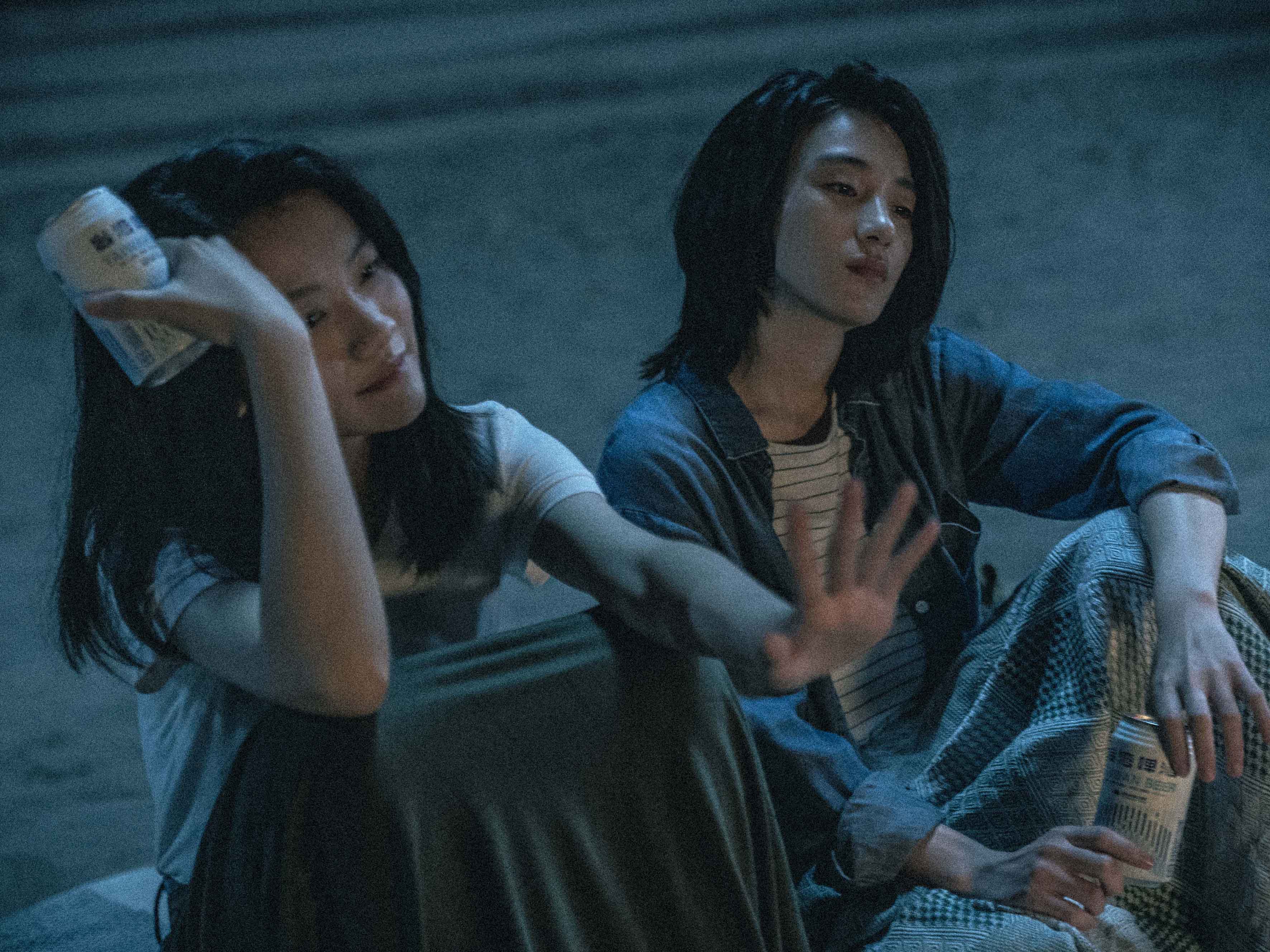
“It’s obvious it was a romance, why did you pretend it wasn’t?” one wounded woman asks another while their connection seems to be frustrated by internalised shame and conflicting desires. Yun Su-ik’s frosty drama Heavy Snow (폭설, pokseol) does indeed seem to suggest that their love for each other can only exist in a kind of otherworld, eventually segueing into a metaphysical realm which simultaneously implies that this isn’t actually a romance but self-reflection and interrogation as a tomboyish actress searches for herself inside her various roles.

Indeed, Su-an (Han Hae-in) views Seol (Han So-hee) with a kind of awe which might be understandable given that Seol is a TV drama superstar improbably transferring to her rural arts school for a break from the world of showbiz. Or as Seol would later imply, because she’s become too difficult to manage and is rebelling against the emptiness of her ostensibly glamorous life through increasing acts of reckless self-harm. Su-an might wonder if that’s all her flirtation is, an attempt to flaunt a taboo while otherwise puzzled and jealous as to why someone like Seol would actually be interested in her. 

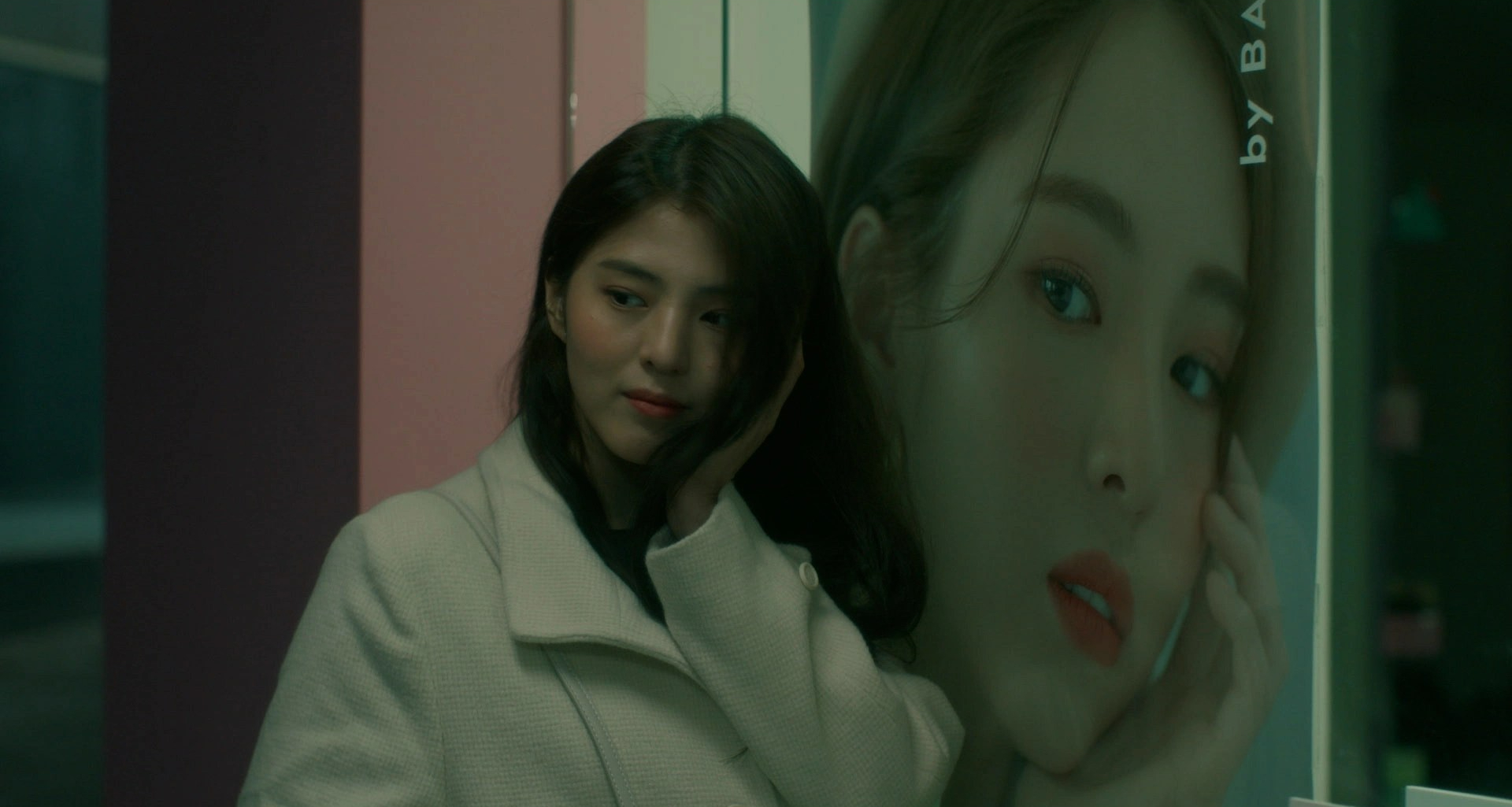
Yet Su-an’s interest is also in part idolisation, attracted to Seol because she fears she is everything she wants to be but isn’t, beautiful and talented. But Seol seems to doubt she’s either of those things while otherwise superficially confident in her sexuality and drawn to Su-an because of her ordinariness. Experiencing a moment of identity crisis, she’s looking for herself outside the frame yet also perhaps like Su-an caught in moment of self-idolisation. Noticing one of the giant billboards of her face that the litter the city she briefly touches it before walking away as if attracted to an image of herself she recognises and doesn’t. 

Yet it seems it’s less the awkwardness of too much intimacy that causes Su-an to pull away when Seol kisses her than shame. She tells Seol that she thinks it isn’t right, and perhaps goes on to regret that decision while continually pining for an idealised teenage love. The two women in a sense trade places. Years later Su-an is a famous TV actress, having in a way taken over the image of Seol, while Seol is evidently no longer acting but a depressed and defeated figure still resentful of Su-an’s rejection. The effects of their shifting fame deepen the gap between them with the teenage Su-an further nervous in her relationship with Seol knowing the danger that her celebrity presents. There is a suggestion that their creative desires conflict with the romantic, that they feel they cannot embrace their sexuality freely and remain in the entertainment industry because of the intense pressures a conservative society places on prominent people to be shining examples of moral purity. Each of them appear to become worn out by the demands of their fame, Su-an turning to drugs in attempt to mask her depression while the teenage Seol ponders quitting acting to become more her authentic self.

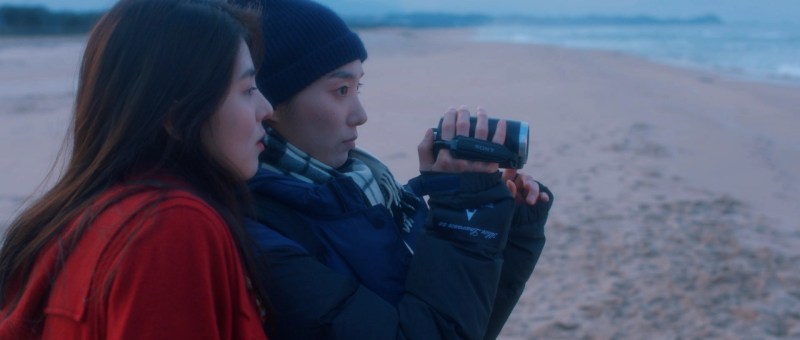
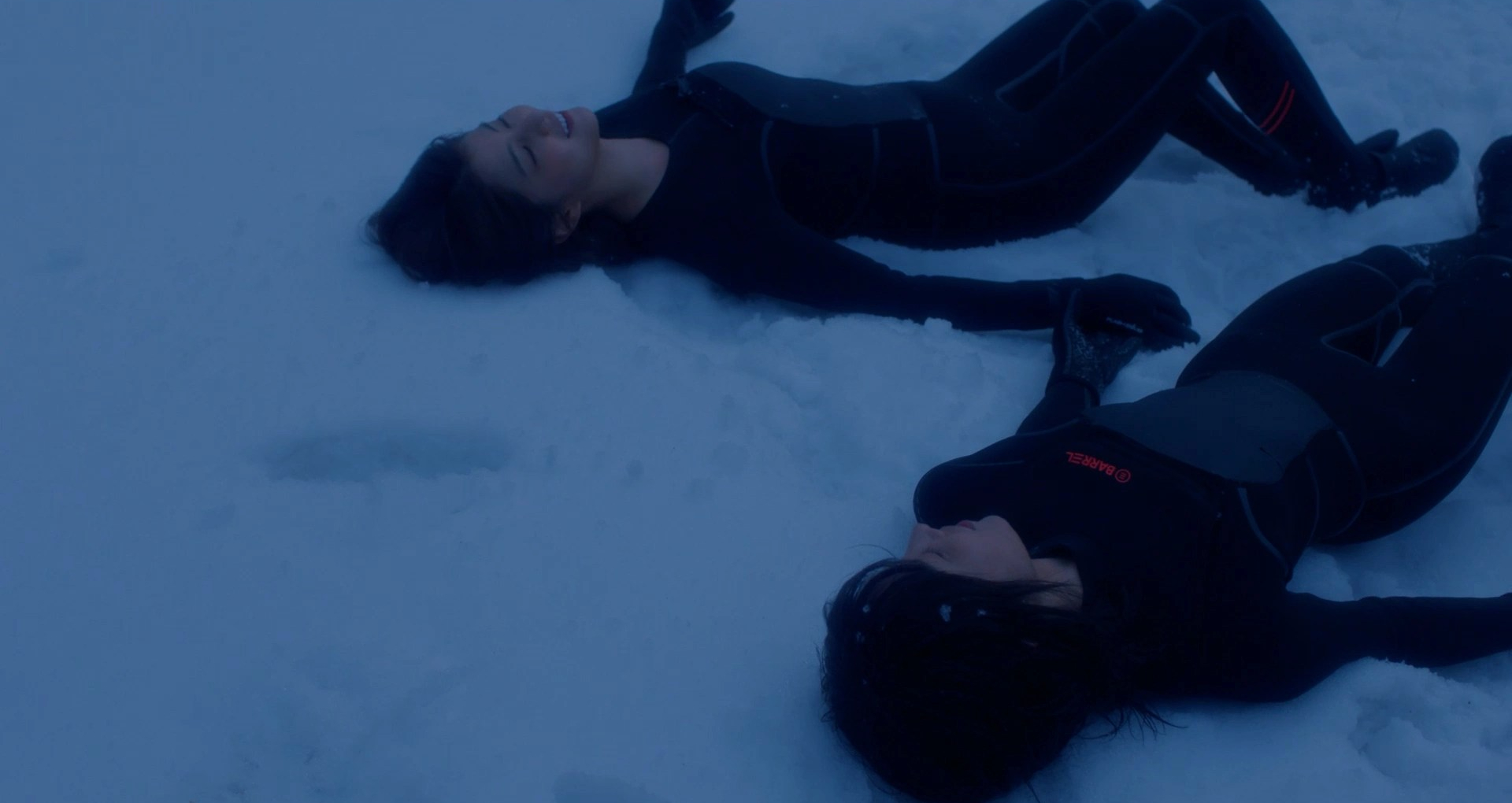
In the dreamlike third act which commences at the sea, a touchstone for each of the women connected to the innocence of their teenage romance, may suggest that in looking for Seol Su-an is really looking for herself or perhaps simply to recapture the person she was at the beginning of everything. At odds with each other, the two women become marooned in a snowbound land with no one else around. Finally repairing their relationship, it seems that they can only embrace their love in this barren place where no one else exists to judge them. The implication maybe that as Seol says the things Su-an wants to say to Seol she really wants to say to herself in a desire for self-acceptance, but equally that we can’t be sure that any of this “real” rather than dream or wishfulment.  In any case all that remains is a painful longing either for an unrealised love or the elusive self. 

Hinting at the pressures of the contemporary society, the unrealistic expectations placed on those in entertainment industry and outward social conservatism the film never less presents its central romance with an evenhanded poignancy even in its continuing impossibility as the two women continue to look for the self in each other but seemingly struggling to see past the hollow images of their own self-projections.


Original trailer (no subtitles)

Heavy Snow screened as part of this year’s BFI Flare.

Postman (邮差, He Jianjun, 1995)

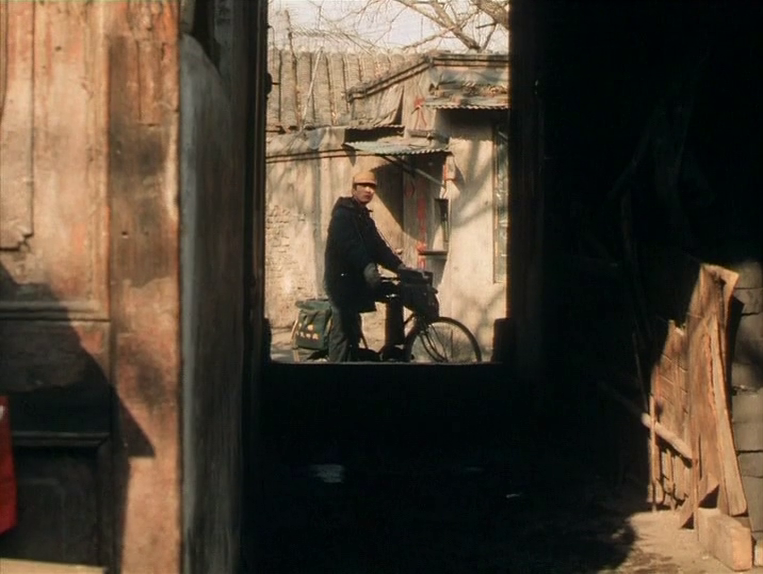
“You young people ask too many questions,” an exasperated postmaster tells a young man trying to refuse a job transfer but somehow embodying an authoritarian voice of order in post-Tiananmen China. The statement is in many ways ironic not least of them being that Xiao Dou (Feng Yuanzheng) barely speaks at all and mounts only a passive resistance to his dissatisfying existence. A portrait of repression, alienation, despair and hopelessness He Jianjun’s epistolary drama Postman (邮差, Yóuchāi) casts its hero as little different from the pillar boxes he instals on behalf of a distant authority, a soulless conduit for the thoughts and feelings of others. 

Xiao Dou is only “promoted” to the role of postman after his predecessor, an elderly man, confesses that he had taken to reading the letters he was supposed to be delivering and is ominously put into the back of a police van. In any case, it’s not long before Xiao Dou starts doing the same thing himself, transgressively relishing in his life as an epistolary voyeur reading the correspondence between an unhappily married woman and her lover with salacious obsession. Objecting to the affair on moral grounds he rejects his role as a passive messenger to interfere in their lives and put to a stop to it though later finds himself visiting a sex worker whose letters to a doctor he had stolen, while otherwise withholding a letter from a young man to his father in which he informs him of his intention to take his own life. 

Ironically assigned to the “Happiness District”, Xiao Dou encounters only yearning and confusion which echo the sense of hopelessness and despair among post-Tiananmen youth which continues to flounder in the changing China of the mid-90s. Then again in this rural backwater not much seems to have changed in the past few decades. The post-office where Xiao Dou works is marked by the maddening rhythms of his colleague Yun Qing (Huang Jianxin) rapidly stamping letters individually by hand before handing them off to Xiao Dou to deliver. The relentless sound and motion seems to reflect her own sexual repression which she eventually relieves by seducing the shy Xiao Dou who then takes another step forward towards transcending himself in completely abandoning conventional morality and compassion for others. 

Hitherto, Xiao Dou had not shown much interest in women and is annoyed when his sister suggests introducing him to a girl from the factory. His first visit to the sex worker, more out of voyeuristic curiosity than desire, ended in failure, yet he remains obsessively invested in the melancholy love letters he collects on his rounds detailing the longing and unhappiness of those around him. Perhaps the most surprising is between a gay writer who has become a drug user and his lover who seems to have disappeared. The writer later dies, presumably of an overdose if one provoked by a broken heart and despair for his life, but the existence of homosexual relationships usually considered so problematic by the censor’s board is otherwise depicted without comment save the uncomfortable implication that is a symptom of the moral decline of contemporary society. In any case, Xiao Dou does not seem to object to it or to the drug taking in the same way he does the affair though he may just assume it will eventually take care of itself. 

Like the writer’s lover, however, disappearances become common place. We see someone approach the pillar box to post a letter but when Xiao Dou turns around they have disappeared almost as if they too were sucked inside. Later he will disappear behind a pillar box he has just fitted in a new part of town the mail did not previously reach while his sister watches him fade out of view from the window of a bus as it rounds a corner. Xiao Dou’s sister had been keen for him to marry because she wanted to get married herself but was reluctant to leave the home their parents left them and wary of Xiao Dou’s ability to get by on his own. Yet through his various transgressions, Xiao Dou in a sense comes of age and is able of overcome his own repression to embrace his otherwise taboo desires in defiance of conventional morality. 

Xiao Dou asks his colleague why it is that things that are so hard to say come out easier in letters, but she answers him that for her it’s the opposite. She prefers to talk and once wrote a letter to a friend only to find herself unable to post it while standing in front of the box ironically enough because she doubted that it would arrive safely. His sense of reticence reflects the enforced silence of life in post-Tiananmen China, men and women afraid to speak their minds and imparting their true souls only to a trusted confidant in a letter but discovering that not even that is safe from prying eyes or the oppressive judgement of an unseen authority. Xiao Dou may see himself as a kind of angel, a passive emissary working on behalf of a higher power, but in liberating himself from his own repression falls still further a product of an ongoing moral disintegration born of nihilistic despair. 


The Missing (Iti Mapukpukaw, Carl Joseph E. Papa, 2023)

The title of Carl Joseph E. Papa’s meta animation The Missing (Iti Mapukpukaw) most obviously refers to the hero’s uncle with whom his mother has lost contact, but in a deeper sense refers to the protagonist himself and the various things he too is missing which notably includes his mouth. Shot in a rotoscope style, Eric’s (Carlo Aquino) mouth is literally blurred out as if it had been erased and smoothed over. He can no longer speak but uses a dry erase board to communicate with those around him.

His troubles start just he’s about to go on a sort of date with coworker Carlo (Gio Gahol) which ends with them discovering the body of his uncle who has apparently passed away in a lonely death. It’s it at this point that Eric is plagued by an alien who keeps trying to abduct him claiming that they have unfinished business. Eric later asserts that he’s afraid the alien is trying to take over his body, hinting at a deeper childhood trauma and anxiety over bodily autonomy and intimacy. The alien’s attacks seem intensify as he grows closer to Carlo, frustrating their tentative romance as if it actively trying to obstruct it. 

The alien’s presence leads to what may seem to others like strange or inconsiderate behaviour. He disappears on Carlo, locks him out of his flat, and seemingly drops out of contact for days on end causing him not an inconsiderate degree of worry given he’s just lost his uncle and appears to be in a state of emotional distress. Yet the most surprising thing is even on being told about the alien Carlo decides to just go with it, taking Eric’s explanation at face value and trying to help him evade it for as long as possible. He eventually admits that he can’t see what Eric sees and they aren’t where he thinks they are but otherwise provides a safe and non-judgmental presence that quietly supports him while he battles his internal demons. His mother Linda (Dolly De Leon) does something similar apparently aware of the alien’s existence, but not what lies behind it or what it really might mean.

Just as reality and fantasy begin to blur for Eric, Papa uses the medium to express his mental state as the world seems to literally crumble around him. The alien steals parts of his body and they literally disappear, a missing ear and blurred out eye along with a blankness where his hand should be. When Eric begins to recall his childhood memories, the animation style switches from the sophisticated rotoscoping of the rest of the film to something much simpler echoing a child’s drawings. In these sequences, the face of Eric’s uncle is always scribbled over in black pen echoing his more literal refusal to see and accept the past. He has been literally silenced by his trauma but now finds it banging on the doors of his mind demanding to be let in.

Yet the reason he is able to overcome it is precisely because of the love an acceptance he receives from his mother and Carlo who never question his reality or attempt to break him out of it, instead deciding to join him there and help him in his quest to get rid of the alien that has plagued him since his childhood. Only this way can he begin to reclaim the parts of himself that were missing, digging through the buried past to retrieve what was taken from him and eventually recovering his voice. 

His quest has a gently absurd quality as parts of him suddenly detach themselves and run away, leaving it unclear for much of the film if Eric’s alien is “real” in a more concrete sense or merely a representation of his childhood trauma and very much inspired by logics and aesthetics of a small child who has been forced to keep a secret out of fear and shame and thereby unable to communicate his pain. In the end it’s love that brings him out of it, a gentle, patient and unconditional love that takes him as he is and gives him the space to find his own way out his trauma. Filled with a sense of warmth despite the darkness of its centre Carl Joseph E. Papa’s strangely poignant film for all its talk of aliens and destruction is remarkably human allowing its protagonist to finally begins to recover himself thanks to the loving support of those around him.


The Missing screened as part of this year’s Osaka Asian Film Festival.

Original trailer (English subtitles)

Monster (怪物, Hirokazu Koreeda, 2023)

Part-way through Hirokazu Koreeda’s probing drama Monster (怪物, Kaibutsu), a distant headmistress tells one of her teachers that “What actually happened doesn’t matter.” As in The Third Murder, the truth, so far as it can be said to exist at all, is an irrelevance. We need narrative to serve a purpose. Confronted by a worried mother, a teacher accused of using violence against a student claims there’s been a “misunderstanding,” but in many ways there has. We’re so often prevented from speaking our truth by the social conventions that govern us, because of shame, or fear, or simply because when all is said and done is it often easier not to speak.

In may ways this is the internal battle Minato (Soya Kurokawa) finds himself fighting. He sees another boy being bullied, mostly just for being different, and he wants to do something about it but he’s different too and so he’s afraid. He befriends the boy, Yori (Hinata Hiiragi), but also tells him to not speak to him in front of their classmates because he doesn’t want to end up being a target. In the midst of futility all he can do is flail randomly, trashing the schoolroom not to mention his bedroom at home solely because he is unable to voice himself clearly or communicate in any other way.

Because of these lapses in communication, a series of misunderstandings arise. The language we use is often thoughtless and arbitrary. Well-meaning words can still wound. Minato’s mother, Saori (Sakura Ando), tells him that she promised his late father she’d take care of him until he had a wife and family of his own but perhaps that not something Minato will want. Similarly their teacher, Hori (Eita Nagayama), described by one of his colleagues as “shifty-eyed and creepy”, makes a series of throwaway remarks that the boys should act let men, filling their heads with an idea of toxic masculinity echoed in Saori’s insistence that girls prefer boys who don’t know the names of flowers. 

Minato is reminded that the bottom layer of the pyramid holds everything else in place, but it’s a responsibility he doesn’t think he can bear. He knows he can’t be the kind of man his father apparently was, a rugby player who may have been with another woman when he died, and feels an acute sense if failure and inferiority in being unable to live up to the expectations of others. He later tells the headmistress (Yuko Tanaka) who is carrying a burden of her own that he knows he can never be happy and believes himself unworthy of it only to find an unexpected source strength in her advocation that happiness is something anyone can have, otherwise it wouldn’t be happiness at all.

Yet for all that Yori seems to be happy, or at least to affect cheerfulness in all things despite his dismal circumstances living with a troubled father who drinks and refers to him as monstrous and diseased. One of the teachers also brands the parents of his pupils as monsters feeling they unjustly “torture” them while shifting the blame for their own bad parenting. Minato too feels himself to be a monster because he senses that he’s different from those around him and is afraid of them and of himself. Throw away remarks hint at buried prejudice, such as in Hori’s dig at single mothers stating that his own mother was one and exposing a degree of insecurity masked by an outward conservatism.

We judge him for this remark, but it’s also true he’s merely parroting something that was said to him. We can never know all of the truth, and Hori suffers in part because of his “shifty-eyed and creepy” appearance that contributes to our conviction the accusations against him are likely to be true in the same way he misunderstands Minato because of his confusing behaviour and inability to communicate. Gossip weaves itself into a kind of folk truth that becomes difficult to unravel no matter the degree of veracity within it, while we discover we can never know the whole of something only the facets of it that are presented to us and might well result in “misunderstandings.”

Koreeda shifts our perspective and exposes the flaws in our assumptions, illuminating with empathy a sense of a more objective truth that was hidden from us but equally the various reasons we cannot always be truthful even with ourselves nor can we see what others see of us. Obsessed with the idea of rebirth, the boys discover their own kind of paradise in private world in the midst of nature free of social conventions or expectation and free to be exactly as they are. The ambiguity of the ending may subtly undercut its seeming utopianism but nevertheless suggests that the only objective truth may be that happiness is something anyone can have if only they can free themselves from the prejudices and petty social conventions which govern our world.


MONSTER is out in UK and Irish cinemas on March 15th. For more information, go to https://monsteruk.film/ 

Uk trailer (English subtitles)

BFI Flare Confirms Complete Programme for 2024

The BFI’s LGBTQ+ film festival, BFI Flare, has announced the full programme for this year’s edition which runs at the BFI Southbank 13th to 24th March. This year there are a trio of features from East Asia included in the lineup from South Korea, Taiwan, and Thailand.

South Korea

  • Heavy Snow – drama in which a girl at a performing arts high school draws closer to a famous teen actress.

Taiwan

  • Who’ll Stop The Rain – drama set in post-martial law Taiwan in which an art student experiences first love after joining a protest group.

Thailand

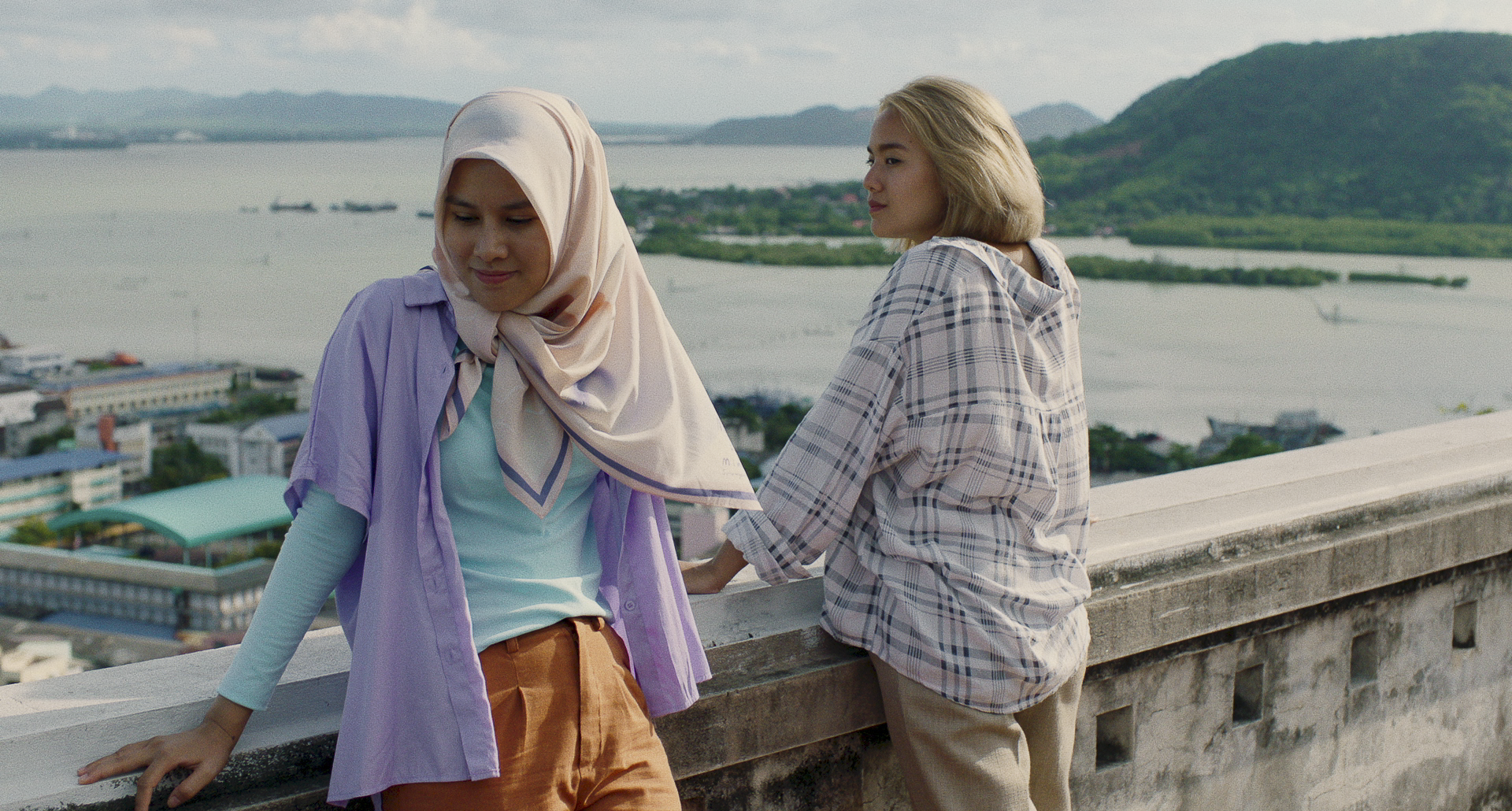
  • Solids By the Seashore – etherial Thai drama in which a woman from a small town falls for a visiting artist.

BFI Flare runs at BFI Southbank 13th to 24th March, 2024. A small number of short films are also available to stream via BFI Player. The full programme can be found on the official website where tickets are already on sale. You can also keep up to date with all the latest news via the festival’s Facebook page,  X (formerly Twitter) account, Instagram, and YouTube channels.

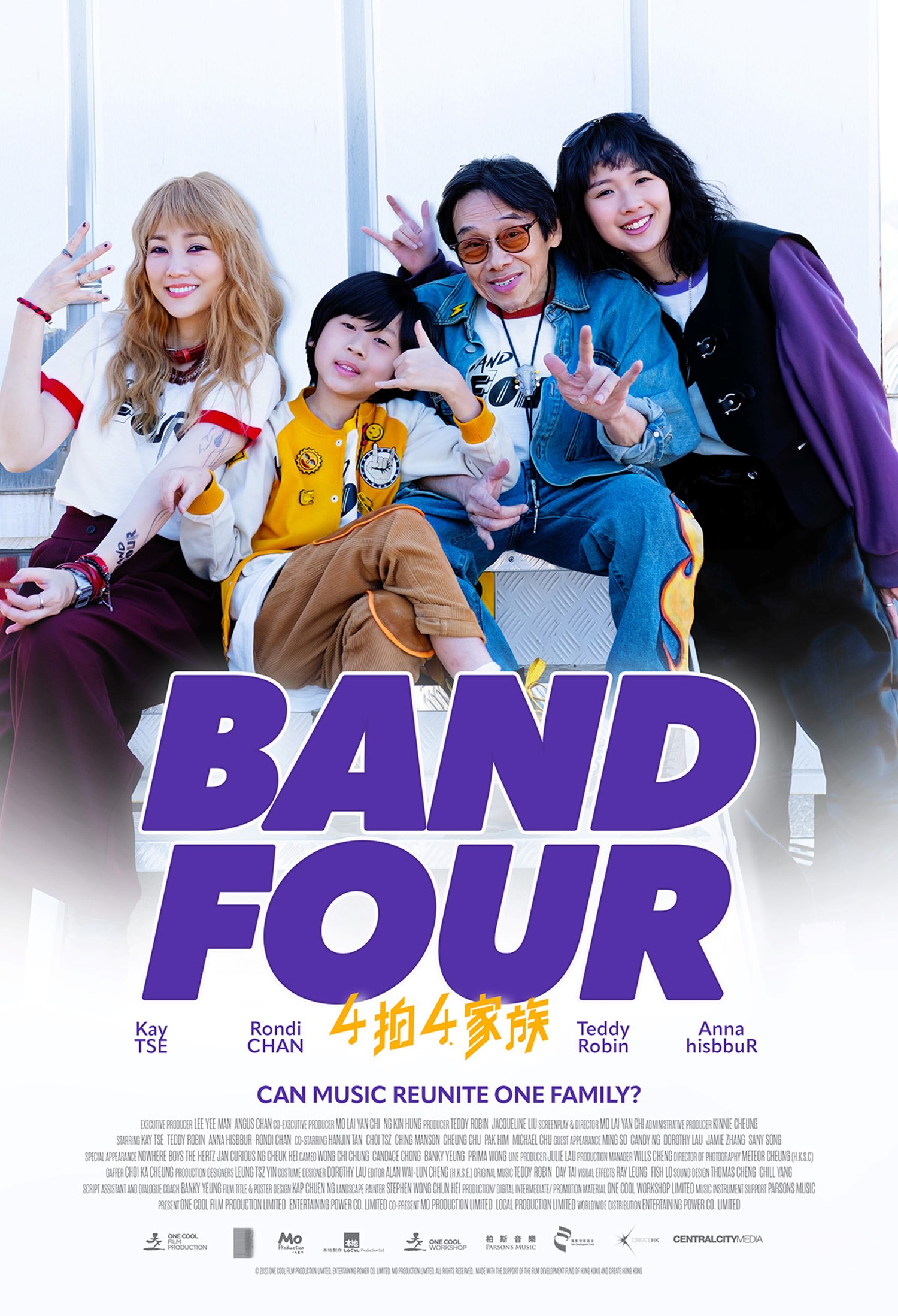
Band Four (4拍4家族, Mo Lai Yan Chi, 2023)

“Music is the best therapy, keep on playing music” is the advice of a doctor in Mo Lai Yan Chi’s poignant drama Band Four (4拍4家族) in which a disparate family is brought back together through their musical passions. Functioning as a kind of political allegory for a culture in danger of forgetting itself, the film rediscovers a sense of intergenerational solidarity in which that which seems lost can be reclaimed and passed down surviving in the minds of those who will remember.

The past intrudes in a more literal sense when the estranged father of Cat (Cantopop singer Kay Tse On-Kei), who has just lost her mother, suddenly returns and moves into her apartment after many years living over the border in Shenzhen. Former rockstar King (Teddy Robin) is clearly befuddled by the changes in contemporary Hong Kong, attempting to pay for a local snack in renminbi and getting Hong Kong Dollars back before being fined for littering by a very officious policewoman while he struggles to find a place for himself in Cat’s life given her understandable resentment of him for abandoning her only to return with another daughter in tow who has an incredibly similar Chinese name. 

Cat too is partly living in the past, fixed on getting to perform at an international festival with her band, Band Four, the name of which is inspired by her father’s old band, Band Seven, in order to honour the memories of two members who passed away suddenly just before they were due to travel abroad. Now in her 30s, Cat struggles to keep the band together only for her best friend to quit after deciding to get married and move to France while she’s otherwise forced to perform in fairly humiliating circumstances which only encourage her other two band members to an accept an offer to move to the Mainland. 

Many are indeed leaving, including King’s former bandmate and the owner of the live music venue where Cat plays who explains his wife wants to move abroad for a better future for their son though he finds it difficult to leave. Cat’s songs ask why it is she’s the only one who’s remained behind and committed to her dream, as if she were a kind of guardian of the old Hong Kong even as her own memory fails and she fears the time when she will forget everyone who was close to her. She worries about how to safeguard her memories in the same way she worries about raising her son, Riley (Rondi Chan), who is not academically inclined and struggles at school but appears to have a talent for the drums along with a kind and generous heart. 

Riley had explained that Cat started the band to find a family, which is what she eventually gets in learning to forgive her father whose interest in becoming a part of her life again is genuine while she also bonds with her half-sister Lok Yin (Anna hisbbuR) who also has musical aspirations and romantic disappointments that might otherwise leave her feelings lost and alone. “If you’re unhappy talk to your family” Lok Yin had advised Riley only to have the same advice given back to her and unexpectedly finding value in it. Occupying a maternal space, Cat strives to safeguard the future looking for others who could care for Riley as her own health fails while discovering that her family will take care of both him and her resolving that it won’t matter if Cat no longer remembers because they will remember for her. 

A musical love letter to Hong Kong, the film is both an advocation for moving forward but also for taking the past with you as you go, treasuring the memories of something that might no longer exist anywhere else. As Cat later says, anywhere you play is your stage and if you stumble over your lines someone else will be there to remind you where you are. Cheerful and heartwarming despite the sometimes heavy themes and a sense of inevitable erasure, Lai captures a sense of community warmth and mutual solidarity among those who choose to stay and remember rather than abandon their memories and start anew somewhere else.


Band Four is in UK cinemas from 15th December courtesy of Central City Media.

UK trailer (English subtitles)