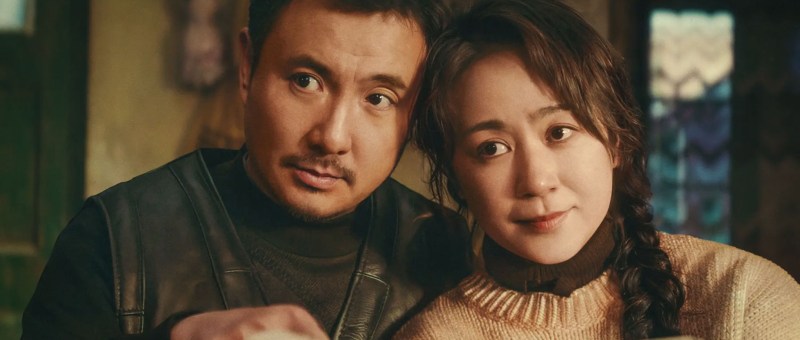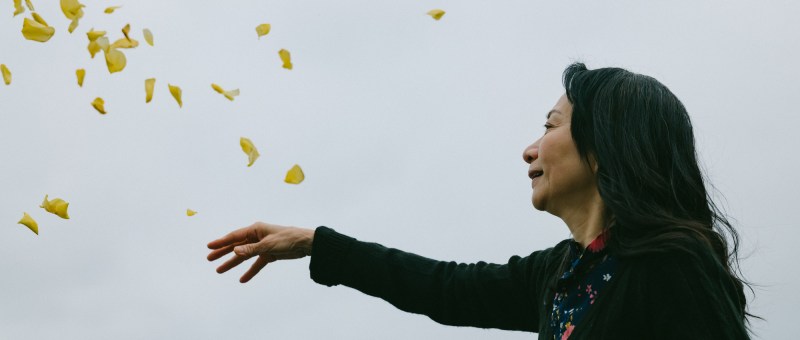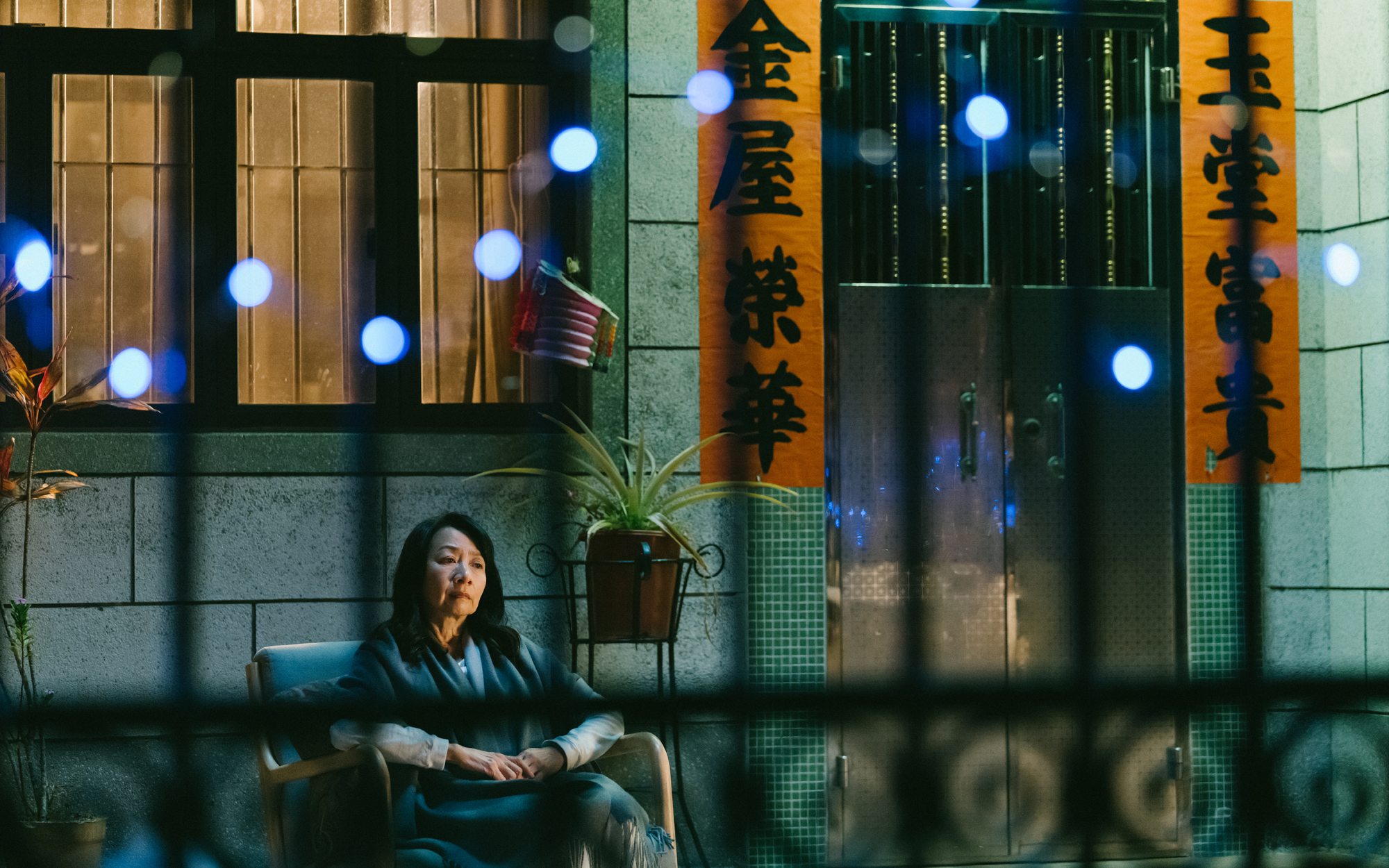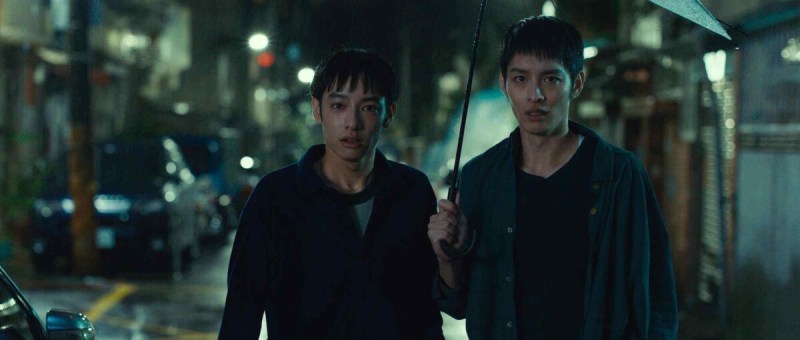
Postman (邮差, He Jianjun, 1995)

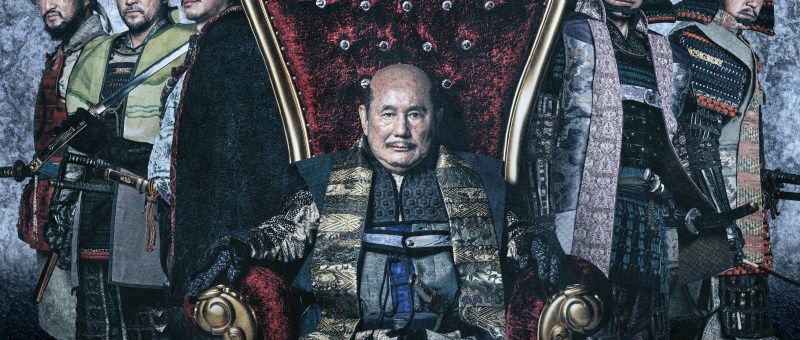
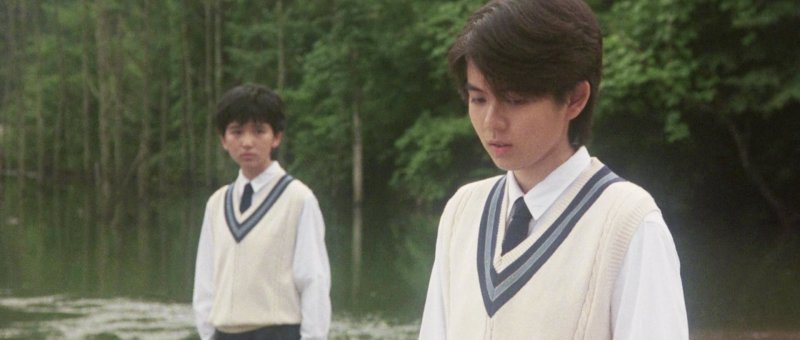
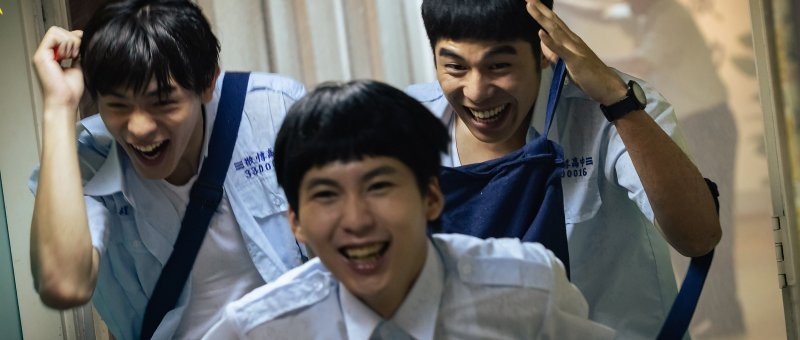
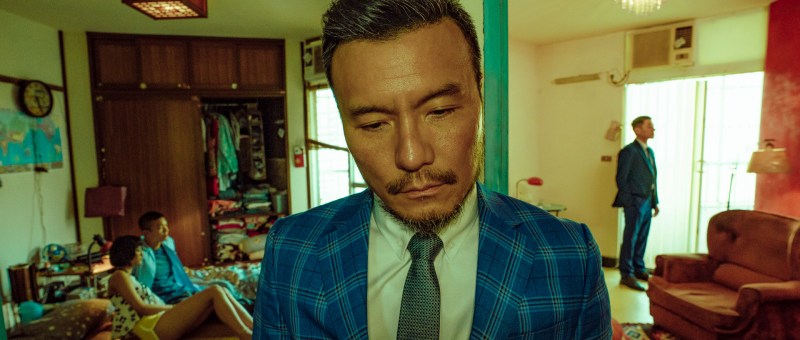
“You young people ask too many questions,” an exasperated postmaster tells a young man trying to refuse a job transfer but somehow embodying an authoritarian voice of order in post-Tiananmen China. The statement is in many ways ironic not least of them being that Xiao Dou (Feng Yuanzheng) barely speaks at all and mounts only a passive resistance to his dissatisfying existence. A portrait of repression, alienation, despair and hopelessness He Jianjun’s epistolary drama Postman (邮差, Yóuchāi) casts its hero as little different from the pillar boxes he instals on behalf of a distant authority, a soulless conduit for the thoughts and feelings of others. 

Xiao Dou is only “promoted” to the role of postman after his predecessor, an elderly man, confesses that he had taken to reading the letters he was supposed to be delivering and is ominously put into the back of a police van. In any case, it’s not long before Xiao Dou starts doing the same thing himself, transgressively relishing in his life as an epistolary voyeur reading the correspondence between an unhappily married woman and her lover with salacious obsession. Objecting to the affair on moral grounds he rejects his role as a passive messenger to interfere in their lives and put to a stop to it though later finds himself visiting a sex worker whose letters to a doctor he had stolen, while otherwise withholding a letter from a young man to his father in which he informs him of his intention to take his own life. 

Ironically assigned to the “Happiness District”, Xiao Dou encounters only yearning and confusion which echo the sense of hopelessness and despair among post-Tiananmen youth which continues to flounder in the changing China of the mid-90s. Then again in this rural backwater not much seems to have changed in the past few decades. The post-office where Xiao Dou works is marked by the maddening rhythms of his colleague Yun Qing (Huang Jianxin) rapidly stamping letters individually by hand before handing them off to Xiao Dou to deliver. The relentless sound and motion seems to reflect her own sexual repression which she eventually relieves by seducing the shy Xiao Dou who then takes another step forward towards transcending himself in completely abandoning conventional morality and compassion for others. 

Hitherto, Xiao Dou had not shown much interest in women and is annoyed when his sister suggests introducing him to a girl from the factory. His first visit to the sex worker, more out of voyeuristic curiosity than desire, ended in failure, yet he remains obsessively invested in the melancholy love letters he collects on his rounds detailing the longing and unhappiness of those around him. Perhaps the most surprising is between a gay writer who has become a drug user and his lover who seems to have disappeared. The writer later dies, presumably of an overdose if one provoked by a broken heart and despair for his life, but the existence of homosexual relationships usually considered so problematic by the censor’s board is otherwise depicted without comment save the uncomfortable implication that is a symptom of the moral decline of contemporary society. In any case, Xiao Dou does not seem to object to it or to the drug taking in the same way he does the affair though he may just assume it will eventually take care of itself. 

Like the writer’s lover, however, disappearances become common place. We see someone approach the pillar box to post a letter but when Xiao Dou turns around they have disappeared almost as if they too were sucked inside. Later he will disappear behind a pillar box he has just fitted in a new part of town the mail did not previously reach while his sister watches him fade out of view from the window of a bus as it rounds a corner. Xiao Dou’s sister had been keen for him to marry because she wanted to get married herself but was reluctant to leave the home their parents left them and wary of Xiao Dou’s ability to get by on his own. Yet through his various transgressions, Xiao Dou in a sense comes of age and is able of overcome his own repression to embrace his otherwise taboo desires in defiance of conventional morality. 

Xiao Dou asks his colleague why it is that things that are so hard to say come out easier in letters, but she answers him that for her it’s the opposite. She prefers to talk and once wrote a letter to a friend only to find herself unable to post it while standing in front of the box ironically enough because she doubted that it would arrive safely. His sense of reticence reflects the enforced silence of life in post-Tiananmen China, men and women afraid to speak their minds and imparting their true souls only to a trusted confidant in a letter but discovering that not even that is safe from prying eyes or the oppressive judgement of an unseen authority. Xiao Dou may see himself as a kind of angel, a passive emissary working on behalf of a higher power, but in liberating himself from his own repression falls still further a product of an ongoing moral disintegration born of nihilistic despair. 


The Missing (Iti Mapukpukaw, Carl Joseph E. Papa, 2023)

The title of Carl Joseph E. Papa’s meta animation The Missing (Iti Mapukpukaw) most obviously refers to the hero’s uncle with whom his mother has lost contact, but in a deeper sense refers to the protagonist himself and the various things he too is missing which notably includes his mouth. Shot in a rotoscope style, Eric’s (Carlo Aquino) mouth is literally blurred out as if it had been erased and smoothed over. He can no longer speak but uses a dry erase board to communicate with those around him.

His troubles start just he’s about to go on a sort of date with coworker Carlo (Gio Gahol) which ends with them discovering the body of his uncle who has apparently passed away in a lonely death. It’s it at this point that Eric is plagued by an alien who keeps trying to abduct him claiming that they have unfinished business. Eric later asserts that he’s afraid the alien is trying to take over his body, hinting at a deeper childhood trauma and anxiety over bodily autonomy and intimacy. The alien’s attacks seem intensify as he grows closer to Carlo, frustrating their tentative romance as if it actively trying to obstruct it. 

The alien’s presence leads to what may seem to others like strange or inconsiderate behaviour. He disappears on Carlo, locks him out of his flat, and seemingly drops out of contact for days on end causing him not an inconsiderate degree of worry given he’s just lost his uncle and appears to be in a state of emotional distress. Yet the most surprising thing is even on being told about the alien Carlo decides to just go with it, taking Eric’s explanation at face value and trying to help him evade it for as long as possible. He eventually admits that he can’t see what Eric sees and they aren’t where he thinks they are but otherwise provides a safe and non-judgmental presence that quietly supports him while he battles his internal demons. His mother Linda (Dolly De Leon) does something similar apparently aware of the alien’s existence, but not what lies behind it or what it really might mean.

Just as reality and fantasy begin to blur for Eric, Papa uses the medium to express his mental state as the world seems to literally crumble around him. The alien steals parts of his body and they literally disappear, a missing ear and blurred out eye along with a blankness where his hand should be. When Eric begins to recall his childhood memories, the animation style switches from the sophisticated rotoscoping of the rest of the film to something much simpler echoing a child’s drawings. In these sequences, the face of Eric’s uncle is always scribbled over in black pen echoing his more literal refusal to see and accept the past. He has been literally silenced by his trauma but now finds it banging on the doors of his mind demanding to be let in.

Yet the reason he is able to overcome it is precisely because of the love an acceptance he receives from his mother and Carlo who never question his reality or attempt to break him out of it, instead deciding to join him there and help him in his quest to get rid of the alien that has plagued him since his childhood. Only this way can he begin to reclaim the parts of himself that were missing, digging through the buried past to retrieve what was taken from him and eventually recovering his voice. 

His quest has a gently absurd quality as parts of him suddenly detach themselves and run away, leaving it unclear for much of the film if Eric’s alien is “real” in a more concrete sense or merely a representation of his childhood trauma and very much inspired by logics and aesthetics of a small child who has been forced to keep a secret out of fear and shame and thereby unable to communicate his pain. In the end it’s love that brings him out of it, a gentle, patient and unconditional love that takes him as he is and gives him the space to find his own way out his trauma. Filled with a sense of warmth despite the darkness of its centre Carl Joseph E. Papa’s strangely poignant film for all its talk of aliens and destruction is remarkably human allowing its protagonist to finally begins to recover himself thanks to the loving support of those around him.


The Missing screened as part of this year’s Osaka Asian Film Festival.

Original trailer (English subtitles)

Monster (怪物, Hirokazu Koreeda, 2023)

Part-way through Hirokazu Koreeda’s probing drama Monster (怪物, Kaibutsu), a distant headmistress tells one of her teachers that “What actually happened doesn’t matter.” As in The Third Murder, the truth, so far as it can be said to exist at all, is an irrelevance. We need narrative to serve a purpose. Confronted by a worried mother, a teacher accused of using violence against a student claims there’s been a “misunderstanding,” but in many ways there has. We’re so often prevented from speaking our truth by the social conventions that govern us, because of shame, or fear, or simply because when all is said and done is it often easier not to speak.

In may ways this is the internal battle Minato (Soya Kurokawa) finds himself fighting. He sees another boy being bullied, mostly just for being different, and he wants to do something about it but he’s different too and so he’s afraid. He befriends the boy, Yori (Hinata Hiiragi), but also tells him to not speak to him in front of their classmates because he doesn’t want to end up being a target. In the midst of futility all he can do is flail randomly, trashing the schoolroom not to mention his bedroom at home solely because he is unable to voice himself clearly or communicate in any other way.

Because of these lapses in communication, a series of misunderstandings arise. The language we use is often thoughtless and arbitrary. Well-meaning words can still wound. Minato’s mother, Saori (Sakura Ando), tells him that she promised his late father she’d take care of him until he had a wife and family of his own but perhaps that not something Minato will want. Similarly their teacher, Hori (Eita Nagayama), described by one of his colleagues as “shifty-eyed and creepy”, makes a series of throwaway remarks that the boys should act let men, filling their heads with an idea of toxic masculinity echoed in Saori’s insistence that girls prefer boys who don’t know the names of flowers. 

Minato is reminded that the bottom layer of the pyramid holds everything else in place, but it’s a responsibility he doesn’t think he can bear. He knows he can’t be the kind of man his father apparently was, a rugby player who may have been with another woman when he died, and feels an acute sense if failure and inferiority in being unable to live up to the expectations of others. He later tells the headmistress (Yuko Tanaka) who is carrying a burden of her own that he knows he can never be happy and believes himself unworthy of it only to find an unexpected source strength in her advocation that happiness is something anyone can have, otherwise it wouldn’t be happiness at all.

Yet for all that Yori seems to be happy, or at least to affect cheerfulness in all things despite his dismal circumstances living with a troubled father who drinks and refers to him as monstrous and diseased. One of the teachers also brands the parents of his pupils as monsters feeling they unjustly “torture” them while shifting the blame for their own bad parenting. Minato too feels himself to be a monster because he senses that he’s different from those around him and is afraid of them and of himself. Throw away remarks hint at buried prejudice, such as in Hori’s dig at single mothers stating that his own mother was one and exposing a degree of insecurity masked by an outward conservatism.

We judge him for this remark, but it’s also true he’s merely parroting something that was said to him. We can never know all of the truth, and Hori suffers in part because of his “shifty-eyed and creepy” appearance that contributes to our conviction the accusations against him are likely to be true in the same way he misunderstands Minato because of his confusing behaviour and inability to communicate. Gossip weaves itself into a kind of folk truth that becomes difficult to unravel no matter the degree of veracity within it, while we discover we can never know the whole of something only the facets of it that are presented to us and might well result in “misunderstandings.”

Koreeda shifts our perspective and exposes the flaws in our assumptions, illuminating with empathy a sense of a more objective truth that was hidden from us but equally the various reasons we cannot always be truthful even with ourselves nor can we see what others see of us. Obsessed with the idea of rebirth, the boys discover their own kind of paradise in private world in the midst of nature free of social conventions or expectation and free to be exactly as they are. The ambiguity of the ending may subtly undercut its seeming utopianism but nevertheless suggests that the only objective truth may be that happiness is something anyone can have if only they can free themselves from the prejudices and petty social conventions which govern our world.


MONSTER is out in UK and Irish cinemas on March 15th. For more information, go to https://monsteruk.film/ 

Uk trailer (English subtitles)

BFI Flare Confirms Complete Programme for 2024

The BFI’s LGBTQ+ film festival, BFI Flare, has announced the full programme for this year’s edition which runs at the BFI Southbank 13th to 24th March. This year there are a trio of features from East Asia included in the lineup from South Korea, Taiwan, and Thailand.

South Korea

  • Heavy Snow – drama in which a girl at a performing arts high school draws closer to a famous teen actress.

Taiwan

  • Who’ll Stop The Rain – drama set in post-martial law Taiwan in which an art student experiences first love after joining a protest group.

Thailand

  • Solids By the Seashore – etherial Thai drama in which a woman from a small town falls for a visiting artist.

BFI Flare runs at BFI Southbank 13th to 24th March, 2024. A small number of short films are also available to stream via BFI Player. The full programme can be found on the official website where tickets are already on sale. You can also keep up to date with all the latest news via the festival’s Facebook page,  X (formerly Twitter) account, Instagram, and YouTube channels.

Band Four (4拍4家族, Mo Lai Yan Chi, 2023)

“Music is the best therapy, keep on playing music” is the advice of a doctor in Mo Lai Yan Chi’s poignant drama Band Four (4拍4家族) in which a disparate family is brought back together through their musical passions. Functioning as a kind of political allegory for a culture in danger of forgetting itself, the film rediscovers a sense of intergenerational solidarity in which that which seems lost can be reclaimed and passed down surviving in the minds of those who will remember.

The past intrudes in a more literal sense when the estranged father of Cat (Cantopop singer Kay Tse On-Kei), who has just lost her mother, suddenly returns and moves into her apartment after many years living over the border in Shenzhen. Former rockstar King (Teddy Robin) is clearly befuddled by the changes in contemporary Hong Kong, attempting to pay for a local snack in renminbi and getting Hong Kong Dollars back before being fined for littering by a very officious policewoman while he struggles to find a place for himself in Cat’s life given her understandable resentment of him for abandoning her only to return with another daughter in tow who has an incredibly similar Chinese name. 

Cat too is partly living in the past, fixed on getting to perform at an international festival with her band, Band Four, the name of which is inspired by her father’s old band, Band Seven, in order to honour the memories of two members who passed away suddenly just before they were due to travel abroad. Now in her 30s, Cat struggles to keep the band together only for her best friend to quit after deciding to get married and move to France while she’s otherwise forced to perform in fairly humiliating circumstances which only encourage her other two band members to an accept an offer to move to the Mainland. 

Many are indeed leaving, including King’s former bandmate and the owner of the live music venue where Cat plays who explains his wife wants to move abroad for a better future for their son though he finds it difficult to leave. Cat’s songs ask why it is she’s the only one who’s remained behind and committed to her dream, as if she were a kind of guardian of the old Hong Kong even as her own memory fails and she fears the time when she will forget everyone who was close to her. She worries about how to safeguard her memories in the same way she worries about raising her son, Riley (Rondi Chan), who is not academically inclined and struggles at school but appears to have a talent for the drums along with a kind and generous heart. 

Riley had explained that Cat started the band to find a family, which is what she eventually gets in learning to forgive her father whose interest in becoming a part of her life again is genuine while she also bonds with her half-sister Lok Yin (Anna hisbbuR) who also has musical aspirations and romantic disappointments that might otherwise leave her feelings lost and alone. “If you’re unhappy talk to your family” Lok Yin had advised Riley only to have the same advice given back to her and unexpectedly finding value in it. Occupying a maternal space, Cat strives to safeguard the future looking for others who could care for Riley as her own health fails while discovering that her family will take care of both him and her resolving that it won’t matter if Cat no longer remembers because they will remember for her. 

A musical love letter to Hong Kong, the film is both an advocation for moving forward but also for taking the past with you as you go, treasuring the memories of something that might no longer exist anywhere else. As Cat later says, anywhere you play is your stage and if you stumble over your lines someone else will be there to remind you where you are. Cheerful and heartwarming despite the sometimes heavy themes and a sense of inevitable erasure, Lai captures a sense of community warmth and mutual solidarity among those who choose to stay and remember rather than abandon their memories and start anew somewhere else.


Band Four is in UK cinemas from 15th December courtesy of Central City Media.

UK trailer (English subtitles)

Mayhem Girls (メイヘムガールズ, Shinichi Fujita, 2022)

Four teenage girls unexpectedly find themselves with superpowers during the Covid-19 pandemic, but largely struggle with just the same problems as everyone else in Shinichi Fujita’s sci-fi-inflected high school dramedy Mayhem Girls (メイヘムガールズ). Despite the implications of the title, mayhem is not exactly the girls’ vibe though they each in their own way challenge the oppressive social norms of those around them later depressed by the realisation that they’ll soon have to go back to being “normal” and lose this brief respite they’ve been given from the rigours of high school life. 

The girls are already close to boiling point with the pressures of the pandemic as the teachers (ironically) yell at them to use hand sanitiser and social distance. The final straw seems to be the announcement that the Cultural Festival will be going online. That might be one reason why popular girl Mizuho (Mizuki Yoshida) suddenly snaps when her teacher catches her reading Twitter on her phone rather than studying. Miss Sawaguchi (Maako Miwa) is young and somewhat timid, unable to exert her authority over the class which is largely uninterested in her attempt to read out articles from English-language magazines. What’s the point, Mizuho wonders, in learning English if you can’t go abroad anyway? Sawaguchi takes this opportunity to reprimand Mizuho as a means of asserting her control but it backfires as something strange happens when she confiscates the phone. Sawaguchi’s hand stops mid-air allowing Mizuho to simply reclaim it while she runs out of the room as if in pain. 

This is only the first inkling that Mizuho has gained unexpected powers of telekinesis though she struggles to understand what happened, certain that she didn’t touch Miss Sawaguchi and confused that she seems to be talking about “violence” and displaying bruises on her wrists. In any case, the event loses her her phone which is akin to a kind of social death for a teenage girl. Her powers have, however, brought her to the attention of Tamaki (Amane Kamiya) who is a telepath, or more accurately given her an excuse to make contact for as it turns out Tamaki has long been carrying a torch for the oblivious Mizuho who is hung up on the student who was her tutor in middle school, Yusuke (Taisei Kido). Soon they are joined by two more girls, Akane (Manami Igashira) who can teleport, and Kei (Hina Kikuchi) who can read the minds of machines, in a kind of after school superpower club. 

Though they eventually become good friends, the relationship between the girls is strained by their differing views on their powers and by Mizuho’s concurrent obsession with Yusuke who is now a part-time delivery rider struggling to find a full time job in the middle of the pandemic. Using Kei’s powers to track him down she waits outside his house for him to come back and inserts herself into his life. Though he seems as if he’s about to remind her that her behaviour is inappropriate, Yusuke eventually goes all in on Mizuho after learning of her powers and asks her to use them to rob a bank so he can forget about his employment woes. 

There are many things you shouldn’t do for a boy and robbing a bank is very high on the list, though perhaps merely a more extreme version of a lesson typically learned in adolescence. In any case, this is far as Mizuho is pushed to the dark side. Other than that, none of the girls really consider using their powers for evil ends with even Tamaki admitting that she has thought about poking around in Mizuho’s head but feels it would be wrong to do so. It’s Tamaki who draws the short straw in being largely unable to articulate herself even by using her powers before eventually trying to communicate in images only to be robbed of the power to do so at the very last second when she’s reduced to being “normal” once again. 

“Normality” does seem to resume for them, each of the girls heading back to their own individual cliques having seemingly learned little from their experiences save Tamaki who is left with a lingering sadness. Perhaps what they’ve been through is a kind of mayhem, a period of chaos provoked by the pressures of the pandemic along with oppressive teachers and the regular teenage issues of unrequited love and romantic disappointment but they’ve returned to “normal” all too quickly leaving precious little time to meditate on the results of their flirtation with superpowers and psychic abilities in a world in which normality itself is both somewhat illusionary and infinitely oppressive.


Mayhem Girls screened as part of this year’s New York Asian Film Festival.

Original trailer (no subtitles)

The Summer (그 여름, Han Ji-won, 2023)

A rueful young woman meditates on first love while losing direction in the city in Han Ji-won’s nostalgic adaptation of the story by Choi Sun-young, The Summer (그 여름, Geu Yeoleum). Set in the late ‘90s and early 2000s, the film finds an unexpected optimism for better future even in a society perhaps (even) less tolerant than that of today, but equally positions opposing reactions to their queerness as a force which erodes the innocent romance between two girls who met in high school and fell in love along with the more obvious stressors of city life such as social class and aspiration.

As Yi-gyeong later admits, “everything changed when we moved to Seoul”. Han depicts the tranquil rural town where the girls grew up as place of light and warmth, a kind of eternal summer of memory. Yet perhaps there’s something in the fact that when they first meet, footballer Su-yi accidentally breaks Yi-gyeong’s glasses rendering her at least temporarily unable to see clearly. A connection develops that first leads to an awkward friendship and finally to love, but where as a naive Yi-gyeong plans to come out and live openly as a lesbian, Su-yi is terrified and withdrawn. A few mocking sneers from her classmates show Yi-gyeong that Su-yi may have had a point and there are reasons they may have to keep their relationship secret.

Yi-gyeong’s inner conflict is reflected in a conundrum over her hair which is naturally lighter than than that of the uniform black of the girls around her. A teacher often stops to tell her to stop messing with it, leading her to wonder if she shouldn’t dye it the “correct” colour to be the same as everyone else thereby erasing her otherness and symbolically rejecting her homosexuality. She is also teased for having hazel eyes which are to some the eyes of a dog, and it’s Su-yi’s straightforward gaze into them that eventually brings the pair closer, Yi-gyeong feeling seen and accepted while Su-yi calmly tells her not to pay so much attention to what others think.

Yet for Su-yi the words are a double edged sword. Her way of not caring what other people think is to retreat into a bubble in which only she and Yi-gyeong matter, as if the rest of the world simply did not exist. Yi-gyeong, however, wants more. These divisions between them become even more palpable in the city when Yi-gyeong begins frequenting and then working at a lesbian bar which Su-yi still afraid to step into preferring to keep her relationship with Yi-gyeong an entirely private matter.

Han shrouds the city in shades of cold, blue and grey while the summer of their hometown gives way to a harsh winter. Where an orange cat had basked in the sun on Yi-gyeong’s desk, in the city a starving kitten shivers in an alleyway as if symbolising the love between the two women which is no longer being cared for or sheltered. While Yi-gyeong lives in a university dorm studying economics, an embittered Su-yi has given up her football dreams to become a mechanic while living in a dank room with mold on the ceiling that causes her to feel as if she’s compromising Yi-gyeong’s health simply by inviting her over. 

Conversely, as Yi-gyeong integrated more closely with the community through working at the bar she begins to grow apart from Su-yi, beginning to look down her as a working woman visibly irritated when she finally shows up at the bar but in her work clothes with grease on her face. Her new friends immediately put their foot in it by asking what Su-yi is studying at uni only to cause her embarrassment as she admits she didn’t get in and is doing a manual job instead. Yi-gyeong has to admit that what she feels is shame, now harbouring desires for city sophistication and nice middle class life as symbolised in her nascent crush on a slightly older nurse seemingly much more at home with who she is. 

But even so, an older Yi-gyeong can’t help asking herself why she swapped her dull but idyllic hometown for the emptiness of urbanity while meditating on the failure of her first love, wondering if she was wise to give it up or in the end betrayed both herself and Su-yi in her desire for something that was “more” than this without appreciating its innocent fragility. Poignant in its sense of melancholy regret, Han’s hazy drama lends a touch of warmth to Yi-gyeong’s infinite nostalgia for the endless summer of first love that in its way for her will never really end. 


The Summer screened as part of this year’s London Korean Film Festival.

Original trailer (Korean subtitles only)

Asog (Seán Devlin, 2023)

A non-binary former teacher bonds with a student during an impromptu road trip in the wake of a typhoon in Seán Devlin’s hilariously empathetic dramedy, Asog. As the opening title card explains, everyone in the film is a survivor of Typhoon Yolanda (also known as Super Typhoon Haiyan) which struck in 2013 causing mass devastation and loss of life, but it’s also clear that the effects of the storm are still being felt not least in the waves of corporate colonialism that keep lapping at the shores.

As Jaya (Rey Aclao) recalls in their voice over, Yolanda took everything from them when the TV station where they filmed their TV show was plunged underwater ending their career as a presenter. Returning to teaching they can see that the storm has created a generation of traumatised children struggling to allay their fear and anxiety or otherwise deal with loss. Arnel (Arnel Pablo) lost his mother some time previously and seems to have been more or less abandoned by his father of whom he eventually goes in search at the behest of his aunts keen to start preparations for her memorial service. 

Jaya is also beginning to question their relationship with partner Cyrus (Ricky Gacho Jr.) which is only further strained when they abruptly quit their job after arguing with their boss, announcing that they plan to travel to Sicogon to enter a gay beauty pageant. It’s on the way that they meet up with Arnel who is travelling in the same direction but confused and alone having had to jump off a bus after dropping half his traveling expenses, which he was cradling in coin in his hands, in the road. Arnel perhaps hopes that his teacher whom he knows as “Mr. Andrade” will take him under their wing, but as it turns out Jaya doesn’t really have it together either. They’re travelling on a shoestring mainly by push bike and side car and sleeping on benches at railway stations. 

In any case, their journey takes them through the ravaged landscape until they finally reach the island and hear from its remaining villagers of what’s happened there, a corporate invasion which offered them aid but only if they surrendered their rights to their ancestral property. The venue for the beauty pageant is in the new resort built on top of stolen land while a small number of islanders who’ve refused to leave continue to fight for their rights and it seems are winning. Devlin casts real locals as the aggrieved islanders, and tells their story through the roundabout medium of a children’s story in which a swarm of mosquitos eventually deposed a king because though they were small, there were a lot of them, they stuck together, and they didn’t give up. 

Jaya likens the corporatising takeover as akin to that of the Philippines itself by Philip the Second of Spain who gives the islands their name and becomes in a way the crabby king of the fairy tale. They recall a story about Laurence Fishburne remarking in an interview that the Filipino people made him feel far more welcome than he ever had in America, though Jaya has often felt unwelcome themself. An old lady complains to see them putting on makeup on a bus and when they make a witty retort it’s Jaya and Arnel who are thrown off the bus. Cyrus and his previous partner had tried to have a child via a surrogate but the birth mother changed her mind, stating that she did not want the baby to be raised by a gay couple so had decided to keep it. But by contrast the old lady in Sicogon tells them that there have always been people like Jaya and that had they a name in an older language, Asog, so they always have been and belong here an integrated and accepted part of their culture. 

Through their journey together Jaya becomes a kind of mother figure to the young Arnel who felt alone in his grief abandoned by a father who abruptly left him behind. Grief changes shape, but it doesn’t end they advise him, quoting Keanu Reeves, revealing that they have learned to see their own mother who died when they were a child in the beauty of flowers or sunlight or passing birds as Arnel will too in time. The passing crisis allows Jaya the chance to quite literally rebuild their relationship with Cyrus while feeling grateful that at least they have this time to wait around together. As they said, their job was to help people cast away their troubles, countering despair with joy and laughter and togetherness which in itself gives the mosquito to the courage to keep swarming, fighting for its rights and refusing to be beaten by intimidating corporatising colonialists.


Asog screened as part of this year’s BFI London Film Festival.

Festival trailer (English subtitles)

Tsugaru Lacquer Girl (バカ塗りの娘, Keiko Tsuruoka, 2023)

Which traditions should we keep and which should we lose? A young woman finds herself frustrated by outdated gender norms in her desire to take over the family lacquerware business in Keiko Tsuruoka’s gentle rural drama, Tsugaru Lacquer Girl (バカ塗りの娘, Bakanuri no Musume). While her family, save older brother Yu (Ryota Bando) who has already rejected lacquerware, do nothing but run her down and claim she’ll never be a success at anything all she wants to do is devote her life to a traditional craft her father no longer believes has any kind of future. 

Even so, Seishiro (Kaoru Kobayashi) is dead set on Yu taking over the business to the point that they have become semi-estranged. He calls Miyako (Mayu Hotta) “clumsy” and complains that she has no aptitude for anything unlike Yu who was always good at anything he tried. Miyako too later suggests that she was her brother’s opposite, while he was cheerful and outgoing she is shy and melancholy but then perhaps it’s hard to be cheerful when everyone’s always telling you you’re useless and doing everything wrong. In an interesting parallel, Yu is also trapped by outdated social codes in that he is gay and he and his partner have decided to move to London where they can legally get married and live their life out and proud in a way they feel they cannot do in contemporary Japan. 

Lacking other direction in her life, Miyako has been working a part-time job in a local supermarket which she hates while her father occasionally allows her to help him finish big orders though it’s clear her salary is now their main source of financial support. A local inn keeper who is a good customer of theirs explains to some of his guests that craftsmen rarely construct large pieces such as tables because they are no longer cost effective while fewer young people are willing to take up apprenticeships leaving the traditional art in danger of dying out despite the frequent remarks that everything tastes better out of a lacquerware bowl which is after all in the modern parlance “sustainable” in that it will last for many decades and can easily be repaired if damaged. 

Seishiro doesn’t seem to have a reason for rejecting the idea that Miyako might take over aside from basic sexism in preferring to hand the business over to his first born son. It might be tempting to think that he dissuades her because he thinks there isn’t a future in lacquerware, but if that were the case he could simply retire. Her mother (Reiko Kataoka), who left the family some years ago in part it seems because of her own animosity towards lacquerware and its lack of financial promise, seems to feel much the same comparing Miyako to a more successful cousin who has kids and a high powered job at an international trading firm, telling her that she should be settling down and getting married suggesting that she is simply incapable of becoming a successful lacquerware artist and should at best keep it as a hobby. 

Her mother had also shut down her desire to learn piano as a child by telling her there was no point because she’d never be good at it. Miyako’s decision to prove herself by re-laquering an abandoned piano in her disused school is then an act of rebellion against both parents showing them what she can and will achieve along with the direction she has chosen for her life. Not everyone respects it even if her father begins to come around but really it doesn’t matter because the decision is hers alone whatever anyone else might have said. Far from being insular, the embrace of traditional culture gives Miyako new opportunities and allows her to grow in confidence until she’s finally ready to set off along her own path. Even so, it seems there are some traditions she thinks it would be better to lose, such as her father’s sexism and the homophobia that has forced her brother to emigrate in order to live a happy life just as he is. They call it “fools lacquer” because no one but a fool would go to all this trouble to make a bowl but in many ways that’s the point. Miyako pours all of herself in to the lacquer, piling layer on layer dotted by handfuls of thrown rice that give it its pattern much as she herself is slowly tempered by the world around her.


Tsugaru Lacquer Girl screened as part of this year’s Camera Japan.

Original trailer (English subtitles)

Natchan’s Little Secret (ひみつのなっちゃん。, Yasujiro Tanaka, 2023)

On learning that their friend and mentor has died, a trio of drag queens vows to do whatever it takes to fulfil her wishes and ensure her family never know about her sexuality in Yasujiro Tanaka’s road trip comedy Natchan’s Little Secret (ひみつのなっちゃん。, Himitsu no Natchan). In some ways it may seem old-fashioned, that rather than ensuring her family knew who she really was they decide to honour Natchan’s desire for secrecy but nevertheless meditate on the nature family while finally landing on a poignant sense of loss for all that secrecy entails.

Virgin (Kenichi Takito), an accountant by day and former drag queen who’s lost the taste for dancing, and Morilyn (Shu Watanabe) who works at the bar Natchan owned, are forced to confront the fact that in many ways they didn’t even know Natchan at all. They don’t know her address or hometown and have only the vague idea that she was estranged from her family. Virgin reflects that she was “secretive”, but in the end none of them really know what to do now that she’s gone. Another drag queen turned TV celebratory, Zubuko (Tomoya Maeno), laments that some take their secret to their grave realising that’s exactly what Natchan has done. That’s one reason why the trio become obsessed with the idea of cleaning out Natchan’s flat to make sure that her family don’t find anything they weren’t expecting. 

But then again, the trio frequently refer to the gay community as their family while claiming Natchan as their own. Without really thinking about it, Morilyn allowed hospital staff to assume he was family in a more legal sense and started making funeral arrangements. He also packs up some of Natchan’s property without realising he could be accused of theft while trying to tidy up her life. They may feel that the birth family are in a sense intruding, reasserting ownership over someone they never accepted in life and preventing those who truly loved them to honour their wishes. Yet Natchan’s mother (Chieko Matsubara) turns out to be sweet old lady who is in her way hurt that she and her son became estranged wishing that they could have been closer while he was alive.

It’s she who eventually invites them to Natchan’s rural hometown which is famous for a particular kind of festival dance. None of them are sure they want to go, partly because they fear accidentally blowing Natchan’s cover but also the social attitudes of what they imagine to be a more conservative, traditional area. Only it appears quite the reverse is true. Residents at the inn where they stay actually have a fierce curiosity about drag and enthusiastically enjoy a risqué routine performed by Morilyn and Zubuko while even a manly man later shrugs his shoulders and claims it’s not so different from Gujo Odori which also makes people sparkle. 

Maybe Natchan’s little secret is that she was a person who had learned to see the beautiful things in life and wanted others to see that they were beautiful too even if some told them that weren’t or they didn’t feel that they were. Virgin describes Morilyn’s straightforward living as a beautiful thing, especially as he recounts being made to do karate by conservative parents afraid of what the neighbours would think of their effeminate son, an experience he describes as emotionally destabilising and has led to a degree of repression as an adult. Virgin is out at work and well liked by a collection of female colleagues but now only dances alone at home and keeps it as her own kind of secret. Yet through their various adventures on the road the trio begin to come to new acceptances of themselves as they prepare to say goodbye to Natchan while comically affecting the tropes of conventional masculinity in an attempt not to give the game away. They wander through queer spaces in search of her and rediscover their own sense of family realising that they did know Natchan after all or at least all that was important to know as did others even if they pretended not to because that seemed to be how she wanted it. Finding liberation amid the Gujo Odori, the trio finally say goodbye but also discover a new sense of solidarity and self-acceptance joining the dance at which all truly are welcome. 


Natchan’s Little Secret screened as part of this year’s Camera Japan.

Original trailer (no subtitles)