Border Line (Lee Sang-il, 2002)

border lineThroughout his career Lee Sang-il has shown himself adept at creating ensemble character dramas but nowhere is this as much in evidence as in his well crafted debut, Border Line. Focussing on the unlikely overlapping stories of a number of people who each find themselves crossing a threshold of a more spiritual nature, Border Line traces back each of the fractures in contemporary society to the broken cord of the parental bond.

We begin with teenage technical school student Matsuda (Sawaki Tetsu) who’s been in trouble for refusing to wear the required overalls. Later he runs away after his father is murdered only to be knocked down by drunken taxi driver Kurosawa (Murakami Jun) who ends up driving him half way to Hokkaido which is where he said he was from. Meanwhile, housewife Aikawa (Aso Yumi) has just started a new job at the combini but her son keeps skipping school and she soon realises it’s down to aggressive bullying. If that wasn’t enough, her husband has gone incommunicado after abruptly revealing via telephone that he lost his job a month ago and hasn’t found another one. Taking a step down to the underworld, we also meet low life gangster Miyaji (Mitsuishi Ken) who’s having a very bad as his partner ran off with the takings from a pachinko parlour to pay for expensive medical treatment for his daughter.

These are the lives of ordinary modern day people each facing extreme stress from all angles be they financial, societal, or existential. Matsuda is a young man and it’s only natural that he rebels a little to try and figure out who he is but it seems there may have been more going on in his life than just not wanting to wear a uniform. His mother left when he was a child and we don’t find out much about his relationship with his father but he spends the rest of the film looking for parental figures to essentially give him the permission to become an adult. The first of these is the taxi driver, Kurosawa, who, for various reasons isn’t able to help him (and only really decides he wanted to when it was too late). Finally, after a series of coincidences, he runs into Miyaji who is still grieving over having lost contact with his daughter after running out on his suicidal wife. Miyaji is not a great role model in many ways but still has some wisdom to impart to the younger man which may save his life in ways both literal and figural.

Miyaji and Aikawa are both coming from the other direction but struggling with their parental responsibilities. Aikawa has taken the job at the combini to help pay their mortgage – the house is very important to her as she was always ashamed of the modest home she grew up in with her parents. Like Miyaji, her husband seems to have more or less abandoned his family in his shame over losing his job, leaving Aikawa to bear all the responsibility for herself and her son. Eventually the pressure becomes so intense that Aikawa’s typical Japanese housewife persona starts to crumble resulting firstly in fantasies of violence before a crime filled rampage and kidnapping plot threaten to destroy what’s left of her life.

Back with the kids, another coincidence turns up Miyaji’s estranged high school aged daughter now also orphaned following the death of her mother leaving her with no other option than visiting hotel rooms with dodgy businessmen. Shunned at school and alone at home, hers is a lonely life marred by the failure of her parents. Both she and Matsuda, whom she eventually meets through another set of random coincidences, have had their futures ruined by poor parenting but, ironically, it maybe Miyaji who is able to help them even in his continued absence.

For a debut film, Border Line is a remarkably assured affair. Elegantly shot with decent production values, it handles its complicated set up with ease affording each of its distressed protagonists a degree of sympathy and understanding without the necessity of moral judgement. However, Lee does seem to want to lay the ills of modern society at the feet of the crumbling family unit only to present his younger protagonists with the idea of salvation as self actualisation. Decidedly low key, Lee’s debut film has a less commercial, deeper sensitivity than his subsequent efforts but still offers the compassionate sense of humanity which continues to inform his filmmaking.


Utae! Seishun Harikiri Musume (歌え!青春 はりきり娘, Toshio Sugie, 1955)

vlcsnap-2016-07-04-00h41m46s630Hibari Misora was one of the leading lights of the post-war entertainment world. Largely active as a chart topping ballad singer, she also made frequent forays into the movies notably starring with fellow musical stars Izumi Yukimura and Chiemi Eri in the Sannin Musume series. This solo effort from 1955 is directed by the Sannin Musume director Toshio Sugie and follows a similar approach with the 18 year old Hibari starring as a teenage girl who looks really like Hibari Misora (but unfortunately cannot sing).
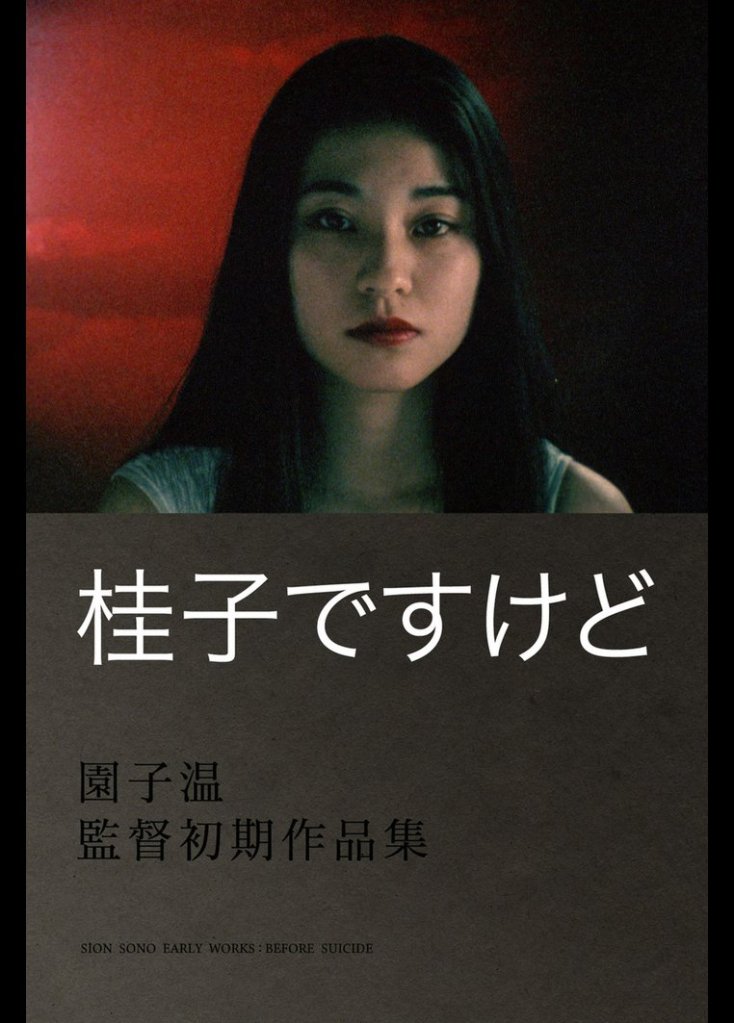
Hibari is playing a teenager here but she’s left school and is working as a bus conductoress. Bright and cheerful in her work, she takes some ribbing from the other employees because of her resemblance to the singing star (she has a large beauty mark drawn on her right cheek to make sure we know she’s not the “real” Hibari) and is a little embarrassed when they ask her to sing something because unlike her doppelganger, she’s tone deaf. Hibari lives at home with her mother and younger brother who’s still in school but their father seems to have left the household and there’s a degree of discord between the couple. Hibari tries to get her parents back together so they can live as a family whilst also maintaining her bus job, beginning a tentative romance with a former passenger, and even getting a few singing lessons from the real Hibari Misora herself!

Unlike the Sannin Musume movies, Harikiri Musume is shot in regular black and white though has pretty good production values for the time with some location shooting and outdoor scenes. Hibari is only 18 here but she’s already working at the bus company which seems like a pretty good gig all things considered (though her money is going to pay for her brother’s school fees, such is life). Her biggest problems are her no good father and her singing star doppleganger which continues to cause her embarrassment.

Harikiri Musume is a pop star vehicle but oddly Hibari doesn’t get to perform that much. Early on she laments not being able to sing as she listens to one of her bus company colleagues singing the song Rendezvous (also featured in one of the Sannin Musume movies) which is then followed by a more operatic track from a male colleague (of course, these two end up becoming a couple, united in their musical talents). She watches “herself”  on TV and later mimes to a recording of the famous Hibari at home but the main subplot of the film takes hold once the two Hibaris meet in a neat cinematic doubling trick. Famous Hibari teaches ordinary Hibari how to sing properly using Misora’s famous song Ringo Oiwake. She then turns up in the finale at the wedding celebration of two employees with a new song just for the bus company as a special gift.

As well as Rendezvous, there are even a few callbacks to Jankenbon which also appears in So Young, So Bright which was released the same year. Hibari is mostly acting with herself here and it’s altogether a more modest affair than the Sannin Musume pictures with no real production numbers or complicated staging but somehow all the more charming for it. In keeping with other similarly themed movies, Hibari has the disrupted family subplot and a very slight romance which never really gets started until near the end but the film cleverly avoids any kind of heaviness in favour of a light and breezy youthful tone. First rate fluff, but nevertheless an interesting look at the “ordinary” people of movie land in the mid fifties and an entertaining musical comedy in its own right.


No trailer but here’s a clip of Hibari Misora singing Ringo no Oiwake almost 25 years later:

Keiko Desu Kedo (桂子ですけど, Sion Sono, 1997)

Keiko desu kedoI was 21 years when I wrote this song, I’m 22 now but I won’t be for long…the leaves that are green are turning to brown for the heroine of Keiko Desu Kedo (桂子ですけど, “I am Keiko”). Approaching her 22nd birthday and with the recent death of her father ever present in her mind, she’s begun to feel the passage of time even more keenly. She doesn’t want to miss out on or forget anything so she’s going to share with us the last three weeks of her 21st year on Earth.
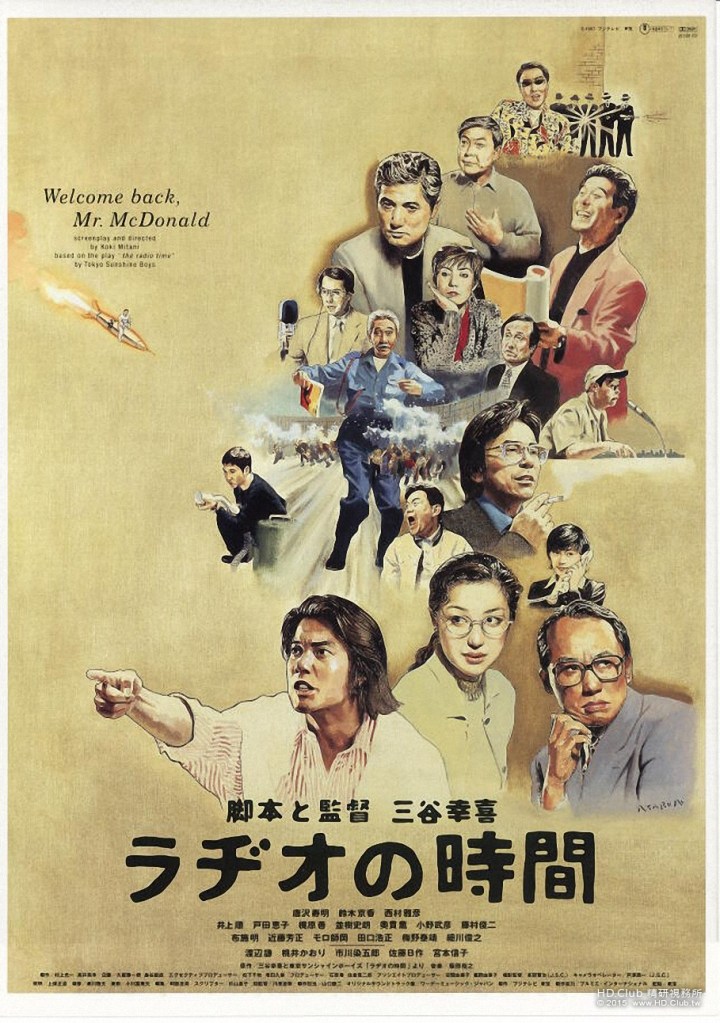
The first image we see of Keiko has her looking directly at us, holding our gaze while a Rothko-esque backdrop and ambient sounds of children arguing and birds singing provide our only context. After a few minutes she looks away, shyly, before resuming contact with a sad smile. Eventually a single tear courses down her cheek and she looks away again. We become her audience as she narrates her existence to us, filled with moments of everyday tedium – cleaning, sitting in silence and gazing out of windows. As the time begins to run out, she moves on to more direct forms of communication including a daily news broadcast where she relates the fact that once again it has been a slow news day in the land of Keiko. The time passes, Keiko grows older, as we all do, nothing changes, nothing stays the same.

This relatively early effort from Sono has a very definite French new wave influence with a little Fassbinder thrown in to boot. Much of the film takes the form of still frames accompanied by Keiko’s voice over which often consists of her counting out loops of 60s to aurally honour each passing second. Keiko lives in an oddly colourful, childlike world in her bright red apartment which has bright yellow furniture though the rest of her existence is fairly empty. As she tells us at the beginning, the only things in this apartment are herself and the bones of her father. As if to bear witness to the French new wave theme, she even shows us some other relics of the life she’s lost in the form of a packet of her father’s Gauloises cigarettes inside their unopened and equally colourful light blue box.

In a touch of Godardian mischief, Sono breaks the film into mini chapters with the help of frequent colour cards bearing the names of the days of the week (notably Keiko skips a day here and there or elides two days into one with another colour card simply stating the hour). It seems as if Keiko is eager to pass the time, she will be “reborn” the moment she crosses over into year 22 – leaving this grief filled coda behind her. Yet the time passes slowly, tediously spent in inconsequential pursuits. Actress Keiko Suzuki excels in the difficult task of playing the identically named Keiko, imbuing her depression filled voice overs with a degree of melancholy warmth. She seems to want to connect with us, staring up at us after scribbling out the words “I am” written on an otherwise blank piece of of paper with her father’s fountain pen. She reaches out to us, but we are powerless to respond, all we can do for her is to listen and bear witness to these final three weeks of her soon to be former life.

In the light of Sono’s later career, Keiko Desu Kedo may seem like a strange entry in his back catalogue. Tightly focusing on one young woman as she comes to terms with grief and the passage of time, Keiko Desu Kedo is an exercise in minimalism from a man later known for his cinematic excesses. Yet, there is excess here too in the stylisation of Keiko’s world, her brightly coloured living environment and various “disguises” she adopts in her news reader persona. Tellingly, in her final broadcast Keiko appears as herself but has nothing to say to us, once again looking directly into the camera with moistened eyes, full of loneliness. Presumably at the end of the film as she skips off away from her apartment trash bag in hand and counting down the seconds, she no longer needs us and all that remains is for her to read the credits of her confessional video diary, thereby bidding adieu to her old self via this strange obituary pausing only to thank us as the lights go out.


Unsubbed trailer:

Welcome Back, Mr. McDonald (ラヂオの時間, Koki Mitani, 1997)

Welcome Back Mr. McDonaldKoki Mitani is one of the most bankable mainstream directors in Japan though his work has rarely travelled outside of his native land. Beginning his career in the theatre, Mitani is the master of modern comedic farce and has the rare talent of being able to ground often absurd scenarios in the  humour that is very much a part of everyday life. Welcome Back, Mr. McDonald (ラヂオの時間, Radio no Jikan) is Mitani’s debut feature in the director’s chair though he previously adapted his own stage plays as screenplays for other directors. This time he sets his scene in the high pressure environment of the production booth of a live radio drama broadcast as the debut script of a shy competition winner is about to get torn to bits by egotistical actors and marred by technical hitches.
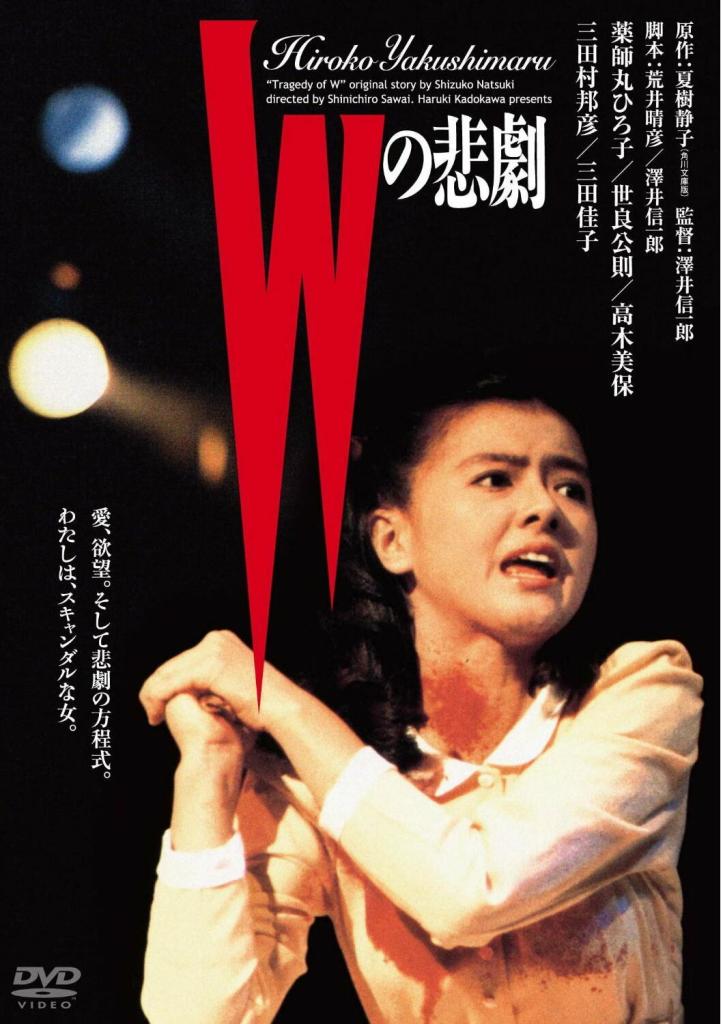
Mild-mannered housewife Miyako Suzuki (Kyoka Suzuki ) has won a competition to get her radio play, titled “Woman of Destiny”, on air. A romantic tale of a bored housewife unexpectedly finding love at the pachinko parlour, her story may have a thin layer of autobiography or at least wish fulfilment but at any rate she is very close to her material. Unfortunately, “difficult” actress Nokko (Keiko Toda) has been foisted on the production crew due to entertainment world politics and objects to her character’s name because she once dated a married guy whose wife shared it. Eventually Nokko demands to be called something more interesting like “Mary Jane” (the irony!). At this point, all the other actors start wanting changes too and before you know it Miyako’s gentle tale of forbidden romance has become a gangster crime thriller set in Chicago filled with mobsters and tommy guns!

The writer is god, in one sense. Only, god has been locked out of the room leading to total chaos. Each small change necessitates a series of other changes and seeing as this is all being done live and on the hoof, no one is quite thinking through the implications of each decision. When the actor playing “Mary Jane’s” love interest suddenly goes off book and declares his name is “Donald McDonald” (inspired by left over fast food cartons) and he’s a pilot not a fisherman as agreed (though why would a fisherman be in the mountains of Chicago anyway?), everything goes completely haywire eventually ending up in an outer space based love crisis!

If all this wasn’t enough, someone has also wandered off with the key to the sound effects machine which would be fine if they hadn’t added all the gangster shenanigans in the first place. The show’s producer, Ushijima (Masahiko Nishimura), explains to Miyako at one point that radio has a very important advantage over visual media as you really can do anything even on no budget because your biggest resource is your audience’s imaginations. He has a very real point, though the completely bizarre saga of “sexy female lawyer” Mary Jane, her “Nasa Pilot” (a quick save after “Donald’s” plane is reported missing and someone remembers this slot is sponsored by an airline) true love, and her husband who for some reason is a random German named Heinrich is going to require a significant suspension of disbelief from the confused listeners at home.

As a theatre practitioner Mitani is an expert at creating ensemble comedy and even though he is playing with a large cast and a fast moving environment each of his characters is extremely well drawn. We see the shy writer beginning to lose heart after her story is shredded by the unforgiving production environment whilst also trying to persuade her husband who has turned up unexpectedly to go home before he figures out her script is suspiciously close to their real lives. We also see the production team frantically trying to fulfil their obligations so they can avoid getting into trouble with the higher ups and finally go home for the day. Ushijima is caught in the middle, surrounded by nonchalant yes men and lazy bosses, he’s desperately trying to compromise to keep everything on schedule whereas the jaded director just wants to do his job as written. However, it’s the director who is ultimately most moved by Miyako’s script and eventually decides it does deserve the happy ending that Miyako has been longing for.

By the end of the recording, something of the old magic has returned to the otherwise work-a-day world of the radio studio. They’ve even brought back old fashioned foley effects and retrieved the old school sound guy who’d been relegated to playing his gameboy in the security booth because no one needed his expertise anymore. Nothing went as planned, but everything worked out in the end and it’s happy endings all round both in the real world and in the completely surreal radio play. They might even do a sequel!

Mitani breaks the action every now and then to take us outside of the studio environment and into the cab of a petrol tanker being driven by a strangely dressed trucker (in a brief cameo from Ken Watanabe, no less!) who keeps trying to change the channel for more country influenced Enka but finds himself enthralled by the strange tale of the true love between Mary Jane and Donald mcDonald. We might not be quite as moved as he is, having been party to all the backstage goings on, but we have perhaps laughed more than cried through the almost screwball comedy and farcical set up of Mitani’s spot on depiction of the less than glamorous workings of the fast paced live production environment.


English subtitled trailer:

W’s Tragedy (Wの悲劇, Shinichiro Sawai, 1984)

W's TragedyHiroko Yakushimaru was one of the biggest idols of the 1980s. After starring in Shinji Somai’s Sailor Suit and Machine Gun, she went on to become one of Kadokawa’s tentpole stars in vehicles such as Detective Story and Main Theme but she hit her artistic stride in 1984’s W’s Tragedy (Wの悲劇, W no Higeki) which earned her her first Blue Ribbon award for Best Actress. Inspired by the 1982 novel of the same name by Shizuko Natsuki (translated into English under the title Murder at Mt. Fuji), Sawai’s film radically diverges from its source material as the central murder mystery takes place on stage but eerily begins to mirror real life events.
Shizuka Mita (Hiroko Yakushimaru) is an aspiring young actress desperate to find her place in the spotlight. After spending the night with her teacher, she wanders home through a park and begins monologuing her life on the stage of an outdoor amphitheatre. Unbeknownst to her, a young man was sleeping on one of the rear benches and wakes up to applaud her performance. Despite her hostility towards him, Akio perseveres in getting Shizuka’s attention and the two eventually develop a tentative relationship.

Shizuka’s acting school offers its pupils the opportunity to star in a full scale production with established stars of the stage as part of their training and this year’s play is based on the recent novel, W’s Tragedy, which centres around a murder in an aristocratic family. Shikuza is desperate to win the leading role of Mako who claims to have murdered her grandfather after he tried to assault her. Losing out in the original auditions process but winning a small role which also comes with some backstage craft experience, Shizuka begins to lose heart. However, after building up a relationship with the star actress in the show, Shizuka is offered the opportunity to displace her rival through underhanded means but just how far is she willing to go for stardom and what will it all mean if and when she gets it?

Taking its cues from All About Eve, W’s Tragedy, reconfigured as a vehicle for Yakushimaru, becomes more about dualities as Shizuka effectively splits into two different “selves” – the young and innocent girl dreaming of a life on the stage, and the insecure, ambitious student willing to sacrifice anything to get there. Though clearly conflicted, Shizuka easily gives in to dubious suggestions that will earn her what she wants though not perhaps in the way that she wanted it. Her rival is shown to be a very competent actress who has also sacrificed parts of herself to attain the position that Shizuka so covets though it’s the older actress, Sho, who is the first to lament the fate of the displaced former leading lady even if she adopts a casualty of war ethos about the whole entrprise.

Shizuka gives the best performance of her life at a press conference held when she replaces the other actress in the show as she lies through her teeth to reinforce the fake story she and Sho have concocted together to their mutual benefit. Taking the brunt of a scandal just as Mako tries to take responsibility for a crime in the play, Shizuka becomes rather than performs an entirely different persona as she gives a heartfelt account of a passionate love affair with a married man that belongs to someone else entirely. Taken to task by Akio who doesn’t know the story is fake but has come to despise this manipulative side of the acting profession, Shizuka begins to wonder who she really is underneath all of the lies, scheming, and performance.

Though the directing style is generally straightforward and in keeping with Kadokawa’s mainstream idol movies of the time, Sawai adds in a few interesting flourishes which often pay homage to similarly themed Western movies such as an overtly All About Eve moment with Shizuoka taking to the stage and reciting the lead role when she thinks no one’s looking. A strange shot near the end takes place during the play but has been constructed entirely for our benefit as Shizuka looks at her reflection on a pane of glass. The audience would not be able to pick up on this ghostly effect of the two Shizukas – the stage persona and the shade of the innocent girl dreaming of the spotlight, but the effect itself is a perfect evocation of the ever present theme of duality.

Very much of its time and bearing most of the hallmarks of the classic Kadokawa idol movie, W’s Tragedy is, in many ways, the evocation of another era. However, it does provide a plum leading role for its star and an interesting meditation on the nature of acting as a profession as well as the double standards and hypocritical judgements inherent to the running of the entertainment industry.  Though less explosive than the later Perfect Blue with which it shares a few common themes, W’s Tragedy provides another set of mirrors into the nature of stardom, identity, and the price of success.


Unsubbed trailer (look out for a brief cameo from the late Yukio Ninagawa):

And here’s a clip of Hiroko Yakushimaru singing the title song at her 30 year anniversary concert back in 2013:

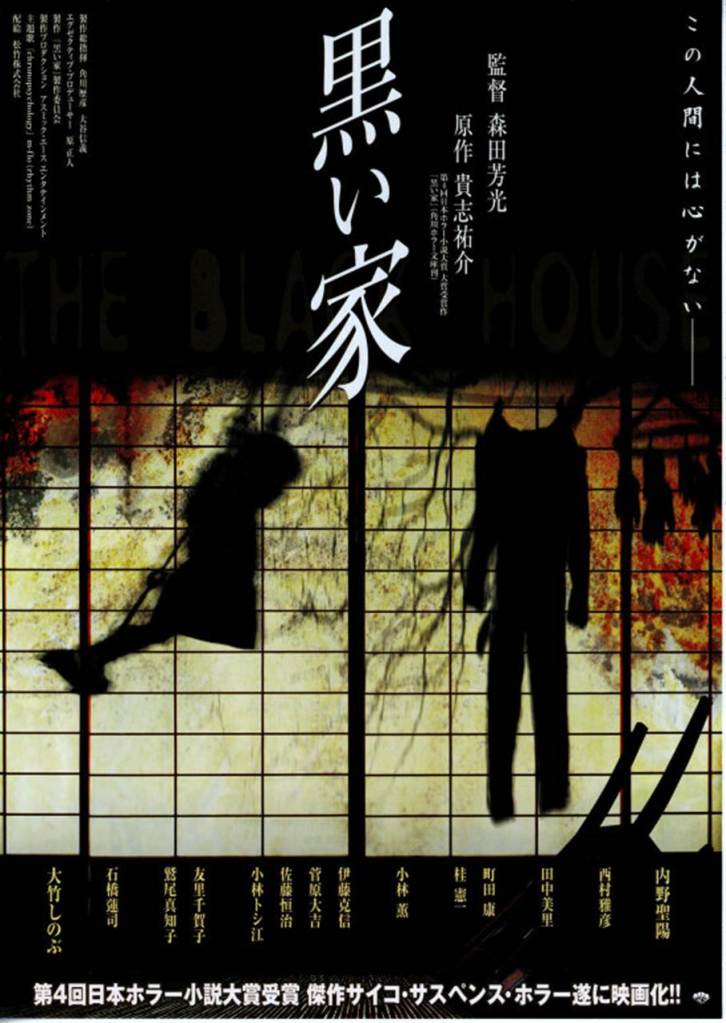
The Black House (黒い家, Yoshimitsu Morita, 1999)

black house posterYoshimitsu Morita, though committed to commercial filmmaking, also enjoyed trying on different kinds of directorial hats from from purveyor of smart social satires to teen idol movies, high art literary adaptations and just about everything else in-between. It’s no surprise then that at the height of the J-horror boom, he too got in on the action with an adaptation of Yusuke Kishi’s novel of the same name, The Black House (黒い家, Kuroi Ie). Though tagged as “J-horror” you’ll find no long haired ghosts here and, in fact, barely anything supernatural as the true horror on show is the slow descent into madness taking place inside the protagonist’s mind.
Wakatsuki (Masaaki Uchino) is a nice young man with a good job investigating claims at an insurance office. Unfortunately, this gives him a slightly dim view of humanity as he comes into contact with scamsters and even people willing to maim themselves just so that they can claim on their policies. One day, he receives a strange phone call from a woman who wants to know if her insurance policy will pay out in case of suicide. Wakatsuki, slightly panicked, tells her that it really depends on the circumstances and, jumping to the conclusion she plans to kill herself, urges her to get help and talk things over with someone before doing anything rash.

The next thing he knows, Wakatsuki is despatched to her house to sort things out whereupon he makes an extremely gruesome discovery – the woman’s son, though only a child, has hanged himself in the back room. Obviously extremely shocked and distressed, Wakatsuki heads home with the nagging suspicion that Sachiko (Shinobu Ootake) and her husband Komoda (Masahiko Nishimura) have done something truly dreadful. The couple take turns coming into the office to find out what’s taking so long with their claim and gradually the situation begins to spiral desperately out of control.

Always one for irony,  Morita’s tone varies widely here. There’s an oddly Twin Peaks-like vibe with the jolly jazz score giving way to synths at moments of high tension, not to mention the run down industrial town setting. If that weren’t enough Lynchery, there’s even a moment where a severed hand is found in a patch of grass, crawling with ants just like the ear found by Jeffrey at the beginning of Blue Velvet. Morita seems to be telling us not to take any of this too seriously yet his subjects include parents harming or even murdering their children to claim on an insurance policy as well as bloody violence and dismemberment of corpses.

In fact, the insurance guys don’t spend too long trying to figure out if the boy actually killed himself but Wakatsuki becomes preoccupied by the idea the husband, Komoda, is behind the whole thing (the boy was only his step-son after all) and will now try and kill his wife to claim her insurance too. The couple are certainly both very strange people and the insurance company also have a problem as the policy was signed off on during a campaign drive in which a now dismissed employee made use of a personal connection to try and meet her unrealistic quota. Wakatsuki eventually engages an equally eccentric psychology professor who takes him out on a weird nighttime odyssey to a seedy strip club where he expounds on a epidemic of psychopathy among the younger generation. Even Wakatsuki’s girlfriend, Megumi, has some off the wall ideas based on an essay Sachiko wrote in elementary school (though actually Megumi’s view has some merit).

Things hit a more conventional note from this point on landing us with a familiar slasher villain who begins stalking Wakatsuki, even trashing his apartment before kidnapping his girlfriend and keeping her prisoner in the “Black House”. Wakatsuki heads to the den of evil by himself in the dark (in true horror movie fashion) where he finds a whole bunch of other dismembered corpses (and a few other surprises). He might think he can put his troubles behind him after this extremely traumatic incident, but this is still a horror movie so the killer gets away to strike again by throwing a bright yellow bowling ball at his head through the office toilet window.

Morita is not being serious at all, even for a second, but somehow he still manages to create an oddly threatening atmosphere of suspense despite the extremely weird things which are going on. He creates a complex set of visual cues from the recurring sunflower motif repeated on Sachiko’s shirt to the glistening yellow bowling ball, goldfish (in a toilet bowl if not a percolator), repeated sounds of cockroaches and old fashioned reel printers, and even the green glow from both old fashioned computer systems and the company’s insurance documents. Undoubtedly bizarre, The Black House is mind bending psychological-horror-movie-cum-Freudian-slasher that is primed for both head scratching puzzlement and confused chuckling as Morita has a lot of fun messing with our senses.


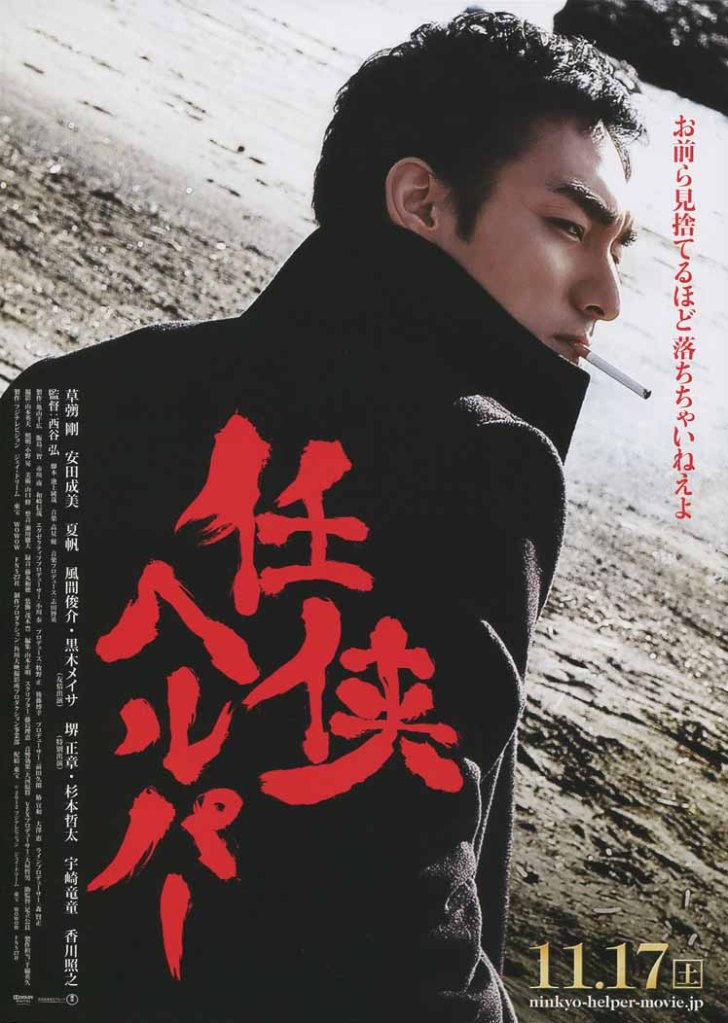
Beautiful World (任侠ヘルパー, Hiroshi Nishitani, 2012)

ninkyo helperIn old yakuza lore, the “ninkyo” way, the outlaw stands as guardian to the people. Defend the weak, crush the strong. Of course, these are just words and in truth most yakuza’s aims are focussed in quite a different direction and no longer extend to protecting the peasantry from bandits or overbearing feudal lords (quite the reverse, in fact). However, some idealistic young men nevertheless end up joining the yakuza ranks in the mistaken belief that they’re somehow going to be able to help people, however wrongheaded and naive that might be.
The hero of Hiroshi Nishitani’s Beautiful World (任侠ヘルパー, Ninkyo Helper) is just one of these world weary idealists turned cynics. We find him working a low rent convenience store job where he fills the shop with the kind of intensity that only a disappointed former yakuza can generate. Hikoichi (Tsuyoshi Kusanagi) was trying to make a go of things in the regular world, but when a sad little old man comes in with armed robbery on his to do list, Hikoichi shows his yakuza stripes by easily beating him down in front of his stunned colleague.

This might have earned him some brownie points at work, but overcome by pity for this pathetic old man reduced to robbing corner shops for petty change, he gives him the cash and tells him to run. The police soon turn up and arrest them both – during the robbery Hikochi’s colourful tattoos were caught on security camera and no one wants a yakuza working here, even if he did volunteer to pay back the tiny sum of money the old guy got from his own wages.

Meeting up in prison, Hikoichi and the armed robber eventually become friends and after his release, Hikoichi ends up in the old guy’s home town where he joins his former clan as an enforcer. Extremely bitter by this point, Hikoichi has decided to play the modern yakuza game to the max so when he finds out his assignment is running a dodgy “care” home which gets its residents by extorting old people through outrageous loans which send them bankrupt, he only briefly pauses.

The idea of a yakuza running a care home is a strange one. The Uminoneko residential care facility is far from what one would want from a old people’s home – there are no doctors, or even carers, the entire home is run by one nurse, herself an elderly woman who got her nurse’s certification and eldercare qualifications back in 1943!

With a rapidly ageing population, eldercare is a big topic in Japan as the birth rate has progressively fallen while lifespans have increased leaving many older people without family to look after them. With the nature of the family unit also changing, it’s become much harder to care for elderly relatives at home especially if they need around the clock attention. There are simply not enough facilities available to cope with the increasing needs of the older generation leaving families struggling to cope and social services overwhelmed. It’s not surprising that the yakuza have picked up on this as a growth area.

When Hikoichi arrives at the Uminoneko facility, which is just really a prefab shed with some futons in it, he finds a hellish place filled with unstimulated old people left on their beds to die. The place is filthy, and about the only attention the guests receive is the occasional offering of food to keep them alive so that the clan can keep claiming their pensions and welfare payments. Though Hikoichi goes along with this to begin with, it’s not long before his idealism rears its ugly head and he hits on the idea of reforming Uminoneko by turning it into a kind of old person’s commune in which the residents themselves will help out with the running of the place. What was a sad and gloomy prison of exploitation suddenly transforms as the older generation rediscover a place that they can belong, working together to build their own community. However, this of course means less money for the clan and more trouble for Hikoichi.

The clan aren’t his only problems as the town also has a progressive mayor who made a commitment to wipe out organised crime and turn the area into a tourist hotspot with a special focus on caring for the older generation. Teruo (Teruyuki Kagawa) has is own stuff going on which again causes a problem for Hikioichi as he also has a long standing crush on the older yakuza’s daughter, now a single mother with two young children and a mother of her own with senile dementia who needs expensive medical care. Yoko (Narumi Yasuda) has a grudge against yakuza after enduring decades of stigma and eventual abandonment by her father but is willing to deal with them if it will enable her to help her mother. Predictably she begins to develop a better understanding of her father as she bonds with Hikochi and warms to his noble tough guy ways.

Directed by Hiroshi Nishitani and inspired by a TV show (though functioning as a standalone movie), Beautiful World is a finely plotted drama which explores both the roles of the ageing population and eldercare explosion in Japan, and the conflicting role of the yakuza who seek to exploit those who are arguably the weakest in society. Hikoichi makes for a very Takakura-like, brooding presence as his innate idealism and desire to help those around him conflict with his experiences as a yakuza which teach him to distrust everyone and expect betrayal and exploitation at every turn. Resolving in an unconventional and unexpected way, this otherwise mainstream, if  beautifully photographed, drama develops into one of the more interesting character driven pieces of recent times.


Unsubbed trailer:

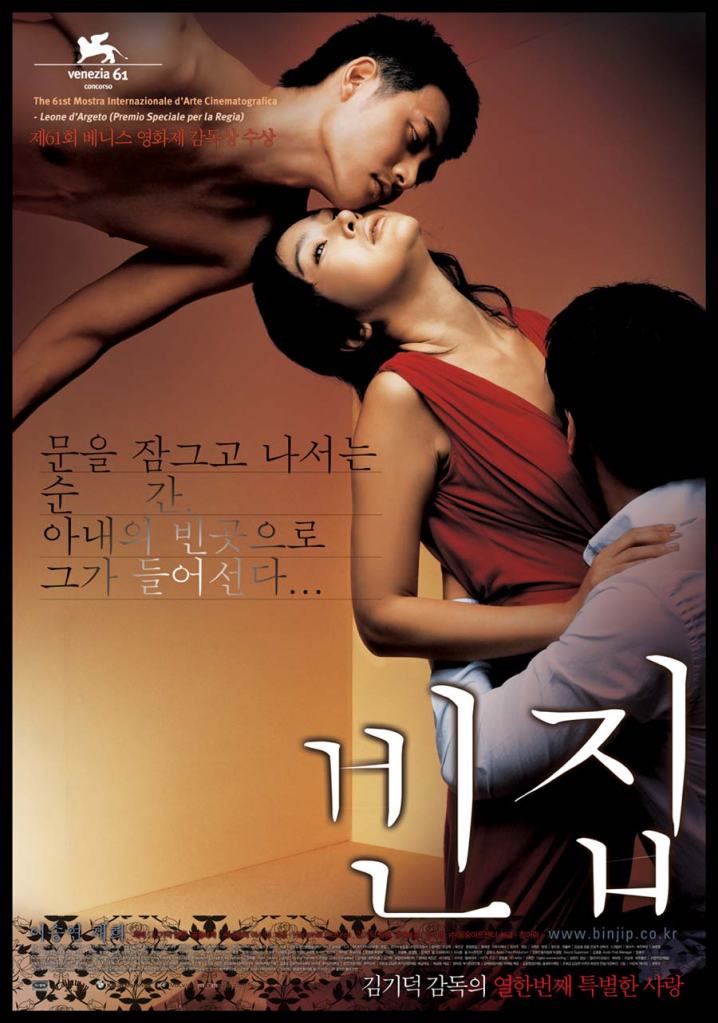
3-Iron (빈집, Kim Ki-duk, 2004)

3-ironYou wouldn’t think it wise but apparently some people are so trusting that they don’t think twice about recording a new answerphone message to let potential callers know that they’ll be away for a while. On the face of things, they’re lucky that the guy who’ll be making use of this valuable information is a young drifter without a place of his own who’s willing to pay his keep by doing some household chores or fixing that random thing that’s been broken for ages but you never get round to seeing to. So what if he likes to take a selfie with your family photos before he goes, he left the place nicer than he found it and you probably won’t even know he was there.

Player 2 joins the young man (credited as Tae-suk but unnamed in the film) when he stays at an upscale mansion which turns out to be “haunted” by the still living but damaged figure of a battered wife. Tae-suk hurriedly leaves once discovered, but later thinks over his encounter with the sad seeming lady and decides to return. After an altercation with her violent husband, Sun-hwa leaves with Tae-suk and the pair sneak into various other “empty” homes together. After one particular dwelling reveals a nasty surprise the two bring themselves to the attention of the police who threaten to end their young love story before it’s hardly begun.

Like much of Kim’s work, 3-Iron (빈집, Bin-jip) is near silent and neither of the two protagonists speak one word to each other until final scene of the film. Tae-suk, in particular, seems to have an obsession with being invisible – hiding in blindspots and always making sure to tidy up after himself so well that no trace of his presence remains. Sliding into these mini universes, he seems oddly interested in their inhabitants as he gazes at their photographs and admires the decor. Despite his need to disappear, he builds connections with absent people even going so far as to take a photo with a photo of them, artificially generating some sort of kinship where there is none.

If Tae-suk is haunting the bourgeoisie, Sun-hwa is both spectre and spectee as she moves silently around her golden cage of a spacious villa like a frightened mouse locked inside the elephant house. Evidently further along the stealth game than Tae-suk has been able to progress, her discovery of him leads to a feeling of defeat. Yet, after reconsideration, he recognises a fellow lost soul and so returns to rescue her from her oppressive ogre of a husband by using his weapon of choice against him. The 3-Iron golf club is not only a symbol of the husband’s middle class pretensions, but its relative lack of wear also points to the lack of respect he reserves for his toys – even extending so far as his wife whom he also seems to regard as an “inautonomous” appendage to his image much like the golf club itself.

Kim ends the film with a caption to the effect that it’s hard to tell if the world we live in is reality or a dream. With the continued silence of the film’s protagonist, bizarre scenario of “borrowed” lives, and general surrealism, Kim creates an etherial atmosphere filled with heightened, everyday strangeness. This could be a ghost story – literally, or figuratively, as our haunted protagonists continue their visitations on the living, or a love story, or even an absurd comedy. Tae-suk and Sun-wha exchange roles, alternately comforting or rescuing one another before, perhaps, becoming one at the film’s conclusion. A strange, romantic fairytale, 3-Iron is Kim in an uncharacteristically cheerful mood though he’s careful to remind us that the world outside of this charming bubble is filled with violence, cruelty, and chaos.


3-Iron is available in the UK from Studiocanal and from Sony Pictures Classics in the US though the R3 Korean disc also includes English subtitles.

US release trailer:

Nikkatsu Diamond Guys Vol.2

nikkatsu diamond guys 2Review of Arrow’s Nikkatsu Diamond Guys volume 2 up at UK Anime Network.


Following on from their previous release, Arrow return to Nikkatsu’s 1960s output with three more films which each star some of their “Diamond Guys” A-list stars, this time focussing again on Akira Kobayashi and Jo Shishido. In contrast to the three films featured in the Diamond Guys Vol. 1 set (Voice Without a Shadow, Red Pier, and The Rambling Guitarist), vol. 2 showcases Nikkatsu’s lighter side with three feel good tales each skewing much more towards comedy though still operating within the crime genre.

The first film in the set, Tokyo Mighty Guy, is, like The Rambling Guitarist, the first in what would later develop into a new film franchise lead by star Akira Kobayashi. After beginning with a kitsch musical sequence which would be at home in any Hollywood fluff fest of the era, the film takes on a neighbourhood comedy aesthetic as aspirant middle class guy Jiro becomes the big man around town. He’s well educated and has just returned from studying overseas in Paris but is working with his parents in a restaurant serving French cuisine which they have just opened in fashionable Ginza.

Jiro does as he pleases and doesn’t take any nonsense from anyone. He sends yakuza packing and helps a local bar owner sort out her financial and romantic problems (which are deeply intertwined) as well as the love life of one of her employees who’s been duped by a faithless rich guy. Western looking and modern in approach, this is a look at socially mobile city youth in 1960 just as the nation starts to push forward both economically and socially.

Danger Pays, by contrast, has less social commentary but takes on the challenging arena of the slapstick crime comedy. When a van containing watermarked paper destined for the mint is stolen, all the underworld is abuzz with petty crooks hoping to get their hands on Japan’s best forger. Eccentric trio “Glass Hearted Joe” (dapper dresser, extreme fear of the sound of scraping glass), Slide-Rule Tetsu (walks with a cane, likes maths), and Dump-Truck Ken (yeah, he has a dump truck) team up with martial arts enthusiast and former secretary Tomoko (Ruriko Asaoka) in a quest to get their hands on the (fake) money no matter what ridiculous scams they become involved in.

Quickfire slapstick humour at its finest, Danger Pays takes place in a cartoon-like world filled with bizarre stunts and ridiculous action. The breathless pace continues throughout but the tone shifts significantly in the final third as the gang find themselves trapped in a room which is about to be filled with gas and then holed up in an elevator shaft for an impromptu shootout. Despite the bodies and the blood the four continue with their ramshackle plotting but there are yet more surprises headed their way.

The surreal theme continues into the final film for the also Shishido starring Murder Unincorporated. When one of five local gangsters is assassinated by “Joe of Spades” and the remaining four fear they’re next on his hit list, they hire a selection of eccentric assassin bodyguards to find and neutralise their enemy. Each of the hitmen has his own theme and signature weapons running from European poetry to baseball and extreme fear of fish but their opposing numbers are equally strange and the gang is about to find out that the situation is even more complicated than they thought it might be.

Murder Unincorporated exists within a strange meta bubble in which hitmen recount their sorry origin stories to convince us that they had no choice but to become contract killers. Inspired by the famous Kansai comedian Kobako Hanato, the film runs at a ferocious pace with complex wordplay and increasingly surreal set pieces to create a truly absurd colourful and cartoon world that makes very little actual sense but is extremely funny.

Nikkatsu is best known for its action output but this latest collection proves the “borderless’ nature of the genre which isn’t generally associated with comedy. Gone are the melancholy heroes of volume one, these are figures of fun, but in the nicest possible way. Danger Pays and Murder Unincorporated both lean more towards the surreal whereas Tokyo Mighty Guy’s humour is of a more mainstream, wholesome kind, and the film definitely takes place in a more recognisably realistic world (though heightened and with an “aspirational” edge). Even if Seijun Suzuki famously got himself fired for making movies which made no sense and no money, Nikkatsu’s ‘60s output was not always against a touch of surreal playfulness as these intensely colourful, often silly escapades demonstrate with ample style.


Nikkatsu Diamond Guys vol. 2 is currently on sale from Arrow Films. You can check out more detailed reviews of each of the three movies below:

Murder Unincorporated (大日本殺し屋伝, Haryasu Noguchi, 1965)

0089_86_MURDER_UN-INCORPORATED“If you don’t laugh when you see this movie, I’m going to execute you” abacus wielding hitman Komatsu warns us at the beginning of Haryasu Noguchi’s Murder Unincorporated (大日本殺し屋伝, Dai Nihon Koroshiya-den). Luckily for us, it’s unlikely he’ll be forced to perform any “calculations”, and the only risk we currently run is that of accidentally laughing ourselves to death as we witness the absurd slapstick adventures of Japan’s craziest hitman convention when the nation’s “best” (for best read “most unusual”) contract killers descend on a small town looking for “Joe of Spades” – a mysterious assassin known only by the mole on the sole of his foot.

After the amusing Bond style opening, we witness the first victim of Joe of Spades who happens to be one of the five top gangsters in town. Sure enough, the other four then receive a threatening phone call to the effect that they’re next in line for a bullet in the brain. After ringing up an assassins agency and holding a series of auditions, the head honchos wind up with a gang of hitmen bodyguards each of whom have their own theme and wacky back story.

The leader of the gang is Heine Maki – a poetry loving, bowler hatted killer whose signature weapon is a heavy book of poems with a gun hidden inside,. He’s joined by O.N. Kane – an ex-baseball player who missed out on the major leagues through being too good and carries a baseball bat that’s really a gun, “Knife” Tatsu – ex-sushi chef knife thrower with an intense fear of fish, Al Capone III – a midget who claims to be the Japanese grandson of Al Capone and is obsessed with the Untouchables TV show, and of course Komatsu himself whose signature move is to throw his abacus in the air and invite chaos in the process.

The guys are really a little more than this small town can handle though they quickly discover the situation is nowhere near as straightforward as they thought and wind up facing off against some equally eccentric foes. That’s not to mention the mama-san at Bar Joker who turns out to be at the center of the case and a local mechanic who’s suspiciously handy with a pistol.

There really are no words to describe the quick fire, extremely zany universe in which Murder Unincorporated takes place. This is a world ruled by crime in which each of our “heroes” showcase extremely sad backstories which explain why they had absolutely no choice but to turn to killing people to survive. Take “Knife” Tatsu for example, he became a hitman because he was unable to kill the fish gasping away on his cutting board so he decided to kill people instead. O.N. Kane turned murderous after being let down in his baseball dream, Heine has a romantic tale of lost love, Capone III simply has it in the blood, and Komatsu? He wants to be a pharmacist…

This is all inspired by legendary Japanese funnyman Kobako Hanato who is famous for his Southern Japan flavoured absurd comedy routines. Kon Ohmura, who plays Komatsu, was one of his top collaborators for a time and became one of Japan’s all time great comedians. Meta quips such as remarking that the police are about to turn up “for the first time in this film” and involved jokes like the one that sees Komatsu tracking down identical “Joes” in varieties club, diamond, heart (amusingly, dressed as a geisha and playing pachinko), before heading into a punchline it would be a crime to spoil only add to the feeling that absolutely anything could happen and that would be perfectly OK.

Director Noguchi mostly keeps things straightforward but builds a fantastic comedic rhythm managing the quick fire dialogue and general absurdity with ease. Much of the film is told in flashback or reverie but the device never becomes old so much as easily syncing with with general tone of the film. There are some more unusual sequences such the opening itself, keyhole view, and a later sequence where we see directly though Komatsu’s big square glasses but otherwise the deadpan filming approach boosts the inherent comedy in the increasingly surreal situations. Quirky, oddly innocent, absurd, and just extremely laugh out loud funny, Murder Unincorporated is a world away from Nikkatsu’s po-faced crime dramas but exists in a crazy cartoon world all of its own that proves near impossible to resist!


Murder Unincorporated is the third and final film included in the second volume of Arrow’s Nikkatsu Diamond Guys box set.