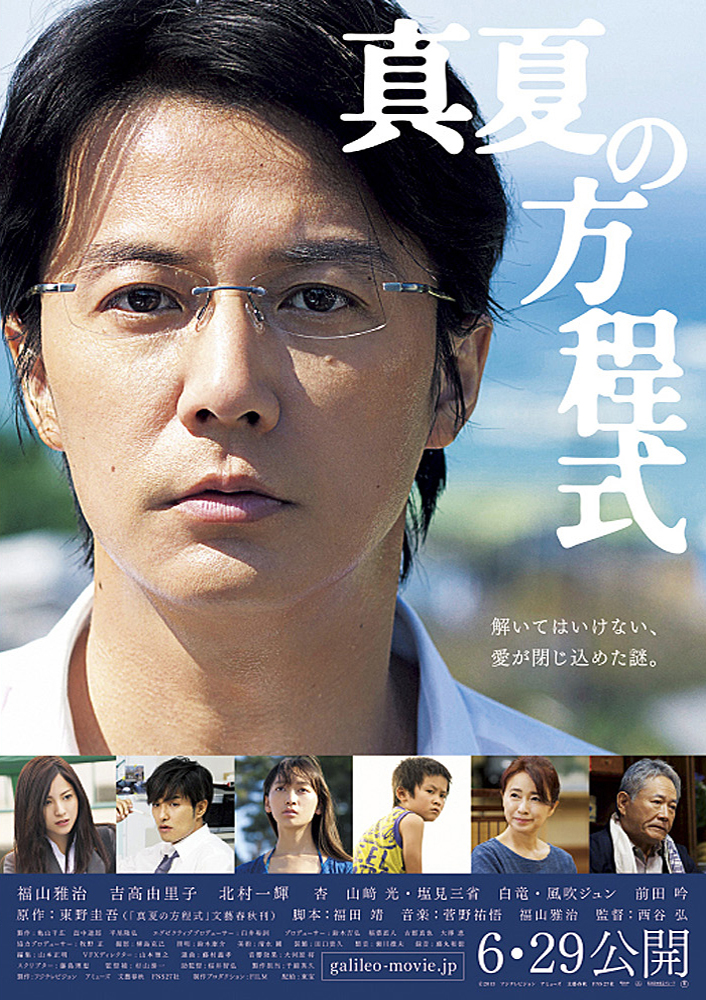
 Sometimes it’s handy to know an omniscient genius detective, but then again sometimes it’s not. You have to wonder why people keep inviting famous detectives to their parties given what’s obviously going to unfold – they do rather seem to be a magnet for murders. Anyhow, the famous physicist and sometime consultant to Japan’s police force, “Galileo”, is about to have another busman’s holiday as he travels to a small coastal town which is currently holding a mediation between an offshore mining company and the local residents who are worried about the development’s effects on the area’s sea life.
As fans of the series will know, Manabu Yukawa is a fastidious and difficult man who likes things just so. On the train he ends up encountering a small boy who annoys the other passengers by answering his phone. Apparently he can’t turn it off because all sorts of notifications will be sent to his parents and they’ll go into panic overdrive. The old man across from him doesn’t believe this and grabs the phone away from the small boy after an undignified tussle. In an uncharacteristic move, Yukawa comes to the boy’s rescue by taking back the phone and wrapping it in foil so it won’t go off again – problem solved.
The boy, Kyohei, turns out to be the nephew of the inn owners at the place where Yukawa is staying. After another guest is found dead in mysterious and suspicious circumstances, little Kyohei immediately raises several doubts of his own which endears him to Yukawa who is sad to hear that the boy hates science classes at school. Still, Yukawa concedes there are some odd details in this case especially as the dead man is an ex-Tokyo policeman. Before long Detective Kishitani has been dispatched to assist in the investigation of another strange mystery.
Again based on a novel by Keigo Higashino, the fourth in his Galileo series, Midsummer’s Equation (真夏の方程式, Manatsu no Houteishiki) is something of a departure as it takes place in an idyllic summer seaside town and is more like some of Higashino’s other mysteries as it places secrets of the heart at its core. Yukawa is generally a difficult man who can’t stand children, in fact they bring him out in a rash. However, for some reason Kyohei doesn’t seem to have this effect on him and he becomes determined to teach the boy the joy of science through a series of experiments while also investigating the central mystery. The incurably curious little tike becomes almost like a mini deputy to Yukawa as he begins to piece together what exactly has happened but it turns out Kyohei may have a different part to play than had originally been suspected.
In the usual mode, it’s not so much a whodunnit as a whydunnit and a how will they catch them. The mystery’s solution is heavily signposted from the beginning and there aren’t a lot in the way of twists. In contrast with some of the other Yukawa mysteries, particularly those from the TV drama, there aren’t a lot of clever scientific shenanigans either and though the central murder is plotted in quite an elaborate way, it’s also a panicked adaptation to circumstances which could be enacted by anyone, anywhere.
Long term series director Hiroshi Nishitani pulls out all the stops here and leaves the small screen far behind as he creates a surprisingly artistic take on a fairly run of the mill murder mystery. Beginning with the repeated motif of the falling red umbrella, he takes care to create a nuanced visual poetry which is quite different in approach both to the construction of the TV series and the other big screen outing which adapted Higashino’s most famous novel, The Devotion of Suspect X. Suspect X never quite managed to marry its roots as the theatrical adaptation of a TV drama and as an adaptation of a hugely popular and award winning book into something which was convincing on both levels. Midsummer’s Equation has an easier time with this as it’s slightly separated from the TV drama series and largely succeeds in becoming a standalone adventure for its famous detective.
Masaharu Fukuyama returns to the role with which he’s become most closely associated and once again captures Yukawa’s detached, though not necessarily uncaring, exterior with ease. He’s ably assisted by a fairly starry supporting cast which includes veteran actress Jun Fubuki, Tora-san’s Gin Maeda and the relatively young actress Anne (Watanabe) as well as the returning Yuriko Yoshitaka as the reluctant Detective Kishitani and cameo appearances from Kazuki Kitamura and Tetsushi Tanaka as Kyohei’s father.
Midsummer’s Equation is Higashino in a more forgiving mood as his hardline moralism never really kicks in and he’s content to merely be sorry for this rather complicated mess of affairs. Here, there’s hope for the future and the possibility of a path forward now that long buried secrets have been uncovered and the truth set out to bloom in the sunlight. He makes it plain that secrets are the root of all evil and that only by embracing the truth, and all of the truth, can you ever be able to make informed choices about your future. This is a lesson that Yukawa wants to pass on to little Kyohei who might be too young to understand the exact implications of his role in the affair (though he seems to have figured some of it out), but will undoubtedly have a few questions as he grows up. A well crafted addition to the series, Midsummer’s Equation proves another enjoyable excursion for Yukawa which succeeds not only in terms of its intricately plotted mystery but also as an intriguing and emotionally satisfying character drama.
The Hong Kong release of Midsummer’s Equation includes English subtitles.
 As you read the words “adapted from the novel by Kanae Minato” you know that however cute and cuddly the blurb on the back may make it sound, there will be pain and suffering at its foundation. So it is with A Chorus of Angels (北のカナリアたち, Kita no Kanariatachi) which sells itself as a kind of mini-take on Twenty-Four Eyes (“Twelve Eyes” – if you will) as a middle aged former school mistress meets up with her six former charges only to discover that her own actions have cast an irrevocable shadow over the very sunlight she was determined to shine on their otherwise troubled young lives.
 Aside from the original 1960 version of The Housemaid (and this perhaps only because of its modern “remake”), mid 20th century Korean Cinema has been severely neglected overseas. Ha Kil-jong’s The March of Fools (바보들의 행진, Babodeul-ui haengjin) is almost unknown abroad but consistently tops Korean lists of the country’s best cinema and has been both enormously influential on later filmmakers and fondly remembered by audiences.
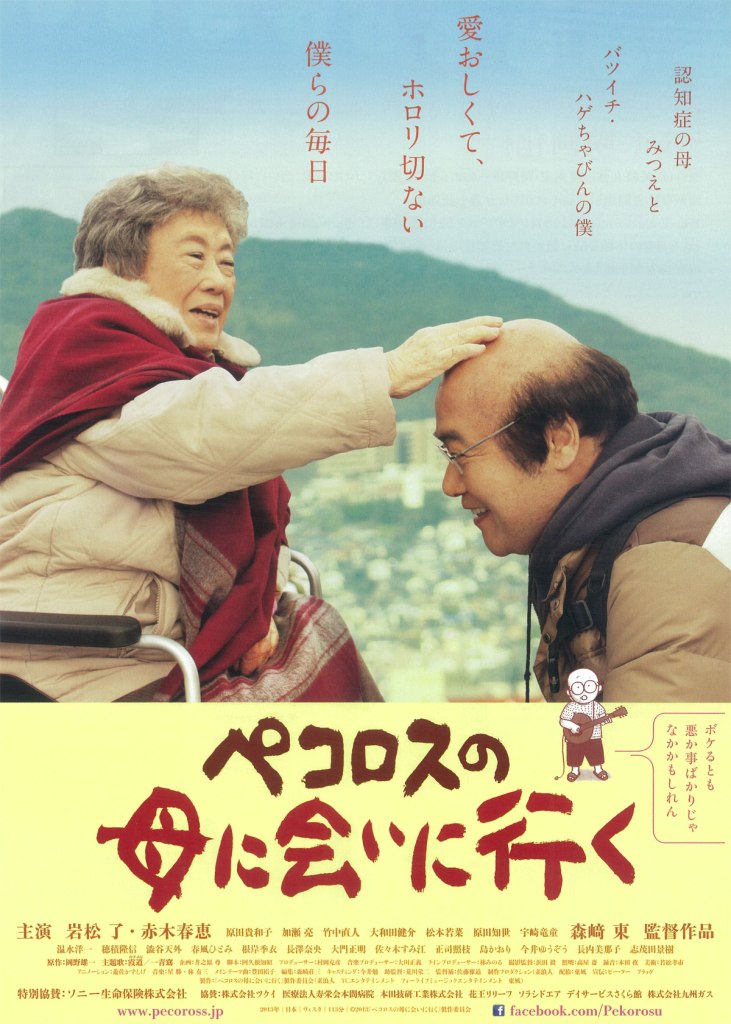 Topping the “best of 2013” lists in both Kinema Junpo and Eiga Geijitsu (something of a feat in itself), Pecoross’ Mother and Her Days (ペコロスの母に会いに行く, Pecoross no Haha ni Ai ni Iku) is a much more populist offering than might be supposed but nevertheless effectively pulls at the heartstrings. Addressing the themes of elder care and senile dementia in Japan’s rapidly ageing society, the film is both a tribute to a son’s love for his mother and to the personal suffering that coloured the majority of the mid-twentieth century in Japan.
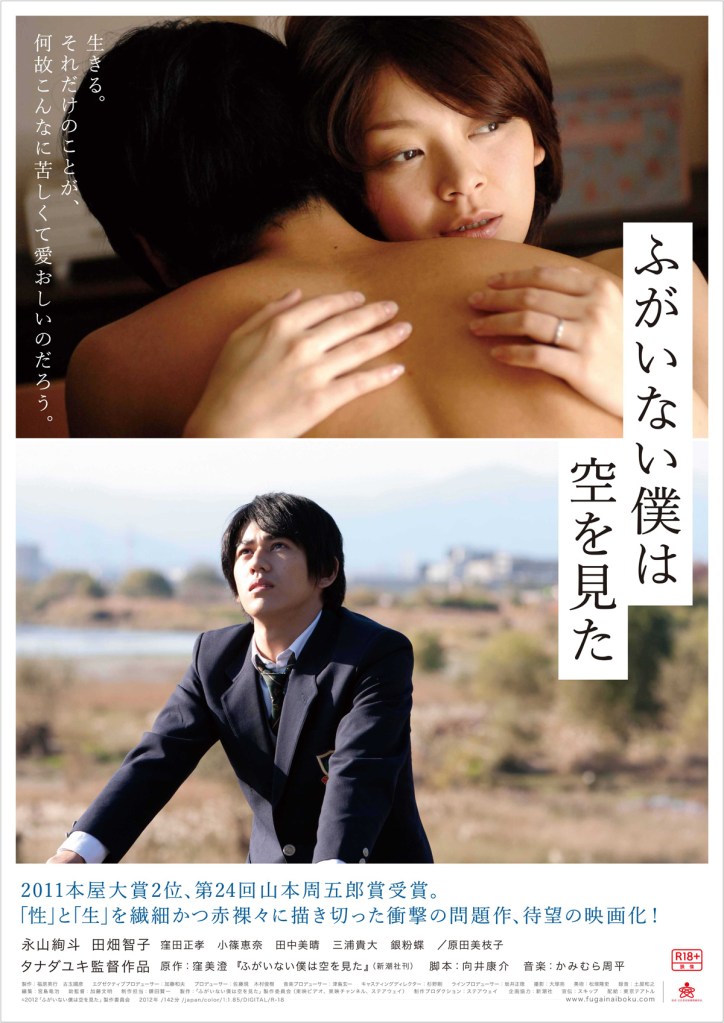 The work of director Yuki Tanada has had a predominant focus on the stories of independent young women but The Cowards Who Looked to the Sky sees her shift focus slightly as the troubled relationship between a middle aged housewife who escapes her humdrum life through cosplay and an ordinary high school boy takes centre stage. Based on the novel of the same name by Misumi Kubo, The Cowards Who Looked to the Sky (ふがいない僕は空を見た, Fugainai Boku wa Sora wo Mita) also tackles the difficult themes of social stigma, the power of rumour, teenage poverty, elder care, childbirth and even pedophilia which is, to be frank, a little too much to be going on with.
 It used to be that movies about marital discord typically ended in a tearful reconciliation and the promise of greater love and understanding between two people who’ve taken a vow to spend their lives together. These endings reinforce the importance of the traditional family which is, after all, what a lot of Japanese cinema is based on. However, times have changed and now there’s more room for different narratives – stories of women who’ve had enough with their useless, deadbeat man children and decide to make a go of things on their own.
 “Being good”. What does that mean? Is it as simple as “not being bad” (whatever that means) or perhaps it’s just abiding by the moral conventions of your society though those may be, no – are, questionable ideas in themselves. Mipo O follows up her hard hitting modern romance The Light Shines Only There by attempting to answer this question through looking at the stories of three ordinary people whose lives are touched by human cruelty.
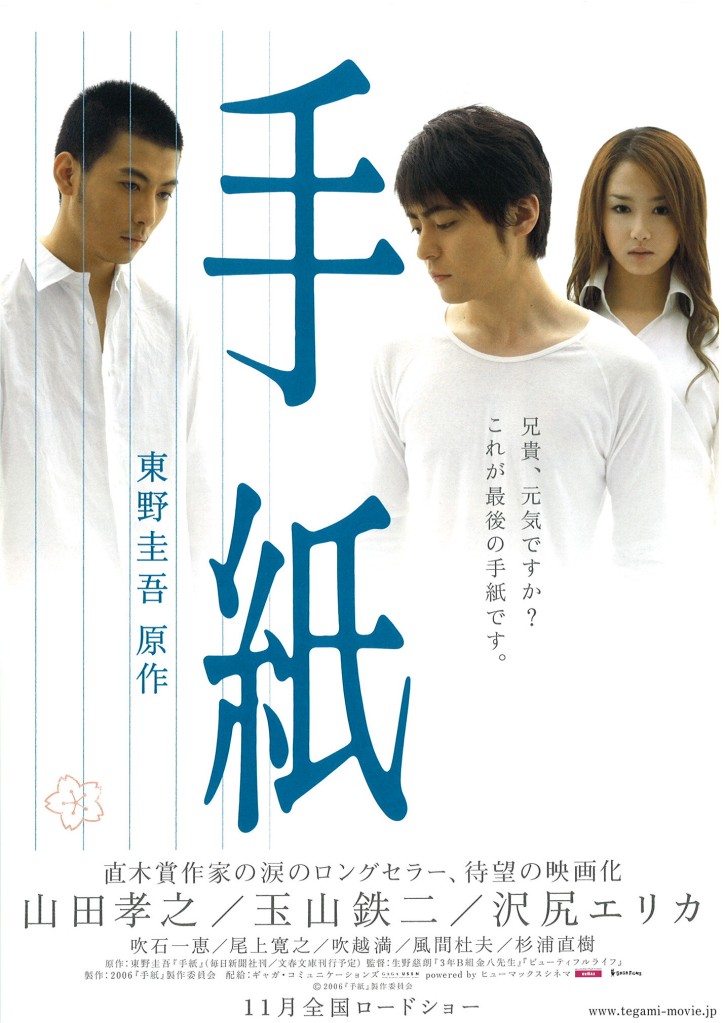 When it comes to cinematic adaptations of popular novelists, Keigo Higashino seems to have received more attention than most. Perhaps this is because he works in so many different genres from detective fiction (including his all powerful Galileo franchise) to family melodrama but it has to be said that his work manages to home in on the kind of films which have the potential to become a box office smash. The Letter (手紙, Tegami) finds him in the familiar territory of sentimental drama as its put upon protagonist battles unfairness and discrimination based on a set of rigid social codes.
 Kihachi Okamoto might be most often remembered for his samurai pictures including the landmark Sword of Doom but he had a long and extremely varied career which saw him tackle just about every conceivable genre and each from his own characteristically off-centre vantage point. The Elegant Life of Mr. Everyman (江分利満氏の優雅な生活, Eburi Man-shi no Yugana Seikatsu) sees him step into the world of the salaryman comedy as his hapless office worker reaches a dull middle age filled with drinking and regret imbued with good humour.
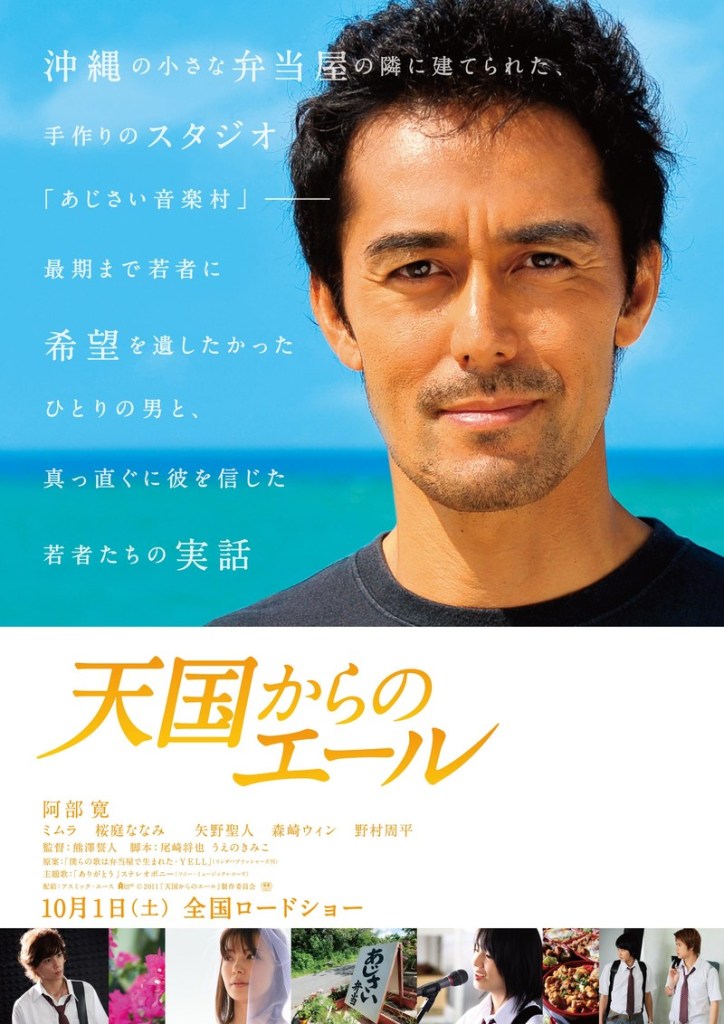 Okinawa might be a popular tourist destination but behind the beachside bars and fun loving nightlife there’s a thriving community of local people making their everyday lives here. Just like everywhere else, life can be tough when you’re young and the town’s teenagers lament that there’s just not much for them to do. A small group of high schoolers have formed a rock band but they’re quickly kicked out of their practice spot at school after a series of noise complaints from neighbours.
